
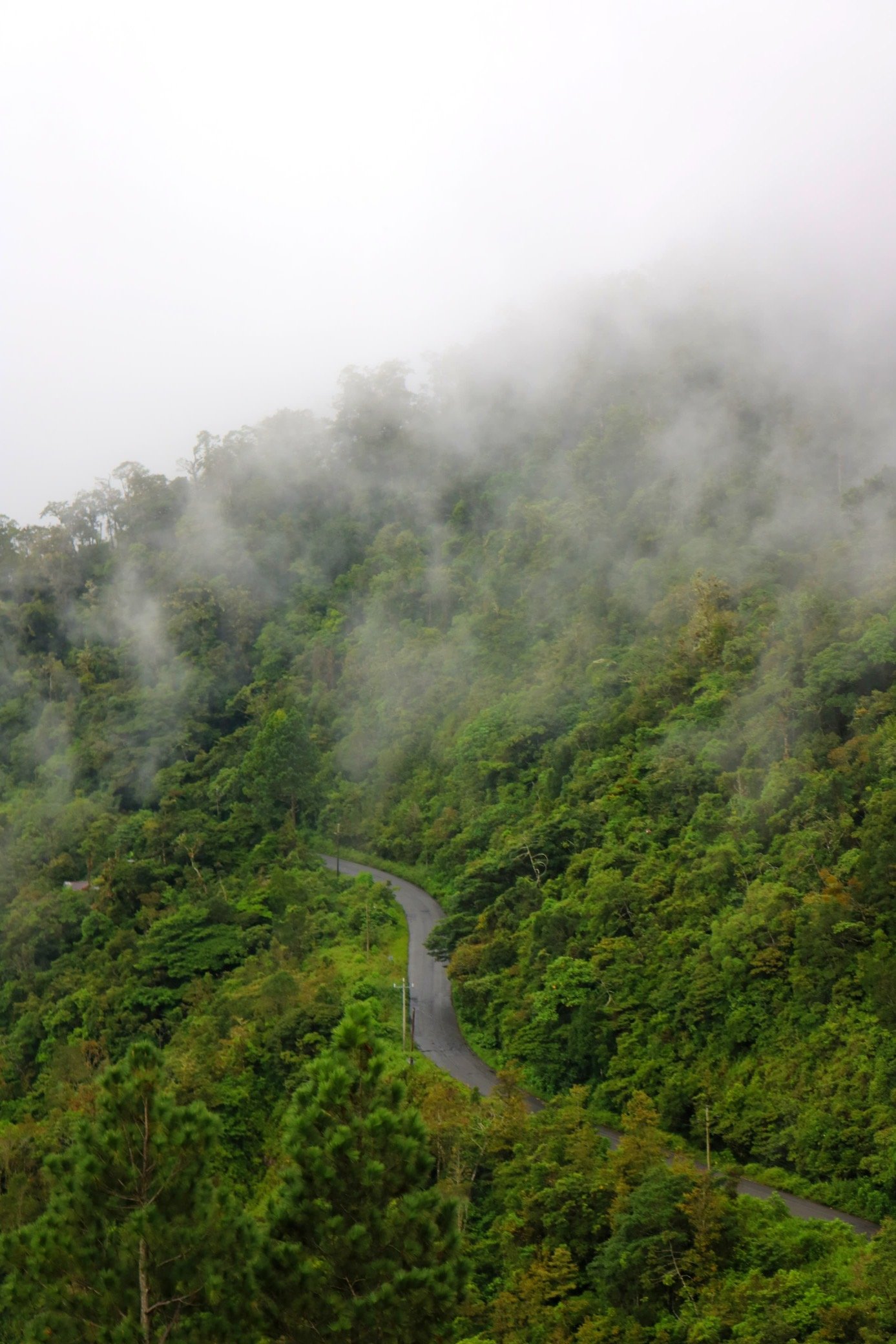
When people imagine the Indigenous cultures of Panama, they often picture colorful clothing, rainforest villages, dugout canoes and people living deep among the trees. Few Indigenous cultures embody Panama's relationship with the tropical forest more vividly than the Emberá. Their story is not simply about traditional villages or exotic travel experiences. It is a story about a people whose history, identity and way of life have been deeply connected to the rivers and forests of Panama for generations.
The Emberá are an Indigenous people whose traditional territories extend through parts of Panama and Colombia. In Panama, Emberá communities can be found particularly in the eastern regions of the country, including areas around the Darién and along major rivers. Their communities have also become increasingly known to travelers because some villages welcome visitors who want to learn about Emberá culture, traditional crafts, food, music and life in the rainforest.
For a traveler, an Emberá village can feel like a completely different world from Panama City. Instead of skyscrapers, there are trees. Instead of highways, there are rivers. Instead of traffic, you may hear birds, insects and rushing water. And instead of arriving by car, you may find yourself traveling upriver in a narrow wooden canoe, surrounded by dense tropical vegetation.
But it is important to understand that the Emberá are not simply a tourist attraction hidden in the jungle. They are a living Indigenous culture with their own language, traditions, social structures and relationship with the environment. Tourism is only one part of their modern lives.
The rainforest is central to the Emberá story. For generations, rivers have served as highways through the forest, connecting communities and providing access to fishing areas, farmland and neighboring villages. The forest has provided food, medicines, construction materials and countless other resources. This creates a very different relationship with nature from the one many visitors experience in modern cities. For the Emberá, the rainforest has traditionally been less like a wilderness that humans visit and more like a place where people live.
One of the most memorable parts of visiting an Emberá community is often the journey itself. Depending on where you visit, reaching a village may involve traveling along a river in a traditional canoe. The experience can be spectacular. The water becomes your road while enormous trees rise on either side. Sometimes the jungle is so dense that it feels as though the river is cutting directly through an endless green wall.
The canoe itself is fascinating. Traditional dugout canoes are made from tree trunks and have been used for generations. They are simple in appearance but perfectly adapted to navigating rivers. Watching someone maneuver one through shallow water, around bends and between rocks makes it immediately obvious that this is not simply transportation. It is knowledge passed down through generations.
The Emberá have traditionally relied heavily on fishing, hunting, gathering and agriculture. Crops such as plantains, bananas, cassava and other tropical foods can form part of the local food system. Fishing remains particularly important for communities living close to rivers. The forest can also provide fruits, plants and other resources.
Food is one of the easiest ways for a traveler to understand the connection between people and environment. A meal in an Emberá community isn't necessarily complicated. It doesn't need to be. It reflects what can be grown, caught, harvested or prepared locally. Fish cooked near the river, plantains and other simple ingredients can tell you a surprising amount about the geography and lifestyle of the people eating them.
Traditional clothing is another highly recognizable aspect of Emberá culture. Visitors may see women wearing colorful skirts and decorative beadwork, while traditional body painting can also be an important part of cultural expression. The designs are often created using natural pigments, including jagua, a plant-based dye that can temporarily stain the skin dark blue or black.
Jagua body painting is particularly fascinating because it demonstrates how something found in the rainforest can become part of cultural identity. The designs can be elaborate, and the process itself can be an important cultural experience. For tourists, having a traditional design painted on the skin can be memorable, but it is worth understanding that the practice has cultural significance beyond simply being a temporary tattoo.
The body painting also makes for some spectacular photographs, which is one reason Emberá communities have become increasingly popular with travelers and photographers. But once again, there is an important distinction between photographing a cultural practice respectfully and treating people as exotic scenery. Asking permission before taking photographs is one of the simplest ways to show respect.
Emberá handicrafts are another important part of community life and tourism. Women in particular are known for intricate basketry and other handmade crafts. Some baskets feature extraordinarily detailed patterns and can take significant time to produce. The materials often come from plants and natural fibers, meaning that the objects themselves reflect knowledge of the surrounding environment.
A beautifully woven basket might look like a simple souvenir to a tourist, but behind it is knowledge about plants, harvesting, preparation, weaving and design. Buying directly from artisans can also provide a more meaningful economic benefit to communities than simply purchasing mass-produced souvenirs elsewhere.
Music and dance are also important aspects of Emberá cultural presentations. Traditional instruments and songs can be used during ceremonies and community events, and visitors may sometimes be invited to participate in dances. The atmosphere can be completely different from the nightlife travelers experience in Panama City or Bocas del Toro.
There is something fascinating about sitting in a rainforest community listening to music while the surrounding forest continues its own soundtrack. Birds are calling. Insects are buzzing. Water is moving through the river. And somewhere nearby, someone is playing a traditional instrument.
It can feel almost surreal.
But the Emberá are not simply people who live in isolation from the modern world. Like Indigenous communities everywhere, they have experienced enormous social and economic changes. Modern technology, education, transportation, government services, tourism and outside economic influences have all affected Emberá communities.
Young Emberá people may have smartphones, use social media, attend schools and travel to cities while also maintaining traditional cultural practices. This is important because Indigenous cultures aren't museums. They change over time.
The idea that an Indigenous person has to live exactly as their ancestors did to be considered "authentic" is a misunderstanding of how cultures work. The Emberá can use modern technology and still speak their language, maintain traditions, practice cultural arts and remain strongly connected to their communities.
Language is particularly important in maintaining that connection. Emberá languages are part of a larger linguistic family found in Panama and Colombia, and different Emberá communities can have their own linguistic variations. For travelers, hearing an Indigenous language being spoken naturally within a community can be one of the most memorable aspects of the experience.
The Emberá relationship with the forest is perhaps the most fascinating aspect of their culture. To outsiders, the rainforest can seem impossibly complicated. Every plant looks unfamiliar. Every sound seems mysterious. It can be difficult to know which plants are useful, which are edible, which have medicinal properties and which should simply be left alone.
For someone who has grown up in the forest, however, that environment can contain an enormous amount of information. Knowledge about plants, animals, rivers and seasons can be accumulated over generations.
This is one reason Indigenous knowledge is increasingly important to conservation discussions. People who have lived in a landscape for generations can possess extraordinarily detailed knowledge about its ecology.
The Emberá experience also provides a fascinating contrast to the modern idea of wilderness. For many visitors, the rainforest is somewhere you go to escape civilization for a few days. For the Emberá, the forest has historically been a source of life.
That doesn't mean their relationship with nature is romantic or simplistic. The rainforest can also be dangerous, difficult and unpredictable. Rivers flood. Animals can be dangerous. Crops fail. Transportation can become difficult. Tropical weather can transform a peaceful river into something far more powerful.
Living with nature doesn't mean nature is always friendly.
It means understanding it.
The history of the Emberá is also connected to the complicated history of the Darién, one of the wildest regions of Panama. The Darién has remained famous for its dense rainforest, rivers and difficult terrain, and it has never been completely transformed by roads and large-scale development.
This has helped preserve areas of extraordinary biodiversity, but it has also made life and transportation more challenging for the communities living there.
The Darién is one of the places where the phrase "remote" actually means something.
There are areas where the forest remains enormous and roads are absent. Rivers become the practical transportation network, and communities can be separated by difficult terrain.
That isolation has helped preserve cultural traditions while simultaneously making access to healthcare, education and infrastructure more complicated.
Tourism has therefore become an interesting opportunity for some Emberá communities. Instead of completely abandoning traditional cultural practices in search of economic opportunities elsewhere, communities can sometimes generate income by sharing aspects of their culture with visitors.
Travelers might pay for canoe transportation, meals, cultural demonstrations, handicrafts, guides or overnight stays.
Done well, this creates an exchange in which visitors learn something meaningful while communities receive direct economic benefits.
But responsible tourism matters enormously.
A village shouldn't be treated like a theme park.
People aren't performers simply because visitors have arrived.
Traditional clothing isn't a costume.
A person's home isn't automatically a tourist attraction.
And not every moment of someone's life needs to be photographed.
The best experience comes from approaching an Emberá community with curiosity and humility.
Ask questions.
Listen.
Buy crafts directly from artisans when appropriate.
Follow photography rules.
Don't wander into private spaces.
Don't assume you understand something after watching it for five minutes.
And most importantly, remember that you're a guest.
One of the most fascinating things about visiting the Emberá is realizing how much modern travelers have forgotten about the practical knowledge required to live in a tropical environment.
A city traveler can be surrounded by hundreds of species of plants and have absolutely no idea what any of them are.
An experienced forest dweller may recognize useful plants, understand seasonal changes, know where fish are likely to be found and understand the behavior of the surrounding environment in ways that would take an outsider years to learn.
That knowledge is a form of wealth.
It isn't necessarily measured in money.
It is measured in experience.
And it can be incredibly valuable.
For backpackers traveling through Panama, an Emberá experience can therefore be much more than another excursion.
It can be a reminder that Panama isn't simply beaches, nightlife, volcanoes and waterfalls.
There are entire cultures whose histories are intertwined with the country's forests and rivers.
You can spend weeks traveling around Panama and never fully appreciate how much of the country's identity is connected to Indigenous communities.
The Emberá are part of that deeper story.
Their culture connects Panama's modern world with landscapes that remain remarkably wild. Their canoes represent a different kind of transportation. Their crafts preserve knowledge of plants and materials. Their food reflects the environment. Their language carries generations of history. Their music and traditions maintain a sense of identity in a rapidly changing world.
And then there is the forest itself.
You can hear it while sitting in an Emberá village.
The insects are buzzing.
Birds are calling.
Water is moving.
Leaves are rustling.
Somewhere in the distance, a monkey may be shouting at absolutely everyone.
And suddenly the rainforest doesn't feel like scenery anymore.
It feels like a living place.
That may ultimately be the most valuable thing an Emberá experience can give a traveler. Not a photograph, not a souvenir and not a story about having visited an "Indigenous village," but a different understanding of Panama itself.
The country is far more than what appears on a tourist map.
It is a place of rivers, forests and cultures that have existed long before modern Panama was created.
And among the people who continue to carry that history into the present are the Emberá.
If Guna Yala shows you Panama's Indigenous Caribbean, the Emberá show you Panama's Indigenous rainforest: a world of rivers, trees, traditions and knowledge where the jungle isn't something outside the village. It is part of home.