
Panama is the kind of country where wildlife can completely ambush you. You can be walking down an ordinary road and suddenly hear the thunderous roar of howler monkeys coming from a forest you had barely noticed. You can look up from your breakfast and find a toucan sitting above you, hike through cloud forest and discover a hummingbird hovering inches from your face, or walk through the jungle after dark and realize that the forest you experienced during the day has effectively been replaced by another world. Panama is extraordinary because of its position on the planet. This narrow country became the biological bridge between North and South America, allowing animals and plants from both continents to move through the region. At the same time, Panama's mountains, rivers, islands, rainforests, cloud forests, mangroves, wetlands and two very different oceans created countless ecological niches where species could specialize, adapt and evolve. Smithsonian data gives Panama roughly 225 mammal species, 143 amphibian species, 214 reptile species and an extraordinary 995 bird species. That means a country covering only around 75,000 square kilometres contains an astonishing concentration of life.
The numbers become even more impressive when you start looking beyond the headline figures. Panama is not simply a country with lots of animals. It contains dramatically different biological worlds stacked on top of each other. A jaguar moving silently through the forest floor is occupying an entirely different ecological universe from a harpy eagle hunting monkeys high in the canopy, while a glass frog living beside a mountain stream experiences another world altogether. The roots of a giant rainforest tree may support fungi, insects and microorganisms that never see daylight, while the same tree's flowers feed hummingbirds and its fruits feed monkeys, rodents, birds and bats. In the surrounding ocean, another enormous food web stretches from microscopic organisms to whales. Scientists therefore do not simply count animals in Panama. They study relationships between them. Long term research in Panama has helped scientists understand how tropical forests function, how populations change and how individual species interact with their environment.
One of the greatest spectacles is happening above your head. Panama's canopy is essentially a second world, and the harpy eagle is its undisputed heavyweight. Panama chose this extraordinary bird as its national bird, and seeing one in the wild is one of the great experiences a wildlife traveller can have. With enormous talons, a powerful body and a distinctive crest, the harpy eagle looks almost like something that escaped from a prehistoric world. It is one of the largest and most powerful eagles on Earth and has evolved to hunt animals that live in the canopy, including sloths and monkeys. The bird's existence is also a sign of something much bigger. It needs large expanses of mature forest, meaning that protecting the harpy eagle means protecting the ecosystem around it. Panama's forests are therefore not simply scenery behind the animal. They are the infrastructure that makes the animal possible. Somewhere high above the forest floor, an adult harpy eagle can sit motionless for hours, surveying an enormous territory while the chaos of the rainforest continues below it.
And then there is the jaguar, perhaps the ultimate symbol of wild Panama. The largest cat in the Americas still survives in Panama, particularly in the enormous forests of Darién, but seeing one is a completely different experience from seeing wildlife in a conventional tourist setting. A jaguar is not interested in being seen. It is an ambush predator capable of moving through dense vegetation almost invisibly, and the modern wildlife scientist often encounters it not with binoculars but through a photograph taken automatically by a camera trap. These cameras have transformed our understanding of Panama's forests. A camera can sit beside a trail for months, recording animals that researchers might never encounter personally. A peccary passes at midnight, an ocelot walks past before dawn, an armadillo appears at three in the morning, and perhaps one night the unmistakable spotted coat of a jaguar crosses the frame. The data are enormously valuable because scientists can begin to understand not only which animals exist, but how often they move, which habitats they use and how different species interact. On Barro Colorado Island, long term camera trap work has documented 47 species of non flying mammals living on or visiting the island, illustrating just how much wildlife can exist in a relatively small area when habitat remains intact.
Panama's monkeys provide another spectacular demonstration of how densely populated the forest canopy can be. Howler monkeys are perhaps the easiest to detect because you often hear them long before you see them. Their calls can roll through the forest like distant thunder, creating the bizarre sensation that something enormous is approaching. White faced capuchins are more energetic and highly social, moving through the trees in groups while searching for fruit, insects and other food. Spider monkeys use their extraordinary limbs and prehensile tails to move through the canopy almost effortlessly, effectively turning the treetops into a network of highways. At night, completely different primates take over, including nocturnal species that are much more difficult to encounter. What looks from the ground like a single green wall is actually divided into ecological layers, with different species specializing in different heights, foods, temperatures and hiding places. The forest floor, understory, middle canopy and upper canopy are all functioning simultaneously, and an animal that spends its entire life twenty metres above the ground is essentially living in a completely different habitat from an agouti digging through fallen leaves.
Sloths take this vertical specialization to another level. Their entire existence is built around doing almost everything slowly. Their low energy diet of leaves has pushed them toward an extremely low metabolic lifestyle, and they spend enormous amounts of time hanging from branches. Their fur can host algae and microorganisms, creating a miniature ecosystem on the animal itself and potentially helping camouflage it against the vegetation. For a traveller, spotting a sloth is often an exercise in frustration because the animal can be sitting directly above you and look exactly like a bundle of leaves. Someone points upward and says there it is, and you stare at the tree for thirty seconds without seeing anything. Then suddenly the shape becomes obvious. Claws, fur, face. You realize the sloth has probably been watching you the entire time. That is one of the great pleasures of wildlife in Panama. The forest is full of animals that are experts at remaining invisible.
The rainforest floor is an entirely different spectacle. While visitors tend to stare upward searching for monkeys and toucans, enormous ecological processes are taking place beneath their feet. Agoutis move through the leaf litter looking for fallen fruit and seeds. Armadillos dig into the soil. Peccaries travel through the undergrowth. Frogs hide beside streams. Snakes wait motionless for prey. Beetles and termites process dead vegetation. Fungi break down material that would otherwise accumulate endlessly. The forest is constantly recycling itself. A dead branch is not simply a dead branch. It becomes habitat, food and eventually nutrients. A fallen fruit can become food for a mammal, while the seeds inside it may be carried elsewhere and eventually become another tree. This is why biodiversity is about much more than collecting impressive photographs. The jaguar, the fungus, the beetle, the monkey and the tree are all components of the same machine.
One of the most fascinating animals involved in this system is the Baird's tapir, an enormous and strange looking herbivore that seems as though several different animals were accidentally combined. Tapirs are important seed dispersers, moving through forests while eating fruit and vegetation and transporting seeds away from their original locations. They are essentially large forest gardeners. The same principle applies to many other mammals and birds. Eating fruit is not simply feeding. It can be part of the reproductive strategy of an entire forest. A bird swallows a fruit, flies kilometres away and later deposits the seed somewhere new. A monkey does the same thing from the canopy. A tapir can transport seeds across much larger distances. In this sense, Panama's wildlife is not merely occupying the forest. It is helping build the forest.
Then there are the animals most people never notice at all. Panama's biodiversity extends into an enormous world of insects, spiders and other invertebrates, many of which are crucial pollinators, predators, decomposers or sources of food for larger animals. A tropical forest is filled with ecological jobs, and many of them are performed by creatures smaller than your fingernail. The diversity is so enormous that even today scientists continue to document organisms whose biology, distribution or evolutionary relationships remain poorly understood. Panama has been an important natural laboratory for this work for more than a century. The Smithsonian's Biological Survey of Panama began more than 100 years ago, with scientists systematically collecting and documenting mammals, birds, reptiles, amphibians, fish, insects and plants. Today, institutions such as the Smithsonian Tropical Research Institute continue that tradition, making Panama one of the world's great locations for studying tropical ecosystems.
Perhaps nowhere is Panama's scientific importance more dramatic than in the world of amphibians. Frogs are extraordinarily sensitive to environmental change because their permeable skin and dependence on water make them vulnerable to changes in temperature, habitat, pollution and disease. Panama experienced one of the great amphibian catastrophes of modern times when chytrid fungus swept through mountain forests. Among its victims was the Panamanian golden frog, a brilliant yellow species found nowhere else on Earth. The species became a symbol of the global amphibian crisis and disappeared from the wild, with the last confirmed wild sightings dating to 2009. But the story is no longer simply one of extinction. In February 2026, Smithsonian researchers reported releasing 100 captive bred Panamanian golden frogs into the wild as part of research into how reintroduction might work. That is an extraordinary scientific experiment. Researchers are not merely trying to breed an endangered animal. They are attempting to understand whether a species that disappeared from its natural environment can eventually be returned to it.
The golden frog is also a reminder that Panama's wildlife story contains both incredible hope and genuine danger. Habitat loss, climate change, disease and human development can alter ecosystems much faster than many species can adapt. Yet Panama has also demonstrated something equally important. Conservation can work. Protected forests can provide refuge. Isolated islands can preserve populations that have disappeared elsewhere. Scientific monitoring can reveal changes before they become irreversible. Species that seem lost may sometimes survive in places nobody has looked carefully enough. Researchers have even rediscovered populations of frog species that had been missing from Panama's forests for years, demonstrating how much can remain hidden even in landscapes that scientists have been studying for generations.
Then there is Coiba, perhaps Panama's ultimate wildlife laboratory. The island was once a penal colony, and its isolation helped protect large areas of forest from the development that transformed many mainland ecosystems. Today, Coiba National Park and its surrounding marine environment are internationally recognized for their biodiversity. The surrounding waters contain approximately 800 fish species, 33 shark species and nearly 20 cetacean species, including whales and dolphins, according to Smithsonian sources. The island also supports Panama's last significant population of scarlet macaws and provides habitat for species that have become rare or disappeared from parts of the mainland. Coiba demonstrates one of the most important principles in conservation biology. Isolation can sometimes be destructive, but in the right circumstances it can also become a shield. While roads, agriculture and development spread across the mainland, an isolated island can become a biological time capsule.
Underwater, Panama becomes even more extraordinary. The Pacific waters surrounding Coiba are not simply a place to go diving. They form part of one of the most important marine ecosystems in the Eastern Tropical Pacific. Sharks patrol deeper water while enormous schools of fish move across reefs and rocky structures. Rays glide above the seabed. Sea turtles forage. Dolphins travel offshore. Humpback whales pass through during their migrations. The scale is difficult to appreciate from the surface because the ocean hides almost everything. You can be floating in seemingly empty blue water while hundreds of species exist below you. This is one reason Panama's marine biodiversity is so scientifically important. The land may look small on a world map, but the country's ecological territory extends into an enormous underwater world.
The coastline also provides habitat for sea turtles, which may be among the most extraordinary travelers in Panama's wildlife story. A turtle emerging onto a beach at night may have spent years crossing the open ocean. She crawls above the tide line, digs a nest, deposits her eggs and returns to the sea, leaving behind a new generation that will face extraordinary odds from the moment it emerges. Hatchlings must cross the beach while avoiding predators before entering the ocean, where another series of dangers awaits them. Yet the species persists because enough individuals survive to reproduce. This is another reason beaches in Panama are more than places to watch sunsets. They can be functioning biological nurseries, connecting a small stretch of sand to enormous oceanic ecosystems thousands of kilometres away.
For bird lovers, Panama borders on the ridiculous. Around 995 bird species have been recorded in the Smithsonian figures, and close to 1,000 species occur in the country for at least part of the year. Toucans, motmots, parrots, hummingbirds, trogons, tanagers, kingfishers, macaws, hawks and countless smaller species occupy different ecological niches. Panama's position between two continents also makes it important for migratory birds moving between North and South America. You do not necessarily need to be an experienced birder to appreciate this. Once you start carrying binoculars and paying attention to calls, the country changes. The forest stops being background scenery and becomes a constantly moving catalogue of species. A flash of blue might be a motmot. A red shape crossing the canopy might be a macaw. A tiny blur hovering beside a flower could be a hummingbird. Suddenly you realize that the trees were never quiet at all. You simply were not listening.
And then night arrives. This is when Panama's forests become almost alien. The daytime cast disappears and another community becomes active. Bats emerge from roosts. Frogs begin calling from streams and puddles. Insects become deafening. Nocturnal mammals move through the canopy. Kinkajous become active. Geckos and other reptiles appear. Spiders emerge from hiding places. Some snakes become easier to encounter because they are moving through vegetation after dark. A proper night walk can therefore feel like entering a second rainforest hidden inside the first. You might walk for several minutes without seeing anything and then suddenly your flashlight catches two reflective eyes, a frog sitting beside the trail or a spider crossing the path. Even the sounds are different. Frogs advertise for mates, insects communicate, birds settle into roosts and mammals use calls to maintain contact. Scientists can actually use these sounds as ecological information, monitoring biodiversity acoustically when many animals are too difficult to observe directly.
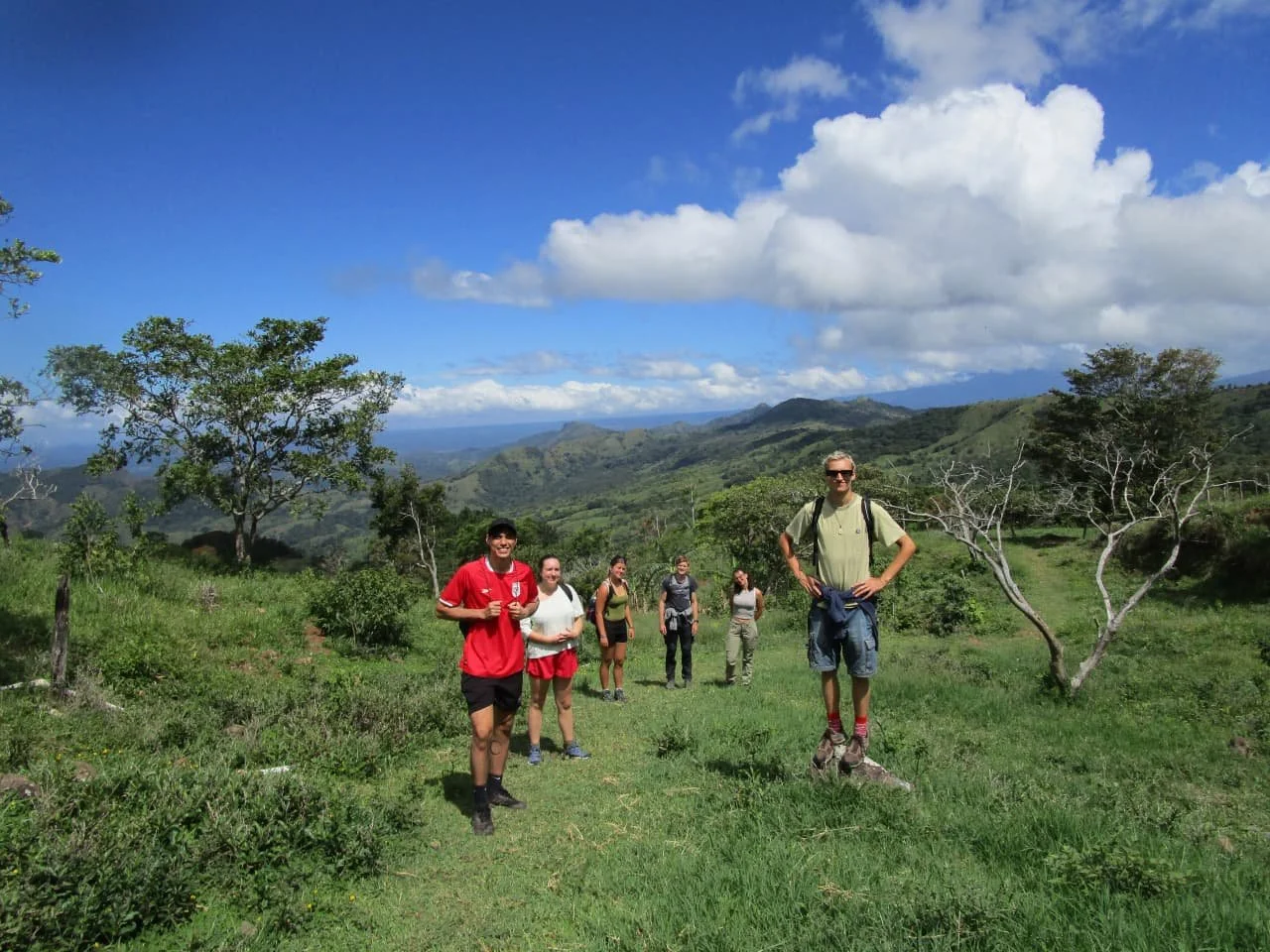
For a backpacker, this is perhaps the greatest secret of Panama's wildlife. You do not necessarily have to travel to some impossibly remote location to experience it. You can begin noticing wildlife simply by slowing down. Walk a little more quietly. Look into the canopy. Listen before moving. Carry a flashlight after dark. Learn to recognize the call of a howler monkey. Watch the branches rather than only the trail. Examine the water beside a river. Look at flowers for hummingbirds and insects. Give yourself ten minutes sitting completely still in the forest. The longer you remain stationary, the more the forest seems to come alive. At first you see nothing. Then a bird appears. A lizard moves across a branch. A squirrel jumps between trees. Something rustles in the leaves. You realize the animals were there all along. Your movement and noise were simply preventing you from noticing them.
This is ultimately what makes Panama's wildlife so fascinating. It is not merely the number of species, although the numbers are extraordinary. It is not merely the jaguars, sloths, monkeys, harpy eagles, frogs, snakes, crocodiles, whales and sharks, although all of them are spectacular. It is the density of relationships connecting them. The jaguar depends on prey. The prey depends on vegetation. The vegetation depends on pollinators and seed dispersers. The seeds depend on animals to move them. Dead material depends on fungi and decomposers. Frogs depend on functioning freshwater ecosystems. Marine predators depend on healthy fish populations. Even an apparently insignificant insect can play a role that eventually affects an animal thousands of times larger. Panama's biodiversity is therefore not a collection of separate species. It is an enormous living network.
And that is why travelling through Panama can feel so different from visiting a conventional wildlife destination. You are not necessarily driving through a fenced reserve waiting for an animal to appear. You are moving through an ecosystem that is still functioning around you. A sloth can be above your hostel. A toucan can fly across the road. A howler monkey can wake you from sleep. A frog can sit beside your boot. A hummingbird can hover beside your face. Somewhere in the deeper forest, a jaguar may cross a trail hours before you arrive. Far offshore, a whale may be passing through waters where you are swimming. Deep in a mountain stream, a tiny amphibian may be carrying genetic information found nowhere else on Earth.
That is the real magic of wildlife in Panama. You do not have to go looking for a zoo. You walk into the forest, and the zoo disappears because you have entered the real thing.