
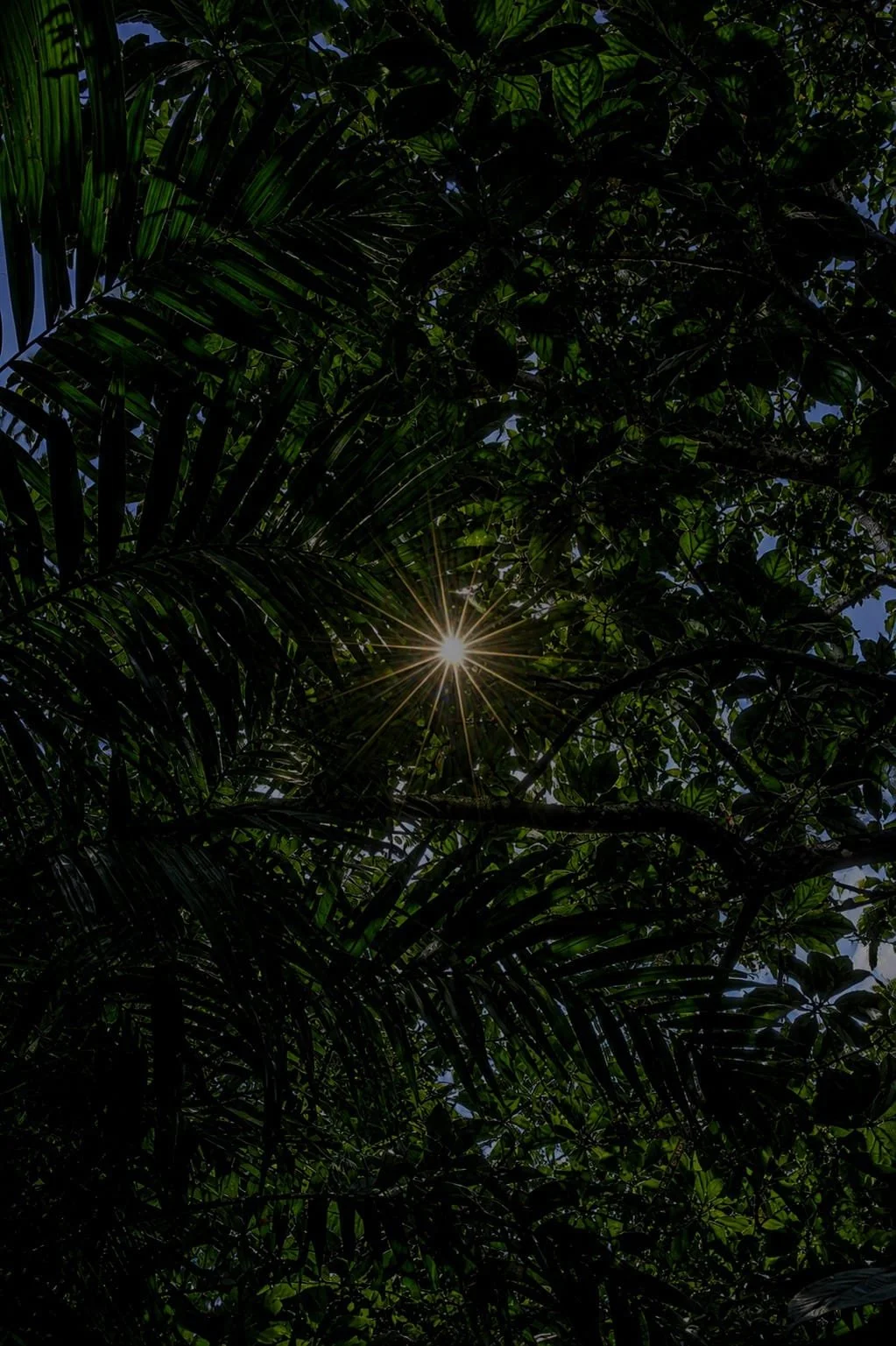
Panama is much more than a country of canals, tropical beaches, rainforests and coffee. Hidden among its humid Caribbean forests is another agricultural treasure: cacao.
For travelers interested in food, nature, sustainable agriculture or simply discovering something authentic, searching for organic cacao in Panama can become a fascinating adventure. And there is perhaps no better place to begin than Bocas del Toro, where cacao has been cultivated for generations and where much of the country's production is concentrated.
Panama's cacao is particularly interesting because it is not simply an agricultural commodity. In many areas, cacao is grown within agroforestry systems, beneath and among other trees and crops, creating a farming landscape that can look remarkably similar to natural tropical forest. Official agricultural research describes cacao production in Bocas del Toro as predominantly organic and largely carried out by small-scale producers, many of them from Indigenous communities.
Where to look for organic cacao in Panama
If your goal is to actually find cacao rather than simply buy a chocolate bar, Bocas del Toro should be at the top of your list.
The province contains the overwhelming majority of Panama's cacao-growing area. In April 2026, Panama's Ministry of Agricultural Development reported that the country had approximately 6,000 hectares of cacao, with about 5,000 hectares located in Bocas del Toro. The ministry also described cacao as one of the province's principal agricultural products and noted that most of its production is organic.
The other important cacao-growing areas include the Ngäbe-Buglé Comarca and Costa Arriba de Colón.
For travelers, this is important because the best way to discover organic cacao isn't necessarily by looking for it in a supermarket. In Bocas, you can actually visit cacao-growing communities and farms and see where the product begins.
Bocas del Toro: where cacao meets the rainforest
The cacao farms of Bocas are fascinating because they don't always look like conventional plantations.
Instead of endless rows of identical trees, cacao is frequently cultivated as part of an agroforestry system. Cacao trees grow alongside bananas, plantains, fruit trees and timber species, creating a multilayered tropical environment.
Walk through one of these farms and you may initially have difficulty identifying the cacao trees. Then suddenly you notice a colorful pod growing directly from the trunk or a larger branch.
Cacao pods are extraordinary fruits. Depending on their variety and stage of maturity, they can be green, yellow, orange, red or combinations of several colors. Inside each pod are rows of cacao beans surrounded by a sweet, white pulp.
That white pulp is one of the great surprises for people visiting a cacao farm for the first time.
The beans that eventually become chocolate don't initially taste anything like chocolate.
The Indigenous connection to cacao
Cacao production in Bocas del Toro is also closely connected with Indigenous communities.
IDIAP, Panama's agricultural research institute, reports that much of the region's cacao is produced by small farmers, many of them Indigenous, and that COCABO, the major cacao cooperative in the region, includes thousands of producers from Bocas del Toro and the Ngäbe-Buglé Comarca.
This gives cacao tourism a dimension that goes far beyond agriculture.
A farm visit can introduce travelers not only to a plant but also to traditional knowledge, local food systems and the relationship between Indigenous communities and the tropical forest.
Panama's official tourism information specifically promotes cacao experiences in Bocas del Toro, where visitors can visit farms, learn about organic cultivation and discover traditional knowledge associated with the crop.
Look for cacao tours rather than just chocolate shops
If you want to find genuinely interesting cacao, one of the best strategies is to search for cacao farm tours rather than simply looking for organic chocolate.
A farm tour allows you to see the entire story.
You can start with the cacao tree itself, see the pods growing on the trunk, open a ripe pod and discover the beans inside. Then you can learn how the beans are fermented and dried before they eventually become the raw material for chocolate.
This is important because good cacao is about much more than the tree.
Harvesting, fermentation and drying have enormous effects on the final flavor. Panama's reputation for fine cacao is therefore not simply the result of the tropical climate; careful post-harvest processing is also essential.
In fact, a cacao farm in Bocas del Toro won the 2024 regional award for Best Cacao Bean at a Central American cacao and chocolate competition. The winning cacao came from a farm in Nuevo Paraíso near Almirante, where careful fermentation and drying were part of the production process.
How to tell whether cacao is really organic
This is where travelers need to be a little careful.
The word "organic" can mean different things in casual conversation. A farmer may describe a plantation as organic because they don't use synthetic pesticides, while an international certification represents a formal verification process.
Panama has a particularly interesting history in this area. Government sources have reported that approximately 85% of Panama's cacao production is organic, while cacao from organized producers in Bocas del Toro has carried certifications including Bio Suisse Organic, Oregon Tilth and Fairtrade.
So if you're buying cacao directly from a farmer, don't be afraid to ask questions:
Is the farm certified organic?
Which certification does it have?
Are chemical pesticides or synthetic fertilizers used?
Is the cacao sold through a cooperative?
Where is it fermented and dried?
These questions can turn a simple purchase into a much more interesting conversation.
Cacao in Almirante and the Bocas region
For travelers moving through the Bocas del Toro region, Almirante is particularly important because it is home to COCABO, the Cooperativa de Servicios Múltiples Cacao Bocatoreña.
The cooperative has played a major role in organizing small cacao producers and connecting their production with international markets. Research from IDIAP notes that a large portion of Bocas cacao is exported to Europe and the United States, while a smaller portion remains in the domestic market.
This is one reason Panama can be surprising for chocolate lovers.
You might be eating chocolate made in Europe without realizing that the cacao inside it originated from a small farm in the Caribbean forests of Panama.
From cacao pod to chocolate bar
A cacao farm visit becomes even more fascinating when you understand what happens after harvesting.
The ripe pods are opened and the beans are removed together with their sweet white pulp. The beans then undergo fermentation, a critical stage that begins transforming their chemical composition and developing the precursors of chocolate flavor.
After fermentation comes drying.
Only after these stages can the beans be stored, transported, roasted and transformed into chocolate.
This means that when you bite into a high-quality chocolate bar, you are tasting the result of an extraordinarily long chain of work that began with a small tropical fruit growing on a tree.
Don't overlook raw cacao
Travelers interested in healthy food or natural products may also encounter raw cacao beans, cacao nibs or cacao paste in Panama.
Cacao nibs are pieces of roasted or processed cacao beans with a strong, bitter, nutty flavor. They can be added to smoothies, granola, desserts or tropical fruit.
Cacao paste is another fascinating product because it contains the natural components of the cacao bean and can be used to make drinks and chocolate products.
If you are buying directly from a producer, ask whether the product is fermented, roasted or raw, because these terms describe very different products.
Cacao and the rainforest
Perhaps the most beautiful aspect of Panama's cacao is its relationship with the forest.
Traditional cacao agroforestry can maintain a diverse mixture of trees rather than creating a completely open monoculture. In Bocas del Toro, cacao is commonly associated with fruit trees, timber species, bananas and plantains.
That means a cacao farm can be a fascinating place for nature lovers as well as food lovers.
While walking between cacao trees, you may hear tropical birds, encounter insects and see other plants growing around the plantation. It feels less like visiting a conventional agricultural field and more like walking through a cultivated tropical forest.
This is particularly appropriate in Bocas, where the boundary between agriculture and rainforest can sometimes seem remarkably thin.
Where else can you find cacao?
Although Bocas del Toro is the country's great cacao heartland, it isn't the only place.
The Ngäbe-Buglé Comarca has an important cacao-producing tradition, while Costa Arriba in Colón has also become an important production region.
There are also cacao initiatives elsewhere in Panama, including projects focused on sustainable production and agroforestry.
In 2026, Panama's Ministry of Environment highlighted community cacao initiatives in the Palo Seco Protected Forest, including work by the Association of Women Cacao Producers of Bocas del Toro (AMUCABO) to strengthen sustainable cacao production.
This demonstrates that cacao is increasingly being viewed not simply as a crop but as part of sustainable rural development.
The best way to experience organic cacao in Panama
If you're traveling through Panama and want to experience cacao properly, don't just buy a chocolate bar and call it a day.
Go to where the cacao grows.
Visit a farm in Bocas del Toro. Walk beneath the tropical canopy. Find a cacao pod growing directly from the trunk. Open it. Taste the sweet white pulp surrounding the beans. Learn about fermentation and drying. Talk with the farmer. Taste the finished chocolate.
Suddenly, chocolate becomes much more than something sitting on a supermarket shelf.
It becomes a story about rainforest, agriculture, Indigenous knowledge, small farmers, international trade and Panama's extraordinary tropical environment.
And perhaps that is the most interesting thing about searching for organic cacao in Panama: you aren't simply looking for chocolate.
You're looking for the place where chocolate begins.