
When most travelers begin researching the Panama Canal, one name appears almost immediately: Miraflores. It is the famous place, the place that appears in photographs, guidebooks and travel itineraries, and for good reason. Standing above the locks while an enormous ship slowly moves through a chamber is an extraordinary experience. But there is a problem with thinking of Miraflores as synonymous with the Panama Canal. Miraflores is only one window into an enormous system that stretches across central Panama, through rainforest, artificial lakes, rivers, mountains, bridges, ports and several different generations of engineering. In fact, some of the most fascinating places to experience the canal are nowhere near the famous Miraflores observation decks. If you are the kind of traveler who wants to go a little deeper, see the landscape rather than simply the attraction, watch ships in unexpected surroundings, combine canal exploration with rainforest and wildlife, or understand why the canal is such an astonishing feat of engineering, leaving Miraflores behind can make your experience considerably more memorable. The real Panama Canal is not one place. It is an enormous geographical and technological story unfolding across the entire Isthmus of Panama.
Pedro Miguel: The Quiet Giant of the Pacific Side
One of the first places to consider is Pedro Miguel, located north of Miraflores along the canal corridor toward Gamboa. Pedro Miguel does not have the same international fame as Miraflores, and that is part of its appeal. Here you can encounter the original canal lock system in an environment that increasingly feels removed from the urban landscape of Panama City. The further you travel away from the capital, the more obvious it becomes that the canal is not simply an industrial installation surrounded by buildings. It is a waterway running directly through an enormous tropical environment. Pedro Miguel is particularly interesting because it forms part of the staircase that lifts ships toward the elevation of Gatún Lake. A vessel coming from the Pacific does not simply pass through one set of locks and magically arrive at the other side of Panama. The ship is gradually raised, moved through the interior of the country and eventually lowered again toward the Caribbean. Pedro Miguel is one of the pieces that makes that extraordinary journey possible.
The area around Pedro Miguel also gives you an appreciation for another defining feature of the modern canal landscape: enormous bridges. The Centennial Bridge crosses the canal farther north and creates some spectacular combinations of engineering and nature. Seeing a gigantic commercial vessel moving beneath a massive bridge, with dense tropical vegetation surrounding the canal, gives you a very different impression from standing at Miraflores. There, the lock itself dominates your attention. Around Pedro Miguel and the canal corridor, the entire landscape becomes the attraction. You begin to see how roads, bridges, waterways, forests, ships and engineering infrastructure have all been forced to coexist in an incredibly narrow part of the country. This is the Panama Canal as a living transportation system rather than a tourist exhibit.
Gamboa: Where the Canal Meets the Jungle
If there is one place that should be near the top of any alternative canal itinerary, it is Gamboa. Gamboa is where the Panama Canal begins to feel wild. The landscape changes dramatically as you leave the city behind and travel into the forest. Suddenly you are surrounded by enormous trees, humid tropical vegetation and waterways, and then, almost absurdly, an enormous ocean going vessel appears. It is one of the great visual experiences of central Panama. You can be standing in what feels like deep rainforest and then watch a container ship slowly moving through the landscape as if someone has accidentally placed a modern industrial giant inside a national park.
Gamboa is particularly special because it sits at the meeting point of several of the geographical elements that make the canal possible. The Chagres River, Gatún Lake, the canal channel and the surrounding rainforest all come together here. This is why Gamboa provides a much more complete understanding of the canal than a single lock viewing platform. The canal becomes inseparable from the landscape. You begin to appreciate that the engineers did not simply build a giant ditch from one ocean to another. They created a water management system that transformed rivers, created an enormous artificial lake and carved a navigable route through the Continental Divide. The result is one of the strangest landscapes on Earth: an international shipping route passing through tropical rainforest.
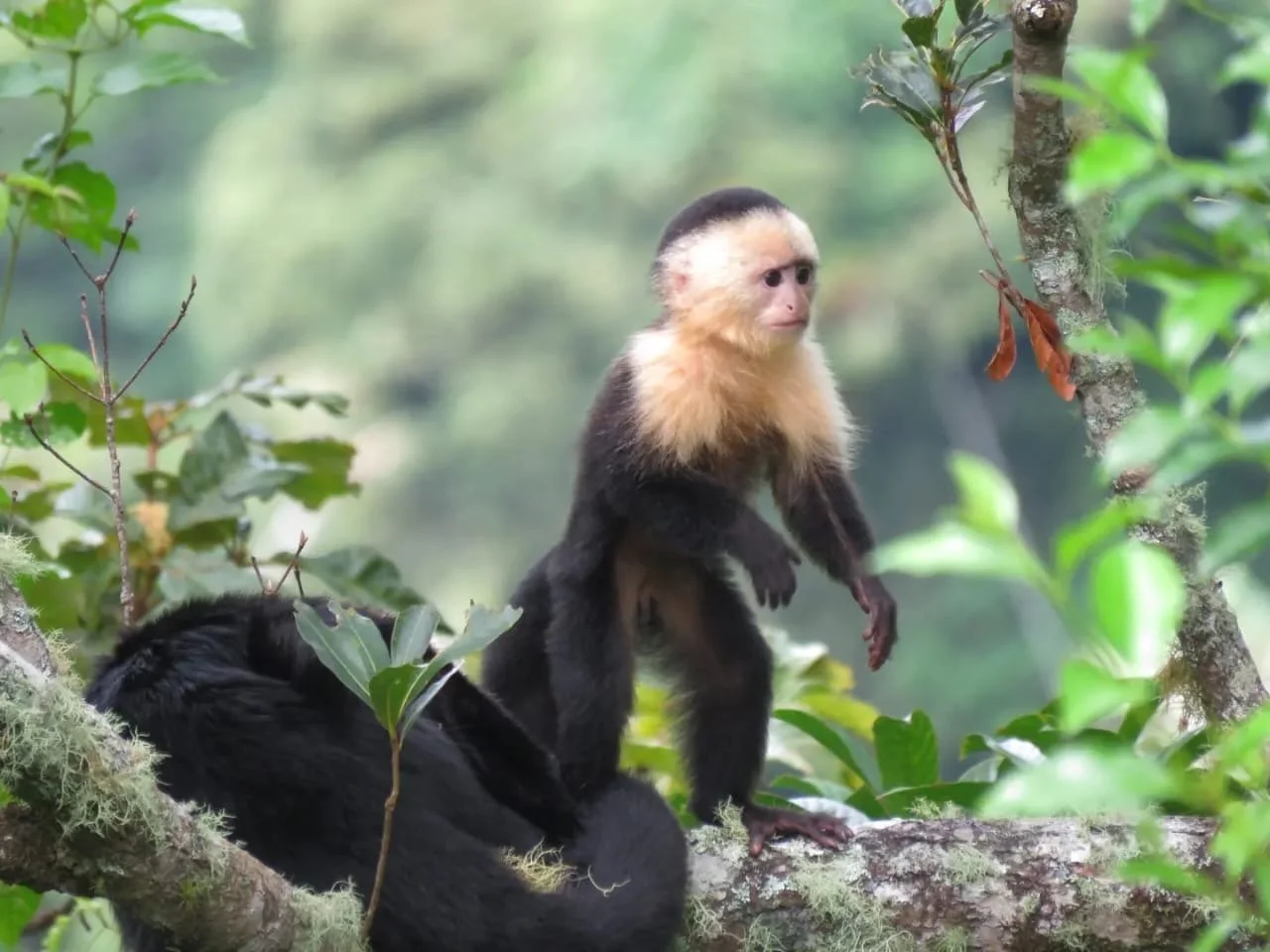
Gamboa is also one of the best places for travelers who don't want their canal experience to be entirely about ships. You can combine canal viewing with rainforest walks, birdwatching, wildlife excursions and boat trips. The area around Soberanía National Park is particularly rich in wildlife, and the waterways around Gatún Lake can put you directly into the environment surrounding the canal. You might be watching monkeys in the trees one minute and then watching a huge commercial vessel move through the lake the next. That juxtaposition is almost impossible to beat.
Gatún Lake: The Heart of the Canal
Gatún Lake deserves an entire section because it is arguably the most misunderstood part of the Panama Canal. Many people imagine the canal as a narrow trench connecting two oceans, but that is not really what the Panama Canal looks like in its central section. Much of the journey takes place across an enormous artificial lake. Gatún Lake was created when the Chagres River was dammed during the construction of the canal, fundamentally transforming the geography of central Panama. Today, when you travel across the lake, you are not merely looking at a body of water beside the canal. You are looking at one of the fundamental pieces of the canal itself.
The lake is extraordinary because of its scale and because of the landscape surrounding it. Tropical forest rises around the water. Islands are scattered throughout the lake. Small boats move across the surface. Wildlife lives along the forested shores. And then enormous ships appear, slowly moving through the middle of it all. From a small boat, the scale of the ships can be almost comical. Something that looks merely large from a distant observation platform suddenly appears gigantic when you are close to it on the water.
This is one of the best places to appreciate the weirdness of the Panama Canal. You can look across a tropical lake and see a ship that has crossed an ocean. You can see rainforest on one side and an international commercial vessel on the other. You can watch a boat disappear around a forested island and then realize that the waterway you are traveling on is part of one of the most important shipping routes on Earth. There are very few places where such a dramatic combination of wilderness and global commerce exists.
Exploring Gatún Lake by Boat
For adventurous travelers, seeing Gatún Lake from a boat can be one of the most rewarding canal experiences available. From land, the canal can sometimes feel like something happening in the distance. From the water, you become part of the landscape. You are moving through the same broad aquatic environment that ships use, although commercial vessels obviously follow controlled navigation channels and operate under completely different conditions.
A small boat moving through Gatún Lake also reveals just how enormous the canal's surroundings are. The lake is not simply a rectangular reservoir. It spreads through an intricate landscape of forested islands, channels and shorelines. Some islands were once hilltops before the valleys around them were flooded. The result is a landscape that looks surprisingly natural despite being one of the most consequential artificial environments in the history of transportation.
This is also where the ecological story of the Panama Canal becomes fascinating. The forests surrounding the canal are not merely scenery. They are part of the watershed that supplies the enormous quantities of freshwater required for canal operations. Protecting those forests is therefore directly connected with the functioning of the canal itself. In this sense, the rainforest is infrastructure. The trees, soil, rivers and wetlands help sustain the water system that allows ships to cross Panama.
Monkey Island and the Wildlife Side of the Canal
The waterways around Gatún Lake are also famous for wildlife experiences, particularly excursions that visit forested islands and search for monkeys and birds. This adds another dimension to the canal experience because it demonstrates how heavily nature is woven into the canal landscape. It is easy to imagine the canal as a purely industrial environment when looking at photographs of enormous container ships. But spend time around Gamboa and Gatún Lake and you quickly realize that much of the canal's world is green, humid and alive.
The possibility of seeing wildlife while enormous ships pass through the background is one of the defining experiences of this region. A canal trip can become a strange mixture of wildlife expedition and engineering tour. You may be scanning trees for monkeys, watching birds over the water and listening to the rainforest while simultaneously keeping an eye out for a ship approaching through the channel.
That combination is particularly memorable for travelers who love Panama's natural environment. The canal doesn't exist separately from the rainforest. It is embedded within it.
Agua Clara: The Best Alternative if You Want Locks
If your primary goal is to watch ships passing through locks but you simply don't want to visit Miraflores, Agua Clara should be high on your list. Located on the Atlantic side near Colón, Agua Clara provides an opportunity to see the newer locks built during the Panama Canal expansion. The Panama Canal Authority lists the Agua Clara Visitor Center as one of its official points of interest.
Agua Clara is fascinating because it represents the modern Panama Canal. The original locks were designed around the dimensions of the ships of their era. The expansion created a new set of locks capable of handling much larger vessels. Consequently, watching a modern ship pass through Agua Clara is not simply a repeat of the Miraflores experience. You are seeing a newer generation of canal engineering designed for a very different era of international shipping.
The setting is also different. Instead of looking across the canal toward the urban environment surrounding Panama City, you are in the Caribbean side of Panama, where the landscape is greener and more tropical. The surrounding environment reinforces the idea that the Panama Canal is not a city attraction. It stretches deep into the country.
Agua Clara can be particularly impressive when a huge container ship or other large commercial vessel enters the locks. The size of these vessels becomes easier to comprehend when you see them alongside the enormous infrastructure designed to accommodate them. It is also a powerful reminder that the Panama Canal is not frozen in the early twentieth century. It continues to evolve because global shipping continues to evolve.
Gatún Locks: The Atlantic Face of the Original Canal
Gatún Locks are another essential destination for anyone fascinated by the original canal. They represent the enormous Atlantic-side lock system that raises ships from Caribbean sea level toward Gatún Lake. This is one of the places where the basic concept of the original canal becomes easiest to understand. A ship arrives from the Caribbean, enters the locks and is progressively raised until it reaches the elevated waterway across the center of Panama.
That concept is remarkable when you stop and think about it. Instead of excavating a completely sea-level canal across the entire isthmus, engineers created an enormous freshwater lake at an elevated level and designed locks to lift ships into it. The ship then travels across the interior of Panama before descending again toward the opposite ocean.
The result is essentially a gigantic aquatic staircase across a continent.
And Gatún is where you can really begin to appreciate the scale of that idea.
Culebra Cut: The Place Where Humans Dug Through a Continent
For travelers fascinated by the physical construction of the canal, Culebra Cut may be one of the most important places to understand. Also known as Gaillard Cut, this is the section where the canal passes through the Continental Divide. It was one of the most difficult portions of the entire project.
The sheer concept is astonishing. Engineers needed to create a navigable waterway through mountainous terrain, removing enormous quantities of earth and rock. Workers faced unstable slopes, tropical rainfall, landslides and challenging geological conditions. The canal that exists today is the result of an immense excavation effort.
When you see a ship moving through Culebra Cut, it can be difficult to reconcile the modern scene with the construction history. The ship looks completely ordinary in its environment, but the channel beneath it represents an extraordinary amount of human labor and engineering.
This is one of the places where the Panama Canal becomes more than a shipping attraction. It becomes a monument to the transformation of geography.
The Centennial Bridge: Infrastructure on Infrastructure
The Centennial Bridge is another fantastic place to appreciate the scale of the canal region. The bridge crosses the canal in the interior of the isthmus and represents a completely different generation of engineering from the original canal itself.
Standing near a canal crossing and watching ships pass beneath an enormous bridge is one of those uniquely Panamanian experiences that doesn't quite look real. You have rainforest, a massive waterway, a giant ship and a modern bridge occupying the same landscape.
The bridge also demonstrates an important reality of modern Panama. The canal is not a barrier that divides the country. Roads, railways and bridges have been developed around it so that Panama's transportation network can function alongside one of the busiest waterways in the world.
The Bridge of the Americas: Where the Canal Meets Panama City
At the Pacific end, the Bridge of the Americas provides one of the most dramatic ways to understand the canal's relationship with Panama City. The bridge spans the Pacific entrance and connects the two sides of the canal zone. From viewpoints around the area, the combination of water, ships, bridge and skyscrapers can be spectacular.
This is where the canal becomes part of the modern city.
Look toward Panama City and you can see skyscrapers rising behind the waterfront. Look toward the canal and you can see ships approaching the Pacific entrance. Behind you and around you are the forests and infrastructure of the former Canal Zone.
The scene compresses an enormous amount of Panama's history into one view.
You have the old canal.
You have modern Panama.
You have global shipping.
You have tropical geography.
And you have a city that has grown into one of Central America's most recognizable skylines.
Amador Causeway: A Different View of the Pacific Entrance
The Amador Causeway is another place where you can experience the canal without standing beside a lock. Extending into the Pacific from Panama City, the causeway provides views across Panama Bay and toward the canal entrance. The Panama Canal Authority also lists the Amador Causeway among its canal-related points of interest.
The experience here is less about watching the mechanics of the locks and more about seeing the canal as part of the broader maritime environment. Ships can be seen moving through the bay or waiting offshore, and the Panama City skyline provides a dramatic background.
It is especially interesting around sunset, when the water changes color and the city begins to light up. A large ship moving across the bay against the skyline can make for one of the most recognizable views of modern Panama.
The causeway also allows you to appreciate the geography of the Pacific entrance. The canal does not simply end at a concrete wall. It opens into a huge bay and then into the Pacific Ocean. Seeing the transition from the canal to the ocean from a distance can help you understand how ships approach Panama.
Cerro Ancón: See the Canal From Above
Cerro Ancón offers another completely different perspective. Rather than standing beside the water, you can climb above the city and look across the landscape. The higher viewpoint makes it easier to understand how the canal fits into the geography of Panama City and the surrounding area.
From above, the canal becomes less about individual ships and more about geography. You can see how close the canal is to the modern city, how quickly the urban landscape gives way to vegetation and how compressed the Pacific side of Panama really is.
This is especially valuable because one of the most surprising things about Panama is how quickly the environment changes. You can go from skyscrapers and major highways to dense tropical forest in a surprisingly short distance.
The canal is right in the middle of that transformation.
The Panama Canal Railway: Experience the Landscape From the Tracks
Another fascinating alternative is the Panama Canal Railway. The railway itself has an extraordinary history because it predates the modern canal. Long before the canal was completed, the railway provided a transportation link across the isthmus.
Traveling through the canal zone by train provides a perspective that walking around a lock cannot. Instead of standing still and waiting for a ship, you move through the landscape itself. Forest, waterways and sections of Gatún Lake pass outside the window.
The railway helps explain why Panama became such an important transportation crossroads long before the modern canal existed. The geography of the country was always its greatest strategic asset. Panama sits at one of the narrowest points between the Atlantic and Pacific, and people have been trying to exploit that position for centuries.
The canal was the ultimate expression of that geographical advantage.
The Chagres River: The Water Source Behind the Wonder
The Chagres River is another piece of the canal story that deserves more attention. It is easy to look at the canal and forget that its entire operation depends upon water. The Chagres River became central to the creation of the canal's freshwater system, and the construction of Gatún Dam transformed its waters into the enormous Gatún Lake.
This makes the Chagres important not only historically but geographically.
When you see Gatún Lake, you are seeing the result of a river system transformed into part of a global transportation network.
That is an extraordinary thought.
A tropical river that once flowed through the Panamanian landscape became one of the key components of a waterway through which ships from around the world could cross an entire continent.
Soberanía National Park: The Jungle Surrounding the Canal
For travelers who love nature, Soberanía National Park should be considered part of any canal exploration. It may not provide the dramatic lock spectacle that visitors expect, but it provides something arguably more important: context.
The canal exists within a huge tropical environment.
Birds live here.
Monkeys live here.
Sloths live here.
Reptiles, insects and countless other organisms live in the forest.
The rainforest is not simply an attractive backdrop to the canal. It is part of the watershed that supports canal operations.
This is one of the great ecological paradoxes of Panama. One of the world's most heavily used transportation routes passes directly through an extraordinarily biodiverse tropical environment. The same forests that make the canal region so beautiful are also essential to the freshwater system that allows the locks to operate.
Pipeline Road: When the Canal Disappears
Pipeline Road takes the idea even further. Here you can walk through rainforest without necessarily seeing a ship at all.
And that's exactly what makes it interesting.
The absence of visible canal infrastructure can actually help you understand the canal better.
You are walking through the ecosystem that surrounds and supports the waterway. You hear birds. You hear insects. You see trees and vines. You may encounter monkeys or other wildlife. The canal feels far away.
Then you remember that you are only a short distance from one of the most important transportation corridors in the world.
The contrast is extraordinary.
Panama is one of the few countries where a traveler can spend the morning in a global commercial center, the afternoon walking through tropical rainforest and later watch a massive ship cross a man-made lake.
The Canal at Sunset
There is something especially beautiful about seeing the canal toward the end of the day. The intense tropical sunlight softens, the water becomes reflective and the ships begin to appear almost silhouetted against the sky.
The Amador area can be particularly attractive because you have the Pacific, Panama Bay and the skyline all interacting with the changing light. Around Gatún Lake, the experience is completely different. There, the sunset can turn the enormous waterway into a quiet tropical landscape, with ships appearing almost like silhouettes moving through the rainforest.
Sunset also changes the psychological experience of the canal.
During the day, it is obviously a piece of infrastructure.
At sunset, it becomes a landscape.
The ships become part of the scenery rather than the entire attraction.
Why Watching a Ship From Far Away Can Be Better
This may sound strange, but one of the best ways to appreciate the size of a ship is to watch it from far away.
When you stand directly beside a vessel, your brain has difficulty processing its size because you cannot see the entire thing at once.
From a distant viewpoint, you see the entire ship against the landscape.
That is when the scale becomes obvious.
A vessel can appear tiny against Gatún Lake or the rainforest, yet you know that the "tiny" object may be hundreds of meters long and capable of carrying thousands of containers.
This is one of the great pleasures of canal viewing around Gamboa and Gatún Lake. You are not simply watching a ship. You are watching a gigantic ship become part of an enormous landscape.
The Canal Museum: Understand What You're Looking At
There is also enormous value in visiting the Interoceanic Canal Museum in Casco Viejo before exploring the canal itself. The Panama Canal Authority's official tourism information includes the museum among its canal points of interest.
The museum provides historical context that can completely change the way you interpret the physical canal.
The French attempt to construct a canal.
The American construction period.
The massive workforce.
The Canal Zone.
The relationship between Panama and the United States.
The eventual transfer of the canal to Panama.
The expansion of the canal.
Modern shipping.
Once you understand that history, a ship passing through the canal becomes much more than a ship.
It represents more than a century of political, economic, technological and environmental history.
The Best Canal Experience Is Actually a Combination
The biggest mistake is trying to identify one single "best" place.
There isn't one.
The Panama Canal is too large and too complicated for that.
If you want to understand the original engineering, see Pedro Miguel and Gatún.
If you want to understand the modern canal, visit Agua Clara.
If you want to understand the landscape, explore Gamboa and Gatún Lake.
If you want to understand the rainforest, combine the canal with Soberanía National Park.
If you want to understand the Pacific entrance, explore Amador and the Bridge of the Americas.
If you want to understand the physical excavation, learn about Culebra Cut.
If you want to understand the water system, explore the Chagres River and Gatún Lake.
If you want to understand the history, visit the canal museum.
And if you want the most adventurous experience of all, combine several of these into one journey.
The Ultimate Non-Miraflores Panama Canal Adventure
Imagine starting in Panama City in the morning and heading toward the canal corridor. You leave behind the skyscrapers and traffic and begin entering increasingly dense vegetation. You stop around Pedro Miguel and see the original locks. You continue toward the interior and learn about Culebra Cut, where workers literally excavated a passage through the Continental Divide. You continue toward Gamboa, where the environment becomes dramatically greener.
Then you get onto the water.
You travel across Gatún Lake surrounded by tropical forest. You look for monkeys and birds. You watch the surface of the lake for the movement of a distant vessel. Then an enormous ship appears.
It moves slowly across the water.
For a moment, everything else seems small.
The boat you are sitting in feels tiny.
The forest seems enormous.
And the ship seems completely out of place.
Yet it is actually the ship that belongs there.
This is its highway.
The rainforest surrounds it.
The lake carries it.
The locks will raise or lower it.
The bridges will cross above it.
The canal will guide it from one ocean to another.
That is when the Panama Canal begins to make sense.
Later, you can travel toward the Caribbean side and see Agua Clara, where the modern expansion has created an entirely new generation of locks. Suddenly you are looking at a canal designed for the age of enormous container ships.
Then you can return toward Panama City and watch the sunset from the Pacific side, perhaps from around Amador, with the skyline glowing behind the bay.
In a single day, you have gone from rainforest to global commerce, from historic engineering to modern engineering, from freshwater lake to Pacific Ocean.
You haven't needed Miraflores.
The Panama Canal Is Much Bigger Than Its Most Famous Viewpoint
The real secret is that Miraflores is not the Panama Canal. It is simply the most famous place from which people have learned to look at it.
The actual canal is scattered across an enormous landscape.
It is in the rainforest around Gamboa.
It is in the waters of Gatún Lake.
It is in the locks at Pedro Miguel.
It is in the enormous excavation of Culebra Cut.
It is in the historic Gatún Locks.
It is in the modern chambers of Agua Clara.
It is beneath the Centennial Bridge.
It is beneath the Bridge of the Americas.
It is visible from the Pacific around Amador.
It is connected to the Chagres River.
It is intertwined with Soberanía National Park.
It is part of the skyline of Panama City.
It is part of the ports of Colón.
And it is constantly moving.
That last point is perhaps the most important.
The Panama Canal is not a dead monument.
It is not an old engineering project sitting quietly in the jungle.
It is working infrastructure.
Ships still arrive.
Ships still wait.
Tugboats still maneuver.
Locks still fill and empty.
Bridges still carry traffic.
Dredging and maintenance continue.
The rainforest continues growing around it.
And enormous vessels continue crossing the Isthmus of Panama on their way between two oceans.
That is why exploring the canal away from Miraflores can be so rewarding. You stop looking at the canal as a tourist attraction and start seeing it as an entire world.
If Miraflores lets you watch the Panama Canal, Gamboa lets you feel it, Gatún Lake lets you understand it, Culebra Cut lets you appreciate what it took to build it, Agua Clara lets you see where it is going, and the rainforest lets you understand the remarkable environment that keeps the whole thing alive.
And for an adventurous traveler, that is the Panama Canal worth chasing.