
When travelers think about Bocas del Toro Province, they usually picture colorful overwater hostels, coral reefs, surfing beaches, and the lively atmosphere of Bocas Town on Isla Colón. While these famous destinations certainly deserve their reputation, they represent only one side of the province. Far beyond the tourist islands, where roads become scarce and the rainforest stretches almost unbroken toward the Costa Rican border, lies one of Panama's most remote and fascinating communities: Kusapín.
For many Panamanians, Kusapín is a place they have heard about but never visited. For international backpackers, it remains almost completely unknown. Yet for adventurous travelers seeking one of the country's last true frontiers, Kusapín offers an experience unlike anywhere else in Panama. It is a place where dense rainforest meets the Caribbean Sea, where Indigenous traditions remain deeply rooted in everyday life, where rivers flow through untouched jungle, and where the journey itself becomes one of the greatest adventures.
Kusapín is not a destination for luxury tourism. It is not filled with boutique hotels, beach clubs, or organized attractions. Instead, it offers something that has become increasingly rare in the modern world: authenticity. Visitors come here to experience a side of Panama that has changed little over generations, where nature still dominates the landscape and local culture shapes daily life.
A Remote Corner of the Caribbean
Kusapín is located in the western Caribbean region of Panama within the Ngäbe Buglé Comarca, close to the border with Costa Rica. Looking at a map, it becomes immediately clear why it feels so isolated. Towering mountains rise inland, while the Caribbean Sea stretches endlessly to the north. Thick tropical rainforest covers much of the surrounding landscape, broken only by rivers, small villages, and narrow stretches of coastline.
Unlike many destinations connected by highways, Kusapín has remained relatively isolated. Depending on where you begin your journey, reaching the community often involves a combination of road travel and boat transportation. That extra effort has helped preserve the area's unique character, making arrival feel like discovering a hidden corner of Panama that relatively few outsiders ever experience.
The Adventure Begins Before You Arrive
One of the most exciting aspects of visiting Kusapín is that the journey itself becomes part of the adventure.
Travelers heading toward Kusapín quickly leave behind busy cities and well traveled tourist routes. Roads become quieter. Villages become smaller. The rainforest grows thicker. Rivers appear beside the road, while mist often clings to distant mountains during the early morning hours.
Eventually, boats become the main connection between communities. Crossing calm Caribbean waters while rainforest covered mountains rise dramatically from the coastline creates an unforgettable first impression. Dolphins are occasionally spotted offshore, seabirds glide overhead, and fishing boats move between small coastal settlements that have depended on the sea for generations.
By the time visitors reach Kusapín, they already feel far removed from modern city life.
A Landscape Dominated by Nature
The scenery surrounding Kusapín ranks among the most spectacular in Panama.
Massive tropical forests blanket steep hillsides.
Countless rivers descend from the mountains before emptying into the Caribbean.
Mangrove forests protect sections of the coastline.
Palm trees sway above quiet beaches.
Heavy rainfall feeds one of the richest ecosystems in Central America.
Unlike heavily developed coastal destinations elsewhere in the Caribbean, Kusapín remains overwhelmingly natural. Forest reaches almost to the shoreline in many places, creating an extraordinary meeting point between jungle and sea.
This is the kind of landscape that reminds visitors how Panama may have appeared centuries ago.
The Heart of Ngäbe Culture
Perhaps Kusapín's greatest treasure is not its scenery but its people.
The region forms part of the Ngäbe Buglé Comarca, an autonomous Indigenous territory where traditional culture continues to play a central role in everyday life.
Visitors quickly notice colorful traditional clothing worn by many Ngäbe women, particularly the beautifully patterned dresses known as naguas. Local languages are spoken alongside Spanish, and many customs, celebrations, agricultural practices, and crafts have been passed down through generations.
For respectful travelers, Kusapín offers a valuable opportunity to appreciate one of Panama's richest living cultures. It is important to remember that this is not an open air museum created for tourism. It is a community where people live, work, raise families, and preserve traditions that remain central to their identity.
Approaching the experience with curiosity and respect allows visitors to gain genuine insight into a way of life that differs greatly from Panama's urban centers.
Rivers That Flow From the Mountains
The rivers surrounding Kusapín are among the defining features of the landscape.
Fed by frequent tropical rainfall, they tumble through rainforest valleys before reaching the Caribbean coast.
Some provide transportation.
Others serve as places for fishing, swimming, or washing.
Many remain remarkably clear during drier periods, reflecting the lush vegetation growing along their banks.
Walking beside these rivers reveals countless reminders of the region's incredible biodiversity. Butterflies drift through sunlit clearings, birds call from the canopy, frogs emerge after rain, and tropical plants seem to grow in every available space.
Wildlife Around Every Corner
Because much of the surrounding forest remains intact, Kusapín supports an impressive variety of wildlife.
Howler monkeys announce the arrival of dawn with their deep echoing calls.
White faced capuchins sometimes move through the trees searching for fruit.
Sloths quietly inhabit the forest canopy.
Colorful toucans fly between towering trees while parrots fill the air with noisy conversations.
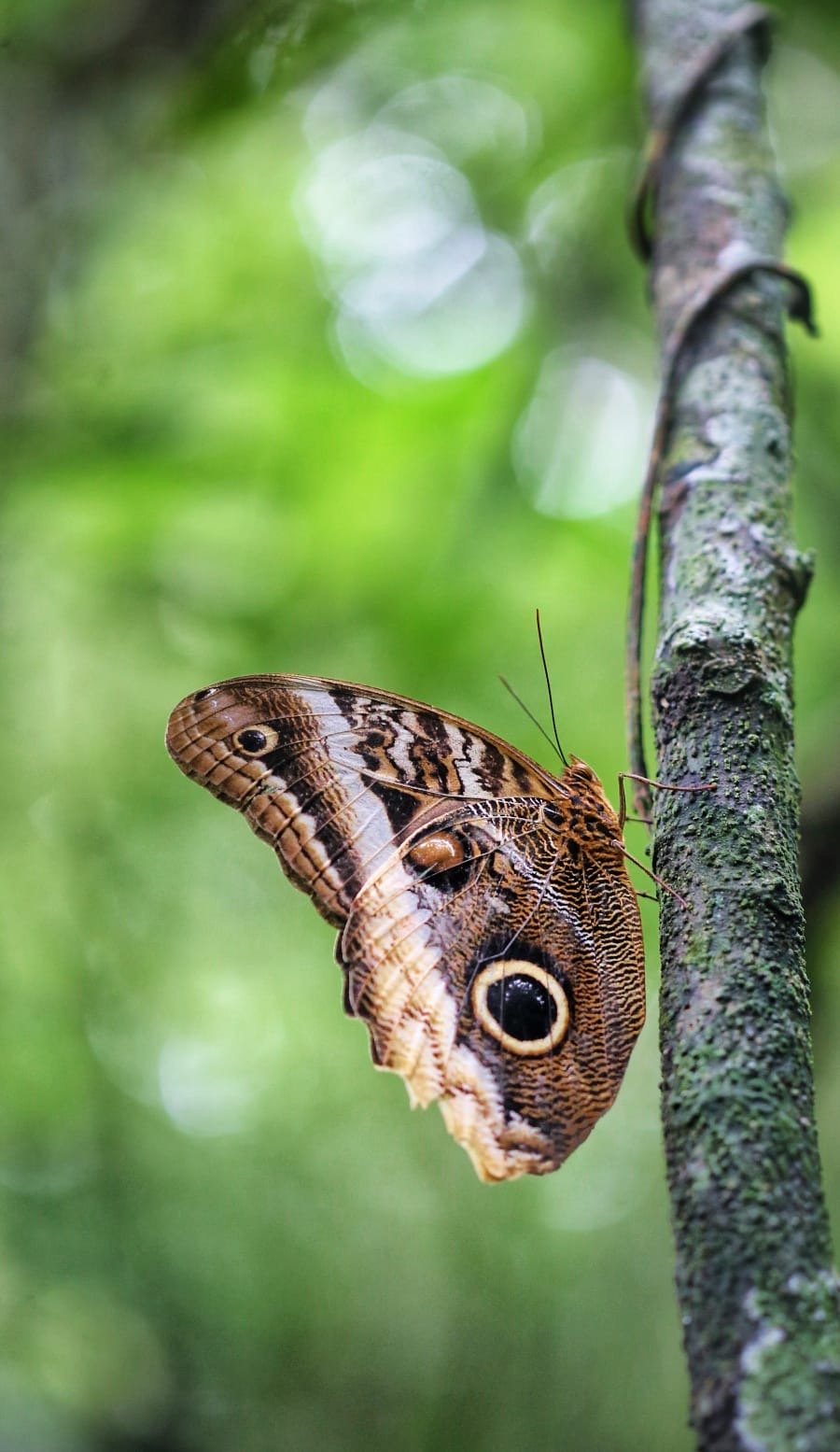
Butterflies, including brilliant blue morphos, flash through shafts of sunlight beneath the jungle canopy.
Reptiles, amphibians, and countless insect species contribute to one of Panama's richest ecosystems.
Simply walking quietly through the forest often becomes a wildlife experience in itself.
Caribbean Waters
Although Kusapín is better known for its cultural richness and rainforest than for classic beach tourism, the surrounding Caribbean waters remain beautiful.
Fishing has supported local communities for generations.
Small boats travel daily between neighboring villages.
Depending on weather conditions, the sea shifts between brilliant turquoise and deep sapphire blue.
Sunrise over the Caribbean can be especially beautiful, with golden light gradually illuminating rainforest covered mountains while fishing boats begin another day on the water.
Fishing and Life by the Sea
Fishing continues to play an essential role in daily life.
Many local families depend on the Caribbean for food and income.
Early mornings often bring scenes of small boats departing before sunrise, while afternoons see fishermen returning with the day's catch.
Watching this rhythm unfold offers visitors a glimpse into the close relationship between coastal communities and the sea that has sustained them for generations.
Fresh seafood naturally forms an important part of local cuisine, prepared using recipes that reflect both Indigenous and Caribbean influences.
The Pace of Life
Perhaps the greatest adjustment for visitors is learning to slow down.
Kusapín does not revolve around strict schedules or long lists of attractions.
Instead, life follows the rhythms of weather, fishing, farming, family, and community.
Days begin early.
Afternoons often become quieter during the hottest hours.
Evenings bring conversations between neighbors as darkness gradually settles over the Caribbean.
For travelers accustomed to busy cities, this slower pace can feel remarkably refreshing.
A Place for True Adventure
Kusapín appeals most strongly to adventurous backpackers rather than conventional tourists.
It rewards those who enjoy exploring places that remain largely untouched by mass tourism.
The experience is less about checking famous attractions off a list and more about immersing yourself in a completely different environment.
Every conversation, every boat journey, every rainforest walk, and every sunrise contributes to the feeling of discovering one of Panama's hidden corners.
Responsible Travel Matters
Because Kusapín remains relatively undeveloped, visitors have an opportunity to make a positive impact by traveling responsibly.
Respecting local customs, asking permission before photographing people, supporting local guides, purchasing locally made crafts, and minimizing environmental impact all help ensure that tourism benefits the community while preserving its unique character.
Places like Kusapín remain special precisely because they have not been overwhelmed by large scale development.
Thoughtful travel helps protect that authenticity for future generations.
One of Panama's Best Kept Secrets
Panama is famous for extraordinary diversity. Within a relatively small country you can explore cloud forests, volcanic peaks, coral reefs, tropical islands, colonial cities, and one of the world's greatest engineering achievements. Yet even among this remarkable variety, Kusapín stands apart.
It represents the adventurous spirit of travel in its purest form. It is a destination where maps begin to feel less important than conversations with local people, where rainforest replaces highways, where traditional culture remains vibrant, and where every journey carries the excitement of genuine discovery.
For backpackers willing to venture beyond Panama's better known destinations, Kusapín offers something increasingly difficult to find in today's world. It is not polished, commercialized, or carefully packaged for tourism. Instead, it remains beautifully real. Here, the Caribbean still feels wild, the rainforest still seems endless, and every day reminds visitors that some of the greatest adventures are found not in the places everyone knows, but in the quiet corners that few travelers ever reach.
In a country filled with remarkable destinations, Kusapín remains one of the last places where you can truly feel that you have reached the edge of the map, standing between the mountains, the rainforest, and the Caribbean Sea, discovering a side of Panama that most visitors never even realize exists.