
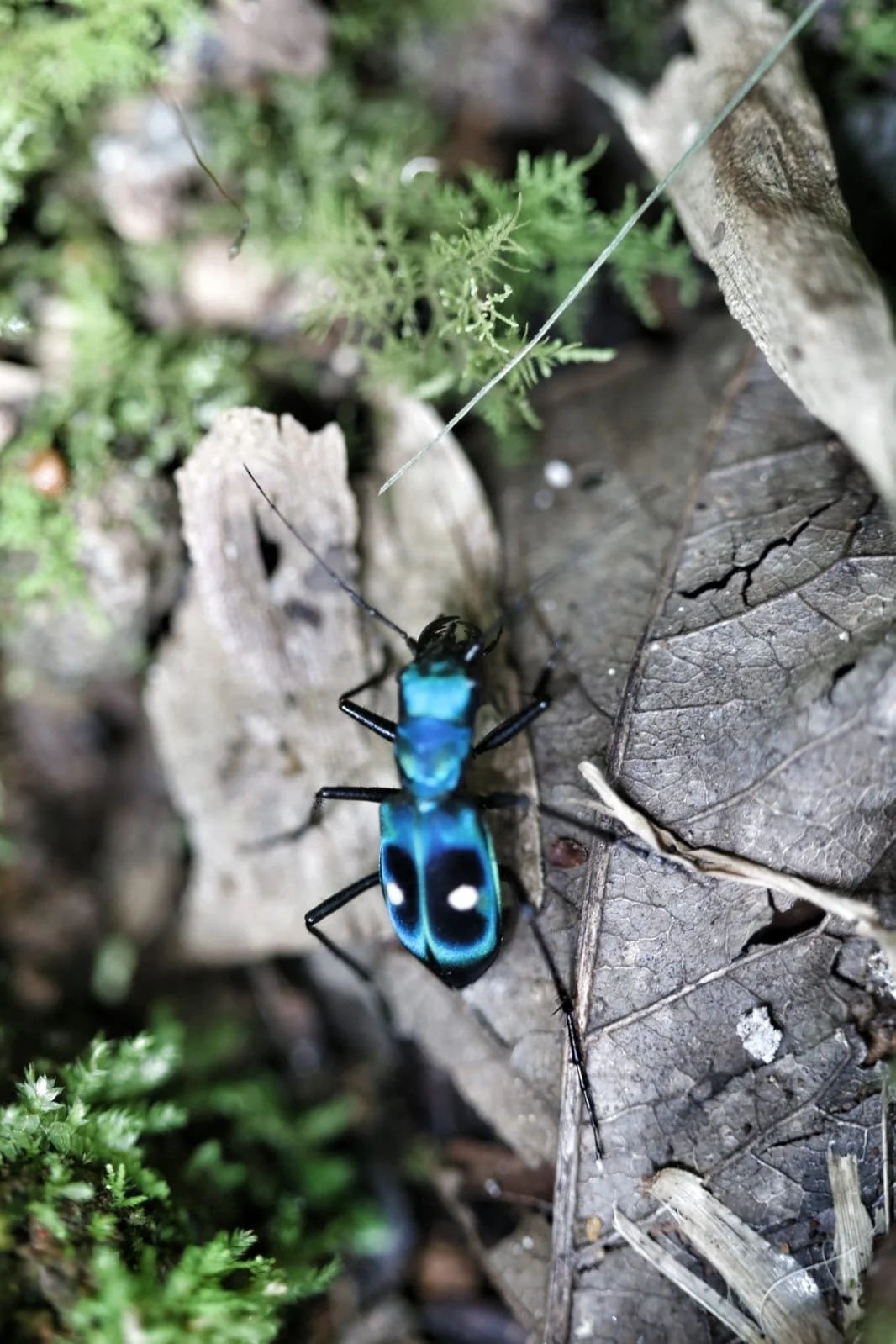
Hidden among the rugged mountains of central Panama lies one of the country's most extraordinary yet least visited protected areas, a place where thick clouds drift silently through ancient forests, waterfalls tumble down moss covered cliffs, and wildlife continues to thrive in landscapes that have changed very little for thousands of years. Parque Nacional General de División Omar Torrijos Herrera is not a destination that appears on every backpacker's itinerary, nor is it surrounded by large hotels or busy tourist infrastructure. Instead, it offers something increasingly rare in the modern world: true wilderness. While thousands of visitors flock each year to Boquete, Volcán Barú, Soberanía National Park, or the famous islands of Bocas del Toro, this magnificent mountain park quietly protects one of Panama's richest cloud forest ecosystems without attracting the same crowds. The moment you arrive, it becomes clear why those who have visited often describe it as one of the country's greatest hidden treasures. The air feels cooler than the lowlands, carrying the fresh scent of damp earth, orchids, moss, and towering trees. Clouds drift effortlessly through the canopy, wrapping the mountains in a constantly changing blanket of mist. Every sound seems amplified in the peaceful silence. Water trickles through countless streams, birds call from invisible perches high above the forest floor, and every trail disappears into lush green vegetation that seems almost untouched by time. For travelers searching for authentic adventure, breathtaking scenery, remarkable biodiversity, and the feeling of discovering a place that remains wonderfully overlooked, Omar Torrijos National Park is one of the finest destinations in all of Panama.
The park is located in the mountainous heart of Coclé Province, near the town of El Copé, where the Cordillera Central forms the backbone of the Panamanian isthmus. Covering more than 25,000 hectares of protected wilderness, it preserves one of the country's most important cloud forest ecosystems while protecting the headwaters of rivers that eventually flow toward both the Pacific Ocean and the Caribbean Sea. This makes the park not only a sanctuary for wildlife but also an essential source of fresh water for surrounding communities and ecosystems. The drive toward the park gradually leaves behind open farmland and enters increasingly dramatic landscapes of rolling green hills, steep valleys, dense rainforest, and mist covered mountain ridges. During the rainy season, waterfalls appear seemingly everywhere, cascading down rocky slopes before disappearing into thick vegetation below. The winding roads themselves become part of the adventure, offering occasional panoramic views across endless layers of forested mountains. As you climb higher in elevation, temperatures begin to cool noticeably, replacing the tropical heat of the lowlands with fresh mountain air that makes hiking comfortable throughout much of the year. By the time visitors reach the park entrance, they have already begun experiencing one of Panama's most beautiful transitions between ecosystems.
The park carries the name of General Omar Torrijos Herrera, one of the most influential figures in Panama's modern history. Originally established as El Copé National Park in 1986, it was later renamed in honor of Torrijos, whose life ended tragically in an airplane crash on nearby Cerro Marta in 1981. Although opinions about Torrijos differ depending on historical perspective, there is little doubt that he played a major role in shaping modern Panama, particularly through the treaties that eventually returned control of the Panama Canal to the Panamanian people. Naming the park after him adds an important historical dimension to the landscape, connecting one of the nation's most significant natural areas with one of its most important historical figures. Visitors therefore experience not only a remarkable wilderness but also a place that carries considerable national symbolism. Throughout the park, nature has gradually reclaimed the mountains where this chapter of Panamanian history unfolded, creating an environment where forests now dominate every hillside and wildlife flourishes undisturbed.
Perhaps the single greatest attraction within Omar Torrijos National Park is its extraordinary cloud forest. Unlike tropical rainforests found at lower elevations, cloud forests exist in a unique environment where moisture rich clouds regularly drift through the trees, bathing every surface in fine mist. This constant humidity creates one of the richest plant communities anywhere in Central America. Every tree trunk becomes covered in thick emerald moss. Delicate orchids bloom directly from branches high above the forest floor. Bromeliads collect rainwater in natural reservoirs that provide homes for insects, frogs, and countless tiny organisms. Long curtains of lichens and epiphytes hang from ancient limbs, while enormous tree ferns create scenes that seem almost prehistoric. Walking through this landscape feels remarkably different from hiking in a typical rainforest. The constantly shifting mist softens the sunlight, giving the forest an almost dreamlike atmosphere where every bend in the trail reveals another beautiful composition of towering trees, moss covered boulders, flowering orchids, and sparkling streams. It is easy to understand why cloud forests are often considered among the most magical ecosystems on Earth. They possess an atmosphere that is difficult to describe yet impossible to forget.
Wildlife is equally impressive, and one of the greatest rewards for patient hikers is realizing just how alive these forests truly are. More than two hundred species of birds have been recorded within the park, making it an excellent destination for birdwatchers hoping to encounter some of Panama's most colorful species. Elegant trogons perch quietly beneath the canopy, hummingbirds flash between flowering plants with astonishing speed, tanagers provide brilliant bursts of color against the deep green vegetation, and soaring hawks patrol the skies above the mountain ridges. The haunting calls of woodcreepers, flycatchers, and wrens accompany visitors throughout many trails, while fortunate hikers may even glimpse the spectacular crested guan moving silently through the forest. Mammals remain more elusive but are certainly present. White faced capuchin monkeys travel through the trees in lively groups, howler monkeys announce dawn with their unmistakable booming calls that echo across entire valleys, sloths spend their days suspended almost invisibly among the branches, while agoutis, armadillos, and even wild cats quietly inhabit the dense undergrowth. Scientists continue discovering new details about the park's biodiversity, particularly among amphibians, insects, fungi, and plants. The cool, humid conditions create ideal habitats for numerous frog species, some found nowhere else on Earth, making the park particularly important for biological research and conservation.
The hiking opportunities within Omar Torrijos National Park perfectly complement its remarkable natural beauty. Several well established trails guide visitors through different sections of the forest, each revealing its own unique landscapes and ecosystems. Some routes follow crystal clear mountain streams where waterfalls tumble over moss covered rocks into refreshing pools. Others climb gradually through ancient forest toward spectacular viewpoints overlooking the surrounding mountains. Every trail feels wonderfully immersive because the vegetation quickly surrounds hikers, creating the sensation of entering another world where civilization has disappeared behind walls of green. Giant strangler figs tower above the canopy while enormous buttress roots spread across the forest floor like natural sculptures. Butterflies drift lazily through shafts of filtered sunlight, brilliant fungi emerge from fallen logs after rain, and every few minutes another unexpected detail captures your attention. Unlike heavily visited parks where large numbers of hikers often diminish the feeling of solitude, Omar Torrijos National Park frequently allows visitors to experience hours of peaceful exploration accompanied only by birdsong, rushing water, and the whisper of wind moving through the forest canopy.
One of the most rewarding experiences awaits those who reach the higher elevations on clear mornings. From several viewpoints within the park, endless layers of mountains stretch toward both horizons, demonstrating just how rugged central Panama truly is. As clouds slowly lift from the valleys, sunlight begins illuminating one mountain ridge after another, creating breathtaking panoramas that constantly change throughout the morning. Under particularly favorable conditions, visitors may even catch glimpses of both the Pacific Ocean and the Caribbean Sea from elevated viewpoints, a remarkable reminder that Panama is one of the narrowest countries in the Americas. Standing high above the cloud forest while looking across forests that extend toward two oceans creates a profound appreciation for Panama's geography. It is moments like these that transform a simple hike into an unforgettable memory.
Beyond its beauty, the park performs an essential role in protecting Panama's natural heritage. The mountains preserved within its boundaries function as enormous natural water towers, capturing rainfall from passing clouds and feeding countless rivers that sustain surrounding communities, agriculture, and wildlife. Without these protected forests, erosion would increase dramatically, water quality would decline, and many unique species would lose the habitats upon which they depend. The park also stores enormous amounts of carbon within its ancient forests, helping regulate regional climate while contributing to global conservation efforts. Botanists continue studying its remarkable diversity of orchids, ferns, hardwood trees, bromeliads, mosses, and medicinal plants, while zoologists investigate the complex relationships between the countless animal species that call these mountains home. Every hectare protected today preserves opportunities for future scientific discovery while safeguarding ecosystems that have existed for countless generations.
Perhaps the most surprising aspect of Parque Nacional General de División Omar Torrijos Herrera is how few international visitors ever experience it. In a country celebrated for the Panama Canal, tropical beaches, world famous coffee, Caribbean islands, and volcanic highlands, this magnificent mountain wilderness remains almost invisible to mainstream tourism. Yet that very obscurity has become one of its greatest strengths. The forests remain peaceful. Wildlife behaves naturally. Trails retain their sense of exploration rather than feeling commercialized. Visitors often leave with the satisfying realization that they have experienced one of Panama's greatest hidden treasures, a destination that still belongs primarily to nature rather than tourism.
For adventurous backpackers, photographers, birdwatchers, hikers, botanists, and anyone who appreciates truly wild landscapes, Parque Nacional General de División Omar Torrijos Herrera deserves recognition as one of the finest national parks in Panama. It is a place where towering cloud forests, spectacular waterfalls, panoramic mountain vistas, extraordinary biodiversity, fascinating history, and remarkable tranquility combine into an experience that perfectly represents the country's incredible natural richness. Long after leaving the misty trails behind, visitors remember the scent of moss covered forests, the distant calls of howler monkeys echoing through hidden valleys, the endless shades of emerald green stretching across every mountainside, and the quiet realization that some of Panama's greatest wonders remain those that relatively few travelers have yet discovered.