
In the heart of the Panama Canal lies an island that, at first glance, appears to be just another patch of lush tropical forest rising from the waters of Gatún Lake. There are no white sand beaches lined with palm trees, no luxury resorts, and no bustling towns. Instead, towering rainforest trees stretch toward the sky while the calls of monkeys echo through the canopy, toucans glide overhead, and countless insects fill the forest with an endless chorus of sound. To the casual observer, Barro Colorado Island may seem like simply another beautiful piece of tropical wilderness. Yet appearances can be deceiving. This remarkable island is one of the most scientifically important tropical forests on Earth. For more than a century it has served as a living laboratory where generations of scientists have transformed humanity's understanding of rainforests, wildlife, climate, and biodiversity. Few places anywhere in the world have contributed more to tropical ecological research than Barro Colorado Island, making it one of Panama's greatest intellectual treasures and one of the most influential forests ever protected.
The story of Barro Colorado begins with one of the greatest engineering projects in human history: the construction of the Panama Canal. Before the canal existed, the landscape looked completely different. Rivers flowed through continuous valleys surrounded by dense tropical rainforest. When the Chagres River was dammed in the early twentieth century to create the immense Gatún Lake, vast areas of forest were flooded beneath the rising waters. Hilltops that had once formed part of an unbroken landscape suddenly became isolated islands surrounded by one of the largest artificial lakes in the world. One of those hilltops became Barro Colorado Island. What seemed like an unintended consequence of canal construction would eventually become one of the greatest natural laboratories in the history of science.
Almost immediately, scientists realized the extraordinary opportunity before them. Because the island had become naturally isolated from surrounding forests, it provided a perfect place to study tropical ecosystems in remarkable detail. In 1923, the island was officially set aside as a biological reserve, making it one of the oldest continuously protected tropical research sites anywhere in the world. What began as a relatively small research station gradually evolved into an internationally renowned center for scientific discovery. Today, Barro Colorado Island is managed by the Smithsonian Tropical Research Institute, whose scientists, students, and visiting researchers come from every corner of the globe to study one of the richest ecosystems on Earth.
Unlike most national parks, Barro Colorado is not primarily a tourist destination. It is a working scientific laboratory where discoveries continue almost every day. Researchers rise before sunrise to monitor birds, follow monkey troops through the forest, measure the growth of enormous trees, collect insects, observe bats, study frogs, analyze climate patterns, and document countless ecological interactions that occur within the rainforest. Every fallen leaf, flowering vine, and nesting bird may contribute valuable information that helps scientists better understand how tropical ecosystems function. The island has become so thoroughly studied that it is often described as the most intensively researched tropical forest in the world, yet even after more than one hundred years of investigation, scientists continue making new discoveries that reshape our understanding of nature.
One of the reasons Barro Colorado has become so important is the astonishing diversity of life packed into such a relatively small area. Walking beneath its forest canopy reveals an environment bursting with activity. Towering ceiba trees, strangler figs, mahoganies, palms, and countless other tree species create several layers of vegetation stretching from the forest floor to the highest branches more than forty meters above the ground. Thick vines twist around ancient trunks while orchids, bromeliads, mosses, and ferns cling to branches in every direction. The forest floor itself supports fungi, insects, amphibians, reptiles, and countless seedlings waiting patiently for opportunities to reach sunlight when giant trees eventually fall. Every square meter of rainforest supports an astonishing variety of organisms, each playing a role within one of the planet's most complex ecosystems.
Wildlife on Barro Colorado Island is equally remarkable. White faced capuchin monkeys move energetically through the canopy searching for fruit and insects, while mantled howler monkeys fill the morning air with booming calls that echo across Gatún Lake. Agile spider monkeys leap gracefully between branches, displaying extraordinary athletic ability as they navigate the forest canopy. White nosed coatis roam the forest floor in curious groups, while agoutis quietly gather seeds beneath towering trees. Sloths spend their lives suspended high among the branches, moving so slowly that algae often grows on their fur, providing remarkable camouflage. Armadillos, peccaries, anteaters, opossums, bats, and numerous rodent species contribute to an ecosystem where mammals occupy almost every available ecological niche. Although elusive predators such as jaguars and pumas rarely occur on the island today due to its isolation, the diversity of smaller mammals remains extraordinary.
Birdlife alone would justify Barro Colorado's global importance. More than four hundred bird species have been recorded within the surrounding region, and the island itself regularly hosts toucans, motmots, trogons, parrots, tanagers, woodcreepers, hummingbirds, hawks, flycatchers, antbirds, kingfishers, and many migratory species arriving from North America each year. Birdsong begins long before sunrise, creating one of the rainforest's most unforgettable experiences. Scientists have spent decades studying nesting behavior, migration, feeding ecology, territorial interactions, and communication among these birds, contributing enormously to global ornithological knowledge.
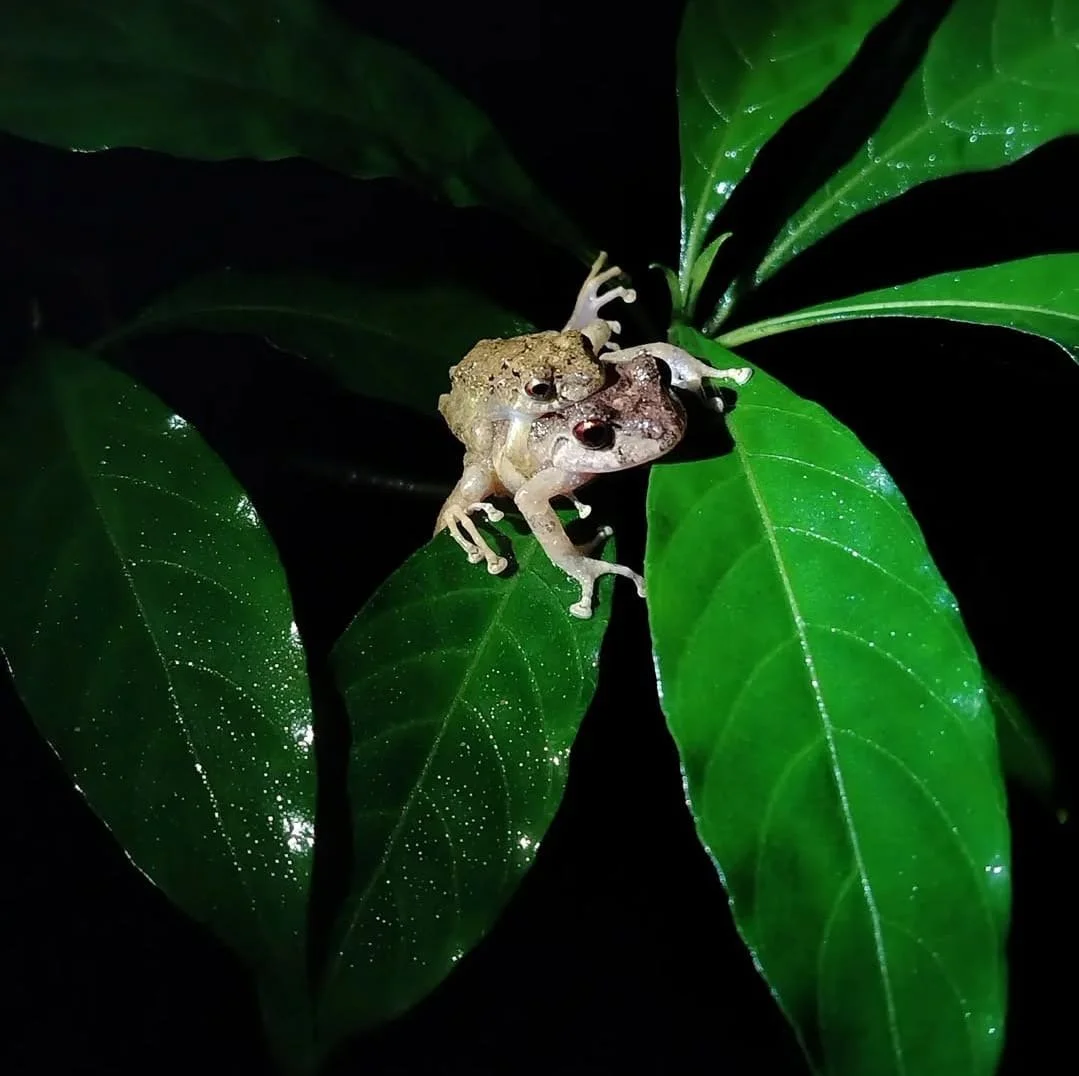
Perhaps even more astonishing than the larger animals are the countless smaller creatures inhabiting the island. Millions of ants construct elaborate colonies beneath the soil and within fallen logs. Army ants sweep across the forest floor in coordinated hunting columns that influence the behavior of hundreds of other species. Brilliant blue morpho butterflies glide through shafts of sunlight, while leaf cutter ants carry pieces of vegetation many times their own size back to underground fungal gardens. Tiny poison frogs hide among damp leaf litter, spiders weave intricate webs between branches, beetles occupy almost every conceivable habitat, and termites recycle enormous quantities of dead wood back into the ecosystem. Scientists estimate that many insect species on the island have yet to be formally described, reminding us how much remains unknown even within one of the world's best studied forests.
Barro Colorado has also revolutionized our understanding of trees. For decades, researchers have carefully measured and mapped thousands upon thousands of individual trees, recording their growth, reproduction, mortality, and responses to changing climate conditions. Every few years, entire forest plots are painstakingly surveyed tree by tree, creating one of the longest running ecological datasets anywhere on Earth. These records allow scientists to answer questions that would otherwise be impossible. How quickly do tropical forests recover after storms? Which species thrive during droughts? How does climate change affect rainforest growth? Which trees store the most carbon? Thanks largely to research conducted on Barro Colorado, scientists now possess answers to many of these fundamental questions, making the island invaluable for understanding global environmental change.
The island has become particularly important in the study of climate change. Tropical forests absorb enormous quantities of carbon dioxide from the atmosphere, helping regulate Earth's climate. Understanding exactly how these forests respond to rising temperatures, shifting rainfall patterns, and increasing atmospheric carbon has become one of the defining scientific challenges of our time. Long term research on Barro Colorado provides crucial evidence that informs climate models used by scientists around the world. The knowledge gained from this small Panamanian island influences international conservation strategies, climate policy, and efforts to protect tropical forests across multiple continents.
One of the island's most fascinating characteristics is that it unintentionally became a giant ecological experiment. Because Barro Colorado was isolated from the mainland when Gatún Lake formed, scientists gained a unique opportunity to observe how isolation affects wildlife populations over many decades. Some larger animals gradually disappeared because the island could no longer support viable populations. Other species adapted remarkably well. Researchers studying these changes helped develop important theories in island biogeography, a branch of ecology that explains how island size and isolation influence biodiversity. These ideas now help conservationists design protected areas, wildlife corridors, and nature reserves around the world.
Despite more than a century of research, Barro Colorado remains remarkably pristine. Strict protection limits public access, ensuring that scientific work continues with minimal disturbance while preserving the integrity of the rainforest. Visitors fortunate enough to obtain permission to tour the island often describe the experience as walking through one of the world's last great untouched tropical forests. The trails remain quiet, the wildlife behaves naturally, and the overwhelming sense is one of entering a living museum where evolution, ecology, and conservation continue unfolding exactly as nature intended.
The importance of Barro Colorado extends far beyond Panama. Scientific papers based on research conducted here have shaped university textbooks, guided conservation efforts on multiple continents, trained generations of tropical biologists, and fundamentally changed how humanity understands rainforests. Students who began their careers studying frogs, monkeys, trees, or insects on Barro Colorado have gone on to become leading scientists working throughout the tropics. Discoveries made on this small island have influenced research from the Amazon Basin to Southeast Asia and from African rainforests to Caribbean islands.
For Panama, Barro Colorado represents something profoundly special. The country is often celebrated for the Panama Canal, stunning beaches, vibrant cities, and extraordinary biodiversity, but Barro Colorado demonstrates another equally important contribution to the world: knowledge. Within this quiet island forest, surrounded by the waters of Gatún Lake and overlooked by ships crossing one of the world's greatest engineering achievements, scientists continue uncovering the hidden workings of tropical nature. Every new discovery made here deepens our understanding of life itself.
In an age when rainforests face increasing pressures from deforestation, climate change, and habitat loss, Barro Colorado Island stands as a powerful reminder of the value of protecting nature not only for its beauty but also for the knowledge it holds. For more than one hundred years, this small island has quietly shaped global science while remaining one of Panama's greatest natural treasures. It is a place where every towering tree, every monkey call, every butterfly, and every raindrop contributes to a story that continues to unfold, proving that one small island can change the way the entire world understands the tropical rainforest.