
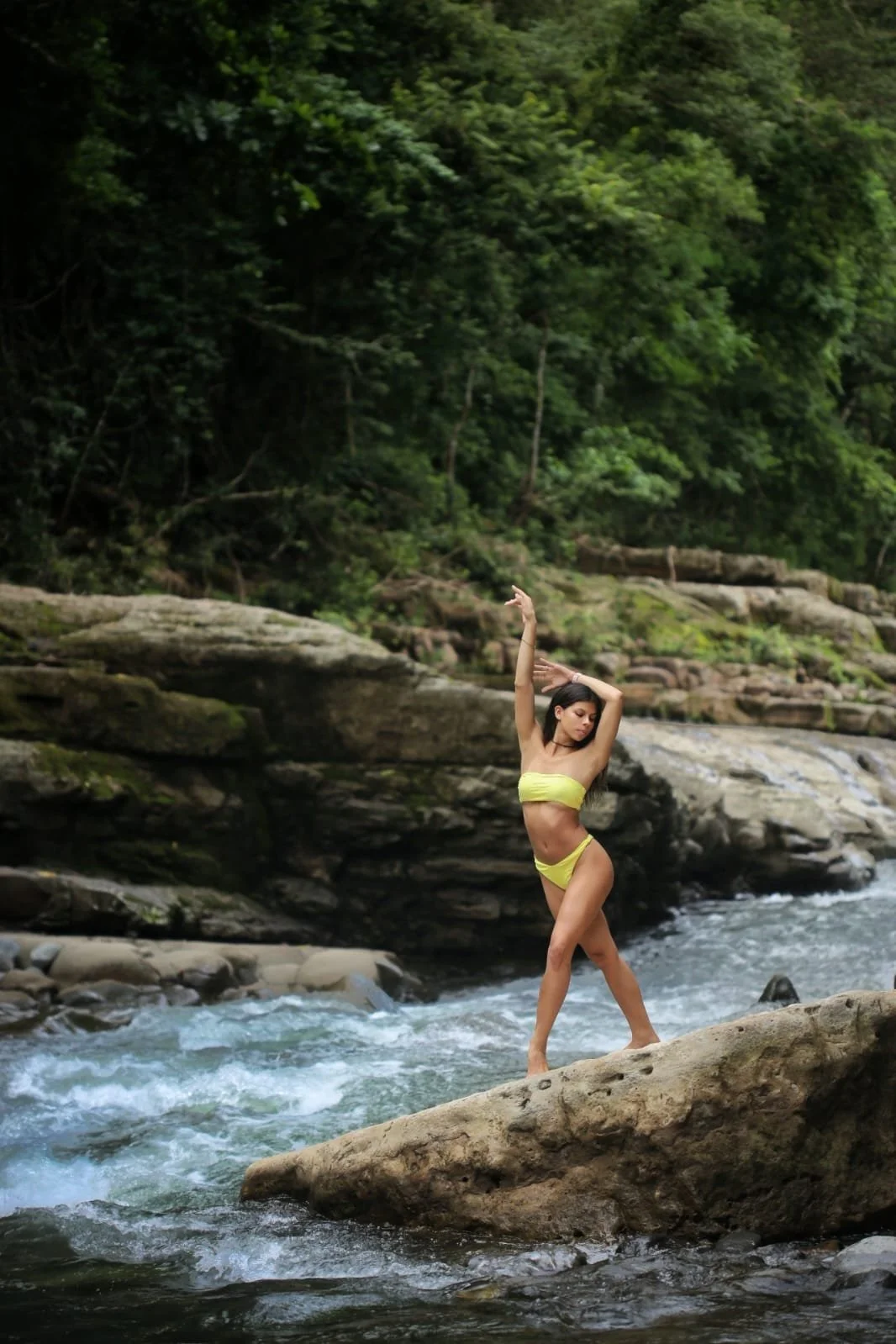
One of the great things about traveling around Panama is that accommodation is not simply divided into “cheap hotel” and “expensive hotel.”
Panama has an enormous range of places to sleep, and sometimes the accommodation itself becomes part of the adventure. You can spend the night in a dormitory with ten other backpackers, wake up in a jungle cabin surrounded by monkeys, rent an apartment overlooking the Pacific, sleep above the Caribbean Sea, stay on a coffee farm in the mountains, or check into a giant luxury resort where someone will happily bring you a cocktail without you having to move more than three metres.
The official Panama tourism website describes accommodation ranging from hostels and vacation rentals to eco lodges, cabins, boutique hotels, resorts and community based stays. In places such as Boquete, Bocas del Toro and the Pacific coast, the type of accommodation can dramatically change the entire experience of your trip.
So the question isn't simply “What can I afford?”
It is also:
“What kind of Panama experience do I actually want?”
The backpacker hostel: roughly $10 to $30
If your priority is meeting people, keeping costs down and actually having a social experience, the hostel is hard to beat.
A dorm bed can be dramatically cheaper than a private hotel room, and the biggest advantage isn't necessarily the price. It is the people.
A good hostel gives you instant travel companions. Someone is going to ask where you are going tomorrow. Someone else will probably be heading there too. Five minutes later you have a new travel plan, three WhatsApp numbers and an invitation to go drinking with people you met ten minutes ago.
Hostels range enormously in Panama. Some are basic backpacker properties with bunk beds and a kitchen. Others are social destinations with bars, restaurants, tours, swimming pools, jungle trails and organized activities.
And this distinction matters.
A hostel is not automatically a party hostel, and it is not automatically a quiet place to sleep. Read the reviews carefully and look at what sort of traveler the property attracts.
If you are 23 and want to meet people every night, a quiet boutique guesthouse may be your idea of punishment.
If you are 53 and hoping for eight hours of peaceful sleep, a hostel famous for midnight beer pong may produce a different kind of punishment.
The private hostel room: roughly $25 to $60+
This is one of the underrated options in Panama.
You get many of the social advantages of a hostel without necessarily sleeping in a dorm.
You might have your own room while still being able to use the communal areas, restaurant, bar, kitchen, hammocks, tours and social spaces.
For couples who want to meet other travelers but don't want to share a bunk room, this can be an excellent compromise.
It is also useful for older backpackers who still enjoy the social side of travel but have reached the stage where they would prefer to close a door at night.
Guesthouses and family run hotels: roughly $25 to $70+
Then you have the classic Panamanian guesthouse.
These can be fantastic because they often feel more personal than a conventional hotel. You may have a handful of rooms, a local owner, a small garden, a terrace and perhaps breakfast included.
They are particularly interesting outside Panama City, where accommodation can become part of the local experience rather than simply somewhere to store your luggage.
You will find this style of lodging throughout Panama, including beach communities, mountain towns and smaller destinations.
It is often a good choice for travelers who want something inexpensive but don't particularly care about nightlife or meeting dozens of other backpackers.
Cabins and cabañas: roughly $40 to $150+
Now things start getting interesting.
A cabin can mean almost anything in Panama.
It could be a very simple wooden building with a bed and mosquito net.
Or it could be a beautiful modern cabin in the mountains with a huge terrace, kitchen, fireplace and panoramic view.
Boquete and the highlands are particularly good places to look for cabins, including accommodation associated with coffee farms and mountain properties. Panama's tourism authority specifically highlights cabins, coffee farms and eco lodges among the accommodation choices around Boquete.
Cabins are especially good for couples and people who want privacy without necessarily paying luxury hotel prices.
And there is something psychologically different about opening the door of a cabin and finding a jungle outside rather than a hallway with room 214 across from you.
Eco lodges: $50 to several hundred dollars
The phrase eco lodge gets used rather loosely these days.
Some are genuinely rustic places where the main attraction is the forest, wildlife and location. Others are extremely sophisticated properties that happen to have a sustainability story attached to them.
The real attraction is usually the setting.
You might be surrounded by rainforest, sitting beside a river, overlooking the ocean or sleeping in the middle of a coffee plantation.
Boquete has eco lodges particularly suited to birdwatching, hiking and nature, while the Pacific and Caribbean coasts have properties combining forests and beaches.
Eco lodges are ideal if you are the sort of person who considers “I saw a toucan from my balcony” a better amenity than a marble bathroom.
Boutique hotels: roughly $70 to $250+
Boutique hotels are for people who want something more stylish and personal than a large chain hotel.
Usually there are fewer rooms, more attention to design and some kind of personality.
You might get an old colonial building, a beautifully renovated Caribbean house, an artistic modern hotel or a small property overlooking the ocean.
Panama City has particularly interesting boutique accommodation in Casco Antiguo, where historic architecture, restaurants and nightlife are right outside your door.
Boutique hotels are particularly good for couples, romantic trips and travelers who care about atmosphere.
Apartments and vacation rentals: $50 to $300+
If you are staying for several nights, traveling as a couple, or traveling with friends, an apartment can make far more sense than a hotel.
You might get a kitchen, living room, washing machine, multiple bedrooms and considerably more space.
For a family or group of four, five or six people, dividing the price of a vacation house between everyone can make what initially looks expensive surprisingly reasonable.
Vacation rentals are particularly common in beach destinations and Panama City. The country's tourism authority specifically highlights rental houses and vacation homes in destinations such as Pedasí, Portobelo, Taboga and the Pacific coast.
The downside?
You lose some of the hotel experience.
There probably isn't a guy downstairs whose entire job is finding you a taxi at 6 AM.
You are now the guy.
Beach cabins and bungalows
Want to wake up and walk directly onto the sand?
Panama has plenty of options.
Beach cabins and bungalows are particularly common around the Pacific and Caribbean, ranging from extremely simple places to surprisingly luxurious little villas.
On Bastimentos Island in Bocas del Toro, for example, visitors can choose between hostels, rental homes, luxury hotels, jungle bungalows and eco lodges.
This type of accommodation is about location.
You are not necessarily paying for a huge room.
You are paying for the fact that you can open your door, walk barefoot for thirty seconds and be staring at the Caribbean.
Overwater accommodation
Now we enter one of Panama's more exotic accommodation categories.
In parts of the Caribbean, you can stay directly over the water.
Imagine waking up, stepping onto a wooden deck and looking straight down into tropical water.
This is particularly associated with the Caribbean islands and coastal communities around Bocas del Toro and other island destinations.
It can range from simple rustic structures to genuinely luxurious accommodation.
And this is one situation where location beats square footage.
A tiny room over Caribbean water can feel more memorable than a giant room in a conventional hotel.
Surf hostels and surf lodges
If you are heading to places such as Santa Catalina, Playa Venao or other Pacific surf destinations, accommodation often revolves around the surfing lifestyle.
You may find inexpensive dorms, private rooms, cabins, surf camps and boutique surf hotels.
The difference is not simply the room.
The entire property may be designed around surfing, with board storage, outdoor showers, lessons, rental equipment, communal spaces and people who know exactly where the waves are going to be good tomorrow.
Playa Venao in particular has a broad accommodation mix ranging from affordable hostels to cabanas and eco lodges, alongside its surfing, wellness and nightlife scene.
Farm stays and agrotourism
This is one of the more interesting choices if you want to see a different side of Panama.
Instead of staying in a conventional hotel, you stay on or near a working farm.
In the highlands, that might mean coffee.
Elsewhere it could involve cattle, cacao, fruit, vegetables or other agricultural activities.
Boquete's coffee farms are particularly interesting because some combine accommodation with coffee experiences and tours.
This is less about luxury and more about where you are.
Homestays and community accommodation
If your priority is cultural immersion, consider staying with a local family or community.
This can be a completely different experience from booking an anonymous hotel room.
You eat local food, see how people actually live and potentially experience parts of Panama that don't appear in the average tourist itinerary.
There are also community based tourism options where accommodation directly forms part of the local tourism economy. Panama's tourism authority highlights community stays as an option in several regions, including Indigenous communities.
Just remember that this isn't necessarily luxury travel.
You're choosing experience over convenience.
The classic city hotel: $50 to $200+
Panama City has an enormous range of hotels.
You can stay in a simple inexpensive room, a modern business hotel, a historic boutique property or a huge tower overlooking the Pacific.
The advantage is predictability.
Air conditioning works.
There is usually hot water.
Someone will probably bring you another towel without looking personally offended by the request.
For a first or last night in Panama, a conventional city hotel can make a lot of sense.
And location matters enormously. Casco Antiguo gives you history and nightlife, while areas such as Avenida Balboa offer modern high rises and views, and El Cangrejo is known for a central urban atmosphere.
Resorts and all inclusive hotels: $100 to $500+
This is the “I don't want to organize anything” option.
Resorts are particularly common along sections of the Pacific coast.
You get pools, restaurants, bars, beaches, activities and sometimes golf, spas and entertainment all in one property.
The Pacific Riviera has everything from budget hostels and rental houses to luxury all inclusive resorts.
They are fantastic for certain travelers.
Families love them.
Couples love them.
People celebrating something love them.
And people who have spent six months traveling through Central America occasionally arrive at a resort and announce:
“I am doing absolutely nothing for four days.”
This is a perfectly legitimate travel philosophy.
Luxury hotels and villas: $250 to $1,000+
At the top end, Panama can deliver serious luxury.
Five star city hotels, private villas, enormous suites, private pools, ocean views, high end restaurants and secluded jungle properties are all available.
At this level, you are no longer really buying a bed.
You are buying privacy, service, space, views and convenience.
A luxury villa for a group can also sometimes make more financial sense than several luxury hotel rooms.
And Panama has some spectacular locations for this style of travel, particularly along the Pacific coast, Caribbean islands and mountain regions.
Camping: the cheapest accommodation of all
And then there is the option that requires the least money and possibly the most tolerance for insects.
Camping.
Panama has camping opportunities ranging from organized campsites to much more basic nature experiences, depending on the location and local rules.
The official tourism authority even lists camping areas among the accommodation options along the Pacific Riviera.
Camping is fantastic if you love nature.
It is slightly less fantastic if you discover at 2 AM that the mysterious rustling outside your tent is considerably larger than you were expecting.
So which one is right for you?
If you're traveling on the absolute lowest budget, look at hostels, dorms and camping.
If you're a social backpacker, choose a social hostel rather than simply the cheapest bed you can find.
If you're a couple on a moderate budget, look at private hostel rooms, guesthouses, cabins and small boutique hotels.
If you're a family or group, investigate vacation rentals, villas and apartments. The extra kitchen and living space can be worth far more than another hotel room.
If you're a nature lover, look at eco lodges, cabins, farm stays and jungle properties.
If you're a surfer, stay somewhere built around surfing rather than simply choosing the nearest generic hotel.
If you're looking for romance, consider boutique hotels, private villas, beach cabins or overwater accommodation.
If you're wealthy and tired, congratulations. Panama has resorts and luxury hotels specifically designed to make sure you don't have to carry your own suitcase very far.
And if you're the kind of traveler who thinks the best accommodation is somewhere you can meet interesting people, drink a cold beer, wake up in the jungle and spend the evening hearing stories from strangers from five different countries, then a good social hostel might actually beat the $500 hotel.
The biggest mistake is choosing accommodation by price alone
A $15 bed in the wrong location can be far more expensive than a $40 room in the right one.
If you have to spend $25 every day getting to the attractions you came to see, the bargain wasn't really a bargain.
Likewise, a $100 hotel room may be terrible value if you spend the entire time inside it.
Panama rewards travelers who choose accommodation based on experience, location and personality, not just stars and price.
The country's accommodation scene is wonderfully diverse. You can wake up in a skyscraper in Panama City, drink coffee on a mountain farm in Boquete, fall asleep in a jungle cabin, live above Caribbean water in Bocas del Toro, surf straight from your accommodation on the Pacific or spend the night sharing stories with backpackers in a hammock at a jungle hostel.
And that's perhaps the best thing about accommodation in Panama.
You don't just choose where you're going to sleep.
You choose a little piece of the Panama story you are going to experience.