
If you're moving to Panama, buying a property, renting an apartment or setting up an Airbnb, one of the easiest household expenses to arrange is internet.
The good news is that home internet in Panama is generally quite affordable, especially compared with Canada, the United States and much of Europe. In Panama City and other populated areas, you can often get fast enough internet for streaming, working from home, video calls and multiple people using WiFi at the same time without spending a fortune.
But there is an important catch:
Where your property is located matters enormously.
A modern apartment in Panama City might have fibre internet available directly to the building. A house in a small interior town might have several choices. A jungle property, beach house or mountain finca can be a completely different story.
And this is where Starlink has changed the game.
Tigo: One of the Main Home Internet Choices
Tigo is one of the major residential internet providers in Panama.
Its residential offerings include internet packages ranging from several hundred megabits up to 1,000 Mbps in areas where fibre is available.
For example, Tigo has advertised a 500 Mbps home package for around B/.56 per month under certain promotions. Prices and promotions can change, so it is worth checking what is available when you actually order.
That's pretty impressive for Panama.
Five hundred megabits per second is more than enough for the average household.
You can have Netflix running, somebody gaming, another person on a Zoom call and somebody else scrolling TikTok without the household collapsing into a technological emergency.
What Does 500 Mbps Actually Mean?
A lot of people see numbers like 500 Mbps and immediately think they need the biggest number possible.
You probably don't.
100 to 300 Mbps: Plenty for most couples and smaller households.
300 to 500 Mbps: Excellent for families, home offices and lots of simultaneous devices.
500 to 1,000 Mbps: Useful for large households, heavy downloading, serious work from home, multiple 4K streams or people who simply enjoy having ridiculously fast internet.
The quality of the connection can actually matter more than the headline speed.
A stable 300 Mbps fibre connection can be much more useful than a theoretical 1,000 Mbps connection that occasionally behaves like it has gone for a lunch break.
WiFi Coverage Can Be a Bigger Problem Than Internet Speed
You can have incredibly fast internet coming into your house and still have terrible WiFi in the bedroom.
Panama has plenty of concrete construction, large homes and buildings where thick walls can make wireless signals struggle.
This is why mesh WiFi systems can be worthwhile in larger houses.
Instead of having one router desperately trying to send a signal through four concrete walls, you have multiple access points around the property.
This is particularly useful for larger tropical houses where the living room might be separated from the bedrooms, terrace or pool area by a considerable distance.
Internet in an Apartment Building
If you're buying or renting an apartment in Panama City, ask the building administration or landlord which internet companies already serve the building.
This can save you a surprising amount of hassle.
Some buildings have fibre already installed and multiple providers can connect you.
Others may effectively be set up around one particular provider.
Before signing a lease or buying a property, ask:
"What internet providers are available in this building?"
And don't simply ask whether there is "internet."
Ask what speed is available and whether the connection is fibre.
That little question can become surprisingly important when you're trying to work from home.
Fibre Is the Gold Standard
If you have the choice between fibre and an older cable based connection, fibre is generally the option I'd look at first.
Fibre can offer excellent speeds, good stability and strong performance for video calls, streaming and uploading large files.
It's especially attractive if you're working remotely.
And if you're buying an apartment as an Airbnb, reliable fast internet can be an important selling point.
Guests may forgive a slightly ugly sofa.
They are considerably less forgiving when Netflix doesn't work.
But What Happens When You Leave Panama City?
This is where the story gets more interesting.
Move away from the major urban areas and internet availability can change dramatically.
Panama has excellent connectivity in many places, but the country also contains enormous amounts of mountains, rainforest, islands, agricultural land and remote coastal areas.
A house in a developed neighbourhood near David may have several conventional options.
A house sitting halfway up a mountain may not.
A jungle property overlooking the Caribbean may have absolutely spectacular views and absolutely terrible traditional internet options.
And that is where satellite internet becomes extremely interesting.
Enter Starlink
Starlink has become one of the most interesting options for people living in remote parts of Panama.
Instead of waiting for a cable or fibre company to build infrastructure to your property, Starlink connects the property directly to satellites.
That changes the equation dramatically.
You can be in a city apartment.
Or a mountain cabin.
Or a beach house.
Or a property surrounded by jungle.
As long as the location has suitable Starlink coverage and a sufficiently clear view of the sky, satellite internet can provide high speed connectivity without a traditional wired connection.
For people buying remote property in Panama, this is a huge development.
How Much Does Starlink Cost?
This is where you need to be a little careful.
Starlink prices are country specific and can change, so don't assume the price you see advertised in Canada or the United States is what you will pay in Panama.
The monthly price depends on the country, exact location, plan and current promotions.
There is also the cost of the Starlink equipment itself, although promotions and equipment offers can change over time.
The best way to determine the real price is to enter the exact address of your Panamanian property into Starlink's availability checker.
Don't budget for a remote property based on somebody else's Starlink price from another country.
Starlink Has One Huge Advantage
It doesn't care very much whether your property is in a fancy neighbourhood.
Traditional internet companies have to physically connect your house.
Starlink doesn't.
That's why it can be incredibly interesting for Panama's remote properties.
Imagine buying a beautiful piece of land in the mountains where there is no fibre.
Previously, your options might have involved cellular data, a local wireless provider or some complicated point to point arrangement.
Now you can potentially put a Starlink dish on the property and have high speed internet.
That changes the value proposition of remote real estate.
A remote property without internet can feel very remote.
A remote property with Starlink can potentially become a perfectly functional work from home location.
Starlink Isn't Magic
There are a few things to understand.
First, the dish needs a good view of the sky.
Trees are the enemy.
And Panama has a lot of trees.
A beautiful jungle property with enormous tropical trees directly above the house can therefore be more complicated than an open piece of land.
You may need to mount the dish somewhere with a clearer view of the sky.
Second, heavy weather can affect satellite internet performance.
Panama's tropical rain can be spectacular.
The internet doesn't necessarily share your enthusiasm for spectacular tropical rain.
Third, Starlink requires electricity.
That sounds obvious until you're living in a remote property where power outages are common.
If your internet is important for work, consider having backup power for the Starlink equipment and your router.
A small UPS or battery backup can make a surprisingly big difference.
What About Using Your Phone as WiFi?
Another option in Panama is simply using cellular data.
This can be surprisingly effective.
If your house has strong 4G or 5G coverage, you can use a phone or dedicated mobile hotspot to provide internet for your home.
For a single person or couple who mainly needs email, WhatsApp, browsing and occasional video calls, this can be an inexpensive solution.
It becomes less attractive when five people are streaming Netflix simultaneously.
It also depends entirely on the quality of the mobile signal at your property.
A beautiful piece of land where your phone only works if you stand on one leg next to the mango tree is probably not ideal for a permanent home internet solution.
The Secret Weapon: Have Two Connections
If you're working remotely or running an Airbnb, consider having two different types of internet.
For example:
Primary: Fibre or Tigo.
Backup: Starlink or mobile data.
Or:
Primary: Starlink.
Backup: Cellular hotspot.
This can be particularly useful in Panama.
Internet outages happen.
Power outages happen.
Storms happen.
Construction accidentally cuts cables.
Someone's backhoe develops an unhealthy relationship with a fibre line.
If you're running a business from home, having a backup connection can be worth far more than the monthly cost.
What About Airbnb?
If you're buying a Panama property specifically for Airbnb, I would consider internet almost as important as air conditioning.
Guests increasingly expect WiFi to simply exist.
They don't want to hear:
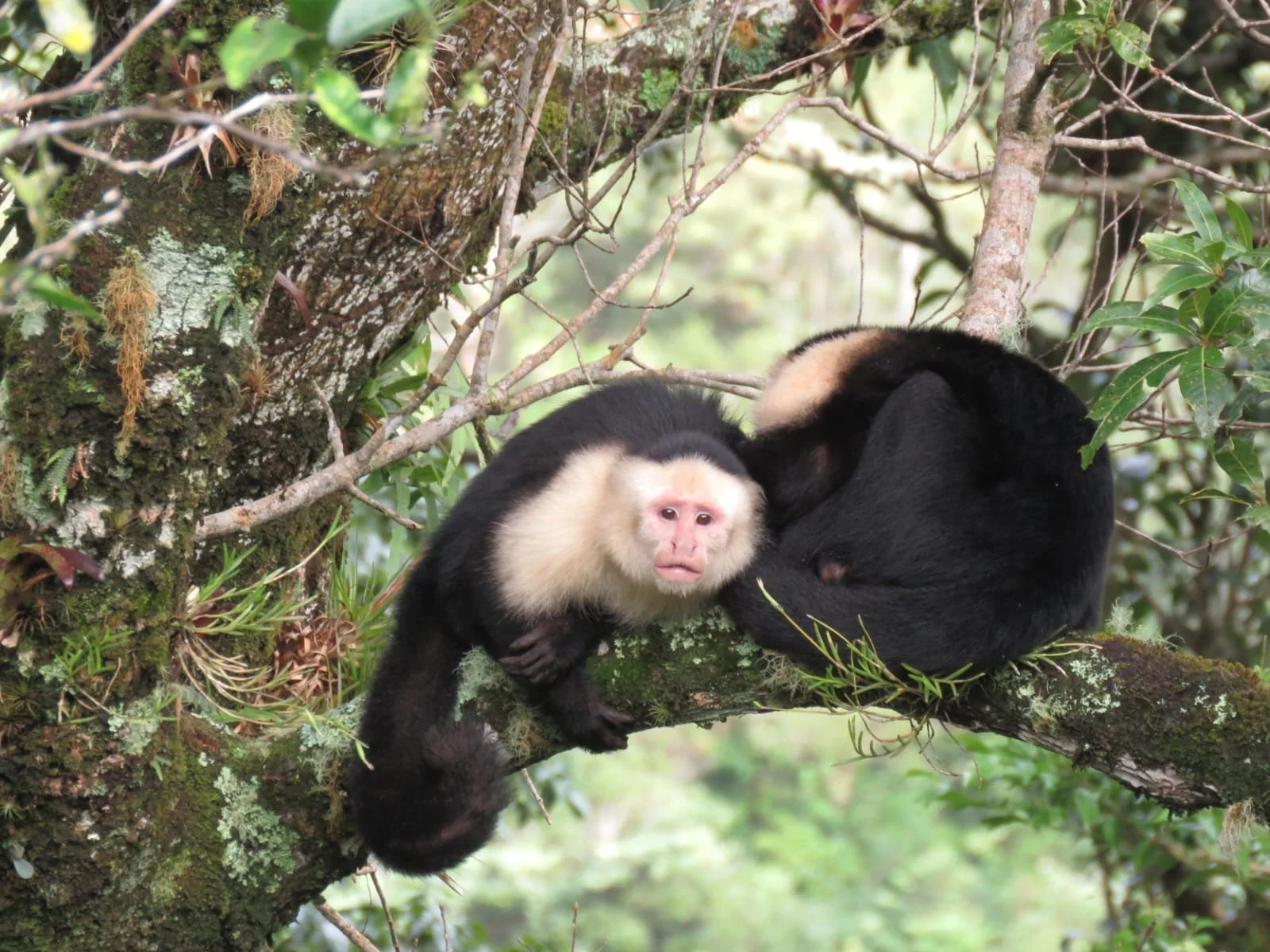
"Unfortunately, the WiFi doesn't work today because a monkey stole the cable."
Even though that would make an excellent Panama story.
A reliable connection allows guests to stream, work remotely, make video calls, upload photographs and plan their next adventure.
For a city apartment, fibre is usually the obvious choice if available.
For a remote beach or jungle property, Starlink can make a huge difference.
How Much Should You Budget?
For a typical Panama apartment or house with conventional residential internet, a reasonable rough budget is around B/.30 to B/.60 or more per month, depending on the provider, speed, bundles and promotions.
Higher speed packages can cost more, while promotions can temporarily make packages considerably cheaper.
A 500 Mbps package around B/.56 gives you a good idea of the pricing you can encounter.
Starlink should be budgeted separately because its price depends on the country, exact address, plan and current promotion.
And remember that satellite internet also involves the equipment side of the equation.
The Panama Internet Hierarchy
If I were choosing internet for a property in Panama, I'd look at it roughly like this:
🥇 Fibre
Best choice when available.
Fast, stable and excellent for a permanent home.
🥈 Cable or other fixed broadband
Good choice where fibre isn't available.
Check the actual speed and reliability in the neighbourhood.
🥉 Starlink
Fantastic for remote properties.
Particularly interesting for mountain, jungle, island and beach properties where conventional broadband isn't available.
📱 Cellular internet
Great backup or simple solution.
Excellent if your property has strong mobile coverage.
Less attractive as the only connection for a large household.
The Most Important Question Before Buying Property
If you're looking at a house, apartment or piece of land in Panama, don't ask:
"Does the area have internet?"
Ask:
"Exactly what internet can I get at this property?"
There is a huge difference.
Ask which companies serve the exact address.
Ask whether it is fibre.
Ask what speeds neighbours actually receive.
Ask whether installation is possible.
Check cellular signal.
And if it's remote, check Starlink availability for the exact location.
A property with a spectacular ocean view and no practical internet might be perfect for someone wanting to disappear from civilization.
For everyone else, it could become a surprisingly frustrating paradise.
Panama's Internet Has Come a Long Way
Perhaps the most interesting thing about internet in Panama is how dramatically the situation changes depending on where you are.
In a modern Panama City apartment, you can potentially have hundreds of megabits or even gigabit fibre.
In a small town, you may have perfectly respectable conventional broadband.
And in the middle of nowhere, where the nearest fibre cable may be about as likely to appear as a subway station, Starlink can potentially give you high speed internet from space.
That's quite a change for a country where you can drive from skyscrapers to rainforest in a remarkably short amount of time.
So whether you're buying a luxury apartment in Panama City, renting a little house in the mountains, opening an Airbnb on the coast or building your dream jungle home, internet doesn't have to be the thing that keeps you connected to civilization.
Even if civilization is several kilometres away.