
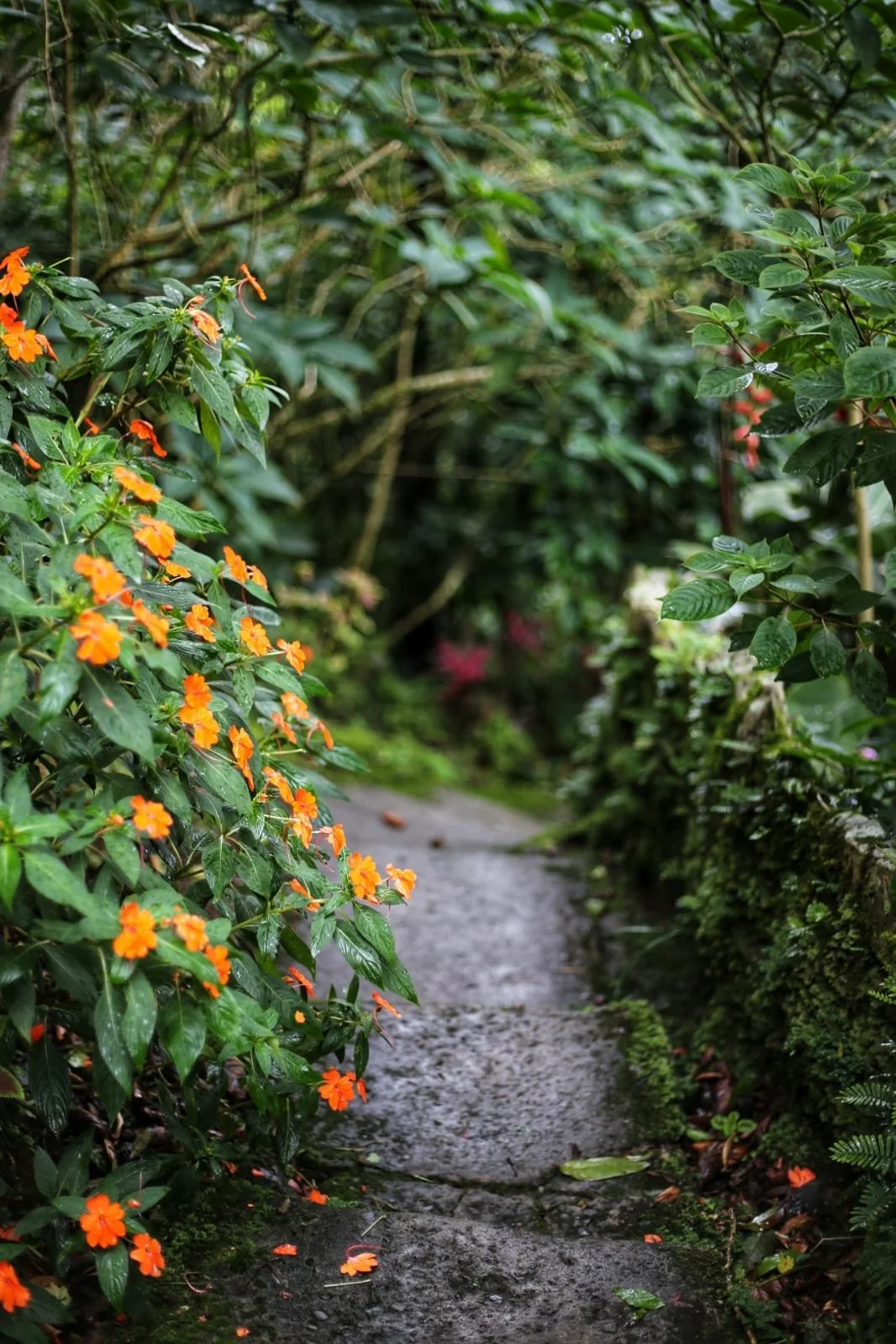
There are places in Panama that have become famous for very good reasons. Bocas del Toro has its Caribbean islands, Boquete has its coffee and cool mountain air, San Blas has its extraordinary turquoise water, and Santa Catalina has become a magnet for surfers and adventurers. Then there is Santa Fe, Veraguas, quietly sitting in the mountains as if somebody forgot to tell it that tourism was supposed to arrive. And that may be exactly why you should go. Santa Fe is one of those rare places where the lack of tourism infrastructure is not a problem to be solved. It is part of the attraction. This is a small mountain town surrounded by rainforest, rivers, coffee farms, waterfalls and rural communities, with the enormous Santa Fe National Park wrapping around it. The local tourism organization describes it as an authentic highland village and an off the beaten track destination, while Panama's official tourism authority now calls Santa Fe an emerging destination combining nature, adventure and culture.
This is not Panama with the tourist filter switched on
Santa Fe feels different almost immediately. There is no great boulevard lined with international restaurants. There are no giant resorts dominating the landscape. You are not constantly being asked if you want a private tour, a sunset cruise, a VIP experience or a photograph with something wearing a Panama hat. Instead, there are local shops, simple restaurants, farms, horses, pickup trucks, mountain roads and people going about their ordinary lives. The town was founded way back in 1557, making it one of Panama's oldest communities, and its history is deeply connected to the mountains, agriculture and the old routes through the interior. Even today, surrounding villages remain agricultural communities, with coffee, citrus and other crops grown on small family farms. In some parts of the area, people still get around more easily on horseback than in a car. That tells you quite a lot about Santa Fe.
Then you discover what is hiding in the forest
The landscape around Santa Fe is ridiculous in the best possible way. Santa Fe National Park protects more than 700 square kilometres of rainforest, filled with birds, butterflies, orchids, rivers and waterfalls. There are dozens of waterfalls within the region, and some of the most interesting ones are reached by trails that still feel like actual jungle trails rather than carefully manufactured tourist attractions. Alto de Piedra has three waterfalls connected by a roughly one kilometre loop, while Bermejo plunges around 35 metres through the forest. Loma Grande is another impressive waterfall, reached by a much rougher trail where you may find yourself using your hands as much as your feet. And then there are the more remote waterfalls, where local knowledge becomes extremely valuable. Some are buried deep enough in the park that you really do need a guide.
And this is where Santa Fe becomes particularly exciting. You are not simply driving to a waterfall, parking beside a gift shop and walking ten minutes along a concrete path while 200 other people take selfies. Some adventures here still involve muddy trails, slippery rocks, mountain roads, river crossings and the occasional moment when you wonder whether the person who told you, "It's just a little farther," has a completely different definition of the word little. The local tourism organization openly acknowledges that access to the deeper parts of the national park is limited and that guided wilderness trekking is necessary for some areas. That lack of infrastructure is precisely what keeps parts of Santa Fe feeling wild.
The coffee is part of the adventure
Santa Fe is also one of those places where you can actually connect the landscape with what ends up in your cup. More than 100 local coffee farmers participate in the Santa Fe Coffee Cooperative, and small family farms produce coffee in the surrounding hills. Visitors can arrange farm visits, coffee tours and even see parts of the processing and roasting process. There are also farms growing vegetables and other crops using sustainable agricultural practices. Some offer meals, farm visits and rural experiences. In other words, instead of simply buying a bag of "Panama coffee" in an airport shop, you can go up into the mountains and see where the stuff actually comes from.
The same applies to food in general. Santa Fe is not trying to become the next gastronomic capital of Panama. You are much more likely to find straightforward local food, family businesses and ingredients grown nearby. Panama's tourism authority recently highlighted farms such as El Salto and María y Chon, where visitors can experience organic agriculture, waterfalls, orchids, coffee and even locally produced chocolate. These aren't enormous attractions designed around thousands of visitors. They are working farms that have opened their doors to people curious enough to come and look.
The best attraction might actually be doing nothing
There is another reason Santa Fe is so appealing: it gives you permission to slow down without turning that into a wellness retreat. You can walk the rural roads, swim in the Santa María River, sit in a little café with a coffee, wander through the village, visit the local market, watch horses passing through town or simply stand somewhere overlooking the mountains while clouds roll across the forest. The Río Santa María runs through the area and provides swimming spots, while the surrounding communities can be explored on foot or horseback.
That sounds simple, but simplicity is increasingly difficult to find in popular travel destinations. Everywhere else seems to be competing for your attention. Santa Fe doesn't really care. It doesn't need to entertain you every five minutes. The mountains do that.
And then there is the road to the Caribbean
One of Santa Fe's great secrets is that the adventure does not necessarily end at Santa Fe. Route 33 continues north through the mountains toward the Caribbean coast and eventually toward Calovébora. The journey crosses some spectacular and remote landscapes, and Calovébora itself remains a small Caribbean community rather than a heavily developed beach destination. The local tourism organization describes the route as a roughly 100 kilometre journey from Santiago to the Caribbean and notes that the coastal area is still developing in terms of access and amenities.
This is exactly the sort of thing that makes Santa Fe fascinating to adventurous travellers. You can begin the day drinking coffee in a cool mountain village surrounded by rainforest and, with enough time, end up looking at the Caribbean. It is one of those geographical tricks Panama does particularly well.
Santa Fe is not for everyone
And that is important to understand before you go. If you want polished resorts, reliable high speed infrastructure, endless nightlife and a neatly packaged list of twenty attractions within walking distance, Santa Fe may frustrate you. Some roads are rough. Some waterfalls require hiking. Some attractions are on private land. Weather can change conditions dramatically. Some of the most remote experiences require a local guide. The national park itself has limited developed facilities. This is not the place to arrive expecting everything to operate like a major tourist destination.
But if you consider those things part of the adventure rather than inconveniences, Santa Fe becomes something completely different.
Why you really shouldn't skip it
The problem with travelling through Panama is that it is surprisingly easy to follow the same route as everybody else. Panama City. Canal. Bocas. Boquete. Maybe San Blas. Maybe Santa Catalina. Fantastic places, all of them. But eventually you may start wondering what the country looks like when tourism isn't standing in the middle of the photograph.
Santa Fe gives you an answer.
It is mountain Panama. Rural Panama. Coffee farm Panama. Waterfall Panama. Horse on the road Panama. Local restaurant Panama. Rainforest disappearing into the mist Panama. It is the kind of place where you might set out looking for a waterfall and end up spending an hour talking to somebody on a farm instead. Where the most memorable part of the day might not be the attraction you planned to visit, but the strange little road you decided to explore on the way there.
Santa Fe is not Panama's most famous destination, and frankly, it probably shouldn't try to become one. Its greatest asset is that it still feels like a place rather than a product.
If your idea of a great trip involves polished infrastructure and everything being easy, go somewhere else. If you want to see what Panama feels like before tourism puts a sign on absolutely everything, go to Santa Fe.
Because the real luxury here isn't a five star hotel.
It is finding a waterfall, a mountain road or a tiny village that still feels like you discovered it yourself.