
Santa Catalina is one of those places in Panama where getting there is almost part of the adventure. It is not Bocas del Toro, with boats zipping around every few minutes and backpackers partying until sunrise. It is not Boquete, with coffee farms and mountain cafés everywhere. Santa Catalina is smaller, rougher around the edges and much more focused on the ocean. You come here because you want to surf, dive, snorkel, explore Coiba, sit on a Pacific beach and experience a part of Panama that still feels wonderfully removed from the main tourist circuit.
And that is exactly what makes it so good.
Santa Catalina sits on the Pacific coast of Veraguas and has become famous for two enormous attractions: serious surfing and access to Coiba National Park. The combination is almost unfair. You can spend one day getting smashed around by Pacific waves and the next day floating over tropical reefs looking at sharks, turtles and enormous schools of fish. Coiba is a UNESCO World Heritage Site and is widely regarded as one of Panama's great marine experiences.
Start with Coiba National Park
If you travel all the way to Santa Catalina and do not at least consider a trip to Coiba, you are missing the main event.
Coiba is the giant natural attraction sitting offshore, and Santa Catalina is the mainland base for reaching it. A typical day involves getting onto a boat early, heading out across the Pacific and spending the day exploring different parts of the park. Depending on the trip and conditions, you can snorkel, dive, hike, explore beaches and look for wildlife above and below the water.
The underwater world is the real star. Coiba is famous for its extraordinary marine biodiversity, with turtles, reef sharks, rays, dolphins, huge schools of tropical fish and plenty of other creatures that can turn an ordinary snorkeling stop into something you remember for years.
For a backpacker, this is one of those occasions when spending a little more money on an experience makes sense. You are not simply paying for transportation. You are getting into a remote marine environment that is difficult to experience independently.
And the boat ride itself can be spectacular. Santa Catalina gradually disappears behind you, the mainland becomes a thin line and suddenly you are surrounded by nothing but Pacific Ocean.
Then somebody points into the water.
"Look!"
And everybody runs to one side of the boat.
That is usually when the day gets interesting.
Go snorkeling in Coiba
You absolutely do not need to be a scuba diver to experience Coiba.
Snorkeling is one of the best options for backpackers because you can get an incredible view of the underwater world without needing certification or previous diving experience. Current local guides describe full day snorkeling trips from Santa Catalina as one of the area's major attractions, with multiple water stops and time on beaches or islands.
The Pacific around Coiba can feel remarkably wild. You might be looking at colorful reef fish one minute and then suddenly notice a turtle gliding underneath you. Reef sharks can appear below. Rays move across the bottom. Huge schools of fish can make the water look alive.
And then you climb back onto the boat, dry yourself in the sun and realize it is only lunchtime.
For someone backpacking Panama, that is a pretty good Tuesday.
Go diving
If you are already certified, Santa Catalina becomes even more exciting.
Several dive operators run trips from Santa Catalina into Coiba National Park, with options ranging from regular day trips to more advanced itineraries. Panama Dive Center and Diving Coiba are among the established operators currently based in town.
Coiba is particularly interesting for divers because of the amount of larger marine life that can be encountered. Sharks, rays, turtles, schooling fish and other big Pacific animals are part of the attraction.
Conditions can also be very different from one dive to another. Currents, visibility and water conditions can change, which is one reason having experienced local guides matters.
If diving is your main reason for visiting Santa Catalina, give yourself enough time. This is not a place where you want to arrive late one afternoon, spend one night and discover the next morning that the boat trip you wanted leaves at 7 AM.
Surf La Punta
Now we come to the other reason Santa Catalina became famous.
Surfing.
La Punta is the legendary wave.
This is not the place where you casually rent a board, paddle out and hope for the best if you have never surfed before. La Punta is a powerful point break with a reef and can produce serious Pacific waves. Experienced surfers travel here specifically for it.
Watching the surfers from shore can be almost as entertaining as surfing yourself. When the conditions are right, you can see experienced surfers getting long rides while everybody else on the beach quietly thinks, "Yeah, I'm probably not ready for that."
And that is perfectly fine.
You do not need to be a professional surfer to enjoy Santa Catalina.
Learn to surf at Playa Estero
For beginners, Playa Estero is the much friendlier introduction.
The sandy beach break provides a better environment for learning and there are several surf schools operating around Santa Catalina.
Los Arrieros Surf School and Waluaa Surf & Yoga are among the current local options.
The first lesson will probably involve a lot of lying on the board, falling off the board, getting hit by waves and wondering why professional surfers make it look so ridiculously easy.
Then, eventually, you stand up.
Maybe for three seconds.
It doesn't matter.
That three seconds will feel fantastic.
Santa Catalina's surf culture is one of the things that gives the village its personality. You will see boards everywhere, people checking the waves and travelers comparing stories about who caught what.
Go to the beach just to do nothing
This might sound strange after telling you to surf, dive and snorkel all day, but one of the best things to do in Santa Catalina is absolutely nothing.
Find a beach.
Sit down.
Swim.
Read a book.
Drink something cold.
Watch the Pacific.
Santa Catalina is not somewhere you need to attack like a sightseeing checklist.
There is a slower pace here, and that is part of its appeal. Current travel guides describe it as a low key Pacific village rather than a polished resort destination, and that distinction is important.
If you are coming from Panama City, Bocas or a busy backpacking route, the change can feel almost therapeutic.
Your phone has less to do.
Your feet get sandy.
You start noticing sunsets again.
Explore the coastline
Santa Catalina is surrounded by Pacific coastline, and exploring beyond the main beach can be rewarding.
You can walk along beaches, find quieter sections of coast and explore the roads and trails around the village. Some activities depend heavily on weather, tides and local conditions, so this is a good place to ask locally rather than assuming everything operates on a rigid schedule.
That is actually one of the charms of Santa Catalina.
The ocean is still in charge.
If the sea says no, the sea says no.
Go kayaking
Kayaking is another good option when you want to see the coastline from the water without sitting in a motorboat.
Depending on conditions and availability, you can explore quieter coastal areas and nearby islands, get into mangrove environments and discover little stretches of shoreline that are difficult to reach on foot.
The Pacific coast can look completely different from the water. Cliffs, beaches, jungle and rocky coastline become part of one enormous landscape.
And there is something satisfying about paddling around while everybody else is standing on the beach.
Look for wildlife
Santa Catalina is surrounded by nature, but Coiba takes wildlife watching to another level.
Keep your eyes open during boat trips because dolphins, turtles, rays, seabirds and other marine animals can appear unexpectedly.
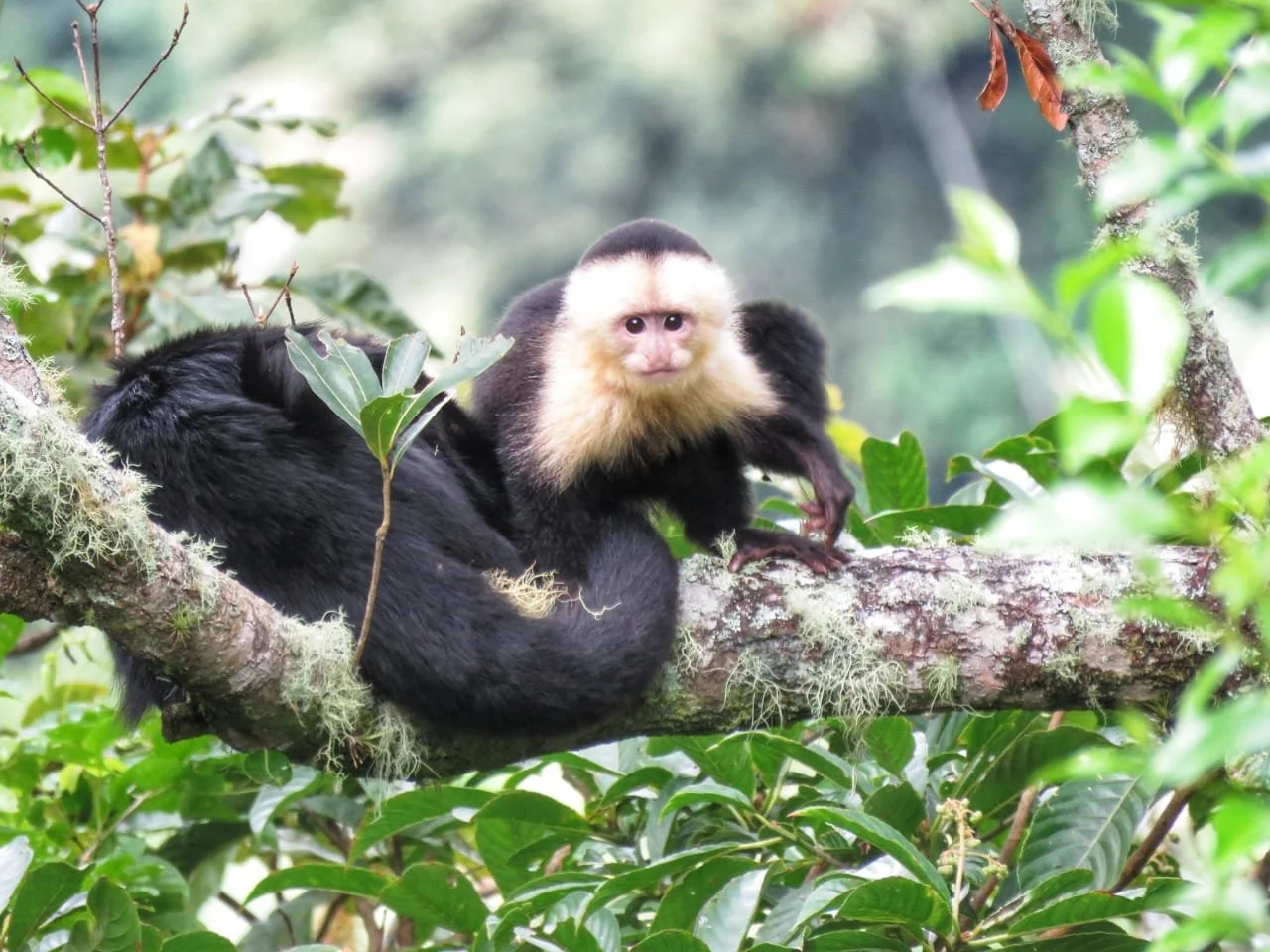
On land, the tropical forest around the region supports an impressive variety of birds, reptiles and other wildlife.
The best wildlife experiences are often the ones you aren't expecting.
You may leave your accommodation thinking you are simply going for breakfast and end up standing on the road watching something interesting moving through the trees.
Panama is very good at doing that.
Go whale watching
During the right part of the year, humpback whales become another reason to get offshore. Current local guides identify roughly July through October as the main whale watching period around Santa Catalina.
There is something particularly impressive about seeing whales in the open Pacific.
Unlike watching them from a city harbor, here you can be surrounded by open ocean with very little else around you.
Then a huge tail appears.
And everybody on the boat suddenly forgets how to speak normally.
Explore Santa Catalina itself
Don't spend your entire visit on organized tours.
Walk around the village.
Santa Catalina is small enough that exploring on foot is easy, and part of its appeal is simply watching daily life happen. Surfers come and go, fishing boats move around the coast, travelers wander toward the beach and restaurant owners prepare for another evening.
It still feels like a working coastal community rather than a giant tourist machine.
That is becoming increasingly unusual.
Eat seafood
After spending the day in the Pacific, seafood seems like the obvious choice.
Santa Catalina has plenty of casual restaurants serving fish, seafood and other local dishes. Fresh catches can vary depending on what is available, which is exactly what you want in a small fishing community.
For a local style meal, Restaurante Donde Vianca is a popular choice with travelers looking for fresh seafood and ceviche. For something different, Umami SantaCatalina offers a more contemporary fusion approach to local seafood.
And after a day of surfing, diving or getting bounced around on a boat, food somehow tastes better anyway.
Get up early
Santa Catalina rewards early risers.
If you are surfing, early mornings can be ideal. If you are heading to Coiba, you will probably already be awake. And even if you have absolutely nothing planned, getting out before the heat builds gives you a chance to experience the village while it is still quiet.
There is something magical about watching a Pacific sunrise when there is almost nobody around.
Then you can go back to bed.
You are on vacation.
Watch the sunset
Never underestimate a Santa Catalina sunset.
The Pacific is right there, and evenings can become one of the best parts of the day. Grab a drink, find somewhere with a view and watch the sky change.
After a day of surfing or diving, there is something almost ridiculous about how peaceful it can feel.
You have spent the morning fighting waves, the afternoon swimming with tropical fish and the evening watching the sun disappear into the Pacific.
That is a pretty good day.
Have a proper backpacker evening
Santa Catalina is not famous for enormous nightlife in the same way Bocas del Toro is, and honestly, that is probably a good thing.
The town's attraction is the ocean and the outdoors.
Evenings are generally more about eating, drinking, talking with other travelers and swapping stories about the day's adventures.
Someone will tell you about the wave they caught.
Someone else will talk about the shark they saw.
Someone will insist that tomorrow is the perfect day to surf.
And someone who arrived yesterday will already be talking about staying another week.
That's Santa Catalina.
Try yoga or a slower wellness day
After a few days of Pacific adventure, your body may appreciate something slightly less violent than being thrown through a wave.
Yoga and surf focused wellness experiences are available in the area, including through Waluaa Surf & Yoga.
A morning yoga session followed by breakfast and an afternoon at the beach is a pretty good way to recover from several days of surfing, diving and generally behaving like your skeleton is indestructible.
How long should you stay?
For a quick visit, three nights gives you enough time to experience Santa Catalina without feeling completely rushed.
But if Coiba is a priority, staying longer makes sense. Weather and ocean conditions can affect boat trips and diving, so having an extra day or two gives you some breathing room. Current travel guidance also recommends allowing at least three nights when Coiba is an important part of the trip.
And if you surf, you could easily stay much longer.
That's the problem.
Santa Catalina has a habit of turning "three nights" into "maybe I'll just stay until the waves get worse."
Santa Catalina is for the adventurous traveler
Santa Catalina is not trying to be Bocas del Toro.
It doesn't have the same party scene.
It doesn't have endless restaurants.
It isn't packed with souvenir shops.
It is not polished in every corner.
Instead, you get powerful Pacific waves, spectacular marine life, jungle, beaches, fishing boats, sunsets and access to one of Panama's most extraordinary national parks.
You can wake up and surf.
You can spend the next day snorkeling with turtles.
You can dive with sharks.
You can take a boat into Coiba.
You can walk along an almost empty beach.
You can eat fresh fish.
You can watch the sunset.
And then you can do it all again.
That is the magic of Santa Catalina. It isn't a place you visit because there are a hundred attractions. You come because a handful of extraordinary experiences are concentrated in one small, wild corner of Panama.
And for a backpacker looking for something more adventurous and less polished than the usual tourist circuit, that can be exactly what you are looking for.