
There are hostels, and then there is Lost and Found. Somewhere high in the mountains of western Panama, surrounded by cloud forest, wildlife, trails, waterfalls and enormous views, Lost and Found Hostel has developed the kind of reputation that is difficult to manufacture and almost impossible to copy. It feels less like somebody opened a hostel because they thought it might be a good business and more like a group of backpackers somehow got together and built the place they always wished existed. A little hostel, a little jungle lodge, a little adventure base and a little social experiment, all thrown together in the middle of the forest.
The first thing that makes Lost and Found unusual is the location. This isn't a hostel conveniently positioned beside a bus station, surrounded by fast food restaurants and ten other backpacker hotels. You actually have to go somewhere to get there. The hostel sits in the Fortuna Forest Reserve in the mountains of Chiriquí, on the route between Boquete and Bocas del Toro. And once you arrive, the outside world starts feeling surprisingly far away. There are mountains, jungle, trails, birds, monkeys, waterfalls and spectacular views stretching toward Volcán Barú. It is the sort of place where you can arrive planning to stay two nights and suddenly realize several days have disappeared.
But the location is only half the story. The other half is what somebody decided to do with it.
Lost and Found feels designed by people who actually understand backpackers because it was. The place has that wonderfully difficult to describe quality that comes from people building something according to how they themselves would want to travel. There is less emphasis on making everything polished and predictable and much more emphasis on creating things to do, places to hang out and reasons for strangers to actually talk to each other.
There are hammocks everywhere. There are games. There are trails. There is a jungle lounge and bar. There are communal areas where people end up talking long after they originally intended to go to bed. There are waterfalls to discover, wildlife to look for, puzzles to solve, treasure hunts, beer pong, foosball, cards, UNO, cornhole, an arcade and enough random little challenges to keep competitive backpackers occupied. It doesn't feel like somebody purchased a standard hostel package from a hotel supplier and assembled it in the jungle. It feels accumulated. Built over years. Added to whenever somebody had another ridiculous or brilliant idea.
And perhaps that is part of the magic.
Lost and Found isn't really trying to be a resort. It isn't trying to be a luxury jungle retreat where everybody whispers beside an infinity pool. It is much more adventurous than that. It has the personality of an old school backpacking destination, where the experience matters more than whether everything looks brand new. You are here to explore, meet people, get muddy, wander into the forest, swing in a hammock, find a waterfall, spot a monkey, have a beer and eventually end up sitting around talking to someone from another continent.
That combination has created something increasingly rare in modern travel: a place where social interaction happens naturally.
You don't have to attend a forced hostel event called "International Friendship Night." You don't need an organized icebreaker. You don't need somebody standing on a microphone telling everyone to introduce themselves. Put a bunch of travelers in the middle of the jungle, give them hammocks, trails, games, food, drinks and nowhere particularly urgent to go, and the social part tends to take care of itself.
The result can be wonderfully unpredictable.
One person might arrive intending to hike for an afternoon. Another might be planning to spend the entire day reading. Someone else may have just come from Bocas del Toro. Someone may be heading toward Boquete. Within an hour, they are discussing waterfalls, countries, travel stories and where everybody is going next. Before long, somebody has organized a game, somebody has discovered a trail and somebody else has convinced everyone to stay for another night.
This is what happens when a hostel is designed around the backpacking experience rather than simply around beds.
And then there is the jungle itself.
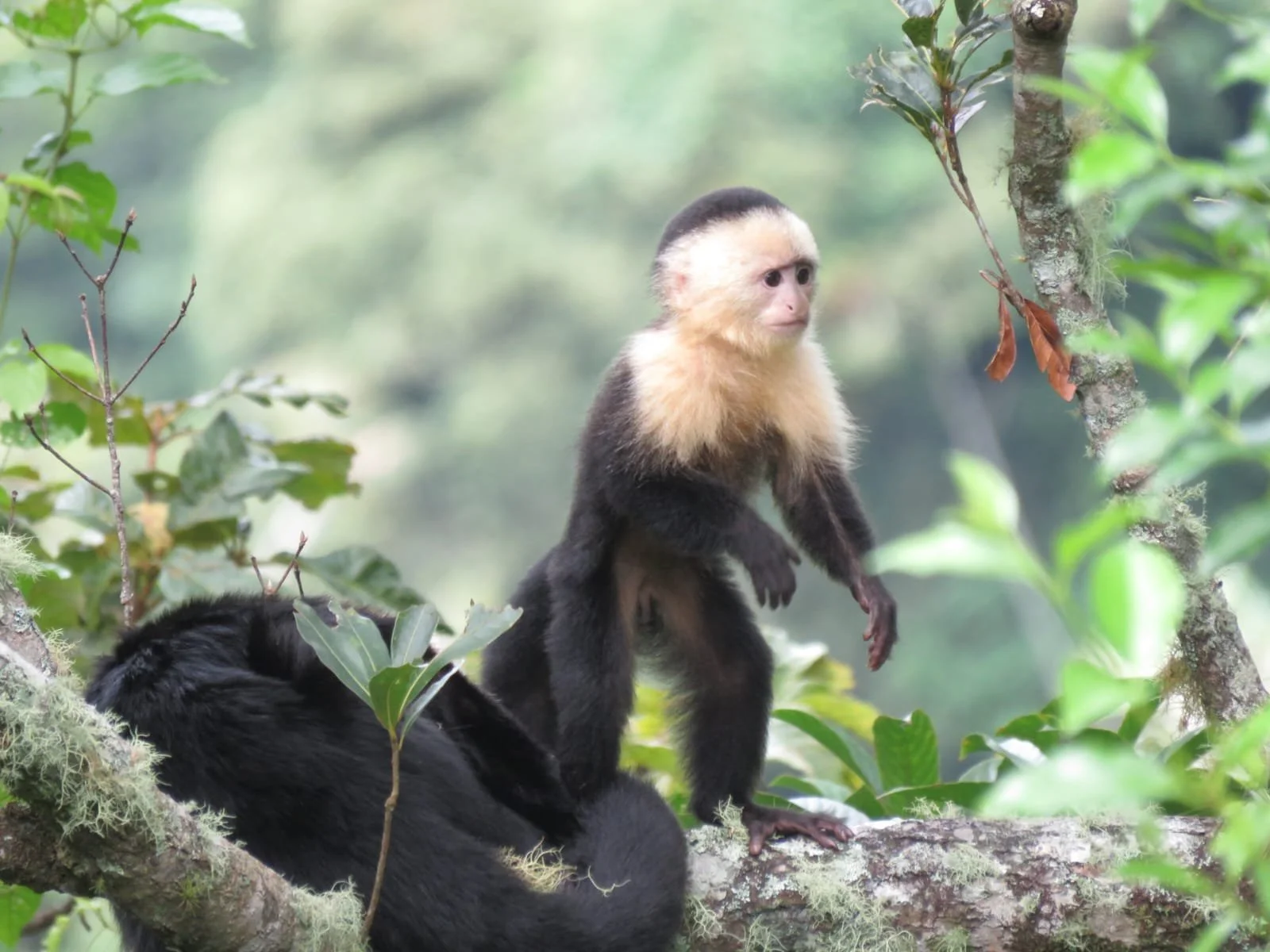
Lost and Found is not merely surrounded by nature as a decorative backdrop. Nature is part of the experience. The property sits in a remarkably biodiverse environment where wildlife can turn up when you least expect it. White faced monkeys, sloths, agoutis, armadillos, peccaries, deer and a fascinating collection of nocturnal creatures can all be encountered in the surrounding forest. Birds are everywhere, and the hummingbird feeders can become their own little wildlife theatre. On a good day, you can sit around watching tiny hummingbirds move through the feeders while somewhere behind you a group of travelers is arguing over the rules of a completely unnecessary game.
That contrast is very Lost and Found.
It is simultaneously an outdoor adventure destination and a social hostel.
You can spend the morning walking through the forest and the afternoon doing absolutely nothing in a hammock. You can go looking for waterfalls and later find yourself playing cards with people you met ten minutes ago. You can spend the evening watching the sunset over the mountains and then head out on a night walk looking for the creatures that only appear after dark.
The famous night walks are another example of what makes the place different. Once the sun disappears, the forest becomes an entirely different world. Tarantulas, scorpions, snakes, porcupines, insects and other nocturnal creatures become part of the adventure. The forest that seemed peaceful during the afternoon suddenly feels alive in a completely different way.
And there is something wonderfully old fashioned about all of this.
Before travel became dominated by phones, algorithms, online reviews and people photographing their breakfast from six different angles, backpacking was largely about being somewhere interesting with a bunch of other interesting people and seeing what happened next. Lost and Found somehow retains a bit of that spirit.
Your phone works. There is Wi Fi. There are plenty of modern conveniences. But the environment constantly gives you better alternatives.
There is a trail over there.
There is a waterfall down there.
Someone just spotted a monkey.
The sunset is starting.
Dinner is happening.
A game is starting.
There is a hummingbird sitting about three feet away.
Somebody has found another bizarre creature.
And suddenly scrolling through your phone doesn't seem quite as interesting.
That is probably one of the greatest compliments you can give a hostel.
The place was also clearly designed with people who love the outdoors in mind. The architecture and layout don't simply try to separate travelers from the environment. They constantly bring the environment into the experience. Open social spaces, hammocks, mountain views, forest trails and outdoor gathering areas make the jungle impossible to ignore.
It is almost as if the philosophy was: Why would we build a hostel in the jungle and then hide everyone from the jungle?
Instead, the forest becomes part of the common room.
The mountains become part of the view from your hammock.
The wildlife becomes part of the entertainment.
And the trails become part of the backyard.
There is also a sense that Lost and Found has been shaped by travelers over time. You can feel the fingerprints of backpackers everywhere. The little traditions, strange games, challenges, communal meals, inexpensive drinks, social spaces and quirky activities all seem to come from an understanding that travelers don't necessarily need more luxury. They need more stories.
And Lost and Found is very good at producing stories.
That is ultimately what makes the experience legendary.
People rarely remember the exact color of the walls in a hotel room. They remember the ridiculous game they played with strangers. They remember getting lost on a trail. They remember the waterfall. They remember the person they met who ended up traveling with them for another month. They remember sitting in a hammock during a tropical downpour. They remember seeing wildlife at night. They remember staying up too late talking to people they had met that morning.
Lost and Found is built around those moments.
It is not simply somewhere to sleep while passing through Panama. It has become a destination in its own right. A place where travelers deliberately build into their route because the hostel itself is part of the adventure.
That is a pretty remarkable achievement for a hostel hidden away in the mountains.
And perhaps the best way to explain Lost and Found is simply this: it feels like it was designed by backpackers, for backpackers, in a place that backpackers would never forget.
It isn't perfect in the sterile, polished, corporate sense.
It is better than that.
It has personality.
It has history.
It has weird little traditions.
It has jungle.
It has mountains.
It has wildlife.
It has adventure.
And, perhaps most importantly, it has people.
That combination is becoming increasingly difficult to find. Which is why Lost and Found has developed something much more valuable than a collection of beds and positive reviews.
It has developed a legend.