
There is an underrated skill that every backpacker in Panama should learn: hammocking. Not simply lying in a hammock, but actually mastering the art of doing absolutely nothing while surrounded by an unreasonable amount of tropical nature. Panama is almost suspiciously well suited to it. Warm temperatures, giant trees, jungle sounds, mountain breezes, rivers, cloud forests and hammocks hanging in places where you suddenly realize you have no idea what time it is. After a few days, you may discover that your carefully planned itinerary has quietly been replaced by a hammock.
And honestly, that might be the point.
Hammocking Is a Panama Tradition in Disguise
You will find hammocks everywhere in Panama. Outside houses, on Caribbean islands, beside rivers, under enormous trees, on balconies, at hostels, in gardens and in places where someone has clearly looked at two trees and thought, “Those would make a great place to lie down.”
The hammock makes perfect sense in a tropical country. It catches the breeze, keeps you above the damp ground and gives you somewhere comfortable to escape the midday heat. But for travelers, it becomes something more than practical furniture. It becomes a completely different way of experiencing the country.
You stop rushing.
You stop checking the bus schedule every five minutes.
You stop wondering whether you should be doing something more productive.
You lie down.
Then you hear a bird you have never heard before.
A butterfly floats past.
Leaves move somewhere above you.
Someone at the hostel laughs from across the property.
A hummingbird appears.
And suddenly you have been there for forty five minutes.
The First Rule: Find the Right Hammock
Not all hammocks are created equal.
The perfect hammock has enough space to stretch out, is suspended at a comfortable height and has just the right amount of sag. Too tight and you feel like you are trapped in a giant banana. Too loose and you may find yourself sitting on the ground wondering what went wrong.
The surroundings matter just as much.
A hammock beside a busy road is technically a hammock, but it is not art. A hammock overlooking mountains, hanging beneath a tropical canopy with birds flying around you, is an entirely different experience.
Panama gives you plenty of opportunities to find the good stuff.
On the Caribbean coast, you can end up swinging beneath palms with the sea in front of you. In the mountains, hammocking becomes cooler and greener, with cloud forest vegetation surrounding you. Near rivers, the sound of flowing water can turn an ordinary afternoon into something resembling a spa treatment that happens to be completely free.
And in places such as Lost and Found Hostel in the mountains of Chiriquí, hammocks become part of the social experience. With roughly thirty hammocks around the property, you can find yourself surrounded by backpackers doing exactly the same thing: absolutely nothing.
There Is a Technique
The beginner makes the mistake of lying straight down the middle like they are on a bed.
The experienced hammocker knows better.
Try lying slightly diagonally across the hammock. This spreads your body out, gives you more space and makes it easier to get comfortable. Your hammock should gently support you rather than swallowing you.
Then comes the important part: the adjustment period.
Left leg slightly higher.
No.
Move your shoulder.
Better.
Actually, no.
Shift again.
Perfect.
Do not move.
You have now reached hammocking enlightenment.
This is particularly important because once you find the perfect position, getting up becomes increasingly difficult. This is why experienced backpackers never say, “I'll just lie here for five minutes.” They know better.
Hammocking and Wildlife
One of the great advantages of a hammock is that it makes you slow enough to notice things.
Walk through a jungle trail and you may miss ninety percent of what is happening around you. Sit quietly in a hammock for an hour and suddenly the forest starts revealing itself.
At a jungle property in Panama, you might see hummingbirds working around flowers, butterflies drifting through the vegetation, lizards moving across branches or monkeys passing through the trees. You may hear a bird long before you see it. Sometimes the most interesting wildlife encounter is simply something moving in the leaves above your head.
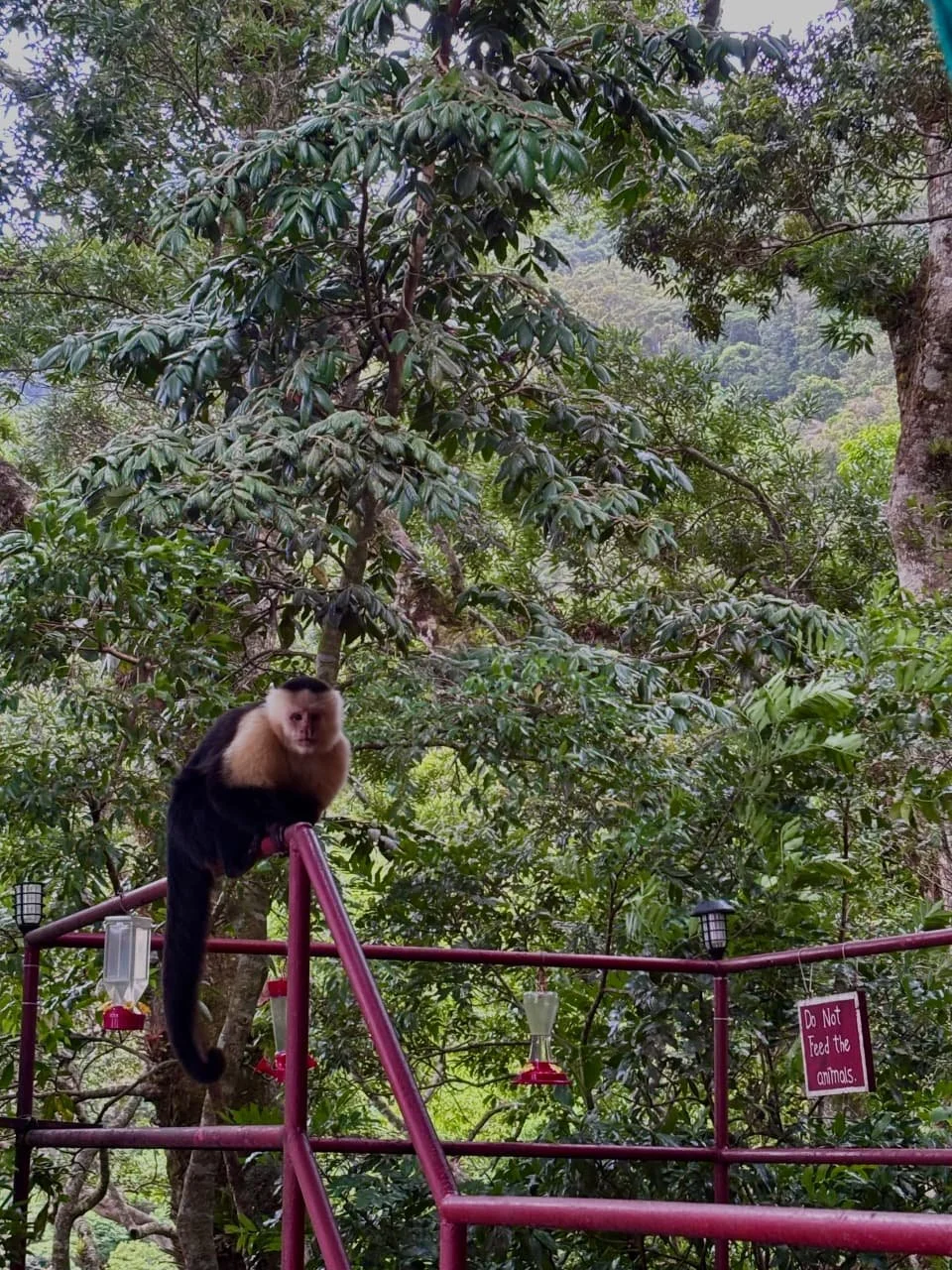
At Lost and Found, white faced capuchin monkeys are often seen around the property, and hammock time can become surprisingly entertaining when a troop decides to travel through the trees nearby. You might be relaxing peacefully one minute and watching a curious monkey looking down at you the next.
This is one reason hammocking in Panama is different from lying in a hammock beside a swimming pool. The jungle is alive around you.
The Afternoon Hammock Trap
There is another phenomenon every backpacker eventually experiences.
You finish breakfast.
You go for a hike.
You return for lunch.
You think you will rest for ten minutes before heading back out.
You sit in a hammock.
You close your eyes.
You wake up an hour and a half later.
This is not failure.
This is the afternoon hammock trap.
Panama's climate makes it particularly effective. After walking around in tropical heat, your body naturally wants somewhere cool and comfortable. Add a gentle breeze and the sound of birds and insects and your chances of remaining conscious decrease rapidly.
The problem becomes particularly serious when there are several hammocks available. You may tell yourself that you are only testing one.
You are not.
You have cancelled the afternoon.
Hammocking Is Surprisingly Social
One of the funniest things about hammocks in hostels is that they create an unusual kind of social space.
People who might never have spoken to each other in a dorm suddenly start chatting because their hammocks are beside each other. Someone asks where you are from. Someone else joins the conversation. Five minutes later you are discussing where everyone is travelling next.
This is particularly true at hostels that are designed around social interaction rather than simply providing beds.
At Lost and Found, the hammocks are scattered through the social areas, overlooking the forest and mountains, so people naturally drift between relaxing, talking, eating, drinking and exploring. A hammock can become your personal chair, reading room, lookout point and accidental meeting place all at once.
And unlike sitting at a table, hammocking seems to lower everyone's defenses. Nobody looks particularly serious while suspended between two trees.
The Hammock and the Backpacker Itinerary
There is something almost rebellious about hammocking while travelling.
Most backpackers arrive with a list.
Waterfall.
Hike.
Beach.
Boat trip.
Market.
Sunset.
Next bus.
Next hostel.
Next destination.
The hammock introduces another possibility: stay where you are for a while.
You might have planned to spend the afternoon exploring every corner of a town and instead discover that the view from your hammock is better than expected. You might have planned another activity but realize that you have spent the last hour talking to travelers from six different countries.
Some of the best travel memories are not the big attractions. They are the strange little afternoons when nothing particularly spectacular happened.
Someone played music.
Someone brought out cards.
Someone made coffee.
A bird landed nearby.
A conversation turned into an argument about the best country in Central America.
Someone disappeared to get another beer.
Three hours disappeared.
That is backpacking too.
The Golden Rule: Don't Forget to Get Up
There is, however, one danger.
Hammocking can become too successful.
Panama has an enormous number of things worth experiencing, and you should absolutely get out of the hammock occasionally. Go hiking. Swim in waterfalls. Explore villages. Take a bus somewhere random. Climb a mountain. Find a hidden river. Go snorkeling. Watch wildlife. Eat something you've never tried.
Then come back.
The hammock is not supposed to replace the adventure.
It is the place where you recover from it.
The Perfect Panama Hammock Day
The ideal day might start with coffee and a morning walk while the air is still cool. Spend a few hours exploring the forest, swimming in a waterfall or wandering around town. Come back hungry and eat something good.
Then find a hammock.
Put your phone somewhere you cannot immediately reach it.
Listen.
Maybe read a book.
Maybe talk to the person in the hammock beside you.
Watch the clouds move over the mountains.
Eventually someone will suggest going somewhere for food or drinks.
You will probably say yes.
But not immediately.
You have important hammock business to finish.
Learning to Do Nothing
Perhaps that is the real art of hammocking in Panama.
Travel can become strangely competitive. People compare destinations, activities and photographs. There is always another waterfall, another hike, another island and another place you are supposedly supposed to visit.
The hammock doesn't care.
It does not ask how many countries you have visited.
It does not care about your Instagram feed.
It does not care whether you have seen every attraction in Panama.
It simply gives you somewhere to lie down and notice where you actually are.
And that might be one of the best things about travelling through Panama. You can spend the morning chasing waterfalls, the afternoon watching monkeys in the trees, the evening meeting travelers over dinner and somewhere in between discover that the most memorable part of the day was lying in a hammock for an hour with absolutely nothing planned.
Panama is a country built for adventure, but it is also a country that teaches you when to slow down. And sometimes, the most advanced backpacking skill of all is knowing when to stop walking, find two trees, climb into a hammock and do absolutely nothing.