
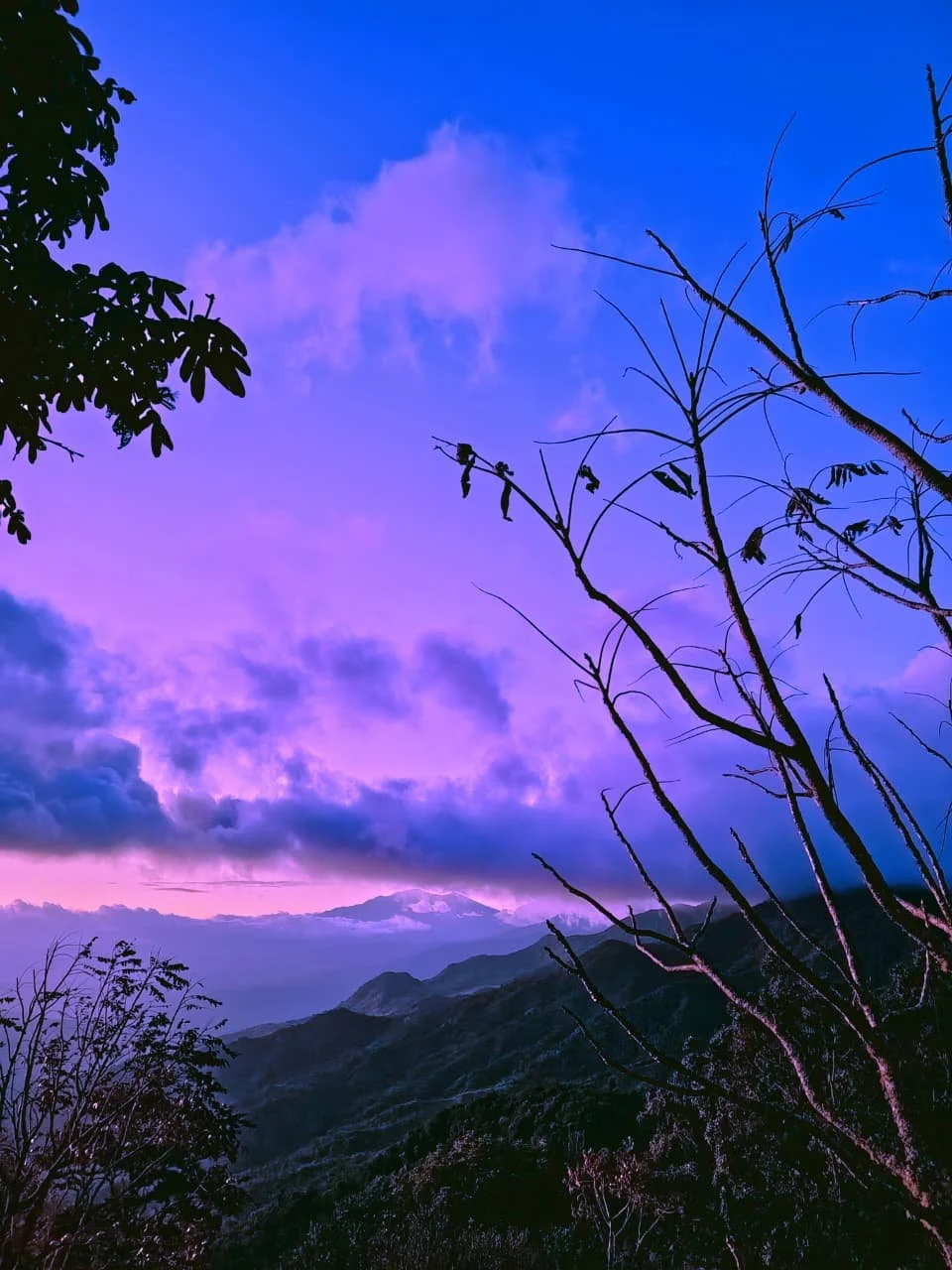
Panama is an almost irresistible country for hiking. You can leave a town and within minutes find yourself surrounded by enormous trees, vines, moss, rushing streams and birds you have never seen before. There are cloud forests in the mountains, jungle trails near the Caribbean, volcanic landscapes, waterfalls hidden behind vegetation and coastal paths where the scenery changes every few minutes. For an adventurous traveller, the temptation to grab a backpack, open a map and head into the forest alone is pretty strong.
But is hiking alone in Panama dangerous?
The honest answer is that it can be, but it doesn't have to be. There is a tremendous difference between walking alone on a short, well known trail that receives regular visitors and heading deep into unfamiliar jungle without telling anyone where you are going. Panama has plenty of hikes where a reasonably prepared traveller can enjoy walking alone, but there are also environments where being alone dramatically increases the consequences of even a small mistake.
The interesting part is that the biggest danger isn't necessarily the thing people imagine.
It probably isn't a jaguar waiting behind a tree.
It isn't necessarily a giant snake.
It isn't even usually the jungle itself.
Quite often, the real problem is something incredibly ordinary: getting lost, falling, becoming dehydrated, running out of daylight or discovering that your phone doesn't have a signal when you need it.
The Argument for Hiking Alone
There are some very good reasons to hike alone in Panama.
Walking by yourself can actually make a jungle experience more enjoyable. You aren't constantly talking with another person, so you become much more aware of what is happening around you. You hear birds calling from the canopy. You notice movement in the vegetation. You hear water before you see a stream. You start looking at mushrooms, insects, unusual plants and tiny creatures that you would probably ignore while chatting with a group.
Solo hiking also gives you complete freedom. You can stop at a waterfall for an hour, turn around whenever you want, take photographs, sit quietly in the forest or spend twenty minutes trying to identify a strange bird without worrying that somebody else is waiting for you.
For experienced travellers, there is also something deeply satisfying about navigating a trail independently. You aren't following somebody else's schedule. You are making decisions, reading the landscape and figuring things out for yourself.
And Panama has plenty of trails where this can be perfectly reasonable.
The important word is trail.
A maintained and recognizable trail is very different from wandering into the forest because you see an interesting opening between the trees.
The Argument Against Hiking Alone
Now turn the situation around.
Imagine you are walking alone and slip on a wet rock.
Nothing dramatic happens. You simply twist your ankle.
Except you are three kilometres from the road.
Your phone has one bar of signal.
You aren't entirely sure which direction you came from.
It's beginning to rain.
Suddenly a relatively minor injury becomes a serious logistical problem.
This is the fundamental disadvantage of hiking alone. When there are two or three people, one person can stay with the injured hiker while another goes for help. When you're alone, you are both the injured person and the rescue team.
Even something as simple as dehydration can become problematic. Panama is hot and humid in many areas, and hiking can be considerably more physically demanding than the distance suggests. A three kilometre walk through steep tropical terrain can feel very different from a three kilometre stroll through a city.
That's why the question shouldn't simply be “Is this trail dangerous?”
A better question is:
“What happens if something goes wrong on this trail?”
Don't Confuse Short With Easy
One of the biggest mistakes inexperienced hikers make is judging a hike entirely by distance.
Five kilometres sounds easy.
Five kilometres through steep, muddy, humid jungle can be exhausting.
A trail might involve slippery roots, rocks, steep climbs, stream crossings and sections where you need to concentrate carefully on every step. Tropical vegetation can also make trails feel much more enclosed than a typical hiking route in Canada, the United States or Europe.
Elevation matters too.
A relatively short mountain trail can involve substantial climbing, and the combination of heat and humidity can make that climb considerably harder.
Before leaving, research elevation gain, terrain, trail condition and approximate hiking time, not just kilometres.
Start Earlier Than You Think
One of the easiest ways to make a safe hike unnecessarily risky is to start too late.
The temptation is understandable. You have breakfast, wander around town, have another coffee, check your messages and eventually decide to head into the jungle at 2:30 PM.
Then you discover that the hike takes longer than expected.
You stop for photographs.
You take a wrong turn.
You sit beside a waterfall.
Suddenly it is getting dark.
Tropical forests can become surprisingly dark once the sun drops behind mountains and dense vegetation. A trail that looked obvious at noon can feel completely different near sunset.
For solo hiking, give yourself a large daylight buffer.
Don't plan to arrive back at your accommodation five minutes before sunset. Aim to be finished substantially earlier.
Always Tell Somebody Where You Are Going
This may be the single most useful safety habit for solo hikers.
Tell someone your destination and your expected return time.
It could be your hostel reception, a friend, your travel partner who isn't hiking with you, or someone you trust back home.
Don't simply say:
“I'm going hiking.”
Give them useful information.
Tell them the name of the trail, where you are entering, approximately how long you expect to be gone and when they should become concerned if they haven't heard from you.
If your plans change, tell them.
This creates a basic safety net without taking away your independence.
Download Your Maps Before You Leave
Google Maps is fantastic for travelling around Panama, but you shouldn't assume that your phone will have a reliable internet connection in the jungle.
Download maps for offline use before leaving Wi Fi.
If you are using a dedicated hiking app, download the trail and surrounding map as well.
And don't rely exclusively on your phone's blue dot.
Phones lose battery.
Phones get wet.
Phones break.
Phones disappear into rivers with remarkable enthusiasm.
A small physical map or another backup navigation method can be useful for longer or more remote hikes.
Most importantly, know how to use your navigation before you need it.
There is little value in downloading an impressive looking hiking application if you have never actually figured out how to follow a trail with it.
Bring More Water Than You Think You Need
Water is one of those things that seems unnecessary until suddenly it is extremely necessary.
You may begin a hike feeling perfectly comfortable and underestimate how much you will drink once you start climbing.
Heat, humidity and exertion can increase fluid requirements considerably.
Carry enough water for the planned hike plus some extra for delays.
Don't build your entire plan around finding a stream and assuming you can safely drink from it. Clear looking tropical water isn't automatically safe to drink, and contamination can occur even when the water looks pristine.
For longer hikes, a reliable filtration or purification method can provide another layer of protection.
Carry Something for Emergencies
You don't need to turn yourself into an expedition team for an ordinary day hike.
But a small emergency kit takes up very little room.
Consider carrying:
A basic first aid kit.
Blister treatment.
Bandages.
Antiseptic.
Pain medication you normally use safely.
A flashlight or headlamp.
Extra water.
Some high energy food.
A lightweight rain jacket or poncho.
A whistle.
A small emergency blanket.
Extra phone battery or power bank.
The headlamp deserves special attention.
Even if you are absolutely certain you'll be back before dark, a small headlamp can make a huge difference if something delays you. Your phone flashlight is useful, but draining the last 20 percent of your phone battery because you are using it as a flashlight is not ideal when your phone is also your navigation and communication device.
Treat Rain Seriously
Rain is part of Panama.
That doesn't mean you need to cancel every hike because clouds appear.
But you should understand what rain can do to the environment.
Trails become slippery.
Roots become slick.
Mud becomes deeper.
Streams can rise.
Rocks become difficult to grip.
And heavy rainfall upstream can affect waterways farther down the trail.
This makes river crossings particularly important.
A stream that looks manageable when you arrive may not remain manageable after heavy rainfall.
If a river or stream looks significantly stronger than expected, turning around is not failure.
It is good hiking.
The waterfall will still be there another day.
Don't Go Chasing Every Interesting Side Trail
This is one of the great temptations of jungle hiking.
You're walking along an established path when you notice a tiny trail disappearing into the vegetation.
It looks intriguing.
You think:
“Maybe this leads to something amazing.”
Sometimes it does.
Sometimes it leads nowhere.
Sometimes it connects with another trail.
Sometimes it is simply a path made by animals, workers or people who have long since stopped using it.
This is how people get lost.
If you're alone, be particularly conservative about unexplored side trails. If you want to explore something, make sure you can clearly identify your route back.
A good rule is that you should always know how you are getting back to the main trail.
Watch Where You Put Your Hands
Panama has an impressive collection of insects, spiders, snakes and other small creatures.
You don't need to be terrified of them.
You simply need to stop behaving like the jungle is your living room.
Don't put your hand into a dark hole because it looks interesting.
Don't reach underneath logs without seeing what is there.
Don't grab vegetation blindly while climbing.
Don't sit down on a rock or log without taking a quick look first.
And don't attempt to pick up wildlife for a photograph.
Most creatures would rather avoid you, but you can turn a peaceful encounter into a defensive encounter remarkably quickly if you corner or grab something.
Wear the Right Shoes
Flip flops might be wonderful for a Caribbean beach.
They are a different story on a muddy jungle trail.
Good hiking shoes or trail shoes with decent traction can dramatically reduce the likelihood of slipping.
You don't necessarily need expensive mountaineering boots. You need footwear appropriate to the terrain.
For muddy trails, traction matters.
For rocky trails, stability matters.
For wet conditions, having footwear that can handle getting dirty and wet without becoming a disaster is useful.
And don't forget socks. A blister halfway through a jungle hike can become disproportionately annoying.
Protect Yourself From the Sun
Even when a trail is shaded, tropical sunlight can still find you.
Wear sunscreen on exposed skin and consider a hat where appropriate.
Sunglasses can also be useful, particularly on exposed sections.
And remember that cloud cover doesn't necessarily mean you don't need sun protection.
You can have a spectacularly cloudy day in Panama and still return looking like a slightly overcooked tomato.
Insects Are Part of the Experience
Mosquitoes and other biting insects can be irritating, especially around wet areas and during certain times of day.
Use insect repellent and wear clothing that provides reasonable coverage when appropriate.
For longer hikes, consider lightweight long trousers and a breathable long sleeve shirt.
Check yourself for ticks after hiking, particularly if you've been through dense vegetation or grassy areas.
Again, the goal isn't to become paranoid.
It's simply to make yourself less attractive to things that think you're lunch.
Don't Count on Your Phone Signal
This deserves repeating because it is such an easy assumption to make.
You can have excellent cellular service in a Panamanian city and then lose it surprisingly quickly when you enter mountainous or remote terrain.
Don't assume you can call an Uber, message a friend or search Google if something goes wrong.
Download what you need beforehand.
Keep your phone charged.
Carry a power bank.
For genuinely remote hikes, experienced hikers may consider a satellite communicator or emergency beacon.
That may be unnecessary for a short popular trail, but the farther you travel from roads and civilization, the more valuable independent communication becomes.
Keep Your Phone Dry
This sounds almost ridiculously obvious until you're standing beside a waterfall in pouring rain with your phone in your pocket.
Panama's weather can be wet.
A waterproof phone pouch or dry bag is cheap insurance.
The same applies to your passport, cash, power bank and other electronics if you are travelling with them.
A ziplock bag can be surprisingly useful.
Don't Advertise That You're Carrying Everything You Own
Another consideration when hiking alone is general personal security.
You don't need to assume that every person you encounter is a threat, but normal travel awareness still applies.
Avoid displaying large amounts of cash or expensive electronics unnecessarily.
Keep valuables secure.
If a trail is deserted and you have concerns about the surrounding area, reconsider whether it is a sensible place to continue alone.
There is nothing wrong with changing your plan.
Know Where You Are Going Before You Go
Research the trail itself, not just the photographs.
Look for information about:
The starting point.
Parking or transportation.
Trail length.
Elevation.
Difficulty.
Terrain.
River crossings.
Typical weather.
Cellular coverage.
Estimated hiking time.
Whether the route is marked.
Whether other hikers commonly use it.
And whether there are sections where getting lost is particularly easy.
This five minutes of research can save hours of problems later.
Don't Let Confidence Become Carelessness
Experienced hikers sometimes get into trouble because they are comfortable outdoors.
They've done hundreds of hikes.
They know how to use a map.
They've never had a serious problem.
That's exactly when complacency can sneak in.
Panama isn't necessarily dangerous simply because it is tropical, but tropical environments have different challenges.
Heat.
Humidity.
Rain.
Mud.
Dense vegetation.
Rapidly changing water levels.
Unfamiliar wildlife.
Steep terrain.
And sometimes limited communication.
Respecting those conditions doesn't mean being afraid of them.
Hiking With Someone Changes Everything
There is a very simple safety upgrade available to every traveller:
Find another hiker.
If you're staying at a hostel, you may discover that someone else wants to do exactly the same trail.
You don't need to become lifelong friends.
You just need to agree to walk together.
For more difficult routes, having another person can dramatically change the situation if someone gets injured, lost or exhausted.
For remote hikes, having an experienced local person along can be even more valuable.
They may know the route, understand weather patterns, recognize hazards and know which apparently obvious path isn't actually the path.
Know When Not to Go
Sometimes the safest hiking decision is not hiking.
If you've slept badly, feel sick, are dehydrated, have inadequate footwear, don't have enough water or discover that severe weather is approaching, postpone it.
The jungle isn't going anywhere.
Neither is the waterfall.
Neither is the mountain.
There will always be another day.
This is particularly important when travelling because people sometimes feel pressure to squeeze an activity into their itinerary.
“I only have one day here.”
That doesn't mean you have to take unnecessary risks.
So, Is Solo Hiking in Panama Dangerous?
It depends enormously on where, when and how you do it.
A short, established trail near a populated area, during daylight, in reasonable weather, with offline maps, adequate water, appropriate footwear and someone knowing your plans can be a very different proposition from a remote jungle expedition alone.
Panama's wilderness deserves respect, but it doesn't need to be feared.
The vast majority of the time, the jungle is simply doing what the jungle does. Birds are calling. Monkeys are moving through the trees. Insects are buzzing. Water is running through the forest. Plants are growing everywhere. You are simply another animal passing through.
The trick is to avoid creating unnecessary problems for yourself.
Stay on the trail. Start early. Carry water. Watch the weather. Tell someone where you are going. Keep your phone charged. Download your maps. Bring a light. Don't take unnecessary chances with rivers. Watch where you put your hands. Wear proper footwear. Carry basic first aid. And know when to turn around.
The great thing about Panama is that you don't need to be an extreme adventurer to experience its wilderness.
You can take a relatively simple trail and still feel as though you've entered another world.
And perhaps that is the best approach to hiking here: be adventurous enough to explore, but sensible enough to come home for dinner.