
There is something slightly amusing about the relationship between Germans and Panama. Panama is a tropical country thousands of kilometres away from Germany, yet Germans have been discovering it for decades. You will meet German backpackers, long term travelers, divers, birdwatchers, retirees, couples, independent travelers and adventurous families all over the country. And there is even a funny little cultural connection that many Germans grow up with: the children's story about “Oh, wie schön ist Panama” by Janosch. For generations of German children, Panama was presented as a magical place somewhere far away where everything was supposed to be wonderfully beautiful. So when a German finally lands in Panama as an adult, there can be a slightly surreal feeling of finally visiting the place from a childhood story. Panama has somehow been sitting in the German imagination since childhood.
“Oh, wie schön ist Panama”
For Germans, Panama is not simply another name on a map. The children's book “Oh, wie schön ist Panama” is an enormous part of the country's cultural association with Panama. The story follows Little Tiger and Little Bear, who discover a box labelled Panama and become convinced that Panama must be the most beautiful place in the world. They set off on a journey to find it, meeting various characters along the way.
The funny part is that the story is not really about Panama at all in the geographical sense. It is about adventure, searching for happiness and discovering that what you are looking for may be closer than you thought. But for a German child, the word Panama becomes associated with something exotic, mysterious and wonderfully far away.
That means a German traveler can arrive in Panama with a tiny piece of childhood mythology already installed in their head.
You can almost imagine someone standing at Tocumen Airport thinking, “So this is Panama.”
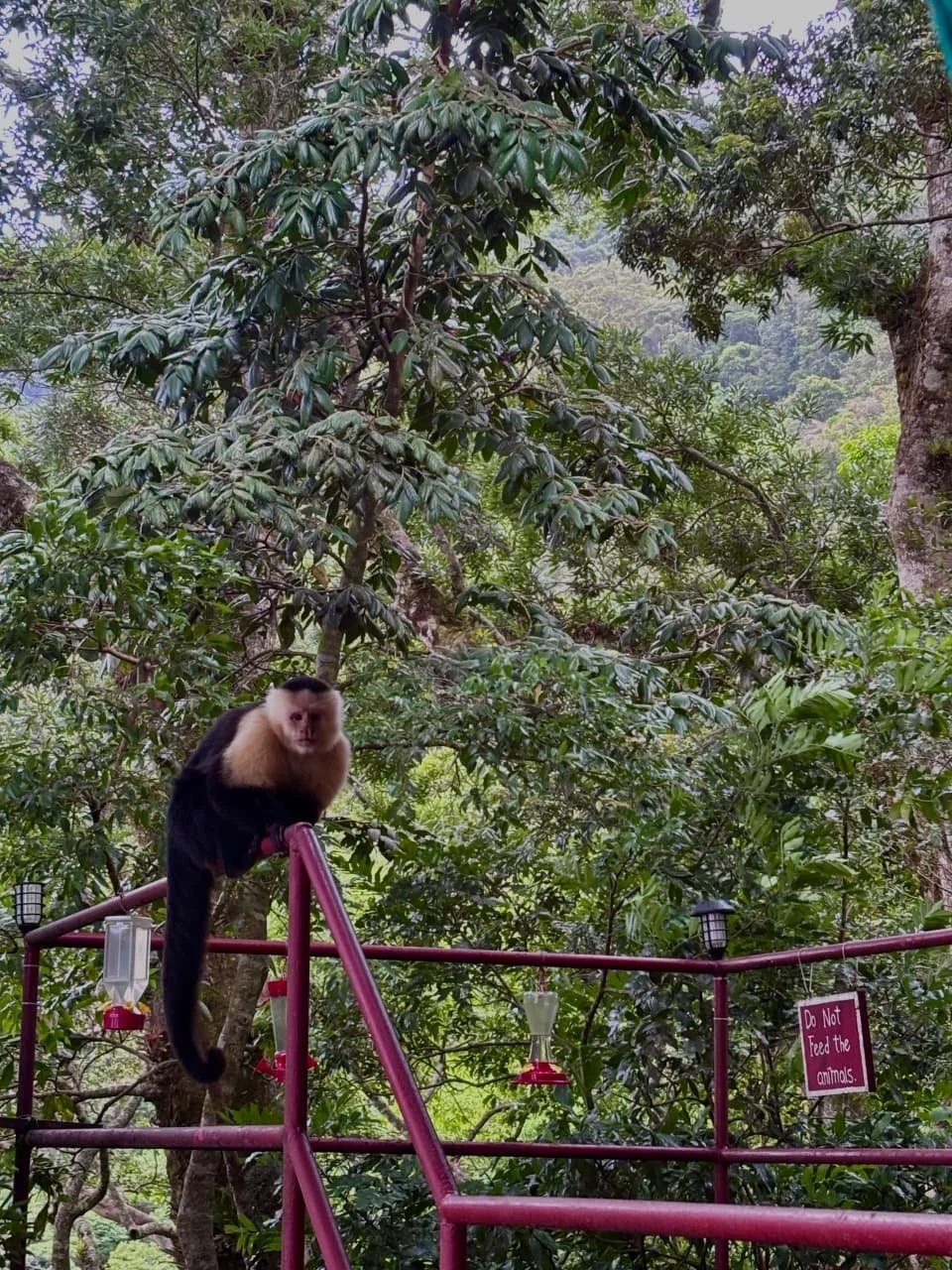
And then they discover that there really are jungles, monkeys, tropical rivers, Caribbean beaches, enormous mountains, strange insects, colorful birds and ridiculously lush landscapes.
Suddenly Janosch doesn't seem quite so crazy.
Panama Feels Like A Real Adventure
One of the biggest reasons Germans seem to enjoy Panama is that the country still feels like a genuine adventure destination without requiring travelers to completely abandon modern comforts. Germany is extremely organized, connected and predictable. Panama is different.
A traveler can have breakfast in a modern café in Panama City, take a bus into the mountains, swim in a jungle river, walk through cloud forest, encounter monkeys and then finish the evening sitting in a hammock listening to insects.
That contrast is extremely attractive to people who want something different from European travel.
Panama does not feel like a giant outdoor theme park. You can still stumble across a tiny village, find an almost empty waterfall or end up on a road where the scenery seems to have been designed for a nature documentary.
For independent German travelers, that sense of discovery is part of the attraction.
Germans Tend To Like Independent Travel
Germany has a strong culture of hiking, cycling, camping, nature travel and independent exploration. Panama fits surprisingly well into that mentality.
The country offers mountains, forests, beaches, islands, rivers, caves, waterfalls, wildlife and long stretches of relatively undeveloped countryside. Someone who enjoys being outdoors does not have to spend their entire vacation lying beside a swimming pool.
And Panama gives travelers the ability to combine very different environments within one trip.
You can go from Panama City to the mountains, then continue toward the Caribbean, travel through small towns, visit islands and finish somewhere completely surrounded by jungle.
For a German traveler who likes planning a route rather than simply booking one resort for ten days, Panama can be incredibly rewarding.
The Mountains Are A Huge Surprise
Many Europeans initially associate Panama with beaches, palm trees and the Panama Canal.
Then they discover the mountains.
Places around Boquete, Volcán, Santa Fe and the Cordillera Central provide cooler temperatures, cloud forests, coffee plantations, waterfalls and hiking opportunities. For Germans who are accustomed to hiking in the Alps, Black Forest, Bavarian mountains or other European landscapes, the idea of combining tropical vegetation with serious mountain scenery is fascinating.
The scenery is completely different from Germany, but the activity feels familiar.
You can hike for hours, stop for coffee and then look out over a landscape containing tropical forests and distant volcanoes.
It is hiking with a completely different cast of characters.
Instead of deer quietly disappearing into European woodland, you might hear howler monkeys, see hummingbirds fighting over flowers or discover that something enormous has just moved through the bushes.
Panama Is Fantastic For Wildlife Lovers
Another major attraction is wildlife.
Germany has wildlife, of course, but Panama offers a completely different level of biodiversity. Travelers can encounter monkeys, sloths, toucans, parrots, hummingbirds, frogs, butterflies, agoutis, armadillos and countless insects.
And then there are the animals that make you stop and reconsider walking barefoot through the jungle.
Tarantulas.
Scorpions.
Snakes.
And, depending on where you are and how lucky you are, some rather impressive predators.
For German travelers interested in photography and nature, Panama can feel like entering another biological universe.
The birdlife alone is enough to attract serious enthusiasts. Panama sits between North and South America and has an extraordinary variety of habitats, making it particularly interesting for birdwatchers.
A traveler who thinks they are simply coming to see beaches can suddenly find themselves spending an hour trying to photograph a tiny hummingbird.
Panama Is Exotic Without Being Completely Alien
There is another important reason Panama works well for European travelers.
It feels exotic, but it is relatively accessible.
The currency situation is easy for visitors because US dollars circulate widely. Tourist infrastructure exists. Roads connect major destinations. There are hotels, hostels, restaurants, supermarkets, buses, taxis and domestic flights.
At the same time, the country still has plenty of places where the traveler feels genuinely away from the usual tourist circuit.
That combination is valuable.
Too much infrastructure and the adventure disappears.
Too little infrastructure and the trip becomes exhausting.
Panama often sits somewhere in between.
The Caribbean Side Is Another World
Many Germans are particularly surprised when they reach the Caribbean coast.
Bocas del Toro feels completely different from Panama City. Caribbean architecture, islands, boats, tropical beaches and a much more relaxed atmosphere create another side of the country.
Then there is the mainland Caribbean coast, where the landscape becomes even wilder.
A traveler can spend part of the trip hiking through cloud forest and another part swimming in warm Caribbean water.
That geographical variety is one of Panama's greatest travel advantages.
Germans Like Getting Value From A Trip
Panama is not necessarily the cheapest country in Central America, but travelers can build a trip at very different price levels.
Backpackers can use local buses, stay in hostels, eat local food and explore independently. Travelers with bigger budgets can choose boutique hotels, private tours, high end restaurants and comfortable transportation.
That flexibility appeals to Europeans because it allows travelers to decide where they actually want to spend their money.
A German backpacker might happily spend very little on transportation and accommodation so they can spend more on diving, hiking, wildlife tours or simply extending the trip.
Panama Feels Different From The Typical European Holiday
There is also something psychological about traveling from Germany to Panama.
You are not simply changing cities.
You are changing environments completely.
European winter can mean short days, cold temperatures, grey skies and darkness arriving before dinner. Panama can mean walking outside in a T shirt, hearing cicadas, swimming in a river and watching the sunset over tropical mountains.
For someone sitting in Germany in February, that can be a powerful motivation.
And Panama is particularly attractive because it isn't simply a beach destination. Someone can escape winter without spending two weeks lying beside the same pool.
They can actually have an adventure.
The Panama Canal Adds Another Layer
The Panama Canal is another major attraction for Germans because it gives the trip something intellectually interesting as well as beautiful.
It is one thing to see a tropical country.
It is another to stand beside a canal where enormous ships are being moved through locks connecting two major oceans.
The Canal gives Panama a strange combination of engineering, history, geography and international importance.
A German traveler interested in technology, engineering or history can enjoy the Canal just as much as someone interested in beaches.
Germans Also Like Panama's Quirkiness
Panama has an enjoyable degree of unpredictability.
A bus may take longer than expected. A road may look completely ordinary until suddenly it disappears into spectacular mountains. You may go looking for a waterfall and discover something much better along the way.
There is a certain amount of accepting that Panama does things differently.
For travelers who want everything to operate exactly like a German railway timetable, this can occasionally be challenging.
For travelers who want stories to take home, it can be fantastic.
Because the best travel memories are not always the perfectly organized ones.
Sometimes they are the completely ridiculous ones.
And Then There Is The Children's Book
This is probably the most uniquely German reason of all.
Ask a German about Panama and there is a reasonable chance that Janosch's Little Bear and Little Tiger will eventually enter the conversation.
For many Germans, Panama was introduced to them before they even knew where it was.
It was a magical word from childhood.
A mysterious destination where happiness was waiting.
Then, decades later, they are standing in an actual Panamanian jungle.
There is something wonderfully funny about that.
Imagine growing up hearing a children's story about a place called Panama, spending years knowing it as this distant magical destination, and then eventually finding yourself sitting beside a tropical river in the real Panama while a toucan flies overhead.
It is almost as if childhood has finally sent you the address.
And perhaps that is one reason Panama has such a special place in German travel culture.
The country does not just offer Germans sunshine, beaches and jungle.
It offers a place they may have already visited once in their imagination.
And perhaps the greatest joke of all is that Little Bear and Little Tiger were looking for Panama because they thought it was the most beautiful place in the world.
After arriving here, a German traveler might simply say:
“Okay... I think I understand the book now.”