
Panama is an extraordinary country for bats. With tropical forests, mangroves, islands, caves, mountains and huge areas of relatively intact jungle, Panama provides habitat for an enormous variety of bat species. In fact, bats are the most diverse group of mammals in Panama, with more than 100 documented species. One published review counted 119 species, although researchers also point out that some regions, particularly parts of the highlands, have been poorly surveyed.
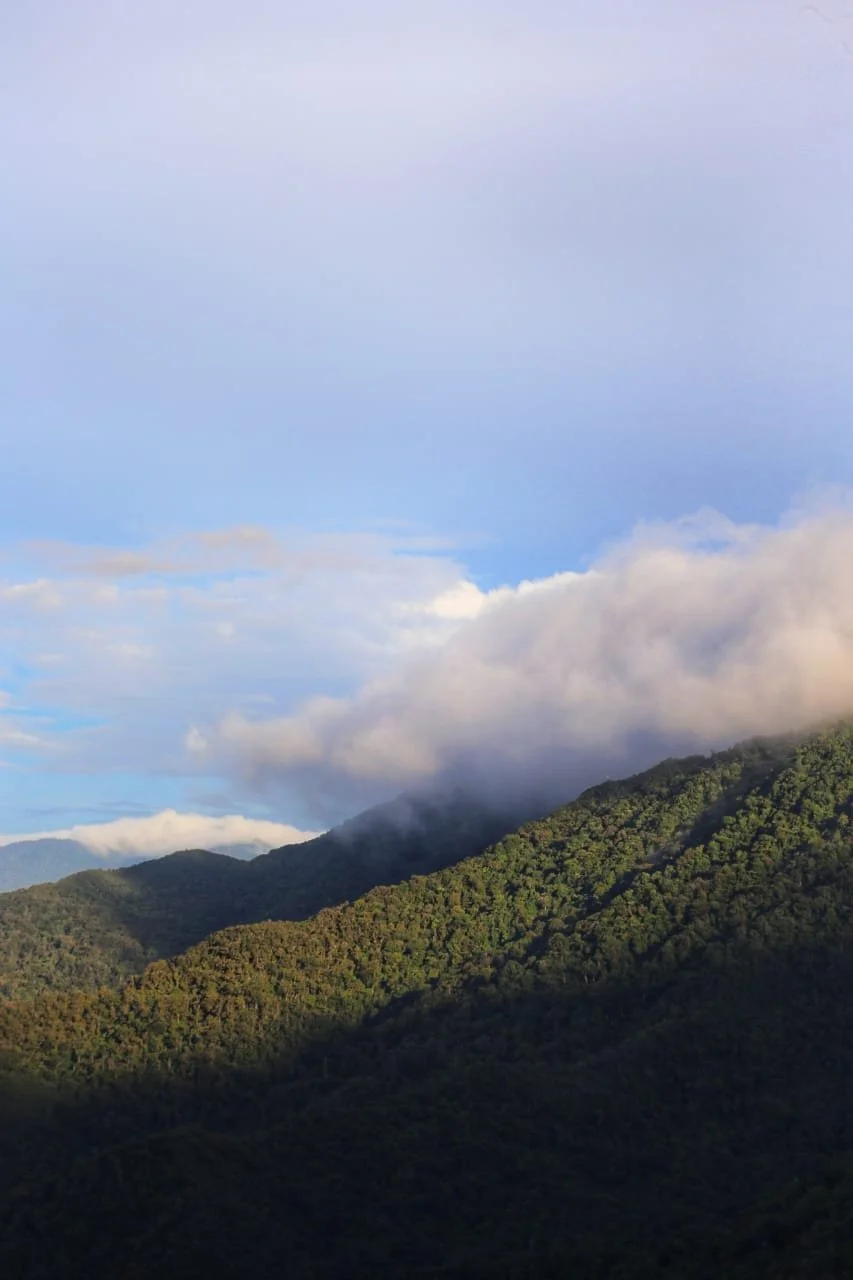
This becomes particularly interesting when travelling across Panama because the bats you encounter around the Caribbean coast and islands can be quite different from those living in the cool mountain forests around Chiriquí and the Talamanca range.
A bat flying around your hostel in Bocas del Toro is living in a completely different environment from a bat hunting insects above a cloud forest at 2,000 metres.
And Panama has both.
Bocas del Toro is bat country
Bocas del Toro is an especially good place to appreciate Panama's bat diversity. The combination of tropical rainforest, rivers, mangroves, islands, caves and abundant fruit creates an enormous variety of opportunities for bats.
Research and long term surveys have documented numerous bat species on the islands and mainland of Bocas del Toro. The Bocas database lists species from several different families, including fruit bats, insect eating bats, fishing bats and nectar feeding bats.
The islands themselves are particularly interesting because different species have been recorded on Isla Colón, Bastimentos, Popa, Solarte and the mainland. Some species occur across several islands, while others have much more restricted records.
So when you see bats flying over the water at sunset in Bocas, you're not necessarily watching one generic type of bat. There may be several species using the same landscape in completely different ways.
The giant bats of Bocas
One of the most fascinating bats associated with Bocas is the greater spear nosed bat, Phyllostomus hastatus.
These are substantial bats, and they are particularly interesting because researchers have studied their behaviour on Isla Colón. Groups of these bats have been documented roosting together in caves, and researchers have used GPS tracking to discover that individuals can travel considerable distances while foraging.
Imagine leaving your cave on Isla Colón after dark, flying across the tropical landscape, finding food and eventually returning to your roost. For a bat, a Bocas island is not a tiny world. Its nightly territory can be surprisingly large.
Bocas has fishing bats too
One of the strangest bats in Panama is the greater fishing bat, Noctilio leporinus.
As its name suggests, this bat can catch fish.
It is associated with waterways and coastal environments and uses its exceptionally sensitive echolocation abilities to detect disturbances at the surface of the water. It can then swoop down and use its feet and claws to grab prey.
The Bocas bat records include Noctilio leporinus on Isla Colón, Isla Bastimentos and the mainland.
There is also the lesser fishing bat, Noctilio albiventris, which is recorded from Isla Colón and the mainland in the Bocas database.
So somewhere around the Caribbean coast of Panama, there are bats flying over rivers and coastal waters at night and essentially going fishing.
That is considerably more interesting than the stereotype of a bat simply hanging upside down in a cave.
Bocas caves can be packed with bats
The limestone caves around Bocas provide some spectacular bat habitat.
Local ecological information describes caves containing fruit bats, nectar feeding bats, fishing bats, insectivorous bats and vampire bats. In some places, fruit bats can cover substantial portions of cave ceilings.
Caves are particularly valuable because they provide stable roosting environments. A bat can spend the daylight hours protected inside a dark cave and emerge after sunset to feed.
And caves aren't necessarily quiet.
A large bat colony can create an extraordinary combination of squeaking, fluttering wings and movement overhead.
Fruit bats are everywhere in the tropical lowlands
Many of Panama's most conspicuous bats are fruit eating species.
These bats are extremely important to the forest because they move seeds around. A bat can eat fruit from one tree, fly considerable distances and then deposit the seeds somewhere else.
This means bats aren't merely consumers of the rainforest.
They are also helping create it.
Species of Artibeus, Carollia, Platyrrhinus and other fruit eating bats occur in Panama. Several are common in lowland forests and around areas where fruit producing plants are abundant.
Carollia perspicillata, the common short tailed fruit bat, is particularly widespread and abundant. In one study of a Panamanian cloud forest, it accounted for more than 60 percent of all bat captures.
And then you climb into the mountains
The bat world changes as you climb.
Panama's mountains create cooler temperatures, different vegetation and different food sources. Some lowland bats can travel into the mountains, but other species are strongly associated with montane and cloud forest environments.
The Talamanca range is particularly important.
Research in montane forests has found several bats that are considered mountain adapted, including Myotis oxyotus, Myotis keaysi and Sturnira burtonlimi. Other species appear to favour particular elevation bands rather than simply occurring everywhere from sea level to the mountaintops.
This makes elevation surprisingly important when trying to understand Panama's bats.
The bats of the higher elevations
If you head into the mountains of Chiriquí, particularly toward the highlands and La Amistad region, you enter habitat for a very different collection of bats.
One particularly interesting species is Myotis armiensis, a recently described species of mouse eared bat. It is known from premontane and montane forests in Chiriquí and has been documented at elevations ranging from roughly 975 metres to 2,500 metres in Panama and Costa Rica. Records include areas around Cerro Punta, El Volcán and La Amistad.
That is an excellent example of the difference between Panama's lowlands and mountains.
A bat flying through a warm Caribbean forest at sea level and a Myotis armiensis hunting insects in cool mountain forest at more than 2,000 metres are living in dramatically different worlds.
Some bats specialize in the mountains
Another interesting group is the nectar feeding bats.
Flowers in high elevation cloud forests provide an important food source for nectar specialists. Research and field records from the Chiriquí highlands have documented species including Glossophaga soricina, Hylonycteris underwoodi, Anoura cultrata and Anoura geoffroyi at various high elevations. Some records are specifically from elevations around 1,700 to 1,800 metres or higher.
These bats are essentially flying pollinators.
They visit flowers at night, consume nectar and carry pollen between plants. In a cloud forest, where plants may be flowering in an environment completely different from the Caribbean lowlands, these bats become an important part of the nighttime ecosystem.
The higher you go, the cooler it gets
This sounds obvious, but it has major consequences for bats.
At low elevations, Panama's nights can remain hot and humid. Fruit is abundant, insects are plentiful and tropical vegetation is dense.
At 1,500 or 2,000 metres, temperatures can be dramatically cooler. Cloud forest vegetation replaces much of the lowland tropical forest. The food available to bats changes, and so does the group of species able to thrive there.
Some bats are generalists and tolerate enormous elevation ranges.
For example, Myotis nigricans has been recorded from sea level to more than 3,100 metres elsewhere in its range. Lasiurus blossevillii has similarly been recorded from sea level to above 3,100 metres.
Other bats are much more specialized.
This creates an invisible vertical wildlife gradient running from the Caribbean coast all the way into the mountains.
What about the bats around Boquete and the Lost and Found area?
The mountainous areas of Chiriquí sit in an interesting middle ground.
They aren't as low and tropical as Bocas, but they aren't necessarily the extreme high elevation environment around the highest parts of the Talamanca range either.
That means you can potentially encounter bats associated with both lower and montane environments depending on the precise elevation and habitat.
The cloud forests around Chiriquí are particularly interesting because research has shown that highland bat communities include several insectivorous and nectar feeding species alongside bats capable of occupying broader elevation ranges.
For a place surrounded by jungle, rivers and mountains, this is one of the reasons nighttime wildlife can be so different from what visitors see during the day.
You might hear frogs.
You might see insects.
You might hear something moving through the vegetation.
And overhead, completely silently to you, several different species of bats can be hunting.
Bats don't all live in caves
This is another common misconception.
Caves are spectacular bat habitats, but many bats never spend their days in caves.
Depending on the species, bats can roost in hollow trees, beneath leaves, inside buildings, in rock crevices, under bridges, in abandoned structures and other sheltered locations.
Some species are strongly associated with caves while others are essentially forest bats.
In Bocas, for example, caves can contain impressive colonies, but the region's bats also use forests, islands, waterways and human altered landscapes.
What about vampire bats?
Yes, Panama has vampire bats.
The common vampire bat, Desmodus rotundus, occurs throughout Panama and is particularly associated with areas where livestock and other large mammals are present. It feeds on blood rather than fruit or insects.
Despite their reputation, vampire bats are fascinating animals.
They have evolved an extraordinarily specialized lifestyle, including an anticoagulant in their saliva that helps keep blood flowing while they feed. They can also move surprisingly well on the ground compared with many other bats.
Interestingly, the common vampire bat is seldom found above about 1,000 metres, making it much more characteristic of lower elevations than the high cloud forests.
So if you're comparing Bocas with the highlands, vampire bats fit much more naturally into the lowland picture.
Bocas versus the highlands
A simple way to think about Panama's bats is this:
Bocas del Toro and the Caribbean lowlands are particularly rich in fruit bats, cave bats, fishing bats, nectar feeders and numerous insect eating species. The region's caves and tropical forests provide exceptional habitat, and surveys have documented many species across the islands and mainland.
The higher mountains of Chiriquí and the Talamanca range contain more specialized montane bats, including several Myotis species and nectar feeding bats associated with cloud forest. Some species can occur at very high elevations, while others occupy middle mountain slopes.
And importantly, there isn't a hard line where "lowland bats" disappear and "mountain bats" suddenly begin. Many species have broad elevation ranges, while others are much more restricted.
Why bats are so important to Panama
Bats are doing an extraordinary amount of ecological work while most people are asleep.
Fruit bats spread seeds.
Nectar bats pollinate flowers.
Insect eating bats consume enormous numbers of insects.
Fishing bats hunt aquatic prey.
And even vampire bats occupy a specialized ecological niche.
A 2016 study in the Gulf of Chiriquí recorded 25 bat species in mangrove habitats, demonstrating how productive even coastal ecosystems can be for bats.
And that is only one habitat.
Panama has mangroves, beaches, islands, lowland rainforest, rivers, plantations, dry forest, premontane forest and cloud forest. Each creates opportunities for different bats.
The best time to look for them
The obvious answer is nighttime.
Around sunset, the first bats begin leaving their roosts. This can be one of the best moments to watch them because the sky is still bright enough to see their silhouettes.
Around tropical gardens, rivers and forest edges, you may see bats darting back and forth above your head.
Near water, look for bats flying low over the surface.
Around fruiting trees, watch for larger fruit bats moving between vegetation.
And in mountain forests, listen more than you look. Many of the smaller insect eating bats are extremely difficult to see with the naked eye.
A flashlight can reveal them occasionally, but a bat detector is far more revealing because it converts their ultrasonic echolocation calls into sounds humans can hear.
Panama's invisible nighttime wildlife
Perhaps the most fascinating thing about bats in Panama is that they create an entire layer of wildlife that most travellers never really experience.
During the day, the jungle seems to belong to monkeys, birds, butterflies and lizards.
Then the sun disappears.
The frogs start calling.
The insects emerge.
The snakes become active.
And suddenly the sky fills with bats.
In Bocas, some may be flying over the Caribbean looking for fruit or insects. Others may be hunting above rivers or even catching fish. In the mountains, smaller bats may be flying through cool cloud forest hunting insects among the vegetation, while nectar feeding species visit flowers.
The remarkable thing is that the elevation changes the cast of characters.
From the warm caves and forests of Bocas del Toro to the misty mountain forests of Chiriquí and the Talamanca range, Panama's bats have evolved to exploit an astonishing variety of environments.
So the next time you see a bat flying over your head in Panama, don't just think "bat."
It could be a fruit eating seed disperser, a tiny cloud forest insect hunter, a nectar feeding pollinator, a fishing specialist, a cave dweller or one of the country's many other highly specialized nocturnal mammals.
And somewhere higher up in the mountains, another species may be doing exactly the same thing in a completely different world.