
Panama is one of those countries that can completely mess with your expectations in the best possible way. You arrive thinking you are going to see the Panama Canal, perhaps spend a few days on a Caribbean island and take some photographs of palm trees. Then you discover that Panama is far more varied than it looks on a map. Within a relatively small country you can find a futuristic capital city, a beautifully preserved colonial district, Caribbean islands, Pacific surf beaches, cloud forests, volcanoes, waterfalls, coffee farms, remote indigenous communities, coral reefs, tropical rivers and enormous areas of jungle. You can be drinking a cocktail beside a skyscraper one afternoon and watching monkeys in the rainforest the next morning.
The great thing about travelling around Panama is that you do not necessarily need to choose between a city holiday, a beach holiday and a jungle adventure. You can build a trip that includes all three. Panama City makes a natural starting point, but the real fun begins when you start moving around the country. The distances can look surprisingly short on a map, yet the landscapes change dramatically as you cross the mountains and move between the Caribbean and Pacific sides.
Panama City: Start With the Canal and the Skyline
For most travellers, Panama City is the obvious place to begin. It is one of the most modern cities in Central America, and the skyline can seem almost ridiculous when you first see it. Towering glass buildings rise directly beside tropical greenery and the Pacific Ocean. It feels much more like a major international business centre than the capital of a small Central American country.
The Panama Canal is obviously one of the major attractions. Watching enormous ships pass through the locks gives you a completely different appreciation for what the canal actually represents. It is easy to think of the canal as something you learned about in geography class, but seeing a massive container ship slowly squeezed through a lock makes the engineering suddenly feel very real.
Casco Viejo is another essential stop. The historic district has colourful colonial buildings, old churches, plazas, narrow streets, rooftop bars and restaurants. During the day it is fascinating to wander around with a camera, while in the evening the neighbourhood becomes a completely different experience. You can sit on a rooftop looking across at the modern skyline while surrounded by centuries old architecture.
But Panama City is not only about buildings. One of its great advantages is that jungle is incredibly close. The Metropolitan Natural Park and the larger rainforest areas surrounding the city make it possible to experience tropical wildlife without travelling halfway across the country. This combination of skyscrapers and rainforest is one of the things that makes Panama City unusual.
Casco Viejo and the History of Panama
If you enjoy history, give Casco Viejo more time than simply taking a quick photograph and moving on. The area tells the story of Panama's importance as a crossroads between oceans and continents. Churches, plazas, defensive structures and old buildings reveal how strategically important the location became during the Spanish colonial period.
The neighbourhood is also a good example of how Panama mixes old and new. You can walk past a centuries old church, turn a corner and find a stylish cocktail bar, boutique hotel or modern restaurant. That contrast is part of the charm.
For backpackers, Casco Viejo can also be a good place to begin meeting other travellers. It is one of the parts of Panama City where sightseeing and nightlife naturally overlap.
Bocas del Toro: Panama's Caribbean Side
Then there is Bocas del Toro, where Panama suddenly feels like an entirely different country.
Bocas Town is built around the water, and boats are essentially the local taxis. Instead of jumping into a car every time you want to go somewhere, you often walk down to the waterfront and find a water taxi. The islands have a distinctly Caribbean atmosphere, with colourful buildings, tropical vegetation, beaches and a mixture of locals, surfers, backpackers and travellers from around the world.
Red Frog Beach is one of the best known beaches, but there are plenty of other places to explore. Starfish Beach is famous for its clear shallow water and abundant starfish, while Bluff Beach offers a wilder and more exposed coastline. Isla Carenero is just a short boat ride from Bocas Town and makes an easy escape when you want to slow down.
Snorkelling, swimming, kayaking, surfing and boat trips are obvious activities, but part of the attraction is simply being on the islands. Panama's Caribbean coast encourages a slower pace. You might plan to go somewhere at 10 in the morning and discover at noon that you are still sitting in a hammock.
Bocas is also one of Panama's main backpacker destinations. There is nightlife, social hostels, beach parties and plenty of opportunities to meet people. For younger travellers, it can easily become one of those places where the planned three day stay mysteriously turns into a week.
Boquete: Mountains, Coffee and Cool Air
If Bocas is Panama's tropical Caribbean personality, Boquete is its cool mountain personality.
Located in the highlands of Chiriquí, Boquete is famous for its pleasant climate, mountains, coffee production and access to hiking. After spending time in hot and humid coastal areas, arriving in the mountains can feel almost bizarre. You can wake up needing a sweater instead of desperately searching for a fan.
Coffee is a major reason to visit. The highlands around Boquete produce some of Panama's most famous coffee, and visiting a coffee farm gives you a chance to see what happens between the plant and the cup. You can learn about growing, harvesting, processing and roasting while enjoying scenery that looks completely different from the beaches of Bocas.
Hiking is another major attraction. The mountains contain cloud forests, waterfalls and spectacular viewpoints. If you enjoy walking through misty forest with birds calling somewhere above you, this is one of the parts of Panama where you will probably want to slow down rather than rush through.
Lost and Found: A Different Kind of Jungle Experience
Between Boquete and Bocas del Toro is another stop that can completely change the character of a Panama itinerary: Lost and Found Hostel in Hornito.
This is not simply somewhere to sleep between two destinations. It is a destination hostel built in the cloud forest, with hiking trails, wildlife, waterfalls, hammocks and a very social atmosphere. The location on the continental divide gives travellers a chance to experience the mountains and jungle while still being conveniently positioned along the route between the highlands and the Caribbean.
The surrounding forest is particularly interesting for wildlife lovers. White faced monkeys can appear around the property, while the wider area contains sloths, agoutis, armadillos, peccaries, deer and a remarkable collection of tropical birds and insects. After dark, the forest becomes even more interesting, with nocturnal animals becoming active.
The night walk is one of the experiences that makes the place different. Instead of simply walking through the jungle during daylight, you head out after dark and start looking for creatures that you would never normally see. Tarantulas, scorpions, snakes, frogs, insects and other nocturnal wildlife can suddenly appear in the beam of a flashlight.
And then there is the social side. Communal dinner, games, hammocks, the jungle lounge and people passing through from all over the world create the feeling of a strange tropical camp for adults. It is the kind of place where someone can arrive intending to stay one night and still be there several days later.
Santa Catalina: Surf, Ocean and Isla Coiba
On the Pacific side, Santa Catalina offers something completely different. It is a small surf town with a much more remote feeling than Panama City or Bocas del Toro.
The waves are a major attraction, but even non surfers can enjoy the area. The coastline is dramatic, sunsets can be spectacular and the town provides access to some of Panama's most extraordinary marine environments.
The biggest attraction nearby is Coiba National Park. The waters around Coiba are famous for marine life, making the area particularly interesting for diving and snorkelling. The island itself also has a fascinating history, having once been used as a prison colony, which adds another layer to an already remarkable destination.
Santa Catalina is the kind of place where you can spend the morning in the ocean, eat lunch in a tiny local restaurant and spend the afternoon doing very little. That is often exactly the point.
Playa Venao: Surf and Social Life
Further along the Pacific coast, Playa Venao has developed a reputation as one of Panama's major surf and backpacker destinations. The beach is long, the atmosphere is relaxed and there is enough nightlife and social activity to keep things interesting.
It attracts surfers, digital nomads, backpackers and travellers who simply want to live near the ocean for a while. You can surf in the morning, have lunch overlooking the beach and watch the sunset without needing to organise a complicated excursion.
The Pacific coast also provides a different experience from Bocas. The Caribbean tends to feel more tropical and island oriented, while the Pacific often has broader beaches, stronger surf and spectacular sunsets.
San Blas: Islands That Feel Like Another World
Then there is the San Blas archipelago, one of the most visually striking parts of Panama.
The islands are famous for tiny tropical beaches surrounded by incredibly clear water. Some islands are so small that you can walk around one in a few minutes. It is the sort of landscape that looks almost too perfect to be real.
But San Blas is more than a collection of beautiful beaches. The region is home to the Guna people, and visiting the islands provides an opportunity to experience a part of Panama with a strong indigenous cultural identity.
Travellers generally visit for a mixture of beaches, swimming, snorkelling, island hopping and cultural experiences. Accommodation can be basic compared with resorts elsewhere, but that is part of the attraction. San Blas is about the environment and the experience rather than luxury.
Santa Fe: Panama's Quieter Mountain Adventure
If you want to get away from the better known tourist circuit, Santa Fe is worth investigating. Located in the mountains of Veraguas, Santa Fe is surrounded by rivers, waterfalls, forests and agricultural land.
It does not have the international profile of Boquete, which is precisely why some travellers enjoy it. The atmosphere is more rural, the pace is slower and the surrounding countryside feels genuinely local.
This is a particularly good region for travellers who like waterfalls, hiking, birdwatching, photography and simply exploring places that do not appear on every backpacker itinerary.
El Valle de Antón: A Mountain Town Inside a Volcano
El Valle de Antón is another fascinating stop. The town sits inside the crater of an ancient volcano, surrounded by mountains and lush vegetation.
The surrounding area offers hiking, waterfalls, viewpoints and wildlife. It is also relatively easy to reach from Panama City, making it a popular addition to an itinerary for travellers who do not have time to go deep into the interior.
The landscape is particularly beautiful in the early morning when clouds and mist move through the surrounding mountains.
Rivers, Waterfalls and Jungle Adventures
One of the great secrets of travelling around Panama is that the country's adventure attractions are not limited to beaches.
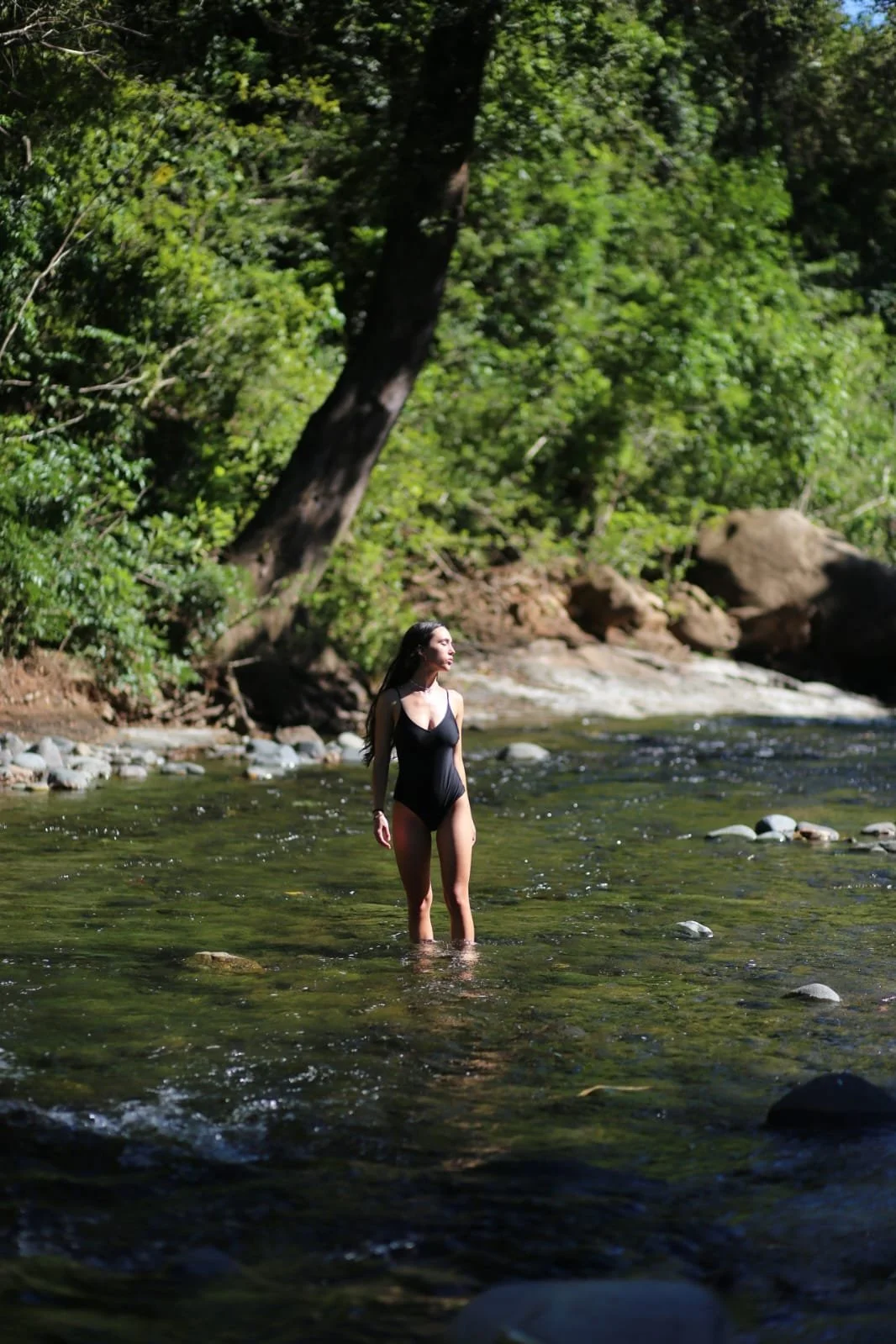
There are rivers everywhere, particularly in the mountainous regions. Swimming in a clear jungle river can be one of the most memorable experiences of a trip, especially after spending several days in hot coastal weather.
Around Chiriquí, places such as Gualaca and the surrounding mountain areas offer opportunities for river swimming, canyoning, waterfalls and outdoor exploration. Some of the best experiences are not famous international attractions at all. They are simply places where locals know there is a beautiful river, waterfall or swimming hole.
This is one reason it is worth asking people who actually live in the area what they recommend. Sometimes the best adventure is not the one that appears first on Google.
Wildlife: Panama Is Much More Than Beaches
For wildlife lovers, Panama is extraordinary.
The country's geographical position creates a bridge between North and South America, and its combination of tropical forests, mountains, wetlands, rivers and oceans supports an enormous variety of life.
You might see monkeys moving through the canopy, sloths sleeping in trees, colourful birds flying across a trail or strange insects appearing on a wall at night. In some areas you can encounter toucans, hummingbirds, morpho butterflies, frogs, iguanas and countless other creatures almost accidentally.
The jungle becomes particularly interesting after sunset. Animals that remain hidden during the day begin moving around, and a completely different ecosystem seems to appear. This is why night walks can be such a memorable part of travelling in Panama.
You do not necessarily need to visit an expensive wildlife park either. Sometimes the best wildlife experience is simply walking slowly through a forest and paying attention.
Food, Markets and Everyday Panama
Travelling around Panama is also about eating. Panama City has an enormous variety of restaurants, from traditional Panamanian food to international cuisine, while smaller towns offer a much simpler style of eating.
Look for dishes such as sancocho, arroz con pollo, ceviche, patacones, carimañolas and fresh seafood. Fruit is another highlight. Depending on the region and season, markets can be filled with mangoes, papayas, pineapples, bananas, passion fruit and other tropical produce.
Do not be afraid of local restaurants that look extremely simple. A plastic chair and a basic menu can sometimes lead to an excellent meal.
Markets are also a good place to understand everyday Panama. Rather than seeing only the tourist version of the country, you get to watch people shopping, eating, talking and going about their normal lives.
Panama Is Made for Road Trips and Backpacking
One of the reasons Panama works so well for independent travel is that you can combine very different destinations without needing to fly everywhere.
A classic route might begin in Panama City, continue to El Valle, head toward the Pacific coast, travel through the mountains around Boquete, stop in the cloud forest at Lost and Found and then continue toward Bocas del Toro.
Another itinerary could focus on the Pacific, combining Panama City, Playa Venao, Santa Catalina and Coiba before heading inland.
You can also travel much more slowly. Panama rewards people who do not try to tick off every attraction in a single trip.
The buses are particularly important for backpackers. They connect cities and towns throughout the country and can be surprisingly inexpensive. Private shuttles and tourist transport are available on many popular routes as well, while domestic flights can save time when distances or schedules make ground transportation inconvenient.
Panama's Biggest Attraction May Be the Variety
Perhaps the most interesting thing about travelling through Panama is how quickly the country changes.
You can have breakfast overlooking skyscrapers, spend the afternoon walking through rainforest and wake up the next day beside a Caribbean beach. You can drink world class coffee in the mountains, swim in a jungle river, surf Pacific waves and then spend the evening listening to music in a Caribbean bar.
You can have an adventurous trip, a relaxing trip, a party trip, a wildlife trip, a surf trip, a hiking trip or some strange combination of all of them.
And that is probably the best way to approach Panama. Do not think of it as one destination. Think of it as a collection of completely different worlds connected by roads, buses, boats and a surprisingly small amount of distance.
For backpackers especially, Panama is at its best when you leave some empty space in the itinerary. Plan the important things, know how you are getting to your next destination and then leave room for the unexpected. Stay an extra night because you met interesting people. Take the local bus instead of the fastest option. Stop in a mountain town you had never heard of. Go swimming in a river. Follow a trail into the jungle. Sit on a beach until sunset.
You might arrive in Panama because you wanted to see the canal.
You might leave wondering why you did not come sooner.