
Panama City is one of those cities where you can do the obvious tourist attractions and still feel like you have barely scratched the surface. Yes, there is the Panama Canal, Casco Viejo and the spectacular skyline, but Panama City becomes much more interesting when you start looking for the unusual. This is a city where modern skyscrapers stand beside crumbling colonial buildings, tropical rainforest begins surprisingly close to downtown, ships from around the world pass through the canal, monkeys live in the city’s surrounding forests and you can be eating ceviche beside the ocean one minute and wandering through a chaotic local market the next.
If you are travelling through Panama as a backpacker, you do not necessarily need to spend your entire stay doing the standard sightseeing circuit. Some of the most memorable experiences are the things that let you see how the city actually works.
Watch Giant Ships Pass Through the Panama Canal
The Panama Canal is obviously not a secret, but there is something about seeing a gigantic ship slowly squeeze through a canal lock that remains genuinely fascinating.
The canal is not simply a tourist attraction. It is working infrastructure on an enormous scale. Container ships, tankers, cruise ships and other vessels are constantly moving between the Caribbean and the Pacific, and watching them pass gives you a completely different appreciation of the geography of Panama.
One interesting thing to do is visit the canal early enough to spend some time watching the operation rather than simply arriving, taking a few photographs and leaving. Watch the locomotives pull alongside the ships, observe how precisely everything moves and consider the ridiculous amount of engineering involved in making ships cross a country that is only a few dozen kilometres wide at its narrowest point.
Walk Through the Jungle Without Leaving the City
One of Panama City's strangest characteristics is how quickly the urban environment can disappear.
The metropolitan area is surrounded by tropical forests, and places such as Metropolitan Natural Park provide the opportunity to walk through genuine rainforest without travelling deep into the interior of Panama.
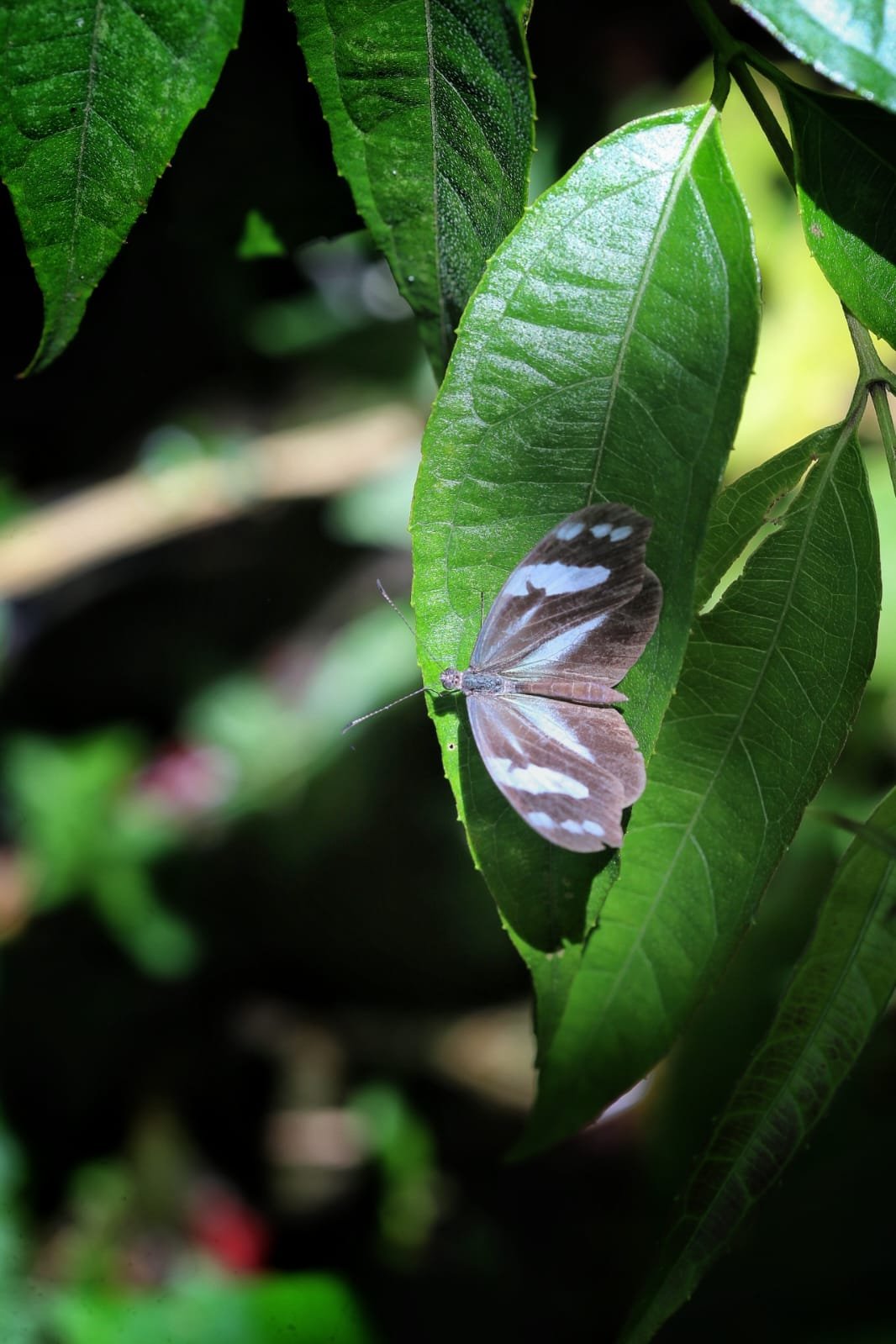
You may see tropical birds, butterflies, lizards and, with luck, monkeys. The sounds are completely different from downtown. Instead of traffic and construction, you hear insects, birds and the movement of animals in the vegetation.
For someone who has just arrived from a major North American or European city, this can be a slightly surreal experience. You can have skyscrapers behind you and dense tropical vegetation in front of you.
Explore Casco Viejo Early in the Morning
Casco Viejo is hardly a hidden secret, but the way you experience it can make a huge difference.
Instead of arriving in the middle of the afternoon when the streets are full of visitors, get up early and walk through the old quarter before the city really wakes up.
The atmosphere changes completely. The streets are quieter, the light is beautiful and you can see local residents starting their day. Old churches, balconies, plazas and colourful buildings look very different without crowds surrounding them.
Then return later in the day for the restaurants, cafés, bars and rooftop terraces.
Casco Viejo is almost like two different places depending on the time of day.
Hunt for Street Art
Panama City's street art scene is another reason to simply wander around without following a strict itinerary.
In and around Casco Viejo, you can find murals, colourful walls, political artwork, abstract pieces and enormous painted buildings. Some works are polished and professional, while others look like they appeared overnight.
The fun part is not necessarily finding one famous mural. It is discovering artwork while walking.
Bring your camera, but also look up. Some of the best details are above eye level, especially on old buildings.
Visit the Mercado de Mariscos
If you want something much more local than another international restaurant, head toward the Mercado de Mariscos.
This is where the relationship between Panama City and the Pacific Ocean becomes very obvious. Fish and seafood arrive, vendors work, locals shop and restaurants around the market turn the catch into inexpensive meals.
It is a particularly interesting place for travellers who enjoy seeing how a city functions rather than simply visiting attractions designed for tourists.
And if you like ceviche, you are obviously in the right place.
Eat Ceviche Beside the Ocean
There is something wonderfully simple about eating fresh ceviche while looking at the water.
Panama City's seafood culture means that ceviche is not merely something you order because a travel guide says you should. It is part of everyday food culture.
Try different versions and compare them. Some are dominated by lime and onion, while others include different seafood, peppers and seasonings.
It is also a good reminder that Panama City is not just a business capital surrounded by skyscrapers. It is a tropical coastal city with a strong connection to the sea.
Take a Walk Along the Cinta Costera
The Cinta Costera is one of the easiest ways to experience the contrast that makes Panama City so visually unusual.
You can walk, run or cycle with the Pacific on one side and an enormous wall of skyscrapers on the other.
During the day, it is a useful way to explore the waterfront. Around sunset, it becomes much more atmospheric as the light changes over the buildings.
For photographers, this is one of the best places to capture the strange combination of tropical coastline and modern Latin American skyline.
Watch the Sunset From a Rooftop
Panama City's skyline was practically designed for rooftop sunsets.
As the sun begins to disappear, the glass towers change colour and the city starts to glow. From above, you can see the contrast between Casco Viejo, the modern financial district, the ocean and the green areas surrounding the city.
You do not necessarily need to choose the most expensive rooftop bar. Sometimes the best experience is simply finding a place with a good view, ordering something cold and watching the city transition from day to night.
Take the Metro Just Because You Can
This might sound ridiculous as a tourist activity, but Panama City's Metro is actually an interesting way to experience the city.
Instead of staying entirely inside the tourist bubble, use public transportation to move around. The Metro is modern, inexpensive and gives you a glimpse of everyday Panama City.
It is also a useful reminder that Panama is not just a tropical holiday destination. It is a rapidly developing modern capital with millions of people moving around every day.
For backpackers, combining the Metro with buses, walking and taxis can make getting around the city part of the experience rather than something you simply tolerate between attractions.
Visit Albrook Mall and See a Completely Different Panama
Albrook Mall is enormous and can feel almost absurdly large.
It is not necessarily the kind of place that appears on a traditional list of things to see in Panama City, but it can be surprisingly entertaining, particularly if you have been travelling for a while.
There are shops, restaurants, supermarkets, entertainment and practically everything you could possibly need after weeks on the road.
It is also interesting culturally because malls are important social spaces in Panama. You can escape the tropical heat, grab food, replace something you lost while travelling and watch local life happening around you.
And yes, you can absolutely spend several hours there without realizing it.
Search for Panama's Wildlife
One of the most unique things about Panama City is that wildlife is never as far away as you might expect.
In the surrounding forests and green spaces, keep your eyes open for monkeys, sloths, tropical birds, iguanas, butterflies and other creatures.
Birdwatching can be particularly rewarding. Panama sits along major migration routes and has an extraordinary variety of habitats, making the region around the capital surprisingly productive for bird enthusiasts.
The trick is to slow down.
Walk quietly. Look into trees. Listen before you look. A jungle trail can appear empty until suddenly you realize that something has been watching you from above.
Visit the Biomuseo
The Biomuseo is one of the more unusual museums in Panama City because the building itself is part of the experience.
Its colourful architecture was designed by Frank Gehry and stands out dramatically against the landscape.
Inside, the museum focuses on Panama's extraordinary biological importance and its role as a bridge between North and South America.
It is particularly interesting because it helps explain why Panama has such incredible biodiversity. The country's geographical position has had enormous consequences for the movement and evolution of species across the Americas.
Explore the Ruins of Panamá Viejo
Panamá Viejo gives you a completely different perspective on Panama City.
These ruins represent the remains of the original Panama City, founded in the sixteenth century. Walking through the archaeological site, you can see remnants of churches, buildings and other structures from the colonial period.
The experience is very different from Casco Viejo because here you are walking through the remains of the original city rather than a restored historic neighbourhood.
It is a fascinating reminder that today's enormous modern city is built on top of several layers of history.
Go Looking for the Devil's Drummers
Panama has a fascinating Afro Panamanian tradition known as Congo culture, particularly associated with the Caribbean coast and the province of Colón.
If you happen to encounter performances or cultural events connected to Congo traditions while visiting Panama City, they are worth seeking out. The music, costumes, movement and storytelling are unlike the stereotypical tourist version of Latin American culture that you might encounter elsewhere.
It is a much deeper way of experiencing Panama than simply visiting a souvenir shop.
Visit a Local Casino
Panama City has a surprisingly active casino scene.
For travellers who have never been inside a Latin American casino, it can be an interesting cultural experience. Some casinos are large and modern, while others feel much more local.
Obviously, gambling should be treated as entertainment rather than a strategy for making money. The interesting part is often simply observing the atmosphere, especially if you have never experienced casinos in Panama before.
Take a Day Trip to the Caribbean Side
One of the most unusual things about Panama City is how close you are to completely different environments.
You can travel toward the Caribbean side of the country and explore places such as Portobelo, where jungle, beaches, colonial history and Caribbean culture all come together.
The old Spanish fortifications overlooking the water make it feel completely different from Panama City.
For travellers interested in history, photography and landscapes, it can be a fascinating escape from the capital.
Go Beyond the Tourist Version of Panama City
Perhaps the most unique thing you can do in Panama City is simply stop treating the city like a checklist.
Walk down a street you have never seen before. Eat somewhere that does not have an English menu. Take public transportation. Visit a local market. Sit in a plaza. Watch people. Try something you cannot pronounce. Wander around Casco Viejo without constantly checking Google Maps.
Panama City rewards curiosity.
And that is particularly true for backpackers. The city does not need to be treated as a place where you spend one night before immediately rushing toward Bocas del Toro or Boquete. There are enough layers here to keep you busy for several days.
You can have a sophisticated rooftop cocktail overlooking skyscrapers in the evening and be surrounded by tropical forest the following morning. You can watch an enormous ship cross the canal, eat fresh seafood, explore centuries old ruins and then spend the night dancing in Casco Viejo.
Panama City is much more than the Panama Canal. The real fun begins when you start looking underneath the obvious attractions and discover the strange combination of jungle, history, modernity, ocean, culture and everyday Panamanian life that makes the capital so different from almost anywhere else in Central America.