
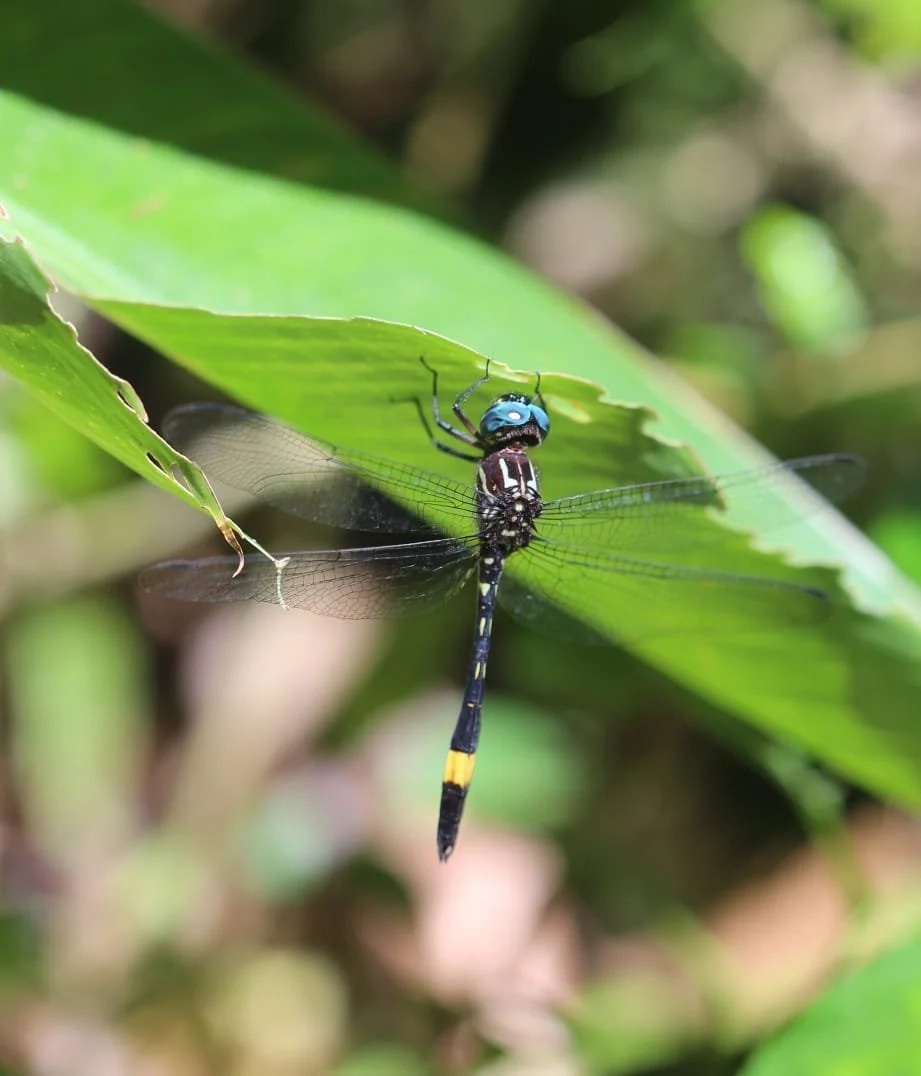
Panama is one of those countries where you can spend the morning admiring a toucan, the afternoon swimming in the Caribbean and the evening discovering that something the size of your fingernail has decided to make itself very comfortable inside your backpack. With tropical rainforest covering huge portions of the country, Panama has an extraordinary variety of insects and other arthropods. Most are completely harmless, and an enormous percentage would much rather run away from you than have anything to do with you. But there are a handful of creatures that hikers, campers and travellers should know about.
The good news is that Panama is not a place where you need to walk around terrified of every insect. The vast majority are simply part of the jungle. The trick is knowing which ones deserve respect, where you are likely to encounter them and what not to do when you find one.
Bullet Ants: The Tiny Insect With a Huge Reputation
The bullet ant is one of the insects that gives tropical rainforest a serious reputation. Paraponera clavata is a large ant found in parts of Central and South America, including Panama, and its sting is famously extremely painful.
These aren't the tiny ants you find marching across a kitchen counter. Bullet ants are large, conspicuous insects that spend much of their time associated with trees and forest vegetation. Their colonies are generally found at the bases of trees, and workers can forage up vegetation.
The important thing is simple: don't deliberately touch one.
A bullet ant isn't hunting humans. It doesn't want your lunch, your camera or your backpack. Like many insects, it is primarily concerned with its own business. Problems happen when someone accidentally grabs, steps on or otherwise disturbs it.
And if you see a very large ant wandering around the forest, admiring it from a safe distance is considerably smarter than testing its reputation.
Fire Ants: Small, Aggressive and Easy to Underestimate
Fire ants are considerably smaller than bullet ants, but their stings can still be unpleasant.
The problem with fire ants isn't necessarily spotting an individual. It is discovering that you have accidentally stepped onto or disturbed an entire colony.
They can swarm when their nest is disturbed, and multiple stings can happen quickly.
This is particularly relevant when you're sitting on the ground, camping, moving rocks or exploring vegetation around a trail. Before putting your hands somewhere you cannot see, take a second to look.
That tiny pause can save you a surprisingly memorable experience.
Mosquitoes: Probably the Insect You Should Take Most Seriously
Mosquitoes aren't frightening because they are large, aggressive or particularly interesting.
They're frightening because they can transmit disease.
Different mosquito species can transmit different illnesses, and mosquito borne diseases occur in parts of Panama. The actual risk varies significantly by location, season and individual circumstances, so travellers should check current health information for the specific areas they are visiting rather than assuming the risk is identical everywhere.
This is one creature where prevention makes much more sense than bravery.
Repellent, long sleeves, trousers and accommodation with screens or other mosquito protection can make a huge difference.
And remember that mosquitoes aren't exclusively a nighttime problem. Some important mosquito species are active during the daytime as well.
That means putting on repellent only when the sun goes down isn't necessarily enough.
Horseflies: The Jungle's Flying Nuisance
Horseflies don't get nearly as much attention as mosquitoes, but anyone who has spent enough time outdoors in tropical areas knows how irritating they can be.
Female horseflies bite because they require blood for reproduction. Their bites can be surprisingly painful because of the way they feed.
They can also be persistent.
If one starts following you around, repeatedly swatting at it isn't always the most effective strategy. Covering exposed skin can help, although horseflies are particularly annoying precisely because they are persistent daytime insects.
They're one reason that a long walk through humid forest can sometimes involve more insect management than you expected.
Ticks: Tiny, Quiet and Worth Checking For
Ticks are not insects that you necessarily notice while hiking.
That is part of the problem.
They can attach themselves to people and animals passing through vegetation. Some ticks can transmit diseases, so the sensible approach after hiking is to check yourself rather than simply assuming you would feel one crawling on you.
Pay particular attention to areas where ticks can be difficult to notice, including around the waist, behind the knees, around the hairline and other sheltered areas.
Long trousers can help, especially when walking through dense vegetation, and checking clothing and skin after a hike is a simple habit worth developing.
You don't have to become obsessed with ticks.
Just don't give them an all you can eat buffet.
Centipedes: The Ones You Definitely Don't Want in Your Shoe
Large tropical centipedes are among the creatures that can genuinely make you reconsider putting your hand into a dark hole.
Some species of Scolopendra can become surprisingly large, and their venomous forcipules can deliver a painful bite. They are predators, not creatures interested in attacking backpackers.
The biggest mistake is treating them like harmless worms.
If you see a large centipede, give it space. Don't try to pick it up, trap it against your skin or investigate it with your fingers.
And before putting your shoes on in the morning, shake them out.
That is good tropical travel etiquette regardless of whether you ever encounter a centipede.
Scorpions: Not Insects, But Definitely Worth Mentioning
Technically, scorpions aren't insects at all. They are arachnids, related to spiders and ticks.
But if we're discussing creatures that travellers might encounter and shouldn't casually handle, they absolutely deserve a place here.
Panama has several species of scorpion, and they can turn up in surprisingly ordinary places. They may hide under rocks, bark, logs, clothing or other sheltered objects.
Most scorpions would prefer to escape rather than sting you.
The problem is that putting your hand somewhere occupied by a defensive scorpion is a very effective way of changing its mind.
Again, the rule is simple:
Look before you touch.
Whip Scorpions Look Terrifying
Panama also has creatures that look considerably more dangerous than they actually are.
Whip scorpions are a perfect example.
They have long, whip like front appendages and can look like something designed specifically for a horror movie. But despite their appearance, they are not venomous in the same way true scorpions are.
Some species can release an irritating acidic substance when threatened, so you still don't want one spraying directly into your face, but they are not creatures that normally seek out humans.
They are actually fascinating nocturnal predators.
So if you encounter one during a nighttime walk, don't panic just because it looks like Satan's house spider.
Let it continue hunting.
Spiders: More Interesting Than Dangerous
Panama has an enormous variety of spiders, including tarantulas and other large species that can look intimidating.
But size isn't a reliable indication of danger.
Most spiders are not interested in people. They are predators waiting for insects and other small animals. A spider sitting quietly in a web is generally doing exactly what you hope it will do: eating insects.
Tarantulas can bite if seriously threatened, and some species have irritating hairs that they can use defensively. The best approach is therefore not to pick them up for a photograph.
You don't need to prove your bravery to Instagram.
Take the picture from a sensible distance.
Wasps and Bees: Respect the Nest
Some of the most unpleasant insect encounters don't happen because a traveller encounters a particularly dangerous individual.
They happen because someone accidentally discovers the entire family.
Wasps and bees can become defensive when their nest is threatened. A person walking directly into a nest or disturbing it can provoke multiple stings.
This is particularly important around trees, hollow trunks, roofs, sheds and structures where nests can be hidden.
If you notice insects repeatedly entering and leaving the same hole, branch or structure, assume there is a reason.
Don't investigate.
The Real Danger Is Usually Your Behaviour
This is perhaps the most useful thing to remember when travelling through Panama's jungle.
Most potentially unpleasant encounters happen because a person disturbed something.
You stepped on the ant nest.
You grabbed the centipede.
You put your hand under a rock.
You walked directly into a wasp nest.
You reached into a dark hole.
You put on a shoe without checking it.
You decided that the giant spider would make a fantastic selfie.
The rainforest isn't trying to attack you.
You are simply wandering through somebody else's house.
And the residents don't necessarily appreciate visitors grabbing the furniture.
A Few Simple Jungle Habits
You don't need expensive equipment to hike safely around Panama. A few basic habits go a long way.
Shake out your shoes before putting them on.
Don't put your hands into holes, cracks or underneath rocks where you cannot see.
Don't pick up insects or spiders.
Use insect repellent where mosquitoes are a concern.
Check yourself for ticks after walking through dense vegetation.
Avoid disturbing nests.
Wear appropriate footwear on jungle trails.
Use a flashlight at night and watch where you're stepping.
And perhaps the most important rule of all:
If you don't know what it is, don't touch it.
You don't have to identify every insect in Panama before enjoying the rainforest.
Panama's Insects Are Part of the Adventure
The temptation when talking about tropical insects is to turn the jungle into a catalogue of things that can hurt you.
That would be a shame.
Panama's insects are one of the reasons its forests are so fascinating. They pollinate plants, recycle nutrients, prey on other creatures and provide food for birds, frogs, reptiles and mammals. The strange creatures that make visitors nervous are also an essential part of the ecosystem.
And once you stop seeing every six legged creature as a potential enemy, the jungle becomes considerably more interesting.
You start noticing leafcutter ants carrying pieces of leaves overhead. You see enormous colourful butterflies drifting through clearings. You discover bizarre beetles, stick insects, katydids and praying mantises. At night, completely different creatures emerge.
Some are beautiful.
Some are bizarre.
Some look like they were invented by a Hollywood special effects department.
And a very small number deserve a healthy amount of respect.
The secret to enjoying Panama's insects is therefore not to be afraid of them.
It's to understand that you're visiting their jungle, not the other way around.