
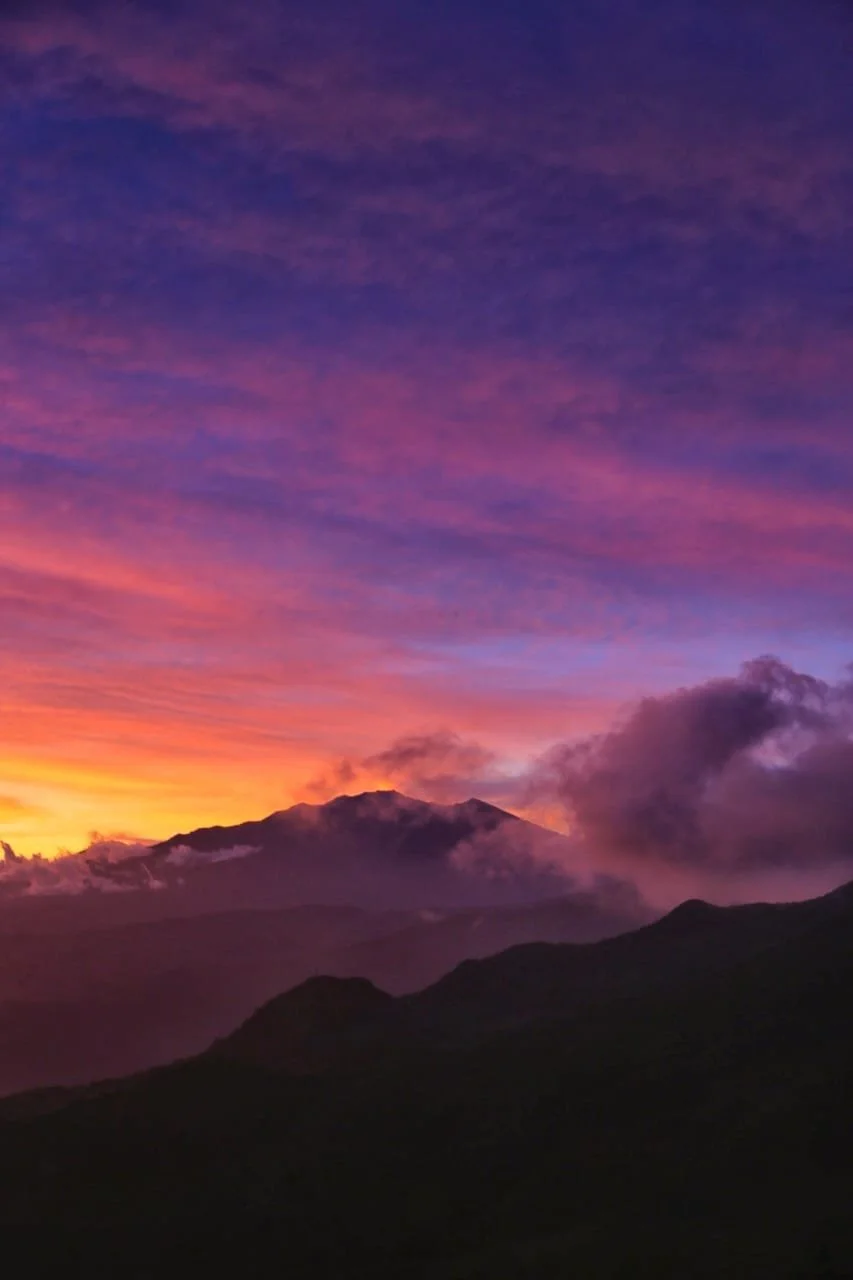
There are national parks, and then there are places that make you realize how enormous and complicated nature can still be. La Amistad International Park is firmly in the second category. Stretching across the mountains of western Panama and Costa Rica, La Amistad protects one of the largest remaining blocks of natural forest in Central America. The Panamanian portion covers more than 200,000 hectares, extending through Chiriquí, Bocas del Toro and the Naso Tjër Di region. The entire transboundary World Heritage property is more than 570,000 hectares.
The name La Amistad means "friendship," which is wonderfully appropriate for a park that literally crosses an international border. But don't let the friendly name fool you into imagining an easy little nature reserve with a few paths and some interpretive signs. This is an enormous mountain wilderness containing cloud forests, rainforest, high elevation forests, rivers, waterfalls, remote valleys and some of the most extraordinary wildlife habitat in Panama.
A Park That Exists in Two Countries
One of the first things that makes La Amistad unusual is that the forest doesn't care about the border.
The Talamanca mountain range continues naturally between Panama and Costa Rica, while the park protects both sides of it. The result is one enormous ecological system rather than two completely separate parks. UNESCO describes the area as one of Central America's most important remaining blocks of natural forest, with extraordinary variation in elevation and habitat.
The mountains are particularly important because they are part of the biological bridge connecting North and South America. Animals and plants from both continental regions have been able to move through Central America over geological time, and the complicated mountains and valleys of the Talamancas have helped produce an extraordinary concentration of species.
It is essentially a giant natural mixing bowl.
And then evolution started getting creative.
The Biodiversity Is Almost Ridiculous
UNESCO records approximately 10,000 flowering plant species within the wider Talamanca La Amistad property, along with more than 4,000 nonvascular plants and roughly 1,000 fern species. The area has recorded about 215 mammal species, around 600 bird species and approximately 250 reptiles and amphibians.
Those numbers are difficult to comprehend when you're actually standing inside the forest.
You don't see "10,000 plant species."
You see green.
Green on the ground. Green on the trees. Green hanging from branches. Green growing on other green things.
Then you start looking more carefully and discover that what appeared to be one giant wall of vegetation is actually an absurd collection of mosses, orchids, bromeliads, ferns, vines, trees, fungi and epiphytes.
And then something moves.
A bird.
A lizard.
A monkey.
Perhaps something much larger.
This Is Quetzal Country
For birdwatchers, La Amistad is particularly special.
The park contains habitat for hundreds of bird species, including the resplendent quetzal, one of the most spectacular birds in Central America. The Las Nubes sector in Chiriquí is particularly associated with quetzal watching.
The quetzal is one of those birds that seems almost too beautiful to have evolved naturally. Its brilliant colours, long tail feathers and secretive behaviour have made it legendary throughout Mesoamerica.
But the quetzal isn't the only reason birdwatchers come here.
The mountains contain an extraordinary variety of hummingbirds, tanagers, flycatchers and other highland species, while the huge range of elevations means that the bird community changes as you move through the park.
You can therefore spend hours looking for one bird and accidentally discover ten others you weren't expecting.
That's one of the great dangers of birdwatching.
You start with a checklist.
You finish several hours later wondering why you're now emotionally invested in a bird you've never heard of before.
And Yes, There Are Jaguars
This is one of the most fascinating things about La Amistad.
The park isn't just a paradise for birds and plants. It is home to some of Central America's major predators.
Camera trap monitoring in the Panamanian section has documented all six species of wild cats found in Panama, including jaguars, pumas, ocelots, margays, jaguarundis and oncillas.
Think about how extraordinary that is.
You can be standing in a cloud forest that feels almost completely peaceful, listening to birds and water running through the vegetation, while somewhere in the surrounding forest a jaguar is moving through the trees.
You probably won't see it.
That's the point.
These animals occupy enormous landscapes and are exceptionally good at avoiding people. Camera traps are therefore an important way of discovering what is actually living in the forest.
And La Amistad has produced some remarkable surprises, including camera trap records of jaguars in the Chiriquí section at surprisingly high elevations.
The Mountains Are Not Just Rainforest
One of the most incredible things about La Amistad is how dramatically the environment changes as you climb.
UNESCO describes a progression through lowland rainforest, montane forest, cloud forest and oak forest, with high elevation wetlands and páramo environments occurring near the highest peaks. Some peaks in the wider Talamanca property rise above 3,000 metres.
This means La Amistad isn't one ecosystem.
It's an enormous collection of ecosystems stacked on top of each other.
Down low, the forest can be warm, wet and tropical.
Higher up, the temperature drops.
Mist becomes more common.
Trees become covered in moss.
Orchids and bromeliads appear everywhere.
The forest becomes shorter and more twisted.
Eventually, at the highest elevations, the landscape can become almost surprisingly open.
That is one reason the park is so important scientifically. You aren't simply protecting a forest. You're protecting an entire vertical world.
The Cloud Forest Is Something Else
If you've never experienced a true cloud forest, La Amistad is a spectacular introduction.
The name is literal.
Clouds and mist move through the mountains, moisture hangs in the vegetation and the forest itself seems permanently damp. Moss covers branches and trunks. Ferns grow everywhere. Water drips from leaves even when it isn't raining.
Eventually you realize that the forest isn't simply receiving water from rainfall.
The forest is catching the clouds.
Every branch, leaf, moss-covered trunk and epiphyte becomes part of a gigantic water collection system.
It is one of those environments where you can understand why tropical forests are so important without anyone having to explain it to you.
Las Nubes Is the Gateway for Visitors
For travellers exploring the Panamanian side, Las Nubes in Chiriquí is the main access point and the location of the park's visitor facilities and trailheads.
There are several trails around this sector, giving visitors the opportunity to experience the forest without undertaking a multi-day expedition.
The Panama Verde Trail is a short loop of about one kilometre.
El Retoño Trail goes deeper into the forest and is around 2.4 kilometres.
La Cascada Trail covers approximately 3.2 kilometres and leads through changing forest toward a waterfall.
There is also access toward the La Nevera viewpoint, where the elevation and exposure can make the atmosphere noticeably cooler.
These shorter routes are particularly interesting because they demonstrate just how quickly the forest can change.
You might begin walking through relatively ordinary tropical vegetation.
Then the air gets cooler.
The vegetation changes.
Moss becomes more prominent.
The forest starts feeling older.
And suddenly you're standing beside a waterfall in a completely different world.
Don't Underestimate the Weather
This is the mountains, not a Caribbean beach.
La Amistad can be wet, muddy, cool, misty and occasionally downright chilly.
The name "Panama" sometimes makes visitors imagine nothing but hot tropical weather. But elevation changes everything.
You can leave a warm lowland environment and climb into conditions where a waterproof jacket suddenly becomes the most valuable thing in your backpack.
The park's trails can also become slippery after rain, and conditions can change quickly.
That is part of the adventure, but it is worth arriving prepared.
The Forest Is Full of Smaller Wonders
You don't need to find a jaguar or quetzal to have an incredible day in La Amistad.
Look closely at the vegetation and the park becomes a completely different experience.
There are orchids growing on trees.
Bromeliads collecting water.
Ferns emerging from damp ground.
Tiny frogs hiding beneath leaves.
Butterflies moving through patches of sunlight.
Mushrooms appearing almost overnight.
Hummingbirds moving so quickly that your eyes struggle to follow them.
And insects that look as though somebody designed them specifically for a science fiction film.
The more slowly you walk, the more you see.
A Landscape Shared With Indigenous Communities
La Amistad isn't an empty wilderness devoid of people.
UNESCO notes the long history of human occupation in the Talamanca range and the presence of Indigenous peoples within and around the protected landscape.
That human history is part of the story of the park.
The mountains have supported communities for generations, and the wider landscape includes Indigenous territories and cultural traditions that existed long before modern national borders divided the region.
That makes La Amistad more interesting than simply being "jungle."
It is a landscape shaped by geology, wildlife, plants and people.
Perhaps the best way to understand La Amistad is to imagine removing it from the map.
You would lose an enormous section of connected forest.
You would lose habitat for jaguars, pumas, tapirs, monkeys and hundreds of bird species.
You would lose cloud forests and high elevation ecosystems.
You would lose thousands of plant species.
And you would break apart one of the great remaining ecological connections between North and South America.
That is why UNESCO recognizes the Talamanca Range La Amistad Reserves as a World Heritage property. Its exceptional biodiversity, high degree of endemism, geological history and enormous intact forest landscapes make it significant far beyond Panama and Costa Rica.
The Best Thing About La Amistad
What makes La Amistad so fascinating isn't one particular waterfall, viewpoint or animal.
It is scale.
This is a place where the forest feels bigger than you.
Where a trail can take you from warm rainforest into cold cloud forest.
Where the same protected landscape can contain tiny frogs, spectacular quetzals, tapirs, pumas and jaguars.
Where a tree can be covered in enough moss and epiphytes to look like another ecosystem growing on top of it.
And where an apparently quiet forest can actually be filled with thousands of species that you simply aren't noticing.
La Amistad is one of those places where Panama stops feeling like a small Central American country and starts feeling enormous.
You walk into the forest expecting a hike.
You come out realizing that you have only seen a tiny fraction of what is actually there.
And somewhere beyond the trail, hidden in the mist, the forest continues for kilometres and kilometres, completely unconcerned that you were there.