
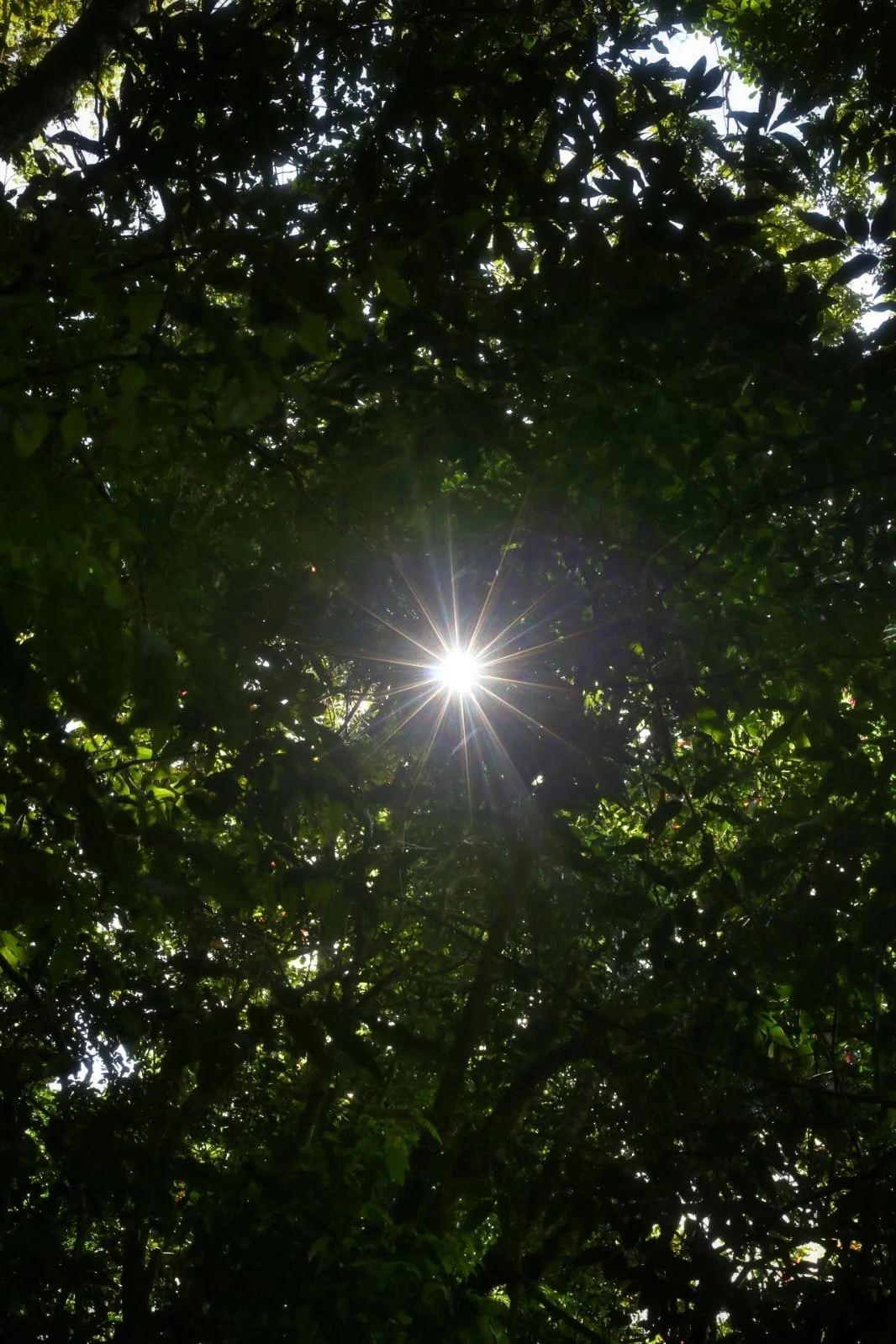
If you walk into a Panamanian forest and think, "There are a lot of ferns here," you are absolutely right. Ferns are one of those plants that can be so common in Panama that visitors barely notice them after a while. But stop for a minute and actually look at them and they become fascinating. There are delicate little ferns growing between rocks, enormous fronds stretching across jungle trails, climbing ferns winding through vegetation and spectacular tree ferns standing several metres above the forest floor. Some look almost tropical and delicate, while others look as though they belong in a prehistoric landscape.
And there is something particularly appropriate about seeing so many ferns in Panama.
Ferns are ancient.
They were growing on Earth long before humans, long before monkeys, long before flowering plants became dominant and long before Panama looked anything like the country we know today.
Walking through a Panamanian rainforest surrounded by ferns is, in a very real sense, walking among descendants of some extremely old botanical lineages.
Panama is almost a perfect country for ferns
Ferns generally love moisture, and Panama has plenty of it.
The country sits in the tropics, receives abundant rainfall and has an extraordinary variety of environments ranging from humid Caribbean lowlands to cloud forests, mountains, rivers, wetlands and rainforests.
Then add elevation.
As you climb into the mountains around Boquete, Cerro Punta, Volcán Barú and Fortuna, the environment changes dramatically. Temperatures become cooler, clouds and mist become more common, and mosses, liverworts and ferns become particularly noticeable.
In the wet forests of western Panama, you can sometimes walk only a few metres before encountering another fern growing somewhere you didn't expect.
On the ground.
On a rock.
Beside a stream.
On a tree.
Along a trail.
And sometimes practically hanging over your head.
Ferns are not flowering plants
One of the simplest ways to understand ferns is to realize that they belong to a completely different reproductive strategy from flowering plants.
A rose produces flowers.
A mango produces flowers.
A hibiscus produces flowers.
A fern doesn't.
Instead, ferns reproduce using spores.
Look underneath a mature fern frond and you may see rows or clusters of tiny brown, orange or dark structures. These are often sori, structures that contain spore producing organs.
It can look like the plant has some sort of disease.
It doesn't.
It's reproduction.
Those tiny structures are part of an ancient biological system that has been working successfully for hundreds of millions of years.
And those curled up baby fronds have a name
One of the most beautiful things about ferns is watching new fronds emerge.
They often begin curled tightly into what looks like a green spiral.
This is called circinate vernation.
As the frond develops, the spiral gradually unfurls.
If you've ever watched one of these slowly opening, you've seen one of the most recognizable features of fern growth.
It looks almost mechanical.
A tiny green scroll slowly opening until it becomes a full sized frond.
And when you see thousands of them in a humid Panamanian forest, the effect can be extraordinary.
Tree ferns are the giants of the fern world
If you want to see ferns that genuinely make you stop walking, look for tree ferns.
These aren't little plants hiding beside the trail.
Some species develop tall, trunk like structures and produce enormous crowns of fronds at the top.
Suddenly you're standing beside something that looks like a miniature palm tree.
Except it isn't a palm.
It's a fern.
Tree ferns are particularly associated with humid mountain environments, including cloud forests. Panama has numerous species of tree fern, and some of the high elevation forests around Chiriquí can feel almost prehistoric because of them.
Imagine walking through misty forest with giant ferns overhead, moss covering the trees and clouds drifting between the branches.
It doesn't take much imagination to understand why people describe some cloud forests as Jurassic looking.
Ferns were here before flowering plants
Ferns and their relatives have an extraordinarily long evolutionary history.
The earliest members of the fern lineage appeared hundreds of millions of years ago.
Long before the first humans.
Long before the first mammals resembling anything familiar to us.
And long before the tropical forests of modern Panama existed.
They survived enormous changes in climate and geography.
Continents moved.
Oceans opened and closed.
Entire groups of animals appeared and disappeared.
Flowering plants eventually became dominant in many ecosystems.
And ferns kept going.
That's one of the things I love about them.
When you're looking at a fern in Panama, you're looking at a plant design that has been remarkably successful for a very, very long time.
Panama's forests have ferns at almost every level
One reason ferns are so interesting in Panama is that they don't all live the same way.
Some are firmly rooted in the soil.
Others grow on trees.
Some climb.
Some prefer open disturbed areas.
Some specialize in damp stream banks.
Others are adapted to particular mountain environments.
This creates a huge variety of forms.
A fern on the forest floor might have tiny delicate fronds.
Another species might have enormous leaves several metres long.
Then you look up and discover another fern growing on a branch.
The forest becomes a three dimensional fern habitat.
Some ferns live on trees
Ferns that grow on trees are often epiphytes.
The word sounds complicated, but the idea is simple.
An epiphyte uses another plant as a place to live, rather than growing directly from the ground.
It doesn't necessarily steal food from the tree.
Instead, the tree provides height.
From up there, the fern can access moisture, light and organic material that accumulates around branches.
In Panama's humid forests, this lifestyle can be extremely successful.
Walk underneath a large tropical tree and you may discover that it is covered with plants.
Orchids.
Bromeliads.
Ferns.
Mosses.
Lichens.
The tree has effectively become an apartment building.
Ferns are especially spectacular after rain
If you're hiking in Panama and it starts raining, don't automatically consider the hike ruined.
For ferns, rain is practically a celebration.
Fronds become glossy.
Water droplets collect along the edges.
Colours become deeper.
New growth seems even brighter.
And the entire forest begins dripping.
This is particularly spectacular in cloud forests, where humidity remains high even after rainfall ends.
Walk through a wet forest after a rainstorm and you'll understand why Panama can sometimes look almost impossibly green.
The relationship between ferns and the forest floor
Ferns are important members of forest ecosystems.
Their fronds contribute organic material when they die, and their roots and associated organisms interact with the soil.
Dense fern growth can also influence the structure of the vegetation around it.
In some places, ferns can colonize disturbed ground quickly, helping stabilize soil and becoming part of the process of forest regeneration.
So although a fern might look like a decorative plant growing beside your hiking trail, it is actually participating in the complicated process of turning sunlight, water and minerals into living forest.
Ferns love the cloud forests
If you really want to become obsessed with ferns, head into Panama's mountain forests.
Around Boquete, Cerro Punta, Fortuna and the higher elevations around Volcán Barú, the combination of moisture, cooler temperatures and frequent cloud cover creates extraordinary conditions for ferns.
This is particularly noticeable on forest trails.
The vegetation seems to become progressively greener.
Moss covers the rocks.
Branches disappear beneath epiphytes.
Ferns grow everywhere.
And tree ferns create silhouettes above the trail.
In some places, you can look down the trail and see layers upon layers of green.
The forest can look prehistoric
There's a reason photographs of tropical tree ferns often remind people of prehistoric landscapes.
Their structure hasn't changed dramatically from the basic fern architecture that existed deep in Earth's past.
Tall trunk.
Huge crown.
Long fronds.
Repeat.
Now put one beside a misty mountain trail in Panama.
Add moss.
Add clouds.
Add a hummingbird.
It becomes almost ridiculously beautiful.
You half expect a dinosaur to walk around the corner.
Thankfully, the biggest creature you're likely to encounter is considerably less dramatic.
Ferns are not all enormous
One of the fun things about learning about ferns is discovering how misleading the word "fern" can be.
People often imagine a giant plant with huge tropical leaves.
But some ferns are tiny.
Some have incredibly fine, delicate fronds.
Some form mats.
Some climb.
Some grow from cracks in rocks.
Some look almost like miniature versions of larger species.
Once you start noticing them, you'll discover that the forest floor is full of different fern shapes.
There are also fern relatives
Panama's humid forests contain plants that look like ferns but belong to other ancient vascular plant groups.
Horsetails, clubmosses and quillworts are examples of fern allies traditionally grouped together because of similarities in reproduction and appearance, although modern botanical classification places them in different evolutionary groups.
This is another reminder that the tropical forest is much more complicated than it first appears.
A plant can look like a fern without actually being a fern.
And two plants that look completely different can be surprisingly closely related.
Ferns and water are inseparable
One of the biggest reasons Panama is so good for ferns is simple:
water.
Ferns generally don't have the same drought tolerance as many plants adapted to extremely dry environments.
Their reproduction also depends on water in an unusual way.
The sperm produced by the fern's gametophyte needs a film of water to swim toward the egg.
That's one reason humid environments are so important to their reproductive cycle.
In Panama, particularly in wet forests and cloud forests, moisture is everywhere.
Rain.
Mist.
Dew.
Streams.
Wet soil.
Water dripping from leaves.
For a fern, Panama can be an excellent place to live.
Look underneath the leaves
If you want to turn a normal rainforest walk into a fern hunt, start looking underneath the fronds.
You may discover sori arranged in extraordinary patterns.
Some species have rows.
Others have clusters.
Some have structures that look like tiny dots.
Others have more elaborate arrangements.
These patterns can help botanists identify species.
And they're beautiful in their own right.
The next time you're hiking and see a fern, turn a frond over.
You might be surprised by what you've been walking past.
Ferns make hiking trails feel more ancient
There is something about a fern growing beside a trail that changes the atmosphere.
A concrete building doesn't feel ancient.
A palm tree doesn't necessarily feel ancient.
A fern does.
Perhaps it's because the basic shape is so recognizable from photographs and fossils.
Perhaps it's because ferns often grow in shady, damp places where the forest already feels mysterious.
Or perhaps it's simply because you're looking at a plant lineage that has survived for an astonishing amount of time.
Whatever the reason, ferns give Panama's forests a sense of deep time.
The tiny world inside the fern
A fern is also part of a much larger community.
Tiny insects can hide among its fronds.
Spiders can use the structure as shelter.
Moisture accumulates around the plant.
Fungi interact with roots and decomposing material.
Small animals can move through dense fern growth without ever being noticed by a passing hiker.
This is one of the great lessons of tropical forests.
A plant that looks like a single object from a distance becomes an entire miniature ecosystem when you look closely.
Panama's fern diversity is another reason biodiversity here is extraordinary
Panama sits between North and South America, and its position has helped create an extraordinary mixture of species.
The mountains add another layer.
Different elevations create different environmental conditions.
And the enormous variety of rainfall and habitat creates opportunities for plants to specialize.
Ferns are part of this larger botanical diversity.
They are not the flashy celebrities of the forest.
They don't have the reputation of orchids.
They don't attract tourists like giant tropical flowers.
But they are everywhere, quietly filling ecological niches that have existed for an extremely long time.
The best way to appreciate ferns
You don't need to know the scientific name of every fern you see.
In fact, you don't even need to know the name of one.
The next time you're hiking in Panama, try something different.
Stop.
Find the biggest fern you can see.
Then find the smallest.
Look for a tree fern.
Look underneath a frond.
Find a new curled frond.
Look for a fern growing on a tree.
Then look at the surrounding vegetation.
Suddenly, the forest starts looking different.
Instead of seeing "green plants," you start seeing dozens of different strategies for surviving in a wet tropical environment.
And that is what makes Panama's ferns so fascinating
Ferns aren't just background scenery.
They are ancient survivors.
They reproduce with spores rather than flowers and seeds.
They can live on the forest floor, climb through vegetation or grow high in the branches of enormous trees.
They thrive in the wettest parts of Panama.
They help give cloud forests their extraordinary appearance.
And some species grow into enormous tree ferns that make a mountain trail look like a scene from another geological age.
Perhaps the most fascinating thing is that they don't need to do anything spectacular to impress you.
They simply grow.
They unfurl.
They collect water.
They produce spores.
They provide shelter.
They become part of the forest.
And they keep doing what ferns have been doing for hundreds of millions of years.
So next time you're walking through a Panamanian jungle and someone says, "Look at that amazing fern," stop and actually look.
Because that ordinary looking green plant beside the trail may be one of the oldest stories in the entire forest.