
When most people think about drinks in Panama, coffee probably comes first. Panama is famous for its extraordinary Geisha coffee, and the highlands around Boquete are filled with coffee farms. But hidden among those mountains is something far less expected: tea plantations.
In fact, one of the most interesting places in Panama to learn about tea is in the mountains above Boquete, where you can walk through an actual tea plantation, learn how the leaves are grown and processed, and finish with a guided tasting of four completely different styles of tea.
The Kotowa Tea Tour in Boquete
The standout experience is the Kotowa Tea Tour at Boquete Tree Trek, located in the highlands around Boquete. Boquete Tree Trek Mountain Resort
This is not simply a place where someone hands you a cup of tea and tells you whether it tastes nice. The experience takes you into the only tea plantation in the region, where you learn about Camellia sinensis, the plant responsible for traditional tea. The tour covers the plant's anatomy, how it grows, how the leaves are harvested and, most importantly, how different processing methods transform essentially the same plant into very different teas.
That is one of the fascinating things about tea. White tea, green tea, oolong and black tea can all originate from the same species of plant. What changes is largely what happens to the leaves after they are picked.
And this is where the tour becomes much more interesting than simply drinking tea.
Walking Through a Tea Plantation in Panama
The plantation sits in the cool, misty mountains around Boquete, a completely different environment from the hot tropical lowlands of Panama.
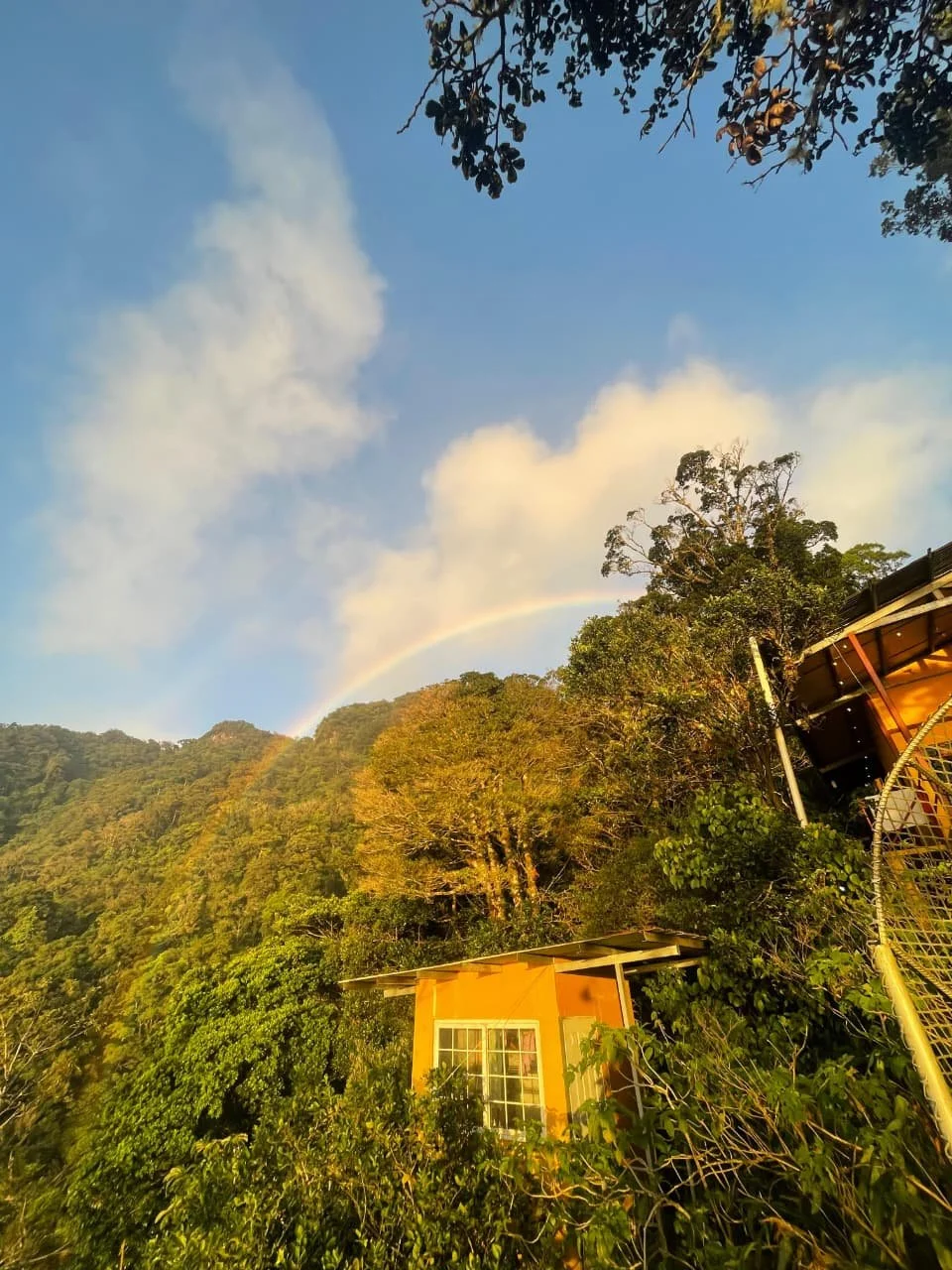
Walking through rows of tea plants while surrounded by cloud forest makes for an unusual experience. The mountains are frequently wrapped in mist and the climate is considerably cooler than Panama City or the Caribbean coast. The plantation environment is part of what makes the experience memorable because you are actually seeing the raw material before it becomes something sitting inside a teacup.
The tour also gives visitors an opportunity to understand why agriculture at altitude can produce distinctive flavours. Soil, rainfall, temperature, elevation, sunlight and processing all influence the final character of a tea.
Suddenly that little green leaf becomes considerably more complicated.
Then Comes the Tasting
The tour finishes with a guided tasting of four classic tea styles: white, green, oolong and black.
This is where the educational part becomes delicious.
White tea is generally the least processed of the four, allowing delicate flavours to dominate. Green tea is processed in a way that preserves its characteristic fresh, vegetal qualities. Oolong occupies the fascinating middle ground, with processing creating a huge range of possible aromas and flavours. Black tea undergoes more extensive oxidation, producing a darker, stronger and often more robust cup.
Tasting them side by side makes the differences much easier to understand than simply reading about them.
It is essentially a crash course in tea appreciation.
You Don't Have to Be a Tea Expert
One of the best things about the experience is that you don't need to know anything about tea beforehand.
You don't need to arrive talking about oxidation levels, terroir and tannins while wearing a suspiciously expensive scarf. The tour is designed to explain the subject from the beginning, including the origins and characteristics of the tea plant, cultivation, harvesting and production.
The current tour information lists sessions at 8:30 a.m., 10:30 a.m. and 1:30 p.m., with the experience taking roughly 1.5 to 2 hours. The plantation walk requires reasonable physical condition, and closed footwear and comfortable clothing are recommended.
There Is Another Tea Experience in Boquete
Another option is Full Adventures Boquete, which currently advertises a Tea Tour specifically focused on learning about Camellia sinensis and how tea is grown in the Boquete highlands.
For travellers who are interested in tea but don't necessarily want to spend an entire day on a major excursion, this can be an interesting alternative to investigate when planning a Boquete itinerary.
Tea Meets the Tropical Farm in Bocas del Toro
There is also a completely different type of tea experience on Isla Solarte near Bocas del Toro at Finca Natural.
This is not a conventional Camellia sinensis tea plantation. Instead, the farm focuses on fresh tropical teas harvested from living plants and trees, along with herbal preparations, tropical fruits and natural farming. Their Tea, Elixirs & Living Farm Tour combines a walk around the farm with tropical tea tasting and an introduction to their natural farming systems.
This is particularly interesting because it demonstrates that the word "tea" can mean much more than traditional black or green tea. Across the tropics, leaves, flowers, bark, fruits and herbs have been used to create infusions for generations.
Tea in Panama Is Still a Bit of a Secret
That is perhaps what makes these experiences so appealing.
Panama has become internationally famous for specialty coffee, particularly the extraordinary Geisha coffees produced around Boquete. Tea, however, remains much more obscure. A tea plantation in Panama sounds almost unexpected until you remember that Boquete has a cool, wet, mountainous climate that can feel remarkably different from the rest of the country.
A specialist tea writer who visited the Boquete plantation described finding Camellia sinensis growing at roughly 1,700 metres elevation and noted that the mountain's cool, wet and often foggy conditions create an environment surprisingly suitable for tea.
That makes a tea tour an excellent choice for travellers who want to experience a side of Panama that goes beyond the standard coffee plantation circuit.
The Perfect Combination: Coffee AND Tea
And if you're already in Boquete, there is no reason to choose.
Boquete Tree Trek also offers a Kotowa Coffee Tour, where visitors can explore coffee cultivation and taste multiple coffees, making it possible to experience both of the region's most fascinating beverages in the same place.
One day you can be standing in a cloud forest drinking tea grown on a Panamanian mountainside, and a few hours later you can be tasting some of the world's most sought after coffee.
Not bad for a country better known for canals and tropical beaches.
For anyone visiting Panama who loves food, agriculture, nature or simply discovering strange little surprises that don't appear in every guidebook, a tea plantation in Boquete is absolutely worth putting on the itinerary. It is peaceful, educational, wonderfully unusual and gives you a completely different appreciation for what can grow in Panama's cool mountain forests.