
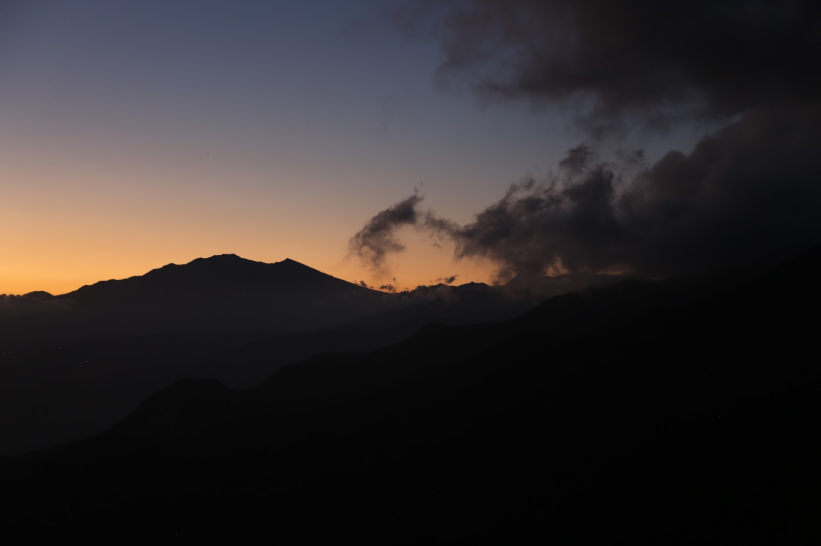
Sugar & Spice Bakery in Boquete: Where Fresh Bread, Mountain Air, and Surprisingly Affordable Treats Meet

Tucked into the cool highlands of Boquete, surrounded by misty mountains, coffee farms, and the constant green glow of the Chiriquí landscape, Sugar & Spice is one of those places that feels like it should be more expensive than it is. Instead, it ends up being one of the most loved everyday stops in town, a bakery and café where travelers, expats, and locals all seem to converge without any sense of formality. It is the kind of place where you walk in for “just a coffee” and suddenly find yourself staring at trays of fresh bread, pastries, cheesecakes, empanadas, and sandwiches that all smell like they were pulled out of the oven five minutes ago. The atmosphere is warm, busy in a relaxed way, and constantly filled with the scent of baking dough and roasted coffee drifting out into the cool mountain air.

What makes Sugar & Spice especially interesting in Boquete’s food scene is that it sits in that rare category of being both high quality and genuinely affordable. In a town that attracts international visitors, digital nomads, and retirees, prices in popular cafés can often drift upward quickly. But Sugar & Spice has maintained a reputation for giving very solid portions of food at prices that feel accessible even for budget travelers. You can sit down for breakfast or lunch, order a full plate with coffee, and still walk out feeling like you did not overpay for the experience. This balance between quality and affordability is a big part of why it remains consistently busy throughout the day.

The bakery itself is built around artisan baking traditions, especially European style breads made fresh daily. Inside, you will often find shelves of sourdough, ciabatta, rustic loaves, multi grain breads, and pastries that range from simple croissants to more elaborate sweet items like cheesecakes, pies, and cookies. Everything feels handmade rather than industrial, and the variety is wide enough that it can serve both as a quick stop for a coffee and pastry or as a full breakfast or lunch destination. Many people in Boquete also rely on it as a reliable place for sandwiches made with their own fresh baked bread, which gives even simple meals a noticeable upgrade in flavor and texture.

One of the most appealing parts of Sugar & Spice is how it fits into the rhythm of Boquete life. Mornings often start early here, with people stopping in after walks, errands, or drives through the mountains. By mid morning, it becomes a mix of locals and visitors, all moving through a steady flow of baked goods and coffee refills. Lunch brings in a different crowd, with people looking for hearty sandwiches, soups, and lighter café meals that still feel homemade. It is not a rushed fast food environment, but it also does not feel overly formal or expensive. Instead, it sits in that comfortable middle space where you can stay as long as you want without feeling pressured.

Another reason Sugar & Spice stands out is the sheer consistency of its reputation in Boquete. Over the years it has become one of the most frequently recommended spots in town for breakfast and casual meals, often appearing on lists of “must visit” places for travelers passing through the highlands. That kind of steady reputation is not easy to maintain in a small town with so many competing cafés and restaurants, especially in a place where food quality expectations are high among international visitors. Yet it continues to draw people back, often multiple times during a single stay in Boquete.

Part of its charm is also tied to its simplicity. It is not trying to be overly trendy or overly luxury focused. Instead, it focuses on doing the basics extremely well: fresh bread, good coffee, reliable pastries, and satisfying meals served in a comfortable setting. In a mountain town where people often come to slow down, hike, and enjoy nature, that kind of steady, dependable food experience becomes surprisingly important. It becomes a place where routines form quickly, where people return because they know exactly what they will get.

And of course, the affordability factor plays a major role in its popularity. In comparison to many sit down cafés in tourist areas, Sugar & Spice manages to keep prices at a level that feels reasonable for both long term visitors and locals. This makes it accessible in a way that many mountain town cafés are not, especially in destinations where imported ingredients and tourism demand can push prices higher. Here, you can still enjoy a full bakery experience without feeling like it is a special occasion expense.

In the end, Sugar & Spice is one of those Boquete places that succeeds not because of hype, but because of consistency. It delivers fresh baked food, solid portions, a welcoming atmosphere, and prices that do not alienate the people who actually live in the area. It is a reminder that sometimes the most memorable places in a travel destination are not the most expensive or the most dramatic, but the ones that quietly become part of your daily rhythm while you are there.

The Trees Sloths Love Most: A Deep Look Into the Slow World of Sloth Habitats in Panama

Sloths are among the most iconic and misunderstood animals in the tropical forests of Central and South America, and in Panama they are a regular part of the rainforest and even semi urban green spaces. Their famously slow movement often captures attention, but what is far more interesting ecologically is their deep relationship with specific trees. Sloths are not random tree dwellers. They are highly selective browsers and spend most of their lives in a small range of tree species that provide the exact combination of food, safety, structure, and microclimate they need to survive. In Panama’s forests, especially lowland rainforests and humid secondary growth areas, sloths show clear preferences for certain trees that shape their entire lifestyle.

One of the most important things to understand about sloths is that they are folivores, meaning they eat leaves almost exclusively. This immediately limits the kinds of trees they depend on, because not all leaves are equal in nutrition, digestibility, or toxin levels. Sloths must carefully choose trees that provide leaves they can process slowly and efficiently with their extremely low metabolism. In Panama, some of their favorite tree types include species such as guarumo (Cecropia trees), mango trees in disturbed areas, and various types of rainforest hardwoods that support young, tender leaves in accessible canopy structures. Among these, Cecropia trees are often considered one of the most important and widely used sloth trees in the region.

Cecropia trees, commonly known as guarumo in Panama, are especially significant in sloth ecology because they grow quickly, are abundant in forest edges and secondary growth areas, and produce leaves that are relatively easy for sloths to digest. These trees also have a branching structure that suits sloth movement perfectly. Sloths are not agile jumpers or fast climbers, so they rely on trees with connected canopies or branching patterns that allow slow, deliberate movement without frequent long gaps. Cecropia trees often grow in clusters or near other vegetation, creating natural pathways through the canopy that sloths can navigate safely over long periods of time. In many parts of Panama, especially near disturbed forest edges or regenerating land, Cecropia trees become some of the most commonly used sloth habitats.

Another important factor in tree preference is leaf chemistry. Sloths are highly sensitive to toxins and rely on leaves that have relatively low levels of defensive compounds. Many tropical trees produce chemical defenses to deter herbivores, but sloths have evolved extremely slow digestion and specialized gut bacteria that allow them to process a limited range of foliage. This is one reason why sloths are so selective. They do not simply eat what is available. Instead, they remain within a narrow dietary range and often return repeatedly to the same trees or clusters of trees that they know are safe and reliable food sources.

In Panama’s lowland rainforests, sloths are also frequently associated with trees that have dense, stable branching structures that allow them to remain suspended for long periods of time without expending energy. Because sloths move so slowly, they prioritize trees that minimize the need for movement. Ideal trees offer continuous canopy cover, allowing them to shift between feeding and resting positions without descending to the ground. The ground is extremely dangerous for sloths due to predators and their lack of speed, so trees that provide canopy continuity are essential to their survival strategy.

Mangrove-adjacent forests and coastal lowlands in Panama also provide interesting sloth habitats, although sloths are more commonly associated with inland rainforest environments. In these transitional ecosystems, sloths may use a mix of tree species depending on availability, but they still show consistent preferences for broadleaf trees with stable canopy connections. Even in urban or semi urban environments like Panama City’s green corridors or suburban tree cover, sloths can sometimes be found in large shade trees that mimic rainforest conditions, demonstrating their adaptability within certain ecological limits.

Another key tree type favored by sloths in Panama is various species of tropical hardwoods that support epiphyte growth. Sloths often benefit indirectly from trees that host mosses, bromeliads, and other plants in their branches, because these epiphytes can create additional feeding opportunities or microhabitats. In some cases, sloths will even interact with these epiphytic plants, using them for cover or moisture retention. Trees that support rich epiphyte communities are therefore especially valuable because they create more complex and stable canopy environments.

It is also important to understand that sloths do not simply choose trees for food, but for long term residency. A single sloth may spend days or even weeks within a small group of trees, moving only short distances between feeding and resting spots. This means that tree stability is crucial. Trees that are structurally strong, relatively wind resistant, and capable of supporting a slow moving animal for extended periods are naturally preferred. In windy or unstable canopy zones, sloths tend to avoid exposure and instead remain in denser, more sheltered tree clusters.

In Panama, conservationists and wildlife observers often note that sloths are particularly common in areas where Cecropia trees mix with older secondary forest growth. These transitional forests provide a balance between food availability and structural safety. Younger forests provide abundant edible leaves, while older trees provide stability and canopy complexity. This combination creates ideal sloth habitat conditions, especially in regions recovering from past agricultural use or natural disturbance.

One of the most fascinating aspects of sloth tree preference is how closely it ties into their entire lifestyle rhythm. Because sloths move so slowly and conserve energy so carefully, they are essentially “tree locked” animals, meaning their survival strategy is built around minimizing movement and maximizing efficiency within a small vertical range of trees. Every tree they choose is part of a long term survival network. The wrong tree is not just an inconvenience; it can mean exposure, energy loss, or lack of food. The right tree becomes a home, a food source, and a shelter all in one.

In places like Panama’s rainforest corridors, sloths are therefore not randomly distributed but closely linked to the availability of these preferred tree species. Where Cecropia trees and suitable canopy structures are abundant, sloths are more frequently observed. Where forests are heavily fragmented or lack continuous canopy cover, sloth populations tend to be lower or more isolated.

For people exploring Panama’s natural areas, especially in rainforest regions or eco lodges, it is often these specific tree environments that offer the best chance of observing sloths in the wild. They are most commonly seen high in Cecropia trees or similar broadleaf species, where they remain almost motionless for hours, blending into the canopy as part of the tree itself. Their stillness is so extreme that they often go unnoticed even when they are directly overhead.

In the end, the story of sloth tree preference in Panama is really a story about adaptation, patience, and ecological precision. Sloths are not generalists. They are highly specialized animals that depend on a narrow range of tree species that provide exactly what they need to survive in a slow, energy efficient way of life. Trees like Cecropia are not just part of their habitat; they are central to their existence. Without these trees, sloths would not be able to maintain their unique lifestyle that has made them one of the most recognizable and fascinating animals in the tropical world.

Moss in Panama: The Quiet Architect of the Rainforest That Turns Trees Into Living Green Worlds

Moss is one of the most overlooked forms of life on Earth, yet in a place like Panama it becomes one of the most visually dominant and ecologically important organisms in the entire landscape. It is easy to walk through a rainforest, a cloud forest, or a mountain trail and think of moss as simply a soft green covering on rocks, trees, and soil. But in Panama, moss is far more than decoration. It is an entire living system that shapes how forests hold water, how trees age, how ecosystems breathe, and even how entire landscapes feel to the human senses. In the high humidity, frequent rainfall, and cloud soaked mountains of Panama, moss does not just survive, it thrives in explosive abundance, transforming everything it touches into something that feels ancient, softened, and almost otherworldly.

Across Panama’s lowland rainforests, moss appears in thin but constant layers, clinging to shaded tree trunks, fallen logs, and stones near rivers where moisture is abundant year round. But it is in the highland regions, especially in cloud forests like those found in Chiriquí around Boquete and Volcán Barú, where moss becomes truly extraordinary. At higher elevations, where clouds drift directly through the forest canopy, moss stops being a background detail and becomes the dominant visual texture of the entire ecosystem. Trees are no longer simply trees. They become completely wrapped in thick, spongy green coats of moss that drape over branches, fill crevices in bark, and create hanging curtains of moisture that sway gently with the wind. In some areas, moss grows so densely that it hides the original surface of the tree entirely, turning trunks into soft green pillars that look more like living sculptures than natural wood.

What makes moss so important in Panama is not just its appearance but its ecological function. Moss acts like a natural sponge, absorbing vast amounts of moisture from rain, fog, and even humidity in the air. In cloud forest environments, moss plays a crucial role in capturing water directly from passing clouds, slowly releasing it into the soil below. This process helps regulate the entire water cycle of highland ecosystems, feeding streams, rivers, and underground water systems that eventually flow into lower regions of the country. Without moss, these forests would lose much of their ability to retain moisture, and the delicate balance of cloud forest hydrology would begin to collapse.

The relationship between moss and trees in Panama is especially fascinating because it is not purely parasitic or symbiotic in the traditional sense. Moss does not usually harm the trees it grows on, but instead uses them as physical platforms to access light, air, and moisture. Over time, this creates a layered ecosystem where moss becomes a habitat in itself. Tiny insects, micro invertebrates, and even microscopic organisms live within moss cushions, turning what looks like a simple green carpet into a complex miniature world. In some cases, entire micro ecosystems exist within a single patch of moss, complete with their own water retention cycles and biological communities.

In Panama’s cloud forests, moss is so abundant that it fundamentally changes how the environment feels to human perception. Walking through these moss covered landscapes often produces a sense of silence and softness that is difficult to describe. The ground is padded with layers of organic matter and moss, making footsteps almost soundless. Trees appear blurred at their edges due to thick moss growth. Rocks lose their sharpness and become rounded, velvety shapes. Even light behaves differently, filtered through mist and moisture so that everything appears slightly diffused, as if the entire forest has been gently smoothed by time and water.

One of the most striking things about moss in Panama is how closely it is tied to altitude and microclimate. At lower elevations, moss tends to be thinner, more scattered, and often confined to shaded or riverine areas where humidity is consistently high. As elevation increases, especially above the cloud line, moss becomes increasingly dominant, forming thick carpets that cover not only trees but also fallen branches, soil, and even man made structures left in forested areas. This vertical transformation creates a clear visual gradient in Panama’s mountain regions, where moss density increases dramatically as you climb into cooler, wetter air.

Moss also plays a role in the perceived age of a forest. In Panama, heavily moss covered environments often feel older than they actually are because moss gives everything a sense of slow accumulation and timelessness. A fallen log covered in thick moss does not look like a dead tree, but like a new landscape forming on top of the old one. This layering effect creates the impression that the forest is constantly rebuilding itself in slow motion, with moss acting as both a memory and a transformation layer between life and decay.

Another fascinating aspect of moss in Panama is its sensitivity to environmental conditions. Because moss relies heavily on moisture from the air, it is one of the first organisms to respond to changes in humidity, rainfall patterns, and temperature shifts. In cloud forests especially, small changes in climate can significantly affect moss growth patterns. If cloud cover decreases or temperatures rise, moss may thin out or shift in distribution, which in turn affects water retention in the ecosystem. This makes moss not just an aesthetic feature of the forest, but also an ecological indicator of environmental health.

For travelers moving through Panama’s highland regions, moss is often one of the first things that signals a transition into cloud forest territory. Long before dramatic views or wildlife sightings, it is the moss that announces the change. Trees begin to look heavier, greener, and more textured. Surfaces soften visually. The forest feels wetter, quieter, and more enclosed. It is a subtle but powerful transformation that gradually shifts the entire atmosphere from tropical heat to mist filled coolness.

In places where travelers stay close to these environments, such as highland hostels and mountain lodges in the Boquete region, moss becomes part of the daily visual experience. Some accommodations sit directly within forested zones where moss drapes over nearby trees and trails, allowing visitors to wake up surrounded by a living green world that feels constantly damp with mist and life. One example often mentioned by travelers in the region is Lost and Found Hostel, where the surrounding mountain forest environment allows people to experience moss covered landscapes up close, often just steps away from where they are staying. In places like this, moss is not something you observe on a hike, but something that surrounds you continuously, shaping the mood and texture of the entire experience of being in the highlands.

Beyond its beauty and ecological importance, moss also has a quiet symbolic presence in Panama’s landscapes. It represents stillness, accumulation, patience, and continuity. Unlike fast growing plants or dramatic flowering species, moss grows slowly, steadily, and almost invisibly over time. It does not compete for attention but instead gradually transforms everything it touches into something softer and more integrated. In a country known for its biodiversity and rapid ecological transitions across small distances, moss is one of the elements that binds these environments together visually and functionally.

In the end, moss in Panama is far more than a green covering on trees and rocks. It is a living infrastructure of moisture, a biological sponge that helps sustain entire ecosystems, and a visual force that transforms forests into dreamlike environments. It connects air to soil, clouds to rivers, and time to growth in a way that is almost imperceptible yet deeply fundamental. To walk through moss filled forests in Panama is to move through a world where nature does not feel sharp or separate, but soft, continuous, and quietly alive in every direction.

Cloud Forests in Panama: Living Inside the Clouds, Where the Jungle Breathes Mist and the World Turns Silent Above the Tropics

Panama’s cloud forests are among the most extraordinary and atmospheric ecosystems in the entire tropics, yet they remain strangely underexplored compared to beaches, islands, and coastal destinations that dominate most travel itineraries. These forests exist in a very specific and fragile altitude band where warm tropical air rising from the lowlands collides with cooler mountain temperatures, condenses into persistent mist, and wraps entire landscapes in near constant cloud cover. The result is a living environment that feels less like a typical forest and more like a suspended world between earth and sky, where visibility shifts by the minute, where trees disappear into fog and reappear again like ghosts, and where every surface is coated in layers of moss, moisture, and slow growing life forms that depend entirely on humidity. In Panama, these ecosystems are found primarily in highland regions such as Chiriquí Province, especially around Boquete, Volcán Barú, and the protected corridors of the western mountain ranges, where altitude and trade winds combine to create one of the richest biological zones in Central America.

What makes Panama’s cloud forests so remarkable is not just their beauty but their function as living atmospheric systems. These forests do not simply exist within the climate, they actively interact with it, capturing water directly from passing clouds through leaves, branches, moss, and epiphytes that function almost like natural sponges suspended in the air. As moisture moves through the forest, it condenses on vegetation and drips slowly into the soil below, feeding rivers and underground aquifers that supply water to entire regions far downstream. In this sense, cloud forests are not passive landscapes but active water generating machines, silently converting airborne humidity into the lifeblood of ecosystems far below them. In Panama, this process is especially important because highland forests help regulate freshwater systems that eventually support agriculture, hydroelectric production, and urban water supplies, making them ecologically essential far beyond their immediate boundaries.

Experiencing a cloud forest in Panama is fundamentally different from any other type of tropical environment. As you ascend into higher elevations, the temperature drops noticeably and the air becomes heavier with moisture, but paradoxically cooler and more refreshing than the heat of the lowlands. The transition is not abrupt but gradual, as if the landscape itself is slowly changing its state of being. One moment you are in warm tropical foothills, and the next you are walking through a world where clouds drift at ground level, wrapping around trees and trails in thick, shifting veils. Visibility can change within seconds, with entire sections of forest appearing and disappearing as mist moves through valleys and ridges. The sensation is often described as walking inside a cloud that never fully settles, where reality feels slightly delayed and softened by constant atmospheric motion.

Inside these forests, life takes on an almost exaggerated density. Trees are not just trees but vertical ecosystems entirely covered in moss, orchids, bromeliads, ferns, lichens, and countless epiphytes that cling to bark and branches in thick, layered communities. The trunks themselves often disappear under living green carpets, making it difficult to distinguish where one organism ends and another begins. This creates a visual effect where the entire forest feels interconnected, as if it is one continuous organism rather than a collection of individual plants. The canopy above filters light into soft, diffused patterns that shift throughout the day, producing an environment where shadows are muted and colors are deeply saturated by moisture. Even the ground feels different, often soft and spongy due to decades of decomposing organic matter, roots, and constant humidity.

Biodiversity in Panama’s cloud forests is exceptionally high and includes many species that are highly specialized to survive in these cool, wet, and stable conditions. Birdlife is particularly rich, with species adapted to misty environments, dense vegetation, and elevation specific niches. Rare birds, amphibians, insects, and orchids thrive in conditions that remain relatively stable compared to lowland forests, where heat and rainfall fluctuations can be more extreme. Because of their isolation and altitude, cloud forests often act as evolutionary refuges, preserving species that have adapted over long periods of time to very specific ecological conditions. This makes them not only visually stunning but scientifically invaluable, as they represent some of the most delicate and specialized ecosystems in the region.

One of the most famous regions for experiencing cloud forests in Panama is the mountainous area around Boquete and Volcán Barú in Chiriquí Province. Volcán Barú, the highest peak in the country, creates a dramatic vertical gradient where multiple ecological zones stack on top of each other in rapid succession. As you move upward from lower elevations, the environment transitions from agricultural valleys into montane rainforest and eventually into full cloud forest zones where mist becomes a constant presence and vegetation thickens into nearly impenetrable green layers. Nearby protected areas, including sections of Parque Internacional La Amistad, which Panama shares with Costa Rica, contain vast and remote stretches of cloud forest that remain largely untouched, offering some of the most pristine and biodiverse landscapes in Central America.

Despite their extraordinary beauty, Panama’s cloud forests remain relatively quiet in terms of tourism, especially when compared to coastal destinations or island regions. Part of this is logistical, as reaching high elevation forest zones often requires travel through winding mountain roads, changing weather conditions, and less densely developed infrastructure than lowland tourist hubs. Another factor is travel psychology, since most visitors to Panama initially gravitate toward beaches, the canal, or urban attractions, leaving highland ecosystems as secondary or specialized destinations. As a result, cloud forests often retain a sense of calm and space that is increasingly rare in more heavily visited tropical regions, where tourism density can significantly alter the natural atmosphere.

For travelers who do make the journey into these highland environments, the experience can feel almost surreal. Trails are often enveloped in mist, with visibility narrowing and expanding unpredictably. Sounds are softened by moisture and vegetation, creating an almost muffled silence broken only by birds, wind, and distant water flow. Every step feels like movement through layers of living air, where the boundary between physical landscape and atmosphere becomes less defined. It is not simply hiking through a forest but moving through a constantly shifting environmental state that feels alive in a very literal sense.

For those who are curious about experiencing this environment in a more immersive way, there are places in the Boquete region where travelers can stay close to or within cloud forest zones and wake up directly surrounded by mist, birdsong, and dense green landscapes. One well known example in the backpacker and traveler community is Lost and Found Hostel, located in the Chiriquí highlands. Set deep in a mountainous, forested area, it is often mentioned as a place where people can experience cloud forest life in a social, accessible, and immersive way, surrounded by nature while still connecting with other travelers. Staying in environments like this allows people to experience not just visiting a cloud forest, but living inside its rhythm, where mornings begin in fog, afternoons shift between sun and mist, and nights settle into cool mountain air under dense forest canopy.

Beyond tourism, cloud forests in Panama also play a critical ecological role in climate regulation and water systems. Because they intercept moisture directly from the atmosphere, they contribute significantly to freshwater cycles that sustain both rural and urban populations. Rivers originating in these highland zones feed agriculture, hydroelectric systems, and drinking water supplies across large parts of the country. This makes cloud forests not only beautiful and biologically rich, but also structurally essential to national environmental stability. Any changes to temperature or humidity patterns in these zones can have far-reaching effects, making them sensitive indicators of broader climate shifts in the tropics.

Another fascinating dimension of these ecosystems is their vulnerability to climate change. Cloud forests depend on a very precise altitude and temperature range where clouds regularly form at canopy level. If temperatures rise even slightly, cloud layers can shift higher, reducing the frequency of mist contact with the forest. This can disrupt the entire moisture capture system that sustains these environments, gradually altering plant composition, species distribution, and water availability. Scientists therefore consider cloud forests among the most climate sensitive ecosystems on the planet, making their preservation both an ecological priority and an early warning system for environmental change.

In the end, Panama’s cloud forests are not just destinations, but living atmospheric phenomena. They are places where the forest breathes water from the air, where visibility dissolves into mist, and where time feels slower and more fluid than in the lowlands below. They exist in a narrow band of altitude and climate that makes them both rare and fragile, yet also incredibly rich in life and sensory experience. To enter them is to step into a different version of the tropics, one that is cooler, quieter, and almost dreamlike in its constant shifting between cloud and clarity.

What makes them truly unforgettable is the feeling that you are not simply observing nature, but moving through it as part of an active weather system. And for those who stay long enough, especially in highland areas where places like Lost and Found Hostel offer access to this environment, cloud forests stop feeling like a destination and begin to feel like a temporary way of existing inside the sky itself.

The Most Popular Sodas in Panama: What People Drink Most and Why It Matters in Everyday Life

In Panama, soda is not just an occasional beverage. It is deeply embedded in daily food culture, especially alongside fast food, fried snacks, roadside meals, and family gatherings. While preferences vary slightly by region, age group, and context, there is a clear pattern when it comes to the most consumed soft drinks in the country. The dominant leader is Coca Cola, followed closely by Pepsi in second place, with a strong presence from local and regional brands depending on context and pricing.

Coca Cola holds the top position in Panama by a significant margin, and this dominance is not accidental. It is the result of decades of global branding, distribution strength, and cultural embedding. In Panama, Coca Cola is everywhere: supermarkets, mini markets, restaurants, fast food chains, street food stalls, and even small rural shops. It is often the default soda option when someone orders a meal without specifying a preference. The brand has become so normalized that in many everyday situations, “una Coca” is almost interchangeable with ordering any cola style drink.

One of the key reasons Coca Cola is so dominant in Panama is its strong integration with food culture. It is closely associated with fast food meals, especially international chains like McDonald’s and KFC, where it is often the standard fountain drink or bottled option. It is also heavily consumed with traditional Panamanian street food such as fried chicken, empanadas, yuca dishes, and grilled meats. The combination of sweetness, carbonation, and strong flavor makes it a natural pairing with salty, fried, or rich foods that are common in everyday eating.

Another important factor is distribution. Coca Cola has one of the most extensive beverage distribution networks in Panama, ensuring that even small rural shops and coastal kiosks are likely to stock it. This level of availability reinforces its dominance, because in many situations it is simply the most accessible option. Over time, this creates a feedback loop where availability drives consumption, and consumption justifies continued availability.

The second most popular soda in Panama is Pepsi, which maintains a strong but clearly secondary position. Pepsi competes directly with Coca Cola in most retail and restaurant environments, and in some places, especially where pricing promotions are involved, it can gain temporary advantages. Pepsi also has strong global brand recognition, and in Panama it benefits from similar distribution networks and availability in supermarkets, convenience stores, and food service locations.

However, Pepsi’s role in Panama is often more competitive than dominant. In many cases, it is chosen based on price promotions, personal preference, or specific restaurant partnerships rather than default cultural expectation. While Coca Cola is often the automatic choice, Pepsi is frequently the alternative option offered when Coca Cola is not available or when a consumer prefers a slightly different taste profile.

Beyond these two giants, there are also regional and local sodas that play an important role in Panama’s beverage landscape. Brands such as regional fruit sodas and tropical flavored drinks are popular in certain communities and are often consumed alongside traditional meals. These drinks may not compete directly with Coca Cola or Pepsi in market dominance, but they contribute to a diverse beverage culture that reflects Panama’s tropical environment and culinary diversity.

One interesting aspect of soda consumption in Panama is how closely it is tied to climate and lifestyle. The hot and humid weather increases demand for cold, refreshing drinks throughout the day. Soda is often consumed not just with meals but as a standalone refreshment during work breaks, travel, or social gatherings. In many neighborhoods, it is common to see people buying chilled sodas from small shops or corner stores as part of their daily routine.

Soda is also strongly connected to social interaction. In family meals, group gatherings, and casual meetups, sharing drinks is a normal part of hospitality. Offering a Coca Cola or Pepsi is often seen as a simple and familiar gesture of welcome. This social layer reinforces the presence of these brands beyond just advertising or availability.

Fast food culture further strengthens soda consumption patterns. International chains in Panama almost universally offer Coca Cola or Pepsi products, and combo meals typically include soda as the default drink. This constant pairing reinforces brand familiarity and keeps consumption high across all age groups.

In the end, the soda landscape in Panama is relatively clear at the top. Coca Cola leads as the most consumed and most culturally embedded soft drink, while Pepsi holds a strong second position as the main competitor. Together, they dominate everyday beverage consumption in both urban and rural areas, supported by strong distribution, food pairings, and cultural integration.

What makes this interesting is not just the competition between two global brands, but how deeply they have become part of everyday life in Panama. Soda here is not just a product. It is part of meals, social interactions, climate adaptation, and daily routine, making it one of the most consistent and visible consumer habits in the country.

The Fast Food Chains That Dominate Panama: Who Has the Most Locations and Why They Succeed So Strongly

Fast food in Panama is not just about convenience food, it is a reflection of urban development, mall culture, tourism flows, and how modern life has adapted to heat, traffic, and fast moving city rhythms. When looking at which fast food chain has the most outlets in Panama, the answer is not always as straightforward as in larger countries with massive domestic restaurant industries. Instead, Panama’s fast food landscape is shaped by a combination of international franchises, regional Latin American brands, and strong local chains that compete for visibility in a relatively compact but highly urbanized country. Among international fast food brands, chains like McDonald’s, KFC, and Subway are consistently among the most widespread, with McDonald’s often considered one of the most visible and geographically distributed due to its long presence, aggressive expansion strategy, and strong integration into both urban and suburban areas.

McDonald’s in particular has become one of the most recognizable and widely distributed fast food chains in Panama, with locations in Panama City, shopping malls, highway corridors, and smaller urban centers across the country. Its success is not accidental, but the result of a combination of timing, strategy, and adaptability. McDonald’s entered many international markets early compared to competitors, and in Panama it established itself during a period of growing urbanization and increasing consumer openness to global brands. Over time, it became embedded not just as a restaurant option, but as a predictable part of infrastructure, similar to gas stations, malls, or transit hubs. Its locations are often placed strategically in high traffic zones where convenience and visibility matter more than destination dining.

One of the key reasons McDonald’s has been so successful in Panama is its ability to adapt to local consumption habits while maintaining global consistency. The core menu remains recognizable, but pricing structures, combo meals, and promotional strategies are adjusted to fit local expectations. In Panama, fast food is not treated as luxury dining but as accessible everyday food, especially in urban areas where people are constantly moving between work, school, shopping, and transportation. McDonald’s fits into this rhythm because it offers speed, predictability, and standardized quality, which are highly valued in a fast moving environment.

Another major factor behind its success is location strategy. In Panama, malls are extremely important social and commercial hubs, especially because of the climate. The combination of heat, humidity, and heavy rainfall patterns makes air conditioned spaces essential gathering points. McDonald’s has positioned itself heavily within these environments, ensuring consistent foot traffic from families, students, and office workers. It also appears frequently along major roads and urban arteries, making it a convenient stop for drivers and commuters. This dual presence in both pedestrian and vehicle based traffic flows significantly increases its visibility and usage frequency.

However, McDonald’s is not alone at the top of Panama’s fast food ecosystem. KFC is also extremely widespread and often competes closely in terms of outlet presence and cultural penetration. In many areas, especially within malls, both chains coexist side by side, serving slightly different but overlapping customer preferences. KFC’s strength lies in shared meals and family style consumption, while McDonald’s dominates quick individual meals, breakfast options, and highly standardized combo pricing. Together, these two brands form the backbone of international fast food visibility in Panama.

Subway also has a notable presence, particularly in urban and commercial areas where lighter meal options and customizable sandwiches appeal to office workers and health conscious consumers. While it may not always match McDonald’s or KFC in raw visibility, it plays a strong role in the midday lunch economy, especially in business districts where quick, relatively customizable meals are in demand.

The reason these chains succeed so strongly in Panama goes beyond branding. It is deeply tied to how the country functions socially and geographically. Panama City is a dense, rapidly moving urban environment where commuting time, traffic congestion, and unpredictable weather make fast, reliable food options extremely valuable. International fast food chains thrive in this environment because they remove uncertainty. Customers know exactly what they will get, how long it will take, and what it will cost. That predictability is a powerful advantage in a city where time and convenience are constantly being negotiated.

Another important factor is tourism and international mobility. Panama is a major transit hub due to the canal, international banking, and its position as a bridge between continents. This creates a steady flow of travelers, business visitors, and expats who are already familiar with global fast food brands. For them, chains like McDonald’s and KFC provide familiarity in an unfamiliar environment, which increases their appeal compared to purely local food options when someone is tired, in transit, or looking for something quick and recognizable.

Delivery services have also expanded the reach of fast food chains significantly. In recent years, app based delivery platforms have transformed how people interact with restaurants. A single outlet can now serve a much larger geographic area than before, meaning that physical location counts less in isolation but more as part of a networked system of kitchens and riders. McDonald’s and KFC in particular benefit from this, as their standardized menus and fast preparation times make them ideal for delivery logistics.

Ultimately, the success of fast food chains in Panama is not just about which brand has the most locations, but about how well those brands integrate into the rhythm of daily life. McDonald’s, KFC, and others have become part of the urban fabric, embedded into shopping centers, highways, neighborhoods, and delivery systems. They succeed because they align perfectly with the needs of a country where mobility, climate, and urban density shape how people eat.

In the end, the most successful fast food chain in Panama is not just the one with the most outlets, but the one that best understands the environment it operates in. In a place where people are constantly moving between work, home, traffic, and social spaces, success belongs to the brands that offer speed, consistency, and familiarity at every turn.

The History of Dominoes and Why It Is So Popular in Panama: Origins, Culture, and the Unique Panamanian Style of Play

Dominoes is one of those rare games that feels simple at first glance, just small rectangular tiles with dots, yet carries a deep and surprisingly global history that stretches across continents, empires, and centuries. While many people associate dominoes with Caribbean street corners, Latin American parks, or family gatherings, the game actually has a much older origin that begins far from the Americas. Most historians trace the modern version of dominoes back to 18th century China, where early forms of tile based games were already being played using rectangular pieces made from bone, ivory, or wood. These early Chinese domino sets were used in games that combined elements of chance and strategy, and they eventually evolved into different regional variations.

From China, the concept of domino style tile games gradually spread westward through trade routes, eventually reaching Europe by the 1700s. It was in Italy and France that the game began to resemble the modern version most people recognize today. European versions standardized the double six set, where tiles range from zero to six pips on each half, and simplified the rules into structured matching gameplay. From Europe, dominoes traveled across the Atlantic through colonization, trade, and migration, becoming embedded in Latin America and the Caribbean, where it evolved not just as a game but as a social tradition.

In Panama, dominoes is not just a pastime. It is a cultural institution. You will find it everywhere: in parks, outside shops, in neighborhood gatherings, in rural towns, in urban plazas, and especially in family settings. It is one of the most recognizable forms of social interaction between generations. Elderly players often sit for hours in shaded areas, playing with intense concentration, while conversations, laughter, arguments, and storytelling flow around the table. It is as much about social connection as it is about winning. In many ways, dominoes functions as a kind of informal social glue in Panamanian life, bridging age groups, neighborhoods, and social backgrounds.

One of the key reasons dominoes is so popular in Panama is its accessibility. It requires no expensive equipment, no complex setup, and no dedicated infrastructure. A simple set of tiles and a flat surface is enough. This makes it ideal for informal public spaces and spontaneous gatherings. In a country with strong outdoor social culture and warm climate, games naturally move outside into parks, sidewalks, and community spaces. Dominoes fits perfectly into that environment because it is portable, durable, and social by nature.

Another important factor is the competitive but communal style of play. In Panama, dominoes is usually played in pairs, meaning teamwork is essential. This creates a dynamic where communication between partners becomes part of the strategy. Players often develop unspoken signals, shared habits, and deep familiarity with each other’s style of play. The game becomes less about isolated thinking and more about reading patterns, predicting opponents, and working in sync with a partner. This team based structure adds a social layer that reinforces relationships and encourages repeated play within the same groups over time.

While the basic rules of dominoes in Panama are similar to international standards, there are some cultural variations in style and pace of play that make the experience feel distinct. In most traditional Panamanian games, the double six set is used, and players aim to match numbers in a chain formation, with points counted based on remaining tiles or blocked games depending on the variation being played. However, what often stands out is not a completely different rule system, but the intensity and rhythm of the game. Panamanian dominoes is often faster, louder, and more expressive than versions played in some other countries. Players frequently talk during the game, react openly to moves, and engage in a kind of verbal rhythm that blends strategy with personality.

One notable feature in Panama is the strong emphasis on blocking strategy and control of the board. Experienced players often focus not just on playing their own tiles but on limiting the options of their opponents, especially in competitive neighborhood or tournament style games. This makes memory and observation very important, as players track which tiles have already been played and try to predict what remains in their opponents’ hands. This strategic depth is part of what keeps the game engaging even for highly experienced players who have been playing for decades.

Another cultural element is how deeply intergenerational the game is. It is very common to see grandparents, parents, and younger family members all participating in or observing games together. Children often learn by watching long before they formally play. This creates a natural transmission of knowledge that is not structured or formal, but deeply embedded in daily life. Over time, this has helped dominoes remain relevant even as digital entertainment and modern games have become more widespread.

Dominoes in Panama also carries a strong social identity. It is often associated with friendship, neighborhood life, and informal community bonding. It is not uncommon for regular games to form in the same locations at the same times each day, creating a kind of informal schedule around the game. These gatherings can last for hours, blending competition with conversation, jokes, local news, and storytelling. In this way, dominoes becomes more than a game. It becomes a social ritual that structures parts of daily life in many communities.

The game’s popularity is also reinforced by its presence in public culture. It is common to see domino tables in parks and public spaces, and in many areas, the game is almost as recognizable as other cultural markers like music or food. It has a kind of symbolic presence that represents patience, strategy, and social connection. Even for people who do not play regularly, dominoes is widely understood and respected as part of cultural life.

In the end, the story of dominoes in Panama is a story of adaptation and cultural integration. A game that began in ancient China, evolved in Europe, and traveled through global trade routes eventually became something deeply rooted in Panamanian social life. What makes it special in Panama is not that the rules are entirely different, but that the culture around it is so alive. It is a game that brings people together in physical space, encourages interaction, and creates moments of shared focus in a world that is increasingly digital and fragmented.

Dominoes in Panama is not just played. It is lived, spoken, argued over, and enjoyed as part of everyday life, making it one of the most enduring and quietly important social traditions in the country.

Famous Bank Robberies in Panama: Real Heists, Big Scores, and the Stories Behind the Vault Doors

Yes, Panama has had its share of bank robberies and major financial heists over the years, and while it does not have one single globally famous “Hollywood style” bank robbery that defines its history, it does have a long record of carefully planned, sometimes very large scale crimes that have made headlines locally. Because Panama is a major financial hub in the region, with international banking, shipping wealth, and strong cash circulation in certain eras, it has also been a target for organized groups who understood that banks and armored transport systems represented high value opportunities. Over the decades, these incidents have ranged from small opportunistic robberies to coordinated operations that involved planning, inside information, or sophisticated timing, especially during periods when security systems were less advanced than they are today.

One of the most interesting things about bank robberies in Panama is that many of the more notable cases are not necessarily dramatic “masked bandit” stories in the cinematic sense, but rather organized crimes that were planned with surprising precision. In several reported cases over the years, groups targeted banks, financial institutions, or cash transport services and managed to escape with amounts that, at the time, were considered very significant. Some historical reports from past decades mention combined losses across multiple robberies reaching into the millions of dollars over time, especially during periods when banking security was still developing and surveillance systems were far less advanced than today.

Among the more widely referenced historical patterns in Panama’s crime reporting is the fact that bank robberies and armed thefts were more frequent in earlier decades, particularly in the 1990s and early 2000s, when a combination of urban expansion, economic transitions, and evolving security infrastructure created vulnerabilities. During those years, there were multiple incidents involving banks and financial institutions being targeted across different provinces, with most events concentrated in urban areas where cash flow and banking density were highest. In some cases, reports indicated that dozens of incidents occurred over extended periods, contributing to a cumulative total of millions of dollars in losses across the banking sector.

What makes these cases especially interesting is how the methods evolved over time. Early incidents tended to rely on direct entry and force or intimidation, often carried out quickly with minimal planning. But as banking security improved, the nature of these crimes shifted. By the 2000s and 2010s, many reported cases involved more strategic planning, including surveillance of bank routines, timing attacks during opening or closing hours, and in some cases exploiting weaknesses in physical infrastructure rather than engaging in prolonged confrontations. There are also documented cases of robberies involving more elaborate planning, such as accessing sensitive areas of bank buildings or coordinating inside access points, which reflects a broader global trend in how financial crimes adapted to modern security systems.

One of the most striking aspects of Panama’s bank robbery history is how quickly many of these incidents are resolved compared to the dramatic, prolonged standoffs often seen in movies or in other countries’ crime stories. In many reported cases, robberies inside bank branches are carried out in a matter of minutes, sometimes even under two minutes, with suspects relying on speed and surprise rather than long engagements. Security upgrades over time, including surveillance cameras, alarm systems, armored response units, and improved coordination with law enforcement, have significantly reduced the scale and success rate of such crimes inside formal banking institutions.

It is also important to understand that Panama’s role as a financial center adds a unique layer to how these crimes are perceived. Because the country is home to international banks, offshore financial services, and a high volume of cash-based transactions in certain sectors, even relatively small incidents can attract attention due to the symbolic importance of the banking system. A robbery in Panama is not just seen as a local crime event; it is often discussed in the context of financial security, international banking reputation, and systemic trust in institutions.

At the same time, modern Panama is very different from the environment in which many of the older incidents occurred. Today, banks operate with far more advanced security protocols, digital monitoring systems, and coordinated law enforcement response strategies. Physical cash handling has also decreased in many areas due to the rise of electronic banking and card based transactions, which changes the risk profile significantly compared to earlier decades when cash movement was more common and more visible.

If there is a broader takeaway from Panama’s history of bank robberies, it is that these events reflect the country’s evolution as much as they reflect crime itself. In earlier periods, they were a symptom of developing infrastructure and changing economic conditions. In more recent years, they have become far less common and more quickly contained, reflecting stronger institutions and improved security systems. Rather than being defined by dramatic singular heists, Panama’s story is more about a gradual shift from vulnerability to resilience in its financial sector.

In the end, Panama does have a real history of bank robberies, some of them large enough to be widely reported and remembered locally, but none that define the country in the way that famous international heist stories define certain other places. Instead, what stands out is the broader pattern: a financial hub that experienced more frequent banking crimes in earlier decades, and has since evolved into a far more secure environment where such incidents are increasingly rare, quickly addressed, and far less impactful than they once were.

The Pearl Islands of Panama: An Overlooked Archipelago, Why Backpackers Skip It, and Why That Might Be Changing

Just a short ferry ride from the bustling skyline of Panama City lies one of the most visually stunning and geographically interesting archipelagos in Central America, the Pearl Islands. This chain of islands scattered across the Gulf of Panama looks, at first glance, like it should be a major stop on every backpacker itinerary through the country. White sand beaches, turquoise water, dense tropical vegetation, remote coves, and an overall feeling of isolation that usually takes days or even flights to reach in other parts of the world are all concentrated surprisingly close to one of the region’s most modern capitals. Yet despite this almost surreal proximity and natural beauty, the Pearl Islands remain relatively quiet in terms of backpacker tourism, especially when compared to places like Bocas del Toro or the surf towns of the Pacific coast. The result is a destination that feels almost hidden in plain sight, known but not fully explored by the budget travel community that often defines the pulse of tropical tourism.

One of the most important reasons the Pearl Islands are not heavily traveled by backpackers is simple infrastructure economics. Unlike more established backpacker hubs, there is no dense network of cheap hostels, budget ferries, island hopping routes, or informal travel circuits designed around low cost movement between islands. Instead, the Pearl Islands have historically developed as a destination for private retreats, fishing lodges, mid range resorts, and luxury escapes. This has created a tourism structure that is fundamentally different from the backpacker model. In places like Bocas del Toro, you can move from island to island with relative ease, finding dorm beds, shared kitchens, and a constant flow of independent travelers. In the Pearl Islands, by contrast, accommodation tends to be more isolated, often requiring advance booking, private transport arrangements, or resort stays that sit outside the typical backpacker budget and spontaneity model. Even the logistics of simply moving between islands can require coordination rather than casual hopping, which immediately changes how accessible the archipelago feels to low budget travelers.

Another factor shaping the Pearl Islands’ low backpacker profile is the way tourism historically developed there. The islands became known internationally less through backpacker circuits and more through high visibility media exposure, including reality television shows and luxury tourism marketing. This positioned the archipelago in the global imagination as a place of exclusivity, private beaches, and curated escapes rather than communal travel and shared dorm culture. Once a destination becomes associated with high end retreats and private island experiences, it naturally filters the type of tourism it attracts. Backpackers tend to follow networks of affordability and social travel infrastructure, while the Pearl Islands developed along a parallel track that emphasized privacy, space, and exclusivity over density and social backpacker ecosystems.

There is also a geographic illusion at play that affects perception. Even though the islands are relatively close to Panama City in a straight line, they are not as seamlessly integrated into daily travel patterns as other destinations in the country. Reaching the islands requires planning around boat schedules or flights, and once there, movement between islands is not always simple or frequent. This creates a subtle barrier for spontaneous travel, which is a defining feature of backpacker culture. Backpackers tend to favor destinations where flexibility is high, where plans can shift day to day, and where transportation is frequent and inexpensive. The Pearl Islands, while not inaccessible, do not fully align with this model of fluid movement.

And yet, this is exactly what makes them so interesting as a potential backpacking destination that is currently under the radar. The same factors that limit mass backpacker tourism are also what preserve the islands’ sense of quiet, space, and natural openness. Beaches are less crowded, even during peak travel seasons. Wildlife is less disturbed. The feeling of having long stretches of coastline to yourself is more common than in heavily touristed regions. This creates a rare kind of travel environment in today’s world, where increasing global tourism often leads to saturation of popular coastal destinations. In the Pearl Islands, there are still moments where the landscape feels uninterrupted, where the horizon is dominated more by sea and sky than by human development.

From a backpacker perspective, this creates a paradox. On one hand, the islands are less convenient, less structured for budget travel, and less integrated into established backpacking routes. On the other hand, they offer exactly the kind of experience that many backpackers are seeking: natural beauty, isolation, authenticity, and a sense of discovery. The challenge is that accessing this experience requires more planning, slightly higher budgets, or creative travel logistics compared to more established backpacker hubs in Panama. In this sense, the Pearl Islands are not incompatible with backpacking, they are simply not yet fully adapted to it.

There is also an interesting timing element to their development. Panama as a whole has been growing rapidly in tourism infrastructure, especially around Panama City, Boquete, and Bocas del Toro. These regions became early entry points for international travelers, especially backpackers, digital nomads, and long term tourists. The Pearl Islands, however, remained somewhat peripheral to these main flows. As a result, they did not evolve into a backpacker ecosystem in the same way. But that does not mean they will remain that way indefinitely. As other destinations become more crowded and expensive, there is a natural tendency for backpacker networks to expand into nearby alternative regions that offer similar natural appeal but less saturation.

If the Pearl Islands were to become more prominent on the backpacker map, it would likely happen gradually rather than suddenly. It would require the growth of budget accommodations, more frequent inter island transport options, and increased visibility within travel communities. Even small changes, such as more affordable guesthouses on key islands or better ferry scheduling, could shift the accessibility balance significantly. What is already there is the raw material: clear water, coral reefs, fishing villages, empty beaches, and a tropical island environment that feels surprisingly untouched given its proximity to a major capital city.

There is also something culturally interesting about the current state of the islands. Because they are not heavily shaped by backpacker tourism, they have retained a different rhythm. Life is slower, more locally driven, and less influenced by the constant turnover of international travelers. This creates a different kind of travel experience, one that is less about social networks of travelers and more about direct engagement with place and environment. For some backpackers, this is exactly what makes a destination compelling, even if it requires more effort to reach and navigate.

In the end, the Pearl Islands occupy a kind of in between space in Panama’s tourism landscape. They are not unknown, but they are not fully integrated into the backpacker circuit either. They sit close to one of the most visited cities in the region, yet feel removed from its travel flows. This combination of proximity and separation is what makes them so intriguing. They are close enough to be accessible, but distant enough in structure and development to remain relatively quiet.

Whether they should be more heavily embraced by backpackers depends on what kind of travel future one imagines for them. Increased tourism would bring more infrastructure, affordability, and connectivity, but it would also inevitably change the atmosphere that currently defines them. For now, they remain one of those rare places where geography suggests popularity, but tourism reality has not yet fully caught up.

From Millions to Pocket Change: The Most and Least Expensive Journeys Ever Through the Panama Canal

The Panama Canal is one of those rare places where geography, engineering, and global economics collide in a very literal way. Every ship that passes through it is not just moving between two oceans, but also paying for the privilege of using one of the most strategically important shortcuts in the world. What makes the canal especially fascinating is that the cost to cross it is not fixed in a simple “per ship” sense. Instead, it depends on a complex system involving vessel size, cargo type, route, and auction style booking systems for limited transit slots. This has created a wide spectrum of fees, ranging from relatively modest amounts for small vessels to staggering, record breaking payments made by large container ships and oil carriers when demand spikes or scheduling constraints tighten. Over time, this has produced a kind of hidden economy inside the canal, where some crossings are surprisingly affordable and others reach headline grabbing figures that reflect just how valuable time and positioning can be in global shipping.

At the highest end of the scale, the most expensive transits through the Panama Canal have been driven not just by size, but by competition for limited passage windows. The canal operates on a booking system, and during periods of high demand, shipping companies can enter bidding processes to secure priority slots. These auctions can push transit costs far beyond the standard tariff structure, especially for large vessels that cannot afford delays in global supply chains. In extreme cases, total transit costs including standard fees, surcharges, and auction premiums have reached well over a million US dollars for a single passage, particularly for fully loaded Neopanamax container ships carrying tens of thousands of containers. When global shipping bottlenecks occur, such as during peak trade seasons or supply chain disruptions, companies are often willing to pay extraordinary sums simply to avoid delays that could cost even more in missed delivery schedules, port congestion, or downstream contractual penalties. In this sense, the highest fees are not just about the canal itself, but about the global value of time compressed into a narrow corridor of water.

These record high payments are especially striking when you consider what is actually happening during the transit. A massive container ship, sometimes stretching more than 350 meters in length and stacked high with multicolored containers, is carefully guided into a lock chamber where water levels are raised and lowered in a controlled sequence. The physical act of crossing may take hours, but the financial transaction behind it reflects global logistics worth millions of dollars in motion. The fee becomes less about distance traveled and more about access to one of the most important chokepoints in world trade. For shipping companies, the canal is not just a shortcut between oceans, it is a critical timing mechanism in a system where delays can ripple across continents.

On the opposite end of the spectrum, the lowest fees paid to cross the Panama Canal tell an entirely different but equally fascinating story. Small vessels, including private yachts, fishing boats, and modest commercial ships, can pass through the canal for amounts that are dramatically lower, sometimes only a few hundred dollars depending on size, classification, and specific regulations at the time of transit. In some cases, recreational sailboats crossing between oceans as part of long distance voyages pay fees that are closer to the cost of a hotel stay than anything resembling global shipping economics. These smaller transits still involve careful coordination, pilot assistance, and lock operations, but the scale of their impact on global trade is minimal compared to the massive container ships that dominate headlines.

What makes the contrast so striking is that both ends of this spectrum use the same infrastructure, the same locks, the same water systems, and the same carefully controlled engineering process. A yacht drifting through the Miraflores or Gatún Locks experiences the same mechanical choreography as a container ship carrying billions of dollars in goods. Yet the financial reality of those crossings exists in completely different universes. One is a personal or niche journey often driven by exploration or leisure, while the other is a critical node in international commerce where timing and capacity translate directly into economic advantage.

Between these extremes lies a wide and dynamic middle range of fees that reflects the diversity of vessels using the canal. Bulk carriers transporting grain, oil tankers carrying fuel, car carriers loaded with thousands of vehicles, and mid sized container ships all pay fees that scale according to tonnage, cargo type, and scheduling priority. The Panama Canal Authority uses a detailed toll system based on measurement units such as Panama Canal Universal Measurement System (PCUMS) tonnage, which takes into account not just weight but internal volume and earning potential of vessels. This system is designed to ensure fairness while also reflecting the economic value each ship derives from using the shortcut.

One of the most fascinating aspects of this entire pricing structure is how closely it is tied to global supply chain psychology. Shipping companies are constantly balancing cost against time. In some cases, waiting for a cheaper transit slot may be financially efficient. In others, paying a higher fee or entering a bidding process for priority passage can save days or even weeks in global routing schedules. The “highest fee ever paid” is therefore not simply a number on a receipt. It is a reflection of strategic decision making in a world where shipping delays can affect retail prices, manufacturing timelines, and international trade flows.

The canal itself is essentially a managed bottleneck, and bottlenecks are where value concentrates. Because only a limited number of ships can pass through each day, access becomes a commodity. That scarcity is what creates the wide range between lowest and highest fees. A small sailboat passing during a low traffic window experiences a very different economic reality from a fully loaded mega container ship competing for priority transit during peak congestion.

Ultimately, the story of Panama Canal fees is not just about money, but about scale. It is about how a single engineered waterway can host everything from modest private vessels paying a few hundred dollars to global shipping giants paying sums that reach into the millions. It is about how geography becomes economics, and how a narrow strip of land in Panama continues to shape the financial architecture of global trade.

In the end, what makes the canal so fascinating is that every crossing, whether cheap or expensive, is part of the same invisible system. A yacht drifting quietly through the locks and a megaship loaded with thousands of containers are separated by size, purpose, and cost, but united by the same fundamental reality: there is no shortcut between oceans quite like it anywhere else in the world, and the price of that shortcut can range from surprisingly humble to astonishingly high depending on who is passing through and what the world needs at that exact moment in time.

The Biggest Ship Ever to Cross the Panama Canal: Engineering Giants, Narrow Clearances, and a Modern Marvel of Global Trade

The Panama Canal is one of the most important engineering achievements in human history, a narrow but critical passage that connects the Atlantic and Pacific Oceans and shapes global trade routes. Because of its physical constraints, every ship that passes through it must fit within strict size limits, which has led to the creation of a special class of vessels known as “Panamax” and, after the canal expansion in 2016, “Neopanamax” ships. These newer ships are massive, built specifically to maximize cargo capacity while still squeezing through the canal’s upgraded locks with only meters to spare on each side. Over the years, the canal has repeatedly set new records as shipping companies design ever larger vessels to take advantage of its route, and the title of “biggest ship ever to cross” has changed multiple times as maritime engineering continues to evolve.

In recent years, one of the most significant record holders for the Panama Canal has been the container ship MSC MARIE, which became the largest capacity Neopanamax vessel ever to transit the waterway. This ship represents the modern extreme of container shipping efficiency, designed to carry enormous volumes of cargo while still remaining within the strict dimensional limits of the canal. Measuring around 366 meters in length and about 51 meters in width, and capable of carrying approximately 17,640 TEUs (twenty foot equivalent units, the standard measure for shipping containers), the MSC MARIE set a new benchmark for how much cargo can physically pass through the canal in a single journey.

What makes this record particularly fascinating is not just the size of the ship itself, but the precision required to move it through the canal. The Neopanamax locks, which were built during the canal’s major expansion project completed in 2016, are large enough to accommodate vessels up to about 370 meters in length and just over 51 meters in beam. That means ships like the MSC MARIE pass through with extremely tight tolerances, sometimes with only a couple of meters of clearance on each side of the hull. Inside the locks, water levels are carefully raised and lowered to move these enormous vessels between ocean elevations, creating a controlled environment where engineering precision matters more than speed or flexibility.

Before the MSC MARIE, other giants held the record at different times, including vessels such as the CMA CGM Zephyr and the Triton class container ships. These earlier record holders helped push the boundaries of what the canal could physically handle, with ships gradually increasing in length and cargo capacity until they approached the current design limits of the Neopanamax system. For example, ships like Triton measured around 369 meters in length and were considered among the largest ever designed to fit the canal’s expanded locks, showing how shipbuilders have continuously optimized hull design and container stacking to maximize efficiency within strict spatial constraints.

The significance of these record breaking vessels goes far beyond engineering curiosity. The Panama Canal is a major artery of global trade, and the ability to send larger ships through it has direct economic implications. Every increase in ship capacity means more goods transported per voyage, which can reduce shipping costs per container and influence global supply chains. This is why shipping companies invest heavily in designing vessels that are not just large, but precisely tailored to the canal’s maximum allowable dimensions. In many ways, the canal does not just accommodate ships; it actively shapes the design of the ships themselves.

One of the most interesting aspects of the “biggest ship” discussion is that there are actually different categories of “biggest.” Some ships are the largest by physical dimensions, meaning length and width. Others are the largest by cargo capacity, measured in TEUs. In some cases, a slightly smaller ship in size can carry more containers due to more efficient stacking or internal design. This is why different ships may hold different records depending on what metric is being used. For instance, while one vessel may be the longest or widest ever to transit the canal, another may hold the record for total cargo capacity carried through it in a single crossing.

Cruise ships also form part of this story, although they operate under slightly different constraints than container ships. The expanded canal has allowed modern cruise liners to pass through its locks, including some of the largest passenger vessels ever built. Ships like the Disney Adventure and Norwegian Bliss represent the upper limits of cruise ship design compatible with the canal, carrying thousands of passengers while still fitting within the Neopanamax dimensions. These crossings are especially dramatic because cruise ships appear almost impossibly large when viewed inside the narrow lock chambers, where walls rise close to the decks and leave only limited space on either side.

Despite these engineering achievements, the canal still has hard physical limits. No ship can exceed the maximum length, width, or draft allowed by the lock system. These constraints mean that the “biggest ship ever to cross” is always a moving target, constantly approaching but never exceeding the canal’s maximum design envelope. When a new record is set, it is not because the canal has changed, but because shipbuilders have optimized design within the existing boundaries.

What makes this ongoing evolution so fascinating is that it reflects a constant global negotiation between geography and engineering. The Panama Canal is fixed in place, a narrow passage carved through land and water. Ships, on the other hand, are constantly evolving, becoming larger, more efficient, and more specialized. The result is a continuous race to the edge of possibility, where naval architects push vessels to the maximum allowable size just to stay within the rules of passage.

In the end, the story of the biggest ship ever to cross the Panama Canal is not just about a single vessel, but about a system in motion. Each new record represents a moment where global trade, engineering design, and geographic limitation briefly align. And as long as international shipping continues to grow, the canal will keep seeing new giants pass through its locks, each one testing the boundaries of what can physically move between two oceans.

Pourquoi le Panama attire de plus en plus les Canadiens : climat, mode de vie, stabilité et transition étonnamment fluide vers les tropiques

Le Panama est devenu, au fil des années, une destination de plus en plus attractive pour les Canadiens qui cherchent autre chose que les destinations soleil classiques. Alors que le Mexique, la Floride ou les Caraïbes ont longtemps dominé les choix de voyage des Canadiens, le Panama s’impose progressivement comme une alternative plus discrète mais particulièrement intéressante. Ce n’est pas seulement une destination de vacances. C’est un pays qui combine climat tropical, infrastructures modernes, stabilité économique, accessibilité géographique et transition culturelle relativement douce, ce qui en fait une option séduisante pour les séjours prolongés, les hivers au soleil et même la retraite. Pour beaucoup de Canadiens, le Panama ne donne pas l’impression d’un changement radical de vie, mais plutôt d’un glissement progressif vers un quotidien plus chaud, plus simple et plus flexible, tout en conservant un certain confort familier.

L’un des attraits les plus immédiats du Panama pour les Canadiens est sans aucun doute le climat. Après des mois d’hiver rigoureux, de neige, de routes glacées et de journées courtes dans une grande partie du Canada, l’arrivée dans une chaleur tropicale constante a presque un effet de réinitialisation physique et mentale. Le Panama ne connaît pas l’hiver au sens canadien du terme. Il n’y a pas de neige, pas de périodes prolongées d’enfermement, et pas de restrictions saisonnières majeures sur la vie extérieure. À la place, on retrouve une chaleur stable tout au long de l’année, alternant entre une saison sèche ensoleillée et une saison des pluies tropicales, marquée par des averses intenses mais souvent brèves. Pour les Canadiens habitués à adapter toute leur vie quotidienne aux conditions météorologiques, ce changement transforme profondément les habitudes : les activités extérieures deviennent permanentes, la nature est toujours accessible, et la vie quotidienne se déroule avec beaucoup plus de continuité.

Ce climat influence directement le mode de vie. Au Panama, les routines changent parce que la météo n’est plus un facteur limitant. Marcher dehors, aller à la plage, manger à l’extérieur ou voyager à l’intérieur du pays ne dépendent plus des saisons. Les montagnes, les rivières, les plages et la jungle deviennent des destinations accessibles toute l’année. Pour les Canadiens, cela représente un changement majeur dans la perception du temps libre et des loisirs. Là où le Canada impose des périodes d’attente et de planification saisonnière, le Panama permet une spontanéité beaucoup plus grande dans les activités quotidiennes.

Un autre facteur essentiel est l’accessibilité géographique. Le Panama est relativement facile à atteindre depuis le Canada, avec des vols directs ou avec une seule escale vers Panama City depuis plusieurs grandes villes canadiennes. Cela rend le pays intéressant non seulement pour les vacances, mais aussi pour les séjours répétés ou les modes de vie partagés entre deux pays. Pour ceux qui souhaitent passer plusieurs mois au soleil sans rompre complètement avec leur vie au Canada, le Panama offre une solution logistique simple et réaliste.

La ville de Panama joue également un rôle central dans cet attrait. Contrairement à l’image que certains pourraient avoir d’un pays tropical peu développé, Panama City est une capitale moderne avec des gratte-ciel, des quartiers financiers, des centres commerciaux, des infrastructures bancaires internationales et des zones résidentielles variées. Pour les Canadiens venant de grandes villes comme Toronto, Montréal ou Vancouver, l’arrivée au Panama ne donne pas l’impression d’un choc total. Il s’agit plutôt d’un changement de climat dans un environnement urbain relativement familier. Cette continuité infrastructurelle facilite énormément l’adaptation pour ceux qui envisagent des séjours prolongés ou même une installation.

Le système financier contribue aussi à cette stabilité perçue. Le Panama utilise principalement le dollar américain, ce qui simplifie les échanges financiers pour les Canadiens et réduit les incertitudes liées aux fluctuations monétaires locales. Cette stabilité économique est un facteur important pour les personnes qui envisagent une retraite ou une vie à long terme à l’étranger, car elle permet une meilleure planification budgétaire et une gestion plus prévisible des dépenses.

Sur le plan culturel et linguistique, le Panama reste également accessible. L’espagnol est la langue officielle, mais dans les zones urbaines et touristiques, l’anglais est largement compris et utilisé, notamment dans les services, l’immobilier, les affaires et le tourisme. Pour les Canadiens qui ne maîtrisent pas immédiatement l’espagnol, cela réduit considérablement les barrières d’entrée. En même temps, ceux qui souhaitent s’intégrer davantage ont la possibilité d’apprendre la langue progressivement dans un environnement où elle est omniprésente.

Le coût de la vie est un autre élément important, mais nuancé. Le Panama n’est pas uniformément bon marché, mais il offre une grande flexibilité selon le style de vie choisi. Les zones haut de gamme de Panama City peuvent avoir des coûts comparables à ceux des grandes villes canadiennes, surtout pour les biens importés et les logements de luxe. En revanche, les zones plus locales ou les petites villes peuvent offrir un coût de vie nettement plus abordable, notamment pour la nourriture, les transports et les services quotidiens. Cela permet aux Canadiens d’adapter leur mode de vie en fonction de leur budget, ce qui est particulièrement intéressant pour les retraités ou les personnes en télétravail.

Le mode de vie lui-même constitue probablement l’un des attraits les plus forts. Le Panama offre un quotidien plus fluide, où la nature, la ville et les déplacements s’entremêlent constamment. Les plages, les îles, la jungle et les montagnes sont accessibles relativement facilement depuis les zones urbaines. Cela crée une dynamique où les activités de plein air ne sont pas des événements exceptionnels mais des éléments réguliers de la vie. Pour les Canadiens habitués à des hivers longs et à des limitations saisonnières, cette disponibilité permanente de la nature change profondément la relation au temps libre.

Le système de santé est également un facteur de confiance pour de nombreux expatriés canadiens. Le Panama dispose d’hôpitaux publics et privés, et les cliniques privées des zones urbaines offrent généralement des soins modernes avec des délais d’attente réduits. Pour de nombreux expatriés, les coûts des soins privés restent raisonnables comparés aux standards nord-américains, ce qui contribue à rendre le pays viable sur le long terme, notamment pour les retraités.

La présence de communautés expatriées bien établies renforce également l’attrait du pays. On trouve au Panama des communautés internationales importantes, notamment dans certaines zones de Panama City, Boquete et sur les côtes. Les Canadiens y sont présents, aux côtés d’Américains, d’Européens et d’autres expatriés. Ces réseaux facilitent l’intégration, l’accès à l’information et la création de liens sociaux, ce qui réduit l’isolement potentiel lié à un déménagement international.

La retraite constitue d’ailleurs l’un des moteurs principaux de l’intérêt canadien pour le Panama. Le pays propose des programmes de visa spécifiques pour les retraités étrangers, et son climat, sa stabilité, son système de santé et sa proximité relative avec l’Amérique du Nord en font une option particulièrement attractive pour ceux qui souhaitent quitter les hivers rigoureux sans s’éloigner complètement de leur pays d’origine.

En fin de compte, ce qui rend le Panama si attrayant pour les Canadiens, ce n’est pas un seul avantage, mais la combinaison harmonieuse de nombreux facteurs. Le pays offre de la chaleur sans isolement extrême, de la modernité sans complexité excessive, de l’exotisme sans rupture totale avec les repères habituels, et une qualité de vie flexible qui peut s’adapter à différents profils.

Le Panama se distingue donc par son équilibre. Ce n’est ni une rupture totale avec le Canada, ni une simple destination touristique, mais une alternative de vie partielle ou complète, qui permet de changer de climat et de rythme sans perdre totalement ses repères. Pour beaucoup de Canadiens, c’est précisément cette combinaison qui rend le Panama de plus en plus difficile à ignorer.

Why Panama Is Becoming One of the Most Attractive Destinations for Canadians: Climate, Lifestyle, Stability, and a Surprisingly Smooth Transition to Tropical Living

Panama has been steadily rising on the radar of Canadians who are looking for something beyond the traditional “sun destination” vacation. While places like Mexico, Florida, and the Caribbean islands have long dominated Canadian travel patterns, Panama offers a slightly different kind of appeal. It is not just a beach escape or a winter getaway. It is a country that combines tropical climate, modern urban infrastructure, geographic accessibility, financial stability, and a relatively smooth cultural transition in a way that makes it attractive not only for tourism but also for long term stays, seasonal living, and retirement planning. For many Canadians, Panama does not feel like an extreme lifestyle change. It feels like a controlled shift into warmth, nature, and slower rhythms of life while still retaining enough familiarity to remain comfortable.

One of the strongest and most immediate reasons Canadians are drawn to Panama is the climate. After months of cold winters, snow, icy roads, and long periods of darkness in parts of Canada, Panama’s year round tropical warmth feels almost like a physical and psychological reset. There is no winter in the Canadian sense, no snow removal routines, no seasonal isolation caused by weather, and no extended periods of limited outdoor activity. Instead, there is a consistent baseline of heat, humidity, sunlight, and green landscapes. The dry season offers clear skies and strong sun, while the rainy season brings dramatic but predictable tropical downpours followed by rapid returns to warmth and light. For Canadians accustomed to seasonal restrictions on outdoor life, this constant accessibility to nature and fresh air becomes one of the most transformative aspects of being in Panama.

This climate shift is not just about comfort, but about lifestyle restructuring. Daily routines change significantly when weather is no longer a limiting factor. Walking becomes more consistent. Outdoor dining becomes normal. Beaches, rivers, and mountains become year round possibilities rather than seasonal luxuries. Even simple habits like grocery shopping, commuting, or socializing take on a different rhythm because the environment encourages movement and flexibility rather than constraint and planning around weather forecasts. For many Canadians, this is one of the most powerful and immediate changes they notice after spending time in the country.

Another major factor that contributes to Panama’s appeal is its geographic accessibility from Canada. While it is far enough south to feel distinctly tropical, it is not as logistically difficult to reach as many other long haul destinations. Flights from major Canadian cities often connect through direct or one stop routes into Panama City, making it feasible for both short vacations and repeated seasonal travel. This accessibility is particularly important for Canadians who want flexibility rather than total relocation. Panama allows people to experiment with extended stays without fully disconnecting from Canada, which makes it an attractive “in between” option for those testing a semi international lifestyle.

Panama City itself plays a major role in shaping Canadian interest because it offers a level of urban development that is often unexpected in Central America. The skyline is modern, with high rise residential towers, international hotels, financial districts, and infrastructure that supports global business and trade. The city is a major logistics and banking hub, and it reflects that status through its roads, airports, services, and commercial districts. For Canadians coming from cities like Toronto, Vancouver, or Montreal, Panama City does not feel like a step into an undeveloped environment. It feels like a different version of urban life, shaped by tropical geography rather than cold climate constraints.

This urban development is especially important for Canadians considering longer stays or relocation, because it reduces the friction of adaptation. Access to healthcare, supermarkets, banking services, transportation, and housing options is relatively straightforward in major urban zones. There are modern apartments with ocean views, gated residential communities, suburban neighborhoods, and centrally located condos that allow people to choose between dense city living and quieter residential environments. This variety gives Canadians a sense of control over their lifestyle transition, which is often a deciding factor in long term international moves.

Another significant appeal is Panama’s use of the US dollar as its primary currency. For Canadians, this creates a financial environment that is stable and relatively easy to understand. It removes the complexity of volatile local currencies and makes budgeting more predictable, especially for those living on pensions, savings, or fixed income. Combined with Panama’s relatively stable political environment compared to some neighboring countries, this financial consistency contributes to a sense of security that is essential for long term planning.

Language and cultural accessibility also play an important role. While Spanish is the official language, Panama is highly international, especially in urban and expat heavy areas. English is widely used in business, tourism, real estate, and services, particularly in Panama City and regions with established foreign communities. This means Canadians can function comfortably even without immediate fluency in Spanish, while still having the opportunity to gradually learn and integrate more deeply into local culture over time. This balance between accessibility and immersion is one of the reasons Panama feels approachable rather than overwhelming for newcomers.

Cost of living is another important but nuanced factor. Panama is not universally inexpensive, but it offers a wide range of lifestyle options depending on location and personal choices. In high end areas of Panama City, costs can be comparable to major North American cities, especially for imported goods and luxury living. However, outside of premium zones, everyday expenses such as local food, transportation, and basic services can be significantly more affordable than in Canada. This creates a flexible system where Canadians can essentially choose their lifestyle level, from budget conscious local living to upscale international housing, depending on preference and financial goals.

The lifestyle itself is perhaps one of the most compelling reasons Canadians find Panama attractive. Life in Panama tends to be more centered around movement, climate, and social interaction rather than rigid seasonal structure or indoor confinement. The presence of beaches, islands, rainforests, and mountain regions within relatively accessible distances from urban centers creates a sense of constant optionality. Weekends can easily involve nature trips, coastal relaxation, or short regional travel without the extensive planning required in larger countries. This accessibility to nature becomes part of everyday life rather than a special occasion.

Healthcare access is another practical consideration that influences Canadian interest. Panama has both public and private healthcare systems, with private clinics in urban areas offering modern facilities and shorter wait times. Many expats, including Canadians, use private healthcare services, which are generally considered affordable compared to North American costs for similar care. This contributes to the sense that Panama is not only a place for lifestyle enjoyment but also a viable option for long term living from a practical infrastructure standpoint.

Another major factor is the presence of established expat communities. Canadians are part of a broader international population that includes retirees, remote workers, entrepreneurs, and long term residents from the United States, Europe, and Latin America. These communities often form informal support networks that help newcomers navigate housing, services, cultural adjustment, and social integration. For Canadians, this reduces the isolation that can sometimes accompany international relocation and provides a smoother entry point into life in a new country.

Retirement migration is one of the most significant trends connecting Canadians to Panama. The country offers formal retirement visa programs and incentives designed to attract foreign retirees, and its combination of climate, cost flexibility, healthcare access, and geographic proximity to North America makes it a logical choice for people seeking a warmer and more active retirement lifestyle. Instead of long winters and seasonal limitations, retirees in Panama can maintain outdoor activity, social engagement, and travel opportunities throughout the year.

Ultimately, what makes Panama especially appealing to Canadians is not a single defining factor but the convergence of many practical and lifestyle advantages. It is warm but not overly remote, modern but not overwhelming, foreign but still accessible, and different enough to feel like a meaningful change without requiring total cultural reinvention. It offers Canadians a way to step outside of winter driven routines and into a lifestyle where climate, movement, and flexibility play a much larger role in everyday life.

In the end, Panama’s appeal lies in balance. It is not a radical escape from Canada, but a parallel option that runs alongside it. It allows people to adjust their environment without losing their sense of structure, to experience tropical living without sacrificing modern infrastructure, and to explore a different rhythm of life while still maintaining connection to home. For many Canadians, that combination is exactly what makes Panama not just interesting, but increasingly difficult to ignore.

KFC in Panama: The Global Fried Chicken Giant Inside a Tropical, Fast Moving Culture of Malls, Traffic, Delivery, and Everyday Urban Life

KFC in Panama is one of the clearest examples of how a global fast food brand becomes quietly absorbed into a completely different cultural and environmental system without losing its core identity. The red and white branding, the Colonel Sanders image, the familiar fried chicken aroma, and the standardized menu are all instantly recognizable from almost anywhere in the world. But in Panama, those familiar elements exist inside a very specific context shaped by tropical climate, dense urban movement, heavy reliance on shopping malls, and a food culture that blends local tradition with international influence in a constant state of overlap. KFC does not feel foreign in Panama. It feels integrated, not because it has changed dramatically, but because the environment around it reshapes how people use it, when they use it, and what role it plays in daily life. It is not simply a restaurant. It is part of a broader urban survival system that includes air conditioning, transportation flow, time efficiency, and convenience based eating in a country where heat, rain, and movement constantly influence behavior.

One of the most defining features of KFC in Panama is its deep connection to mall culture and enclosed commercial spaces, especially in Panama City and other urban centers where modern shopping malls function as social infrastructure rather than just retail locations. In a tropical country where heat and humidity can be intense throughout the year, air conditioned malls become natural gathering points for families, students, office workers, and travelers moving through the city. KFC is often positioned directly inside these food courts, alongside other international chains and local fast food vendors, creating a dense ecosystem of quick dining options where people choose based on familiarity, speed, and convenience rather than culinary exploration. Sitting inside a mall food court with fried chicken, fries, and a cold drink is not just a meal experience but a pause from environmental intensity outside, where traffic, humidity, and sudden tropical rainstorms shape how people move through urban space. In this sense, KFC becomes part of a climate response system as much as a food brand, offering predictable comfort in a controlled indoor environment.

The menu itself in Panama remains largely consistent with global KFC offerings, centered around fried chicken pieces, sandwiches, wraps, combo meals, and larger sharing buckets that are especially popular for group dining. However, what changes is not the structure of the menu but how it is used within local consumption patterns. Fast food in Panama is strongly influenced by value perception and accessibility, meaning that combo meals and promotional bundles play a particularly important role in customer behavior. People are often not engaging with the menu as a collection of individual items to explore but as a set of efficiency decisions based on price, portion size, and convenience. This makes KFC less about culinary identity and more about predictable calorie delivery within a structured pricing system that fits into everyday budgeting. In many cases, customers already know what they will order before they reach the counter, reinforcing the idea that fast food here is not exploratory but transactional and habitual.

Another major layer that defines KFC in Panama is the rise of delivery culture, which has fundamentally changed how fast food operates in urban environments. In Panama City especially, a large portion of KFC consumption no longer happens inside restaurants at all. Instead, it happens through delivery apps, motorcycle couriers, and digital ordering systems that bring meals directly to homes, offices, hotels, construction sites, and even informal work locations. This shift has transformed KFC outlets into hybrid spaces that function as both dining locations and logistical preparation hubs. The physical restaurant becomes less important as a social destination and more important as a point in a distribution network that feeds the city in real time. In dense traffic conditions, where movement across urban zones can be slow and unpredictable, delivery systems become essential, and KFC fits seamlessly into that ecosystem because of its standardized preparation process and high demand predictability.

The customer base for KFC in Panama is extremely diverse, which reflects the broader social structure of urban life in the country. In a single mall food court location, you might see office workers eating quick lunches between meetings, families sharing bucket meals after shopping, teenagers gathering after school, tourists looking for a familiar global brand, and transportation workers or delivery drivers taking short breaks between shifts. This diversity creates a kind of neutral social space where different socioeconomic groups overlap without direct interaction being the focus. KFC does not function as a cultural marker of one specific identity group. Instead, it operates as a shared reference point that different people use for different reasons, whether it is speed, affordability, familiarity, or simple convenience.

Outside of Panama City, in smaller urban centers and provincial towns, KFC often takes on a slightly different role. In areas where international fast food chains are less densely concentrated, KFC can feel more prominent simply because it represents one of the most visible and standardized fast food experiences available. It becomes part of weekend routines, family outings, road travel stops, and casual dining when people are moving between errands or towns. Even in these environments, however, it does not replace local food culture. Panama has a deeply diverse culinary landscape that includes traditional “fondas,” Chinese Panamanian restaurants, seafood stalls, roadside grills, and small independent eateries that serve as the backbone of everyday eating. KFC exists alongside this system rather than dominating it, offering predictability in a food environment that is otherwise highly varied and locally rooted.

What is particularly interesting about KFC in Panama is how seamlessly it adapts to the rhythm of tropical urban life without needing to fundamentally change its identity. The brand remains globally standardized, but its function becomes locally specific. In a country where weather can shift rapidly from intense sun to heavy rain, where traffic conditions constantly affect movement times, and where social life is often centered around enclosed, air conditioned spaces, KFC becomes part of a practical system of convenience eating rather than a purely branded experience. People are not going to KFC for novelty or cultural symbolism. They are going because it is fast, predictable, widely available, and structurally aligned with how daily life in Panama City and other urban areas actually operates.

Even the sensory experience of KFC in Panama is shaped by its environment. The smell of fried chicken mixes with mall air conditioning systems, echoes of food court noise, and the constant movement of people passing through shared dining areas. Outside, the humid air and traffic congestion contrast sharply with the controlled indoor environment, reinforcing the sense that these restaurants are not isolated destinations but integrated pauses within a larger flow of urban motion. Ordering, eating, and leaving is often a quick cycle embedded into a broader schedule of work, travel, or shopping rather than a standalone event.

Ultimately, KFC in Panama is not just a story about a fast food chain operating in a foreign country. It is a story about how global systems of food production adapt to local environments without losing their structure, and how people integrate those systems into their own patterns of life. It shows how food becomes part of infrastructure in a city shaped by heat, movement, commerce, and constant transition. The brand remains the same globally, but its meaning becomes locally grounded in convenience, accessibility, and rhythm.

In the end, what makes KFC in Panama interesting is not difference, but absorption. It is a global brand that does not stand apart from its environment, but instead becomes quietly embedded within it, functioning as one small but consistent part of how people eat, move, pause, and continue their day in a country where life is always in motion.

Burger King in Panama: Fast Food, Global Branding, and How a Familiar Chain Adapts to a Tropical, Local Culture

Burger King in Panama is one of those interesting examples of how a global brand quietly embeds itself into a very local way of life. At first glance, it is the same Burger King you would recognize anywhere else in the world: the flame grilled aroma, the red and blue branding, the Whopper centered menu identity, and the fast food rhythm of ordering, waiting, and grabbing a tray. But once you spend time in Panama City or other urban areas, you start to notice that it does not feel identical to the US or Europe experience. It is the same brand, but it operates inside a different cultural rhythm, shaped by climate, eating habits, delivery culture, and the everyday reality of how people move through the city.

In Panama, Burger King is firmly part of the mainstream fast food ecosystem. It is not rare, not niche, and not exotic. You will find locations in shopping malls, busy commercial avenues, and high traffic urban zones where fast food competes closely with other international chains and local eateries. The brand sits alongside other global players in a landscape where convenience food is a normal part of city life rather than an occasional indulgence. In Panama City especially, fast food chains are woven into daily routines of office workers, students, drivers, and families who are moving between errands, work, and social life.

One of the most noticeable things about Burger King in Panama is how closely it is tied to mall culture and air conditioned spaces. Because of the tropical heat and humidity, indoor food courts and enclosed dining areas become natural gathering points. Shopping centers are not just retail spaces but social environments, and Burger King often functions as a predictable, familiar option inside those ecosystems. It becomes a place where people meet, take a break from heat or rain, or simply grab a quick meal between activities.

The menu in Panama largely mirrors global Burger King offerings, but there are subtle local adaptations in pricing, promotions, and product combinations. You will still see the iconic Whopper as the anchor product, along with fries, chicken sandwiches, and breakfast items in some locations. However, local consumer behavior often influences how meals are packaged and marketed. Value meals, combo deals, and limited time promotions are particularly important because they align with how many people in Panama approach fast food: not as luxury dining, but as affordable convenience food that fits into daily life.

Delivery culture has also become a major part of how Burger King operates in Panama. With the rise of delivery apps and urban mobility services, a significant portion of fast food consumption no longer happens in restaurants at all. Instead, meals are ordered to homes, offices, or even hotels. This has changed the role of Burger King locations themselves, turning them into preparation and logistics hubs as much as dining spaces. In dense urban areas like Panama City, delivery riders moving through traffic with insulated bags are now as much a part of the Burger King experience as the restaurants themselves.

Another important layer is how Burger King interacts with local food culture. Panama has a strong street food and casual dining scene, with options like empanadas, fried foods, grilled meats, and Chinese Panamanian fusion cuisine widely available. This means Burger King is not operating in a vacuum but competing with a deeply established informal food economy. As a result, its role is often about predictability rather than uniqueness. People choose it because they know exactly what they will get, not necessarily because it is the most culturally distinctive option available.

The customer base is also diverse. In urban Panama, Burger King serves locals from different socioeconomic backgrounds, tourists, expats, and transit workers. In places with high foot traffic or proximity to transport hubs and commercial districts, you often see a mix of office workers on lunch breaks, teenagers hanging out after school, families shopping, and travelers looking for a familiar meal. This creates a kind of cultural blending where the restaurant becomes a neutral space that is neither fully local nor fully foreign.

Over time, Burger King in Panama has also adapted to the broader Latin American fast food style, where portion sizes, combo structures, and promotional campaigns often feel slightly more flexible and dynamic than in some North American markets. There is a strong emphasis on deals and affordability, reflecting regional consumer expectations. Fast food in Panama is not just about brand identity but about perceived value, and chains like Burger King continuously adjust to that reality.

Despite being a global brand, Burger King in Panama does not dominate cultural conversation in the way it might in countries where fast food is more central to food identity. Instead, it exists as one option among many in a very diverse culinary environment. Panama City in particular offers an unusually wide range of food experiences, from local fondas and seafood restaurants to Chinese Panamanian kitchens and international franchises. Within that landscape, Burger King occupies a familiar, reliable niche: consistent, quick, and predictable.

What makes it interesting is not that it is radically different in Panama, but that it is slightly recontextualized. The same brand becomes part of a tropical, bilingual, fast moving urban environment where people are constantly shifting between different food systems and cultural influences. A Burger King meal might be eaten in a shopping mall overlooking dense city traffic, ordered to an apartment during a rainstorm, or grabbed quickly between errands in heavy heat. The experience is less about the brand itself and more about how the brand fits into a lifestyle shaped by movement, climate, and urban density.

In the end, Burger King in Panama is a reminder of how global brands adapt not through dramatic transformation, but through subtle integration. The menu stays recognizable, the identity stays consistent, but the context changes everything. It becomes part of a broader food ecosystem where convenience, climate, and cultural diversity shape how people actually eat, move, and live in the city.

Mental Health in Panama: Antidepressants, Changing Attitudes, and the Quiet Shift From Stigma to Awareness

Mental health in Panama sits in an interesting transitional space. It is not accurate anymore to say that antidepressant medication is broadly “taboo,” but it is also not accurate to say that stigma has fully disappeared. Instead, Panama is in a middle stage where awareness is growing quickly, especially in urban centers, while older cultural attitudes still exist in parts of society, particularly in rural areas and among older generations. This creates a layered reality where mental health treatment is increasingly accessible and normalized in professional healthcare settings, yet still surrounded by hesitation, privacy, and social sensitivity in everyday conversation.

Antidepressants themselves are widely available through Panama’s formal healthcare system, but they are not usually discussed openly in casual social environments. In clinical settings such as hospitals, private clinics, and psychiatric practices in Panama City and other major urban areas, medications like SSRIs and other modern antidepressants are a normal part of treatment. Doctors prescribe them routinely for conditions such as depression, anxiety disorders, panic disorders, and other mood related conditions. In this medical context, there is little sense of taboo. It is treated as standard healthcare, similar to medication for blood pressure or other chronic conditions.

The more complex layer appears outside the clinical environment. In everyday social life, mental health is still an area where many people prefer discretion. This does not necessarily mean strong stigma in the extreme sense, but rather a cultural tendency toward privacy when discussing emotional or psychological struggles. Many people who are taking antidepressants may choose not to disclose it widely, not because they feel ashamed in all cases, but because mental health is often considered a personal matter rather than a public topic of conversation. This quiet privacy reflects older cultural norms where emotional difficulties were often handled within the family or kept internal rather than discussed openly.

At the same time, Panama has been undergoing a visible shift in mental health awareness over the past decade, especially in urban areas like Panama City. Younger generations are significantly more open to discussing anxiety, depression, stress, and therapy. Social media, global cultural influence, and increased access to psychological education have all contributed to reducing stigma. It is increasingly common to hear people talk about seeing therapists, managing anxiety, or using medication as part of their wellbeing routine, particularly among professionals, students, and expatriate communities.

Healthcare infrastructure also plays a role in shaping attitudes. Panama has both public and private healthcare systems, and mental health services exist within both. Public hospitals and clinics provide psychiatric care, although access and waiting times can vary depending on location and demand. Private clinics, especially in urban areas, often offer more immediate access to psychiatrists and psychologists, and these environments tend to be more aligned with modern global approaches to mental health treatment. In these settings, antidepressants are not unusual or controversial. They are part of standard clinical practice.

However, outside of these environments, perceptions can still vary significantly. In some older or more traditional communities, there may still be a lingering association between mental health treatment and ideas of “serious illness” or social sensitivity. This does not necessarily translate into judgment, but it can influence how openly people choose to discuss it. In these contexts, mental health is sometimes still framed more as something to be endured quietly rather than openly managed through medication or therapy.

One of the most important shifts happening in Panama is the gradual normalization of therapy as a concept. Historically, psychological therapy was less visible in everyday life, and many people would first turn to family, religious support systems, or informal advice before seeking professional mental health care. While those support systems still exist and remain important culturally, therapy is increasingly seen as a valid and even desirable form of support, particularly among urban populations and younger professionals.

Antidepressants sit at the intersection of these changing attitudes. For some, they represent modern medical progress and improved quality of life. For others, they still carry emotional weight or hesitation due to older perceptions of mental illness. But overall, the direction of change is clear: usage is becoming more normalized within healthcare systems, even if public conversation has not fully caught up to that normalization yet.

Another important factor is how mental health intersects with lifestyle and stress in Panama. Urban life in Panama City, with its rapid development, traffic congestion, high cost of living in certain areas, and fast paced professional environments, has contributed to increasing awareness of stress related mental health conditions. At the same time, rural areas may experience different stressors, including economic instability, geographic isolation, and limited access to specialized care. These differences shape how mental health is experienced and treated across the country.

Religious and cultural frameworks also influence perception. Panama is a culturally diverse country with strong religious traditions in many communities, and for some individuals, emotional distress may still be interpreted through spiritual or moral frameworks rather than medical ones. However, this does not necessarily conflict with medical treatment. In many cases, people combine spiritual support systems with professional healthcare, creating a blended approach to mental wellbeing.

What stands out most clearly in Panama today is not resistance to antidepressants, but rather a transition in how openly they are discussed. In clinical environments, they are fully integrated into treatment models. In personal and social environments, they are still often handled with discretion, though this is gradually changing. The stigma is not disappearing overnight, but it is softening as mental health becomes more visible in education, media, and everyday conversation.

Ultimately, the story of antidepressants and mental health awareness in Panama is a story of gradual normalization within a culture that still values privacy and restraint in personal matters. The medical system has already moved toward global standards of mental health treatment, while social perception is slowly catching up. The result is a society where mental health care is increasingly accessible and accepted, but where personal experiences are often still kept quiet unless trust and familiarity make conversation feel safe.

In the long view, Panama is not a place where mental health treatment is rejected or forbidden. It is a place where it is steadily becoming part of normal healthcare, while the cultural language around it continues to evolve at a slower, more human pace.

Chewing Tobacco and Dip in Panama: How Common Is It, Where You Might Find It, and What the Reality Actually Looks Like

Chewing tobacco and smokeless tobacco products like dip (including brands such as Skoal in some countries) are not a common or culturally prominent part of everyday life in Panama. Unlike cigarettes, which are widely distributed and quietly embedded into grocery stores, kiosks, and gas stations, smokeless tobacco occupies a very small and relatively niche space in the Panamanian market. For most people living in or traveling through Panama, it is not something they regularly see in shops, and in many everyday retail environments it simply does not appear at all.

The key thing to understand is that Panama’s tobacco culture has historically been shaped almost entirely around smoked tobacco rather than smokeless forms. Cigarettes are the dominant format, and even those are treated in a low visibility, regulated way behind counters rather than openly displayed. Smokeless tobacco, by contrast, never developed the same level of distribution infrastructure or consumer demand, which means it never became a standard stocked item in the vast majority of grocery stores or mini markets.

If you walk into a typical neighborhood grocery store in Panama City, a rural kiosk, or a small corner shop, you are very unlikely to find chewing tobacco or dip products on offer. These stores tend to carry only the most common fast moving goods, and tobacco products are already limited to a small selection of cigarettes supplied through established distributors. Smokeless tobacco products do not generally form part of these distribution chains, so they are simply absent from routine inventory.

In larger supermarkets or more internationally oriented retail environments, the situation is slightly different but still limited. Even in major urban centers, smokeless tobacco is not commonly displayed or stocked as a regular consumer product. Panama does not have a strong retail culture around dip cans, chew pouches, or similar products, so there is no consistent shelf presence comparable to what you might see in parts of the United States or Scandinavia where smokeless tobacco has a more established consumer base.

This means that for someone arriving in Panama expecting to easily find products like Skoal or similar chewing tobacco brands in grocery stores, the reality can feel surprising. Even in well stocked supermarkets, availability is inconsistent at best and often nonexistent. When it does appear, it is typically in limited supply and not part of a predictable, always available product category.

One reason for this is purely market driven. Smokeless tobacco products rely heavily on consumer demand and cultural adoption, and in Panama that demand is relatively low. Smoking has been the historically dominant form of tobacco consumption, and even that has become less visually prominent over time due to public health policies and changing social norms. Without a strong consumer base, there is little incentive for widespread importation and distribution of dip or chew products through mainstream grocery channels.

Another factor is distribution logistics. Panama’s retail supply chains for tobacco are relatively streamlined and focused on cigarettes and related products that move consistently through wholesalers and established import routes. Introducing additional product categories like smokeless tobacco requires separate import patterns, storage considerations, and retail demand forecasting, which is generally not justified at scale for a niche market.

Because of this, smokeless tobacco in Panama tends to exist more at the edges of the market rather than in the center. It is not a standard grocery store item, and it is not something most clerks expect to be asked for on a regular basis. In many cases, even store employees in smaller shops may not immediately recognize specific brand names if asked, simply because those products are not part of their daily inventory experience.

This does not mean smokeless tobacco is completely absent from the country, but rather that it is irregular and highly situational. In some cases, specialty import shops, certain high end convenience stores, or niche tobacco retailers in larger urban areas may occasionally carry small quantities, but this is not the norm. Availability is not standardized, and it is not something you can reliably expect to find by walking into a random grocery store.

Culturally, this also reflects a broader difference in how tobacco consumption is expressed. In Panama, visible smoking in outdoor spaces, social gatherings, or nightlife areas is more familiar than discreet smokeless use. Chewing tobacco does not have the same social visibility or historical integration into local habits, so it has not developed the same everyday retail footprint.

For travelers or newcomers, this often creates a noticeable gap between expectation and reality. Someone familiar with regions where dip and chew are common convenience store products may assume they will be easy to locate in Panama as well. In practice, however, Panama’s tobacco market is more limited in format diversity and more structured around a narrow set of cigarette products that circulate through established distribution systems.

It is also worth noting that because smokeless tobacco is not widely used or commonly requested, most retail environments do not prioritize stocking it. Even when international brands exist in broader import catalogs, they may not make it onto regular store shelves unless there is consistent local demand. This creates a feedback loop where low demand leads to low availability, which in turn reinforces low visibility.

Ultimately, the reality is straightforward: chewing tobacco and dip are not common or easily found in Panama’s everyday grocery stores. Cigarettes are the dominant and widely distributed form of tobacco, while smokeless alternatives exist only in limited, irregular, and often hard to predict supply channels. For most people moving through supermarkets, mini markets, and kiosks, these products are simply not part of the visible retail environment at all.

In practical terms, Panama is a place where tobacco exists, but it exists in a very specific format and retail structure. If you are expecting a familiar North American style smokeless tobacco experience with consistent shelf availability, Panama does not operate that way. The system is narrower, more centralized around cigarettes, and far less diversified when it comes to alternative tobacco products.

Behind the Counter: How Cigarettes Are Actually Sold in Panama’s Grocery Stores and What the System Tells You About Everyday Life

In Panama, cigarettes exist in a very specific kind of retail space that feels almost invisible at first glance. Unlike countries where tobacco products are displayed on brightly lit shelves, organized by brand, and designed to catch the eye of customers, grocery stores in Panama tend to treat cigarettes as a background item rather than a featured product. They are present, widely available in most populated areas, and easy to purchase for adults, but the entire system is designed in a way that keeps them physically and visually out of the shopping experience. This creates a very different impression for anyone used to seeing tobacco integrated into supermarket aisles, because in Panama the product is not something you browse. It is something you request.

In most neighborhood mini markets, corner stores, kiosks, and small grocery shops, cigarettes are kept behind the counter, usually stored out of sight in drawers, cabinets, or small locked sections. There is no browsing experience. There is no wall of colorful branding competing for attention. Instead, the customer stands at the counter, asks for a specific product, and the cashier retrieves it from storage. This simple interaction removes almost all visual exposure to tobacco in daily shopping environments, which is why many people can walk through these stores without even consciously registering that cigarettes are being sold there at all.

The selection itself is typically limited and shaped heavily by import distribution rather than consumer variety. Panama does not operate like large tobacco markets where dozens of brands compete visually in retail space. Instead, what you usually find is a small, standardized set of internationally distributed mass market products that circulate through wholesalers and reach grocery stores in predictable patterns. Availability is less about variety and more about consistency of supply chains. In smaller shops, especially outside of urban centers, the selection can be even more restricted, sometimes reduced to just a couple of commonly stocked options depending on what the distributor has delivered recently.

This creates an interesting dynamic where cigarette purchasing is not a browsing behavior but a transactional one. People already know what they want before they approach the counter. The interaction is direct and functional, almost identical to asking for phone credit or paying a utility bill in the same store. There is no moment of comparison or visual persuasion. The system is designed around request, not selection, which changes how the entire product category fits into everyday life.

What makes this even more noticeable is how cigarettes share space with a wide range of other essential goods in the same retail environment. A single small grocery store in Panama might sell fresh bread, canned food, soft drinks, cleaning supplies, snacks, lottery tickets, prepaid mobile credit, and cigarettes all through the same counter. This creates a retail culture where product categories that might be separated in larger supermarkets elsewhere are instead bundled into a single point of service. The cashier becomes a general access point for multiple types of goods rather than a guide through organized aisles.

In larger supermarkets in Panama City or more developed commercial areas, the system is similar in principle but more structured. Even there, cigarettes are typically not displayed openly on shelves. They remain behind counters or in controlled access sections, reinforcing the idea that tobacco is treated as a regulated product rather than a lifestyle category. You might walk through entire supermarket aisles without encountering visible cigarette branding, which contrasts sharply with retail environments in some other countries where tobacco advertising historically played a much more prominent visual role.

This low visibility approach is closely tied to regulatory frameworks and public health policy. Panama has implemented restrictions that limit tobacco advertising and reduce the visibility of cigarette branding in retail spaces. These policies influence not only where cigarettes are placed but also how they are presented. The result is a system where tobacco is present but intentionally de-emphasized. It is not removed from commerce, but it is removed from visual culture. This creates a retail environment where cigarettes feel almost neutral in appearance, stripped of marketing emphasis and integrated quietly into the background of everyday transactions.

There is also a clear difference in experience depending on location. In Panama City and other urban areas, supply chains are more consistent, meaning cigarettes are reliably available in most grocery stores, supermarkets, and gas stations. In smaller towns or rural regions, availability can fluctuate more depending on distribution schedules and store size. Some small kiosks may only carry limited stock at any given time, and in more remote areas, people often rely on specific shops that regularly receive deliveries from larger urban suppliers. This variation contributes to the sense that cigarettes are part of a logistical system rather than a visually marketed product category.

Another layer to this system is cultural perception. Smoking exists in Panama, as it does in many countries, but it does not dominate public visual culture in the same way it once did historically in many parts of the world. You may still see smoking in outdoor social spaces, certain nightlife environments, or informal gatherings, but it is not a highly visible or heavily advertised part of daily retail life. Grocery stores reflect this shift by keeping tobacco out of sight, reinforcing a separation between everyday shopping and tobacco consumption.

Even the act of purchasing cigarettes reflects this cultural positioning. There is no browsing, no brand comparison in the aisle, no visual engagement with packaging design. The interaction is brief, direct, and transactional. A customer asks, the cashier responds, and the product is retrieved from behind the counter. This simplicity removes almost all of the environmental cues that might otherwise influence choice or encourage impulse selection.

Ultimately, what defines cigarettes in Panama’s grocery store system is not variety or visibility, but discretion and structure. The product exists within a controlled, low-profile retail framework that prioritizes regulation and function over display and marketing. It is available, accessible, and widely distributed, but intentionally removed from visual emphasis in everyday shopping environments. This creates a retail experience where cigarettes are part of the infrastructure of commerce rather than part of its aesthetic or identity.

In the end, walking through a Panamanian grocery store tells you something subtle but important about how certain products are socially and structurally positioned. Some items are designed to be seen, compared, and chosen. Others are designed simply to be requested. Cigarettes in Panama clearly belong to the second category, quietly integrated into the flow of everyday transactions, present but not prominently displayed, and shaped by a system that prioritizes invisibility over attention.

Silent Travelers of Panama: The Hidden World of Snakes, Jungle Encounters, Roadside Surprises, and the Rules You Should Actually Follow in the Tropics

Panama is a country where nature is not something you visit and then leave behind, it is something that constantly overlaps with where you are. Even in cities, the natural world is never fully absent, and the further you move into rural regions, river valleys, mountain roads, and rainforest corridors, the more the environment becomes a continuous living system that includes humans only as one part of a much larger ecological picture. Snakes are one of the clearest expressions of this reality. They are present across nearly every type of habitat in the country, from dense primary rainforest to agricultural land, from roadside vegetation to wet lowland forests, and occasionally even near human settlements. However, what defines snakes in Panama is not constant visibility or constant danger, but something far more subtle and psychologically powerful: their ability to exist in the same space as humans without being seen, heard, or noticed until the exact moment of accidental proximity. This creates a unique experience where people often feel snakes are “everywhere” in theory, even though actual sightings are relatively rare and usually brief, because the environment itself is designed in a way that hides them extremely effectively.

The snake species of Panama include a wide range of ecological types, but only a small number are medically significant. Among the most well known is the fer de lance, locally called the terciopelo, a pit viper that has become almost symbolic in discussions about Central American snakes. Its reputation comes not from aggression but from its mastery of camouflage and stillness. It is a snake that does not need to move to survive. It can remain completely motionless in leaf litter, broken branches, or shaded ground, perfectly aligned with the textures of the forest floor. This means that its presence is often undetectable even at close range. When incidents occur, they are almost always accidental, involving people stepping too close without realizing the animal was present. Another important species is the bushmaster, a large and rare snake that is far more elusive than its size would suggest. Despite its intimidating reputation, it actively avoids human contact and is typically found only in remote, undisturbed forest areas. Coral snakes also exist in Panama, but they are secretive, often underground or hidden beneath debris, and are encountered far less frequently than their reputation might suggest. Alongside these, there are many non venomous species that are ecologically essential, controlling rodent populations and maintaining balance within both forest and agricultural ecosystems. Most of these snakes are completely harmless and avoid human interaction whenever possible.

To understand how snake encounters actually happen in Panama, it is necessary to move away from dramatic or cinematic ideas and instead look at environmental overlap. The majority of encounters occur in three main contexts: movement through natural terrain, roadside or transitional zones, and sudden disruption of habitat during travel or weather changes. In forest environments, visibility is naturally limited. The ground is not open or uniform but layered with leaves, roots, vines, fallen branches, and shifting light patterns that change constantly throughout the day. Snakes rely heavily on this complexity for survival. Many species are ambush predators or still hunters, meaning they do not chase prey but wait for it to come within range. This same strategy means they are often invisible until something disturbs the immediate space around them. A person walking through a trail may pass extremely close to a snake without realizing it, because neither movement nor sound necessarily gives away its position. The moment of “encounter” is therefore often delayed perception rather than actual proximity change, which is why people frequently describe these experiences as sudden or surprising even though the animal was already present in the environment.

Roads and highways introduce another layer of interaction. In Panama, many roads cut directly through forested or semi natural environments, creating long linear edges where ecosystems meet human infrastructure. These edge zones are particularly important because they concentrate movement from both wildlife and human activity. Rodents often gather near disturbed ground, agricultural edges, or roadside vegetation, and snakes may follow these prey sources as part of normal ecological behavior. When people stop along rural highways, step out of vehicles, or walk into grass or shaded areas near the road, they may unknowingly enter these transitional habitats. The snake is not “coming toward” the human environment in any intentional sense. Rather, both systems are overlapping temporarily in shared space. Most roadside encounters are extremely brief, often lasting only seconds, and the snake usually retreats or remains still until the perceived threat passes.

Weather patterns, particularly during the rainy season, add further complexity to movement and visibility. Heavy rainfall can change ground saturation, flood low lying areas, and shift small animal activity patterns across landscapes. Snakes may relocate temporarily in response to these environmental changes, but this is part of normal ecological adaptation rather than unusual behavior. At the same time, human travel patterns also change due to weather conditions, which increases incidental overlap in certain zones. However, even in rainy season conditions, snakes do not suddenly become more aggressive or more active in a way that targets humans. The changes are environmental, not behavioral in a human directed sense. What changes is the probability of overlapping movement in shared space, not the intent or behavior of the animals themselves.

One of the most important aspects of understanding snakes in Panama is knowing what not to do in the event of an encounter, because risk is almost entirely shaped by human reaction rather than animal behavior. The first and most critical rule is to never attempt to touch, move, or provoke any snake under any circumstances. Even when a snake appears motionless or small, visual identification in natural conditions is unreliable, especially under stress or low light. Many species are designed to look similar at a glance, and mistakes in judgment can occur easily. Attempting physical interaction removes distance, which is the primary safety factor in any encounter.

A second crucial mistake to avoid is approaching a snake out of curiosity. In tropical environments, curiosity often overrides caution, especially when people believe they have spotted something rare. However, most incidents occur not during initial discovery but during secondary movement, when someone steps closer for a better look or tries to take a photo from unsafe distance. In dense environments where visibility is already limited, reducing distance removes the buffer that allows both human and animal to disengage safely. The safest observation is always passive and distant, without physical movement toward the animal.

Another important behavior to avoid is attempting to kill or handle snakes. This is particularly relevant in rural areas where people may feel immediate defensive reactions or cultural habits of eliminating perceived threats. However, most snake bites in the region occur during attempts to kill or capture the animal. From an ecological standpoint, snakes are also essential for controlling rodent populations, which directly affects agriculture and disease risk. Removing snakes from the ecosystem can create longer term imbalance rather than safety improvement. In practical terms, leaving the animal alone is both safer and more ecologically responsible.

It is also important not to walk blindly through high risk environments such as tall grass, dense brush, or heavily leaf covered ground without awareness of footing and visibility. Many encounters occur in exactly these conditions because they limit visual detection entirely. Wearing appropriate footwear, using light in low visibility conditions, and paying attention to where feet are placed are simple but highly effective precautions. These measures are not about fear but about acknowledging that tropical environments are visually complex and require more attention than flat or cleared terrain.

If a close encounter does occur, the correct response is counterintuitive but extremely simple: stop movement, avoid sudden gestures, maintain calm posture, and slowly create distance if possible without provoking the animal. Most snakes will not pursue or escalate interaction if they are not directly threatened. Sudden movement is more likely to trigger defensive behavior than calm stillness. In most cases, the animal will either remain still or withdraw once it perceives no further pressure.

Beyond individual encounters, snakes in Panama are best understood as part of a broader ecological system that is deeply integrated into the functioning of forests, farms, and rural landscapes. They regulate rodent populations, contribute to food chains, and help maintain ecological balance in both wild and semi developed environments. Their presence is not incidental but structural, meaning that removing them would significantly alter ecosystem behavior, particularly in agricultural regions where rodent control is important for crops and stored food systems.

Ultimately, what makes snakes in Panama feel so intense in human perception is not their behavior but their invisibility combined with environmental density. They exist in a world where seeing them is not guaranteed even when they are present, and this creates a psychological effect where awareness becomes heightened even in their absence. Ordinary paths, forest walks, or roadside stops become experiences of increased attention, not because danger is constant, but because perception is incomplete in such complex environments.

The reality is that snakes in Panama are not symbols of chaos or threat, but indicators of ecological richness and layered natural systems. They are part of a landscape where life is constantly present but not always visible, where movement is often silent, and where survival depends more on avoidance than confrontation. In this sense, snakes do not define danger in Panama. They define invisibility, reminding anyone moving through the tropics that the world is always more detailed, more populated, and more alive than it appears at first glance.

Spirits, Witches, and Shadows of the Isthmus: The Deep Supernatural World of Panama

Panama is often introduced to outsiders as a country of canals, skyscrapers, rainforests, and global trade routes, but underneath that modern image exists a far older and more layered cultural reality that is still very much alive in everyday life. It is a place where supernatural stories are not just folklore collected in books but active parts of conversation, belief, warning systems, and cultural memory. In rural villages, Indigenous territories, and even urban neighborhoods of Panama City, stories of ghosts, witches, and unseen forces continue to circulate with surprising seriousness. They are not always treated as literal fact, but they are rarely dismissed completely either. Instead, they exist in a cultural space where the unknown is respected, feared, and continuously interpreted through story.

At the heart of this supernatural landscape are spirits associated with water, forest, and history, but one of the most powerful and feared figures across Panamanian folklore is the witch figure known in many regions simply as “la bruja.” Unlike the simplified Western idea of a witch, the Panamanian bruja is not a single consistent character but a category of supernatural being that can take different forms depending on region, tradition, and storytelling lineage. In some accounts, witches are human beings who have gained supernatural abilities through forbidden knowledge or spiritual pacts. In others, they are shapeshifters capable of turning into animals, especially birds like owls or night creatures associated with darkness and silence. In rural imagination, witches are often believed to move through the night in altered forms, entering homes, forests, or farms to cause mischief, illness, or fear.

One of the most widespread beliefs in rural Panama is the idea that witches can transform into birds or animals to travel unseen. The owl in particular is often associated with witchcraft in certain regions, where its nocturnal nature and silent flight make it an ideal symbol of hidden movement and supernatural observation. In some stories, hearing an owl near a house at night is interpreted as a warning of spiritual activity nearby. Other versions describe witches as beings that can detach parts of their body or spirit to travel independently while their physical body remains in a hidden resting place. These stories are often told in a matter of fact tone in rural communities, not necessarily as literal truth in every case, but as inherited knowledge about the unseen world that exists alongside the physical one.

The fear of witches is often closely tied to ideas of jealousy, social tension, and interpersonal conflict. In many traditional stories, witchcraft is not random but motivated by emotion or social imbalance. A successful farmer, a prosperous family, or someone who experiences sudden misfortune may become the subject of suspicion, with explanations sometimes framed through spiritual influence rather than coincidence. This does not mean witchcraft is universally believed in a literal sense, but rather that it functions as a cultural language for explaining misfortune, uncertainty, and events that seem beyond control. In this way, witch stories become part of a broader system of meaning that helps communities interpret unpredictability.

In addition to witches, Panama’s supernatural tradition includes a wide range of ghost stories tied to specific places, especially rivers, roads, and historic sites. Water is particularly important in this symbolic system. Rivers are often seen as boundaries between worlds, places where spirits can appear or linger. This is why so many ghost stories are associated with riverbanks or nighttime water crossings. Even in modern contexts, where highways and bridges have replaced many traditional travel routes, the symbolic association between water and the supernatural remains strong. It is reinforced by geography itself, since Panama is a country defined by waterways, rainforests, and the massive engineered system of the canal.

The presence of Gatun Lake adds another layer to this symbolic landscape. Although it is a man made body of water created for global shipping infrastructure, it is also deeply embedded in local imagination as a vast, mysterious inland sea surrounded by dense rainforest. Stories about strange sounds, isolated islands, and unusual nighttime experiences in or near the lake sometimes merge modern infrastructure with older patterns of supernatural interpretation. In this way, even engineered landscapes become part of the storytelling system, absorbing older cultural associations with water, depth, and the unknown.

Urban areas of Panama also contribute their own distinct supernatural narratives. In historic districts such as Casco Viejo and Panama Viejo, ghost stories are often tied to colonial history, ruins, and architectural memory. People report sightings of figures in old clothing, unexplained footsteps in empty streets, or feelings of presence in buildings with long historical continuity. These stories are often linked not only to superstition but to the emotional weight of history itself. Panama Viejo in particular, as the original colonial settlement destroyed in the 17th century, carries a symbolic association with loss, destruction, and historical trauma, which naturally lends itself to ghost narratives. In Casco Viejo, where colonial architecture remains preserved and repurposed, supernatural stories often emerge from the contrast between ancient structures and modern nightlife, where the same streets can feel entirely different depending on time of day.

Witch stories also appear in urban settings, although they tend to be more symbolic or metaphorical in modern discourse. In cities, the idea of the bruja sometimes shifts away from literal shapeshifting and becomes associated with influence, manipulation, or hidden social power. In gossip culture, the term can be used loosely to describe someone perceived as secretive, socially powerful, or emotionally influential in ways that are not fully visible. This demonstrates how supernatural language adapts to changing environments, moving from literal forest based belief systems into metaphorical urban frameworks while retaining emotional weight.

In rural and Indigenous contexts, particularly among communities such as the Emberá, the supernatural world is often more integrated into environmental understanding. The forest is not just a physical environment but a space filled with both visible and invisible presences. Stories describe experiences of disorientation in dense jungle, hearing voices without visible speakers, or encountering unexplained phenomena during travel through remote areas. While outsiders may interpret these accounts as myth or imagination, within local cultural frameworks they often serve as ways of describing the psychological and environmental intensity of rainforest life, where isolation, sound distortion, and limited visibility can create powerful sensory experiences.

The witch figure in these contexts sometimes overlaps with broader ideas of spiritual power rather than a single defined character. Instead of a fixed identity, witchcraft can be understood as a form of knowledge or force that interacts with human behavior, nature, and social relationships. This flexibility allows witch stories to adapt across regions and generations, absorbing new meanings while retaining their core association with hidden power and nighttime activity.

What makes Panamanian supernatural storytelling particularly compelling is that it is not separated from everyday life. It is embedded in travel, work, family conversations, and community memory. People may not always claim literal belief, but they often avoid dismissing these stories entirely, especially in contexts where uncertainty, danger, or unfamiliar environments are involved. A long rural road at night, a quiet forest path, or an abandoned colonial building can all become spaces where supernatural interpretation feels culturally available, even if not explicitly believed.

Ultimately, Panama’s ghost and witch stories reveal a deeper cultural pattern about how people interpret the unknown. In a country where geography is extreme, history is layered, and environments range from dense rainforest to global financial cities, uncertainty is a constant presence. Supernatural storytelling becomes one of the ways that uncertainty is given shape. Ghosts embody historical memory and unresolved pasts. Witches embody hidden social forces and emotional tension. Spirits of rivers and forests embody the power of nature itself. Together, they form a symbolic system that allows people to live with ambiguity without fully resolving it.

In the end, Panama’s supernatural world is not separate from its real world. It runs parallel to it, constantly overlapping with history, geography, and daily life. The witches, ghosts, and spirits are not just figures of fear or imagination. They are part of a living cultural language that continues to evolve, carrying forward centuries of Indigenous knowledge, colonial history, rural tradition, and urban adaptation into a single, ongoing narrative of mystery and meaning.