
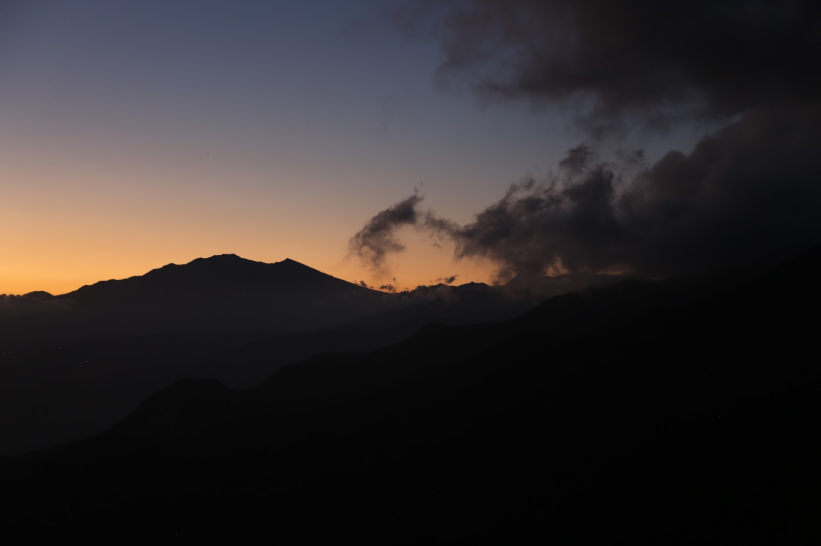
Das Gefühl, durch Panamas Nebelwälder zu wandern

Es gibt etwas ganz Besonderes daran, durch die Nebelwälder Panamas zu wandern. Es ist nicht einfach nur eine Wanderung durch die Berge. Es fühlt sich eher so an, als würde man eine andere Welt betreten, eine Welt, in der die Luft kühler ist, das Licht weicher wird und die Natur überall gleichzeitig zu leben scheint. Die Vegetation ist unglaublich dicht, Wasser tropft von den Blättern, Vögel rufen aus dem Dickicht und über allem liegen die Wolken, die langsam durch den Wald ziehen.

Das Erste, was man bemerkt, ist die Luft. Wer gerade aus den heißen und feuchten Regionen Panamas kommt, spürt sofort den Unterschied. Mit zunehmender Höhe wird es angenehmer und kühler, während die Feuchtigkeit erhalten bleibt. Manchmal sind die Wolken so tief, dass man tatsächlich mitten durch sie hindurchwandert. Die Haut fühlt sich kühl und feucht an, kleine Wassertropfen hängen an den Blättern und die ganze Landschaft scheint von einer dünnen Schicht Feuchtigkeit überzogen zu sein.

Der Wald selbst wirkt unglaublich lebendig. Riesige Bäume stehen entlang des Weges und ihre Stämme sind mit Moos, Farnen, Orchideen, Bromelien und anderen Pflanzen bedeckt. Pflanzen wachsen auf anderen Pflanzen, Äste verschwinden unter dichtem Grün und selbst abgestorbene Baumstämme werden von neuem Leben erobert. Ein umgefallener Stamm kann wie ein kleiner Garten aussehen, während ein alter Baumstamm ein komplettes Mini Ökosystem beherbergen kann.

Je länger man unterwegs ist, desto mehr merkt man, dass der Nebelwald nicht nur aus Bäumen besteht. Er besteht aus unzähligen kleinen Welten. Auf einem einzigen Stück Rinde können Moose, Flechten und winzige Pflanzen wachsen. Unter einem Blatt kann ein kleiner Frosch sitzen. Zwischen den Wurzeln bewegen sich Insekten. Auf einem Ast kann plötzlich ein Kolibri auftauchen. Man muss nur langsam genug gehen, um all diese Dinge wahrzunehmen.

Auch die Geräusche machen das Erlebnis besonders. Auf den ersten Blick kann der Nebelwald ruhig und sogar ein wenig geheimnisvoll wirken. Doch sobald man stehen bleibt und zuhört, merkt man, dass der Wald voller Geräusche ist. Wasser tropft von Blättern. Ein Bach rauscht irgendwo unterhalb des Weges. Insekten summen. Vögel rufen aus der Baumkrone. Manchmal hört man ein Geräusch im Gebüsch und weiß überhaupt nicht, was es verursacht hat.

Genau diese Ungewissheit macht eine Wanderung so spannend. Man weiß nie, was hinter der nächsten Kurve wartet. Vielleicht hört man einen Vogel, bekommt ihn aber nie zu Gesicht. Vielleicht bewegt sich plötzlich ein Ast weit oben in der Baumkrone. Vielleicht entdeckt man einen kleinen Frosch am Wegesrand oder einen Schmetterling, der nur wenige Sekunden auf einer Blüte sitzt. Und manchmal erscheint völlig unerwartet ein Tier, mit dem man überhaupt nicht gerechnet hat.

Der Nebel verändert die gesamte Stimmung des Waldes. Wenn Wolken zwischen den Bäumen hängen, wird die Sicht kürzer und die Landschaft wirkt geheimnisvoller. Die Baumstämme verschwinden im Grau, während die Pflanzen direkt am Weg besonders intensiv grün erscheinen. Spinnennetze werden durch die vielen Wassertropfen sichtbar und sehen aus wie kleine Kunstwerke. Selbst gewöhnliche Blätter bekommen durch die Feuchtigkeit eine ganz andere Schönheit.

Manchmal fühlt sich der Wald fast urzeitlich an. Riesige Bäume ragen in den Nebel, verdrehte Wurzeln überqueren den Wanderweg und überall wachsen Farne und Moose. Man kann leicht verstehen, warum sich manche Bereiche der panamaischen Bergwälder so anfühlen, als wären sie seit unzähligen Generationen nahezu unverändert geblieben.

Dabei sind Panamas Nebelwälder ökologisch etwas ganz Besonderes. Sie sind nicht einfach normale tropische Wälder in größerer Höhe. Das kühlere Klima, die hohe Luftfeuchtigkeit und die häufige Wolkenbildung schaffen Bedingungen, unter denen zahlreiche Pflanzen und Tiere leben können, die an diese besonderen Lebensräume angepasst sind. Gerade deshalb gehören die Bergregionen Panamas zu den faszinierendsten Orten für Naturliebhaber und Wanderer.

Für den Wanderer ist das Erlebnis unglaublich intensiv. Man riecht die feuchte Erde und die Pflanzen. Man spürt die kühle Luft auf der Haut. Man hört Wasser, Vögel und Insekten. Man sieht unzählige verschiedene Grüntöne und entdeckt ständig neue Formen und Strukturen. Nach einer Weile konzentriert man sich nicht mehr darauf, möglichst schnell voranzukommen. Man beginnt automatisch langsamer zu werden.

Das ist vielleicht eine der schönsten Eigenschaften einer Wanderung durch einen Nebelwald. Der Wald zwingt einen dazu, aufmerksam zu sein. In unserem normalen Alltag laufen wir oft an unzähligen Dingen vorbei, ohne sie wirklich wahrzunehmen. Im Nebelwald funktioniert das anders. Ein seltsamer Pilz auf einem Baumstamm kann plötzlich interessant werden. Ein Vogelruf kann einen für mehrere Minuten stehen bleiben lassen. Ein Sonnenstrahl, der durch die Wolken fällt, kann einen ganzen Abschnitt des Waldes verändern.

Und dann gibt es die Aussichtspunkte. Nach einer längeren Strecke durch dichten Wald kann es unglaublich beeindruckend sein, plötzlich aus den Bäumen herauszutreten. Vor einem liegen Berge, Täler und endlose Waldflächen. Wolken bewegen sich zwischen den Gipfeln und manchmal öffnet sich der Himmel weit genug, um in die Ferne bis zum Pazifik zu blicken. Der Kontrast ist besonders stark, weil man gerade noch von dichtem Grün umgeben war und plötzlich eine riesige Landschaft vor sich sieht.

Auch Regen gehört zum Erlebnis. In einem Nebelwald ist Regen keine ungewöhnliche Unterbrechung, sondern ein Teil des Lebens. Man kann eine Wanderung bei trockenem Wetter beginnen und wenige Stunden später durch einen leichten tropischen Regen laufen. Die Blätter glänzen, kleine Bäche werden lauter und der Geruch des Waldes wird intensiver. Alles wirkt noch grüner und lebendiger.

Wer sich darauf einlässt, merkt schnell, dass ein bisschen Regen die Erfahrung sogar schöner machen kann. Man hört das Wasser auf den Blättern, sieht Tropfen an den Pflanzen hängen und erlebt den Wald genau unter den Bedingungen, unter denen er selbst existiert. Natürlich sollte man vorbereitet sein, aber man muss nicht versuchen, jede einzelne Regentropfen zu vermeiden.

Vielleicht ist das Wichtigste an einer Wanderung durch Panamas Nebelwälder jedoch das Gefühl, für einige Stunden aus dem normalen Leben herauszukommen. Kein Verkehr, keine Gebäude, kein Lärm der Stadt. Manchmal gibt es nicht einmal Mobilfunkempfang. Stattdessen gibt es nur den Wanderweg, die Berge und den Wald.

Die Welt wird plötzlich sehr einfach. Man geht, schaut, hört zu, atmet und entdeckt. Man denkt weniger darüber nach, was später passieren muss oder was gestern passiert ist. Die Aufmerksamkeit richtet sich auf das, was gerade vor einem liegt. Ein Bach. Ein Vogel. Ein Baum. Eine Wolke. Ein Geräusch im Gebüsch.

Genau deshalb können solche Wanderungen überraschend entspannend sein. Man muss nicht unbedingt meditieren oder versuchen, den Kopf frei zu bekommen. Der Wald erledigt das gewissermaßen von selbst. Je länger man unterwegs ist, desto mehr verschwindet der Alltag im Hintergrund.

Und wenn man schließlich wieder aus dem Wald herauskommt, fühlt sich die Welt manchmal ein wenig anders an. Man ist vielleicht müde, die Schuhe sind schmutzig und die Kleidung ist feucht, aber gleichzeitig hat man das Gefühl, etwas erlebt zu haben, das weit über eine gewöhnliche Wanderung hinausgeht.

Die schönste Wanderung durch einen Nebelwald muss deshalb nicht unbedingt die längste oder schwierigste sein. Es geht nicht darum, möglichst viele Kilometer zurückzulegen oder den höchsten Gipfel zu erreichen. Viel wichtiger ist es, Zeit zu haben. Zeit, stehen zu bleiben. Nach oben zu schauen. Unter Blätter zu sehen. Den Geräuschen zu folgen. Die Wolken zu beobachten. Kleine Tiere und Pflanzen zu entdecken und einfach wahrzunehmen, wo man gerade ist.

Denn das eigentliche Erlebnis der Nebelwälder Panamas besteht nicht nur aus Bergen, Wanderwegen und spektakulären Aussichtspunkten. Es ist dieses besondere Gefühl, vollständig von Natur umgeben zu sein.

Man wandert durch eine lebendige Landschaft, in der die Wolken zwischen den Bäumen hängen, die Bäume selbst zu kleinen Gärten werden, der Regen zur Musik gehört und hinter jeder Kurve eine neue Entdeckung möglich ist.

Für ein paar Stunden fühlt sich Panama nicht wie ein Land an, das man einfach besucht. Es fühlt sich wie eine wilde, geheimnisvolle Welt an, in die man für kurze Zeit eintreten darf. Und genau dieses Gefühl bleibt oft noch lange bestehen, nachdem man den Wald längst wieder verlassen hat.

La sensation de randonner dans les forêts de nuages du Panama

Il y a quelque chose de complètement différent dans le fait de randonner dans une forêt de nuages au Panama. Ce n’est pas simplement une promenade dans les montagnes. C’est comme entrer dans un autre monde, un monde où l’air est plus frais, la lumière plus douce, la végétation semble incroyablement vivante et la forêt est constamment en mouvement, en train de goutter, de chanter, de bourdonner et de respirer autour de vous.

La première chose que l’on remarque, c’est l’air. Après la chaleur et l’humidité des régions plus basses du Panama, pénétrer dans les montagnes peut être incroyablement rafraîchissant. La température baisse, mais l’humidité reste présente. Les nuages se déplacent entre les arbres, parfois si bas que vous avez réellement l’impression de marcher à travers eux. La peau devient fraîche et légèrement humide, tandis que tout autour de vous semble couvert de minuscules gouttes d’eau.

La forêt possède sa propre atmosphère. Vous avancez sous d’immenses arbres recouverts de mousse, de broméliacées, d’orchidées, de fougères et de plantes grimpantes. Les plantes poussent sur d’autres plantes et les branches disparaissent sous des couches de verdure. Il est rare de regarder simplement un sol ordinaire. Les troncs tombés deviennent de véritables jardins, les vieux arbres abritent de minuscules écosystèmes et la mousse recouvre les rochers et les racines comme d’épais tapis verts.

Et puis il y a les sons. Au début, les forêts de nuages du Panama peuvent sembler étrangement silencieuses, surtout lorsqu’on vient des régions tropicales plus basses et plus animées. Mais dès que vous vous arrêtez de marcher, vous réalisez que la forêt est loin d’être silencieuse. L’eau tombe des feuilles. De minuscules insectes bourdonnent quelque part. Les oiseaux appellent depuis la canopée. Au loin, un ruisseau descend entre les rochers. Parfois, quelque chose bouge dans la végétation et vous n’avez absolument aucune idée de ce que c’est.

Cette part de mystère fait partie de la magie. Vous pouvez entendre un oiseau sans jamais réussir à le voir. Une branche peut bouger très haut au dessus de vous et vous vous demandez ce qui l’a fait bouger. Un colibri peut soudain apparaître à quelques mètres de vous, rester immobile dans les airs pendant quelques secondes puis disparaître dans la végétation.

Randonner dans une forêt de nuages panaméenne vous apprend naturellement à ralentir. Lors d’une randonnée classique, on pense souvent à atteindre la destination. Dans la forêt de nuages, le sentier lui même devient la destination. Vous vous arrêtez pour observer une orchidée qui pousse sur un arbre. Vous regardez sous une feuille parce que quelque chose a attiré votre attention. Vous écoutez un chant d’oiseau. Vous observez des champignons étranges sur un tronc tombé. Vous regardez les nuages passer entre les montagnes.

Tous les quelques mètres, quelque chose de nouveau apparaît.

L’une des sensations les plus extraordinaires est celle de la brume. Dans les montagnes les plus élevées du Panama, les nuages peuvent traverser directement la forêt. À un moment, le sentier est parfaitement visible, puis quelques minutes plus tard, tout devient pâle et mystérieux. Les arbres disparaissent dans le brouillard. Les toiles d’araignées deviennent visibles parce qu’elles sont couvertes de gouttelettes. Les feuilles brillent sous l’humidité.

Cela peut donner l’impression de remonter dans le temps. La végétation est tellement dense et ancienne qu’il est facile d’imaginer que l’on se trouve dans un monde très différent. De gigantesques troncs montent dans la brume, couverts de plantes épiphytes. Des racines tortueuses traversent le sentier. Les fougères poussent partout. Le sol de la forêt est sombre et humide tandis que, beaucoup plus haut, la canopée disparaît complètement dans les nuages.

C’est l’une des raisons pour lesquelles les forêts de nuages du Panama sont si particulières. Ce ne sont pas simplement des forêts tropicales situées à une altitude plus élevée. Elles possèdent leur propre caractère et leurs propres écosystèmes, influencés par des températures plus fraîches, une humidité permanente et la présence fréquente de nuages.

Pour un randonneur, l’expérience est presque une surcharge des sens, mais une surcharge silencieuse. Vous sentez la terre humide et les feuilles. Vous ressentez l’humidité sur votre visage. Vous entendez les oiseaux et l’eau qui coule. Vous voyez des dizaines de nuances de vert. Vous touchez l’écorce rugueuse d’un arbre recouvert de mousse. Et parfois, les nuages s’ouvrent soudainement et révèlent un immense paysage montagneux.

Ce contraste peut être spectaculaire. Vous pouvez passer une heure entouré d’une végétation tellement dense que votre visibilité ne dépasse pas quelques mètres, puis sortir soudainement sur un point de vue. Devant vous s’étendent des montagnes couvertes de forêt, des vallées qui disparaissent dans la brume et, à certains endroits, des aperçus lointains de l’océan Pacifique. Le paysage semble encore plus impressionnant parce que vous venez de passer du temps dans un environnement où votre regard était constamment limité par la végétation.

La randonnée dans une forêt de nuages offre également une sensation particulière d’attente et de découverte, car vous ne savez jamais ce qui pourrait apparaître. Le Panama possède une biodiversité exceptionnelle et ses montagnes abritent une incroyable variété d’oiseaux, de mammifères, de reptiles, d’amphibiens et d’insectes. Vous pourriez apercevoir un colibri, un toucan, un motmot, un tangara ou l’une des nombreuses autres espèces d’oiseaux qui vivent dans ces forêts.

Mais souvent, les meilleures rencontres sont celles que l’on manque presque. Un mouvement dans les feuilles. Un bruit étrange. Deux yeux qui vous regardent. Une minuscule grenouille installée à côté du sentier. Un lézard qui disparaît sous une branche. Une toile d’araignée illuminée par la lumière. La randonnée dans la forêt de nuages vous apprend que l’observation de la faune ne consiste pas toujours à trouver quelque chose de spectaculaire. Parfois, la découverte la plus fascinante ne mesure que quelques centimètres.

Et puis, inévitablement, il y a la pluie. Dans une forêt de nuages, la pluie ne ressemble pas forcément à une interruption. Elle fait partie de l’expérience. Vous pouvez commencer votre randonnée sous un ciel couvert, sentir quelques gouttes sur vos épaules et finir par marcher sous une douce pluie tropicale.

La forêt change lorsqu’il pleut. Les couleurs deviennent plus profondes. Les ruisseaux deviennent plus bruyants. Les feuilles brillent. L’eau commence à couler le long des troncs et sur le sentier. L’odeur de la végétation devient plus forte et toute la forêt semble encore plus vivante. Au lieu de chercher immédiatement à retourner au sec, vous pouvez simplement accepter que vous êtes en train de découvrir la forêt telle qu’elle existe réellement, humide, fraîche, brumeuse et pleine de vie.

Peut être que la sensation la plus mémorable est celle d’avoir temporairement quitté la vie quotidienne. Il n’y a parfois aucun bâtiment, aucune circulation et aucun bruit de ville. Le téléphone peut ne plus avoir de réseau. La seule chose évidente devant vous est le sentier qui continue entre les arbres.

Pendant quelques heures, votre monde devient très simple. Vous marchez, vous regardez, vous écoutez, vous respirez et vous découvrez. Cette simplicité peut être étonnamment puissante. Vous commencez à remarquer des choses qui seraient normalement perdues dans le bruit de la vie quotidienne. Le son d’un ruisseau devient important. Le chant d’un oiseau devient passionnant. Découvrir un arbre particulièrement magnifique devient un véritable événement.

La forêt vous oblige à vivre dans le moment présent. Lorsque vous terminez finalement votre randonnée, vous réalisez parfois que vous ne pensiez plus à ce qui occupait votre esprit avant d’entrer dans la forêt. Vous étiez simplement là, complètement absorbé par ce qui vous entourait.

La meilleure randonnée dans une forêt de nuages n’est pas forcément celle où vous parcourez la plus grande distance ou atteignez le sommet le plus élevé. C’est celle pendant laquelle vous prenez suffisamment de temps pour observer la forêt. Arrêtez vous de temps en temps. Regardez vers le haut. Regardez sous les feuilles. Écoutez avant de continuer. Observez les nuages. Faites attention aux petits détails. Et surtout, n’ayez pas peur d’être un peu mouillé.

Car la véritable attraction des forêts de nuages du Panama n’est pas simplement d’atteindre une cascade, un point de vue ou une destination. C’est la sensation d’être complètement entouré par la nature.

Vous avancez dans un paysage vivant où les nuages font partie de la forêt, où les arbres deviennent des jardins, où la pluie devient une musique et où chaque bruit mystérieux vous fait vous demander ce qui peut bien se cacher juste derrière le sentier.

Pendant quelques heures, le Panama ne ressemble plus à un pays que vous êtes simplement venu visiter. Il ressemble à un monde sauvage dans lequel vous avez eu la chance d’entrer pendant un petit moment.

The Feeling of Hiking Through Panama’s Cloud Forests

There is something completely different about hiking through a cloud forest in Panama. It is not simply a walk through the mountains. It feels more like entering another world, one where the air is cooler, the light is softer, the vegetation seems impossibly alive, and the forest is constantly moving, dripping, calling, buzzing and breathing around you.

The first thing you notice is the air. After the heat and humidity of Panama’s lowlands, stepping into the mountains can feel incredibly refreshing. The temperature drops, but the moisture remains. Clouds drift through the trees, sometimes so low that you are literally walking through them. Your skin feels cool and damp, and everything around you seems covered in tiny drops of water.

The forest has its own atmosphere. You walk beneath enormous trees covered with moss, bromeliads, orchids, ferns and vines. Plants grow on other plants, and branches disappear beneath layers of green. There is rarely a moment when you are looking at ordinary ground. Fallen logs become gardens, tree trunks become miniature ecosystems, and moss covers rocks and roots like thick green carpets.

And then there is the sound. Cloud forests in Panama can seem strangely quiet at first, especially compared with the noisy tropical lowlands. But once you stop walking, you realize the forest is anything but silent. Water drips from leaves. Tiny insects buzz somewhere nearby. Birds call from the canopy. A distant stream tumbles over rocks. Occasionally something moves through the vegetation, and you have absolutely no idea what it is.

That uncertainty is part of the magic. You might hear a bird without ever seeing it. You might notice a branch moving high above the trail and wonder what caused it. You might suddenly discover a hummingbird hovering only a few feet away before disappearing into the vegetation. Every sound makes you curious about what is happening around you.

Hiking in a Panamanian cloud forest encourages you to slow down. In a normal hike, people often concentrate on reaching the destination. In the cloud forest, the trail itself becomes the destination. You stop to examine an orchid growing from a tree. You look underneath a leaf because something caught your eye. You listen for a bird. You photograph strange fungi growing from a fallen branch. You watch clouds roll between the mountains.

Every few meters there is something new. One of the most beautiful sensations is the mist. In Panama’s higher mountains, clouds can move directly through the forest. One moment the trail may be relatively clear, and a few minutes later everything becomes pale and mysterious. Trees disappear into fog. Spiderwebs become visible because they are covered in droplets. Leaves sparkle with moisture.

It can feel almost prehistoric. The vegetation is so dense and ancient looking that it is easy to imagine yourself hundreds or thousands of years in the past. Giant tree trunks rise into the fog, covered in epiphytes. Twisted roots cross the trail. Ferns grow everywhere. The forest floor is dark and damp, while somewhere above you the canopy disappears into the clouds.

This is one of the reasons Panama’s cloud forests are so special. They are not simply rainforests at a higher altitude. They have their own character and ecosystems, shaped by cooler temperatures, persistent moisture and frequent cloud cover. The result is a landscape that feels completely different from the tropical forests closer to sea level.

For hikers, the experience is almost sensory overload, but in a quiet way. You smell wet earth and leaves. You feel moisture on your face. You hear birds and running water. You see dozens of shades of green. You touch the rough bark of a tree covered in moss. Every now and then the clouds open and reveal an enormous mountain landscape beyond the forest.

That contrast can be spectacular. You may spend an hour surrounded by vegetation where you can barely see ten meters ahead, and then suddenly emerge onto a viewpoint. Below you are mountains covered in forest, valleys disappearing into mist and, in some locations, distant glimpses toward the Pacific Ocean. The experience feels much bigger because you have just come from a world where your vision was limited to the forest around you.

Cloud forest hiking also has a special kind of anticipation because you never know what might appear. Panama is extraordinarily biodiverse, and the mountains are home to an impressive variety of birds, mammals, reptiles, amphibians and insects. You might encounter a hummingbird, toucan, motmot, tanager or one of the many other tropical birds that inhabit the forests.

But often the best wildlife encounters are the ones you almost miss. A movement in the leaves. A strange sound. Two eyes looking back at you. A tiny frog sitting beside the trail. A lizard disappearing beneath a log. A spiderweb illuminated by the morning light. Cloud forest hiking teaches you that seeing wildlife is not always about finding something enormous. Sometimes the most fascinating discovery is only a few centimeters long.

And then, inevitably, there is rain. In a cloud forest, rain does not necessarily feel like an interruption. It is part of the environment. You may begin your hike under cloudy skies, feel a few drops on your shoulders, and eventually find yourself walking through a gentle tropical shower.

The forest changes when it rains. The colors become deeper. Streams become louder. Leaves shine. Water runs down tree trunks and along the trail. The smell of vegetation becomes stronger, and the entire forest seems even more alive. Instead of rushing back, you can sometimes simply accept that you are now experiencing the forest exactly as it exists. Wet, cool, misty and alive.

Perhaps the most memorable part of cloud forest hiking is the feeling that you have temporarily escaped ordinary life. There may be no buildings, traffic or city noise. Your phone may have little or no signal. The only obvious route is the trail beneath your feet.

For a few hours, your world becomes very simple. You walk, look, listen, breathe and discover. That simplicity can be surprisingly powerful. You begin noticing things that would normally disappear into the background. The sound of a stream becomes important. A bird call becomes exciting. Finding a particularly beautiful tree becomes an event.

The forest forces your attention into the present. When you finally finish the hike, you often realize that you were not thinking about whatever had been occupying your mind before you entered the forest. You were simply there.

The best cloud forest hike is not necessarily the one where you cover the greatest distance or climb the highest mountain. It is the one where you allow yourself enough time to notice the forest. Stop occasionally. Look upward. Look underneath leaves. Listen before continuing. Watch the clouds. Pay attention to tiny details. And do not be afraid of getting a little wet.

Because the real attraction of hiking through Panama’s cloud forests is not simply reaching a waterfall, viewpoint or destination. It is the feeling of being completely surrounded by nature.

You are walking through a living landscape where clouds become part of the forest, trees become gardens, rain becomes music and every mysterious sound makes you wonder what might be hiding just beyond the trail.

For a few hours, Panama does not feel like a country you are visiting. It feels like a wild world you have temporarily been allowed to enter.

Die Miraflores-Schleusen: Ein faszinierendes Erlebnis für Familien in Panama-Stadt

Wenn Sie Panama-Stadt mit der Familie besuchen, gehören die Miraflores-Schleusen zu den interessantesten Erlebnissen, die Sie mit Kindern unternehmen können. Erwachsene bekommen einen faszinierenden Einblick in Geschichte, Technik und Welthandel, während Kinder dabei zusehen können, wie riesige Schiffe mithilfe von Wasser angehoben und abgesenkt werden. Es ist lehrreich, spektakulär und gleichzeitig so greifbar, dass selbst Kinder, die normalerweise nicht besonders begeistert von Museen sind, schnell neugierig werden.

Das Faszinierende beginnt bereits beim ersten Blick auf die Schleusen. Der Panamakanal ist kein stillgelegtes historisches Bauwerk, sondern eine gigantische, bis heute funktionierende Maschine, die direkt vor den Augen der Besucher arbeitet. Ein riesiges Containerschiff fährt langsam in die Schleusenkammer ein. Die gewaltigen Tore schließen sich, und anschließend beginnt der Wasserspiegel zu steigen. Ganz langsam hebt sich das gesamte Schiff mit dem Wasser nach oben.

Für Kinder sieht das fast wie ein riesiger Aufzug aus, der mit Wasser betrieben wird.

Eine Attraktion für die ganze Familie

Einer der großen Vorteile von Miraflores ist, dass Kinder unterschiedlichen Alters etwas Interessantes entdecken können.

Kleinere Kinder können die riesigen Schiffe beobachten, nach den kleinen Lokomotiven Ausschau halten, die die Schiffe begleiten, und verfolgen, wie sich die gewaltigen Schleusentore öffnen und schließen. Ältere Kinder können verstehen, warum die Schiffe überhaupt angehoben und abgesenkt werden und wie die Schleusen funktionieren.

Auch Jugendliche können von der schieren Größe der Schiffe und der technischen Leistung des Kanals beeindruckt sein. Besonders spektakulär ist es, wenn ein riesiges Containerschiff direkt an der Aussichtsplattform vorbeifährt.

Und natürlich kommen auch die Eltern auf ihre Kosten. Miraflores ist keine Attraktion, die ausschließlich für Kinder interessant ist. Die ganze Familie kann etwas daraus mitnehmen.

Die Schiffe sind das eigentliche Spektakel

Der Höhepunkt ist natürlich ein echter Schiffstransit.

Das Schiff fährt langsam in die Schleusenkammer. Hinter ihm schließen sich die Tore. Dann beginnt Wasser in die Kammer zu strömen und der Wasserspiegel steigt.

Das Schiff steigt mit dem Wasser immer höher.

Sobald der Wasserstand ausgeglichen ist, öffnen sich die Tore auf der anderen Seite und das Schiff fährt weiter in die nächste Schleusenkammer.

Für Kinder sieht das fast wie ein riesiges mechanisches Puzzle aus.

Sie können daraus sogar ein kleines Familienspiel machen:

Wie viele Container könnt ihr zählen?

Woher kommt das Schiff wohl?

Wohin fährt es?

Warum muss das Schiff angehoben werden?

Wie viele Menschen arbeiten wohl an Bord?

Warum kann ein so riesiges Schiff überhaupt schwimmen?

Solche einfachen Fragen machen aus dem Beobachten von Schiffen schnell ein kleines Abenteuer.

Lernen, ohne dass es sich wie Schule anfühlt

Das ist vielleicht das Beste an Miraflores für Familien. Der Panamakanal macht viele Themen sichtbar, die Kinder sonst nur aus Büchern oder dem Unterricht kennen.

Da ist Physik, denn die Kinder können beobachten, wie Wasser und Auftrieb funktionieren.

Da ist Ingenieurwesen, denn gewaltige Tore, Wasserkanäle, Ventile und Lokomotiven müssen perfekt zusammenspielen.

Da ist Geografie, denn der Panamakanal verbindet den Pazifik mit dem Atlantik.

Da ist Geschichte, denn der Bau des Kanals hat Panama und den internationalen Handel grundlegend verändert.

Und sogar Wirtschaft lässt sich erklären, denn die Schiffe transportieren Waren zwischen verschiedenen Kontinenten.

Das Schöne daran ist: Eltern müssen daraus keinen Unterricht machen. Man muss einfach nur zuschauen. Die Fragen entstehen ganz von selbst.

Das Besucherzentrum ist ideal für Familien

Das Miraflores Visitor Center bietet mehr als nur Aussicht auf die Schleusen. Familien können Ausstellungen über die Geschichte und Funktionsweise des Kanals besuchen und im IMAX-Kino noch mehr über dieses außergewöhnliche Bauwerk erfahren.

Außerdem gibt es einen Spielplatz für Kinder. Das ist besonders praktisch für Familien mit kleineren Kindern, die vielleicht nicht eine Stunde lang voller Begeisterung hydraulische Systeme beobachten möchten.

So lässt sich der Besuch problemlos kombinieren: Schiffe beobachten, Ausstellungen ansehen, einen Film anschauen und zwischendurch spielen.

Machen Sie daraus eine Schatzsuche

Eine besonders gute Idee ist es, den Kindern vor dem Besuch eine kleine Mission zu geben.

Sie müssen beispielsweise finden:

Ein riesiges Containerschiff

Eine Lokomotive des Panamakanals

Ein Schleusentor, das sich öffnet

Steigendes Wasser

Sinkendes Wasser

Ein Schiff, das in die Schleuse einfährt

Ein Schiff, das die Schleuse verlässt

Den Namen eines Schiffes

Container in verschiedenen Farben

Etwas Überraschendes an einem Schiff

Für jedes gefundene Element können die Kinder Punkte bekommen.

Damit verändert sich die ganze Erfahrung. Statt „Wir gehen Schiffe anschauen“ heißt es plötzlich: „Wir haben eine Mission am Panamakanal.“

Die Dimensionen sind beeindruckend

Was Kinder oft besonders beeindruckt, ist die schiere Größe der Anlage.

Die Schleusenwände sind gewaltig. Die Tore sind riesig. Die Schiffe wirken beinahe unwirklich groß. Und trotzdem funktioniert das gesamte System mit erstaunlicher Präzision.

Wenn man über einer riesigen Maschine steht und beobachtet, wie ein mehrere tausend Tonnen schweres Schiff langsam mit dem Wasser nach oben steigt, bekommt man ein Gefühl für die Dimensionen des Panamakanals, das keine Fotografie wirklich vermitteln kann.

Die Kinder sehen tatsächlich, wie das Schiff höher steigt.

Sie sehen das Wasser in Bewegung.

Sie hören die Maschinen.

Sie sehen die Tore öffnen.

Und anschließend sehen sie das riesige Schiff wieder davonfahren.

In diesem Moment wird der Panamakanal von etwas aus einem Schulbuch zu etwas, das sie selbst erlebt haben.

Wählen Sie möglichst den richtigen Zeitpunkt

Für Familien ist dies wahrscheinlich der wichtigste Tipp: Versuchen Sie, Ihren Besuch auf einen tatsächlichen Schiffstransit abzustimmen.

Das Besucherzentrum ist auch ohne Schiff interessant, aber wenn gerade ein riesiger Frachter durch die Schleusen fährt, ist die Erfahrung eine völlig andere.

Auch für Kinder macht es einen Unterschied. Wenn sie wissen, dass bald ein riesiges Schiff kommt, wird sogar das Warten Teil des Abenteuers.

Deshalb lohnt es sich, vor dem Besuch die aktuellen Transitzeiten zu überprüfen und den Besuch entsprechend zu planen.

Ein Erlebnis, an das sich Kinder erinnern

Die Miraflores-Schleusen funktionieren besonders gut als Familienausflug, weil jeder etwas anderes daran interessant finden kann.

Die einen interessieren sich für die Schiffe.

Andere für die Geschichte.

Manche für die Fotografie.

Die Kinder für das Wasser, die Maschinen und die gewaltigen Tore.

Und alle können gemeinsam den Moment erleben, in dem das riesige Schiff langsam aus dem Wasser emporsteigt.

Für Familien in Panama-Stadt sind die Miraflores-Schleusen deshalb weit mehr als ein Ort, an dem man Schiffe beobachten kann. Sie sind ein riesiges Klassenzimmer unter freiem Himmel, in dem die Lektion direkt vor den eigenen Augen stattfindet. Und vielleicht ist es einer der wenigen Orte, an denen Kinder Physik, Technik, Geografie und Geschichte kennenlernen können, ohne überhaupt das Gefühl zu haben, dass sie gerade etwas lernen.

Miraflores Locks: One of the Best Family Experiences in Panama City

If you are visiting Panama City with children, Miraflores Locks is one of those places that works surprisingly well for the entire family. Adults get an incredible lesson in history, engineering and international trade, while children get to watch enormous ships being lifted and lowered by water. It is educational without feeling like a museum, and spectacular without requiring a long hike or a complicated excursion.

The magic begins when you arrive at the viewing area and realize that the canal is not just something you read about in a guidebook. It is a gigantic, functioning machine operating directly in front of you.

A massive container ship can enter the lock chamber, the enormous gates close behind it, and then millions of litres of water begin moving. Slowly, almost mysteriously, the ship rises. Children can stand there watching the water climb higher and higher until the vessel is several metres above where it started.

It is essentially a giant elevator powered by water.

A great attraction for different ages

One of the biggest advantages of Miraflores for families is that children of different ages can enjoy it in different ways.

Young children can simply enjoy watching the enormous ships, looking for the little locomotives that accompany them and seeing the giant gates open and close. Older children can start asking questions about how the locks work, why ships need to be raised and lowered, and how the Panama Canal connects the Pacific and Atlantic oceans.

Teenagers may appreciate the scale of the engineering and the incredible size of the ships, particularly when a huge container vessel passes surprisingly close to the viewing platforms.

And parents get to enjoy something genuinely interesting themselves rather than spending the day at an attraction designed exclusively for children.

The ships are the real show

The highlight is undoubtedly seeing a ship actually transit the locks.

A ship slowly enters the chamber. The gates close. Water begins flowing into the lock. The vessel rises with the water, and eventually the gates ahead open.

Then the ship moves forward.

For children, it can feel almost like watching a giant mechanical puzzle being solved.

You can make it into a family game by asking questions while you watch:

How many containers can you see?

Where do you think the ship is going?

Which direction is it traveling?

How much do you think the ship weighs?

How many people do you think work on it?

Why doesn't the ship simply sail straight through?

These simple questions can turn an ordinary viewing session into an adventure.

It teaches children without feeling like school

Miraflores is particularly good for families because the Panama Canal naturally introduces children to subjects they encounter at school.

There is physics, because they can see buoyancy and water displacement in action.

There is engineering, because they can see enormous gates, valves, machinery and locomotives working together.

There is geography, because the canal connects two oceans.

There is history, because the canal transformed global transportation and played an enormous role in Panama's development.

And there is economics, because the ships passing through are carrying goods between different parts of the world.

The best part is that you don't have to give your children a lecture about any of this. Simply watching the locks operate naturally leads to questions.

The Miraflores Visitor Center makes it easier

The visitor center isn't just an observation platform. Families can explore exhibitions explaining the history and operation of the canal, and there is also an IMAX theater showing a film about the Panama Canal.

There is even a children's playground, which is especially useful if you are traveling with younger kids who aren't going to spend an hour fascinated by hydraulic engineering.

This combination makes the attraction much more family-friendly. You can watch the ships, explore the exhibits, see the film and give younger children some time to play.

Make it a family challenge

One of the easiest ways to make the experience more exciting is to give the children a checklist before you arrive.

Tell them they have to find:

A huge container ship

A Panama Canal locomotive

A lock gate opening

Water rising

Water falling

A ship entering the lock

A ship leaving the lock

A ship carrying containers

The name of a ship

Something interesting on the ship

You can even give them points for each thing they discover.

It changes the experience from “We're going to watch boats” into “We're going on a Panama Canal mission.”

Don't forget the scale

Perhaps the most memorable part for children is simply realizing how enormous everything is.

The lock walls are huge. The gates are massive. The ships are enormous. And yet the whole process is incredibly controlled and precise.

Standing above a ship while it is being raised by water gives children a perspective that photographs simply cannot provide.

They can actually see that the ship is getting higher.

They can watch the water move.

They can hear the machinery.

They can see the gates open.

And then, suddenly, this enormous vessel starts moving again.

That is the moment when the Panama Canal stops being something from a textbook and becomes something they have personally experienced.

Plan around the ship schedule

For families, this is probably the most important practical tip: try to visit when a ship is scheduled to pass through the locks.

The visitor center is interesting even without a ship, but the experience is dramatically better when you can watch an actual transit.

Children generally have much more patience when there is something happening in front of them. If they know a giant ship is coming, waiting becomes part of the adventure.

So before heading to Miraflores, check the current transit information and plan your visit accordingly.

A perfect family activity in Panama City

Miraflores Locks is a particularly good choice for families because it doesn't require everyone to have the same interests.

One person can be fascinated by ships.

Another can be interested in history.

Someone else can enjoy photography.

The children can watch the machinery and play.

And everyone gets to experience one of the most remarkable engineering projects ever built.

For families visiting Panama City, Miraflores is much more than a place to watch ships. It is a giant, living classroom where the lesson is happening right in front of you, and where even children who normally say they are bored in museums can find themselves standing at the railing waiting for the next enormous ship to rise out of the water.

Miraflores Locks: Why the Panama Canal Is Surprisingly Fascinating for Kids

For many adults, the Panama Canal is an impressive feat of engineering. For children, however, Miraflores Locks can be something even better: a gigantic real-life machine that actually moves ships. Instead of looking at an old monument or reading about history in a museum, kids can stand above enormous lock chambers and watch a ship the size of a skyscraper slowly rise or descend as millions of litres of water move around it.

That sense of scale is what makes a visit to Miraflores Visitor Center so memorable. The Panama Canal Authority's visitor center is positioned directly beside the locks, with viewing platforms where visitors can watch ships passing through the system. There is also a playground, exhibitions and an IMAX theater, making the experience much easier to enjoy as a family.

The giant bathtub that lifts ships

One of the easiest ways to explain the Panama Canal to a child is to imagine a giant bathtub with doors at both ends.

A ship enters the enormous chamber. The doors close behind it. Then water flows into the chamber and the ship rises. Once the water reaches the correct level, another set of gates opens and the ship moves into the next section.

And then it happens again.

At Miraflores there are two lock chambers in succession. Together, they raise or lower ships by roughly 16.5 metres between the Pacific and the higher water level of the canal.

The really fascinating part for children is that there are no giant pumps underneath the ship lifting it up. The system uses gravity. Water flows through enormous passages built into the concrete walls and floor of the locks. When valves are opened, water moves into or out of the chamber, causing the ship to rise or fall.

This is an excellent moment to ask a child:

“How do you think they are going to lift that ship?”

They might imagine cranes, engines or enormous machinery.

Then the water starts rising.

Suddenly, the Panama Canal becomes a science experiment happening right in front of them.

Watching a ship suddenly become taller

The most magical moment is when a huge ship is sitting inside the lock and the water begins to rise.

At first, it can be difficult to notice anything happening. Then you look at the walls, the gates or the people on the ship and realize that the entire vessel is slowly moving upward.

It is almost like watching a gigantic elevator made of water.

Children can follow the ship's progress visually. They can look at the markings along the lock walls and try to estimate how much higher the ship has moved. They can watch the water change level and see the gates open once the levels on either side have been equalized.

And then there is the ship itself.

A container ship passing through Miraflores can look impossibly large when viewed from the observation deck. Panama's tourism authorities specifically highlight the opportunity to see large ships passing close to the lock walls, turning what can sound like an abstract engineering lesson into something very physical and immediate.

The gates are enormous

The lock gates are another fantastic thing for children to discover.

They don't look particularly dramatic on a diagram, but standing next to them changes everything. The Canal Authority explains that the gates are about 64 feet wide and approximately 7 feet thick, with their height varying according to their position. Some of the gates at Miraflores are particularly tall because of the large tidal variation on the Pacific side.

The gates don't simply slide sideways like garage doors.

They are enormous pairs of doors that swing together into a V shape.

That makes them particularly easy for kids to understand. You can ask them to imagine trying to build a door that has to hold back an entire swimming pool of water, then make it strong enough to open and close reliably for ships weighing thousands of tonnes.

Suddenly, engineering doesn't seem so boring.

And then there are the little locomotives

Look closely at a ship moving through Miraflores and children may notice something unusual alongside it.

Small locomotives, traditionally known as mules, help guide vessels through the locks. They travel along tracks beside the chambers and keep the enormous ships properly positioned while they move through the system.

This creates another fun game for children:

“Can you spot the mules?”

Once they know what to look for, kids often become much more engaged with the operation. Instead of simply watching a ship, they begin looking for every moving component: the ship, the locomotives, the gates, the water and the people operating everything.

It's basically a gigantic engineering puzzle

This is perhaps the greatest reason Miraflores works so well for children.

The Panama Canal is made up of interconnected systems. If one part doesn't work correctly, the whole process cannot continue.

The water has to reach the right level.

The gates have to close.

The valves have to operate in the correct sequence.

The ship has to remain positioned correctly.

The locomotives have to move appropriately.

Then the next gate opens.

The ship moves forward.

And the entire process repeats.

The original lock system was so technically ambitious that the Panama Canal Authority describes the locks as an engineering wonder. Each chamber was designed with enormous internal culverts that distribute water through openings in the floor, helping the water enter and leave in a controlled way rather than simply rushing violently into the chamber.

For a curious child, this opens the door to questions about gravity, water pressure, buoyancy, mechanical engineering, electricity, geometry and physics without the experience ever feeling like school.

The ships make it feel real

A model of a ship in a museum is interesting.

A real container ship towering above you is different.

At Miraflores, children can watch international commerce happening in real time. The vessels passing through the canal may be carrying containers, vehicles, machinery, food and countless other products destined for completely different parts of the world.

That means you can turn the visit into a guessing game.

Where do you think that ship came from?

Where do you think it's going?

What do you think is inside all those containers?

Suddenly, a child isn't just looking at a ship. They are beginning to understand why Panama is so important to world trade.

The IMAX movie helps put everything together

If a child doesn't understand the canal after watching a ship go through the locks, the visitor center provides another way to experience it.

Admission to the Miraflores Visitor Center currently includes the IMAX theater experience. The film about the Panama Canal lasts about 45 minutes and is narrated by Morgan Freeman.

For children, the combination is particularly effective: first see the real thing, then learn the story behind it.

The visitor center also has exhibits covering the history, water, technology and future of the canal. The Canal Authority describes the center as a place combining tourism, education and interactive presentations about how the waterway operates.

There is even a playground

This might sound like a small detail, but for families it can make a huge difference.

The Miraflores Visitor Center now has a children's playground in the outdoor viewing area. The official visitor information specifically highlights it as a place where younger children can have fun while also observing the canal.

That makes Miraflores easier for families with different ages. Older children can become fascinated by the ships and machinery, while younger children have somewhere to burn off energy between transits.

Turn the visit into a treasure hunt

One of the best ways to make Miraflores exciting for children is to give them a mission.

Before arriving, tell them they have to find:

A ship

A lock gate

A mule locomotive

A giant container ship

A Panama Canal worker

Water rising

Water falling

A ship entering a lock

A ship leaving a lock

The name of the ship

Something from another country

You can even ask them to choose whether they think the ship is going toward the Atlantic or toward the Pacific.

Suddenly they aren't waiting for something to happen.

They're watching for clues.

The most important thing: time your visit

There is one catch with Miraflores: the locks are only spectacular when a ship is actually passing through.

The visitor center itself is open daily, but ship movements depend on the Canal's operating schedule. The official visitor center notes that transit times can vary, so it is worth checking the schedule before going rather than assuming that arriving at any random time guarantees a ship.

This is particularly important with children. If you arrive when nothing is happening, you may see a giant concrete structure containing a lot of water. If you arrive during a transit, you can watch a massive ship being lifted or lowered by the water.

Those are two completely different experiences.

Why kids often remember Miraflores

The best educational experiences are often the ones where children don't realize they're learning.

Miraflores is one of those places.

A child might arrive thinking they're simply going to see some boats. Ten minutes later, they're asking why the water is rising. Then they're asking how the doors can hold back the water. Then they're wondering how the ship doesn't sink. Then they want to know where the ship is going.

That is exactly what makes the Panama Canal so wonderful.

It transforms enormous ideas into something you can actually see.

Water lifts ships. Gates hold back millions of litres of water. Locomotives guide vessels weighing thousands of tonnes. A canal connects two oceans. And a country the size of Panama became one of the most strategically important places on Earth because of it.

For children, Miraflores isn't simply a tourist attraction.

It's a giant working machine, and they get to stand right beside it while it operates.

That is why, for families visiting Panama City, Miraflores Locks can be one of the rare attractions where history, geography, science, ships and pure spectacle all come together in one unforgettable experience.

One Full Day in Panama City: The Best of the Canal, Jungle, Casco, Coast and Local Life

Panama City is one of those places where a single day can feel surprisingly complete. It is a huge, modern capital with skyscrapers, traffic and shopping malls, but at the same time you can be standing in tropical rainforest, watching ships squeeze through the Panama Canal, eating ceviche at a chaotic seafood market, wandering through a 17th century colonial neighborhood and watching families, joggers, teenagers and street vendors go about their lives along the Pacific waterfront.

The trick is not trying to see absolutely everything. Panama City is spread out, and traffic can turn a short distance into a surprisingly long journey. Instead, choose the version of the city that interests you most and build your day around it.

For a first visit, however, there are a few things that are almost impossible to ignore: the Panama Canal, Casco Viejo, the waterfront and the Amador Causeway. Then you can decide whether your extra time belongs to rainforest, shopping, food, history or simply watching Panama City live its everyday life.

Start Early: Panama City Belongs to the Morning

If you only have one day, get moving early. Panama City's heat becomes more noticeable as the day progresses, and the outdoor experiences are much more pleasant before the middle of the afternoon. This is especially important if you want to include hiking or wildlife.

A very strong starting point is the Miraflores Visitor Center, where you can watch enormous ships passing through the locks of the Panama Canal. The visitor center currently lists opening hours of 8:00 AM to 6:00 PM, although it is always worth checking the current schedule before building your day around a particular transit.

The Canal is not simply another tourist attraction. It explains why Panama City exists in the form it does today. The skyscrapers, banks, logistics companies, ports and international character of the capital are all connected in some way to this narrow strip of water linking the Atlantic and Pacific.

Standing above the locks and watching a massive container ship slowly rise or descend with the water is one of those experiences that looks more impressive in person than it sounds on paper.

Allow around 1.5 to 2 hours if you want to properly explore the visitor center rather than simply arrive, take photographs and leave.

OPTION ONE: The Classic Panama City Day

If this is your first time in Panama City and you want to experience the greatest number of iconic sights, this is the itinerary I would recommend.

Morning: Panama Canal

Late morning: Cinta Costera and seafood market

Afternoon: Casco Viejo

Late afternoon: Amador Causeway

Evening: Casco Viejo or the waterfront

This gives you an extraordinary amount of variety in one day.

From the Canal to the Cinta Costera

After Miraflores, head toward the center of the city and eventually toward the Pacific waterfront.

The Cinta Costera is one of the easiest places to understand Panama City's personality. The waterfront stretches for more than seven kilometers and incorporates walking areas, bicycle paths, gardens, sports facilities, viewpoints and restaurants.

This is not necessarily a place where you need to spend two hours ticking off attractions. Sometimes the best way to experience it is simply to walk.

Look toward the skyline. Look toward the ocean. Watch runners, cyclists and families. Look at the enormous towers of modern Panama City rising behind the waterfront while Casco Viejo sits nearby with its old colonial buildings.

It is one of the most dramatic contrasts in the capital.

And then there is lunch.

The Mercado de Mariscos: Eat Where Panama City Eats

One of the most entertaining stops on a one-day itinerary is the Mercado De Mariscos Cinta Costera.

This is a working seafood market rather than a polished tourist attraction. Boats bring seafood into the city, vendors sell their catch and upstairs you can find casual restaurants serving some of the city's classic seafood dishes.

Ceviche is the obvious choice.

Panamanian ceviche is fresh, acidic and refreshing in the tropical heat, and the market is a particularly appropriate place to try it. The market is also conveniently positioned near Casco Viejo, making it easy to continue your day on foot or with a very short ride.

If you're hungry, don't rush through this part. The market is an experience in itself. Look at the different fish, watch the activity around the stalls and take in the sounds and smells.

It is a very different Panama City from the polished skyscrapers only a few minutes away.

Casco Viejo: Don't Just Photograph It

After lunch, head into San Felipe, better known to visitors as Casco Viejo or Casco Antiguo.

This is where you should slow down.

Casco Viejo is Panama City's historic heart and a UNESCO World Heritage Site. The present-day old town developed after the original Panama City was destroyed in 1671, and its streets contain centuries of Spanish colonial history mixed with Caribbean influences, modern restaurants, boutique hotels, bars, churches and local businesses.

The temptation is to walk around for 30 minutes, photograph a few colorful buildings and declare yourself finished.

Don't.

Walk without constantly checking a map.

Go through the plazas. Look down the narrow streets. Examine the old balconies and doors. Stop at churches. Walk toward the waterfront. Find Plaza de Francia. Visit the historic churches. Look across the bay toward the modern skyline.

The magic of Casco isn't one particular building. It is the collision between old and new.

You can stand beside a centuries-old stone wall and see glass skyscrapers rising behind it. You can have a coffee in a beautifully restored colonial building and then turn a corner into a street where everyday Panama City continues around you.

That contrast is what makes Casco so fascinating.

For People Who Love People Watching: Albrook

There is another side of Panama City that many tourists completely miss.

If you are interested in people rather than monuments, spend some time around Albrook.

Albrook Mall is enormous, busy and deeply connected to everyday city life. It is not necessarily the place you visit because you desperately need another shopping mall. It is interesting because of the sheer variety of people passing through it.

Albrook sits beside the major transportation hub and the former Albrook Air Force Base area, making it a natural crossroads for people coming from different parts of Panama.

You can sit down with a coffee or something to eat and simply watch.

Families shopping together. Students. Workers. Travelers. Teenagers meeting friends. People heading toward buses. Panamanians from different regions. Tourists who have wandered in from the Canal or their hotels.

For someone interested in what Panama City actually feels like, this can be more revealing than another museum.

And if it rains, Albrook becomes an especially useful stop because you can spend an hour or two indoors without sacrificing your entire day.

If You Want Nature: Go Hiking Instead

Here is where Panama City becomes unusual.

Most capital cities require a long journey before you can find genuine tropical rainforest.

Panama City doesn't.

Metropolitan Natural Park

If hiking and wildlife are more interesting to you than shopping, consider replacing Albrook with the Metropolitan Natural Park.

The park is a remarkable patch of tropical forest essentially inside the city. It has trails, viewpoints and opportunities to see wildlife while still being surrounded by the enormous urban environment.

This is one of the best choices for somebody thinking:

"I came to Panama. I don't want to spend my entire day looking at buildings."

Go early.

The morning is cooler, the forest is more active and hiking is considerably more comfortable before the strongest heat arrives. Depending on the trail and conditions, you may encounter tropical birds, monkeys, sloths and other forest wildlife.

And the experience is wonderfully surreal.

You can be walking through dense vegetation, hearing birds and insects, and then suddenly look through the trees and see Panama City's skyline.

Few capitals offer that combination.

Cerro Ancón: The Best Hike for a One-Day Visitor

Another excellent option is Cerro Ancón.

If you want a relatively straightforward hike with a major payoff, this is one of the best choices in the city. The summit provides broad views over Panama City and the surrounding area, and the climb gives you the feeling of escaping the city without actually leaving it.

It is particularly impressive when you realize just how close you are to everything.

From above, Panama City makes more sense. You can see the skyscrapers, the Canal area, the surrounding greenery and the enormous scale of the capital.

If you have only one day and want one genuine hike rather than several short walks, Cerro Ancón is a compelling choice.

Just remember that tropical heat and humidity make even moderate climbs feel harder than they would at home. Bring water, start early and don't treat the tropical environment casually.

For Serious Nature Lovers: Soberanía National Park

If your priority is wildlife rather than city sightseeing, there is another possibility: Soberanía National Park.

This is where the itinerary starts changing completely.

Instead of trying to cram the Canal, Casco, Cinta Costera, Albrook and Amador into one day, you could dedicate the morning to rainforest.

Soberanía is particularly famous among birdwatchers. The Pipeline Road area has an international reputation for tropical birding, and the surrounding forest provides opportunities to encounter monkeys, sloths and an extraordinary variety of insects and other wildlife.

This is the option for the traveler who says:

"I don't care if I miss another church. I want to see a toucan."

And honestly, that's a perfectly good way to spend your one day.

If You're Interested in Wildlife but Don't Want a Big Hike

You don't necessarily need to dedicate half a day to hiking.

The Amador area can provide a more relaxed nature experience, particularly around Punta Culebra. The Causeway itself also gives you opportunities to watch seabirds, boats and marine activity while enjoying the ocean breeze.

The Amador Causeway was constructed using rock excavated during the construction of the Panama Canal and extends roughly six kilometers into the Pacific, linking the mainland with Naos, Perico and Flamenco islands.

This makes it one of the most interesting walks in the entire city.

Amador Causeway: Save It for the Afternoon

Eventually, make your way to the Amador Causeway.

This is where Panama City starts to feel almost like a different place.

The skyscrapers are behind you. The Pacific is around you. Ships can be seen moving toward the Canal entrance. The breeze becomes more noticeable and the city opens up.

You can walk, cycle, jog, rent a scooter or simply find somewhere to sit.

The Causeway is approximately six kilometers long and connects several islands, with views toward the city skyline on one side and the Pacific and Canal entrance on the other.

For a one-day visitor, you don't need to walk the entire thing.

Walk as far as you feel like walking.

Stop.

Look back at the skyline.

Then look toward the ocean.

This is particularly beautiful toward sunset.

For Museum and Architecture Lovers: Add the Biomuseo

If you are interested in Panama's natural history, the Biomuseo makes sense here.

The building itself is impossible to miss. Designed by Frank Gehry, its colorful, fragmented architecture is one of the most recognizable structures in Panama City.

Inside, the museum focuses on Panama's extraordinary role in the natural history of the Americas, including how the formation of the Isthmus changed ecosystems and species movement between North and South America.

It is particularly worthwhile if you're the kind of traveler who wants to understand why Panama has so much biodiversity rather than simply photograph it.

The museum and Causeway can easily be combined because they are in the same general area. The Causeway also offers restaurants, shops and opportunities for kayaking and paddleboarding.

For Someone Who Wants the Most "Panama" Possible

If I had one single day and wanted the most representative experience possible, I would do something like this:

7:30–10:00 AM — Panama Canal at Miraflores

Watch the ships and learn how the Canal works.

10:30–11:30 AM — Cinta Costera

Walk along the waterfront and photograph the skyline.

11:30 AM–12:30 PM — Mercado de Mariscos

Eat ceviche and explore the market.

12:30–3:30 PM — Casco Viejo

Forget the clock for a while. Walk the plazas, churches, old streets and waterfront.

4:00–6:30 PM — Amador Causeway

Walk or cycle along the water, watch the ships and enjoy the changing skyline.

Sunset onward — stay around Amador or return to Casco

Have dinner, find a rooftop, or simply walk around Casco after dark.

This itinerary gives you the Canal, modern Panama City, local food, colonial Panama, the Pacific and the Canal entrance in a single day.

But If You're a Nature Person, Change the Day Completely

For a hiker, birdwatcher or wildlife enthusiast, I would not try to follow the standard tourist itinerary.

Instead:

7:00 AM — Metropolitan Natural Park or Cerro Ancón

Spend the cool morning hiking.

10:30 AM — Panama Canal

Go to Miraflores and watch the ships.

12:30 PM — Seafood Market

Have ceviche or another seafood lunch.

1:30–4:00 PM — Casco Viejo

Walk the historic district.

4:30 PM onward — Amador Causeway

Finish the day beside the Pacific.

This version gives you rainforest + wildlife + Canal + history + food + ocean.

That is an incredible amount of Panama in one day.

If You Couldn't Care Less About Museums

Skip them.

Seriously.

You don't need to enter every building simply because a guidebook says you should.

Panama City is particularly good for travelers who enjoy being outside.

Walk Cinta Costera.

Eat ceviche.

Wander Casco.

Hike Cerro Ancón.

Explore Metropolitan Natural Park.

Walk Amador.

Watch ships.

Sit somewhere and watch people.

You can have an extraordinary day without spending hours inside museums.

If You Love Food

Build the day around eating.

Start with coffee and breakfast somewhere in the city.

Visit the Canal in the morning.

Then go to the Mercado de Mariscos for ceviche.

Later, explore Casco Viejo, where you have an enormous range of restaurants, cafés, bakeries, bars and rooftop establishments.

Then finish around Amador or return to Casco for dinner.

One particularly fun approach is to eat small amounts throughout the day rather than having one huge meal. Panama City has enough food culture that you can turn the day into a progressive tasting tour.

Try ceviche.

Try a raspado.

Try patacones.

Try something from a local bakery.

Try Panamanian coffee.

Then have dinner somewhere with a view.

If You Want to See the Real City

This is perhaps the most underrated version of the day.

Don't spend the entire day moving between attractions.

Spend some time doing absolutely nothing.

Sit along Cinta Costera.

Watch people exercise.

Watch families gathering.

Watch cyclists.

Watch the taxis and buses.

Go to Albrook.

Sit in the mall.

Watch people coming and going.

Then walk through Casco Viejo.

This gives you something that an organized tour often can't provide: a feeling for how people actually live.

Panama City isn't just a collection of tourist attractions. It is a huge, energetic Latin American city where old neighborhoods, modern skyscrapers, tropical forest, shipping infrastructure, shopping centers and the Pacific Ocean all exist within a surprisingly compact metropolitan area.

The Great Advantage of Panama City

The reason I like Panama City for a one-day stop is that you don't have to choose between city and nature.

In most capitals, you choose.

In Panama City, you can hike through rainforest in the morning and be looking at skyscrapers half an hour later.

You can watch a ship cross an artificial waterway connecting two oceans, eat ceviche at a working seafood market, walk through a colonial neighborhood, shop in one of the biggest malls in Central America, watch people along the waterfront and finish the day standing over the Pacific Ocean.

That is what makes Panama City so unusual.

And if you only have one full day, don't try to conquer every attraction.

Pick a personality for your day.

If you're a first-time visitor, do Canal + Mercado de Mariscos + Casco + Amador.

If you're a nature lover, do Metropolitan Natural Park or Cerro Ancón + Canal + Casco + Amador.

If you're a people watcher, do Albrook + Cinta Costera + Mercado de Mariscos + Casco.

If you're a food lover, make the market, Casco and local neighborhoods the center of the day.

And if you simply want the classic Panama postcard, finish on the Amador Causeway as the sun goes down, with the Pacific in front of you and the Panama City skyline glowing behind you.

For one day, that's a pretty remarkable introduction to Panama.

De Almirante a Bocas del Toro en barco: guía completa para viajeros

Para la mayoría de los viajeros que llegan a Bocas del Toro por tierra, Almirante es el lugar donde termina la carretera y comienza realmente la aventura caribeña. Puedes llegar a Almirante desde Boquete, David, Ciudad de Panamá u otras partes del país en autobús, shuttle, transporte privado, coche propio o coche de alquiler. A partir de aquí, el viaje cambia por completo: en lugar de continuar por carretera, te diriges al puerto para cruzar hacia Isla Colón, la isla principal del archipiélago y donde se encuentra Bocas Town. Para la mayoría de los viajeros, la opción más sencilla consiste en dejar el coche estacionado de forma segura en Almirante y tomar una lancha rápida o taxi acuático hasta Bocas Town. Si realmente quieres llevar tu vehículo contigo, también existe un ferry para coches, aunque requiere un poco más de planificación y no siempre resulta práctico una vez que estás en las islas.

Llegar a Almirante

Almirante es una ciudad portuaria de la costa caribeña de Panamá y uno de los principales puntos de entrada a Bocas del Toro. No tiene el ambiente turístico de Bocas Town y puede parecer bastante funcional y concurrida cuando llegas, pero precisamente aquí está parte de su encanto: es el punto donde las carreteras del continente se encuentran con los barcos que conectan Panamá con el archipiélago. Una ruta muy habitual es Boquete a David a Almirante a Bocas Town, mientras que quienes vienen desde la capital pueden hacer Ciudad de Panamá a Santiago a David a Almirante a Bocas Town.

Si llegas en autobús o shuttle con una mochila, llegar hasta los muelles suele ser bastante sencillo. Si llevas varias maletas, niños o mucho equipo, un taxi local puede resultar más cómodo. Una vez que llegues a la zona del puerto, encontrarás diferentes operadores que realizan la travesía hacia Bocas Town.

El taxi acuático: la opción más fácil

Para prácticamente todos los viajeros, el taxi acuático es la mejor opción. Varias compañías realizan durante el día el trayecto entre Almirante y Bocas Town. La travesía suele durar alrededor de treinta minutos, dependiendo de las condiciones del mar y del operador, y es una de esas pequeñas experiencias de viaje que terminan formando parte de la aventura.

El cambio de paisaje es fantástico. Después de varias horas viajando por carretera, de repente dejas atrás el continente y comienzas a cruzar el Caribe. El puerto de Almirante se va alejando, aparecen las islas y la vegetación tropical y, poco después, Bocas Town empieza a aparecer en el horizonte.

Normalmente no necesitas reservar el taxi acuático con mucha antelación. Puedes llegar a Almirante, comprar tu billete y tomar una de las siguientes salidas disponibles. Sin embargo, los horarios pueden variar entre compañías y cambiar según la temporada, por lo que siempre conviene comprobar el horario actual el mismo día del viaje. Sobre todo, evita llegar a Almirante justo antes de la última salida. Los servicios funcionan principalmente durante el día y no querrás descubrir demasiado tarde que ya no quedan barcos.

¿Qué hacer con el coche?

Esta es la gran pregunta para quienes llegan a Almirante conduciendo. Para la mayoría de los viajeros, lo mejor es dejar el coche en el continente. Existen varios estacionamientos en Almirante destinados precisamente a las personas que viajan a Bocas del Toro. Puedes dejar allí el vehículo durante tu estancia y después dirigirte al muelle para tomar el taxi acuático.

Esta opción tiene mucho sentido si te alojas en Bocas Town. El centro es bastante compacto y puedes llegar caminando a muchos restaurantes, bares, tiendas, agencias de excursiones y alojamientos. Para desplazarte más lejos puedes utilizar taxis locales o barcos. Y si quieres visitar otra isla, necesitarás un barco de todos modos.

Por eso, llevar el coche puede terminar siendo más una molestia que una ventaja, especialmente porque el estacionamiento en Bocas Town puede ser limitado.

Antes de dejar tu vehículo, confirma el precio diario, las condiciones de seguridad, los horarios y la forma de pago del estacionamiento. Y, como siempre, no dejes objetos de valor visibles dentro del coche. Pasaportes, cámaras, ordenadores, dinero, documentos y otros objetos importantes deberían viajar contigo.

Pero sí, puedes llevar el coche a Bocas

Si realmente quieres llevar tu coche contigo, es posible. Almirante cuenta con un servicio de ferry capaz de transportar vehículos hasta Isla Colón. Sin embargo, es importante entender que este ferry es completamente diferente de los pequeños taxis acuáticos.

No puedes simplemente conducir hasta el muelle y subir al siguiente barco de pasajeros. Los vehículos utilizan un ferry específico, con su propio horario, tarifas y procedimientos de embarque.

Por eso, si quieres llevar el coche, confirma con antelación el horario actual del ferry, el precio, las condiciones para el vehículo y los requisitos de embarque. No conviene depender de información antigua encontrada en internet, porque los horarios pueden cambiar.

Si tienes un coche de alquiler

Con un coche de alquiler hay que tener todavía más cuidado. Que exista un ferry para vehículos no significa automáticamente que tu compañía de alquiler permita llevar el coche en él.

Algunas empresas tienen restricciones relacionadas con ferries, islas, determinadas carreteras o zonas remotas. Antes de viajar, pregunta directamente a la compañía si puedes llevar ese vehículo específico en el ferry de Almirante a Isla Colón.

También conviene confirmar que el seguro del coche sigue siendo válido durante el transporte en ferry y si existen cargos o condiciones adicionales. Lo ideal es tener la autorización por escrito.

Una conversación de unos minutos antes del viaje puede evitar un problema bastante desagradable después.

¿Cuándo tiene sentido llevar el coche?

Hay situaciones en las que llevar un coche puede ser una buena idea. Quizás te alojas fuera de Bocas Town, transportas mucho equipo, viajas en familia o tienes un motivo concreto para necesitar tu propio vehículo en Isla Colón. También puede que simplemente estés haciendo un gran viaje por carretera por Panamá y te parezca una experiencia divertida subir tu coche a un ferry y continuar tu aventura en una isla caribeña.

Pero antes de hacerlo, pregunta a tu alojamiento si tiene estacionamiento. No des por hecho que porque el coche puede llegar a la isla tendrás automáticamente dónde aparcarlo.

Si el alojamiento dispone de estacionamiento seguro y realmente necesitas el vehículo, entonces el ferry puede tener mucho sentido.

¿Qué pasa con el equipaje?

El equipaje normal no suele ser un problema en los taxis acuáticos. Las mochilas y maletas generalmente se colocan en una zona destinada para ello mientras los pasajeros se acomodan en el barco. Sin embargo, conserva contigo los objetos más importantes: pasaporte, dinero, teléfono, cámara, medicamentos y documentos de viaje.

Recuerda que estás en una embarcación abierta y puede haber lluvia o salpicaduras. Una pequeña bolsa impermeable o dry bag es una excelente idea, especialmente para los dispositivos electrónicos.

Si llevas objetos grandes como tablas de surf, bicicletas, instrumentos musicales o mucho equipo, es mejor consultar previamente con la compañía de transporte.

La llegada a Bocas Town

La llegada a Bocas Town es probablemente uno de los momentos más agradables de todo el trayecto. Después del ambiente portuario y funcional de Almirante, de repente aparecen las casas coloridas, los pequeños barcos, los restaurantes, los bares y ese ambiente caribeño que hace que Bocas del Toro sea tan especial.

Si vienes desde Boquete, el contraste es todavía más impresionante. Hace unas horas estabas rodeado de montañas, bosques y temperaturas más frescas. Ahora estás junto al mar Caribe, rodeado de agua tropical e islas.

Desde el muelle de Bocas Town, muchas de las opciones de alojamiento del centro están a poca distancia caminando. Si tienes mucho equipaje o tu alojamiento está más lejos, puedes tomar un taxi local o continuar en barco si te alojas en otra isla.

Una forma más interesante de hacer el viaje

Si no quieres simplemente viajar rápidamente de un destino al siguiente, puedes convertir el trayecto en una parte importante de la experiencia. Una opción especialmente interesante es hacer una parada en el bosque nuboso antes de continuar hacia Almirante y Bocas del Toro.

Por ejemplo, puedes hacer Boquete a Lost and Found Hostel a Almirante a Bocas del Toro, pasando una noche o varias en un entorno de bosque nuboso y montaña. Esto transforma completamente el viaje, porque en lugar de pasar directamente de las montañas a las islas, tienes la oportunidad de experimentar varios de los paisajes más diferentes de Panamá.

Puedes comenzar en las montañas de Boquete, pasar por el bosque nuboso, continuar hacia las tierras bajas del Caribe, llegar al puerto de Almirante y finalmente cruzar en barco hasta Bocas del Toro.

Es una excelente opción para quienes prefieren viajar lentamente y descubrir el país durante el trayecto.

La ruta ideal para la mayoría de los viajeros

La opción más sencilla sería Boquete a Almirante, dejar el coche en un estacionamiento seguro si estás viajando por carretera, caminar o tomar un taxi hasta el muelle y después Almirante a Bocas Town en taxi acuático. Una vez en Bocas, puedes moverte caminando, en taxi o en barco dependiendo de dónde quieras ir.

Si necesitas realmente un coche, entonces puedes investigar el ferry para vehículos. Pero primero confirma el horario, el precio, las condiciones de tu alquiler si corresponde y, sobre todo, dónde podrás estacionar una vez que llegues a Isla Colón.

En resumen

El trayecto Almirante a Bocas Town es mucho más sencillo de lo que puede parecer. Si llegas en autobús o shuttle, simplemente dirígete al puerto, compra tu billete y toma el siguiente taxi acuático disponible. Si llegas en coche, para la mayoría de los viajeros tiene más sentido dejarlo estacionado de forma segura en Almirante y continuar como pasajero.

Si realmente necesitas el vehículo, o simplemente quieres vivir la experiencia de llevar tu coche a una isla del Caribe, el ferry para vehículos es una alternativa interesante. Solo asegúrate de organizarlo con antelación y, si utilizas un coche de alquiler, confirmar que la compañía lo permite.

Y si tienes tiempo, considera hacer que el viaje sea todavía más especial con una parada en el bosque nuboso, como Lost and Found Hostel, antes de continuar hacia Almirante.

Porque, al final, Almirante no es simplemente un lugar donde cambias de transporte. Es la puerta de entrada a Bocas del Toro. Aquí termina la carretera, comienza el Caribe y el viaje cambia completamente de ritmo. Cuando el taxi acuático se aleja del muelle y el continente comienza a desaparecer detrás de ti, sabes que estás entrando en otra parte de Panamá: una región de islas tropicales, aguas cálidas, pequeños barcos y una atmósfera caribeña que hace que el trayecto de Almirante a Bocas Town sea parte de la aventura y no simplemente un medio para llegar a tu destino.

D’Almirante à Bocas del Toro en bateau : le guide complet

Pour la plupart des voyageurs qui se rendent à Bocas del Toro par voie terrestre, Almirante est l’endroit où la route s’arrête et où l’aventure caribéenne commence vraiment. Que vous arriviez de Boquete, David, Panama City ou d’une autre région du Panama, vous finirez généralement par rejoindre Almirante avant de continuer vers Isla Colón, l’île principale de l’archipel et l’emplacement de Bocas Town. À partir de là, vous avez essentiellement deux possibilités : laisser votre voiture sur le continent et prendre un bateau-taxi, ce qui est de loin la solution la plus simple pour la majorité des voyageurs, ou prendre votre véhicule avec vous sur le ferry pour voitures. La première option est rapide, pratique et généralement moins chère. La seconde est tout à fait possible, mais demande davantage d’organisation et n’est vraiment intéressante que si vous avez une bonne raison d’avoir une voiture sur l’île.

Arriver à Almirante

Almirante est une ville portuaire fonctionnelle située sur la côte caraïbe du Panama. Elle n’a pas l’atmosphère touristique de Bocas Town et peut sembler un peu chaotique au premier abord, mais c’est précisément ce qui rend l’endroit intéressant : c’est ici que les routes du continent rencontrent les bateaux qui desservent les îles. Une route typique peut être Boquete à David à Almirante à Bocas Town, tandis qu’un voyage depuis la capitale peut ressembler à Panama City à Santiago à David à Almirante à Bocas Town.

Si vous arrivez en bus ou en navette, vous devrez rejoindre la zone des embarcadères. Avec un simple sac à dos, cela est généralement facile, tandis qu’un taxi local peut être pratique si vous voyagez avec plusieurs valises, des enfants ou beaucoup de matériel. Une fois près du port, vous trouverez plusieurs opérateurs proposant des traversées vers Bocas Town.

Le bateau-taxi : l’option la plus simple

Pour presque tous les voyageurs, le bateau-taxi est la meilleure solution. Plusieurs compagnies assurent la liaison entre Almirante et Bocas Town pendant la journée. La traversée dure généralement environ trente minutes, selon les conditions de mer et l’opérateur, et elle constitue une transition spectaculaire entre le continent et les îles.

Le départ d’Almirante est assez différent de l’arrivée à Bocas Town. Vous quittez progressivement le port et, en quelques minutes, les bâtiments du continent commencent à disparaître derrière vous. Vous êtes alors entouré par l’eau, les mangroves, les petites îles et les bateaux. Après plusieurs heures passées sur les routes panaméennes, cette courte traversée donne vraiment l’impression de changer de monde.

Il n’est généralement pas nécessaire de réserver votre bateau-taxi très longtemps à l’avance. Vous pouvez normalement arriver à Almirante, acheter votre billet et prendre une des prochaines traversées disponibles. Les horaires varient toutefois selon les compagnies et peuvent changer, donc il est toujours préférable de vérifier les horaires actuels le jour du voyage. Surtout, évitez d’arriver à Almirante juste avant la dernière traversée de la journée. Les bateaux fonctionnent principalement pendant la journée et une arrivée tardive peut vous obliger à attendre jusqu’au lendemain.

Que faire avec votre voiture ?

C’est la grande question pour les voyageurs qui arrivent à Almirante en voiture. Dans la majorité des cas, je recommande de laisser la voiture sur le continent. Il existe plusieurs parkings à Almirante destinés aux voyageurs qui se rendent à Bocas del Toro. Vous pouvez y laisser votre véhicule pendant votre séjour, puis rejoindre le quai et prendre le bateau-taxi.

Cette solution est particulièrement logique si vous séjournez à Bocas Town. Le centre est relativement compact et se parcourt facilement à pied. Pour aller plus loin, vous pouvez utiliser les taxis locaux ou les bateaux. Si vous souhaitez visiter une autre île, vous aurez de toute façon besoin d’un bateau. Une voiture peut donc rapidement devenir davantage une contrainte qu’un avantage, notamment parce que les possibilités de stationnement sont limitées.

Avant de laisser votre véhicule, vérifiez le prix quotidien, les horaires et les conditions de sécurité du parking. Ne laissez évidemment aucun objet de valeur visible dans la voiture et emportez avec vous vos passeports, appareils électroniques, documents, médicaments et autres objets importants.

Et si vous voulez vraiment emmener votre voiture ?

C’est possible ! Almirante dispose également d’un service de ferry capable de transporter des véhicules. Il faut cependant comprendre qu’il s’agit d’un service complètement différent des petits bateaux-taxis. Vous ne pouvez pas simplement conduire jusqu’au quai et monter sur le prochain bateau pour passagers. Les véhicules utilisent un ferry spécifique avec son propre calendrier et ses propres procédures.

Le ferry pour voitures est donc une option intéressante si vous séjournez dans une partie plus éloignée d’Isla Colón, si vous transportez beaucoup de matériel ou si vous avez simplement une bonne raison de vouloir conserver votre véhicule avec vous. Mais avant de choisir cette solution, vérifiez impérativement l’horaire actuel, le prix, les conditions d’embarquement et la disponibilité directement auprès de l’opérateur.

Et surtout, demandez à votre hébergement s’il dispose réellement d’un parking. Il serait assez frustrant de transporter votre voiture jusqu’à une île pour découvrir ensuite que vous n’avez nulle part où la garer.

Si vous avez une voiture de location

Avec une voiture de location, soyez encore plus prudent. Le fait qu’un ferry puisse transporter des véhicules ne signifie pas automatiquement que votre contrat de location vous autorise à l’utiliser. Certaines sociétés de location imposent des restrictions concernant les ferries, les îles ou certaines routes.

Avant de partir, contactez donc votre agence et demandez clairement si vous êtes autorisé à prendre ce véhicule précis sur le ferry d’Almirante à Isla Colón. Vérifiez également que l’assurance reste valable pendant le transport en ferry. L’idéal est d’obtenir cette confirmation par écrit.

Si la société de location interdit la traversée, la solution est simple : laissez la voiture à Almirante ou restituez-la avant de continuer vers Bocas.

Que faire de vos bagages ?

La plupart des bagages ordinaires ne posent aucun problème dans les bateaux-taxis. Les sacs à dos et valises sont généralement placés dans une zone prévue à cet effet, tandis que les passagers s’installent dans le bateau. Gardez toutefois vos objets les plus importants avec vous : passeport, portefeuille, téléphone, appareil photo, médicaments et documents de voyage.

Comme vous êtes sur un bateau ouvert, il peut y avoir des éclaboussures ou de la pluie. Un petit sac étanche ou une housse imperméable pour votre téléphone est donc une excellente idée. Si vous transportez du matériel inhabituel, comme une planche de surf, un vélo ou un gros instrument de musique, renseignez-vous à l’avance auprès de la compagnie.

Une arrivée à Bocas Town qui change complètement l’ambiance

L’arrivée à Bocas Town est l’un des moments les plus agréables du voyage. Après l’atmosphère industrielle et portuaire d’Almirante, vous découvrez soudain les bâtiments colorés, les petits bateaux, les restaurants, les bars et les voyageurs qui donnent à Bocas son caractère unique.

Si vous venez de Boquete, le contraste est particulièrement impressionnant. Quelques heures auparavant, vous étiez entouré de montagnes, de forêts et d’un climat relativement frais. Vous êtes maintenant au bord de la mer des Caraïbes, entouré d’eau tropicale et d’îles.

C’est aussi pour cette raison que le trajet lui-même mérite d’être considéré comme une partie du voyage, plutôt qu’une simple connexion entre deux destinations.

Une autre façon de faire le voyage : prendre son temps

Si vous ne souhaitez pas simplement aller rapidement de Boquete à Bocas, vous pouvez transformer le trajet en véritable aventure en faisant une étape dans la forêt de nuages. Une possibilité particulièrement intéressante consiste à passer par Lost and Found Hostel, situé dans un environnement spectaculaire de montagne et de forêt tropicale, avant de poursuivre vers Almirante puis Bocas del Toro.

Cela permet de découvrir plusieurs visages complètement différents du Panama au cours d’un même voyage : Boquete à la forêt de nuages à Almirante à Bocas del Toro. Vous passez des montagnes fraîches aux forêts humides, puis au littoral caraïbe avant de terminer votre voyage sur les îles tropicales.

C’est une excellente option pour les voyageurs qui préfèrent découvrir le pays progressivement plutôt que de simplement cocher une destination après l’autre.

Le trajet idéal

Pour la plupart des voyageurs, l’itinéraire le plus simple est donc : Boquete à Almirante, puis stationnement sécurisé de la voiture si vous en avez une, ensuite parking à quai à bateau-taxi à Bocas Town. Une fois arrivé, vous pouvez facilement vous déplacer à pied, en taxi ou en bateau selon votre destination.

Si vous avez réellement besoin d’une voiture, vous pouvez étudier la possibilité de prendre le ferry pour véhicules. Mais vérifiez d’abord le calendrier, les tarifs, les conditions de votre location et la possibilité de stationnement à votre hébergement.

En résumé

Le passage par Almirante peut sembler au départ être une simple étape logistique, mais c’est en réalité la porte d’entrée vers Bocas del Toro. Pour la plupart des visiteurs, le bateau-taxi est la solution idéale : il est simple, rapide et permet de vivre cette magnifique transition entre le continent et les Caraïbes.

Si vous voyagez en voiture, laissez-la généralement à Almirante. Si vous avez une vraie raison de l’emmener, le ferry pour véhicules est une possibilité, mais il faut l’organiser à l’avance. Et si vous disposez de quelques jours supplémentaires, pensez à transformer le trajet en aventure en faisant une halte dans la forêt de nuages, notamment à Lost and Found Hostel.

Au moment où le bateau quitte Almirante et que le continent commence à disparaître derrière vous, vous comprenez vraiment que le voyage change de dimension. La route s’arrête à Almirante, mais l’aventure vers Bocas del Toro ne fait que commencer.

Von Almirante nach Bocas del Toro mit dem Boot: Der komplette Reiseführer mit Wassertaxis, Parken, Autos, Fähren und allem, was du wissen musst

Für die meisten Reisenden, die über Land nach Bocas del Toro unterwegs sind, ist Almirante der Ort, an dem die Straße endet und das karibische Abenteuer wirklich beginnt. Du kannst Almirante mit dem Bus, einem Shuttle, einem privaten Transfer, dem eigenen Auto oder einem Mietwagen erreichen. Ab hier verändert sich die Reise völlig. Statt weiter über eine Straße zu fahren, geht es nun zum Wasser, wo kleine Passagierboote und größere Fähren das Festland mit Isla Colón verbinden, der Hauptinsel von Bocas del Toro und Heimat von Bocas Town. Der Ablauf ist eigentlich ziemlich unkompliziert, sobald man weiß, wie alles funktioniert. Trotzdem gibt es einige wichtige Dinge, die man vor der Ankunft wissen sollte, besonders wenn man viel Gepäck dabei hat, spät am Tag ankommt, mit dem eigenen Auto unterwegs ist oder einen Mietwagen fährt. Für die meisten Reisenden ist es am einfachsten, das Auto sicher in Almirante abzustellen und mit einem der regelmäßigen Wassertaxis nach Bocas Town zu fahren. Wenn du dein Auto wirklich mitnehmen möchtest, gibt es allerdings auch eine Autofähre. Dafür braucht man etwas mehr Planung und in vielen Fällen ist das Auto auf Bocas ohnehin weniger nützlich, als man zunächst denkt.

Ankunft in Almirante

Almirante ist eine funktionale Hafenstadt an der karibischen Seite Panamas und eines der wichtigsten Tore nach Bocas del Toro. Reisende aus Boquete, David, Panama-Stadt oder Costa Rica kommen häufig mit dem Bus, Shuttle oder privaten Fahrzeug hierher, bevor sie ihre Reise mit dem Boot fortsetzen. Eine typische Route aus den Bergen sieht beispielsweise so aus: Boquete nach David nach Almirante nach Bocas Town. Wer aus Panama-Stadt kommt, fährt möglicherweise Panama-Stadt nach Santiago nach David nach Almirante nach Bocas Town. Wenn du in Almirante ankommst, solltest du nicht erwarten, dass sich der Ort bereits wie ein karibisches Ferienparadies anfühlt. Almirante ist in erster Linie eine geschäftige Hafen und Transportstadt. Für die meisten Besucher besteht seine wichtigste Funktion darin, die Verbindung zwischen dem Festland und den Inseln herzustellen. Die Panama Maritime Authority führt Almirante als aktiven Hafen und nennt sowohl den Passagierverkehr als auch Roll on Roll off Fähren als Teil der dortigen Hafenaktivitäten. Das ist besonders interessant, wenn du mit einem Fahrzeug unterwegs bist.

Das Wichtigste, was du zunächst wissen solltest, ist, dass Busbahnhof und Bootsanleger nicht genau am selben Ort liegen, auch wenn sie relativ nah beieinander liegen. Wer nur einen Rucksack dabei hat, kann die Strecke normalerweise problemlos bewältigen. Wenn du mehrere große Koffer, Kinder, Surfbretter oder viel Ausrüstung dabei hast, kann ein kurzer Taxitransfer deutlich angenehmer sein. Sobald du die Uferzone erreichst, findest du die verschiedenen Anbieter der Passagierboote und kannst deine Überfahrt nach Bocas Town organisieren. Lass dich nicht irritieren, wenn die Gegend zunächst etwas chaotisch wirkt. Almirante ist kein aufgeräumter Ferienort, sondern ein funktionierender Hafen, an dem täglich Passagiere, Gepäck, Boote und Fahrzeuge bewegt werden.

Die einfachste Möglichkeit von Almirante nach Bocas Town

Für die überwiegende Mehrheit der Reisenden ist das Wassertaxi die einfachste Möglichkeit. Dabei handelt es sich um kleine Passagierboote, die tagsüber regelmäßig zwischen Almirante und Bocas Town verkehren. Die Überfahrt dauert normalerweise ungefähr eine halbe Stunde, kann sich aber je nach Wetter und Seegang etwas verändern. Auch die Preise unterscheiden sich je nach Anbieter. Aktuelle Reiseinformationen nennen typischerweise einige Dollar pro Person, während die einzelnen Unternehmen ihre eigenen Preise und Fahrpläne veröffentlichen. Der große Vorteil des Wassertaxis ist seine Einfachheit. Du kommst in Almirante an, suchst dir einen Anbieter, kaufst dein Ticket, wartest auf die nächste Abfahrt und steigst ein. Es gibt normalerweise keinen komplizierten Check in wie an einem Flughafen oder bei einem internationalen Fährterminal.

Die Fahrt selbst ist außerdem ein wirklich schöner Teil der Reise. Nachdem du vielleicht mehrere Stunden mit Bus oder Auto durch Panama unterwegs warst, fühlt sich der Wechsel aufs Wasser plötzlich wie ein kleines Abenteuer an. Das Festland wird langsam kleiner, die Landschaft öffnet sich und vor dir liegt die Karibik. Je nach Wetter kann die Überfahrt vollkommen ruhig sein oder ziemlich lebhaft werden. Wenn du zu Seekrankheit neigst, sitzt du am besten eher in der Mitte des Bootes und nicht ganz vorne. Wenn du Wind und Spritzwasser magst, kann der vordere Bereich dagegen besonders aufregend sein. Dein Handy und deine Kamera solltest du allerdings gut schützen. Ein kleiner wasserdichter Beutel oder Drybag gehört deshalb zu den sinnvollsten Dingen, die du für diese Reise einpacken kannst.

Muss man das Wassertaxi im Voraus buchen?

Für die normale Überfahrt musst du in der Regel kein Wassertaxi Wochen im Voraus reservieren. Das übliche System ist sehr unkompliziert: Du kommst am Hafen an, kaufst dein Ticket und nimmst eine verfügbare Abfahrt. Da mehrere Anbieter die Strecke bedienen, bist du normalerweise nicht von einem einzigen Unternehmen abhängig. Die genauen Fahrpläne unterscheiden sich allerdings, weshalb es sinnvoll ist, den aktuellen Fahrplan am Reisetag zu überprüfen und sich nicht ausschließlich auf Informationen aus einem alten Blogartikel zu verlassen.

Besonders wichtig ist jedoch, die Flexibilität der Wassertaxis nicht mit einem 24 Stunden Betrieb zu verwechseln. Du solltest nicht versuchen, erst kurz vor der letzten Abfahrt in Almirante anzukommen. Die meisten Verbindungen finden tagsüber statt und die letzte Abfahrt kann je nach Anbieter unterschiedlich sein. Wenn dein Bus aus Boquete Verspätung hat oder du auf dem Weg von David nach Almirante länger brauchst als erwartet, kann aus einem entspannten Reisetag plötzlich ein Problem werden. Wenn du die Möglichkeit hast, solltest du deshalb früh genug in Almirante eintreffen und einen großzügigen Zeitpuffer einplanen.

Was passiert mit dem Gepäck?

Das Gepäck mitzunehmen ist normalerweise unkompliziert. Rucksäcke sind besonders praktisch, aber auch Koffer werden üblicherweise transportiert. Je nach Anbieter wird dein größeres Gepäck in einem bestimmten Bereich des Bootes verstaut, während du im Passagierbereich sitzt. Die genaue Vorgehensweise hängt vom jeweiligen Betreiber und vom verwendeten Boot ab.

Wichtig ist, dass du dich daran erinnerst, dass du dich auf einem offenen Boot auf dem Wasser befindest. Regen und Spritzwasser sind möglich. Alles, was auf keinen Fall nass werden darf, sollte entsprechend geschützt werden. Deinen Reisepass, dein Portemonnaie, dein Handy, deine Kamera, Medikamente und andere wichtige Dinge solltest du in einer kleinen Tasche bei dir behalten. Ein wasserdichter Beutel für dein Handy ist besonders praktisch. Du musst natürlich nicht deine gesamte Kleidung wasserdicht verpacken, aber die Dinge, deren Verlust wirklich problematisch wäre, solltest du unbedingt schützen.

Wenn du ungewöhnliche Ausrüstung wie Surfbretter, Fahrräder, große Musikinstrumente oder umfangreiche Campingausrüstung transportierst, solltest du dich vorher beim Anbieter erkundigen. Ein normaler Rucksack ist etwas völlig anderes als sperrige Spezialausrüstung.

Mit dem Auto nach Almirante

Wenn du von Boquete, David oder einem anderen Teil Panamas mit dem Auto kommst, steht in Almirante eine wichtige Entscheidung an: Lässt du das Auto auf dem Festland oder nimmst du es mit nach Isla Colón?

Für die meisten Reisenden ist es sinnvoller, das Auto in Almirante abzustellen. Du kannst zu einem bewachten Parkplatz fahren, dein Fahrzeug dort für die Dauer deines Aufenthalts stehen lassen und anschließend zu Fuß oder mit einem kurzen Taxitransfer zum Passagierhafen fahren. In Bocas Town kannst du vieles zu Fuß erledigen, lokale Taxis nutzen oder mit Booten zwischen den Inseln fahren. Besonders wenn du direkt in Bocas Town wohnst, ist ein Auto häufig eher eine Belastung als eine Hilfe. Die Stadt ist relativ kompakt, Parkplätze sind begrenzt und viele der interessantesten Orte erreichst du ohnehin zu Fuß oder mit dem Boot.

In Almirante gibt es verschiedene Parkmöglichkeiten für Reisende, die ihr Fahrzeug während ihres Aufenthalts auf den Inseln abstellen möchten. Dazu gehören beispielsweise Parking Viquez, das ausdrücklich mit sicherem Parken für Reisende nach Isla Colón wirbt, sowie weitere lokale Einrichtungen wie Leiza Secure Parking, Émilie's secured parking, bar restaurant und Gia's Garage. Preise und Bedingungen können sich ändern, deshalb solltest du vor dem Abstellen des Autos den aktuellen Tagespreis, die Sicherheitsvorkehrungen, die Öffnungszeiten und die Zahlungsweise bestätigen.

Vor allem solltest du keine Wertsachen sichtbar im Auto liegen lassen. Reisepässe, Kameras, Computer, Bargeld, Kreditkarten und andere wichtige Dinge gehören mit auf die Insel. Wenn du das Auto verlässt, sollte es möglichst leer und unspektakulär aussehen.

Warum es meistens besser ist, das Auto in Almirante zu lassen

Es klingt zunächst logisch, das Auto überallhin mitzunehmen. Schließlich war es auf der Fahrt von Boquete nach Almirante sehr praktisch. Sobald du aber in Bocas Town ankommst, verändert sich die Situation. Das Zentrum ist kompakt und viele Restaurants, Geschäfte, Bars, Touranbieter und Unterkünfte sind zu Fuß erreichbar. Wenn du eine andere Insel besuchen möchtest, brauchst du sowieso ein Boot. Wenn du einen Strand oder einen anderen Ort auf Isla Colón besuchen möchtest, kannst du je nach Ziel ein Taxi oder eine andere lokale Transportmöglichkeit nutzen.

Das Auto muss dagegen irgendwo geparkt werden. Und genau das kann in Bocas schnell zum Problem werden. Deshalb entscheiden sich viele Reisende dafür, das Auto sicher in Almirante stehen zu lassen und stattdessen die Wassertaxis zu benutzen.

Das ist eine dieser Situationen, in denen weniger tatsächlich mehr sein kann. Dein Auto bringt dich hervorragend von Boquete nach Almirante, aber du musst es nicht unbedingt von Almirante nach Bocas Town mitnehmen.

Aber ja, du kannst dein Auto tatsächlich mitnehmen

Wenn du dein Auto unbedingt auf die Insel bringen möchtest oder es dort aus einem bestimmten Grund benötigst, gibt es eine Autofähre. Der Hafen von Almirante verfügt über entsprechende Roll on Roll off Infrastruktur für den Fahrzeugtransport. Die Autofähre ist jedoch ein völlig anderes Verkehrsmittel als die kleinen Passagierboote.

Du kannst also nicht einfach mit deinem Auto zum Anleger fahren und auf das nächste Wassertaxi auffahren. Das funktioniert nicht. Die kleinen Wassertaxis sind Passagierboote. Für Fahrzeuge musst du die entsprechende Autofähre nutzen und deren eigenen Fahrplan und Anweisungen beachten.

Genau hier ist etwas mehr Planung notwendig. Während Passagierboote relativ regelmäßig verkehren, hat die Autofähre einen deutlich weniger flexiblen Fahrplan. Die derzeit veröffentlichten Fahrpläne von Ferry Bocas zeigen deutlich weniger Abfahrten als bei den normalen Wassertaxis, und die Überfahrt dauert wesentlich länger. Deshalb solltest du die aktuelle Fahrzeugverbindung, den Preis, die notwendigen Formalitäten und die Abfahrtszeit direkt beim Betreiber bestätigen, bevor du mit dem Auto nach Almirante fährst.

Mit einem Mietwagen auf die Fähre

Wenn du mit einem Mietwagen unterwegs bist, gibt es einen besonders wichtigen Punkt: Überprüfe unbedingt deinen Mietvertrag.

Nur weil eine Autofähre existiert, bedeutet das nicht automatisch, dass deine Autovermietung erlaubt, das Fahrzeug dorthin mitzunehmen. Mietwagenunternehmen können Einschränkungen für Fähren, Inseln, bestimmte Straßen, abgelegene Gebiete oder Grenzübertritte haben.

Frage deshalb ausdrücklich: Darf ich dieses Fahrzeug mit der Autofähre von Almirante nach Isla Colón bringen?

Noch besser ist es, dir die Antwort schriftlich bestätigen zu lassen. Frage außerdem, ob der Versicherungsschutz während der Fährüberfahrt weiterhin gilt und ob zusätzliche Gebühren oder Bedingungen bestehen.

Das ist eine dieser Situationen, bei denen fünf Minuten Kommunikation vor der Reise sehr viel Ärger später verhindern können.

Wann lohnt es sich wirklich, das Auto mitzunehmen?

Es gibt durchaus Situationen, in denen ein Auto auf Isla Colón sinnvoll sein kann. Vielleicht wohnst du außerhalb von Bocas Town. Vielleicht transportierst du viel Ausrüstung oder Vorräte. Vielleicht bist du mit einer Familie unterwegs und möchtest aus bestimmten Gründen unabhängig bleiben. Oder vielleicht bist du einfach auf einem längeren Roadtrip durch Panama und findest die Idee, dein Auto mit einer Fähre auf eine tropische Insel zu bringen, ziemlich cool.

Dann kann die Autofähre eine interessante Möglichkeit sein.

Aber bevor du dich dafür entscheidest, solltest du deine Unterkunft kontaktieren und fragen, ob dort tatsächlich Parkplätze vorhanden sind. Nur weil du das Auto auf die Insel bringen kannst, bedeutet das nicht, dass deine Unterkunft einen Parkplatz für dich hat. Frage nach einem sicheren Parkplatz, eventuellen Kosten und danach, ob die Zufahrt zur Unterkunft mit deinem Fahrzeug problemlos möglich ist.

Es wäre schließlich ziemlich ärgerlich, eine komplizierte Fährfahrt zu organisieren, nur um das Auto anschließend mehrere Tage unbenutzt herumstehen zu lassen.

Autofähre oder Wassertaxi?

Die beiden Möglichkeiten sind sehr unterschiedlich. Das Wassertaxi ist die schnelle und flexible Variante für Passagiere. Du kommst am Hafen an, kaufst dein Ticket und steigst in eines der kleinen Boote. Die Überfahrt dauert ungefähr eine halbe Stunde und ist für die meisten Reisenden die praktischste Lösung.

Die größere Fähre ist langsamer und deutlich weniger häufig unterwegs, bietet dafür aber die Möglichkeit, Fahrzeuge zu transportieren. Ferry Bocas veröffentlicht derzeit einen eigenen Fahrplan für die Verbindung von Almirante nach Isla Colón mit mehreren Abfahrten an bestimmten Wochentagen und einer angegebenen Fahrzeit von ungefähr einer Stunde und vierzig Minuten.

Wenn du also ohne Auto reist, ist das Wassertaxi normalerweise die klare Empfehlung. Wenn du dein Auto mitnehmen möchtest, musst du dich dagegen mit der Autofähre und ihrem speziellen Fahrplan auseinandersetzen.

Was tun, wenn du spät in Almirante ankommst?

Das ist einer der wichtigsten Punkte der gesamten Reise. Plane niemals so, dass du erst kurz vor der letzten möglichen Abfahrt in Almirante ankommst.

Wenn du von Boquete oder David kommst, können Verspätungen auftreten. Wenn du mit dem Bus aus Panama-Stadt kommst, solltest du ebenfalls genügend Zeit einplanen. Wenn du mit dem Auto unterwegs bist, kommen Verkehr, Pausen und andere Verzögerungen hinzu.

Plane deshalb einen ordentlichen Puffer ein.

Wenn du weißt, dass du erst am späten Nachmittag in Almirante ankommen wirst, überprüfe den aktuellen Fahrplan der Wassertaxis, bevor du losfährst. Wenn du dein Auto mitnehmen möchtest, ist die Planung noch wichtiger, weil du zusätzlich auf die Abfahrten der Autofähre angewiesen bist.

Früher ankommen bedeutet mehr Optionen und weniger Stress.

Von Boquete nach Almirante und weiter nach Bocas

Die Strecke von Boquete nach Almirante ist eine besonders schöne Reise, weil du dabei einen beeindruckenden Wechsel der Landschaft erlebst. Du verlässt das kühle Hochland von Boquete und fährst durch die Bergregionen von Chiriquí, bevor du dich langsam der feuchten und tropischen Karibikküste näherst. Wenn du in Almirante angekommen bist, kannst du das Auto sicher abstellen, dein Gepäck nehmen und dich zum Hafen begeben.

Dort beginnt der zweite Teil der Reise.

Du kaufst dein Wassertaxi Ticket, wartest auf die nächste Abfahrt und steigst schließlich in das Boot. Während das Boot den Hafen verlässt, wird das Festland langsam kleiner. Nach wenigen Minuten bist du vollständig auf dem Wasser und die Landschaft verändert sich erneut. Rund dreißig Minuten später näherst du dich Bocas Town.

Es ist ein fantastischer Übergang von den Bergen zur Karibik.

Und wenn du die Reise noch außergewöhnlicher machen möchtest

Eine besonders interessante Möglichkeit ist, die Reise nicht an einem einzigen Tag zu machen, sondern unterwegs eine Pause einzulegen. Wenn du beispielsweise von Boquete nach Bocas möchtest, kannst du die Strecke durch einen Aufenthalt im Lost and Found Hostel im Nebelwald unterbrechen. Dadurch wird aus einer reinen Transportstrecke ein richtiges Reiseerlebnis.

Du könntest zunächst einige Tage in Boquete verbringen, anschließend weiter in den Cloud Forest reisen und dort im Lost and Found Hostel übernachten, bevor du über Almirante nach Bocas del Toro weiterfährst. Auf diese Weise erlebst du innerhalb einer einzigen Reise völlig unterschiedliche Landschaften und Atmosphären: die Berge rund um Boquete, den Nebelwald, das tropische Tiefland von Chiriquí, den Hafen von Almirante und schließlich die karibischen Inseln von Bocas del Toro.

Gerade für Reisende, die nicht einfach möglichst schnell von A nach B kommen möchten, ist das eine der interessantesten Möglichkeiten, Panama zu erleben.

Was solltest du während der Bootsfahrt bei dir haben?

Deine wichtigsten Gegenstände solltest du in einer kleinen Tasche bei dir behalten. Dazu gehören Reisepass, Geldbörse, Handy, Kamera, Medikamente, Reiseunterlagen und die Adresse deiner Unterkunft. Eine wasserdichte Tasche oder ein Drybag ist ideal, besonders wenn du empfindliche elektronische Geräte dabeihast.

Außerdem sind Sonnencreme, eine leichte Regenjacke und eine Flasche Wasser sinnvoll. Das Wetter an der Karibikküste kann sich schnell verändern und auf dem Wasser bist du den Bedingungen stärker ausgesetzt als auf der Straße.

Dein großes Gepäck kannst du nach den Anweisungen des Bootspersonals verstauen. Wenn du einen normalen Rucksack oder Koffer dabei hast, ist das normalerweise kein Problem.

Die Ankunft in Bocas Town

Dann kommt der vielleicht schönste Moment der gesamten Verbindung.

Das Boot nähert sich Bocas Town auf Isla Colón und plötzlich verändert sich die Atmosphäre vollständig. Die Häuser am Wasser, die kleinen Boote, Restaurants, Bars, Hostels und Reisenden vermitteln sofort ein völlig anderes Gefühl als Almirante.

Wenn du gerade aus Boquete kommst, ist der Kontrast besonders beeindruckend. Vor wenigen Stunden warst du noch in den Bergen, umgeben von kühler Luft und üppiger Vegetation. Jetzt stehst du an der Karibik und blickst auf türkisfarbenes Wasser und tropische Inseln.

Von Bocas Town aus kannst du viele Unterkünfte im Zentrum zu Fuß erreichen. Wenn du weiter außerhalb wohnst oder viel Gepäck hast, kannst du ein lokales Taxi nehmen. Wenn deine Unterkunft auf einer anderen Insel liegt, musst du anschließend mit einem weiteren Boot weiterfahren.

Die wichtigste Frage: Brauchst du wirklich ein Auto in Bocas?

Für die meisten Reisenden, die im Zentrum von Bocas Town wohnen, lautet die Antwort: Nein.

Parke das Auto in Almirante und genieße die Insel ohne Fahrzeug.

Wenn du außerhalb des Zentrums wohnst, viel Ausrüstung transportierst oder einen bestimmten Grund für ein eigenes Fahrzeug hast, kann die Autofähre interessant sein. Wenn du einen Mietwagen hast, überprüfe unbedingt vorher die Bedingungen der Autovermietung. Und wenn du das Auto mitnehmen möchtest, kläre den aktuellen Fahrplan der Autofähre und die Parkplatzsituation deiner Unterkunft.

Wenn du allerdings einfach nur denkst: „Ich möchte mein Auto unbedingt einmal auf eine karibische Insel fahren“, dann ist das natürlich auch ein vollkommen legitimer Grund. Schließlich soll Reisen nicht immer nur effizient sein.

Die perfekte Reise von Almirante nach Bocas

Wenn du es möglichst unkompliziert möchtest, sieht die ideale Route ungefähr so aus:

Boquete nach Almirante

Du fährst durch die Berge und erreichst schließlich die karibische Seite Panamas.

Almirante zum Parkplatz

Wenn du mit dem Auto unterwegs bist und es nicht mitnehmen möchtest, stellst du es auf einem sicheren Parkplatz ab.

Parkplatz zum Hafen

Mit deinem Gepäck gehst du zum Wassertaxi oder nimmst einen kurzen lokalen Transfer.

Almirante nach Bocas Town

Du steigst in das Wassertaxi und überquerst die Karibik.

Bocas Town zu deiner Unterkunft

Zu Fuß, mit dem Taxi oder mit einem weiteren Boot.

Einfacher wird es kaum.

Die wichtigsten Dinge auf einen Blick

Wenn du mit dem Bus kommst, solltest du wissen, wo du in Almirante ankommst und wie du zum Hafen gelangst. Wenn du einen Shuttle nimmst, erkundige dich, ob das Wassertaxi bereits im Preis enthalten ist. Wenn du mit dem Auto kommst, entscheide vorher, ob du es in Almirante parken oder mit der Autofähre nach Isla Colón bringen möchtest. Bei einem Mietwagen musst du unbedingt prüfen, ob die Autovermietung die Fährfahrt erlaubt und der Versicherungsschutz weiterhin gilt. Wenn du das Auto parkst, erkundige dich nach dem aktuellen Tagespreis und den Sicherheitsbedingungen. Wenn du das Auto mitnehmen möchtest, bestätige den aktuellen Fahrplan der Autofähre direkt beim Betreiber. Und unabhängig davon, welche Variante du wählst, solltest du nicht erst in letzter Minute in Almirante eintreffen.

Das Fazit

Die Verbindung Almirante nach Bocas Town ist wesentlich einfacher, als sie auf den ersten Blick wirken kann. Wer mit Bus oder Shuttle ankommt, geht zum Hafen, kauft ein Ticket und steigt in das nächste passende Wassertaxi. Wer mit dem Auto unterwegs ist, sollte in den meisten Fällen darüber nachdenken, das Fahrzeug sicher in Almirante zu parken und die Insel anschließend ohne Auto zu erkunden. Wer sein Fahrzeug wirklich auf Isla Colón benötigt oder einfach Lust auf das besondere Erlebnis hat, kann sich über die Autofähre informieren.

Das Wichtigste ist, genügend Zeit einzuplanen, aktuelle Fahrpläne zu überprüfen und bei einem Mietwagen vorher die Bedingungen des Vermieters zu klären.

Und dann beginnt der wirklich schöne Teil.

Das Boot verlässt Almirante. Das Festland wird kleiner. Der Wind nimmt zu. Vor dir liegt die Karibik. Die Straßen, Busse und Berge liegen hinter dir und die Inselwelt von Bocas del Toro kommt langsam näher.

Nach einer langen Reise über Land fühlt sich die Überfahrt plötzlich wie eine Belohnung an.

Almirante ist nicht einfach nur ein Ort, an dem du den Bus verlässt. Es ist das Tor zu Bocas del Toro. Hier endet die Straße und beginnt die Inselreise.

Almirante to Bocas del Toro by Boat: The Complete Guide to Water Taxis, Parking, Cars, Ferries and Everything You Need to Know

For most travelers heading to Bocas del Toro overland, Almirante is where the road ends and the Caribbean adventure really begins. You can arrive in Almirante by bus, shuttle, private transfer, your own vehicle or a rental car, and from there the journey changes completely. Instead of continuing along a highway, you make your way toward the waterfront, where small passenger boats and larger ferries connect the mainland with Isla Colón, home of Bocas Town. The process is actually quite simple once you understand how it works, but there are a few important things worth knowing before you arrive, particularly if you are traveling with a lot of luggage, arriving late in the day, driving your own car, or using a rental vehicle. For most visitors, the easiest option is to leave the car safely parked in Almirante and take one of the frequent water taxis across to Bocas Town. If you really want to take your vehicle with you, however, there is also a car ferry, although this requires more planning and is not necessarily the most practical choice once you are on the islands.

Arriving in Almirante

Almirante is a working port town on the Caribbean side of Panama and serves as one of the main gateways to Bocas del Toro. Travelers arriving from Boquete, David, Panama City or Costa Rica commonly make their way here by bus, shuttle or private vehicle before continuing by boat. A typical journey from the highlands might look like Boquete to David to Almirante to Bocas Town, while someone traveling from Panama City might make the longer journey from Panama City to Santiago to David to Almirante to Bocas Town. When you arrive in Almirante, don't expect the polished tropical atmosphere of Bocas Town itself. Almirante is a busy transportation and commercial town, and its main purpose for most visitors is to provide the connection between the mainland and the islands. The Panama Maritime Authority identifies Almirante as an operational port and lists passenger and roll on, roll off ferry activity among its port operations, which is important to know if you are considering bringing a vehicle.

The first thing to understand is that the bus terminal and the boat docks are separate parts of the town, although they are relatively close. If you arrive by bus or shuttle with a backpack, the transfer toward the waterfront is generally straightforward. If you have several large suitcases, children, surfboards or a lot of equipment, you may prefer to take a short local taxi rather than walking with everything. Once you reach the waterfront, you will find the various passenger boat operators and can arrange your crossing to Bocas Town. Don't be alarmed if the area initially feels busy or slightly chaotic. This is a working port rather than a resort, and the movement of luggage, passengers, boats and vehicles is simply part of the daily rhythm of Almirante.

The easiest way to get from Almirante to Bocas Town

For the vast majority of travelers, the simplest option is the water taxi. These are small passenger boats that make the crossing between Almirante and Bocas Town throughout the day. The journey normally takes around half an hour, although the exact time depends on the weather and sea conditions, and prices vary between operators. Current travel information places typical fares in the general range of several dollars per person, while individual operators publish their own schedules and prices. The great advantage of the water taxi is its simplicity. You arrive in Almirante, find the passenger boat operators, purchase a ticket, wait for the next available departure and then board. There is usually no complicated check in process comparable to an airport or long distance ferry terminal. Your larger luggage is handled according to the operator's instructions, while you keep your important belongings with you.

The water taxi ride itself is also one of the most enjoyable parts of the journey. After spending hours traveling through the mountains and along the mainland roads, suddenly you are moving across the Caribbean. The mainland begins to disappear behind you, the water opens up and the landscape starts to look unmistakably tropical. Depending on the weather, the crossing can be wonderfully smooth or surprisingly bumpy, so if you are prone to seasickness, sitting closer to the middle of the boat is generally more comfortable than sitting right at the front. If you enjoy the wind and don't mind getting a little spray, the front can be fun, but protect your phone and camera because this is not the place to hold expensive electronics casually in your hand. A small waterproof bag or dry bag is one of the most useful things you can bring for this journey.

Do you need to book the water taxi in advance?

For most travelers, you do not need to make an advance reservation for a normal water taxi crossing. The practical system is generally to arrive at the port, purchase your ticket and take an available departure. There are several operators serving the route, which means that you are not dependent on one single boat company. Individual schedules vary, however, so it is worth checking the current timetable on the day you travel rather than relying on information you found online several months earlier. For example, Bocas Express currently publishes several daily departures from Almirante, with boarding beginning before departure, while other operators publish their own schedules. During particularly busy periods, holidays or when traveling with a large group, checking ahead can still be worthwhile, but the normal independent traveler does not need to organize the crossing weeks in advance.

The most important thing is not to confuse the flexibility of the water taxi with unlimited operating hours. You should not plan to arrive in Almirante at the last possible moment of the day. Boat schedules are daytime oriented, and individual operators can have different final departures. If your bus or shuttle is delayed, you don't want to discover that the last boat has already left. This is particularly important if you are traveling from Boquete or David, because a small delay earlier in the journey can become a significant problem by the time you reach Almirante. Whenever possible, arrive with plenty of daylight and a comfortable buffer before the final departures you are considering.

What happens to your luggage?

Traveling with luggage on the water taxi is generally straightforward. Backpacks are especially easy, but suitcases are also commonly transported. Your larger bags may be placed in a designated part of the boat or handled by the staff while you sit in the passenger area. The exact arrangement depends on the operator and the type of boat being used. What you should remember is that you are traveling across open water, not inside a completely enclosed train or bus. Rain, spray and wet conditions are possible, so anything that absolutely cannot get wet should be protected. Keep your passport, wallet, phone, camera, medication and other important possessions in a small bag that stays with you. A waterproof phone pouch or dry bag is particularly useful. You don't need to waterproof every pair of socks in your backpack, but you should definitely protect the things you cannot replace easily.

If you have unusual equipment such as surfboards, bicycles, large musical instruments or bulky camping gear, ask the operator about the current luggage policy before boarding. Standard backpacks and suitcases are one thing; oversized equipment can involve additional arrangements or fees. The more unusual your luggage is, the more useful it is to ask before you arrive rather than discovering the rules at the dock.

Arriving in Almirante by car

If you are driving from Boquete, David or another part of Panama, you have an important decision to make when you reach Almirante: do you leave the car on the mainland, or do you take it with you to Isla Colón? For most travelers, leaving it in Almirante is the better option. You can drive to one of the local secure parking facilities, leave the vehicle there for the duration of your stay and then walk or take a short taxi ride to the passenger boat terminal. Once you reach Bocas Town, you can walk, take local taxis or use boats to get around. This is particularly sensible if you are staying in central Bocas Town, where having a car can actually be more inconvenient than useful because the town is compact, parking is limited and much of the experience revolves around walking and traveling by boat.

There are several parking facilities in Almirante that cater to travelers heading to Bocas. Examples include Parking Viquez, which advertises secure parking for people traveling to Isla Colón, as well as other local facilities such as Leiza Secure Parking, Émilie's secured parking, bar restaurant and Gia's Garage. Current prices and conditions can change, so you should confirm the daily rate, security arrangements, opening hours and payment method when you arrive. The important thing is to choose a facility that is accustomed to travelers leaving their vehicles while visiting the islands. Before handing over your car, remove passports, electronics, cash, computers, cameras and anything else valuable. Ideally, when you walk away from the vehicle, there should be nothing visible inside that would attract attention.

Why leaving the car in Almirante usually makes sense

It is tempting to think that taking your car to Bocas must automatically make the trip easier, but the opposite can often be true. Bocas Town is compact, and if you are staying in the center, you can walk to restaurants, shops, bars, tour operators and many accommodations. When you want to visit another island, you will need a boat regardless of whether your car is sitting on Isla Colón. When you want to reach a beach or another destination on Isla Colón, taxis and other forms of local transportation are available. Meanwhile, your car has to be parked somewhere, and parking is not necessarily abundant or convenient in the places where tourists stay.

This is why many travelers who have researched the question recommend leaving their vehicle in Almirante and using the water taxis instead. Recent traveler discussions about driving to Bocas versus parking on the mainland generally reach the same practical conclusion: unless you have a specific reason for needing the vehicle, parking it in Almirante is usually easier. Think of the car as a fantastic tool for getting you Boquete to Almirante, rather than necessarily something you need to carry with you from Almirante to Bocas Town.

But yes, you really can take the car to Bocas

If you are one of those travelers who genuinely wants to bring the car to the islands, or if you have a practical reason for doing so, there is a car ferry. The port infrastructure in Almirante supports roll on, roll off vehicle transportation, so this is not merely a theoretical possibility. The car ferry is completely different from the little passenger water taxis. You cannot simply drive your car onto whichever boat happens to be leaving for Bocas. Vehicle transportation operates through the appropriate ferry service and according to its own schedule and procedures.

This is where you need to plan more carefully. The passenger water taxi system is relatively flexible, with several departures throughout the day, while the larger ferry operates according to its own timetable. Ferry Bocas currently publishes a considerably less frequent schedule for its service between Almirante and Isla Colón, with departures varying according to the day of the week, and the published crossing time is approximately one hour and forty minutes. If you want to take a vehicle, check the current vehicle schedule, price, boarding requirements and availability directly with the ferry operator before you drive to Almirante. Do not rely on an old blog post or a timetable you found online that may have changed.

Taking a rental car onto the ferry

If you are driving a rental car, there is another very important consideration: your rental agreement. The fact that a ferry exists does not automatically mean that your rental company allows you to take its vehicle onto that ferry. Rental companies can have restrictions concerning ferries, islands, border crossings, remote areas and particular roads. Before making the journey, contact the rental company and ask specifically whether you are permitted to take that particular vehicle on the car ferry from Almirante to Isla Colón. It is also worth asking whether the vehicle remains covered by the rental company's insurance while being transported by ferry and whether there are any additional restrictions or fees.

Ideally, get the answer in writing. This is one of those situations where a five minute conversation with the rental company before your trip can save you from a very unpleasant conversation later. If the rental company does not permit the vehicle to travel by ferry, the answer is simple: leave the car in Almirante or return it before continuing to Bocas. If the company does permit it and you genuinely need the vehicle, then you can proceed with the ferry arrangements.

When taking the car ferry actually makes sense

There are situations where bringing a car can be reasonable. You might be staying somewhere outside central Bocas Town where having your own vehicle is genuinely useful. You might be carrying a large amount of equipment or supplies. You might be traveling with a family and have a specific reason for wanting your own transportation. You might simply be taking a long road trip through Panama and enjoy the experience of putting your vehicle on a ferry and continuing the adventure on the other side.

But before committing to the car ferry, contact your accommodation and ask about parking. Do not assume that because you can bring the car to Isla Colón, your accommodation automatically has somewhere to put it. Ask whether parking is available, whether it is secure, whether there is a charge and whether the road to the property is suitable for your vehicle. There is little point in going through the additional effort and expense of bringing a car to Bocas only to discover that it sits unused for the entire trip.

The larger ferry versus the water taxi

It is useful to understand that there are essentially two very different experiences. The water taxi is the fast passenger connection that most tourists use. It is small, relatively quick and designed to get you from Almirante to Bocas Town efficiently. The larger ferry is a slower and more substantial service that can accommodate vehicle transportation. Ferry Bocas currently publishes departures from Almirante to Isla Colón at different times depending on the day, including morning and afternoon services, with the published journey time at approximately one hour and forty minutes. If you are traveling without a vehicle, the water taxi will normally be the obvious choice because it is much faster and more frequent. If you are traveling with a vehicle, however, the larger ferry is the service you need to investigate.

What if you arrive late?

This is one of the biggest mistakes you can avoid simply by planning ahead. Don't schedule a journey that has you arriving in Almirante just before the last possible boat. The water taxi system is not comparable to a major airport where flights continue throughout the night. Services are primarily during the daytime, and the final departure varies between operators. The larger ferry has its own separate and much less frequent timetable. If you are traveling from Boquete, David or Panama City, allow extra time for delays. Panama is a wonderful country for spontaneous travel, but transportation connections are not the place to assume that everything will happen exactly according to the minute.

If you know you are going to arrive late in the afternoon, check the current water taxi schedule before you begin the journey. If you are driving, this is even more important because you may also need to consider parking office hours or the departure schedule of the vehicle ferry. Whenever possible, aim to reach Almirante earlier in the day. It gives you options, reduces stress and means that if something unexpected happens, you still have time to solve the problem.

A perfect journey from Boquete to Bocas

One of the most beautiful ways to experience this part of Panama is to make the journey itself part of your trip rather than treating transportation as something to get through as quickly as possible. Imagine leaving Boquete to Almirante in the morning, traveling through the changing landscapes of Chiriquí and gradually moving from the cool mountain climate toward the humid Caribbean lowlands. You arrive in Almirante around midday, park your vehicle securely, take your luggage to the waterfront and purchase a ticket for the next water taxi. You wait for a short while, climb aboard and watch the mainland disappear as you cross toward Isla Colón. Around thirty minutes later, the boat approaches Bocas Town and suddenly you are surrounded by colorful Caribbean buildings, restaurants, bars, small boats and travelers from around the world. The entire journey becomes a miniature version of Panama itself, taking you from mountains to rainforest to Caribbean coastline to tropical islands in a single adventure.

If you want to make the journey even more memorable, you can break it up by staying in the cloud forest at Lost and Found Hostel before continuing toward Almirante and Bocas. That creates a particularly fascinating route because you are not simply traveling from one tourist destination to another. You are moving through completely different environments and experiences: the highlands around Boquete, the cloud forest, the Caribbean mainland around Almirante and finally the islands of Bocas del Toro. It is exactly the kind of journey where the transportation becomes part of the story.

What to keep with you on the boat

Once you reach the dock, keep your most important possessions in a small bag that stays with you throughout the crossing. Your passport, wallet, phone, camera, medication, travel documents and accommodation information should never be buried at the bottom of your main luggage. A waterproof pouch is particularly useful because the boats are exposed to the weather and can receive spray. Sunscreen and a light rain jacket are also sensible additions because the Caribbean weather can change quickly.

For everything else, follow the instructions of the boat staff. They are accustomed to handling travelers with backpacks and suitcases and will normally show you where larger luggage should go. Don't be surprised if your backpack is placed somewhere other than directly beside your seat. That's normal. Just make sure anything particularly valuable or fragile stays with you and is properly protected.

What happens when you arrive in Bocas Town?

After the short crossing, the boat arrives at the waterfront in Bocas Town on Isla Colón. This is where the atmosphere changes completely. Almirante is a working mainland port, while Bocas Town has the unmistakable feeling of a Caribbean island destination. Wooden buildings line the waterfront, restaurants and bars are everywhere, small boats move constantly through the harbor and travelers walk through town carrying surfboards, backpacks and beach bags. If you have come from Boquete, the contrast is particularly dramatic. Only a few hours earlier you were surrounded by mountains and cool highland air. Now you are standing beside tropical Caribbean water.

From the Bocas Town waterfront, many central accommodations are within walking distance. If your accommodation is farther away or you have heavy luggage, you can take a local taxi or arrange another transfer.

If you are staying on a different island rather than Isla Colón, you will need to continue by boat, which can usually be arranged from Bocas Town.

Should you take your car to Bocas?

For most travelers staying in central Bocas Town, no. Drive to Almirante, park securely and take the water taxi. It is cheaper, simpler and usually less stressful. For travelers staying farther away, carrying substantial equipment or having a specific reason for needing a vehicle, the car ferry can be worth investigating. If you are using a rental car, check the rental agreement before doing anything else. If you decide to take the car, confirm the ferry schedule and vehicle requirements in advance and make sure your accommodation has parking.

And if you simply really, really want to put your car on a ferry because it sounds like an adventure, well, that's a perfectly respectable reason too. Just make sure you've checked the practical details first.

The essential Almirante to Bocas checklist

Before beginning the journey, check the current water taxi schedule if you're traveling as a passenger, or the current vehicle ferry schedule if you're taking a car. If you're arriving by bus or shuttle, know where you will be dropped off and how you will reach the waterfront. If you're driving, decide in advance whether you're going to park or take the car ferry. If you're using a rental vehicle, confirm that ferry transportation is permitted under your rental agreement and that insurance remains valid. If you're parking in Almirante, confirm the daily price and security arrangements. If you're staying in Bocas Town, ask yourself honestly whether you need a car at all. If you're staying somewhere remote on Isla Colón, ask the accommodation whether having a vehicle is genuinely useful and whether they provide parking. Finally, keep your passport, valuables and electronics in a waterproof bag during the boat crossing and give yourself plenty of time so that a delayed bus or unexpected traffic doesn't leave you stranded at the port.

The bottom line

The journey from Almirante to Bocas Town is much easier than it might initially appear. If you arrive by bus or shuttle, simply make your way to the waterfront, find the passenger water taxi operators, buy a ticket and board the next suitable boat.

If you arrive by car, the easiest solution for most travelers is to leave the vehicle in secure parking in Almirante and continue as a passenger. If you are determined to bring the car, or genuinely need it on Isla Colón, investigate the car ferry well in advance, confirm the current schedule and make absolutely sure that your rental company, if applicable, permits the journey.

The most important thing is to arrive with time to spare.

Don't aim for the final boat of the day, don't assume an old schedule is still accurate and don't assume that a rental car can automatically be taken onto a ferry. Once those details are sorted out, the actual crossing is wonderfully simple.

And then comes the best part. The boat leaves Almirante, the mainland slowly disappears behind you, the Caribbean opens up around you and Bocas del Toro begins to appear ahead. After hours of roads, buses and mountains, you suddenly find yourself speeding across tropical water toward a collection of islands that feels worlds away. The journey from Almirante to Bocas Town isn't merely a transportation connection.

It is the moment when your trip changes character, when mainland Panama gives way to the Caribbean, and when you finally know that you have arrived in Bocas del Toro.

Teaching Yoga in Panama: How to Find a Volunteer Opportunity, Meet Amazing People, and Trade Your Skills for an Unforgettable Adventure

Panama is an unexpectedly wonderful place to volunteer as a yoga teacher. It has the kind of geography that makes you want to roll out a yoga mat wherever you happen to be: misty mountain forests, tropical islands, Caribbean beaches, Pacific surf towns, jungle covered hills and tiny communities where the pace of life feels completely different from the city. For a yoga teacher who wants to travel while sharing their practice, Panama can offer something even better than simply finding a cheap place to stay. The right volunteer arrangement can give you a temporary community, opportunities to teach people from all over the world, a chance to practice your Spanish, and the satisfaction of contributing something useful to a hostel or retreat.

The important thing, however, is to approach it realistically. Not every hostel needs a yoga teacher, and not every volunteer arrangement is a good one. The best opportunities are usually created through a combination of persistence, flexibility and direct communication. If you find a place whose atmosphere genuinely fits you, the experience can be fantastic.

Start with Lost and Found Hostel

One particularly interesting place to investigate is Lost and Found Hostel, in the mountains of Chiriquí, between Boquete and the Caribbean coast. Its extraordinary location in the cloud forest makes it a natural place to imagine teaching yoga. You wake up surrounded by trees, mist and mountain air rather than traffic and skyscrapers, and the hostel attracts independent travelers and backpackers who are often enthusiastic about wellness activities and unusual experiences.

The key word, however, is investigate. Volunteer opportunities change, and a hostel that welcomed a yoga teacher last year may not need one this year. Rather than assuming there is an open position, contact Lost and Found directly and introduce yourself. Explain that you are a qualified yoga teacher, what styles you teach, how long you will be in Panama and what you could offer.

You might propose morning classes, sunset sessions, beginner friendly classes, short workshops or occasional classes for guests. If you have other useful skills, such as photography, social media, massage, fitness instruction, reception experience or event organization, mention those too.

A yoga teacher who can bring several useful skills to the table is often more attractive to a small hostel than someone offering only one activity.

Bocas del Toro: a natural fit for yoga

If there is one destination in Panama where yoga and backpacker culture seem almost destined to meet, it is Bocas del Toro.

The islands attract travelers looking for beaches, surfing, snorkeling, nightlife, nature and a slower tropical lifestyle. There are numerous hostels and guesthouses in the archipelago, and several have offered yoga, wellness activities or other forms of programming at different times.

This makes Bocas an excellent place to contact hostels directly.

Don't limit yourself to asking, "Do you have a yoga teacher position?" A better approach is to present an idea.

For example, you might say that you will be in Bocas for several weeks and would love to offer two or three complimentary morning classes for guests in exchange for accommodation, or that you are available to teach a weekly sunset class while helping with other hostel activities.

That sounds much more like a collaboration than a request for free accommodation.

And that distinction matters.

Santa Catalina: yoga meets surf culture

Another destination worth exploring is Santa Catalina, on Panama's Pacific coast. The town is famous for surfing, diving, nature and its laid back atmosphere. It is also the kind of place where yoga fits naturally into the daily rhythm.

Imagine starting the morning with a yoga class, spending the afternoon near the ocean and watching the sunset after a day of surfing or exploring. For many travelers, that sounds almost suspiciously close to the ideal tropical lifestyle.

Santa Catalina has several hostels, guesthouses and small businesses catering to international travelers. Some may already have yoga programming, while others may be open to the idea if you approach them at the right moment.

Again, don't assume that a hostel is currently looking for a volunteer. Contact them and ask.

Sometimes the opportunity isn't advertised because the owner hasn't even considered it until someone sends an interesting proposal.

Don't overlook smaller hostels

One of the biggest mistakes you can make when looking for volunteer work is focusing only on places that advertise positions.

Small independent hostels can actually be among the most interesting possibilities.

A large hostel may have an established volunteer program with dozens of applicants. A small hostel might have a friendly owner who thinks, "Yoga classes for our guests? That could be great."

This is why Panama rewards initiative.

Search for hostels in destinations such as Bocas del Toro, Santa Catalina, Boquete, El Valle de Antón, Panama City and other popular backpacker areas. Then make a list of places whose atmosphere seems compatible with yoga.

You don't need hundreds of contacts.

Ten carefully chosen hostels with personalized messages can be much more effective than sending the same generic email to fifty businesses.

Instagram can be surprisingly powerful

For this kind of opportunity, Instagram can be just as useful as email and sometimes more useful.

Many small hostels and travel businesses are much more active on Instagram than on their websites. Their latest posts can also tell you something important: what kind of atmosphere they have, what activities they organize and whether they already offer yoga.

Before contacting them, look at their recent posts and stories.

Do they organize wellness activities?

Do they have a terrace, garden, beach area or deck that would work for yoga?

Do guests seem interested in fitness and wellness?

Have they hosted yoga teachers before?

If the answer is yes, send a short and friendly direct message.

And make it personal.

Instead of:

> "Hello, I am a yoga teacher looking for volunteer work. Do you need anyone?"

try something closer to:

> "Hi! I'm a certified yoga teacher traveling through Panama and I love the atmosphere of your hostel. I'll be in the area for several weeks and wondered whether you might be interested in having a teacher offer a few guest yoga classes in exchange for accommodation or another volunteer arrangement."

That immediately sounds more professional and more human.

Yoga Trade and other specialized platforms

There are also platforms specifically designed to connect yoga teachers with retreats, studios and wellness organizations.

Yoga Trade is one of the most obvious places to look. It focuses specifically on opportunities within the yoga and wellness world, so the people advertising there are more likely to understand what you bring as a teacher.

It's worth creating a good profile rather than treating the platform simply as a job board. Include your certifications, teaching experience, styles, languages and the kinds of classes you enjoy teaching.

If you have photographs of you teaching, include them.

If you have testimonials from previous students or studios, even better.

The goal is to make it easy for someone to look at your profile and think, "This person could fit here."

Workaway, HelpX and Worldpackers

General volunteer platforms can also be extremely useful.

Workaway, HelpX and Worldpackers frequently feature hostels, eco lodges, farms, retreats and small tourism businesses looking for volunteers. Yoga teachers may find opportunities where yoga is one part of a broader volunteer exchange.

For example, a host might need help with reception, cleaning, social media, gardening or guest activities and also appreciate someone who can offer yoga classes.

That can actually be a better arrangement than a purely yoga focused position.

Why?

Because you become part of the operation rather than simply appearing for an hour to teach a class.

You meet other volunteers, interact with guests and understand how the place works.

And if the arrangement is good, you may end up teaching regular classes simply because people enjoy having you there.

Worldpackers and the importance of reading the details

Platforms such as Worldpackers can make the search considerably easier because they provide structured information about what hosts expect in return for accommodation.

But read the listings carefully.

"Volunteer exchange" can mean very different things.

One host might expect twenty hours a week of reception work.

Another might ask for help with social media.

Another might want several yoga classes each week.

Another might expect you to help with housekeeping.

Make sure you understand the exchange before committing.

Free accommodation isn't automatically a good deal if you're working so many hours that you have no time to enjoy Panama.

Be realistic about what you are offering

This is perhaps the most important point.

Being a yoga teacher does not automatically mean that a hostel needs you.

A small hostel may have only a handful of guests. If nobody wants to attend yoga classes, the owner isn't necessarily receiving much value from your teaching.

So think creatively about what you can offer.

Perhaps you can teach:

Morning yoga

Sunset yoga

Yoga for surfers

Beginner yoga

Mobility sessions

Breathwork

Meditation

Stretching for travelers

Partner or community classes

Or perhaps you can combine yoga with another skill.

Maybe you are also good at photography.

Maybe you can create Instagram content.

Maybe you speak several languages.

Maybe you have hospitality experience.

Maybe you can organize events.

The more versatile you are, the more possibilities you create.

Don't undervalue your time, but don't overvalue the exchange either

There is a delicate balance in volunteer travel.

If a hostel offers accommodation in exchange for a few yoga classes a week, that can be a fantastic arrangement.

But if someone expects you to teach two classes every day, work reception, clean rooms and create social media content in exchange for a dorm bed, that's a very different proposition.

Before agreeing, clarify:

How many hours are expected?

How many yoga classes will you teach?

How many days off will you have?

What type of accommodation is provided?

Are meals included?

Are there additional responsibilities?

How long is the commitment?

Are classes free for guests or paid?

Who provides the yoga mats and equipment?

These questions aren't unfriendly. They're professional.

A good host will appreciate clarity.

Think beyond accommodation

Sometimes the most valuable opportunity isn't free accommodation.

A hostel might offer you a percentage of class revenue.

A surf lodge might allow you to teach its guests while keeping part of the income.

A retreat center might offer food and accommodation.

A hotel might want regular wellness sessions.

A local studio might need a substitute teacher.

A yoga teacher who approaches the market with an open mind can discover many different arrangements.

You might even begin with a volunteer exchange and eventually turn it into paid work.

Your timing matters

Panama has seasonal fluctuations in tourism, and hostels can be much busier during certain periods than others. The same property that desperately needs activities during a busy season may have very few guests during a quieter period.

That's why contacting places several weeks or months in advance can be useful, but don't rely entirely on advance planning.

Sometimes the best opportunity appears after you arrive.

If you are already in Panama, visit hostels personally.

Introduce yourself.

Have a coffee.

Talk to the manager.

Show them your teaching style.

Small hospitality businesses often make decisions much more informally than large companies.

Your personality can be just as important as your résumé.

Bring proof that you actually teach yoga

If you want someone to trust you with their guests, make it easy for them.

Have a simple digital résumé or profile showing your yoga certification, experience and teaching style.

A few good photographs of you teaching can be surprisingly valuable.

If you have a website or Instagram account dedicated to your yoga work, include it.

And if you have taught at hostels, retreats, studios or community events before, mention that.

You don't need a twenty page résumé.

A clean one page introduction is enough.

Panama rewards the adventurous yoga teacher

Perhaps the most exciting thing about looking for volunteer opportunities in Panama is that you don't necessarily know where the search will take you.

You might begin by looking for a few nights of accommodation and end up teaching sunrise yoga in a jungle hostel.

You might meet a surf instructor in Santa Catalina who needs someone to teach mobility sessions.

You might find yourself on an island in Bocas teaching sunset yoga to travelers from five different countries.

You might spend a week in the cloud forest at Lost and Found and discover that the hostel guests are enthusiastic about morning meditation.

Or you might send twenty messages and receive only two replies.

That last possibility is important too.

Don't take rejection personally.

Hostels are busy. Owners don't always check Instagram messages. Some places already have volunteers. Some simply don't have enough guests for yoga classes.

Keep contacting places.

Keep refining your pitch.

And don't be afraid to follow up politely.

The ideal Panama yoga adventure

If everything lines up, you could create an incredible little journey for yourself.

Start in Boquete, surrounded by mountains and coffee plantations. Spend some time teaching or practicing yoga there. Continue toward Lost and Found, where you can immerse yourself in the cloud forest and perhaps offer morning classes surrounded by mist and jungle.

Then travel onward to Bocas del Toro, where you could find a hostel or guesthouse interested in yoga sessions, wellness activities or a broader volunteer exchange.

After that, head to Santa Catalina, where yoga and surf culture make an especially natural combination.

And perhaps finish in Panama City, where you can explore studios, wellness businesses and the country's growing urban fitness scene.

It isn't guaranteed.

That's the point.

Volunteer travel requires flexibility.

The golden rule: create value

The best way to approach a volunteer opportunity is not to ask, "What can I get?"

Instead, ask:

"What can I bring to this place?"

If you can genuinely make a hostel's guests happier, healthier and more connected, you've got something valuable.

Maybe that's through yoga.

Maybe it's through meditation.

Maybe it's through creating a beautiful morning ritual.

Maybe it's simply by bringing positive energy and helping guests feel welcome.

The strongest volunteer arrangements are exchanges in the true sense of the word. You receive accommodation, community and an incredible travel experience, while the host receives your time, skills and enthusiasm.

So, where should you start?

If teaching yoga in Panama sounds exciting, I would start by making a shortlist of places in Lost and Found, Bocas del Toro and Santa Catalina, while also looking at Boquete, El Valle de Antón and Panama City.

Then check Yoga Trade, Workaway, HelpX and Worldpackers for current listings.

At the same time, don't wait for an advertisement.

Contact hostels directly by email or Instagram.

Tell them who you are, when you'll be in Panama, what you teach, how much experience you have and what kind of exchange you're looking for.

Be friendly, professional and specific.

And most importantly, stay open to possibilities.

Because that's one of the great advantages of being a traveling yoga teacher: your classroom doesn't have to be a studio.

It can be a wooden deck above the jungle.

A terrace overlooking the Caribbean.

A quiet garden in the mountains.

A beach at sunset.

Or a simple hostel courtyard filled with travelers who woke up that morning expecting nothing more than breakfast and suddenly find themselves breathing, stretching and laughing together.

Panama is a fantastic place to look for that kind of experience. Just arrive with realistic expectations, do your research, communicate clearly, and be willing to create your own opportunity.

Die Musikszene Panamas: Ein Land, in dem die Karibik im Rhythmus lebt

Panama ist vielleicht nicht das erste Land, an das man denkt, wenn man über die großen Musiknationen Lateinamerikas spricht. Doch wer sich näher mit der Geschichte und Gegenwart des Landes beschäftigt, entdeckt eine außergewöhnlich vielfältige und faszinierende Musiklandschaft. Panama liegt geografisch zwischen Nord- und Südamerika, kulturell jedoch an einer noch viel interessanteren Kreuzung: zwischen der Karibik, Lateinamerika, Nordamerika und einer starken afrokaribischen Tradition. Diese besondere Lage hat eine Musikszene hervorgebracht, die Reggae, Dancehall, Salsa, Jazz, Calypso, traditionelle panamaische Musik, Rock, Hip-Hop und moderne urbane Musik miteinander verbindet. Besonders bemerkenswert ist, dass Panama eine entscheidende Rolle bei der Entstehung des Reggae en Español spielte – einer musikalischen Bewegung, die später einen enormen Einfluss auf die Entwicklung des Reggaetón hatte.

Eine musikalische Kreuzung der Welt

Um die Musik Panamas zu verstehen, muss man zunächst verstehen, wie außergewöhnlich die Geschichte des Landes ist. Panama war schon lange vor der modernen Musik ein Treffpunkt verschiedener Kulturen. Besonders während des Baus der Eisenbahn und später des Panamakanals kamen große Gruppen von Arbeitern aus der Karibik nach Panama, unter anderem aus Jamaika, Barbados und Trinidad. Sie brachten ihre eigenen musikalischen Traditionen mit – darunter Calypso, Mento, später Ska und Reggae. Diese afrokaribischen Einflüsse wurden besonders in Städten wie Colón und Panama-Stadt zu einem wichtigen Bestandteil der lokalen Kultur.

Dadurch entwickelte sich in Panama etwas ganz Besonderes: Musik wurde nicht einfach importiert und kopiert, sondern ständig verändert. Jamaikanische Rhythmen trafen auf spanische Sprache, lateinamerikanische Musik, afrikanisch-karibische Traditionen und lokale kulturelle Einflüsse. Aus dieser Mischung entstanden neue Klänge, die wiederum andere Länder beeinflussten.

Panama war also nicht nur ein Ort, an dem verschiedene Musikrichtungen nebeneinander existierten. Es war ein Ort, an dem sie miteinander verschmolzen.

Die unglaubliche Geschichte des Reggae en Español

Wenn es einen musikalischen Bereich gibt, in dem Panama international eine historische Bedeutung besitzt, dann ist es der Reggae en Español. Diese Musik entstand in Panama aus der Verbindung jamaikanischen Dancehalls und Reggaes mit spanischsprachigen Texten und lokalen Einflüssen. Wissenschaftliche Untersuchungen beschreiben Panama als den entscheidenden frühen Ort für die Entstehung und Verbreitung dieses Genres.

In den 1970er- und 1980er-Jahren begannen DJs und Musiker in Panama, jamaikanische Songs und Rhythmen zu übernehmen, neu zu interpretieren und teilweise ins Spanische zu übertragen. Kassetten spielten dabei eine erstaunlich wichtige Rolle. Musik wurde aufgenommen, kopiert und weitergegeben, oft außerhalb der traditionellen Musikindustrie. In den afrokaribischen Vierteln von Colón und Panama-Stadt entwickelte sich eine lebendige Szene rund um Partys, mobile Soundsysteme, lokale Radiosender und kleine Veranstaltungsorte.

Ein wichtiger Name dieser frühen Bewegung ist Renato, der 1985 mit spanischsprachigem Reggae große Aufmerksamkeit erregte. Auch Künstler wie Nando Boom, El General, Chicho Man, Calito Soul und später Kafu Banton wurden zu wichtigen Figuren der panamaischen urbanen Musik.

Was heute wie ein selbstverständlicher Bestandteil lateinamerikanischer Popmusik klingt, war damals eine ziemlich radikale Idee: jamaikanische Rhythmen, aber Texte auf Spanisch, die das Leben der Menschen in Panama widerspiegelten.

Panama und die Entstehung des Reggaetón

Hier wird die Geschichte besonders interessant.

Wenn man heute Reggaetón hört, denkt man häufig zuerst an Puerto Rico, an internationale Superstars und an globale Hits. Historisch betrachtet ist die Geschichte jedoch komplizierter. Die Wurzeln des modernen Reggaetón reichen über das Reggae en Español aus Panama zurück. In den 1990er-Jahren gelangten diese musikalischen Ideen nach Puerto Rico, wo sie mit lokalen urbanen Stilen, Hip-Hop und weiteren karibischen Einflüssen verschmolzen und sich zu dem entwickelten, was später weltweit als Reggaetón bekannt wurde.

Ein besonders berühmtes Beispiel ist „Dem Bow“, das mit der Entwicklung dieser musikalischen Tradition verbunden ist. Nando Boom, einer der Pioniere des Reggae en Español, spielte dabei eine wichtige Rolle. Noch Jahrzehnte später wird seine Bedeutung für die Geschichte des Genres diskutiert und gewürdigt.

Das ist eine der faszinierendsten Geschichten der panamaischen Musik: Ein Genre, das in relativ kleinen urbanen Szenen Panamas entstand, entwickelte sich über mehrere kulturelle Stationen zu einer der erfolgreichsten Musikrichtungen der Welt.

Panama hat den Reggaetón also nicht einfach „erfunden“ – die Entwicklung war ein transnationaler Prozess mit wichtigen Beiträgen aus mehreren Ländern. Aber Panamas Reggae en Español war ein entscheidender Teil dieser Geschichte.

Salsa: Panama und die große lateinamerikanische Tanztradition

Neben Reggae ist Salsa tief in der panamaischen Musikkultur verwurzelt. Panama hatte enge kulturelle Beziehungen zur Karibik und zu New York, und panamaische Musiker spielten eine bedeutende Rolle in der internationalen Salsa-Szene.

Der vielleicht berühmteste Name ist natürlich Rubén Blades. Der in Panama geborene Musiker, Schauspieler und politische Persönlichkeit wurde international vor allem durch seine Salsa-Musik bekannt. Seine Texte unterschieden sich dabei von vielen klassischen Tanzliedern. Blades verband komplexe Geschichten, soziale Beobachtungen, Politik, Liebe und das Leben in lateinamerikanischen Städten mit tanzbaren Rhythmen.

Seine Musik zeigt etwas, das für Panama charakteristisch ist: Musik kann gleichzeitig Unterhaltung und Erzählung sein.

Auch Musiker wie Víctor „Vitín“ Paz, Omar Alfanno, Roberto Blades und die Gaitanes gehören zur Geschichte der panamaischen Salsa.

Die vergessene Revolution der Combos Nacionales

Noch bevor Reggae en Español die urbane Musikszene dominierte, gab es in Panama die außergewöhnliche Bewegung der Combos Nacionales.

In den 1960er- und 1970er-Jahren spielten diese Gruppen eine Mischung aus Jazz, Calypso, Salsa, Merengue, Soul, Funk, Rock und anderen karibischen und amerikanischen Einflüssen. Sie waren vor allem in Panama-Stadt und Colón aktiv und wurden zu einem wichtigen Soundtrack des städtischen Lebens.

Das Interessante daran ist, dass die Combos Nacionales bereits damals genau das taten, was später für die panamaische Musik typisch werden sollte: Sie nahmen verschiedene musikalische Welten und machten daraus etwas Eigenes.

Gruppen wie The Silvertones, The Beachers, Los Mozambiques, The Soul Fantastics und andere prägten diese Ära. Die Musik war tanzbar, elektrisch und kosmopolitisch – ein Spiegelbild eines Landes, das selbst an einer internationalen Kreuzung lag.

Calypso und die afrokaribische Identität

Besonders an der karibischen Küste Panamas, vor allem in Colón und Bocas del Toro, besitzt Calypso eine lange Tradition. Auch diese Musik kam mit karibischen Einwanderern nach Panama und entwickelte sich dort weiter.

Wenn man Bocas del Toro besucht, kann man deshalb einen wichtigen Teil der Musikgeschichte Panamas besser verstehen. Die Inselwelt ist nicht nur für Strände und tropische Landschaften interessant. Sie besitzt eine starke afrokaribische kulturelle Identität, in der Musik, Sprache, Essen und Geschichte miteinander verbunden sind.

In diesem Teil Panamas kann Musik manchmal weniger wie eine „Veranstaltung“ wirken und mehr wie ein natürlicher Bestandteil des sozialen Lebens.

Panama-Stadt: Das moderne Zentrum der Szene

Heute ist Panama-Stadt das wichtigste Zentrum der modernen Musikszene des Landes. Hier treffen nahezu alle musikalischen Welten aufeinander. Reggaetón, Dancehall, Salsa, elektronische Musik, Jazz, Rock, Hip-Hop, Latin Pop und traditionelle Musik können innerhalb derselben Stadt nebeneinander existieren.

Besonders interessant ist Casco Viejo, wo sich historische Architektur und modernes Nachtleben miteinander verbinden. In Bars, Clubs, Kulturzentren und Veranstaltungsorten findet man Live-Musik, DJs und unterschiedliche Formen lateinamerikanischer und internationaler Musik. Die Stadt besitzt dadurch eine Szene, die gleichzeitig sehr lokal und sehr international wirkt.

An einem Abend kann man Salsa hören, an einem anderen elektronische Musik, und wieder an einem anderen Abend eine Jazzband oder einen lokalen Singer-Songwriter entdecken.

Diese musikalische Vielfalt passt erstaunlich gut zu Panama-Stadt selbst.

Jazz in Panama

Panama besitzt außerdem eine bemerkenswert starke Jazztradition. Das ist teilweise mit der langen Geschichte der afrokaribischen Musik verbunden, aber auch mit der internationalen Bedeutung Panamas als Treffpunkt verschiedener Kulturen.

Das bekannteste Beispiel ist das Panama Jazz Festival, das sich zu einer wichtigen kulturellen Institution entwickelt hat. Die Veranstaltung verbindet Konzerte mit musikalischer Ausbildung und Nachwuchsförderung. 2026 fand bereits die 23. Ausgabe statt, wobei der panamaische Saxophonist Gladstone „Bat“ Gordon besonders gewürdigt wurde.

Bemerkenswert ist außerdem, dass sich die Jazz-Aktivitäten zunehmend über Panama-Stadt hinaus ausbreiten. 2026 wurde beispielsweise in Pedasí die erste Jazz Experience Panamá veranstaltet, bei der lokale Musiker, junge Gruppen und Jazzformationen zusammenkamen.

Das zeigt, dass die Musikszene nicht ausschließlich auf die Hauptstadt konzentriert ist.

Rock, Indie und alternative Musik

Wer Panama nur mit Reggaetón und Salsa verbindet, übersieht eine weitere wichtige Seite der Szene: Rock und alternative Musik.

Panama hat über Jahrzehnte eine eigene Rockszene entwickelt. Bands wie Los Rabanes wurden auch international bekannt, während andere Gruppen eher eine lokale oder regionale Fangemeinde aufgebaut haben. Die panamaische Rockszene umfasst verschiedene Richtungen, von Rock en Español über Alternative Rock bis hin zu härteren und experimentelleren Stilen.

Interessant ist dabei, dass Rock in Panama nie völlig von der karibischen musikalischen Identität getrennt war. Selbst wenn eine Band stark von amerikanischem oder britischem Rock beeinflusst ist, existiert sie innerhalb einer Gesellschaft, deren musikalische DNA von Salsa, Calypso, Reggae und afrikanisch-karibischen Rhythmen geprägt ist.

Die neue Generation

Die heutige Musikszene Panamas ist deutlich digitaler als die früheren Generationen. Streaming, soziale Medien und YouTube haben es Künstlern ermöglicht, Musik direkt einem internationalen Publikum zugänglich zu machen.

Zu den bekannten modernen Namen gehören unter anderem Sech, Boza, Joey Montana, Demphra, Akim und El Boza. Gleichzeitig gibt es zahlreiche kleinere Künstler, Produzenten, DJs und Bands, die versuchen, neue Mischformen zu entwickeln.

Besonders interessant ist, dass die Grenzen zwischen Genres immer undeutlicher werden. Ein moderner panamaischer Song kann Elemente aus Dancehall, Reggaetón, Afrobeats, R&B, Hip-Hop, Salsa und elektronischer Musik enthalten.

Das ist eigentlich nichts Neues.

Es ist nur die neueste Version einer sehr alten panamaischen Tradition: verschiedene musikalische Kulturen miteinander zu vermischen.

Musik als Spiegel der Gesellschaft

Vielleicht ist das Faszinierendste an der Musik Panamas nicht ein bestimmtes Genre, sondern die Art und Weise, wie Musik die Geschichte des Landes widerspiegelt.

Die afrokaribische Einwanderung brachte Calypso und andere karibische Traditionen.

Die Verbindung mit den Vereinigten Staaten brachte weitere musikalische Einflüsse.

Die lateinamerikanische Kultur brachte Salsa und andere tropische Genres.

Jamaikanische Musik beeinflusste Reggae und Dancehall.

Panamaische Musiker übersetzten diese Einflüsse ins Spanische und machten daraus etwas Eigenes.

Später wanderten diese Klänge weiter nach Puerto Rico und beeinflussten die Entwicklung des Reggaetón.

Und heute kommen zusätzlich globale Einflüsse aus Hip-Hop, elektronischer Musik, Afrobeats und internationalem Pop hinzu.

Panamas Musikgeschichte ist deshalb fast wie eine akustische Version des Panamakanals: Klänge aus verschiedenen Teilen der Welt kommen zusammen, treffen aufeinander und werden in eine neue Richtung weitergeleitet.

Wo man die Musik erleben kann

Wer Panama besucht und die Musikszene kennenlernen möchte, sollte nicht nur nach großen Konzerten suchen. Ein großer Teil des musikalischen Lebens findet in kleineren Bars, Clubs, Kulturzentren, lokalen Festivals und spontanen Live-Veranstaltungen statt.

In Panama-Stadt ist die Auswahl besonders groß. Casco Viejo ist ein guter Ausgangspunkt für Live-Musik und Nachtleben, während größere Konzerte und Festivals an verschiedenen Veranstaltungsorten der Stadt stattfinden. Auch Jazzveranstaltungen und kulturelle Programme bieten Möglichkeiten, Musiker aus Panama und anderen Ländern zu hören.

Außerhalb der Hauptstadt lohnt es sich, nach lokalen Veranstaltungen Ausschau zu halten. Gerade in Orten wie Colón, Bocas del Toro, Pedasí und anderen Regionen können lokale Feste und kulturelle Veranstaltungen einen viel authentischeren Eindruck vermitteln als ein großes internationales Konzert.

Eine Musikszene, die ständig in Bewegung ist

Die Musik Panamas lässt sich nicht auf einen einzigen Sound reduzieren.

Sie ist Salsa und Reggae.

Sie ist Calypso und Jazz.

Sie ist Rock und Hip-Hop.

Sie ist Reggaetón und Dancehall.

Sie ist traditionelle Musik und elektronische Produktion.

Und vor allem ist sie eine Mischung.

Das vielleicht Schönste daran ist, dass diese Mischung nicht künstlich wirkt. Sie ist aus der Geschichte des Landes entstanden. Panama war schon immer ein Ort, an dem Menschen, Sprachen, Kulturen und Ideen miteinander in Kontakt kamen. Die Musik hat diese Realität aufgenommen und in etwas Eigenes verwandelt.

Wenn man also durch Panama reist, sollte man nicht nur auf die Landschaft achten. Hört hin.

Hört auf die Musik aus einem offenen Fenster.

Auf die Trommeln bei einem Fest.

Auf Salsa aus einer Bar.

Auf Reggae aus einem Soundsystem.

Auf eine Jazzband in Panama-Stadt.

Auf einen modernen Künstler, dessen Musik gleichzeitig karibisch, lateinamerikanisch und global klingt.

Denn wenn man die Musik Panamas wirklich versteht, versteht man auch etwas über das Land selbst.

Panama ist ein Land der Verbindungen und seine Musik ist vielleicht der schönste Beweis dafür.

De Boquete a Bocas del Toro: un viaje fascinante entre montañas, bosque nuboso y Caribe

Viajar de Boquete a Bocas del Toro es mucho más que trasladarse de un destino turístico a otro. Es una de esas rutas en Panamá que merece convertirse en parte de la aventura. Por supuesto, es posible salir de Boquete por la mañana y llegar a Bocas del Toro el mismo día. Pero si tienes un poco más de tiempo, puedes transformar el trayecto en una experiencia inolvidable. Entre las montañas frescas de Boquete y las islas tropicales de Bocas del Toro, el paisaje cambia constantemente. El camino atraviesa montañas, bosques tropicales y zonas de bosque nuboso antes de llegar finalmente a la costa del Caribe, donde el viaje continúa en lancha hacia Bocas Town. Y existe una opción todavía más especial: dividir el trayecto y pasar una o varias noches en Lost and Found Hostel, escondido en medio del bosque nuboso. De esta manera, lo que normalmente sería simplemente un día de transporte se convierte en un verdadero viaje por algunos de los paisajes más sorprendentes del occidente de Panamá.

De las montañas al Caribe

Boquete y Bocas del Toro no están extremadamente lejos el uno del otro, pero parecen pertenecer a dos mundos completamente diferentes. Boquete es conocido por sus montañas, su clima fresco, sus plantaciones de café, sus senderos y sus bosques verdes. Bocas del Toro, en cambio, representa el lado tropical y caribeño de Panamá, con aguas turquesas, playas, palmeras, barcos, arrecifes de coral y esa atmósfera relajada que caracteriza a las islas del Caribe. Entre ambos destinos existe una transición espectacular que muchos viajeros simplemente contemplan desde la ventana de un autobús o una camioneta.

En realidad, el viaje puede dividirse en varias etapas muy diferentes: Boquete a David, David a Almirante y Almirante a Bocas Town. Primero se desciende desde las montañas hacia David. Después se continúa por el interior del país hacia la vertiente caribeña. Finalmente, la carretera termina y el último tramo se hace sobre el agua, cruzando en lancha hasta Isla Colón. Esa sucesión de paisajes es precisamente lo que hace que esta ruta sea tan especial.

Viajar en transporte público de Boquete a Bocas

Para los viajeros independientes, los mochileros y quienes desean ahorrar dinero, el transporte público es una excelente alternativa. La ruta tradicional consiste en viajar de Boquete a David, de David a Almirante y de Almirante a Bocas Town. Es un recorrido perfectamente posible, aunque requiere un poco más de organización y paciencia que tomar un transporte directo.

El primer tramo es de Boquete a David. Hay autobuses locales que conectan ambos lugares y el trayecto es relativamente corto y económico. David es uno de los principales centros de transporte de la provincia de Chiriquí, por lo que allí normalmente se hace el cambio de autobús para continuar hacia Almirante y la costa caribeña. La información publicada actualmente por Lost and Found Hostel indica que el trayecto de Boquete a David cuesta alrededor de 1,75 dólares, aunque las tarifas y los horarios pueden cambiar.

Desde David comienza el tramo más largo hacia Almirante. A medida que el autobús avanza, el paisaje se vuelve cada vez más verde y tropical. Poco a poco se dejan atrás las zonas montañosas y el clima fresco de Boquete para entrar en regiones mucho más húmedas y cercanas al Caribe. La duración exacta puede variar según el tráfico, las condiciones de la carretera y las conexiones, por lo que conviene viajar con cierta flexibilidad y no organizar el día con horarios demasiado ajustados.

De Almirante a Bocas Town

En Almirante comienza una de las partes más interesantes del viaje. Aquí termina la carretera y el último tramo se realiza en taxi acuático. Almirante es uno de los principales puntos de acceso desde tierra firme al archipiélago de Bocas del Toro. Desde los muelles salen embarcaciones hacia Bocas Town, en Isla Colón.

La travesía suele durar unos veinte o treinta minutos y cuesta unos cuantos dólares, dependiendo del operador y de las tarifas vigentes. Después de varias horas viajando por carretera, subir a una lancha y cruzar el Caribe es una manera espectacular de terminar el trayecto.

El cambio de paisaje es inmediato. El aire se siente más cálido, aparecen las islas en el horizonte, las embarcaciones se mueven alrededor y, poco a poco, Bocas Town se acerca.

Hace unas horas estabas rodeado de montañas.

Ahora estás cruzando el mar Caribe.

¿Por qué viajar en transporte público?

El transporte público es ideal si quieres ahorrar dinero y no te molestan algunos cambios de vehículo. Es mucho más económico que contratar un traslado privado y además te permite experimentar Panamá de una manera mucho más auténtica.

Viajas en los mismos autobuses que utilizan los residentes, atraviesas pueblos y pequeñas comunidades y observas cómo el paisaje cambia gradualmente mientras avanzas hacia la costa.

La desventaja es que tienes que encargarte de las conexiones, los billetes, el equipaje y los tiempos de espera. Si llevas mucho equipaje, viajas con niños pequeños o simplemente quieres que el viaje sea lo más sencillo posible, probablemente un shuttle sea una opción más cómoda.

La opción más cómoda: un shuttle

Para muchos viajeros, un shuttle compartido representa el equilibrio perfecto entre comodidad, precio y aventura. En lugar de combinar varios autobuses públicos, puedes reservar un traslado desde Boquete hacia Bocas y dejar que el conductor se encargue de gran parte del trayecto.

Dependiendo del servicio, el viaje completo puede durar aproximadamente cuatro a cuatro horas y media, aunque el tiempo real depende del tráfico, las condiciones de la carretera y la conexión con la lancha.

La gran ventaja es la comodidad.

Pero existe otra ventaja particularmente interesante: algunos servicios de shuttle pueden hacer una parada en Lost and Found Hostel.

Y aquí es donde la ruta se vuelve realmente especial.

En lugar de simplemente hacer:

Boquete a Bocas

puedes convertirla en:

Boquete a Lost and Found a Bocas.

La opción extraordinaria: Lost and Found Hostel

Lost and Found Hostel está situado en la región de Fortuna, en la provincia de Chiriquí, directamente en la ruta que conecta David con la zona del Caribe. Esto significa que se encuentra realmente en el camino entre Boquete y Bocas del Toro, sin necesidad de hacer un enorme desvío.

Pero el lugar no es un hotel convencional situado al lado de una carretera.

Para llegar al hostel hay que bajar del vehículo y caminar aproximadamente quince minutos cuesta arriba por el bosque. Tomas tu mochila, dejas atrás la carretera y comienzas a caminar.

Poco a poco desaparece el ruido del tráfico.

La vegetación se vuelve más densa.

El aire cambia.

Y de repente ya no parece que estés cerca de una de las principales rutas de transporte de la región.

Estás en medio del bosque nuboso.

Ese pequeño recorrido a pie forma parte de la experiencia.

Dormir en medio del bosque nuboso

En lugar de pasar todo el día sentado en un autobús o en un shuttle, puedes convertir el trayecto en una experiencia completamente diferente y pasar una o dos noches en Lost and Found.

Por la mañana, la niebla puede quedar suspendida entre los árboles. El aire es fresco y húmedo, se escuchan aves por todas partes y la vegetación tropical rodea el alojamiento. Hay senderos para explorar y numerosas oportunidades para descubrir la naturaleza de esta región montañosa.

Es una experiencia completamente diferente a Boquete.

Y también es completamente diferente a Bocas del Toro.

Precisamente por eso funciona tan bien.

Boquete te ofrece las montañas.

Lost and Found te ofrece el bosque nuboso.

Bocas te ofrece el Caribe.

Por qué esta parada transforma el viaje

Muchos viajeros consideran que un día de transporte es un día perdido. Empacan sus cosas, suben a un autobús, esperan en una terminal, cambian de vehículo y finalmente llegan al destino.

Pero la ruta entre Boquete y Bocas es demasiado interesante como para verla únicamente como una conexión.

Al quedarte en Lost and Found, la parte central del trayecto se convierte en un destino por sí misma.

Sales de Boquete y atraviesas las montañas. Después llegas al bosque nuboso y pasas una noche rodeado de naturaleza. Al día siguiente continúas hacia la costa del Caribe, llegas a Almirante y tomas una lancha hacia Bocas Town.

En lugar de pasar un día entero viajando, has añadido una experiencia completamente diferente a tu itinerario.

De Boquete a Lost and Found en transporte público

También puedes llegar a Lost and Found utilizando el transporte público. Primero viajas de Boquete a David y después tomas un autobús desde David en dirección a la costa caribeña. Debes indicarle al conductor que quieres bajarte en Lost and Found. El propio hostel señala que los conductores conocen la parada.

Después de bajar del autobús todavía queda una pequeña caminata. Desde la carretera principal hay que caminar aproximadamente quince minutos cuesta arriba hasta llegar al hostel.

Y, en realidad, esa caminata es parte del encanto.

Sería casi extraño que un alojamiento situado en medio del bosque nuboso tuviera un enorme estacionamiento justo delante de la puerta. El hecho de caminar desde la carretera hace que la transición hacia la naturaleza sea mucho más especial.

En shuttle hasta Lost and Found

Si prefieres algo más sencillo, también puedes utilizar un shuttle. Algunos operadores ofrecen conexiones directas entre Boquete y Lost and Found, evitando el cambio en David. Esto puede resultar especialmente práctico si llevas equipaje o simplemente quieres hacer el trayecto con menos complicaciones.

También existen opciones para continuar desde Lost and Found hacia Bocas utilizando shuttle o transporte público. Esto permite organizar el viaje con bastante flexibilidad.

Puedes pasar, por ejemplo, tres o cuatro noches en Boquete, dos noches en Lost and Found y después continuar hacia Bocas del Toro.

El viaje en sentido contrario es igual de fascinante

Esta opción no funciona solamente de Boquete a Bocas. También es maravillosa en la dirección contraria.

Imagina que acabas de pasar varios días en Bocas del Toro. Has nadado en el cálido Caribe, explorado diferentes islas, tomado lanchas hacia playas escondidas y disfrutado del ambiente tropical. Después abandonas las islas y tomas un taxi acuático de regreso a Almirante.

Desde allí comienzas a viajar hacia el interior.

Poco a poco cambia el paisaje.

La costa tropical queda atrás.

La vegetación se vuelve más densa.

La carretera comienza a subir.

Aparecen nuevamente las montañas.

Y finalmente bajas del autobús junto a la carretera y comienzas a caminar hacia el bosque nuboso de Lost and Found.

A la mañana siguiente despiertas rodeado de árboles, niebla y sonidos de la selva.

Después de una o dos noches continúas hacia Boquete.

Has realizado un viaje completo desde el Caribe, pasando por el bosque nuboso, hasta las montañas.

¿Cuánto tiempo deberías quedarte?

Si tienes poco tiempo, por supuesto puedes hacer todo el trayecto en un solo día. Es la opción más rápida y eficiente.

Pero si dispones de unos días adicionales, realmente vale la pena considerar la parada en Lost and Found.

Un itinerario especialmente bonito podría ser pasar tres o cuatro noches en Boquete, después una a tres noches en Lost and Found y finalmente tres a cinco noches en Bocas del Toro.

De esta manera obtienes tres experiencias completamente diferentes.

En Boquete puedes hacer senderismo, visitar fincas de café y disfrutar del clima de montaña. En Lost and Found puedes sumergirte en el bosque nuboso, recorrer senderos, buscar fauna y descubrir cascadas. Después continúas hacia Bocas, donde te esperan playas, islas, aguas cálidas, paseos en barco y la singular cultura caribeña de Panamá.

¿Autobús o shuttle?

Si te gusta viajar de forma independiente, quieres ahorrar dinero y no te molestan algunos cambios, el transporte público es una excelente opción. Es económico y te permite experimentar Panamá de una forma mucho más auténtica.

Si prefieres comodidad, tienes poco tiempo o llevas bastante equipaje, el shuttle probablemente sea mejor. Cuesta más, pero reduce considerablemente la logística.

Sin embargo, si tienes suficiente tiempo, hay una tercera opción que me parece especialmente atractiva: dividir el viaje y pasar unas noches en Lost and Found.

Porque en ese caso, el día de transporte deja de ser simplemente un traslado.

Se convierte en una aventura.

Por qué no deberías hacer este viaje demasiado rápido

Es muy fácil pensar en Boquete y Bocas como dos destinos turísticos separados y considerar la carretera entre ambos simplemente como una conexión.

Pero esta ruta demuestra lo increíblemente diverso que es Panamá en una distancia relativamente corta.

Comienzas en las montañas de Boquete.

Después atraviesas bosques cada vez más densos.

Llegas al bosque nuboso.

Desciendes hacia la costa caribeña.

La carretera termina.

Y de repente estás en una lancha.

Frente a ti aparece el mar Caribe.

Unas horas antes estabas rodeado de montañas.

Esa es, en realidad, la historia de este viaje:

Montañas a bosque nuboso a selva a Caribe.

Una de las mejores maneras de conocer Panamá

Si tienes tiempo, no intentes recorrer esta ruta lo más rápido posible. Haz que forme parte de tu aventura.

Pasa unos días en Boquete y disfruta de sus montañas y cafetales. Después viaja hasta Lost and Found y pasa al menos una noche en medio del bosque nuboso. Camina por la selva, escucha a las aves, descubre cascadas y disfruta de la atmósfera única de este lugar aislado. Después continúa hacia Almirante, toma una lancha y cruza el mar Caribe hasta Bocas Town.

Así, una simple conexión entre dos destinos populares se transforma en un viaje por varios paisajes y ecosistemas completamente diferentes.

Boquete a Lost and Found a Bocas del Toro.

Montañas, bosque nuboso y, finalmente, el Caribe.

Y quizá esa sea una de las cosas más bonitas de viajar: el lugar al que quieres llegar no siempre es la parte más interesante de la aventura. A veces, lo que encuentras entre un destino y otro es precisamente lo que termina quedándose más tiempo en tu memoria.

De Boquete à Bocas del Toro : un voyage fascinant entre montagnes, forêt de nuages et CaraïbesDe Boquete à Bocas del Toro : un voyage fascinant entre montagnes, forêt de nuages et Caraïbes

Le trajet entre Boquete et Bocas del Toro est l’un de ces voyages au Panama qu’il serait dommage de considérer comme un simple déplacement d’un point A à un point B. Bien sûr, il est tout à fait possible de partir de Boquete le matin et d’arriver à Bocas del Toro le même jour. Mais si vous disposez d’un peu plus de temps, vous pouvez transformer ce trajet en une véritable aventure. Entre les montagnes fraîches de Boquete et les îles tropicales de Bocas del Toro, le paysage change constamment. On traverse des régions montagneuses, des forêts tropicales et une spectaculaire forêt de nuages avant d’atteindre finalement la côte caraïbe et de prendre un bateau pour rejoindre Bocas Town. Et il existe une possibilité encore plus intéressante : interrompre le trajet pendant une ou plusieurs nuits au Lost and Found Hostel, installé au cœur de la forêt de nuages. Cette option transforme alors une simple journée de transport en une véritable découverte de plusieurs paysages et écosystèmes du Panama.

Des montagnes jusqu’aux Caraïbes

Boquete et Bocas del Toro ne sont pas extrêmement éloignés géographiquement, mais ils donnent l’impression d’appartenir à deux mondes complètement différents. Boquete est célèbre pour ses montagnes, son climat plus frais, ses plantations de café, ses sentiers de randonnée et ses forêts verdoyantes. Bocas del Toro, en revanche, offre une ambiance totalement caribéenne, avec une chaleur tropicale, des eaux turquoise, des plages, des palmiers, des bateaux, des récifs coralliens et cette atmosphère décontractée propre aux îles.

Entre les deux se trouve un paysage extraordinaire que beaucoup de voyageurs ne font qu’apercevoir à travers la fenêtre d’un bus ou d’une navette. En réalité, le voyage peut être considéré comme plusieurs étapes complètement différentes : Boquete vers David, David vers Almirante, puis Almirante vers Bocas Town. On commence dans les montagnes, on traverse progressivement des forêts de plus en plus tropicales, puis on atteint la côte caraïbe avant de quitter la route et de traverser la mer en bateau. C’est cette succession de paysages qui rend le trajet si intéressant.

Voyager en transports publics de Boquete à Bocas

Pour les voyageurs indépendants et les routards, les transports publics représentent la solution la moins chère et l’une des plus authentiques. L’itinéraire classique consiste à voyager de Boquete à David, de David à Almirante, puis d’Almirante à Bocas Town. Les correspondances sont généralement réalisables, mais il faut être prêt à organiser soi-même les différentes étapes et à prévoir un peu de temps pour les attentes.

La première partie du voyage relie Boquete à David. Des bus locaux circulent entre les deux villes et le trajet est relativement court et peu coûteux. David est un important centre de transport de la province de Chiriquí. C’est généralement là que l’on change de bus pour continuer vers Almirante et la côte caraïbe. Les informations actuellement publiées par Lost and Found Hostel indiquent un tarif d’environ 1,75 dollar pour le trajet entre Boquete et David, même si les tarifs et les horaires peuvent bien sûr évoluer.

Depuis David, le trajet continue vers Almirante. Il s’agit de la plus longue partie en bus. À mesure que l’on se rapproche de la côte caraïbe, le paysage change progressivement. La végétation devient plus dense, plus humide et plus tropicale. Les montagnes et les forêts donnent peu à peu place aux paysages de basse altitude. La durée exacte du trajet peut varier selon la circulation, l’état des routes et les correspondances, alors mieux vaut éviter de planifier la journée à la minute près.

D’Almirante à Bocas Town

À Almirante commence peut-être la partie la plus amusante du voyage. Ici, la route s’arrête et le dernier tronçon se fait en bateau-taxi. Almirante est l’un des principaux points d’accès au réseau d’îles de Bocas del Toro depuis le continent. Des bateaux circulent régulièrement entre les quais d’Almirante et Bocas Town, sur Isla Colón.

La traversée dure généralement une vingtaine à une trentaine de minutes et coûte quelques dollars, selon la compagnie et les tarifs en vigueur. Après plusieurs heures de route, le passage du bus au bateau est une merveilleuse façon de terminer le voyage. L’air devient plus chaud, la mer s’ouvre devant vous, les bateaux naviguent tout autour et les îles de Bocas del Toro apparaissent à l’horizon.

En quelques minutes, vous avez l’impression d’être entré dans un autre monde. Peu de temps auparavant, vous étiez encore dans les montagnes de l’intérieur du Panama. Maintenant, vous traversez les eaux turquoise des Caraïbes.

Pourquoi choisir les transports publics ?

Les transports publics sont particulièrement intéressants si vous souhaitez économiser de l’argent et si quelques changements de véhicule ne vous dérangent pas. C’est beaucoup moins cher qu’un transfert privé et cela permet également de découvrir une partie du Panama de manière beaucoup plus locale.

Vous prenez les mêmes bus que les habitants, vous traversez les terminaux locaux et vous observez le pays changer progressivement autour de vous.

Le principal inconvénient est évidemment le confort. Il faut gérer ses correspondances, ses billets, ses bagages et parfois attendre. Pour les voyageurs avec beaucoup de bagages, les familles avec de jeunes enfants ou ceux qui préfèrent simplement une journée sans complications, la navette constitue probablement une meilleure solution.

L’option plus confortable : la navette

Pour beaucoup de voyageurs, une navette partagée représente le meilleur compromis entre confort, prix et simplicité. Au lieu de combiner plusieurs bus locaux, vous pouvez réserver une navette depuis Boquete en direction de Bocas et vous laisser transporter pendant la majeure partie du trajet.

Selon le service choisi, le trajet complet prend généralement environ quatre à quatre heures et demie, même si la durée réelle dépend des conditions de circulation, de la route et de la connexion avec le bateau.

Le grand avantage est que vous n’avez pas à organiser chaque étape séparément.

Et il existe un autre avantage particulièrement intéressant : certaines navettes peuvent s’arrêter au Lost and Found Hostel.

Et c’est là que le voyage devient vraiment spécial.

Au lieu de faire simplement Boquete à Bocas, vous pouvez faire :

Boquete à Lost and Found à Bocas.

L’option insolite : Lost and Found Hostel

Le Lost and Found Hostel se trouve dans la région de Fortuna, dans la province de Chiriquí, directement sur la route qui relie David à la côte caraïbe. Il se situe donc réellement sur l’itinéraire entre Boquete et Bocas del Toro, plutôt que dans un endroit nécessitant un long détour.

C’est ce qui en fait une étape particulièrement intéressante.

Mais Lost and Found n’est pas un hôtel classique installé juste à côté de la route. Pour rejoindre l’auberge, il faut descendre du véhicule puis marcher environ quinze minutes en montant à travers la forêt.

Vous prenez votre sac à dos.

Vous quittez la route.

Les bruits de la circulation diminuent progressivement.

La végétation devient plus dense.

Et soudain, vous n’avez plus l’impression d’être près d’une route principale.

Vous êtes au cœur de la forêt de nuages.

Cette transition fait partie de l’expérience.

Dormir au cœur de la forêt de nuages

Plutôt que de passer toute la journée dans un bus ou une navette, pourquoi ne pas transformer cette étape en véritable séjour ? Vous pouvez passer une ou deux nuits au Lost and Found et découvrir un environnement complètement différent.

Le matin, la brume peut flotter entre les arbres. L’air est frais et humide. Les oiseaux commencent à chanter et la forêt est partout autour de vous. Des sentiers permettent d’explorer les environs et de découvrir la nature de cette région montagneuse.

Le lieu ne ressemble pas vraiment à Boquete.

Et il ne ressemble absolument pas à Bocas del Toro.

C’est précisément ce qui le rend si intéressant.

Boquete vous offre les montagnes.

Lost and Found vous offre la forêt de nuages.

Bocas vous offre les Caraïbes.

Pourquoi cette étape change complètement le voyage

Beaucoup de voyageurs considèrent une journée de transport comme une journée perdue. On fait ses bagages, on monte dans un bus, on attend dans une gare, on change de véhicule et on arrive finalement à destination.

Mais la route entre Boquete et Bocas est beaucoup trop belle pour être considérée uniquement comme un trajet obligatoire.

En vous arrêtant au Lost and Found, le milieu du voyage devient une destination à part entière.

Vous quittez Boquete et traversez les montagnes. Puis vous atteignez la forêt de nuages et passez une nuit au milieu de la nature. Le lendemain, vous reprenez la route vers la côte caraïbe, atteignez Almirante et prenez finalement un bateau vers Bocas Town.

En quelques jours, vous découvrez une incroyable succession de paysages.

De Boquete au Lost and Found en transports publics

Il est également possible d’organiser cette étape avec les transports publics. Vous prenez d’abord un bus de Boquete à David, puis un bus de David en direction de la côte caraïbe. Il faut simplement préciser au chauffeur que vous souhaitez descendre au Lost and Found. L’auberge indique elle-même que les chauffeurs connaissent l’arrêt.

Une fois descendu du bus, il reste une petite marche. Depuis la route principale, il faut environ quinze minutes pour monter jusqu’à l’auberge à travers la forêt.

Et cette marche fait presque partie du charme du lieu.

Il serait étrange qu’un hébergement situé au cœur d’une forêt de nuages soit directement accessible en voiture jusqu’à la porte. Le fait de devoir marcher quelques minutes permet justement de ressentir la transition entre la route et la forêt.

Avec une navette jusqu’au Lost and Found

Si vous préférez plus de simplicité, certaines navettes permettent également de voyager directement de Boquete au Lost and Found, sans devoir changer à David. C’est particulièrement pratique si vous avez des bagages ou si vous souhaitez rendre votre journée de voyage plus facile.

Pour continuer ensuite vers Bocas, plusieurs possibilités existent également, avec des navettes ou les transports publics. Vous pouvez donc organiser votre itinéraire avec une grande flexibilité.

Vous pouvez partir de Boquete vers Lost and Found, y passer deux nuits, puis continuer de Lost and Found vers Bocas.

Le trajet dans l’autre sens est tout aussi fascinant

Cette idée fonctionne évidemment aussi dans l’autre direction.

Imaginez que vous venez de passer plusieurs jours à Bocas del Toro. Vous avez nagé dans les eaux chaudes des Caraïbes, exploré les îles, pris des bateaux et profité de l’ambiance tropicale. Puis vous quittez les îles et prenez un bateau-taxi jusqu’à Almirante.

À partir de là, vous repartez en bus vers l’intérieur du pays.

Peu à peu, le paysage change.

La chaleur de la côte laisse place à une végétation plus dense.

La route monte.

Les montagnes apparaissent.

Et finalement, vous descendez du bus près de la route et commencez à marcher vers la forêt de nuages du Lost and Found.

Le lendemain matin, vous vous réveillez au milieu de la forêt.

Après une ou deux nuits, vous continuez vers Boquete.

Vous venez alors de réaliser un incroyable voyage des Caraïbes vers la forêt de nuages puis vers les montagnes.

Combien de temps faut-il prévoir ?

Si vous êtes pressé, vous pouvez évidemment faire tout le trajet en une journée. C’est la solution la plus efficace.

Mais si vous avez le temps, je recommande vraiment d’envisager l’étape au Lost and Found.

Un itinéraire particulièrement agréable pourrait être de passer trois ou quatre nuits à Boquete, puis une à trois nuits au Lost and Found, avant de continuer pour trois à cinq nuits à Bocas del Toro.

Vous obtenez ainsi trois expériences complètement différentes.

À Boquete, vous pouvez faire des randonnées, visiter des plantations de café et profiter du climat montagnard. Au Lost and Found, vous pouvez vous immerger dans la forêt de nuages, explorer les sentiers et observer la nature. Puis, à Bocas, vous retrouvez la chaleur, la mer, les plages, les îles et l’atmosphère unique des Caraïbes.

Bus ou navette : que choisir ?

Si vous aimez voyager de manière indépendante, économiser de l’argent et que quelques correspondances ne vous dérangent pas, les transports publics sont un excellent choix. Ils sont économiques et permettent de découvrir une partie du Panama de manière très authentique.

Si vous préférez le confort, disposez de peu de temps ou voyagez avec beaucoup de bagages, la navette sera probablement plus agréable. Vous paierez davantage, mais vous aurez beaucoup moins de logistique à gérer.

Mais si vous avez suffisamment de temps, je trouve que la troisième option est la plus intéressante : interrompre le voyage et passer quelques nuits au Lost and Found.

Car dans ce cas, la journée de transport devient une véritable aventure.

Pourquoi il ne faut pas se dépêcher

Il est facile de considérer le trajet entre Boquete et Bocas comme une simple connexion entre deux destinations touristiques. Pourtant, cette route montre à quel point le Panama peut être incroyablement varié sur une distance relativement courte.

Vous commencez dans les montagnes de Boquete.

Vous traversez ensuite des forêts de plus en plus denses.

Vous atteignez la forêt de nuages.

Vous redescendez vers la côte caraïbe.

Puis la route s’arrête.

Et soudain, vous êtes sur un bateau.

Devant vous se trouve la mer des Caraïbes.

Quelques heures auparavant, vous étiez encore entouré de montagnes.

C’est finalement toute l’histoire de ce voyage :

Montagnes vers forêt de nuages vers jungle vers Caraïbes.

Une magnifique façon de découvrir le Panama

Si vous avez le temps, ne cherchez pas à parcourir cette route le plus rapidement possible. Faites-en une partie intégrante de votre voyage.

Passez quelques jours à Boquete et profitez des montagnes. Ensuite, rejoignez Lost and Found et passez au moins une nuit au cœur de la forêt de nuages. Marchez dans la forêt, écoutez les oiseaux, découvrez les cascades et profitez de l’atmosphère unique de cet endroit isolé. Puis continuez vers Almirante, prenez un bateau-taxi et traversez la mer des Caraïbes jusqu’à Bocas Town.

Ainsi, une simple liaison entre deux destinations populaires devient un voyage à travers plusieurs paysages et écosystèmes.

Boquete vers Lost and Found vers Bocas del Toro.

Les montagnes, la forêt de nuages et finalement les Caraïbes.

Et c’est peut-être l’une des plus belles choses que nous enseigne le voyage : la destination où l’on arrive n’est pas toujours la partie la plus intéressante. Parfois, c’est précisément ce qui se trouve entre deux destinations qui reste le plus longtemps dans notre mémoire.

Van Boquete naar Bocas del Toro: een fascinerende reis door bergen, nevelwoud en de Caraïben

De reis van Boquete naar Bocas del Toro is een van die trajecten in Panama die je eigenlijk niet alleen als een verplaatsing van A naar B zou moeten zien. Natuurlijk kun je ’s ochtends in Boquete vertrekken en dezelfde dag nog in Bocas del Toro aankomen. Maar als je wat meer tijd hebt, kun je van deze route een echte reiservaring maken. Tussen de koele bergen van Boquete en de warme Caribische eilanden van Bocas del Toro verandert het landschap namelijk voortdurend. Je reist door berggebieden, dicht tropisch regenwoud en nevelwoud, voordat je uiteindelijk de Caribische kust bereikt en per watertaxi naar Bocas Town vaart. En er is nog een bijzonder interessante mogelijkheid: je kunt de reis onderbreken en één of meerdere nachten doorbrengen in Lost and Found Hostel, hoog in het nevelwoud. Daardoor wordt een eenvoudige reisdag ineens een klein avontuur door verschillende landschappen en ecosystemen.

Van de bergen naar de Caraïben

Boquete en Bocas del Toro liggen geografisch gezien niet extreem ver van elkaar, maar ze voelen als twee compleet verschillende werelden. Boquete staat bekend om zijn bergen, aangename klimaat, koffieplantages, wandelpaden en groene bossen. Bocas del Toro is daarentegen warm, tropisch en Caribisch, met turquoise water, palmbomen, stranden, boten, koraalriffen en een ontspannen eilandsfeer. Daartussen ligt een indrukwekkend landschap dat veel reizigers alleen vanuit het raam van een bus of shuttle bekijken.

Eigenlijk bestaat de reis uit verschillende totaal verschillende etappes: Boquete naar David, David naar Almirante en Almirante naar Bocas Town. Eerst daal je vanuit de bergen af richting David. Daarna reis je door het binnenland naar de Caribische kant van Panama. Uiteindelijk verlaat je de weg en steek je per boot het water over naar Isla Colón. Juist die opeenvolging maakt de route zo bijzonder. Je begint in de bergen, reist door nevel- en regenwoud en eindigt op een tropisch eiland in de Caraïben.

Met het openbaar vervoer van Boquete naar Bocas

Voor zelfstandige reizigers en backpackers is het openbaar vervoer een goedkope en authentieke manier om de reis te maken. De klassieke route loopt van Boquete naar David, van David naar Almirante en van Almirante naar Bocas Town. De verschillende trajecten zijn goed te doen, maar je moet zelf je aansluitingen in de gaten houden en rekening houden met wat wachttijd. Juist dat kan echter deel uitmaken van het avontuur.

Het eerste traject is van Boquete naar David. Tussen beide plaatsen rijden lokale bussen en de rit is relatief kort en goedkoop. David is een belangrijk vervoersknooppunt in de provincie Chiriquí. Daar stap je meestal over op een bus richting Almirante of de Caribische kant van Panama. Volgens de actuele informatie van Lost and Found Hostel kost het traject van Boquete naar David ongeveer 1,75 dollar, hoewel prijzen en dienstregelingen uiteraard kunnen veranderen.

Van David gaat de reis verder naar Almirante. Dit is het langste busgedeelte van de route. Terwijl de bus steeds verder richting de Caribische kust rijdt, verandert het landschap geleidelijk. De begroeiing wordt dichter en tropischer en je merkt steeds duidelijker dat je de koelere bergen achter je laat. De exacte reistijd kan variëren door verkeer, wegomstandigheden en eventuele wachttijden, dus het is verstandig om niet met een extreem strak tijdschema te reizen.

Van Almirante naar Bocas Town

In Almirante begint misschien wel het leukste deel van de reis. Hier eindigt de weg en gaat het laatste stuk per watertaxi. Almirante is de belangrijkste toegangspoort op het vasteland tot Bocas del Toro. Vanaf de aanlegplaatsen vertrekken regelmatig boten richting Bocas Town op Isla Colón.

De overtocht duurt ongeveer twintig tot dertig minuten en kost, afhankelijk van de maatschappij en de actuele tarieven, doorgaans enkele dollars. Na uren in een bus is de overgang naar een kleine boot een fantastische manier om de reis af te sluiten. Plotseling ben je op het water, voelt de lucht warmer aan, varen er boten om je heen en zie je de eilanden van Bocas del Toro voor je liggen.

Het landschap verandert binnen enkele minuten volledig. Eerst reis je nog door de bergen van het Panamese vasteland en even later bevind je je midden op de Caribische Zee.

Waarom reizen met het openbaar vervoer?

Het openbaar vervoer is vooral interessant als je geld wilt besparen en het niet erg vindt om een paar keer over te stappen. Het is aanzienlijk goedkoper dan een privétransfer en geeft je bovendien de mogelijkheid om Panama op een heel directe manier te ervaren. Je reist niet alleen in een speciaal voor toeristen georganiseerd voertuig, maar gebruikt hetzelfde vervoersnetwerk als de lokale bevolking.

Het nadeel is natuurlijk dat je zelf de overstappen, tickets en bagage moet regelen. Wie met veel bagage reist, met jonge kinderen onderweg is of gewoon zo gemakkelijk mogelijk wil reizen, zal waarschijnlijk meer plezier hebben van een shuttle.

De comfortabelere optie: een shuttle

Voor veel reizigers is een gedeelde shuttle de ideale combinatie van gemak, prijs en avontuur. In plaats van meerdere lokale bussen met elkaar te combineren, kun je een shuttle van Boquete richting Bocas boeken en tijdens het grootste deel van de reis ontspannen blijven zitten.

Afhankelijk van de aanbieder duurt de volledige verbinding ongeveer vier tot vierenhalf uur, hoewel de werkelijke reistijd kan variëren door verkeer, wegomstandigheden en de aansluiting op de boot. Het grote voordeel is dat je je niet om ieder afzonderlijk traject hoeft te bekommeren.

En er is nog een interessant voordeel: sommige shuttlediensten kunnen stoppen bij Lost and Found Hostel.

En daarmee wordt de reis ineens veel interessanter.

In plaats van simpelweg Boquete naar Bocas te reizen, kun je er dit van maken:

Boquete naar Lost and Found naar Bocas.

De bijzondere optie: Lost and Found Hostel

Het Lost and Found Hostel ligt in de regio Fortuna in Chiriquí, direct aan de belangrijke weg tussen David en de Caribische kant van Panama. Het hostel ligt dus daadwerkelijk op de route tussen Boquete en Bocas del Toro en niet ergens waar je uren voor moet omrijden.

Dat maakt het een bijzonder handige tussenstop.

Maar Lost and Found is geen gewoon hotel naast de weg. Om het hostel te bereiken, moet je vanaf de hoofdweg een stukje omhoog door het bos lopen. De wandeling duurt ongeveer vijftien minuten. Je stapt dus uit langs de weg, neemt je rugzak mee en begint te lopen.

Met iedere stap wordt het verkeer stiller.

De geluiden van de weg verdwijnen.

Het bos wordt dichter.

En plotseling bevind je je niet meer naast een belangrijke verkeersroute, maar midden in het nevelwoud.

Juist die overgang maakt Lost and Found zo bijzonder.

Slapen midden in het nevelwoud

In plaats van de hele dag in een bus of shuttle door te brengen, kun je de reis eenvoudig één of twee nachten onderbreken. Daardoor wordt de tussenstop zelf een bestemming.

's Ochtends kan de mist tussen de bomen hangen. De lucht is koel en vochtig, vogels zijn overal in het bos te horen en rondom het hostel bevindt zich dicht tropisch groen. Er zijn wandelpaden en mogelijkheden om de omgeving te ontdekken.

Het voelt totaal anders dan Boquete.

En het voelt net zo anders dan Bocas del Toro.

Precies daarom werkt deze combinatie zo goed.

Boquete geeft je de bergen.

Lost and Found geeft je het nevelwoud.

Bocas geeft je de Caraïben.

Waarom deze tussenstop zo bijzonder is

Veel reizigers beschouwen een reisdag als een verloren dag. Je pakt je spullen, stapt in een bus, wacht bij een terminal, stapt over en komt uiteindelijk ergens aan.

Maar de route tussen Boquete en Bocas is landschappelijk veel te interessant om alleen als noodzakelijk transport te zien.

Een verblijf bij Lost and Found verandert dat volledig. Het middelste gedeelte van de reis wordt geen transport meer, maar een bestemming op zichzelf.

Je vertrekt uit Boquete, reist door de bergen en bereikt later het nevelwoud. Daar verblijf je een nacht midden in de natuur. De volgende dag vervolg je de reis richting de Caraïben, daal je af richting Almirante en stap je uiteindelijk op een watertaxi naar Bocas Town.

Dat is een ongelooflijk afwisselende reis over een relatief korte afstand.

Van Boquete naar Lost and Found met het openbaar vervoer

Ook de tussenstop bij Lost and Found kun je met het openbaar vervoer organiseren. Eerst reis je van Boquete naar David en stap je daar over op een bus richting de Caribische kant. Vertel de chauffeur duidelijk dat je bij Lost and Found wilt uitstappen. Het hostel geeft zelf aan dat de chauffeurs de halte kennen.

Na het uitstappen wacht nog een korte wandeling. Vanaf de hoofdweg loop je ongeveer vijftien minuten omhoog door het bos naar het hostel.

En eigenlijk is dat onderdeel van de charme.

Het zou bijna jammer zijn als een plek midden in het nevelwoud direct naast een grote parkeerplaats zou liggen. In plaats daarvan moet je een klein stukje moeite doen om er te komen.

Met de shuttle naar Lost and Found

Wie dit gedeelte gemakkelijker wil maken, kan ook een shuttle nemen. Sommige aanbieders rijden rechtstreeks tussen Boquete en Lost and Found, waardoor je de overstap in David kunt vermijden. Dat is vooral handig met bagage of wanneer je de reisdag zo eenvoudig mogelijk wilt houden.

Ook voor het vervolg van Lost and Found naar Bocas zijn er mogelijkheden met shuttles en openbaar vervoer. Daardoor kun je de route behoorlijk flexibel plannen.

Je kunt dus gemakkelijk een reis maken waarbij je Boquete naar Lost and Found reist, daar twee nachten verblijft en vervolgens Lost and Found naar Bocas verder reist.

De omgekeerde richting is minstens zo mooi

Deze manier van reizen werkt natuurlijk niet alleen van Boquete naar Bocas. De tegenovergestelde richting is net zo bijzonder.

Stel je voor dat je een paar dagen in Bocas del Toro hebt doorgebracht. Je zwemt in warm Caribisch water, verkent eilanden, maakt boottochten en geniet van de tropische sfeer. Daarna verlaat je de eilanden en neem je de watertaxi terug naar Almirante.

Vanaf daar reis je per bus het binnenland in.

Langzaam verandert het landschap.

De warme kuststreek wordt steeds groener.

De weg begint te stijgen.

De bergen verschijnen opnieuw.

En uiteindelijk stap je langs de hoofdweg uit en loop je omhoog naar het nevelwoud van Lost and Found.

De volgende ochtend word je wakker midden in het bos.

Een of twee dagen later reis je verder naar Boquete.

Je hebt dan eigenlijk een reis gemaakt van de Caraïben via het nevelwoud naar de bergen.

Hoe lang zou je moeten blijven?

Als je weinig tijd hebt, kun je de hele route natuurlijk in één dag afleggen. Dat is de meest efficiënte optie.

Maar als je Panama echt wilt beleven, zou ik de tussenstop serieus overwegen.

Een prachtige combinatie zou bijvoorbeeld kunnen zijn: drie tot vier nachten in Boquete, daarna één tot drie nachten bij Lost and Found en vervolgens drie tot vijf nachten in Bocas del Toro.

Daarmee krijg je drie totaal verschillende ervaringen.

In Boquete kun je wandelen, koffieplantages bezoeken en genieten van het bergklimaat. Bij Lost and Found kun je volledig opgaan in het nevelwoud, wandelingen maken en de natuur ontdekken. Daarna reis je door naar Bocas, waar je warm zeewater, stranden, eilanden, boten en de unieke Caribische sfeer vindt.

Bus of shuttle – wat is beter?

Als je graag zelfstandig reist, geld wilt besparen en een paar overstappen niet erg vindt, zijn de openbare bussen een uitstekende keuze. Ze zijn goedkoop en geven je een authentiek beeld van reizen in Panama.

Als je comfort belangrijk vindt, weinig tijd hebt of veel bagage bij je hebt, is een shuttle waarschijnlijk prettiger. Je betaalt meer, maar hoeft je over veel minder logistieke details zorgen te maken.

Als je echter voldoende tijd hebt, vind ik de derde optie het interessantst: onderbreek de reis en verblijf bij Lost and Found.

Want dan wordt een reisdag een echt avontuur.

Waarom je deze route niet moet afraffelen

Het is gemakkelijk om een route als Boquete naar Bocas te zien als een noodzakelijke verbinding tussen twee bestemmingen. Maar juist deze route laat zien hoe ongelooflijk gevarieerd Panama op relatief korte afstand kan zijn.

Je begint in de bergen van Boquete.

Daarna kom je door steeds dichter wordende bossen.

Je bereikt het nevelwoud.

Je daalt af richting de Caribische kust.

Dan houdt de weg op.

En plotseling zit je op een boot.

Voor je ligt de Caribische Zee.

Een paar uur eerder stond je nog tussen de bergen.

Dat is eigenlijk het verhaal van deze reis:

Bergen naar nevelwoud naar jungle naar Caraïben.

Een van de mooiste manieren om Panama te ervaren

Als je de tijd hebt, zou ik deze route niet zo snel mogelijk proberen af te leggen. Maak er juist een onderdeel van je reis van.

Breng een paar dagen door in Boquete en geniet van de bergen. Reis vervolgens naar Lost and Found en verblijf minstens één nacht midden in het nevelwoud. Wandel door het bos, luister naar de vogels, ontdek watervallen en geniet van de bijzondere sfeer van deze afgelegen plek. Reis daarna verder richting Almirante, stap op een watertaxi en vaar over de Caribische Zee naar Bocas Town.

Zo wordt een eenvoudige verbinding tussen twee populaire bestemmingen een reis door verschillende landschappen en ecosystemen.

Boquete naar Lost and Found naar Bocas del Toro.

Bergen, nevelwoud en uiteindelijk de Caraïben.

En misschien is dat wel een van de mooiste dingen aan reizen: niet altijd is de plek waar je aankomt het interessantste onderdeel van de reis. Soms is het juist wat er tussen twee bestemmingen ligt dat je het langst bijblijft.

Von Boquete nach Bocas del Toro: Eine faszinierende Reise durch Berge, Nebelwald und Karibik

Die Reise von Boquete nach Bocas del Toro ist eine dieser Strecken in Panama, die man nicht einfach nur als Transfer betrachten sollte. Natürlich kann man morgens in Boquete losfahren und am selben Tag in Bocas del Toro ankommen. Aber wer etwas mehr Zeit hat, kann aus dieser Strecke ein echtes Reiseerlebnis machen. Denn zwischen den kühlen Bergen von Boquete und den warmen karibischen Inseln von Bocas del Toro verändert sich die Landschaft dramatisch. Man fährt durch Bergregionen, dichten tropischen Wald und Nebelwald, bevor man schließlich die karibische Küste erreicht und mit einem Wassertaxi über das Meer nach Bocas Town fährt. Und dann gibt es noch eine besonders interessante Möglichkeit: die Reise zu unterbrechen und ein oder mehrere Nächte im Lost and Found Hostel mitten im Nebelwald zu verbringen. Dadurch wird aus einer einfachen Fahrt von Boquete nach Bocas eine kleine Reise durch drei völlig unterschiedliche Welten.

Von den Bergen zur Karibik

Boquete und Bocas del Toro liegen geografisch nicht extrem weit voneinander entfernt, fühlen sich aber wie zwei völlig verschiedene Welten an. Boquete ist bekannt für seine Berge, das angenehm kühlere Klima, Kaffeeplantagen, Wanderwege und üppige Wälder. Bocas del Toro dagegen steht für tropische Wärme, türkisfarbenes Wasser, Palmen, Strände, Boote, Korallenriffe und die entspannte Atmosphäre der Karibik. Dazwischen liegt eine beeindruckende Landschaft, die viele Reisende einfach aus dem Bus- oder Shuttlefenster betrachten.

Eigentlich besteht die Reise aus mehreren ganz unterschiedlichen Abschnitten: Boquete nach David, David nach Almirante, Almirante nach Bocas Town. Zunächst geht es aus den Bergen hinunter nach David, anschließend weiter durch das Landesinnere in Richtung karibische Seite, und schließlich verlässt man die Straße und setzt mit einem Boot über das Wasser nach Isla Colón über. Genau diese Abfolge macht die Strecke so interessant. Man beginnt in den Bergen, durchquert Nebel- und Regenwald und endet auf einer tropischen Insel in der Karibik.

Mit öffentlichen Verkehrsmitteln von Boquete nach Bocas

Für unabhängige Reisende und Backpacker ist die Fahrt mit öffentlichen Verkehrsmitteln eine günstige und authentische Möglichkeit. Die klassische Verbindung führt von Boquete nach David, von David nach Almirante und von Almirante nach Bocas Town. Die einzelnen Abschnitte sind grundsätzlich gut machbar, allerdings muss man selbst auf die Anschlüsse achten und etwas Geduld mitbringen. Genau das kann aber auch Teil des Abenteuers sein.

Der erste Abschnitt führt von Boquete nach David. Zwischen den beiden Orten verkehren lokale Busse, und die Fahrt ist relativ kurz und günstig. David ist dabei ein wichtiger Verkehrsknotenpunkt in der Region Chiriquí. Dort wechselt man normalerweise auf einen Bus, der in Richtung Almirante beziehungsweise auf die karibische Seite fährt. Die aktuellen Informationen des Lost and Found Hostel nennen für die Strecke von Boquete nach David ungefähr 1,75 US-Dollar, wobei Preise und Fahrpläne sich natürlich ändern können.

Von David geht es anschließend weiter nach Almirante. Dies ist der längste Abschnitt der Reise. Während der Bus immer weiter in Richtung Karibikküste fährt, verändert sich die Landschaft. Die Vegetation wird dichter und tropischer, und man bekommt einen immer deutlicheren Eindruck davon, dass man sich von den kühleren Bergen in Richtung karibischer Tieflandregion bewegt. Die genaue Fahrzeit kann je nach Verkehr, Straßenbedingungen und Wartezeiten variieren, weshalb man bei dieser Art des Reisens besser nicht mit einem minutiös durchgeplanten Zeitplan unterwegs ist.

Von Almirante nach Bocas Town

In Almirante beginnt der vielleicht schönste Teil des Transfers. Hier endet die Straßenreise und die letzte Etappe erfolgt mit dem Wassertaxi. Almirante ist der wichtigste Ausgangspunkt auf dem Festland für die Weiterfahrt nach Bocas del Toro. Von den Anlegern fahren regelmäßig Boote in Richtung Bocas Town auf Isla Colón.

Die Überfahrt dauert ungefähr zwanzig bis dreißig Minuten und kostet je nach Anbieter und aktuellem Preis typischerweise nur einige Dollar. Nach mehreren Stunden im Bus ist der Wechsel vom Straßenverkehr auf ein kleines Boot ein wunderbarer Abschluss der Reise. Plötzlich befindet man sich auf dem Wasser, die Luft fühlt sich wärmer an, Boote fahren über das karibische Meer und vor einem liegt die Inselwelt von Bocas del Toro.

Das ist ein schöner Moment, weil sich die Landschaft innerhalb weniger Minuten komplett verändert. Eben war man noch in den Bergen des panamaischen Festlands, und plötzlich ist man mitten in der Karibik.

Warum öffentliche Verkehrsmittel eine gute Wahl sind

Die Fahrt mit öffentlichen Verkehrsmitteln ist besonders interessant für Reisende, die Geld sparen möchten und keine Angst vor ein paar Umstiegen haben. Sie ist deutlich günstiger als ein privater Transfer und gibt einem außerdem die Möglichkeit, Panama auf eine sehr unmittelbare Art zu erleben. Man sitzt nicht nur in einem speziell für Touristen organisierten Fahrzeug, sondern bewegt sich mit dem lokalen Verkehrssystem durch das Land.

Der Nachteil liegt natürlich ebenfalls auf der Hand. Man muss umsteigen, Fahrpläne beachten, Gepäck selbst organisieren und eventuell etwas warten. Wer mit sehr viel Gepäck reist, mit kleinen Kindern unterwegs ist oder einfach möglichst unkompliziert reisen möchte, wird wahrscheinlich mit einem Shuttle glücklicher sein.

Die bequemere Variante: Ein Shuttle

Für viele Reisende ist ein Shared Shuttle der beste Kompromiss zwischen Komfort, Preis und Abenteuer. Statt mehrere Busse miteinander zu verbinden, kann man einen Shuttle von Boquete in Richtung Bocas buchen und sich während des größten Teils der Strecke zurücklehnen.

Je nach Anbieter dauert die gesamte Verbindung ungefähr vier bis viereinhalb Stunden, wobei die tatsächliche Dauer von Verkehr, Straßenbedingungen und dem Übergang zum Boot abhängt. Der große Vorteil besteht darin, dass man sich nicht um jeden einzelnen Abschnitt kümmern muss. Der Fahrer übernimmt den Straßentransfer, und anschließend geht es mit dem Boot weiter.

Ein weiterer interessanter Vorteil besteht darin, dass einige Shuttle-Anbieter auch einen Stopp am Lost and Found Hostel ermöglichen. Und genau hier wird die Reise plötzlich viel spannender.

Denn statt einfach von Boquete nach Bocas zu fahren, kann man daraus machen:

Boquete nach Lost and Found nach Bocas.

Die außergewöhnliche Möglichkeit: Lost and Found Hostel

Das Lost and Found Hostel liegt in der Region Fortuna in Chiriquí direkt an der wichtigen Verbindungsstraße zwischen David und der karibischen Seite Panamas. Es befindet sich also tatsächlich auf der Strecke zwischen Boquete und Bocas del Toro und nicht irgendwo weit abseits der normalen Reiseroute.

Das macht den Ort zu einem außergewöhnlich praktischen Zwischenstopp.

Aber Lost and Found ist kein gewöhnliches Hotel direkt neben der Straße. Um das Hostel zu erreichen, muss man vom Highway aus ein Stück durch den Wald bergauf laufen. Der Weg dauert ungefähr fünfzehn Minuten. Man nimmt also seinen Rucksack und verlässt die Straße.

Mit jedem Schritt wird der Verkehr leiser.

Die Geräusche der Fahrzeuge verschwinden.

Der Wald wird dichter.

Und plötzlich befindet man sich nicht mehr neben einer wichtigen Verkehrsroute, sondern mitten im Nebelwald.

Genau dieser Übergang macht Lost and Found so besonders.

Eine Nacht mitten im Nebelwald

Statt den gesamten Tag im Bus oder Shuttle zu verbringen, kann man die Reise einfach für ein oder zwei Nächte unterbrechen. Dadurch wird der Zwischenstopp selbst zu einem Reiseziel.

Am Morgen kann der Nebel zwischen den Bäumen hängen. Die Luft ist kühl und feucht, Vögel sind im Wald zu hören und überall befindet sich dichtes tropisches Grün. Rund um das Hostel gibt es Wanderwege und Möglichkeiten, die Umgebung zu erkunden.

Es fühlt sich völlig anders an als Boquete.

Und es fühlt sich genauso anders an als Bocas del Toro.

Genau deshalb funktioniert diese Kombination so gut.

Boquete gibt dir die Berge.

Lost and Found gibt dir den Nebelwald.

Bocas gibt dir die Karibik.

Warum diese Zwischenstation so interessant ist

Viele Reisende betrachten einen Reisetag als verlorenen Tag. Man packt seine Sachen, steigt in einen Bus, wartet an einem Terminal, steigt in ein anderes Fahrzeug und kommt irgendwann am Ziel an.

Aber die Strecke zwischen Boquete und Bocas ist landschaftlich viel zu interessant, um sie nur als notwendiges Übel zu betrachten.

Der Aufenthalt im Lost and Found Hostel verändert das völlig. Plötzlich ist der Mittelteil der Reise kein Transport mehr, sondern ein eigenes Erlebnis.

Man verlässt Boquete am Morgen, fährt durch die Berge und erreicht später den Nebelwald. Dort verbringt man eine Nacht mitten in der Natur. Am nächsten Tag setzt man seine Reise fort, fährt hinunter in Richtung Karibik und erreicht schließlich Almirante. Dort steigt man auf ein Wassertaxi und fährt über das karibische Meer nach Bocas Town.

Das ist eine unglaublich abwechslungsreiche Reise für eine relativ kurze Entfernung.

Von Boquete zum Lost and Found Hostel mit öffentlichen Verkehrsmitteln

Auch der Zwischenstopp lässt sich mit öffentlichen Verkehrsmitteln organisieren. Zunächst fährt man von Boquete nach David und steigt dort in einen Bus in Richtung karibische Seite. Dem Fahrer sollte man ausdrücklich sagen, dass man am Lost and Found Hostel aussteigen möchte. Das Hostel weist selbst darauf hin, dass die Fahrer den entsprechenden Halt kennen.

Nach dem Aussteigen wartet allerdings noch ein kleiner Fußweg. Vom Highway geht es ungefähr fünfzehn Minuten bergauf durch den Wald zum Hostel.

Und genau das ist Teil des Erlebnisses.

Es wäre fast ein bisschen schade, wenn ein Ort mitten im Nebelwald direkt an einem großen Parkplatz liegen würde. Stattdessen muss man sich den Aufenthalt ein kleines Stück verdienen.

Mit dem Shuttle zum Lost and Found

Wer diesen Teil einfacher gestalten möchte, kann auch einen Shuttle nehmen. Einige Anbieter verbinden Boquete direkt mit Lost and Found, sodass man den Umstieg in David vermeiden kann. Das ist besonders praktisch mit Gepäck oder wenn man seinen Reisetag möglichst unkompliziert gestalten möchte.

Auch für die Weiterfahrt vom Lost and Found nach Bocas gibt es Möglichkeiten mit Shuttle oder öffentlichen Verkehrsmitteln. Dadurch lässt sich der gesamte Abschnitt relativ flexibel planen.

Man kann also durchaus eine Reise gestalten, bei der man Boquete nach Lost and Found fährt, dort zwei Nächte bleibt und anschließend Lost and Found nach Bocas weiterreist.

Die umgekehrte Richtung ist genauso faszinierend

Natürlich funktioniert diese Idee nicht nur von Boquete nach Bocas. Auch die umgekehrte Richtung ist fantastisch.

Stell dir vor, du verbringst einige Tage in Bocas del Toro. Du schwimmst im warmen karibischen Wasser, erkundest Inseln, fährst mit Booten zu Stränden und genießt die tropische Atmosphäre. Dann verlässt du die Inselwelt und fährst mit dem Wassertaxi zurück nach Almirante.

Von dort geht es mit dem Bus ins Landesinnere.

Die Landschaft verändert sich langsam.

Die warme Küstenregion wird grüner.

Die Straße steigt.

Die Berge tauchen wieder auf.

Und schließlich steigst du an der Straße aus und gehst hinauf in den Nebelwald zum Lost and Found Hostel.

Am nächsten Morgen wachst du mitten im Wald auf.

Ein oder zwei Tage später fährst du weiter nach Boquete.

Du hast damit praktisch eine Reise von der Karibik über den Nebelwald in die Berge gemacht.

Wie lange sollte man bleiben?

Wenn du wenig Zeit hast, kannst du die Strecke natürlich an einem einzigen Tag bewältigen. Das ist die effizienteste Variante.

Aber wenn du Panama wirklich erleben möchtest, würde ich den Zwischenstopp ernsthaft in Betracht ziehen.

Eine besonders schöne Kombination wäre beispielsweise drei bis vier Nächte in Boquete, anschließend ein bis drei Nächte im Lost and Found Hostel und danach drei bis fünf Nächte in Bocas del Toro.

Damit bekommst du drei völlig unterschiedliche Erlebnisse.

In Boquete kannst du wandern, Kaffeeplantagen besuchen und die Berglandschaft genießen. Im Lost and Found kannst du in den Nebelwald eintauchen, Wanderwege erkunden und die Natur erleben. Danach geht es weiter nach Bocas, wo dich warmes Meerwasser, Strände, Inseln, Boote und die karibische Atmosphäre erwarten.

Bus oder Shuttle – was ist besser?

Wenn du gerne unabhängig reist, Geld sparen möchtest und ein paar Umstiege nicht schlimm findest, sind die öffentlichen Busse eine hervorragende Wahl. Sie sind günstig und geben dir ein authentisches Gefühl dafür, wie man sich in Panama fortbewegt.

Wenn du Komfort bevorzugst, wenig Zeit hast oder mit viel Gepäck unterwegs bist, ist ein Shuttle wahrscheinlich die angenehmere Lösung. Du bezahlst mehr, musst dich aber um wesentlich weniger kümmern.

Wenn du jedoch genügend Zeit hast, ist die interessanteste Variante meiner Meinung nach die dritte Möglichkeit: die Reise aufzuteilen und im Lost and Found Hostel zu übernachten.

Denn dann wird aus einem Transporttag ein echtes Reiseerlebnis.

Warum man diese Strecke nicht überstürzen sollte

Es ist leicht, eine Strecke wie Boquete nach Bocas einfach als notwendige Verbindung zwischen zwei Reisezielen zu betrachten. Aber gerade diese Strecke zeigt, wie abwechslungsreich Panama auf relativ kleinem Raum sein kann.

Du beginnst in den Bergen von Boquete.

Dann kommst du durch immer dichtere Wälder.

Du erreichst den Nebelwald.

Du steigst hinunter in Richtung karibische Küste.

Dann endet die Straße.

Und plötzlich sitzt du in einem Boot.

Vor dir liegt das karibische Meer.

Wenige Stunden zuvor warst du noch in den Bergen.

Das ist eigentlich die Geschichte dieser Reise.

Berge zu Nebelwald zu Dschungel zu Karibik.

Eine der schönsten Möglichkeiten, Panama zu erleben

Wenn du die Zeit hast, würde ich die Strecke nicht einfach möglichst schnell hinter mich bringen. Mach sie zu einem Teil deiner Reise.

Verbringe ein paar Tage in Boquete und genieße die Berge. Dann fahre zum Lost and Found Hostel und verbringe mindestens eine Nacht mitten im Nebelwald. Wandere durch den Wald, höre die Vögel, entdecke Wasserfälle und genieße die ungewöhnliche Atmosphäre dieses abgelegenen Ortes. Danach setzt du deine Reise in Richtung Almirante fort, steigst auf ein Wassertaxi und fährst über das karibische Meer nach Bocas Town.

So wird aus einer einfachen Verbindung zwischen zwei beliebten Reisezielen eine Reise durch mehrere Landschaften und Ökosysteme.

Boquete nach Lost and Found nach Bocas del Toro.

Berge, Nebelwald und schließlich Karibik.

Und vielleicht ist genau das das Schöne am Reisen: Nicht immer ist der Ort, an dem du ankommen möchtest, der interessanteste Teil der Reise. Manchmal ist es das, was zwischen zwei Zielen liegt, das am längsten in Erinnerung bleibt.

From Boquete to Bocas del Toro: A Journey Through Mountains, Cloud Forest and the Caribbean

Traveling between Boquete and Bocas del Toro is one of those journeys in Panama that deserves to be treated as part of the adventure rather than simply as a transportation day.

On a map, the two destinations don't look particularly far apart. Yet they feel like completely different worlds. Boquete is a cool, mountainous region famous for coffee, forests, rivers and highland scenery. Bocas del Toro, by contrast, is tropical Caribbean Panama: warm turquoise water, palm-fringed beaches, boats, coral reefs and the lively atmosphere of island life.

And between them lies something even more interesting: a spectacular transition through Panama's interior, from the highlands to the cloud forest, through dense tropical jungle and eventually down to the Caribbean coast.

For travelers, there are several ways to make the journey. You can take public transportation, which is inexpensive and gives you a very local experience. You can take a shared shuttle, which is considerably easier and faster. Or, if you have the time, there is a wonderfully unusual third option: break the journey in the middle and spend a night or two at Lost and Found Hostel, high in the cloud forest.

That last option can transform what would otherwise be a four- or five-hour transfer into one of the most memorable parts of your Panama trip.

---

The Geography Makes the Journey Fascinating

Boquete and Bocas del Toro may be relatively close geographically, but the landscapes between them change dramatically.

You begin in the mountains around Boquete, where the air is cooler and coffee plantations cover parts of the highlands. From there, the road descends and crosses increasingly humid forest before reaching the Caribbean side of the country.

Eventually, you arrive at Almirante, the mainland gateway to Bocas del Toro. From there, the road ends and the journey continues by boat. A water taxi carries you across the Caribbean to Isla Colón and Bocas Town.

So the journey isn't simply:

Boquete to Bocas del Toro.

It is really:

Mountain to cloud forest to jungle to Caribbean coast to tropical islands.

That sequence is what makes it so memorable.

---

Option One: Public Transportation

For independent travelers and backpackers, the classic way to make the journey is by public transportation.

It's inexpensive, relatively straightforward and gives you the chance to experience the same transportation network used by local residents.

The traditional route is:

Boquete to David to Almirante to Bocas Town.

You don't need to organize an expensive private transfer, and you generally don't need to reserve every part of the journey weeks in advance.

The trade-off is that you'll have to make connections and pay attention to where you're going.

But honestly, that's part of the fun.

Step One: Boquete to David

The first stage is getting from Boquete down to David, the major transportation hub of Chiriquí.

Local buses operate between Boquete and David, with the main departure area in central Boquete. The journey is relatively short and inexpensive; the Lost and Found Hostel's current directions cite a fare of around US$1.75 for this leg.

David is important because it is where the journey changes from a short local trip into the longer crossing toward the Caribbean.

Once you arrive at the David bus terminal, look for buses heading toward Almirante or the Bocas del Toro area. The buses serving this route may be marked for Changuinola or Almirante, so it's worth confirming with the driver or ticket counter that you're going to Almirante.

---

Step Two: David to Almirante

This is the longest bus section of the journey.

The road carries you away from the drier lowlands around David and toward the Caribbean side of Panama. As the landscape changes, the vegetation becomes increasingly tropical and lush.

The current information published by Lost and Found Hostel gives the David-to-hostel bus fare at roughly US$3.50, while its directions from Almirante indicate a bus journey of around three hours in the opposite direction.

Exact travel times can vary considerably depending on traffic, road conditions and connections, so don't plan your day around a precise arrival minute.

This is Panama.

Leave some breathing room.

The journey itself is beautiful enough that you shouldn't be desperately staring at the clock anyway.

---

Step Three: Almirante to Bocas Town

Then comes the fun part.

You reach Almirante, the mainland gateway to Bocas del Toro.

Here, you leave the bus behind and walk or take a short local transfer toward the water-taxi docks.

The final journey is across the Caribbean.

Water taxis make the crossing between Almirante and Bocas Town regularly during the day, with current travel information putting the crossing at roughly 20 to 30 minutes and typical fares in the neighborhood of US$6 to US$12, depending on the operator and current pricing.

And this is a wonderful way to finish the trip.

After hours of traveling through the mountains and interior of Panama, suddenly the landscape opens into Caribbean water.

The air feels warmer.

The vegetation changes.

Boats surround you.

And ahead is Isla Colón.

Bocas del Toro has arrived.

---

Why Take the Bus?

Public transportation is the best choice if you want to save money and don't mind a little logistical adventure.

It's also an excellent option if you enjoy seeing how people actually move around Panama.

You'll experience bus terminals, local buses, roadside communities and the gradual transformation of the landscape.

There is something satisfying about making the entire journey under your own steam.

You start the morning surrounded by mountains.

Several hours later you're crossing Caribbean water.

And you did the whole thing for a fraction of what a private transfer would cost.

The downside is obvious: more connections, more waiting and more responsibility for getting yourself from one stage to the next.

If you're carrying a huge suitcase, traveling with young children or simply hate transportation logistics, the shuttle is probably the better choice.

---

Option Two: Take a Shared Shuttle

For travelers who want the scenery and adventure without having to navigate multiple buses, a shared shuttle is probably the sweet spot.

Shuttles operate between Boquete and Bocas del Toro and are designed specifically for travelers making this journey.

Current travel information puts the direct shuttle-and-boat journey at approximately four to four and a half hours, depending on the service and conditions.

Instead of figuring out several separate tickets, you book your transfer and let the driver handle the road portion.

Eventually you reach the Caribbean side, connect with the boat and continue toward Bocas Town.

It's considerably easier.

And there's another huge advantage:

many shuttle services can accommodate a stop at Lost and Found Hostel.

That opens up an entirely different way of experiencing the journey.

---

The Secret Third Option: Stop at Lost and Found

This is, in my opinion, the most interesting option.

Imagine you're in Boquete.

You've spent several days drinking coffee, hiking through the mountains and enjoying the cooler highland climate.

Now you're ready for Bocas.

Most travelers wake up, grab their bags, get on a shuttle or bus and spend the day traveling.

But there's another possibility.

Instead of going directly from Boquete to Bocas, you can go:

Boquete to Lost and Found to Bocas.

And suddenly the journey becomes a three-part adventure.

Mountain.

Cloud forest.

Caribbean.

Lost and Found Hostel is located in the Fortuna region of Chiriquí, directly along Highway 10 between David and Bocas del Toro. The hostel itself describes its location as being right on the route between Bocas, Boquete, David and other destinations in western Panama.

That means you aren't making some enormous detour.

You're stopping along the way.

---

What Makes Lost and Found So Different?

Lost and Found isn't a conventional roadside hotel.

That's part of the reason it has become such an interesting stop for backpackers.

The property is located in the cloud forest above the highway, and reaching the hostel involves a hike from the roadside. Current directions from the hostel describe approximately a 15-minute hike from the road to the property.

So you arrive at the roadside, take your backpack and begin walking uphill.

And then something changes.

The traffic disappears.

The highway disappears.

You enter the forest.

The atmosphere becomes quieter.

The vegetation surrounds you.

And after a few minutes you emerge into a jungle hostel perched high in the mountains.

It's a remarkably different experience from simply checking into a hotel in town.

---

Sleeping in the Cloud Forest

This is the reason I think breaking up the journey can be such a fantastic idea.

Instead of spending an entire day sitting in buses and vans, you turn the middle of your transportation route into an actual destination.

You can spend a night or two surrounded by cloud forest.

The mornings can be misty.

The forest is filled with sounds.

Birds move through the trees.

The surrounding mountains disappear into clouds.

And there are hiking trails and waterfalls to explore.

Lost and Found's own current descriptions emphasize its cloud-forest setting, trails, wildlife and mountain environment.

It's a completely different experience from both Boquete and Bocas.

And that's exactly why it works.

---

The Perfect Three-World Panama Journey

One of the most satisfying things about this itinerary is that each stop feels completely different.

Boquete gives you mountains, coffee, cool temperatures, hiking and highland scenery.

Lost and Found gives you cloud forest, jungle trails, waterfalls and a much more immersive wilderness experience.

Bocas del Toro gives you Caribbean islands, warm water, beaches, snorkeling, boats and nightlife.

You're effectively traveling through three different ecosystems in one short journey.

And because Lost and Found sits along the route, you don't have to backtrack.

That's what makes the stop so clever.

---

Boquete to Lost and Found

Getting from Boquete to Lost and Found can be done by public transportation or shuttle.

By public transport, the basic route is Boquete to David, followed by a bus from David heading toward the Caribbean side. You tell the driver that you're getting off at Lost and Found. The hostel specifically notes that drivers on this route know the stop.

The hostel currently lists the Boquete-to-Lost-and-Found public-transport journey at approximately US$5.25, although prices and schedules can change.

If you prefer a shuttle, services also operate specifically between Boquete and Lost and Found. For example, Panabocas currently advertises two daily departures on this route at US$25, with departures listed at 7:00 a.m. and 1:00 p.m.

That is an appealing option if you want to eliminate the David connection.

---

Lost and Found to Bocas

After you've spent a night or two in the cloud forest, continuing to Bocas is surprisingly straightforward.

The hostel is right beside Highway 10, so you hike back down to the road and continue toward the Caribbean.

By public bus, you can travel toward Almirante and then take the water taxi across to Bocas Town.

The hostel currently gives an approximate fare of US$7.25 from Bocas to the hostel, while noting that prices can change.

Alternatively, you can arrange a shuttle.

Several shuttle services operating between Bocas and Boquete can stop at Lost and Found, allowing you to get back into the same transportation network without having to return to David.

That flexibility is one of the great advantages of the location.

---

The Journey in the Opposite Direction Is Just as Good

Don't think this itinerary only works from Boquete to Bocas.

It can be even more interesting in the opposite direction.

Imagine spending several days in Bocas del Toro.

You wake up beside the Caribbean.

You swim in warm water.

You explore islands.

You take boat trips.

You enjoy the tropical atmosphere.

Then you leave the islands and travel inland.

The water taxi takes you back to Almirante.

The bus heads into the mountains.

The temperature gradually drops.

The landscape becomes greener and more mountainous.

And then you get off beside the highway and hike up into the cloud forest.

Suddenly you're sleeping in a completely different world.

After a couple of nights, you continue onward to Boquete.

The contrast is extraordinary.

Caribbean to jungle to mountains.

---

Should You Take a Bus or Shuttle?

It really comes down to what kind of traveler you are.

If you're a budget backpacker and enjoy figuring things out as you go, take the public buses.

They're cheaper, they're part of the adventure and they allow you to experience the country more independently.

If you have luggage, limited time or simply want the journey to be easy, take a shuttle.

You'll spend more, but you'll save yourself several transfers and a lot of logistical thinking.

And if you have enough time for one of the most unusual experiences of the route, break up the journey at Lost and Found.

That is the option I'd seriously consider.

---

Why Rushing From Boquete to Bocas Is a Mistake

It's easy to think of transportation days as wasted days.

You wake up.

Pack.

Get on a bus.

Sit there.

Change buses.

Get on a boat.

Arrive.

But Panama is too interesting for that.

The landscape between Boquete and Bocas is itself part of the destination.

You pass through mountain ecosystems, cloud forests, jungle, agricultural areas and Caribbean lowlands.

The scenery changes gradually, almost like watching several countries merge into one journey.

Stopping at Lost and Found simply gives you the opportunity to experience that transition instead of watching it through a bus window.

---

A Fantastic Itinerary

If you have the time, one of the most memorable ways to structure this part of Panama would be:

Boquete — 3 or 4 nights

Spend your time hiking, exploring coffee farms, enjoying the mountain climate and discovering the surrounding countryside.

Lost and Found — 1 to 3 nights

Take the road into the cloud forest and slow everything down. Hike, explore the jungle, look for wildlife and waterfalls, meet other travelers and enjoy the fact that you're sleeping in the middle of the forest.

Bocas del Toro — 3 to 5 nights

Then descend toward the Caribbean, take the water taxi across to Isla Colón and spend several days exploring beaches, islands, reefs and the distinctive Caribbean culture of Bocas.

That creates a wonderfully balanced journey.

You're not simply moving through Panama.

You're experiencing its geography.

---

And That Is What Makes This Route Special

The journey between Boquete and Bocas del Toro is a perfect example of why traveling overland through Panama can be so rewarding.

You begin in the cool mountains.

You pass through cloud forest.

You enter tropical jungle.

You descend toward the Caribbean.

Then you leave the road entirely and cross the water to a tropical island.

Most travelers make the journey in a single day.

And there's nothing wrong with that.

But if you have the time, don't rush it.

Stop halfway.

Leave the highway.

Walk into the forest.

Spend a night beneath the clouds at Lost and Found.

Wake up to the sounds of the jungle.

Then continue toward the Caribbean.

Because by doing that, the trip becomes much more than Boquete to Bocas.

It becomes a journey through mountains, cloud forest, jungle and Caribbean islands—all in one unforgettable stretch of Panama.

And sometimes, the best part of traveling isn't arriving at the famous destination.

It's discovering what was waiting for you between the two places you originally wanted to visit.

Santa Fe, Panama : un magnifique paradis de montagnes, de cascades et de nature

Il existe au Panama des endroits qui donnent l’impression d’avoir été créés spécialement pour ceux qui veulent ralentir, respirer profondément et prendre le temps de regarder autour d’eux. Santa Fe, dans la province de Veraguas, est l’un de ces endroits. Nichée au cœur des montagnes, cette petite région est entourée de forêts tropicales, de rivières, de cascades, de plantations de café, de terres agricoles et de sommets souvent enveloppés de nuages. Elle offre un visage complètement différent du Panama que l’on imagine habituellement. Ici, pas de gratte-ciel, pas de grandes stations balnéaires et pas de longues plages bondées. À la place, on trouve des montagnes verdoyantes, un climat plus frais, des chemins ruraux et cette sensation très particulière d’être arrivé dans un endroit où la vie avance un peu plus lentement.

Le voyage vers Santa Fe fait déjà partie de l’aventure. Plus on s’éloigne des grandes villes, plus le paysage change. Les routes traversent des vallées et des régions montagneuses, longent de petites exploitations agricoles et s’enfoncent progressivement dans une végétation tropicale de plus en plus dense. À certains endroits, les nuages semblent s’accrocher aux montagnes, créant une atmosphère presque mystérieuse. À d’autres moments, le soleil traverse les nuages et illumine soudainement les collines d’un vert éclatant. Il suffit parfois de tourner un virage pour découvrir une vue magnifique sur une vallée entière.

Les montagnes sont véritablement les grandes vedettes de Santa Fe. La région se trouve dans la Cordillère centrale du Panama, dans une zone élevée où le climat est généralement plus frais que dans les plaines tropicales et sur les côtes. Cette altitude, combinée à l’humidité abondante, crée un environnement exceptionnellement verdoyant. Les forêts couvrent les pentes, les ruisseaux descendent des montagnes et les nuages peuvent envelopper les sommets. Certains matins, le paysage semble presque irréel, comme si une fine brume avait été déposée entre les arbres et les montagnes.

Mais s’il y a une chose qui rend Santa Fe particulièrement fascinante, ce sont ses cascades. Les montagnes sont traversées par de nombreux cours d’eau qui descendent à travers la forêt et forment des chutes, des rapides et des piscines naturelles. Parmi les sites connus de la région figurent les cascades de Bermejo, mais ce n’est qu’un aperçu de tout ce que l’on peut découvrir. Certaines cascades sont relativement faciles d’accès, tandis que d’autres nécessitent une véritable randonnée à travers la forêt. Et c’est justement ce qui rend l’expérience si intéressante. On ne se contente pas de sortir d’une voiture pour prendre une photo. Il faut parfois marcher, traverser de petits ruisseaux, monter sur des rochers et suivre un sentier humide en écoutant le bruit de l’eau qui devient progressivement plus fort.

Il y a quelque chose de particulièrement magique dans ce moment où l’on entend une cascade avant de la voir. Au début, le bruit est lointain. On continue d’avancer. La végétation devient plus dense et le son de l’eau se rapproche. Puis, soudain, les arbres s’ouvrent et une cascade apparaît devant vous, descendant de la montagne dans une piscine naturelle entourée de végétation. Après une randonnée sous le climat humide de Santa Fe, l’eau fraîche de ces piscines peut être une récompense extraordinaire. Elle est beaucoup plus froide que l’eau chaude de la mer des Caraïbes ou du Pacifique, mais après quelques minutes, on s’y habitue. On peut alors nager, s’asseoir sur les rochers et simplement écouter l’eau tomber autour de soi.

Santa Fe est également une région intéressante pour les amateurs de café. Les montagnes, l’altitude, les sols et le climat créent des conditions favorables à la culture du café, et les plantations font partie du paysage local. Visiter une ferme de café permet de découvrir une autre dimension de la région. Une tasse de café devient alors bien plus qu’une simple boisson. On commence à imaginer les montagnes où poussent les caféiers, les pluies qui nourrissent les plantations, les agriculteurs qui récoltent les fruits, le travail nécessaire pour transformer les grains et finalement le café qui arrive dans votre tasse. Cette relation entre le paysage et le produit local rend l’expérience particulièrement intéressante.

La région est également remarquable pour l’observation des oiseaux. Le Panama possède une biodiversité exceptionnelle et les forêts montagneuses de Santa Fe offrent un habitat à de nombreuses espèces tropicales. Le meilleur moment pour partir à leur recherche est souvent tôt le matin, lorsque la forêt commence à s’animer. On entend d’abord un chant dans les arbres, puis un autre répond au loin. Une feuille bouge, quelque chose traverse rapidement les branches et, si vous êtes patient, vous finissez peut-être par apercevoir l’oiseau que vous cherchiez. L’observation des oiseaux demande surtout de savoir ralentir. Il faut écouter, attendre et regarder attentivement. Dans un endroit comme Santa Fe, le silence est presque aussi important que la vue.

L’une des qualités les plus fascinantes de Santa Fe est que la nature n’est pas séparée de la vie quotidienne. Les montagnes, les fermes, les rivières, les chemins et les villages se mélangent naturellement. Il n’est pas nécessaire de voyager pendant des heures pour avoir l’impression d’être au milieu de la nature. Vous pouvez prendre votre petit-déjeuner dans le village, monter dans une voiture et quelques minutes plus tard vous retrouver entouré d’une forêt dense. Vous pouvez passer devant une petite ferme, apercevoir des plantations sur les collines et continuer jusqu’à un sentier qui mène vers une cascade. Cette proximité entre la vie rurale et la nature donne à Santa Fe une atmosphère très particulière.

La population locale fait également partie intégrante de l’expérience. Santa Fe est une région rurale où l’agriculture et les petites entreprises familiales jouent encore un rôle important. Beaucoup de personnes connaissent parfaitement les montagnes, les rivières et les chemins de leur région. Pour cette raison, discuter avec les habitants peut être l’une des meilleures façons de découvrir Santa Fe. Un guide local peut connaître une cascade peu fréquentée, un sentier magnifique ou un point de vue qui n’apparaît même pas dans les guides touristiques. Manger dans un petit restaurant local, acheter des produits régionaux ou simplement prendre le temps de parler avec les habitants permet aussi de découvrir une autre dimension de la destination.

Le calme de Santa Fe est lui aussi une attraction. Pour quelqu’un qui vient de Panama City, la différence est immédiate. Il y a moins de circulation, moins de bruit et beaucoup moins de mouvement. Le soir, les montagnes deviennent des silhouettes sombres et les bruits de la nature remplacent progressivement ceux de la ville. On entend les insectes, les grenouilles, le vent dans les arbres et parfois le bruit lointain d’une rivière. Au début, cette tranquillité peut sembler étrange. Puis, après un jour ou deux, on comprend qu’elle est précisément l’une des raisons pour lesquelles on est venu.

Pour découvrir Santa Fe rapidement, un week-end peut suffire, mais si vous voulez réellement profiter de la région, trois ou quatre jours sont beaucoup plus intéressants. Vous pouvez consacrer une journée à la découverte du village et de ses environs, une autre aux cascades et aux randonnées, puis une troisième au café, à l’observation des oiseaux ou à d’autres activités dans la nature. Il est également intéressant de ne pas remplir chaque heure du voyage. Santa Fe est le genre d’endroit où une recommandation donnée par un habitant peut conduire à une expérience beaucoup plus intéressante qu’un programme touristique parfaitement organisé.

Il faut toutefois être préparé au climat de montagne. De bonnes chaussures de randonnée sont particulièrement importantes si vous souhaitez explorer les cascades et les sentiers forestiers. Après la pluie, certains chemins peuvent devenir très glissants. Il est donc préférable d’avoir des chaussures avec une bonne adhérence. Il faut également prévoir de l’eau, de la crème solaire, un répulsif contre les insectes, des vêtements légers et surtout un imperméable ou un poncho. Le temps peut changer rapidement dans les montagnes. Une matinée parfaitement ensoleillée peut être suivie d’une averse tropicale quelques heures plus tard.

Mais la pluie est aussi ce qui rend Santa Fe si incroyablement verte. Après une forte averse, les feuilles brillent, les rivières deviennent plus puissantes et les cascades peuvent prendre une toute autre dimension. La forêt semble alors presque lumineuse. Bien sûr, les fortes pluies peuvent rendre certains sentiers plus difficiles et certains passages de rivières dangereux. Il est donc toujours préférable de vérifier les conditions auprès des habitants ou des guides locaux avant de partir en randonnée.

Santa Fe n’est pas une destination qui cherche à impressionner avec de grands hôtels, une vie nocturne animée ou des attractions artificielles. Sa beauté est beaucoup plus subtile. Elle se trouve dans les montagnes couvertes de nuages, dans le bruit d’une cascade cachée au fond de la forêt, dans l’arôme d’un café fraîchement préparé, dans l’eau fraîche d’une piscine naturelle et dans le chant des oiseaux au lever du jour.

Imaginez une matinée à Santa Fe. Vous vous réveillez tôt. L’air est frais. Les montagnes sont partiellement recouvertes de nuages. Vous commencez à marcher sur un sentier forestier. Vous entendez les oiseaux et le vent dans les arbres. Vous passez devant une petite exploitation agricole. Puis vous commencez à entendre de l’eau. Vous suivez le son. Le sentier devient plus vert et plus humide. Le bruit augmente. Et soudain, entre les arbres, apparaît une cascade.

Vous vous arrêtez.

Vous regardez.

Il n’y a ni circulation, ni immeubles, ni foule. Seulement la forêt, les montagnes et l’eau qui tombe.

Et c’est à ce moment-là que vous comprenez vraiment ce qui rend Santa Fe spécial.

Santa Fe ne cherche pas à vous impressionner d’un seul coup. Elle vous séduit progressivement.

D’abord avec ses montagnes. Puis avec ses cascades. Ensuite avec son café, ses forêts et ses oiseaux. Et enfin avec cette sensation extraordinaire d’avoir découvert une partie du Panama où le temps semble avancer un peu plus lentement.

C’est peut-être cela, finalement, la véritable beauté de Santa Fe.

On n’a pas besoin d’y faire énormément de choses pour s’en souvenir très longtemps.

Santa Fe, Panama – Ein faszinierendes Bergparadies voller Natur, Wasserfälle und Ruhe

Santa Fe in der Provinz Veraguas ist einer dieser Orte in Panama, die man nicht einfach nur besucht, sondern langsam entdeckt. Weit entfernt vom hektischen Rhythmus von Panama-Stadt liegt der kleine Ort eingebettet in eine beeindruckende Berglandschaft, die von dichtem tropischem Grün, Flüssen, Wasserfällen, Kaffeeplantagen und nebelverhangenen Gipfeln geprägt ist. Während viele Reisende Panama vor allem mit dem Panamakanal, den karibischen Inseln oder den Stränden am Pazifik verbinden, zeigt Santa Fe eine völlig andere Seite des Landes. Hier geht es nicht um große Hotels oder ein dichtes touristisches Programm, sondern um Natur, Ruhe, Abenteuer und das Gefühl, an einem Ort angekommen zu sein, an dem die Zeit etwas langsamer vergeht.

Schon die Fahrt nach Santa Fe ist Teil des Erlebnisses. Je weiter man sich durch die Landschaft bewegt, desto stärker verändert sich die Umgebung. Die Straßen führen durch grüne Täler und bergige Regionen, vorbei an kleinen Farmen, Häusern und tropischer Vegetation. Immer wieder eröffnen sich Ausblicke auf bewaldete Berghänge, die teilweise von Wolken und Nebel umgeben sind. Besonders faszinierend ist, wie schnell sich die Landschaft verändern kann. Eben fährt man noch durch einen kleinen Ort, und wenige Minuten später befindet man sich mitten in einer grünen Bergwelt, in der nur noch das Rauschen eines Flusses oder der Gesang tropischer Vögel zu hören ist.

Die Berge sind zweifellos die eigentlichen Hauptdarsteller von Santa Fe. Der Ort liegt in einer höher gelegenen Region der Cordillera Central, und das macht sich sofort beim Klima bemerkbar. Die Temperaturen sind angenehmer und kühler als in den tropischen Tieflandgebieten an der Küste. Gleichzeitig sorgt die Feuchtigkeit dafür, dass die Landschaft außergewöhnlich grün bleibt. Wolken können sich an den Berghängen sammeln und die Gipfel teilweise verdecken, wodurch eine fast mystische Atmosphäre entsteht. Manchmal wirkt es, als würde der Nebel langsam durch den Wald ziehen und die Berge für einen Moment verschwinden lassen, bevor sie wieder sichtbar werden.

Besonders berühmt ist Santa Fe für seine Wasserfälle. In den Bergen entspringen zahlreiche Bäche und Flüsse, die durch den Wald hinabfließen und dabei Kaskaden, natürliche Pools und kleine Wasserfälle bilden. Zu den bekannten Naturattraktionen der Region gehören die Wasserfälle von Bermejo, doch sie sind bei weitem nicht die einzige Möglichkeit, das Wasser der Berge zu erleben. Viele dieser Orte erreicht man über Wanderwege, und genau darin liegt ein großer Teil des Reizes. Man fährt nicht einfach bis zu einem Parkplatz, steigt aus und steht direkt vor der Sehenswürdigkeit. Stattdessen führt der Weg durch den Wald, über feuchte Erde, kleine Bäche und manchmal über rutschige Steine. Je weiter man geht, desto stärker wird das Geräusch des Wassers. Zunächst hört man nur ein leises Rauschen, dann wird es lauter, bis sich plötzlich zwischen den Bäumen ein Wasserfall öffnet.

Nach einer Wanderung kann das kalte Bergwasser eine wunderbare Belohnung sein. Die natürlichen Pools rund um die Wasserfälle sind deutlich kühler als das warme Meerwasser an den Küsten Panamas. Der erste Kontakt mit dem Wasser kann deshalb durchaus überraschend sein, aber nach wenigen Augenblicken gewöhnt man sich daran. Dann schwimmt man in einem natürlichen Becken, während über einem dichter Wald wächst und das Wasser von den Felsen hinabstürzt. Es ist eine sehr einfache Erfahrung, aber gerade diese Einfachheit macht sie so besonders. Man braucht keinen künstlichen Erlebnispark, keinen großen Pool und keine komplizierte Unterhaltung. Die Natur selbst ist die Attraktion.

Auch Kaffee gehört zur Identität von Santa Fe. Das Klima der Bergregion und die fruchtbaren Böden bieten gute Bedingungen für den Kaffeeanbau, und rund um Santa Fe gibt es landwirtschaftliche Betriebe und Kaffeeplantagen. Ein Besuch auf einer lokalen Finca kann deshalb eine wunderbare Ergänzung zu einer Reise sein. Kaffee bekommt hier plötzlich eine ganz andere Bedeutung. Man sieht nicht nur die fertige Tasse, sondern erfährt, wo die Pflanzen wachsen, wie die Bohnen geerntet und verarbeitet werden und wie viel Arbeit hinter einem Produkt steckt, das man sonst vielleicht einfach morgens im Café bestellt. Eine Tasse Kaffee schmeckt häufig anders, wenn man weiß, welche Landschaft und welche Menschen dahinterstehen.

Santa Fe ist außerdem ein interessanter Ort für Vogelbeobachter. Panama gehört zu den Ländern mit einer beeindruckenden Artenvielfalt, und die Bergwälder rund um Santa Fe bieten Lebensraum für zahlreiche Vogelarten. Besonders am frühen Morgen erwacht der Wald zum Leben. Zuerst hört man vielleicht nur einzelne Rufe aus den Bäumen. Dann antwortet irgendwo ein anderer Vogel. Blätter bewegen sich, etwas fliegt zwischen den Ästen hindurch, und plötzlich wird einem bewusst, wie viel Leben sich überall um einen herum befindet. Wer Vögel beobachten möchte, braucht vor allem Geduld. Man muss stehen bleiben, zuhören und aufmerksam sein. Genau das macht diese Aktivität so entspannend.

Was Santa Fe besonders faszinierend macht, ist die unmittelbare Verbindung zwischen Natur und Alltag. Die Landschaft ist nicht von der menschlichen Umgebung getrennt. Landwirtschaft, kleine Dörfer, Wege, Wälder, Flüsse und Berge gehen ineinander über. Man kann morgens in einem kleinen Café sitzen, anschließend ein paar Minuten fahren und sich schon kurz darauf mitten in einem Wald befinden. Auf dem Weg sieht man landwirtschaftliche Betriebe, kleine Geschäfte und Häuser, während im Hintergrund immer wieder die Berge auftauchen. Es ist ein Teil Panamas, in dem das Leben noch sehr eng mit der Landschaft verbunden ist.

Auch die Menschen gehören zu Santa Fe. Die Region ist stark ländlich geprägt, und viele Familien leben seit Generationen in dieser Gegend. Landwirtschaft, Kaffeeproduktion und kleine lokale Unternehmen spielen eine wichtige Rolle. Deshalb lohnt es sich, nicht nur die bekannten Naturattraktionen aufzusuchen, sondern auch mit Menschen vor Ort zu sprechen. Ein lokaler Führer kann Wege kennen, die in keinem großen Reiseführer stehen, oder einen versteckten Wasserfall empfehlen, den man alleine vielleicht nie finden würde. Ein Essen in einem kleinen lokalen Restaurant oder der Kauf regionaler Produkte kann ebenfalls dazu beitragen, die Region nicht nur als Tourist zu erleben, sondern ein kleines Stück ihres Alltags kennenzulernen.

Das ruhige Leben in Santa Fe ist ebenfalls ein wichtiger Teil des Erlebnisses. Wer aus Panama-Stadt kommt, bemerkt den Unterschied sofort. Es gibt weniger Verkehr, weniger Lärm und weniger hektische Aktivität. Nachts wird es stiller. Die Berge verschwinden als dunkle Silhouetten hinter dem Ort, und die Geräusche der Natur treten stärker hervor. Insekten, Frösche, Wind und gelegentlich entfernte Stimmen ersetzen das permanente Geräusch einer Großstadt. Anfangs mag diese Ruhe ungewohnt sein. Nach ein oder zwei Tagen merkt man jedoch, dass genau diese Ruhe einer der Gründe ist, weshalb Santa Fe so angenehm ist.

Für eine kurze Reise kann ein Wochenende ausreichen, um einen ersten Eindruck zu bekommen. Wer Santa Fe wirklich kennenlernen möchte, sollte jedoch eher drei oder vier Tage einplanen. Einen Tag kann man damit verbringen, den Ort und seine Umgebung kennenzulernen, einen weiteren für Wasserfälle und Wanderungen reservieren und einen anderen für Kaffeeplantagen, Vogelbeobachtung oder ruhigere Aktivitäten nutzen. Besonders schön ist es, nicht jede Stunde des Aufenthalts zu verplanen. Santa Fe ist ein Ort, an dem spontane Empfehlungen oft zu den interessantesten Erlebnissen führen können. Manchmal reicht die einfache Frage an einen Einheimischen: „Was sollte ich hier unbedingt sehen?“ und plötzlich entsteht ein Tagesausflug, den man vorher überhaupt nicht geplant hatte.

Wer nach Santa Fe reist, sollte sich auf das Bergklima vorbereiten. Gute Wanderschuhe sind besonders wichtig, wenn man Wasserfälle und Waldwege erkunden möchte. Die Wege können nach Regen rutschig werden, und festes Schuhwerk mit gutem Profil ist deshalb sehr hilfreich. Außerdem sollte man Sonnencreme, Insektenschutz, ausreichend Trinkwasser und eine leichte Regenjacke oder einen Poncho einpacken. Wer Wasserfälle besuchen möchte, sollte Badebekleidung und eine wasserdichte Tasche für Handy und andere elektronische Geräte mitnehmen. Regen gehört in Santa Fe zum Charakter der Region und kann manchmal völlig überraschend auftreten. Selbst wenn morgens strahlender Sonnenschein herrscht, kann sich das Wetter in den Bergen innerhalb kurzer Zeit verändern.

Und gerade der Regen macht Santa Fe so grün. Nach einem kräftigen tropischen Regenschauer glänzen die Blätter, die Bäche werden voller und die Wasserfälle können deutlich stärker werden. Der Wald scheint danach fast intensiver zu leuchten. Natürlich kann starker Regen Wanderwege schwieriger und Flussüberquerungen gefährlicher machen, weshalb man sich vor einer Wanderung über die aktuellen Bedingungen informieren sollte. Lokale Führer und Bewohner kennen die Gegend und ihre Wetterbedingungen oft wesentlich besser als ein allgemeiner Wetterbericht.

Santa Fe ist kein Ort, der mit riesigen Resorts, Nachtleben oder luxuriösen Attraktionen beeindrucken möchte. Seine Schönheit ist viel subtiler. Sie liegt in den Bergen, die morgens im Nebel verschwinden können, im Geräusch eines Wasserfalls, den man erst nach einer Wanderung entdeckt, im Duft frisch gerösteten Kaffees, in einem kalten natürlichen Pool mitten im Wald und in den Stimmen der Vögel, die man früh am Morgen hört.

Vielleicht lässt sich Santa Fe am besten mit einem einzigen Bild beschreiben: Man steht früh morgens auf, die Luft ist kühl, Wolken hängen zwischen den Bergen und der Wald ist noch ruhig. Man beginnt zu wandern und hört zunächst nur die Vögel. Dann kommt das Geräusch von Wasser. Man folgt dem Pfad immer tiefer in den Wald. Die Vegetation wird dichter, das Rauschen wird lauter und plötzlich öffnet sich zwischen den Bäumen ein Blick auf einen Wasserfall. Man bleibt stehen und merkt, dass man gerade etwas gefunden hat, das sich nicht künstlich herstellen lässt.

Das ist Santa Fe.

Es ist kein Ort, der versucht, dich auf einmal zu überwältigen. Er gewinnt dich langsam für sich – zuerst mit den Bergen, dann mit den Wasserfällen, danach mit dem Kaffee, dem Wald und schließlich mit dieser wunderbaren Ruhe, die man in vielen anderen Teilen der Welt kaum noch findet.

Santa Fe zeigt eine andere Seite Panamas: weniger bekannt, langsamer, grüner und näher an der Natur. Und vielleicht ist genau das seine größte Schönheit. Man muss dort nicht besonders viel tun, um sich noch lange daran zu erinnern.