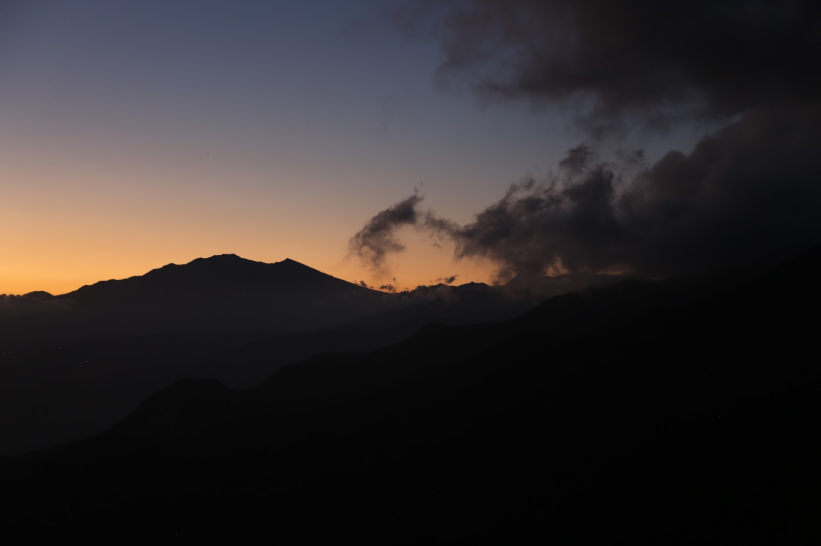
Cerro Marta: One of Panama's Most Fascinating Mountains

Deep in the mountains of Coclé, far from the skyscrapers of Panama City and the busy beaches of the Pacific coast, rises Cerro Marta, one of Panama's most fascinating mountains. Reaching approximately 1,022 meters above sea level, Cerro Marta sits inside Parque Nacional General de División Omar Torrijos Herrera, a vast protected area of primary forest in the Central Cordillera. But Cerro Marta is not famous simply because it is a beautiful mountain. It is famous because history happened here. Hidden just below its summit are the remains of the aircraft in which General Omar Torrijos Herrera died in 1981. Today, hiking Cerro Marta means combining mountain adventure, cloud forest, wildlife and one of the most dramatic chapters in modern Panamanian history.

The mountain is part of a remarkable landscape where the Central Cordillera creates a natural divide between the waters flowing toward the Caribbean and those flowing toward the Pacific. The surrounding national park covers approximately 25,275 hectares, protecting an enormous area of forests around Cerro Marta and neighboring mountains such as Cerro Peña Blanca. The park was officially created in 1986, five years after Torrijos' death, and was named in his memory. The original legislation specifically recognized the area's exceptional ecological and biological characteristics and the importance of protecting its forests, water sources and natural resources. Today, the park remains one of the important protected mountain landscapes of central Panama.

A Mountain Wrapped in Cloud Forest

Cerro Marta is not the kind of mountain where you simply walk uphill through dry vegetation and arrive at a rocky summit. As you climb, the environment becomes increasingly humid and atmospheric. The area receives abundant rainfall, and the higher portions of the mountain can be covered in mist and clouds. The forest becomes thick and intensely green, with moss, ferns, orchids, bromeliads and enormous trees creating the feeling that you have entered another world. This is one of the great attractions of the mountain. Even if the famous aircraft wreckage did not exist, Cerro Marta would still be a fascinating destination for hikers and nature lovers because of its cloud forest environment and biodiversity.

The vegetation is particularly impressive because the forest grows vertically in layers. Large trees rise above the canopy while orchids and bromeliads grow on their branches, moss covers trunks and rocks, and ferns fill the spaces closer to the ground. The constant moisture creates ideal conditions for an extraordinary variety of plants. Birds move through the canopy, insects pollinate flowers and small amphibians live around streams and wet vegetation. If you hike slowly rather than simply concentrating on reaching the summit, the mountain becomes an enormous natural laboratory.

The Famous Cerro Marta Plane

But there is one reason Cerro Marta has become legendary throughout Panama: the airplane wreckage near the summit.

On July 31, 1981, General Omar Torrijos Herrera was traveling toward Coclesito aboard a Panamanian Air Force de Havilland DHC 6 Twin Otter. Torrijos was one of the most powerful and controversial figures in modern Panamanian history and had played the central role in negotiating the treaties that eventually transferred control of the Panama Canal to Panama. During the flight, the aircraft encountered poor weather in the mountainous region and crashed into Cerro Marta. Torrijos and the six other people aboard were killed. The accident immediately became one of the defining tragedies of Panama's modern political history.

What makes Cerro Marta particularly haunting is that the physical evidence of that event is still there. The wreckage lies just below the summit, and hikers can reach it by following the trail. Panama's tourism authority describes the trail as a unique combination of adventure, natural beauty and national history precisely because of the remains of Torrijos' aircraft. Some hiking accounts place the wreckage only around 50 meters from the summit.

Imagine hiking for hours through dense cloud forest, crossing streams, climbing steep muddy sections and listening to birds calling from the canopy, and then suddenly discovering the remains of an aircraft hidden among the vegetation. It is a remarkably strange experience. There is no giant museum surrounding the site and no urban environment to remind you that you are looking at a piece of recent history. Instead, there is simply the mountain, the forest and the wreckage. The jungle has gradually incorporated the remains into its environment, making the site feel almost frozen in time.

The Hike Is a Real Adventure

The Cerro Marta hike should not be confused with an easy tourist walk. Trail descriptions classify it as difficult, with significant elevation gain, steep sections and potentially slippery terrain. One commonly described route is approximately 13 kilometers one way, although distances vary depending on the exact starting point and route used. The summit reaches 1,022 meters, and the climb involves a substantial amount of elevation gain.

The weather can make the hike even more challenging. Cerro Marta is a very wet mountain environment, and rain can occur even during Panama's traditionally drier months. Mud and slippery slopes are therefore part of the experience rather than an unusual inconvenience. Some sections have steps, bridges and benches, while other portions can feel much more rugged. A local hiking account describes the route as demanding, with steep climbs and slippery descents, and recommends allowing plenty of time rather than treating it as a race to the summit.

This is one of those Panama hikes where good footwear matters. Shoes with strong traction, plenty of drinking water, rain protection and food are important. Because weather can change quickly in the mountains, it is also wise to be prepared for conditions that are very different from those you may have experienced at sea level. The trail is much more enjoyable when you accept that you are entering a wet mountain environment rather than expecting a perfectly dry trail.

Going With a Local Guide

One of the best aspects of Cerro Marta is the involvement of the surrounding communities. The Comité Comunitario de Desarrollo Sostenible Santa Marta, made up of local families, has been involved in maintaining the trail and providing guided excursions. Panama's tourism authority has specifically highlighted the community's role in maintaining the route and developing tourism in the area.

Having a local guide can make a huge difference. This isn't just about preventing you from getting lost. A guide can explain the history of the mountain, identify plants and animals, point out interesting features along the trail and help you understand the surrounding communities. It also means that tourism directly benefits people living in the area.

That community connection gives Cerro Marta a different feeling from some of Panama's more commercial tourist attractions. You are not simply arriving at a famous landmark, taking a photograph and leaving. You are entering a rural mountain region where local people have an important relationship with the landscape.

The Road to Cerro Marta Is an Adventure Too

Getting to the trailhead is itself part of the experience. From the Interamericana, the route heads toward La Candelaria and El Copé, and from there the journey continues along increasingly rural roads toward the park. Official information describes the approach from the Interamericana through La Candelaria and onward toward El Copé, while hiking information notes that reaching the trail access can require a high clearance vehicle or 4x4 depending on conditions.

This is important because visitors sometimes underestimate how remote Cerro Marta is. The mountain isn't sitting beside a major highway with a huge parking lot and a clearly defined tourist entrance. The journey becomes progressively more rural as you approach the park. Roads can be rough, particularly after rain, and local transportation knowledge is valuable.

That remoteness is also part of the attraction.

Cerro Marta feels like a destination you have actually gone looking for.

Chorro Tigrero and the Other Attractions

The Cerro Marta trail isn't only about reaching the summit. Along the route there are other natural attractions, including Chorro Tigrero, a waterfall that can be accessed from a marked point on the trail. Hiking information places the access to the waterfall relatively early in the route and suggests visiting it on the way back, when a cool waterfall can be particularly welcome after a long mountain hike.

The park also contains other trails and mountains, including routes associated with Los Helechos, Las Ranas, Cuerpo de Paz and Cerro Escobal. This means Cerro Marta can be part of a larger exploration of the national park rather than simply a one destination hike.

For someone who loves Panama's mountains, this is where the park becomes especially interesting. You can spend considerably more time exploring the region rather than treating the famous plane wreck as the only reason to visit.

Wildlife in the Mountains

Cerro Marta is also an excellent place to appreciate Panama's wildlife. The surrounding protected forest provides habitat for an extraordinary variety of birds, mammals, amphibians, reptiles and insects. The thick vegetation and cloud forest conditions create habitat for species that are difficult to encounter in more developed parts of the country.

Birdwatchers can be particularly rewarded. The mountain forests support hummingbirds, toucans, parrots and numerous smaller species. The forest can seem quiet at first, but once you stop walking and actually listen, you begin to realize that it is filled with sounds. Birds may be calling from high above you while insects buzz around the vegetation and frogs call from streams.

Large mammals are considerably harder to see, but the protected forest is associated with animals including tapirs, peccaries, agoutis, deer and wild cats. The possibility of encountering wildlife is another reason not to rush the trail. A quiet hiker has a much better chance of noticing something than someone charging toward the summit.

The View From the Top

At 1,022 meters, Cerro Marta isn't among Panama's highest mountains, but it is high enough to create a completely different environment from the tropical lowlands. On clear days, the summit area can provide spectacular views across the surrounding mountains, and some descriptions note the possibility of seeing toward both the Caribbean and Pacific sides of the country. On other days, however, the summit may be covered in cloud and mist.

That unpredictability is part of the charm.

You might climb for hours expecting a spectacular panorama and arrive to find yourself surrounded by white mist.

Then, ten minutes later, the clouds may move and suddenly reveal mountains stretching into the distance.

It is a very Panamanian mountain experience.

A Mountain Where History and Nature Meet

Perhaps what makes Cerro Marta so special is that it combines two things that normally exist separately: history and wilderness.

If you visit a museum, you see history preserved inside a building. If you hike through a national park, you normally experience nature. At Cerro Marta, the two exist together.

The aircraft wreckage is a physical reminder of the events of 1981, while the forest continues to grow around it. The park itself was established in 1986 and named after Torrijos, creating a permanent connection between the political history of Panama and the conservation of its natural landscapes.

That combination gives the mountain an atmosphere that is difficult to reproduce anywhere else.

Cerro Marta Is Not Just a Hike

For adventurous travelers, Cerro Marta offers something much more interesting than simply checking another mountain off a list. It is a journey through rural Panama, into a protected cloud forest and toward a piece of history that remains physically present on the mountain. It requires effort, patience and preparation, but that's exactly what makes reaching the summit so rewarding.

There is something powerful about standing near the wreckage and realizing how difficult it must have been for the original search teams to locate the aircraft in such mountainous, heavily forested terrain. The same vegetation that makes the hike beautiful also explains why the area was so remote and difficult to search.

And once you leave the wreckage and continue toward the summit, the history gradually gives way to the living landscape again. The sound of the forest returns. Birds move through the canopy. Clouds drift between the trees. Water runs through the mountain streams. The trail becomes muddy beneath your boots.

You realize that Cerro Marta isn't really one attraction.

It is an entire experience.

It is a mountain, a cloud forest, a wildlife refuge, a historical site, a challenging hike and a place where one of the most consequential moments in Panama's modern history unfolded.

For anyone who loves the combination of adventure, mystery, history and wild nature, Cerro Marta deserves to be much better known. It may not be the easiest mountain in Panama to reach, and it certainly isn't the easiest hike, but that difficulty is part of what makes it special. You have to travel deep into the mountains, walk through the forest and earn your arrival.

And when you finally reach the top, standing above one of Panama's most fascinating landscapes with the remains of Omar Torrijos' aircraft nearby, you aren't simply looking at a mountain.

You're standing in a place where Panama's history and its wildest nature literally meet.

The Flora and Fauna of Omar Torrijos National Park: A Wild World in the Mountains of Panama

Hidden deep in the mountains of Coclé, Parque Nacional General de División Omar Torrijos Herrera is one of Panama's most fascinating protected areas for anyone interested in nature, wildlife and adventure. Covering roughly 25,000 hectares around the mountains of Cerro Marta and Cerro Peña Blanca, the park protects an enormous section of the Central Cordillera. It is a place where tropical forests gradually become cooler and wetter as you climb, eventually creating the misty, mysterious environment of cloud forest. For someone hiking toward the famous remains of Omar Torrijos' aircraft, the plane itself may be the historical attraction, but the living world surrounding it is arguably even more impressive. The farther you travel into the park, the more you begin to understand just how much life can exist inside a Panamanian mountain forest. The park contains several different types of forest, including tropical moist forest, tropical very moist forest and premontane forests, creating a remarkable variety of habitats within a relatively compact mountainous region. The elevation, constant moisture and isolation have helped create an environment where plants, birds, mammals, reptiles, amphibians and insects can thrive. It is the kind of place where you can walk along a trail for hours and constantly discover something new, provided you slow down enough to actually look.

One of the first things that captures your attention is the vegetation. The forests contain large native trees including guayacán, cedar, roble, níspero, Inga and copé, along with countless other species that create the layers of the forest. These trees aren't simply scenery; they are the foundation of an enormous ecosystem. Their trunks and branches support orchids, bromeliads, mosses, ferns and other epiphytes, while their flowers, fruits and seeds provide food for birds, mammals and insects. Some of the most spectacular plants are growing nowhere near the ground. Look up into the canopy and you can find entire gardens growing on the branches of other trees. Orchids cling to trunks and branches, bromeliads collect water in their leaves and mosses cover the surfaces of trees in thick green carpets. One particularly special plant associated with the park is Peristeria elata, the famous Holy Ghost Orchid, which is also Panama's national flower. The humid mountain environment is perfect for orchids and other epiphytes, and this is one of the reasons the forest can look almost impossibly lush. A tree that appears to be a single organism from a distance may actually be supporting dozens of different species, turning the forest into a complicated vertical ecosystem.

The tree ferns are another unforgettable part of the landscape. With their tall trunks and enormous fronds, they can make sections of the forest look almost prehistoric. Tree ferns belong to ancient plant lineages and their appearance fits perfectly into the mysterious atmosphere of Cerro Marta. Along with them are plants such as Zamia, another ancient lineage that can look completely out of place to someone accustomed to ordinary tropical vegetation. Walking through the misty forest surrounded by tree ferns, moss and enormous leaves can genuinely feel like stepping into another period of Earth's history. The higher sections of the park can become particularly atmospheric when clouds settle over the mountains. The air becomes cooler, the vegetation becomes covered in moisture and the forest floor becomes increasingly soft and muddy. Every surface seems to have something growing on it. It is one of those environments where you quickly realize that Panama's tropical forests aren't simply forests filled with trees; they are complicated worlds built in layers, from the soil all the way to the highest branches.

The birdlife makes the park even more remarkable. The White tipped Sicklebill hummingbird is recognized as the park's symbolic bird, and its unusual curved bill is one of the most distinctive sights a birdwatcher could hope to encounter. It is one of many hummingbirds that can be found in Panama's mountain forests, where flowering plants provide an almost continuous supply of nectar. Hummingbirds are not merely beautiful creatures to photograph; they are important pollinators, moving pollen between flowers as they travel through the forest. The park also supports toucans, parrots, oropendolas, swifts and a tremendous variety of smaller forest birds. Among the species associated with the area are Black Guan, Red fronted Parrotlet, Chiriqui Quail Dove, Sooty faced Finch, Ruddy Treerunner, Black crowned Pittasoma, Silvery fronted Tapaculo, Black faced Solitaire and Golden browed Chlorophonia. The Three wattled Bellbird is another particularly interesting species recorded from the region and is considered Vulnerable. For a serious birdwatcher, this means that a hike toward Cerro Marta can turn into a full day of birding without even trying. Instead of simply walking from one destination to another, you can stop every few minutes to listen to calls coming from the canopy, search the branches for movement or watch a hummingbird suddenly appear beside a flower before disappearing just as quickly.

The mammals of the park are perhaps even more exciting because several of Panama's most impressive species are associated with this protected landscape. The park is home to an extraordinary collection of mammals, including tapirs, deer, peccaries, agoutis and various wild cats. Jaguars are among the most spectacular animals associated with the park, although seeing one would be an extremely rare and fortunate event. A healthy jaguar population requires large areas of connected forest and an abundance of prey, so the presence of these predators illustrates how important large protected areas such as this one can be. Smaller wild cats, including animals known locally as tigrillos and manigordos, are also part of the ecosystem. These cats are incredibly secretive and mostly active when people aren't around, meaning that hikers are much more likely to find tracks or other evidence than actually see one. In recent years, camera traps have been used to monitor wildlife in the park, giving conservationists an opportunity to discover what is moving through the forest even when the animals themselves remain hidden. There is something particularly exciting about walking through a forest knowing that an animal you will probably never see may have passed along the same trail only hours earlier.

The Baird's tapir is another spectacular resident of Panama's forests and one of the most important mammals you could hope to encounter. These enormous animals have a strange, almost prehistoric appearance, with a flexible snout, heavy body and distinctive black and white coloration. Tapirs are generally secretive and often active at night, so they are difficult to observe, but they play an extremely important role in the ecosystem. They consume large amounts of vegetation and help disperse seeds throughout the forest, effectively helping to plant future generations of trees. Peccaries perform another important role, moving through the forest in groups and feeding on a variety of plants, fruits and other foods. Agoutis are smaller but equally fascinating. These large rodents spend much of their time searching for fallen fruit and seeds and are particularly important seed dispersers. Some seeds are carried away and buried, and those forgotten seeds can eventually grow into new trees. In other words, when you see an agouti disappearing into the vegetation, you aren't simply watching a strange looking tropical rodent. You're watching one of the forest's gardeners at work.

The amphibians are another reason the park is so biologically important. The constant moisture of the mountain environment provides ideal conditions for frogs and salamanders, including glass frogs and other species associated with Panama's cloud forests. The region is particularly important for amphibian conservation, and species such as the salamander Bolitoglossa copia are considered Critically Endangered. These animals are incredibly sensitive to changes in their environment, making their presence an important indicator of forest health. After rain, the forest can become a completely different world. Frogs begin calling from streams and vegetation, tiny amphibians emerge from beneath leaves and the wet forest floor becomes alive with movement. This is one of the reasons night walks in tropical mountain forests can be so fascinating. During the day, many creatures remain hidden, but once darkness arrives, an entirely different community becomes active.

Of course, a tropical forest wouldn't be complete without reptiles, and Omar Torrijos National Park has its share of them. Boa constrictors, coral snakes and fer de lance, known locally as the culebra equis, are among the snakes associated with the park. Seeing a snake is never guaranteed, and most snakes will do everything possible to avoid people, but hikers should remember that they are walking through genuine wilderness. Watching where you put your feet and hands is particularly important when moving through thick vegetation, stepping over fallen trees or reaching toward rocks and branches. The correct approach is to admire wildlife without disturbing it. A snake disappearing into the vegetation is a successful wildlife encounter, even if you only see it for a few seconds. The same principle applies to every animal in the park. The goal isn't to chase wildlife or force an encounter. It is to be quiet enough that the forest eventually reveals something to you.

And then there is the enormous world of insects and other small creatures that most visitors barely notice. Butterflies, beetles, ants, spiders, katydids, moths and countless other insects are essential components of the ecosystem. They pollinate plants, break down dead vegetation, provide food for birds and amphibians and form the foundation of numerous food chains. In a tropical forest, something as ordinary as a rotting log can be an entire ecosystem. Pull back your attention from the spectacular animals and you start seeing life everywhere. A leaf may have been eaten by a caterpillar. A flower may be covered with tiny pollinating insects. A spider may have built a web between two plants. Ants may be moving in organized lines across the trail. The forest is never really quiet and never really empty. Even when you don't see a large mammal or colorful bird, thousands of smaller organisms are constantly working around you.

Perhaps the most fascinating thing about Omar Torrijos National Park is the way all of these organisms are connected. The enormous trees provide shelter and food for birds and mammals. The orchids and other flowering plants depend on pollinators. Hummingbirds move pollen between flowers. Agoutis and tapirs spread seeds. Insects provide food for birds and frogs. Predators such as wild cats help regulate populations of other animals. Fallen trees eventually become habitat for insects and fungi and return nutrients to the soil. Nothing exists completely by itself. The forest is a gigantic network in which almost every species has a role, whether it is obvious to a visitor or not.

This makes hiking toward the wreckage of Omar Torrijos' plane an unusually rewarding experience. The aircraft is an extraordinary piece of Panamanian history, but the forest surrounding it tells an equally important story about Panama's natural heritage. As you climb through the park, the landscape changes from rural areas into increasingly dense forest and eventually into misty mountain vegetation. You may hear a hummingbird before you see it, discover a frog beside a stream, notice an unfamiliar orchid growing high in a tree or find tracks in the mud belonging to an animal that passed through during the night. You might never see a jaguar, tapir or wild cat, but knowing they inhabit the same protected forest gives the mountain a sense of wildness that is difficult to find elsewhere.

The greatest attraction of Omar Torrijos National Park may therefore not be one particular species or even the famous aircraft wreckage. It is the feeling of entering a living world that has been developing for thousands and thousands of years. The plane represents one moment in Panama's recent history, frozen in the forest since 1981. The trees, orchids, hummingbirds, frogs, mammals and countless smaller organisms represent something much older and constantly changing. When you hike through this park, you are walking through both stories at the same time. You can stand beside a piece of modern Panamanian history and then look up to see an orchid flowering in a tree, hear a bird calling through the mist or watch a hummingbird disappear into the forest. The wreckage may be what brings you to Cerro Marta, but the extraordinary flora and fauna are what make you realize that the real treasure is the jungle itself.

Hiking to the Wreckage of Omar Torrijos' Plane: One of Panama's Most Extraordinary Historic Hikes

Deep in the mountains of Coclé, surrounded by cloud forest, mist, rivers and incredibly thick tropical vegetation, there is a place where Panama's history feels almost unnervingly close. Hidden on the slopes of Cerro Marta, inside Parque Nacional Omar Torrijos Herrera, are the remains of the aircraft that carried General Omar Torrijos Herrera on his final flight in 1981.

Reaching the wreckage isn't a simple walk to a historical monument. It is a genuine mountain adventure. The trail passes through rural communities, pastures, streams and increasingly wild forest before climbing toward the summit of Cerro Marta. And near the top, you encounter something that is difficult to describe until you have actually seen it: the remains of the aircraft are still there, sitting in the jungle more than four decades after the crash. Panama's tourism authority describes the hike as a unique combination of adventure, nature and national history.

A Hike Into History

The story begins on July 31, 1981, when Torrijos was traveling toward Coclesito aboard a Panamanian military DHC-6 Twin Otter. The aircraft disappeared in bad weather and eventually crashed into Cerro Marta, killing all seven people aboard.

Today, the mountain is part of the national park named in Torrijos' honor. The park itself protects more than 25,000 hectares of mountainous forest and forms part of the Central Cordillera, an important watershed between the Caribbean and Pacific sides of Panama.

That gives the hike an unusual character. You aren't simply climbing a mountain to see a viewpoint. You're following a trail into one of the most significant and mysterious locations in modern Panamanian history.

Getting to the Trailhead Is Part of the Adventure

The journey begins long before you see the wreckage.

From the Interamericana, travelers head toward La Candelaria and El Copé, before continuing into the mountains. From there, the roads become increasingly rural. The final approach to the trailhead can involve rough dirt roads, and local sources recommend a high-clearance vehicle or 4x4 for the journey.

Eventually you reach the community of Santa Marta, where the hiking adventure begins.

This is one of those places where it makes sense to slow down rather than treat the trail as something you simply drive to and conquer. The local community plays an important role in maintaining the route and guiding visitors. Panama's tourism authority reports that the Santa Marta community organization has maintained sections of the trail and offers guided excursions.

And having someone from the area with you can make the experience considerably better.

The First Part Doesn't Look Like a Jungle Adventure

One of the fascinating things about the hike is how dramatically the landscape changes.

The trail initially passes through rural areas, pastures and farms. You cross streams and walk through landscapes where people still live and work. There are also areas associated with orange farms before the trail enters the more heavily forested sections of the national park.

Then gradually, the landscape begins to close around you.

The fields disappear.

The trees become larger.

The vegetation becomes thicker.

The air becomes cooler and more humid.

And eventually you're walking beneath a canopy of cloud forest.

This transition is part of what makes Cerro Marta so special.

Then the Mountain Gets Serious

Once you enter the forest, the hike becomes considerably more demanding.

The trail climbs steeply toward Cerro Marta, with sections containing steps, bridges and resting benches. There are also streams and muddy or slippery sections, particularly after rain.

This is not a casual tourist walk.

Different descriptions give somewhat different distances depending on exactly which route is used, but a commonly described route is around 13 kilometers, with significant elevation gain. One detailed hiking account describes an approximately 13-kilometer route that took around eight hours, while other trail descriptions classify the hike as difficult.

And Panama's weather can make the difference between a challenging hike and a very challenging hike.

Cerro Marta receives substantial rainfall. Even during the traditionally drier season, rain can occur, and wet conditions can make the trail extremely slippery. Streams can also rise quickly after heavy rain.

So this is definitely a hike where proper footwear, water, rain protection and a local guide are worth taking seriously.

The Jungle Is Part of the Experience

The plane is obviously the headline attraction, but it would be a mistake to think of the hike simply as a trek to a piece of wreckage.

The forest itself is spectacular.

Cerro Marta reaches approximately 1,022 meters above sea level, creating a cooler mountain environment surrounded by cloud forest. The trail provides opportunities to see birds, plants, rivers and other wildlife along the way.

Mist can drift through the trees.

Water runs across the trail.

The vegetation becomes intensely green.

And occasionally the clouds open enough to provide views across the surrounding mountains.

It can feel almost completely disconnected from the Panama that most visitors know.

Then You See the Plane

Eventually, the trail reaches the upper section of Cerro Marta.

And this is where the hike changes from an ordinary mountain adventure into something much more powerful.

You see the wreckage.

The remains are located just below the summit area. One hiking description places the aircraft wreckage roughly 50 meters from the summit.

After spending hours walking through forest, climbing steep sections and crossing streams, suddenly you're standing beside the remains of an aircraft associated with one of the most important events in Panama's modern political history.

It is an extraordinary feeling.

There isn't a museum around it.

There isn't a glass case.

There isn't a perfectly preserved historical exhibit.

There is simply the mountain and the remains of the aircraft.

It Feels Almost Surreal

Visitors who have written about the hike describe the experience of seeing the wreckage as deeply emotional.

One account describes arriving at the aircraft after hours of hiking and feeling as though the group had suddenly stepped backward in time. The writer described the surrounding cloud forest, mist and greenery as almost otherworldly.

And you can understand why.

Imagine standing in a cloud forest with rain dripping from leaves and mist moving through the trees, knowing that this was the exact mountain where Torrijos' aircraft came down in 1981.

The contrast is remarkable.

The forest is alive.

The aircraft is frozen in history.

The Story Becomes More Real

Reading about the crash in a book is one thing.

Standing beside the wreckage is something else entirely.

The historical event suddenly becomes physical.

You can see the mountain.

You can understand the remoteness.

You can appreciate how difficult the terrain would have been for search teams trying to locate the aircraft.

Contemporary accounts describe search aircraft struggling through bad weather before the wreckage was eventually spotted among the vegetation. One eyewitness account recalled seeing the damaged aircraft and the seven victims after reaching the crash site.

That makes the hike even more remarkable.

The same jungle that makes today's hike so beautiful also explains why the crash site was so difficult to locate and reach.

And Then You Can Continue to the Summit

After visiting the wreckage, hikers can continue toward the summit of Cerro Marta.

At approximately 1,022 meters, the summit is high enough to experience very different weather from the lowlands. Strong winds and heavy mist are possible, and on clear days there can be impressive views toward both the Caribbean and Pacific sides of Panama.

But don't expect perfect weather.

One of the characteristics of Cerro Marta is that conditions can change quickly.

You might be surrounded by mist one moment and have a beautiful view the next.

That unpredictability is part of the mountain's personality.

There Is Even a Waterfall Along the Way

Another attraction on the route is Chorro Tigrero, a waterfall that can be reached from a marked access point along the trail. One trail description recommends visiting it on the return journey, when the cool water can be particularly welcome after a long hike.

That makes the journey feel like several adventures combined into one.

Rural Panama.

Mountain hiking.

Cloud forest.

Wildlife.

Waterfalls.

A historic aircraft wreck.

And a summit overlooking the Central Cordillera.

That's an impressive day.

Don't Underestimate This Hike

The photographs can make Cerro Marta look deceptively easy.

It isn't.

The combination of distance, elevation, humidity, mud, rain and steep sections means you should be reasonably fit before attempting it.

The trail has been described as difficult, and local sources strongly recommend going with a guide and not hiking alone.

A guide isn't simply useful for navigation. Local guides bring knowledge of the terrain, weather, rivers and history of the area. And hiring one also supports the communities that help maintain the trail.

This is particularly important because the trail passes through areas where local communities still live and work.

What Should You Bring?

For anyone considering the hike, think mountain jungle rather than ordinary sightseeing trail.

Good hiking shoes or boots with strong traction are important. Bring plenty of water, food, rain protection, insect repellent and a change of clothes. A headlamp is also a sensible addition in case the hike takes longer than expected. Local hiking guidance also recommends carrying a basic first-aid kit.

And don't rely on the weather forecast alone.

Cerro Marta has its own weather.

Rain can arrive quickly.

The trail can become slippery.

And streams can rise after heavy rainfall.

In other words, Panama's cloud forest gets the final say.

A Hike That Few Tourists Know About

What makes this experience particularly interesting is that it isn't one of Panama's heavily commercialized tourist attractions.

You aren't walking along a massive boardwalk surrounded by souvenir shops.

You aren't following hundreds of tourists toward a famous viewpoint.

You're heading into the mountains with a local guide, following a trail through rural communities and cloud forest toward an aircraft that has been sitting there since 1981.

That gives the experience a completely different atmosphere.

It feels like an expedition.

The Best Part Isn't Necessarily the Plane

Ironically, after doing the hike, you may realize that the aircraft isn't even the most memorable part.

It might be the first river crossing.

The mist appearing between the trees.

The enormous vegetation.

The sound of birds.

The exhaustion of climbing the final section.

The moment when the guide tells you that you're getting close.

And then, suddenly, through the vegetation, you see the wreckage.

That sequence is what makes Cerro Marta unforgettable.

A Piece of Panama's History Hidden in the Mountains

There are plenty of places in Panama where history is displayed behind glass.

Cerro Marta is different.

Here, history is still sitting in the jungle.

The aircraft remains are a physical reminder of July 31, 1981, when Omar Torrijos died and Panama lost one of the most consequential figures in its modern history.

The mountain eventually became part of the national park named after him, turning the site of his death into an area dedicated to protecting Panama's forests and natural heritage.

That creates a remarkable connection between history and conservation.

A man whose life dramatically influenced Panama's political history died on this mountain.

Today, the mountain is protected as part of one of Panama's important natural areas.

An Adventure for the Right Kind of Traveler

The hike to the plane isn't for someone looking for a quick afternoon walk.

It's for someone who enjoys adventure, history, jungle and the feeling of discovering somewhere unusual.

It's the kind of experience where the journey is just as important as the destination.

And when you finally stand beside the remains of the aircraft, deep in the cloud forest, it is hard not to think about the extraordinary sequence of events that brought it there.

A powerful Panamanian leader.

A small aircraft.

A stormy mountain.

A disappearance.

A massive search.

And finally, the discovery of the wreckage hidden among the trees.

More than four decades later, the jungle has grown around the remains.

But it hasn't erased the story.

Cerro Marta is one of those rare places in Panama where you don't simply learn about history. You can actually hike into it.

The Mysterious Jungle Crash That Killed Panama's Most Powerful Leader

Few stories in Panamanian history are as dramatic, controversial and mysterious as the death of General Omar Torrijos Herrera, the country's enormously influential military leader, whose aircraft crashed into a remote mountainside in the Panamanian jungle on July 31, 1981.

Torrijos wasn't an ordinary politician. He was the dominant figure in Panama's political life and the man who had become internationally famous for negotiating the treaties that eventually transferred control of the Panama Canal from the United States to Panama. His sudden death in a tiny aircraft, deep in the mountains, immediately changed the course of the country. And because the investigation left unanswered questions, the crash has remained surrounded by speculation for decades.

The Flight Into the Mountains

On the morning of July 31, 1981, Torrijos boarded a de Havilland Canada DHC-6 Twin Otter, a rugged twin-engine aircraft operated by the Panamanian Air Force. He was traveling toward the isolated community of Coclesito, an area surrounded by mountains and dense jungle.

The flight began at Río Hato and stopped at Penonomé before continuing toward Coclesito. Torrijos was accompanied by several people, including the two pilots, a mechanic, a bodyguard and a dentist. There were seven people aboard in total.

Coclesito was not an ordinary destination for Torrijos. He had a strong connection with rural Panama and was known for visiting remote communities and meeting ordinary people. Contemporary accounts describe him traveling to isolated locations where people could speak with him directly, sometimes in extremely basic surroundings far removed from Panama City.

But the weather that day was terrible.

As the aircraft approached the mountainous region, visibility deteriorated. Clouds, rain and fog surrounded the mountains. The Twin Otter disappeared from radar shortly before noon.

And then there was silence.

The Plane Was Lost

What makes the story particularly dramatic is that the aircraft wasn't immediately found.

Panama in 1981 had nothing like the modern aviation tracking and search technology available today. Radar coverage was limited, and the mountains and jungle around Coclesito were extraordinarily difficult terrain to search.

The disappearance quickly became a national emergency.

Search aircraft began looking for the missing Twin Otter, while people on the ground started trying to determine where it had gone. According to contemporary reports, a local resident heard the aircraft crash and went to alert others. Local residents then helped clear dense vegetation so rescue helicopters could reach the area.

Imagine the scene.

Somewhere in an enormous expanse of mountainous jungle, a small aircraft carrying Panama's most powerful political figure had disappeared.

There was no easy road to the crash site.

There was no obvious runway.

There was dense vegetation, steep mountains and poor visibility.

And nobody knew exactly where the aircraft was.

The Jungle Search

Eventually, search teams located the wreckage on a mountainside in the Coclesito area, near Cerro Marta.

The aircraft had struck mountainous terrain in extremely poor weather conditions. All seven people aboard were killed.

The crash site was so difficult to access that recovering the victims and wreckage was itself a major operation.

This wasn't a crash beside a highway where emergency vehicles could simply drive to the scene.

It was a jungle crash.

People had to move through difficult terrain and dense vegetation, and helicopters were crucial to the recovery effort.

For Panama, the news was devastating.

The country's leader was dead.

Who Was Omar Torrijos?

To understand why the crash became such a huge historical event, you have to understand Torrijos himself.

Torrijos had come to power after the 1968 military coup that overthrew President Arnulfo Arias. He eventually became the dominant figure in Panama's military government and remained enormously influential even after formally stepping down as head of state.

His greatest international achievement was his role in negotiating the Torrijos Carter Treaties, which established the process by which Panama would ultimately gain full control of the Panama Canal.

For many Panamanians, this made him a national hero.

For others, his legacy was far more complicated because he ruled through a military dictatorship and political opposition was heavily restricted.

That complicated legacy is important because Torrijos wasn't simply a president who died in an accident.

He was the man who dominated Panama's political system.

His death created a massive political vacuum.

The Official Explanation

The basic explanation was that bad weather caused the aircraft to crash into the mountain.

The aircraft was flying in difficult conditions, and investigators concluded that the circumstances were consistent with a controlled flight into terrain while operating in low clouds and poor visibility.

At the time, however, there were also conflicting reports about exactly what had happened and where the aircraft had crashed. The National Guard initially gave different information about the location, while the search continued.

And that uncertainty helped fuel the rumors.

Then Came the Conspiracy Theories

Torrijos's death occurred during an exceptionally tense period in Latin American politics.

Three months earlier, Ecuadorian President Jaime Roldós Aguilera had also died in an aircraft crash. The similarities between the two deaths inevitably attracted attention.

And because Torrijos had powerful enemies and had been involved in the politically sensitive issue of the Panama Canal, theories of assassination quickly emerged.

Some people claimed that a bomb had been placed aboard the aircraft.

Others suspected foreign intelligence agencies.

There were also allegations involving the United States, although these claims have never been established as fact.

Decades later, allegations about a possible assassination continued to circulate, including claims made by former intelligence-related figures and writers. But the available evidence has never conclusively demonstrated that Torrijos was assassinated.

This distinction is important.

The conspiracy theories are part of the history of the crash, but they are not the same thing as proven facts.

Why Did the Rumors Survive?

Part of the reason is that the investigation itself became controversial.

Some Panamanians believed the official explanation wasn't sufficient. Questions remained about the weather, the aircraft's route and the circumstances surrounding the crash.

Later, records connected to the investigation were reportedly lost during the political upheaval surrounding the 1989 U.S. invasion of Panama. That made it even more difficult for later investigators to reconstruct every detail.

When evidence disappears, mysteries tend to become larger.

And Torrijos's death was already the kind of event that naturally generates questions.

A powerful leader.

A remote jungle.

A military aircraft.

A sudden disappearance.

A controversial political environment.

And a crash whose investigation never completely satisfied everyone.

It's almost the perfect recipe for a historical mystery.

Panama Went Into Mourning

The reaction to Torrijos's death was enormous.

Panama declared a period of national mourning, and thousands of people participated in ceremonies following his death.

His funeral became a major national event. Contemporary accounts described the country as deeply shocked, particularly because Torrijos had been such a central figure in Panama's political life for more than a decade.

His death didn't simply remove one politician.

It changed Panama's political landscape.

The military government continued, but the man who had been its dominant personality was gone.

And eventually, Panama's political history moved toward the dramatic events of the late 1980s and the end of military rule.

The Jungle Still Holds Part of the Story

One of the most fascinating aspects of the story is that the location itself remains connected to Torrijos.

The mountainous area where the aircraft crashed eventually became part of Omar Torrijos National Park, an area known today for its forests, mountains and hiking trails.

So there is something extraordinary about visiting the region today.

You can be standing in a beautiful tropical forest surrounded by birds, trees and misty mountains, perhaps completely unaware that this landscape once became the center of one of the most important tragedies in modern Panamanian history.

The jungle looks peaceful.

But it witnessed something that shook an entire country.

Accident or Assassination?

More than four decades later, the question continues to fascinate people.

Was Torrijos simply the victim of terrible weather and difficult mountain flying?

Or was something more sinister involved?

The strongest documented explanation remains the crash in poor weather and mountainous terrain. Contemporary reporting and accident accounts support an accident scenario.

But the unanswered questions, the political circumstances and the later disappearance of some records have ensured that the assassination theories never completely disappeared.

Perhaps that is why the story remains so compelling.

We know where the aircraft went down.

We know who died.

We know the country lost one of its most influential leaders.

But the precise circumstances surrounding the final moments have remained a subject of debate.

A Story That Became Part of Panama

The death of Omar Torrijos is more than an aviation accident.

It is a story about Panama itself: its mountains, its jungle, its military history, its relationship with the United States, the struggle over the Panama Canal and the complicated political legacy of one of the country's most important figures.

And perhaps the strangest part is where the story happened.

Not in Panama City.

Not inside the presidential palace.

Not beside the Canal.

But in the middle of a remote mountain forest.

A small aircraft disappeared into the clouds, carrying a man who had dominated Panamanian politics.

For a time, the jungle swallowed the country's most powerful man.

And even today, more than forty years later, the mountains of Coclesito remain a powerful reminder of the day Panama suddenly lost Omar Torrijos.

What Do Young Panamanians Do for Fun? A Look at Hobbies and Free Time in Panama

If you want to understand young people in Panama, one of the best places to start isn't politics, history or economics. It's simply asking: "What do you do for fun?" The answer reveals a fascinating combination of modern technology, Latin American culture, sports, music, family life and Panama's extraordinary tropical environment.

Young Panamanians have grown up in a country where you can spend Saturday morning drinking coffee in the mountains, Saturday afternoon swimming in the ocean and Saturday night listening to reggaetón with friends. Their hobbies reflect that mixture. Some are completely modern and digital, while others have been passed down through generations.

Socializing Is a Hobby in Itself

One of the biggest "hobbies" for young Panamanians is simply spending time with other people. Friends and family are extremely important, and socializing doesn't necessarily require an elaborate plan.

A group might meet for food, coffee, ice cream or drinks, hang out at someone's house, go to the mall or simply walk around talking.

This is particularly noticeable because Panama has a strong social culture. People don't necessarily need a specific activity to justify getting together.

Sometimes the activity is just getting together.

A Friday night might mean meeting friends for dinner. Saturday could involve going to the beach or shopping, and Sunday might mean a family lunch that somehow lasts most of the afternoon.

For a young person coming from a culture where people often organize their lives around individual hobbies, this can be an interesting difference.

In Panama, people themselves can be the entertainment.

Football Is Huge

It would be difficult to discuss young Panamanians without mentioning football.

Soccer is enormously popular, particularly among young men, although plenty of women and girls play and follow the sport as well. Young people play football at schools, parks, neighborhood fields and organized clubs.

You don't necessarily need an expensive field or fancy equipment.

Sometimes all you need is a ball and enough people to form two teams.

And watching football is almost as important as playing it. International leagues, major tournaments and Panama's national team can generate enormous enthusiasm.

Basketball and Other Sports

Football isn't the only sport.

Basketball has a significant following, particularly in urban areas, and baseball also has deep roots in Panama. The country has produced internationally successful baseball players, making the sport an important part of Panamanian sporting culture.

Boxing also has a special place in Panama's history, and young people participate in gyms and training programs.

Then there are more casual activities such as volleyball, running, cycling and swimming.

Because Panama's climate allows outdoor activities throughout the year, sports don't have to disappear for several months because of winter.

Going to the Beach

This might be one of the greatest advantages of being young in Panama.

The beach is always an option.

Depending on where someone lives, they may be able to reach the Pacific or Caribbean relatively easily. Weekends can involve swimming, sunbathing, surfing, fishing, snorkeling or simply hanging out with friends near the water.

Young Panamanians living in Panama City may head toward the Pacific coast, while others travel to places such as Bocas del Toro, San Blas or the beaches of Panamá Oeste.

A beach trip can become a hobby in itself.

And unlike someone living in Canada, a Panamanian doesn't have to wait until June for beach season.

Hiking and Exploring Nature

Another hobby that has become increasingly popular is hiking.

Panama has an extraordinary amount of nature packed into a relatively small country. There are cloud forests, mountains, waterfalls, national parks, jungle trails and volcanic landscapes.

Young people in places such as Boquete, El Valle and Panama City increasingly use weekends to get outdoors.

For some, hiking means a serious climb.

For others, it simply means walking through the forest with friends, taking photographs and finding somewhere beautiful to swim.

The country's biodiversity makes this especially interesting. A hike isn't just exercise. You might encounter monkeys, sloths, toucans, frogs, butterflies or hundreds of other species.

Social Media Is Obviously Huge

Then there is the hobby that has completely changed the way young people spend their free time:

their phones.

Instagram, TikTok, YouTube and other social platforms are deeply integrated into everyday life.

Young Panamanians use social media to communicate with friends, follow music and celebrities, discover restaurants, share photographs, watch comedy and follow trends.

TikTok in particular has transformed how young people discover everything from fashion to food.

And Panama's young people aren't simply consumers of social media.

Many create their own videos, photography, comedy, music and other content.

For some, social media has gone from a hobby to a potential career.

Gaming

Video games are another major hobby.

Young people play games on smartphones, computers and consoles, with multiplayer gaming providing another way to socialize.

The interesting thing is that gaming isn't necessarily an isolated activity anymore.

Friends can be sitting in different houses, different neighborhoods or even different countries and still spend hours together playing the same game and talking through headsets.

So even one of the most stereotypically "solo" hobbies has become social.

Music Is Everywhere

Music is an enormous part of youth culture in Panama.

Reggaetón, Latin urban music, salsa, bachata, reggae and other genres are part of everyday life.

Young people listen to music through headphones, speakers, cars, phones and at parties.

Some also make music themselves.

Singing, playing guitar, DJing, producing beats and dancing can all become hobbies.

And dancing is particularly important. Latin music isn't simply something you listen to in Panama. It's something you can dance to.

Dancing

For young Panamanians who enjoy going out, dancing can be a major part of social life.

Salsa, bachata, reggaetón and other Latin styles are common at parties and clubs.

You don't necessarily have to be an expert dancer either.

Sometimes the goal is simply to have fun.

And Panama has a long relationship with salsa and other Caribbean musical traditions, which gives dancing a cultural dimension beyond simply going out for the night.

Food

Young Panamanians also love to go out to eat.

Restaurants, cafés, food courts, bakeries, street food and fast food all provide places to socialize.

Trying new restaurants can become something of a hobby, particularly among young people living in Panama City.

A group of friends might spend an afternoon searching for a new restaurant, trying a trendy dessert or finding somewhere with an interesting view.

Food and socializing naturally overlap.

You aren't simply eating.

You're hanging out.

Shopping and Malls

Shopping malls remain important social spaces for young people, particularly in Panama City.

They provide air conditioning, restaurants, cinemas, shops and places to meet friends.

For teenagers especially, the mall can function almost like a community center.

You don't necessarily need to buy anything.

Sometimes you just go there because that's where everyone is.

Cars and Motorcycles

For some young Panamanians, cars and motorcycles become hobbies.

Modifying vehicles, washing and detailing cars, attending gatherings and simply going for drives can become an important part of free time.

Motorcycles are also popular among some younger adults, particularly those interested in adventure and exploring the country.

Panama's varied landscapes make road trips particularly attractive.

Fishing

Fishing remains both a traditional activity and a hobby for younger generations.

Depending on where someone lives, they may fish from rivers, lakes, beaches or boats.

For some families, fishing is something learned from parents and grandparents.

For others, it's simply a great excuse to spend an entire day outside.

And in a country surrounded by two oceans, there is certainly no shortage of places to try.

Photography and Content Creation

Panama is practically designed for photography.

Young photographers have access to skyscrapers, colonial architecture, tropical forests, beaches, mountains, wildlife and colorful neighborhoods.

Phones have made photography accessible to almost everyone, while more serious enthusiasts use cameras and drones.

Some young people have turned photography, videography and travel content into online businesses.

Panama's scenery gives them plenty to work with.

The Great Advantage of Being Young in Panama

Perhaps the most interesting thing about young people's hobbies in Panama is the combination of modern and traditional.

Someone might spend two hours on TikTok, play video games with friends, go to a football match, eat ceviche, dance to reggaetón and then spend Sunday hiking through a rainforest.

There is no contradiction.

That's modern Panama.

Technology is everywhere, but so is nature.

Urban life exists alongside tropical forests.

International trends mix with distinctly Panamanian traditions.

And family and friends remain at the center of much of it.

Panama Makes It Easy to Have an Adventure

For young people who like adventure, Panama is almost unfairly well equipped.

You can climb mountains, surf, snorkel, dive, hike through cloud forest, visit islands, camp, fish, kayak or simply take a bus somewhere you've never been.

And because Panama is relatively small, many of these experiences are accessible within a weekend.

A young person doesn't have to choose between being a city person and an outdoor person.

They can be both.

They can spend Friday night in Panama City and Saturday morning be hiking through a jungle.

The Social Side Is Probably the Most Important

If there is one theme that connects many young Panamanian hobbies, it's social connection.

Football is social.

Going to the beach is social.

Eating is social.

Dancing is social.

Parties are social.

Gaming can be social.

Even hiking often involves a group of friends.

That may be the most important thing to understand about youth culture in Panama.

The hobby itself isn't always the main attraction.

The people you're doing it with are.

And perhaps that's why a simple afternoon sitting around talking, eating something and listening to music can become just as memorable as an expensive night out.

In Panama, you don't always need a complicated plan.

Sometimes you just need some friends, good weather and somewhere to go.

And luckily, in Panama, there's almost always somewhere interesting to go.

Christmas Trees in Panama: A Very Tropical Christmas Tradition

There is something wonderfully strange about Christmas trees in Panama. Imagine walking outside in December to temperatures around 30°C, palm trees swaying in the breeze and tropical birds calling from the trees, and then walking into a Panamanian home to find a beautifully decorated Christmas tree covered in lights, ornaments and sometimes enough decorations to make it look like it belongs in a snowy Canadian town.

That contrast is part of what makes Christmas in Panama so fascinating. Panama doesn't have winter, snow or naturally occurring forests of the traditional Christmas fir trees that people associate with Christmas in North America and Europe. Yet the Christmas tree has become an enormous part of the country's holiday culture. For many families, putting up the arbolito de Navidad is one of the moments that officially announces: Christmas has arrived.

The Arbolito Is a Big Deal

The Christmas tree isn't simply another decoration in many Panamanian homes. It can become the centerpiece of the entire Christmas season. Families decorate their homes, put presents underneath the tree and often spend considerable time making the tree look as impressive as possible.

There is even a long-running idea in Panama that the bigger and more spectacular the tree, the better. The tree becomes a focal point for family gatherings, photographs and, of course, the presents that children are desperately waiting to open.

The tradition is widespread enough that the arrival of natural Christmas trees into Panama is treated almost like the official beginning of the Christmas season. In 2025, the Ministry of Agricultural Development reported that the first 32 containers brought approximately 17,000 natural Christmas trees into the country.

And these aren't trees growing naturally in Panama's tropical lowlands.

They have traveled a very long way.

Panama Imports Christmas

One of the most fascinating things about Christmas trees in Panama is that many of the natural trees are imported from Canada and the United States.

Yes, you read that correctly.

A country famous for tropical beaches and rainforests imports thousands upon thousands of trees from places famous for cold winters.

The MIDA has documented shipments coming primarily from Canada and the United States, with Oregon also being an important source. In 2025, Canada supplied the majority of the first shipments, while seven containers came from Oregon.

The scale of the operation is surprisingly large. Panama has imported tens of thousands of natural Christmas trees in individual holiday seasons. In 2021, for example, MIDA recorded 61,374 Christmas trees arriving in 85 containers.

That's a lot of Christmas trees for a tropical country.

Why Bring Trees From Canada?

Because Panama doesn't naturally have the same kind of forests that produce the classic Christmas trees people expect.

The traditional Christmas trees sold in Panama are generally conifers such as firs and other trees cultivated specifically for the Christmas market. They are grown in cooler climates where these species thrive.

So every year, trees are harvested, prepared, inspected, packed and shipped south.

Eventually they arrive at Panamanian ports and are distributed to stores around the country.

There is something almost comical about the journey.

A tree grows up experiencing cold Canadian weather.

It gets harvested.

It is loaded into a container.

It crosses thousands of kilometers by sea.

And suddenly it finds itself standing inside someone's apartment in Panama City while a family decorates it with tropical temperatures outside the window.

The Smell Is Part of the Magic

For many people who buy a natural Christmas tree, the biggest attraction isn't even how it looks.

It's the smell.

Fresh pine has a distinctive Christmas aroma, and in Panama that smell can be especially powerful because it is so completely different from the surrounding tropical environment.

Imagine walking into a house in Panama in December and smelling fresh pine while outside it's hot and humid.

That contrast creates an incredibly strong Christmas atmosphere.

Panamanian consumers specifically look for trees that remain green, full and fragrant, with that characteristic pine smell.

For families who grew up with natural trees, that smell can become one of the strongest memories associated with Christmas.

Artificial Trees Are Everywhere Too

Of course, not everyone wants to deal with a real tree in a tropical climate.

Artificial Christmas trees are extremely popular in Panama, and they make a lot of practical sense.

You buy one, store it for the rest of the year and bring it out again when December arrives. There is no need to worry about needles falling everywhere, keeping the tree watered or dealing with a tree that is slowly drying out in the tropical heat.

Artificial trees also come in practically every size and style imaginable.

Tiny trees for apartments.

Huge trees for houses.

Trees covered in fake snow.

Trees with built-in lights.

Trees that look incredibly realistic.

And trees that are so obviously artificial that they somehow become charming in their own way.

Christmas Trees Have Their Own History in Panama

The Christmas tree tradition in Panama has also evolved over time.

It wasn't always possible for ordinary rural families to purchase imported firs. Historically, people in the countryside sometimes used whatever local vegetation was available to create something resembling a Christmas tree.

Panamanian historical accounts mention the use of local plants and trees such as cachito, huevo de gato and tuliviejo as alternatives in earlier times. In other words, people used what they had around them.

That makes perfect sense.

A family living far from the capital couldn't simply walk into a supermarket and buy a six-foot imported fir.

So they improvised.

And that is actually a wonderful part of the story of Christmas in Panama: the tradition was adapted to the environment and resources available at the time.

Then the Decorations Take Over

Once the tree is inside the house, the real competition begins.

Lights.

Balls.

Ribbons.

Garlands.

Stars.

Angels.

Santa Claus ornaments.

Personalized decorations.

Family decorations that have been used for decades.

And sometimes an absolutely astonishing quantity of everything.

Many Panamanian families enjoy decorating their trees quite dramatically. A tree doesn't necessarily have to look minimalist or elegant. It can be colorful, bright, elaborate and completely overflowing with Christmas spirit.

And why not?

It's Christmas.

Christmas Trees in a Tropical Climate

There is one major challenge that people in colder countries don't have to think about nearly as much: keeping a natural tree alive in Panama's heat.

A Christmas tree that would happily survive in a cold Canadian December is suddenly placed into a tropical environment.

That means keeping it hydrated is particularly important. Local guidance has recommended keeping natural trees supplied with water and away from direct sunlight and heat sources so they last longer.

This is especially important in Panama City, where December can still be hot despite being the middle of the Christmas season.

So while people in Canada may worry about whether there's enough snow outside, Panamanians may be worrying about whether their Christmas tree is getting enough water.

Different problems.

Same Christmas.

The Christmas Tree and the Presents

Of course, the real reason children care so much about the tree has little to do with botany.

It's what goes underneath it.

The Christmas tree becomes the place where presents accumulate during December. As Christmas Eve approaches, the space underneath the tree can become increasingly crowded.

And in Panama, where the main family celebration often happens on December 24th, the anticipation can become intense.

Children know exactly where the presents are.

They know exactly how many there are.

They may even know which ones belong to them.

And somehow they're expected to wait until Christmas.

Good luck with that.

A Strange but Beautiful Cultural Combination

Perhaps the most fascinating thing about Christmas trees in Panama is the cultural contradiction they represent.

Panama is a tropical country.

It has no traditional snowy Christmas landscape.

You can spend December swimming in the Caribbean.

You can have Christmas dinner while wearing shorts.

You can hear tropical birds outside.

And yet inside the house there may be a giant fir tree covered in lights and ornaments, surrounded by wrapped presents.

It's a perfect example of how traditions travel.

The Christmas tree may have originated in very different cultural and climatic circumstances, but Panama has taken the tradition and made it its own.

The Arrival of the Trees Signals Christmas

There is something almost ceremonial about the arrival of the first Christmas trees.

Once the containers begin arriving in November, stores begin displaying them and families start thinking seriously about Christmas.

In 2025, MIDA reported that approximately 17,000 trees arrived in the first 32 containers, with additional shipments expected throughout the season. The trees undergo phytosanitary inspections to ensure they do not introduce agricultural pests into Panama.

So the journey of a Christmas tree into Panama is actually a carefully controlled international agricultural operation.

Before it can become someone's Christmas decoration, it has to pass inspection.

Only then can it begin its final journey from the port to a Panamanian home.

More Than Just a Tree

For many families, the Christmas tree represents much more than Christmas decoration.

It represents family.

It represents childhood.

It represents presents waiting underneath it.

It represents decorating the house together.

It represents Christmas music playing in the background.

And for people who grew up with natural trees, it represents that unmistakable smell of fresh pine.

Perhaps that's why the tradition has become so deeply established in Panama.

The tree doesn't need snow to make sense.

It doesn't need a fireplace.

It doesn't need freezing temperatures.

It simply needs a family that wants to celebrate Christmas.

And that is what makes the Panamanian Christmas tree so fascinating.

It is a little piece of the northern winter transported into a tropical country, transformed by Panamanian culture and placed right in the middle of a Christmas celebration where palm trees may be swaying outside.

You can have your Christmas tree, your tamales, your pernil, your Christmas lights and your midnight celebration.

And when you step outside on December 24th, it might still be 30°C.

That's Christmas in Panama.

Christmas in Panama: Is It Celebrated on the 24th or the 25th?

Christmas in Panama is a fascinating mix of family, food, music, church and very late nights. And if you're wondering whether Christmas is celebrated on December 24th or December 25th, the answer is: both, but the 24th is usually the big celebration.

For many Panamanian families, Christmas Eve, or Nochebuena, is the main event. December 25th is officially Christmas Day and is a holiday, but the biggest family gathering, special dinner and midnight celebration generally happen on the night of December 24th.

Nochebuena: The Big Night

On December 24th, families begin preparing for the evening. Homes become busy with cooking, relatives arrive, music starts playing and people get dressed up for the occasion. In many families, Christmas Eve is one of the most important family gatherings of the entire year.

Dinner is often served late, sometimes around 9 or 10 PM or even later. And then comes the part that surprises many foreigners: midnight is a major moment.

At midnight, when December 24th officially becomes December 25th, families often hug and wish each other ¡Feliz Navidad! Gifts may be opened, fireworks may go off and people may continue celebrating well into the night.

For many Panamanians, this is when Christmas truly arrives.

What Is Served for Christmas Dinner?

Traditional Panamanian Christmas food is hearty, festive and definitely not designed for someone trying to eat lightly.

One of the most traditional dishes is roasted pork, or pernil. A large piece of pork is slowly roasted and seasoned with garlic, herbs, spices and other ingredients. The outside becomes beautifully browned while the inside remains tender and flavorful.

Another extremely important dish is arroz con pollo, although Christmas rice can take many forms depending on the family. Rice is often prepared with vegetables, seasonings and sometimes raisins or other ingredients that give it a festive character.

Then there is ensalada de papa, the famous Panamanian potato salad. Potatoes are combined with ingredients such as carrots, mayonnaise and sometimes beets, which can give the salad its distinctive pink or colorful appearance. It is one of those dishes that seems to appear at practically every major Panamanian celebration.

And then you have tamales, another classic Christmas food. Panamanian tamales are different from Mexican tamales and other versions found throughout Latin America. They are generally made from corn dough filled with meat and other ingredients, wrapped in banana leaves and steamed.

A Christmas table might therefore contain pernil, tamales, rice, potato salad, plantains and other family specialties, creating an enormous meal that can keep everyone eating for hours.

Christmas Ham Is Also Popular

Ham is another common part of Christmas celebrations in Panama. Some families serve a traditional Christmas ham alongside pork, while others choose one or the other depending on family tradition.

The exact menu varies enormously from household to household. Panama has strong regional and family traditions, so there isn't one official Christmas dinner that everyone eats.

That's part of what makes Christmas interesting.

Ask five Panamanian families what they eat for Christmas and you might get five slightly different answers.

And Then Come the Drinks

Christmas isn't complete without something to drink.

You may find beer, wine, rum and other alcoholic drinks at adult gatherings, while families also serve plenty of nonalcoholic beverages.

One particularly festive Panamanian tradition is ron ponche, a creamy alcoholic drink similar in spirit to eggnog. It is especially associated with the Christmas season and may be homemade or purchased ready-made.

And naturally, Panama's famous rum makes an appearance at many adult Christmas celebrations.

Christmas Music Is Everywhere

Music is another huge part of Christmas in Panama.

Traditional Christmas songs, Latin music, salsa and other popular music can continue late into the night. In some neighborhoods, you can hear music coming from several houses at once.

Christmas in Panama isn't necessarily a quiet, peaceful evening where everyone goes to bed at 10 PM.

It can be loud.

It can be social.

It can be wonderfully chaotic.

And that's exactly how many families like it.

Church and Midnight Mass

For Catholic families, Misa de Gallo, or Midnight Mass, is an important part of Christmas Eve.

The timing can vary, and some churches hold the Christmas Eve Mass earlier in the evening rather than exactly at midnight. Families may attend Mass before or after their Christmas dinner and then return home for the family celebration.

Panama has strong Catholic traditions, and Christmas remains an important religious holiday even though modern celebrations also include plenty of food, gifts, music and socializing.

What Happens on December 25th?

After the huge celebration on the 24th, December 25th can be surprisingly relaxed.

People may sleep late after staying up until midnight or beyond. Families may gather again for lunch, visit relatives or simply spend the day at home.

Leftover Christmas food becomes extremely important.

And there is usually a lot of it.

In fact, one of the great traditions of Christmas Day is essentially continuing the feast from Christmas Eve. That leftover pernil, rice, tamales and potato salad can become breakfast, lunch or dinner.

Christmas Day is generally quieter than Christmas Eve, although families and friends may continue visiting each other throughout the day.

So Which Day Is Christmas?

Technically, Christmas Day is December 25th.

But culturally, for many Panamanian families, the night of December 24th is when the main celebration happens.

Think of it this way:

December 24th: Big family gathering, Christmas dinner, music, drinks, church, gifts and midnight celebration.

December 25th: Sleep late, eat leftovers, visit family and relax.

That makes Christmas in Panama particularly fun for visitors because if you want to experience the real excitement, you don't want to disappear into bed early on December 24th.

Stay up.

Listen to the music.

Enjoy the food.

Wait for midnight.

And when the clock strikes twelve, you'll hear people saying:

¡Feliz Navidad!

That's when Christmas really begins.

Free Range Chicken in Panama: Why Everyone Loves Gallina de Patio

If you spend enough time in Panama, eventually you are going to hear someone talk about gallina de patio. Literally meaning “yard chicken,” it is one of those foods that sounds incredibly simple until you actually taste the difference. To many Panamanians, gallina de patio isn't just another chicken. It represents traditional country cooking, family meals, farms, grandparents and a time when chickens were raised around the house rather than produced by the thousands in industrial facilities.

You may also hear it called pollo de patio or pollo criollo, although the exact terminology can vary from place to place. The basic idea is that these birds are traditionally raised with much more freedom than commercial chickens. They may wander around yards and farms, scratch through the soil, eat grains, plants, seeds and insects and generally live a much more active life. In rural areas of Panama, raising chickens this way has traditionally been an important part of household food production, providing both meat and eggs.

And then there is the flavor.

It Tastes Like Chicken Used To Taste

Perhaps the easiest way to understand the fascination with gallina de patio is that the meat has character.

Commercial chicken is bred to grow quickly and efficiently. It is generally tender, mild and predictable. Gallina de patio is different. Because these birds typically grow more slowly and spend more time moving around, the meat tends to be firmer and more flavorful.

It isn't necessarily the tenderest chicken you'll ever eat, and that's actually part of its charm. The meat has more texture. You have to chew it. It tastes like something that had a life before it ended up on your plate.

For many Panamanians, that stronger flavor is exactly what they are looking for.

Why Does Free Range Make a Difference?

A traditional patio chicken can spend much of its day walking around, scratching the ground and searching for food. Depending on the household or farm, it might eat corn and other grains as well as plants, seeds, insects and whatever else it finds.

All that activity means the bird develops more muscle than a chicken raised primarily for rapid growth.

The result is a completely different eating experience.

Think of it this way: commercial chicken is designed for efficiency, while gallina de patio is traditionally raised as part of a household or small farm environment.

One is a food production system.

The other is a tradition.

The Secret Ingredient Is Time

There is another major difference between commercial chicken and traditional gallina de patio: time.

Modern commercial chickens are bred to reach market size extremely quickly. A traditional patio chicken may take several months to reach the size desired by the family raising it.

That extra time costs money. The bird needs food, space and care for much longer.

It's one reason genuine gallina de patio can be noticeably more expensive than ordinary supermarket chicken.

But for people who grew up eating it, the extra cost can be completely worthwhile.

They aren't simply paying for chicken.

They're paying for the flavor they remember.

And Then There's Sancocho

If you want to understand why gallina de patio is so loved in Panama, look no further than sancocho.

Panamanian sancocho is one of the country's great comfort foods, and traditional gallina de patio is practically made for it. Because the meat is firmer and more flavorful, it holds up beautifully during a long, slow cooking process.

The chicken slowly releases its flavor into the broth, creating a rich and satisfying soup. Add traditional ingredients such as ñame, herbs and other seasonings and you have something that is far more than just chicken soup.

For many Panamanians, sancocho is associated with family, weekends, celebrations, recovery from illness and big gatherings around the table.

And when the chicken comes from the family yard?

Even better.

Sunday Chicken

There is something wonderfully traditional about the idea of Sunday gallina de patio.

Commercial chicken can be eaten any day. It's convenient, inexpensive and readily available.

Gallina de patio can feel different.

It might be saved for a family gathering, a special meal or a Sunday lunch. The cooking may take longer and the preparation may require more work, but that's part of the experience.

In many households, food isn't just about getting something onto the plate as quickly as possible.

Some dishes are supposed to take time.

It Isn't Exactly the Same as Organic Chicken

There is an important distinction that travelers sometimes miss.

Gallina de patio, free range, organic and pasture raised aren't necessarily the same thing.

A traditional gallina de patio may be allowed to roam freely and eat naturally available food, but that doesn't automatically mean it is certified organic. Similarly, a commercially certified organic chicken isn't necessarily the same thing as the traditional backyard chicken a Panamanian farmer has been raising for generations.

So when someone tells you a chicken is de patio, they're generally describing its traditional method of raising rather than giving you a formal organic certification.

A Taste of Rural Panama

There is also something deeply cultural about gallina de patio.

For generations, chickens were part of everyday rural life. A family might keep several around the house, collecting their eggs and eventually using some for meat. It wasn't necessarily a commercial operation. It was simply part of having a household and producing some of your own food.

That tradition still exists in parts of Panama, particularly in rural communities.

But modern life is changing things.

It's much easier today to go to a supermarket and buy a cleaned, packaged chicken than it is to raise one for several months. Industrial agriculture provides convenience, consistency and lower prices.

Gallina de patio represents something slower.

Something more traditional.

Something that is increasingly difficult to find in exactly the same form.

Why Do Panamanians Love It So Much?

The answer isn't just one thing.

They love it because it tastes stronger.

They love it because the meat has a firmer texture.

They love it because it works beautifully in traditional dishes.

They love it because it reminds them of rural Panama.

And for many people, they love it because it tastes like something their parents or grandparents prepared.

Food memories can be incredibly powerful. A person can move away from the countryside, live in Panama City for decades and still become instantly nostalgic when they smell a pot of sancocho cooking with gallina de patio.

That's when food becomes more than food.

The Real Test

The easiest way to understand gallina de patio is simply to eat it.

Try it in a traditional sancocho. Taste the meat. Notice the texture. Compare it with the chicken you're accustomed to eating.

You may immediately understand why Panamanians are so passionate about it.

Or you may discover that you prefer the softer texture of commercial chicken.

And that's perfectly fine.

But you will understand the difference.

Because gallina de patio isn't trying to compete with supermarket chicken on price or speed.

It's offering something completely different.

It's the chicken that took its time.

The chicken that wandered around the yard.

The chicken that scratched through the dirt and searched for insects.

The chicken that became part of the rhythm of rural life.

And when it finally arrives on the table, it brings a little bit of that history with it.

In Panama, gallina de patio isn't just free range chicken. For many people, it's the taste of home.

Gallina de Patio en Panamá: El Pollo con Sabor a Campo

Si hay un tipo de pollo que despierta una reacción especial entre muchos panameños, es la famosa gallina de patio, también conocida en algunos lugares como pollo de patio o pollo criollo. Para alguien que llega por primera vez a Panamá, puede parecer simplemente otro pollo. Pero para muchas familias panameñas, la diferencia se nota desde el primer bocado. Es una carne con más carácter, más firme, más sabrosa y asociada con algo que el pollo industrial simplemente no puede reproducir de la misma manera: el sabor de la vida en el campo.

La expresión "gallina de patio" describe tradicionalmente aves criadas en espacios abiertos alrededor de las casas, fincas y comunidades rurales. En lugar de pasar toda su vida en un sistema intensivo, estas aves pueden moverse, buscar alimento y comer una combinación de granos, plantas, semillas, insectos y otros alimentos disponibles en su entorno. En estudios realizados en zonas rurales de Panamá, como el distrito de Barú en Chiriquí, se documenta precisamente este tipo de crianza familiar, donde las gallinas se mantienen tanto para producir huevos como para obtener carne.

Y aquí aparece una de las grandes diferencias: la gallina de patio suele crecer mucho más lentamente que el pollo industrial. En el distrito de Barú, por ejemplo, se han documentado aves de patio que pueden tardar varios meses en alcanzar su tamaño, mientras que el pollo comercial está diseñado para crecer extremadamente rápido. Esa diferencia en crecimiento se refleja en la textura de la carne. La gallina de patio suele tener una carne más firme y con una textura mucho más marcada.

¿Por qué sabe diferente?

La respuesta tiene mucho que ver con cómo vive el animal. Una gallina que pasa gran parte del día caminando, picoteando el suelo, buscando insectos y comiendo diferentes alimentos desarrolla una musculatura diferente de la de un pollo criado para alcanzar rápidamente un gran peso.

Los productores y consumidores panameños suelen atribuir precisamente a esa alimentación y a ese estilo de crianza el sabor particular de la gallina de patio. En algunos sistemas tradicionales, las aves comen maíz, pero también pueden consumir plantas, semillas e insectos que encuentran mientras se mueven libremente.

Eso produce una carne que muchas personas describen como más intensa, más sabrosa y más "de verdad". No necesariamente es más tierna. De hecho, puede ser todo lo contrario. La carne puede ser más firme y requerir una cocción más lenta, pero precisamente esa textura es parte de lo que muchas personas buscan.

Es un poco como comparar un tomate perfectamente uniforme de supermercado con un tomate cultivado en una pequeña finca. Uno puede ser excelente, pero el otro tiene una personalidad diferente.

La gallina de patio es una tradición

Durante generaciones, tener unas cuantas gallinas alrededor de la casa fue una parte normal de la vida rural panameña. No necesariamente se trataba de una granja comercial. Una familia podía tener algunas gallinas para obtener huevos y criar algunas aves para consumo propio. En algunos casos, los excedentes se vendían a vecinos.

En el distrito de Barú, por ejemplo, investigaciones agrícolas han documentado familias que mantienen gallinas principalmente para autoconsumo, utilizando también algunas para venderlas a vecinos.

Esto explica por qué la expresión "gallina de patio" tiene un significado que va mucho más allá de la alimentación. Para muchos panameños, recuerda a las casas de campo, a los abuelos, a las reuniones familiares y a las comidas preparadas lentamente.

Es comida que tiene memoria.

El ingrediente secreto: tiempo

Quizás la palabra más importante para entender la diferencia sea tiempo.

El pollo industrial está diseñado para producir carne de manera extremadamente eficiente. El objetivo es que el animal crezca rápidamente y llegue al consumidor en poco tiempo. La gallina de patio tradicional funciona de una manera completamente diferente.

Puede tardar meses en crecer.

En el estudio agrícola realizado en Barú, por ejemplo, se registraron pollos de patio con períodos de crecimiento de hasta aproximadamente seis meses.

Ese tiempo adicional cambia la textura y el sabor. Y también explica por qué la gallina de patio suele costar más. Criar un animal durante meses requiere alimentación, espacio, cuidado y trabajo, mientras que el pollo industrial está diseñado para ser producido de manera mucho más eficiente.

Por eso es perfecta para el sancocho

Si existe un plato que parece hecho específicamente para la gallina de patio, es el sancocho.

El sancocho panameño es mucho más que una sopa. Es uno de esos platos que aparecen cuando una familia quiere reunirse, cuando alguien está enfermo, cuando hay una celebración o simplemente cuando hace falta una comida que se sienta como comida de casa.

La gallina de patio aporta una profundidad especial al caldo. Como su carne es más firme y tiene más sabor, funciona extraordinariamente bien en una cocción prolongada. El resultado es un sancocho con un caldo rico y una carne que no desaparece completamente después de cocinarla.

También se utiliza en platos como arroz con pollo y gallina guisada, preparaciones tradicionales que aparecen repetidamente en la cocina panameña.

No es simplemente "pollo orgánico"

Aquí hay una confusión interesante.

Gallina de patio, pollo criollo, orgánico y free range no necesariamente significan exactamente lo mismo.

Una gallina de patio tradicional puede vivir de manera bastante libre y alimentarse parcialmente de lo que encuentra en el entorno, pero eso no significa automáticamente que tenga certificación orgánica. Del mismo modo, un pollo etiquetado como "orgánico" no necesariamente es una gallina criolla tradicional.

El término pollo de pastoreo también se utiliza actualmente en Panamá para sistemas donde las aves tienen acceso a pasturas y pueden moverse al aire libre.

Por eso, si alguien en Panamá te dice que una gallina es "de patio", generalmente está hablando de un sistema tradicional de crianza, no necesariamente de una certificación oficial.

¿Es más saludable?

Aquí conviene separar la tradición de las afirmaciones exageradas.

Muchas personas consideran que la gallina de patio es una opción de mayor calidad debido a su forma de crianza, su alimentación y su crecimiento más lento. Sin embargo, no significa automáticamente que toda gallina de patio sea nutricionalmente superior en todos los aspectos.

Lo que sí está claro es que la forma de crianza puede cambiar las características de la carne, especialmente su textura, composición de grasa y sabor. Y naturalmente, las condiciones de alimentación y manejo también varían de una finca a otra.

Así que la verdadera razón por la que la gente la busca muchas veces no tiene nada que ver con una tabla nutricional.

Es porque sabe diferente.

Un pequeño lujo panameño

La gallina de patio puede incluso convertirse en un pequeño lujo.

Como tarda más en crecer y requiere más trabajo, puede ser bastante más cara que el pollo convencional. En Panamá se ha documentado que los consumidores pueden reservarla para ocasiones especiales, reuniones familiares y celebraciones.

Y eso crea una curiosa situación: el pollo es una de las proteínas más accesibles y consumidas del país, pero la auténtica gallina de patio puede convertirse en algo especial.

El pollo común es para cualquier día.

La gallina de patio puede ser para el domingo.

El sabor de una Panamá que está desapareciendo

Quizás una de las cosas más interesantes de la gallina de patio es que representa una parte de Panamá que está cambiando.

La agricultura tradicional y la vida rural han ido transformándose. Para muchas familias es mucho más sencillo comprar un pollo limpio y preparado en un supermercado que criar una gallina, alimentarla durante meses, sacrificarla, desplumarla y prepararla.

La producción industrial ofrece algo que la crianza tradicional no puede igualar fácilmente: conveniencia, disponibilidad y precios más bajos.

Pero cuando desaparece la crianza tradicional también puede desaparecer parte de la cultura alimentaria que la acompañaba.

Por eso la gallina de patio tiene un significado especial. No es solamente un animal criado de manera diferente. Es una pequeña conexión con una época en la que muchas familias panameñas producían una parte de sus propios alimentos.

Y entonces llega el primer bocado

La mejor manera de entender por qué los panameños sienten tanto cariño por la gallina de patio probablemente no sea leyendo sobre ella.

Es probarla.

Un buen sancocho preparado con una gallina de patio, acompañado de arroz, puede tener un sabor completamente diferente al de una sopa hecha con pollo industrial. La carne es más firme, el caldo puede ser más profundo y el plato tiene una sensación mucho más tradicional.

Y quizá ahí está la verdadera magia.

La gallina de patio no intenta ser el pollo más barato, el pollo más rápido ni el pollo más grande.

Es un pollo con personalidad.

Es el pollo que creció caminando por el patio, picoteando el suelo, comiendo maíz, plantas e insectos y tomando el sol. Es el pollo que lleva más tiempo llegar a la mesa y que, precisamente por eso, muchas personas sienten que tiene algo que el pollo de supermercado perdió hace mucho tiempo.

En Panamá, cuando alguien habla con cariño de una buena gallina de patio, muchas veces no está hablando solamente de comida.

Está hablando de sabor, tradición, familia y campo.

Why Do Most Men in Panama Wear Long Pants?

If you spend enough time in Panama, you may notice something that seems a little strange, especially if you're coming from Canada, the United States or Europe: Panamanian men often wear long pants even when it's incredibly hot outside. You might be standing there sweating in shorts and a T shirt while the guy beside you is wearing long trousers, a button up shirt and perfectly polished shoes as though the temperature is completely irrelevant.

So what is going on?

The answer is a fascinating combination of culture, social expectations, work, fashion, practicality and history. Panama is a tropical country, but that doesn't mean shorts are automatically considered appropriate everywhere. In fact, in many situations, wearing long pants is simply part of looking properly dressed.

Looking Presentable Matters

One of the biggest reasons is cultural. In Panama, clothing is often connected with the idea of being well presented. For many men, long pants are considered more respectable and appropriate than shorts, particularly when going into town, visiting an office, attending an appointment, going to a restaurant or meeting someone important.

Shorts are certainly worn, especially at the beach, at home, while exercising or during casual activities. But they don't necessarily carry the same "I'm ready to go anywhere" feeling that a pair of trousers does.

A Panamanian man might think nothing of putting on long pants simply to go out for lunch, while a foreign tourist might be wondering why anyone would voluntarily put another layer of fabric between themselves and the tropical heat.

The Heat Isn't the Only Consideration

Panama's climate can be brutally hot and humid, so logically you might think shorts would dominate.

But tropical heat has never stopped people from developing their own clothing traditions.

Long pants provide protection from sun, mosquitoes, insects, vegetation and dirt, particularly outside the major cities. For someone who spends time working outdoors, traveling through rural areas or walking through tropical vegetation, trousers can actually be practical.

They also provide protection from the sun. Panama is close to the equator, and the tropical sun can be extremely strong. Covering your legs can sometimes be more comfortable than having direct sunlight hitting your skin for hours.

Work Culture Is a Huge Factor

Walk through Panama City during the working day and you'll see another major reason.

Many men work in environments where long pants are simply the expected uniform. Offices, banks, government buildings, hotels, restaurants, construction companies and countless other businesses have dress standards that favor trousers.

Even workplaces that aren't particularly formal may expect men to wear long pants.

This habit carries over into everyday life. If you're accustomed to wearing trousers five or six days a week, putting them on to go out on the weekend doesn't seem unusual.

For someone arriving from a country where shorts are considered perfectly acceptable everyday clothing, this can seem surprising.

The Influence of Formality

Panamanian culture can be relatively formal compared with some Northern European or North American cultures.

There are situations where looking too casual can be interpreted as a lack of respect. Clothing can communicate that you are taking an occasion seriously.

This doesn't mean Panama is an extremely formal country. Quite the opposite. There is plenty of casual clothing everywhere. But there is often a stronger distinction between being comfortable and being appropriately dressed.

A pair of long pants can occupy that middle ground perfectly. They're comfortable enough for everyday life but still look respectable.

Panama City Versus the Beach

The difference becomes especially obvious depending on where you are.

Walk around Panama City and you'll see plenty of men in trousers, particularly around business districts and commercial areas.

Go to a beach town and the situation changes dramatically. Shorts, flip flops, swimwear and T shirts suddenly become completely normal.

The same person who wears long pants in Panama City may happily spend the entire afternoon walking around in shorts at the beach.

It's not that Panamanian men don't like shorts.

They just understand where shorts belong.

The School Uniform Connection

Another interesting factor is that many Panamanians grow up with uniforms or dress codes that involve long trousers.

For generations, boys have commonly worn school uniforms that include trousers. That creates a cultural association between long pants and being properly dressed, particularly for school, work and formal occasions.

By the time someone becomes an adult, wearing trousers regularly is completely normal.

Meanwhile, someone arriving from a country where children regularly wear shorts to school may have a very different idea about what constitutes everyday clothing.

Religion and Social Traditions

Panama's predominantly Christian cultural background has also contributed to relatively conservative expectations surrounding clothing in certain settings.

This doesn't mean that Panamanians are unusually conservative about clothing in general. Panama has plenty of beaches, nightlife and fashionable urban culture. But there can still be a traditional expectation that men should dress respectfully when entering certain places or attending certain events.

Long pants are an easy way of meeting that expectation.

Then There Are the Mosquitoes

Let's not underestimate this one.

Panama is tropical.

There are mosquitoes.

Lots of them.

Anyone who has spent an evening near jungle, rivers, wetlands or forest understands why covering your legs isn't necessarily a terrible idea.

Long trousers can provide another physical barrier against insects, particularly when combined with repellent.

For someone living in Panama permanently, that can become less of a fashion choice and more of a practical habit.

Shoes Make the Difference

There's also something interesting about the combination of long pants and shoes.

Panamanian men will often put together an outfit that looks much more "finished" than what a foreign tourist might consider necessary for the same activity.

A pair of trousers with sneakers, loafers or dress shoes immediately looks more intentional than shorts and flip flops.

This matters particularly when going to restaurants, shopping malls, offices or social gatherings.

You might be perfectly comfortable in shorts, but your Panamanian friend may think, "I'm not going out dressed like that."

But Panama Absolutely Has Shorts

It's important not to exaggerate this cultural difference.

Panamanian men definitely wear shorts.

Go to Bocas del Toro, the San Blas Islands, the beaches around the Pacific coast or a swimming pool and you'll see plenty of them.

Young people especially may wear shorts, T shirts and sandals in very casual environments.

The distinction is more about context than a strict rule.

The question isn't necessarily "Do Panamanian men wear shorts?"

Of course they do.

The more interesting question is:

"Where do Panamanian men think shorts are appropriate?"

And the answer is usually much more limited than it would be in many cooler countries.

The Funny Part for Foreigners

This creates one of those entertaining cultural differences that visitors notice almost immediately.

A foreign tourist arrives in Panama, looks at the weather forecast and thinks:

"Thirty two degrees? I'm wearing shorts."

Then they walk into town and see a Panamanian man wearing long trousers, a collared shirt and proper shoes.

The tourist is sweating.

The Panamanian isn't impressed.

After a few weeks, the tourist may finally understand that the issue isn't the temperature.

It's the occasion.

Panamanians have lived with tropical heat for generations. They know how hot it is. They simply don't necessarily consider heat a sufficient reason to abandon the social expectations surrounding clothing.

A Small Detail That Says a Lot About Panama

The long pants phenomenon is actually a fascinating little window into Panamanian culture.

It shows how clothing isn't just about weather. It's about identity, respect, work, tradition and social expectations.

Panama is tropical, but tropical doesn't automatically mean shorts everywhere.

At the beach, shorts are perfectly normal.

At home, absolutely.

Walking around a resort, of course.

But going to work, visiting certain businesses, going to an appointment, attending a formal event or simply wanting to look respectable?

For many Panamanian men, long pants are the obvious choice.

And if you're visiting Panama and wondering whether you can wear shorts, the easiest rule is simple:

If you're going to the beach, wear shorts. If you're going somewhere where you want to look respectable, long pants are usually the safer choice.

Just don't complain about the heat.

The Panamanian guy standing beside you in his trousers has probably been dealing with it his entire life.

Eating Your Way Through Bocas del Toro: A Caribbean Food Adventure

There is something wonderfully strange about the food scene in Bocas del Toro. You can arrive thinking you're coming for the beaches, warm Caribbean water, jungle and island adventures, only to discover that you may have accidentally booked yourself a culinary vacation too. For such a small collection of islands, Bocas has an amazingly diverse restaurant scene, with everything from traditional Panamanian and Afro Caribbean cooking to seafood, pizza, pasta, burgers, vegetarian food, international cuisine and creative fusion. One minute you're eating something that feels like it came straight from a Caribbean grandmother's kitchen, and the next you're sitting down to something that wouldn't look out of place in a major international city.

The heart of Bocas food, however, is unmistakably Caribbean. Fish, shrimp, lobster, octopus, coconut, plantains, rice, beans and tropical fruits all play an important role. Seafood naturally takes center stage because you're surrounded by the Caribbean Sea. There is something almost ridiculous about ordering a plate of fish while sitting on an island surrounded by water where that fish may have been swimming only hours earlier. It doesn't get much fresher than that.

Then there is coconut, one of the ingredients that gives Caribbean cooking its distinctive personality. Coconut milk can transform an ordinary-looking dish into something rich, creamy and intensely tropical. Combine it with rice, seafood and spices and suddenly you're not just eating lunch anymore. You're eating something that tastes like the Caribbean feels.

And then come the plantains. Fried plantains and patacones are practically part of the unofficial language of Panama. Crispy on the outside, soft inside and wonderfully addictive, they seem to have a magical ability to make almost any meal better. You might tell yourself you'll only have a couple, and then suddenly there are none left on the plate.

Bocas Town Is a Food Melting Pot

Bocas Town on Isla Colón is where much of the restaurant activity is concentrated, and walking through town can feel like taking a miniature culinary trip around the world. Restaurants, cafés, small local eateries, bars and food businesses are packed into a relatively small area.

One of the fascinating things about eating in Bocas is that you can have completely different experiences from one meal to the next. A simple local lunch might consist of rice, beans, plantains and freshly prepared fish, while dinner could involve pasta, international cuisine or something influenced by several different cultures.

This diversity is not accidental. Bocas has attracted travelers, backpackers, surfers, entrepreneurs and residents from many different countries over the years. Naturally, people brought their food traditions with them. The result is a tiny Caribbean community with a surprisingly international palate.

Seafood Everywhere

If there is one thing you should expect to encounter repeatedly, it's seafood.

Fish appears grilled, fried, baked, stewed and incorporated into countless other dishes. Shrimp and octopus are also common, while ceviche brings together seafood, citrus, onions, herbs and other fresh ingredients in a dish that seems almost designed for a hot Caribbean afternoon.

And the setting makes a difference. Eating seafood in a landlocked city is one thing. Eating seafood while looking directly at the Caribbean Sea is another experience entirely.

In Bocas, the ocean isn't just scenery outside the restaurant. It is part of the menu.

The Amazing Variety

What makes Bocas particularly fun for food lovers is that you can get bored with one cuisine and immediately escape into another.

Fancy a pizza? There are pizzas.

Pasta? Plenty of pasta.

Something spicy and Latin American? You won't have to search very far.

Vegetarian food? Increasingly easy to find.

Something healthy after several days of fried food? That's available too.

A burger? Absolutely.

Traditional Caribbean food? Of course.

It is almost comical how many different cuisines have squeezed themselves into this little corner of Panama.

Local Food Versus International Food

There is an interesting balance between traditional food and international cuisine. Local restaurants preserve the flavors that have been part of Caribbean Panama for generations, while newer businesses bring influences from around the world.

That means travelers can experience two very different sides of Bocas without ever leaving the islands. One meal might introduce you to traditional Caribbean cooking, while the next might have ingredients and techniques influenced by Europe, Latin America, Asia or elsewhere.

The food scene has essentially become a reflection of Bocas itself: Panamanian at its roots, Caribbean in its personality and international in its influences.

Don't Forget Breakfast

Breakfast in Bocas deserves attention too.

Morning in the islands has its own rhythm. The streets begin waking up, boats start moving through the water and cafés begin filling with travelers planning their day. Breakfast can range from simple local dishes to coffee, eggs, fruit, pastries, smoothies and other international options.

And let's be honest, breakfast tastes better when you know you're about to spend the day swimming in the Caribbean.

There is something particularly enjoyable about sitting down with a coffee while wearing beach clothes and having absolutely no idea whether your biggest decision of the day will be which island to visit or which thing on the menu to order.

Eating Over the Water

One of the characteristics that makes Bocas restaurants different from those in most cities is the sheer number of places where the water becomes part of the dining experience.

Some restaurants are right along the waterfront. Others are built over the water. Some are located beside beaches, while others can be reached by boat.

Imagine finishing dinner while watching the water underneath you, boats moving through the channels and the tropical sky changing color. The meal becomes more than food. It becomes part of the vacation memory.

Even something as simple as a plate of rice and fish can feel special when you're sitting above Caribbean water.

The Islands Have Their Own Personalities

Bocas del Toro isn't one single destination. It is an archipelago, and the food scene reflects that.

Isla Colón has the largest concentration of restaurants and cafés, while nearby islands and communities have their own smaller food scenes. Carenero is only a short boat ride away, while Bastimentos offers another completely different atmosphere.

This means that eating can become an excuse to explore.

You don't necessarily need to say, "Let's go find a restaurant."

You can say, "Let's go to another island and see what we find to eat."

That sounds much more adventurous.

Food for Every Budget

Another interesting aspect of Bocas is the range of prices. You can find simple, inexpensive local meals as well as restaurants designed for travelers looking for a more elaborate dining experience.

This makes it possible to mix things up during a trip. Eat something simple one day, spend a little more the next and then return to a casual local meal.

For backpackers and long-term travelers, that variety is especially useful. You don't have to spend a fortune to eat well, and you don't have to eat the same thing every day.

The Tropical Fruit Factor

And then there is the fruit.

Because you're in a tropical environment, fresh fruit is everywhere. Pineapple, papaya, watermelon, mango, bananas and other tropical fruits appear in breakfasts, juices, smoothies, desserts and sometimes savory dishes.

A cold fruit smoothie after spending an hour swimming in the Caribbean can be one of those ridiculously simple pleasures that makes you wonder why you don't live on an island permanently.

Then reality returns when you remember that you have to go back to work.

Bocas Food Is About the Atmosphere

Perhaps the biggest secret of eating in Bocas is that the food is only half the story.

The other half is where you are.

You're on a Caribbean island. There are boats passing through the channels, palm trees moving in the breeze, tropical birds in the trees and warm air even after sunset. You can walk barefoot to dinner, arrive by water taxi or sit beside the ocean with the sound of waves in the background.

That changes how food feels.

A meal doesn't have to be complicated to become memorable.

Sometimes it's simply a cold drink, fresh fish, crispy plantains and a view of the Caribbean.

A Small Place With a Surprisingly Big Food Scene

Bocas del Toro is one of those places where the restaurant scene is much larger and more diverse than you might expect.

Its food tells the story of the islands themselves. Indigenous and Panamanian traditions mix with Afro Caribbean influences, international travelers bring new ideas, the surrounding sea supplies seafood and the tropical climate provides an endless supply of fruit and fresh ingredients.

The result is a wonderfully unpredictable food culture.

You can eat something completely traditional at lunch and something from the other side of the world for dinner. You can eat on land, beside the water or literally over the water. You can spend very little or turn dinner into an occasion.

And perhaps that's what makes eating in Bocas so much fun.

You never quite know what you're going to eat next, but there's a pretty good chance you'll be eating it somewhere beautiful.

The Best Weekend Getaways from Boquete: Mountains, Jungle, Beaches and Wild Adventures

One of the greatest advantages of living in Boquete is that you don't have to travel very far to experience a completely different side of Panama. Boquete sits in the mountains of Chiriquí, surrounded by cloud forest, coffee farms and cool mountain air, but within a couple of hours you can be on a hot Pacific beach, exploring tropical islands, wandering through highland farms or deep in the jungle. For someone who actually lives in Boquete rather than simply visiting for a few days, these weekend escapes are a fantastic way to keep discovering the region.

The great thing is that there isn't one "best" weekend getaway. It depends on what you want. Some weekends call for a comfortable beach, some call for mountains and cool weather, and some are for getting completely away from civilization. Here are some of the best options within reach of Boquete.

Las Lajas: The Easy Pacific Beach Escape

Las Lajas is probably one of the easiest beach getaways from Boquete. The drive takes roughly two hours, taking you down from the cool mountains toward David and then across the Interamericana before heading south toward the Pacific. The change is remarkable: you can leave Boquete wearing a jacket and arrive a couple of hours later in hot tropical weather with your feet in the Pacific Ocean.

Las Lajas is particularly appealing because it doesn't require a complicated expedition. The beach is enormous, relatively undeveloped and much quieter than many of Panama's more famous coastal destinations. It is a great place to rent a small accommodation, spend a couple of days doing very little and enjoy the sunset. The beach has long been considered one of Chiriquí's underrated treasures.

For someone living in Boquete, that's part of the appeal. You don't have to wait for a major vacation. You can decide on Friday afternoon that you want some sun, pack a small bag and be on the Pacific before dinner.

Boca Chica and the Gulf Islands: The Perfect Island Weekend

If you want something a little more spectacular, head toward Boca Chica. The drive is also relatively easy from Boquete, taking around an hour and a half depending on traffic and your starting point. Boca Chica is a small fishing community on the Pacific coast and serves as the gateway to the extraordinary islands of the Gulf of Chiriquí.

This is one of those places where having a weekend rather than just a day makes sense. You can stay near Boca Chica, get up early and take a boat into the surrounding islands. The Gulf contains numerous islands, many of them uninhabited, with beaches, clear water, tropical forest and abundant marine life. Swimming, snorkeling, fishing and simply finding an empty beach for the day are all possibilities.

And this is an important advantage for people who live in Boquete: you don't necessarily need to make Boca Chica the entire weekend. You can use it as your base and take a full-day boat trip into the islands. In a single weekend you can experience a peaceful fishing village, tropical Pacific islands and the mountain climate of Boquete on the same trip.

Lost and Found Hostel: The Weekend for Adventurers

For something completely different, head toward the jungle and spend the weekend at Lost and Found Hostel. This is not your typical beach resort or mountain hotel. It is a jungle hostel located inside the Fortuna Forest Reserve, with its own network of trails and a very different atmosphere from Boquete. The property is officially listed among Panama's registered accommodations in Chiriquí.

This is the option for the person who doesn't want to spend the weekend sitting beside a swimming pool. The experience is about hiking, wildlife, cloud forest, jungle trails, waterfalls and adventure. The hostel's location makes it particularly interesting for people who want to spend a couple of days immersed in nature rather than simply visiting a conventional tourist destination.

It's also a great option when you have friends visiting Boquete who keep saying they want to experience "real jungle Panama." Instead of driving to another city, you can take them somewhere where the jungle is essentially the attraction.

Lost and Found itself describes the experience as dramatically different from Boquete: Boquete is the mountain town, while Lost and Found is the jungle adventure.

Punta Burica: For the Truly Adventurous

If Las Lajas and Boca Chica sound too easy, Punta Burica is the opposite end of the spectrum.

This remote peninsula in southwestern Panama, near the Costa Rican border, is one of the wildest and least visited parts of the country. Getting there requires considerably more planning than the other destinations on this list, and that's exactly the point. Punta Burica isn't somewhere you go because it's convenient. You go because you want to experience somewhere that still feels genuinely remote.

There are rugged roads, isolated beaches, little infrastructure and huge stretches of coastline where you can feel as though you've reached the end of the map. For adventurous people living in Boquete, this could be the ultimate weekend expedition.

It is worth planning carefully, however. This isn't the destination where you simply jump in your car on Friday evening without knowing where you're sleeping or what the road conditions are like. Punta Burica rewards preparation, flexibility and a willingness to travel slowly.

But if you're looking for adventure rather than convenience, it is difficult to beat.

Volcán: A Completely Different Mountain Experience

You don't actually have to leave the mountains to have a great weekend. Volcán offers a completely different highland experience from Boquete.

Volcán sits in the Tierras Altas and provides access to the countryside surrounding Volcán Barú. The climate is cooler, the landscape is heavily agricultural and the atmosphere is much more rural. It is a great place for a quiet weekend of mountain scenery, farms, hiking and exploring the area around Panama's highest volcano.

For someone living in Boquete, Volcán is particularly appealing because you can make the journey without committing to a long road trip. You are still in the highlands, but the landscape and atmosphere feel noticeably different.

Bambito: The Quiet Mountain Escape

Between Volcán and Cerro Punta is Bambito, one of the quieter and more overlooked destinations in the Chiriquí highlands.

Bambito is less about a checklist of attractions and more about the scenery. The area is characterized by mountains, farms, rivers, forests and cool weather. The Chiriquí Viejo River runs through the wider valley, while the surrounding highlands are filled with agricultural landscapes.

This is an excellent choice when you simply want to escape the busier parts of Boquete for a couple of days without driving all the way to the coast.

The climate is another major attraction. After spending time in Panama's hot lowlands, Bambito can feel almost like another country. You may actually need a sweater or jacket, especially at night.

Cerro Punta: High Mountains and Agricultural Panama

A little farther along is Cerro Punta, one of Panama's most fascinating highland communities. It sits considerably higher than Boquete and is surrounded by mountains and intensely productive agricultural land. The region is famous for vegetables, flowers and other highland crops.

Cerro Punta is also associated with the famous Los Quetzales Trail, which connects the Cerro Punta area with Boquete through highland forest. For hikers and birdwatchers, this makes the region particularly attractive.

A weekend here can be very different from one in Boquete. Instead of restaurants, cafés and the more developed atmosphere of Boquete, you get farms, mountain roads, cool temperatures and a more rural environment.

The Great Thing About Living in Boquete

Perhaps the best part about these trips isn't any individual destination. It's the sheer variety available from one mountain town.

You can spend one weekend in Las Lajas, sitting on a Pacific beach.

The next weekend you can drive to Boca Chica, take a boat into the Gulf of Chiriquí and spend the day swimming around uninhabited islands.

The following weekend you can head into the jungle at Lost and Found Hostel.

If you're feeling seriously adventurous, you can plan an expedition to Punta Burica.

Or you can stay in the mountains and explore Volcán, Bambito and Cerro Punta, where the landscape, agriculture and climate give you a completely different perspective on Chiriquí.

And that's what makes Boquete such a fantastic place to live. You don't have to choose between mountains, jungle and ocean. They're all within reach.

For an easy weekend, choose Las Lajas. For tropical islands, choose Boca Chica. For jungle adventure, choose Lost and Found. For something genuinely wild, plan Punta Burica. And when you simply want cool mountain air and spectacular scenery, head toward Volcán, Bambito or Cerro Punta.

You can live in the mountains and still have an entirely different adventure almost every weekend. That might be one of the best things about calling Boquete home.

Driving from Boquete to Las Lajas: One of Panama's Easiest Beach Getaways

One of the great things about staying in Boquete is that you don't have to choose between mountain scenery and the Pacific coast. Within roughly two hours, you can leave the cool, green highlands behind and find yourself standing on the warm sands of Playa Las Lajas. The drive from Boquete to Las Lajas is surprisingly straightforward, making it one of the easiest beach escapes in Chiriquí for anyone with a car. The road distance is approximately 120 to 125 kilometers, and typical driving estimates are around two hours, depending on exactly where you start in Boquete, traffic and stops along the way.

The journey is particularly enjoyable because the scenery changes dramatically. You begin in the mountains around Boquete, where the air is cool, the vegetation is lush and the roads wind through the highlands. As you descend toward David, the landscape becomes warmer and more tropical. From there, you connect with the Interamericana, Panama's major highway running across the country. Once you're on the Interamericana, the drive becomes much simpler because you're essentially heading west to east toward Panama City before turning toward Las Lajas.

One of the easiest ways to think about the route is Boquete to David, then David to the Interamericana, then east along the Interamericana toward Las Lajas. The highway is the major road that does most of the work for you. Eventually you'll reach the turnoff for Las Lajas and San Félix. From there, you leave the highway and drive toward the coast. The final stretch is roughly 12 to 13 kilometers from the highway junction to the beach, and the road is paved and signposted.

This last section is one of the things that makes Las Lajas particularly convenient. Some Panamanian beaches require a complicated journey over rough roads or dirt tracks, but Las Lajas is remarkably accessible by car. Once you turn off the Interamericana, you simply follow the road toward the coast. The road continues all the way to the beach, making it possible to drive practically to the sand.

The route is also a great example of how geographically diverse Chiriquí is. You can have breakfast in the cool mountains of Boquete, drive through David, cross the Interamericana and be sitting beside the Pacific Ocean later the same morning. The change in climate can be dramatic. Boquete is famous for its cooler mountain temperatures, while Las Lajas is hot, tropical and unmistakably coastal.

And this is perhaps the biggest attraction of the trip. You don't need to make it a major expedition. Las Lajas works perfectly as a day trip from Boquete, although staying overnight is even better if you want to experience the beach without rushing. The beach is long, wide and relatively undeveloped compared with some of Panama's better-known coastal destinations. That gives Las Lajas a wonderfully relaxed atmosphere.

For visitors who have spent several days hiking around Boquete, the contrast can be fantastic. After exploring mountain trails, waterfalls and coffee country, you can suddenly find yourself walking barefoot along a huge Pacific beach. The water is warm, the air is humid and the landscape feels completely different from the mountains you left behind only a couple of hours earlier.

Driving also gives you a major advantage over public transportation: freedom. You can leave Boquete when you want, stop in David for food or supplies, take your time on the highway and explore the Las Lajas area once you arrive. You don't have to worry about coordinating multiple buses or finding transportation from the highway to the beach.

There is public transportation, but it is less convenient. There is no direct bus from Boquete to Las Lajas; the typical journey involves taking a bus from Boquete to David and then another bus toward Las Lajas. Current journey estimates put the total bus trip at roughly three hours, depending on connections. By comparison, driving can take around two hours, making a rental car or private vehicle particularly attractive for travelers who want to make the trip easy.

One thing worth remembering is that Las Lajas is not immediately beside the Interamericana. When you see the Las Lajas/San Félix turnoff, you still have a stretch of road to drive before reaching the beach. This is actually part of the charm. You leave the busy highway behind and gradually enter a much quieter landscape before finally reaching the coast.

Once you arrive, you'll understand why the drive is worth it. Las Lajas has a very different atmosphere from the busy beaches closer to Panama City. It has traditionally been much less developed for mass tourism, which is part of its appeal. The beach stretches for kilometers, and the surrounding area remains relatively quiet.

For someone staying in Boquete, Las Lajas is therefore a perfect change of scenery. Mountains in the morning, Pacific beach in the afternoon, and back to the mountains in the evening is completely realistic. If you don't want to drive back after spending the day at the beach, there are accommodations in the area where you can spend the night and enjoy a slower experience.

Another advantage of driving is that you can combine Las Lajas with other stops along the way. David is naturally positioned on the route, making it easy to stop for groceries, fuel or lunch. If you're traveling with friends, the drive can become part of the adventure rather than simply transportation.

The main thing to remember is that Panama's roads can be unpredictable. Even when the basic route is easy, traffic, road construction, rain, animals, motorcycles and occasional slow-moving vehicles can add time. So although the journey is often around two hours, it's wise not to plan everything around an exact arrival time.

The route is especially enjoyable during good weather. Leaving Boquete and descending toward the warmer lowlands gives you an almost instant introduction to the enormous climatic variation within Chiriquí. You can start your morning surrounded by misty mountain forests and end it with your feet in the Pacific Ocean.

For travelers without a car, Las Lajas is still possible, but the journey requires more planning. The bus from Boquete to David is straightforward, followed by onward transportation toward Las Lajas. Once you reach the highway junction, local transportation may be needed for the final journey to the beach.

But if you have access to a car, Boquete to Las Lajas is one of those Panama road trips that is much easier than it first appears. You don't need a four-wheel-drive vehicle for the basic route, and you don't have to navigate remote mountain roads or complicated dirt tracks. The major portion of the journey uses established highways, followed by a paved road directly toward the beach.

Perhaps the best part is how different the two destinations are. Boquete gives you cool temperatures, mountains, waterfalls, coffee plantations and cloud forest. Las Lajas gives you heat, palm trees, Pacific waves and an enormous beach. They are close enough that you can experience both during the same trip, yet different enough to feel like you've traveled much farther.

If you're staying in Boquete and want an easy escape to the Pacific, put Las Lajas on your list. Fill the tank, head down from the mountains, connect with the Interamericana, take the Las Lajas turnoff and follow the road toward the coast. A couple of hours later, you'll be swapping your hiking shoes for bare feet and wondering why more travelers don't make the trip.

Heb je malariapillen nodig voor Bocas del Toro in Panama?

Een van de vragen die reizigers vaak hebben voordat ze naar Bocas del Toro gaan, is of ze malariapillen moeten meenemen. Het antwoord is iets ingewikkelder dan simpelweg ja of nee. Bocas del Toro is een prachtig Caribisch paradijs met eilanden, stranden, regenwoud en warm turquoise water, maar het is ook een van de provincies van Panama waar malaria voorkomt. Dat betekent echter niet automatisch dat iedere toerist malariapillen moet gebruiken. Het belangrijkste is om te weten waar het risico bestaat en hoe je jezelf goed kunt beschermen.

Volgens de huidige reisadviezen van het CDC wordt Bocas del Toro beschouwd als een gebied waar malaria wordt overgedragen. In Panama wordt het grootste deel van de malariagevallen veroorzaakt door Plasmodium vivax, terwijl een kleiner deel wordt veroorzaakt door Plasmodium falciparum. Vooral reizigers die langere tijd in landelijke gebieden verblijven, veel in het regenwoud komen of in eenvoudige accommodaties zonder goede bescherming tegen muggen slapen, moeten extra aandacht besteden aan het risico.

Dat klinkt misschien alarmerend, maar het betekent absoluut niet dat je Bocas del Toro moet vermijden. Jaarlijks bezoeken duizenden mensen de regio zonder malaria te krijgen. Het risico hangt sterk af van waar je verblijft, hoe lang je er bent en wat je tijdens je vakantie doet.

Bocas del Toro is niet hetzelfde als Panama-Stad

Een belangrijk punt voor reizigers is dat het malariarisico in Panama niet overal hetzelfde is. Panama-Stad en de kanaalzone worden niet beschouwd als gebieden met malariatransmissie, terwijl Bocas del Toro wel als risicogebied wordt aangemerkt.

Dit is vooral belangrijk wanneer je een rondreis door Panama maakt. Misschien vlieg je naar Panama-Stad, bezoek je daarna Bocas del Toro en reis je vervolgens via David naar Boquete. In dat geval moet je naar je volledige route kijken in plaats van alleen naar je verblijf in de hoofdstad.

Ook de provincie Chiriquí wordt beschouwd als een gebied waar malaria kan voorkomen. Voor reizigers die vanuit Bocas naar David of de bergen rond Boquete gaan, is het daarom verstandig om hun volledige reisroute met een arts of specialist in reisgeneeskunde te bespreken.

Heeft iedere toerist malariapillen nodig?

Niet noodzakelijk. De beslissing om preventieve medicatie te gebruiken hangt af van verschillende factoren. Een paar dagen in een goed afgesloten, gekoeld hotel in een toeristisch gebied is bijvoorbeeld een andere situatie dan wekenlang kamperen of wandelen in afgelegen regenwoud.

Ook de duur van je verblijf speelt een rol, maar is niet het enige criterium. Een arts kan kijken naar je reisroute, activiteiten, accommodatie en persoonlijke omstandigheden voordat wordt besloten of malariaprofylaxe verstandig is.

Er bestaan verschillende medicijnen voor malariapreventie, waaronder atovaquon/proguanil, chloroquine, doxycycline, mefloquine, primaquine en tafenoquine. Welke optie geschikt is, verschilt per persoon. Sommige medicijnen hebben bijwerkingen of specifieke beperkingen en sommige moeten al vóór aankomst in een risicogebied worden gestart.

Daarom is het geen goed idee om zelf zomaar een medicijn te kiezen en ermee te beginnen. Bespreek je reis vooraf met een arts of een gespecialiseerde reisarts.

Muggen zijn de belangrijkste vijand

Of je uiteindelijk wel of geen malariapillen gebruikt, bescherming tegen muggen blijft ontzettend belangrijk.

Gebruik een goed insectenwerend middel, vooral in de avond en nacht. Draag wanneer mogelijk lange mouwen en een lange broek en kies accommodaties met airconditioning, horren of een klamboe. Vooral wanneer je buiten de toeristische gebieden komt of 's nachts in de jungle bent, is extra bescherming verstandig.

Het goede nieuws is dat deze maatregelen niet alleen tegen malaria helpen. In Panama kunnen muggen ook andere ziekten verspreiden. Muggenbeten zoveel mogelijk voorkomen is daarom sowieso een verstandige gewoonte tijdens een tropische vakantie.

Hoe groot is het risico tijdens een gewone vakantie?

Voor veel bezoekers bestaat een vakantie in Bocas uit zwemmen, snorkelen, boottochten, restaurants, strand en een paar wandelingen. Dat is heel anders dan langdurig werken of verblijven in een afgelegen plattelandsgebied.

Toch betekent een toeristische vakantie niet dat er helemaal geen risico bestaat. Malariamuggen kunnen ook in gebieden voorkomen waar toeristen komen. Daarom is het verstandig om niet alleen op medicatie te vertrouwen.

Een handige manier om erover te denken is: medicatie kan een extra beschermingslaag zijn, maar muggenbeten voorkomen blijft belangrijk.

Wat als je koorts krijgt?

Een van de belangrijkste dingen die reizigers moeten weten, is dat koorts na een verblijf in een malariagebied serieus moet worden genomen.

Malaria kan koorts, koude rillingen, hoofdpijn, zweten, spierpijn, vermoeidheid, misselijkheid en griepachtige klachten veroorzaken. Deze symptomen kunnen natuurlijk ook door allerlei andere ziekten worden veroorzaakt, waardoor je thuis niet zelf kunt bepalen wat de oorzaak is.

Krijg je tijdens je verblijf of na thuiskomst koorts, vertel dan altijd aan een arts dat je recent in Bocas del Toro of een ander malariarisicogebied in Panama bent geweest. Die informatie kan belangrijk zijn bij het stellen van de juiste diagnose.

Je moet malaria dus niet vergeten zodra je het vliegtuig naar huis hebt genomen. Sommige vormen kunnen pas later klachten veroorzaken.

Moet je bang zijn voor Bocas?

Absoluut niet. Malaria is één van de gezondheidsrisico's waar je als reiziger rekening mee moet houden, maar het is zeker geen reden om Bocas del Toro van je lijst te schrappen.

Bocas is juist een van de meest bijzondere gebieden van Panama. Je vindt er tropische eilanden, regenwoud, koraalriffen, mangroven, prachtige stranden en een enorme hoeveelheid dierenleven. De natuur is er precies wat Bocas zo aantrekkelijk maakt.

Je moet alleen begrijpen dat een tropisch paradijs ook tropische risico's met zich meebrengt.

Een fles zonnebrandcrème meenemen omdat de zon sterk is, betekent niet dat je bang bent voor de zon. Je beschermt jezelf zodat je van de vakantie kunt genieten. Met muggen is het eigenlijk hetzelfde.

De belangrijkste conclusie

Bocas del Toro is een gebied waar malaria voorkomt, maar dat betekent niet automatisch dat iedere toerist malariapillen moet gebruiken.

De verstandigste aanpak is om vóór je reis met een arts of reisgeneeskundige te bespreken wat je precies gaat doen. Vertel waar je verblijft, hoe lang je blijft, of je in het regenwoud gaat wandelen en of je ook andere delen van Panama bezoekt.

Ongeacht of je preventieve medicatie gebruikt, is goede bescherming tegen muggen essentieel. Gebruik een effectief insectenwerend middel, bescherm jezelf vooral 's avonds en 's nachts en wees extra voorzichtig wanneer je in landelijke of beboste gebieden verblijft.

En als je tijdens of na je reis koorts krijgt, vertel dan altijd dat je in Bocas del Toro bent geweest.

Met een beetje voorbereiding hoef je je daar verder niet druk over te maken. Je kunt gewoon genieten van het warme Caribische water, de eilanden, het regenwoud, het snorkelen en de ontspannen sfeer die Bocas del Toro zo bijzonder maakt. Een beetje muggenvoorzorg is een kleine prijs voor een vakantie in een van de mooiste tropische gebieden van Panama.

Servono le pillole antimalariche per visitare Bocas del Toro a Panama?

Una delle domande più comuni dei viaggiatori che stanno preparando un viaggio a Bocas del Toro è se sia necessario prendere farmaci contro la malaria. La risposta non è semplicemente sì o no. Bocas del Toro è uno dei luoghi più belli dei Caraibi, ma è anche una delle province di Panama dove esiste trasmissione della malaria. Questo non significa che ogni turista debba necessariamente assumere una profilassi, ma significa che è importante conoscere il rischio e proteggersi dalle zanzare.

Secondo le raccomandazioni attuali del CDC, Bocas del Toro è considerata una zona in cui la malaria viene trasmessa. A Panama, la maggior parte dei casi è causata dal Plasmodium vivax, mentre una percentuale molto più piccola è provocata dal Plasmodium falciparum. Chi programma un viaggio a Bocas dovrebbe quindi parlare con un medico o con uno specialista di medicina dei viaggi per capire se sia consigliabile una profilassi.

Questo, però, non significa che Bocas sia piena di zanzare infette o che visitare le isole sia pericoloso. Migliaia di persone visitano la regione ogni anno senza contrarre la malaria. Il livello di rischio può cambiare in base al luogo in cui si soggiorna, alla durata del viaggio e soprattutto alle attività svolte.

Bocas del Toro non è Panama City

Una distinzione importante è che Panama City e la zona del Canale non sono considerate aree di trasmissione della malaria, mentre Bocas del Toro è una delle province dove il rischio esiste.

Questo diventa particolarmente importante per chi visita diverse parti del Paese. Un itinerario come Panama City, Bocas del Toro, David e Boquete comprende infatti diverse zone con condizioni differenti. Anche la provincia di Chiriquí è considerata un'area in cui può verificarsi la trasmissione della malaria.

Il rischio non è uguale per tutti

Un turista che trascorre qualche giorno a Bocas Town in un hotel con aria condizionata avrà un'esposizione diversa rispetto a chi trascorre diverse notti in zone rurali, fa escursioni nella foresta o dorme in sistemazioni molto aperte.

Anche la durata del soggiorno è importante, ma è soltanto uno dei fattori da considerare. Un medico può valutare l'itinerario, le attività, il tipo di alloggio e la situazione personale del viaggiatore prima di decidere se consigliare una profilassi.

Tra i farmaci utilizzati per la prevenzione della malaria ci sono atovaquone-proguanile, clorochina, doxiciclina, meflochina, primachina e tafenochina. Non sono però adatti indistintamente a tutti e alcuni devono essere iniziati prima di entrare nella zona a rischio. È quindi importante non scegliere o iniziare autonomamente un trattamento.

La protezione dalle zanzare è fondamentale

Che si assumano o meno farmaci preventivi, evitare le punture di zanzara rimane una delle precauzioni più importanti. Utilizzate un buon repellente, soprattutto la sera e durante la notte, indossate quando possibile pantaloni e maglie a maniche lunghe e scegliete sistemazioni con aria condizionata, zanzariere o finestre protette.

Queste precauzioni sono utili non soltanto contro la malaria, ma anche contro altre malattie trasmesse dalle zanzare. In una destinazione tropicale come Bocas, il repellente dovrebbe essere considerato parte normale dell'equipaggiamento da viaggio, proprio come la crema solare.

E se compare la febbre?

Il sintomo più importante da non ignorare è la febbre. Può essere accompagnata da brividi, mal di testa, sudorazione, dolori muscolari, stanchezza, nausea e sintomi simili a quelli dell'influenza.

Se compare la febbre durante il soggiorno o dopo il ritorno a casa, è importante informare il medico che si è viaggiato a Bocas del Toro, una zona in cui è presente la malaria. Non bisogna semplicemente presumere che si tratti di una normale influenza o di una piccola infezione tropicale.

Quindi, servono davvero le pillole?

La risposta più corretta è: Bocas del Toro presenta un rischio di malaria, ma questo non significa automaticamente che ogni turista debba assumere farmaci antimalarici.

La soluzione migliore è parlare con un professionista sanitario prima del viaggio e spiegare esattamente dove si andrà, quanto tempo si resterà e quali attività si intendono fare. In ogni caso, proteggersi dalle zanzare è una buona idea.

Questo non dovrebbe assolutamente scoraggiare nessuno dal visitare Bocas del Toro. Le isole, le spiagge, la foresta tropicale, le barriere coralline e le acque calde dei Caraibi rendono questa regione una delle esperienze più affascinanti di Panama. Basta viaggiare preparati, usare il buon senso e ricordare che anche il paradiso tropicale ha le sue piccole regole.Servono le pillole antimalariche per visitare Bocas del Toro a Panama?

Una delle domande più comuni dei viaggiatori che stanno preparando un viaggio a Bocas del Toro è se sia necessario prendere farmaci contro la malaria. La risposta non è semplicemente sì o no. Bocas del Toro è uno dei luoghi più belli dei Caraibi, ma è anche una delle province di Panama dove esiste trasmissione della malaria. Questo non significa che ogni turista debba necessariamente assumere una profilassi, ma significa che è importante conoscere il rischio e proteggersi dalle zanzare.

Secondo le raccomandazioni attuali del CDC, Bocas del Toro è considerata una zona in cui la malaria viene trasmessa. A Panama, la maggior parte dei casi è causata dal Plasmodium vivax, mentre una percentuale molto più piccola è provocata dal Plasmodium falciparum. Chi programma un viaggio a Bocas dovrebbe quindi parlare con un medico o con uno specialista di medicina dei viaggi per capire se sia consigliabile una profilassi.

Questo, però, non significa che Bocas sia piena di zanzare infette o che visitare le isole sia pericoloso. Migliaia di persone visitano la regione ogni anno senza contrarre la malaria. Il livello di rischio può cambiare in base al luogo in cui si soggiorna, alla durata del viaggio e soprattutto alle attività svolte.

Bocas del Toro non è Panama City

Una distinzione importante è che Panama City e la zona del Canale non sono considerate aree di trasmissione della malaria, mentre Bocas del Toro è una delle province dove il rischio esiste.

Questo diventa particolarmente importante per chi visita diverse parti del Paese. Un itinerario come Panama City, Bocas del Toro, David e Boquete comprende infatti diverse zone con condizioni differenti. Anche la provincia di Chiriquí è considerata un'area in cui può verificarsi la trasmissione della malaria.

Il rischio non è uguale per tutti

Un turista che trascorre qualche giorno a Bocas Town in un hotel con aria condizionata avrà un'esposizione diversa rispetto a chi trascorre diverse notti in zone rurali, fa escursioni nella foresta o dorme in sistemazioni molto aperte.

Anche la durata del soggiorno è importante, ma è soltanto uno dei fattori da considerare. Un medico può valutare l'itinerario, le attività, il tipo di alloggio e la situazione personale del viaggiatore prima di decidere se consigliare una profilassi.

Tra i farmaci utilizzati per la prevenzione della malaria ci sono atovaquone-proguanile, clorochina, doxiciclina, meflochina, primachina e tafenochina. Non sono però adatti indistintamente a tutti e alcuni devono essere iniziati prima di entrare nella zona a rischio. È quindi importante non scegliere o iniziare autonomamente un trattamento.

La protezione dalle zanzare è fondamentale

Che si assumano o meno farmaci preventivi, evitare le punture di zanzara rimane una delle precauzioni più importanti. Utilizzate un buon repellente, soprattutto la sera e durante la notte, indossate quando possibile pantaloni e maglie a maniche lunghe e scegliete sistemazioni con aria condizionata, zanzariere o finestre protette.

Queste precauzioni sono utili non soltanto contro la malaria, ma anche contro altre malattie trasmesse dalle zanzare. In una destinazione tropicale come Bocas, il repellente dovrebbe essere considerato parte normale dell'equipaggiamento da viaggio, proprio come la crema solare.

E se compare la febbre?

Il sintomo più importante da non ignorare è la febbre. Può essere accompagnata da brividi, mal di testa, sudorazione, dolori muscolari, stanchezza, nausea e sintomi simili a quelli dell'influenza.

Se compare la febbre durante il soggiorno o dopo il ritorno a casa, è importante informare il medico che si è viaggiato a Bocas del Toro, una zona in cui è presente la malaria. Non bisogna semplicemente presumere che si tratti di una normale influenza o di una piccola infezione tropicale.

Quindi, servono davvero le pillole?

La risposta più corretta è: Bocas del Toro presenta un rischio di malaria, ma questo non significa automaticamente che ogni turista debba assumere farmaci antimalarici.

La soluzione migliore è parlare con un professionista sanitario prima del viaggio e spiegare esattamente dove si andrà, quanto tempo si resterà e quali attività si intendono fare. In ogni caso, proteggersi dalle zanzare è una buona idea.

Questo non dovrebbe assolutamente scoraggiare nessuno dal visitare Bocas del Toro. Le isole, le spiagge, la foresta tropicale, le barriere coralline e le acque calde dei Caraibi rendono questa regione una delle esperienze più affascinanti di Panama. Basta viaggiare preparati, usare il buon senso e ricordare che anche il paradiso tropicale ha le sue piccole regole.

Braucht man für Bocas del Toro in Panama Malariatabletten?

Eine der häufigsten Fragen von Reisenden vor einem Besuch in Bocas del Toro ist erstaunlich einfach: Braucht man dort eigentlich Malariatabletten? Die Antwort ist nicht ganz so eindeutig wie ein einfaches Ja oder Nein. Bocas del Toro ist ein tropisches karibisches Paradies, aber gleichzeitig gehört die Provinz zu den Regionen Panamas, in denen Malaria übertragen wird. Das bedeutet allerdings nicht, dass jeder Tourist automatisch Medikamente einnehmen muss. Viel wichtiger ist es, das tatsächliche Risiko zu verstehen und zu wissen, wie man sich vor Mückenstichen schützt.

Nach den aktuellen Empfehlungen der US-amerikanischen Gesundheitsbehörde CDC gilt Bocas del Toro als Gebiet mit Malariaübertragung. Auch andere Regionen Panamas werden als Risikogebiete eingestuft. In Panama wird Malaria überwiegend durch Plasmodium vivax verursacht, während Plasmodium falciparum einen deutlich kleineren Anteil der Fälle ausmacht. Für Reisende nach Bocas del Toro empfiehlt die CDC, mit einem Arzt oder einer Reisemedizin über eine geeignete Malariaprophylaxe zu sprechen.

Das bedeutet jedoch nicht, dass man nach der Ankunft in Bocas ständig Angst vor Malaria haben muss. Tausende Menschen besuchen die Inseln jedes Jahr, ohne an Malaria zu erkranken. Entscheidend ist, dass man das Risiko kennt und vernünftige Vorsichtsmaßnahmen trifft.

Warum Bocas del Toro anders ist als Panama-Stadt

Eine der wichtigsten Informationen für Reisende ist, dass nicht ganz Panama das gleiche Malariarisiko hat. Panama-Stadt und die Kanalzone gelten nicht als Gebiete mit Malariaübertragung. Bocas del Toro dagegen gehört zu den Regionen, in denen eine Übertragung vorkommt.

Das ist besonders wichtig für Reisende, die eine Rundreise durch Panama machen. Ein typischer Urlaub könnte beispielsweise Panama-Stadt, Bocas del Toro, David und Boquete miteinander verbinden. In diesem Fall sollte man nicht nur auf den gesamten Urlaub schauen, sondern genau darauf, wo man sich aufhält.

Auch Chiriquí wird als Malariarisikogebiet eingestuft. Wer also nach Bocas del Toro weiter nach David oder in die Berge von Chiriquí reist, sollte seine gesamte Route mit einem Arzt besprechen.

Nicht jeder Aufenthalt in Bocas ist gleich

Bocas del Toro besteht nicht nur aus Bocas Town. Die Region umfasst zahlreiche Inseln, Dörfer, Regenwaldgebiete, Mangroven, Strände und ländliche Gegenden. Ein Reisender, der in einem klimatisierten Hotel in Bocas Town übernachtet, hat eine andere Mückenexposition als jemand, der mehrere Nächte in einer einfachen Unterkunft im Regenwald verbringt, wandert oder abgelegene Gemeinden besucht.

Auch die Aufenthaltsdauer spielt eine Rolle. Ein dreitägiger Aufenthalt bedeutet nicht automatisch kein Risiko, genauso wie ein mehrmonatiger Aufenthalt nicht automatisch bedeutet, dass man zwangsläufig Malaria bekommt. Die Entscheidung über eine Prophylaxe hängt von mehreren Faktoren ab: Reiseroute, Aufenthaltsdauer, Aktivitäten, Unterkunft und persönliche gesundheitliche Faktoren.

Deshalb ist es sinnvoller, einem Arzt genau zu erklären, was man in Bocas vorhat, anstatt lediglich zu sagen: „Ich reise nach Panama.“

Welche Medikamente gibt es?

Für Bocas del Toro nennt die CDC mehrere Medikamente, die je nach Situation zur Malariaprophylaxe eingesetzt werden können. Dazu gehören Atovaquon/Proguanil, Chloroquin, Doxycyclin, Mefloquin, Primaquin und Tafenoquin.

Das bedeutet jedoch keinesfalls, dass jedes dieser Medikamente für jeden Reisenden geeignet ist. Die Wahl hängt unter anderem von der individuellen Krankengeschichte, anderen Medikamenten, möglichen Gegenanzeigen und weiteren persönlichen Faktoren ab. Manche Medikamente haben außerdem spezielle Nebenwirkungen oder besondere Einnahmevorschriften.

Ein weiterer wichtiger Punkt ist, dass bestimmte Medikamente bereits vor der Reise in das Malariagebiet begonnen werden müssen. Andere haben wiederum andere Einnahmepläne. Deshalb sollte man die Prophylaxe nicht einfach spontan in Panama beginnen, ohne vorher ärztlichen Rat eingeholt zu haben.

Die Mücke ist der eigentliche Gegner

Malaria wird nicht einfach dadurch übertragen, dass man sich in einem tropischen Gebiet aufhält. Die Krankheit wird durch den Stich einer infizierten Anopheles-Mücke übertragen.

Deshalb ist Mückenschutz unabhängig davon wichtig, ob man Malariatabletten einnimmt oder nicht.

Ein gutes Mückenschutzmittel gehört in Bocas genauso ins Reisegepäck wie Sonnencreme. Besonders am Abend und während der Nacht sollte man konsequent sein. Lange Hosen und langärmelige Kleidung können zusätzlich schützen. Klimatisierte Zimmer und Räume mit Moskitonetzen oder gut funktionierenden Fliegengittern bieten ebenfalls einen wichtigen zusätzlichen Schutz.

Und Mückenschutz ist nicht nur wegen Malaria sinnvoll. In Panama können Mücken auch andere Krankheiten übertragen. Sich möglichst wenig stechen zu lassen, ist daher generell eine gute Idee.

Was passiert, wenn man keine Malariatabletten nimmt?

Wenn ein Arzt gemeinsam mit dem Reisenden entscheidet, dass keine medikamentöse Prophylaxe notwendig ist, bedeutet das nicht, dass man das Thema Malaria ignorieren sollte.

Dann wird konsequenter Mückenschutz besonders wichtig.

Repellent verwenden, insbesondere am Abend und in der Nacht. Möglichst lange Kleidung tragen, wenn man sich in stark bewachsenen Gebieten aufhält. Türen und Fenster geschlossen beziehungsweise mit funktionierenden Fliegengittern versehen halten. In einfachen Unterkünften kann ein Moskitonetz sehr hilfreich sein.

Gerade bei Wanderungen oder Übernachtungen in abgelegenen Gebieten sollte man daran denken, dass die tropische Natur wunderschön ist, aber auch ihre eigenen gesundheitlichen Risiken mit sich bringt.

Welche Symptome sollte man ernst nehmen?

Das Wichtigste für Reisende ist, die möglichen Symptome zu kennen.

Fieber ist eines der wichtigsten Warnzeichen. Dazu können Schüttelfrost, Schwitzen, Kopfschmerzen, Muskelschmerzen, Schwäche, Übelkeit und grippeähnliche Beschwerden kommen.

Das Problem ist, dass diese Symptome leicht mit anderen Krankheiten verwechselt werden können. Deshalb sollte man nach einer Reise nach Bocas nicht einfach davon ausgehen, dass ein plötzliches Fieber nur eine gewöhnliche Grippe oder ein harmloser Infekt ist.

Wenn man während des Aufenthalts oder nach der Rückkehr Fieber bekommt, sollte man einem Arzt unbedingt sagen, dass man in einem Malariarisikogebiet in Panama gewesen ist. Eine entsprechende Information über die Reise kann für die Diagnose sehr wichtig sein.

Und auch nach der Rückkehr sollte man das Thema nicht völlig vergessen. Malaria kann unter bestimmten Umständen noch längere Zeit nach einer Reise relevant sein.

Bocas sollte trotzdem niemanden abschrecken

Die Tatsache, dass in Bocas del Toro Malaria vorkommt, sollte niemanden davon abhalten, diese außergewöhnliche Region zu besuchen.

Bocas ist eine der faszinierendsten Ecken Panamas. Es gibt warme karibische Gewässer, kleine Inseln, Korallenriffe, Regenwald, Strände und eine unglaubliche Tierwelt. Gerade weil die Region so tropisch und naturbelassen ist, sollte man sich jedoch bewusst vorbereiten.

Mückenschutz gehört einfach zur normalen Reiseausrüstung.

Man könnte es mit Sonnencreme vergleichen. Niemand verzichtet auf die Karibik, nur weil die Sonne einen Sonnenbrand verursachen kann. Man schützt sich und genießt anschließend den Urlaub.

Genauso sollte man mit Mücken umgehen.

Also: Braucht man nun Malariatabletten?

Die kurze Antwort lautet: Bocas del Toro ist ein Malariarisikogebiet, aber daraus folgt nicht automatisch, dass jeder Tourist Malariatabletten nehmen muss.

Die aktuelle CDC-Empfehlung sieht Bocas del Toro als Gebiet mit Malariaübertragung und empfiehlt Reisenden, mit einem medizinischen Fachpersonal über eine geeignete Prophylaxe zu sprechen. Die Entscheidung hängt von der persönlichen Reiseroute, Aufenthaltsdauer, Aktivitäten, Unterkunft und individuellen gesundheitlichen Faktoren ab.

Was unabhängig davon für praktisch jeden Reisenden sinnvoll ist: Mückenstiche so weit wie möglich vermeiden.

Und wenn während oder nach der Reise Fieber auftritt, sollte man nicht einfach abwarten. Man sollte dem Arzt unbedingt mitteilen, dass man in Bocas del Toro beziehungsweise einem anderen Malariarisikogebiet in Panama war.

Denn die wichtigste Regel lautet nicht: „Nimm unbedingt Malariatabletten.“

Sie lautet vielmehr:

Informiere dich vorher, schütze dich vor Mücken und nimm Fieber nach einem Aufenthalt in einem Malariagebiet ernst.

Dann kann man sich wieder auf das konzentrieren, weshalb man überhaupt nach Bocas gekommen ist: türkisfarbenes Karibikwasser, tropische Inseln, Regenwald, Schnorcheln, Bootsausflüge und einige der schönsten Landschaften, die Panama zu bieten hat.

Do You Need Malaria Pills for Bocas del Toro, Panama?

One of the most common questions travelers ask before visiting Bocas del Toro is surprisingly simple: Do I actually need to take malaria pills? The answer is a little more complicated than a simple yes or no. Bocas del Toro is a tropical Caribbean paradise, but it is also one of the areas of Panama where malaria transmission occurs. The important thing is understanding the difference between there being a malaria risk and every traveler necessarily needing medication.

As of the current CDC guidance, Bocas del Toro Province is considered a malaria transmission area, along with several other provinces and Indigenous territories in Panama. The CDC specifically lists Bocas del Toro among the areas where travelers should discuss prescription malaria prevention with a healthcare professional. Panama's malaria is predominantly caused by Plasmodium vivax, with the CDC listing approximately 97% of cases as P. vivax and 3% as P. falciparum.

That doesn't mean you should panic about visiting Bocas. Far from it. Thousands of people visit the islands every year, and malaria isn't something that should prevent you from enjoying the Caribbean. It simply means that mosquito precautions are important, and depending on your itinerary and personal circumstances, a doctor may recommend preventive medication.

So, do tourists usually need malaria pills?

This is where things get interesting. The CDC does not treat all travel to Panama as having the same malaria risk. Panama City and the Canal Zone have no malaria transmission, while Bocas del Toro is specifically classified as an area where transmission occurs. For travelers going to Bocas, the CDC lists several possible preventive medications, including atovaquone-proguanil, chloroquine, doxycycline, mefloquine, primaquine and tafenoquine.

However, choosing whether to take one isn't something you should decide simply by asking whether Bocas "has malaria." A travel-medicine professional considers things such as where you are staying, how long you will be there, whether you will spend significant time in rural or forested areas, the time of year, your activities and your own medical history. The CDC specifically recommends discussing which medication is appropriate with a doctor rather than simply choosing one yourself.

This is especially relevant because Bocas isn't one single environment. Someone staying in a hotel in Bocas Town and spending most of the trip around developed areas has a different exposure pattern from someone camping, hiking through forest, visiting remote communities or spending nights in accommodations without good mosquito protection.

Bocas is tropical, but malaria isn't everywhere

One of the biggest misconceptions is that if malaria exists somewhere in a tropical country, you're constantly surrounded by mosquitoes carrying malaria. That's not how it works.

Malaria transmission depends on the presence of particular mosquito species, infected people and suitable environmental conditions. Even within a province where malaria occurs, the actual risk can vary considerably from place to place.

Bocas del Toro has a mixture of towns, islands, beaches, rainforest, farms, wetlands and rural communities. Some travelers may spend nearly their entire vacation around developed tourist areas, while others may spend much of their time in very remote environments.

That's why it makes more sense to think of malaria as a risk that needs to be managed, rather than something that should dominate your vacation.

The mosquito is the real problem

Malaria isn't spread simply by being near someone who has malaria. It is transmitted through the bite of an infected Anopheles mosquito.

That makes mosquito avoidance extremely important, whether or not you take preventive medication.

Use insect repellent, particularly in the evening and at night. Wear long sleeves and longer pants when practical, especially if you're going into forest or rural areas. Air-conditioned or screened accommodation provides additional protection, and sleeping under a mosquito net can be particularly useful where screens or air conditioning aren't available.

This is important because malaria isn't the only mosquito-borne illness travelers can encounter in Panama. Preventing mosquito bites is therefore useful even if a traveler and doctor decide that malaria medication isn't necessary.

What makes Bocas different from Panama City?

This is one of the easiest ways to understand the issue.

If you're staying in Panama City, malaria isn't considered a transmission risk by the CDC. Bocas del Toro, however, is specifically listed as a malaria-risk province.

So someone spending five days in Panama City has a very different malaria situation from someone spending five days exploring the rainforest around Bocas.

This distinction is important for travelers who combine destinations. A typical itinerary might be Panama City → Bocas del Toro → Boquete → Panama City. In that situation, the Bocas portion is the part of the itinerary that deserves particular attention when discussing malaria prevention.

Interestingly, the CDC also lists Chiriquí as a malaria-risk province, meaning travelers heading from Bocas toward places such as David or Boquete should consider their complete itinerary rather than assuming that leaving Bocas eliminates the issue.

What about a short vacation?

This is where travelers often get confused.

A three-day trip to Bocas isn't automatically "safe," and a three-month trip isn't automatically "dangerous." Duration is one factor among several.

For a short trip, a doctor may weigh the relatively limited exposure time against the potential consequences of malaria and the side effects or contraindications of the available medications. For longer stays or people spending considerable time in rural environments, the balance may be different.

There is no universal answer that applies to every traveler.

That's why the best advice is to tell a travel-health professional exactly what you're doing in Bocas, rather than simply saying, "I'm going to Panama."

Tell them whether you're staying in Bocas Town, visiting Bastimentos, taking boat trips to remote islands, hiking in rainforest, camping, staying in basic accommodation or traveling onward through other malaria-risk areas.

What malaria pills are used?

The CDC currently lists several options for Bocas del Toro, including atovaquone-proguanil, chloroquine, doxycycline, mefloquine, primaquine and tafenoquine.

That doesn't mean all of these are equally suitable for everyone. The choice depends on factors such as your medical history, other medications, pregnancy status where relevant, kidney function and other considerations. Some medications also have particular side effects or restrictions.

Another important point is that some malaria medications need to be started before entering the malaria-risk area, while others have different schedules. The CDC specifically advises travelers to obtain their prescription before traveling and to follow their doctor's instructions regarding when to begin and stop the medication.

So this isn't a medication you should ideally buy at the last minute and figure out yourself.

What if you decide not to take malaria pills?

If you and your healthcare professional decide not to use preventive medication, that doesn't mean you should ignore malaria.

Mosquito protection becomes even more important.

Use repellent consistently, particularly around dusk and during nighttime. Keep doors and windows screened or closed where possible, use air conditioning if available and consider a mosquito net in basic accommodation. Long clothing can provide another layer of protection.

And remember that mosquito protection is useful throughout your trip, not just when you think you are near a malaria area.

The symptoms you should never ignore

The most important thing travelers need to understand is that malaria can become serious.

Fever is one of the major warning signs. Other symptoms can include chills, sweating, headache, muscle aches, weakness, nausea and other flu-like symptoms. Because these symptoms can resemble many other tropical illnesses, you cannot reliably diagnose malaria yourself.

If you develop a fever while in Bocas or after returning home, tell the healthcare provider that you have recently been in a malaria-risk area.

The CDC advises travelers who develop fever while in a malaria-risk area or after returning home to seek medical attention promptly and to tell the clinician about their travel history. It specifically notes that malaria can remain relevant for up to a year after travel.

That last point is important. You don't necessarily become sick immediately after being bitten.

Don't let malaria ruin Bocas

The possibility of malaria shouldn't scare people away from Bocas del Toro.

Bocas remains one of Panama's most spectacular destinations, with tropical islands, clear Caribbean water, rainforest, coral reefs and extraordinary wildlife. The important thing is simply to understand that beautiful tropical environments also come with tropical diseases, and sensible precautions are part of responsible travel.

Think of it the same way you think about sunscreen. You don't avoid the Caribbean because the sun can burn you. You protect yourself so you can enjoy it.

Mosquito repellent is simply another piece of your travel equipment.

The bottom line

If you're asking, "Does Bocas del Toro have malaria?", the answer is yes, malaria transmission occurs there. The current CDC guidance classifies Bocas del Toro as a malaria-risk area and lists prescription preventive options for travelers going there.

If you're asking, "Does every tourist absolutely need malaria pills?", the answer is not necessarily. The decision should be made with a healthcare professional based on your itinerary, activities, accommodation, length of stay and personal medical circumstances.

But regardless of whether you take medication, protect yourself from mosquito bites.

And if you develop a fever during or after your trip to Bocas, don't simply assume you've caught a common tropical bug. Tell the doctor that you've been in a malaria-risk area and get evaluated promptly.

For most visitors, this is simply another part of preparing intelligently for a tropical adventure. Once you've taken sensible precautions, you can get back to what you came to Bocas for: jumping into the warm Caribbean Sea, exploring jungle-covered islands, snorkeling over reefs and enjoying one of Panama's most spectacular corners.

Pifá: Panama's Fascinating Palm Fruit You Have to Try

There are tropical fruits that win you over with sweetness, others with their fragrance, and then there is pifá, a fruit that doesn't need to resemble anything you've eaten before to become one of the most authentic tastes of Panama. Also known as pixbae or pibá, pifá is the fruit of the peach palm, scientifically known as Bactris gasipaes, a palm deeply connected to traditional food cultures throughout tropical America. Depending on the country, you may hear it called pejibaye, chontaduro, pijuayo, cachipay or peach palm. In Panama, however, it is most commonly known as pifá.

What makes pifá immediately interesting is that it doesn't behave like the typical fruit you might expect to find in a tropical country. The fruits grow in enormous clusters and can range from yellow and orange to bright red and even purple, depending on the variety. They are relatively small and oval shaped, with firm, starchy flesh. A single palm can produce huge bunches containing well over a hundred fruits, and under good conditions the tree can continue producing for many years. The palm grows particularly well in Panama's warm, humid regions and is found in different parts of the country.

Then comes the part that surprises most first time visitors: pifá is normally cooked rather than eaten raw. The traditional preparation is wonderfully simple. The fruits are boiled in salted water until tender, and then eaten warm. The cooked flesh is firm, dense and starchy, with a slightly sweet, earthy flavor. People often compare the texture to a combination of sweet potato, chestnut and other starchy foods. In Panama, one of the most traditional ways to eat it is simply hot with a little salt. No complicated recipe, no elaborate sauce and no fancy presentation. Just pifá, salt and a very old culinary tradition.

For many Panamanians, pifá is much more than an exotic fruit. It can bring back memories of childhood, the countryside, roadside vendors and family meals. During the appropriate season, it is common to see people selling cooked pifá in bags, particularly in rural areas and along major highways. Travelers may encounter it in places throughout the interior, including areas around Penonomé, Santiago, David and Changuinola. Seeing a bag of warm pifá being sold on the side of the road is one of those very ordinary Panamanian scenes that can be surprisingly interesting to visitors.

In Chiriquí, pifá has a particularly strong connection with traditional rural life. Stories of farming communities describe it being eaten with yellow corn tortillas as a traditional breakfast. In the past, large quantities could be cooked in big pots over wood fires and kept warm for hours, allowing families to eat them throughout the day. The image of pifá simmering over a rustic outdoor fire offers a fascinating glimpse into Panama's countryside and shows that this was never simply a snack. For generations, it was an important source of food.

The history of pifá goes back much further than modern Panama. The peach palm is native to tropical America and has been cultivated by Indigenous peoples for thousands of years. Archaeological evidence from Costa Rica indicates that peach palm cultivation dates back to at least the second millennium BC. That means when you eat pifá in Panama, you are eating a food connected to an agricultural tradition that existed long before modern cities, highways and national borders.

The palm itself is also remarkably useful. It doesn't only produce the fruit. The young growing shoot can be harvested as heart of palm, another important food. Different parts of the palm have also traditionally been used for construction and other purposes. In Bocas del Toro, research by Panama's Agricultural Research Institute has documented pifá growing alongside cacao, fruit trees, timber species and plantains as part of diverse family farming systems. This makes the palm an interesting component of agroforestry rather than simply a commercial fruit tree.

Pifá is also surprisingly nutritious. The fruit contains significant amounts of carbohydrates and provides protein, fats, minerals and vitamin A. Its substantial carbohydrate content helps explain why it has traditionally been considered such a filling and energetic food. This is not a fruit you eat by the handful and then immediately forget about. A few cooked pifá can make you feel as though you've actually eaten a meal.

There is also considerable variety in pifá. Not every fruit tastes or feels exactly the same. Some varieties have yellow flesh, others are orange or red, and different types can vary in sweetness, moisture and texture. The variety, maturity and cooking process can all affect the final experience. This makes pifá particularly interesting for anyone who enjoys exploring traditional foods because two different batches bought in different places may taste noticeably different.

Although traditional pifá is wonderfully simple, modern cooks have discovered that it has plenty of culinary potential. Because the flesh is naturally starchy and dense, it can be incorporated into soups, creams, rice dishes, breads and other recipes. Its unusual texture allows it to be used in ways that would surprise someone who has only ever eaten it boiled. But for many Panamanians, there is something special about keeping it simple. A hot pifá with salt can be just as satisfying as a complicated modern preparation.

Pifá also has a reputation in Panama as an aphrodisiac, although this belongs more to traditional belief and popular culture than to something that should be confused with a medically proven effect. What is much easier to establish is that pifá is an energy rich, nutritious and filling food, which probably helped contribute to its reputation.

The palm itself can be intimidating. Some varieties have long, sharp black spines covering parts of the trunk and leaves. It is one of those plants that seems to have a very clear message: you are welcome to enjoy the fruit, but respect the tree. Anyone who has ever tried to harvest one understands why collecting pifá isn't necessarily as easy as picking a mango.

Like many traditional crops, pifá production also faces challenges. Farmers in Panama have dealt with insects that damage the fruit, including the pifá fruit weevil. Research in Coclé has specifically investigated this pest and its relationship with peach palms. Producers in Chiriquí have also reported challenges involving insects, birds, squirrels and plant diseases, along with older plantations that require better agricultural management.

That matters because pifá isn't simply a curious food for tourists. It is connected to small farmers, local markets and traditional agriculture. Buying pifá from a roadside vendor is therefore more than just trying something unusual. It can mean supporting a local agricultural tradition that has survived for generations.

The best way to understand pifá is probably not to compare it too much with other fruits. If you expect something juicy and sweet like mango or pineapple, you might be confused by your first bite. Pifá is much denser. It is slightly sweet, earthy, starchy and satisfying. It feels almost more like a staple food than a conventional piece of fruit.

That is exactly what makes it so fascinating. Pifá seems to sit somewhere between fruit and staple food. It grows on a palm, looks like a colorful tropical fruit, but once cooked, it becomes something much closer to a hearty carbohydrate rich food. It can be breakfast, a snack, an accompaniment or even part of a substantial meal.

For a traveler, discovering pifá can become one of those small experiences that ends up being much more memorable than expected. You might arrive in Panama searching for ceviche, fresh fish, sancocho, coconut rice or Caribbean cuisine. Then, somewhere along the road, you notice a vendor selling bags of small orange or red fruits that you don't recognize.

You ask what they are.

"Pifá."

You buy a bag.

They're warm.

You add a little salt.

You peel one.

You take a bite.

And suddenly you're eating a food that has been cultivated in tropical America for thousands of years.

That is what makes pifá so special. It isn't a fruit created to impress tourists. It belongs to Panama. It is part of the memories of families, farmers, markets and roadside vendors. It connects modern Panama with Indigenous agriculture and traditional cooking, while still offering plenty of possibilities for today's chefs and farmers.

So the next time you're traveling through Panama and see someone selling bags of small yellow, orange or red fruits, don't assume they're just another tropical fruit you've never heard of.

Stop.

Ask for some pifá.

Try it warm with salt.

And you may discover one of Panama's most unusual, delicious and deeply traditional foods hiding in plain sight.

Pifá: La Extraordinaria Fruta de una Palma que Sabe a Panamá

Hay frutas tropicales que conquistan por su dulzura, otras por su aroma y otras por sus colores. Y después está el pifá, una fruta que no necesita parecerse a nada que hayas comido antes para convertirse rápidamente en una de las experiencias gastronómicas más auténticas de Panamá. También conocido como pixbae o pibá, el pifá es el fruto de la palma Bactris gasipaes, una especie profundamente ligada a la alimentación tradicional de las regiones tropicales de América. En otros países recibe nombres como pejibaye, chontaduro, pijuayo, cachipay o peach palm. En Panamá, sin embargo, para muchísima gente simplemente es pifá.

Lo primero que sorprende a un visitante es que el pifá no se parece demasiado a la idea que muchas personas tienen de una fruta. Los frutos crecen en grandes racimos y pueden ser amarillos, anaranjados, rojos o incluso púrpuras, dependiendo de la variedad. Son pequeños, generalmente ovalados, y tienen una pulpa firme y bastante almidonada. Una palma puede producir racimos enormes, con más de cien frutos, y en condiciones adecuadas puede seguir produciendo durante muchos años. En Panamá, esta palma crece especialmente bien en las tierras bajas y húmedas, aunque también aparece en diferentes regiones tropicales del país.

Pero aquí viene la parte que puede sorprender a alguien que nunca haya probado pifá: normalmente no se come crudo. El fruto se cocina, tradicionalmente hirviéndolo en agua con sal. Después de la cocción, la pulpa adquiere una textura firme, harinosa y almidonada que muchas personas comparan con una combinación entre camote, castaña y otros alimentos ricos en almidón. En Panamá es muy común comerlo caliente y simplemente con un poco de sal. Es una preparación increíblemente sencilla, pero precisamente ahí está parte de su encanto. No necesita una salsa complicada ni una presentación elegante. Pifá caliente, sal y listo.

Para muchos panameños, el pifá no es simplemente una fruta exótica. Es comida de infancia, de carretera, de campo y de familia. Durante determinadas épocas del año es común encontrar vendedores ofreciendo racimos o bolsas de pifá cocido, tanto en el interior como en la Ciudad de Panamá. También puede encontrarse crudo en mercados y puestos de frutas, especialmente a lo largo de la carretera Panamericana. Lugares como Penonomé, Santiago, David y Changuinola han sido señalados entre los puntos donde es habitual encontrarlo.

Existe algo especialmente panameño en la imagen de un vendedor con una bolsa de pifá caliente. No es una fruta que normalmente se come con prisa mientras se camina. Muchas personas la compran, se sientan y empiezan a pelar los frutos uno por uno, disfrutando de ese sabor particular. Puede ser una merienda, un acompañamiento para el desayuno o simplemente algo para comer mientras se conversa. En muchas familias del interior, el pifá ha formado parte de la alimentación cotidiana durante generaciones.

En Chiriquí, por ejemplo, existe una relación particularmente fuerte con esta fruta. Recuerdos de la vida rural describen el pifá acompañado de tortilla de maíz amarillo como un desayuno tradicional. Se cocinaba en grandes ollas sobre fogones de leña y podía mantenerse caliente durante horas, lo que permitía comerlo prácticamente en cualquier momento del día. Esa imagen del pifá hirviendo lentamente sobre un fogón de tres piedras es una ventana fascinante hacia la cocina campesina de Panamá y muestra que este alimento era mucho más que un simple bocadillo.

Y aunque hoy lo vemos principalmente como una fruta, el pifá tiene una historia mucho más antigua. La palma de pifá es originaria de las regiones tropicales de América y ha sido cultivada por pueblos indígenas durante miles de años. Evidencias arqueológicas en Costa Rica indican que su cultivo se remonta al menos al segundo milenio antes de Cristo. Esto significa que cuando comemos pifá en Panamá estamos consumiendo un alimento que forma parte de una tradición agrícola americana muchísimo más antigua que las ciudades, carreteras y fronteras modernas.

La palma también es extraordinariamente útil. No solamente se aprovecha el fruto. De la misma planta se obtiene el palmito, que corresponde al brote joven de la palma y se consume como alimento. En algunas comunidades también se han utilizado partes de la palma para construcción y otros usos tradicionales. En Bocas del Toro, por ejemplo, investigaciones del IDIAP han documentado el cultivo de pifá asociado con cacao, árboles frutales, especies maderables y plátano, formando parte de sistemas agrícolas familiares.

Esto convierte al pifá en mucho más que una fruta. Es prácticamente una palma multiuso. Produce alimento, proporciona palmito y puede formar parte de sistemas agroforestales donde diferentes cultivos crecen juntos. En otras palabras, la palma puede integrarse dentro de un paisaje agrícola diverso en lugar de depender necesariamente de grandes monocultivos.

Nutricionalmente, el pifá también resulta interesante. La fruta contiene una cantidad importante de carbohidratos y aporta proteínas, grasas, minerales y vitamina A. Análisis realizados en Panamá por el IDIAP encontraron una composición nutricional considerable, con un contenido importante de carbohidratos y otros nutrientes. Su naturaleza almidonada ayuda a explicar por qué durante generaciones ha sido utilizado como un alimento energético y sustancioso.

Eso explica otra característica del pifá: llena bastante. No es como comer unas uvas o unas fresas. Después de varios frutos cocidos, puedes sentir que realmente has comido una comida. La pulpa densa y almidonada hace que sea especialmente satisfactorio, algo que probablemente contribuyó a su importancia histórica para las comunidades rurales.

También existe una enorme diversidad entre los pifás. No todos tienen exactamente el mismo sabor, textura o color. El Instituto de Mercadeo Agropecuario de Panamá reconoce variedades amarillas, anaranjadas, rojas y púrpuras, mientras que investigaciones del IDIAP han estudiado diferentes ecotipos según características como el color de la cáscara y la presencia o ausencia de rayas.

Y aquí es donde el pifá se vuelve especialmente interesante para los amantes de la comida. Dos bolsas de pifá compradas en diferentes lugares pueden no ser exactamente iguales. Algunos frutos pueden ser más dulces, otros más harinosos, algunos más secos y otros más suaves. La variedad, el grado de madurez y la forma de cocción pueden cambiar bastante la experiencia.

Aunque la preparación tradicional es extremadamente sencilla, los cocineros modernos han descubierto que el pifá tiene mucho más potencial. La pulpa puede utilizarse como ingrediente para sopas, cremas, arroces y otras preparaciones. Su textura almidonada permite incorporarlo a recetas de maneras que probablemente sorprenderían a alguien que solamente lo haya comido hervido con sal.

Pero, para muchos panameños, modificarlo demasiado sería casi perder el punto. Hay algo especial en comerlo de la manera tradicional: caliente, recién cocinado y con sal. Es una de esas comidas que demuestra que una receta no tiene que ser complicada para tener una enorme importancia cultural.

También existe una curiosidad sobre la fama del pifá como alimento afrodisíaco. En Panamá se le ha atribuido popularmente esa reputación, aunque no debe confundirse una creencia tradicional o cultural con un efecto médico demostrado. Lo que sí está claro es que su reputación como alimento energético, nutritivo y sustancioso ha ayudado a mantenerlo como una fruta muy apreciada.

La palma de pifá tampoco es precisamente una planta fácil de manejar. Algunas variedades tienen espinas largas y negras en el tronco y en las hojas. El Atlas de Árboles de Panamá del Smithsonian describe palmas que pueden alcanzar varios metros de altura y cuyos troncos y estructuras foliares están armados con espinas. Es una de esas plantas que parece decirte que puedes disfrutar de sus frutos, pero primero tendrás que respetarla.

La producción de pifá, además, ha tenido sus problemas. En los últimos años, agricultores panameños han enfrentado daños causados por insectos, incluyendo el llamado picudo del fruto del pifá. Investigaciones realizadas en Toabré, Coclé, han estudiado específicamente este insecto y han encontrado que el pifá es su principal planta hospedera en las condiciones evaluadas.

En Chiriquí también se han documentado dificultades en la producción. Investigaciones sobre el cultivo en la provincia encontraron problemas relacionados con insectos, aves, ardillas y enfermedades, además de plantaciones antiguas con poco manejo agrícola. Los investigadores han señalado la necesidad de fortalecer las técnicas de cultivo para recuperar y aprovechar de manera sostenible este importante frutal.

Eso es importante porque el pifá no es solamente una curiosidad gastronómica. Forma parte de la economía de pequeños productores y de los sistemas agrícolas tradicionales. Cuando compras una bolsa de pifá a un vendedor en una carretera panameña, estás participando en una cadena alimentaria que conecta las fincas, los productores, los mercados y una tradición culinaria que ha sobrevivido durante generaciones.

Y quizás una de las mejores maneras de entender el pifá es no intentar compararlo demasiado con otras frutas. Si esperas algo parecido a un mango, probablemente te sorprenderá. No es extremadamente jugoso ni dulce. Tiene una textura mucho más densa y un sabor particular, ligeramente dulce, terroso y almidonado. Es una fruta que parece haber sido diseñada más para alimentar que para refrescar.

Eso también explica por qué combina tan bien con la vida tropical de Panamá. Después de caminar bajo el sol, pasar horas trabajando en una finca o viajar por las carreteras del interior, una porción de pifá caliente puede ser sorprendentemente satisfactoria. Es una comida sencilla, portátil y energética.

Para un visitante extranjero, probar pifá puede ser una de esas pequeñas experiencias que terminan siendo mucho más memorables de lo esperado. Quizás llegaste a Panamá buscando ceviche, pescado, arroz con coco, sancocho o comida caribeña. Y entonces, en una carretera, mercado o esquina, ves una bolsa de pequeñas frutas anaranjadas o rojas que no reconoces.

Preguntas qué son.

"Pifá."

Compras una bolsa.

La abres.

Está caliente.

Añades un poco de sal.

Pelas uno.

Lo pruebas.

Y de repente estás comiendo uno de los alimentos más antiguos y tradicionales de la América tropical.

Eso es lo maravilloso del pifá. No es una fruta diseñada para impresionar a los turistas. Es una fruta que pertenece a Panamá. Ha estado en las fincas, en las cocinas, en los mercados y en las carreteras durante generaciones. Es parte de la memoria gastronómica de muchas familias y, al mismo tiempo, un cultivo que todavía tiene un enorme potencial para la agricultura y la gastronomía moderna.

Así que la próxima vez que viajes por Panamá y veas un vendedor con bolsas de pequeños frutos amarillos, naranjas o rojos, no pases de largo pensando que son simplemente otra fruta tropical.

Detente.

Pregunta por el pifá.

Prueba uno caliente con sal.

Y probablemente entenderás rápidamente por qué esta pequeña fruta de una palma espinosa ocupa un lugar tan especial en la cultura gastronómica panameña.Pifá: La Extraordinaria Fruta de una Palma que Sabe a Panamá

Hay frutas tropicales que conquistan por su dulzura, otras por su aroma y otras por sus colores. Y después está el pifá, una fruta que no necesita parecerse a nada que hayas comido antes para convertirse rápidamente en una de las experiencias gastronómicas más auténticas de Panamá. También conocido como pixbae o pibá, el pifá es el fruto de la palma Bactris gasipaes, una especie profundamente ligada a la alimentación tradicional de las regiones tropicales de América. En otros países recibe nombres como pejibaye, chontaduro, pijuayo, cachipay o peach palm. En Panamá, sin embargo, para muchísima gente simplemente es pifá.

Lo primero que sorprende a un visitante es que el pifá no se parece demasiado a la idea que muchas personas tienen de una fruta. Los frutos crecen en grandes racimos y pueden ser amarillos, anaranjados, rojos o incluso púrpuras, dependiendo de la variedad. Son pequeños, generalmente ovalados, y tienen una pulpa firme y bastante almidonada. Una palma puede producir racimos enormes, con más de cien frutos, y en condiciones adecuadas puede seguir produciendo durante muchos años. En Panamá, esta palma crece especialmente bien en las tierras bajas y húmedas, aunque también aparece en diferentes regiones tropicales del país.

Pero aquí viene la parte que puede sorprender a alguien que nunca haya probado pifá: normalmente no se come crudo. El fruto se cocina, tradicionalmente hirviéndolo en agua con sal. Después de la cocción, la pulpa adquiere una textura firme, harinosa y almidonada que muchas personas comparan con una combinación entre camote, castaña y otros alimentos ricos en almidón. En Panamá es muy común comerlo caliente y simplemente con un poco de sal. Es una preparación increíblemente sencilla, pero precisamente ahí está parte de su encanto. No necesita una salsa complicada ni una presentación elegante. Pifá caliente, sal y listo.

Para muchos panameños, el pifá no es simplemente una fruta exótica. Es comida de infancia, de carretera, de campo y de familia. Durante determinadas épocas del año es común encontrar vendedores ofreciendo racimos o bolsas de pifá cocido, tanto en el interior como en la Ciudad de Panamá. También puede encontrarse crudo en mercados y puestos de frutas, especialmente a lo largo de la carretera Panamericana. Lugares como Penonomé, Santiago, David y Changuinola han sido señalados entre los puntos donde es habitual encontrarlo.

Existe algo especialmente panameño en la imagen de un vendedor con una bolsa de pifá caliente. No es una fruta que normalmente se come con prisa mientras se camina. Muchas personas la compran, se sientan y empiezan a pelar los frutos uno por uno, disfrutando de ese sabor particular. Puede ser una merienda, un acompañamiento para el desayuno o simplemente algo para comer mientras se conversa. En muchas familias del interior, el pifá ha formado parte de la alimentación cotidiana durante generaciones.

En Chiriquí, por ejemplo, existe una relación particularmente fuerte con esta fruta. Recuerdos de la vida rural describen el pifá acompañado de tortilla de maíz amarillo como un desayuno tradicional. Se cocinaba en grandes ollas sobre fogones de leña y podía mantenerse caliente durante horas, lo que permitía comerlo prácticamente en cualquier momento del día. Esa imagen del pifá hirviendo lentamente sobre un fogón de tres piedras es una ventana fascinante hacia la cocina campesina de Panamá y muestra que este alimento era mucho más que un simple bocadillo.

Y aunque hoy lo vemos principalmente como una fruta, el pifá tiene una historia mucho más antigua. La palma de pifá es originaria de las regiones tropicales de América y ha sido cultivada por pueblos indígenas durante miles de años. Evidencias arqueológicas en Costa Rica indican que su cultivo se remonta al menos al segundo milenio antes de Cristo. Esto significa que cuando comemos pifá en Panamá estamos consumiendo un alimento que forma parte de una tradición agrícola americana muchísimo más antigua que las ciudades, carreteras y fronteras modernas.

La palma también es extraordinariamente útil. No solamente se aprovecha el fruto. De la misma planta se obtiene el palmito, que corresponde al brote joven de la palma y se consume como alimento. En algunas comunidades también se han utilizado partes de la palma para construcción y otros usos tradicionales. En Bocas del Toro, por ejemplo, investigaciones del IDIAP han documentado el cultivo de pifá asociado con cacao, árboles frutales, especies maderables y plátano, formando parte de sistemas agrícolas familiares.

Esto convierte al pifá en mucho más que una fruta. Es prácticamente una palma multiuso. Produce alimento, proporciona palmito y puede formar parte de sistemas agroforestales donde diferentes cultivos crecen juntos. En otras palabras, la palma puede integrarse dentro de un paisaje agrícola diverso en lugar de depender necesariamente de grandes monocultivos.

Nutricionalmente, el pifá también resulta interesante. La fruta contiene una cantidad importante de carbohidratos y aporta proteínas, grasas, minerales y vitamina A. Análisis realizados en Panamá por el IDIAP encontraron una composición nutricional considerable, con un contenido importante de carbohidratos y otros nutrientes. Su naturaleza almidonada ayuda a explicar por qué durante generaciones ha sido utilizado como un alimento energético y sustancioso.

Eso explica otra característica del pifá: llena bastante. No es como comer unas uvas o unas fresas. Después de varios frutos cocidos, puedes sentir que realmente has comido una comida. La pulpa densa y almidonada hace que sea especialmente satisfactorio, algo que probablemente contribuyó a su importancia histórica para las comunidades rurales.

También existe una enorme diversidad entre los pifás. No todos tienen exactamente el mismo sabor, textura o color. El Instituto de Mercadeo Agropecuario de Panamá reconoce variedades amarillas, anaranjadas, rojas y púrpuras, mientras que investigaciones del IDIAP han estudiado diferentes ecotipos según características como el color de la cáscara y la presencia o ausencia de rayas.

Y aquí es donde el pifá se vuelve especialmente interesante para los amantes de la comida. Dos bolsas de pifá compradas en diferentes lugares pueden no ser exactamente iguales. Algunos frutos pueden ser más dulces, otros más harinosos, algunos más secos y otros más suaves. La variedad, el grado de madurez y la forma de cocción pueden cambiar bastante la experiencia.

Aunque la preparación tradicional es extremadamente sencilla, los cocineros modernos han descubierto que el pifá tiene mucho más potencial. La pulpa puede utilizarse como ingrediente para sopas, cremas, arroces y otras preparaciones. Su textura almidonada permite incorporarlo a recetas de maneras que probablemente sorprenderían a alguien que solamente lo haya comido hervido con sal.

Pero, para muchos panameños, modificarlo demasiado sería casi perder el punto. Hay algo especial en comerlo de la manera tradicional: caliente, recién cocinado y con sal. Es una de esas comidas que demuestra que una receta no tiene que ser complicada para tener una enorme importancia cultural.

También existe una curiosidad sobre la fama del pifá como alimento afrodisíaco. En Panamá se le ha atribuido popularmente esa reputación, aunque no debe confundirse una creencia tradicional o cultural con un efecto médico demostrado. Lo que sí está claro es que su reputación como alimento energético, nutritivo y sustancioso ha ayudado a mantenerlo como una fruta muy apreciada.

La palma de pifá tampoco es precisamente una planta fácil de manejar. Algunas variedades tienen espinas largas y negras en el tronco y en las hojas. El Atlas de Árboles de Panamá del Smithsonian describe palmas que pueden alcanzar varios metros de altura y cuyos troncos y estructuras foliares están armados con espinas. Es una de esas plantas que parece decirte que puedes disfrutar de sus frutos, pero primero tendrás que respetarla.

La producción de pifá, además, ha tenido sus problemas. En los últimos años, agricultores panameños han enfrentado daños causados por insectos, incluyendo el llamado picudo del fruto del pifá. Investigaciones realizadas en Toabré, Coclé, han estudiado específicamente este insecto y han encontrado que el pifá es su principal planta hospedera en las condiciones evaluadas.

En Chiriquí también se han documentado dificultades en la producción. Investigaciones sobre el cultivo en la provincia encontraron problemas relacionados con insectos, aves, ardillas y enfermedades, además de plantaciones antiguas con poco manejo agrícola. Los investigadores han señalado la necesidad de fortalecer las técnicas de cultivo para recuperar y aprovechar de manera sostenible este importante frutal.

Eso es importante porque el pifá no es solamente una curiosidad gastronómica. Forma parte de la economía de pequeños productores y de los sistemas agrícolas tradicionales. Cuando compras una bolsa de pifá a un vendedor en una carretera panameña, estás participando en una cadena alimentaria que conecta las fincas, los productores, los mercados y una tradición culinaria que ha sobrevivido durante generaciones.

Y quizás una de las mejores maneras de entender el pifá es no intentar compararlo demasiado con otras frutas. Si esperas algo parecido a un mango, probablemente te sorprenderá. No es extremadamente jugoso ni dulce. Tiene una textura mucho más densa y un sabor particular, ligeramente dulce, terroso y almidonado. Es una fruta que parece haber sido diseñada más para alimentar que para refrescar.

Eso también explica por qué combina tan bien con la vida tropical de Panamá. Después de caminar bajo el sol, pasar horas trabajando en una finca o viajar por las carreteras del interior, una porción de pifá caliente puede ser sorprendentemente satisfactoria. Es una comida sencilla, portátil y energética.

Para un visitante extranjero, probar pifá puede ser una de esas pequeñas experiencias que terminan siendo mucho más memorables de lo esperado. Quizás llegaste a Panamá buscando ceviche, pescado, arroz con coco, sancocho o comida caribeña. Y entonces, en una carretera, mercado o esquina, ves una bolsa de pequeñas frutas anaranjadas o rojas que no reconoces.

Preguntas qué son.

"Pifá."

Compras una bolsa.

La abres.

Está caliente.

Añades un poco de sal.

Pelas uno.

Lo pruebas.

Y de repente estás comiendo uno de los alimentos más antiguos y tradicionales de la América tropical.

Eso es lo maravilloso del pifá. No es una fruta diseñada para impresionar a los turistas. Es una fruta que pertenece a Panamá. Ha estado en las fincas, en las cocinas, en los mercados y en las carreteras durante generaciones. Es parte de la memoria gastronómica de muchas familias y, al mismo tiempo, un cultivo que todavía tiene un enorme potencial para la agricultura y la gastronomía moderna.

Así que la próxima vez que viajes por Panamá y veas un vendedor con bolsas de pequeños frutos amarillos, naranjas o rojos, no pases de largo pensando que son simplemente otra fruta tropical.

Detente.

Pregunta por el pifá.

Prueba uno caliente con sal.

Y probablemente entenderás rápidamente por qué esta pequeña fruta de una palma espinosa ocupa un lugar tan especial en la cultura gastronómica panameña.

The Side Striped Palm Tree Viper of Panama: The Emerald Snake of the Cloud Forest

Deep in the cool mountain forests of Panama lives a snake that looks almost too beautiful to be dangerous. The side striped palm pitviper, scientifically known as Bothriechis lateralis, is one of Panama's most spectacular snakes. Its body can be emerald green, bluish green or even turquoise, with distinctive pale yellow or cream stripes running along its sides. Its combination of color, slender body and arboreal lifestyle has earned it names such as the green palm viper, yellow lined palm viper and, in parts of Central America, lora venenosa.

It is the kind of snake that can make a rainforest night walk unforgettable. Imagine walking through the cloud forest of western Panama after dark, with moisture hanging in the air, frogs calling from the vegetation and the leaves covered in droplets. Your guide shines a flashlight into a bush and suddenly two reflective eyes appear. As the light moves closer, an emerald green snake becomes visible, perfectly camouflaged among the leaves. You have just encountered one of Panama's most beautiful vipers.

The species is found from Costa Rica into western Panama, with records from several mountainous regions of the country. Research and collections have documented Bothriechis lateralis in places including Chiriquí, Bocas del Toro, Coclé, Veraguas and Panama Province, with the species associated particularly with the country's mountainous forests.

A snake made for the mountains

The side striped palm pitviper is a creature of Panama's highlands rather than the hot lowland beaches. It is associated with mountain forests, lower montane rainforest and humid secondary forests, generally occurring at elevations of roughly 700 to 1,950 meters, although reported elevation ranges vary somewhat among sources and locations.

This makes western Panama particularly interesting for anyone fascinated by reptiles. The mountains around Chiriquí provide exactly the sort of environment this snake likes: cool, wet forests, dense vegetation, streams, moss, bromeliads and plenty of places for a small ambush predator to hide.

The species has also demonstrated an impressive ability to live in landscapes that have been modified by humans. It has been documented in secondary forest and agricultural areas, including coffee plantations. That is important because it means the snake isn't necessarily restricted to untouched primary rainforest.

And that connection with coffee farms has a darker side.

Beautiful, but definitely venomous

This is not a snake that should ever be handled simply because it looks harmless.

The side striped palm pitviper is a venomous pitviper. Like other pitvipers, it possesses specialized venom-delivery fangs and venom that it uses to subdue prey. It also has heat-sensing pit organs that help it detect warm-blooded animals.

Fortunately, these snakes are not looking for people.

They are predators looking for something they can eat.

A human walking through the forest is generally an enormous and unnecessary target. Like most snakes, the safest strategy for both the animal and the person is simply to leave each other alone. But because this species can occur in agricultural areas, encounters can occasionally become dangerous, particularly when people accidentally get close to a concealed snake.

The Costa Rican Instituto Clodomiro Picado notes that because Bothriechis lateralis occurs in agricultural environments such as coffee plantations, bites have particularly been associated with the hands and arms of agricultural workers.

That is a very different story from the image of a snake deliberately attacking people. A worker reaching into vegetation may simply not see a perfectly camouflaged snake resting nearby.

The incredible colors

The adult coloration is one of the reasons this snake is so popular among reptile enthusiasts and wildlife photographers. Adults are usually some shade of brilliant green, sometimes tending toward bluish green, with yellow or cream-colored lines running along the sides of the body. Some individuals can have blue or darker markings around the yellow pattern, making every snake look slightly different.

The really surprising thing is that young snakes don't necessarily look like miniature versions of the adults.

Juveniles can be brown, reddish or otherwise much darker than the brilliant green adults. They retain their characteristic side markings, and the end of the tail can be yellowish or greenish. As they mature, their coloration gradually changes toward the spectacular green appearance associated with adults. The transition is thought to take roughly 18 to 24 months.

This means that if you are looking for them in Panama, you shouldn't expect every individual to be bright green.

You could walk past a brown juvenile without realizing that it is the same species.

The famous yellow tail trick

The brightly colored tail of a young side striped palm pitviper is particularly fascinating. The tail tip can be yellow or yellow green, creating a small visual signal that stands out against the surrounding vegetation.

Young vipers of several species use brightly colored tails, and this has often been associated with caudal luring, in which the snake uses its tail to attract potential prey. Exactly how this behavior functions in every species and circumstance is a subject of scientific interest, but the result is fascinating: a tiny snake can essentially have a built in lure at the end of its body.

For a predator waiting motionless among leaves, that is an ingenious hunting strategy.

The "palm tree viper" that isn't necessarily in a palm tree

The common name can be slightly misleading.

The side striped palm pitviper is an arboreal species, meaning it is adapted for life in vegetation, but it isn't restricted to palm trees. In fact, it can frequently be encountered on the ground or around the bases of trees, and it occurs in secondary forests and agricultural landscapes as well.

This is one reason people exploring Panama's mountains should never assume that a tree dwelling snake will always be high above their heads.

A snake may be hanging in vegetation one night and be sitting beside a trail or among low plants another night.

That makes looking carefully at the trail and surrounding vegetation important during nighttime walks.

A master of staying still

One of the most impressive things about this snake is its ability to disappear.

Its green coloration blends beautifully with leaves and vegetation, particularly in humid cloud forest where everything is covered with shades of green. A stationary snake can become incredibly difficult to detect, even when it is relatively close.

This is where experienced local guides have a huge advantage. Someone who spends years walking the same forests begins to recognize the shapes that don't quite belong. A particular curve among leaves, an unusual shadow or the reflection of two eyes can reveal an animal that most visitors would walk straight past.

That is one reason nighttime wildlife walks in Panama can be so rewarding.

You aren't necessarily looking for something enormous.

Sometimes the most exciting discovery is a snake only 60 or 70 centimeters long sitting quietly in a bush.

Not a giant snake

The side striped palm pitviper is relatively slender and modestly sized compared with some of Panama's much larger snakes. Adults commonly reach around 60 to 70 centimeters, with individuals capable of approaching a meter in length.

That size actually makes the animal even more impressive. It doesn't need to be huge to be an effective predator.

Its body is designed for maneuverability.

Its tail is prehensile.

Its head is distinctly wider than its neck.

Its fangs deliver venom.

Its heat sensing pits help detect prey.

And its camouflage allows it to wait almost invisibly for the right opportunity.

It is a beautifully engineered little predator.

It can climb, but it isn't always climbing

The prehensile tail is one of its most useful adaptations. It helps the snake grip branches and vegetation while moving through its environment. This is particularly important for a species that spends much of its life around vegetation.

But again, this is not a snake that spends every minute suspended several meters above the forest floor. Observations have found it on the ground and around the bases of trees as well as in vegetation.

This flexibility probably helps explain why the species can survive in a variety of mountain habitats.

A snake with a connection to Panama's coffee country

Perhaps one of the most interesting aspects of the side striped palm pitviper is its relationship with coffee-growing areas.

Western Panama is famous for its highland coffee, particularly around Boquete and other mountainous areas of Chiriquí. These landscapes can contain a mixture of forest, coffee plantations, streams and secondary vegetation. The side striped palm pitviper has been documented in this type of modified environment.

So the snake isn't necessarily confined to some untouched wilderness far from civilization.

It can exist surprisingly close to human activity.

For agricultural workers, however, this creates the possibility of accidental encounters. A snake resting among plants may be almost impossible to see until a hand reaches toward it.

That is why appropriate training, protective practices and awareness are important for anyone working in areas where venomous snakes occur.

The cloud forest connection

For travelers visiting Panama's highlands, the side striped palm pitviper is particularly exciting because it is part of the same ecosystem that produces some of the country's most spectacular wildlife.

Think about the environment where you might encounter one: misty mountains, moss covered branches, orchids, bromeliads, hummingbirds, frogs and enormous trees covered with epiphytes.

The snake fits perfectly into that world.

It doesn't need a dramatic landscape to be spectacular.

The snake itself is the spectacle.

A brilliant green viper curled around a wet branch while clouds drift through the forest can be one of the most memorable wildlife sightings in Panama.

Chiriquí is especially interesting

For anyone interested in finding this species, Chiriquí is one of the most important provinces to know. Historical specimens and more recent observations have documented the snake around the mountainous areas of western Panama, including locations around the Volcán region.

The mountains around Volcán and the broader Cordillera de Talamanca provide excellent habitat for a variety of reptiles and amphibians.

This is one of the reasons Panama's highlands are such an incredible destination for wildlife enthusiasts. You can spend the same evening searching for frogs, salamanders, geckos, anoles and snakes and never quite know what will appear next.

A recent field report from the Mount Totumas area in Chiriquí described an adult and a juvenile Bothriechis lateralis during nighttime searches, with additional juveniles found nearby by coffee workers.

That gives you an idea of how unpredictable wildlife watching can be. You can walk for hours and find nothing, then suddenly discover one of Panama's most spectacular snakes sitting only a short distance from the trail.

Why nighttime is so exciting

There is something completely different about looking for snakes after sunset.

During the day, the forest feels familiar. At night, every leaf becomes a potential hiding place. Frogs begin calling, insects fill the air with sound and the temperature drops slightly in the mountains. Your flashlight becomes your window into a completely different ecosystem.

Then suddenly, you see the reflective eyes.

You stop.

Your guide stops.

The flashlight moves slowly.

And there it is.

An emerald snake coiled in the vegetation.

For many visitors, that moment is much more exciting than seeing an animal in a zoo because there is no glass, enclosure or guarantee that the animal will be there. You are seeing it exactly where it chose to spend the night.

What should you do if you see one?

The best response is surprisingly simple: stop and give it space.

Don't try to touch it.

Don't try to move it.

Don't attempt to get closer for a photograph.

Don't poke it with a stick.

And don't assume that because it hasn't moved, it hasn't noticed you.

A venomous snake doesn't need to chase you to be dangerous. If it feels threatened, it can defend itself extremely quickly.

If you're on a guided night walk, let your guide control the situation and observe from a safe distance. This is better for you and much better for the snake.

If a bite does occur, it should be treated as a medical emergency. The person should remain as calm and still as possible and seek professional medical care immediately. Traditional methods such as cutting the wound, attempting to suck out venom or applying a tourniquet should not be used.

The snake people fear but should learn to appreciate

The side striped palm pitviper is a perfect example of why Panama's wildlife deserves to be understood rather than simply feared.

Yes, it is venomous.

Yes, it can deliver a medically significant bite.

Yes, people working in agricultural areas can accidentally encounter it.

But it is not an evil animal.

It isn't waiting in the forest for a tourist.

It doesn't have any interest in chasing humans.

It is simply a predator that has evolved to survive in Panama's wet mountain forests.

And when you see one behaving naturally, it is an extraordinary privilege.

An emerald jewel of Panama's mountains

There are animals in Panama that are famous because they are enormous, colorful or charismatic. The jaguar gets the headlines. Sloths attract the tourists. Monkeys provide the entertainment. Quetzals are the dream of birdwatchers.

But the side striped palm pitviper belongs to another category.

It is the kind of animal you discover rather than simply go to see.

You walk into the cloud forest expecting birds.

You hear frogs.

You search the branches.

And suddenly you find an emerald green snake hidden among the leaves.

For a few seconds, you are looking at an animal that most visitors to Panama will never see.

That is what makes Bothriechis lateralis so fascinating. It is beautiful enough to look almost artificial, perfectly adapted to its environment, capable of living in Panama's mountain forests and even coffee landscapes, and mysterious enough that spotting one can feel like discovering a secret.

The next time you're walking through Panama's cloud forests, keep your eyes open. The most spectacular creature in the forest may not be flying overhead or moving through the trees. It may be sitting perfectly still, only a few feet away, looking back at you with two bright eyes.The Side Striped Palm Tree Viper of Panama: The Emerald Snake of the Cloud Forest

Deep in the cool mountain forests of Panama lives a snake that looks almost too beautiful to be dangerous. The side striped palm pitviper, scientifically known as Bothriechis lateralis, is one of Panama's most spectacular snakes. Its body can be emerald green, bluish green or even turquoise, with distinctive pale yellow or cream stripes running along its sides. Its combination of color, slender body and arboreal lifestyle has earned it names such as the green palm viper, yellow lined palm viper and, in parts of Central America, lora venenosa.

It is the kind of snake that can make a rainforest night walk unforgettable. Imagine walking through the cloud forest of western Panama after dark, with moisture hanging in the air, frogs calling from the vegetation and the leaves covered in droplets. Your guide shines a flashlight into a bush and suddenly two reflective eyes appear. As the light moves closer, an emerald green snake becomes visible, perfectly camouflaged among the leaves. You have just encountered one of Panama's most beautiful vipers.

The species is found from Costa Rica into western Panama, with records from several mountainous regions of the country. Research and collections have documented Bothriechis lateralis in places including Chiriquí, Bocas del Toro, Coclé, Veraguas and Panama Province, with the species associated particularly with the country's mountainous forests.

A snake made for the mountains

The side striped palm pitviper is a creature of Panama's highlands rather than the hot lowland beaches. It is associated with mountain forests, lower montane rainforest and humid secondary forests, generally occurring at elevations of roughly 700 to 1,950 meters, although reported elevation ranges vary somewhat among sources and locations.

This makes western Panama particularly interesting for anyone fascinated by reptiles. The mountains around Chiriquí provide exactly the sort of environment this snake likes: cool, wet forests, dense vegetation, streams, moss, bromeliads and plenty of places for a small ambush predator to hide.

The species has also demonstrated an impressive ability to live in landscapes that have been modified by humans. It has been documented in secondary forest and agricultural areas, including coffee plantations. That is important because it means the snake isn't necessarily restricted to untouched primary rainforest.

And that connection with coffee farms has a darker side.

Beautiful, but definitely venomous

This is not a snake that should ever be handled simply because it looks harmless.

The side striped palm pitviper is a venomous pitviper. Like other pitvipers, it possesses specialized venom-delivery fangs and venom that it uses to subdue prey. It also has heat-sensing pit organs that help it detect warm-blooded animals.

Fortunately, these snakes are not looking for people.

They are predators looking for something they can eat.

A human walking through the forest is generally an enormous and unnecessary target. Like most snakes, the safest strategy for both the animal and the person is simply to leave each other alone. But because this species can occur in agricultural areas, encounters can occasionally become dangerous, particularly when people accidentally get close to a concealed snake.

The Costa Rican Instituto Clodomiro Picado notes that because Bothriechis lateralis occurs in agricultural environments such as coffee plantations, bites have particularly been associated with the hands and arms of agricultural workers.

That is a very different story from the image of a snake deliberately attacking people. A worker reaching into vegetation may simply not see a perfectly camouflaged snake resting nearby.

The incredible colors

The adult coloration is one of the reasons this snake is so popular among reptile enthusiasts and wildlife photographers. Adults are usually some shade of brilliant green, sometimes tending toward bluish green, with yellow or cream-colored lines running along the sides of the body. Some individuals can have blue or darker markings around the yellow pattern, making every snake look slightly different.

The really surprising thing is that young snakes don't necessarily look like miniature versions of the adults.

Juveniles can be brown, reddish or otherwise much darker than the brilliant green adults. They retain their characteristic side markings, and the end of the tail can be yellowish or greenish. As they mature, their coloration gradually changes toward the spectacular green appearance associated with adults. The transition is thought to take roughly 18 to 24 months.

This means that if you are looking for them in Panama, you shouldn't expect every individual to be bright green.

You could walk past a brown juvenile without realizing that it is the same species.

The famous yellow tail trick

The brightly colored tail of a young side striped palm pitviper is particularly fascinating. The tail tip can be yellow or yellow green, creating a small visual signal that stands out against the surrounding vegetation.

Young vipers of several species use brightly colored tails, and this has often been associated with caudal luring, in which the snake uses its tail to attract potential prey. Exactly how this behavior functions in every species and circumstance is a subject of scientific interest, but the result is fascinating: a tiny snake can essentially have a built in lure at the end of its body.

For a predator waiting motionless among leaves, that is an ingenious hunting strategy.

The "palm tree viper" that isn't necessarily in a palm tree

The common name can be slightly misleading.

The side striped palm pitviper is an arboreal species, meaning it is adapted for life in vegetation, but it isn't restricted to palm trees. In fact, it can frequently be encountered on the ground or around the bases of trees, and it occurs in secondary forests and agricultural landscapes as well.

This is one reason people exploring Panama's mountains should never assume that a tree dwelling snake will always be high above their heads.

A snake may be hanging in vegetation one night and be sitting beside a trail or among low plants another night.

That makes looking carefully at the trail and surrounding vegetation important during nighttime walks.

A master of staying still

One of the most impressive things about this snake is its ability to disappear.

Its green coloration blends beautifully with leaves and vegetation, particularly in humid cloud forest where everything is covered with shades of green. A stationary snake can become incredibly difficult to detect, even when it is relatively close.

This is where experienced local guides have a huge advantage. Someone who spends years walking the same forests begins to recognize the shapes that don't quite belong. A particular curve among leaves, an unusual shadow or the reflection of two eyes can reveal an animal that most visitors would walk straight past.

That is one reason nighttime wildlife walks in Panama can be so rewarding.

You aren't necessarily looking for something enormous.

Sometimes the most exciting discovery is a snake only 60 or 70 centimeters long sitting quietly in a bush.

Not a giant snake

The side striped palm pitviper is relatively slender and modestly sized compared with some of Panama's much larger snakes. Adults commonly reach around 60 to 70 centimeters, with individuals capable of approaching a meter in length.

That size actually makes the animal even more impressive. It doesn't need to be huge to be an effective predator.

Its body is designed for maneuverability.

Its tail is prehensile.

Its head is distinctly wider than its neck.

Its fangs deliver venom.

Its heat sensing pits help detect prey.

And its camouflage allows it to wait almost invisibly for the right opportunity.

It is a beautifully engineered little predator.

It can climb, but it isn't always climbing

The prehensile tail is one of its most useful adaptations. It helps the snake grip branches and vegetation while moving through its environment. This is particularly important for a species that spends much of its life around vegetation.

But again, this is not a snake that spends every minute suspended several meters above the forest floor. Observations have found it on the ground and around the bases of trees as well as in vegetation.

This flexibility probably helps explain why the species can survive in a variety of mountain habitats.

A snake with a connection to Panama's coffee country

Perhaps one of the most interesting aspects of the side striped palm pitviper is its relationship with coffee-growing areas.

Western Panama is famous for its highland coffee, particularly around Boquete and other mountainous areas of Chiriquí. These landscapes can contain a mixture of forest, coffee plantations, streams and secondary vegetation. The side striped palm pitviper has been documented in this type of modified environment.

So the snake isn't necessarily confined to some untouched wilderness far from civilization.

It can exist surprisingly close to human activity.

For agricultural workers, however, this creates the possibility of accidental encounters. A snake resting among plants may be almost impossible to see until a hand reaches toward it.

That is why appropriate training, protective practices and awareness are important for anyone working in areas where venomous snakes occur.

The cloud forest connection

For travelers visiting Panama's highlands, the side striped palm pitviper is particularly exciting because it is part of the same ecosystem that produces some of the country's most spectacular wildlife.

Think about the environment where you might encounter one: misty mountains, moss covered branches, orchids, bromeliads, hummingbirds, frogs and enormous trees covered with epiphytes.

The snake fits perfectly into that world.

It doesn't need a dramatic landscape to be spectacular.

The snake itself is the spectacle.

A brilliant green viper curled around a wet branch while clouds drift through the forest can be one of the most memorable wildlife sightings in Panama.

Chiriquí is especially interesting

For anyone interested in finding this species, Chiriquí is one of the most important provinces to know. Historical specimens and more recent observations have documented the snake around the mountainous areas of western Panama, including locations around the Volcán region.

The mountains around Volcán and the broader Cordillera de Talamanca provide excellent habitat for a variety of reptiles and amphibians.

This is one of the reasons Panama's highlands are such an incredible destination for wildlife enthusiasts. You can spend the same evening searching for frogs, salamanders, geckos, anoles and snakes and never quite know what will appear next.

A recent field report from the Mount Totumas area in Chiriquí described an adult and a juvenile Bothriechis lateralis during nighttime searches, with additional juveniles found nearby by coffee workers.

That gives you an idea of how unpredictable wildlife watching can be. You can walk for hours and find nothing, then suddenly discover one of Panama's most spectacular snakes sitting only a short distance from the trail.

Why nighttime is so exciting

There is something completely different about looking for snakes after sunset.

During the day, the forest feels familiar. At night, every leaf becomes a potential hiding place. Frogs begin calling, insects fill the air with sound and the temperature drops slightly in the mountains. Your flashlight becomes your window into a completely different ecosystem.

Then suddenly, you see the reflective eyes.

You stop.

Your guide stops.

The flashlight moves slowly.

And there it is.

An emerald snake coiled in the vegetation.

For many visitors, that moment is much more exciting than seeing an animal in a zoo because there is no glass, enclosure or guarantee that the animal will be there. You are seeing it exactly where it chose to spend the night.

What should you do if you see one?

The best response is surprisingly simple: stop and give it space.

Don't try to touch it.

Don't try to move it.

Don't attempt to get closer for a photograph.

Don't poke it with a stick.

And don't assume that because it hasn't moved, it hasn't noticed you.

A venomous snake doesn't need to chase you to be dangerous. If it feels threatened, it can defend itself extremely quickly.

If you're on a guided night walk, let your guide control the situation and observe from a safe distance. This is better for you and much better for the snake.

If a bite does occur, it should be treated as a medical emergency. The person should remain as calm and still as possible and seek professional medical care immediately. Traditional methods such as cutting the wound, attempting to suck out venom or applying a tourniquet should not be used.

The snake people fear but should learn to appreciate

The side striped palm pitviper is a perfect example of why Panama's wildlife deserves to be understood rather than simply feared.

Yes, it is venomous.

Yes, it can deliver a medically significant bite.

Yes, people working in agricultural areas can accidentally encounter it.

But it is not an evil animal.

It isn't waiting in the forest for a tourist.

It doesn't have any interest in chasing humans.

It is simply a predator that has evolved to survive in Panama's wet mountain forests.

And when you see one behaving naturally, it is an extraordinary privilege.

An emerald jewel of Panama's mountains

There are animals in Panama that are famous because they are enormous, colorful or charismatic. The jaguar gets the headlines. Sloths attract the tourists. Monkeys provide the entertainment. Quetzals are the dream of birdwatchers.

But the side striped palm pitviper belongs to another category.

It is the kind of animal you discover rather than simply go to see.

You walk into the cloud forest expecting birds.

You hear frogs.

You search the branches.

And suddenly you find an emerald green snake hidden among the leaves.

For a few seconds, you are looking at an animal that most visitors to Panama will never see.

That is what makes Bothriechis lateralis so fascinating. It is beautiful enough to look almost artificial, perfectly adapted to its environment, capable of living in Panama's mountain forests and even coffee landscapes, and mysterious enough that spotting one can feel like discovering a secret.

The next time you're walking through Panama's cloud forests, keep your eyes open. The most spectacular creature in the forest may not be flying overhead or moving through the trees. It may be sitting perfectly still, only a few feet away, looking back at you with two bright eyes.