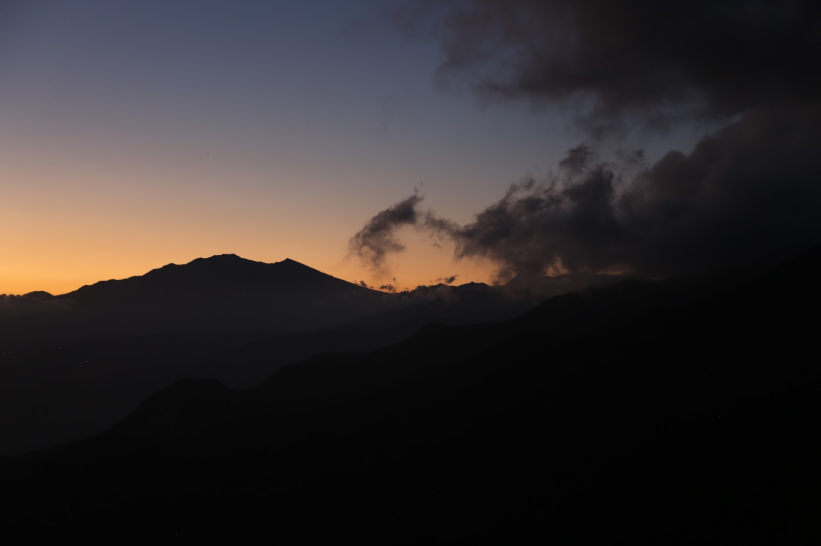
Santa Catalina : le joyau sauvage du Pacifique à découvrir au Panama

Il existe au Panama des endroits où l’on arrive facilement, et puis il y a Santa Catalina, un petit village du Pacifique qui demande un peu plus d’effort pour être atteint. Mais c’est justement ce qui fait partie de son charme. La route depuis Panama City est longue, et Santa Catalina n’est pas une étape que l’on ajoute simplement par hasard à son itinéraire. Il faut faire le voyage pour y arriver, mais une fois sur place, on comprend rapidement pourquoi cela en vaut la peine.

Santa Catalina est surtout connue pour deux choses : le surf et l’accès au spectaculaire parc national de Coiba. Les surfeurs expérimentés viennent ici pour les vagues puissantes de Punta Santa Catalina, tandis que les débutants peuvent apprendre à surfer dans des conditions plus accessibles, notamment à Playa Estero. L’ambiance reste celle d’un petit village de surf plutôt que d’une immense station balnéaire, ce qui donne au lieu une atmosphère beaucoup plus authentique et détendue.

Mais pour beaucoup de voyageurs, Coiba est la véritable raison de venir. Depuis Santa Catalina, des excursions en bateau permettent de rejoindre ce parc national exceptionnel, classé au patrimoine mondial de l’UNESCO. Sous la surface, le spectacle continue avec des poissons tropicaux, des tortues marines, des raies, des dauphins et des récifs coralliens. Selon la saison, il est également possible d’observer des baleines à bosse. Une journée à Coiba ressemble davantage à une petite expédition qu’à une simple excursion touristique.

Et Santa Catalina ne s’adresse pas uniquement aux voyageurs avec un gros budget. L’offre d’hébergement s’est considérablement développée, avec des auberges et hébergements simples pour les backpackers, des chambres et bungalows de gamme intermédiaire, ainsi que des hôtels boutique et des écolodges plus confortables pour ceux qui souhaitent se faire plaisir. On peut donc découvrir Santa Catalina avec un petit budget ou choisir une expérience beaucoup plus luxueuse, tout en profitant du même incroyable environnement naturel.

Le village lui-même mérite qu’on lui consacre du temps. Après une journée de surf ou une excursion à Coiba, on peut profiter d’un coucher de soleil sur le Pacifique, manger dans un petit restaurant, rencontrer d’autres voyageurs ou simplement s’asseoir sur la plage et regarder les vagues. C’est un endroit où le rythme ralentit naturellement.

Santa Catalina s’intègre également parfaitement dans un voyage plus long à travers le Panama. On peut voyager de Panama City to El Valle to Santa Fe to Santa Catalina, puis continuer vers Playa Venao, Pedasí, Boquete ou Bocas del Toro. Elle peut aussi être visitée au retour, ce qui permet de découvrir une autre partie du pays sur le chemin.

🌊 Pourquoi Santa Catalina mérite une place sur votre liste

Santa Catalina n’est peut-être pas la destination la plus facile à atteindre du Panama, mais c’est précisément ce qui contribue encore à son charme. Vous venez pour les vagues, Coiba et l’aventure, mais vous risquez de tomber amoureux de l’ambiance, des paysages et de la tranquillité.

Alors, si vous préparez votre prochain voyage au Panama, ne regardez pas la distance et pensez que Santa Catalina est trop loin.

Prenez la route.

Le Pacifique vous attend.

Santa Catalina: Panamas wilder Pazifiktraum, den du auf deine Reiseliste setzen solltest

Es gibt Orte in Panama, die leicht zu erreichen sind, gut erschlossen und längst feste Bestandteile jeder klassischen Reiseroute geworden sind. Und dann gibt es Santa Catalina, ein kleines Dorf an der Pazifikküste der Provinz Veraguas, das sich seinen besonderen Charakter noch weitgehend bewahrt hat. Santa Catalina wird zwar immer bekannter, doch im Vergleich zu vielen anderen Reisezielen Panamas wirkt es noch immer wie ein Ort, den man wirklich entdecken muss. Genau das macht seinen Reiz aus. Die Anreise ist nicht besonders schnell oder unkompliziert, aber wer die zusätzliche Zeit investiert, wird mit einer einzigartigen Mischung aus spektakulären Wellen, tropischer Natur, Meeresleben, kleinen Stränden, entspanntem Dorfleben und dem Zugang zum berühmten Coiba Nationalpark belohnt. Für viele Reisende ist Coiba der Hauptgrund, nach Santa Catalina zu kommen. Für andere ist es das Surfen. Und für manche wird am Ende gerade die Atmosphäre des Ortes selbst zum überraschenden Höhepunkt.

🌊 Ein Ort, zu dem man bewusst reisen muss

Santa Catalina liegt nicht direkt an einer der großen Verkehrsachsen Panamas. Von Panama-Stadt aus ist die Reise deutlich länger als zu beliebten Zielen wie El Valle oder sogar Boquete. Mit öffentlichen Verkehrsmitteln führt die Route normalerweise über Santiago und Soná, bevor es weiter Richtung Pazifikküste geht. Mit dem Auto ist man ebenfalls mehrere Stunden unterwegs. Auf den ersten Blick könnte man deshalb denken, dass Santa Catalina zu weit abseits liegt. Doch genau diese Entfernung ist ein Teil seines Charmes. Man kommt nicht einfach zufällig auf dem Weg zu einer anderen Sehenswürdigkeit vorbei. Man entscheidet sich dafür, nach Santa Catalina zu fahren. Je weiter man sich von den größeren Städten entfernt, desto ländlicher wird die Landschaft. Schließlich erreicht man ein kleines Küstendorf, in dem der Rhythmus des Lebens vom Meer, den Gezeiten, den Wellen, den Fischern und den Booten nach Coiba bestimmt wird. Für Backpacker kann allein diese Veränderung des Tempos schon ein Teil des Abenteuers sein.

🏄 Santa Catalina und die berühmten Wellen

Der wichtigste Grund, warum Santa Catalina international bekannt geworden ist, ist natürlich das Surfen. Vor allem die berühmte Welle von Punta Santa Catalina gilt als eine der besten Surfbreaks Panamas und zieht erfahrene Surfer aus aller Welt an. Die Bedingungen können kraftvoll sein und sind besonders für erfahrene Surfer interessant. Gleichzeitig bedeutet das nicht, dass Anfänger hier fehl am Platz sind. Playa Estero bietet deutlich zugänglichere Bedingungen und ist ein beliebter Ort für Surfunterricht und den Einstieg in diesen Sport. Dadurch kann Santa Catalina verschiedene Generationen und Erfahrungsstufen von Reisenden ansprechen. Der erfahrene Surfer kann früh morgens nach den Wellen schauen, während jemand, der noch nie auf einem Surfbrett gestanden hat, seine erste Unterrichtsstunde nimmt. Danach treffen sich beide vielleicht beim Mittagessen oder bei einem Getränk und erzählen von ihren Erfahrungen. Genau diese Mischung macht Santa Catalina so interessant. Es ist nicht ausschließlich ein Surfspot für Profis, sondern entwickelt sich zunehmend zu einem Reiseziel, bei dem auch ganz normale Backpacker das Surfen ausprobieren können.

🐋 Coiba: Der eigentliche Schatz vor der Küste

Für viele Reisende ist das Surfen jedoch nur der Anfang. Coiba Nationalpark ist wahrscheinlich das wichtigste Argument, Santa Catalina auf die eigene Panama Route zu setzen. Der Nationalpark gehört zum UNESCO Welterbe und schützt eine außergewöhnlich artenreiche Insel und Meereslandschaft. Santa Catalina ist einer der wichtigsten Ausgangspunkte für Ausflüge nach Coiba. Mit einem Boot geht es hinaus auf den Pazifik, und schon die Fahrt selbst vermittelt ein Gefühl von Abenteuer. Je weiter man sich von der Küste entfernt, desto stärker bekommt man das Gefühl, in eine völlig andere Welt einzutauchen. Unter der Wasseroberfläche warten Korallenriffe, tropische Fische, Meeresschildkröten, Rochen, Delfine und zahlreiche weitere Meeresbewohner. Je nach Jahreszeit können auch Buckelwale in der Region beobachtet werden. Für Taucher und Schnorchler ist Coiba deshalb ein außergewöhnliches Erlebnis, aber auch Menschen, die normalerweise nicht viel tauchen, können bei einem Bootsausflug erleben, wie wild und unberührt diese Region noch immer wirkt.

🐠 Ein Tag auf Coiba fühlt sich wie eine Expedition an

Ein Ausflug nach Coiba ist nicht einfach ein gewöhnlicher Strandtrip. Man steht früh auf, fährt mit dem Boot hinaus und verbringt den Tag damit, verschiedene Inseln, Buchten und Meeresgebiete zu erkunden. Zwischendurch geht es ins Wasser, wo die eigentliche Welt von Coiba beginnt. Das Meer rund um den Nationalpark ist einer der großen Gründe, warum diese Region international so bedeutend ist. Für einen Reisenden kann der Kontrast kaum größer sein: Am Morgen sitzt man noch in einem kleinen Dorf an der Pazifikküste, wenige Stunden später schwimmt man zwischen tropischen Fischen und vielleicht sogar Meeresschildkröten. Genau deshalb lohnt es sich, für Santa Catalina mehrere Tage einzuplanen. Wenn Coiba der Hauptgrund für deine Reise ist, wäre es schade, nur eine Nacht zu bleiben und am nächsten Morgen schon wieder abzureisen.

🌴 Santa Catalina ist noch immer angenehm klein

Ein weiterer großer Vorteil von Santa Catalina ist, dass der Ort trotz seiner wachsenden Beliebtheit relativ klein geblieben ist. Hier gibt es keine riesigen Hotelkomplexe, keine endlosen Einkaufszentren und keine kilometerlange Kette von internationalen Resorts. Stattdessen findet man Hostels, einfache Gästehäuser, Surf Camps, Bungalows, kleine Hotels, Eco Lodges und zunehmend auch komfortablere Boutique Unterkünfte. Dadurch kann Santa Catalina für sehr unterschiedliche Reisende interessant sein. Ein Backpacker mit kleinem Budget kann nach einer günstigen Unterkunft suchen und sein Geld lieber für einen Surfkurs oder einen Ausflug nach Coiba ausgeben. Wer etwas mehr Komfort möchte, findet inzwischen schöne Hotels und Bungalows mit privaten Zimmern, Pools oder Aussicht auf den Pazifik. Und für Reisende, die sich etwas Besonderes gönnen möchten, gibt es zunehmend hochwertige Boutique und Eco Unterkünfte. Diese Mischung ist wichtig, denn sie zeigt, dass Santa Catalina nicht mehr ausschließlich ein Ziel für Surfer mit Rucksack ist. Der Ort entwickelt sich weiter und kann inzwischen auch Reisende ansprechen, die nach mehr Komfort suchen, ohne dass man dafür in einem riesigen Ferienresort wohnen muss.

💰 Für unterschiedliche Budgets geeignet

Einer der interessanten Aspekte der Entwicklung von Santa Catalina ist deshalb die zunehmende Auswahl an Unterkünften. Low Budget Reisende, klassische Backpacker, Paare, Surfer und Reisende mit höherem Budget können hier passende Möglichkeiten finden. Ein einfaches Hostel oder Gästehaus kann eine sehr günstige Möglichkeit sein, die Region kennenzulernen. Wer etwas mehr ausgeben möchte, kann sich für ein privates Zimmer, einen Bungalow oder ein kleineres Hotel entscheiden. Und wer nach einem besonderen Aufenthalt sucht, findet auch komfortable Unterkünfte, bei denen die Aussicht, die Ruhe und die Nähe zum Meer Teil des Erlebnisses sind. Das macht Santa Catalina für eine immer größere Gruppe von Reisenden interessant. Gleichzeitig ist es gerade für Backpacker schön, dass der Ort seine einfache Atmosphäre noch nicht verloren hat.

🎒 Ein perfekter Backpacker Stopp

Santa Catalina passt hervorragend in eine längere Backpacking Reise durch Panama. Man könnte beispielsweise von Panama-Stadt to El Valle to Santa Fe to Santa Catalina reisen und anschließend weiter Richtung Playa Venao, Pedasí, Boquete oder Bocas del Toro fahren. Oder man spart Santa Catalina für den Rückweg auf. Dadurch lässt sich die Reise ganz individuell gestalten. Wer vor allem Natur und Abenteuer sucht, kann mehrere Nächte in Santa Catalina verbringen und Coiba erkunden. Wer surfen möchte, kann länger bleiben und seine Tage nach den Wellen ausrichten. Und wer einfach nur ein paar Tage am Pazifik entspannen möchte, findet ebenfalls genügend Möglichkeiten. Gerade diese Freiheit ist ein großer Teil der Backpacker Erfahrung.

🌅 Warum man nicht nur wegen Coiba kommen sollte

Interessanterweise kann Coiba der Grund sein, warum man nach Santa Catalina fährt, aber nicht unbedingt der Grund, warum man länger bleiben möchte. Der Ort selbst besitzt eine besondere Atmosphäre. Die Sonnenuntergänge über dem Pazifik, die warmen Abende, die kleinen Restaurants, die Surfer am Strand und die entspannte Geschwindigkeit des Lebens machen Santa Catalina zu einem Ort, an dem man schnell einen Gang zurückschaltet. Nach einem Tag auf dem Wasser oder auf dem Surfbrett kann man einfach am Strand sitzen und beobachten, wie die Sonne langsam im Pazifik verschwindet. Es gibt keine Notwendigkeit, jeden Moment mit einer Aktivität zu füllen. Genau diese Mischung aus Abenteuer und Ruhe macht den Ort so attraktiv.

🌎 Santa Catalina wird bekannter

Santa Catalina befindet sich eindeutig in einer Phase des Wachstums. Immer mehr Reisende entdecken den Ort, neue Unterkünfte entstehen und das Angebot für Besucher wird besser. Gleichzeitig ist Santa Catalina noch weit von der Größe und Entwicklung der bekanntesten Ferienorte entfernt. Das könnte sich in Zukunft ändern. Gerade deshalb lohnt es sich, den Ort jetzt auf die Reiseliste zu setzen. Es gibt inzwischen genügend Infrastruktur, damit die Reise komfortabel funktioniert, aber noch immer genug ursprüngliches Dorfleben, damit man nicht das Gefühl bekommt, in einer riesigen Touristenmaschine gelandet zu sein.

Das Spannende an Santa Catalina ist, dass man hier zwei Dinge gleichzeitig bekommt: Abenteuer und Einfachheit. Du kannst morgens auf eine Coiba Tour gehen, nachmittags surfen und abends in einem kleinen Restaurant sitzen. Du kannst eine günstige Unterkunft wählen und mit anderen Backpackern unterwegs sein oder dir ein komfortables Zimmer mit Meerblick gönnen. Du kannst den ganzen Tag aktiv sein oder einfach in einer Hängematte liegen und dem Pazifik zuhören.

🇵🇦 Der lange Weg lohnt sich

Santa Catalina ist definitiv kein Ort, den man in eine Panama Reise hineinpressen sollte, wenn man nur zwei oder drei Tage insgesamt zur Verfügung hat. Die Anreise braucht Zeit, und genau deshalb sollte man dem Ort auch genügend Zeit geben. Drei Nächte sind ein guter Anfang, vier oder fünf Nächte sind noch besser, besonders wenn du sowohl Coiba als auch das Surfen erleben möchtest. So hast du etwas Spielraum, falls das Wetter oder die Bedingungen einmal nicht mitspielen.

Und genau hier liegt vielleicht die wichtigste Botschaft: Lass dich von der Entfernung nicht abschrecken. Manche der schönsten Orte einer Reise sind nicht diejenigen, die am einfachsten zu erreichen sind. Santa Catalina verlangt etwas Geduld. Aber sobald du angekommen bist und das erste Mal den Pazifik siehst, die Surfer beobachtest oder in einem Boot Richtung Coiba unterwegs bist, wird schnell klar, warum sich die Reise lohnt.

Santa Catalina ist nicht einfach ein weiterer Strandort in Panama. Es ist ein Tor zu Coiba, einer der spannendsten Surfspots des Landes und gleichzeitig ein kleines Pazifikdorf, das gerade dabei ist, sich zu einem der interessantesten Reiseziele Panamas zu entwickeln. Wer Panama wirklich entdecken möchte und nicht nur die bekanntesten Orte abhaken will, sollte Santa Catalina deshalb unbedingt auf seine Reiseliste setzen.

Santa Catalina: Panama’s Wild Pacific Gem You Should Put on Your Travel List

There are places in Panama that are easy to reach, heavily developed and already firmly established on the tourist map. Then there is Santa Catalina, a small Pacific coast village in Veraguas that still feels like you have to make an effort to discover it. And perhaps that is exactly what makes it so appealing.

Once a small fishing village, Santa Catalina has quietly developed into one of Panama’s most exciting destinations for travelers who want surfing, marine wildlife, adventure and a more authentic beach experience. Panama’s tourism authority now highlights it as a world renowned surf destination and the gateway to Coiba National Park, a UNESCO World Heritage Site.

Santa Catalina is not somewhere you accidentally pass through on the way to another famous destination. You make the decision to go there. And that journey is part of the experience.

The journey is part of the adventure

Santa Catalina is not a quick trip from Panama City. By road, the journey takes roughly six hours, and public transportation involves traveling to Soná and then continuing toward Santa Catalina.

For some travelers, that sounds like a disadvantage.

It is actually one of Santa Catalina's greatest advantages.

The extra effort has helped keep the destination from becoming another heavily developed resort town. By the time you arrive, you have left Panama City far behind. The landscape becomes increasingly rural, the roads become quieter and the Pacific Ocean eventually appears.

Then you arrive in a small community where the rhythm of life revolves around the ocean, the tides, surfing, fishing and boats heading toward Coiba.

Santa Catalina still has that feeling of somewhere that adventurous travelers have discovered before mass tourism.

🏄 The Surf Is the Star

For experienced surfers, Santa Catalina has been on the radar for years.

The famous Punta Santa Catalina break produces powerful waves and tubes that have earned international recognition, while Punta Brava offers another option for experienced surfers. For beginners, Playa Estero has smaller waves and a sandy bottom, with surf schools and board rentals available.

That combination is important.

Santa Catalina isn't exclusively a destination for professional surfers.

Experienced surfers can chase serious waves while beginners can take lessons and learn on gentler breaks.

And there is something particularly appealing about surfing somewhere that still feels like a village rather than a massive international resort.

You wake up.

Check the waves.

Grab a board.

Walk toward the beach.

And your day revolves around the Pacific.

🐋 Then There Is Coiba

But surfing is only half the reason Santa Catalina deserves a place on your Panama itinerary.

The other reason is Coiba National Park.

Santa Catalina is one of the principal gateways for excursions into Coiba, an extraordinary protected marine environment that is part of a UNESCO World Heritage Site. The waters around the park are famous for their marine biodiversity, with coral reefs, turtles, dolphins, rays and an enormous variety of fish. Humpback whales can also be seen during the appropriate season, particularly from July to October.

This creates an almost perfect combination for travelers.

Surf the Pacific one day.

Explore Coiba the next.

When the waves are good, you surf.

When conditions are better for exploring the ocean, you go to Coiba.

And when you don't feel like doing either, you can simply enjoy the beach and the village.

That variety is one of Santa Catalina's greatest strengths.

🌊 Coiba Can Turn a Beach Trip Into an Expedition

A trip to Coiba isn't simply another boat excursion to a nearby beach.

The journey takes you into one of Panama's most remarkable marine environments, where the real attraction is what lies beneath the surface. Snorkeling and diving can reveal colorful reefs and abundant marine life, while the islands themselves remain remarkably wild.

For many travelers, Coiba becomes the highlight of their entire Panama trip.

You leave Santa Catalina in the morning by boat, cross the Pacific and eventually arrive at an environment that feels dramatically more remote than the little village you left behind.

It is one of those travel experiences where the journey makes the destination even more impressive.

🏝️ Santa Catalina Is Still Small

One of the things that makes Santa Catalina special is what it doesn't have.

You won't find huge all inclusive resorts dominating the coastline. You won't find massive shopping centers or an endless strip of international chain restaurants.

Instead, there are small hotels, hostels, cabins, surf camps, boutique properties, guesthouses and eco lodges.

The local tourism organization currently lists a surprisingly broad range of accommodation, including hostels, cabins, boutique hotels, eco style properties and larger hotels.

That means Santa Catalina can work for very different types of travelers.

💰 Accommodation for Almost Every Budget

Backpackers don't have to assume that Santa Catalina is an expensive destination.

There are hostels and simple guesthouses for travelers who are watching their budget, including surf oriented accommodation where the emphasis is on meeting other travelers and getting into the water.

Then there are mid range cabins, hotels and eco lodges for people who want more privacy and comfort without going completely upscale.

And there are also boutique hotels and higher end properties, including accommodations directly overlooking the ocean.

The official Santa Catalina tourism organization specifically promotes accommodation ranging from friendly hostels and simple cabins to boutique hotels and more comfortable oceanfront properties.

So whether you're carrying a backpack and counting every dollar or looking for somewhere beautiful to relax after a day on the ocean, there is increasingly something for you.

That variety is an important part of Santa Catalina's evolution.

🌴 A Destination That Is Growing Without Losing Its Character

Santa Catalina is becoming more popular, but it hasn't yet lost the character that made people fall in love with it.

That balance may be its greatest asset.

You can find better accommodation than you could years ago. There are more restaurants, surf schools, tour operators and services. Yet the town remains small and relatively peaceful.

The tourism authority describes Santa Catalina as a destination that continues to gain popularity while maintaining its peaceful atmosphere and authenticity.

That makes it particularly attractive right now.

Travelers increasingly want destinations that have enough infrastructure to make a trip comfortable without feeling like they have arrived in a giant tourist machine.

Santa Catalina is moving in that direction.

🎒 Perfect for Backpackers

Santa Catalina fits beautifully into a longer Panama backpacking trip.

You can travel from Panama City to El Valle to Santa Fe to Santa Catalina, spend several days enjoying the Pacific and then continue toward Playa Venao, Pedasí, Boquete or Bocas del Toro.

Or you can visit Santa Catalina on your way back.

It works particularly well as a stop between Panama's central regions and the western part of the country.

And because the destination requires some effort to reach, staying only one night doesn't really make sense.

Give it at least three nights if Coiba is one of your main reasons for going.

That gives you time for a Coiba trip, a surf day and some time to actually enjoy Santa Catalina itself.

🌅 Come for Coiba, Stay for Santa Catalina

Perhaps the best way to describe the place is this:

Coiba may be the reason you come, but Santa Catalina may be the reason you stay.

You arrive because you've heard about Coiba.

Or you've seen photographs of surfers riding the famous waves.

But then you discover the sunsets, the quiet beaches, the small restaurants, the friendly atmosphere and the slower pace of life.

Suddenly three nights doesn't seem like enough.

And that's often how the best travel destinations are discovered.

Not because they have the biggest attractions.

But because once you arrive, you don't really want to leave.

🇵🇦 Why Santa Catalina Belongs on Your Panama List

Santa Catalina is becoming one of those destinations that travelers are beginning to talk about more and more, and for good reason.

It offers world class surfing, access to Coiba National Park, incredible marine life, Pacific beaches, diving, fishing, sunsets, a relaxed village atmosphere and accommodation for different budgets.

It isn't the easiest destination to reach.

It isn't supposed to be.

That little bit of extra effort is part of what protects its character.

So if you're planning a trip through Panama, don't simply look at Santa Catalina on a map and think, that's too far out of the way.

Make the journey.

Take the long road.

Watch the landscape change.

Arrive at the Pacific.

Find a place to stay that fits your budget.

Spend a day surfing.

Spend another exploring Coiba.

Then sit on the beach at sunset and realize why you came all the way out here.

Santa Catalina may take a little more effort to reach, but that is precisely why it is worth putting on your Panama travel list.

Backpacking durch Panama: Von Panama-Stadt nach Bocas del Toro und zurück

Panama ist ein fantastisches Land für Backpacker, weil man hier auf relativ kleinem Raum unglaublich unterschiedliche Landschaften erleben kann. Innerhalb weniger Wochen kann man von Wolkenkratzern und dem Panamakanal zu tropischem Dschungel, Bergen, Nebelwäldern, karibischen Inseln und den Stränden der Pazifikküste reisen.

Das Schöne an dieser Route ist, dass du nicht alles in einer einzigen Richtung machen musst. Du kannst mehrere Orte auf dem Weg nach Bocas del Toro besuchen, andere auf dem Rückweg und anschließend von Bocas zurück nach Panama-Stadt fliegen. Oder du hast fast einen ganzen Monat Zeit und machst die große Runde.

Eine mögliche Route ist:

Panama-Stadt to El Valle to Santa Fe to Santiago to Santa Catalina to Playa Venao to Pedasí to Boquete to Lost and Found to Bocas del Toro

Danach kannst du entweder über Land zurückreisen oder von Bocas del Toro nach Panama-Stadt fliegen.

🌆 Tage 1 bis 3: Panama-Stadt

Beginne deine Reise in Panama-Stadt und verbringe zwei oder drei Tage damit, die Hauptstadt kennenzulernen.

Erkunde Casco Viejo, besuche den Panamakanal, spaziere an der Cinta Costera entlang und probiere die fantastische Auswahl an Restaurants aus.

Panama-Stadt ist außerdem der perfekte Ort, um dich mit allem einzudecken, was du für die nächsten Wochen brauchst, bevor du in kleinere Städte und abgelegenere Regionen weiterreist.

🌿 Option 1: Panama-Stadt to El Valle de Antón

El Valle de Antón ist eine der einfachsten Ergänzungen zu einer Panama-Reise.

Der Ort liegt in einem riesigen Krater eines alten Vulkans und ist von grünen Bergen und tropischer Vegetation umgeben. Hier gibt es Wanderwege, Wasserfälle, heiße Quellen, Gärten und ein angenehmes, kühleres Klima.

El Valle ist ideal, um die Bergwelt Panamas kennenzulernen, ohne gleich weit ins Landesinnere reisen zu müssen.

Empfohlener Aufenthalt: 2 bis 3 Nächte

Eine schöne erste Etappe wäre:

Panama-Stadt to El Valle

Danach geht es weiter Richtung Westen.

🌴 Option 2: Santa Fe

Wer etwas abseits der bekannten Touristenrouten sucht, sollte Santa Fe in Betracht ziehen.

Santa Fe ist eine kleine Bergstadt in der Provinz Veraguas, umgeben von Wäldern, Flüssen, Wasserfällen und landwirtschaftlich geprägten Landschaften. Die Atmosphäre ist wesentlich ruhiger und ursprünglicher als in vielen bekannten Reisezielen Panamas.

Hier geht es vor allem um Wandern, Wasserfälle, Vogelbeobachtung und darum, einfach einmal dem Trubel zu entkommen.

Empfohlener Aufenthalt: 2 bis 3 Nächte

Du kannst beispielsweise reisen:

Panama-Stadt to El Valle to Santa Fe

Oder du hebst dir Santa Fe für den Rückweg auf.

🏄 Option 3: Santa Catalina

Santa Catalina ist eines der bekanntesten Ziele Panamas für Surfer, Taucher und Reisende, die einen entspannten Ort am Pazifik suchen.

Der Ort ist vor allem für den Zugang zum Coiba-Nationalpark bekannt. In der Region gibt es Möglichkeiten zum Tauchen, Schnorcheln, Surfen, Angeln und für Bootsausflüge.

Santa Catalina fühlt sich völlig anders an als Bocas del Toro.

Bocas ist karibisch, tropisch und lebhaft.

Santa Catalina wirkt eher wie ein abgelegenes Surferdorf am Pazifik.

Empfohlener Aufenthalt: 3 bis 4 Nächte

Eine mögliche Route:

Panama-Stadt to El Valle to Santa Fe to Santa Catalina

Allein das wäre schon eine fantastische Panama-Reise.

🏄‍♂️ Option 4: Playa Venao

Wenn du Strände, Surfen und Backpacker-Atmosphäre liebst, solltest du Playa Venao unbedingt in Betracht ziehen.

Playa Venao liegt auf der Azuero-Halbinsel und ist eines der bekanntesten Surfziele Panamas. Gleichzeitig hat sich hier eine internationale Backpacker-Szene entwickelt.

Es ist ein großartiger Ort zum Surfen, Entspannen, Leute kennenlernen, Essen gehen und das Strandleben zu genießen.

Empfohlener Aufenthalt: 3 bis 4 Nächte

Zum Beispiel:

Santa Catalina to Playa Venao

Oder du besuchst Playa Venao auf dem Rückweg nach Panama-Stadt.

🌊 Option 5: Pedasí

Nicht weit von den Stränden entfernt liegt Pedasí, eine charmante Kleinstadt mit deutlich traditionellerem Charakter.

Pedasí eignet sich hervorragend als Ausgangspunkt, um die Azuero-Halbinsel und die umliegenden Strände zu erkunden. Auch Bootsausflüge zu nahegelegenen Inseln sind möglich.

Pedasí und Playa Venao lassen sich besonders gut miteinander kombinieren.

Pedasí to Playa Venao

So bekommst du sowohl eine traditionellere panamaische Kleinstadt als auch einen internationalen Surf- und Backpackerort.

☕ Option 6: Boquete

Nach der Pazifikküste kannst du Richtung Boquete weiterreisen.

Boquete ist eines der beliebtesten Bergziele Panamas und bekannt für Kaffeeplantagen, Wasserfälle, Wanderwege, Nebelwald und ein angenehm kühles Klima.

Hier verändert sich die Landschaft erneut vollkommen.

Nach tropischen Stränden und Surfen befindest du dich plötzlich in den Bergen.

Du kannst Kaffeeplantagen besuchen, wandern, Wasserfälle entdecken oder einfach durch den Ort schlendern und die Restaurants genießen.

Empfohlener Aufenthalt: 3 bis 4 Nächte

Eine schöne Verbindung wäre:

Playa Venao to Boquete

🌿 Option 7: Lost and Found Hostel

Zwischen der Region David und Bocas del Toro befindet sich einer der ungewöhnlichsten Stopps der gesamten Route: Lost and Found Hostel.

Hier übernachtest du nicht einfach in einer Stadt. Du gehst direkt in den Nebelwald.

Das Hostel ist von Dschungel, Wanderwegen, Wildtieren, Wasserfällen, Bergpanoramen und Hängematten umgeben. Gleichzeitig gibt es eine sehr soziale Backpacker-Atmosphäre.

Es ist der perfekte Kontrast zu den Stränden und Städten, die du vorher besucht hast.

Empfohlener Aufenthalt: 2 Nächte

Zum Beispiel:

Boquete to Lost and Found

Danach:

Lost and Found to Bocas del Toro

Damit entsteht eine wunderschöne Abfolge von Bergen to Nebelwald to Karibik.

🏝️ Bocas del Toro

Schließlich erreichst du Bocas del Toro, wo du den über Land führenden Teil deiner Reise beenden kannst.

Plane hier ungefähr vier bis sieben Tage ein, abhängig davon, wie viel Zeit du insgesamt hast.

Entdecke Isla Colón und die umliegenden Inseln, besuche Strände, schnorchle, tauche, mache Bootsausflüge und genieße die karibische Atmosphäre.

Bocas ist außerdem der perfekte Ort, um einfach einmal keine Pläne zu haben.

Nach mehreren Wochen voller Busfahrten, Wanderungen und Ortswechsel kann es sehr angenehm sein, einfach ein paar Tage auf den Inseln zu bleiben.

✈️ Die einfache Rückreise: Flug von Bocas

Eine besonders interessante Möglichkeit besteht darin, die gesamte Strecke über Land bis nach Bocas del Toro zu reisen und anschließend zurück nach Panama-Stadt zu fliegen.

Zum Beispiel:

Panama-Stadt to El Valle to Santa Fe to Santa Catalina to Playa Venao to Pedasí to Boquete to Lost and Found to Bocas del Toro

Danach:

Bocas del Toro to Panama-Stadt per Flugzeug

So vermeidest du eine lange Rückfahrt und kannst wesentlich mehr von Panama sehen.

🔄 Oder: Teile die Reise auf

Du musst nicht alle Orte auf dem Hinweg besuchen.

Tatsächlich kann es sogar interessanter sein, die Ziele aufzuteilen.

Hinweg nach Bocas

Panama-Stadt to El Valle to Santa Fe to Bocas del Toro

Nach einigen Tagen in Bocas geht es zurück:

Rückweg

Bocas del Toro to Lost and Found to Boquete to Playa Venao to Pedasí to Panama-Stadt

Dadurch sieht deine Rückreise komplett anders aus als der Hinweg.

Du wiederholst nicht einfach dieselbe Strecke.

🗺️ Zwei Wochen

Wenn du nur zwei Wochen hast, solltest du nicht versuchen, alles unterzubringen.

Eine gute Variante wäre:

Tag 1 bis 2: Panama-Stadt

Tag 3 bis 4: El Valle

Tag 5 bis 8: Bocas del Toro

Tag 9 bis 10: Lost and Found

Tag 11 bis 13: Boquete

Tag 14: Panama-Stadt

Oder wenn Strände wichtiger sind:

Panama-Stadt to Playa Venao to Boquete to Lost and Found to Bocas del Toro

Anschließend kannst du zurückfliegen.

🗺️ Drei Wochen

Mit drei Wochen kannst du deutlich mehr einbauen:

Tag 1 bis 3: Panama-Stadt

Tag 4 bis 5: El Valle

Tag 6 bis 8: Santa Fe

Tag 9 bis 12: Bocas del Toro

Tag 13 bis 14: Lost and Found

Tag 15 bis 17: Boquete

Tag 18 bis 20: Playa Venao

Tag 21: Panama-Stadt

Damit bekommst du Berge, Nebelwald, Karibik und Pazifik in einer einzigen Reise.

🗺️ Ein ganzer Monat

Mit einem ganzen Monat kannst du die Reise wirklich entspannt gestalten:

Tag 1 bis 3: Panama-Stadt

Tag 4 bis 6: El Valle

Tag 7 bis 9: Santa Fe

Tag 10 bis 13: Santa Catalina

Tag 14 bis 17: Playa Venao und Pedasí

Tag 18 bis 21: Boquete

Tag 22 bis 23: Lost and Found

Tag 24 bis 29: Bocas del Toro

Tag 30: Flug nach Panama-Stadt

Jetzt hast du fast alle wichtigen Backpackerregionen im Westen Panamas erlebt.

🎒 Du musst nicht alles im Voraus planen

Das Schöne an dieser Route ist, dass du nicht jeden einzelnen Ort vor der Abreise festlegen musst.

Du kannst eine grobe Richtung wählen und unterwegs entscheiden.

Vielleicht möchtest du mehr Zeit an den Stränden verbringen.

Vielleicht stellst du fest, dass du die Berge liebst.

Vielleicht lernst du in Playa Venao andere Backpacker kennen und bleibst länger.

Vielleicht kommst du im Lost and Found an und entscheidest, dass eine Nacht viel zu kurz ist.

Genau das macht Backpacking aus.

🇵🇦 Der große Panama-Backpacking-Loop

Wenn du genügend Zeit hast, könnte die große Route so aussehen:

Panama-Stadt to El Valle to Santa Fe to Santa Catalina to Playa Venao to Pedasí to Boquete to Lost and Found to Bocas del Toro

Danach:

Bocas del Toro to Panama-Stadt per Flugzeug

Oder du reist über Land zurück:

Bocas del Toro to David to Santiago to Panama-Stadt

So erlebst du innerhalb einer einzigen Reise eine unglaubliche Vielfalt:

Großstadt to Berge to Nebelwald to Pazifikküste to Surfstrände to traditionelle Kleinstädte to Kaffeeplantagen to Dschungel to Karibikinseln.

Und genau das macht Panama zu einem so großartigen Backpackerland.

Zwei Wochen reichen für eine fantastische Einführung. Drei Wochen bieten deutlich mehr Freiheit. Und mit einem ganzen Monat kannst du aus der Reise eine echte Entdeckungstour durch Panama machen.

The Ultimate Panama Backpacking Loop: Panama City to Bocas del Toro and Back

Panama is an incredible country for backpacking because it is compact enough to connect many completely different destinations, yet diverse enough to feel like you are traveling through several countries in one trip. You can go from skyscrapers and the Panama Canal to jungle, mountains, cloud forests, Caribbean islands, Pacific beaches and tiny mountain towns, all within the same journey.

The great thing about this route is that you don't have to do it in only one direction. You can visit several destinations on your way to Bocas del Toro, then explore different places on your way back. Or, if you have a full month, you can make a huge loop and visit almost all of them.

The basic idea is:

Panama City to El Valle to Santa Fe to Santiago to Santa Catalina to Playa Venao to Pedasí to Boquete to Lost and Found to Bocas del Toro

Then you can either travel back overland or fly from Bocas del Toro to Panama City.

There are almost endless combinations.

🌆 Days 1 to 3: Panama City

Begin in Panama City, giving yourself two or three days to experience the capital.

Explore Casco Viejo, visit the Panama Canal, walk along the Cinta Costera and enjoy the city's incredible restaurant scene. Panama City is also the best place to buy anything you might need before heading into smaller towns.

Once you leave the capital, the country becomes much more rural very quickly.

🌿 Option 1: Panama City to El Valle de Antón

El Valle de Antón is one of the easiest additions to a Panama backpacking itinerary because it is relatively close to Panama City.

The town sits inside the enormous crater of an ancient volcano and is surrounded by mountains and lush vegetation. It is known for hiking, waterfalls, hot springs, gardens and a cooler climate than Panama City.

El Valle is an excellent introduction to Panama's mountain environment without requiring a huge journey.

Recommended stay: 2 to 3 nights

It works particularly well at the beginning of the trip:

Panama City to El Valle

Then continue west toward the rest of the country.

🌴 Option 2: Santa Fe

For travelers who want somewhere much quieter and more off the beaten path, Santa Fe is an excellent choice.

Santa Fe is a small mountain town in Veraguas surrounded by forests, rivers, waterfalls and agricultural landscapes. It has a much more local and relaxed atmosphere than Panama's better known tourist destinations.

This is the kind of place where you go for hiking, waterfalls, birdwatching and simply getting away from the crowds.

Santa Fe is especially appealing if you want to experience a side of Panama that many international tourists never see.

Recommended stay: 2 to 3 nights

You could travel:

Panama City to El Valle to Santa Fe

or save Santa Fe for the return journey.

🏄 Option 3: Santa Catalina

Santa Catalina is one of Panama's best destinations for surfers, divers and travelers looking for a laid back Pacific beach town.

It is famous for its access to Coiba National Park, one of the country's greatest natural treasures. The area offers diving, snorkeling, surfing, fishing, boat trips and beautiful Pacific sunsets.

Santa Catalina has a very different atmosphere from Bocas del Toro.

Bocas is Caribbean, tropical and lively.

Santa Catalina feels more like a remote Pacific surf town.

Recommended stay: 3 to 4 nights

The route could be:

Panama City to El Valle to Santa Fe to Santa Catalina

That is already an amazing first half of a Panama adventure.

🏄‍♂️ Option 4: Playa Venao

If you love beaches, surfing and backpacker culture, Playa Venao deserves serious consideration.

Located on the Azuero Peninsula, Playa Venao is one of Panama's best known surf destinations and has developed a strong international backpacker scene.

It is a great place to surf, relax on the beach, meet other travelers and enjoy the restaurants and nightlife.

Unlike Santa Catalina, which feels relatively remote, Playa Venao has a more developed backpacker atmosphere.

Recommended stay: 3 to 4 nights

The route could be:

Santa Catalina to Playa Venao

or you can visit Playa Venao on your way back toward Panama City.

🌊 Option 5: Pedasí

Just inland from the Pacific beaches is Pedasí, a charming small town with a much more traditional feel.

Pedasí is a great base for exploring the Azuero Peninsula, visiting beaches and taking boat trips to nearby islands. It also gives you an opportunity to experience a more traditional side of Panama rather than staying exclusively in international tourist towns.

Pedasí and Playa Venao work particularly well together.

You could spend a couple of nights in Pedasí and then move to Playa Venao for several days.

Pedasí to Playa Venao

The two destinations provide a nice combination of local culture, beaches, surfing and backpacker life.

☕ Option 6: Boquete

After exploring the Pacific side, head toward Boquete.

Boquete is one of Panama's most popular mountain destinations, famous for its cool climate, coffee plantations, waterfalls, hiking trails and spectacular scenery.

This is where the trip changes dramatically again.

You have gone from beaches and surfing to cool mountain air and cloud forest.

Spend several days hiking, exploring coffee farms, visiting waterfalls or simply enjoying the restaurants and atmosphere of town.

Recommended stay: 3 to 4 nights

A great route would be:

Playa Venao to Boquete

🌿 Option 7: Lost and Found Hostel

Between the David region and Bocas del Toro is one of the most unusual stops on the entire route: Lost and Found Hostel.

Instead of staying in another town, you can step directly into the cloud forest.

The hostel is surrounded by jungle, hiking trails, wildlife, waterfalls, mountain views and hammocks. It also has a particularly social backpacker atmosphere, making it a great place to meet travelers.

This is an especially good stop if you want something completely different from the beaches and towns you've just visited.

Recommended stay: 2 nights

The journey could be:

Boquete to Lost and Found

Then:

Lost and Found to Bocas del Toro

That makes an incredibly natural progression from mountains to cloud forest to Caribbean islands.

🏝️ Days in Bocas del Toro

Eventually you arrive at Bocas del Toro, where you can finish the overland portion of your adventure.

Give yourself four to seven days, depending on how much time you have.

Explore Isla Colón and the surrounding islands, visit beaches, snorkel, dive, take boat trips, enjoy the Caribbean atmosphere and experience the nightlife.

Bocas is also a great place to simply stop planning.

After weeks of moving through Panama, you might discover that the best thing to do is stay on the islands for a few extra days.

✈️ The Easy Way Back: Fly From Bocas

One of the best ways to design this trip is to travel overland all the way to Bocas and then fly back to Panama City.

For example:

Panama City to El Valle to Santa Fe to Santa Catalina to Playa Venao to Pedasí to Boquete to Lost and Found to Bocas del Toro

Then:

Bocas del Toro to Panama City by air

This eliminates the long journey back and allows you to see much more of Panama.

It is particularly attractive if you have around three weeks and don't want to spend several days retracing your route.

🔄 Another Great Option: Split the Destinations

You don't have to visit everything on the way to Bocas.

In fact, splitting the destinations can make the trip much more interesting.

For example:

Going to Bocas

Panama City to El Valle to Santa Fe to Bocas del Toro

Spend several days in Bocas.

Returning

Bocas del Toro to Lost and Found to Boquete to Playa Venao to Pedasí to Panama City

This gives you completely different scenery on the outbound and return journeys.

You never feel like you're simply repeating the same trip.

🔄 The Big Panama Loop

If you have close to a month, you can create an enormous loop:

Panama City to El Valle to Santa Fe to Santa Catalina to Playa Venao to Pedasí to Boquete to Lost and Found to Bocas del Toro

Then either:

Bocas del Toro to Panama City by air

or return overland:

Bocas del Toro to David to Santiago to Panama City

This is an incredible way to see the country because every section feels different.

🗺️ A Two Week Version

If you only have two weeks, don't try to visit everything.

A good route would be:

Days 1 to 2: Panama City

Days 3 to 4: El Valle

Days 5 to 8: Bocas del Toro

Days 9 to 10: Lost and Found

Days 11 to 13: Boquete

Day 14: Panama City

Or, if beaches are your priority:

Panama City to Playa Venao to Boquete to Lost and Found to Bocas del Toro

Then fly back.

🗺️ A Three Week Version

With three weeks, you can start adding more destinations:

Days 1 to 3: Panama City

Days 4 to 5: El Valle

Days 6 to 8: Santa Fe

Days 9 to 12: Bocas del Toro

Days 13 to 14: Lost and Found

Days 15 to 17: Boquete

Days 18 to 20: Playa Venao

Day 21: Panama City

This gives you mountains, cloud forest, Caribbean islands and Pacific beaches.

🗺️ The One Month Adventure

With a full month, you can really take your time:

Days 1 to 3: Panama City

Days 4 to 6: El Valle

Days 7 to 9: Santa Fe

Days 10 to 13: Santa Catalina

Days 14 to 17: Playa Venao and Pedasí

Days 18 to 21: Boquete

Days 22 to 23: Lost and Found

Days 24 to 29: Bocas del Toro

Day 30: Fly to Panama City

Now you've experienced almost every major backpacker environment in western Panama.

🎒 The Secret Is Not Trying to See Everything

The beauty of this itinerary is that you don't actually have to decide everything before you leave Panama City.

Choose a general direction.

Maybe you want beaches.

Maybe mountains.

Maybe surfing.

Maybe wildlife.

Maybe nightlife.

Maybe hiking.

Then adjust the route as you travel.

You might meet someone in El Valle who tells you Santa Fe is incredible.

You might meet surfers in Playa Venao who convince you to stay another two days.

You might arrive at Lost and Found and decide that one night isn't enough.

That's what makes backpacking different from a traditional vacation.

The Ultimate Flow

If you have the time, the ultimate Panama adventure could look like this:

Panama City to El Valle to Santa Fe to Santa Catalina to Playa Venao to Pedasí to Boquete to Lost and Found to Bocas del Toro

And then:

Bocas del Toro to Panama City by air

Or divide the destinations between the outbound and return journeys.

Either way, you're not simply traveling from one tourist destination to another.

You're crossing Panama from the Pacific side to the Caribbean side, passing through volcanoes, mountains, cloud forests, tropical jungle, surf beaches, traditional towns and islands along the way.

And that's what makes Panama such a fantastic country for backpacking. A two week trip gives you an incredible taste of the country, while three weeks to a month allows you to turn the journey itself into the adventure.

Lost and Found Jungle Hostel: een unieke ervaring in het hart van Panama

Er zijn hostels waar je gewoon komt om te slapen, en er zijn hostels die zelf een belangrijk onderdeel van je reis worden. Lost and Found Hostel hoort duidelijk bij die tweede categorie. Verborgen in het nevelwoud van de provincie Chiriquí, in het Fortuna Forest Reserve bij Valle de Hornito, biedt deze plek een heel andere ervaring dan een normaal hostel. Je avontuur begint hier eigenlijk al voordat je aankomt, want je moet door het bos lopen om het hostel te bereiken. Rondom je vind je bergen, wandelpaden, tropische vegetatie, wilde dieren en prachtige uitzichten over de Hornito Valley.

De ligging is ook ideaal voor backpackers die tussen Boquete en Bocas del Toro reizen. In plaats van de rit alleen als een transportdag te zien, kun je van Lost and Found een echte avontuurlijke tussenstop maken. Je laat de steden en drukke toeristische gebieden achter je en trekt een bergachtig landschap in waar het nevelwoud zelf de belangrijkste attractie is.

Een hostel midden in de natuur

De grootste luxe van Lost and Found bevindt zich niet binnen het hostel. Het is het bos eromheen. De regio Fortuna heeft die bijzondere sfeer van een tropisch nevelwoud, met mos, enorme bomen, varens, wolken die tussen de bergen bewegen en een constante vochtigheid.

Dankzij de wandelpaden kun je de omgeving direct te voet ontdekken, zonder dat je ingewikkelde excursies hoeft te organiseren. Je kunt gaan wandelen, vogels en apen proberen te spotten en daarna terugkomen naar het hostel om in een hangmat te ontspannen met uitzicht op de bergen.

En soms is juist helemaal niets doen het mooiste.

Je kunt de ochtend wandelend doorbrengen en de middag vanuit een hangmat naar de wolken kijken.

Een uitzicht dat voortdurend verandert

De uitzichten op de bergen en in het bijzonder richting Volcán Barú behoren tot de hoogtepunten. Maar het bijzondere is dat het landschap voortdurend verandert. Een berg kan tijdens het ontbijt volledig zichtbaar zijn en een paar uur later achter de mist verdwijnen. Na een regenbui kan de zon door de wolken breken en het hele landschap veranderen.

Je kijkt niet alleen naar de bergen.

Je ziet ze veranderen.

Avontuur voor iedereen

Lost and Found biedt verschillende activiteiten die het verblijf extra bijzonder maken. Je kunt deelnemen aan een Indiana Jones geïnspireerde schattenjacht, watervallen zoals Celestine Waterfall ontdekken, de Gualaca River Canyon bezoeken, yoga doen, het labyrint verkennen of de omgeving te paard ontdekken.

De schattenjacht is vooral leuk in een hostel vol backpackers. Je volgt aanwijzingen, probeert puzzels op te lossen en voor je het weet werk je samen met reizigers die je pas net hebt ontmoet.

Het is een geweldige manier om nieuwe vrienden te maken zonder dat je geforceerd een gesprek hoeft te beginnen.

Wilde dieren overal om je heen

Voor natuurliefhebbers is de aanwezigheid van wilde dieren een van de grootste attracties. Kolibries, apen, tropische vogels en andere dieren kunnen in de omgeving worden gezien. Maar je moet geduld hebben. Wilde dieren verschijnen natuurlijk niet altijd wanneer jij dat wilt.

Een kolibrie kan enkele seconden verschijnen. Een aap kan door de bomen bewegen. Een vogel kan roepen zonder dat je hem ooit ziet. Een luiaard kan hoog in de boom verborgen zitten.

Juist die onzekerheid maakt iedere ontmoeting bijzonder.

Een echte backpackersfeer

Lost and Found is niet alleen een toevluchtsoord midden in de natuur. Het is ook een zeer sociaal hostel. De Jungle Lounge Bar, gemeenschappelijke ruimtes, spelletjes en vooral de gezamenlijke maaltijden maken het gemakkelijk om andere reizigers te ontmoeten.

Voor solo backpackers is dat ideaal. Je kunt een paar uur alleen door het bos wandelen en daarna bij het diner aanschuiven bij mensen van over de hele wereld.

Iemand komt uit Bocas del Toro.

Een ander komt uit Boquete.

Iemand kent een verborgen waterval.

Een ander heeft een geweldig strand ontdekt.

En plotseling kan je hele reisroute door Panama veranderen.

Een plek om even te vertragen

Backpacken kan vermoeiend zijn. Bussen, boten, vliegtuigen, rugzakken, reserveringen en steeds nieuwe bestemmingen kunnen snel een routine worden.

Lost and Found biedt een natuurlijke pauze.

Je kunt wandelen, ontdekken, nieuwe mensen ontmoeten, zwemmen in een rivier of gewoon in een hangmat liggen en naar de regen luisteren.

Dat geeft de plek ook die aangename ouderwetse backpackersfeer. Het gaat hier niet alleen om een perfecte plek voor foto's. Het gaat om de ervaring.

Waarom Lost and Found op je Panama route hoort

Voor reizigers die een andere kant van Panama willen ontdekken, is Lost and Found veel meer dan een accommodatie tussen twee bestemmingen. Het is een onderdompeling in het nevelwoud, een uitvalsbasis voor avontuur en een plek waar reizigers elkaar gemakkelijk ontmoeten.

De combinatie is moeilijk ergens anders te vinden: jungle, bergen, wandelen, watervallen, wilde dieren, activiteiten, spectaculaire uitzichten en een echte backpackersfeer.

En misschien is dat precies waarom zoveel reizigers aankomen met het idee om slechts één nacht te blijven en vervolgens ontdekken dat ze eigenlijk helemaal niet willen vertrekken.

Lost and Found is niet alleen een plek om te slapen in Panama. Het is een plek waar je Panama echt beleeft.

Lost and Found Jungle Hostel : une expérience unique au cœur du Panama

Il existe des auberges où l’on vient simplement dormir, et puis il y a celles qui deviennent une véritable partie du voyage. Lost and Found Hostel appartient clairement à cette deuxième catégorie. Caché dans la forêt de nuages de la province de Chiriquí, dans la réserve forestière de Fortuna près de Valle de Hornito, ce lieu offre une expérience très différente d’une auberge classique. Ici, le voyage commence avant même d’arriver, car il faut entrer dans la forêt pour rejoindre l’auberge. Autour de vous, il y a des montagnes, des sentiers, une végétation tropicale luxuriante, des animaux sauvages et de magnifiques panoramas sur la vallée de Hornito.

Sa situation est également parfaite pour les backpackers qui voyagent entre Boquete et Bocas del Toro. Au lieu de considérer le trajet comme une simple étape de transport, Lost and Found permet de transformer le voyage en véritable aventure. On quitte les villes et les zones touristiques pour pénétrer dans un environnement de montagne où la forêt devient l’attraction principale.

Une auberge au milieu de la nature

Le plus grand luxe de Lost and Found n’est pas quelque chose que l’on trouve à l’intérieur du bâtiment. C’est la forêt qui l’entoure. La région de Fortuna possède cette atmosphère particulière des forêts de nuages, avec de la mousse, d’immenses arbres, des fougères, des nuages qui traversent les montagnes et une humidité permanente.

Les possibilités de randonnée permettent d’explorer directement les environs, sans avoir besoin d’organiser une excursion compliquée. On peut partir à pied, découvrir la forêt, chercher des oiseaux et des singes, puis revenir à l’auberge pour se détendre dans un hamac avec vue sur les montagnes.

Et parfois, c’est justement le fait de ne rien faire qui rend l’endroit spécial.

On peut passer la matinée à marcher et l’après midi dans un hamac à regarder les nuages.

Une vue qui change constamment

Les panoramas vers les montagnes et notamment en direction du Volcán Barú sont l’un des grands plaisirs du séjour. Mais ce qui rend la vue intéressante, c’est qu’elle n’est jamais exactement la même. Une montagne peut être parfaitement visible au petit déjeuner puis disparaître quelques heures plus tard derrière la brume. Le soleil peut traverser les nuages après une averse et transformer complètement le paysage.

On ne regarde pas simplement les montagnes.

On les regarde changer.

Des activités pour tous les goûts

Lost and Found propose également de nombreuses activités qui donnent au séjour une véritable dimension d’aventure. Les voyageurs peuvent participer à une chasse au trésor inspirée d’Indiana Jones, partir à la découverte de cascades comme Celestine Waterfall, explorer le Gualaca River Canyon, faire du yoga, profiter du labyrinthe ou encore découvrir la région à cheval.

La chasse au trésor est particulièrement amusante dans une auberge remplie de backpackers. On suit les indices, on cherche les réponses et, souvent, on finit par faire équipe avec des voyageurs que l’on vient à peine de rencontrer.

C’est une excellente façon de se faire des amis sans avoir besoin de forcer les conversations.

La faune est partout

Pour les amoureux de nature, l’un des grands attraits est évidemment la faune. Colibris, singes, oiseaux tropicaux et autres animaux peuvent être observés dans les environs. Mais il faut prendre son temps. Les animaux sauvages ne viennent pas toujours sur commande.

Un colibri peut apparaître pendant quelques secondes. Un singe peut traverser les arbres. Un oiseau peut chanter sans jamais se montrer. Un paresseux peut être caché quelque part dans la canopée.

C’est cette incertitude qui rend chaque rencontre spéciale.

Une véritable ambiance backpacker

Lost and Found n’est pas seulement un refuge dans la nature. C’est aussi une auberge très sociale. La Jungle Lounge Bar, les espaces communs, les jeux et surtout les repas partagés créent naturellement des occasions de rencontrer d’autres voyageurs.

Pour les backpackers qui voyagent seuls, c’est particulièrement intéressant. On peut passer quelques heures seul dans la forêt puis rejoindre un groupe pour dîner et discuter avec des voyageurs venus du monde entier.

Quelqu’un arrive de Bocas del Toro.

Un autre vient de Boquete.

Quelqu’un connaît une cascade à découvrir.

Un autre recommande une plage.

Et soudain, votre itinéraire pour le reste du Panama est peut être complètement différent.

Un endroit où ralentir

Le backpacking peut être épuisant. Bus, bateaux, avions, sacs à dos, réservations et nouvelles destinations peuvent rapidement devenir une routine.

Lost and Found offre une pause naturelle dans ce rythme.

On peut marcher, explorer, rencontrer des gens, nager dans une rivière ou simplement s’allonger dans un hamac et écouter la pluie.

C’est aussi ce qui donne au lieu son charme un peu rétro et authentique. Il ne s’agit pas seulement d’avoir un endroit parfaitement conçu pour les photos. Il s’agit de vivre quelque chose.

Pourquoi Lost and Found mérite une place sur votre itinéraire

Pour les voyageurs qui souhaitent découvrir une autre facette du Panama, Lost and Found est bien plus qu’un simple hébergement entre deux destinations. C’est une immersion dans la forêt de nuages, une base pour l’aventure et un endroit où les voyageurs peuvent naturellement se rencontrer.

La combinaison est difficile à reproduire ailleurs : jungle, montagnes, randonnée, cascades, faune, activités, vues spectaculaires et véritable ambiance backpacker.

Et c’est peut être pour cela que beaucoup de voyageurs arrivent en pensant rester une seule nuit et finissent par se demander pourquoi ils doivent déjà repartir.

Lost and Found n’est pas seulement un endroit où dormir au Panama. C’est un endroit où l’on vit le Panama.

The Secret Salamanders of Panama: Tiny Amphibians Hidden in the Cloud Forest

When people think about amphibians in Panama, they usually picture brilliantly colored poison dart frogs, enormous cane toads or the famous golden frog. But hidden among the moss, bromeliads, fallen leaves and wet rocks of Panama's forests is another fascinating group of amphibians: salamanders.

Panama is home to several species of lungless salamanders in the family Plethodontidae. They are remarkably different from the salamanders many people imagine. Most are small, secretive and completely terrestrial, spending their lives crawling through the humid vegetation of tropical forests. They don't have lungs. Instead, they breathe through their skin and the lining of their mouths, which means they need a consistently moist environment to survive.

The Bolitoglossa salamanders

The most important salamander genus in Panama is Bolitoglossa, commonly called web foot salamanders. These small amphibians are particularly fascinating because many have adaptations for climbing. Their toes can be broadly webbed, allowing them to cling to wet leaves, moss and vegetation in the rainforest canopy.

One of the species found in Panama is the spotted web foot salamander, Bolitoglossa colonnea. It occurs in humid forests of Central America, including Panama, and can be found in environments ranging from lowland rainforest to higher elevations. Like many tropical salamanders, it is an animal that rewards patience rather than speed. You are unlikely to see one racing across a trail. Instead, you may discover one tucked beneath a piece of damp bark or hiding among moss and leaf litter.

Another fascinating species is Bolitoglossa compacta, the compact salamander. It is associated with humid forest environments and has been recorded in Panama's mountainous regions. These highland forests provide exactly what salamanders need: shade, cool temperatures, abundant moisture and an enormous supply of tiny invertebrates to eat.

And then there is Bolitoglossa robusta, appropriately known as the robust salamander. It is one of the larger members of the genus and occurs in Central America, including Panama. Like its relatives, it is primarily nocturnal and secretive.

Panama's cloud forests are salamander country

If you want to understand why Panama can support salamanders, spend some time in the country's cloud forests.

Places such as Boquete, Volcán, Santa Fe and other high elevation areas have cool, wet environments covered in mosses, ferns, orchids and bromeliads. Water hangs in the vegetation, clouds constantly move through the mountains and the forest floor can remain damp for long periods.

This is almost perfect salamander habitat.

At night, the forest becomes even more interesting. Salamanders emerge from hiding places and begin searching for tiny prey. A flashlight moving slowly across moss covered logs or wet vegetation can reveal creatures that would be almost impossible to find during the day.

They eat small animals such as insects, spiders and other tiny invertebrates. Rather than chasing prey over long distances, they often rely on stealth, slowly moving through their environment until an opportunity appears.

They don't need water like frogs do

One of the most interesting things about Panama's salamanders is their reproductive strategy.

Many people assume that all amphibians have to return to ponds or streams to reproduce. That's not necessarily true for these salamanders. Many plethodontid salamanders have direct development, meaning that young salamanders emerge from eggs looking like miniature versions of adults rather than passing through a free swimming tadpole stage.

That is an enormous adaptation for life in the forest.

A salamander can live high in a humid mountain forest without needing a permanent pond nearby. The eggs can be laid in protected moist locations, and the young develop inside them until they emerge as tiny salamanders.

In other words, the forest itself becomes their nursery.

A salamander that breathes through its skin

Perhaps the strangest thing about Panama's lungless salamanders is something they don't have.

They don't have lungs.

Members of the Plethodontidae family have evolved to breathe primarily through their skin and tissues inside the mouth. This works because oxygen can diffuse across moist surfaces.

But there is a catch.

Their skin must stay moist.

This explains why salamanders are so closely associated with Panama's humid forests. A dry environment can be dangerous for an animal whose respiratory system depends on moisture. It also explains why salamanders are often more active after rain and why nighttime, when humidity is high, can be an excellent time to look for them.

The hidden wildlife of Panama

Salamanders don't have the celebrity status of Panama's monkeys, sloths or poison dart frogs. They don't make spectacular calls, they aren't brightly colored in the way many tropical frogs are and they rarely attract crowds of tourists.

But that makes finding one feel like discovering a secret.

Imagine walking through a cloud forest after sunset. The leaves are wet, the trees are covered in moss and every surface seems alive. You shine your flashlight onto a fallen branch and suddenly notice a tiny amphibian sitting motionless against the bark.

It may only be a few centimeters long.

But that little animal is perfectly adapted to the environment around it. It breathes through its skin, hunts tiny creatures in the darkness and may spend its entire life within a relatively small patch of humid forest.

Why salamanders matter

Salamanders are also important indicators of environmental conditions. Because their skin is so permeable and they depend heavily on moisture, they can be particularly sensitive to changes in their habitat.

Deforestation, changes in humidity, pollution, rising temperatures and disease can all affect amphibian populations. Panama has experienced serious amphibian declines in the past, most famously involving the deadly fungal disease chytridiomycosis, which devastated many amphibian populations across Central America.

The disappearance of an obscure little salamander might not attract the same attention as the disappearance of a jaguar, but it can be an important warning about changes taking place within the forest ecosystem.

Go looking after dark

For anyone interested in wildlife, salamanders are a great reason to explore Panama's forests at night. A nighttime walk through a humid cloud forest can reveal an entirely different collection of animals from those encountered during the day.

Move slowly. Look underneath leaves and fallen branches without disturbing the habitat, inspect moss covered logs and scan vegetation with a flashlight. After rain is often particularly promising.

And don't expect something huge.

Panama's salamanders are usually tiny, secretive and easy to overlook.

That's precisely what makes them so fascinating.

While tourists are searching the canopy for monkeys and scanning the trees for toucans, an entirely different world is unfolding at ground level. Hidden among the moss and wet leaves are tiny lungless amphibians that have evolved one of the strangest breathing systems in the animal kingdom.

In a country as biologically rich as Panama, even the smallest creatures can have extraordinary stories. And if you slow down enough to look closely, you might discover that the cloud forest floor is hiding one of Panama's most mysterious residents: a salamander quietly breathing through its skin.

The Turtles of Inland Panama: Hidden Treasures of Rivers, Ponds and Forests

When people think about turtles in Panama, their minds usually go straight to the beaches. Panama is famous for its sea turtles, with enormous leatherbacks, colorful hawksbills and thousands of olive ridleys appearing along the country's Pacific and Caribbean shores. But there is another turtle world hidden farther inland. Panama's rivers, ponds, marshes, swamps, forest streams and seasonal wetlands are home to a fascinating collection of freshwater and semi terrestrial turtles.

These turtles are much less famous than their ocean going relatives, and that is part of what makes finding one so exciting. You are far more likely to encounter one quietly sitting beside a jungle stream, disappearing into muddy vegetation or crossing a rural road than you are to see one featured on a tourist sign.

One of the most interesting is the brown wood turtle, Rhinoclemmys annulata, known in Spanish by names including jicotea café, tortuga de bosque café, montañero and bambera. Despite being classified as a freshwater turtle, it is remarkably terrestrial and spends much of its time wandering through rainforest rather than swimming around in ponds. It occurs from Honduras through Central America and into northern South America, with Panama forming an important part of its distribution. It has been recorded from sea level to roughly 920 meters in elevation.

This is the kind of turtle that can surprise hikers. Instead of imagining a turtle sitting permanently in a pond, imagine a beautifully patterned shell slowly moving through the leaf litter of a humid Panamanian forest. Research from Panama has found that the species is active during the day, particularly in the morning, and that activity can increase following heavy rainfall. It also appears to eat young plants, ferns, vines and fallen fruit, potentially helping disperse seeds through the forest.

Then there are the mud turtles, members of the genus Kinosternon. These are considerably more aquatic and have an almost prehistoric appearance, with dark shells, relatively small bodies and hinged plastrons that allow them to protect themselves by closing the underside of the shell. Panama has representatives of the Kinosternon scorpioides complex, commonly known as the scorpion mud turtle. The species has a broad distribution through Central and South America, including eastern Panama.

Mud turtles are perfectly adapted to the muddy, shallow environments that occur throughout the Panamanian interior. Small ponds, marshes, slow moving streams and muddy forest pools can provide exactly the sort of habitat they prefer. During dry periods, freshwater turtles can become surprisingly difficult to find because some species retreat into mud or damp soil and remain inactive until conditions improve. Field research in Panama has documented freshwater turtles partially or mostly buried in wetland substrates during low water periods.

One of Panama's more unusual freshwater species is the narrow bridged mud turtle, Kinosternon angustipons. This small turtle has an extremely restricted distribution, occurring naturally only in Nicaragua, Costa Rica and northwestern Panama. Its Panamanian range is associated with the Caribbean lowlands, and it favors shallow ponds and small, slow moving streams with muddy bottoms. The species is currently classified as Vulnerable, and researchers emphasize that much remains to be learned about its ecology and populations.

Another fascinating turtle associated with Panama's inland waters is the black river turtle, Rhinoclemmys funerea, sometimes called the black wood turtle. It is an aquatic species associated with rivers, lakes, marshes and other freshwater environments. Its range includes parts of eastern Panama and northern South America. These turtles demonstrate just how different the interior turtle fauna can be from the spectacular marine turtles found along the coast.

What makes Panama particularly interesting is that the distinction between "aquatic" and "terrestrial" turtles isn't always straightforward. Some species spend much of their lives in water, others wander extensively through forests, and others move between wetlands and surrounding vegetation depending on rainfall and seasonal conditions. A Panamanian turtle doesn't necessarily need a large lake to survive. A muddy ditch, forest pool, swamp, stream or temporary wetland can become important habitat.

This is particularly significant during Panama's changing seasons. During the rainy season, the countryside fills with temporary pools and streams, creating an enormous network of small aquatic habitats. When the dry season arrives, some of those habitats shrink dramatically. Turtles have evolved different strategies for dealing with this seasonal cycle, including retreating into mud and remaining inactive until wetter conditions return.

And there is another fascinating connection between Panama's turtles and the forest itself. Turtles aren't simply inhabitants of the landscape; they can participate in the movement of nutrients and seeds through ecosystems. A turtle eating fruit on one side of a forest and later moving somewhere else can transport seeds. A turtle consuming vegetation, insects or carrion becomes part of the food web. Even the quietest animals on the forest floor can have ecological roles that are easy to overlook.

Unfortunately, these turtles face many of the same problems confronting wildlife throughout the tropics. Habitat destruction is a major concern for species such as the brown wood turtle, while collection for food or pets can also affect some populations. The brown wood turtle is currently listed as Data Deficient, meaning scientists do not have enough information to confidently determine its overall population status. That doesn't mean it is safe; rather, it demonstrates how little we know about some of Panama's less conspicuous wildlife.

Perhaps the most remarkable thing about Panama's freshwater turtles is how easily you can miss them. A colorful poison dart frog announces itself with brilliant colors. A toucan makes itself obvious with a giant bill and loud call. A monkey crashes through the canopy. A turtle, meanwhile, may sit motionless beneath a leaf for hours.

Then suddenly, after a tropical rainstorm, you see one crossing a trail.

It stops.

You stop.

For a few seconds, you are looking at an animal that has evolved to survive Panama's endlessly changing mixture of rainforest, wetlands, rivers and seasonal waterways.

Panama's turtle story is therefore much bigger than its famous sea turtles. Beyond the beaches lies another world of brown wood turtles, mud turtles and river turtles living quietly in the country's interior. They are residents of the jungle rather than visitors from the ocean, and finding one can be one of those wonderfully unexpected moments that makes exploring Panama's forests so rewarding.

The Tortoises of Panama: The Quiet Giants of the Forest

When people think about turtles in Panama, they usually imagine sea turtles crawling onto tropical beaches under the moonlight. But Panama also has a very different kind of turtle: the tortoise that spends its life on land. Deep in forests, savannas and tropical landscapes, Panama is home to the striking red footed tortoise, locally known as the tortuga de patas rojas or morrocoy. It is one of the country's most interesting land reptiles and a completely different animal from the famous marine turtles that visit Panama's coasts.

The red footed tortoise

The principal native land tortoise of Panama is the red footed tortoise, Chelonoidis carbonarius. Panama Biota's reptile checklist records Chelonoidis carbonarius as the country's representative species of the genus Chelonoidis.

It is a wonderfully recognizable animal. Its shell is generally dark, sometimes almost black, with yellow, orange or reddish markings on individual plates. But its most spectacular feature is found around the head and legs, where vivid reddish or orange scales contrast with its dark body. In Spanish, this is where the name patas rojas, meaning "red feet," comes from. Panama's Ministry of Environment has confirmed the species as native to Panama and documented rescues of individuals in Panama Oeste.

Unlike a sea turtle, the red footed tortoise has no reason to enter the ocean. It is a terrestrial animal, moving through forests, woodland, savanna and other tropical habitats. It is primarily a slow moving creature, spending its days searching through vegetation and leaf litter for food.

And despite its reputation as a strict vegetarian, it is actually more versatile than that.

A tortoise with an unusual appetite

Red footed tortoises are primarily associated with plant material, eating fruits, leaves, flowers and other vegetation, but they can also consume animal matter and carrion. Panama's Ministry of Environment describes them as herbivorous and scavenging animals.

That makes ecological sense in a tropical forest. A tortoise wandering through the understory encounters an enormous variety of potential food. Fallen fruit may be lying beneath a tree, flowers may be scattered across the forest floor and mushrooms and other organic material can appear after rain.

The tortoise essentially acts as a slow moving forest recycler.

Its movements also help distribute seeds. When it consumes fruit and later moves through the forest, seeds can be transported away from the parent plant. In a tropical ecosystem where plants are constantly competing for space and sunlight, this seemingly simple behavior can have important consequences.

Where can you find them?

The red footed tortoise has an enormous geographical distribution extending from Panama through much of northern and central South America. In Panama, it is associated with forested and savanna environments, rather than being restricted to one particular type of landscape.

That means it can occur in areas that look surprisingly different from one another. You might associate a tortoise with dry savanna, but red footed tortoises can also live in humid tropical forests.

They are generally diurnal, meaning they are active during the day. However, because they are relatively quiet and spend much of their time close to the ground, they can be surprisingly difficult to notice. A tortoise moving slowly through leaves may be almost invisible until you happen to look down and realize that the "rock" in front of you has a head.

This is one reason encounters with wild tortoises can feel so special.

An ancient looking animal in a modern world

There is something wonderfully prehistoric about seeing a tortoise walking through a Panamanian forest. Its heavy shell, sturdy legs and deliberate movements make it look almost like an animal that wandered out of another geological era.

Yet this ancient appearance does not mean it is immune to modern threats.

Habitat destruction, hunting and collection for the pet trade can all put pressure on wild populations. Panama's Ministry of Environment classifies the red footed tortoise as Critically Endangered nationally, under the country's threatened species listing.

That makes encounters with wild individuals particularly meaningful. A tortoise found crossing a road or wandering near someone's home isn't necessarily an escaped pet. It may be a wild native animal that has been living in the surrounding landscape for years.

Indeed, Panama's environmental authorities have repeatedly become involved when members of the public discover red footed tortoises. In one case in Arraiján, a resident found a tortoise near her home and voluntarily turned it over to environmental authorities. The animal was subsequently placed under the supervision of a legally established conservation facility.

Don't confuse Panama's tortoise with its turtles

The distinction between turtles and tortoises can be confusing because Spanish generally uses the word tortuga for both.

But Panama's red footed tortoise is fundamentally different from the country's famous sea turtles.

The five marine species regularly found in Panama are the olive ridley, hawksbill, leatherback, loggerhead and green turtle. They spend their lives in the ocean and come ashore primarily for nesting.

The red footed tortoise, by contrast, is a land animal. It doesn't migrate across oceans, doesn't return to beaches to lay its eggs and isn't adapted for swimming through the open sea.

So when you're hiking through Panama's forests and someone tells you they saw a tortuga, don't automatically imagine a sea turtle. There may be a beautifully marked little land tortoise slowly making its way through the vegetation.

A creature worth protecting

Perhaps the most fascinating thing about Panama's tortoise is how easily it can be overlooked. Sea turtles attract enormous attention because of their dramatic migrations, spectacular nesting beaches and thousands of hatchlings racing toward the ocean. The red footed tortoise has none of that drama.

It simply walks.

Slowly.

Quietly.

Through the forest.

But that quiet existence is precisely what makes it fascinating. It is part of the hidden wildlife of Panama, the kind of animal you might encounter unexpectedly while walking along a rural road, exploring woodland or hiking through tropical vegetation.

And when you see those unmistakable red and orange scales against a dark shell, you are looking at one of Panama's remarkable native reptiles — a land tortoise adapted to life among the forests and savannas of the tropical Americas.

In a country famous for monkeys, sloths, toucans, frogs and sea turtles, the humble red footed tortoise deserves a place on the list too. It may not be fast, flashy or easy to find, but it is another fascinating piece of the enormous biological puzzle that makes Panama such an extraordinary country for wildlife.

The Turtles of Panama: Ancient Travelers of the Caribbean and Pacific

Few animals seem as perfectly suited to Panama as the sea turtle. Panama is a narrow bridge of land connecting two enormous oceans, and its Caribbean and Pacific coastlines provide feeding grounds, migration routes and nesting beaches for some of the most extraordinary reptiles on Earth. Five of the world's seven species of marine turtle occur in Panama, making the country an unusually important place for turtle conservation.

These animals are living survivors of an ancient world. Sea turtles have existed for more than 100 million years, meaning that their ancestors were swimming through prehistoric oceans long before humans appeared. Today, they still follow remarkably ancient patterns. A female may travel enormous distances through the ocean before returning to a beach to lay her eggs, and Panama's beaches are part of this incredible cycle.

The five sea turtles of Panama

The olive ridley, or tortuga lora (Lepidochelys olivacea) is one of Panama's most spectacular turtles. It is relatively small compared with the giant leatherback and is famous for sometimes nesting in enormous synchronized gatherings known as arribadas. One of the country's most remarkable locations is Playa La Marinera in Los Santos, where thousands of females can emerge from the Pacific Ocean and crawl onto the beach to lay their eggs. In 2025, approximately 20,000 females were recorded nesting there during a single weekend.

The hawksbill, or tortuga carey (Eretmochelys imbricata), is one of the most beautifully patterned turtles in Panama. Its shell is often marked with intricate amber, brown and golden patterns, while its narrow, pointed beak gives it an almost birdlike appearance. Hawksbills are strongly associated with coral reefs and coastal ecosystems, where they feed on sponges and other marine organisms. They are particularly important because their feeding habits help maintain the ecological balance of coral reef communities. The species is critically endangered globally, making every nesting population extremely valuable.

Then there is the green turtle, or tortuga verde (Chelonia mydas). Despite its name, its shell isn't necessarily bright green; the name refers partly to the color of its body fat. Green turtles are unusual among sea turtles because adults are primarily herbivorous, grazing on seagrasses and algae. Panama's Coiba National Park is an important nesting area, and MiAMBIENTE continues to monitor nesting females, nests and hatchlings there.

The loggerhead, or tortuga caguama (Caretta caretta) has an enormous head and powerful jaws capable of crushing hard-shelled prey. It is another of the five marine turtle species recorded in Panama. The species is a fascinating ocean traveler, spending much of its life far from the beach where it eventually reproduces.

And then there is the giant of them all: the leatherback, or tortuga baula (Dermochelys coriacea). This is the largest living sea turtle in the world, and unlike the other species, it does not have a hard bony shell covered with plates. Instead, its back is covered by a flexible, leathery skin. A full-grown leatherback can reach extraordinary sizes and is capable of traveling vast distances across the world's oceans.

The leatherback also illustrates just how dramatically the fortunes of wildlife can change. In August 2026, Panama announced an extraordinary discovery: three leatherbacks were documented nesting near Jaqué in Darién's Pacific coast, the first confirmed Pacific nesting records in Panama in almost a decade. Researchers protected 178 eggs from those nests by moving them to an incubation nursery.

From the Caribbean to the Pacific

One of the most fascinating things about Panama's turtles is that they are not restricted to one side of the country. Important nesting beaches occur on both the Caribbean and Pacific coasts. Places such as Armila in Guna Yala, Bastimentos in Bocas del Toro, Isla Cañas and La Marinera in Los Santos, Punta Chame, La Barqueta and Lajas in Chiriquí all play roles in the country's turtle story.

This makes Panama something of a crossroads for marine turtles. The country's relatively short width means that two enormous marine ecosystems are separated by only a strip of land, while Panama's islands, reefs, mangroves and beaches provide an astonishing variety of habitats.

For travelers, this means that seeing a turtle in Panama can be a very different experience depending on where you are. You might encounter one while snorkeling around a reef, see tracks crossing a remote beach at dawn, watch a nesting female under carefully controlled nighttime conditions, or witness hundreds or even thousands of turtles arriving together during an arribada.

The incredible journey from egg to ocean

Perhaps the most dramatic moment comes when the baby turtles emerge.

A female digs a hole in the sand, deposits her eggs and carefully covers the nest before returning to the ocean. Weeks later, the tiny hatchlings break out of their eggs. They must then dig their way upward through the sand before racing toward the ocean.

That short journey can be one of the most dangerous moments of their lives. Birds, crabs, mammals and other predators wait along the beach, while artificial lights can disorient hatchlings and cause them to travel away from the ocean. Once they reach the water, they begin an enormous journey into a world that they will spend years exploring.

Somewhere far away, perhaps thousands of kilometers from their birthplace, they will grow into adults. And eventually, the females will navigate back toward the region where their own lives began.

Panama's beaches are nurseries for the future

The importance of Panama's turtles goes far beyond simply having beautiful animals to photograph. Sea turtles are part of the ecological machinery of tropical oceans and beaches. They transport nutrients between marine and terrestrial environments, influence seagrass ecosystems and coral reef communities, and form part of complex food webs.

Their presence is also a reminder of the health of the coastline itself. A beach where turtles can safely emerge, dig nests and return to the sea is a beach that still retains important natural characteristics.

Panama has recognized this importance. Law 371 of March 1, 2023 established specific legal protections for marine turtles and their habitats, including prohibitions on the capture, trafficking and extraction of turtle products and eggs. In 2026, MiAMBIENTE also established a National Committee dedicated to marine turtle protection, conservation and sustainable management.

The conservation effort is increasingly community based. In 2025, Panama reported more than 340,000 marine turtles released, with conservation programs operating on both Caribbean and Pacific beaches. The country has also identified 21 national nesting beaches as part of its conservation work.

A prehistoric creature on a Panamanian beach

There is something almost surreal about walking along a remote Panamanian beach at night and discovering the tracks of a sea turtle in the sand. For a moment, the modern world seems to disappear. There are no cities, highways or skyscrapers, just moonlight, waves and the tracks of an animal whose lineage reaches back more than 100 million years.

Panama's five sea turtles are therefore much more than wildlife attractions. They are ancient travelers passing through one of the most biologically important crossroads on Earth. From the massive leatherback arriving on a remote beach in Darién to thousands of olive ridleys gathering at La Marinera, the country's turtles demonstrate just how extraordinary Panama's relationship is with the ocean.

And perhaps the most remarkable part is that these animals were making these journeys long before Panama became Panama. Today, protecting their beaches, reefs and oceans gives future generations the chance to witness one of nature's oldest journeys continuing along the shores of the isthmus.

Santiago: The Place to Stock Up Before Exploring Veraguas

If you are traveling through Veraguas and planning to visit places such as Santa Catalina, Santa Fe, or the more remote corners of the province, Santiago is one of the most useful stops you can make before heading onward. Santiago may not have the immediate tropical appeal of the Pacific coast or the mountains of Santa Fe, but it serves an important practical purpose: it is the major commercial center of Veraguas. If there is something you suddenly realize you need, Santiago is probably the place to find it.

The difference becomes especially noticeable once you leave Santiago. Santa Catalina and Santa Fe are wonderful destinations precisely because they are small, peaceful and surrounded by nature, but their shopping infrastructure is correspondingly limited. Santa Catalina, for example, relies largely on small mini supermarkets rather than full size supermarkets, with basic groceries available but a much smaller selection than you would find in Santiago. Santa Fe is similarly a small mountain town where you should not expect the enormous variety of a larger commercial center.

Santiago, on the other hand, gives you the opportunity to do a proper “last big shop” before disappearing into the countryside. There are numerous supermarkets, pharmacies and general stores spread throughout the city. Among the supermarkets are Supermercados Rey | Santiago, Super Xtra, The Machetazo | Santiago, Super Carnes | Canto del Llano and Super 99 | Santiago. There is also PriceSmart if you are looking to buy larger quantities. In other words, this is not a town where you have to choose between three kinds of crackers at the only little shop in town. Santiago gives you real choice.

And it is not only food. Santiago is also a good place to take care of those annoying little things you suddenly discover you need halfway through a trip. Toiletries, sunscreen, insect repellent, batteries, personal-care products, snacks, drinks, camping supplies, household items and all those miscellaneous necessities are much easier to find here. El Costo | Santiago is another useful general store for everyday items.

Pharmacies are another major reason to stock up in Santiago. The city has numerous options, including Farmacias Arrocha | Santiago, FarmaValue Santiago, Farmacias Veraguas #4 and Farmacias Elysin Av. Central | Santiago. Official Panamanian records also list multiple operating pharmacies in Santiago, while Santa Fe and smaller communities have considerably fewer options. This makes Santiago a sensible place to pick up anything you regularly use rather than assuming you will easily find the same product once you reach a smaller destination.

The same principle applies to food for special diets. If you are vegetarian, vegan, gluten free, looking for particular imported products, or simply picky about what you eat, Santiago gives you a much better chance of finding what you want. In Santa Catalina, you can certainly buy food and there are local restaurants and small shops, but the selection is much more limited. One local mini supermarket is described as carrying basic food, drinks and household necessities, while fresh produce is limited enough that visitors are directed toward a separate fruit and vegetable shop.

This is particularly important if you are heading toward Santa Catalina, because once you are there, convenience becomes more important than selection. You can buy the essentials, but you may find yourself paying more or having to visit several small shops to assemble what would have been one easy supermarket trip in Santiago. That is part of the charm of Santa Catalina, of course. It is a remote surf and beach community, not a major shopping destination. But it is much easier to appreciate that remoteness when you have already bought everything you need.

Santa Fe presents a different version of the same situation. Instead of heading toward the Pacific and the surf, you are heading into the mountains, forests and cooler highlands. Santa Fe has its own small shops and services, and it is perfectly possible to buy everyday necessities there. But if you need a large selection, specific products, unusual ingredients, extensive toiletries, specialized supplies or a particular brand of something, Santiago is the safer bet. There is even a pharmacy in Santa Fe, but the official listings illustrate just how much smaller the commercial network is compared with Santiago.

There is also something psychologically satisfying about making Santiago your resupply point. You can arrive with an empty backpack, cooler or vehicle and leave with everything organized for the next stage of your adventure. Buy your breakfast supplies, trail snacks, drinks, toiletries, sunscreen, insect repellent and whatever else you might need. If you are staying somewhere remote for several days, think about what you normally reach for at home but might take for granted: coffee, particular snacks, medications, charging accessories, personal hygiene products, specialty foods and small comforts.

Then you can head toward the real adventure.

That is ultimately what makes Santiago so useful to travelers exploring Veraguas. It is the practical gateway between civilization and some of the province's most interesting destinations. You don't necessarily visit Santiago because it is the most spectacular place in Veraguas. You visit because it gives you the freedom to leave the big commercial center behind and spend the next few days exploring beaches, waterfalls, forests, mountains and tiny communities without constantly worrying about where you are going to find the next bottle of sunscreen or bag of groceries.

So if your itinerary takes you from Santiago toward Santa Catalina, Santa Fe, Soná or other smaller destinations around Veraguas, consider making Santiago your final major shopping stop. Stock up here, fill the bags, take care of the pharmacy run and get the things you cannot easily replace later. Once you leave, you can concentrate on the reason you came to Veraguas in the first place: getting away from the big stores and into the wild.

Bosque Protector Palo Seco: The Wild Green Bridge of Panama

Hidden in the mountains of western Panama, the Bosque Protector Palo Seco is one of those places that many visitors pass without realizing just how important it is. Located primarily in Bocas del Toro, this enormous protected forest stretches across the rugged foothills of the Cordillera Central and forms one of the most important pieces of the ecological puzzle connecting Panama's Caribbean forests with the high mountains of the Talamanca range. Established in 1983, Palo Seco was specifically created in part to serve as a conservation corridor connecting the Fortuna Forest Reserve with Parque Internacional La Amistad. Its enormous size, estimated at about 167,410 hectares, makes it one of the largest protected forest areas in western Panama.

What makes Palo Seco particularly fascinating is its location. It isn't simply one uniform forest. The protected area stretches across an enormous range of landscapes, from lower tropical forests toward the Caribbean to rugged mountainous terrain associated with the Cordillera Central. This means that its forests contain an extraordinary variety of habitats. Rivers cut through the landscape, steep valleys disappear into dense vegetation and higher elevations become increasingly cool, wet and mountainous. The area includes important watersheds associated with rivers such as the Changuinola, Chiriquí, Chiriquí Viejo, Chico, Cricamola and Fonseca, some of which are among Panama's most important and powerful river systems.

A Giant Ecological Bridge

Perhaps the most important thing to understand about Palo Seco is that its value isn't simply measured by the number of hectares it contains. Its real importance comes from where those hectares are located. Palo Seco helps connect large blocks of forest that might otherwise become isolated from one another. Wildlife doesn't understand political boundaries or the lines drawn on a map. A jaguar doesn't know when it has crossed from one protected area into another, and a tapir doesn't recognize the boundary between a forest reserve and a national park. What matters to these animals is whether there is enough connected habitat to move, feed, reproduce and find shelter.

This is precisely why Palo Seco was established as a conservation corridor between the Fortuna Forest Reserve and La Amistad. The connection gives wildlife a much larger continuous landscape and strengthens the ecological integrity of the entire region. The relationship with La Amistad is especially important because the neighboring international park is one of Central America's greatest conservation areas. UNESCO describes the Talamanca Range and La Amistad as one of the region's major remaining blocks of natural forest, with extraordinary biological and cultural diversity.

Where the Mountains Meet the Caribbean

Palo Seco is fascinating because it occupies the transition between Panama's lowland Caribbean forests and the much higher forests of the Cordillera de Talamanca. The elevation range in this part of western Panama creates dramatically different environments within relatively short distances. La Amistad, immediately to the south and west, rises from near sea level to more than 3,300 meters, illustrating just how dramatic the elevation gradient is in this part of Panama. Palo Seco helps protect the lower and middle portions of this enormous ecological system.

That means the forest can change dramatically depending on where you are. Lower areas can be intensely tropical, hot and humid, with broadleaf rainforest, palms, vines and enormous leaves. Higher terrain becomes cooler and wetter, with increasing amounts of moss, ferns and epiphytes. In the surrounding Talamanca region, the progression eventually leads toward cloud forests and high-elevation environments. This variety is one of the major reasons western Panama is such an extraordinary region for biodiversity.

The Flora of Palo Seco

The vegetation of Palo Seco is characteristic of the extremely humid forests of Bocas del Toro and the Cordillera Central. Giant tropical trees form the upper canopy while countless smaller trees and shrubs compete for the limited light that reaches the forest floor. Vines climb trunks, orchids and bromeliads establish themselves high above the ground, and ferns fill the spaces between trees. In wetter locations, moss can completely cover branches, fallen logs and rocks, creating the intensely green appearance that is so characteristic of western Panama.

The real magic is in the layers. A single mature tree can support an astonishing number of other organisms. Its roots provide habitat for insects and fungi, its trunk becomes a climbing surface for vines and epiphytes, its branches support bromeliads and orchids, and its fruit and flowers provide food for birds, bats and mammals. When a large tree eventually falls, it doesn't simply disappear. It becomes part of the forest floor, feeding fungi and insects and returning nutrients to the soil.

The enormous rainfall in the region is also responsible for the incredible abundance of ferns and other moisture-loving plants. In nearby La Amistad, surveys have documented extensive fern diversity, particularly around streams and in very humid and cloud-forest environments. Palo Seco forms part of this same broader wet-forest landscape.

A Paradise for Birds

For birdwatchers, the region around Palo Seco is particularly exciting because it forms part of one of the most important bird landscapes in Panama. The connected forests of western Panama provide habitat for species that require large, intact areas of forest, while the dramatic elevation changes create opportunities for both lowland and mountain birds.

Nearby La Amistad supports more than 600 species of birds, according to Panama's tourism authorities, including spectacular species such as the resplendent quetzal. The broader Talamanca region is also famous for high levels of endemism, meaning some species are restricted to relatively small geographic areas.

The importance of the forests isn't limited to colorful birds that tourists come specifically to see. Large forest birds, insect-eating species, fruit-eating birds, hummingbirds and migratory species all depend on the complicated network of habitats. Some need the high mountains, others the lowland forests, and many species benefit from having a continuous landscape connecting the two.

For anyone walking through Palo Seco, the best approach is often to stop rather than keep moving. The forest may appear quiet, but once you stand still and listen, you begin to hear calls coming from different levels of the canopy. A bird may be invisible above you while another moves through vegetation at eye level.

Jaguars, Pumas and Wild Cats

The mammal life of this region is one of the main reasons Palo Seco is so important. The forests of western Panama form part of a huge habitat network for some of the country's most spectacular mammals, including jaguars, pumas, ocelots, margays and jaguarundis.

Research in the neighboring La Amistad landscape has documented all six of Panama's wild cat species using camera traps: jaguar, puma, ocelot, jaguarundi, margay and oncilla. These animals require different habitats and prey, but all benefit from healthy forest ecosystems.

The presence of large predators is especially significant. A jaguar cannot survive in a tiny isolated patch of forest. It needs extensive habitat and a healthy population of prey animals. Protecting Palo Seco therefore contributes to something much bigger than protecting individual trees. It helps maintain an ecosystem capable of supporting animals at the very top of the food chain.

And if you walk through Palo Seco, don't expect to see one.

That is part of what makes these forests wild.

A jaguar might be somewhere in the same enormous landscape and you may never know it is there.

Tapirs and Other Forest Giants

The Baird's tapir, Panama's largest native land mammal, is another important animal associated with the forests of western Panama. Tapirs are secretive, powerful animals that need substantial areas of intact habitat. They are also incredibly important seed dispersers.

A tapir can consume enormous quantities of vegetation and fruit and then travel considerable distances before depositing seeds somewhere else. In effect, these animals help move the forest around.

Peccaries, deer and agoutis also contribute to the ecosystem in different ways. Agoutis are particularly interesting because they carry and bury seeds, sometimes forgetting where they placed them. Those forgotten seeds can eventually become trees.

This means that the forest isn't simply protecting animals.

The animals are helping build and maintain the forest.

The Rivers Are Just as Important

Palo Seco is also critically important because of its water. The protected area contains or protects portions of the watersheds of several major rivers, including the Changuinola and Chiriquí systems.

These watersheds provide water for ecosystems, wildlife and human communities. Mountain forests act like enormous natural sponges, absorbing rainfall and slowly releasing water into streams and rivers. Without healthy forest cover, heavy tropical rainfall can produce much greater erosion and sedimentation.

This makes Palo Seco important far beyond the boundaries of the forest itself.

A healthy mountain forest can influence the water quality and stability of rivers far downstream.

The Importance of Indigenous Lands and Communities

Another fascinating aspect of this region is the relationship between protected forests and Indigenous territories. Palo Seco overlaps with a landscape that includes the Naso Tjër Di region, and the surrounding forests are deeply connected to Indigenous communities and traditional ways of life. A 2020 law establishing the Naso Tjër Di comarca recognized substantial areas belonging to both the Parque Internacional La Amistad and the Bosque Protector Palo Seco.

This makes conservation in Palo Seco about much more than wildlife. It is also about people, rivers, forests, culture and traditional relationships with the land.

What Parks and Protected Areas Does Palo Seco Border?

One of the most interesting things about Palo Seco is its position within a much larger network of protected areas. Its most important relationship is with Parque Internacional La Amistad, which lies immediately to the west and south and forms part of the same enormous forest system. UNESCO documentation specifically identifies La Amistad as bordering the Palo Seco Forest Reserve.

Palo Seco also has an important connection to the Fortuna Forest Reserve, which was one of the reasons the protected area was created in the first place: to provide a conservation corridor linking Fortuna with La Amistad.

The broader protected landscape also connects ecologically with Volcán Barú National Park on the Pacific side of the mountains. UNESCO documentation identifies La Amistad as bordering both Palo Seco and Volcán Barú, illustrating how these protected areas fit together into a much larger conservation network.

So rather than thinking of Palo Seco as an isolated forest, it is better to imagine it as one enormous piece of a green chain stretching across western Panama.

Why Palo Seco Matters So Much

The importance of Palo Seco becomes especially obvious when you look at what could happen if these forests became fragmented. Roads, agriculture, logging and other development can divide large forests into smaller isolated pieces. Once that happens, animals that require large territories can have difficulty moving between populations. Plants may lose pollinators and seed dispersers. Rivers can become more vulnerable to sedimentation. And species that depend on mature forest can gradually disappear.

Palo Seco helps prevent that fragmentation.

Its enormous area gives wildlife room to move, protects watersheds and maintains connections between other protected landscapes. It is effectively part of the infrastructure of Panama's natural world.

And that infrastructure is invisible when you're driving along a highway.

You only really appreciate it when you look at a map and realize how many forests, mountains, rivers and protected areas are connected together.

A Forest That Is Still Wild

One of the most remarkable things about Palo Seco is that it still contains enormous areas where the terrain is rugged, wet and difficult to access. That difficulty has historically helped protect portions of the forest from intensive development.

But protection does not mean the area is immune from threats. In March 2026, MiAmbiente reported detecting illegal clearing of more than a hectare of primary forest in the La Huaca area, along with damage to three water springs and evidence of unauthorized timber processing.

That incident illustrates exactly why protected areas such as Palo Seco require continued monitoring. The value of the forest isn't only theoretical. Every hectare of primary forest that remains intact contributes to wildlife habitat, water protection and connectivity between larger ecosystems.

The Hidden Giant of Bocas del Toro

Palo Seco doesn't have the international fame of some of Panama's better-known national parks. Many tourists know about La Amistad, Volcán Barú, Coiba or Bastimentos long before they ever hear the name Palo Seco.

But that may actually be part of its charm.

It is a hidden giant.

A vast green landscape stretching through the mountains of Bocas del Toro, protecting rivers, forests and wildlife while quietly connecting some of western Panama's most important protected areas.

When you look at the map, you begin to understand why it matters. Palo Seco is not simply a forest reserve. It is a bridge. It connects ecosystems, allows wildlife to move, protects watersheds and helps maintain one of the most biologically important landscapes in Central America.

And somewhere inside those 167,000-plus hectares, the forest continues doing what it has always done. Trees grow toward the light, rivers descend from the mountains, orchids bloom high in the canopy, birds move between the branches, tapirs disappear into the vegetation and big cats travel through the darkness.

For most visitors to Panama, Palo Seco may remain a name on a map.

But for the wildlife of western Panama, it is home.

The Nuts of Panama: From Marañón to Maní and the Tropical Seeds Hiding in Plain Sight

When people think about Panama's food, they usually think about tropical fruits, rice, beans, plantains, seafood, corn and all the incredible flavors found in the country's countryside. Nuts don't necessarily come to mind. Yet Panama has its own fascinating nut culture, and some of the country's most interesting "nuts" have stories that go far beyond what you find in a supermarket bag. From the famous marañón to peanuts and locally grown tropical seeds, Panama's warm climate allows several nut and nut-like crops to grow, while other varieties commonly eaten in the country are imported because Panama's climate isn't ideal for large-scale production.

The most distinctly Panamanian nut is undoubtedly marañón, known in English as the cashew. This is the nut that has perhaps the strongest traditional connection with rural Panama. The marañón tree, Anacardium occidentale, grows particularly well in the country's warmer and drier regions, and historically it has been especially associated with provinces such as Coclé and Veraguas, as well as other parts of the interior. Panama's agricultural authorities describe marañón as an important crop for the country's dry regions because it is well adapted to those conditions. In fact, the government is currently working to restore and strengthen marañón production after years of declining productivity.

What makes the marañón so fascinating is that the nut doesn't grow the way most people imagine. The familiar kidney-shaped cashew nut hangs underneath a colorful fleshy structure known as the cashew apple. The apple can be yellow, orange or red and is extremely juicy, although it has a distinctive astringent quality that can make your mouth feel almost dry. The nut itself is protected inside a hard shell containing an irritating oil, which means that freshly harvested cashews cannot simply be cracked open and eaten like a peanut. Traditionally, Panamanians roasted the "pepitas de marañón" carefully before removing the edible nut. Older accounts describe families roasting them over fires, and the process became part of rural childhood memories, particularly during the dry season.

Marañón is much more than a snack in Panama. The fleshy fruit has traditionally been turned into chicha de marañón, juices, sweets, preserves and other preparations. The roasted nuts can be eaten by themselves, incorporated into desserts or used in confectionery. One particularly interesting tradition is associated with Semana Santa, when families in parts of the interior roast cashew seeds and prepare sweets from the fruit. The combination of marañón with cane syrup is another traditional preparation. This is one reason marañón has such a special place in Panamanian culture. It isn't simply something grown commercially and sold in bags. For generations, it has been something people collected, roasted, prepared and ate together.

Panama actually once had a much larger population of productive cashew trees than it does today. Agricultural research indicates that the country had hundreds of thousands of marañón trees, and older agricultural records documented particularly large numbers in provinces including Veraguas, Panama, Chiriquí and Coclé. Unfortunately, production has declined considerably. Since around 2015, a complex of fungal diseases has seriously affected the crop, reducing productivity and threatening farmers who depend on it. In 2026, MIDA and IDIAP launched programs aimed at recovering the crop, including research into disease-tolerant genetic material and improved agricultural techniques. So the story of the cashew in Panama isn't just a story about a traditional food. It is also a story about an agricultural crop that the country is actively trying to save.

Another familiar nut found in Panama is maní, or peanut. Technically, peanuts aren't nuts at all. They are legumes, related to beans and peas. Unlike cashews, almonds or walnuts, peanuts develop underground. Nevertheless, in everyday food culture they are absolutely treated as nuts. Peanuts are used throughout Panama as a snack and as an ingredient in cooking and food products. They can be roasted, salted, ground into spreads or incorporated into sweets. Small-scale cultivation has existed in different parts of the country, although peanuts are nowhere near as culturally distinctive to Panama as marañón. The warm climate and agricultural conditions in parts of Panama make peanut cultivation possible, but production is not on the same scale as the enormous peanut industries found in countries such as the United States, Argentina or China.

Another interesting category is coconut. Botanically, the coconut is a drupe rather than a true nut, but the name itself can be confusing because it is commonly described as a nut. In Panama, however, coconut is absolutely part of the country's food culture. Coconut palms grow particularly well along the Caribbean coast and islands, including Bocas del Toro, as well as in other tropical coastal regions. Coconut is used in rice dishes, desserts, drinks, sweets and countless Caribbean-inspired recipes. The coconut provides water, milk and flesh, making it one of the most useful food-producing plants in tropical Panama. It isn't normally considered one of Panama's "nuts" in the same sense as marañón or maní, but it belongs in any discussion about the country's tropical nut and seed foods.

Then there are the nuts that you frequently see in Panama but which are not necessarily grown commercially in significant quantities inside the country. Almonds, walnuts, pistachios, macadamias and Brazil nuts are widely consumed, particularly in Panama City, hotels, supermarkets, bakeries and restaurants, but much of the supply is imported. Panama's climate isn't naturally suited to producing large commercial quantities of some of these temperate-climate nuts. Government trade classifications and import records show Panama handling substantial quantities of products such as walnuts, pistachios and macadamias from international sources. So if you buy a bag of almonds or pistachios in a Panamanian supermarket, you shouldn't assume they were grown somewhere in the Panamanian countryside.

Macadamias are particularly interesting because they can grow in tropical and subtropical environments, meaning Panama's climate can support them in appropriate locations. However, that doesn't mean macadamias have become a major national crop. Panama has some agricultural and commercial interest in a wide range of tropical crops, but marañón remains far more deeply connected with traditional Panamanian agriculture. Macadamias are therefore much more likely to be encountered as a specialty or imported product than as a major everyday Panamanian agricultural commodity.

The same is true of almonds and walnuts. These are familiar to Panamanians, but their natural growing environments are very different from most of Panama. Almonds are strongly associated with Mediterranean-type climates and California, while walnuts require conditions that Panama's tropical lowlands generally don't provide. That is why they are primarily imported rather than being major domestic crops. They have nevertheless become common ingredients in modern Panamanian cooking, particularly in desserts, breads, pastries, salads and international cuisine.

There is also an interesting world of tropical seeds that don't always get called nuts but deserve attention. Panama has numerous palms and tropical plants producing large edible seeds. One of the most famous is pixbae or pifá, the fruit of the peach palm. It is technically a palm fruit rather than a nut, but its large seed is part of what makes the fruit distinctive. Pifá is traditionally boiled and eaten as a snack and is strongly associated with Panamanian food culture. It demonstrates an important point about Panama's traditional diet: the country's relationship with seeds, fruits and nuts doesn't always fit neatly into European or North American categories.

The interesting thing about Panama is that the marañón is much more than just another nut. It connects geography, agriculture, childhood memories, seasonal traditions and local cuisine. The appearance of the fruit during the dry season can be an important seasonal event, particularly in the interior. Older generations remember collecting the fruit and roasting the seeds, while younger Panamanians may encounter marañón more often in markets, sweets, juices or packaged snacks. Recent efforts to revive production show that there is still a strong desire to keep this traditional crop alive.

There is also something wonderfully Panamanian about the way these foods are used. A person might walk past a marañón tree without giving it much thought, while someone who grew up in the interior immediately recognizes it. The bright red or yellow cashew apple signals that the seeds are there. The fruit can become juice or chicha. The seeds can become roasted pepitas. The leftovers can have other uses. One tree can provide several different food products, which helps explain why marañón became such a useful rural plant.

And then there is the taste. Fresh marañón is completely different from the roasted cashew you buy in a supermarket. The fruit is intensely juicy, aromatic and slightly astringent, while the roasted nut has the creamy, rich flavor that has made cashews famous around the world. Experiencing both together in Panama is one of the best ways to understand the plant. Suddenly, the little cashew sitting in a bowl of mixed nuts isn't just a snack anymore. You know where it came from.

So if you're traveling through Panama and someone offers you pepitas de marañón, don't think of them as simply another type of nut. You're tasting a small piece of Panamanian agricultural history. And if you happen to see a marañón tree covered in colorful fruit, take a closer look. What appears to be an ordinary tropical fruit tree is actually producing one of Panama's most fascinating traditional foods.

Panama may not be famous around the world as a major nut-producing country, but it has something arguably more interesting: its own nut story. Marañón, maní, coconut and a variety of tropical seeds have all found their place in the country's agriculture and cuisine, while almonds, walnuts, pistachios and other international favorites have become increasingly common through imports. Among all of them, however, the marañón stands apart. It is the nut that comes with a strange fruit, a complicated harvesting process, a memorable flavor and generations of Panamanian stories attached to it.

And perhaps that is what makes Panama's nuts so interesting. You don't just eat them. Many of them come with a story.

Cashews in Panama: The Strange, Delicious Fruit That Hides a Nut

If you have never seen a cashew growing in Panama, you might be surprised to discover that the cashew nut doesn't actually grow inside a traditional fruit. Instead, it hangs underneath a strange-looking, colorful structure that looks almost like a tropical apple. In Panama, cashews are known as marañón, and the tree, Anacardium occidentale, is one of those plants that seems almost designed to confuse anyone seeing it for the first time. The bright yellow or reddish cashew apple hangs from the tree, while the familiar kidney-shaped cashew nut sits attached to the bottom. So when you eat a handful of cashews, you're eating the seed of a tropical fruit that most people never even realize exists.

The marañón has been part of tropical American food culture for centuries, and Panama is particularly interesting because the tree grows well in the country's warm lowlands and dry tropical regions. You can find cashew trees around rural communities, farms and open landscapes, especially in areas where there is plenty of sunshine and a pronounced dry season. The trees can survive relatively tough conditions once established, and their distinctive shape makes them easy to recognize when you know what you're looking for. During the right season, a cashew tree can look almost bizarre, with bright red, orange or yellow cashew apples hanging beneath its branches and the hard nuts dangling underneath them.

The Cashew Apple Is the Weird Part

Most people know what a cashew nut looks like, but far fewer people have ever eaten the fruit that produces it. The cashew apple is juicy, soft and intensely aromatic, with a flavor that can be sweet, slightly acidic and almost astringent. It doesn't taste quite like an apple at all. It is its own strange tropical experience.

In Panama, the fresh cashew apple can be eaten directly, although its strong flavor and tendency to bruise easily mean that it doesn't travel particularly well. That is one reason you are much more likely to encounter cashew apples in rural areas where the trees grow than in supermarkets.

And there is another reason the fruit doesn't dominate grocery store shelves: it is extremely delicate.

The ripe cashew apple can be damaged simply by being handled roughly. Once picked, it begins deteriorating relatively quickly. The cashew nut, by comparison, is much easier to transport, store and sell.

So the world became obsessed with the nut and largely forgot about the fruit.

Panama's Marañón Season

Cashew trees don't produce fruit continuously throughout the year. Their production is strongly connected to seasonal conditions, and in Panama the dry season can be an important period for flowering and fruit development in many regions.

When the trees begin producing, the landscape can suddenly become much more colorful. The cashew apples stand out against the green foliage, with colors ranging from yellow to orange and deep red.

For rural Panamanians, seeing marañón appearing on the trees can be one of those seasonal signs that tells you exactly what time of year it is.

And if you find yourself somewhere with lots of cashew trees, you may discover that people have their own favorite ways of eating and preparing the fruit.

Cashew Juice Is Something Completely Different

One of the most interesting uses of the cashew apple is turning it into juice.

The fruit contains a remarkable amount of liquid, and when processed properly it can produce a sweet, aromatic drink with a distinctive tropical flavor. It can also be used in syrups, preserves, desserts and other preparations.

The flavor can be surprisingly intense.

It has sweetness, acidity and a slightly drying sensation in the mouth that makes it difficult to compare directly with common fruit juices.

It's one of those foods that makes much more sense when you taste it in the place where it grows.

Why Does the Nut Hang Below the Fruit?

This is where cashews get truly bizarre.

The part that we call the "cashew fruit" isn't actually the botanical fruit in the same way an apple or mango is. The fleshy cashew apple is an enlarged structure associated with the fruit, while the actual fruit is the hard, kidney-shaped structure hanging underneath it.

Inside that hard shell is the cashew seed.

That seed is what eventually becomes the roasted cashew nut we know around the world.

So when you look at a cashew tree, you're essentially seeing a fruit with its seed hanging underneath it like a tiny accessory.

Nature could have made this much simpler.

It didn't.

Don't Eat a Raw Cashew Straight From the Tree

There is one extremely important thing to know if you ever encounter a cashew tree in Panama.

Do not crack open a raw cashew shell and eat the nut inside.

The shell contains a caustic substance called cashew nut shell liquid, which contains compounds related to those found in poison ivy and can cause severe skin irritation and blistering.

This is one reason commercial cashews go through careful processing before they reach your snack bowl.

The nut must be separated from the shell and processed appropriately.

The delicious roasted cashew sitting in a bag at the supermarket is therefore very different from the raw seed sitting inside a freshly harvested cashew shell.

The tropical fruit may look harmless.

The shell is another story.

A Fruit With an Almost Hidden Treasure

This is one of the reasons marañón is such a fascinating tree.

Almost every part of the experience seems backward.

The brightly colored "fruit" is not what the world became famous for.

The valuable nut is hidden inside a hard shell.

The shell itself contains an irritating substance.

The fresh fruit is delicious but fragile.

The nut is durable and easy to transport.

And the two develop together on the same strange structure.

It's a perfect example of how tropical plants can be completely different from what we're accustomed to seeing in temperate countries.

Marañón in Panamanian Culture

Marañón is more than an agricultural crop in Panama. It is part of the country's traditional relationship with tropical fruits and rural food production.

In many communities, people are familiar with the fruit from childhood, particularly in areas where cashew trees are common. The apples can be eaten fresh or transformed into drinks and homemade preparations, while the nuts are roasted and enjoyed as a snack or incorporated into cooking.

You may encounter the fruit in local markets when it is in season, but the availability can be very seasonal.

That makes finding fresh marañón a bit of a treasure hunt.

If you see it, try it.

Because you may not see it again for months.

Cashews and Wildlife

Cashew trees also contribute to the ecosystems around them.

The flowers attract insects, while the developing fruit can become food for animals. Birds and mammals may investigate the colorful cashew apples, particularly when the fruit is abundant.

The tree itself can also provide shelter and habitat for insects and other small creatures.

This is something worth remembering when looking at agricultural landscapes in Panama. A farm isn't necessarily biologically empty. A fruit tree can support pollinators, birds and other organisms while simultaneously producing food for humans.

The Cashew Tree Is Tough

Cashew trees are remarkably adapted to tropical conditions. They can tolerate periods of dryness and can thrive in warm climates, which makes them particularly suited to parts of Panama where there is a strong dry season.

The trees can become quite large and develop spreading branches, creating a distinctive silhouette in rural landscapes.

Once established, they can live for many years and continue producing fruit.

That means an old cashew tree can become a kind of living landmark.

A child might climb around it.

A family might collect its fruit.

Someone might remember eating marañón beneath it decades earlier.

And years later, the same tree may still be standing.

The Cashew Is a Traveler From the Americas

The cashew has an interesting history because it originated in tropical South America and eventually spread throughout the world's tropical regions.

Portuguese traders played an important role in spreading the tree beyond the Americas, particularly to parts of Africa and Asia.

Today, some of the world's largest commercial cashew industries are actually located outside the Americas.

That means the cashew sitting in a bowl at a restaurant in Europe or Asia may have traveled thousands of kilometers from a tropical plantation.

But the plant itself has deep roots in the Americas.

Panama is part of the broader tropical environment where this remarkable tree has long been at home.

From Rural Tree to Global Snack

It is incredible to think about the journey of a cashew.

It begins as a flower on a tropical tree.

The flower develops into a strange structure with a colorful fleshy apple and a hard shell underneath.

The shell contains the seed.

The seed is carefully processed.

It is roasted.

It is packaged.

And eventually it may end up in a supermarket thousands of kilometers away.

Most people eating it have absolutely no idea what the original plant looks like.

They might imagine cashews growing inside a pod like peanuts.

Instead, they grow attached to the outside of one of the strangest fruits in the tropical world.

The Next Time You See Marañón

If you're traveling around Panama and suddenly see a strange tree covered in bright yellow, orange or red fruits, stop and take a closer look.

It might be a marañón.

Look underneath the colorful cashew apple.

You'll see the hard, kidney-shaped nut hanging from the bottom.

That little structure is the reason cashews became one of the world's most popular nuts.

And yet the brightly colored fruit above it is arguably the more interesting part.

Marañón is a perfect example of the surprises waiting in Panama's tropical landscape. It looks familiar enough to make you curious, but the closer you look, the stranger it becomes. A fruit that isn't quite a fruit, a nut protected by an irritating shell, a delicate tropical apple that rarely travels far, and a tree that has become part of rural food traditions across the country.

So the next time you eat a cashew, remember what you're actually eating.

You're enjoying the seed of a very strange tropical fruit.

And somewhere in Panama, there may be a marañón tree quietly producing another crop, with its colorful apples glowing in the tropical sun and its little kidney-shaped treasures hanging underneath.

Cerro Marta: One of Panama's Most Fascinating Mountains

Deep in the mountains of Coclé, far from the skyscrapers of Panama City and the busy beaches of the Pacific coast, rises Cerro Marta, one of Panama's most fascinating mountains. Reaching approximately 1,022 meters above sea level, Cerro Marta sits inside Parque Nacional General de División Omar Torrijos Herrera, a vast protected area of primary forest in the Central Cordillera. But Cerro Marta is not famous simply because it is a beautiful mountain. It is famous because history happened here. Hidden just below its summit are the remains of the aircraft in which General Omar Torrijos Herrera died in 1981. Today, hiking Cerro Marta means combining mountain adventure, cloud forest, wildlife and one of the most dramatic chapters in modern Panamanian history.

The mountain is part of a remarkable landscape where the Central Cordillera creates a natural divide between the waters flowing toward the Caribbean and those flowing toward the Pacific. The surrounding national park covers approximately 25,275 hectares, protecting an enormous area of forests around Cerro Marta and neighboring mountains such as Cerro Peña Blanca. The park was officially created in 1986, five years after Torrijos' death, and was named in his memory. The original legislation specifically recognized the area's exceptional ecological and biological characteristics and the importance of protecting its forests, water sources and natural resources. Today, the park remains one of the important protected mountain landscapes of central Panama.

A Mountain Wrapped in Cloud Forest

Cerro Marta is not the kind of mountain where you simply walk uphill through dry vegetation and arrive at a rocky summit. As you climb, the environment becomes increasingly humid and atmospheric. The area receives abundant rainfall, and the higher portions of the mountain can be covered in mist and clouds. The forest becomes thick and intensely green, with moss, ferns, orchids, bromeliads and enormous trees creating the feeling that you have entered another world. This is one of the great attractions of the mountain. Even if the famous aircraft wreckage did not exist, Cerro Marta would still be a fascinating destination for hikers and nature lovers because of its cloud forest environment and biodiversity.

The vegetation is particularly impressive because the forest grows vertically in layers. Large trees rise above the canopy while orchids and bromeliads grow on their branches, moss covers trunks and rocks, and ferns fill the spaces closer to the ground. The constant moisture creates ideal conditions for an extraordinary variety of plants. Birds move through the canopy, insects pollinate flowers and small amphibians live around streams and wet vegetation. If you hike slowly rather than simply concentrating on reaching the summit, the mountain becomes an enormous natural laboratory.

The Famous Cerro Marta Plane

But there is one reason Cerro Marta has become legendary throughout Panama: the airplane wreckage near the summit.

On July 31, 1981, General Omar Torrijos Herrera was traveling toward Coclesito aboard a Panamanian Air Force de Havilland DHC 6 Twin Otter. Torrijos was one of the most powerful and controversial figures in modern Panamanian history and had played the central role in negotiating the treaties that eventually transferred control of the Panama Canal to Panama. During the flight, the aircraft encountered poor weather in the mountainous region and crashed into Cerro Marta. Torrijos and the six other people aboard were killed. The accident immediately became one of the defining tragedies of Panama's modern political history.

What makes Cerro Marta particularly haunting is that the physical evidence of that event is still there. The wreckage lies just below the summit, and hikers can reach it by following the trail. Panama's tourism authority describes the trail as a unique combination of adventure, natural beauty and national history precisely because of the remains of Torrijos' aircraft. Some hiking accounts place the wreckage only around 50 meters from the summit.

Imagine hiking for hours through dense cloud forest, crossing streams, climbing steep muddy sections and listening to birds calling from the canopy, and then suddenly discovering the remains of an aircraft hidden among the vegetation. It is a remarkably strange experience. There is no giant museum surrounding the site and no urban environment to remind you that you are looking at a piece of recent history. Instead, there is simply the mountain, the forest and the wreckage. The jungle has gradually incorporated the remains into its environment, making the site feel almost frozen in time.

The Hike Is a Real Adventure

The Cerro Marta hike should not be confused with an easy tourist walk. Trail descriptions classify it as difficult, with significant elevation gain, steep sections and potentially slippery terrain. One commonly described route is approximately 13 kilometers one way, although distances vary depending on the exact starting point and route used. The summit reaches 1,022 meters, and the climb involves a substantial amount of elevation gain.

The weather can make the hike even more challenging. Cerro Marta is a very wet mountain environment, and rain can occur even during Panama's traditionally drier months. Mud and slippery slopes are therefore part of the experience rather than an unusual inconvenience. Some sections have steps, bridges and benches, while other portions can feel much more rugged. A local hiking account describes the route as demanding, with steep climbs and slippery descents, and recommends allowing plenty of time rather than treating it as a race to the summit.

This is one of those Panama hikes where good footwear matters. Shoes with strong traction, plenty of drinking water, rain protection and food are important. Because weather can change quickly in the mountains, it is also wise to be prepared for conditions that are very different from those you may have experienced at sea level. The trail is much more enjoyable when you accept that you are entering a wet mountain environment rather than expecting a perfectly dry trail.

Going With a Local Guide

One of the best aspects of Cerro Marta is the involvement of the surrounding communities. The Comité Comunitario de Desarrollo Sostenible Santa Marta, made up of local families, has been involved in maintaining the trail and providing guided excursions. Panama's tourism authority has specifically highlighted the community's role in maintaining the route and developing tourism in the area.

Having a local guide can make a huge difference. This isn't just about preventing you from getting lost. A guide can explain the history of the mountain, identify plants and animals, point out interesting features along the trail and help you understand the surrounding communities. It also means that tourism directly benefits people living in the area.

That community connection gives Cerro Marta a different feeling from some of Panama's more commercial tourist attractions. You are not simply arriving at a famous landmark, taking a photograph and leaving. You are entering a rural mountain region where local people have an important relationship with the landscape.

The Road to Cerro Marta Is an Adventure Too

Getting to the trailhead is itself part of the experience. From the Interamericana, the route heads toward La Candelaria and El Copé, and from there the journey continues along increasingly rural roads toward the park. Official information describes the approach from the Interamericana through La Candelaria and onward toward El Copé, while hiking information notes that reaching the trail access can require a high clearance vehicle or 4x4 depending on conditions.

This is important because visitors sometimes underestimate how remote Cerro Marta is. The mountain isn't sitting beside a major highway with a huge parking lot and a clearly defined tourist entrance. The journey becomes progressively more rural as you approach the park. Roads can be rough, particularly after rain, and local transportation knowledge is valuable.

That remoteness is also part of the attraction.

Cerro Marta feels like a destination you have actually gone looking for.

Chorro Tigrero and the Other Attractions

The Cerro Marta trail isn't only about reaching the summit. Along the route there are other natural attractions, including Chorro Tigrero, a waterfall that can be accessed from a marked point on the trail. Hiking information places the access to the waterfall relatively early in the route and suggests visiting it on the way back, when a cool waterfall can be particularly welcome after a long mountain hike.

The park also contains other trails and mountains, including routes associated with Los Helechos, Las Ranas, Cuerpo de Paz and Cerro Escobal. This means Cerro Marta can be part of a larger exploration of the national park rather than simply a one destination hike.

For someone who loves Panama's mountains, this is where the park becomes especially interesting. You can spend considerably more time exploring the region rather than treating the famous plane wreck as the only reason to visit.

Wildlife in the Mountains

Cerro Marta is also an excellent place to appreciate Panama's wildlife. The surrounding protected forest provides habitat for an extraordinary variety of birds, mammals, amphibians, reptiles and insects. The thick vegetation and cloud forest conditions create habitat for species that are difficult to encounter in more developed parts of the country.

Birdwatchers can be particularly rewarded. The mountain forests support hummingbirds, toucans, parrots and numerous smaller species. The forest can seem quiet at first, but once you stop walking and actually listen, you begin to realize that it is filled with sounds. Birds may be calling from high above you while insects buzz around the vegetation and frogs call from streams.

Large mammals are considerably harder to see, but the protected forest is associated with animals including tapirs, peccaries, agoutis, deer and wild cats. The possibility of encountering wildlife is another reason not to rush the trail. A quiet hiker has a much better chance of noticing something than someone charging toward the summit.

The View From the Top

At 1,022 meters, Cerro Marta isn't among Panama's highest mountains, but it is high enough to create a completely different environment from the tropical lowlands. On clear days, the summit area can provide spectacular views across the surrounding mountains, and some descriptions note the possibility of seeing toward both the Caribbean and Pacific sides of the country. On other days, however, the summit may be covered in cloud and mist.

That unpredictability is part of the charm.

You might climb for hours expecting a spectacular panorama and arrive to find yourself surrounded by white mist.

Then, ten minutes later, the clouds may move and suddenly reveal mountains stretching into the distance.

It is a very Panamanian mountain experience.

A Mountain Where History and Nature Meet

Perhaps what makes Cerro Marta so special is that it combines two things that normally exist separately: history and wilderness.

If you visit a museum, you see history preserved inside a building. If you hike through a national park, you normally experience nature. At Cerro Marta, the two exist together.

The aircraft wreckage is a physical reminder of the events of 1981, while the forest continues to grow around it. The park itself was established in 1986 and named after Torrijos, creating a permanent connection between the political history of Panama and the conservation of its natural landscapes.

That combination gives the mountain an atmosphere that is difficult to reproduce anywhere else.

Cerro Marta Is Not Just a Hike

For adventurous travelers, Cerro Marta offers something much more interesting than simply checking another mountain off a list. It is a journey through rural Panama, into a protected cloud forest and toward a piece of history that remains physically present on the mountain. It requires effort, patience and preparation, but that's exactly what makes reaching the summit so rewarding.

There is something powerful about standing near the wreckage and realizing how difficult it must have been for the original search teams to locate the aircraft in such mountainous, heavily forested terrain. The same vegetation that makes the hike beautiful also explains why the area was so remote and difficult to search.

And once you leave the wreckage and continue toward the summit, the history gradually gives way to the living landscape again. The sound of the forest returns. Birds move through the canopy. Clouds drift between the trees. Water runs through the mountain streams. The trail becomes muddy beneath your boots.

You realize that Cerro Marta isn't really one attraction.

It is an entire experience.

It is a mountain, a cloud forest, a wildlife refuge, a historical site, a challenging hike and a place where one of the most consequential moments in Panama's modern history unfolded.

For anyone who loves the combination of adventure, mystery, history and wild nature, Cerro Marta deserves to be much better known. It may not be the easiest mountain in Panama to reach, and it certainly isn't the easiest hike, but that difficulty is part of what makes it special. You have to travel deep into the mountains, walk through the forest and earn your arrival.

And when you finally reach the top, standing above one of Panama's most fascinating landscapes with the remains of Omar Torrijos' aircraft nearby, you aren't simply looking at a mountain.

You're standing in a place where Panama's history and its wildest nature literally meet.

The Flora and Fauna of Omar Torrijos National Park: A Wild World in the Mountains of Panama

Hidden deep in the mountains of Coclé, Parque Nacional General de División Omar Torrijos Herrera is one of Panama's most fascinating protected areas for anyone interested in nature, wildlife and adventure. Covering roughly 25,000 hectares around the mountains of Cerro Marta and Cerro Peña Blanca, the park protects an enormous section of the Central Cordillera. It is a place where tropical forests gradually become cooler and wetter as you climb, eventually creating the misty, mysterious environment of cloud forest. For someone hiking toward the famous remains of Omar Torrijos' aircraft, the plane itself may be the historical attraction, but the living world surrounding it is arguably even more impressive. The farther you travel into the park, the more you begin to understand just how much life can exist inside a Panamanian mountain forest. The park contains several different types of forest, including tropical moist forest, tropical very moist forest and premontane forests, creating a remarkable variety of habitats within a relatively compact mountainous region. The elevation, constant moisture and isolation have helped create an environment where plants, birds, mammals, reptiles, amphibians and insects can thrive. It is the kind of place where you can walk along a trail for hours and constantly discover something new, provided you slow down enough to actually look.

One of the first things that captures your attention is the vegetation. The forests contain large native trees including guayacán, cedar, roble, níspero, Inga and copé, along with countless other species that create the layers of the forest. These trees aren't simply scenery; they are the foundation of an enormous ecosystem. Their trunks and branches support orchids, bromeliads, mosses, ferns and other epiphytes, while their flowers, fruits and seeds provide food for birds, mammals and insects. Some of the most spectacular plants are growing nowhere near the ground. Look up into the canopy and you can find entire gardens growing on the branches of other trees. Orchids cling to trunks and branches, bromeliads collect water in their leaves and mosses cover the surfaces of trees in thick green carpets. One particularly special plant associated with the park is Peristeria elata, the famous Holy Ghost Orchid, which is also Panama's national flower. The humid mountain environment is perfect for orchids and other epiphytes, and this is one of the reasons the forest can look almost impossibly lush. A tree that appears to be a single organism from a distance may actually be supporting dozens of different species, turning the forest into a complicated vertical ecosystem.

The tree ferns are another unforgettable part of the landscape. With their tall trunks and enormous fronds, they can make sections of the forest look almost prehistoric. Tree ferns belong to ancient plant lineages and their appearance fits perfectly into the mysterious atmosphere of Cerro Marta. Along with them are plants such as Zamia, another ancient lineage that can look completely out of place to someone accustomed to ordinary tropical vegetation. Walking through the misty forest surrounded by tree ferns, moss and enormous leaves can genuinely feel like stepping into another period of Earth's history. The higher sections of the park can become particularly atmospheric when clouds settle over the mountains. The air becomes cooler, the vegetation becomes covered in moisture and the forest floor becomes increasingly soft and muddy. Every surface seems to have something growing on it. It is one of those environments where you quickly realize that Panama's tropical forests aren't simply forests filled with trees; they are complicated worlds built in layers, from the soil all the way to the highest branches.

The birdlife makes the park even more remarkable. The White tipped Sicklebill hummingbird is recognized as the park's symbolic bird, and its unusual curved bill is one of the most distinctive sights a birdwatcher could hope to encounter. It is one of many hummingbirds that can be found in Panama's mountain forests, where flowering plants provide an almost continuous supply of nectar. Hummingbirds are not merely beautiful creatures to photograph; they are important pollinators, moving pollen between flowers as they travel through the forest. The park also supports toucans, parrots, oropendolas, swifts and a tremendous variety of smaller forest birds. Among the species associated with the area are Black Guan, Red fronted Parrotlet, Chiriqui Quail Dove, Sooty faced Finch, Ruddy Treerunner, Black crowned Pittasoma, Silvery fronted Tapaculo, Black faced Solitaire and Golden browed Chlorophonia. The Three wattled Bellbird is another particularly interesting species recorded from the region and is considered Vulnerable. For a serious birdwatcher, this means that a hike toward Cerro Marta can turn into a full day of birding without even trying. Instead of simply walking from one destination to another, you can stop every few minutes to listen to calls coming from the canopy, search the branches for movement or watch a hummingbird suddenly appear beside a flower before disappearing just as quickly.

The mammals of the park are perhaps even more exciting because several of Panama's most impressive species are associated with this protected landscape. The park is home to an extraordinary collection of mammals, including tapirs, deer, peccaries, agoutis and various wild cats. Jaguars are among the most spectacular animals associated with the park, although seeing one would be an extremely rare and fortunate event. A healthy jaguar population requires large areas of connected forest and an abundance of prey, so the presence of these predators illustrates how important large protected areas such as this one can be. Smaller wild cats, including animals known locally as tigrillos and manigordos, are also part of the ecosystem. These cats are incredibly secretive and mostly active when people aren't around, meaning that hikers are much more likely to find tracks or other evidence than actually see one. In recent years, camera traps have been used to monitor wildlife in the park, giving conservationists an opportunity to discover what is moving through the forest even when the animals themselves remain hidden. There is something particularly exciting about walking through a forest knowing that an animal you will probably never see may have passed along the same trail only hours earlier.

The Baird's tapir is another spectacular resident of Panama's forests and one of the most important mammals you could hope to encounter. These enormous animals have a strange, almost prehistoric appearance, with a flexible snout, heavy body and distinctive black and white coloration. Tapirs are generally secretive and often active at night, so they are difficult to observe, but they play an extremely important role in the ecosystem. They consume large amounts of vegetation and help disperse seeds throughout the forest, effectively helping to plant future generations of trees. Peccaries perform another important role, moving through the forest in groups and feeding on a variety of plants, fruits and other foods. Agoutis are smaller but equally fascinating. These large rodents spend much of their time searching for fallen fruit and seeds and are particularly important seed dispersers. Some seeds are carried away and buried, and those forgotten seeds can eventually grow into new trees. In other words, when you see an agouti disappearing into the vegetation, you aren't simply watching a strange looking tropical rodent. You're watching one of the forest's gardeners at work.

The amphibians are another reason the park is so biologically important. The constant moisture of the mountain environment provides ideal conditions for frogs and salamanders, including glass frogs and other species associated with Panama's cloud forests. The region is particularly important for amphibian conservation, and species such as the salamander Bolitoglossa copia are considered Critically Endangered. These animals are incredibly sensitive to changes in their environment, making their presence an important indicator of forest health. After rain, the forest can become a completely different world. Frogs begin calling from streams and vegetation, tiny amphibians emerge from beneath leaves and the wet forest floor becomes alive with movement. This is one of the reasons night walks in tropical mountain forests can be so fascinating. During the day, many creatures remain hidden, but once darkness arrives, an entirely different community becomes active.

Of course, a tropical forest wouldn't be complete without reptiles, and Omar Torrijos National Park has its share of them. Boa constrictors, coral snakes and fer de lance, known locally as the culebra equis, are among the snakes associated with the park. Seeing a snake is never guaranteed, and most snakes will do everything possible to avoid people, but hikers should remember that they are walking through genuine wilderness. Watching where you put your feet and hands is particularly important when moving through thick vegetation, stepping over fallen trees or reaching toward rocks and branches. The correct approach is to admire wildlife without disturbing it. A snake disappearing into the vegetation is a successful wildlife encounter, even if you only see it for a few seconds. The same principle applies to every animal in the park. The goal isn't to chase wildlife or force an encounter. It is to be quiet enough that the forest eventually reveals something to you.

And then there is the enormous world of insects and other small creatures that most visitors barely notice. Butterflies, beetles, ants, spiders, katydids, moths and countless other insects are essential components of the ecosystem. They pollinate plants, break down dead vegetation, provide food for birds and amphibians and form the foundation of numerous food chains. In a tropical forest, something as ordinary as a rotting log can be an entire ecosystem. Pull back your attention from the spectacular animals and you start seeing life everywhere. A leaf may have been eaten by a caterpillar. A flower may be covered with tiny pollinating insects. A spider may have built a web between two plants. Ants may be moving in organized lines across the trail. The forest is never really quiet and never really empty. Even when you don't see a large mammal or colorful bird, thousands of smaller organisms are constantly working around you.

Perhaps the most fascinating thing about Omar Torrijos National Park is the way all of these organisms are connected. The enormous trees provide shelter and food for birds and mammals. The orchids and other flowering plants depend on pollinators. Hummingbirds move pollen between flowers. Agoutis and tapirs spread seeds. Insects provide food for birds and frogs. Predators such as wild cats help regulate populations of other animals. Fallen trees eventually become habitat for insects and fungi and return nutrients to the soil. Nothing exists completely by itself. The forest is a gigantic network in which almost every species has a role, whether it is obvious to a visitor or not.

This makes hiking toward the wreckage of Omar Torrijos' plane an unusually rewarding experience. The aircraft is an extraordinary piece of Panamanian history, but the forest surrounding it tells an equally important story about Panama's natural heritage. As you climb through the park, the landscape changes from rural areas into increasingly dense forest and eventually into misty mountain vegetation. You may hear a hummingbird before you see it, discover a frog beside a stream, notice an unfamiliar orchid growing high in a tree or find tracks in the mud belonging to an animal that passed through during the night. You might never see a jaguar, tapir or wild cat, but knowing they inhabit the same protected forest gives the mountain a sense of wildness that is difficult to find elsewhere.

The greatest attraction of Omar Torrijos National Park may therefore not be one particular species or even the famous aircraft wreckage. It is the feeling of entering a living world that has been developing for thousands and thousands of years. The plane represents one moment in Panama's recent history, frozen in the forest since 1981. The trees, orchids, hummingbirds, frogs, mammals and countless smaller organisms represent something much older and constantly changing. When you hike through this park, you are walking through both stories at the same time. You can stand beside a piece of modern Panamanian history and then look up to see an orchid flowering in a tree, hear a bird calling through the mist or watch a hummingbird disappear into the forest. The wreckage may be what brings you to Cerro Marta, but the extraordinary flora and fauna are what make you realize that the real treasure is the jungle itself.

Hiking to the Wreckage of Omar Torrijos' Plane: One of Panama's Most Extraordinary Historic Hikes

Deep in the mountains of Coclé, surrounded by cloud forest, mist, rivers and incredibly thick tropical vegetation, there is a place where Panama's history feels almost unnervingly close. Hidden on the slopes of Cerro Marta, inside Parque Nacional Omar Torrijos Herrera, are the remains of the aircraft that carried General Omar Torrijos Herrera on his final flight in 1981.

Reaching the wreckage isn't a simple walk to a historical monument. It is a genuine mountain adventure. The trail passes through rural communities, pastures, streams and increasingly wild forest before climbing toward the summit of Cerro Marta. And near the top, you encounter something that is difficult to describe until you have actually seen it: the remains of the aircraft are still there, sitting in the jungle more than four decades after the crash. Panama's tourism authority describes the hike as a unique combination of adventure, nature and national history.

A Hike Into History

The story begins on July 31, 1981, when Torrijos was traveling toward Coclesito aboard a Panamanian military DHC-6 Twin Otter. The aircraft disappeared in bad weather and eventually crashed into Cerro Marta, killing all seven people aboard.

Today, the mountain is part of the national park named in Torrijos' honor. The park itself protects more than 25,000 hectares of mountainous forest and forms part of the Central Cordillera, an important watershed between the Caribbean and Pacific sides of Panama.

That gives the hike an unusual character. You aren't simply climbing a mountain to see a viewpoint. You're following a trail into one of the most significant and mysterious locations in modern Panamanian history.

Getting to the Trailhead Is Part of the Adventure

The journey begins long before you see the wreckage.

From the Interamericana, travelers head toward La Candelaria and El Copé, before continuing into the mountains. From there, the roads become increasingly rural. The final approach to the trailhead can involve rough dirt roads, and local sources recommend a high-clearance vehicle or 4x4 for the journey.

Eventually you reach the community of Santa Marta, where the hiking adventure begins.

This is one of those places where it makes sense to slow down rather than treat the trail as something you simply drive to and conquer. The local community plays an important role in maintaining the route and guiding visitors. Panama's tourism authority reports that the Santa Marta community organization has maintained sections of the trail and offers guided excursions.

And having someone from the area with you can make the experience considerably better.

The First Part Doesn't Look Like a Jungle Adventure

One of the fascinating things about the hike is how dramatically the landscape changes.

The trail initially passes through rural areas, pastures and farms. You cross streams and walk through landscapes where people still live and work. There are also areas associated with orange farms before the trail enters the more heavily forested sections of the national park.

Then gradually, the landscape begins to close around you.

The fields disappear.

The trees become larger.

The vegetation becomes thicker.

The air becomes cooler and more humid.

And eventually you're walking beneath a canopy of cloud forest.

This transition is part of what makes Cerro Marta so special.

Then the Mountain Gets Serious

Once you enter the forest, the hike becomes considerably more demanding.

The trail climbs steeply toward Cerro Marta, with sections containing steps, bridges and resting benches. There are also streams and muddy or slippery sections, particularly after rain.

This is not a casual tourist walk.

Different descriptions give somewhat different distances depending on exactly which route is used, but a commonly described route is around 13 kilometers, with significant elevation gain. One detailed hiking account describes an approximately 13-kilometer route that took around eight hours, while other trail descriptions classify the hike as difficult.

And Panama's weather can make the difference between a challenging hike and a very challenging hike.

Cerro Marta receives substantial rainfall. Even during the traditionally drier season, rain can occur, and wet conditions can make the trail extremely slippery. Streams can also rise quickly after heavy rain.

So this is definitely a hike where proper footwear, water, rain protection and a local guide are worth taking seriously.

The Jungle Is Part of the Experience

The plane is obviously the headline attraction, but it would be a mistake to think of the hike simply as a trek to a piece of wreckage.

The forest itself is spectacular.

Cerro Marta reaches approximately 1,022 meters above sea level, creating a cooler mountain environment surrounded by cloud forest. The trail provides opportunities to see birds, plants, rivers and other wildlife along the way.

Mist can drift through the trees.

Water runs across the trail.

The vegetation becomes intensely green.

And occasionally the clouds open enough to provide views across the surrounding mountains.

It can feel almost completely disconnected from the Panama that most visitors know.

Then You See the Plane

Eventually, the trail reaches the upper section of Cerro Marta.

And this is where the hike changes from an ordinary mountain adventure into something much more powerful.

You see the wreckage.

The remains are located just below the summit area. One hiking description places the aircraft wreckage roughly 50 meters from the summit.

After spending hours walking through forest, climbing steep sections and crossing streams, suddenly you're standing beside the remains of an aircraft associated with one of the most important events in Panama's modern political history.

It is an extraordinary feeling.

There isn't a museum around it.

There isn't a glass case.

There isn't a perfectly preserved historical exhibit.

There is simply the mountain and the remains of the aircraft.

It Feels Almost Surreal

Visitors who have written about the hike describe the experience of seeing the wreckage as deeply emotional.

One account describes arriving at the aircraft after hours of hiking and feeling as though the group had suddenly stepped backward in time. The writer described the surrounding cloud forest, mist and greenery as almost otherworldly.

And you can understand why.

Imagine standing in a cloud forest with rain dripping from leaves and mist moving through the trees, knowing that this was the exact mountain where Torrijos' aircraft came down in 1981.

The contrast is remarkable.

The forest is alive.

The aircraft is frozen in history.

The Story Becomes More Real

Reading about the crash in a book is one thing.

Standing beside the wreckage is something else entirely.

The historical event suddenly becomes physical.

You can see the mountain.

You can understand the remoteness.

You can appreciate how difficult the terrain would have been for search teams trying to locate the aircraft.

Contemporary accounts describe search aircraft struggling through bad weather before the wreckage was eventually spotted among the vegetation. One eyewitness account recalled seeing the damaged aircraft and the seven victims after reaching the crash site.

That makes the hike even more remarkable.

The same jungle that makes today's hike so beautiful also explains why the crash site was so difficult to locate and reach.

And Then You Can Continue to the Summit

After visiting the wreckage, hikers can continue toward the summit of Cerro Marta.

At approximately 1,022 meters, the summit is high enough to experience very different weather from the lowlands. Strong winds and heavy mist are possible, and on clear days there can be impressive views toward both the Caribbean and Pacific sides of Panama.

But don't expect perfect weather.

One of the characteristics of Cerro Marta is that conditions can change quickly.

You might be surrounded by mist one moment and have a beautiful view the next.

That unpredictability is part of the mountain's personality.

There Is Even a Waterfall Along the Way

Another attraction on the route is Chorro Tigrero, a waterfall that can be reached from a marked access point along the trail. One trail description recommends visiting it on the return journey, when the cool water can be particularly welcome after a long hike.

That makes the journey feel like several adventures combined into one.

Rural Panama.

Mountain hiking.

Cloud forest.

Wildlife.

Waterfalls.

A historic aircraft wreck.

And a summit overlooking the Central Cordillera.

That's an impressive day.

Don't Underestimate This Hike

The photographs can make Cerro Marta look deceptively easy.

It isn't.

The combination of distance, elevation, humidity, mud, rain and steep sections means you should be reasonably fit before attempting it.

The trail has been described as difficult, and local sources strongly recommend going with a guide and not hiking alone.

A guide isn't simply useful for navigation. Local guides bring knowledge of the terrain, weather, rivers and history of the area. And hiring one also supports the communities that help maintain the trail.

This is particularly important because the trail passes through areas where local communities still live and work.

What Should You Bring?

For anyone considering the hike, think mountain jungle rather than ordinary sightseeing trail.

Good hiking shoes or boots with strong traction are important. Bring plenty of water, food, rain protection, insect repellent and a change of clothes. A headlamp is also a sensible addition in case the hike takes longer than expected. Local hiking guidance also recommends carrying a basic first-aid kit.

And don't rely on the weather forecast alone.

Cerro Marta has its own weather.

Rain can arrive quickly.

The trail can become slippery.

And streams can rise after heavy rainfall.

In other words, Panama's cloud forest gets the final say.

A Hike That Few Tourists Know About

What makes this experience particularly interesting is that it isn't one of Panama's heavily commercialized tourist attractions.

You aren't walking along a massive boardwalk surrounded by souvenir shops.

You aren't following hundreds of tourists toward a famous viewpoint.

You're heading into the mountains with a local guide, following a trail through rural communities and cloud forest toward an aircraft that has been sitting there since 1981.

That gives the experience a completely different atmosphere.

It feels like an expedition.

The Best Part Isn't Necessarily the Plane

Ironically, after doing the hike, you may realize that the aircraft isn't even the most memorable part.

It might be the first river crossing.

The mist appearing between the trees.

The enormous vegetation.

The sound of birds.

The exhaustion of climbing the final section.

The moment when the guide tells you that you're getting close.

And then, suddenly, through the vegetation, you see the wreckage.

That sequence is what makes Cerro Marta unforgettable.

A Piece of Panama's History Hidden in the Mountains

There are plenty of places in Panama where history is displayed behind glass.

Cerro Marta is different.

Here, history is still sitting in the jungle.

The aircraft remains are a physical reminder of July 31, 1981, when Omar Torrijos died and Panama lost one of the most consequential figures in its modern history.

The mountain eventually became part of the national park named after him, turning the site of his death into an area dedicated to protecting Panama's forests and natural heritage.

That creates a remarkable connection between history and conservation.

A man whose life dramatically influenced Panama's political history died on this mountain.

Today, the mountain is protected as part of one of Panama's important natural areas.

An Adventure for the Right Kind of Traveler

The hike to the plane isn't for someone looking for a quick afternoon walk.

It's for someone who enjoys adventure, history, jungle and the feeling of discovering somewhere unusual.

It's the kind of experience where the journey is just as important as the destination.

And when you finally stand beside the remains of the aircraft, deep in the cloud forest, it is hard not to think about the extraordinary sequence of events that brought it there.

A powerful Panamanian leader.

A small aircraft.

A stormy mountain.

A disappearance.

A massive search.

And finally, the discovery of the wreckage hidden among the trees.

More than four decades later, the jungle has grown around the remains.

But it hasn't erased the story.

Cerro Marta is one of those rare places in Panama where you don't simply learn about history. You can actually hike into it.

The Mysterious Jungle Crash That Killed Panama's Most Powerful Leader

Few stories in Panamanian history are as dramatic, controversial and mysterious as the death of General Omar Torrijos Herrera, the country's enormously influential military leader, whose aircraft crashed into a remote mountainside in the Panamanian jungle on July 31, 1981.

Torrijos wasn't an ordinary politician. He was the dominant figure in Panama's political life and the man who had become internationally famous for negotiating the treaties that eventually transferred control of the Panama Canal from the United States to Panama. His sudden death in a tiny aircraft, deep in the mountains, immediately changed the course of the country. And because the investigation left unanswered questions, the crash has remained surrounded by speculation for decades.

The Flight Into the Mountains

On the morning of July 31, 1981, Torrijos boarded a de Havilland Canada DHC-6 Twin Otter, a rugged twin-engine aircraft operated by the Panamanian Air Force. He was traveling toward the isolated community of Coclesito, an area surrounded by mountains and dense jungle.

The flight began at Río Hato and stopped at Penonomé before continuing toward Coclesito. Torrijos was accompanied by several people, including the two pilots, a mechanic, a bodyguard and a dentist. There were seven people aboard in total.

Coclesito was not an ordinary destination for Torrijos. He had a strong connection with rural Panama and was known for visiting remote communities and meeting ordinary people. Contemporary accounts describe him traveling to isolated locations where people could speak with him directly, sometimes in extremely basic surroundings far removed from Panama City.

But the weather that day was terrible.

As the aircraft approached the mountainous region, visibility deteriorated. Clouds, rain and fog surrounded the mountains. The Twin Otter disappeared from radar shortly before noon.

And then there was silence.

The Plane Was Lost

What makes the story particularly dramatic is that the aircraft wasn't immediately found.

Panama in 1981 had nothing like the modern aviation tracking and search technology available today. Radar coverage was limited, and the mountains and jungle around Coclesito were extraordinarily difficult terrain to search.

The disappearance quickly became a national emergency.

Search aircraft began looking for the missing Twin Otter, while people on the ground started trying to determine where it had gone. According to contemporary reports, a local resident heard the aircraft crash and went to alert others. Local residents then helped clear dense vegetation so rescue helicopters could reach the area.

Imagine the scene.

Somewhere in an enormous expanse of mountainous jungle, a small aircraft carrying Panama's most powerful political figure had disappeared.

There was no easy road to the crash site.

There was no obvious runway.

There was dense vegetation, steep mountains and poor visibility.

And nobody knew exactly where the aircraft was.

The Jungle Search

Eventually, search teams located the wreckage on a mountainside in the Coclesito area, near Cerro Marta.

The aircraft had struck mountainous terrain in extremely poor weather conditions. All seven people aboard were killed.

The crash site was so difficult to access that recovering the victims and wreckage was itself a major operation.

This wasn't a crash beside a highway where emergency vehicles could simply drive to the scene.

It was a jungle crash.

People had to move through difficult terrain and dense vegetation, and helicopters were crucial to the recovery effort.

For Panama, the news was devastating.

The country's leader was dead.

Who Was Omar Torrijos?

To understand why the crash became such a huge historical event, you have to understand Torrijos himself.

Torrijos had come to power after the 1968 military coup that overthrew President Arnulfo Arias. He eventually became the dominant figure in Panama's military government and remained enormously influential even after formally stepping down as head of state.

His greatest international achievement was his role in negotiating the Torrijos Carter Treaties, which established the process by which Panama would ultimately gain full control of the Panama Canal.

For many Panamanians, this made him a national hero.

For others, his legacy was far more complicated because he ruled through a military dictatorship and political opposition was heavily restricted.

That complicated legacy is important because Torrijos wasn't simply a president who died in an accident.

He was the man who dominated Panama's political system.

His death created a massive political vacuum.

The Official Explanation

The basic explanation was that bad weather caused the aircraft to crash into the mountain.

The aircraft was flying in difficult conditions, and investigators concluded that the circumstances were consistent with a controlled flight into terrain while operating in low clouds and poor visibility.

At the time, however, there were also conflicting reports about exactly what had happened and where the aircraft had crashed. The National Guard initially gave different information about the location, while the search continued.

And that uncertainty helped fuel the rumors.

Then Came the Conspiracy Theories

Torrijos's death occurred during an exceptionally tense period in Latin American politics.

Three months earlier, Ecuadorian President Jaime Roldós Aguilera had also died in an aircraft crash. The similarities between the two deaths inevitably attracted attention.

And because Torrijos had powerful enemies and had been involved in the politically sensitive issue of the Panama Canal, theories of assassination quickly emerged.

Some people claimed that a bomb had been placed aboard the aircraft.

Others suspected foreign intelligence agencies.

There were also allegations involving the United States, although these claims have never been established as fact.

Decades later, allegations about a possible assassination continued to circulate, including claims made by former intelligence-related figures and writers. But the available evidence has never conclusively demonstrated that Torrijos was assassinated.

This distinction is important.

The conspiracy theories are part of the history of the crash, but they are not the same thing as proven facts.

Why Did the Rumors Survive?

Part of the reason is that the investigation itself became controversial.

Some Panamanians believed the official explanation wasn't sufficient. Questions remained about the weather, the aircraft's route and the circumstances surrounding the crash.

Later, records connected to the investigation were reportedly lost during the political upheaval surrounding the 1989 U.S. invasion of Panama. That made it even more difficult for later investigators to reconstruct every detail.

When evidence disappears, mysteries tend to become larger.

And Torrijos's death was already the kind of event that naturally generates questions.

A powerful leader.

A remote jungle.

A military aircraft.

A sudden disappearance.

A controversial political environment.

And a crash whose investigation never completely satisfied everyone.

It's almost the perfect recipe for a historical mystery.

Panama Went Into Mourning

The reaction to Torrijos's death was enormous.

Panama declared a period of national mourning, and thousands of people participated in ceremonies following his death.

His funeral became a major national event. Contemporary accounts described the country as deeply shocked, particularly because Torrijos had been such a central figure in Panama's political life for more than a decade.

His death didn't simply remove one politician.

It changed Panama's political landscape.

The military government continued, but the man who had been its dominant personality was gone.

And eventually, Panama's political history moved toward the dramatic events of the late 1980s and the end of military rule.

The Jungle Still Holds Part of the Story

One of the most fascinating aspects of the story is that the location itself remains connected to Torrijos.

The mountainous area where the aircraft crashed eventually became part of Omar Torrijos National Park, an area known today for its forests, mountains and hiking trails.

So there is something extraordinary about visiting the region today.

You can be standing in a beautiful tropical forest surrounded by birds, trees and misty mountains, perhaps completely unaware that this landscape once became the center of one of the most important tragedies in modern Panamanian history.

The jungle looks peaceful.

But it witnessed something that shook an entire country.

Accident or Assassination?

More than four decades later, the question continues to fascinate people.

Was Torrijos simply the victim of terrible weather and difficult mountain flying?

Or was something more sinister involved?

The strongest documented explanation remains the crash in poor weather and mountainous terrain. Contemporary reporting and accident accounts support an accident scenario.

But the unanswered questions, the political circumstances and the later disappearance of some records have ensured that the assassination theories never completely disappeared.

Perhaps that is why the story remains so compelling.

We know where the aircraft went down.

We know who died.

We know the country lost one of its most influential leaders.

But the precise circumstances surrounding the final moments have remained a subject of debate.

A Story That Became Part of Panama

The death of Omar Torrijos is more than an aviation accident.

It is a story about Panama itself: its mountains, its jungle, its military history, its relationship with the United States, the struggle over the Panama Canal and the complicated political legacy of one of the country's most important figures.

And perhaps the strangest part is where the story happened.

Not in Panama City.

Not inside the presidential palace.

Not beside the Canal.

But in the middle of a remote mountain forest.

A small aircraft disappeared into the clouds, carrying a man who had dominated Panamanian politics.

For a time, the jungle swallowed the country's most powerful man.

And even today, more than forty years later, the mountains of Coclesito remain a powerful reminder of the day Panama suddenly lost Omar Torrijos.

What Do Young Panamanians Do for Fun? A Look at Hobbies and Free Time in Panama

If you want to understand young people in Panama, one of the best places to start isn't politics, history or economics. It's simply asking: "What do you do for fun?" The answer reveals a fascinating combination of modern technology, Latin American culture, sports, music, family life and Panama's extraordinary tropical environment.

Young Panamanians have grown up in a country where you can spend Saturday morning drinking coffee in the mountains, Saturday afternoon swimming in the ocean and Saturday night listening to reggaetón with friends. Their hobbies reflect that mixture. Some are completely modern and digital, while others have been passed down through generations.

Socializing Is a Hobby in Itself

One of the biggest "hobbies" for young Panamanians is simply spending time with other people. Friends and family are extremely important, and socializing doesn't necessarily require an elaborate plan.

A group might meet for food, coffee, ice cream or drinks, hang out at someone's house, go to the mall or simply walk around talking.

This is particularly noticeable because Panama has a strong social culture. People don't necessarily need a specific activity to justify getting together.

Sometimes the activity is just getting together.

A Friday night might mean meeting friends for dinner. Saturday could involve going to the beach or shopping, and Sunday might mean a family lunch that somehow lasts most of the afternoon.

For a young person coming from a culture where people often organize their lives around individual hobbies, this can be an interesting difference.

In Panama, people themselves can be the entertainment.

Football Is Huge

It would be difficult to discuss young Panamanians without mentioning football.

Soccer is enormously popular, particularly among young men, although plenty of women and girls play and follow the sport as well. Young people play football at schools, parks, neighborhood fields and organized clubs.

You don't necessarily need an expensive field or fancy equipment.

Sometimes all you need is a ball and enough people to form two teams.

And watching football is almost as important as playing it. International leagues, major tournaments and Panama's national team can generate enormous enthusiasm.

Basketball and Other Sports

Football isn't the only sport.

Basketball has a significant following, particularly in urban areas, and baseball also has deep roots in Panama. The country has produced internationally successful baseball players, making the sport an important part of Panamanian sporting culture.

Boxing also has a special place in Panama's history, and young people participate in gyms and training programs.

Then there are more casual activities such as volleyball, running, cycling and swimming.

Because Panama's climate allows outdoor activities throughout the year, sports don't have to disappear for several months because of winter.

Going to the Beach

This might be one of the greatest advantages of being young in Panama.

The beach is always an option.

Depending on where someone lives, they may be able to reach the Pacific or Caribbean relatively easily. Weekends can involve swimming, sunbathing, surfing, fishing, snorkeling or simply hanging out with friends near the water.

Young Panamanians living in Panama City may head toward the Pacific coast, while others travel to places such as Bocas del Toro, San Blas or the beaches of Panamá Oeste.

A beach trip can become a hobby in itself.

And unlike someone living in Canada, a Panamanian doesn't have to wait until June for beach season.

Hiking and Exploring Nature

Another hobby that has become increasingly popular is hiking.

Panama has an extraordinary amount of nature packed into a relatively small country. There are cloud forests, mountains, waterfalls, national parks, jungle trails and volcanic landscapes.

Young people in places such as Boquete, El Valle and Panama City increasingly use weekends to get outdoors.

For some, hiking means a serious climb.

For others, it simply means walking through the forest with friends, taking photographs and finding somewhere beautiful to swim.

The country's biodiversity makes this especially interesting. A hike isn't just exercise. You might encounter monkeys, sloths, toucans, frogs, butterflies or hundreds of other species.

Social Media Is Obviously Huge

Then there is the hobby that has completely changed the way young people spend their free time:

their phones.

Instagram, TikTok, YouTube and other social platforms are deeply integrated into everyday life.

Young Panamanians use social media to communicate with friends, follow music and celebrities, discover restaurants, share photographs, watch comedy and follow trends.

TikTok in particular has transformed how young people discover everything from fashion to food.

And Panama's young people aren't simply consumers of social media.

Many create their own videos, photography, comedy, music and other content.

For some, social media has gone from a hobby to a potential career.

Gaming

Video games are another major hobby.

Young people play games on smartphones, computers and consoles, with multiplayer gaming providing another way to socialize.

The interesting thing is that gaming isn't necessarily an isolated activity anymore.

Friends can be sitting in different houses, different neighborhoods or even different countries and still spend hours together playing the same game and talking through headsets.

So even one of the most stereotypically "solo" hobbies has become social.

Music Is Everywhere

Music is an enormous part of youth culture in Panama.

Reggaetón, Latin urban music, salsa, bachata, reggae and other genres are part of everyday life.

Young people listen to music through headphones, speakers, cars, phones and at parties.

Some also make music themselves.

Singing, playing guitar, DJing, producing beats and dancing can all become hobbies.

And dancing is particularly important. Latin music isn't simply something you listen to in Panama. It's something you can dance to.

Dancing

For young Panamanians who enjoy going out, dancing can be a major part of social life.

Salsa, bachata, reggaetón and other Latin styles are common at parties and clubs.

You don't necessarily have to be an expert dancer either.

Sometimes the goal is simply to have fun.

And Panama has a long relationship with salsa and other Caribbean musical traditions, which gives dancing a cultural dimension beyond simply going out for the night.

Food

Young Panamanians also love to go out to eat.

Restaurants, cafés, food courts, bakeries, street food and fast food all provide places to socialize.

Trying new restaurants can become something of a hobby, particularly among young people living in Panama City.

A group of friends might spend an afternoon searching for a new restaurant, trying a trendy dessert or finding somewhere with an interesting view.

Food and socializing naturally overlap.

You aren't simply eating.

You're hanging out.

Shopping and Malls

Shopping malls remain important social spaces for young people, particularly in Panama City.

They provide air conditioning, restaurants, cinemas, shops and places to meet friends.

For teenagers especially, the mall can function almost like a community center.

You don't necessarily need to buy anything.

Sometimes you just go there because that's where everyone is.

Cars and Motorcycles

For some young Panamanians, cars and motorcycles become hobbies.

Modifying vehicles, washing and detailing cars, attending gatherings and simply going for drives can become an important part of free time.

Motorcycles are also popular among some younger adults, particularly those interested in adventure and exploring the country.

Panama's varied landscapes make road trips particularly attractive.

Fishing

Fishing remains both a traditional activity and a hobby for younger generations.

Depending on where someone lives, they may fish from rivers, lakes, beaches or boats.

For some families, fishing is something learned from parents and grandparents.

For others, it's simply a great excuse to spend an entire day outside.

And in a country surrounded by two oceans, there is certainly no shortage of places to try.

Photography and Content Creation

Panama is practically designed for photography.

Young photographers have access to skyscrapers, colonial architecture, tropical forests, beaches, mountains, wildlife and colorful neighborhoods.

Phones have made photography accessible to almost everyone, while more serious enthusiasts use cameras and drones.

Some young people have turned photography, videography and travel content into online businesses.

Panama's scenery gives them plenty to work with.

The Great Advantage of Being Young in Panama

Perhaps the most interesting thing about young people's hobbies in Panama is the combination of modern and traditional.

Someone might spend two hours on TikTok, play video games with friends, go to a football match, eat ceviche, dance to reggaetón and then spend Sunday hiking through a rainforest.

There is no contradiction.

That's modern Panama.

Technology is everywhere, but so is nature.

Urban life exists alongside tropical forests.

International trends mix with distinctly Panamanian traditions.

And family and friends remain at the center of much of it.

Panama Makes It Easy to Have an Adventure

For young people who like adventure, Panama is almost unfairly well equipped.

You can climb mountains, surf, snorkel, dive, hike through cloud forest, visit islands, camp, fish, kayak or simply take a bus somewhere you've never been.

And because Panama is relatively small, many of these experiences are accessible within a weekend.

A young person doesn't have to choose between being a city person and an outdoor person.

They can be both.

They can spend Friday night in Panama City and Saturday morning be hiking through a jungle.

The Social Side Is Probably the Most Important

If there is one theme that connects many young Panamanian hobbies, it's social connection.

Football is social.

Going to the beach is social.

Eating is social.

Dancing is social.

Parties are social.

Gaming can be social.

Even hiking often involves a group of friends.

That may be the most important thing to understand about youth culture in Panama.

The hobby itself isn't always the main attraction.

The people you're doing it with are.

And perhaps that's why a simple afternoon sitting around talking, eating something and listening to music can become just as memorable as an expensive night out.

In Panama, you don't always need a complicated plan.

Sometimes you just need some friends, good weather and somewhere to go.

And luckily, in Panama, there's almost always somewhere interesting to go.