
There’s a certain kind of place travelers talk about in hushed, knowing tones, like they’ve stumbled onto something that doesn’t want too much attention. Lost and Found Hostel fits that description perfectly. It’s not flashy, not aggressively advertised, and not trying to be a brand. Yet it shows up again and again in conversations between backpackers moving through Panama. People mention it the way hikers talk about a favorite viewpoint — not because it’s famous, but because it genuinely left an impression.
What makes it unusual right away is how it exists between destinations rather than inside one. Most places you stay are anchored to a town, a beach, or a landmark. This one sits in the highland forest corridor that travelers naturally cross when moving between Panama’s Caribbean and Pacific sides. It’s less of a stop and more of a hinge point in the journey.
If you’re traveling between Bocas del Toro and Boquete — which a huge percentage of backpackers do — the route essentially runs past the area. Boats out of the islands drop you on the mainland, transport climbs into the mountains, and somewhere along that ascent sits a quiet detour into the forest. The reverse journey works the same way. You don’t bend your plans to fit the hostel; it slides neatly into the path you’re already taking.
That positioning gives it a strange advantage. Travelers arrive with the mindset of transit but leave feeling like they discovered a destination. It breaks the rhythm of moving from one busy place to another. Instead of just changing locations, you change tempo.
The physical setting does a lot of heavy lifting. The cloud forest doesn’t simply surround the hostel — it presses in close. You wake up to filtered light, moving mist, and layers of green that seem to absorb noise. It’s not dramatic in a cinematic way; it’s immersive in a quiet, persistent way.
There’s also a strong sense that the place wasn’t imposed on the landscape but negotiated with it. Paths follow natural contours. Structures feel tucked rather than planted. Even the views feel earned rather than staged.
The social atmosphere develops differently here than in coastal party towns. Instead of meeting people over loud music or bar crawls, you meet them mid-hike, over shared meals, or during slow mornings with coffee and fog drifting through the valley. Conversations feel less performative and more accidental.
Another thing backpackers pick up on quickly is the kind of crowd it attracts. People who come here tend to enjoy long walks, early mornings, and conversation that wanders. It’s not exclusionary — just self-selecting. The environment filters for curiosity.
Online reviews for the hostel tend to read less like ratings and more like recollections. Travelers describe moments: a view after a climb, a conversation at dinner, a morning where everything felt unusually still. That style of feedback says a lot about the experience.
A big reason people remember it so clearly is the transition involved in getting there. You leave roads, towns, and familiar travel infrastructure behind step by step. By the time you arrive, you’ve mentally crossed into a different pace.
Because of its location between major destinations, the hostel often becomes a place where travel routes intersect. Someone coming from the Caribbean islands might share a table with someone heading there the next day. Advice, stories, and warnings flow naturally.
Compared with urban hostels in Panama City, the contrast feels almost philosophical. City stops are about momentum and movement. This place is about pause and observation. Neither is better — but they serve completely different needs.
Compared with beach towns, the difference is even more noticeable. Coastal travel tends to revolve around weather windows and activity schedules. In the mountains, changing conditions are part of the experience rather than an interruption to it.
One of the most practical advantages is trail access. You don’t need a shuttle, a tour, or complicated planning. Walking becomes the default activity. Exploration is built into staying there.
Shared meals are another cornerstone of the experience. Dinner doesn’t feel like a service transaction; it feels like a gathering. Travelers swap routes, trade tips, and compare impressions of places they’ve passed through.
Many people arrive planning to stay one night as a rest between Bocas and Boquete. A surprising number adjust those plans. The environment encourages lingering without making it feel like you’re wasting time.
There’s also an understated sense of self-sufficiency in the setting. You become more aware of daylight, weather shifts, and small rhythms. That awareness changes how you experience a day.
Because it sits on a common backpacker route, word of mouth travels efficiently. Someone leaving Bocas hears about it from another traveler. A few days later they pass the recommendation forward in Boquete. The cycle repeats.
Another thing that sets the place apart is how it accommodates different energy levels. Some guests head out for long hikes at sunrise. Others spend hours reading, watching clouds drift across the valley. Both approaches feel equally appropriate.
The design encourages interaction without forcing it. Shared spaces are welcoming but not overwhelming. Solitude is available without isolation. It’s a thoughtful balance.
Backpackers often describe the hostel as a reset point. After crowded transport, busy docks, or loud towns, the forest environment recalibrates attention. You start noticing details again.
Its role on the Bocas–Boquete route gives it logistical elegance. Instead of enduring a long travel day in one push, you break the journey in a place worth remembering. Practicality meets experience.
Another frequently mentioned quality is sound — or the absence of certain sounds. Instead of traffic or nightlife, you notice wind in trees, distant birds, and the subtle acoustics of the valley.
The place also seems to encourage reflection in a way many travel stops don’t. When movement slows, people think differently about where they’ve been and where they’re heading next.
Compared to resorts, the value here isn’t measured in amenities but in atmosphere. Comfort exists, but it doesn’t overshadow environment. The setting remains the main feature.
Many travelers appreciate that activities feel self-directed. You’re not consuming a packaged experience. You’re engaging with a landscape at your own pace.
Because the hostel connects two major backpacker hubs, it also becomes a natural information exchange. You hear firsthand updates about transport routes, weather conditions, and local tips.
Another standout feature is how the place changes character throughout the day. Morning mist, afternoon clarity, and evening quiet create distinct moods. It feels like multiple locations layered into one.
The surrounding forest gives a sense of scale that photographs rarely capture well. Distance compresses and expands depending on light and cloud cover. It keeps the environment visually dynamic.
Guests often mention the mix of nationalities and travel styles that converge there. Long-term travelers, short-term visitors, and volunteers share space easily. Diversity feels organic rather than curated.
Its reputation has grown steadily without heavy promotion. That slow growth reinforces authenticity. Recommendations feel earned.
Another reason people value the stop is psychological pacing. Travel through Panama can involve quick transitions between very different environments. This place smooths those transitions.
Because it sits off the main road yet near a common route, it maintains a sense of discovery without becoming inaccessible. That balance is rare.
Backpackers frequently compare notes about where they felt most present during their trip. This hostel appears often in those discussions. Presence is difficult to engineer; here it seems to emerge naturally.
Even practical details contribute to its appeal. Breaking the Bocas–Boquete journey here reduces travel fatigue and replaces it with experience. Efficiency and enjoyment align.
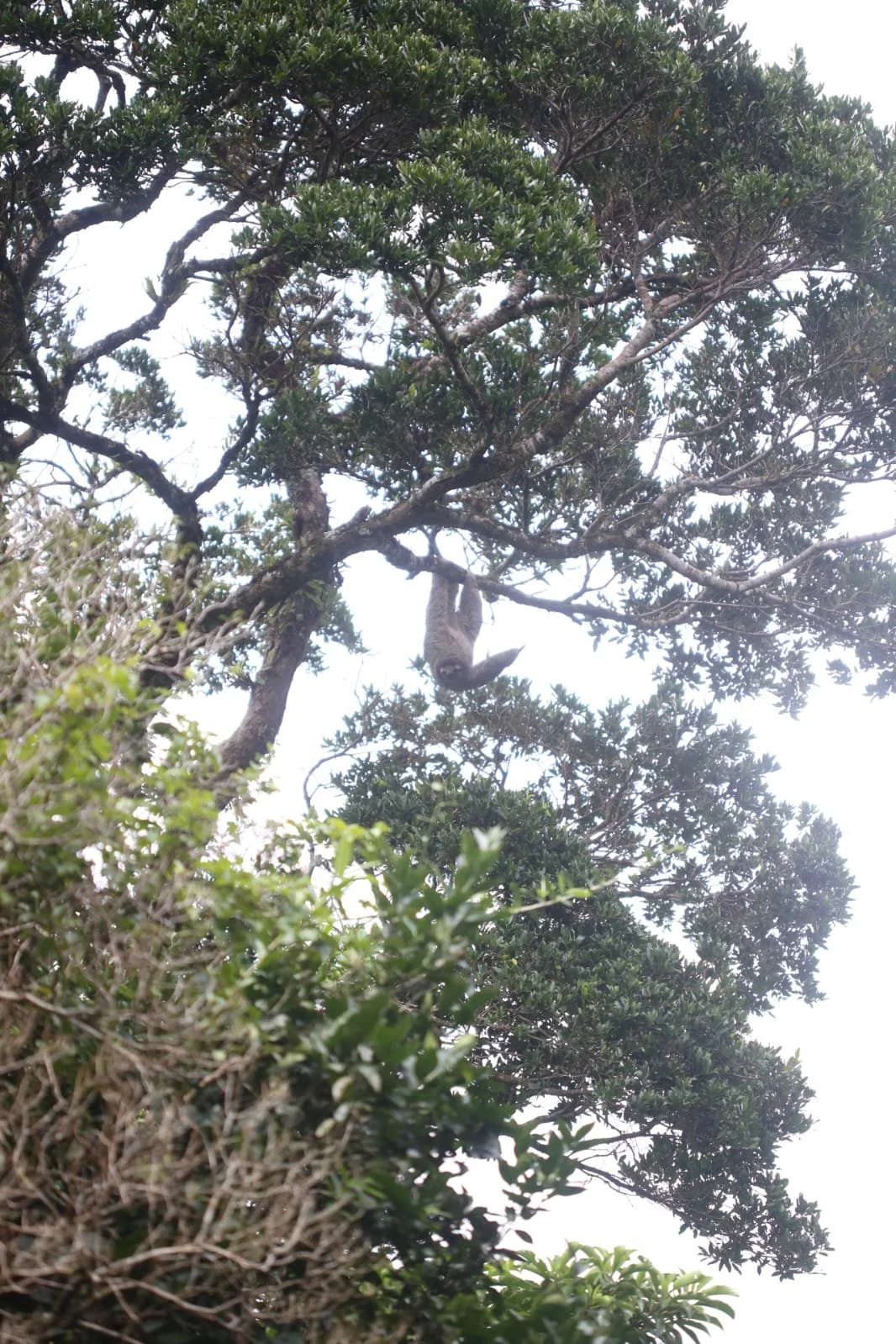
Another reason seasoned travelers quietly rate Lost and Found Hostel so highly is the wildlife. You don’t need a guidebook checklist or a multi-day expedition to see something memorable here. The cloud forest functions like a living corridor, and the hostel sits right inside it. Birds move through the canopy at eye level, monkeys announce themselves before you ever see them, and small, brilliantly colored creatures appear along trails if you slow down enough. It feels less like wildlife watching and more like wildlife happening around you.
What makes the experience stand out isn’t just biodiversity — it’s proximity. Many places in Panama promise wildlife, but you usually have to go looking for it with effort and timing. Here, sightings are woven into daily routine. Morning coffee comes with birdsong layered in the background. A short walk can turn into an impromptu observation session. Even people who aren’t particularly focused on nature find themselves noticing patterns, movements, and details they would normally miss. Among backpackers comparing notes across the country, this spot consistently comes up as the place where they saw the most — and saw it naturally, without chasing it.
Another difference from typical hostels is how memory accumulates through atmosphere rather than events. You don’t recall a single highlight — you recall a feeling that persisted.
The social environment tends to deepen quickly. Shared surroundings and slower pace create space for meaningful conversation. Connections form without effort.
Its position within Panama’s varied geography also gives it narrative importance. Travelers experience coast, islands, and highlands in one journey. The hostel represents the mountain chapter vividly.
Many people describe leaving with a slightly altered perception of time. Days feel substantial without feeling busy. That sensation stays with them.
Because so many routes funnel nearby, the hostel has become a quiet landmark in backpacker culture within Panama. Not famous in a mainstream sense, but widely recognized among those moving through the country.
Ultimately, what sets it apart isn’t a single feature but a convergence of location, atmosphere, and community. It works as a bridge between Bocas and Boquete, between movement and pause, between expectation and discovery. That convergence is why it keeps appearing on itineraries — and why so many travelers pass the recommendation forward.