
Panama is widely considered one of the best birdwatching destinations in the world, and it’s easy to understand why. Sitting at the narrow land bridge between North and South America, the country acts as a biological crossroads where species from both continents meet. The result is extraordinary diversity: more than 970 species of birds have been recorded in Panama, which is more than the United States and Canada combined. For birdwatchers, this means that even a short trip through the country can produce an incredible list of sightings. From colorful toucans and hummingbirds to elusive forest species and massive birds of prey, Panama offers some of the most rewarding birdwatching routes anywhere in the tropics.
One of the most famous birdwatching regions in Panama is the highland cloud forests around Boquete. These cool mountain forests are known for their dense vegetation, misty hillsides, and excellent bird diversity. The area is particularly famous for sightings of the stunning Resplendent Quetzal, one of the most sought-after birds in Central America. Birdwatchers often head into the forests near Volcán Barú National Park, where trails pass through moss-covered trees and bamboo groves filled with birds such as tanagers, trogons, and hummingbirds. Early mornings here are magical, with birds calling through the cloud forest as the mist slowly lifts from the mountains.
Another legendary birdwatching destination is the pipeline road area within Soberanía National Park. This location is famous among birders worldwide because of the incredible number of species that can be seen along a single road cutting through the rainforest. The quiet forest trail offers chances to see motmots, woodcreepers, toucans, and dozens of species of antbirds and flycatchers. Many birdwatchers consider this one of the best single birding locations in the entire Neotropics. Because it’s located only about an hour from Panama City, it’s also one of the easiest places for visitors to experience world-class rainforest birdwatching without traveling far from the capital.
On the Caribbean side of the country, the islands and forests of Bocas del Toro offer another exciting birdwatching route. The mix of coastal mangroves, tropical forest, and island ecosystems attracts a wide variety of birdlife. Visitors can spot species such as parrots, hawks, kingfishers, and colorful tanagers while exploring the islands by boat or hiking forest trails. The relaxed island atmosphere also makes it easy to combine birdwatching with snorkeling, beach time, and jungle exploration.
Further east, serious birdwatchers often travel to the remote wilderness of Darién National Park. This massive protected rainforest near the border with Colombia is one of the most biodiverse regions in Central America. Because it remains largely undeveloped, the park provides habitat for rare and difficult-to-see birds. Species such as harpy eagles, macaws, and many forest specialists can be found here, although reaching these areas usually requires guided expeditions and a strong sense of adventure. For experienced birdwatchers, Darién represents one of the ultimate birding frontiers in the Americas.
Another lesser-known but rewarding region for birdwatching lies in the mountains of Santa Fe. This peaceful mountain town is surrounded by lush forests, rivers, and waterfalls that create excellent habitat for birds. Trails leading into the surrounding highlands often reveal hummingbirds, woodpeckers, tanagers, and many other forest species. Because the area sees fewer tourists than more famous destinations, birdwatchers can enjoy quiet trails and pristine habitats where birds are often easier to observe.
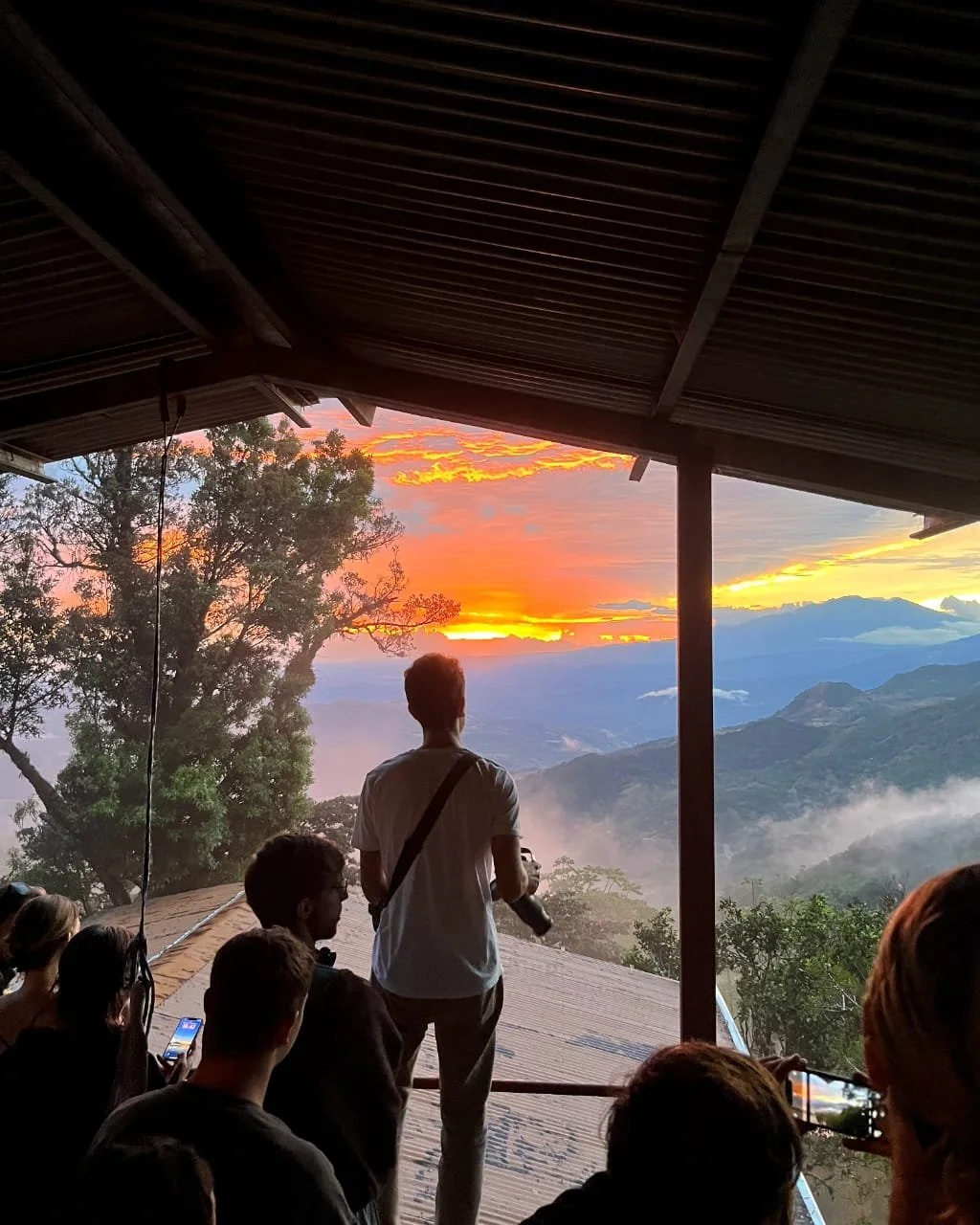
Hidden within these forests is Lost and Found Hostel, a remote eco-hostel tucked deep in the cloud forest outside Santa Fe. The property is surrounded by jungle trails and rich wildlife habitat, making it an unexpectedly great place for casual birdwatching. Guests often wake up to the sounds of birds echoing through the forest canopy, and colorful species frequently appear around the gardens and nearby trails. While it’s not strictly a dedicated birding lodge, its location in the middle of intact rainforest means birdwatchers regularly spot toucans, hummingbirds, tanagers, and many other species during their stay. For travelers who enjoy hiking and nature, it’s a unique place where birdwatching becomes part of the everyday experience.
Along the Pacific coast, birdwatchers will also find excellent opportunities in wetlands and coastal ecosystems. Areas around mangroves and estuaries attract shorebirds, herons, ibis, and migratory species traveling between North and South America. During migration seasons, thousands of birds pass through Panama’s skies, making coastal areas particularly exciting for bird enthusiasts.
What makes birdwatching in Panama so special is the sheer accessibility of it all. In many places, you don’t need to venture far into remote wilderness to see remarkable birds. A simple walk along a forest trail, a quiet morning beside a river, or even sitting on a lodge balcony can produce memorable sightings. Because the country is compact, travelers can easily combine multiple birdwatching regions into one itinerary, experiencing different ecosystems and species within a relatively short trip.
For birdwatchers, Panama is more than just another tropical destination—it’s a living bridge between continents filled with color, sound, and life in the trees above. Whether exploring famous birding routes like Soberanía National Park, searching cloud forests near Boquete, wandering the jungles around Santa Fe, or relaxing at a rainforest hostel surrounded by birdsong, the country offers endless opportunities to watch the jungle come alive.