
Panama is one of those rare countries where geography itself feels like a story already written. A narrow isthmus connecting two oceans, a rainforest corridor linking continents, and a human made canal that permanently altered global trade routes all combine to make it a place that writers have returned to again and again. The literature connected to Panama is not only national, it is global, shaped by engineers, explorers, poets, political thinkers, scientists, and travelers who all tried to interpret what this small but strategically immense country represents. To read about Panama is to move between two literary worlds, the works written in Panama or by Panamanian authors, and the vast archive of books written about Panama, especially those focused on the canal, empire, ecology, and the country’s role as a meeting point of civilizations. Together they form one of the most layered literary identities in Central America, and one of the most overlooked literary landscapes in the world.
Panamanian literature is deeply tied to questions of identity, sovereignty, and cultural hybridity, because Panama has always existed between larger powers and global systems. Its writers often reflect on what it means to belong to a place that is constantly in motion, economically, politically, and geographically. One of the most influential cultural figures associated with Panamanian storytelling is Rubén Blades, whose work transcends music and enters the realm of literary narrative. His lyrics function as short stories about urban life, migration, injustice, memory, and survival, particularly in Panama City’s working class neighborhoods. Albums like Siembra and Maestra Vida are often analyzed as serialized narrative literature, where characters evolve across songs and social realities are explored with journalistic precision and poetic depth. Blades represents a modern Panamanian literary voice in musical form, one that connects the country’s lived reality with broader Latin American identity, and one that has influenced generations of storytellers.
Earlier foundational literature comes from poets such as Ricardo Miró, whose poem “Patria” remains one of the most important texts in Panamanian national identity. Written during a period when Panama was still grappling with its post independence identity and the presence of the Canal Zone, the poem reflects longing, separation, and emotional geography. It is not only poetry, it is a declaration of how distance, displacement, and belonging shape national consciousness, especially in a country physically divided by a foreign controlled corridor of land.
Another major literary figure is Rogelio Sinán, one of Panama’s most important modernist writers, whose works including Plenilunio, La Boina Roja, and numerous short stories introduce surrealism, symbolism, and psychological exploration into Panamanian literature. Sinán’s writing often blurs the boundary between reality and dream, reflecting a Panama that is not only physical but symbolic, where identity is shaped by Caribbean influence, Pacific geography, colonial memory, and emerging modernity. His influence extends beyond Panama into broader Latin American modernism, positioning the country within a continental literary conversation rather than a peripheral one.
Modern Panamanian writers continue to expand these themes, exploring urban transformation, inequality, environmental pressure, migration, and globalization. Contemporary literature often reflects the rapid development of Panama City, the expansion of global trade through the canal, and the tension between tradition and modernization in rural regions such as the Azuero Peninsula, the Caribbean coast, and highland communities. In these works, Panama is often portrayed as a country being rewritten in real time, where old cultural structures coexist with rapidly evolving global influences.
While Panamanian authors shape the internal narrative of the country, some of the most widely read and internationally influential books about Panama were written by foreign engineers, historians, journalists, and travelers, particularly in relation to the Construction of the Panama Canal. One of the most definitive works on this subject is David McCullough’s The Path Between the Seas, which chronicles the entire history of the canal from early French attempts through American completion. The book is widely considered one of the most comprehensive historical accounts ever written about a single engineering project. It details not only technical challenges but also political struggles, medical breakthroughs, and the immense human cost of building through tropical terrain, where disease, weather, and geography all acted as constant opposing forces.
Earlier writings from the canal era include reports, memoirs, and engineering journals produced by American administrators and military officials who documented the transformation of Panama from a disease ridden construction zone into a functioning global artery. These texts often reflect the mindset of early industrial expansion, where Panama was viewed through the lens of efficiency, control, and geopolitical advantage, rather than as a sovereign cultural landscape. Over time, later scholarship began to reframe these narratives, emphasizing Panamanian agency, labor contributions, and the long term social consequences of canal construction.
Panama has also long fascinated travel writers because it feels like a country in motion. It is frequently described as a place where landscapes change faster than in most countries, where urban skylines give way to jungle within minutes, and where tropical rainforests can transition into dry coastal plains or cloud forests in a single journey. Travel literature often emphasizes this sense of compression, where multiple ecosystems and cultural realities exist within short distances. Writers describe flying into Panama City and immediately seeing a skyline of glass towers backed by green mountains, or traveling toward the interior and passing through regions that shift dramatically in climate, altitude, and biodiversity.
The contrast between the modern infrastructure of the capital and remote wilderness areas like the Darién Gap is one of the most recurring themes in travel writing. The Darién in particular is often described as one of the most impenetrable natural regions in the Western Hemisphere, a place where roads end and the jungle resumes full control of the landscape. Writers frequently use it as a metaphor for limits, both of civilization and of exploration, where human infrastructure dissolves into dense rainforest, rivers, and swamp systems that resist permanent passage.
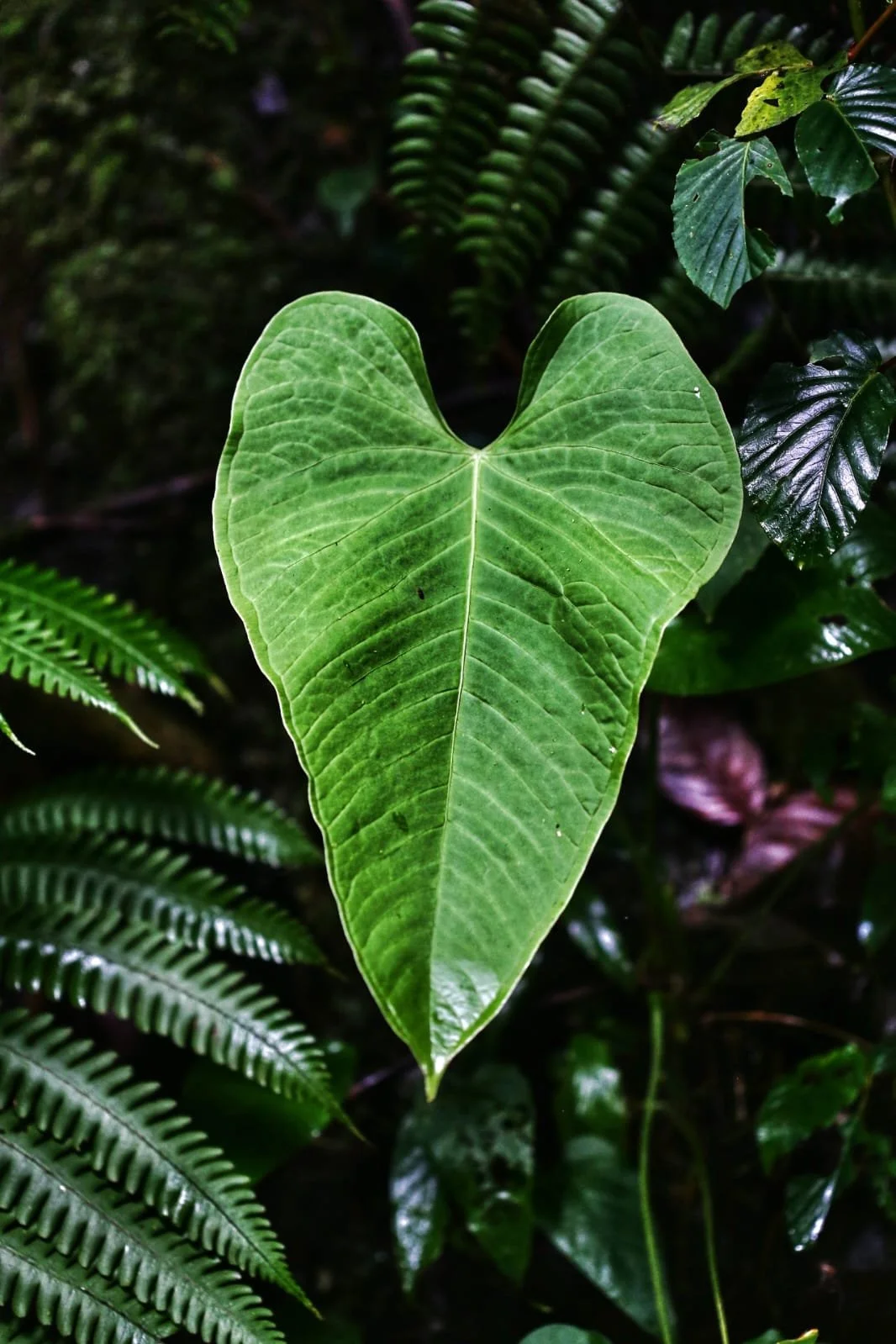
Beyond travel and history, Panama plays a significant role in ecological literature due to its extraordinary biodiversity and its position as a biological bridge between continents. Scientific writing often focuses on how species from North and South America converged in this region after the formation of the isthmus millions of years ago, creating one of the richest biodiversity corridors on Earth. Regions such as Fortuna Forest Reserve are frequently referenced in ecological studies due to their cloud forest systems, high rainfall, and dense biological diversity. These ecosystems contain countless species of birds, amphibians, orchids, insects, and mammals, many of which depend on very specific altitude and climate conditions.
Scientific literature often frames Panama not only as a country but as a biological junction point that reshaped global evolution. When the land bridge formed between North and South America, it triggered massive species migrations that permanently altered ecosystems across two continents. In this sense, Panama appears in scientific writing as both a modern ecological hotspot and a deep time geological event that influenced life far beyond its borders.
A significant portion of books about Panama also focus on political history, especially its relationship with the United States and the historical presence of the Canal Zone. For much of the twentieth century, the canal was not fully controlled by Panama, which created a unique political situation where a foreign administered strip of land existed within national borders. Books on this topic explore sovereignty, resistance, diplomacy, and identity formation, often emphasizing the emotional and political importance of reclaiming full control over the canal.
The transfer of control under the Torrijos–Carter Treaties is widely regarded as one of the most significant geopolitical transitions in Latin America during the late twentieth century. These works examine how Panama transitioned from partial external control of its most important asset to full sovereignty over one of the most strategically important waterways in the world, and how that shift reshaped national identity, economic independence, and international perception.
Although Panama is less frequently used as a primary setting in fiction compared to larger countries, it often appears symbolically in novels and narratives as a place of passage, transition, and hidden movement. The canal in particular becomes a metaphor for control, transformation, and the reshaping of natural boundaries. Writers use Panama as a setting where characters move between worlds, economic systems, continents, identities, and moral choices. It is rarely the destination in fiction, but almost always the corridor, reinforcing its real world role as a global transit point.
The literature of Panama is not a single story but a layered archive of perspectives. It includes the poetic and musical storytelling of Rubén Blades, the foundational national identity expressed by Ricardo Miró, the surreal modernism of Rogelio Sinán, the historical depth of works about the Construction of the Panama Canal, the ecological richness of places like Fortuna Forest Reserve, and the geopolitical narratives surrounding the Darién Gap.
Together these works reveal a country that is not static but constantly being rewritten, geographically, culturally, and historically. Panama is written in layers of rainforest, steel, ocean, migration, and memory. It is a place where empires passed through, ecosystems merged, and human ambition permanently reshaped the land. And in the end, its literature reflects the same truth as its geography, Panama is not just a country you read about, it is a passage through which the world itself moves, and every book written about it becomes part of that ongoing crossing.