
At the far southeastern edge of the Azuero Peninsula, where the paved roads begin to feel increasingly isolated and the Pacific Ocean grows louder with every kilometer, there is a small coastal village that many travelers describe as one of the last truly peaceful beach destinations in Panama. This is Cambutal, a remote stretch of coastline where jungle covered hills collapse into the sea, where surfers chase powerful swells, where sea turtles still nest under dark skies, and where the atmosphere feels less like a resort town and more like a forgotten frontier on the edge of the Pacific.
Cambutal is one of those rare places that seems to exist outside the normal rhythm of modern tourism. Unlike heavily developed beach destinations filled with towers, loud nightlife, and endless traffic, Cambutal remains small, rugged, and deeply connected to nature. The road there itself creates a psychological transition. As travelers move farther south through the dry forests and cattle country of the Azuero Peninsula, the landscape begins changing dramatically. The hills become greener. Rivers appear beside the road. The air grows heavier with ocean humidity. Finally, after long stretches of quiet countryside, the Pacific suddenly emerges in a vast explosion of surf and horizon.
What surprises many first time visitors is how wild Cambutal feels compared to much of the rest of Panama’s Pacific coast. The beaches are enormous and often nearly empty. Thick vegetation still reaches close to the shoreline in many areas. Powerful waves crash constantly against dark sand and rocky points. There are moments when the town feels less like a conventional village and more like a tiny human settlement placed carefully between jungle and ocean.
Geographically, Cambutal occupies one of the most fascinating positions in Panama. The village lies near the southern tip of the Azuero Peninsula, a region with its own distinct climate, ecology, and cultural identity. Unlike the wetter Caribbean side of Panama, much of the Azuero Peninsula experiences a pronounced dry season. Yet Cambutal exists in a transitional zone where Pacific moisture and surrounding topography create a greener, more humid environment than many inland parts of the peninsula.
The ocean defines nearly everything about Cambutal. This section of the Pacific is energetic, powerful, and constantly moving. Long period swells generated far out in the Pacific Ocean arrive with remarkable force along the coastline. During large swell events the surf becomes thunderous. Waves explode against reefs and rocky points while spray shoots high into the air beneath dramatic tropical skies. Even people who have no interest in surfing often become mesmerized simply watching the ocean here.
For surfers, Cambutal has quietly developed a reputation as one of Panama’s most intriguing wave destinations. The area offers multiple surf breaks ranging from beginner friendly sections to heavy waves capable of challenging highly experienced surfers. Because the town remains relatively remote, lineups are often far less crowded than in more internationally famous surf destinations. Surfers can spend hours in the water with only a handful of people around, something increasingly rare in the modern surfing world.
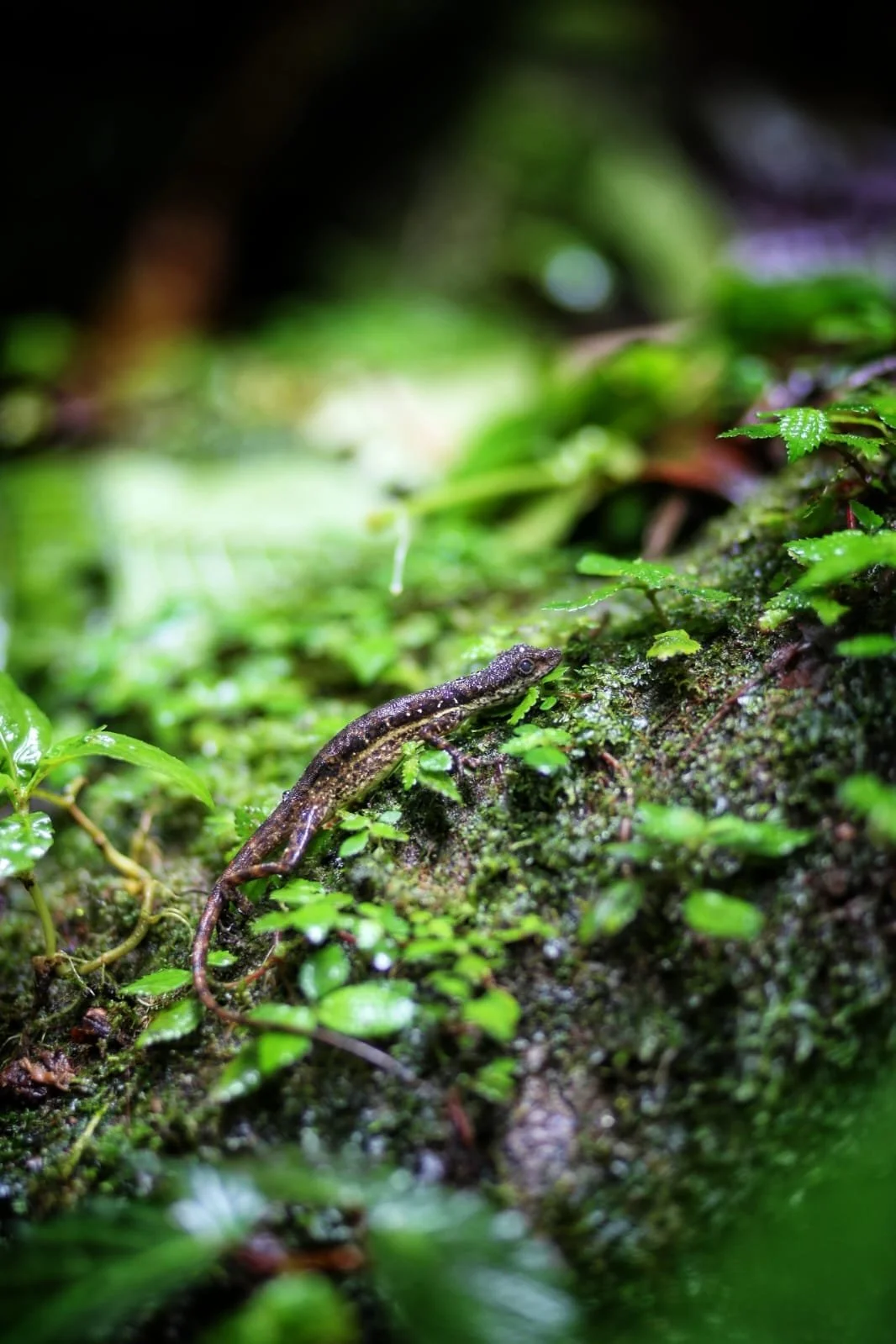
The nature surrounding Cambutal is just as captivating as the waves. One of the most remarkable aspects of the region is how quickly ecosystems change over short distances. Along the coast there are mangroves, estuaries, tide pools, and beaches. Inland, forested hills rise rapidly, creating habitats for monkeys, reptiles, tropical birds, and countless insects. During the rainy season the entire landscape becomes intensely green, with rivers swelling and waterfalls appearing throughout the surrounding countryside.
Birdlife in Cambutal can be extraordinary. Pelicans skim low over incoming waves while frigatebirds soar high above the coast. In forest edges and gardens, hummingbirds dart between flowers and motmots perch quietly in shaded branches. Hawks circle above the hills searching for prey rising on warm air currents. At dawn the soundscape becomes alive with calls echoing between jungle and sea.
The nights in Cambutal are unforgettable. Because development remains limited, darkness still dominates after sunset. The stars can appear astonishingly bright, especially during dry season evenings with clear skies. The sounds are equally powerful. Waves crash endlessly in the background while insects pulse from the surrounding vegetation. In wetter months, frogs create an almost surreal orchestra from flooded ditches and streams.
Sea turtles are another important part of Cambutal’s natural identity. Several species use sections of Panama’s Pacific coast for nesting, and beaches near Cambutal have become significant turtle habitat. During nesting season, giant turtles emerge from the ocean at night and slowly crawl across the sand to lay eggs above the high tide line. Watching this process is one of the most extraordinary wildlife experiences in Panama. Conservation groups and local communities have increasingly worked to protect these fragile nesting areas from poaching and environmental damage.
The coastline around Cambutal also reveals fascinating geological features. Rocky headlands, volcanic formations, and eroded cliffs create dramatic scenery shaped by centuries of Pacific wave action. Tide pools form among black volcanic rocks where tiny marine ecosystems survive between tides. Crabs dart across wet stone while small fish become trapped temporarily in shallow pools warmed by the tropical sun.
One of the most interesting things about Cambutal is how isolated it remained for so long. Before road improvements, reaching the village was significantly more difficult. That isolation preserved much of the region’s natural character and slowed the pace of outside development. Even today, Cambutal feels disconnected from the frantic pace of urban life. There are no giant hotel complexes dominating the shoreline. Instead, visitors find small lodges, surf camps, simple restaurants, and scattered homes tucked between palms and forest.
The atmosphere attracts a very particular type of traveler. Cambutal appeals to people looking for quiet rather than spectacle. Surfers searching for uncrowded waves, birdwatchers interested in coastal biodiversity, overlanders exploring remote parts of Panama, and travelers simply wanting to disconnect from cities often fall in love with the place. Many arrive intending to stay only a few days and end up remaining much longer than planned.
Fishing remains deeply woven into local life. Early mornings often begin with boats heading onto the Pacific while the sky slowly brightens above the horizon. The surrounding waters support tuna, snapper, roosterfish, and many other species that sustain both local communities and recreational fishing tourism. The relationship between people and ocean here still feels direct and practical rather than commercialized.
The rainy season transforms Cambutal into something almost mythical. Massive storm clouds roll inland from the Pacific, drenching the landscape in warm tropical rain. Rivers become muddy torrents. Jungle vegetation explodes with growth. Mist hangs over the hills while thunder echoes across the coastline. During these months the region feels overwhelmingly alive. Everything drips, grows, blooms, and moves.
Yet the dry season has its own beauty entirely. The skies become clearer, sunsets grow spectacularly vivid, and the ocean often turns brilliant shades of blue beneath golden evening light. Dust rises from rural roads while warm Pacific winds sweep across the beaches. It is during this period that many travelers experience Cambutal’s calmest and most peaceful atmosphere.
Culturally, Cambutal reflects the traditions of the Azuero Peninsula, a region known throughout Panama for strong rural identity, ranching culture, traditional festivals, and deep historical roots. Although tourism has grown gradually, the village still feels authentically Panamanian. Conversations happen slowly. People know each other. Life follows the rhythms of weather, fishing conditions, and surf rather than strict schedules.
One of the most remarkable qualities of Cambutal is how emotionally different it feels from many tourist destinations. There is very little pressure to constantly do things. The village encourages observation instead of consumption. People spend hours simply watching waves, listening to rain on rooftops, or walking empty beaches beneath enormous skies. In a world increasingly dominated by noise and overstimulation, Cambutal’s silence becomes one of its greatest luxuries.
For geographers, Cambutal represents an especially interesting coastal transition zone where tropical dry forest systems meet wetter Pacific influences. The surrounding landscape demonstrates the interaction between ocean currents, rainfall patterns, tectonic geology, and human settlement. Coastal erosion, sediment transport, estuarine ecology, and marine biodiversity all shape the region in visible ways.
For travelers, however, Cambutal’s appeal often becomes much simpler. It is one of the few places where Panama still feels untamed, quiet, and profoundly connected to the natural world. The village offers the rare sensation of reaching the edge of something vast and ancient, where jungle hills descend toward a restless Pacific and where life still moves according to tides, storms, and seasons rather than modern urgency.
Cambutal is not the Panama of skyscrapers and canal ships. It is the Panama of crashing surf, sea turtles, tropical storms, empty beaches, and glowing sunsets over one of the wildest stretches of coastline in Central America.