
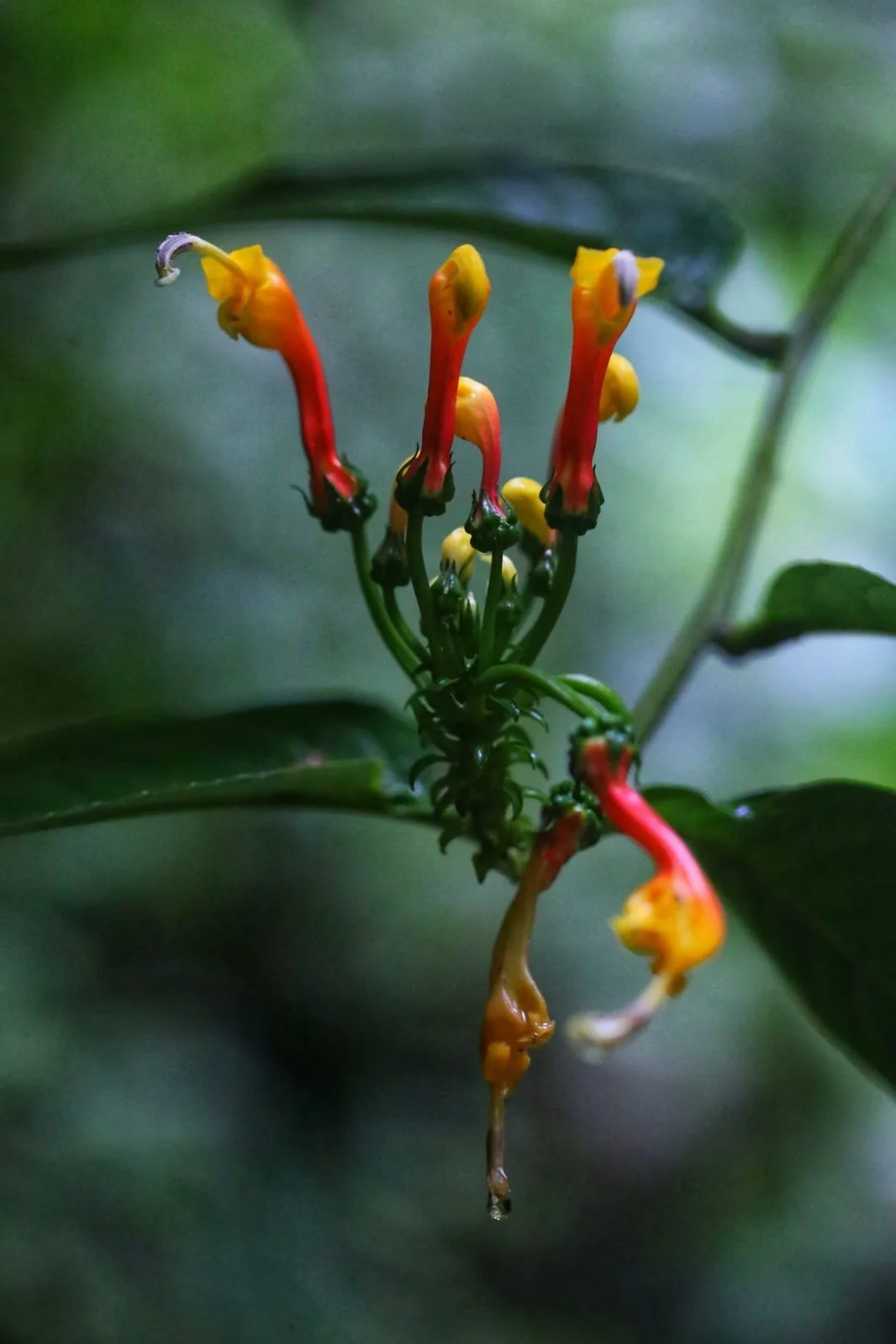
There are places in Panama that feel almost mythical once you begin reading about them. Regions so remote and rarely visited that even many Panamanians know little about what exists there. One of the greatest examples is Cerro Hoya National Park, a wild mountainous region hidden at the far southwestern edge of the Azuero Peninsula.
Cerro Hoya feels less like a tourist destination and more like a forgotten fragment of ancient Panama.
It is a place where rainforest covered mountains rise abruptly from isolated Pacific coastlines, where rivers cut through untouched jungle, and where some of the rarest wildlife in the country still survives because humans have struggled to reach it for centuries.
Even today, getting there remains difficult enough that many travelers never attempt it.
That isolation is exactly what makes Cerro Hoya extraordinary.
The Mountain Nobody Sees
The name Cerro Hoya refers both to the national park and the mountain itself, one of the highest peaks on the Azuero Peninsula. Rising dramatically above the Pacific side of the peninsula, the mountain creates its own isolated world of cloud forest, rivers, waterfalls, and dense jungle ecosystems.
What makes Cerro Hoya especially fascinating is its geographical isolation.
The Azuero Peninsula is already somewhat separated from the rest of Panama culturally and geographically. But the southwestern tip of the peninsula becomes even more remote. Roads thin out. Villages grow smaller. Infrastructure fades. Eventually the mountains and forests begin dominating everything.
Cerro Hoya exists at the very end of that progression.
For decades, the difficulty of reaching the region helped preserve enormous areas of forest while much of the surrounding peninsula was transformed into cattle pasture and farmland. From above, Cerro Hoya appears like a surviving green fortress of wilderness surrounded by more heavily altered landscapes.
Scientists consider the area extremely important biologically because it protects ecosystems found nowhere else on Earth.
A Different Kind of Panama
Many travelers imagine Panama as beaches, islands, and the famous canal. Cerro Hoya reveals another side entirely.
This is rugged frontier Panama.
The forests here are dense, humid, and alive with wildlife. Rivers tumble through steep valleys. Mountain ridges disappear into clouds. In some areas, the jungle still feels genuinely primeval, as if it belongs to another era.
The isolation creates an atmosphere unlike more accessible parks in Panama. There are few developed trails, few tourism services, and very little infrastructure compared to national parks near major tourist routes. Visiting Cerro Hoya often feels more like an expedition than a vacation.
That difficulty shapes the experience psychologically.
When travelers finally arrive after long drives, rough roads, boat rides, or hikes through remote countryside, the wilderness feels earned. The landscape carries a sense of mystery precisely because so few people ever see it.
The Cloud Forests Above the Pacific
One of the most remarkable aspects of Cerro Hoya is the transition between ecosystems.
Near the coast, the environment feels hot and tropical. Dry forests and rugged Pacific beaches dominate lower elevations. But as the mountains rise, moisture from the Pacific condenses against the slopes, creating lush cloud forests higher up.
These cloud forests feel magical.
Mist drifts continuously through moss covered trees. Ferns cover branches. Orchids cling to trunks. The air cools dramatically. Every surface seems wet and alive. Insects hum through the fog while birds call invisibly from the canopy.
Because of the park’s isolation, some scientists believe certain species evolved here independently for long periods. Cerro Hoya became a refuge for plants and animals while surrounding landscapes changed dramatically over time.
The result is a region with astonishing biodiversity.
Wildlife Hidden in the Mountains
Cerro Hoya is one of the last strongholds for several rare species in Panama.
Jaguars still move through these forests, although they are rarely seen. Puma, ocelots, monkeys, deer, reptiles, and countless bird species inhabit the region. The isolation has allowed wildlife populations to survive that disappeared elsewhere on the peninsula decades ago.
Birdlife here is especially remarkable.
The mountains and forests support toucans, parrots, hawks, hummingbirds, and many species associated with both Central and South American ecosystems. Because Panama acts as a biological bridge between continents, places like Cerro Hoya contain fascinating overlaps of wildlife from both directions.
At night, the forests become even more mysterious.
Frogs erupt into sound after rainstorms. Insects pulse through the darkness. Strange calls echo through valleys beneath the clouds. In truly remote areas, the jungle can feel almost overwhelming in its intensity.
Unlike highly touristic parks where wildlife becomes accustomed to constant human presence, animals in Cerro Hoya often remain elusive and deeply wild.
That makes every encounter feel more significant.
The Human Isolation of the Region
Part of what makes Cerro Hoya fascinating is how sparsely populated the surrounding region remains.
Small rural communities exist around parts of the park, many historically connected to fishing, farming, or cattle ranching. Life here has traditionally been difficult due to the remoteness and limited transportation infrastructure.
Roads into the area can become challenging, especially during rainy season. Rivers swell rapidly. Mudslides and washouts are not uncommon. In some places, access may involve boats or horseback travel.
This isolation preserved the park but also shaped the culture surrounding it. The southwestern Azuero Peninsula retains a frontier atmosphere that feels increasingly rare in modern Panama.
Travelers quickly realize they are far from the polished tourism infrastructure of better known destinations.
The Pacific Coastline of Cerro Hoya
Another reason Cerro Hoya feels unique is the dramatic meeting of mountains and ocean.
Along parts of the coastline near the park, jungle covered mountains plunge toward isolated Pacific beaches battered by surf and storms. Some beaches remain almost completely empty except for fishermen, seabirds, and occasional travelers willing to make the difficult journey.
The Pacific here feels powerful and untamed.
Unlike the calm turquoise Caribbean associated with tropical postcards, this coastline often feels rugged and moody. Waves crash against rocky shores while dark clouds gather over the mountains behind them.
Sunsets can become astonishing.
The combination of isolated beaches, giant skies, and mountains wrapped in jungle creates scenes that feel cinematic in scale.
Rain and the Feeling of Another World
Rain defines Cerro Hoya.
During wet season, storms move through the mountains with incredible force. Rivers roar through valleys. Forests drip continuously. Clouds swallow entire ridges. Trails transform into muddy rivers winding through dense vegetation.
Yet these conditions are also what keep the region so alive.
The moisture feeds enormous biodiversity and gives the forests their almost overwhelming lushness. Everything grows aggressively here. Moss, vines, ferns, orchids, and giant tropical trees compete for space beneath constant humidity.
Travelers who experience Cerro Hoya during misty weather often describe it as feeling prehistoric.
There is something ancient about cloud forest landscapes where visibility fades into fog and every surface pulses with life.
Why Cerro Hoya Feels So Different
What ultimately separates Cerro Hoya from many destinations is not just beauty, but remoteness.
Modern tourism often removes difficulty from travel. Roads improve. Resorts appear. Adventure becomes curated and predictable. Cerro Hoya resists that transformation simply because geography still dominates human convenience.
The park remains physically demanding to access, biologically rich, and psychologically wild.
That combination is becoming rare.
When people speak about “undiscovered” places today, they are often describing destinations already flooded with social media exposure. Cerro Hoya is different. Large parts of the region still feel genuinely isolated from mainstream tourism.
And because of that, the wilderness retains power.
Standing in the forests of Cerro Hoya, hearing nothing but insects, rain, and distant rivers beneath mountains wrapped in clouds, it becomes easy to understand how Panama once looked before roads, cities, and development transformed the landscape.
Cerro Hoya is not simply a national park.
It is a surviving fragment of ancient tropical wilderness at the edge of the peninsula, where the roads end and the forests still rule.