
When most people think about wildlife in Panama's cloud forests, their minds immediately jump to resplendent quetzals, colorful frogs, orchids dripping from moss-covered branches, or perhaps the elusive jaguar prowling through the mountains. Yet one of the most fascinating groups of animals inhabiting these misty forests often goes unnoticed. The cloud forest lizards of Panama are among the most remarkable reptiles in Central America, having evolved to survive in cool, wet environments that seem almost unsuitable for creatures typically associated with sunshine and tropical heat.
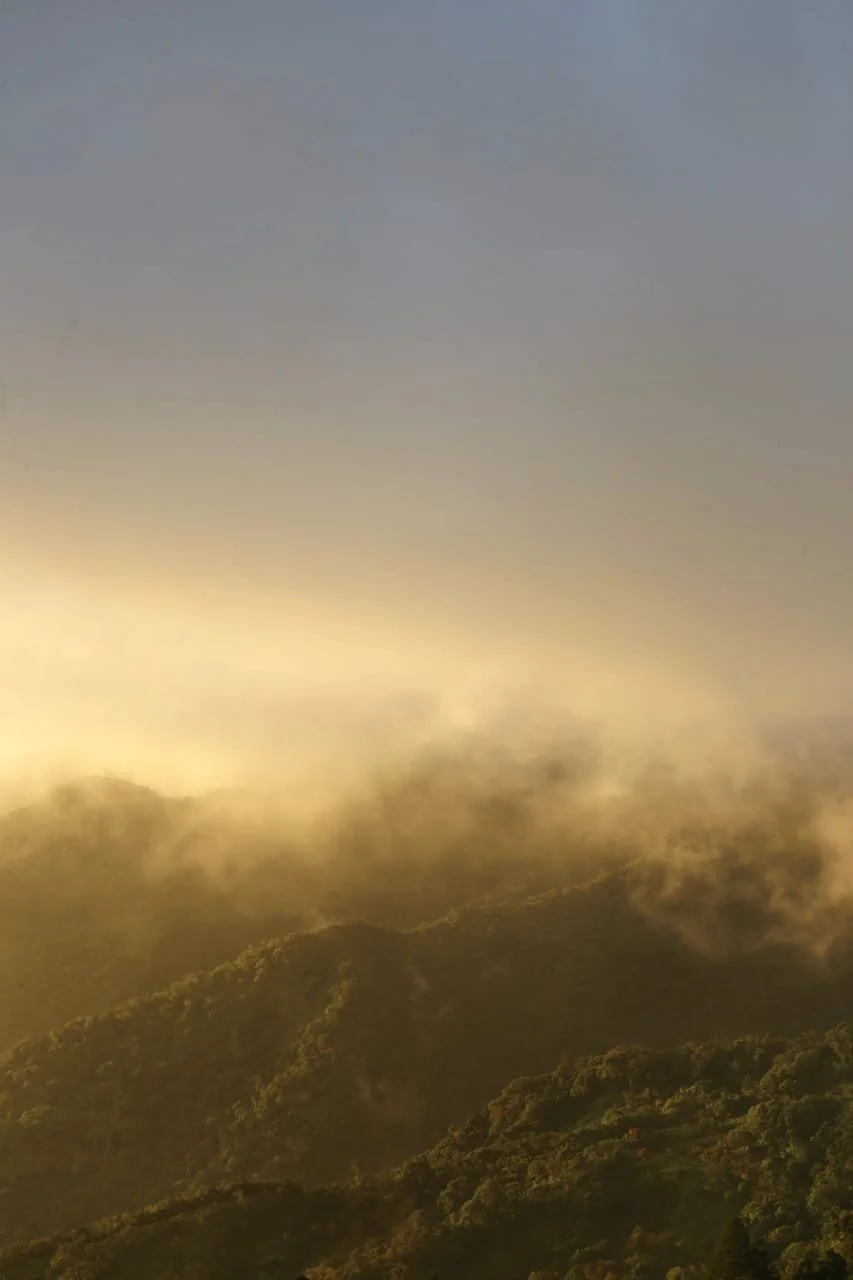
The cloud forests of western Panama, particularly around Volcán Barú and La Amistad International Park, are unlike the lowland rainforests that many visitors imagine. At elevations ranging from roughly 1,200 to over 3,000 meters, temperatures can drop dramatically, clouds frequently envelop the forest canopy, and annual rainfall can exceed several meters. These conditions create a mysterious world of moss-covered trees, giant ferns, bromeliads, and countless hidden creatures. Scientists have documented hundreds of amphibian and reptile species within the La Amistad region, making it one of the most biologically important mountain systems in Central America.
One of the most frequently encountered cloud forest lizards is the Cloud Forest Anole, known scientifically as Anolis tropidolepis. This small reptile is perfectly adapted to life among wet branches and dense vegetation. Unlike many lowland lizards that spend their days basking in intense tropical sunshine, cloud forest anoles often remain active under cool, overcast conditions. Their coloration typically consists of subtle browns, greens, and grays that blend seamlessly with moss-covered bark and lichen-encrusted branches. To an untrained eye, they can appear almost invisible until they suddenly dart away. Researchers and naturalists working in the highlands of Chiriquí frequently encounter these lizards perched on shrubs and tree trunks along forest trails.
Perhaps the most fascinating aspect of cloud forest lizards is their ability to cope with cold temperatures. Reptiles are ectotherms, meaning they depend on environmental conditions to regulate body temperature. In the cloud forests surrounding Volcán Barú, nighttime temperatures can become surprisingly chilly, especially at higher elevations. Instead of basking on exposed rocks as desert lizards do, many cloud forest species take advantage of brief periods of sunlight filtering through the fog. They often position themselves strategically on branches where they can absorb warmth while remaining hidden from predators. This delicate balancing act allows them to maintain activity despite living near the upper temperature limits for tropical reptiles.
Among the more unusual species found in Panama's mountain forests are several endemic anoles that occur nowhere else on Earth. The mountains of western Panama form part of the great Talamanca Range, a biological island of cool habitats separated from similar environments by vast stretches of warmer lowlands. Over millions of years, this isolation has encouraged evolution to produce unique species adapted specifically to cloud forest conditions. Some possess enlarged toe pads for gripping slippery vegetation, while others exhibit body shapes and colors that allow them to disappear among epiphytes and mosses.
Nighttime in the cloud forest reveals an entirely different side of lizard life. During daylight hours, many species remain hidden among vegetation. Once darkness falls, however, observant hikers equipped with flashlights may discover sleeping anoles perched on leaves. These lizards often choose exposed sleeping sites because approaching predators can be detected through vibrations in the leaf. A sleeping anole illuminated by a flashlight appears almost jewel-like, its scales reflecting tiny droplets of moisture from the ever-present mist.
The forests around Boquete and Cerro Punta are particularly famous among herpetologists because they support an extraordinary concentration of reptile diversity. Species such as Anolis vociferans and Anolis fungosus have been recorded in the cloud forests of Volcán Barú. These lizards occupy different ecological niches, reducing competition and allowing multiple species to coexist within the same forest. One may prefer thick understory vegetation, another may spend most of its life on tree trunks, while yet another specializes in the forest canopy.
A casual visitor walking through a cloud forest may wonder why lizards seem less abundant than in Panama's lowlands. The answer lies partly in the nature of the environment itself. The cool temperatures slow reptilian metabolism, resulting in lower activity levels. Additionally, dense vegetation and abundant camouflage make cloud forest lizards exceptionally difficult to spot. A trail that appears devoid of reptiles may actually contain dozens of individuals hidden within a few meters of the observer.
Predators exert constant pressure on these reptiles. Birds, snakes, mammals, and even larger lizards prey upon them. Consequently, cloud forest species have evolved remarkable defensive strategies. Some flatten themselves against tree trunks to eliminate shadows that might reveal their presence. Others rely on rapid bursts of speed through dense vegetation. Many species possess cryptic coloration so effective that even experienced wildlife guides occasionally overlook them.
The ecological role of cloud forest lizards is far greater than their size would suggest. They consume enormous numbers of insects, spiders, and other small invertebrates. In doing so, they help regulate populations of countless arthropods throughout the forest. At the same time, they serve as prey for larger animals, linking lower and higher levels of the food web. Remove the lizards, and the entire ecosystem would feel the effects.
The cloud forests of Panama continue to surprise scientists. New reptiles, amphibians, and other vertebrates are still being discovered in the mountains of western Panama and the Talamanca region. The rugged terrain, difficult access, and incredible habitat complexity mean that many areas remain poorly studied even today. Discoveries of previously unknown species in nearby highland ecosystems remind us that these forests still contain biological secrets waiting to be revealed.
For visitors staying in the Chiriquí Highlands, especially near the forests connecting Boquete, Cerro Punta, and La Amistad, patience is the key to finding these remarkable reptiles. Move slowly, scan moss-covered trunks, inspect low branches, and look carefully along the edges of trails. The reward may be the sight of a tiny cloud forest dragon perfectly adapted to life among the mist and moss.
In many ways, Panama's cloud forest lizards symbolize the magic of the highlands themselves. They are subtle rather than spectacular, hidden rather than obvious, and easily overlooked by those rushing through the forest. Yet for those who take the time to observe closely, these small reptiles reveal an extraordinary story of evolution, adaptation, and survival in one of the most beautiful ecosystems in the Americas. High above the tropical lowlands, where clouds drift through ancient trees and every branch is draped in emerald moss, these miniature dragons continue their quiet existence, largely unseen but absolutely essential to the living fabric of Panama's mountain forests.