
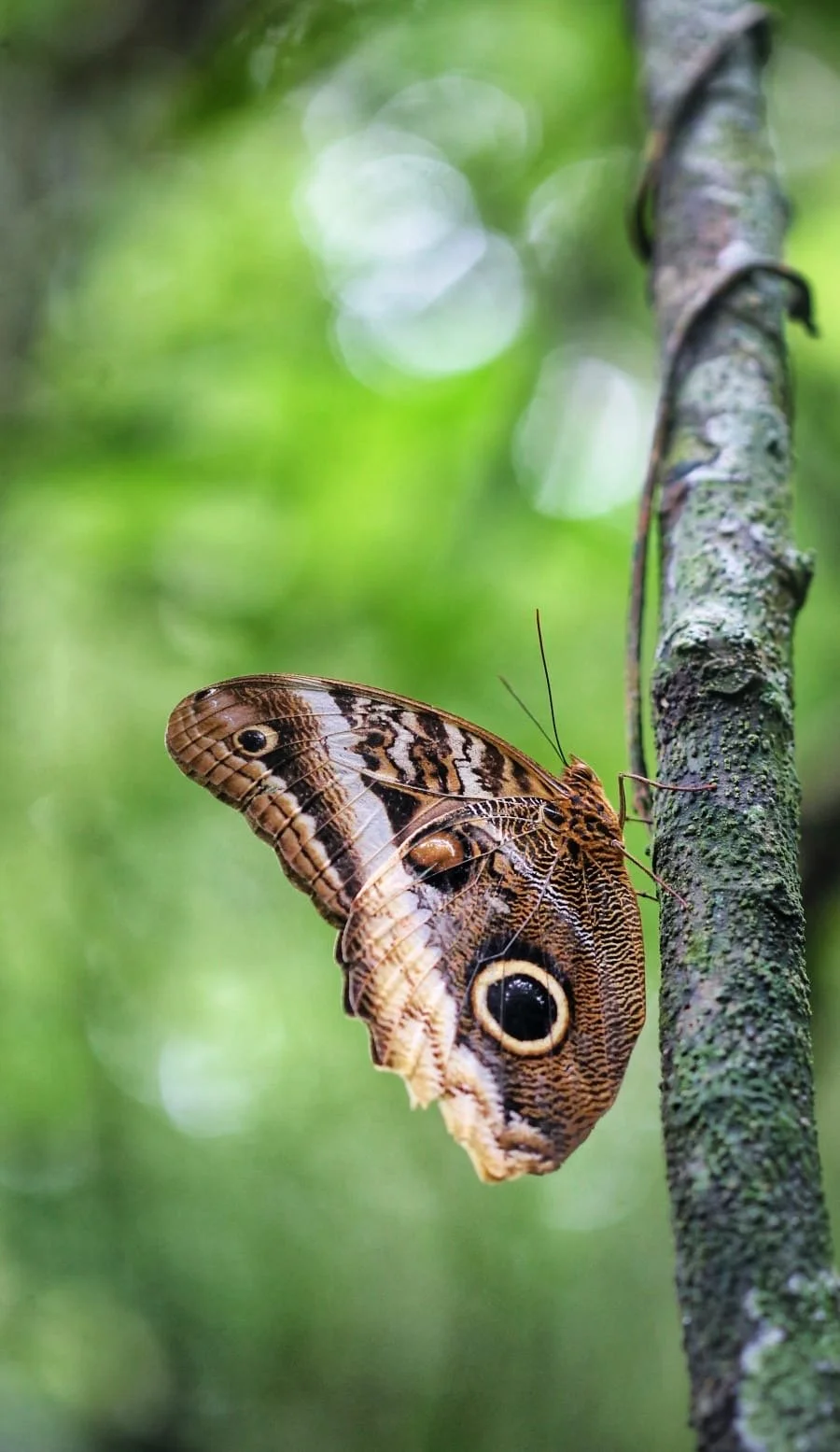
In an age when satellites can photograph nearly every corner of the Earth, when smartphones can provide directions to distant destinations, and when social media constantly reveals new travel hotspots, it is easy to assume that there are few true frontiers left. Yet Panama remains home to places where silence still dominates, where nature vastly outnumbers people, and where a traveler can experience a sense of isolation that has become increasingly rare in the modern world.
Most visitors to Panama follow familiar routes. They visit Panama City, explore the canal, wander through Casco Viejo, travel to Boquete, relax in Bocas del Toro, or spend time on popular beaches. These destinations deserve their popularity. Yet beyond the well known attractions lies another Panama, a country of remote mountains, forgotten coastlines, immense forests, little visited islands, and valleys where entire days can pass without encountering another person.
These places are not necessarily difficult to reach because they are far away. Rather, they remain isolated because Panama's geography itself creates barriers. Dense rainforest, rugged mountains, winding rivers, seasonal weather, and vast protected areas have preserved pockets of wilderness that feel astonishingly untouched.
One of the most remarkable things about remote Panama is the sound, or more accurately, the lack of human sound.
In modern cities, silence barely exists. Even at night there are engines, machinery, distant traffic, air conditioners, construction projects, aircraft, and countless other sources of noise. Many people have become so accustomed to constant background sound that they no longer notice it. In Panama's most remote landscapes, however, an entirely different acoustic world emerges.
Imagine standing beside a river deep within the forests of eastern Panama. There are no highways. No sirens. No aircraft overhead. No distant music. Instead, the dominant sounds come from the natural world. Water moves over rocks. Insects produce intricate choruses. Birds call from hidden branches. Wind moves through leaves high above the ground. The silence between these sounds feels almost tangible.
For many travelers, this experience becomes one of the most memorable aspects of visiting remote regions.
The forests of Darién National Park represent perhaps the ultimate expression of this isolation. Covering enormous areas of eastern Panama, these forests contain some of the largest remaining wilderness landscapes in Central America. Here, the rainforest still governs daily life. Rivers serve as transportation corridors. Wildlife remains abundant. Distances that appear modest on a map can require considerable effort to cross.
In certain areas, a traveler can journey for hours through forest landscapes without seeing evidence of major development. The experience offers a glimpse into what much of tropical America may have looked like centuries ago.
The remoteness is not merely geographical.
It is psychological.
Modern life encourages constant connection. Notifications arrive every few minutes. Information flows endlessly. News updates compete for attention. Remote landscapes remove many of these distractions. Time seems to slow. A person becomes more aware of weather, terrain, wildlife, and the passage of daylight.
The mountains of western Panama contain their own hidden corners.
While destinations such as Boquete attract substantial numbers of visitors, numerous valleys, ridges, and cloud forest regions remain surprisingly quiet. Beyond the most popular trails, entire landscapes unfold where mist drifts through ancient forests and where the primary signs of life may be birds, insects, and distant streams.
Cloud forests are especially effective at creating a feeling of separation from the outside world.
When fog moves through the trees, visibility can shrink dramatically. Mountains disappear. Valleys vanish. The forest becomes an intimate world of moss covered branches, dripping leaves, and filtered light. Sounds seem softer. Distances become difficult to judge. Walking through such environments often feels less like hiking and more like entering another realm entirely.
Then there are Panama's forgotten coastlines.
Because the country possesses both Caribbean and Pacific shores, many visitors naturally gravitate toward famous beaches and islands. Yet hundreds of kilometers of coastline remain lightly visited. In some areas, beaches stretch for long distances without hotels, restaurants, or major development.
A traveler arriving at one of these remote beaches may encounter little more than sand, waves, forest, and sky.
The absence of crowds creates an experience increasingly difficult to find elsewhere.
There are no lines.
No reservations.
No competition for space.
Only the rhythms of nature.
The Pacific coast is particularly rich in such locations. Long stretches of shoreline remain surprisingly undeveloped. Tides dramatically transform the landscape throughout the day. Islands emerge from the sea. Mangrove forests reveal intricate root systems. Wildlife often appears more abundant because human activity remains limited.
Panama's islands also contribute to its reputation as a country of hidden places.
Many people know about the popular island destinations, yet countless smaller islands receive relatively few visitors. Some are little more than forest covered pieces of land surrounded by tropical water. Others support small fishing communities. A few seem almost untouched by time.
Approaching such islands by boat can create a powerful sense of discovery.
The shoreline appears.
Palm trees emerge from the horizon.
Birds circle overhead.
The water shifts through shades of blue and green.
For a brief moment, one experiences something resembling the excitement felt by early explorers entering unfamiliar territory.
Perhaps the greatest luxury offered by remote Panama is not scenery but perspective.
Modern life often compresses attention into short bursts. Emails demand responses. Schedules become crowded. Deadlines accumulate. In remote landscapes, many of these pressures lose their importance.
A river does not care about calendars.
A mountain is indifferent to deadlines.
A rainforest follows rhythms established long before human civilization.
Spending time in such environments can alter one's perception of time itself.
Hours feel longer.
Days feel fuller.
Simple experiences become more meaningful.
Watching clouds move across a mountain ridge.
Listening to rain strike the canopy.
Observing a bird perched on a distant branch.
These moments gain significance when distractions disappear.
The wildlife of remote Panama further reinforces this sense of wonder.
In heavily developed regions, wildlife often becomes elusive.
In less visited areas, encounters become more frequent.
Monkeys move through the canopy.
Toucans cross clearings.
Sloths rest among branches.
Frogs call from streams.
Even common species seem more impressive when observed in intact ecosystems.
The feeling is not that nature has been arranged for visitors.
Rather, visitors have entered nature's domain.
This distinction matters.
In truly remote places, humans are participants rather than directors.
The landscape determines the experience.
Weather influences plans.
Terrain sets the pace.
Nature establishes the rules.
Perhaps this is why remote Panama remains so appealing.
The country still offers opportunities to encounter genuine wildness.
Not wilderness carefully packaged for tourism.
Not landscapes viewed only through observation platforms.
But authentic environments where forests, rivers, mountains, and coastlines continue functioning largely according to their own logic.
As the world becomes increasingly connected, such places grow more valuable.
They remind us that not every corner of the planet has been transformed into an attraction.
Not every destination requires a crowd.
Not every journey needs a detailed itinerary.
Some places still reward curiosity, patience, and a willingness to venture beyond the familiar.
Panama's least visited regions may never appear on the cover of travel magazines. They may never become household names. Yet for those who seek solitude, natural beauty, and a rare glimpse of landscapes still governed primarily by nature, they offer something increasingly precious.
They offer silence.
They offer space.
They offer perspective.
And in a noisy, crowded world, that may be one of the greatest treasures Panama still possesses.