
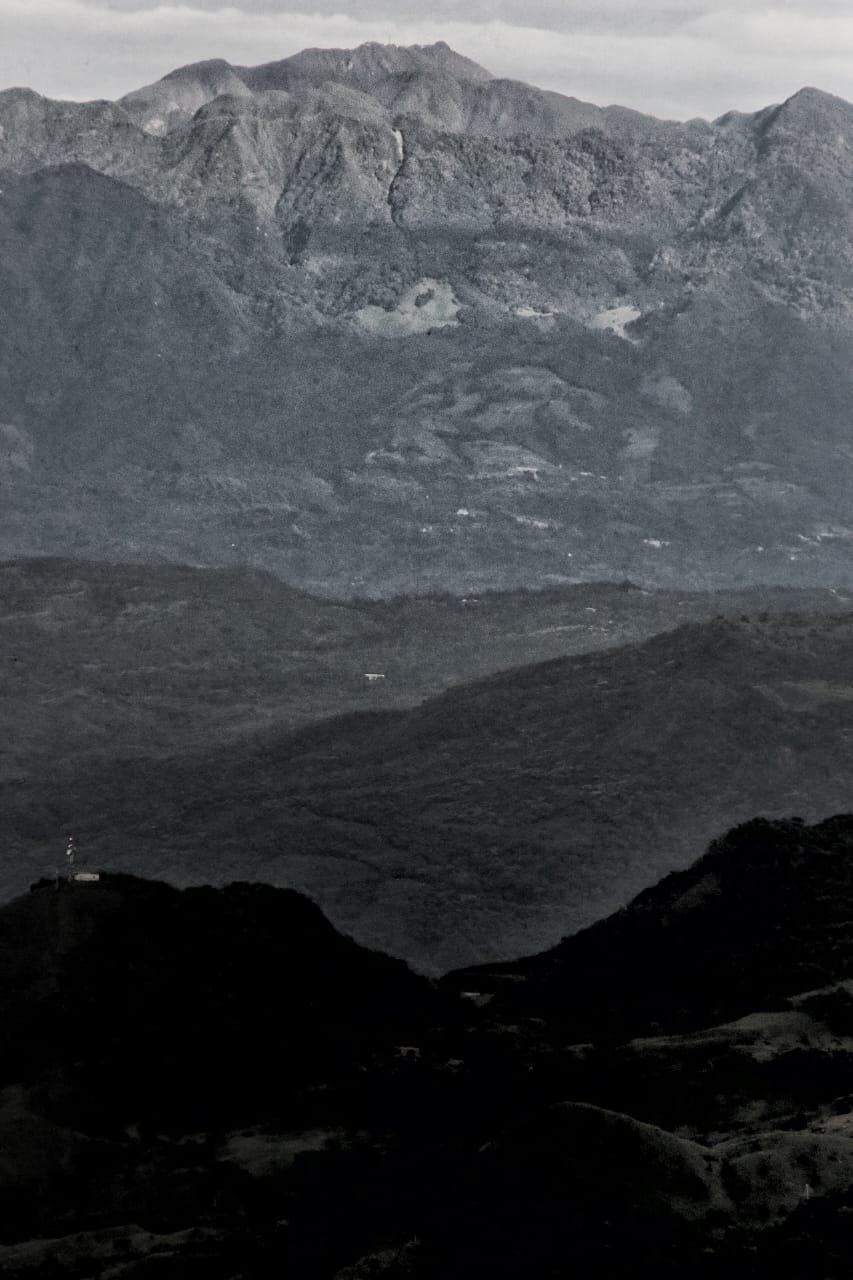
When people imagine Panama, they usually picture what exists above the ground. They think of tropical rainforests stretching to the horizon, beaches washed by Caribbean and Pacific waters, cloud forests draped over mountain peaks, and the modern skyline of Panama City rising beside the sea. Yet beneath all of these landscapes lies another Panama, a hidden world that most people never see and rarely think about. Deep underground, beneath forests, farms, mountains, and valleys, exists a realm of caves, underground rivers, chambers carved by water over millions of years, and geological formations that can seem almost otherworldly.
This underground Panama is one of the country's least appreciated natural treasures. Unlike a mountain or a beach, caves are easy to overlook because they are hidden from view. Many Panamanians will spend their entire lives without entering one. Yet these underground environments contain clues about ancient climates, extinct animals, early human history, and the geological forces that helped shape the nation itself.
The creation of a cave is often a story measured not in years or centuries but in immense spans of time. Rainwater seeps into the ground and slowly dissolves certain types of rock. Tiny cracks become larger. Water continues its patient work. Over thousands and eventually millions of years, entire underground passages can form. Chambers large enough to contain buildings emerge from what began as microscopic fractures. Underground rivers carve their own hidden valleys beneath the surface. The result is a landscape that exists entirely beyond the view of the people walking above it.
One of the most remarkable things about caves is that they preserve history in ways that surface environments often cannot. Rain, wind, floods, and vegetation constantly reshape landscapes above ground. Underground environments tend to be more stable. As a result, caves can serve as natural archives. Ancient animal remains, archaeological evidence, pollen, sediments, and mineral formations may survive for thousands of years. Scientists exploring cave systems often uncover clues that help reconstruct what Panama looked like long before modern cities, roads, and farms appeared.
Imagine standing inside a cave chamber deep beneath a Panamanian mountain. The outside world disappears completely. There is no traffic noise. No city lights. No ocean waves. No wind moving through trees. Instead, there is silence broken only by the occasional drip of water. The air remains cool and still. Mineral formations hang from ceilings and rise from floors. Shadows dominate every corner. It becomes easy to understand why caves have inspired curiosity, stories, and exploration throughout human history.
Some of Panama's cave systems contain stunning geological formations. Stalactites descend from ceilings like stone icicles. Stalagmites rise from the ground beneath them. Over immense periods of time, these formations grow as mineral rich water deposits microscopic layers of rock. The growth is astonishingly slow. A formation that appears massive today may have required tens of thousands of years to reach its current size. In some chambers, these formations create landscapes that resemble natural cathedrals sculpted entirely by water and time.
The wildlife of Panama's caves is equally fascinating. Many people associate caves primarily with bats, and indeed bats are among the most important inhabitants of these environments. Panama hosts numerous bat species, and caves often serve as critical roosting sites. Far from being merely mysterious nighttime creatures, bats perform essential ecological roles. Some consume vast numbers of insects. Others pollinate plants. Certain species disperse seeds that help regenerate forests. Entire ecosystems can benefit from healthy bat populations.
Yet bats are only part of the underground story. Certain insects, spiders, crustaceans, and other organisms have adapted specifically to cave environments. Some spend their entire lives in darkness. Over evolutionary time, cave dwelling species may develop unusual characteristics. Eyes can become reduced or disappear. Pigmentation may fade because camouflage from sunlight is no longer necessary. Other senses become enhanced. These creatures represent some of the most specialized forms of life found anywhere in Panama.
Water is perhaps the true architect of the underground world. In many areas, rivers flow through caves hidden beneath the landscape. Some disappear into openings in the earth and travel underground before reemerging elsewhere. These hidden waterways play important roles in local hydrology. They influence water supplies, ecosystems, and geological processes. To the casual observer, a stream may simply vanish into the ground. Beneath the surface, however, an entire hidden river system may continue its journey through darkness.
The relationship between caves and human history is also significant. Throughout the Americas, caves have often served as shelters, ceremonial sites, and places of cultural importance. Panama is no exception. Archaeologists have discovered evidence of human activity in cave environments dating back centuries and sometimes much further. Artifacts, tools, pottery fragments, and other remains provide glimpses into the lives of people who inhabited the region long before modern history began.
Indigenous traditions throughout the Americas frequently attached spiritual significance to caves. They were often viewed as places connected to origins, transformation, or powerful natural forces. While beliefs varied between cultures, caves rarely functioned as ordinary spaces. Their darkness, mystery, and apparent separation from the everyday world naturally inspired respect and imagination.
Exploring caves requires a very different mindset from exploring forests or mountains. Progress is often slower. Light becomes an essential resource. Every passage invites questions. What lies around the next corner? How far does the system extend? Where does the underground river lead? Even relatively small caves can create a powerful sense of discovery. Unlike many landscapes visible from satellites and aerial photographs, underground environments still retain an element of mystery.
One reason caves capture the imagination so effectively is that they remind us how little of the world we actually see. Most people experience only the surface of the Earth. Yet beneath our feet exists another realm shaped by entirely different processes. The forests, rivers, and mountains of Panama are spectacular, but they represent only part of the story. Underground landscapes continue evolving in darkness, slowly changing year after year whether anyone observes them or not.
The geological diversity of Panama makes the country particularly interesting from an underground perspective. Volcanic regions, limestone areas, mountainous terrain, and abundant rainfall create conditions favorable for the development of varied cave systems. Some caves are relatively small. Others extend through extensive networks of passages. Each reflects a unique combination of rock type, water movement, and geological history.
Perhaps the most fascinating aspect of Panama's underground world is how hidden it remains. Millions of visitors come to the country every year. They photograph beaches, admire wildlife, visit islands, and explore historic districts. Very few spend much time thinking about what lies beneath those landscapes. Yet below the forests where monkeys leap through trees and beneath the mountains where cloud forests gather moisture from the sky exists a second Panama, one carved by water over immense stretches of time.
It is a world without sunlight, where rivers may flow unseen and where stone formations grow so slowly that entire human civilizations can rise and fall while a stalactite gains only a few centimeters. It is a world that preserves fragments of ancient history, shelters unique wildlife, and reminds us that the most remarkable landscapes are not always visible from the surface.
Panama is often celebrated for the wonders people can see. But beneath the forests, beneath the hills, and beneath the familiar world of everyday life lies another Panama entirely. Quiet, ancient, mysterious, and largely unseen, it remains one of the country's last truly hidden frontiers.