
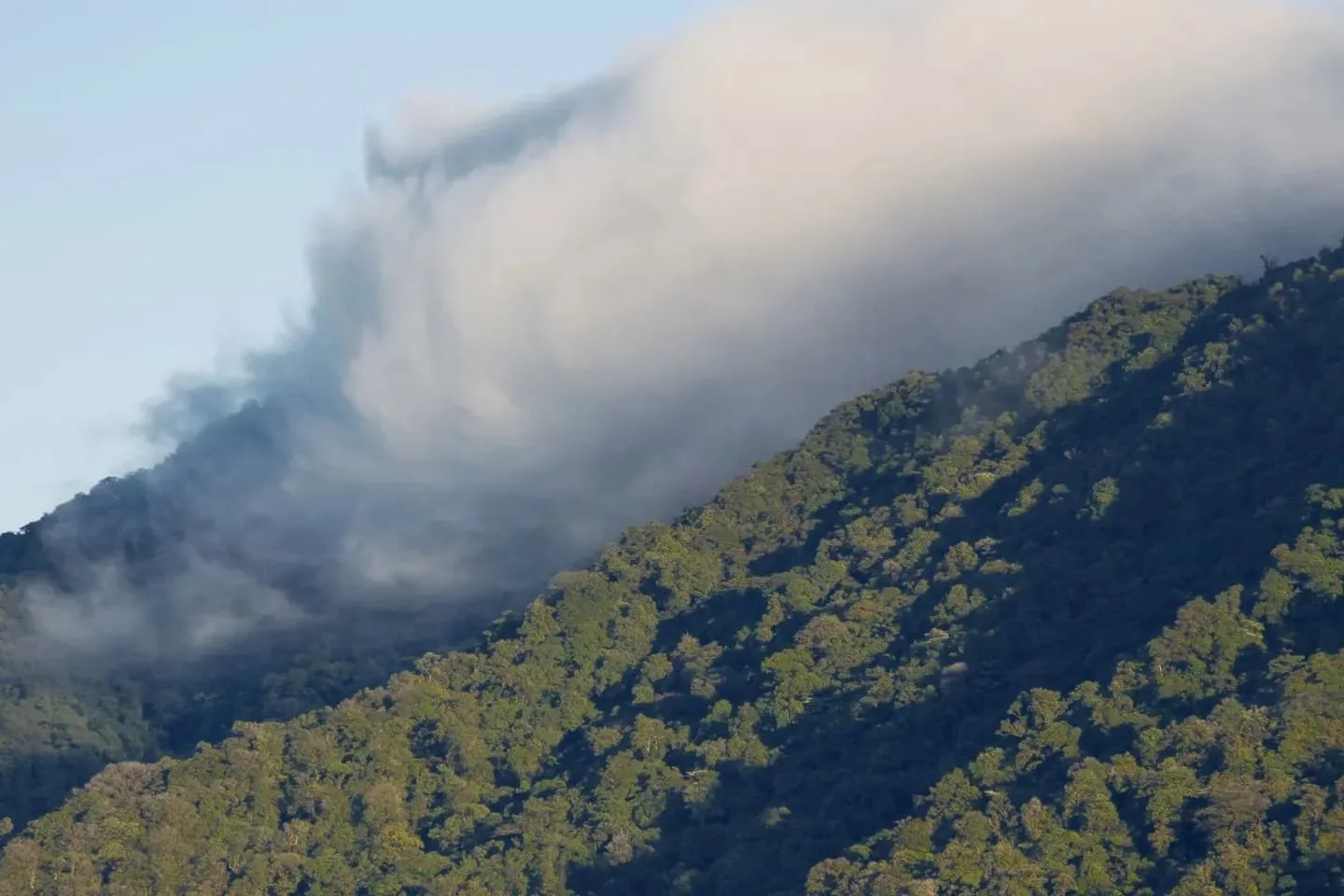
Most visitors picture Panama as a land of tropical beaches, swaying palm trees, lush rainforests, and the famous Panama Canal. While all of these are defining features of the country, few realize that western Panama rises into a dramatic world of towering mountains that rival many of the great highlands of Central America. Here, the air becomes cool and refreshing, forests transform into mystical cloud forests draped in moss and orchids, and the landscape feels more like the Andes than the stereotypical image of a tropical nation. These mountains form part of the Cordillera de Talamanca, an ancient mountain chain that stretches across Costa Rica and into western Panama. They provide the headwaters for countless rivers, create unique climates, shelter hundreds of rare plant and animal species, and produce the fertile volcanic soils responsible for some of the finest coffee on Earth. For hikers, birdwatchers, photographers, and adventurers, these peaks represent some of the country's greatest treasures. Each mountain tells a different story of geology, biodiversity, Indigenous history, and exploration.
1. Volcán Barú – 3,475 meters (11,401 feet)
Standing proudly above all other mountains in Panama, Volcán Barú is the undisputed king of the country's skyline. This dormant stratovolcano dominates the province of Chiriquí and is one of the most famous natural landmarks in the nation. Although its last eruption likely occurred several centuries ago, Barú is still considered potentially active and remains under scientific observation. The mountain's volcanic soils have created ideal conditions for coffee cultivation, helping the nearby town of Boquete become internationally famous for producing Geisha coffee, one of the world's most sought after and expensive varieties. The summit is a bucket list destination for hikers who often begin climbing shortly after midnight in order to reach the top before sunrise. On exceptionally clear mornings, one of the rarest views in the world unfolds as both the Caribbean Sea and the Pacific Ocean become visible from the same location. Few mountains anywhere on Earth offer such a remarkable panorama, making Volcán Barú not only Panama's highest peak but also one of its greatest natural wonders.
2. Cerro Fábrega – 3,335 meters (10,942 feet)
Deep within the remote wilderness of La Amistad International Park rises Cerro Fábrega, the second highest mountain in Panama. Named after Panamanian engineer and statesman Max Delvalle Fábrega, this peak remains largely untouched due to its isolated location. Dense cloud forests blanket its slopes, creating one of the richest ecosystems in Central America. Giant oak trees, towering tree ferns, orchids, bromeliads, and mosses create a magical environment where moisture hangs constantly in the cool mountain air. Wildlife is equally extraordinary. Resplendent quetzals, three wattled bellbirds, tapirs, pumas, jaguars, and countless amphibians inhabit these forests. Reaching Cerro Fábrega requires serious planning and multi day expeditions through rugged terrain, making it a destination reserved for experienced trekkers and scientific researchers.
3. Cerro Itamut – approximately 3,279 meters (10,758 feet)
Cerro Itamut lies close to the Costa Rican border within the spectacular Talamanca Mountains. Although less famous than Barú, Itamut is every bit as wild. Thick cloud forests cloak its slopes year round, creating a cool, damp environment where sunlight filters softly through layers of mist. Many areas surrounding the mountain remain rarely visited, preserving ecosystems that have changed very little over thousands of years. Botanists continue discovering rare plants throughout the region, while birdwatchers consider these forests among the finest places in Panama to search for elusive highland species found nowhere else on Earth.
4. Cerro Echandi – approximately 3,163 meters (10,377 feet)
Cerro Echandi stands as another magnificent giant within the Talamanca range. The mountain is named after former Panamanian president Roberto Chiari Echandi and occupies one of the country's most biologically important landscapes. The surrounding forests serve as a refuge for endangered mammals, rare orchids, spectacular hummingbirds, and countless species that depend upon cool mountain habitats. Heavy rainfall feeds rivers flowing toward both the Caribbean and Pacific watersheds, making the mountain an essential source of fresh water for surrounding communities and ecosystems.
5. Cerro Pando – approximately 2,468 meters (8,097 feet)
Near the border with Costa Rica stands Cerro Pando, another important peak of western Panama. Although considerably lower than the country's four tallest summits, it rises high enough to support cool montane forests filled with oak trees, bamboo, epiphytes, and flowering plants. The mountain also provides spectacular panoramic views across the surrounding highlands and forms part of an important wildlife corridor connecting protected forests across the international border.
6. Cerro Horqueta – approximately 2,412 meters (7,913 feet)
Located within Chiriquí Province, Cerro Horqueta is well known among hikers exploring Panama's western mountains. Trails winding through its forests reveal colorful tanagers, toucans, woodpeckers, butterflies, and occasional sightings of mammals including coatis and agoutis. During the rainy season, clouds drift continuously through the forest, creating an almost dreamlike landscape where moss covered branches seem to disappear into white mist.
7. Cerro Picacho – approximately 2,300 meters (7,546 feet)
Despite being less famous internationally, Cerro Picacho offers visitors a wonderful glimpse into Panama's cool mountain environments. Its forests are rich in ferns, orchids, bromeliads, and towering hardwoods that support an incredible diversity of wildlife. Temperatures here can be dramatically cooler than those found along Panama's tropical coastlines, surprising visitors who associate the country exclusively with hot weather.
8. Cerro Santiago – approximately 2,286 meters (7,500 feet)
Cerro Santiago forms part of the mountainous backbone that defines western Panama. The surrounding landscape contains fertile agricultural valleys where vegetables, strawberries, flowers, and coffee thrive thanks to the cooler climate. Traditional farming communities have adapted to these high elevations for generations, creating picturesque scenery where cultivated fields blend seamlessly with untouched forests climbing higher toward the mountain slopes.
9. Cerro Colorado – approximately 2,250 meters (7,382 feet)
Cerro Colorado is notable not only for its elevation but also for its rich mineral deposits. The surrounding region has long attracted geological interest due to significant copper reserves beneath the mountains. At the same time, these forests support extraordinary biodiversity and remain culturally important to nearby Indigenous communities. The mountain illustrates the ongoing balance between natural resource development and environmental conservation that continues to shape parts of Panama today.
10. Cerro Punta Highlands – approximately 2,200 meters (7,218 feet)
Although Cerro Punta refers primarily to the highland region rather than a single dramatic summit, the surrounding mountains rank among the highest inhabited landscapes in Panama. The cool climate allows farmers to grow crops rarely associated with the tropics, including lettuce, carrots, cabbage, broccoli, strawberries, potatoes, onions, and flowers that supply markets across the country. The nearby forests also attract birdwatchers hoping to observe the magnificent resplendent quetzal along with hundreds of other highland bird species.
The Mountains That Shape a Nation
Panama's highest peaks are far more than impressive numbers on a map. They create the country's rivers, influence its weather, produce fertile soils for world renowned coffee and agriculture, and shelter ecosystems found nowhere else on Earth. Their cloud forests capture moisture from passing trade winds, feeding streams that eventually reach both the Caribbean Sea and the Pacific Ocean. These mountains also preserve some of the last strongholds for endangered species such as the Baird's tapir, the Resplendent quetzal, and the elusive Jaguar.
For adventurers, Panama's mountains offer experiences unlike anywhere else in the country. One day you can stand atop the volcanic summit of Barú watching the sun rise over two oceans, while the next you might find yourself hiking through silent cloud forests where ancient trees drip with moss, orchids bloom from every branch, and the haunting calls of quetzals echo through the mist. These towering peaks remind us that Panama is far more than canals and coastlines. It is also a nation of magnificent mountains, hidden wilderness, and breathtaking heights that rise above the clouds, quietly guarding one of the richest natural landscapes in the Americas.