
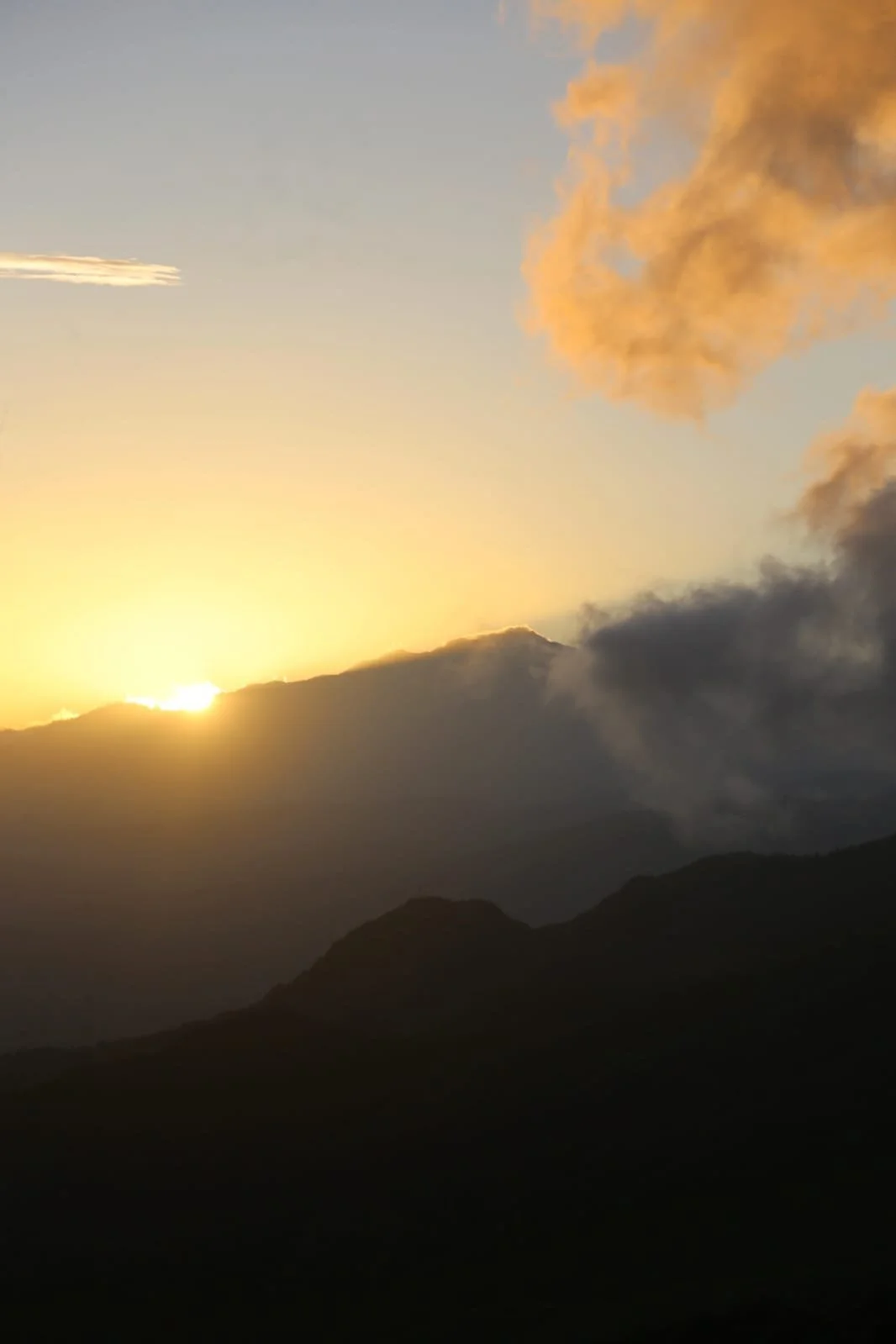
Panama may look like a small country on a map, but its forests are remarkably diverse. Stretching between Costa Rica and Colombia, with the Caribbean Sea on one side and the Pacific on the other, Panama sits at a biological crossroads. Mountains rise quickly from both coasts, clouds collect around the higher elevations, enormous rivers cut through lowland forests, and dry forests survive in areas where the rainy season is followed by months of intense sunshine. The result is not one giant “Panamanian jungle,” but a collection of very different forests, each with its own climate, plants, animals and personality.
The lowland tropical rainforest is probably what most people imagine when they hear the word Panama. These are the hot, humid forests found at lower elevations, particularly in places such as Darién, the Caribbean lowlands and parts of the Canal Zone. They can receive enormous amounts of rainfall and support an extraordinary variety of trees, vines, palms, orchids, insects, birds and mammals. The canopy can form a huge green roof dozens of metres above the ground, while the forest floor remains comparatively dark. This is where you can encounter monkeys, sloths, agoutis, peccaries, armadillos, colourful frogs, toucans and countless insects. It is also the kind of forest where you can walk for an hour and see only a fraction of what is actually living around you.
One of the most fascinating things about a tropical rainforest is that it is not simply a collection of trees. Vines climb toward the canopy, epiphytes grow on branches without taking nutrients directly from the soil, fungi break down fallen vegetation and insects pollinate flowers and recycle organic material. A dead tree can become an entire miniature ecosystem. The forest is constantly growing, dying, competing and regenerating, often all at the same time.
Cloud forests are a completely different experience. As you climb into Panama's mountains, temperatures drop and clouds and mist become increasingly important. In places such as the highlands around Boquete, Volcán and the Cordillera de Talamanca, forests can remain wet for long periods because moisture from the clouds settles directly onto vegetation. Trees become covered with mosses, lichens, bromeliads and orchids, and the entire forest can appear almost prehistoric when the mist rolls through.
Cloud forests are particularly important for birds. Panama's mountain forests provide habitat for species such as the resplendent quetzal, mountain tanagers, hummingbirds and bellbirds. The vegetation is often dense and covered in epiphytes, giving the forest a completely different appearance from the hot lowland jungle. A trail can sometimes feel cool and damp enough that you forget you are in tropical Panama at all.
The montane forests become even more interesting at higher elevations. These forests are found on Panama's mountain slopes and peaks, particularly around the country's highest areas. Trees tend to become shorter and more twisted as conditions become colder, windier and more exposed. The vegetation may not look as spectacularly gigantic as lowland rainforest, but it is often exceptionally rich in specialised species. On high mountain trails, temperature, wind, cloud cover and soil conditions can change dramatically over surprisingly short distances.
Then there is a forest type that many visitors do not expect to find in Panama: tropical dry forest. Much of the country is extremely wet, but parts of the Pacific side experience a pronounced dry season. During the driest months, some trees lose their leaves, the landscape becomes much browner and sunlight reaches the ground much more easily. Areas around the Azuero Peninsula and parts of central and western Panama contain important examples of this ecosystem.
Dry forest has its own character. Instead of the permanently green appearance of rainforest, it can change dramatically between seasons. Trees may look almost bare during the dry period and then respond explosively when the rains arrive. Wildlife adapted to these conditions has to cope with large changes in water availability and food. It is a reminder that Panama is not uniformly wet and that the country's famous tropical greenery has more than one version.
Mangrove forests form another completely different world. Instead of growing on ordinary soil, mangroves live where land and sea meet. Their roots must cope with saltwater, changing tides, soft mud and low oxygen levels. Some mangroves develop spectacular tangled root systems that look almost like they belong in another planet's landscape. These forests are extremely important nurseries for fish, crabs and other marine life and also provide habitat for birds and numerous other animals.
Panama has extensive mangrove ecosystems on both its Pacific and Caribbean coasts, although the Pacific coast contains particularly large areas. From a kayak or small boat, a mangrove forest can look deceptively quiet. Under the water and among the roots, however, there can be an enormous amount of activity. Juvenile fish, crustaceans and other organisms use the protected environment before moving into larger coastal ecosystems.
Swamp forests and seasonally flooded forests add another layer to Panama's ecological diversity. In low lying areas, rivers and rainfall can periodically or permanently flood the forest floor. Plants and animals living there have to deal with waterlogged conditions that would be unsuitable for many ordinary terrestrial species. Some forests can even look completely different depending on the season, with areas that appear to be ordinary woodland becoming flooded during periods of heavy rainfall.
The Darién region contains some of Panama's most extensive and least disturbed forests and is one of the country's great biological treasures. Located in eastern Panama next to Colombia, Darién forms part of the larger ecological connection between Central and South America. The forests there contain an extraordinary mixture of Central and South American wildlife. Jaguars, harpy eagles, tapirs, monkeys, peccaries and countless other species occur in the region. It is also one of the places where the sheer scale and wildness of Panama's forests become particularly obvious.
There are also gallery forests, which grow along rivers and streams. These strips of forest can remain greener than surrounding areas during dry periods because they have access to water. They create important corridors through the landscape, allowing animals to move between different habitats. A river surrounded by forest is therefore much more than a pretty tropical scene. It can function as a biological highway.
Panama's forests are also heavily influenced by elevation. A relatively short drive can take you from hot lowland rainforest into cooler mountain forest and eventually into cloud covered highlands. This dramatic change in altitude is one reason Panama can contain such an incredible variety of habitats within a relatively small geographical area.
For travellers, this means that “going into the jungle” can mean very different things depending on where you are. A hike around the Canal Zone may take you through humid lowland rainforest filled with monkeys and birds. A mountain trail near Boquete can lead through moss covered cloud forest where hummingbirds and quetzals are more likely to steal the show. A trip toward the Azuero Peninsula can reveal dry forest that looks completely different from the classic jungle. Along the coast, mangroves create an amphibious forest where the boundary between land and ocean almost disappears.
And this is one of the reasons Panama is so fascinating for nature lovers. The country is small enough that you can experience several completely different forest ecosystems without travelling enormous distances. You can begin the day sweating in a lowland jungle, drive into the mountains and finish the afternoon surrounded by mist and moss. A few hours later, you could theoretically be beside a mangrove swamp or standing in a much drier Pacific landscape.
For anyone travelling through the country, forests should not simply be viewed as scenery between destinations. They are the reason Panama has such extraordinary biodiversity in the first place. The monkeys in the canopy, the sloths hiding in trees, the frogs calling after rain, the hummingbirds around flowering plants, the orchids growing on branches and even the insects crawling through the leaf litter are all parts of different forest systems.
And sometimes the most interesting forest is the one that looks completely ordinary at first. Walk slowly, stop talking for a minute and let your eyes adjust. The jungle starts revealing itself. A movement in the leaves becomes a monkey. A strange call comes from somewhere above. Something enormous flies between two trees. A tiny frog appears beside the trail. What looked like an empty wall of green suddenly turns into thousands of individual stories happening simultaneously.
That is the real magic of Panama's forests. They are not just places full of trees. They are entire worlds stacked on top of each other.