
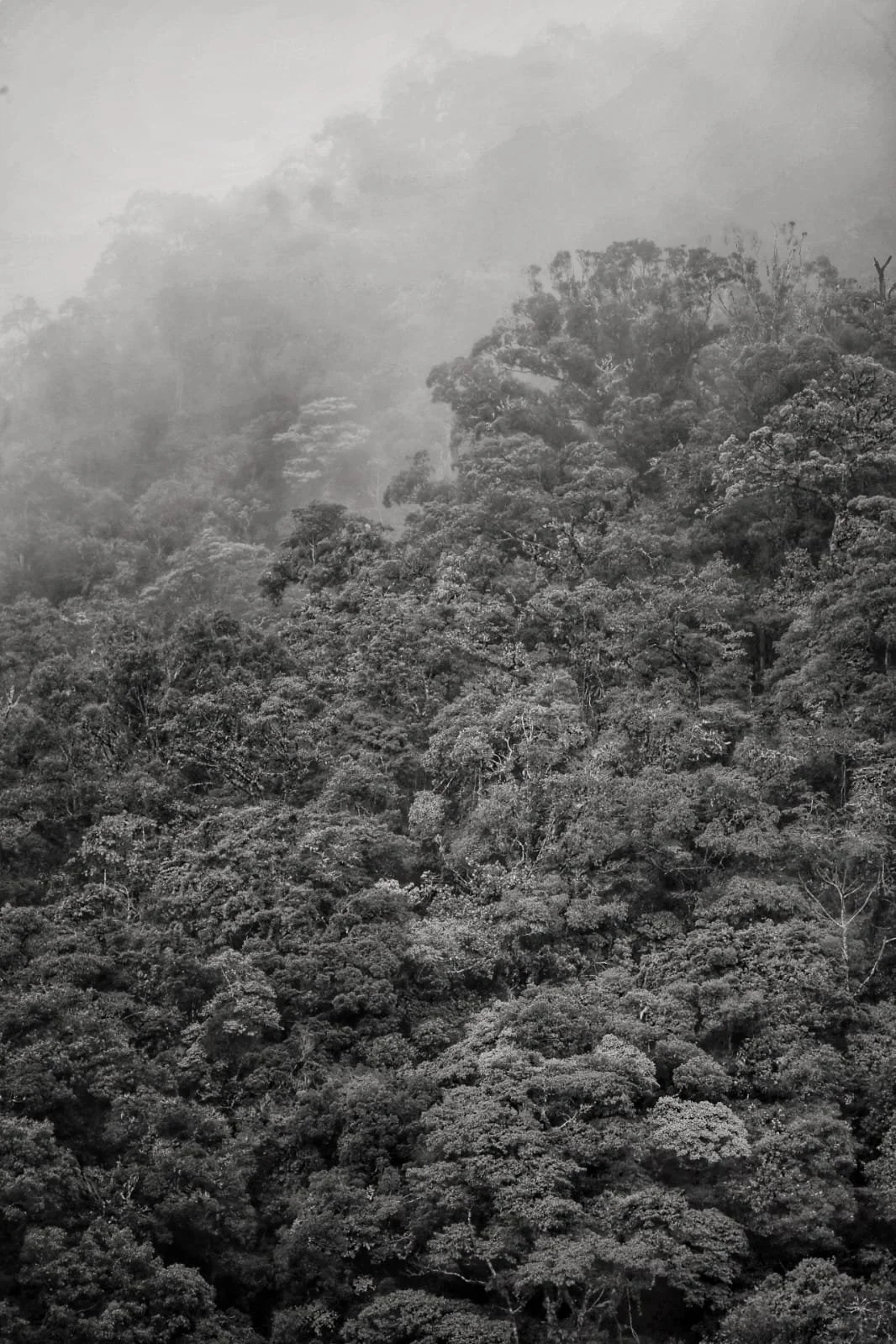
Walk through a Panamanian rainforest during the day and you might see monkeys, toucans, sloths and brilliantly colored frogs. But return to the same trail after dark and you enter an entirely different world.
The forest floor comes alive.
Something rustles beneath the leaves. You stop. A pointed nose appears. Two enormous ears twitch. A strangely armored body emerges from the darkness and begins methodically pushing its nose through the leaf litter.
It is an armadillo.
At first glance, it can look almost comical: part miniature dinosaur, part pig, part medieval knight. But Panama's armadillos are much more extraordinary than their appearance suggests. They are nocturnal hunters, powerful excavators, surprisingly sophisticated survivors and, perhaps most amazingly, mammals capable of producing identical quadruplets from a single fertilized egg.
The species most likely to be encountered is the nine banded armadillo, Dasypus novemcinctus, a remarkably adaptable animal that can live in forests, scrub, grassland and other habitats where food, water and suitable soil are available.
And once you learn what is happening beneath that armor, the armadillo stops looking like a funny little animal and starts looking like one of the rainforest's most ingenious pieces of engineering.
1. It Is Not a Reptile
Perhaps the first misconception to eliminate is the obvious one.
An armadillo is a mammal.
It has hair, gives birth to live young and feeds its babies milk. It is also part of the unusual mammalian group known as the xenarthrans, which includes sloths and anteaters.
So the animal that looks like it has wandered out of a prehistoric reptile documentary is actually more closely related to a sloth than to a crocodile.
That makes Panama's forests home to an extraordinarily strange evolutionary family: the slow moving sloth, the insect eating anteater and the armored armadillo.
Evolution clearly had a sense of humor.
2. Its Armor Is Real
The armadillo's famous shell isn't a shell in the same sense as a turtle's.
Its armor consists of hardened bony plates called scutes, covered by skin. The plates are arranged into sections, with flexible bands around the middle allowing the animal to bend its body while walking, digging and squeezing through its environment.
This gives the armadillo an unusual combination of protection and flexibility.
It can be armored without becoming a walking statue.
And there is an important detail that isn't immediately obvious when you see one: the underside is much less protected. The belly is soft compared with the heavily armored back.
So despite looking like a miniature tank, an armadillo is not invincible.
3. Nine Bands Doesn't Always Mean Nine Bands
The name is misleading.
The nine banded armadillo commonly has nine movable bands around its middle, but individuals can have a different number. The bands are what give the animal its distinctive flexible armor.
So the name isn't a perfect description of every individual.
Nature apparently decided that "approximately nine banded armadillo" didn't sound quite as good.
4. Its Nose Does Most of the Detective Work
An armadillo doesn't have particularly impressive eyesight.
Instead, it relies heavily on its sense of smell and hearing to locate food and detect danger.
This explains one of the strangest things you'll see on a night walk.
An armadillo may appear to be wandering aimlessly with its nose pressed into the ground.
It isn't.
It is investigating.
Every few seconds it changes direction, pushes its nose beneath leaves, sniffs the soil and listens.
It is essentially conducting a biological treasure hunt.
And the treasure is usually something with six or eight legs.
5. It Eats Almost 500 Different Things
Nine banded armadillos are remarkably opportunistic eaters. Their documented diet includes an astonishing variety of foods, with animal matter making up the great majority by volume. Beetles and their larvae are particularly important, along with ants, termites, millipedes, centipedes, earthworms, grasshoppers, spiders and other invertebrates.
They can also consume fruits and other plant material, and they aren't strictly opposed to eating carrion when the opportunity arises.
So the armadillo is not simply an "ant eater."
It is more like the rainforest floor's all you can eat buffet inspector.
If it smells edible, the investigation begins.
6. It Can Smell Food Beneath the Ground
This is where the armadillo's digging ability becomes extraordinary.
The animal can detect hidden prey and then use its powerful claws to excavate the soil.
It doesn't have to see an insect.
It can smell it.
Then it digs.
The claws are particularly well adapted for excavation, and the animal can tear through leaf litter and relatively soft soil with surprising efficiency.
Watching one work is like watching a tiny construction machine that has been programmed exclusively to find beetles.
7. The Armadillo Is Actually an Ecosystem Engineer
This is one of the most fascinating things about them.
When an armadillo digs, it isn't simply finding lunch.
It is changing the rainforest floor.
Burrows alter the soil and create underground spaces that can potentially be used by other animals. Research on nine banded armadillos has described them as ecosystem engineers because their burrowing can create resources and shelter that other species can use.
In other words, an armadillo can unintentionally build infrastructure for the rest of the ecosystem.
It digs a home.
It searches for food.
It moves soil.
And eventually another animal may discover the space it has created.
The armadillo doesn't know it is helping anyone.
It is simply doing armadillo things.
8. It Can Maintain Multiple Burrows
An armadillo isn't necessarily a one burrow animal.
Research on nine banded armadillos has found that individuals can maintain multiple burrows within their home range. Some documented burrows can reach several meters in length and considerable depth.
Imagine discovering an armadillo's underground network beneath a Panamanian forest.
What looks from above like an ordinary patch of soil may contain tunnels and chambers created by an animal that spends much of its life moving between underground shelters and nighttime feeding areas.
The rainforest has an entire architectural layer that most visitors never see.
9. It Is Mostly a Night Shift Worker
Panama's tropical heat makes nighttime particularly attractive for an animal that spends so much time digging and searching the ground.
Nine banded armadillos are generally solitary and often become more active during cooler periods. Their activity patterns vary with temperature and conditions.
This is why night walks can be so much better for finding them.
During daylight, the armadillo may be hidden in a burrow.
After sunset, the forest floor becomes its workplace.
While tourists are returning to their hostels and hotels, the armadillo is just clocking in.
10. It Doesn't Always Run Away Immediately
One of the most entertaining things about encountering a wild armadillo is its reaction to people.
Sometimes it doesn't seem particularly concerned.
It may continue sniffing.
It may walk slowly across the trail.
It may completely ignore you.
This is not necessarily because it is tame.
It may simply have decided that whatever you are doing isn't currently worth worrying about.
The best thing you can do is stand quietly and give it space.
If you remain still, you may get to watch it continue naturally instead of frightening it into the vegetation.
11. Those Ears Are More Important Than They Look
The armadillo's huge ears are another clue that this is an animal designed for investigating its environment.
When it is moving around at night, sight isn't enough.
Sound becomes important.
A twig snapping behind it.
Movement in the vegetation.
An approaching predator.
Another animal nearby.
The ears are constantly collecting information.
So when an armadillo suddenly freezes and raises its head, it may be listening to something you haven't even noticed.
12. Its Reproduction Is Completely Bizarre
Now we get to one of the most extraordinary facts in the entire article.
A female nine banded armadillo generally produces four genetically identical babies.
Not four siblings that happen to look alike.
Four offspring that originate from one fertilized egg.
The embryo eventually divides into four embryos. This phenomenon is known as polyembryony. Nine banded armadillos and other members of their genus are unique among vertebrates in regularly using this reproductive strategy.
So if you see four baby armadillos together, there is a very good chance you're looking at nature's strangest set of quadruplets.
They are essentially four copies produced from one fertilization event.
13. The Pregnancy Has Another Incredible Trick
The armadillo's reproductive system gets even stranger.
After fertilization, the developing blastocyst can remain in the uterus for months before implantation. This is called delayed implantation. Only later does it implant and begin the next stage of development.
This allows reproduction to be timed so that the young are born under more favorable environmental conditions.
So the armadillo has essentially evolved a biological pause button.
Fertilization happens.
Development pauses.
The embryo waits.
Then the process resumes.
And eventually four genetically identical babies arrive.
That is an astonishing piece of mammalian biology.
14. Baby Armadillos Don't Start Out Fully Armored
Adult armadillos look like they were born wearing medieval armor.
They weren't.
The protective plates of newborn nine banded armadillos are relatively soft and flexible and gradually harden as the young develop.
The babies are already relatively well developed when born and can begin moving very quickly, but they remain associated with the burrow while developing their adult characteristics.
So underneath that famous armor is a rather vulnerable beginning.
15. The Mother Has Four Identical Babies to Look After
The quadruplets eventually leave the burrow and begin accompanying their mother while foraging.
They can remain associated with her for months, although nine banded armadillos eventually become largely solitary animals.
That transition is fascinating.
The young begin life as four identical siblings sharing the same underground environment.
Then they learn how to smell out insects.
They learn where food is.
They learn how to dig.
They learn the forest.
And eventually they disperse into lives of mostly solitary wandering.
16. They Are Surprisingly Good Swimmers
Here's another fact that surprises many people.
Armadillos can swim.
They can also use a fascinating trick to cross water: they can ingest air and temporarily increase their buoyancy, helping them float.
This ability is particularly useful because water isn't necessarily an obstacle to an animal that lives in wet tropical environments.
Panama's rivers and streams therefore don't automatically create barriers for an armadillo.
The little armored animal can sometimes simply float across the problem.
17. They Can Hold Their Breath
The swimming trick gets even stranger.
Armadillos can use their buoyancy and body control to cross waterways, and they are capable of holding their breath for significant periods.
This is another reason their anatomy is much more sophisticated than its comical appearance suggests.
The animal that looks like it belongs on the ground has several adaptations that allow it to deal with an environment that suddenly becomes wet.
18. They Are Built for Digging, Not Climbing
Unlike monkeys and sloths, armadillos are very much creatures of the forest floor.
Their powerful front claws are adapted for excavation rather than climbing trees.
This makes them a fascinating counterpoint to Panama's arboreal wildlife.
While monkeys are searching the canopy for fruit, birds are moving through the branches and sloths are hanging overhead, the armadillo is experiencing an entirely different rainforest.
Its world is the bottom few centimeters of the ecosystem.
Leaves.
Soil.
Roots.
Insects.
Fungi.
Moisture.
Burrows.
It is the rainforest viewed from ground level.
19. They Are Solitary Little Characters
Squirrel monkeys have troops.
Howler monkeys live socially.
White faced capuchins are highly social.
Armadillos are different.
Nine banded armadillos are generally solitary outside breeding periods.
That makes seeing several adults together relatively unusual.
If you encounter one wandering down a jungle trail at night, it probably isn't part of a little armadillo gang.
It is probably just one individual going about its business.
20. They Have a Very Strange Relationship With Humans
The nine banded armadillo has adapted remarkably well in some places where humans have changed the landscape.
But that doesn't mean it is a domesticated animal.
A wild armadillo should never be fed, chased or handled.
If you see one around a lodge, farm or rural property in Panama, the best response is the same as in the forest:
Watch it.
Give it room.
Let it continue.
The fact that it is comfortable enough to remain nearby is already an incredible opportunity.
21. They Can Be Useful to Scientists in a Very Unexpected Way
There is an unusual medical connection between humans and armadillos.
Nine banded armadillos have historically been used in leprosy research because their naturally low body temperature makes them unusually susceptible to infection with Mycobacterium leprae, the bacterium that causes leprosy.
This is one of those bizarre examples of how an animal's evolutionary physiology can become scientifically important.
The same biological characteristics that make the armadillo unusual in the wild have also made it valuable in medical research.
22. They're Not Actually Wearing a Suit of Armor
The most amusing way to think about an armadillo is perhaps this:
It isn't an animal that somehow found armor.
The armor is part of the animal.
The plates developed as part of its body.
The bands allow movement.
The claws dig the burrow.
The nose finds the food.
The ears monitor the surroundings.
The burrow provides shelter.
Almost every strange feature is connected to the way the animal lives.
What looks ridiculous at first becomes remarkably logical once you understand it.
The Real Magic Happens Beneath Your Feet
This is what makes the armadillo such an underrated animal in Panama.
A tourist might spend an entire trip looking upward.
Looking for monkeys.
Looking for sloths.
Looking for toucans.
Looking for eagles.
But sometimes the really fascinating animal is underneath you.
An armadillo is experiencing the forest from a completely different perspective.
It smells the ground.
It detects insects beneath the leaves.
It excavates tunnels.
It alters the soil.
It creates shelter.
It moves through the darkness while most of the forest's human visitors are asleep.
And all the while, that bizarre little armored body is performing a job that has been refined by evolution over an extraordinary length of time.
If You See One in Panama, Stop Walking
This might be the best advice of all.
If you're hiking during the day and spot an armadillo, stop.
If you're on a night walk and hear something rustling, stop.
Don't immediately rush toward it.
Don't shine a bright light directly into its face.
Don't chase it down the trail.
Just watch.
You may only have thirty seconds.
You may get five minutes.
Or you may watch it disappear into the darkness almost immediately.
That's okay.
Wildlife isn't supposed to cooperate with your itinerary.
And that is precisely what makes the encounter special.
The Armored Secret of Panama's Forests
The armadillo is easy to underestimate.
It isn't brightly colored.
It doesn't sing.
It doesn't swing through trees.
It doesn't have the celebrity status of a jaguar.
It looks a little ridiculous.
But beneath that strange exterior is an animal capable of extraordinary things: smelling prey hidden underground, excavating elaborate burrows, altering its environment, swimming across waterways, surviving on an astonishingly varied diet and producing genetically identical quadruplets from a single fertilized egg.
And perhaps that's the greatest lesson of all.
The rainforest's most fascinating animals aren't always the ones hanging from the trees.
Sometimes they are the ones quietly digging beneath your feet.
In Panama, when the sun disappears and the jungle starts making completely different noises, keep an eye on the trail.
You might hear that familiar rustling.
Then two ears appear.
A long nose drops toward the soil.
And suddenly, the forest's little armored engineer is back on the night shift.