How to Prepare for Your Ascent of Volcán Barú

Climbing Volcán Barú is one of those adventures that looks deceptively simple on a map. You are in Panama, after all. This is the country of tropical beaches, hammocks, palm trees and people drinking cold beers in the afternoon. Then someone tells you that you are going to spend hours walking uphill in the dark to reach the highest point in the country at 3,475 metres above sea level, and suddenly the shorts and flip flops do not seem quite so appropriate.

The reward is extraordinary. On a clear morning, the summit can offer the possibility of seeing both the Pacific Ocean and the Caribbean from the same mountain, while the sunrise gradually illuminates the surrounding highlands. But getting there on foot is a serious physical challenge. The route from the Camiseta entrance near Boquete is roughly 12 to 13 kilometres to the summit, and the combination of distance, constant climbing, darkness, cold and altitude makes preparation much more important than many first time hikers expect.

Start preparing before you arrive

You do not need to be an elite athlete to climb Barú, but you should arrive with a reasonable level of fitness. The biggest mistake is treating it like an ordinary tourist walk. The mountain does not care how easy the trail looked on Instagram.

In the weeks before your climb, concentrate on long walks, uphill walking and stairs. If you have access to a treadmill, increase the incline. If you live somewhere flat, find hills whenever possible. The goal is not simply to be able to walk 12 kilometres. You need to be comfortable walking for hours while continuously gaining elevation.

Longer weekend hikes are particularly useful because they teach your body what it feels like to keep moving when your legs are already tired. Strengthening your calves, thighs and glutes can also make the ascent considerably easier.

Get used to walking uphill

One of the most important things to understand about Barú is that the difficulty comes from the sustained effort. There are no magical flat sections where you can suddenly forget you are climbing a volcano.

Train yourself to walk slowly and consistently. A common mistake is starting too quickly because you feel fantastic during the first hour. The mountain then collects its debt later.

A deliberately slow pace is not a sign that you are struggling. It is a strategy. Take smaller steps, maintain a steady breathing rhythm and save your energy for the higher sections.

Prepare for the cold

This is where Panama catches people off guard.

At the coast, you may have spent the previous day sweating in 30°C heat. At the summit of Barú before sunrise, you can be dealing with completely different conditions. The higher you climb, the cooler and windier it becomes, and waiting around at the summit can feel particularly cold when you are tired and sweaty.

Bring layers rather than one enormous jacket. A thermal or technical base layer, fleece or light insulated layer and windproof or waterproof outer layer give you much more flexibility. Gloves and a warm hat are also worth considering, especially for a sunrise ascent.

You can always remove a layer. You cannot magically manufacture one at 3,400 metres.

Your footwear matters

This is absolutely not the place for fashion footwear.

Wear proper hiking shoes or boots that you have already broken in. Do not arrive with brand new boots straight out of the box. Blisters several hours into a mountain climb can transform a beautiful sunrise adventure into an extremely creative exercise in suffering.

Good socks matter too. Bring an extra pair in case your feet become wet. Weather in the mountains can change quickly, and wet feet combined with a long descent are not a pleasant combination.

Bring enough water and food

MiAMBIENTE has recently highlighted cases of hikers experiencing dehydration, exhaustion and vomiting after excursions on Barú, and authorities specifically recommend proper hydration, suitable clothing and footwear and honestly assessing your physical condition before attempting the climb.

Bring enough water for the entire outing and take regular drinks rather than waiting until you are extremely thirsty. Snacks should provide easily accessible energy: bananas, nuts, sandwiches, energy bars, dried fruit or similar foods work well.

And remember that you will also have to come back down. Reaching the summit is only half of the physical challenge.

Bring a proper headlamp

If you are climbing for sunrise, you will be walking through darkness for a significant portion of the ascent. A phone flashlight is useful as an emergency backup, but it is not a substitute for a proper headlamp.

A headlamp keeps both hands free and makes it much easier to see uneven terrain, mud and rocks. Bring spare batteries or make sure your rechargeable light is fully charged.

Your phone should also be fully charged, preferably with a power bank. The summit now has connectivity infrastructure intended to improve communication and emergency response, but you should never treat mobile connectivity as a replacement for preparation.

Register before you start

This is extremely important. Visitors are required to register at the park control point at Camiseta before beginning the ascent from the Boquete side. The registration system allows park personnel to know who is on the mountain and helps with emergency response.

Follow the current instructions from MiAMBIENTE regarding opening hours, registration and access. Conditions and restrictions can change, particularly because road and trail work, weather and other operations occasionally affect access.

In fact, this is not merely theoretical. In July 2026, a landslide at La Nevera temporarily closed access to the summit because the road was completely obstructed and considered unsafe.

So check the official status immediately before your climb, rather than assuming that information from a blog, hostel or traveller from three months ago is still correct.

Do not underestimate the weather

Barú has its own personality.

You can begin your hike under clear skies and encounter clouds, rain, wind and dramatically colder temperatures as you gain elevation. This is why a waterproof layer is so valuable.

The weather can also determine whether you actually get the famous panoramic view. The mountain is capable of producing one of the most spectacular viewpoints in Central America, but nature does not promise you an Instagram photograph on demand.

Sometimes you reach the summit after hours of climbing and discover that the entire world is hidden behind clouds.

And sometimes the clouds suddenly disappear and you are standing above Panama watching two oceans.

That uncertainty is part of the magic.

Consider a guide

Experienced hikers may be comfortable travelling independently, but a qualified guide can be an excellent idea, particularly for people unfamiliar with the route, hiking in darkness or dealing with mountain conditions. MiAMBIENTE has specifically recommended that visitors preferably be accompanied by a certified guide.

A guide also removes much of the stress of navigation and logistics, allowing you to concentrate on the experience rather than wondering whether that particular trail junction is the correct one at 4:30 in the morning.

Respect the mountain

Volcán Barú is not simply a viewpoint. It is a national park and an important protected ecosystem. The park contains montane and cloud forest habitats and supports remarkable biodiversity.

Leave no rubbish behind, stay on authorized routes and follow the instructions of park staff. MiAMBIENTE also emphasizes the use of reusable bottles because single use containers are prohibited under the park's visitor regulations.

And perhaps most importantly, don't rush.

The temptation is to think only about the summit. But some of the best moments happen along the way: the darkness gradually becoming grey, the forest changing as you gain altitude, the first birds beginning to call and eventually the horizon turning orange.

Then suddenly you realize that you have climbed higher than anywhere else in Panama.

The ideal Barú checklist

Before leaving, make sure you have:

Good broken in hiking shoes, warm layers, waterproof jacket, gloves, hat, headlamp, spare batteries, plenty of water, high energy snacks, phone, power bank, sunscreen, basic first aid supplies and a small backpack.

Most importantly, bring patience and realistic expectations.

Volcán Barú is not a race. It is a long mountain ascent that rewards people who pace themselves, prepare properly and respect the conditions.

And when you finally reach 3,475 metres, exhausted and probably wondering why you voluntarily spent several hours walking uphill in the middle of the night, the sunrise may provide the answer.

On a clear morning, you can look out across Panama and potentially see the Pacific and Caribbean from the same summit.

Suddenly, those aching legs seem like a pretty reasonable price.

Faut il prévoir des vêtements chauds pour le Panama ? ☀️

À première vue, le Panama semble être le genre de pays où une veste est aussi utile qu’un manteau de fourrure sur une plage tropicale. Et dans les régions côtières et à Panama City, c’est largement vrai : T shirts, shorts, sandales et vêtements légers feront parfaitement l’affaire toute l’année.

Mais il y a un petit piège : le Panama possède des montagnes où il peut réellement faire frais. À Boquete, par exemple, les températures peuvent descendre jusqu’à environ 12 °C, ce qui en fait l’une des régions les plus fraîches du pays.

Pas besoin pour autant de sortir la grosse doudoune. Un pull léger, une polaire fine ou une petite veste suffit largement pour les soirées dans les montagnes. Une veste imperméable légère est encore plus utile, car pluie et brouillard font partie du paysage de Boquete et des régions de haute altitude.

Dans les bus, les centres commerciaux et certains restaurants, la climatisation peut également être réglée à un niveau qui donne parfois l’impression d’avoir quitté le Panama pour entrer directement dans un congélateur. Un pull léger dans le sac est donc une excellente idée.

À Bocas del Toro et dans les régions tropicales de basse altitude, la chaleur reste beaucoup plus importante. Là, il vaut mieux privilégier une protection contre la pluie plutôt qu’un vêtement chaud.

La valise idéale

Pour la majorité des voyageurs, il suffit de prévoir des vêtements légers, un pantalon long, une veste de pluie légère, un pull fin et de bonnes chaussures pour marcher. Pas besoin de transporter une garde robe d’hiver entière.

En résumé : préparez votre valise comme pour les tropiques, mais glissez un petit pull au fond du sac. Il ne prendra presque pas de place et pourrait devenir votre meilleur ami lorsque le Panama décide soudainement de jouer à la montagne suisse.

Heb je warme kleding nodig in Panama? 🇵🇦☀️

Panama is natuurlijk vooral een land van zon, tropische temperaturen, stranden en palmbomen, dus voor het grootste deel van je reis heb je absoluut geen dikke winterjas nodig. In Panama City, aan de kust en in veel laaggelegen gebieden zijn T shirts, shorts, sandalen en lichte kleding het hele jaar door de logische keuze.

Maar er is een kleine verrassing: Panama heeft ook bergen, en daar kan het verrassend fris worden. Vooral in plaatsen zoals Boquete, Volcán en Cerro Punta kunnen de temperaturen ’s avonds flink lager liggen dan aan de kust. In Boquete kan het bijvoorbeeld rond de 12 tot 15 °C worden. Voor een tropisch land klinkt dat misschien koud, maar voor iemand die net uit Canada komt is het waarschijnlijk nog steeds bijna zomer.

Daarom is één lichte trui of fleecejack absoluut de moeite waard. Een lichte regenjas is misschien zelfs nog belangrijker. In de bergen kan het weer snel omslaan en een tropische regenbui verschijnt soms alsof iemand boven de jungle plotseling een kraan heeft opengedraaid.

Ook in bussen, winkelcentra, restaurants en hotels kan de airconditioning behoorlijk fanatiek zijn. Soms lijkt het alsof Panama probeert te bewijzen dat het ook een winter heeft. Een dunne trui in je rugzak kan dan verrassend prettig zijn.

In Bocas del Toro en de meeste laaggelegen tropische gebieden hoef je je veel minder zorgen te maken over kou. Daar zijn regen, vochtigheid en warmte veel belangrijker. Sneldrogende kleding en een lichte regenjas zijn er vaak nuttiger dan warme kleding.

Wat moet je meenemen?

Voor een normale reis naar Panama zijn T shirts, shorts, lichte lange broeken, sandalen, goede wandelschoenen, zwemkleding, een lichte regenjas en één dunne trui eigenlijk voldoende.

Laat de dikke winterjas, zware truien en sneeuwschoenen maar lekker thuis. Je zult ze waarschijnlijk de hele reis meeslepen en je uiteindelijk afvragen waarom je vrijwillig drie kilo kleding door een tropisch land vervoert.

De perfecte Panama strategie is simpel: kleed je alsof je naar de tropen gaat, maar stop één lichte warme laag in je tas. Daarmee ben je klaar voor het strand, de stad, de jungle én die ene koele bergavond waarop Panama besluit even geen tropisch paradijs te zijn.

Brauche ich warme Kleidung für Panama? 🇵🇦☀️

Panama klingt zunächst nach Palmen, tropischer Hitze, Sand zwischen den Zehen und Temperaturen, bei denen selbst der Gedanke an eine Jacke anstrengend wird. Und tatsächlich: In den meisten Teilen des Landes brauchst du keine dicke Winterjacke, keine Schneestiefel und definitiv keinen kanadischen Notfallpullover für minus 20 Grad. Panama ist ganzjährig warm. Aber bevor du deinen gesamten Kleiderschrank aus T Shirts und Shorts bestehend packst, gibt es eine kleine Überraschung: Panama kann überraschend kühl werden.

Vor allem in den Bergen von Chiriquí sieht die Sache nämlich etwas anders aus. Orte wie Boquete, Volcán und Cerro Punta liegen deutlich höher und haben ein angenehm frisches Klima. Tagsüber kann es dort wunderbar mild sein, während die Temperaturen am Abend deutlich sinken. In Boquete sind Temperaturen im Bereich von etwa 13 bis 24 °C durchaus normal. Für jemanden, der gerade aus Kanada kommt, klingt das vielleicht immer noch nach Sommer. Für jemanden, der zwei Wochen lang bei 31 °C und hoher Luftfeuchtigkeit unterwegs war, kann 14 °C allerdings plötzlich wie eine Expedition zum Nordpol wirken.

Die wichtigste Erkenntnis: Eine leichte Jacke ist Gold wert

Die perfekte Panama Garderobe besteht nicht darin, möglichst viel Kleidung mitzunehmen, sondern die richtige kleine Auswahl einzupacken. Eine leichte Fleecejacke oder ein dünner Pullover kann Gold wert sein, besonders wenn du mehrere Tage in den Bergen verbringst. Noch besser ist eine leichte Regenjacke, denn in Panama kann es innerhalb von zehn Minuten von strahlendem Sonnenschein zu einem tropischen Wolkenbruch wechseln.

Auch nachts kann eine lange Hose in den Bergen angenehm sein. Und nicht nur wegen der Temperatur. Sie ist gleichzeitig praktisch für Wanderungen, schützt etwas vor Insekten und sorgt dafür, dass du nicht bei jedem Rascheln im Gebüsch darüber nachdenkst, ob gerade ein harmloses Blatt oder ein mittelgroßes Dschungelmonster an deinem Bein vorbeigekrochen ist.

Panama City? Shorts an und los

In Panama City, an der Pazifikküste und in den meisten tiefer gelegenen Regionen brauchst du normalerweise keine warme Kleidung. Dort sind T Shirts, Shorts, Sandalen und leichte Kleidung die wesentlich sinnvollere Wahl. Die Hitze kann intensiv sein und die Luftfeuchtigkeit macht aus einem kurzen Spaziergang manchmal eine kostenlose Ganzkörperdusche.

Interessanterweise kann allerdings das Gegenteil passieren, sobald du ein klimatisiertes Einkaufszentrum, einen Bus, ein Restaurant oder ein Hotel betrittst. Die Klimaanlagen in Panama können teilweise so enthusiastisch eingestellt sein, als wolle jemand mitten in den Tropen beweisen, dass der Winter noch existiert. Wer empfindlich auf Kälte reagiert, wird einen dünnen Pullover daher auch in Panama City nicht bereuen.

Bocas del Toro: Warm, nass und tropisch

Auch Bocas del Toro bleibt grundsätzlich warm. Dort brauchst du eher etwas gegen Regen als gegen Kälte. Eine leichte wasserdichte Jacke oder ein Poncho kann wesentlich nützlicher sein als ein warmer Pullover. Die karibische Seite Panamas bekommt reichlich Niederschlag und tropischer Regen hält sich nicht unbedingt an deinen sorgfältig geplanten Tagesablauf.

Das bedeutet auch: Schuhe und Kleidung sollten möglichst schnell trocknen können. Nichts ruiniert die romantische Vorstellung vom tropischen Abenteuer schneller als drei Tage lang feuchte Socken im Rucksack.

Und was ist mit El Valle de Antón?

Auch El Valle de Antón kann sich deutlich angenehmer und frischer anfühlen als die heißen Tieflandregionen. Es ist kein Ort, an dem du eine Winterjacke brauchst, aber am Abend kann eine leichte zusätzliche Schicht angenehm sein. Gerade wenn du nach Sonnenuntergang draußen sitzt, kann ein dünner Pullover plötzlich zum wertvollsten Gegenstand in deinem Rucksack werden.

Was sollte also wirklich in den Rucksack?

Für eine typische Panama Reise reicht erstaunlich wenig:

T Shirts, Shorts, leichte lange Hosen, Sandalen, gute Wanderschuhe, Badebekleidung, eine leichte Regenjacke und ein dünner Pullover oder Fleece.

Das ist eigentlich die perfekte Kombination. Die Shorts kümmern sich um das tropische Panama, die Regenjacke um die berühmten Überraschungsduschen und der Pullover um die Momente, in denen Panama beschließt, für ein paar Stunden ein kleines bisschen Kanada zu spielen.

Eine schwere Jacke, dicke Pullover oder andere klassische Winterkleidung kannst du dagegen zu Hause lassen. Du wirst sie wahrscheinlich den größten Teil der Reise herumtragen und dich irgendwann fragen, warum du freiwillig drei Kilo Stoff durch ein Land schleppst, in dem die meisten Menschen gerade versuchen, nicht zu schwitzen.

Die goldene Panama Packregel lautet daher: Tropische Kleidung plus eine leichte warme Schicht plus eine leichte Regenschicht. Damit bist du für Strand, Stadt, Berge, Busfahrten, Wanderungen und die kleinen klimatischen Überraschungen bestens vorbereitet.

Do You Need Warm Clothes in Panama? The Answer Is More Complicated Than You Think

When people hear the word Panama, they usually picture beaches, palm trees, tropical rainforests, sandals and temperatures somewhere in the 30°C range. And for much of the country, that image is absolutely correct.

But Panama has a secret that surprises many first-time visitors: you can actually get cold in Panama.

Not Canadian-winter cold. You won't be needing a parka in Panama City. But depending on where you travel, a sweater, fleece or light jacket can be one of the most useful things in your backpack.

The key is understanding Panama's enormous differences in elevation.

Panama City: Leave the Winter Clothes at Home

If your trip consists primarily of Panama City, the beaches, the islands and the lowlands, you really don't need warm clothing.

Panama City stays tropical throughout the year, with temperatures generally hovering around the high 20s to low 30s Celsius. There isn't a traditional cold winter, and even nighttime temperatures remain warm.

Your normal Panama City wardrobe should therefore consist of:

T-shirts

Shorts

Lightweight pants

Sandals

Sneakers

Breathable shirts

Swimwear

A heavy sweater or jacket will probably spend most of its time at the bottom of your backpack.

In fact, heat is much more likely to be your problem than cold.

The combination of tropical temperatures and humidity can make walking around Panama City surprisingly sweaty, particularly during the wetter months.

But Then You Go Up Into the Mountains

This is where everything changes.

Panama's mountains reach considerable elevations, and places such as Boquete, Volcán and Cerro Punta can feel like an entirely different country.

Boquete sits at roughly 1,100–1,200 metres above sea level, and temperatures there are dramatically cooler than in the lowlands. Long-term climate data puts typical Boquete temperatures roughly between 13°C and 24°C, depending on the time of day and month.

For someone arriving from a hot beach or Panama City, that can feel surprisingly chilly.

You might spend the afternoon hiking in a T-shirt and then find yourself reaching for a sweater after sunset.

Boquete Is the Place Where You'll Wish You Packed a Sweater

Boquete is probably the most important destination to consider when deciding whether you need warm clothes.

The town is famous for its cool, spring-like climate, and nighttime temperatures commonly fall into the mid-teens Celsius.

That doesn't sound particularly cold on paper.

But consider the psychological effect.

You've spent several days sweating in Panama City, Bocas del Toro or the Pacific lowlands. Then you arrive in Boquete, sit outside after sunset and suddenly it's 15°C with a breeze and damp mountain air.

You may be very happy that you packed a fleece.

The same thing happens early in the morning. A sunrise hike or early coffee on a mountain terrace can be genuinely cool.

Volcán and Cerro Punta Can Be Even Colder

The higher you climb, the more important warm clothing becomes.

Volcán sits higher than Boquete, while Cerro Punta reaches elevations of roughly 2,000 metres. These highland areas can have significantly cooler conditions, particularly at night and during periods of rain or cloud.

If you're visiting these areas, a light fleece or sweater isn't excessive at all.

For higher-elevation hiking, particularly around Volcán Barú, having layers becomes much more important.

You can start a hike in relatively comfortable conditions and encounter considerably cooler, windier weather as you gain elevation.

That is one of the strange things about Panama: you can leave the tropical heat and climb into weather that feels almost spring-like within a relatively short distance.

What About El Valle de Antón?

El Valle de Antón is another destination where a light layer can be useful.

It is surrounded by mountains and sits considerably higher than Panama City's lowlands. Temperatures are generally more comfortable than in the capital, especially in the evening.

You probably won't need anything resembling winter clothing, but a light sweater or jacket is a good idea.

This is especially true if you're staying somewhere with an outdoor terrace or spending the evening walking around town.

The Caribbean Is a Different Story

Places such as Bocas del Toro and the Caribbean coast generally remain warm.

Even though Bocas can receive enormous amounts of rain, the temperatures don't normally fall enough to make genuine warm clothing necessary. The Caribbean climate remains tropical year-round.

What you want there is rain protection rather than winter protection.

A lightweight waterproof jacket can be much more useful than a thick sweater.

Rain Can Make You Feel Cold

There's another reason to carry a light layer in Panama: getting wet.

A tropical downpour can soak you extremely quickly.

Once you're wet, even a temperature that would normally feel perfectly warm can suddenly feel uncomfortable, particularly if you're riding in a vehicle, sitting outside or walking through the mountains.

And after heavy rain, highland temperatures can feel noticeably cooler.

That's why a light waterproof shell is arguably more useful than a heavy jacket.

You can throw it into your daypack, and it weighs almost nothing.

Air Conditioning Is Another Reason to Pack a Sweater

There's an unexpected source of cold in Panama:

restaurants, buses, shopping malls and airplanes.

Panama loves air conditioning.

Some buildings can be aggressively air-conditioned compared with the tropical temperatures outside. You can walk into a shopping mall sweating in 30°C weather and suddenly feel like you've entered a refrigerator.

The same thing can happen on long-distance buses.

If you're taking the bus from Panama City to David or Boquete, a light sweater can be surprisingly valuable.

You might board the bus wearing shorts and a T-shirt because it's extremely hot outside.

Then the air conditioning comes on.

And stays on.

For hours.

A small fleece suddenly becomes one of the best things you brought with you.

What Should You Actually Pack?

For a typical Panama trip, there's no reason to bring a heavy coat.

Instead, think layers.

A very good Panama packing combination would be:

1 lightweight sweater or fleece

1 lightweight rain jacket

1 pair of long pants

Several T-shirts

Shorts

Comfortable walking shoes

Sandals

Swimwear

The sweater and rain jacket can be rolled into a backpack without taking up much space.

If you're spending significant time in Boquete, Volcán or Cerro Punta, consider bringing a slightly warmer fleece.

If you're sticking to Panama City, the islands and lowlands, your sweater may spend most of the trip unused.

What You Definitely Don't Need

Unless you're heading to extremely high elevations or doing specialized mountaineering, leave the heavy winter gear at home.

You don't need:

A winter parka

Snow boots

Heavy wool clothing

Thermal underwear

Thick winter gloves

A giant down jacket

Panama is still a tropical country.

Even its coolest inhabited mountain towns aren't experiencing anything remotely comparable to a Canadian winter.

The goal is simply to be comfortable during the occasional cool morning or evening.

The Perfect Panama Layer

If you only bring one "warm" item, make it a light fleece or sweater.

If you can bring two, add a packable rain shell.

Together, they cover almost every situation.

In Panama City, the fleece handles aggressively cold air conditioning.

In Boquete, it handles cool evenings.

In the mountains, it provides an extra layer during early mornings.

And the rain shell protects you from Panama's famous tropical downpours.

It's an incredibly small amount of luggage for a huge increase in comfort.

Do you need warm clothes in Panama?

For most of the country, no.

For the mountains, absolutely bring something light.

Panama City, Bocas del Toro and the tropical lowlands are warm enough that shorts and T-shirts will dominate your wardrobe. But once you climb into the highlands around Boquete, Volcán and Cerro Punta, temperatures can fall into the teens Celsius, particularly at night.

So the perfect Panama packing philosophy isn't "bring winter clothes."

It's:

Bring tropical clothes + one light warm layer + one lightweight rain layer.

That combination lets you go from a sweaty afternoon in Panama City to a cool evening in Boquete without carrying an entire winter wardrobe across Central America.

And if you're coming from Canada, there's an amusing irony: you may travel thousands of kilometres south expecting never to feel cold again, only to find yourself sitting in the mountains of Chiriquí wishing you'd packed a sweater.

Colombian and Venezuelan Food in Panama: A South American Food Scene Hiding in Plain Sight

One of the most interesting things about eating in Panama is realizing just how much of the country's food scene has been influenced by its neighbors. Panama is often described as a crossroads between North and South America, and nowhere is that more obvious than in its restaurants.

Walk through Panama City and it doesn't take long to encounter arepas, Colombian empanadas, Venezuelan cachapas, tequeños, pabellón criollo, bandeja paisa, chicharrón and pan de jamón. These aren't simply occasional specialty dishes anymore. Colombian and Venezuelan food has become a significant part of everyday dining in the capital.

Panama City currently has numerous dedicated Colombian and Venezuelan restaurants, with particularly strong concentrations around El Cangrejo, San Francisco, Bella Vista and surrounding neighborhoods. A current city food guide, for example, identifies eight places serving arepas alone, with El Cangrejo having the strongest concentration.

Why Is There So Much Colombian Food in Panama?

The Colombian connection goes back much further than modern immigration.

Panama and Colombia were once part of the same country, and the two regions have maintained strong cultural, commercial and family connections for generations. The Caribbean coast of Colombia and Panama also share many culinary traditions, particularly their use of corn, plantains, meat, beans, rice and fried foods.

Today, Colombian food is particularly easy to find in Panama City.

One of the best-known examples is Arepas de Via España, a Colombian restaurant in El Cangrejo known for arepas, empanadas, bandeja paisa and grilled meats. It has even become a popular late-night destination. Another long-running option is Cali Ají Restaurant in El Carmen, where Colombian comfort food includes arepas, fried snacks and hearty traditional plates.

For something a little more tourist-oriented, Hacienda Colombiana sits along the Amador Causeway and combines Colombian dishes with a waterfront setting.

Arepas: The Great Meeting Point Between Colombia and Venezuela

If there is one food that best represents the Colombian and Venezuelan presence in Panama, it is the arepa.

Arepas are made primarily from cornmeal and can be grilled, baked or fried before being sliced open and stuffed with an enormous variety of ingredients.

The fascinating part is that Colombia and Venezuela both claim the arepa as an important part of their culinary identity, but they don't always prepare it in the same way.

Colombian arepas tend to come in many regional forms, including thinner versions that can be served alongside a meal. Venezuelan arepas are particularly famous for being opened and stuffed with elaborate fillings.

And Panama has embraced both.

A 2016 Panamanian television feature described arepas, empanadas and other Colombian and Venezuelan specialties becoming increasingly common throughout Panama City, reflecting the capital's growing multicultural food scene.

The Reina Pepiada

For anyone trying Venezuelan food for the first time, Reina Pepiada is one of the dishes worth ordering.

It is an arepa filled with a mixture traditionally based around shredded chicken, avocado and mayonnaise.

The name itself has a fascinating history. It was reportedly created in honor of Venezuelan beauty queen Susana Duijm after she became Miss World in 1955.

You can find Reina Pepiada and other Venezuelan-style arepas throughout Panama City.

And the choices can get much more elaborate.

There are arepas filled with shredded beef, chicken, cheese, black beans, plantains and combinations of several ingredients. Some restaurants essentially turn the humble corn cake into a complete meal.

Colombian Arepas Are Different

Colombian arepas can be considerably simpler.

You might receive a warm corn arepa alongside eggs, meat, cheese or another breakfast dish rather than a giant stuffed sandwich.

That's part of what makes exploring Colombian and Venezuelan restaurants in Panama so interesting. The word "arepa" doesn't necessarily tell you what you're going to receive.

A Colombian restaurant may serve an arepa as an accompaniment.

A Venezuelan restaurant may turn it into a gigantic stuffed meal.

And some Panamanian restaurants now offer both styles.

Empanadas Everywhere

If arepas are the great shared food of Colombia and Venezuela, empanadas may be the great street-food champion.

Colombian-style empanadas are commonly made with corn dough and filled with combinations such as beef, chicken or potato before being fried until golden.

They are usually relatively inexpensive and make an excellent snack.

Venezuelan empanadas are also commonly made with corn dough, but the fillings and regional styles differ. Cheese, shredded beef, chicken, beans and other combinations are common.

Some places specialize almost entirely in them.

Panadería Los Venezolanos in El Cangrejo is particularly interesting because it combines Venezuelan bakery culture with a café and restaurant. Its offerings include empanadas, arepas, cachitos, pabellón criollo, cachapas and pan de jamón.

Venezuelan Cachapas: Something Completely Different

If you have never eaten a cachapa, this may be the dish that surprises you most.

A cachapa is a thick, sweet-savory pancake made from fresh corn. It is usually cooked on a griddle and folded around a generous amount of soft Venezuelan cheese.

Then things can get even more serious.

Cachapas can be served with shredded beef, pork, black beans, plantains and other fillings, turning what initially looks like a pancake into an enormous meal.

One of Panama City's best-known Venezuelan institutions is Cachapas Don Luis in San Francisco.

The restaurant has a particularly interesting history. The Smithsonian's Center for Folklife and Cultural Heritage documented the restaurant's importance to Venezuela's immigrant community in Panama, describing how founder Luis Hernández opened it in 2015 and built the restaurant around traditional Venezuelan cachapas and Venezuelan cheeses.

The Smithsonian described customers eating cachapas with queso de mano, fried pork, shredded meat, black beans and plantains — essentially a Venezuelan comfort-food feast on a plate.

Tequeños: The Snack You Need to Try

Another Venezuelan specialty that has become increasingly easy to find in Panama is the tequeño.

It is wonderfully simple: a stick of Venezuelan cheese wrapped in dough and fried until golden.

The result is crunchy on the outside and molten on the inside.

They're perfect as a snack, appetizer or accompaniment to a drink, and they're particularly popular at Venezuelan restaurants and bakeries.

Places such as Que Riko offer tequeños alongside arepas, cachapas, empanadas and other Venezuelan staples. Current listings describe the restaurant as a casual Venezuelan restaurant in El Cangrejo with all-day breakfast and delivery.

Pabellón Criollo: The Big Venezuelan Meal

If an arepa is the Venezuelan equivalent of a sandwich, pabellón criollo is closer to a complete national meal.

It traditionally combines:

Shredded beef

Black beans

White rice

Fried plantains

The combination of salty, sweet, creamy and savory flavors is fantastic.

Some versions add cheese, avocado or other accompaniments.

For someone wanting to understand Venezuelan food beyond snacks, this is one of the dishes to order.

Pan de Jamón Is a Christmas Classic

Venezuelan food isn't only about fried snacks.

One of the country's most beloved baked foods is pan de jamón, a soft bread rolled around ham and traditionally combined with ingredients such as olives and raisins.

It is strongly associated with Christmas in Venezuela, but Venezuelan bakeries in Panama can offer it outside the holiday season.

Panadería Los Venezolanos is particularly known for it and describes the bread as one of its signature Venezuelan products.

This is one of those foods that can immediately transport Venezuelan immigrants back home.

And that is one of the most fascinating aspects of the entire Colombian and Venezuelan food scene in Panama.

These restaurants aren't merely selling meals.

They're selling memories.

Venezuelan Bakeries Are Their Own World

A Venezuelan bakery can be quite different from a typical Panamanian bakery.

You might walk in looking for breakfast and discover cachitos, tequeños, empanadas, arepas, pan de jamón, golfeados and sweet breads.

Panadería Los Venezolanos is a good example, functioning simultaneously as a bakery, cafeteria and restaurant.

Another interesting option is Pachapas San Francisco, which focuses heavily on Venezuelan-style cachapas and fried snacks and also sells Venezuelan ingredients and products to take home.

Meanwhile, La Yaya in Costa del Este combines Venezuelan bakery products with breakfast and casual dining, including empanadas, cachitos, tequeños, cachapas and arepas.

Colombian Food Can Be Much Heavier

Colombian cuisine has a reputation for large portions, and Panama's Colombian restaurants often deliver exactly that.

One of the most famous examples is bandeja paisa.

It can contain beans, rice, ground or shredded meat, chicharrón, fried plantain, avocado, egg and arepa.

It isn't really a light lunch.

It is the kind of meal that makes you understand why Colombian food developed a reputation for being hearty, filling and designed to keep people going through a long day.

Restaurante Coma Rico in San Francisco is one current example of a Colombian restaurant known for home-style plates and dishes such as bandeja paisa.

And Then There Is the Chicharrón

Colombian and Venezuelan cooking both have an appreciation for fried pork, but Colombian restaurants in Panama often take chicharrón particularly seriously.

A good piece can have crisp, salty skin and rich meat underneath.

Combined with beans, rice, plantain and arepa, it becomes an incredibly satisfying meal.

It is also one of the reasons Colombian restaurants can be so popular with people who want inexpensive food that feels substantial.

Colombian Food Has Become Part of Panama's Late-Night Culture

One particularly interesting feature of Colombian restaurants in Panama City is their late-night popularity.

Arepas de Via España, for example, currently operates into the early morning on several nights, making it a natural destination for people looking for food after going out. A 2016 report on the restaurant noted that its strongest sales historically occurred between approximately 2:30 a.m. and 4:00 a.m. on weekends.

That's a fascinating indication of how these foods have integrated themselves into Panama's urban culture.

An arepa or empanada isn't necessarily a special international meal.

Sometimes it's simply what you eat at 3 a.m.

Colombian and Venezuelan Food Is No Longer Just for Colombians and Venezuelans

Perhaps the most important change has been the way Panamanians themselves have embraced these cuisines.

A former Venezuelan restaurant owner told El Venezolano that at one point 75% of Viarepa's weekday clientele was Panamanian, illustrating how Venezuelan food had moved beyond the immigrant community and into the broader local market.

That makes sense.

The foods are accessible.

Corn, cheese, meat, beans and plantains are already familiar ingredients throughout Panama.

And the flavors aren't radically foreign.

Instead, Venezuelan and Colombian restaurants offer different combinations of ingredients that Panamanians already understand and enjoy.

El Cangrejo Has Become a Great Place to Start

If a traveler wants to explore this food scene without driving all over Panama City, El Cangrejo is one of the best neighborhoods to begin.

Current food listings identify multiple Venezuelan restaurants there, as well as Colombian and arepa-focused restaurants.

You can find everything from cheap empanadas and arepas to full sit-down meals.

And the neighborhood's concentration means you can effectively turn Colombian and Venezuelan food into a little culinary tour.

Start with an empanada.

Try a tequeño.

Order a Reina Pepiada.

Then, if you're still hungry, go for a cachapa or pabellón.

You may quickly discover that one meal isn't enough.

The Beautiful Food Overlap

The most fascinating part of Colombian and Venezuelan food in Panama is that the boundaries aren't always perfectly clear.

Arepas belong strongly to both Colombian and Venezuelan culinary traditions.

Empanadas exist across much of Latin America.

Plantains appear everywhere.

Rice and beans are fundamental throughout the region.

And Panamanian restaurants increasingly borrow from all of them.

This creates something new: a Panamanian South American food scene that isn't strictly Colombian or Venezuelan anymore.

It is part of Panama's increasingly multicultural identity.

For travelers, that makes these restaurants much more than alternatives to traditional Panamanian food. They are a window into the enormous cultural changes that have taken place in Panama City — and one of the easiest ways to experience the influence of Colombia and Venezuela without leaving Panama.

If there is one thing to order first, make it an arepa. Then branch out into empanadas, cachapas, tequeños and a full Venezuelan pabellón or Colombian bandeja paisa. Within a few meals, it becomes obvious why Colombian and Venezuelan food has become such an important and delicious part of eating in Panama.

Churros in Panama: The Sweet, Crispy Treat That Has Become a Local Obsession

There are plenty of foods that travelers associate with Panama: ceviche, sancocho, patacones, arroz con pollo and an almost endless supply of tropical fruit. But there is another food that deserves far more attention from visitors with a sweet tooth: the humble churro.

In Panama, churros are not simply something you occasionally find at a Spanish restaurant. They have become a deeply established snack and dessert, particularly in Panama City, where specialized churrerías have been serving them for decades.

And Panama has developed its own preferences. While the classic Spanish churro is generally associated with dipping into thick hot chocolate, Panamanian churros are particularly famous for being heavily coated in sugar and filled with sweet fillings such as manjar blanco, condensed milk or chocolate.

Churrería Manolo: A Panama Institution

If there is one name visitors should know when talking about churros in Panama, it is Churrería Manolo | Vía Argentina.

Manolo has become something of a Panama City institution. The business has been associated with churros for decades, and its specialty is not limited to one particular type. You can find traditional churros, filled churros, mini churros and versions served with thick Spanish-style hot chocolate.

One of the most interesting varieties is the churro relleno — a churro filled with something sweet rather than simply coated on the outside. Manolo's filled versions are particularly associated with manjar blanco, the creamy caramel-like filling known elsewhere as dulce de leche.

At some locations, you can also encounter fillings such as apple with cinnamon and pastry cream, while specialty flavors can appear from time to time.

And Manolo isn't just one little churro shop. The brand has locations around Panama City, including Churrería Manolo | Obarrio, Churrería Manolo | Costa del Este, Churrería Manolo | Centennial, Churreria Manolo | Casco Viejo and Churreria Manolo Albrook Mall.

That makes it surprisingly easy to encounter the famous Panamanian churro while exploring the capital.

What Makes a Panamanian Churro Different?

The basic idea is wonderfully simple: dough is extruded through a star-shaped nozzle and dropped into hot oil, creating the characteristic ridged shape.

But the experience can be considerably more extravagant than a basic sugar-covered churro.

A churro can be:

Plain and crispy, covered in sugar.

Filled with manjar blanco, creating a soft, creamy centre.

Filled with chocolate or another sweet cream.

Served with thick hot chocolate for dipping.

Covered with additional sauces or toppings.

Combined with ice cream for a much more substantial dessert.

The contrast is part of the appeal. A good churro should have a crisp exterior while remaining softer inside. When the filling is warm or creamy, the result is essentially a miniature fried dessert with a surprise waiting in the middle.

Churros for Breakfast?

One of the charming things about Panama's churrerías is that churros aren't necessarily restricted to dessert.

Manolo operates more like a traditional café and restaurant than a specialized dessert kiosk. Its locations can open early in the morning and remain open late into the night, allowing people to stop in for coffee and churros, breakfast, lunch, dinner or a late-night sweet snack.

That makes the churro surprisingly versatile.

A traveler might have one with coffee in the morning, grab another while exploring the city in the afternoon, or finish a late-night meal with churros and hot chocolate.

The Spanish Connection

The connection between churros and Spanish food culture is particularly obvious in Panama.

The classic combination of churros con chocolate remains popular, with thick hot chocolate designed specifically for dipping. Manolo's Costa del Este location, for example, currently lists mini churros with its thick house-style hot chocolate for around $4.95.

But Panama has clearly made the churro its own.

Instead of treating it exclusively as a Spanish café pastry, Panamanians have embraced the filled and heavily sweetened versions that make the dessert particularly indulgent.

ChurroOlé: Another Place to Find Them

Another interesting option is ChurroOlé - Albrook Mall, located inside Albrook Mall.

This is much more of a dedicated churro-snack concept. The churros are made to order, and customers can watch them being prepared and finished. The menu includes traditional sugar-coated versions, glazed churros and filled varieties.

There is also ChurrOlé - Altaplaza Mall, another mall-based option where freshly prepared churros and different toppings are the focus.

The appeal of these places is different from Manolo. Rather than sitting down for a full café meal, you can simply grab a box of hot churros while shopping and continue exploring.

Churromania Brings the Fast-Food Version

Panama also has Churromania, an international churrería concept that has appeared in several shopping centres.

You can find Churromania | Metromall, for example, as well as Churromania Los Andes Mall.

The concept is closer to a fast-food dessert shop. Traditional sugar-coated churros are available alongside glazed, filled and heavily topped versions. Nutella and dulce de leche are among the combinations associated with the brand.

For travelers who like the idea of taking a simple churro and turning it into an enormous dessert covered in sauces and toppings, this is the direction to explore.

You Can Even Find Churros in Tocumen

Churros aren't confined to Panama City's tourist districts.

Around Tocumen, businesses such as Helados La Vecina | Nuevo Belen Tocumen combine churros with ice cream and other desserts.

That combination makes perfect sense in Panama's tropical climate. A plate of hot, freshly fried churros alongside cold ice cream creates the classic hot-and-cold dessert contrast.

How Much Do Churros Cost?

One of the nice things about churros in Panama is that you don't necessarily have to spend much money to enjoy them.

At Manolo's Costa del Este location, current menu listings show simple churros around $1 each, filled churros around $2.10, and mini churros with chocolate around $4.95. Another current menu listing shows four classic churros with a choice of flavors for about $5.30.

Prices vary by location, size, filling and toppings, but a traveler can generally expect:

Simple churro: around $1

Filled churro: around $2

Small serving with chocolate or toppings: roughly $4–6

Large specialty portions: potentially more

That makes churros one of the easier ways to get a substantial sweet snack without spending much money.

The Secret Is Eating Them Fresh

There is one rule that matters more than almost anything else:

Eat the churro while it is fresh.

A freshly fried churro has that magical combination of crisp exterior and soft interior. Leave it sitting around for too long and the texture can change dramatically.

This is why made-to-order churrerías can be particularly rewarding. ChurroOlé, for example, specifically emphasizes churros fried fresh to order.

Even reviews of Panama's churrerías frequently make the distinction between excellent hot churros and disappointing ones that have been sitting around.

So if you have the choice between a churro that has been sitting in a display case and one that is being dropped into the fryer while you wait, wait for the fresh one.

Churros Are Surprisingly Important to Panama's Food Culture

Perhaps the most interesting thing about Panama's churro culture is that the food doesn't always receive the attention it deserves from international travelers.

Tourists often arrive expecting to find ceviche and tropical fruit, yet something as simple as a churro can become one of those unexpected foods they remember.

Panama has taken a food with strong Spanish roots and adapted it to local tastes — particularly the love of manjar blanco, chocolate, condensed milk, sugar and increasingly elaborate toppings.

And unlike many traditional foods that require a special trip or reservation, churros are wonderfully accessible.

You can find them in cafés, shopping malls, churrerías and neighborhood businesses.

You can eat them for breakfast.

You can eat them as an afternoon snack.

You can eat them after dinner.

Or you can simply smell them frying while walking through a shopping mall and suddenly decide that Panama's diet can wait another day.

The Best Way to Experience a Panamanian Churro

For someone visiting Panama for the first time, the ideal experiment is to try three versions.

Start with a plain sugar-coated churro while it is still hot. This lets you appreciate the basic dough and crispness.

Then try a churro relleno de manjar blanco. This is where the Panamanian interpretation really begins to shine.

Finally, try churros with thick hot chocolate or ice cream and turn the humble snack into a full dessert.

It is a remarkably simple food, but Panama has managed to make it surprisingly diverse.

And perhaps that's the real beauty of the Panamanian churro: it doesn't try to be sophisticated. It is hot, crispy, sweet, messy and ridiculously satisfying. In a country full of elaborate tropical flavors and exotic ingredients, sometimes one of the best discoveries is simply a freshly fried piece of dough covered in sugar.

American Doughnut Chains in Panama: What You Can Actually Find

Panama may be famous for coffee, tropical fruit and its enormous variety of bakeries, but travelers craving the familiar American-style doughnut are not completely out of luck. In fact, Krispy Kreme has become a well-established part of Panama's doughnut scene, with locations throughout Panama City and beyond.

There is, however, an important distinction when talking about "American doughnut companies in Panama": Krispy Kreme is the major U.S. doughnut chain with a clearly established current presence in Panama. Dunkin' has also had a presence and appears in Panamanian business directories, but its current retail footprint is much less clearly documented than Krispy Kreme's. Tim Hortons is another major North American doughnut chain in Panama, but it is Canadian, not American.

Krispy Kreme: Panama's Big American Doughnut Brand

Krispy Kreme is by far the easiest American doughnut brand to find in Panama.

The chain opened its first Panamanian store in Costa del Este in January 2017, bringing its famous Original Glazed doughnuts and "Hot Now" concept to the country. The arrival was a major event: local reports said one customer actually waited 33 hours in line to become the first customer and win a year's supply of free doughnuts.

Today, Krispy Kreme has multiple locations around Panama City, including Costa del Este, Calle 50, Multiplaza, Albrook Mall, El Dorado, Metromall, San Miguelito and other locations. There is also a location at Tocumen International Airport, meaning travelers can potentially get an American doughnut before even leaving the airport.

Krispy Kreme | Costa del Este is particularly notable because it is at the location where the brand first entered Panama.

How much does a Krispy Kreme cost?

This is where Panama gets interesting.

Current Panama menus show an Original Glazed at approximately $1.49–$1.59, depending on the location. Regular specialty doughnuts generally run around $1.59–$1.79, while more elaborate gourmet varieties can reach approximately $1.79–$1.99.

So a useful average for a normal Krispy Kreme doughnut in Panama is approximately:

Average: ~$1.60–$1.70 per doughnut

A dozen Original Glazed can be considerably better value. Current Panama menus show approximately $12.79–$13.99 for 12, depending on where and how you purchase them.

That works out to roughly $1.07–$1.17 per doughnut when buying a dozen.

Krispy Kreme | Albrook Mall is another convenient option for travelers passing through Albrook.

What About Dunkin'?

Dunkin' is a more complicated story.

Dunkin' is obviously one of America's most famous doughnut brands, and Panamanian business directories continue to list Dunkin Donuts locations in Panama, including historical/current listings around Albrook, San Francisco, Costa del Este, Bella Vista, Tocumen, Multiplaza and other areas.

However, there is a significant caveat: I would not treat those directory listings as proof that all of those locations are currently operating. The official Dunkin' store locator does not provide the same clear Panama presence that the official Krispy Kreme Panama site does.

So if you're writing a current Panama travel guide, the safest statement is that Dunkin' has had an established presence in Panama, but Krispy Kreme is the clearly verifiable major American doughnut chain currently operating throughout the country.

I also wouldn't give you a supposedly "current average Dunkin' doughnut price" without reliable current Panama menu data. Old directory listings aren't good enough to establish today's price.

Tim Hortons: The North American Option That Isn't American

One brand that often causes confusion is Tim Hortons.

Tim Hortons is absolutely a North American doughnut giant, but it is Canadian, originating in Hamilton, Ontario.

And yes, it is in Panama.

There are multiple Tim Hortons locations around Panama City, including Soho Mall, Vía España, 12 de Octubre, Panama Plaza and Condado del Rey. Tim Hortons | Soho Mall Tim Hortons | Vía España

For a Canadian traveler, walking into Tim Hortons in Panama can be an amusingly familiar experience. You can find recognizable items such as Boston Cream doughnuts, Timbits and the company's coffee drinks.

But because Tim Hortons is Canadian, it doesn't belong on a strict list of American doughnut companies.

So What Are the Prices?

Here's the most useful snapshot for travelers:

Brand Origin Panama presence Typical doughnut price

Krispy Kreme 🇺🇸 United States Strong/current ~$1.60–$1.70

Dunkin' 🇺🇸 United States Historical/less clearly documented currently Current price difficult to verify

Tim Hortons 🇨🇦 Canada Strong/current Varies by item/location

For Krispy Kreme, the $1.60–$1.70 range is a good practical number for an ordinary individual doughnut based on current Panama menus.

And if you're buying a dozen, you're looking at roughly $13 for a dozen Original Glazed, making them significantly cheaper per doughnut than buying individually.

Panama's Doughnut Scene Is Bigger Than the American Chains

One of the interesting things about Panama is that you don't have to stick to the international chains.

Panama City has independent bakeries, cafés and specialty dessert shops producing their own versions of doughnuts, including filled, glazed, chocolate-covered and mini doughnuts.

The Donut Lab, for example, specializes in made-to-order mini doughnuts where customers can customize the toppings and flavors. It is a completely different experience from walking into a Krispy Kreme.

This is where Panama becomes particularly interesting for doughnut lovers. The international chains provide the familiar experience, but local businesses are creating their own interpretations using flavors and ingredients that feel much more Panamanian.

If you're specifically searching for an American doughnut chain in Panama, Krispy Kreme is the clear answer.

It has been in Panama since 2017, has numerous locations around Panama City, and its current prices are surprisingly reasonable. A standard doughnut costs roughly $1.60–$1.70, while an Original Glazed bought by the dozen works out to around $1.10 per doughnut.

Dunkin' has also operated in Panama, and Panamanian directories still contain numerous listings, but its present-day footprint and pricing are much harder to verify reliably, so it shouldn't be presented as being as firmly established as Krispy Kreme without checking the individual location first.

And then there is Tim Hortons, which gives Panama something even more unusual: a Canadian doughnut chain operating alongside American brands in Central America.

For travelers, the simplest rule is:

Want the most reliable American doughnut experience? Go to Krispy Kreme.

And if you're flying through Tocumen, you don't even necessarily have to wait until you reach the city, there is a Krispy Kreme counter inside Tocumen International Airport.

Panama’s Glowing Insects: The Tiny Lights Hiding in the Jungle

Panama has a reputation for spectacular wildlife. Visitors come looking for monkeys swinging through the canopy, sloths hanging motionless from trees, toucans calling from the forest and frogs appearing like living jewels after a rainstorm. But some of the country's most fascinating creatures are so small that they can easily be missed.

Then the sun goes down.

As the jungle becomes dark, tiny points of green, yellow and sometimes yellowish-green light can begin appearing among the leaves. Some blink. Others glow continuously. Some fly through the forest like miniature lanterns. Others remain almost completely hidden in the vegetation.

These are Panama's bioluminescent insects, and they turn a nighttime walk through the rainforest into something that can feel almost supernatural.

Fireflies: The Familiar Lights of the Tropics

The most famous glowing insects are fireflies, which are actually beetles, not flies. They belong to the family Lampyridae, a remarkably diverse group containing roughly 2,000 described species worldwide. Many firefly species use their lights as signals, particularly during courtship.

In Panama's tropical environment, fireflies can be encountered around forests, fields, gardens, streams and other areas where suitable habitat remains.

The magic happens when darkness arrives.

A single flash might appear in the vegetation, followed by another several metres away. Then another. Suddenly the darkness seems to contain dozens of tiny stars.

Unlike an artificial light, the glow of a firefly produces remarkably little heat. The insect creates light through a chemical reaction involving luciferin and luciferase inside specialized light-producing organs.

And there is an important reason for those flashes.

For many fireflies, the nighttime display is essentially a conversation. A male produces a particular flashing pattern, and a female of the same species may respond with her own signal. What looks like random flickering to a human observer can therefore be a highly organized mating system.

The rainforest floor can effectively become a gigantic dating network.

Panama Has Something Even Stranger: Glowing Click Beetles

Fireflies aren't the only insects capable of producing light.

Panama is also home to bioluminescent click beetles, including members of the genus Pyrophorus. These are among the most extraordinary insects a person can encounter on a night walk.

Unlike the rapid flashing associated with many fireflies, these beetles can produce a much more continuous glow. They possess specialized light organs on their bodies, including two conspicuous organs toward the rear corners of the thorax. Some also have a larger light-producing organ on the underside of the abdomen.

Imagine walking down a jungle trail and suddenly seeing what appear to be two tiny green headlights moving toward you.

That is the sort of encounter that can happen with a glowing click beetle.

There is even photographic documentation of a Pyrophorus click beetle found at night in El Valle de Antón, Coclé Province, demonstrating that these spectacular insects occur in Panama's humid forests.

The Panamanian Fire Beetle That Helped Scientists Understand Light

One particularly fascinating species is the Panamanian luminous click beetle Pyrophorus angustus.

Scientists have actually studied its luciferase — the enzyme involved in producing its light — at the molecular level. Research found that the beetle has different luciferase systems associated with its dorsal and ventral light organs, producing different wavelengths of light.

In other words, the glowing insect wandering across a Panamanian leaf isn't simply carrying a little biological flashlight.

Its body contains a sophisticated biochemical lighting system.

And scientists have been able to use these organisms to understand some of the fundamental mechanisms behind bioluminescence.

Why Do They Glow?

The obvious question is: Why would an insect evolve the ability to produce light?

There isn't one universal answer.

In fireflies, light is frequently associated with communication and reproduction. Males and females can use species-specific flashes to locate one another in darkness. Their glow can also function as a warning because many fireflies contain defensive chemicals that make them unpleasant or toxic to predators.

Click beetles have a different strategy.

Their steady glow may help make them appear dangerous or unappealing to predators. The light can also be particularly striking when the insect is flying through the darkness.

For a predator looking for a small meal, a glowing insect is a strange proposition: Is that food, or is it something I should leave alone?

Evolution has found many different ways to turn light into an advantage.

Some Are Almost Like Flying Headlights

One of the strangest things about Panama's glowing click beetles is the way their light can appear when they are flying.

The insect can have two luminous spots toward the rear of its thorax that look remarkably like tiny headlights. A separate light organ on the abdomen can become especially visible when the beetle takes flight.

Seeing one in the jungle can therefore be completely different from seeing a firefly.

A firefly might blink somewhere in the vegetation.

A click beetle can look like a tiny glowing machine moving through the darkness.

The Rainforest Is Not the Only Place to Look

You don't necessarily need to hike deep into untouched jungle to encounter bioluminescent insects.

They can occur in humid forest, along streams, around vegetation and in other suitable environments. A nighttime wildlife walk can dramatically increase the chances of seeing them because many of these insects are nocturnal.

Panama's Pipeline Road, for example, has produced observations of multiple bioluminescent insects during nighttime macro-photography walks.

The important thing is darkness.

The brighter the surroundings, the harder it is to appreciate tiny biological lights. A flashlight pointed directly at the forest can actually make these creatures easier to miss because your eyes become adapted to the artificial light rather than the faint glow coming from the vegetation.

This is one reason experienced night-walk guides often stop, switch off their lights and simply wait.

At first, there appears to be nothing.

Then your eyes adjust.

And suddenly the jungle starts glowing.

The Glowworms and Other Luminescent Creatures

There are also other groups of bioluminescent insects and insect relatives throughout the tropical world, including glowworm beetles, railroad worms and certain fungus gnats. Bioluminescence has evolved in several unrelated groups and can serve completely different purposes, including communication, defense and attracting prey.

This is one of the reasons nighttime rainforest exploration can be so surprising.

The little green light on a leaf isn't necessarily a firefly.

It could be a beetle.

It could be a larval stage.

It could belong to an entirely different group of organisms.

And identifying exactly what produced the glow can sometimes be much harder than simply spotting it.

A Chemical Flashlight With Almost No Heat

Bioluminescence is particularly impressive because it is extraordinarily efficient.

The insect is not burning something like a candle. Instead, specialized biological machinery produces light through chemistry. Luciferin reacts with oxygen under the action of luciferase, releasing energy in the form of visible light.

The result is sometimes called cold light because comparatively little energy is wasted as heat.

For an insect living in a hot tropical environment like Panama, that is an extraordinary adaptation.

The jungle can already be warm and humid enough without carrying around a tiny incandescent bulb.

A Jungle Full of Natural Light Shows

Perhaps the best way to appreciate Panama's glowing insects is to stop thinking of them as isolated curiosities.

At night, the rainforest becomes an enormous communication network.

Frogs call from streams.

Bats fly overhead.

Night birds move silently through the canopy.

Moths and other insects navigate through the darkness.

And scattered throughout the vegetation are tiny organisms producing their own light.

A firefly flashes.

Another responds.

A glowing click beetle crawls across a branch.

Somewhere else, another point of light appears.

The forest has not gone quiet or dark.

It has simply changed its language.

Turn Off the Flashlight

For anyone exploring Panama's jungle at night, one of the most memorable experiences can be surprisingly simple: turn off the flashlight.

Give your eyes a few minutes.

Don't move.

Look toward the ground, then the bushes, then the branches.

Eventually, the darkness begins to reveal things that were invisible moments earlier.

One green point becomes two.

Then five.

Then ten.

What initially looked like an ordinary tropical forest suddenly resembles a sky full of stars, except the stars are moving, flashing, crawling and flying only centimetres away.

And that is perhaps the most fascinating thing about Panama's glowing insects.

They don't need to be enormous, colorful or dangerous to be spectacular. Some of the jungle's most extraordinary nighttime wildlife is smaller than a fingernail and capable of producing its own light.

In a country where the rainforest is already famous for its biodiversity, these tiny living lanterns provide another reminder that Panama's wilderness doesn't simply come alive after dark.

It lights itself up.

Panama City to Boquete: The Definitive Guide to Driving, Buses and Getting Across Panama

The journey from Panama City to Boquete is one of the great overland trips in Panama. It takes you almost the entire length of the country's Pacific side, from the skyscrapers and tropical lowlands of the capital to the cool, mountainous coffee country of Chiriquí.

The distance is roughly 480 kilometres by road, and although that may not sound enormous, Panama's roads, traffic, construction, weather and the final climb into the highlands mean that the journey takes considerably longer than simply looking at the kilometres would suggest. Current route estimates put the drive at around 7 hours, while Panama's official tourism information gives approximately 6 hours to David plus another hour to Boquete.

For anyone planning the journey, the most realistic answer is simple:

Driving: allow 7–8 hours.

Public bus: allow 7–9 hours.

Flying to David and continuing by road: roughly 3–4 hours door-to-door, depending on connections.

But there is considerably more to the journey than those numbers.

Driving from Panama City to Boquete

The drive is essentially a journey from one side of Panama to the other.

You leave Panama City and head west along the Pan-American Highway, passing through or near places such as La Chorrera, Penonomé, Santiago and David before turning north toward the mountains and climbing toward Boquete.

Under good conditions, a driver who knows the route can make the trip in around 6½ to 7 hours. Current route estimates put the driving distance at approximately 480–485 kilometres, with estimates around 7 hours.

However, 7 hours should be regarded as a good-condition travel time, not a guarantee.

For a traveler planning a vacation, 7½ to 8 hours is the safer expectation. Traffic leaving Panama City can add substantial time, and weekends, holidays, roadworks, accidents and heavy rain can make the journey considerably longer.

There is also a psychological trick to this journey: David is not Boquete.

After spending most of the day traveling across Panama, you finally reach David, the capital of Chiriquí Province. It can feel as though you have arrived in the west of Panama — but Boquete is still roughly another hour away by road. Panama's tourism authority specifically describes the final drive from David to Boquete as approximately one hour.

The final climb into Boquete

The last section is one of the most dramatic parts of the journey.

David sits in the hot, low-elevation Chiriquí valley, while Boquete is up in the mountains at roughly 1,200 metres above sea level. The road climbs steadily toward the cooler highlands.

That final hour can feel completely different from the preceding six hours.

The temperature drops, the vegetation changes and the landscape becomes increasingly mountainous. Eventually the lowland heat gives way to the famously cool, green environment of Boquete.

This is one reason the journey feels longer than the distance might suggest: you are not simply traveling west — you are climbing into an entirely different climate zone.

What is the realistic driving time?

For someone planning a trip rather than trying to set a speed record, this is the best way to think about it:

Best case: around 6½ hours

Typical: around 7 hours

Comfortable planning estimate: 7½–8 hours

Heavy traffic, rain, construction or unexpected delays: 8–10+ hours is possible

So if someone tells you, "It's only six hours," they aren't necessarily wrong. But that is not the number to build an important travel connection around.

If you have a hotel check-in, tour, flight or other appointment waiting for you in Boquete, give yourself plenty of margin.

Taking the bus from Panama City to Boquete

For budget travelers, the bus is arguably the most interesting option.

There is not normally a single direct public bus from Panama City all the way to Boquete. The standard journey involves taking a long-distance bus from Gran Terminal Nacional de Transporte de Albrook in Panama City to David, and then changing to a local bus to Boquete. Panama's official tourism information describes exactly this arrangement.

The first leg is the big one.

Panama City to David

The Panama City to David bus generally takes approximately 6–7 hours, depending on the service and conditions. Current transportation information lists services around 6½ to 7 hours.

This is a long-distance coach journey rather than the type of local bus ride many visitors might imagine.

You leave from Albrook's Gran Terminal, travel west along the Pan-American Highway and eventually arrive at the main bus terminal in David.

For travelers who don't want to spend the entire day traveling, there are also overnight buses, which can be a useful way of turning travel time into sleeping time.

David to Boquete

Once you reach David, the journey becomes easy.

Local buses run from David toward Boquete frequently. The Municipality of Boquete says the journey takes approximately 45 minutes to one hour, with buses running throughout much of the day.

Current transportation information puts the local trip at approximately 40–45 minutes, with frequent departures and fares around $2.

And unlike the six- or seven-hour Panama City leg, you don't need to overthink this section. You arrive in David, find the Boquete bus, get on and head into the mountains.

So how long does the entire bus journey take?

This is where travelers sometimes get misleading answers.

Someone may tell you "Panama City to Boquete is seven hours by bus."

That is possible under ideal circumstances, but it doesn't account properly for the transfer between buses.

A more realistic planning figure is:

7½–8½ hours for the complete journey.

Some services and connections can make it closer to seven hours, while waiting for the David to Boquete bus, delays, traffic and other factors can push it toward 9 hours or more. Current journey planners put the bus journey at roughly 7 hours 20 minutes, while other current guides recommend allowing 8–9 hours.

Therefore, if someone asks, "How long should I expect the bus to take?", the most useful answer is:

> Plan on about eight hours, not seven.

That gives you a much more realistic expectation.

Is the bus difficult?

Not particularly.

The key is understanding that David is the transfer point.

You don't need to navigate some complicated network of dozens of buses. You take the long-distance bus from Albrook to David, get off at the main terminal, and then take the local Boquete bus.

Boquete itself is unusually straightforward for public transportation because the town is small. The Municipality of Boquete notes that the town does not have a large conventional bus terminal; the main bus stop is at Parque José Domingo Médica, in central Boquete, near the municipal building.

That means that once you finally arrive, you are generally very close to the centre of town.

Driving versus taking the bus

For most travelers, the choice comes down to time versus money.

Method Realistic time Main advantage

🚗 Drive 7–8 hours Freedom and door-to-door convenience

🚌 Bus via David 7½–9 hours Extremely inexpensive

✈️ Fly to David + road ~3–4 hours overall Fastest practical option

🚐 Private shuttle ~8 hours Door-to-door without driving

The public bus is dramatically cheaper than renting a car or hiring a private vehicle. Current estimates put the Panama City to David bus around $20–22, with the David to Boquete connection around $2, although fares and services can change.

That makes the entire journey possible for roughly $22–25 for many travelers.

The fastest option: fly to David

If eight hours on a bus or behind the wheel sounds excessive, there is another option.

You can fly from Panama City to David's Enrique Malek International Airport, then continue approximately 45–60 minutes by road to Boquete.

Panama's official tourism site describes the flight to David followed by approximately 50 minutes by road to Boquete.

The flight itself is roughly an hour, but once you include getting to the airport, checking in, waiting, baggage, getting from David airport to transportation and driving to Boquete, the real door-to-door time is closer to three or four hours, depending heavily on your connections.

So the plane is dramatically faster, but the bus remains the champion for budget travel.

The important distinction: Boquete is not David

This is probably the most important thing to remember when planning transportation in western Panama.

Panama City → David is the major cross-country journey.

David → Boquete is the final mountain journey.

The two places are close enough geographically that people sometimes treat them as one destination, but transportation-wise they are separate.

The Municipality of Boquete specifically says that travelers coming from Panama City generally need to pass through David and then connect onward to Boquete.

So if you are booking accommodation, arranging a pickup or planning a tour, don't assume that arriving in David means you've arrived in Boquete.

What about a taxi all the way?

Technically, you can hire a private vehicle or taxi for the entire journey, but it is generally an expensive way to travel such a long distance.

The advantage is obvious: you leave Panama City when you want and arrive directly at your accommodation in Boquete.

For a group splitting the cost, a private transfer can make more sense. For a solo backpacker, the bus is usually vastly better value.

The definitive answer

If someone is standing in Panama City and asks, "How long will it take me to get to Boquete?", this is the answer worth remembering:

By car: expect roughly 7 hours, but realistically allow 7–8 hours.

By public transportation: take the long-distance bus from Albrook to David, then the local bus from David to Boquete. Expect approximately 7½–9 hours total, depending on the connection and road conditions.

By plane: fly to David and continue by road; around 3–4 hours door-to-door is a reasonable overall expectation when airport and transfer time are included.

And perhaps the best piece of advice is this: don't plan the Panama City to Boquete journey around the absolute fastest time you see online. Panama's Pan-American Highway is generally straightforward, but traffic, weather, roadworks and delays happen. A traveler who budgets eight hours for the road journey is much less likely to be surprised than someone who plans everything around a six-hour estimate.

After all, the reward at the end is one of Panama's most dramatic changes of scenery: hot, busy Panama City in the morning and cool, misty mountain Boquete by evening.

From Tocumen Airport to Panama City: How Long Does It Really Take?

For travelers arriving at Tocumen International Airport, one of the first questions is usually: How long until I actually reach Panama City? The airport is technically within the Panama City metropolitan area, but it sits about 24 kilometres east of the main city, so arriving at Tocumen does not mean you have reached the heart of the city yet.

The good news is that getting from Tocumen to the city is relatively straightforward. You have several choices, including taxi, ride-hailing services, private car, Metro, and MetroBus. The time can vary dramatically depending on traffic, however, and this is Panama City, where a seemingly short journey can occasionally turn into a much longer one.

Taxi or Private Car: Usually 25 to 45 Minutes

For most visitors, a taxi or private vehicle is the easiest option. Tocumen has official taxi stands at both Terminal 1 and Terminal 2, located directly outside the arrivals areas. The airport says its official taxis operate 24 hours a day and use regulated fares.

Under normal traffic conditions, getting from Tocumen to central areas of Panama City can take roughly 25 to 45 minutes. If traffic is light, the trip can sometimes be surprisingly quick. During busy periods, however, 45 to 60 minutes or more is entirely possible.

The biggest variable is traffic. Tocumen is connected to the city primarily through Avenida Domingo Díaz/Vía Tocumen and the Corredor Sur, and the choice of route can make a substantial difference.

If you are staying around El Cangrejo, Obarrio, Marbella, Casco Viejo or the financial district, it is sensible to budget around 45 minutes rather than assuming you will arrive in half an hour.

The Metro: Often the Most Predictable Option

Panama City's Metro is particularly useful because it allows visitors to avoid the city's notoriously unpredictable road traffic.

Tocumen Airport has access to Line 2 of the Metro, making it possible to travel into the city without sitting in traffic. The airport describes the Metro as one of the fastest ways to move between Tocumen and the city.

There is one important detail for arriving passengers: the Metro station is not simply a matter of walking straight out of the terminal and onto a train. The airport provides an external shuttle connecting the terminals with the nearest Metro stop. The shuttle is available from both terminals.

Once you factor in getting from the terminal to the station, waiting for the train, the train journey itself, and potentially transferring to another line or transportation, a realistic overall journey into the central parts of Panama City is often around 45 to 70 minutes.

The advantage is that your travel time is much more predictable than driving during rush hour.

How Far Can the Metro Take You?

The Metro becomes especially useful if your destination is near the Metro network. For example, the airport's official transportation information gives approximate travel times from the airport to several shopping destinations:

Metro Mall: about 30 minutes

Mega Mall: about 35 minutes

Andes Mall: about 60 minutes

Albrook Mall: about 80 minutes

These figures are useful because they demonstrate how much the journey can vary depending on where in the city you are going.

Albrook, for example, is considerably farther across the metropolitan area than the neighborhoods immediately west of the airport.

MetroBus: The Cheapest Option

There is also MetroBus, Panama City's public bus network. It is considerably cheaper than a taxi, with fares listed by Tocumen Airport at approximately B/.0.25 to B/.1.25, depending on the route. The airport lists regular service from approximately 5:00 a.m. to 11:00 p.m.

For a backpacker or budget traveler, MetroBus can be an excellent way to save money. The downside is that it is generally slower and less convenient with large luggage.

It is better suited to travelers who already understand Panama City's bus system rather than someone arriving after a long international flight with two giant suitcases.

The Traffic Can Completely Change the Journey

This is probably the most important thing to understand about traveling from Tocumen.

You might look at the distance and think, It's only 24 kilometres — I'll be there in 20 minutes.

Sometimes you will.

Other times, you absolutely will not.

Panama City traffic can become extremely heavy during the morning and afternoon rush hours. A trip that takes 30 minutes when the roads are flowing can take an hour or considerably longer when traffic is bad.

This is why the Metro can be particularly attractive if you have somewhere important to be at a specific time.

A taxi gives you the convenience of going directly from the airport to your hotel. The Metro gives you greater protection against road congestion.

So Which Should You Take?

For someone staying in Panama City for the first time, the choice is fairly simple.

Taxi/private vehicle: approximately 25–45 minutes normally, but allow 45–60+ minutes when traffic is heavy.

Metro: approximately 45–70 minutes overall to many central destinations, depending on the connection and final destination. It is generally much more predictable.

MetroBus: usually the cheapest option, but allow considerably more time and expect a less convenient journey with luggage.

Rental car: possible, but usually unnecessary if you are simply staying in Panama City. Traffic, parking and unfamiliar roads can make driving more hassle than it is worth.

The Bottom Line

Tocumen is not particularly far from Panama City, but the time required to get there depends more on traffic than distance. The airport is roughly 24 kilometres east of the city, and you can potentially be sitting in a taxi downtown within half an hour.

For planning purposes, however, 45 minutes is a good number to keep in your head for a taxi, while an hour is a safer assumption during busy periods.

And if avoiding traffic is more important than going door-to-door, the Metro is probably the smartest option, particularly for travelers comfortable navigating public transportation. The fact that Tocumen now has direct Metro access makes getting from the airport into Panama City substantially easier than it once was.

The great thing about Tocumen is that you have choices: pay for the convenience of a taxi, take the Metro to avoid traffic, or spend almost nothing on the bus. For a traveler arriving in Panama, that makes the airport-to-city journey surprisingly manageable.

La Quijada del Diablo: Panama’s Mysterious “Devil’s Jaw” in the Mountains of Chiriquí

Hidden in the mountains of western Panama is a spectacular natural formation with a name that sounds like something straight out of a jungle legend: La Quijada del Diablo, or The Devil’s Jaw. Located in the Hornito area of Chiriquí, this dramatic landscape is associated with the rugged mountain country between the interior of Panama and the Caribbean side of the country. It is the kind of place that perfectly captures what makes this part of Panama so fascinating: enormous mountains, thick forest, deep valleys, strange rock formations and landscapes that can feel almost completely disconnected from the developed world.

The name itself immediately creates an image. Somewhere among the folds of the mountains, the rocks appear to form the shape of an enormous jaw, giving the landscape its wonderfully sinister nickname. Like many unusual geographical names in Panama, the attraction comes partly from the imagination. Tropical mountains are full of shapes that resemble faces, animals and mythical creatures, especially when viewed from particular angles. Over generations, these formations acquire names, stories and personalities, turning an ordinary piece of geology into something memorable.

What makes La Quijada del Diablo particularly interesting is its location. Hornito sits in an extraordinary part of Chiriquí, where the landscape begins transitioning from the highlands around the Cordillera to the wetter Caribbean influenced forests farther north. This is one of the reasons the area around Hornito feels so different from the more developed tourist destinations of Panama. You can be surrounded by thick rainforest, steep mountains and rushing rivers while still being relatively close to the major travel routes connecting western Panama.

The broader region is also famous among adventurous travelers because of the road connecting Chiriquí with Bocas del Toro. This route crosses some spectacular mountain terrain and has earned the nickname the Devil’s Jaw route among some travelers because of its rugged character and dramatic scenery. Motorcyclists and overland travelers have particularly enjoyed the journey because it offers a very different experience from simply flying between Panama City and the Caribbean.

For backpackers, this is exactly the sort of landscape that can be easy to overlook. Most people traveling through western Panama have a few obvious destinations on their itinerary. They go to David, then perhaps Boquete, then Bocas del Toro. But the spaces between those destinations can be just as interesting. The mountains around Hornito are a perfect example. They are not necessarily somewhere travelers spend weeks exploring, but they provide an entirely different perspective on Panama's geography.

And the geography here is impressive. The mountains rise dramatically from the surrounding lowlands, creating deep valleys where rivers and streams cut through the forest. Clouds frequently gather around the higher elevations, and the combination of humidity, altitude and tropical vegetation produces the kind of dense greenery that makes western Panama so spectacular. This is not the dry tropical landscape many first time visitors imagine when they hear the word Panama. It is wet, green, mountainous and intensely alive.

The area is also close to some of the most adventurous natural attractions in Chiriquí. The famous Macho de Monte canyon, for example, is known for its clear water, steep rock walls and demanding canyoning experiences. Travelers have described scrambling through shallow and deep sections of the river, sliding down natural rock formations, climbing slippery walls and even jumping into deep pools.

This helps explain why the Devil’s Jaw region has such an adventurous reputation. The attraction isn't simply one rock formation. It is the entire landscape. This is an area where rivers, cliffs, forests and mountains combine to create opportunities for hiking, canyoning, rafting, wildlife watching and simply exploring roads that lead into increasingly wild terrain.

There is also something wonderfully Panamanian about the name itself. Panama is full of places with names that sound as though they belong in an adventure novel. There are waterfalls, mountains, rivers, caves and rock formations associated with devils, giants, dragons, bulls and other creatures. These names often reveal how people have historically interacted with the landscape. A mountain isn't merely a mountain. It becomes a character.

That is particularly appropriate in the forests of Chiriquí, where visibility can change dramatically from one moment to the next. A mountain ridge that looks completely ordinary in bright sunlight can become mysterious when clouds roll through it. Mist moves between the trees. Waterfalls appear in ravines. Rocks emerge from vegetation. A landscape that seemed familiar suddenly looks completely different.

The wildlife adds another layer to the experience. The mountains of western Panama form part of one of the country's richest biological regions, with ecosystems changing as elevation increases. The forests around the Cordillera support an extraordinary range of birds, mammals, reptiles, amphibians and insects. Travelers may encounter hummingbirds, toucans, motmots, tanagers, monkeys, sloths, agoutis and countless smaller creatures hidden among the vegetation.

And then there are the sounds.

In the mountains, the jungle can be surprisingly loud. Cicadas buzz from the trees. Birds call from one ridge to another. Water rushes through ravines. Leaves move in the canopy. Frogs begin calling as the light disappears. At night, the forest can sound almost completely different from the forest experienced during the day.

This is one reason why places such as La Quijada del Diablo are particularly appealing to people who enjoy adventure rather than simply sightseeing. There is a difference between looking at a photograph of a mountain and actually traveling through the landscape surrounding it. The road, the weather, the humidity, the forest and the sounds all become part of the experience.

For travelers coming from Boquete, the region can also provide an interesting contrast. Boquete is famous for its pleasant climate, coffee farms, restaurants, hiking trails and more established tourism infrastructure. The Hornito region feels considerably more rugged. It is a reminder that the mountains of Chiriquí extend far beyond the well known tourist areas.

And for people traveling toward Bocas del Toro, this landscape provides an intriguing transition. You leave the Pacific influenced interior and climb through increasingly mountainous terrain before eventually descending toward the humid Caribbean side. The geography changes dramatically along the way.

That transition is one of the great pleasures of traveling overland through Panama.

You can begin the day surrounded by cooler mountain air and coffee country, pass through enormous green valleys and eventually find yourself moving toward the Caribbean lowlands and the islands of Bocas del Toro. Few countries make such dramatic ecological changes over relatively short distances.

La Quijada del Diablo therefore represents more than simply an unusual rock formation. It is part of a much larger story about the wild geography of western Panama. It sits within a region where the mountains create the climate, the rivers carve the landscape and the forests create an enormous biological corridor between different parts of the country.

For adventurous travelers, the most important thing is not to treat a place like this as an attraction where you simply arrive, take one photograph and leave. The surrounding landscape is the real experience. Explore responsibly, ask locals about access, check current road and trail conditions and do not assume that a location shown on a map is automatically an established tourist attraction. Remote Panamanian landscapes can change quickly with rain, landslides and river conditions.

And that is perhaps what makes La Quijada del Diablo so fascinating.

It isn't a polished attraction surrounded by souvenir shops and enormous parking lots. It belongs to the wilder side of Panama, where strange names, dramatic geology and jungle landscapes collide. It is the kind of place that makes you stop and wonder how many other extraordinary corners of the country remain almost completely unknown to international travelers.

Panama has famous places that appear on every itinerary.

But it also has places with names like The Devil’s Jaw, hidden among the mountains.

And sometimes, those are the places that make the best stories.

The Secret Side of Panama: Why Google Maps Can Help You Find Places Booking Sites Never Show You

There is a strange little secret to traveling around Panama that many backpackers discover only after spending some time here: not everything is on Hostelworld, Booking, Airbnb or the other major accommodation platforms. In fact, some of the most interesting places to stay can be almost invisible to the traditional backpacker search. A tiny jungle lodge might have ten rooms and no Hostelworld listing. A family run guesthouse might have no booking engine at all. A collection of cabins beside a river might take reservations entirely through WhatsApp. A surf lodge may have a simple website that barely appears in conventional searches. Somewhere in the mountains there might be a little eco lodge with spectacular views that has survived for years almost entirely through word of mouth.

And sometimes the easiest way to discover these places is simply to open Google Maps and start looking around. Google Maps is not just a navigation application. It is an enormous database of real world businesses and places, with information supplied by businesses, users and other sources. That makes it surprisingly useful for travelers who want to get beyond the standard accommodation lists.

Imagine planning a trip through Panama. You search Hostelworld for accommodation in Boquete and get a list. You search Bocas del Toro and get another list. You search Santa Catalina and find another selection. It is easy to assume that you have now seen most of the possibilities. But you have really only seen the accommodation participating in those particular booking systems. A booking platform is a marketplace, and properties have to decide to participate, maintain their listings and manage reservations through that system. Google Maps is different. A small hotel, hostal, cabin operator or eco lodge can have a presence on Maps without necessarily selling rooms through a major international booking platform.

This is where Google Maps becomes almost like a treasure map for Panama. Instead of searching only for accommodation in the center of a famous destination, zoom into the surrounding countryside. Search for “hostel,” then “hostal,” then “hospedaje,” then “cabañas,” “eco lodge,” “posada,” “hotel” and “alojamiento.” Different searches can reveal different businesses. Then zoom out and look along the roads surrounding the destination. You may suddenly discover cabins beside a river, a mountain lodge overlooking a valley, a family guesthouse hidden outside town or a small jungle property that never appeared on the booking platforms.

Searching in Spanish is especially useful. A Panamanian business might never describe itself as a “hostel,” even though it offers inexpensive rooms and attracts backpackers. It might call itself a hospedaje, hostal, posada or cabañas. If you only search using English terminology, you can miss an enormous part of the accommodation landscape.

One of the most interesting discoveries can be a place that has no booking button whatsoever. You find a beautiful little lodge with excellent reviews and photographs, but instead of a reservation system there is simply a telephone number or WhatsApp contact. To a traveler accustomed to instant online bookings, this can initially seem strange. In Panama, however, it may simply mean that you have found a small independent business that operates through direct communication. You send a message, ask about availability and suddenly you are speaking directly to the person who owns or manages the property.

That direct contact can actually be an advantage. You can ask questions that a booking platform cannot answer properly. How do you get there from Boquete? Is there a bus? Where should you get off? Can someone arrange a taxi? Is there somewhere safe to leave a motorcycle? Can you store your backpack? Is the road suitable for a normal car? Can you arrive late? These questions become particularly important when traveling through rural Panama, where accommodation can be located well outside the main tourist centers.

Google Maps is also fantastic for discovering places between destinations. Travelers often think in terms of Panama City to David, David to Boquete, Boquete to Bocas del Toro or Panama City to Santa Catalina. But some of the country's most interesting accommodation exists between those famous stops. A small lodge might be several kilometers outside a town. A jungle property might be close to a national park but nowhere near the town center. A beach cabin might be down a side road that most tourists simply drive past. When you start using the map itself rather than only searching accommodation websites, these places become much easier to notice.

Satellite view can make this even more entertaining. Pick an area of Panama that looks interesting and start following the roads. You are not necessarily looking for a hotel. You are looking for clues. Maybe there is a cluster of cabins beside a river. Perhaps there is a group of buildings overlooking the ocean. Maybe there is a property surrounded by jungle or a tiny lodge near a trailhead. You can then click around the area and see whether there is a business listing, photographs, reviews, a website or a telephone number. Sometimes you find almost nothing except a name. That is when the detective work begins.

The photographs on Google Maps can also be incredibly useful because you can often see pictures uploaded by actual guests. Professional photographs on a booking platform can make almost anywhere look amazing, but customer photographs can show you what the place really looks like. You can see the road, the rooms, the surrounding jungle, the communal areas, the views and sometimes even the atmosphere. A property with only a handful of customer photographs may tell you more about itself than a beautifully designed booking page.

Reviews are another treasure. Don't just look at the star rating. Read what people actually say. Words such as “hidden,” “quiet,” “jungle,” “family owned,” “river,” “beach,” “farm,” “eco,” “rustic,” “beautiful view” or “off the beaten path” can reveal the personality of a property. A 4.8 rated place with 25 reviews hidden in the mountains can sometimes be much more exciting for an adventurous backpacker than a highly reviewed hotel with hundreds of reviews in the center of a tourist town.

Street View can also help solve some mysteries. Before committing to an obscure property, you can sometimes examine the surrounding roads and get an idea of what you are getting into. You might discover that the beautiful jungle lodge is located at the end of a rough road. That does not necessarily make it worse. For some travelers, that is exactly the attraction. But knowing beforehand can prevent a very surprising arrival.

There is also something wonderful about simply looking around the map. You might see a beach that you have never heard of, a river winding through the forest, a mountain road disappearing into the clouds or a tiny community that isn't mentioned in the standard guidebooks. Then you can search for accommodation around it. Suddenly you are no longer simply choosing between the options presented by a booking website. You are exploring Panama and then finding somewhere to sleep nearby.

Of course, Google Maps is not perfect. A business can close, change owners or stop operating while its listing remains online. Reviews can be several years old, and photographs can be outdated. A property that looks fantastic on Maps might no longer exist. That is why it is important to check recent reviews and, when dealing with a remote property, contact the accommodation directly before setting off. Ask whether they are still operating, whether they have availability and whether the location shown on Maps is correct.

It is also worth paying attention to the dates of reviews. A property with hundreds of reviews from many years ago is not necessarily the same property today. A place with recent reviews from the last few months gives you a much better indication that it is still operating. If the last review was several years ago, investigate before making a special journey.

Perhaps the best thing about using Google Maps this way is that the places you discover are not always perfect. They might not have professional photographs. They might not have instant booking. They might not have a beautifully designed website. They might not even have an English description. But they might have a river running through the property, a spectacular mountain view, hammocks beneath enormous trees, a trail disappearing into the jungle or a porch overlooking the Pacific.

Sometimes the lack of online sophistication is exactly what makes the discovery exciting.

The strategy is simple. Use Hostelworld or another booking platform to understand what is available in a destination, see the reviews and get a feel for prices. Then open Google Maps and explore the same area. Search for hostels, hostales, hospedajes, cabañas, eco lodges and other Spanish terms. Zoom out. Follow the roads. Look around neighboring communities. Read reviews. Examine photographs. Check Street View when available. Save anything interesting and contact the places that catch your attention.

You can even create your own saved Google Maps lists for different types of accommodation, such as “Secret Hostels,” “Jungle Lodges,” “Beach Cabins” or “Places to Check Later.” After traveling around Panama for a while, you can end up with your own private map of unusual places that you would never have discovered through a conventional booking platform.

And that is the real secret. Booking platforms show you what is available through their system. Google Maps can show you what actually exists on the ground.

Panama is perfect for this kind of exploration because the country still has an enormous collection of small, independent tourism businesses scattered between its famous destinations. There are jungle lodges, mountain cabins, family guesthouses, surf houses, eco lodges, farm stays, rustic hostales and tiny hotels that may never become major players on international booking websites.

So the next time you are backpacking through Panama and every booking platform seems to be showing you the same selection of places, don't assume you've run out of options. Open Google Maps. Zoom out. Search in Spanish. Follow the roads. Look at the little pins. Read the reviews. Check the photographs. Find the WhatsApp number.

You might discover that the place you were looking for was sitting on the map the entire time. Panama has secrets, and Google Maps has a surprising number of them.

Why Booking Directly Through a Hostel’s Website Can Be the Best Choice in Panama

When backpackers travel through Panama, Hostelworld, Booking.com and other large booking platforms are often the first places they look for somewhere to stay. And there is a very good reason for that. These websites make it incredibly easy to compare hostels in Panama City, Bocas del Toro, Boquete, Santa Catalina, El Valle de Antón and dozens of smaller destinations. Hostelworld currently lists around 88 hostels across 30 cities and destinations in Panama, giving travelers an excellent way to discover places they may never have heard of.

But once a traveler finds a hostel they like, there is one extra step that can be surprisingly worthwhile.

Check the hostel's own website before booking.

Sometimes the best deal is not on the big booking platform. Sometimes the hostel has a better direct rate, a special promotion, more flexible arrangements, extra benefits or simply more useful information on its own website. And in Panama, where so many hostels are independent businesses rather than giant international hotel chains, booking directly can also mean more of the money stays with the people actually operating the property.

Hostelworld is fantastic for discovering hostels

There is absolutely nothing wrong with using Hostelworld.

In fact, for backpacking around Panama, it can be one of the best places to start. You can compare hostels in Panama City, Bocas del Toro, Boquete, Santa Catalina, El Valle de Antón and other destinations in one place. You can see ratings, reviews, photographs, dorm prices and private room prices without having to search dozens of individual websites.

For someone arriving in Panama for the first time, this is incredibly useful.

You might know that you want to stay somewhere in Bocas del Toro, but have no idea which hostel is social, which one is quiet, which one attracts younger backpackers, which one has the best location or which one is better for meeting people.

A booking platform gives you a starting point.

But it doesn't necessarily have to be where the booking ends.

The booking platform is the billboard, the hostel website is the front door

One way to think about it is that Hostelworld is like a giant billboard showing you hundreds of possibilities.

The hostel's website is the front door.

Once you have found a property that looks interesting, going directly to that property's website lets you see what the hostel itself considers important.

This can be particularly valuable in Panama because hostels can be extremely different from one another.

A hostel in Casco Viejo is completely different from a jungle hostel in Chiriquí. A beach hostel in Santa Catalina is completely different from a social backpacker hostel in Bocas. A quiet mountain property around Boquete can have almost nothing in common with a party hostel in Panama City.

A standardized booking page can make all of them look surprisingly similar.

The hostel's own website can explain what makes the place special.

Sometimes the direct price really is better

This is probably the biggest reason travelers should check.

A hostel may offer a lower rate through its own website than through a third party booking platform.

It doesn't happen at every hostel, and it shouldn't be assumed, but it is absolutely worth checking.

There is a straightforward economic reason.

Booking platforms charge properties for bringing them reservations. Hostelworld's 2025 annual report, for example, describes a standard commission rate of 15% on bookings processed through Hostelworld.

That is a substantial amount for a small hostel.

Imagine a hostel sells a $20 dorm bed.

A reservation coming through a booking platform can involve a meaningful portion of that revenue going toward the booking channel.

A direct booking doesn't require the same third party booking commission.

That gives an independent hostel more room to offer a direct customer a better deal while still potentially earning more from the reservation.

It can therefore become a win for both sides.

The traveler gets a better price.

The hostel keeps more of the money.

But don't assume the website will always be cheaper

This is important.

Direct booking does not automatically mean the cheapest booking.

Sometimes Hostelworld will have a promotion that beats the hostel's own website. Hostelworld itself regularly runs promotional campaigns and currently advertises special deals on selected hostels.

So the smart traveler doesn't blindly choose one system.

Compare them.

Check the hostel's website.

Check Hostelworld.

Check the final price rather than just the advertised nightly rate.

And make sure you're comparing exactly the same room, dates, cancellation conditions and inclusions.

Hostelworld itself has a Best Price Guarantee under certain conditions, meaning that if an eligible traveler finds an exact matching cheaper online rate, they can potentially claim the difference.

So there is no reason to assume that a direct website will always win.

The point is simply that you won't know unless you check.

Sometimes the direct booking gives you something extra

The biggest advantage isn't necessarily a lower price.

It can be better value.

A hostel might offer a direct booking promotion that includes something that isn't available through the booking platform.

Perhaps there is a free breakfast.

Perhaps there is a free drink.

Perhaps there is a discount on an activity.

Perhaps there is a free night after a certain number of nights.

Perhaps there is a special weekly rate.

Perhaps the hostel offers a better deal for someone staying five or seven nights.

These types of offers can be particularly attractive in Panama because backpackers frequently travel slowly.

A traveler might arrive intending to stay two nights and then discover that Panama is much more enjoyable when they stop rushing.

Suddenly two nights becomes four.

Four becomes seven.

And a direct booking can sometimes make that longer stay much easier to negotiate.

Panama is full of independent hostels

This is where direct booking becomes particularly interesting.

Panama isn't dominated entirely by enormous international hotel companies.

There are independent hostels and small accommodation businesses scattered throughout the country.

You can find them in the capital, on Caribbean islands, in mountain towns, around surfing destinations and in places where tourism is still relatively small.

These businesses depend on bookings.

They also depend on reputation.

They want travelers to arrive, have a good experience, tell other backpackers about them and perhaps return later.

When you book directly, you are dealing with the actual business rather than simply making a transaction through a giant international marketplace.

Your money can stay more local

This is one of the strongest arguments for booking direct.

Suppose you spend $100 on accommodation.

The more intermediaries involved in the transaction, the more of that $100 can potentially leave the property before the hostel gets its revenue.

When you book directly with an independent Panamanian hostel, a greater share of your spending can remain connected to the accommodation itself.

That money helps pay staff.

It helps buy food and supplies.

It pays for maintenance.

It supports local transportation providers, guides, cleaners, cooks and other businesses.

It helps the hostel improve its facilities.

And it helps independent hostels compete with much larger hotel companies.

For travelers who care about supporting local tourism businesses, this is a pretty compelling reason to consider direct booking.

You can often communicate directly with the people who know the area

This is another huge advantage in Panama.

Panama is easy to travel around, but it isn't always perfectly predictable.

Buses can change.

Boat schedules can change.

Road conditions can change.

Weather can affect transportation.

Some hostels are difficult to reach.

Some require taxis.

Some require boats.

Some are hidden away in the jungle.

Some are located in tiny towns where there isn't an obvious transportation option.

The hostel staff usually know these things far better than a booking platform does.

If you book directly, you can ask:

“How do I get there from Boquete?”

“What time is the last bus?”

“Can you arrange a shuttle?”

“Where do I get off?”

“Can I arrive late?”

“Is there somewhere safe to leave my surfboard?”

“Can I store my backpack for a few days?”

Those questions can be much easier to answer when you're talking directly to the property.

This is particularly important outside Panama City

In Panama City, transportation is relatively straightforward.

You have Uber, taxis, Metro, buses and plenty of accommodation options.

But once you start moving into the interior, things can become more complicated.

Imagine traveling from Panama City to David, David to Boquete, Boquete to Bocas del Toro or Panama City to Santa Catalina.

A hostel may know exactly which bus to take, where to get off, how much a taxi normally costs and which transportation companies are reliable.

That information can be worth far more than saving $2 on a dorm bed.

The hostel website can tell you what kind of traveler belongs there

This is perhaps the most underrated benefit.

A booking platform tells you what the hostel has.

The hostel's website can tell you what the hostel is.

That distinction matters.

Some hostels are designed for partying.

Some are quiet.

Some attract digital nomads.

Some are built around surfing.

Some are focused on nature.

Some are social and organize activities every night.

Some are extremely basic.

Some are luxurious by backpacker standards.

Some are deliberately rustic.

Some are inside the jungle.

Some are essentially beach houses.

If you're choosing between two hostels with similar ratings and prices, understanding the personality of the property can make the difference between an amazing stay and a disappointing one.

This can prevent the classic backpacker mistake

One of the worst hostel experiences isn't necessarily staying somewhere bad.

It's staying somewhere that is completely wrong for you.

Imagine someone wants a quiet place to sleep and accidentally books a famous party hostel.

Or someone wants to meet other backpackers and accidentally chooses a quiet guesthouse where everyone goes to bed at 9 PM.

Or someone expects to walk everywhere but discovers the property is deep in the jungle.

Or someone arrives expecting a normal hotel and discovers that the hostel requires a hike to reach it.

The hostel's own website may explain these things much more clearly than a standardized booking page.

Direct communication can be especially valuable for unusual hostels

This is particularly true in Panama.

There are hostels where the location itself is part of the experience.

A jungle hostel might have trails.

A beach hostel might be accessible only by a rough road.

A mountain hostel might have spectacular weather but cold nights.

A remote eco lodge might have limited electricity or internet.

A hostel on an island might depend on boats.

Those aren't necessarily disadvantages.

They are often exactly why people go there.

But travelers need to know what they are booking.

The hostel's website can explain the reality much better.

What about cancellation policies?

Always compare these carefully.

Don't assume that the direct booking automatically has a better cancellation policy.

A third party platform might offer free cancellation while the hostel's direct rate is non refundable.

Or the direct booking might have a more generous policy.

Read the conditions before paying.

Hostelworld, for example, currently offers different booking structures including flexible and free cancellation options depending on the property and rate selected.

The cheapest price isn't necessarily the best deal if it means losing your money when your Central American travel plans inevitably change.

Panama backpacking plans change constantly

This is something experienced backpackers understand.

You think you'll spend three days in Panama City.

Then you love Casco Viejo.

You think you'll spend two nights in Boquete.

Then you discover a trail you want to hike.

You plan three nights in Bocas.

Then you meet people and extend to six.

You plan to leave Santa Catalina on Friday.

Then the surf is perfect.

Travel in Panama often becomes much better when you leave some flexibility.

A direct relationship with a hostel can make those changes easier.

You can simply contact the property and ask about extending your stay.

Direct booking can also be useful when a hostel appears sold out

There is another situation where contacting the hostel directly can be worthwhile.

You search Hostelworld.

The hostel says it is full.

Before immediately giving up, check the hostel's official website or contact the property.

A property may distribute its inventory between different booking channels.

This does not mean that a hostel is secretly hiding rooms from travelers. It simply means accommodation inventory can be managed across multiple sales channels.

There may be a private room available directly.

There may be a cancellation that hasn't yet appeared on another platform.

There may be a special arrangement for longer stays.

There is no guarantee, but asking costs almost nothing.

Direct booking can make special requests easier

Travelers often have little requests that don't fit neatly into an online booking form.

Maybe you're traveling with a bicycle.

Maybe you have a surfboard.

Maybe you're arriving with a motorcycle.

Maybe you need to store luggage.

Maybe you need to arrive late.

Maybe you're traveling with a group.

Maybe you want to stay in the same dorm for an extended period.

Maybe you need a particular type of bed.

Direct communication makes these situations much easier.

Instead of trying to squeeze your situation into a booking platform's standard options, you can simply explain what you need.

It can be particularly valuable for longer stays

This is probably one of the best situations for direct booking.

If you're staying for one night, the difference between booking channels may be tiny.

If you're staying for two weeks, it can become much more significant.

Ask the hostel:

“Do you have a weekly rate?”

“Do you offer a discount for longer stays?”

“Is there a direct booking discount?”

You might be surprised.

Some independent properties would rather have a guest stay for ten nights directly than pay booking commissions on ten separate nights through an intermediary.

The hostel may have its own loyalty program

Some properties offer their own rewards for returning guests or direct bookings.

That could mean a free night after several nights, a discount on future stays or special offers for repeat visitors.

These programs can be almost invisible on major booking websites because they belong to the hostel rather than the platform.

For backpackers traveling repeatedly through Central America, that can become valuable.

But don't give up the advantages of Hostelworld

There is a reason Hostelworld remains so popular among backpackers.

It has an enormous review database and a huge selection of hostels. Its current Panama listings include properties across many of the country's major backpacker destinations.

It also offers features designed specifically around social hostel travel, including traveler chat, city chat and tools that allow guests to connect with other people staying in the same hostel or visiting the same destination.

For a solo backpacker, those features can be genuinely useful.

So the ideal strategy isn't necessarily to stop using Hostelworld.

It's to use it intelligently.

The best Panama booking strategy

A really good approach is simple.

First, search Hostelworld.

Look at the reviews.

Look at the photographs.

See where the hostel is located.

Compare prices.

Look at what other backpackers say about the atmosphere.

Then find the hostel's official website.

Compare the direct price.

Check whether there are special offers.

Read the cancellation policy.

Look at the transportation information.

See whether the website explains something important that the booking platform doesn't.

Then choose whichever option gives you the best combination of price, flexibility, security and value.

Sometimes that will be Hostelworld.

Sometimes it will be the hostel's own website.

The point is to check both.

A $2 difference can matter more than you think

Backpackers often think that saving $2 isn't worth worrying about.

And individually, it isn't.

But imagine a hostel with 40 beds.

If a large percentage of reservations come through third party platforms, the commissions can become significant.

That money ultimately becomes part of the cost structure of running the property.

A direct booking can therefore be more valuable than the small discount suggests.

You're not simply saving a couple of dollars.

You're potentially helping an independent hostel retain more revenue.

And if the hostel can keep more of that revenue, it has more money available to improve the property and provide services.

Panama's hostel culture benefits from direct bookings

Panama has developed a particularly interesting backpacker network.

People travel from Panama City to the mountains, from the mountains to the Caribbean, from the Caribbean to the Pacific and then back again.

Hostels form part of that network.

A traveler might meet somebody in Panama City who tells them about a hostel in Boquete.

Someone in Boquete recommends a place in Bocas del Toro.

Someone in Bocas recommends Santa Catalina.

That word of mouth is part of what makes backpacking through Panama fun.

Independent hostels are an important part of that ecosystem.

Direct bookings help keep those businesses healthy.

There is also something more personal about it

When you book through a huge platform, the hostel can feel like a product.

When you book directly, it feels more like you're dealing with a business.

You can ask questions.

The staff can recognize your name.

You can arrange your arrival.

You can explain your plans.

You can potentially negotiate a longer stay.

And when you finally arrive, the relationship has already begun.

That is particularly appropriate for hostels because the whole point of hostel travel is often the human connection.

The bottom line for travelers in Panama

The smartest thing a backpacker can do is not assume one booking method is always superior.

Hostelworld is fantastic for discovering Panama's hostels and comparing reviews and prices. It currently lists dozens of properties throughout the country and provides features specifically designed around backpacker travel.

But once you've found the hostel you want, take another minute and visit its official website.

You might find a cheaper rate.

You might find a special promotion.

You might find a longer stay discount.

You might find better information.

You might discover that the hostel can arrange transportation for you.

Or you might simply discover that the price is identical, in which case you can make the decision based on whichever booking system gives you the flexibility and protection you prefer.

And if the hostel is an independent Panamanian business, booking directly can also mean that more of your travel money stays with the people actually running the place.

For backpackers, the booking platform is often the best place to discover a hostel. But in Panama, the hostel's own website can sometimes be the best place to actually book it.

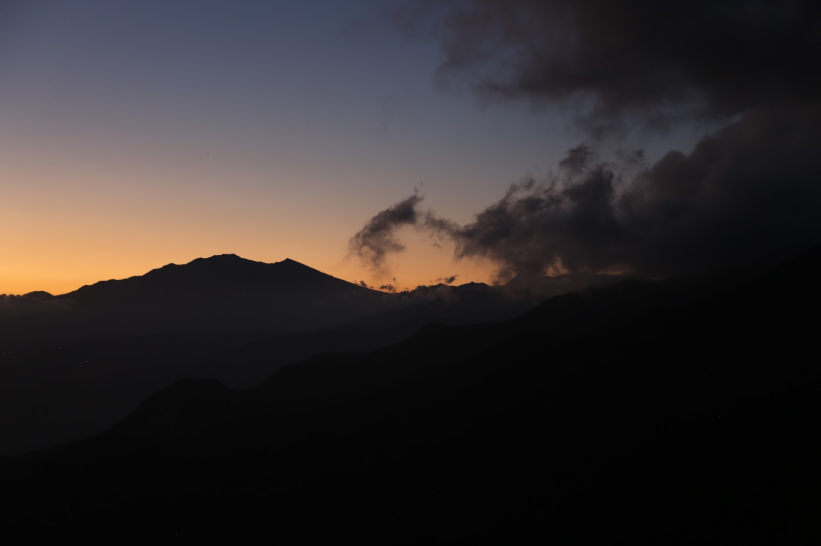
The Car Ferry to Bocas del Toro: Everything Tourists Should Know

For most travelers heading to Bocas del Toro, the journey begins in Almirante. You leave the mainland behind, walk down to the waterfront and climb aboard one of the small passenger boats that regularly cross to Isla Colón. But there is another option that many visitors do not even realize exists: you can take your car with you. A vehicle ferry operates between Almirante and Isla Colón, allowing cars, SUVs, motorcycles, pickups, vans, buses and even much larger commercial vehicles to make the crossing. For someone traveling around Panama by car, it can be a fascinating way to turn a normal road trip into something much more unusual. Instead of parking your vehicle on the mainland and becoming a passenger, you simply drive onto a ship and continue your journey on the other side of the Caribbean.

The ferry connects Almirante with Isla Colón, the main island of the Bocas del Toro archipelago and the location of Bocas Town. This is important because Bocas del Toro is not a single island. It is an entire collection of islands and coastal communities, and Isla Colón is the main tourist hub. The car ferry does not take you directly to every island in Bocas. It takes you and your vehicle to Isla Colón, from where you can continue exploring the island by road or use boats to reach other parts of the archipelago.

The first thing tourists should understand is that the vehicle ferry is very different from the passenger water taxis. The water taxis are small, fast boats designed specifically to move people and luggage. The vehicle ferry is much larger and designed to transport vehicles. The current operator, Ferry Bocas, lists an approximate crossing time of one hour and forty minutes in each direction. That makes it considerably slower than the passenger boats, but it also gives you the ability to bring an entire vehicle across the water.

The current schedule is particularly important because there are only a few vehicle crossings each day. As of the schedule currently published by Ferry Bocas, effective from August 15, 2026, the ferry operates every day. Departures from Almirante to Isla Colón are at 7:00 AM and 12:00 PM, while departures from Isla Colón back to Almirante are at 10:00 AM and 3:00 PM. The operator lists the journey at approximately one hour and forty minutes. This means you should not approach the ferry like a frequent city bus where missing one departure is no big deal. If you miss the vehicle ferry, the next opportunity may be several hours later, so planning ahead is important.

The price is actually quite reasonable considering what you are transporting. The current published one way fare for a private car carrying up to five passengers is $40. Medium 4x4 vehicles such as a RAV4, Honda CRV or Suzuki are listed at $45, while larger 4x4s such as Land Cruisers, Monteros, 4Runners, Patrols and Prados are listed at $50. Pickups up to 1.5 tonnes are $55, panel vans are $60, and larger buses and trucks have progressively higher rates. Motorcycles start at $10, while bicycles are currently listed at $4.

Passengers are also charged separately according to the current published tariff. Adults are listed at $3 one way, children from two to nine years old at $1.50, and retirees at $2. Because prices and schedules can change, travelers should check the ferry operator's current information immediately before traveling rather than relying on an old blog post or a social media comment from several years ago.

One of the biggest questions is whether taking your car to Isla Colón is actually worthwhile. The answer depends almost entirely on where you are staying and what you plan to do. If you are staying directly in Bocas Town for a few nights, a car may be more trouble than it is worth. Bocas Town is compact, and many visitors walk around town, take taxis or use boats to reach beaches and other islands. You could potentially spend several hundred dollars and a considerable amount of time transporting your vehicle to the island, only to leave it parked outside your hotel for the entire vacation.

For a traveler staying somewhere outside Bocas Town, however, the calculation can be completely different. If your accommodation is remote, having your own vehicle can make getting around Isla Colón considerably easier. The same is true for people carrying lots of equipment. Surfers with boards, divers with bulky equipment, photographers carrying large amounts of gear, families traveling with lots of luggage and long term travelers living out of their vehicles may find the car ferry extremely convenient.

The ferry can also make a lot of sense for someone doing an extended Panama road trip. Imagine driving from Panama City through the interior, heading toward David, continuing through the mountains around Boquete and eventually descending toward the Caribbean side of Bocas del Toro. Normally, Almirante would be the point where the road trip ends and you abandon the vehicle. With the car ferry, however, the road trip continues. You drive onto a ship, cross the Caribbean and then drive off the other side onto Isla Colón. It is one of the more unusual ways to travel around Panama.

The journey from the mountains to Almirante is itself part of the experience. Travelers coming from Boquete or David will notice the landscape changing dramatically as they move toward the Caribbean. Mountain scenery gradually gives way to tropical lowlands, and eventually the road brings you into Almirante. The town is primarily known as a transportation gateway to Bocas, so many tourists do not spend much time there. They arrive with a particular mission: get to the dock, organize their transportation and cross the water.

Once you reach the ferry area, make sure you are dealing with the vehicle ferry rather than one of the passenger water taxis. This sounds obvious, but Almirante can be confusing for a first time visitor because several transportation services operate around the waterfront. If you simply ask where to find the boat to Bocas, you may be directed toward a passenger water taxi. Be very clear that you have a vehicle and want to take it to Isla Colón.

The loading process is also different from taking a passenger boat. You need to allow time for the vehicle to be organized and loaded. This is not a situation where you want to arrive five minutes before departure and expect everything to happen instantly. The ferry has to accommodate different types and sizes of vehicles, and loading and unloading naturally takes longer than boarding a small passenger boat.

This is also why it is wise to have some patience. The car ferry is primarily transportation infrastructure, not a luxury sightseeing cruise. It exists to move vehicles and people between the mainland and the island. The crossing can be enjoyable, especially if the weather is good, but the experience is much more functional than the polished tourist boat trips that take visitors snorkeling or island hopping.

For anyone who suffers from seasickness, it is worth remembering that the Caribbean can become rough. Conditions vary, and even people who normally tolerate boats well can occasionally have an unpleasant crossing. If you know you are prone to motion sickness, prepare before boarding rather than waiting until you are already feeling sick. Keep water with you, avoid an enormous meal immediately before the crossing and find a comfortable place where you can get fresh air.

Weather is another reason to build flexibility into your plans. Bocas del Toro is on Panama's Caribbean side and receives substantial tropical rainfall. Conditions can change, and marine transportation can be affected by weather or operational circumstances. The published schedule is a guide to the regular service, but travelers should always verify the current information before setting off.

One of the most important considerations applies to rental cars. Never assume that a rental vehicle can automatically be taken onto the Bocas ferry. Rental companies can have restrictions about where their vehicles may travel, whether they can be transported by ferry and whether their insurance coverage remains valid during the crossing. Before heading to Almirante, contact the rental company and specifically ask whether the vehicle can be transported on the ferry from Almirante to Isla Colón. Ideally, get the answer in writing. A cheap ferry ticket is not worth risking a rental agreement or insurance dispute.

Another major consideration is parking. Before taking your vehicle to Isla Colón, ask your accommodation whether it actually has parking. Ask whether parking is free, whether it needs to be reserved, whether it is secure and whether the property is accessible by car. Bocas Town was not designed around the idea that every tourist would arrive with a vehicle, so parking can be an important consideration. If your hotel has no parking and you are staying right in the centre, you may quickly regret bringing the car.

This is why the passenger water taxi remains the obvious choice for many backpackers. If you are staying in Bocas Town, have a normal amount of luggage and do not need a vehicle, leaving the car on the mainland can be dramatically easier. Passenger boats are designed specifically for this purpose and operate much more frequently than the vehicle ferry. The vehicle ferry exists for people who actually need to move a vehicle.

There is also an interesting psychological difference between the two journeys. A passenger water taxi feels like the beginning of a Caribbean vacation. You throw your backpack into the boat, sit down, and within a relatively short time you are approaching Bocas Town. The car ferry feels more like an extension of a road trip. You are still sitting beside the vehicle that has carried you across Panama, except now the road has disappeared underneath you and you are traveling across the Caribbean.

Once the ferry leaves Almirante, the experience becomes quite memorable. The mainland gradually disappears behind you, the surrounding water opens up and the feeling of traveling to an island becomes unmistakable. After spending hours driving through Panama, suddenly the only way forward is across the sea. For travelers who enjoy the journey as much as the destination, this is one of the fun parts of taking the vehicle.

The approximately one hour and forty minute crossing also means you have time to relax. Depending on the weather and conditions, the Caribbean can be beautifully calm, and the journey provides a completely different perspective of Bocas del Toro. You are not simply flying over the region or rushing across it in a speedboat. You are slowly entering the archipelago.

Eventually, Isla Colón appears, and then comes one of the strangest moments of the entire journey. You drive your vehicle off a boat and onto a Caribbean island. Suddenly you are back on a road, but everything feels different. Bocas Town has a distinctly Caribbean atmosphere, with colorful buildings, restaurants, hostels, small businesses, bicycles, taxis and boats everywhere. Tropical vegetation surrounds the developed areas, and the pace is generally much more relaxed than on the mainland.

Having a vehicle on Isla Colón does not mean you suddenly have access to every part of Bocas by road. The island has a relatively limited road network, and conditions can vary considerably depending on where you are going. Some roads are narrow or rough, and certain remote destinations are still much easier to reach by boat. This is important because Bocas is fundamentally an island destination. Boats remain one of its most important forms of transportation.

You can drive around Isla Colón, but if you want to visit another island, go snorkeling, explore many of the famous beaches or join one of the numerous water based excursions, you will probably still be getting into a boat. That is why a vehicle can be useful without being essential.

There is also a practical advantage to taking the car if you have a huge amount of luggage. Long term travelers sometimes have their entire lives packed into their vehicles. Leaving the car behind means deciding what stays on the mainland and what gets carried onto the passenger boat. The ferry allows you to keep your belongings organized in the vehicle. However, normal precautions still apply. Valuable items such as passports, cash, computers, cameras and other important belongings should not simply be left visible inside the car.

The return journey requires just as much planning as the trip to Isla Colón. The current published return departures are 10 AM and 3 PM. If you have a flight, bus connection or another important commitment on the mainland, give yourself plenty of time. Island transportation is one of those situations where building in a generous buffer is much wiser than trying to create a perfectly timed itinerary.

For example, if you have an important flight from Panama City later in the afternoon, it would be unwise to schedule the very latest possible ferry from Isla Colón and then assume every part of the journey will run exactly according to plan. The ferry itself takes approximately one hour and forty minutes, and loading, unloading and unexpected delays can add additional time. When traveling between islands and the mainland, flexibility is your friend.

There is also no need to feel that taking the car ferry is somehow the “better” or more adventurous option. It is simply a different transportation choice. For some travelers it is absolutely brilliant. For others it is completely unnecessary.

A couple staying in Bocas Town for three nights with two backpacks probably has little reason to take a car. A family staying in a remote rental house for two weeks might find it extremely useful. A surfer carrying boards might love having the vehicle. Someone on a month long Panama road trip may consider it an obvious choice. Someone renting a car for a week in Panama and staying exclusively in central Bocas Town may decide that leaving it in Almirante is far easier.

The great thing is that you have a choice.

That is what makes the Bocas car ferry so interesting. It allows Bocas to remain part of a road trip rather than forcing every traveler to abandon the road at Almirante. You can drive from the mountains to the Caribbean, reach the edge of the mainland, load the vehicle onto a ferry and continue across the water.

It is one of those experiences that perfectly captures the geography of Panama.

You can start the morning surrounded by mountains, drive through tropical lowlands, reach the Caribbean coast, put your car on a ship and finish the journey on an island surrounded by turquoise water and rainforest.

For travelers who need their vehicle, the ferry is incredibly practical. For travelers who do not, it is probably unnecessary. But either way, knowing that the option exists is useful.

And perhaps the most memorable part is simply the absurdity of it.

You spend hours driving through Panama thinking you are on a road trip.

Then suddenly the road ends.

You drive your car onto a ferry.

The Caribbean opens up in front of you.

And about an hour and forty minutes later, you drive off the ship onto Isla Colón.

In Bocas del Toro, sometimes the road to the islands really does go through the water.

Department Stores Are Not Dead in Panama: The Treasure Hunt of Cheap Shopping

In many parts of North America, the traditional department store feels like a dying species. Shopping has moved online, malls have changed, and the enormous stores that once sold everything from school shoes to furniture, perfume, towels and televisions have disappeared from many smaller cities.

Panama is different.

Walk into a shopping centre in Panama and there is a good chance you will find exactly the kind of giant department store that seems increasingly unusual elsewhere. These stores remain an important part of everyday shopping, and for travelers they can be surprisingly useful. They are often enormous, practical, chaotic, colourful and, most importantly, full of bargains.

Panama has a whole ecosystem of department stores, each with its own personality and price range. Some specialize in inexpensive clothing. Others carry furniture, appliances and household goods. Some are particularly good for shoes, children's clothing and school supplies, while others mix imported American merchandise with discounted fashion.

And for a backpacker who suddenly realizes they need a pair of sandals, a rain jacket, cheap clothes, toiletries, a backpack, a towel or even a new phone charger, these stores can be much more interesting than the expensive boutiques found in Panama City's luxury malls.

Conway: the classic everything store

Conway Panama is probably one of the most recognizable names in Panama's department store world.

Conway occupies an interesting middle ground. It is considerably more than a basic discount clothing shop, but it also doesn't feel like an expensive department store. Depending on the location, shoppers can find clothing, footwear, furniture, household products, electronics, appliances, pharmacy items and other everyday merchandise.

It is particularly useful because you never quite know what you are going to find.

Conway regularly runs substantial promotions. Recent 2026 promotions have included discounts of up to 50 percent on selected merchandise, as well as 20 percent reductions on categories such as furniture and clothing.

That makes Conway the kind of place where it can actually pay to wander around rather than arrive with a very specific shopping list.

A backpacker might walk in looking for a pair of shorts and leave with shorts, a cheap shirt, sandals, a towel and something completely unexpected that somehow seemed essential at the time.

That is part of the Panama department store experience.

El Campeón: bargain hunting territory

El Campeón is another major name, and it sits much closer to the value end of the market.

El Campeón carries a broad mixture of products, including clothing, footwear, beauty products, household merchandise and furniture. It is particularly useful when price matters more than having the latest international brand.

For travelers, this can be a fantastic place to replace basic clothing or pick up things that are inconvenient to carry while backpacking.

Need inexpensive sandals?

Check El Campeón.

Need shorts?

Check El Campeón.

Need clothes for a night out because everything you packed has been destroyed by humidity, hiking and hostel life?

Definitely check El Campeón.

The chain also operates an online store and offers pickup and delivery, including delivery to locations outside Panama City.

And importantly, El Campeón is not some tiny neighborhood shop. It is part of the broader network of large Panamanian department stores that continue to compete aggressively on price.

El Costo: when the price is the point

Then there is El Costo.

The name itself tells you something about the philosophy.

El Costo is strongly associated with affordable shopping and carries a huge assortment of everyday merchandise. It is one of those places where the objective isn't necessarily to create a luxurious shopping experience. The objective is to get stuff at a reasonable price.

Clothing, shoes, household products, furniture, appliances and seasonal merchandise can all appear under the same roof.

And this is one of the great differences between Panama and many North American shopping environments.

A traditional department store in Panama can still feel like a genuine general store on steroids.

You can enter looking for a shirt and end up walking past refrigerators, mattresses, kitchen equipment, toys, shoes and school supplies.

The country's consumer protection agency, ACODECO, continues to include El Costo among the major chains it surveys when comparing retail prices. Its January 2026 school shopping survey, for example, included El Costo alongside Conway, El Campeón, Titan, Dorians and several other major chains.

That gives you a pretty good idea of how embedded these stores remain in everyday Panamanian shopping.

Saks: the department store with a bargain hunter's secret side

Then there is Saks Panama, which can be particularly interesting for visitors.

Saks has a somewhat different feel from the most aggressively budget oriented stores. It offers fashion, household products and other departments, but one of its attractions is its discounted merchandise and promotions.

Saks itself advertises special promotions and says shoppers can find products at special prices in its branches.

It also has a loyalty program called Loyalty Plus, which allows customers to accumulate points and receive discounts. Membership is free, and the program works across Saks and Dorians locations.

Saks has locations in places including Los Pueblos, San Miguelito, Los Andes, Albrook, El Dorado, Westland, Santiago and Via España.

For a traveler, this is important because you don't necessarily have to trek across Panama City to find one.

There may be a department store closer than you think.

Dorians: another bargain hunting option

Dorians is another name worth knowing.

Dorians and Saks operate under the same Loyalty Plus program, and both are part of Panama's broader department store landscape.

Dorians is particularly interesting because these stores can contain a mixture of regular merchandise and discounted imported goods.

That means shopping can sometimes feel less like buying from a carefully curated fashion store and more like going on a treasure hunt.

You might find something excellent.

You might find something hilariously strange.

You might find a brand you recognize at a surprisingly low price.

And you might find nothing.

That unpredictability is part of the fun.

Titan, La Onda, El Fuerte and Machetazo

The department store ecosystem goes far beyond the biggest names.

There are also stores such as Titan, La Onda, El Fuerte and El Machetazo, each occupying slightly different positions in Panama's retail landscape.

ACODECO's price comparisons regularly include many of these chains, which demonstrates just how competitive the sector remains. A 2026 survey included El Fuerte, Machetazo, La Onda, Picadilly, El Costo, Titan, El Campeón, Madison, Conway and Dorians in the same comparison of school related products.

This is excellent news for consumers.

Instead of having one giant retailer dominate everything, Panama has multiple competing stores where prices can vary considerably.

That creates opportunities for people who are willing to shop around.

The real secret: don't assume the mall is the cheapest place

Panama has some spectacular shopping malls.

Albrook Mall is enormous.

Multiplaza Panamá is much more upscale.

Westland Mall, Los Andes Mall, Los Pueblos and other shopping centres offer completely different combinations of stores.

But if you are looking for bargains, the most glamorous mall isn't necessarily where you should start.

A department store can sometimes offer much better value than a specialized international brand store.

This is particularly true for basic items.

There is little reason to pay luxury mall prices for a plain T shirt, inexpensive sandals, beach shorts, towels, children's clothes or basic household goods.

The department stores are where many Panamanians shop for these everyday necessities.

School shopping reveals just how competitive it can be

One of the best demonstrations of Panama's department store culture happens every year before the school year.

Families shop for uniforms, shoes, backpacks, belts, school supplies and other necessities, and price comparisons become important.

ACODECO actually publishes price comparisons between major chains.

Its January 2026 survey compared selected school shoes and belts at stores including El Fuerte, Machetazo, La Onda, Picadilly, El Costo, Titan, El Campeón, Madison, Conway, Dorians and Oca Loca.

That is a remarkable number of competing stores selling overlapping categories of merchandise.

For shoppers, it means that comparison shopping can genuinely pay off.

The same item, or similar versions of it, may appear at very different prices depending on the store.

The strange joy of Panama's department stores

There is also something wonderfully old school about these stores.

They are not trying to be minimalist.

They are not trying to make everything look like an Apple Store.

They are not necessarily trying to convince you that a pair of jeans is an investment piece.

Instead, they are packed with merchandise.

There are racks of clothes.

Stacks of shoes.

Displays of towels.

Rows of perfume.

Children's toys.

Kitchen equipment.

Furniture.

Mattresses.

Backpacks.

Cosmetics.

Seasonal decorations.

Random objects that you didn't know existed until five seconds ago.

And somewhere in the middle there will probably be a sign advertising 50% OFF.

For someone accustomed to North American shopping, it can feel surprisingly nostalgic.

And this is why they are fantastic for backpackers

Backpackers have a unique relationship with department stores.

You arrive in Panama with a carefully planned backpack.

Three weeks later, that carefully planned backpack has become a disaster.

Your shirt is permanently stained.

Your shorts are falling apart.

Your sandals have disappeared.

Your towel smells like something that should be studied by scientists.

You suddenly need a rain jacket.

And you have absolutely no desire to spend $80 on it.

This is where Panama's department stores become extremely useful.

You can often find inexpensive replacements without needing to visit five different specialty shops.

They are also useful when traveling through the interior.

You don't necessarily need to return to Panama City every time you need something.

Large shopping centres and department stores can be found outside the capital as well. Saks, for example, currently lists a Santiago location in Veraguas alongside its Panama City and Panama Oeste branches.

Panama's department stores are a cultural experience too

For tourists, shopping is sometimes treated as something you do only when you need something.

In Panama, spending an afternoon wandering through a large department store can actually be part of experiencing everyday life.

You see what people are buying.

You see what brands are popular.

You see what prices ordinary families are dealing with.

You see the huge importance of school shopping.

You see the difference between imported merchandise and locally targeted products.

And you quickly discover that Panamanian shopping culture isn't simply about luxury malls and international brands.

There is a huge middle and value market underneath it.

That market is alive and well.

The great Panama department store strategy

For travelers, the best approach is simple.

Don't buy everything at the first store you enter.

If you have time, compare.

Check Conway.

Check El Campeón.

Check El Costo.

Check Saks or Dorians.

Look at Titan, La Onda, El Fuerte, Machetazo and other local chains.

And don't automatically assume that a famous international brand is going to give you the best deal.

Panama's department stores frequently run temporary promotions, clearance events and category specific discounts. Saks actively advertises promotions, while recent Conway promotions have included significant reductions on selected merchandise.

The best bargains can also be the least glamorous ones.

A $10 pair of shorts that survives six months of backpacking may be a much better purchase than a $70 pair from a fashionable mall boutique.

A shopping tradition that refuses to disappear

Perhaps the most interesting thing about Panama's department stores is that they aren't relics waiting to disappear.

They continue to serve a very practical purpose.

Panama is a country where shopping malls have become major social and commercial centres, yet traditional department stores have managed to coexist with international brands, online shopping and enormous modern malls.

They survived because they offer something extremely difficult for online shopping to completely replace:

the ability to walk into one enormous store and find almost anything you need at a competitive price.

And for travelers, they can be one of the country's best kept shopping secrets.

Forget the idea that Panama shopping means nothing but luxury malls and expensive designer stores.

Sometimes the best discovery is a giant, slightly chaotic department store with five floors of merchandise and a sign saying REBAJAS.

That's where the treasure hunt begins.

Panama’s Weirdest Little Reptiles: The “Snakes” That Are Actually Lizards With Tiny Legs

Panama has no shortage of strange reptiles. There are snakes that glide, frogs that look like leaves, lizards that can change color, and creatures that seem to have been designed by someone who was having a particularly imaginative afternoon.

But some of the strangest are the animals that look exactly like snakes while technically being lizards.

And then there are the really bizarre ones: lizards with such ridiculously tiny legs that you might look directly at one and think, “Wait… are those actually legs?”

Panama is home to several of these remarkable reptiles, including worm lizards, which are essentially legless burrowing lizards, and tiny snake shaped lizards in the genus Bachia that still retain miniature limbs. They are among the country's least noticed reptiles because they spend much of their lives beneath leaves, soil, logs and underground tunnels.

The first rule: not everything that looks like a snake is a snake

This is where things get wonderfully confusing.

Snakes are reptiles, but so are lizards. Both belong to the larger group Squamata, and over evolutionary time some lizards independently evolved extremely long bodies and reduced or completely lost their legs.

That means evolution has produced animals that can look almost indistinguishable from snakes while actually being lizards.

In Panama, one of the best examples is the worm lizard, or amphisbaenian.

The worm lizard looks like something between a snake and an earthworm

Imagine finding a strange, shiny reptile underneath a log. It is long and cylindrical, has no obvious legs, and its body is covered in little rings.

You might immediately assume you have found a tiny snake.

But you could actually be looking at an amphisbaenian, commonly called a worm lizard.

Panama has confirmed species of Amphisbaena, including the Speckled Worm Lizard, Amphisbaena fuliginosa. A 2026 study added three new locality records for this species in Colón Province and compiled known records across Panama. The species has been documented on both the Caribbean and Pacific sides of the country, with many records concentrated around Coclé, Colón, Panamá and Panamá Oeste.

And they are spectacularly weird.

Their bodies are covered in numerous ring like sections, giving them an almost mechanical appearance. Their eyes are extremely reduced and often hidden beneath scales, because having excellent eyesight isn't particularly useful when you spend much of your life pushing through soil.

They are essentially underground predators.

They are built for digging

A snake is designed to move across the surface using its entire body. A worm lizard has evolved toward a completely different lifestyle.

Its body is compact, muscular and cylindrical, while its skull is exceptionally useful for forcing its way through soil.

Rather than simply wriggling around on the surface, these animals can tunnel through loose earth and leaf litter.

This is why finding one can be incredibly difficult. Amphisbaenians are notoriously secretive and are generally encountered underground or beneath objects on the forest floor. When they do appear above ground, sightings are often at night.

In other words, Panama could have worm lizards living surprisingly close to you and you would probably never know.

And then there is Bachia...

This is where your description of “snakes with tiny legs” becomes absolutely perfect.

The genus Bachia contains some extraordinarily snake shaped lizards. These animals have elongated bodies and reduced limbs, meaning that instead of completely losing their legs, evolution has reduced them to tiny remnants.

One species found in Panama is Bachia blairi.

It has an elongated body, lives around the forest floor and is associated with rainforest habitats. Most importantly, it still has recognizable little legs. The front limbs have four digits and the hind limbs have three.

So technically, yes, you could encounter something in Panama that looks like a tiny snake but has little microscopic lizard legs sticking out of its sides.

Nature really did not decide to keep things simple.

Why would a lizard lose its legs?

This is one of the most fascinating examples of evolution.

Legs are incredibly useful if you spend your life running across open ground.

But imagine trying to squeeze through a narrow tunnel full of roots, soil and compacted vegetation while dragging four limbs along behind you.

Suddenly, legs become less useful.

Over enormous periods of time, natural selection can favor animals with longer bodies and smaller limbs if that body shape helps them move through soil, leaf litter, grass or other narrow environments.

Eventually, the limbs can become tiny or disappear altogether.

And this has happened multiple times in reptile evolution. Snakes are obviously the most famous example, but they aren't the only reptiles to evolve limbless or nearly limbless bodies.

Studies of Bachia show just how extraordinary this process can be. Even when the external legs become extremely small, parts of the internal skeleton can remain, with bones and structures becoming progressively reduced.

So when you see a tiny leg on one of these creatures, you are essentially looking at an evolutionary leftover.

The ultimate Panama underground creature

Worm lizards take the idea even further.

Unlike the Bachia species that still retain tiny limbs, most amphisbaenians are completely legless. They have evolved into highly specialized burrowing reptiles.

They are not worms.

They are not snakes.

They are lizards that have become extremely good at being worm shaped.

Their scales are arranged in rings around the body, and their cylindrical shape allows them to move through soil. Their eyes are highly reduced because underground vision isn't particularly important.

Some species even have unusual head shapes adapted to pushing through soil.

And there is another bizarre feature.

Some amphisbaenians have tails that can look surprisingly similar to their heads. This can make it difficult for a predator to determine which end is which. The name Amphisbaena itself comes from a mythical Greek serpent associated with having a head at each end.

Panama has more than one kind

The fascinating thing is that Panama's worm lizards are not just one mysterious species.

Historical records have documented Amphisbaena spurrelli in Panama, as well as the species historically referred to as Amphisbaena varia, which is now associated with A. fuliginosa in much of the literature.

Amphisbaena spurrelli is particularly interesting because it occurs in Panama and Colombia and can reach around 30 centimetres in body length, with a relatively short tail.

The 2026 research on A. fuliginosa is another reminder that Panama's reptile fauna is still being documented. New records continue to appear, and scientists have even had to correct older locality information as knowledge of these animals improves.

That is one of the great things about Panama's wildlife.

Even in a country that has been studied for centuries, there are still reptiles hiding under the forest floor that most people have never heard of.

They are not dangerous

If someone discovers one of these bizarre creatures, there is usually no reason to panic.

Worm lizards are not venomous snakes waiting to attack people. Their lifestyle is fundamentally different. They are secretive animals adapted to living underground and feeding on small prey.

A 2006 report from El Valle de Antón described Amphisbaena fuliginosa as a legless lizard that resembles a snake and noted its lack of venomous fangs.

Their greatest defense is usually simply not being found.

If you spend enough time hiking through Panama's forests, however, you eventually learn that the forest floor is a world of its own.

Lift an old log and you might find insects.

Move some leaf litter and there could be a frog.

Dig into soft soil and there might be something moving beneath it.

And every once in a while, you might uncover one of these extraordinary little reptiles that looks like a snake, moves like a worm and turns out to be a lizard.

The tiny legged ones are even stranger

The Bachia lizards are particularly fun for anyone interested in evolution because they occupy an almost comical middle ground.

They are lizards.

They look like snakes.

They have legs.

But the legs are so reduced that they look almost pointless.

Bachia blairi, for example, has been recorded in Panama and Costa Rica and is a secretive terrestrial and semifossorial species associated with rainforest leaf litter. It has retained four toes on each front foot and three on each rear foot despite having an extremely elongated body.

This makes animals like Bachia fantastic examples of the evolutionary transition toward a snake shaped body.

They aren't “half snake” in the literal sense. They are fully lizards that have independently evolved a body plan that happens to resemble that of snakes.

Why hikers almost never see them

There is a simple reason these creatures don't become famous tourist attractions.

They don't want to be seen.

A brightly colored poison dart frog sitting beside a trail is practically advertising itself.

A toucan flying overhead is impossible to miss.

A monkey crashing through the canopy makes sure everyone knows it is there.

A worm lizard has chosen a completely different strategy.

Stay underground.

Research on Panamanian amphisbaenians emphasizes just how secretive they are, with many spending most of their lives below ground and being rarely observed.

That means even experienced hikers can walk through areas where these reptiles live without ever seeing one.

And perhaps that makes finding one even more exciting.

Panama's hidden reptile world

Panama is often associated with spectacular wildlife: sloths hanging in trees, toucans calling from the canopy, monkeys moving through the forest and brightly colored frogs sitting beside streams.

But some of the country's most unusual animals are much harder to find.

They live underneath the rainforest.

The worm lizards and tiny legged Bachia species are reminders that evolution doesn't follow a neat plan. A lizard doesn't have to look like the lizards people imagine. A reptile doesn't need four obvious legs. And something that looks exactly like a snake can turn out to be a completely different branch of the reptile family tree.

So if you're hiking in Panama and suddenly see a tiny, shiny, snake like creature disappearing into the soil, don't immediately shout “snake!”

Take a second look.

You may have just encountered one of Panama's strangest little lizards.

And if it has two ridiculously tiny legs sticking out of its body, you've probably found something even more special.

A snake shaped lizard that apparently decided four legs were simply too much work.

Skinks in Panama: The Little Lizards You May Be Mistaking for Something Else

Panama is the kind of country where a walk through a garden, along a jungle trail or even around a hostel can reveal a surprising amount of wildlife. You might see an anole basking on a wall, a gecko disappearing behind a light, or a basilisk sprinting across a stream.

And then there are the skinks.

Skinks are some of the more easily overlooked lizards in Panama. They tend to be small, fast and somewhat secretive, and their smooth, shiny bodies can make them look almost like a strange cross between a lizard and a snake.

They are completely harmless to people, however, and are fascinating little predators in their own right.

What exactly is a skink?

Skinks are lizards belonging to the family Scincidae. They occur across much of the world's warmer regions and are an incredibly diverse group.

One of their most recognizable characteristics is their elongated body and relatively short legs. Some species have such tiny limbs that, when they disappear through grass or leaf litter, they can momentarily look more like snakes than lizards.

Panama has native skinks belonging to the group commonly known as the mabuyine skinks, including species in the genus Marisora. Taxonomy in this group has changed considerably over the years, which explains why an older field guide may give a skink in Panama a completely different scientific name from a modern source.

That taxonomic confusion is actually part of what makes these animals so interesting.

The Central American mabuya

One of the skinks found in Panama is the Central American mabuya, Marisora unimarginata.

It occurs in Panama as well as Costa Rica and Nicaragua, and is currently considered a valid species.

Another species in the region is Marisora brachypoda, commonly referred to as the Western Middle America skink or mabuya centroamericana in Spanish.

The word mabuya can be confusing because older scientific literature used Mabuya for many New World skinks that are now divided among several different genera. A major taxonomic revision using morphology and DNA reorganized these lizards into numerous genera, including Marisora.

So if you encounter an old article calling a Panamanian skink Mabuya, that doesn't necessarily mean the information is wrong. It may simply reflect the scientific classification used at the time.

They look remarkably smooth

Skinks often have a distinctive appearance.

Their scales are relatively smooth and shiny compared with many other lizards, giving them an almost polished appearance. Their bodies are elongated, their tails are usually long and their legs are comparatively short.

When one suddenly darts across a trail, it can be easy to mistake it for a small snake.

Then you notice the legs.

The resemblance to snakes isn't accidental. Skinks have evolved body shapes that allow them to move efficiently through vegetation, leaf litter and narrow spaces.

Their elongated bodies can be particularly useful when they are hunting through dense vegetation.

Fast little predators

Despite their small size, skinks are active predators.

They feed on small invertebrates such as insects and other tiny creatures. A skink moving through a garden or forest floor is effectively searching for miniature prey that most people would never notice.

This makes them useful members of Panama's ecosystem.

A garden containing skinks can have its own little predator community operating almost invisibly among the leaves and rocks.

An insect lands.

The skink freezes.

It watches.

Then, almost unbelievably quickly, it darts forward.

The entire event can be over before a person has even realized what happened.

Where might you see one?

Skinks can be encountered in a variety of environments, although particular species have their own habitat preferences.

They can occur around vegetation, forest edges, gardens and areas where there is plenty of leaf litter and cover.

The important thing for anyone hoping to see one is to look down.

Visitors to Panama often spend their time looking upward for monkeys and birds. Others scan the trees looking for sloths or snakes.

Skinks are usually much closer to the ground.

A warm rock, fallen branch, pile of leaves or sunny patch beside a trail can be worth watching.

Panama's rainforest isn't their only home

One of the interesting things about skinks is that you don't necessarily need to enter pristine rainforest to encounter one.

Panama's mosaic of forests, farms, gardens, rural properties and developed areas creates countless small habitats.

This is especially relevant in places where vegetation is dense but people are still nearby.

A skink may be living in exactly the sort of environment that a visitor considers "just a garden."

That makes them one of the reptiles that can quietly become part of everyday life in tropical Panama.

They are not dangerous

If you see a skink, there is no reason to be frightened.

They aren't venomous.

They aren't dangerous to people.

They aren't aggressive.

Their greatest defense is usually to run away incredibly fast.

Trying to catch one is generally a frustrating exercise because they can disappear into vegetation almost instantly.

For this reason, skinks are much easier to observe when you simply sit quietly and allow them to go about their business.

The incredible diversity of skinks

One reason the group is so fascinating is that "skink" describes an enormous range of animals.

There are skinks with tiny legs, skinks with relatively substantial legs, burrowing skinks, tree dwelling skinks and species that have evolved in remarkably isolated environments.

The family Scincidae is one of the major groups of lizards, and the evolutionary history of New World skinks is particularly interesting.

Researchers have discovered that the American mabuyine skinks represent a complex evolutionary radiation. A major study concluded that their ancestors colonized the Americas millions of years ago and subsequently diversified into numerous lineages.

That means the little skink disappearing beneath a leaf in Panama belongs to a much larger evolutionary story stretching across tropical America.

Panama has attracted serious skink research

Panama has also been important for scientific research into skinks.

In 1991, herpetologists Charles Myers and Maureen Donnelly published a detailed work specifically examining the lizard genus Sphenomorphus in Panama, including the description of a new species.

This is a reminder that Panama's reptile diversity is still much more complicated than what a casual visitor sees.

The country's enormous variety of elevations and habitats, from Caribbean lowlands to Pacific forests and high mountain environments, provides opportunities for closely related reptiles to evolve into different forms.

The mystery of their reproduction

New World mabuyine skinks are particularly interesting because of their reproductive biology.

Some members of this group have evolved live birth, rather than laying eggs.

Their reproductive adaptations are unusually sophisticated for lizards. Scientific research into the group has even highlighted remarkable similarities between their reproductive systems and some aspects of placental reproduction in mammals.

This is one of those facts that makes skinks considerably more interesting than their rather ordinary appearance suggests.

They may look like small shiny lizards scurrying through the garden, but their evolutionary history contains some extraordinary adaptations.

Why you might notice them more during the day

Like many reptiles, skinks depend on their surroundings for heat.

A sunny morning can therefore be a good time to look for them.

A skink may emerge from cover, warm itself and then become increasingly active as the temperature rises.

This can create a familiar tropical scene: birds are calling from the trees, insects are moving through the vegetation and a tiny skink is racing between patches of sunlight at ground level.

The animal may only be visible for a few seconds.

Then it is gone.

Don't confuse them with geckos or anoles

Panama has so many small lizards that it is easy to lump them all together.

But skinks have some useful identifying characteristics.

Geckos often have large eyes, soft looking bodies and specialized toe pads that allow many species to climb smooth surfaces.

Anoles tend to have longer legs and are often seen climbing vegetation, walls or tree trunks. Some males also display colorful throat fans called dewlaps.

Skinks generally have smoother, shinier scales, longer bodies and shorter legs.

Once you've seen a few, the difference becomes much easier to recognize.

A tiny predator hiding in plain sight

Perhaps the most enjoyable thing about skinks is how easy they are to overlook.

Panama has animals that demand attention.

A howler monkey announces itself from half a kilometre away.

A toucan can be impossible to miss.

A sloth can attract an entire group of tourists.

A skink does none of this.

It simply exists.

It hunts.

It warms itself in the sun.

It disappears under a leaf.

And it continues doing exactly what it has been doing long before people started walking Panama's trails.

For travelers who slow down and start paying attention to the smaller creatures, skinks can become one of the most rewarding discoveries.

The next time something shiny and strangely snake like suddenly shoots across a trail in Panama, take a second look.

It might just be one of the country's wonderfully overlooked skinks.

Africanized Bees in Panama: How Dangerous Are They Really?

Panama is famous for its extraordinary biodiversity. The country has colorful birds, monkeys swinging through the canopy, crocodiles in its rivers and countless insects that most visitors never notice. But there is one small creature that can cause considerably more concern than its size would suggest: the Africanized honey bee.

These bees are very real in Panama, and they are not a rare curiosity. In fact, Panama's fire department has specifically warned that Africanized bees are present throughout the country and can become a serious danger when colonies are disturbed.

For anyone living in Panama, visiting rural areas, hiking through the jungle or staying somewhere surrounded by vegetation, understanding these bees is worthwhile.

Panama really does have Africanized bees

The name "Africanized bee" can sound as though there is a separate species of dangerous bee living in Panama. In reality, Africanized honey bees are a population of Apis mellifera, the western honey bee, with substantial ancestry from African honey bees.

The story began in Brazil in the 1950s, when African honey bees were introduced for breeding purposes. Some colonies escaped, and their descendants spread rapidly through South and Central America and eventually into North America.

Genetic research has confirmed just how strongly Africanized the populations in Central America became. Researchers studying bees from Panama found that the Panamanian samples averaged approximately 89 percent African ancestry, with most of the remainder coming from western European lineages.

They eventually reached Panama.

A study of Africanized bees in the Panama Canal area recorded the arrival of the first swarms there in 1982. Authorities subsequently launched education and control programs because of the potential public health risk.

Today, they are firmly established.

They are still honey bees

One of the biggest misconceptions is that Africanized bees are some completely different type of insect.

They are honey bees.

They pollinate flowers.

They produce honey.

They live in colonies.

And, like other honey bees, they are extremely important to agriculture and ecosystems.

The difference is largely in their behaviour and defensive response.

Africanized colonies can react much more quickly and intensely when they perceive a threat to the colony. Rather than having a relatively small number of bees defend a nest, hundreds or potentially thousands can respond.

That is where the real danger lies.

They don't normally want to attack you

Despite their frightening reputation, Africanized bees aren't flying around Panama looking for people to sting.

The vast majority of the time, they are simply doing what bees do: collecting nectar and pollen, maintaining their colony and producing honey.

The problem occurs when a person or animal gets too close to a colony.

The Panama Fire Department explains that the bees are responding defensively when they attack. When they perceive a threat, they can release chemical alarm signals called pheromones that recruit other bees to the defensive response.

This is why accidentally disturbing a hidden colony can be so much more dangerous than encountering a single bee.

One bee isn't necessarily the problem.

The colony is.

Why Panama is such a good environment for them

Panama provides almost everything a honey bee could want.

There is warmth throughout the year, enormous quantities of flowering plants and, depending on the region and season, abundant water and food.

Colonies can establish themselves in surprisingly unusual locations.

According to Panama's Fire Department, Africanized bees have been found in roofs, patios, vacant lots, abandoned structures, trees, holes in concrete and even old tires.

This is particularly relevant in rural Panama.

A seemingly harmless hole in a tree could contain a colony.

An abandoned building could contain one.

A hollow space underneath a roof could contain thousands of bees.

And you might not realize they are there until you get very close.

The dry season can be particularly important

Panama's dry season can change bee behaviour and movement.

The Fire Department has reported increased activity and movement of Africanized bees during the dry season, when colonies move in search of food and water.

Authorities have also reported that drought and heat can increase defensive behaviour because food and water become less readily available.

This is particularly interesting because the dry season is also one of the most popular times for tourists to explore Panama.

It is the season when people are hiking, visiting farms, exploring rural roads and spending more time outdoors.

That doesn't mean hikers should be afraid of Panama's forests.

It simply means that knowing what to do around a colony matters.

How dangerous are they?

The danger is not that every sting from an Africanized bee is automatically deadly.

For most people, a single bee sting is painful but not life threatening.

The serious danger comes from multiple stings or from a severe allergic reaction.

A large defensive swarm can deliver hundreds of stings remarkably quickly. Panama's Fire Department warns that multiple stings can cause severe allergic reactions, anaphylactic shock and, in extreme cases, death.

And this isn't merely theoretical.

In 2026, Panama's Fire Department reported thousands of incidents involving Africanized bees. By May 10, it had recorded 5,639 bee related emergencies nationwide during the year. The agency also reported fatal incidents, including a death in Chiriquí and another in Chepo, as well as an attack in Panama Oeste in which five dogs died.

Those figures make it clear that Africanized bees are a genuine public safety issue in Panama.

Panama has seen some remarkable attacks

One of the most dramatic recent incidents occurred in Penonomé during Holy Week in 2026.

A swarm attacked people participating in a religious procession, with approximately 50 people requiring hospital attention according to reports cited by the Panamanian Fire Department.

This illustrates an important point.

People don't necessarily have to be deliberately disturbing a hive.

Sometimes the colony is simply established somewhere near a place where people gather, and an unexpected disturbance can trigger a defensive response.

Dogs can be particularly vulnerable

Dogs are another reason to take bee colonies seriously.

Curious dogs can investigate a buzzing sound, sniff around a hole in a tree or attempt to chase individual insects. If that happens close to a colony, the dog can suddenly find itself surrounded.

The Fire Department reported an incident in Panama Oeste in which five dogs died following an Africanized bee attack.

For anyone living in a rural house, finca or jungle lodge, this is particularly important.

If a suspicious swarm appears around the property, keep pets indoors and away from the area.

What does a swarm look like?

A swarm can look surprisingly dramatic.

You may see thousands of bees moving through the air or gathering together in a dense mass. When temporarily clustered together, they can form something resembling a dark ball or football sized mass.

This does not necessarily mean they are attacking.

A swarm may simply be moving to a new location.

But that doesn't mean it is safe to investigate.

Panama's Fire Department specifically advises people not to approach, strike, spray or attempt to move a swarm.

The safest assumption is that a large concentration of bees should be left alone.

What should you do if you find a swarm?

The most important rule is incredibly simple:

Don't touch it.

Don't throw rocks.

Don't hit it with a stick.

Don't spray it with insecticide.

Don't poke the nest.

Don't try to smoke it out yourself.

Don't climb onto the roof to see what's happening.

And don't let children or pets investigate.

Panama's Ministry of Agricultural Development, MIDA, specifically advises people not to take action themselves when they encounter a swarm. Instead, the situation should be reported to the appropriate authorities, including the Fire Department, MIDA or MiAmbiente, where trained personnel can deal with the colony and, when appropriate, capture and relocate it safely.

What if the bees actually start attacking?

This is where staying calm becomes extremely important.

Run toward shelter.

Get inside a building or vehicle if possible and close the doors and windows.

Protect your face and head.

Don't stand around trying to swat individual bees.

Don't stop to take photographs.

Don't try to fight the swarm.

The Fire Department recommends getting into a protected enclosed space and closing doors and windows.

If there is nowhere else to shelter, move away from the colony as quickly as possible while protecting your face.

Panama's emergency number for the Fire Department is 103.

What about jumping into water?

There is an interesting piece of advice given by Panama's Fire Department for situations where someone is being attacked near a river or other body of water.

They say that if a person is near water, partially submerging themselves while protecting the face can provide protection.

The key point, however, is not to interpret this as a reason to deliberately jump into dangerous water.

A river in Panama can contain strong currents, rocks, crocodiles or other hazards.

If a safe building or vehicle is available, that is generally the preferable refuge.

Why you shouldn't try to remove a hive yourself

This is perhaps the most important advice for people living in Panama.

If you discover a colony in your roof, wall, tree, shed or property, don't assume you can simply get rid of it with insecticide.

Disturbing the colony can trigger the exact behaviour you're trying to prevent.

Professional bee handlers have protective equipment, smokers and experience dealing with colonies. Panama's Fire Department has specialized equipment and trained personnel for these interventions, while MIDA also works with trained personnel for swarm management and relocation.

Interestingly, Panama isn't simply trying to kill every colony.

Where possible, trained teams can capture and relocate colonies, preserving the bees while removing them from dangerous locations.

Africanized bees also have an important side

There is a fascinating contradiction here.

The same bee that can pose a serious threat around a house is also an extremely valuable agricultural insect.

Honey bees are important pollinators, and beekeeping is an established agricultural activity in Panama.

In 2025, Panama's Institute of Agricultural Innovation, IDIAP, established two apiaries containing Africanized honey bees in the Bahía de Parita area as part of a climate smart beekeeping project. The project aims to combine honey production, community economic opportunities and conservation of mangrove ecosystems.

So Africanized bees aren't simply considered pests.

They can be valuable agricultural animals when managed properly.

The problem occurs when a colony establishes itself somewhere where people or animals cannot safely coexist with it.

Should tourists be worried?

For most travellers, no.

There is no reason to walk through Panama's forests terrified that a swarm is waiting around every corner.

Millions of people spend time outdoors in Panama without ever having a serious encounter with Africanized bees.

The sensible approach is simply to recognize the risk.

If you see a few bees flying around flowers, carry on.

If you notice a large concentration of bees or hear an intense buzzing coming from a tree, roof or wall, don't investigate.

And if you see a large swarm, give it a very wide berth.

A particularly important warning for hikers

If you're hiking in Panama, especially around rural areas, forests and farms, avoid disturbing hollow trees, abandoned structures or obvious nests.

Don't bang on trees for fun.

Don't throw rocks into holes.

Don't poke around under roofs.

And if you suddenly notice dozens or hundreds of bees appearing around you, leave the area immediately.

The goal isn't to determine exactly what species they are.

You don't need to know whether they're Africanized bees, another honey bee population or something else.

If there is a large defensive looking colony nearby, distance is your friend.

Panama's bee problem is real, but manageable

The recent numbers from Panama are striking. The Fire Department recorded 8,218 bee related interventions in 2024, and thousands more have already been recorded in 2026.

That is a substantial workload for emergency services.

But it also demonstrates something positive.

Panama has developed specialized teams capable of dealing with these situations. Firefighters have professional beekeeping suits and equipment, and authorities such as MIDA and MiAmbiente can become involved when colonies need to be managed or relocated.

The biggest problem is often not the existence of the bees.

It is people unknowingly disturbing them.

The golden rule in Panama

If there is one thing worth remembering, it is this:

A single bee is usually nothing to worry about. A large colony is a completely different situation.

Don't disturb it.

Don't throw things at it.

Don't spray it.

Don't try to remove it.

Get children and pets away.

And if there is an established swarm or colony in a dangerous location, call 103 for assistance.

Africanized bees are a fascinating part of Panama's natural and agricultural landscape. They are highly productive pollinators, capable of producing honey and supporting beekeeping, but they are also capable of mounting an extraordinary defensive response when their colony feels threatened.

For someone travelling through Panama, the answer isn't to fear the bees.

It is to respect them.

And in the tropical countryside, that simple rule can make the difference between an interesting wildlife encounter and a genuine emergency.

How to Top Up Your Phone in Panama: Adding Data to +Móvil or Tigo

If you are travelling around Panama, having mobile data is almost essential. Google Maps, WhatsApp, Uber, hotel bookings, translation apps and travel information can quickly become indispensable, especially when travelling between cities or heading into more remote areas.

Fortunately, topping up a prepaid SIM in Panama is relatively easy. The two major networks most commonly encountered by travellers are +Móvil and Tigo, and both allow you to add regular credit and then use that credit to purchase a data package.

One important thing to understand is that adding money to your phone is not necessarily the same thing as buying data. A top up puts money onto your prepaid account. You then use that balance to purchase a package, unless you have a promotion or plan where the recharge itself activates a particular offer.

Getting a Panamanian SIM card

If you are arriving in Panama as a traveller, you can purchase a prepaid SIM from one of the country's mobile operators.

Once the SIM is installed and activated, you can add money whenever you need it. It is worth keeping your Panamanian phone number somewhere safe because you may need it when logging into the operator's app or receiving verification codes.

If your phone supports dual SIMs, keeping your home SIM active while using the Panamanian SIM for mobile data can also be convenient.

The easiest method: use the operator's app

For travellers who have a credit or debit card that works in Panama, using the operator's app is generally the easiest way to manage everything.

With Tigo, the Mi Tigo app allows prepaid customers to recharge their line, purchase data packages, check their remaining data and see their balance. Tigo specifically says that prepaid customers can buy packages using their recharge balance, credit or debit cards and Yappy.

For +Móvil, the Mi Más App allows customers to recharge their cellphone and purchase service packages using a credit card.

This is particularly useful for backpackers because you don't have to find a shop every time you run out of data.

How to top up Tigo

With Tigo, you have several options.

Using Mi Tigo

Open the Mi Tigo app and select your mobile prepaid line.

Choose Recargar, select the amount you want to add and choose your payment method.

Tigo says prepaid customers can recharge through Mi Tigo, its website, authorized businesses, ATMs and other available recharge points.

Once the money appears in your account, you can use it to purchase a Paquetigo.

Buying data directly

Instead of simply adding credit, you can go directly into Mi Tigo and select a data package.

This is often the better option if you know how much data you need.

As of September 2026, Tigo has a range of prepaid packages, including packages combining data with WhatsApp and packages offering unlimited data subject to Tigo's fair usage policy. Current examples include 2 GB plus WhatsApp for 2 days at B/.2.50, 3 GB for 3 days at B/.3.50, 4 GB for 5 days at B/.5, 10 GB for 10 days at B/.8 and 15 GB for 15 days at B/.10.

Tigo also currently lists unlimited data packages, including a 7 day option for B/.7 and a 30 day option for B/.22, although promotions and conditions can change.

For a short holiday, buying a package is usually much better than simply leaving your phone to consume prepaid credit at standard rates.

You can also use *888#

If you don't want to download an app, Tigo provides a USSD menu.

Dial:

*888#

You can then follow the menu to manage your prepaid service and purchase packages.

Tigo also uses this menu for checking consumption. Its official instructions say to dial *888#, select option 3 for consultation and then option 1 for the relevant prepaid balance information.

This method is particularly useful if your data has already run out because USSD menus can generally be accessed without needing an active internet connection.

How to top up +Móvil

The process with +Móvil is similar.

You can recharge your prepaid phone through the Mi Más App, where you can also purchase packages and manage your mobile service. +Móvil's current information specifically states that the app can be used to recharge cellphone credit and purchase service packages using a credit card.

You can also purchase a recharge through other available payment channels and then use the resulting balance to purchase a prepaid data package.

The exact packages offered by +Móvil can change, so it is worth checking the current options inside the Mi Más App rather than relying on an old list of package prices.

Don't confuse "recarga" with "paquete"

This is probably the most important thing for visitors to understand.

If somebody tells you:

"Haz una recarga."

They are talking about putting money onto your phone.

If they say:

"Compra un paquete de data."

They mean purchasing a specific mobile internet package.

For example, you might add B/.10 to your prepaid account. That does not necessarily mean you now have 10 GB of internet.

You may need to use that B/.10 to purchase a package.

This distinction can save you from accidentally burning through your balance.

Where can you physically recharge?

You don't always need an app.

Panama has numerous places where prepaid customers can add credit. Tigo says its customers can recharge through authorized businesses, ATMs and recharge points, as well as through its digital services.

You may encounter small shops displaying signs for mobile top ups, supermarkets, convenience stores and other businesses where you can ask for a recarga.

You simply give the cashier your phone number and tell them how much you want to add.

For example:

"Una recarga de cinco dólares para este número, por favor."

Or:

"Una recarga de diez dólares para +Móvil."

Because Panama uses the US dollar alongside the balboa at the same value, prices are normally displayed in dollars or as B/.

You can recharge someone else's phone

Another useful feature is that you don't necessarily have to recharge your own number.

If you're travelling with a friend, you can often purchase a recharge for their number as well.

This can be extremely useful if somebody in your group has run out of data and doesn't have a functioning payment method.

Just make absolutely sure you give the cashier the correct phone number before confirming the transaction.

What if you have no data left?

This is where using the USSD system or finding WiFi becomes important.

If you have completely run out of mobile data, you may not be able to open the operator's website or app normally.

With Tigo, *888# can be used to access prepaid services and purchase or manage packages.

Alternatively, connect to WiFi at a hostel, café, hotel or restaurant and use the operator's app.

This is one reason experienced backpackers often keep a small amount of prepaid credit available rather than allowing their account to reach zero.

A useful Panama travel trick

If you are travelling through Panama for several weeks, don't automatically buy the largest package available.

Your data requirements can vary enormously.

If you're staying in a hostel with good WiFi, you might only need mobile data while walking around town or travelling between destinations.

But if you're heading into rural Panama, hiking, taking buses or travelling through areas where WiFi is unreliable, having a larger package can be extremely useful.

For someone travelling from Panama City to Boquete, for example, having mobile data available for maps, transportation apps and WhatsApp can make the journey considerably easier.

And if you're continuing Boquete to Bocas del Toro, having data can be especially useful for coordinating buses, taxis, boats and accommodation.

Don't wait until you have zero data

The best time to buy your next package is usually before you completely run out.

Check your remaining data periodically in the operator's app.

Tigo's Mi Tigo app displays your remaining data, minutes and messages and allows prepaid customers to purchase another package when they are running low.

This can prevent the classic backpacker problem of standing on a Panamanian roadside with 1 percent battery, no WiFi and absolutely no internet.

Can you use a Canadian credit card?

Often, yes, although acceptance can depend on the particular payment system and card.

If your card doesn't work inside the operator's app, another option is to recharge at a physical location using cash.

For travellers carrying some US dollars, this is one of the advantages of Panama: you don't need to exchange money into a completely different currency just to purchase a phone recharge.

The simplest strategy for travellers

For most visitors, the process can be reduced to four steps:

1. Buy and activate a Panamanian prepaid SIM.

2. Download the operator's app when you have WiFi.

3. Add credit using a card, bank service or physical recharge location.

4. Use the credit to purchase a data package.

For Tigo users, Mi Tigo and *888# provide particularly convenient ways to manage prepaid service, while +Móvil users can use Mi Más App to recharge and purchase packages.

And remember the magic words when you walk into a little Panamanian shop:

"Una recarga, por favor."

Once you've learned that phrase, keeping your phone connected while travelling around Panama becomes remarkably easy.