
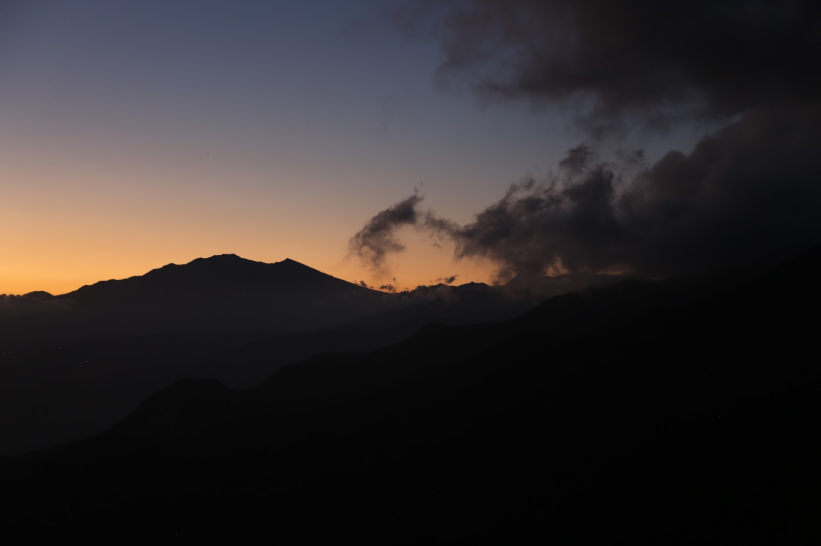
Volcán Barú: La verità senza filtri sull’escursione più dura di Panama

La salita al Volcán Barú da Boquete è spesso descritta come un’esperienza imperdibile. Ma ciò che molti viaggiatori scoprono solo lungo il percorso è quanto questa escursione sia davvero impegnativa. Non si tratta di una passeggiata tranquilla nella natura, ma di una lunga e costante salita fino al punto più alto di Panama.

Partiamo dai fatti. Il sentiero principale da Boquete è lungo circa 13,5 chilometri solo all’andata, per un totale di circa 27 chilometri tra andata e ritorno. A questo si aggiunge un dislivello di oltre 1.600 metri, quasi interamente in salita. È una combinazione che rende questa escursione una vera sfida.

Il sentiero non è tecnico, ma questo non significa che sia facile. Si tratta di una larga pista per fuoristrada, rocciosa, irregolare e spesso erosa. Quando è asciutto, il terreno è polveroso e instabile; quando piove, diventa scivoloso e faticoso. Non servono abilità di arrampicata, ma una buona resistenza fisica è fondamentale.

Ciò che rende questa escursione particolarmente dura è la costanza della salita. Ci sono pochissimi tratti pianeggianti dove poter recuperare davvero. Si sale per ore senza sosta, e la fatica si accumula lentamente ma inesorabilmente.

Molti escursionisti iniziano intorno a mezzanotte o all’una di notte per raggiungere la cima all’alba. Questo aggiunge un ulteriore livello di difficoltà. Camminare al buio richiede concentrazione, e il corpo è stanco perché dovrebbe dormire. Quando sorge il sole, hai già diverse ore di cammino alle spalle.

Anche l’altitudine gioca un ruolo importante. Con i suoi 3.474 metri, il Volcán Barú è abbastanza alto da farti sentire la mancanza di ossigeno. Potresti ritrovarti senza fiato più facilmente, anche se sei in buona forma.

Quindi, sei abbastanza in forma? Se fai sport regolarmente, ami camminare o sei abituato ad attività di resistenza, probabilmente troverai questa escursione dura ma fattibile. Ti metterà alla prova, ma in modo positivo.

Se invece hai una forma fisica media e poca esperienza con lunghe salite, la situazione cambia. È possibile riuscirci, ma sarà molto impegnativo. La discesa, in particolare, è dura per le ginocchia, e molti la trovano quasi più difficile della salita.

Per chi non è allenato o sottovaluta il percorso, i problemi sono comuni. Alcuni si fermano a metà, altri arrivano in cima completamente esausti e senza energie per godersi il momento. Succede più spesso di quanto si pensi.

Il Volcán Barú può ingannare. Non ci sono tratti tecnici o pericolosi, ma la combinazione di distanza, dislivello e terreno lo rende una vera prova fisica.

La forza mentale è fondamentale. A un certo punto—spesso nel cuore della notte—l’entusiasmo iniziale svanisce. Sei stanco, fa freddo, è buio e la cima sembra lontanissima. È in quel momento che devi trovare la motivazione per continuare.

Anche il meteo può influenzare molto l’esperienza. In basso può fare caldo e umido, mentre in cima fa freddo e vento. Molti escursionisti non se lo aspettano e non sono adeguatamente preparati.

E poi arriva la ricompensa. Nelle giornate limpide, dalla cima del Volcán Barú puoi vedere sia l’Oceano Pacifico che il Mar dei Caraibi. È una vista unica al mondo.

Ma bisogna essere sinceri: non è garantito. Le nuvole sono frequenti, e potresti arrivare in cima senza vedere nulla. È qualcosa da accettare prima di partire.

Come capire se sei pronto? Una buona indicazione è se riesci a camminare per 6–8 ore con una salita costante. Se ti sembra fattibile, sei sulla buona strada. In caso contrario, è meglio prepararsi.

Il ritmo è fondamentale. L’errore più comune è partire troppo veloce. Questa è una prova di resistenza, non di velocità. Andare piano e in modo costante è la strategia migliore.

Acqua e cibo sono essenziali. Consumerai molta energia e non ci sono punti di ristoro lungo il percorso. Restare senza acqua o snack può rendere l’esperienza molto più difficile.

Le scarpe fanno una grande differenza. Il terreno roccioso, soprattutto in discesa, può essere molto impegnativo. Scarpe robuste con una buona aderenza aiutano enormemente.

Un’altra verità importante: non sei obbligato a farla a piedi. Molte persone scelgono di salire in 4x4. Non è la stessa esperienza, ma è un’alternativa valida.

Per chi completa l’escursione a piedi, la soddisfazione è enorme. Non è solo un’attività, è qualcosa che si conquista passo dopo passo.

Alla fine, il Volcán Barú è difficile quanto dicono—se non di più. Ma con la giusta preparazione, aspettative realistiche e una buona mentalità, è assolutamente possibile.

Non sottovalutarlo. È l’errore più comune di tutti.

Volcán Barú : La vérité sans filtre sur la randonnée la plus difficile du Panama

L’ascension du Volcán Barú depuis Boquete est souvent présentée comme une expérience incontournable. Mais ce que beaucoup de voyageurs ne réalisent qu’une fois engagés sur le sentier, c’est à quel point cette randonnée est exigeante. Ce n’est pas une simple promenade en nature, mais une montée longue, constante et physiquement éprouvante jusqu’au point culminant du Panama.

Commençons par les faits. Le sentier principal depuis Boquete mesure environ 13,5 kilomètres à l’aller, soit près de 27 kilomètres au total. À cela s’ajoute un dénivelé de plus de 1 600 mètres, presque entièrement en montée. Cette combinaison à elle seule en fait une randonnée sérieuse.

Le chemin n’est pas technique, mais cela ne veut pas dire qu’il est facile. Il s’agit d’une large piste de type 4x4, rocheuse, irrégulière et souvent érodée. Par temps sec, le sol est poussiéreux et instable ; sous la pluie, il devient glissant et épuisant. Aucune compétence en escalade n’est requise, mais une bonne endurance est essentielle.

Ce qui rend cette randonnée particulièrement difficile, c’est la constance de l’effort. Il y a très peu de sections plates pour récupérer. La montée est continue pendant des heures, mettant les jambes à rude épreuve sans véritable pause.

La plupart des randonneurs commencent vers minuit ou une heure du matin afin d’atteindre le sommet au lever du soleil. Cela ajoute une difficulté supplémentaire. Marcher dans l’obscurité demande de la concentration, et votre corps lutte contre le manque de sommeil. Lorsque le soleil se lève, vous avez déjà plusieurs heures d’effort derrière vous.

L’altitude est un autre facteur à ne pas sous-estimer. Avec ses 3 474 mètres, le Volcán Barú est suffisamment élevé pour que l’air plus rare se fasse sentir. Vous pouvez être plus rapidement essoufflé, même si vous êtes en bonne condition physique.

Alors, êtes-vous en assez bonne forme ? Si vous êtes actif, que vous faites du sport régulièrement ou des activités d’endurance, cette randonnée sera difficile mais réalisable. Elle vous mettra à l’épreuve, mais de manière positive.

Si votre condition physique est moyenne et que vous n’êtes pas habitué aux longues montées, ce sera nettement plus difficile. Vous pouvez y arriver, mais attendez-vous à un véritable défi. La descente, en particulier, est éprouvante pour les genoux et est souvent considérée comme aussi difficile que la montée.

Pour ceux qui ne sont pas en forme ou qui sous-estiment la randonnée, les difficultés apparaissent rapidement. Certains font demi-tour, d’autres atteignent le sommet complètement épuisés, incapables de profiter pleinement de l’expérience. C’est plus fréquent qu’on ne le pense.

Le Volcán Barú peut être trompeur. Il n’y a pas de passages techniques ni dangereux, mais la combinaison de la distance, du dénivelé et du terrain en fait un véritable test physique.

La force mentale joue un rôle crucial. À un moment donné—souvent en pleine nuit—l’enthousiasme disparaît. Il fait sombre, vous êtes fatigué, peut-être même frigorifié, et le sommet semble encore loin. C’est à cet instant que votre détermination est mise à l’épreuve.

La météo peut également influencer fortement votre expérience. En bas, il peut faire chaud et humide, tandis qu’au sommet, il fait froid et venteux. Beaucoup de randonneurs ne s’y attendent pas et ne sont pas suffisamment équipés.

Et puis vient la récompense. Par temps clair, depuis le sommet du Volcán Barú, il est possible de voir à la fois l’océan Pacifique et la mer des Caraïbes. C’est une vue unique au monde.

Mais soyons honnêtes : ce n’est pas garanti. Les nuages sont fréquents, et il est tout à fait possible d’atteindre le sommet sans rien voir du tout. Il faut accepter cette éventualité avant de se lancer.

Comment savoir si vous êtes prêt ? Une bonne indication est de pouvoir marcher entre 6 et 8 heures avec une montée constante. Si cela vous semble faisable, vous êtes probablement prêt. Sinon, un peu de préparation est conseillé.

Le rythme est essentiel. L’erreur la plus courante est de partir trop vite. Cette randonnée est une épreuve d’endurance—aller lentement et régulièrement est la meilleure stratégie.

L’hydratation et l’alimentation sont cruciales. Vous allez dépenser beaucoup d’énergie, et il n’y a aucun point de ravitaillement sur le chemin. Manquer d’eau ou de nourriture peut rendre l’expérience très difficile.

Les chaussures jouent également un rôle important. Le terrain rocheux, surtout à la descente, peut être éprouvant. De bonnes chaussures avec de l’adhérence font toute la différence.

Une autre vérité importante : vous n’êtes pas obligé de faire la randonnée à pied. Beaucoup de personnes montent en véhicule 4x4. Ce n’est pas la même expérience, mais c’est une alternative tout à fait valable.

Pour ceux qui atteignent le sommet à pied, le sentiment d’accomplissement est immense. Ce n’est pas juste une activité de plus, c’est quelque chose que l’on mérite.

Au final, le Volcán Barú est aussi difficile qu’on le dit—voire plus. Mais avec une bonne préparation, des attentes réalistes et un mental solide, c’est tout à fait réalisable.

Ne le sous-estimez pas. C’est l’erreur la plus fréquente.

Volcán Barú: De Eerlijke Waarheid Over Panama’s Zwaarste Hike

De beklimming van de Volcán Barú vanuit Boquete wordt vaak gezien als een absolute must-do, maar veel mensen beseffen pas onderweg hoe zwaar deze hike echt is. Dit is geen ontspannen wandeling door de natuur. Het is een lange, meedogenloze klim naar het hoogste punt van Panama—en die gaat je zowel fysiek als mentaal testen.

Laten we beginnen met de feiten. De hoofdroute vanuit Boquete is ongeveer 13,5 kilometer enkele reis, wat neerkomt op zo’n 27 kilometer in totaal. Daarbij overbrug je meer dan 1.600 hoogtemeters, bijna volledig bergop. Alleen al deze cijfers maken duidelijk dat dit geen lichte tocht is.

Het pad zelf is technisch niet moeilijk, maar dat betekent niet dat het makkelijk is. Het is een brede, rotsachtige jeepweg, vaak ongelijk, uitgesleten en modderig. In droge omstandigheden is het pad stoffig en los, terwijl het bij regen glad en zwaar wordt. Je hebt geen klimervaring nodig, maar wel uithoudingsvermogen.

Wat deze hike echt zwaar maakt, is de constante stijging. Er zijn nauwelijks vlakke stukken waar je echt kunt herstellen. Je blijft urenlang omhoog lopen, zonder echte pauzes voor je benen. Die constante inspanning begint na verloop van tijd flink door te wegen.

De meeste mensen beginnen rond middernacht of 1 uur ’s nachts om de zonsopgang op de top te halen. Dat maakt het nog uitdagender. Je loopt in het donker, vaak moe, terwijl je lichaam eigenlijk wil slapen. Tegen de tijd dat de zon opkomt, heb je al uren geklommen.

Ook de hoogte speelt een rol. Met 3.474 meter is de Volcán Barú hoog genoeg om het verschil in zuurstof te merken. Je raakt sneller buiten adem, zelfs als je normaal gesproken fit bent.

Dus—ben je fit genoeg? Als je regelmatig sport, wandelt of aan duursport doet, dan is deze hike waarschijnlijk zwaar maar haalbaar. Het zal je uitdagen, maar op een goede manier.

Heb je een gemiddelde conditie en weinig ervaring met lange bergwandelingen, dan wordt het een stuk pittiger. Je kunt het halen, maar het wordt een echte test. Vooral de afdaling is zwaar voor je knieën, en veel mensen vinden die bijna net zo lastig als de klim omhoog.

Voor mensen met weinig conditie of een onderschatting van de tocht, ontstaan de problemen. Sommigen keren halverwege om, anderen halen de top volledig uitgeput en kunnen er nauwelijks van genieten. Dat komt vaker voor dan je denkt.

De Volcán Barú is verraderlijk. Er zijn geen technische of gevaarlijke stukken, maar de combinatie van afstand, hoogteverschil en terrein maakt het een serieuze uitdaging.

Mentale kracht is minstens zo belangrijk als fysieke conditie. Op een bepaald moment—meestal midden in de nacht—verdwijnt de motivatie. Je bent moe, het is donker, misschien koud, en de top lijkt nog ver weg. Dat is het moment waarop doorzettingsvermogen telt.

Het weer kan ook een grote rol spelen. Onderaan is het vaak warm en vochtig, terwijl het boven koud en winderig kan zijn. Veel mensen zijn daar niet goed op voorbereid.

En dan is er de beloning. Op een heldere dag kun je vanaf de top van de Volcán Barú zowel de Stille Oceaan als de Caribische Zee zien. Dat is een uniek uitzicht dat je nergens anders ter wereld hebt.

Maar eerlijk is eerlijk: dat gebeurt niet altijd. Bewolking komt vaak voor, en het kan zomaar zijn dat je boven aankomt en niets ziet. Daar moet je rekening mee houden.

Hoe weet je of je er klaar voor bent? Een goede test is of je 6 tot 8 uur kunt wandelen met een constante stijging. Als dat haalbaar klinkt, zit je goed. Zo niet, dan is voorbereiding belangrijk.

Tempo is alles. Veel mensen beginnen te snel en raken daardoor te vroeg uitgeput. Dit is een langeafstandsinspanning—rustig en consistent is de sleutel.

Voldoende water en eten zijn essentieel. Je verbrandt veel energie en er zijn geen voorzieningen onderweg. Zonder genoeg brandstof wordt het al snel een zware ervaring.

Goed schoeisel maakt een groot verschil. Het rotsachtige pad, vooral tijdens de afdaling, kan zwaar zijn voor je voeten en gewrichten. Stevige schoenen met grip helpen enorm.

Nog een eerlijke waarheid: je hoeft niet per se te lopen. Veel mensen kiezen ervoor om met een 4x4 naar boven te gaan. Het is niet dezelfde ervaring, maar wel een prima alternatief.

Voor wie de hike wel voltooit, is het gevoel van voldoening groot. Dit is geen simpele activiteit, maar iets wat je echt verdient.

Uiteindelijk is de Volcán Barú zo zwaar als mensen zeggen—misschien zelfs zwaarder. Maar met de juiste voorbereiding, realistische verwachtingen en een sterke mindset is het absoluut te doen.

Onderschat het alleen niet. Dat is de grootste fout die mensen maken.

Volcán Barú: Die schonungslose Wahrheit über Panamas härteste Wanderung

Der Aufstieg auf den Volcán Barú von Boquete aus wird oft als absolutes Highlight angepriesen—doch viele merken erst unterwegs, wie anspruchsvoll diese Tour wirklich ist. Das ist kein gemütlicher Spaziergang durch die Natur, sondern ein langer, kräftezehrender Aufstieg auf den höchsten Punkt Panamas, der dich körperlich und mental fordert.

Fangen wir mit den Fakten an. Der Hauptweg von Boquete ist etwa 13,5 Kilometer lang—einfach. Das bedeutet rund 27 Kilometer hin und zurück. Dazu kommt ein Höhenunterschied von über 1.600 Metern, fast ausschließlich bergauf. Allein diese Zahlen machen deutlich: Das ist eine ernsthafte Herausforderung.

Der Weg selbst ist technisch nicht schwierig, aber trotzdem alles andere als einfach. Es handelt sich um eine breite, steinige Jeep-Piste, oft uneben, ausgewaschen und bei Nässe rutschig. Bei trockenem Wetter ist der Untergrund locker und staubig. Du brauchst keine Kletterfähigkeiten, aber eine gute Grundkondition.

Was diese Wanderung wirklich hart macht, ist die Gleichmäßigkeit der Steigung. Es gibt kaum flache Abschnitte, auf denen du dich erholen kannst. Stattdessen geht es stundenlang konstant bergauf. Deine Beine arbeiten ohne Pause, und die Erschöpfung baut sich langsam, aber sicher auf.

Viele starten die Wanderung gegen Mitternacht oder um ein Uhr morgens, um zum Sonnenaufgang den Gipfel zu erreichen. Das bringt eine zusätzliche Schwierigkeit mit sich. Du wanderst im Dunkeln, bist müde und dein Körper arbeitet gegen seinen natürlichen Rhythmus. Wenn die Sonne aufgeht, hast du bereits mehrere Stunden hinter dir.

Auch die Höhe spielt eine Rolle. Mit 3.474 Metern ist der Volcán Barú hoch genug, um die dünnere Luft zu spüren. Du kommst schneller außer Atem, selbst wenn du eigentlich fit bist.

Also—bist du fit genug? Wenn du regelmäßig Sport treibst, gerne wanderst oder Ausdauertraining machst, wirst du es wahrscheinlich schaffen. Es wird anstrengend, aber machbar. Du wirst gefordert, aber nicht überfordert.

Wenn du eine durchschnittliche Fitness hast und nicht an lange Bergwanderungen gewöhnt bist, wird es deutlich härter. Du kannst es schaffen, aber es wird ein echter Kampf. Vor allem der Abstieg belastet die Knie stark, und viele sagen, dass er fast genauso schwierig ist wie der Aufstieg.

Für Menschen mit wenig Kondition oder falschen Erwartungen wird es problematisch. Einige drehen um, andere erreichen den Gipfel völlig erschöpft und können den Moment kaum genießen. Das passiert häufiger, als man denkt.

Der Volcán Barú täuscht. Es gibt keine technischen Passagen oder gefährlichen Stellen—aber die Kombination aus Distanz, Höhenmetern und Untergrund macht ihn zu einer echten Herausforderung.

Die mentale Stärke ist entscheidend. Irgendwann, meist mitten in der Nacht, verschwindet die anfängliche Euphorie. Es ist kalt, dunkel, du bist müde und der Gipfel scheint noch weit entfernt. Genau dann zeigt sich, wie stark dein Wille ist.

Auch das Wetter kann den Unterschied machen. Unten ist es oft warm und feucht, während es oben kalt und windig wird. Viele unterschätzen das und sind nicht ausreichend vorbereitet.

Und dann kommt die Belohnung. An klaren Tagen kannst du vom Gipfel des Volcán Barú gleichzeitig den Pazifik und das Karibische Meer sehen—ein einzigartiger Anblick weltweit.

Aber ehrlich gesagt: Das klappt nicht immer. Wolken sind häufig, und es kann gut sein, dass du oben ankommst und nichts siehst. Damit musst du rechnen.

Wie kannst du einschätzen, ob du bereit bist? Eine gute Orientierung ist, ob du 6 bis 8 Stunden mit gleichmäßiger Steigung gehen kannst. Wenn ja, bist du auf einem guten Weg. Wenn nicht, solltest du dich vorbereiten.

Das richtige Tempo ist entscheidend. Viele starten zu schnell und verbrauchen ihre Energie zu früh. Diese Wanderung ist ein Ausdauerlauf—langsam und konstant ist der Schlüssel.

Ausreichend Wasser und Verpflegung sind unerlässlich. Du verbrauchst viel Energie, und es gibt keine Versorgungsmöglichkeiten unterwegs. Ohne genug Wasser kann es schnell unangenehm werden.

Auch gutes Schuhwerk ist wichtig. Der steinige Untergrund, besonders beim Abstieg, kann sehr belastend sein. Feste Schuhe mit gutem Halt machen einen großen Unterschied.

Eine weitere ehrliche Wahrheit: Du musst nicht zu Fuß gehen. Viele entscheiden sich für eine Fahrt mit dem Geländewagen. Es ist nicht dasselbe Erlebnis, aber eine legitime Alternative.

Wer es zu Fuß schafft, wird mit einem starken Gefühl der Erfüllung belohnt. Es ist keine einfache Aktivität, sondern eine Leistung, die man sich verdient.

Am Ende ist der Volcán Barú so schwer, wie man sagt—vielleicht sogar schwerer. Aber mit der richtigen Vorbereitung, realistischen Erwartungen und mentaler Stärke ist es absolut machbar.

Unterschätze ihn nur nicht. Genau das ist der größte Fehler, den die meisten machen.

Volcán Barú: La Verdad Sin Filtros Sobre la Caminata Más Dura de Panamá

Subir el Volcán Barú desde Boquete es una de esas experiencias que todo viajero escucha recomendar… pero lo que muchos no entienden hasta que están en el camino es lo exigente que realmente es. No es un paseo por la selva ni una caminata ligera con vistas bonitas. Es un ascenso largo, constante y físicamente demandante hasta el punto más alto de Panamá.

Empecemos con los datos claros. El sendero principal desde Boquete tiene aproximadamente 13.5 kilómetros en un solo sentido, lo que significa unos 27 kilómetros en total ida y vuelta. A eso se le suma un desnivel de más de 1,600 metros, casi todo en subida. Es una combinación que, por sí sola, ya lo convierte en un reto serio.

El camino en sí no es técnico, pero eso no lo hace fácil. Se trata básicamente de una ruta ancha tipo camino de jeep, con muchas piedras, irregularidades y tramos erosionados. Cuando está seco, el terreno es suelto y polvoriento; cuando llueve, se vuelve resbaloso y pesado. No necesitas habilidades de escalada, pero sí resistencia física y mental.

Lo que realmente hace dura esta caminata es la constancia del esfuerzo. No hay muchos tramos planos donde puedas descansar de verdad. Es una subida continua durante horas, donde las piernas trabajan sin pausa y el cansancio se acumula poco a poco.

La mayoría de las personas empieza la caminata alrededor de la medianoche o la 1 de la mañana para llegar a la cima al amanecer. Esto añade otro nivel de dificultad. Caminar en la oscuridad requiere concentración, y además estás luchando contra el sueño. Cuando finalmente sale el sol, ya llevas varias horas subiendo.

La altitud también juega un papel importante. Aunque el Volcán Barú no es extremo comparado con otras montañas del mundo, sus 3,474 metros son suficientes para que notes la falta de oxígeno. Es común sentirse más cansado y sin aire, incluso si estás en buena forma física.

Entonces, la gran pregunta: ¿estás en condiciones para hacerlo? Depende. Si eres una persona activa, que hace ejercicio regularmente o está acostumbrada a caminatas largas, probablemente lo encontrarás difícil pero alcanzable. Te va a exigir, pero es un reto que puedes manejar.

Si tienes una condición física media, sin mucha experiencia en caminatas largas en subida, la experiencia cambia bastante. Es probable que puedas lograrlo, pero será muy duro. La bajada, además, castiga bastante las rodillas, y muchos dicen que es casi tan difícil como la subida.

Para quienes no están en forma o subestiman la caminata, aquí es donde empiezan los problemas. Hay personas que se devuelven a mitad de camino, otras que llegan completamente agotadas y sin energía para disfrutar la cima. Es más común de lo que se piensa.

El Volcán Barú engaña porque no parece extremo. No hay partes peligrosas ni técnicas, pero la combinación de distancia, desnivel y terreno lo convierte en una prueba física real.

La parte mental es clave. Llega un momento—generalmente en plena madrugada—en que el entusiasmo inicial desaparece. Estás cansado, hace frío, estás en la oscuridad y la cima parece no acercarse. Ese es el punto donde necesitas fuerza mental para seguir.

El clima también puede cambiarlo todo. Abajo puede hacer calor y humedad, mientras que arriba hace frío y viento. Muchas personas no esperan ese cambio y llegan a la cima sin suficiente abrigo.

Y luego está la recompensa. En un día despejado, desde la cima del Volcán Barú puedes ver tanto el océano Pacífico como el mar Caribe. Es una vista única en el mundo y uno de los momentos más memorables del viaje.

Pero hay que ser honestos: no siempre pasa. Las nubes son frecuentes, y existe la posibilidad de llegar arriba y no ver absolutamente nada. Es algo que debes aceptar antes de hacer la caminata.

¿Cómo saber si estás listo? Una buena referencia es preguntarte si puedes caminar entre 6 y 8 horas con subida constante. Si la respuesta es sí, probablemente estás preparado. Si te parece demasiado, quizá necesites entrenar un poco más.

El ritmo lo es todo. Uno de los errores más comunes es empezar demasiado rápido. Esta caminata es una prueba de resistencia, no de velocidad. Ir despacio y constante es la mejor estrategia.

La hidratación y la comida son fundamentales. Vas a gastar mucha energía y no hay lugares para comprar nada en el camino. Quedarte sin agua o comida puede arruinar completamente la experiencia.

El calzado también marca una gran diferencia. El terreno rocoso puede ser duro, especialmente en la bajada. Un buen par de zapatos con agarre y soporte te va a ayudar muchísimo.

Otra verdad importante: no es obligatorio subir caminando. Muchas personas optan por subir en vehículo 4x4. No es la misma experiencia, pero es una alternativa válida si quieres disfrutar la vista sin el esfuerzo físico.

Para quienes completan la caminata, la sensación de logro es enorme. No es solo otra actividad más, es algo que realmente te ganas paso a paso.

Al final, el Volcán Barú es tan duro como dicen—o incluso más. Pero si vas preparado, con expectativas realistas y una buena mentalidad, es totalmente posible.

Solo no lo subestimes. Ese es el error más común de todos.

Volcán Barú: The Honest Truth About Panama’s Toughest Hike

Hiking up Volcán Barú from Boquete is often described as a “must-do” adventure—but what many people don’t realize is just how physically demanding it really is. This is not your casual jungle stroll or scenic nature walk. It is a long, relentless climb to the highest point in Panama, and it will test your endurance, mindset, and preparation in ways you might not expect.

Let’s start with the raw facts. The main trail from Boquete is roughly 13.5 kilometers one way, meaning you’re looking at about 27 kilometers round trip. The elevation gain is significant—over 1,600 meters—and it’s almost entirely uphill on the way to the summit. That’s a lot of climbing, especially when you consider the terrain.

The trail itself is not technical, but that doesn’t make it easy. It’s essentially a wide, rocky jeep track, often uneven, muddy, and eroded. In dry conditions, it’s dusty and loose underfoot. In wet conditions—which are common in Panama—it can become slippery and exhausting. You’re not navigating tricky climbs; you’re grinding your way up a never-ending incline.

And that’s really what makes this hike difficult: the consistency of the climb. There are very few flat sections where you can truly recover. It’s a steady, relentless uphill push for hours. Your legs don’t get much of a break, and over time, that starts to wear you down.

Most people choose to start the hike around midnight or 1 a.m. to reach the summit by sunrise. This adds another layer of difficulty. Hiking in the dark requires focus and energy, and your body is already working against its natural sleep cycle. By the time the sun comes up, you’ve already been climbing for hours.

Altitude is another factor that catches people off guard. While Volcán Barú isn’t extremely high compared to mountains in other countries, at 3,474 meters it’s high enough to make breathing noticeably harder. You may find yourself getting out of breath more quickly, even if you’re generally fit.

So, are you in good enough shape to do it? That depends on your baseline fitness and your expectations. If you’re someone who regularly hikes, runs, or does endurance activities, you’ll likely find it challenging but manageable. It will still push you—but in a rewarding way.

If you’re moderately active but not used to long uphill hikes, this is where things get real. You might be able to complete it, but expect it to be tough. Very tough. The descent alone can be brutal on your knees, and many people say going down is just as hard—if not harder—than going up.

For those who aren’t particularly active or who underestimate the hike, this is where problems arise. People turn back. People struggle. Some make it to the top but are completely exhausted, unable to fully enjoy the experience. It’s not uncommon.

What makes Volcán Barú deceptive is that it doesn’t look extreme on paper. There’s no climbing gear required, no dangerous exposure, no technical sections. But distance plus elevation plus terrain equals a serious physical challenge.

Mental strength plays a huge role. At some point, usually in the middle of the night, the excitement wears off and you’re left with the reality of the climb. It’s dark, it’s quiet, your legs are tired, and the summit still feels far away. That’s the moment where you find out how determined you really are.

The weather can also make or break your experience. It can be hot and humid at the bottom, then cold and windy near the top. Many hikers are surprised by just how cold it gets at the summit, especially after sweating for hours on the way up.

And then there’s the reward. On a clear morning, reaching the summit of Volcán Barú offers one of the most unique views in the world—you can sometimes see both the Pacific Ocean and the Caribbean Sea at the same time. It’s a rare and unforgettable moment.

But it’s worth being honest: not everyone gets that view. Clouds are common, and there’s always a chance you’ll reach the top and see nothing but fog. You need to be okay with that possibility before committing to the hike.

So how do you know if you’re ready? A good test is to ask yourself if you can comfortably hike for 6–8 hours with sustained uphill sections. If that sounds manageable, you’re probably in a good position. If it sounds intimidating, you’ll need to prepare—or reconsider.

Pacing is everything. The biggest mistake people make is starting too fast. This is a marathon, not a sprint. Slow, steady progress will get you further than bursts of energy followed by exhaustion.

Hydration and food are critical. You’ll burn a lot of energy on this hike, and there’s nowhere to resupply. Running out of water or snacks can quickly turn a tough hike into a miserable one.

Footwear matters more than people think. The rocky terrain can be punishing, especially on the way down. Good shoes with grip and support will make a significant difference in your comfort level.

Another honest truth: you don’t have to hike it. Many people choose to go up by 4x4 vehicle. It’s not the same experience, but it’s a valid option if you want the view without the physical strain. There’s no shame in that.

For those who do hike it, the sense of accomplishment is real. This isn’t just another activity you tick off your list—it’s something you earn. Every step up that long, winding trail adds to the experience.

In the end, Volcán Barú is as hard as people say—maybe harder. But if you go in with realistic expectations, proper preparation, and a strong mindset, it’s absolutely achievable.

Just don’t underestimate it. That’s the one mistake almost everyone makes.

Geesten van het Regenwoud: Het Verborgen Leven van Jaguars in Panama

Weinig dieren spreken zo tot de verbeelding als de jaguar. Krachtig, ongrijpbaar en bijna mythisch beweegt dit roofdier zich door de bossen van Panama als een schaduw—zelden gezien, maar altijd aanwezig. Voor de meeste reizigers voelt het spotten van een jaguar als iets onwaarschijnlijks, maar de werkelijkheid is veel interessanter: jaguars zijn er wel degelijk, ze zijn simpelweg meesters in onzichtbaar blijven.

Verspreid over Panama, van dichte laaglandregenwouden tot afgelegen berggebieden, leven jaguars in stukken ongerepte natuur. Vooral in nationale parken en grote aaneengesloten bosgebieden voelen ze zich thuis, waar voldoende prooi aanwezig is en menselijke verstoring beperkt blijft. Deze gebieden vormen de perfecte leefomgeving voor een groot en territoriaal roofdier.

Ondanks hun imposante formaat zijn jaguars extreem moeilijk te spotten. Zelfs onderzoekers die jarenlang in het veld werken, zien ze zelden met eigen ogen. In plaats daarvan baseren ze hun kennis vaak op indirecte aanwijzingen—pootafdrukken in de modder, uitwerpselen langs paden en steeds vaker beelden van wildcamera’s.

Deze wildcamera’s hebben het onderzoek naar jaguars in Panama compleet veranderd. De bewegingsgevoelige camera’s registreren dag en nacht wat er in het bos gebeurt. Hierdoor krijgen we unieke inzichten in een wereld die normaal verborgen blijft. Opvallend is dat jaguars vaak gebruikmaken van dezelfde paden als mensen.

De beelden zijn indrukwekkend. Een jaguar glijdt geruisloos door het beeld, zijn gespierde lichaam laag bij de grond, zijn rozettenpatroon perfect opgaand in het gefilterde licht van het woud. Soms verschijnen ze ’s nachts met fel oplichtende ogen, maar net zo goed worden ze overdag vastgelegd—een teken dat ze niet strikt nachtactief zijn.

Voor wie door de natuur van Panama trekt, is de grootste kans om een jaguar “te zien” het herkennen van zijn sporen. Pootafdrukken van jaguars zijn groot en duidelijk als je weet waar je op moet letten. Ze tonen vier tenen en een brede, ronde voetzool, zonder zichtbare nagels—typisch voor katachtigen.

Verse sporen vind je vaak op zachte ondergrond: modderige paden, rivieroevers of vochtige bosgrond. Zo’n afdruk ontdekken is een bijzonder moment. Het is een stille herinnering dat je je bevindt in het leefgebied van een van de machtigste roofdieren van het Amerikaanse continent.

Jaguars zijn solitaire dieren met grote territoria. Eén individu kan een enorm gebied bestrijken op zoek naar voedsel en een partner. Territoria kunnen elkaar overlappen, maar directe ontmoetingen worden meestal vermeden.

Hun dieet is net zo indrukwekkend als hun uiterlijk. Jaguars zijn opportunistische jagers en eten onder andere herten, pekari’s, apen en zelfs reptielen zoals kaaimannen. Ze staan bekend om hun uitzonderlijk sterke beet, waarmee ze moeiteloos door schedels of pantsers kunnen dringen.

In Panama zijn jaguars een belangrijke indicator voor een gezond ecosysteem. Als toppredator helpen ze de populaties van andere dieren in balans te houden. Waar jaguars voorkomen, functioneert het ecosysteem meestal zoals het hoort.

Wat veel mensen niet weten, is dat jaguars uitstekende zwemmers zijn. Rivieren en beken vormen geen obstakel, maar juist natuurlijke routes door het landschap. Deze vaardigheid maakt hen nog veelzijdiger als jager.

Ondanks hun kracht vermijden jaguars mensen zoveel mogelijk. Ontmoetingen zijn uiterst zeldzaam, en aanvallen nog zeldzamer. In de meeste gevallen heeft een jaguar een mens al lang opgemerkt en zich stilletjes teruggetrokken voordat iemand hem kan zien.

Daarom lopen zoveel mensen door de bossen van Panama zonder ooit te beseffen hoe dichtbij ze een jaguar zijn geweest. Het feit dat je er geen ziet, betekent niet dat ze er niet zijn—alleen dat ze ongelooflijk goed zijn in zich verbergen.

Bescherming van deze dieren is in Panama van groot belang. Ontbossing, versnippering van leefgebieden en conflicten met mensen vormen serieuze bedreigingen. Natuurreservaten en verbindingscorridors zijn essentieel voor hun voortbestaan.

Ook hier spelen wildcamera’s een belangrijke rol. Ze helpen wetenschappers om populaties te volgen en gedragspatronen te begrijpen. Elke opname levert waardevolle informatie op over hoe jaguars hun leefgebied gebruiken.

Voor reizigers en natuurliefhebbers blijft het idee om een jaguar in het wild te zien enorm aantrekkelijk. Maar zelfs zonder directe waarneming kan het zoeken naar sporen een intense en belonende ervaring zijn.

Er zit iets bijzonders in het lopen over een pad en beseffen dat hier kort geleden een jaguar heeft gelopen. Je wordt alerter, kijkt beter om je heen en ervaart de natuur op een diepere manier.

Zelfs zonder hem te zien, geeft de aanwezigheid van jaguars een extra dimensie aan het landschap. Ze staan symbool voor echte wildernis—plaatsen waar de mens niet de dominante soort is.

Misschien is dat precies wat hen zo fascinerend maakt. Jaguars laten zich niet zomaar zien. Ze leven onafhankelijk van de mens en bewegen zich met stille zekerheid door hun omgeving.

Toch laten ze sporen achter—in de modder, op camerabeelden en in de verbeelding van iedereen die door het regenwoud trekt. Kleine aanwijzingen van een verborgen wereld.

In Panama is de jaguar niet zomaar een dier. Het is een onzichtbare aanwezigheid—krachtig, mysterieus en onmiskenbaar echt.

Geister des Regenwaldes: Das geheime Leben der Jaguare in Panama

Kaum ein Tier beflügelt die Fantasie so sehr wie der Jaguar. Kraftvoll, geheimnisvoll und fast schon mythisch bewegt sich dieses Raubtier durch die Wälder Panamas wie ein Schatten—selten gesehen, aber zweifellos präsent. Für die meisten Reisenden wirkt eine Begegnung mit einem Jaguar wie ein ferner Traum, doch die Realität ist weitaus faszinierender: Jaguare sind nicht verschwunden, sie sind einfach Meister darin, unsichtbar zu bleiben.

In ganz Panama, von dichten Tieflandregenwäldern bis hin zu abgelegenen Bergregionen, leben Jaguare in Gebieten, die noch weitgehend unberührt sind. Besonders häufig findet man sie in geschützten Nationalparks und großen zusammenhängenden Waldgebieten, wo es ausreichend Beute gibt und der menschliche Einfluss gering ist. Diese Lebensräume bieten genau die Bedingungen, die ein so großes und territoriales Raubtier benötigt.

Trotz ihrer beeindruckenden Größe sind Jaguare extrem schwer zu entdecken. Selbst Forscher, die jahrelang im Feld arbeiten, bekommen sie nur selten direkt zu Gesicht. Stattdessen stammen die meisten Nachweise aus indirekten Hinweisen—Spuren im Schlamm, Hinterlassenschaften entlang von Pfaden oder Bilder von sogenannten Kamerafallen.

Diese Kamerafallen haben die Erforschung von Jaguaren in Panama revolutioniert. Die bewegungsgesteuerten Geräte dokumentieren rund um die Uhr, was im Verborgenen geschieht. So entstehen faszinierende Einblicke in das Leben dieser Tiere, die sich oft genau auf den Wegen bewegen, die auch von Menschen genutzt werden.

Die Aufnahmen sind eindrucksvoll. Ein Jaguar gleitet nahezu lautlos durch das Bild, sein muskulöser Körper dicht am Boden, das charakteristische Rosettenmuster seines Fells perfekt an das Licht- und Schattenspiel des Waldes angepasst. Manchmal erscheinen sie nachts mit leuchtenden Augen, manchmal auch tagsüber—ein Hinweis darauf, dass sie nicht strikt nachtaktiv sind.

Für Menschen, die sich in Panamas Natur aufhalten, ist die realistischste Chance, einem Jaguar „zu begegnen“, das Erkennen seiner Spuren. Jaguar-Fußabdrücke sind groß und markant, wenn man weiß, worauf man achten muss. Sie zeigen vier Zehen und eine breite, runde Ballenform, ohne sichtbare Krallenabdrücke—ein typisches Merkmal von Katzen.

Frische Spuren findet man häufig in weichem Untergrund: auf schlammigen Wegen, an Flussufern oder auf feuchten Waldpfaden. Eine solche Spur zu entdecken, ist ein besonderer Moment. Es ist eine stille Erinnerung daran, dass man sich im Revier eines der mächtigsten Raubtiere Amerikas befindet.

Jaguare sind Einzelgänger mit großen Territorien. Ein einzelnes Tier kann ein weitläufiges Gebiet durchstreifen, auf der Suche nach Nahrung und Partnern. Zwar können sich Reviere überschneiden, doch direkte Begegnungen zwischen Jaguaren sind selten—Konflikte werden möglichst vermieden.

Ihre Ernährung ist ebenso beeindruckend wie ihre Erscheinung. Jaguare sind opportunistische Jäger und erbeuten eine Vielzahl von Tieren, darunter Hirsche, Pekaris, Affen und sogar Reptilien wie Kaimane. Besonders bemerkenswert ist ihre enorme Beißkraft, mit der sie sogar Schädel oder harte Panzer durchdringen können.

In Panama gilt der Jaguar als wichtiger Indikator für ein gesundes Ökosystem. Als Spitzenprädator reguliert er die Population anderer Tiere und trägt so zum Gleichgewicht der Natur bei. Wo Jaguare vorkommen, funktioniert das Ökosystem in der Regel noch intakt.

Interessanterweise sind Jaguare ausgezeichnete Schwimmer. Flüsse und Bäche stellen für sie keine Hindernisse dar, sondern dienen als natürliche Wege durch den dichten Wald. Diese Anpassungsfähigkeit macht sie zu äußerst vielseitigen Jägern.

Trotz ihrer Stärke meiden Jaguare in der Regel den Menschen. Begegnungen sind extrem selten, und Angriffe sind noch seltener. Meistens bemerkt ein Jaguar den Menschen lange bevor dieser ihn wahrnimmt und zieht sich lautlos zurück.

Deshalb durchqueren so viele Menschen die Wälder Panamas, ohne jemals zu ahnen, wie nah sie einem Jaguar gekommen sind. Die Abwesenheit von Sichtungen bedeutet nicht, dass keine Jaguare da sind—sondern nur, dass sie hervorragend darin sind, verborgen zu bleiben.

Der Schutz dieser Tiere ist in Panama von großer Bedeutung. Lebensraumverlust, Fragmentierung und Konflikte mit Menschen stellen ernsthafte Bedrohungen dar. Schutzgebiete und Wildtierkorridore sind entscheidend, um das Überleben der Jaguare langfristig zu sichern.

Auch hier spielen Kamerafallen eine wichtige Rolle. Sie helfen Forschern, Populationen zu überwachen und Bewegungsmuster zu verstehen. Jedes Bild liefert wertvolle Informationen darüber, wie Jaguare ihren Lebensraum nutzen.

Für Reisende und Naturliebhaber bleibt die Vorstellung, einen Jaguar in freier Wildbahn zu sehen, äußerst reizvoll. Doch auch ohne direkte Sichtung kann die Suche nach Spuren zu einem intensiven Naturerlebnis werden.

Es ist ein besonderes Gefühl, auf einem Pfad zu gehen und zu wissen, dass hier vor nicht allzu langer Zeit ein Jaguar unterwegs war. Plötzlich verändert sich die Wahrnehmung—man hört genauer hin, schaut aufmerksamer und spürt die Wildheit des Ortes intensiver.

Selbst ohne direkten Blickkontakt verleiht die bloße Präsenz von Jaguaren der Landschaft eine besondere Tiefe. Sie stehen für echte Wildnis—für Orte, an denen der Mensch nicht die dominante Rolle spielt.

Vielleicht ist es genau das, was sie so faszinierend macht. Jaguare zeigen sich nicht einfach. Sie existieren unabhängig vom Menschen, bewegen sich mit stiller Selbstverständlichkeit durch ihren Lebensraum und bleiben dabei meist unsichtbar.

Und doch hinterlassen sie Spuren—im Schlamm, auf Kamerabildern, in der Vorstellung der Menschen. Kleine Hinweise auf eine große, verborgene Welt.

In Panama ist der Jaguar nicht nur ein Tier. Er ist eine unsichtbare Präsenz—kraftvoll, geheimnisvoll und absolut real.

Ghosts of the Rainforest: The Secret Life of Jaguars in Panama

Few animals capture the imagination quite like the jaguar. Powerful, elusive, and almost mythical in presence, this apex predator moves through Panama’s forests like a shadow—rarely seen, but very much there. For most travelers, the idea of encountering a jaguar feels distant and improbable, yet the reality is far more intriguing. Jaguars are not absent from the landscape; they are simply masters of remaining unseen.

Across Panama, from dense lowland rainforest to remote mountainous regions, jaguars continue to survive in pockets of intact wilderness. They are most commonly associated with protected areas and large tracts of forest, where prey is abundant and human disturbance is minimal. These environments provide the cover and resources necessary for such a large and territorial predator.

Despite their size and strength, jaguars are incredibly difficult to spot in the wild. Direct sightings are rare, even for researchers who spend years studying them. Instead, most evidence of their presence comes from indirect signs—tracks in the mud, scat along trails, and increasingly, images captured by strategically placed trail cameras.

Trail cameras have revolutionized the way jaguars are studied in Panama. These motion-activated devices quietly document wildlife activity day and night, offering a glimpse into a world that would otherwise remain hidden. It’s through these cameras that we see jaguars moving confidently through their territory, often along the same trails used by humans.

The images are striking. A jaguar passes silently through the frame, its muscular body low to the ground, its rosette-patterned coat blending into the dappled light of the forest. Sometimes it appears at night, eyes reflecting brightly; other times it walks calmly during the day, reinforcing the idea that these animals are not strictly nocturnal.

For those spending time in Panama’s forests, one of the most realistic ways to “see” a jaguar is by recognizing its footprints. Jaguar tracks are large and unmistakable once you know what to look for. They typically show four toes and a broad, rounded pad, with no visible claw marks—unlike dogs, cats retract their claws when walking.

Fresh tracks are often found in soft ground: muddy trails, riverbanks, or damp forest paths. Coming across one can be both thrilling and humbling. It’s a quiet reminder that you are sharing the landscape with one of the most powerful predators in the Americas, even if you never lay eyes on it.

Jaguars are highly territorial animals, with individuals covering large areas in search of food and mates. Their territories can overlap with those of other jaguars, but interactions are usually avoided. This solitary nature contributes to how rarely they are seen—they are not animals that gather or linger in groups.

Their diet is as impressive as their reputation. Jaguars are opportunistic hunters, capable of taking down a wide range of prey including deer, peccaries, monkeys, and even reptiles like caimans. They are known for their incredibly strong bite, which allows them to pierce the skulls or shells of their prey with remarkable efficiency.

In Panama, the presence of jaguars is closely tied to the health of the ecosystem. As apex predators, they play a crucial role in maintaining balance by controlling populations of other animals. Where jaguars thrive, the forest is usually functioning as it should.

Interestingly, jaguars are strong swimmers and often use waterways as part of their territory. Rivers and streams are not barriers but corridors, allowing them to move silently and efficiently through dense environments. This affinity for water adds another layer to their already adaptable nature.

Although they are powerful hunters, jaguars generally avoid humans. Encounters are extremely rare, and attacks are even rarer. In most cases, a jaguar will detect a person long before it is seen and quietly move away, leaving no trace beyond a fleeting impression in the undergrowth.

This is why so many people hike through Panama’s jungle—through its forests—without ever realizing how close they may have been to one. The absence of sightings does not mean absence of jaguars; it simply reflects their skill at remaining hidden.

Conservation efforts in Panama have become increasingly important for protecting jaguar populations. Habitat loss, fragmentation, and human-wildlife conflict pose ongoing challenges. Protected areas and wildlife corridors are essential for ensuring that jaguars can continue to move freely across the landscape.

Trail cameras have also become valuable tools for conservation, helping researchers estimate population sizes and monitor movement patterns. Each photograph adds to a growing understanding of how jaguars use their environment and how best to protect them.

For travelers and nature enthusiasts, the idea of seeing a jaguar in the wild remains a powerful draw. But the experience of searching for signs—of noticing tracks, understanding habitats, and appreciating the silence of the forest—can be just as rewarding.

There’s a certain thrill in walking a trail and realizing that a jaguar may have passed through not long before you. It changes the way you move, the way you listen, and the way you look at the world around you. The forest feels wilder, more alive.

Even without a direct sighting, the presence of jaguars adds depth to any journey through Panama’s natural landscapes. They are a reminder that true wilderness still exists—places where humans are not at the top of the food chain.

And perhaps that is what makes them so captivating. Jaguars are not animals that perform for an audience. They do not reveal themselves easily. They exist on their own terms, moving through the forest with quiet confidence and ancient instinct.

So while you may never see one face to face, the signs are there if you know how to look. A set of tracks in the mud. A distant camera image. A subtle shift in the atmosphere of the forest.

In Panama, the jaguar is not just an animal—it is a presence. Unseen, powerful, and undeniably real.

Masters of Stillness: How to Find Sloths in Panama (and the Trees They Call Home)

Sloths are among Panama’s most quietly captivating animals, living slow, deliberate lives high in the rainforest canopy where they are almost perfectly camouflaged. For many travelers, spotting one feels like a rare stroke of luck—something whispered about by other backpackers or pointed out by a passing guide. But the truth is, sloths are far more common than you might think. The real challenge isn’t finding them—it’s learning how to see them. Once you understand what they eat, where they prefer to live, and how they move, the forest begins to reveal them in ways you never noticed before.

At the center of a sloth’s existence is its diet, and this is the key to understanding everything else about its behavior. In Panama, sloths primarily survive on leaves, a food source that is abundant but incredibly low in nutrients. This forces them into a lifestyle of extreme energy conservation. Every movement is calculated, every stretch slow and deliberate, because the fuel they consume simply doesn’t allow for anything more. Their entire rhythm of life—from how they climb to how often they move—is dictated by what they eat.

The three-toed sloth, in particular, is a specialist. It feeds on a very limited range of tree species, showing a strong preference for cecropia trees. These trees are easy to recognize once you know what to look for: tall, pale trunks with wide, hand-shaped leaves that fan out like umbrellas. Cecropia trees often grow in open or secondary forest areas, making them one of the most reliable places to begin your search. If you find a healthy stand of these trees, it’s always worth slowing down, looking carefully, and scanning every branch.

Two-toed sloths are less fussy and far more adaptable. While they also eat leaves, they supplement their diet with fruits, flowers, and occasionally even insects. This broader diet allows them to live in a wider variety of habitats, including areas closer to human development. Because of this flexibility, they are often the sloths people unexpectedly encounter in places that don’t feel particularly wild at all.

Despite spending most of their lives eating, sloths gain very little energy from their food. Leaves are difficult to digest and offer minimal calories, so sloths have evolved one of the slowest digestive systems in the animal kingdom. Food can take days, sometimes even weeks, to fully process. This slow digestion is the reason behind their famously unhurried movements. What might look like laziness is actually a finely tuned survival strategy—moving too quickly would simply burn more energy than they can afford.

Their stillness is enhanced by one of nature’s most brilliant disguises. Sloth fur often hosts algae, giving it a subtle greenish tint that helps them blend seamlessly into the canopy. Combined with their tendency to remain motionless for long periods, this makes them incredibly difficult to detect. A sloth can be right above you, in plain sight, and still go completely unnoticed.

This is why the most important rule for spotting sloths in Panama is also the simplest: look up. Most people walk through forests scanning the ground or focusing on eye level, completely ignoring the world above them. Meanwhile, sloths spend nearly their entire lives hanging in the trees. Changing your perspective—lifting your gaze into the canopy—instantly increases your chances of seeing one.

When you’re staying at Lost and Found Hostel, this becomes almost effortless. The surrounding forest is rich with sloth habitat, and sightings are far more common than many guests expect. Whether you’re wandering along the trails or simply moving between buildings, there’s always a chance that a sloth is resting just overhead, perfectly still and perfectly hidden.

Even when you’re doing absolutely nothing, you’re in one of the best possible positions to spot them. The hostel is known for its abundance of hammocks scattered throughout the property, and these become unexpected wildlife observation decks. When you’re lying back, relaxed and unhurried, your field of vision naturally shifts upward into the trees. It’s in these quiet moments—when you’re not actively searching—that sloths often reveal themselves.

Spotting one usually begins with something subtle. A shape that doesn’t quite match the tree. A cluster of leaves that seems denser than it should be. A faint, almost imperceptible movement where everything else is still. Once your eyes lock onto it, the outline slowly becomes clear—a curled body, long limbs draped over a branch, and eventually, the unmistakable face of a sloth staring back.

In Bocas del Toro, sloth encounters take on a slightly different character. While they still inhabit the trees, they are often found closer to human activity. As forests have been fragmented, some sloths have adapted in surprising ways, using fences, garden trees, and even overhead cables to move between patches of habitat.

If you’re biking around Isla Colón, this creates the possibility of truly unexpected sightings. It’s not unusual to see a sloth clinging to a roadside tree or inching its way across a wire above the street. These moments feel almost surreal—an animal so closely associated with deep forest suddenly appearing in the middle of everyday life.

These sightings also highlight the resilience of sloths. Despite their slow pace and specialized diet, they have managed to adapt to changing environments in ways that are both fascinating and, at times, precarious. Watching one navigate a cable or fence is a reminder of how much the landscape around them has shifted.

One of the most talked-about places to spot sloths in Bocas is along the walk to Starfish Beach. This scenic route is popular with travelers, and there’s a shared sense of excitement whenever someone spots wildlife. Often, you’ll notice a small group of people gathered together, all looking up into the trees. That’s usually your sign that a sloth has been found.

There’s something uniquely enjoyable about these shared discoveries. One person notices a slight movement, points it out, and within minutes a handful of strangers are standing together, quietly observing a creature that might otherwise have gone completely unnoticed. It turns a solitary wildlife sighting into a small communal moment.

Back in more forested areas, patience remains your greatest advantage. Sloths are not animals you track in the traditional sense—they don’t leave obvious signs, and they don’t move in ways that draw attention. Instead, they reward stillness. The longer you linger in one place, the more likely it becomes that your eyes will adjust and begin to pick up the subtle differences in the canopy.

Timing can also make a difference. While sloths don’t follow strict day or night schedules, they are often more active during the cooler parts of the day. Early mornings and late afternoons offer better chances of seeing them shift position, stretch, or reach for food rather than remaining completely motionless.

Weather plays its role as well. After rainfall, when the forest feels fresh and alive, sloths may become slightly more active. These moments can provide rare glimpses of movement—slow climbs, careful reaches, or the gentle sway of branches as they reposition themselves.

Understanding their preferred trees brings everything together. When you recognize a cecropia tree or another favored species, you can focus your attention with purpose. Instead of scanning endlessly, you begin to search intelligently, narrowing your gaze to the places where a sloth is most likely to be.

In the end, spotting a sloth in Panama is a blend of awareness, patience, and a willingness to slow down. It’s about adjusting your pace to match the rhythm of the forest and allowing your eyes to settle into its details. The reward isn’t just the sighting itself, but the process of learning how to notice something that was always there.

And sometimes, it happens in the simplest way possible. You’re lying in a hammock, doing nothing at all, staring up at the canopy—and then, almost imperceptibly, the leaves shift. A shape emerges. A face appears. And just like that, the forest gives up one of its best-kept secrets.

Bocas del Toro Boat Transport Guide: Almirante vs Chiriquí Grande (Detailed Comparison)

Boat transport is the final and unavoidable step in reaching Isla Colón in Bocas del Toro, and the system is built around two mainland departure points: Almirante and Chiriquí Grande. While both routes ultimately deliver passengers to the same destination, the structure, frequency, pricing, and overall operation of the boat services differ significantly. Understanding these differences is important for setting expectations and planning timing accurately.

Almirante is the primary transport hub for Bocas del Toro and handles the vast majority of passenger traffic. The boat system here is highly active and designed for continuous flow. Water taxis operate daily from approximately 6:00 AM until around 6:00 PM. Departures occur roughly every 30 minutes, although in practice boats often leave sooner once they reach capacity. During peak hours, particularly in the morning and early afternoon, wait times are usually minimal. The crossing itself takes between 25 and 30 minutes depending on sea conditions and the specific boat. Prices are generally fixed, ranging from $5 to $6 per person, and are widely consistent across operators.

The boarding process in Almirante is relatively simple but can feel unstructured. Upon arrival at the dock, passengers either purchase tickets from small kiosks or pay directly to the boat operator. Luggage is loaded onto the boat, often stacked at the front or rear, and passengers are seated in rows. Boats are long, narrow, and equipped with outboard motors, designed for speed rather than comfort. Life jackets are typically available and sometimes required. Once full, the boat departs immediately. This system prioritizes efficiency and volume, which is why it is able to maintain such frequent departures throughout the day.

In addition to water taxis, Almirante also operates a vehicle and passenger ferry service. This ferry runs on a limited daily schedule, usually with two to three departures. The crossing takes approximately one hour and forty minutes, making it significantly slower than the water taxi option. However, it provides a more stable ride and is capable of transporting vehicles and larger cargo. Passenger tickets are cheaper, generally around $3, but the limited schedule reduces flexibility. For most travelers, the ferry is used only when transporting goods or when water taxis are unavailable.

Boat operations from Chiriquí Grande are less formalized and function on a different model. There is no fixed high-frequency schedule, and departures are not standardized throughout the day. Instead, boats tend to operate based on demand or in coordination with arriving passengers. This means that wait times can vary considerably. In some cases, departures may be available shortly after arrival, while in others, passengers may need to wait for additional travelers before a boat departs. This system requires more flexibility and less reliance on exact timing.

The crossing from Chiriquí Grande to Isla Colón takes approximately one hour, which is longer than the Almirante route. Boats are generally similar in design to those used in Almirante, though passenger volumes are often lower. Ticket prices are higher, typically ranging from $10 to $12 per person. The increased cost reflects both the longer distance and the lower frequency of service. While the experience is usually less crowded and quieter, it does not offer the same level of efficiency or predictability.

Weather conditions play a role in both routes. The Caribbean side of Panama can experience sudden rain and choppy water, particularly during the rainy season. Smaller water taxis, which are used on both routes, may be affected by rough seas, leading to slower crossings or occasional delays. In general, morning crossings tend to be calmer, while conditions can become less stable later in the day. Both Almirante and Chiriquí Grande are subject to these conditions, although the shorter crossing from Almirante reduces overall exposure time on the water.

From an operational standpoint, Almirante is the more reliable system. Its high frequency of departures, standardized pricing, and constant passenger flow make it predictable and easy to use. Even without precise planning, passengers can typically arrive and board a boat within a short period of time. Chiriquí Grande, on the other hand, requires more awareness of timing and availability. While it functions adequately, it does not offer the same level of convenience, and delays are more likely if connections are not well aligned.

Capacity and demand also differ between the two locations. Almirante handles a large volume of both tourists and local residents, which supports its frequent departure schedule. Boats are often full or near full, particularly during peak travel hours. Chiriquí Grande sees fewer passengers overall, which contributes to its lower frequency of departures. This difference in demand directly impacts how each system operates and explains the variation in scheduling.

In summary, Almirante provides a high-frequency, short-duration, and lower-cost boat service with a consistent and well-established system. Chiriquí Grande offers a less frequent, longer, and more expensive crossing with reduced passenger volume and less structured scheduling. Both routes are functional and reach the same destination, but they differ in terms of reliability, efficiency, and flexibility. Travelers choosing between the two should base their decision on timing preferences and tolerance for variability rather than expecting identical service levels.

The Ultimate Guide to Travel Safety in Panama

Petty Crime, Scams & The Art of Not Being an Easy Target

Panama is one of those rare places that manages to feel both adventurous and comfortable at the same time. You’ve got the buzzing energy of Panama City, the cobblestone charm of Casco Viejo, jungle-covered mountains, Caribbean islands, and enough wildlife to make you question whether you’re still in civilization. It’s easy to let your guard down here—and that’s exactly when things tend to go wrong.

Let’s get something straight right away: Panama is not a dangerous country in the way people sometimes imagine. You’re not constantly looking over your shoulder, and you’re not stepping into chaos the moment you land. But it is absolutely a place where petty crime exists, thrives on carelessness, and quietly punishes the distracted traveler. Most problems don’t come from dramatic situations—they come from small lapses in judgment. Leaving your phone on a table. Trusting the wrong person. Assuming “it’ll be fine.”

And most of the time, it is fine… until it isn’t.

The Truth About Petty Crime: It’s Opportunistic, Not Personal

In Panama, theft is rarely aggressive. It’s not about confrontation—it’s about opportunity. If something is easy to take, there’s a decent chance someone will take it. That’s the entire game.

Pickpocketing is common in crowded areas. Think buses, markets, festivals, and busy streets where people are shoulder-to-shoulder. A quick distraction, a casual bump, and suddenly your wallet has decided to start a new life without you. The person who took it? Already gone, probably blending into the same crowd you’re still standing in, confused and patting your pockets like that might magically reverse time.

Bag snatching happens too, though usually in a quick, non-violent way—someone grabs and goes. Phones are a favorite target, especially when they’re casually placed on café tables or loosely held while walking. If your phone looks like it costs more than a local’s monthly rent, it’s getting noticed.

And here’s the important part: you are not being targeted because of who you are—you’re being targeted because of what you’re holding and how you’re holding it.

Hostels, Lockers & The Uncomfortable Truth

Now let’s talk about something that doesn’t get said enough out loud.

Most hostels in Panama—and really, anywhere in the world—offer lockers in dorm rooms. On the surface, it sounds like a nice bonus. A thoughtful touch. A little extra convenience.

It’s not.

It’s a necessity.

And here’s the honest reason why: it’s not the staff you need to worry about—it’s other travelers.

Yes, backpackers steal from other backpackers. Not constantly, not everywhere, but often enough that lockers exist for a reason. It’s one of those quiet realities of budget travel that people don’t love to admit. You might be sharing a room with someone who just came back from a waterfall hike, someone journaling about self-discovery… and someone else who wouldn’t mind helping themselves to your AirPods while you’re in the shower.

The tricky part? You can’t profile it.

There’s no “thief look.” It’s not always the sketchy person in the corner. Sometimes it’s the friendly one. The chatty one. The one who borrowed your charger yesterday and laughed at your jokes. Travel has a funny way of creating instant trust between strangers, and that trust can occasionally be misplaced.

So yes—use the locker. Every time.

Not because something will definitely happen, but because if it does, it’ll be the one time you thought, “It’s probably fine.”

Beaches: Paradise for You, Opportunity for Someone Else

Panama’s beaches are the kind of places that make you forget about everything—your plans, your responsibilities, and unfortunately, sometimes your common sense. Whether you’re in Bocas del Toro or lounging along the Pacific coast, the setup is always the same: you arrive, you drop your bag, and within minutes you’re in the water.

And your belongings? Sitting there. Unattended. Broadcasting a silent invitation.

Beach theft is simple and effective. No confrontation, no drama—just someone walking by, spotting an unattended bag, and making a quick decision. By the time you’re back from your swim, the only thing left is your towel and a growing sense of regret.

The rule here is brutally simple: if you can’t see it, you don’t own it anymore.

Travelers who avoid this either bring very little with them or take turns watching belongings. Everyone else learns the lesson the hard way.

Transportation: Getting Around Without Getting Played

Getting around Panama is easy—but how you do it matters.

The metro system in Panama City is modern, efficient, and generally safe. Buses, especially older ones, can be a different story. Crowded conditions make them ideal for pickpockets, particularly during rush hour. If you’re packed in tightly and distracted, you’re basically doing half the work for them.

Then there are taxis—an experience that can range from perfectly fine to mildly theatrical.

Because most taxis don’t use meters, prices are often negotiated. This creates a special kind of improvisational pricing system where the fare depends on your negotiation skills, your confidence, and occasionally the driver’s mood. You might agree on a price, only for it to mysteriously “change” upon arrival. Routes may become longer than necessary. And sometimes, you’ll be told things that are simply not true—like certain apps not working.

This is why many travelers default to Uber. It removes the guesswork, the negotiation, and the creative storytelling.

Scams: Simple, Subtle & Surprisingly Effective

Scams in Panama aren’t usually elaborate. They don’t need to be. The most effective ones rely on distraction and human nature.

One classic involves someone spilling something on you—food, liquid, something unpleasant. Almost immediately, another person appears, concerned and eager to help clean it. While you’re focused on the mess, your belongings quietly disappear. It’s simple, low-tech, and still works.

Then there’s the “overly friendly stranger” approach. Someone strikes up a conversation, builds rapport quickly, and before you know it, you’re being guided somewhere—a bar, a tour, a “local spot.” The outcome is usually the same: inflated prices, pressure to spend, or a situation that doesn’t feel quite right.

There are also occasional impersonation scams, where someone claims to be police and asks to inspect your money or documents. Real authorities don’t operate like this. If anyone asks to see your wallet in the street, that’s your cue to politely decline and suggest going somewhere official. You’ll be amazed how quickly the situation dissolves.

Nighttime: Same Place, Different Rules

Panama at night isn’t dangerous across the board—but it is different.

Areas that feel vibrant and safe during the day can become quiet and unpredictable after dark. Streets empty out. Lighting becomes patchy. The energy shifts. Walking alone at night, especially in unfamiliar areas, increases your chances of running into trouble—not because something is guaranteed to happen, but because your margin for error gets smaller.

A simple taxi or ride can eliminate that risk entirely. It’s not about fear—it’s about efficiency.

The Mindset That Keeps You Safe

At the end of the day, staying safe in Panama isn’t about memorizing every scam or avoiding every risk. It’s about adopting a mindset.

Be aware, but not paranoid.
Be friendly, but not naive.
Be relaxed, but not careless.

Most petty crime relies on one thing: you not paying attention. The moment you remove that advantage, you become a much harder target.

And here’s the reassuring part—most travelers never experience any issues at all. Not because nothing happens in Panama, but because they naturally adjust. They stay aware. They use the locker. They don’t leave their phone on the table while ordering a coffee and turning their back like it’s a trust exercise.

Panama rewards that kind of traveler.

So go explore. Wander the streets, swim in the ocean, take the long route, meet people from everywhere. Just don’t forget that a little awareness goes a long way—because in a place this easy to fall in love with, the last thing you want is to lose something that matters over a moment of distraction.

Kings of the Sky: The Complete and Untamed World of Panama’s Birds of Prey

High above the forests, rivers, coastlines, and cities of Panama exists a parallel world—one defined not by trails and roads, but by thermals, wind currents, and invisible hunting territories. Panama is one of the most important raptor corridors on Earth, a narrow land bridge that compresses migration routes and concentrates biodiversity into an astonishingly small space. Here, birds of prey are not occasional sightings—they are a constant, layered presence. Some soar in plain sight. Others remain hidden for decades at a time. Together, they form one of the richest and most complex raptor communities in the Americas.

At the top of this hierarchy sits the Harpy eagle, a bird so powerful that it feels almost prehistoric. This is not a sky-soaring eagle like those of open landscapes—it is a forest phantom, built for ambush. With a wingspan reaching over two meters and talons that can exceed 12 centimeters in length, the harpy eagle is capable of killing prey as large as monkeys and sloths. Its legs are thick, its grip crushing, and its flight surprisingly silent. What makes it even more fascinating is its nesting behavior: harpy eagles build enormous nests high in emergent trees and may reuse the same nest for years. They raise only one chick every two to three years, which makes population recovery extremely slow. In places like Darién National Park, they still reign, but their survival depends entirely on the preservation of vast, undisturbed rainforest.

Sharing this dense canopy world are several other large forest eagles that are often overlooked due to their rarity and secrecy. The Crested eagle is one of the least understood raptors in the Americas. Even experienced researchers may go years without a confirmed sighting. It is slightly smaller and more slender than the harpy eagle, with a distinctive crest and a diet that includes arboreal mammals, birds, and reptiles. The Ornate hawk-eagle is more frequently seen, often soaring above the canopy before diving rapidly into the forest. Its bold markings and feathered legs give it a striking appearance, while its agility allows it to hunt in both dense forest and edge habitats. The Black-and-white hawk-eagle adds contrast to this group, often seen gliding high above forests with slow, deliberate wingbeats, scanning for prey below.

Panama’s forests also host medium-sized hawks that thrive in the understory and along edges. The Bicolored hawk is a fast, agile hunter, specializing in birds and capable of navigating tight spaces with incredible speed. The Tiny hawk, despite its name, is a fierce predator, often hunting birds nearly its own size. These accipiters rely on surprise and maneuverability rather than strength, darting through vegetation in short bursts of flight. Their presence often goes unnoticed, revealed only by sudden explosions of alarm calls from smaller birds.

In more open environments, Panama’s raptors become easier to observe but no less fascinating. The Roadside hawk is one of the most adaptable species, commonly seen perched on fence posts, wires, and roadside trees. It feeds on a wide range of prey, from insects and lizards to small mammals, and has successfully adapted to human-altered landscapes. The Gray-lined hawk and Short-tailed hawk are often seen soaring overhead, using thermals to conserve energy while scanning vast areas for prey. The short-tailed hawk is particularly interesting because it comes in both light and dark color morphs, a trait that may help it adapt to different lighting conditions while hunting.

Kites bring elegance and specialization into Panama’s skies. The Swallow-tailed kite is one of the most graceful birds in the Americas, spending much of its life in flight. It can eat, drink, and even collect nesting material without landing, gliding effortlessly through the air with its deeply forked tail acting like a rudder. The Mississippi kite appears in large numbers during migration, feeding heavily on insects and helping control pest populations. Meanwhile, the Snail kite represents one of the most extreme dietary specializations among raptors. Its curved bill is perfectly adapted for extracting apple snails from their shells, and its distribution closely follows that of its prey.

Falcons introduce speed, precision, and aerial dominance. The Peregrine falcon, passing through Panama during migration, can reach speeds exceeding 300 km/h in a dive, striking birds mid-air with devastating force. Resident species like the Bat falcon are smaller but incredibly agile, often seen hunting at dusk when bats emerge in large numbers. The Laughing falcon is unique not only for its loud, echoing call but also for its diet, feeding primarily on snakes, including venomous species. The American kestrel, the smallest falcon in the region, is often seen hovering in place before dropping onto insects or small vertebrates with pinpoint accuracy.

No discussion of birds of prey in Panama would be complete without its owls, which dominate the night. The Spectacled owl is one of the largest and most recognizable, named for the distinctive markings around its eyes. Its deep, booming call carries through the forest at night, signaling its presence long before it is seen. The Mottled owl is another common species, often heard calling in pairs, creating an eerie, echoing duet. Smaller owls like the Ferruginous pygmy owl challenge expectations by being active during the day, frequently mobbed by smaller birds that recognize it as a threat. The Black-and-white owl adds to the diversity, inhabiting forested areas and preying on insects, small mammals, and birds.

Vultures, though often overlooked, are among the most important raptors in Panama. The King vulture is a striking species, with vivid coloration and a commanding presence at carcasses. Interestingly, king vultures rely on smaller vultures like the Turkey vulture to locate food, as they lack a strong sense of smell. Once they arrive, however, their powerful beaks allow them to open carcasses that others cannot. The Black vulture is highly social and often seen in large groups, thriving even in urban environments. Together, these scavengers play a crucial role in preventing the spread of disease by rapidly consuming dead animals.

One of the most spectacular aspects of Panama’s raptor story is migration. Each year, the narrow geography of the isthmus funnels hundreds of thousands of birds of prey into concentrated flight paths. In areas like Soberanía National Park and along the famous Pipeline Road, observers can witness massive “kettles” of hawks spiraling upward on thermals before gliding south. Species such as broad-winged hawks, Swainson’s hawks, and Mississippi kites can number in the tens of thousands in a single day. These migrations are not random; they are carefully timed to take advantage of weather patterns, thermal currents, and food availability, turning Panama into one of the greatest natural bottlenecks for raptors in the world.

What makes this diversity possible is Panama’s extraordinary range of habitats packed into a relatively small area. Within a single day, one can move from mangroves to lowland rainforest, to cloud forest, to open savanna—each supporting its own community of raptors. This ecological layering allows dozens of species to coexist without directly competing, each occupying its own niche defined by prey, habitat, and behavior.

In the end, Panama’s birds of prey are more than just hunters in the sky. They are living indicators of ecological balance, each species reflecting the health of the environment it depends on. To watch a hawk circle overhead, to hear an owl call in the night, or to glimpse the shadow of an eagle moving through the canopy is to connect with something ancient and powerful. It is a reminder that above the forests and cities alike, another world exists—one ruled not by noise or speed, but by patience, precision, and the quiet mastery of flight.

Wings Across a Narrow Land: The Silent Migration of Butterflies Through Panama

There are moments in Panama when the air itself seems alive—when what looks like drifting petals or ash suddenly reveals itself as something far more extraordinary. Butterflies, hundreds, sometimes thousands of them, moving with quiet determination across the landscape. No fanfare, no dramatic headlines—just one of the most remarkable migrations in the natural world unfolding almost unnoticed.

Panama, a slender bridge between North and South America, plays a crucial role in this phenomenon. Its geography makes it a natural funnel, a narrow passage where ecosystems converge and migratory paths compress. For butterflies, this land is not just a place to live—it is a corridor, a crossroads, and for many species, a vital stretch of an ancient journey written into instinct.

Unlike the well-known migrations of birds or whales, butterfly migrations are more subtle, more mysterious. The most iconic traveler is the Monarch butterfly, famous for its epic journey across North America. While many monarchs head toward Mexico, others move further south, passing through Central America, including Panama. But monarchs are not alone. Species like the Cloudless sulphur and various longwings and swallowtails also participate in seasonal movements, often triggered by rainfall patterns, temperature changes, and the availability of host plants.

What makes Panama so fascinating in this story is not just that butterflies pass through—it’s how they pass through. The country’s varied landscapes create natural pathways. Along coastlines, river valleys, and mountain passes, butterflies travel in loose streams, sometimes flying just a few feet above the ground, sometimes higher, carried by warm currents of air. In places like Darién National Park, these movements can feel almost primeval, as if the forest itself is breathing them forward. In the highlands near Boquete, shifting winds and cooler temperatures influence their routes, creating subtle variations in timing and direction.

Unlike birds, butterflies do not migrate in coordinated flocks with leaders and formations. Their movement is more fluid, more individual, yet guided by a shared internal compass. Scientists believe they rely on a combination of environmental cues—sun position, polarized light, temperature gradients, and even the Earth’s magnetic field—to orient themselves. What’s even more astonishing is that, in some species like the monarch, migration spans multiple generations. The butterfly you see in Panama may not be the one that began the journey, but it carries the same instinct, the same invisible map.

The purpose of this migration is survival. Butterflies are deeply connected to the plants they depend on. When seasons change and food becomes scarce in one region, they move to where life continues to flourish. In tropical areas like Panama, the environment offers refuge, breeding grounds, and continuity. For some species, it is a destination. For others, it is a passage—a necessary chapter in a much longer story.

Timing is everything. Butterfly movements through Panama often align with the transition between wet and dry seasons. As rains shift across the isthmus, they influence plant growth, which in turn dictates where butterflies can lay eggs and feed. You might witness a sudden surge of yellow sulphur butterflies streaming along a roadside, all moving in the same direction, as if pulled by an unseen force. Days later, they are gone, leaving behind only the memory of motion.

Despite their delicate appearance, migrating butterflies are remarkably resilient. They face predators, storms, exhaustion, and the sheer challenge of distance. Many will not survive the journey. Yet enough do to ensure the continuation of the cycle, year after year. Their wings may be fragile, but their persistence is anything but.

For travelers and observers, witnessing this migration requires a mix of timing, luck, and awareness. It doesn’t happen in one predictable place or at one guaranteed time. Instead, it reveals itself in fleeting moments—along a quiet trail, beside a river, or even on a dusty road cutting through the countryside. It is easy to miss if you are not paying attention, and unforgettable if you are.

In a world where so much of nature feels documented and mapped, butterfly migration through Panama remains something of a secret. It doesn’t announce itself loudly. It doesn’t demand attention. But for those who notice, it offers a glimpse into a hidden rhythm of the natural world—one that connects continents, generations, and ecosystems through something as simple, and as extraordinary, as a pair of wings.

And in that moment, watching them pass, you realize something profound: the land beneath your feet is not just a destination. It is part of a journey much larger than your own.

Ghosts of the Jungle: The Secret Lives of Panama’s Small Wild Cats

Deep in the rainforests of Panama—beyond the hum of insects, the slow drip of water from giant leaves, and the distant calls of monkeys—exists a hidden world that most travelers never witness. It’s a world of movement without sound, of eyes that reflect in the dark, and of predators so elusive they can live their entire lives without being seen. While the jaguar often captures attention as the king of the jungle, it is the smaller wild cats—the jaguarundi, oncilla, ocelot, and margay—that truly define the subtle, intricate balance of Panama’s ecosystems. These animals are masters of adaptation, each occupying its own niche, each surviving by avoiding direct competition with the others.

The Jaguarundi is perhaps the most unusual of the group, breaking nearly every expectation of what a wild jungle cat should look like. With its long, slender body, short legs, and small, flattened head, it resembles an otter or a weasel more than a feline. Its coat lacks the spots and rosettes seen in the other cats, instead appearing in solid shades of gray, reddish-brown, or dark brown. This unique appearance is not just cosmetic—it reflects a completely different lifestyle. The jaguarundi is built for speed and fluid movement through dense undergrowth rather than camouflage in filtered forest light. It is also the only one of these cats that is primarily active during the day, which immediately separates it from its nocturnal counterparts. This diurnal behavior reduces competition and allows it to hunt a wide variety of prey including rodents, birds, reptiles, amphibians, and even fish. Jaguarundis are highly adaptable and can be found not only in dense rainforest but also in scrublands, mangroves, and even near human settlements. Compared to the others, they are more tolerant of environmental change and are sometimes spotted crossing roads or moving along forest edges. Their lifespan typically ranges from 10 to 15 years in the wild, and their slightly more curious and less strictly solitary nature makes them one of the more behaviorally flexible wild cats in Panama.

In contrast, the Ocelot represents power, dominance, and adaptability within the small cat world. Often described as a miniature jaguar, the ocelot is the largest of these four species and can weigh up to 18 kilograms. Its muscular build, combined with a striking coat of bold rosettes and stripes, makes it both beautiful and formidable. Ocelots are highly versatile and occupy a wide range of habitats including tropical forests, mangroves, grasslands, and secondary growth. However, unlike the jaguarundi, they are strictly nocturnal, emerging after dark to patrol large territories. Their diet is incredibly varied and reflects their status as the top predator among smaller cats. They hunt rodents, birds, reptiles, fish, and even larger prey such as monkeys, sloths, and small deer. Their strength allows them to dominate not only prey species but also other small cats, and there have been documented cases of ocelots preying on margays and oncillas. Solitary and highly territorial, ocelots rely heavily on scent marking and spatial awareness to maintain control over their domain. In the wild, they typically live between 10 and 15 years, though they can reach up to 20 years in captivity.

Closely resembling the ocelot but living an entirely different life is the Margay, often referred to as the acrobat of the rainforest. At first glance, the margay’s spotted coat and general body shape can make it easy to confuse with a small ocelot, but its physical adaptations tell a completely different story. The margay has a longer tail, larger eyes, and uniquely flexible ankles that can rotate nearly 180 degrees. These traits make it one of the most specialized arboreal cats in the world. Unlike the ocelot, which primarily hunts on the ground, the margay spends most of its life in the trees, rarely descending to the forest floor. It moves through the canopy with remarkable agility, capable of climbing down tree trunks headfirst and leaping between branches with precision. This treetop lifestyle defines its behavior, as it hunts birds, tree-dwelling rodents, reptiles, and even small primates. Like the ocelot, the margay is nocturnal and solitary, but it exists in a completely different vertical layer of the forest. Its lifespan is similar, ranging from around 12 to 15 years in the wild and potentially longer in captivity. There are even reports suggesting that margays can mimic the calls of prey animals, an unusual and eerie hunting strategy that highlights their intelligence and specialization.

The smallest and most elusive of Panama’s wild cats is the Oncilla, often called the little spotted cat or tiger cat. Weighing as little as 2 to 4 kilograms, the oncilla looks like a miniature version of the ocelot, with a delicate frame, soft fur, and finely patterned rosettes. However, its small size places it in a much more vulnerable position within the ecosystem. Oncillas are typically found in dense, undisturbed forests, including cloud forests at higher elevations, where they rely heavily on cover and stealth for survival. They are primarily nocturnal, though they may also be active during twilight hours. Their diet consists of small prey such as rodents, birds, and reptiles, and occasionally insects. Because they are so small, oncillas must constantly avoid larger predators, including ocelots, which significantly shapes their behavior and habitat preferences. They are extremely solitary and secretive, making them one of the hardest wild cats to observe in the wild. Their lifespan is not as well documented as the others, but it is generally believed to be shorter, likely under 12 years in natural conditions.

What makes these four cats so fascinating is not just their individual traits, but how they coexist within the same environment. At a glance, especially between the ocelot, margay, and oncilla, the similarities in their spotted coats can make them seem almost identical. Yet these similarities mask a highly refined system of ecological separation. Each species occupies a different niche defined by size, behavior, time of activity, and physical space within the forest. The ocelot dominates the ground layer as a powerful nocturnal predator. The margay lives in the canopy, navigating a world of branches and leaves far above the forest floor. The oncilla occupies dense understory and higher elevation forests, surviving through stealth and avoidance. Meanwhile, the jaguarundi operates during the day and often in more open or transitional habitats, completely sidestepping the competition altogether.

This separation allows all four species to share the same forests without constant conflict. It is a delicate balance shaped by evolution over thousands of years, where even small differences in behavior or body structure can mean the difference between survival and extinction. In places like Boquete, Bocas del Toro, Darién National Park, and Santa Fe, these cats still roam, mostly unseen, maintaining the balance of the ecosystems they inhabit.

In the end, Panama’s small wild cats are not just lesser-known relatives of larger predators—they are a hidden kingdom of specialists, each perfectly adapted to its role. The jaguarundi bends the rules, the ocelot enforces them, the margay escapes into the trees, and the oncilla survives quietly in the shadows. Together, they form a living system that few people ever witness but that defines the wild heart of Panama. And if you are ever lucky enough to catch even a fleeting glimpse of one, you’ll realize that the jungle is far more alive—and far more watchful—than it first appears.

Planned by AI, Powered by People: Why the Best Trips in Panama Still Leave Room for the Unexpected

Travel in Panama is evolving fast. Not long ago, planning a backpacking route meant hours of blog reading, outdated forum threads, and vague recommendations passed between travelers. Now, with tools like ChatGPT, you can build a detailed itinerary in minutes—complete with routes, transport tips, hidden gems, and optimized timelines.

It’s efficient. It’s smart. And for many people, it’s become the default way to plan.

But once you actually arrive in Panama, something interesting starts to happen.

The plan begins to loosen.

The Rise of Perfect Planning

There’s a certain confidence that comes with landing in a new country with everything mapped out. You know where you’re going next. You’ve already booked your hostels. You’ve calculated your bus routes. You’ve even got backup plans in case something changes.

In theory, it removes stress.

And to a degree, it does.

But there’s a trade-off hiding underneath that structure—one that many travelers don’t notice until they’re already on the road.

When everything is planned in advance, you’re not just organizing your trip—you’re limiting how much it can evolve.

Panama isn’t a country that fits neatly into a fixed schedule. It’s not just about ticking off destinations like Boquete, Bocas del Toro, or Panama City. It’s about the space in between them—the unplanned stops, the slow days, the unexpected detours that end up becoming the highlight of the entire trip.

And those moments don’t always fit into a pre-booked itinerary.

Word of Mouth: The Original Algorithm

For all the power of AI, there’s something it still can’t replicate: the real-time flow of information between travelers.

In hostels, on buses, over shared meals—this is where plans actually change.

Someone mentions a place you hadn’t heard of.
Someone tells you to stay longer somewhere you only gave two nights.
Someone warns you that a destination isn’t worth the hype—and suggests a better alternative.

This is especially true along the backpacker trail running through the highlands and down toward the Caribbean. Conversations carry more weight than any blog or itinerary because they’re immediate and personal. They come with context, emotion, and nuance.

It’s not just what people recommend—it’s why.

And often, those recommendations lead you somewhere better than what you originally planned.

The Illusion of “Missing Out”

One of the main reasons people over-plan is fear.

Fear of missing out.
Fear of things being fully booked.
Fear of making the wrong choice.

So they lock everything in.

But here’s the reality: in doing that, you often miss out on something else—the ability to change your mind.

Panama is full of places where travelers wish they had more time. You’ll hear it constantly:

“I should have stayed longer.”

“I didn’t expect to like this place so much.”

“I wish I hadn’t booked my next stop already.”

When your next three destinations are prepaid and fixed, you don’t have the freedom to follow those instincts.

You move on because you have to—not because you’re ready.

What If You Fall in Love With a Place?

This happens more often than people expect.

You arrive somewhere planning to stay two nights. It feels like a stopover. A checkpoint between bigger destinations.

And then something shifts.

Maybe it’s the environment. Maybe it’s the pace. Maybe it’s the people you meet.

Places like Lost and Found Hostel are known for this. Tucked into the cloud forest, it’s not a place people just pass through—it’s a place people pause.

Travelers show up with a plan to continue on toward the coast.

Then they extend.

And extend again.

Because the experience isn’t just about location—it’s about how it feels to be there. The conversations, the atmosphere, the sense of disconnection from the outside world.

These are things you can’t fully understand until you arrive. And once you do, rigid plans start to feel like limitations.

And Sometimes… You Meet Someone

There’s another layer to all of this that people don’t always talk about—but it’s real.

Connection.

When you travel, especially in a place like Panama, the usual barriers disappear. You’re out of your routine, meeting new people constantly, sharing time and experiences in a way that’s more immediate than at home.

Conversations go deeper, faster.

And sometimes, you meet someone who changes the direction of your trip.

It might be:

Someone you travel with for a few days

Someone who shifts your perspective

Or, occasionally, someone you form a real relationship with

Hostels like Lost and Found have quietly built a reputation over the years as places where people connect—not just socially, but sometimes romantically. There are countless stories of travelers who met there and stayed in touch long after leaving Panama.

Some even built relationships that continued beyond the trip.

That’s not something you can plan for.

And if your schedule is too tight, you might not give it the time to unfold.

The Value of Staying Flexible

Flexibility doesn’t mean having no plan. It means having a plan that can change.

A good approach in Panama is simple:

Book your first few nights

Outline a rough route

Keep your next steps open

This way, you still have direction—but you also have freedom.

Freedom to:

Stay longer somewhere unexpected

Skip a place that doesn’t feel right

Travel with people you meet along the way

Follow recommendations that don’t exist online

It’s a balance between structure and spontaneity.

Why Panama Rewards the Unplanned

Panama isn’t just about its destinations—it’s about its transitions.

The mountain roads.
The jungle trails.
The conversations between stops.

It’s a country where things aren’t always perfectly organized or predictable. Transport can change. Weather can shift. Plans can fall apart.

And instead of ruining the experience, those moments often create it.

You adapt. You slow down. You pay attention.

And that’s when the trip starts to feel real.

The Subtle Influence of a Changing World

Even travel itself is becoming less predictable. Weather patterns shift. Seasons don’t behave exactly how they used to. Routes evolve. Places change.

The idea that you can perfectly plan a trip months in advance is becoming less realistic—not just in Panama, but everywhere.

Which makes flexibility even more valuable.

Because the more the world changes, the more important it is to leave room for it.

The Moments You Don’t Plan

Ask anyone who’s spent time traveling through Panama what they remember most, and it’s rarely the things they booked in advance.

It’s:

The place they almost skipped

The extra days they didn’t expect to stay

The people they met by chance

The decisions they made without overthinking

These moments don’t show up in itineraries.

They happen because there was space for them to happen.

Because in Panama, the best parts of travel aren’t always the ones you plan.

They’re the ones you allow.

Rainy Season in Panama: Does It Really Rain All the Time?

If you ask around before coming to Panama, you’ll hear the same warning over and over: “Don’t come in rainy season—it rains every day.”

That sounds dramatic. And it’s also not really true.

The Reality: It’s Predictable… Until It Isn’t

Panama’s rainy season typically runs from May to November, and yes—rain becomes a regular part of life. But the key thing most people misunderstand is how it rains.

It’s not constant, all-day rain like in some parts of the world.

Instead, the pattern is usually:

Mornings: Sunny, hot, and clear

Afternoons: Clouds build

Late afternoon / evening: Short, intense rain (often 1–3 hours)

Night: Clears up again


You still get plenty of sunshine. In fact, many days feel mostly dry until mid-afternoon.

So… Will It Rain Every Day?

Statistically? Close.

Realistically? Not in a way that ruins your day.

You might experience:

A quick downpour that passes in 30 minutes

A dramatic thunderstorm that cools everything down

Occasional full rainy days (more common later in the season)

But you can still:

Hike in the morning

Swim, explore, and travel

Enjoy sunsets (yes, they still happen)


Rain becomes part of your schedule—not something that cancels it.

It Depends Where You Are

Panama’s geography changes everything.

Pacific side (like Panama City): More predictable afternoon rain

Caribbean side (like Bocas del Toro): Rain can be more frequent and less predictable

Highlands (like Boquete): Cooler, misty, and often cloud-covered with bursts of rain


You can literally drive a few hours and experience completely different weather patterns.

The Upside: Why Rainy Season Is Actually Amazing

This is where things flip.

Rainy season is when Panama feels most alive.

1. Everything Turns Green The dry season can leave parts of the country dusty and brown. Rain transforms the landscape into deep jungle green—lush, thick, and vibrant.

2. Waterfalls Are at Their Best If you’re chasing waterfalls, this is the time. They’re stronger, fuller, and more dramatic.

3. Cooler Temperatures Rain cools things down. Afternoons feel fresher compared to the intense dry-season heat.

4. Fewer Tourists You get:

Better prices

Less crowded hostels

More authentic experiences


5. Wildlife Activity Increases Animals are more active, especially amphibians, insects, and nocturnal species. Forests feel louder, busier, and more alive.

When It Gets Heavier

Toward September–November, rain can become more intense and prolonged. This is when you’re more likely to get:

Full days of rain

Flooded roads in rural areas

Travel delays

But even then, it’s rarely nonstop for weeks. There are still breaks—it just becomes less predictable.

The Global Warming Factor

Here’s where things get less reliable.

Weather patterns in Panama have become less predictable in recent years. Traditional expectations—like “rain starts in May” or “it always rains at 4pm”—don’t always hold anymore.

You might see:

Rainy season starting late

Dry season stretching longer than usual

Sudden heavy storms outside typical months

Unusual dry gaps during peak rainy season

This is part of broader shifts linked to Climate Change. Locals will often tell you the same thing: “It’s not like it used to be.”

So while general patterns still exist, flexibility is key.

What Rain Feels Like in Panama

One thing worth understanding—it’s not miserable rain.

It’s:

Warm

Heavy

Often short-lived

Sometimes dramatic (thunder, lightning, intense bursts)

You don’t freeze—you just get wet. And then, usually, it passes.

The Mindset Shift

The biggest difference between people who love rainy season and those who don’t is expectation.

If you expect:

Constant gray skies → you’ll be pleasantly surprised
If you expect:

Daily short storms → you’ll adapt easily

In Panama, rain isn’t a disruption—it’s part of the rhythm.

The Bottom Line

Rainy season in Panama is real, but it’s not what most people imagine.

It doesn’t rain all day. It doesn’t ruin your trip. And in many ways, it’s actually the best time to experience the country at its most natural, green, and alive.

If anything, the rain adds something.

It slows things down, cools the air, and reminds you that you’re not just visiting a destination—you’re inside a living, breathing tropical system that doesn’t run on a schedule.

Living With the Unavoidable: Getting Used to Cockroaches in Panama

If you’re spending any real amount of time in Panama, especially outside sealed, air-conditioned buildings, there’s one truth you’ll run into sooner or later:

Cockroaches are part of the environment.

Not just occasionally. Not just in “bad” places. They’re part of daily life in a tropical country where heat, humidity, and dense vegetation create perfect conditions for insects to thrive year-round. And the sooner you understand that, the easier your experience becomes.

Why Panama Has So Many Cockroaches

Panama’s climate is ideal for them. Warm temperatures, high humidity, and constant access to organic matter mean cockroaches don’t just survive—they flourish. In places like Boquete or coastal lowlands, the combination of rainforest and human habitation creates endless hiding spots and food sources.

Unlike colder countries, there’s no winter die-off. Populations stay steady all year.

And importantly: many of the cockroaches you’ll see aren’t “indoor infestation” types. They’re outdoor species that simply wander inside occasionally.

It’s Not About Cleanliness

This is the biggest mental shift.

Seeing a cockroach in Panama is not automatically a sign of poor hygiene. Even very clean homes, hostels, and restaurants deal with them from time to time. Open-air architecture, gaps in doors and windows, and the surrounding jungle make it nearly impossible to completely seal a space.

You could deep-clean a place daily and still see one.

That’s because:

They come in from outside (especially at night)

They’re attracted to moisture as much as food

Tropical buildings are designed for airflow, not airtight isolation

So if you see one, it doesn’t mean the place is dirty—it usually just means you’re in the tropics.

Where You’re Most Likely to See Them

If you know where and when to expect cockroaches, they stop being surprising.

1. At Night They’re nocturnal. You’ll rarely see them during the day, but at night they come out—especially after lights go off or areas get quiet.

2. Kitchens and Food Areas Anywhere with food or water—hostel kitchens, restaurants, even outdoor dining spaces.

3. Bathrooms Moisture attracts them. Showers, drains, and sinks are common spots.

4. Jungle and Rural Settings Places surrounded by forest—like Lost and Found Hostel—naturally have more insect activity. You’re closer to their habitat, so encounters are more common.

5. Streets and Sidewalks (Especially in Cities) In Panama City, it’s normal to see cockroaches on sidewalks at night, particularly in humid areas or near drains.

6. Rainy Evenings Rain drives them out of hiding. After a heavy downpour, sightings often increase.

How to Become Numb to Them

You don’t “learn to love” cockroaches—but you can absolutely stop reacting to them.

1. Normalize It Once you accept that they’re everywhere in the tropics, your brain stops treating each sighting as a shock. It becomes background.

2. Understand the Difference A single cockroach passing through is normal. A large, constant indoor infestation (especially during the day) is a different issue—but that’s far less common in well-managed places.

3. Limit the Drama They’re not aggressive. They’re not interested in you. Most will run away the second they sense movement.

4. Control Your Environment (Within Reason)

Keep food sealed

Don’t leave crumbs out overnight

Shake out shoes or bags if you’re in jungle areas
This won’t eliminate them, but it reduces encounters.

5. Exposure Works The first few sightings might bother you. By the tenth or twentieth, your reaction drops significantly. It’s just familiarity.

6. Focus on Context If you’re staying in a remote, nature-heavy place, insects are part of the experience. It’s the trade-off for being surrounded by rainforest instead of concrete.

A Different Perspective

It helps to reframe what you’re seeing.

Cockroaches are among the most resilient creatures on the planet. They’ve been around for hundreds of millions of years and play a role in breaking down organic material in ecosystems. In a rainforest environment, they’re part of a larger system that keeps everything cycling.

You’re not seeing a “problem”—you’re seeing a functioning ecosystem overlapping with human space.

The Bottom Line

In Panama, avoiding cockroaches completely isn’t realistic. But adjusting your expectations is.

Once you understand where they come from, where you’ll see them, and why they’re not tied directly to cleanliness, they stop being something that ruins your experience. They become what they are: a normal, if slightly unwelcome, part of life in the tropics.

And like most things in travel, the faster you adapt, the more you get out of where you are.

Kinkajous After Dark: One of Panama’s Strangest Night Encounters

Most people come to Panama for the obvious reasons—tropical islands, jungle hikes, the engineering feat of the canal. But there’s a different version of the country that only shows up after dark. It’s quieter, harder to access, and far more subtle. And in the cloud forests above Boquete, that’s where things get interesting.

This is where you might come across one of the rainforest’s most unusual animals: the kinkajou.

Known scientifically as Potos flavus, the kinkajou is one of those species that doesn’t quite fit expectations. At first glance, most people assume it’s a monkey. It climbs, it lives high in the canopy, and it has a long tail that curls around branches. But it’s not a primate at all—it belongs to the same family as raccoons and coatis. Evolution just gave it a completely different lifestyle.

Physically, kinkajous are built for the canopy. They have dense, golden-brown fur, a rounded face with large forward-facing eyes, and small ears that are easy to miss in low light. Their most distinctive feature is their fully prehensile tail, which acts like an extra hand. They use it for balance, for anchoring themselves while feeding, and sometimes just hanging while they reach for fruit or flowers.

They’re also incredibly flexible. Kinkajous can rotate their ankles to run headfirst down trees—something that looks unnatural the first time you see it. Combined with their slow, deliberate movements, it gives them a controlled, almost calculated way of navigating the forest.

Diet is another thing that sets them apart. Kinkajous are primarily frugivores, meaning fruit makes up most of what they eat. But they’re also drawn to nectar and honey, which is where their nickname “honey bear” comes from. Their long, narrow tongue—stretching several inches—lets them reach deep into flowers and beehives. In the process, they end up pollinating plants and spreading seeds, playing a quiet but important role in maintaining the forest.

Despite all of this, kinkajous are rarely seen.

They are strictly nocturnal and spend their days hidden in tree hollows or dense vegetation. At night, they move through the canopy with almost no sound. They don’t travel in large, noisy groups, and they don’t rely on calls that would give away their position. If you see one, it’s usually because you were looking carefully—not because it made itself obvious.

To make things more confusing, kinkajous are often mistaken for another animal: the olingo, specifically species like Bassaricyon gabbii.

Olingos are closely related to kinkajous, and the resemblance is strong enough to fool even experienced travelers. Both are small, tree-dwelling mammals with similar fur coloring and nocturnal habits. But there are a few key differences.

Olingos tend to have a slimmer build and a more pointed face, giving them a slightly fox-like appearance. Their tails are long but not prehensile, so they don’t wrap them around branches like kinkajous do. Behaviorally, olingos are often more active and a bit quicker in their movements, while kinkajous move more slowly and deliberately.

In low light, though, telling them apart isn’t always easy—especially when all you’re seeing is a silhouette and a pair of reflective eyes high in the trees.

That’s part of what makes spotting either one feel like a real find.

One of the better places to have a shot at seeing them is Lost and Found Hostel. The hostel is set in a remote section of cloud forest, surrounded by thick jungle and far removed from city lights. That kind of environment matters. With less disturbance, nocturnal animals are more active and more willing to move through areas that overlap with human spaces.

Kinkajous are sometimes spotted right around the hostel grounds. Guests sitting outside at night have noticed movement above them—subtle at first, then clearer once a light hits the right angle. A tail wrapped around a branch is usually the giveaway. Olingos, on the other hand, might move faster through the same trees, making shorter, quicker passes.

The hostel’s night walk is another good opportunity. These guided walks move slowly through the forest with headlamps, focusing on spotting wildlife in the canopy as well as along the trail. It’s not about covering distance—it’s about observation.

Most sightings start the same way: eye shine. A reflection in the dark that doesn’t belong to leaves or insects. From there, it’s a matter of patience—watching for movement, trying to pick out shape and behavior. Is the tail wrapping? Is it moving slowly or darting between branches? That’s when you start figuring out what you’re actually looking at.

Even if you don’t see a kinkajou, the experience changes how you see the forest. You realize how much activity happens overhead, completely unnoticed during the day. The canopy isn’t empty—it’s just hidden.

And that’s really the point.

The kinkajou isn’t rare because it doesn’t exist—it’s rare because most people don’t spend time looking in the right way, at the right time, in the right place.

In the cloud forests of Panama, if you slow down and pay attention, there’s a good chance the forest will show you something most people miss.

Street Smart in Paradise: The Deep Reality of Dangers & Scams in Panama 🇵🇦⚠️ A long-form, experience-driven guide to what actually happens on the ground

Traveling through Panama is, for most people, an overwhelmingly positive experience. It’s a country where modern infrastructure meets raw nature, where you can move from the skyline of Panama City to remote jungle or island life in a matter of hours. It feels accessible, welcoming, and relatively easy to navigate. But like anywhere in the world where tourism, local economies, and transient travelers intersect, there is another layer—one that isn’t always talked about openly, but is essential to understand if you want to travel smoothly and avoid unnecessary problems.

The reality is that most “dangers” in Panama are not extreme or violent. They are subtle, situational, and often opportunistic. They happen in moments where attention slips, where assumptions are made, or where travelers unknowingly step outside the rhythm of how things work locally. Understanding these patterns doesn’t make the experience less enjoyable—it makes it more controlled, more aware, and ultimately more relaxed.

The most common issue travelers encounter is petty theft, particularly in busier areas of Panama City or transport hubs where movement is constant and attention is divided. These aren’t confrontational situations. They are quiet, almost invisible moments. A phone placed casually on a café table while you talk. A backpack resting loosely on the back of a chair. A wallet in an open pocket while navigating a crowded bus. These are the moments where things disappear. Not through force, but through opportunity. A very typical real-world scenario involves someone sitting down for a quick coffee, placing their phone beside them, and within seconds—often without noticing—it’s gone. No scene, no confrontation, just absence. The lesson here is simple but critical: in Panama, especially in busy environments, visibility equals vulnerability. If something is easily accessible, it is at risk.

Transportation introduces another layer of subtle complexity, particularly with taxis. In many parts of Panama, taxis operate without meters, and prices are agreed upon verbally before the ride. This creates a gray zone where pricing can fluctuate depending on who you are. Travelers, especially those who appear unfamiliar with local rates, are often quoted higher prices. It’s rarely aggressive or confrontational—it’s more of a quiet test. A short ride that might cost a local $3 could be quoted at $8 or more. Some travelers accept it without question, while others negotiate slightly or simply walk away. A common real scenario involves arriving at a bus terminal, being approached by multiple drivers offering rides, and hearing different prices from each one for the exact same destination. The key here is not to engage in heavy bargaining, but to establish clarity. Asking the price confidently before entering the vehicle and having a general sense of what a ride should cost changes the dynamic completely.

Money handling itself can also present small but important risks. ATMs are widely available, especially in cities and larger towns, but not all machines are equal. Some charge significantly higher fees, while others may be located in poorly monitored areas. While serious fraud is not common, small issues like unexpected charges or questionable machines do occur. A frequent mistake travelers make is withdrawing cash late at night from isolated ATMs, often out of convenience rather than necessity. The safer approach is to use machines located inside banks, shopping centers, or well-lit areas during the day. These small decisions reduce risk without requiring any major effort.

In more tourist-oriented regions like Bocas del Toro or when traveling to remote destinations such as San Blas Islands, scams tend to shift from physical opportunism to informational manipulation. This is where expectations and reality can diverge. Tours may be advertised in ways that sound ideal—small groups, premium experiences, all-inclusive packages—but once you arrive, the situation can feel different. Boats may be more crowded than expected, equipment may be limited, or additional fees may appear that weren’t clearly explained upfront. A common experience shared by travelers is booking what seems like an intimate snorkeling trip, only to find themselves on a packed boat with rushed stops and minimal guidance. These aren’t always intentional scams in a malicious sense, but rather a lack of transparency combined with the assumption that travelers won’t question the details. Asking specific questions—about group size, inclusions, timing, and equipment—can make a significant difference.

One of the less talked about but increasingly relevant issues is the presence of romantic or social scams, particularly in areas with active nightlife or strong traveler-local interaction. These situations don’t always begin as scams—they often start as genuine, friendly encounters. You meet someone at a bar, on the street, or even through casual conversation during the day. The interaction feels natural, easy, and engaging. But over time, the dynamic subtly shifts. You may be encouraged to visit specific places, buy drinks, pay for meals, or support certain “needs.” In some cases, the connection becomes more emotional, with stories of hardship or urgency used to create a sense of responsibility. A traveler might find themselves repeatedly paying for outings, transportation, or even direct financial help, only to realize later that the relationship was transactional from the beginning.

A very real scenario involves someone meeting a local in a nightlife setting in Panama City, spending time together over several days, and gradually being asked to cover increasing expenses—small at first, then more significant. Another version happens in beach areas like Bocas del Toro, where the relaxed environment makes boundaries feel less defined. The key here isn’t to distrust everyone—it’s to recognize patterns. Genuine connections don’t consistently revolve around money, urgency, or pressure. When financial expectations start to become part of the interaction, it’s worth stepping back and reassessing.

Nightlife itself introduces its own set of risks, not through organized scams, but through lowered awareness. In social environments where alcohol is involved, travelers are more likely to lose track of belongings, leave drinks unattended, or make decisions they wouldn’t normally make. While serious incidents are rare, smaller issues—lost phones, missing wallets, unexpected expenses—are common. A typical situation might involve someone leaving a bar late, unsure of how they got home, only to realize the next day that they’ve lost valuables or spent far more than intended. These aren’t unique to Panama, but the relaxed, social nature of many destinations makes them more likely.

There are also occasional scenarios involving overly helpful strangers. Someone approaches you offering assistance—directions, recommendations, or guidance—and while the interaction may seem genuine, it can lead to situations where you’re directed toward specific businesses, services, or purchases that benefit them. This is not always malicious, but it is transactional. A traveler might be guided to a particular shop or tour operator, only to find prices higher than expected or services not as described. The interaction itself feels friendly, but the outcome is subtly influenced.

Even transport and logistics can create small vulnerabilities. On buses or boats, your main luggage is often stored out of sight or handled by others. While outright theft is uncommon, small items placed in outer pockets can go missing. A common experience involves someone arriving at their destination and realizing that a loosely stored item—sunglasses, chargers, or small valuables—is no longer there. The solution is simple but often overlooked: keep anything important with you, not in your main bag.

Despite all of this, it’s important to come back to the core reality: most travelers in Panama experience no major issues at all. What they encounter are moments—small, manageable situations that can be avoided or minimized with awareness. Panama is not defined by danger. It’s defined by contrast—between modern and wild, structured and fluid, predictable and spontaneous. And within that contrast, there are areas where attention matters more.

The goal isn’t to become guarded or suspicious. It’s to become observant. To understand how things work, to recognize patterns, and to move with intention rather than assumption. When you do that, everything changes. You stop reacting to situations and start navigating them. You spend less time worrying and more time experiencing.

Because in the end, being street smart in Panama isn’t about avoiding the country—it’s about understanding it. And once you do, you realize that the risks are manageable, the experiences are worth it, and the confidence you gain becomes part of the journey itself.