
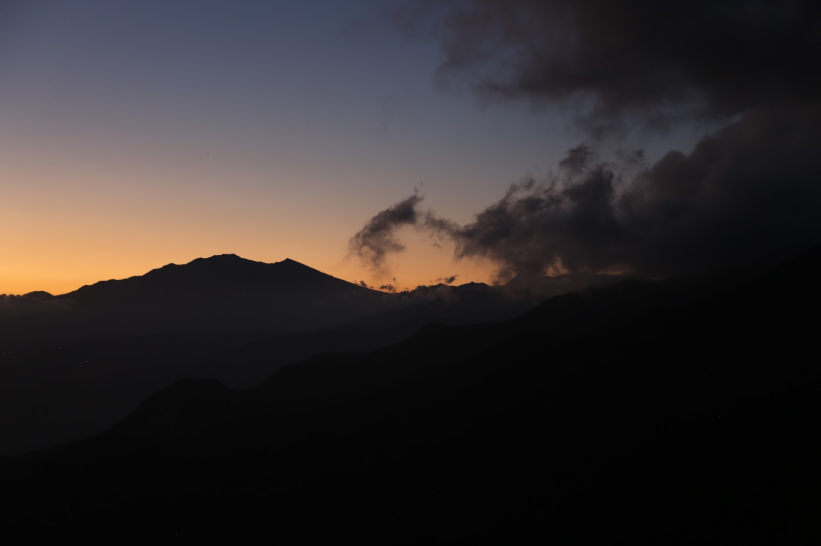
Río Sereno: Panama’s Forgotten Mountain Frontier

Hidden deep within the cool green highlands of western Chiriquí Province, almost pressed against the border with Costa Rica, lies one of the most overlooked and fascinating regions in all of Panama: Río Sereno. Most tourists rushing through Panama have never even heard of it. Backpackers heading toward beaches and islands often pass far away from it entirely. Even many Panamanians from the capital know surprisingly little about this quiet mountain town hidden among forests, farms, valleys, rivers, mist, and rolling green hills.

And yet Río Sereno feels like a completely different side of Panama.

This is not the tropical Panama of skyscrapers, beaches, and blazing heat that many foreigners imagine. Río Sereno belongs to another Panama altogether. It is a land of cool mountain air, dairy farms, coffee plantations, fog drifting across hillsides, cows grazing beside volcanic soil, and winding roads that disappear into forests near the Costa Rican frontier. Life moves slowly here. People wake up early. The mornings are cold enough for jackets. The landscape often feels more like parts of rural Costa Rica or even the highlands of Colombia than the humid tropical lowlands many associate with Panama.

The town sits within the district of Renacimiento in northwestern Chiriquí Province near the Costa Rican border and at elevations that range roughly between 900 and 1500 meters above sea level. Because of this altitude, Río Sereno enjoys one of the mildest climates in Panama, with temperatures often hovering between 15 and 26 degrees Celsius. In a country known for tropical heat and heavy humidity, Río Sereno feels refreshingly cool and calm.

The name itself almost perfectly captures the atmosphere. “Río Sereno” translates roughly to “Serene River,” and serenity truly defines the region. The moment travelers arrive, they notice the difference. The air smells cleaner and fresher. The forests seem thicker. The roads become quieter. Instead of traffic and city noise, the soundtrack becomes birds, wind through trees, distant cows, rain falling on metal roofs, and rivers moving through valleys below.

The geography surrounding Río Sereno is one of the main reasons the area feels so unique. The town sits within the mountainous frontier region near the Talamanca mountain range, one of the most ecologically rich areas in Central America. The landscape rises and falls constantly, creating valleys, ridges, rivers, and cloud forest environments that support incredible biodiversity. From certain viewpoints, people can even see distant panoramas toward the great Volcán Barú, Panama’s highest volcano.

Clouds and mist are deeply connected to the identity of Río Sereno. Unlike the dry Pacific coast or the steaming Caribbean lowlands, this is a place where weather changes rapidly. Mornings may begin bright and sunny before fog slowly drifts across the mountains by afternoon. Rainstorms arrive dramatically during the wet season, covering the hills in deep green vegetation. During cooler evenings, low clouds sometimes settle across the roads and valleys, giving the entire region a mysterious and almost cinematic atmosphere.

Agriculture defines everyday life in Río Sereno more than tourism does. This is fundamentally a working rural region where farming remains central to the economy and culture. The fertile volcanic soil and cool temperatures make the area ideal for agriculture. Coffee is especially important. Traditional coffee farms and gourmet coffee production are deeply woven into the landscape and identity of the region.

Driving through the countryside around Río Sereno reveals endless farmland stretching across the hills. Locals cultivate tomatoes, peppers, beans, corn, bananas, yuca, chayote, and strawberries, while cattle ranches and dairy farms dominate many of the valleys. The smell of fresh earth, wet grass, wood smoke, and livestock becomes part of the experience. Unlike heavily tourism focused towns, Río Sereno still feels genuinely rooted in agricultural life rather than built around visitors.

One of the most fascinating aspects of Río Sereno is its relationship with the border itself. The town serves as one of the crossing points between Panama and Costa Rica. Borders in Central America often feel very different from the heavily militarized frontiers people imagine elsewhere in the world. Around Río Sereno, the border sometimes feels surprisingly informal and deeply intertwined with daily life. Families, commerce, farming, and transportation all interact across this frontier zone.

Historically, frontier regions like Río Sereno developed unique identities because they existed slightly apart from the political and cultural centers of both countries. People in these mountain communities often share customs, accents, foods, and economic relationships that transcend national boundaries. In many ways, Río Sereno feels less isolated from nearby Costa Rican communities than from distant Panama City itself.

The border has occasionally generated disputes and tension throughout history. Boundary demarcations between Panama and Costa Rica in the Río Sereno area required official commissions and marker placements to clarify territorial lines. Yet today the atmosphere is generally peaceful, and the border mainly contributes to the area’s interesting cultural blend and strategic importance.

Nature around Río Sereno is extraordinary but understated. This is not a place with giant tourist attractions or heavily marketed eco tours. Instead, the beauty feels quieter and more authentic. Forests surround much of the region. Birdwatching opportunities are excellent because the surrounding highlands support many species associated with cloud forest ecosystems. Travelers may encounter hummingbirds, toucans, hawks, parrots, and countless smaller tropical birds hidden among the trees.

The forests themselves feel ancient in certain areas. Moss covers rocks and tree trunks. Ferns spill across hillsides. Rivers cut through dense vegetation. During rainy periods the entire landscape seems alive with moisture and growth. Insects sing loudly at night while fog drifts between mountain ridges. The atmosphere often feels deeply peaceful yet slightly wild at the same time.

One of the reasons Río Sereno remains relatively unknown internationally is that it lacks the polished tourism infrastructure found in places like Boquete. There are fewer luxury hotels, fewer organized tours, and fewer backpacker crowds. For some travelers this might sound like a disadvantage, but for others it is exactly what makes Río Sereno special. The region still feels authentic and uncommercialized. Visitors experience ordinary life rather than a heavily curated tourist version of Panama.

The roads leading into Río Sereno contribute strongly to the feeling of remoteness. The drive through the Renacimiento district winds through mountain landscapes filled with farms, forests, rivers, and scattered villages. At times the scenery becomes breathtaking. Rolling hills covered in green pasture stretch endlessly beneath low hanging clouds. Small houses appear beside steep slopes. Horses graze quietly near roadside fences. It feels like the kind of place where life remains closely tied to weather, land, and seasons.

Rainy season in Río Sereno is especially memorable. While much of Panama becomes intensely wet during these months, the highland environment transforms into something almost dreamlike. Mist settles over the mountains for hours. Rivers swell with rainwater. The forests become impossibly green. Water drips continuously from leaves and rooftops. Sometimes entire hillsides disappear behind clouds. Travelers who enjoy moody weather, mountain scenery, and dramatic landscapes often fall in love with the atmosphere during this time of year.

At night Río Sereno feels profoundly quiet compared to Panama’s urban areas. Temperatures drop noticeably after sunset. The darkness becomes deep and complete outside the town center. Crickets, frogs, and distant dogs create the nighttime soundtrack. On clear evenings the stars can appear remarkably bright because there is relatively little light pollution. During foggy nights, however, visibility shrinks dramatically and the mountains feel mysterious and isolated.

The people of Río Sereno reflect the hardworking agricultural identity of the region. Communities throughout the Renacimiento district are known for farming traditions, strong family ties, and quieter rural lifestyles. Life here often revolves around agriculture, local schools, churches, markets, and family networks rather than tourism or international business. Visitors frequently notice how different the pace of life feels compared to Panama City.

Food in Río Sereno reflects the agricultural richness of the area. Fresh dairy products, vegetables, beans, corn, and locally grown produce play major roles in regional cuisine. The cooler climate also allows crops uncommon in hotter parts of Panama to thrive more successfully. Meals often feel hearty, simple, and closely connected to the surrounding farmland.

Coffee culture deserves special attention because the surrounding highlands produce excellent beans. While nearby Boquete receives most international recognition for coffee tourism, Río Sereno and the greater Renacimiento region quietly produce high quality coffee as well. The cool temperatures, elevation, rainfall, and volcanic soil create favorable conditions for cultivation. Coffee farms scattered across misty hillsides contribute heavily to the region’s character and economy.

One of the most intriguing aspects of Río Sereno is how it challenges stereotypes about Panama itself. Many foreigners imagine Panama primarily as a tropical canal nation filled with beaches, humidity, and skyscrapers. Río Sereno reveals an entirely different identity hidden within the same country. Here Panama becomes mountainous, cold, agricultural, and deeply rural. The climate, scenery, and atmosphere surprise many people who never imagined Central America could feel this way.

There is also a strong emotional quality to places like Río Sereno that is difficult to fully explain. Remote mountain towns often create a sense of calm and introspection. The combination of cool air, fog, forests, rivers, and slower daily rhythms affects people psychologically. Travelers sometimes describe feeling unusually relaxed there, almost disconnected from modern stress and noise.

In an increasingly connected and commercialized world, Río Sereno remains refreshingly quiet. It is not trying to become the next giant tourist hotspot. It is simply existing as a beautiful highland frontier community surrounded by nature, agriculture, and mountains. That authenticity is becoming increasingly rare not only in Panama but across the world.

For travelers willing to leave behind beaches and resorts, Río Sereno offers something far more subtle and memorable. It offers a glimpse into a cooler, greener, quieter Panama that many people never realize exists at all.

Mariato: Panama’s Wild Pacific Paradise That Almost Nobody Talks About

There are still places in Panama that feel wonderfully undiscovered. Places where roads become quieter, beaches stretch for miles without crowds, sunsets seem impossibly large, and the rhythm of life slows down so much that even time itself feels different. Mariato is one of those places.

Located on the remote Pacific coast of the province of Veraguas, Mariato is one of the least explored yet most fascinating regions in the country. It is a land of rugged coastline, fishing villages, jungle covered hills, endless beaches, sea turtles, powerful surf, and dramatic sunsets that paint the entire horizon orange and purple every evening. Unlike more famous destinations in Panama, Mariato has managed to preserve a sense of authenticity that is becoming increasingly rare in modern tourism.

Traveling to Mariato does not feel like arriving at a polished tourist resort. It feels like entering another version of Panama entirely. The roads become smaller, the towns more relaxed, and nature begins to dominate everything around you. Cows graze beside palm trees, fishermen repair nets near the shoreline, scarlet sunsets fall into the Pacific Ocean, and the soundtrack becomes waves, birds, insects, and wind instead of traffic and construction.

One of the things that makes Mariato so special is its isolation. For many years, the region remained relatively difficult to access, which unintentionally protected it from mass tourism and large scale development. Even today, despite improving roads and growing interest from travelers, Mariato still feels refreshingly untouched compared to many coastal destinations around the world.

Mariato sits along what many people call the “Sunset Coast” of Panama because it is one of the rare places in the country where you can watch the sun sink directly into the Pacific Ocean. The sunsets here are legendary. Every evening the coastline transforms into a giant panoramic painting as the sky explodes with red, pink, gold, and deep violet colors reflected across the water. It is the kind of sunset that makes people stop talking entirely.

The beaches are one of Mariato’s greatest treasures. The district is home to a huge collection of coastal landscapes, each with its own personality. Beaches such as Playa Reina, Playa Malena, Playa Torio, Morrillo, and Mata Oscura have become increasingly known among surfers, backpackers, nature lovers, and Panamanians looking to escape crowded destinations.

Some beaches are long and wide with soft sand and calm scenery perfect for walking and relaxing. Others are wild and powerful, with crashing surf and rocky points that attract experienced surfers searching for uncrowded waves. Playa Morrillo in particular has quietly developed a reputation among surfers for its strong Pacific swells and raw beauty. Unlike heavily commercialized surf towns elsewhere in the world, the surf culture here still feels natural and low key.

The ocean defines life in Mariato. Fishing remains deeply connected to the identity of many local communities. Small fishing boats head out at dawn while pelicans dive dramatically into the water searching for fish. Seafood is central to the local cuisine, and many visitors quickly notice how fresh everything tastes. Life near the coast moves according to tides, weather, seasons, and the rhythms of the sea itself.

Wildlife is another reason Mariato feels so magical. The region sits near incredibly important ecosystems including mangroves, wetlands, forests, and marine habitats that support enormous biodiversity. The nearby Gulf of Montijo is internationally recognized as a vital wetland ecosystem and an important refuge for marine species and migratory wildlife.

Sea turtles are especially important in the region. Several beaches around Mariato serve as nesting sites for endangered sea turtles, and local conservation projects have become a source of pride for many communities. During nesting season, visitors may witness female turtles emerging from the ocean at night to lay eggs in the sand, followed later by tiny hatchlings making their dangerous journey back toward the sea. Community based conservation programs have helped protect nests and educate both locals and visitors about the importance of preserving these fragile species.

The landscapes around Mariato are surprisingly diverse. Beyond the beaches lie rivers, rolling hills, forests, mangroves, and remote mountain areas connected to the legendary Cerro Hoya National Park. This national park protects one of the oldest mountain formations in Panama and contains some of the last remaining untouched rainforest in the Azuero region. Jaguars, pumas, macaws, and many endemic species still survive there, hidden within forests that remain difficult to access even today.

The remoteness of Cerro Hoya adds to its mystique. It feels like a forgotten corner of the country where nature still dominates completely. Scientists continue discovering rare species in the area, and conservationists consider it one of Panama’s most ecologically important regions. For adventurous travelers, the idea that such wilderness still exists relatively unnoticed is incredibly exciting.

One of the most fascinating communities in the Mariato district is Torio. Once a tiny fishing settlement connected mainly by trails, Torio has slowly evolved into a small but growing destination for people seeking a quieter and more sustainable lifestyle. The area has attracted a mix of locals, expatriates, surfers, artists, remote workers, and nature lovers who appreciate its peaceful atmosphere and extraordinary scenery.

Despite gradual tourism growth, Mariato still feels wonderfully slow. This is not a destination built around nightlife, giant hotels, cruise ships, or shopping malls. The appeal lies in simplicity. Days are often spent surfing, swimming, fishing, hiking, watching birds, exploring rivers, or simply sitting by the ocean doing absolutely nothing. In many ways, Mariato represents the opposite of modern hyper connected tourism. It encourages people to slow down instead of rushing from attraction to attraction.

This slower atmosphere has become increasingly attractive in a world where many travelers feel exhausted by overcrowded destinations and nonstop stimulation. People come to Mariato to disconnect from stress and reconnect with nature. There is a feeling here that life does not need to be overly complicated.

At the same time, the region stands at an interesting crossroads. Tourism is growing steadily, and local authorities have begun investing more in infrastructure and visitor facilities. Roads have improved, small hotels and eco lodges are appearing, and the area is gaining recognition both nationally and internationally as an emerging tourism destination.

This growth creates both opportunity and concern. Many locals hope tourism will bring jobs, investment, and economic development while preserving the natural beauty that makes Mariato special in the first place. Others worry about overdevelopment, environmental damage, and the loss of local identity. These tensions are common in many beautiful places around the world, but in Mariato the conversation still feels very current because the region remains relatively undeveloped compared to Panama’s more famous destinations.

Environmental preservation is especially important here because the ecosystems are so fragile and valuable. Mangroves protect marine life, forests regulate water systems, and beaches support turtle nesting cycles. Local conservation efforts increasingly emphasize sustainable tourism rather than mass tourism. The hope is that Mariato can grow economically without losing the raw beauty and tranquility that define it.

For travelers, part of Mariato’s charm is precisely that it still feels a little difficult to reach and slightly disconnected from the rest of the world. Getting there becomes part of the adventure. The journey through rural Panama reveals landscapes and communities many tourists never experience. As you travel farther south toward the Pacific coast, the country gradually changes character. The traffic disappears, forests thicken, villages become quieter, and eventually the ocean appears stretching endlessly toward the horizon.

Mariato is not the kind of place that overwhelms visitors with attractions every minute. Instead, it slowly gets under your skin. It is the sound of waves at night, the sight of fishermen returning at sunset, the empty beaches that seem to belong entirely to you, the jungle meeting the sea, and the feeling that you have stumbled into a side of Panama that still remains beautifully wild.

For many people, that feeling becomes unforgettable.

Panama Between Tradition and Transformation: The Deep Reality of Gender Equality and Inequality

Panama is one of the most fascinating countries in Latin America when it comes to gender equality because it exists in a strange space between tradition and rapid modernization. It is a country where women can be seen running businesses, leading government departments, graduating from universities in huge numbers, and participating in international commerce while, at the very same time, many deeply rooted cultural expectations about masculinity and femininity still shape everyday life. To outsiders, especially travelers who spend time in the modern districts of Panama City, Panama can appear highly progressive. The skyline is filled with glass towers, luxury apartments, financial institutions, and multinational corporations. Women work in offices, hospitals, airports, tourism companies, schools, and law firms. They drive, travel independently, study abroad, and increasingly pursue careers that previous generations may never have imagined possible. Yet underneath this image of modernity lies a more complicated social reality where inequality still exists in subtle and obvious ways alike.

Panama is a country of contradictions, and nowhere is that more visible than in the relationship between gender, culture, and social expectations. A woman from a wealthy urban family in Panama City may experience life very differently from a woman living in a rural farming community in Veraguas, the mountains of Chiriquí, or within an indigenous territory such as Guna Yala. Access to education, economic opportunities, transportation, healthcare, political influence, and personal freedom can vary dramatically depending on geography and social class. In urban areas, especially among younger generations, ideas about equality and independence have evolved rapidly over the last two decades. Many young Panamanian women today grow up with ambitions to become doctors, lawyers, architects, engineers, entrepreneurs, or business owners. Higher education has become increasingly important, and women have achieved remarkable success academically. In many universities throughout the country, female students now make up a large share of enrollment, and in some careers they significantly outnumber men.

Education has transformed opportunities for women in Panama in profound ways. Previous generations often faced stronger pressure to prioritize marriage and domestic life over professional aspirations. While those expectations have not disappeared entirely, modern Panamanian women increasingly pursue economic independence and personal goals with confidence. This has changed family structures, workplace dynamics, and social attitudes throughout the country. Women now occupy positions across nearly every professional field imaginable. They work in aviation, medicine, law, hospitality, international banking, journalism, public administration, technology, and education. Panama’s role as an international transportation and financial hub has exposed the country to global influences that have accelerated social change. The presence of multinational corporations, foreign investment, tourism, and international media has contributed to evolving attitudes about gender roles, particularly among urban youth.

At the same time, however, Panama still carries the cultural influence of machismo, a deeply rooted system of traditional masculinity that has shaped much of Latin America for generations. Machismo is not always easy to define because it appears in different forms depending on the individual and the environment. Sometimes it appears harmless or subtle, while other times it contributes to more serious inequality. In Panama, machismo can influence expectations about relationships, family responsibilities, emotional expression, and authority within the household. Men are often raised with social pressure to appear tough, dominant, and emotionally restrained. Vulnerability may be interpreted as weakness, and there can still be strong expectations for men to act as financial providers and authority figures. Women, meanwhile, are often expected to balance professional ambition with traditional caregiving responsibilities. Even in households where both partners work full time, domestic labor frequently falls disproportionately on women.

One of the most interesting aspects of gender dynamics in Panama is how rapidly attitudes are changing among younger generations. Social media, international travel, streaming platforms, online education, and global cultural exchange have dramatically influenced how young Panamanians think about equality, relationships, and identity. Topics that older generations may have rarely discussed openly are now part of everyday conversation among many young people. Feminism, mental health, consent, emotional intelligence, toxic masculinity, and equal parenting responsibilities are increasingly debated in schools, universities, workplaces, and online communities. Younger women often expect far greater independence than their mothers or grandmothers did. Many delay marriage, focus on career development, or choose different lifestyles entirely. Young men as well are beginning to question older expectations surrounding masculinity. More are becoming comfortable discussing emotions, participating actively in parenting, and rejecting the idea that manhood must always involve dominance or emotional suppression.

Still, cultural change is rarely smooth or uniform. Panama often feels like several different societies existing simultaneously within one country. In highly urbanized areas, progressive attitudes may dominate certain social circles, while conservative values remain extremely influential elsewhere. Religion also plays an important role in shaping gender expectations. Catholicism has historically had enormous influence in Panama, and evangelical Christianity has also grown significantly in recent decades. Religious beliefs can strongly affect opinions surrounding marriage, sexuality, reproductive rights, divorce, and family structure. For some people, traditional gender roles are seen not only as cultural norms but as moral values tied to faith and family identity. This creates ongoing tension between modernization and conservatism throughout Panamanian society.

Women in politics have made important advances in Panama, although representation still remains unequal overall. The election of Mireya Moscoso as the country’s first female president was a landmark moment that symbolized changing possibilities for women in leadership. Her presidency demonstrated that women could hold the highest office in the country, and it inspired broader conversations about political participation. Since then, more women have entered government, activism, law, and public administration. Gender quota laws have attempted to improve representation in political parties and elections, but challenges remain significant. Female politicians often face harsher criticism than men, and women in public life may experience stronger scrutiny regarding appearance, personality, family choices, and leadership style. These double standards continue to shape the political environment in subtle but powerful ways.

Economic inequality between genders also remains a major issue despite educational gains. Women participate heavily in Panama’s workforce, especially in tourism, retail, hospitality, education, and office administration, but wage gaps and leadership disparities persist. Men still dominate many executive positions, construction industries, transportation sectors, and higher levels of political and corporate power. Women are often expected to juggle professional work alongside unpaid domestic responsibilities such as childcare, cleaning, cooking, and caring for elderly relatives. This unpaid labor is one of the most overlooked aspects of gender inequality not only in Panama but around the world. A woman may work a full day in an office and still return home to perform the majority of household tasks. These expectations create invisible burdens that shape career advancement, stress levels, and economic independence.

Tourism adds another fascinating layer to Panama’s gender dynamics. Millions of travelers pass through the country every year, bringing outside perspectives and cultural influences. Foreign visitors often arrive with simplified ideas about Latin American gender culture. Some assume Panama is highly conservative and patriarchal, while others imagine that modernization has erased traditional attitudes entirely. The truth is far more nuanced. Panama can feel extremely modern in some ways while remaining culturally traditional in others. A successful female entrepreneur may still face pressure from relatives about marriage or motherhood. A man who supports women’s rights politically may still unconsciously expect traditional household dynamics at home. These contradictions are not unique to Panama, but the country’s rapid development has made them especially visible.

Indigenous communities across Panama reveal additional complexities regarding gender roles and equality. Each indigenous group has its own traditions, social structures, and expectations. In some communities, women play highly important economic and cultural roles. Among the Guna people, for example, women are central to preserving traditional mola textile art, which has become internationally recognized as an important symbol of Panamanian identity. At the same time, many indigenous women throughout Panama continue to face serious barriers involving healthcare access, education, transportation, and economic opportunity. Geographic isolation and poverty often intensify inequality in these regions. The experiences of indigenous women therefore cannot be understood separately from larger issues involving infrastructure, development, and historical marginalization.

Violence against women remains one of the most serious and painful aspects of gender inequality in Panama. Domestic violence, harassment, and femicide continue to generate public concern and activism. In recent years there has been growing pressure for stronger legal protections, improved law enforcement responses, and greater support services for victims. Public awareness campaigns and feminist movements have become increasingly visible, especially among younger generations. Social media has amplified conversations that previous generations may have kept private or ignored altogether. More women are speaking openly about abuse, inequality, and discrimination, and these discussions are slowly changing public attitudes. However, legal reforms alone cannot instantly transform cultural behaviors that have existed for generations. Real social change tends to happen gradually through education, generational turnover, and evolving expectations.

One of the most powerful forces shaping gender equality in Panama today is economic change itself. As living costs rise and economic pressures increase, traditional family structures are evolving out of necessity as much as ideology. Dual income households have become increasingly common, and many families depend on women’s earnings as much as men’s. This economic reality naturally shifts power dynamics within relationships and households. Women who achieve financial independence often gain greater autonomy over personal decisions, career paths, and life choices. At the same time, economic hardship can also intensify stress within families and expose deeper inequalities regarding unpaid labor and caregiving expectations.

Despite all the challenges and contradictions, there is no question that Panama has undergone enormous transformation regarding gender over the past several decades. The country today would look dramatically different to earlier generations. Women have more visibility, more educational opportunities, more professional influence, and more social independence than ever before in Panamanian history. Yet the pace of cultural change remains uneven, and many traditional expectations continue to shape daily life in visible and invisible ways alike.

Perhaps what makes Panama so fascinating is precisely this unfinished transformation. It is a country still negotiating the balance between old traditions and modern ambitions. In the same neighborhood you may encounter highly conservative family values alongside progressive ideas about equality and identity. You may meet women leading major companies while also hearing lingering stereotypes about gender roles. Panama is not simply traditional or modern. It is both simultaneously. It is a society evolving in real time, shaped by globalization, education, religion, economics, family culture, and generational change all at once.

In many ways, the story of gender equality in Panama is really the story of Panama itself. It is a nation constantly balancing history with modernization, local traditions with international influence, and deeply rooted cultural identities with rapidly changing social realities. The conversation about equality is still unfolding there every single day, not only in politics or workplaces, but around dinner tables, classrooms, villages, offices, buses, universities, and homes throughout the country.

The Secretive Skunks of Panama

When people imagine wildlife in Panama, they usually think about monkeys swinging through the jungle canopy, sloths hanging lazily from trees, colorful toucans gliding overhead, or poison dart frogs hiding in the rainforest. Very few travelers arrive in Panama wondering about skunks. In fact, many people are surprised to even learn that skunks exist in Central America at all.

But they do.

Hidden in forests, farmland, mountains, grasslands, and even near rural villages, Panama’s skunks quietly roam the night while most people are asleep. They are shy, intelligent, surprisingly useful animals that play an important role in the ecosystem. Most visitors to Panama will never see one, which only adds to their mysterious reputation.

Skunks in Panama are not just copies of the North American skunks people recognize from cartoons and road signs. The species found here are adapted to tropical environments and behave differently than many people expect. They are survivors of the night, moving silently through the undergrowth in search of insects, fruit, eggs, and small prey while avoiding jaguars, owls, and humans alike.

For backpackers and nature lovers exploring rural Panama, especially in mountainous or forested regions, spotting a skunk can become one of those unforgettable moments that feels strangely magical.

Do Skunks Actually Live in Panama?

Yes, absolutely. Panama is home primarily to the hog nosed skunk, scientifically known as Conepatus semistriatus. This species ranges from southern Mexico all the way into northern South America. In Panama, it can be found in surprisingly diverse habitats.

Unlike the striped skunks common in the United States and Canada, Panama’s hog nosed skunks have a somewhat different appearance. They are usually stockier, with a longer snout designed for digging. Their markings vary, but most have dark fur with white stripes or patches along the back and tail.

The long nose is one of their most distinctive features. It helps them root around in soil and leaf litter searching for insects, grubs, worms, and other hidden food sources. Watching one forage is almost like watching a tiny furry bulldozer carefully inspecting the forest floor.

Where Skunks Live in Panama

Skunks are surprisingly adaptable animals. In Panama they may be found in:

Mountain forests

Rural farmland

Coffee growing regions

Dry forest environments

Forest edges

Grasslands

Remote villages

Secondary jungle

They are especially associated with quieter rural areas where there is enough cover and food available. Places with fewer cars and less human disturbance are ideal.

Many people living in the countryside of provinces like Chiriquí or Veraguas know skunks well, although sightings are still uncommon because the animals are mostly nocturnal.

Travelers hiking around remote trails at night sometimes encounter them unexpectedly. This can happen in mountainous jungle regions where wildlife becomes more active after dark. Occasionally they wander near cabins or hostels searching for insects attracted to lights or leftover food scraps.

Why Most People Never See Them

Skunks are masters of staying unnoticed.

They are nocturnal, meaning they become active mainly at night. During the day they hide inside burrows, hollow logs, dense vegetation, or abandoned animal dens. Their excellent sense of smell and hearing help them detect danger long before humans notice them.

Unlike monkeys or birds that loudly announce their presence, skunks prefer stealth. They move carefully and quietly. Even if one is nearby, you may never realize it.

Ironically, people often know a skunk was around not because they saw it, but because they smelled it.

The Famous Spray

Of course, skunks are most famous for their defensive spray. This powerful liquid comes from specialized glands near the tail and contains sulfur based compounds with an incredibly strong odor.

The smell is difficult to describe unless you have experienced it firsthand. It is sharp, oily, musky, and lingers stubbornly in clothing, hair, vehicles, and buildings.

But despite the reputation, skunks do not actually want to spray people.

Their spray is a last resort defense mechanism. Producing it takes energy, and they only use it when they feel seriously threatened. Before spraying, skunks usually give several warning signs.

These may include:

Stomping their feet

Raising the tail

Turning their back toward the threat

Puffing up their fur

Hissing or making short warning noises

If a person calmly backs away, the skunk will almost always choose escape over confrontation.

Skunks Are Surprisingly Helpful Animals

Many farmers quietly appreciate skunks because they eat huge numbers of pests.

A large portion of their diet includes insects and larvae that damage crops or gardens. They also consume rodents, small snakes, scorpions, spiders, and carrion. In this sense they help clean the environment naturally.

Their diet may include:

Beetles

Crickets

Grasshoppers

Cockroaches

Worms

Mice

Fruit

Bird eggs

Fallen organic matter

Because of this varied diet, skunks are considered opportunistic omnivores. They adapt easily depending on what food is available seasonally.

In rural Panama where insect populations explode during rainy periods, skunks become especially active hunters.

Skunks and Rainy Season in Panama

The rainy season transforms the forests of Panama. Insects emerge in enormous numbers. Frogs begin calling loudly at night. Worms surface from wet soil. The jungle becomes intensely alive.

This is prime time for skunks.

Warm wet nights provide perfect feeding conditions. Travelers walking jungle paths after dark may occasionally catch the reflective glow of skunk eyes in flashlight beams before the animal disappears back into the vegetation.

The sounds of the rainforest at night can be overwhelming during these months. Crickets, frogs, dripping leaves, distant owls, and rustling branches create an atmosphere that feels ancient and wild. Seeing a skunk wandering through this environment somehow fits perfectly into the experience.

Are Skunks Dangerous?

Generally, no.

Skunks are not aggressive animals. They prefer avoiding conflict and are usually harmless if left alone. Problems mostly occur when people corner them, attempt to touch them, or allow dogs to chase them.

The biggest risk is obviously getting sprayed.

Like many wild mammals, skunks can also potentially carry diseases such as rabies, though cases are relatively uncommon. It is always important to avoid handling wildlife.

For travelers and hikers, basic common sense is enough:

Do not approach skunks

Do not feed them

Keep dogs under control

Give them space if encountered

Stay calm and back away slowly

Most encounters end peacefully.

Skunks in Local Folklore and Rural Life

Across Latin America, skunks have developed a strange cultural reputation. Some people see them as symbols of bad luck because of the smell. Others consider them clever survivors that mind their own business unless provoked.

In rural Panama, older generations often have stories about nighttime encounters with skunks near farms or chicken coops. Dogs sprayed by skunks become legendary household disasters that families remember for years.

People who grow up in the countryside usually learn quickly how to recognize the warning signs of a nervous skunk.

There is also a certain respect for them. Rural communities understand that skunks are part of the ecosystem and generally not worth bothering.

Why Skunks Matter Ecologically

Skunks are part of Panama’s intricate ecological web.

By controlling insect and rodent populations, they help maintain balance in the environment. They also serve as prey for larger predators including big cats and large birds of prey.

Every animal in a rainforest system has a role, even the less glamorous ones.

Tourists often focus only on charismatic animals like sloths or monkeys, but ecosystems depend equally on quieter creatures working behind the scenes. Skunks help recycle nutrients, disperse seeds through consumed fruits, and regulate populations of smaller organisms.

Without animals like skunks, ecosystems become less stable.

Seeing a Skunk in Panama

Spotting a skunk in the wild can actually feel special because it is so unexpected.

Unlike zoo animals or heavily photographed species, skunks retain a certain mystery. You usually encounter them accidentally, often late at night, in places where the jungle feels truly alive.

The experience tends to stick in people’s memories precisely because it feels unscripted.

Maybe you are walking along a mountain trail after dinner. Maybe the forest is covered in mist. Maybe insects are buzzing around the lights while frogs scream from the darkness. Then suddenly you notice movement beside the path. A black and white shape slowly waddles through the leaves, snout to the ground, completely absorbed in its nighttime search for food.

For a moment you freeze.

The skunk pauses too.

Then, deciding you are not worth the trouble, it quietly disappears into the jungle as if it was never there at all.

That is often how wildlife works in Panama. Brief, unpredictable, and unforgettable.

🚗🔥 Rush Hour in Panama: The Daily Battle That Turns Roads Into Slow Moving Chaos

If you ever try driving in Panama during rush hour, you will quickly understand one simple truth:

> It is not a commute. It is a negotiation with time, patience, and everyone else on the road.

Whether you are in Panama City or moving between suburbs and major roads, rush hour is less about getting somewhere quickly and more about surviving the rhythm of thousands of people all trying to move at once through a system that was not designed for this level of pressure.

It is loud, slow, unpredictable, and at times genuinely frustrating. But it is also a daily reality for a huge part of the country.

🌆 The center of the madness: Panama City traffic

Panama City is where rush hour reaches its full intensity. The city is the financial and business hub of the country, which means every morning and evening, huge waves of people move in and out of the same concentrated areas.

The main issue is not just the number of cars. It is the timing. Most jobs, schools, and services operate on similar schedules, so everyone hits the road at once.

In the morning, traffic flows toward business districts, schools, and commercial centers. In the evening, it reverses, and the entire system collapses into a slow moving return journey home.

What looks like a simple drive on a map becomes something completely different in reality.

🕰️ Morning rush hour: slow starts and long lines

Morning traffic in Panama usually begins building before sunrise and peaks between roughly 6:30 and 9:00.

At this time, highways leading into the city become packed. Cars form long lines that move forward in bursts. You might travel smoothly for a few minutes, only to stop again without warning.

Drivers quickly learn that distance means nothing in the morning. A short route can take three or four times longer than expected. Everyone is trying to be on time for work or school, which creates a quiet tension on the roads.

Motorcycles weave through gaps, buses stop frequently, and traffic lights feel like they take forever. Even experienced drivers plan their mornings around delay rather than speed.

🌇 Evening rush hour: the real test of patience

If morning traffic is frustrating, evening traffic is where patience goes to die.

From about 4:30 to 7:30 in the evening, the entire city begins moving outward at the same time. Offices close, schools release students, and highways fill almost instantly.

This is when the roads feel most chaotic. Cars inch forward in dense clusters. Brake lights stretch as far as you can see. Intersections become crowded with vehicles trying to squeeze through before the light changes.

What should be a straightforward drive home often becomes a slow crawl filled with constant stopping and starting. People listen to music, take calls, or simply sit in silence waiting for movement.

Even short trips can feel exhausting because of the stop and go rhythm that never fully settles.

🚦 Why traffic gets so bad in Panama

There are several reasons why rush hour feels especially intense in Panama.

First, the road network in many areas was not originally designed for the current population density of vehicles. As car ownership has increased, infrastructure has struggled to keep up.

Second, key routes funnel large numbers of vehicles into limited corridors. This creates bottlenecks where traffic naturally slows down.

Third, public transport and private vehicles often share the same roads, which increases congestion during peak times.

Finally, driving culture itself plays a role. People are often assertive in traffic, which can help movement in some situations but also contributes to unpredictable flow patterns.

🚍 The role of buses, taxis, and the metro

Public transport plays a major role in shaping rush hour dynamics.

Buses frequently stop to pick up passengers, sometimes slowing traffic behind them. Shared taxis and ride services also add to road volume.

However, the introduction of Panama Metro has helped reduce pressure on some major routes. The metro offers a faster and more predictable alternative for parts of the city, especially for commuters who want to avoid driving altogether.

Even so, many people still rely on cars, which means roads remain heavily used during peak hours.

🧠 What it feels like to actually drive in it

Driving in Panama rush hour is not just about movement. It is about constant adjustment.

You are always watching:

The car in front of you

The gap that might close at any moment

Motorcycles appearing from nowhere

Intersections that may or may not clear in time

There is a kind of mental fatigue that builds up. It is not dangerous in most cases, but it is draining. You arrive at your destination already feeling like you have done something difficult, even if you only drove a few kilometers.

People often describe it as “slow chaos.” Nothing is fully out of control, but nothing feels smooth either.

🧭 Survival strategies locals use

Over time, people develop their own ways of dealing with rush hour.

Some leave earlier than necessary just to avoid peak traffic. Others adjust their routes daily depending on accidents or congestion reports. Many simply accept that delay is part of life and plan accordingly.

Music, podcasts, and phone calls become part of the commute experience. For many drivers, the car turns into a small personal space where they mentally prepare for or recover from the day.

Motorcycle riders often have an easier time moving through traffic, which is why they are a common sight weaving through slow lines of cars.

🌧️ When rain makes everything worse

If rush hour is already slow, rain can turn it into something else entirely.

Heavy tropical rain reduces visibility, slows driving speeds, and increases accidents and delays. Water pooling on roads can also make certain sections even more congested.

In these moments, patience becomes the only real strategy. Everyone moves slower, and the city feels like it has temporarily paused its normal rhythm.

🧭 Final thoughts: frustrating but familiar

Rush hour in Panama is one of those experiences that almost every resident shares, regardless of income or neighborhood. It is a daily equalizer in a way, where everyone sits in the same traffic, hearing the same horns, watching the same brake lights, and waiting for the same slow progress forward.

Yes, it can absolutely feel like a pain in the butt. It is slow, repetitive, and sometimes exhausting.

But it is also part of the rhythm of modern Panama. A shared experience that, over time, becomes just another background layer of daily life in a fast growing country learning how to move more people through its roads every year.

🇵🇦🏡 What It Is Like Growing Up Middle Income in Panama: Everyday Life Between Stability, Family, Ambition, and Quiet Progress

Middle income life in Panama exists in a space that is often overlooked because it is neither extreme nor dramatic. It is not the high visibility lifestyle of luxury towers in Panama City’s banking district, private schools with international tuition fees, or gated communities with full time staff. It is also not the more fragile reality of households where income is inconsistent or where access to services is limited. Instead it sits in a wide and very common middle layer of society where most people are focused on stability, gradual improvement, and maintaining a balanced life.

This middle space is important because it represents a large part of the population, yet it is rarely described in detail. Life here is shaped by routines that feel familiar across the country, even though geography changes everything. A child growing up in a middle income home in Panama City may experience traffic, apartments, malls, and more exposure to global culture, while a child in the interior provinces may grow up with more open land, stronger agricultural influence, and closer relationships with neighbors. Despite these differences, the structure of daily life, family expectations, and social values remain remarkably consistent.

Home life in middle income households is usually grounded in practicality. Most families live in concrete homes or modest apartments built for durability in a tropical climate. The architecture is not focused on luxury or aesthetics but on function. Walls are designed to handle heat and humidity, roofs are built for heavy rain, and spaces are organized around daily living rather than decoration. Air conditioning may exist in certain rooms, but it is not always used constantly due to electricity costs. Fans, ventilation, and shaded outdoor spaces are part of everyday comfort management.

Inside these homes, life is active and social. It is rare for households to feel silent or empty. There is often conversation between family members, television playing in the background, cooking happening in the kitchen, and relatives or neighbors passing through. Privacy exists but is balanced with openness. Doors are often open during the day, especially in neighborhoods where people know each other well.

Family structure plays a central role in shaping everyday life. In many middle income households, extended family is not just something you visit on holidays but something that is actively part of your weekly or even daily routine. Grandparents frequently live nearby or within the same home or property. They often contribute significantly to childcare, guidance, and household stability. Aunts, uncles, and cousins are important social connections and often form a parallel support system outside of immediate parents.

Weekends are particularly important in this family structure. Sunday lunches are a cultural anchor in many households. These meals are rarely rushed. They involve rice, meat, salads, plantains, and traditional dishes that vary by region, but the real importance is not the food itself. It is the gathering. People talk, share updates, discuss family matters, and maintain emotional connections that might be difficult to sustain during the busy week. These gatherings reinforce a sense of continuity and belonging.

Education is one of the strongest priorities in middle income families across Panama. It is widely understood as the most reliable path toward upward mobility. Parents often make significant sacrifices to ensure children can attend better schools, whether public or private depending on the household situation. Even when resources are limited, education is rarely treated as optional.

School life is structured and disciplined. Uniforms are standard, attendance is expected, and respect for teachers is culturally emphasized. The school day often begins early, sometimes requiring long commutes depending on where a student lives. In cities, students may travel by bus, metro, or car, while in smaller towns walking or informal transport is more common.

The quality of education varies widely between regions and between schools, which creates awareness among families about differences in opportunity. This awareness shapes long term thinking. Many parents encourage children to focus on subjects like mathematics, science, and especially English, which is increasingly seen as a key skill for access to better jobs in tourism, logistics, banking, and international business.

School is also the primary place where social identity forms. Friendships built during childhood often last for many years because they are reinforced by shared environments. Children grow up seeing the same group of classmates every day, often living in nearby neighborhoods. This creates strong social continuity. Even as people grow older, they often maintain contact with school friends and community peers.

Transportation is another major factor shaping daily life. In middle income households, having a car is considered a significant milestone because it represents both financial stability and convenience. However, many families rely on public transportation. In Panama City, the metro system and bus network are widely used, although traffic congestion is a constant part of life. Commute times can be long and unpredictable, which affects how people plan their days.

In smaller towns and rural areas, transportation is more informal. People walk more often, use shared rides, or depend on family networks for mobility. This creates a strong sense of independence from a young age. Children and teenagers often learn how to navigate their surroundings early, which builds confidence and adaptability.

Food is one of the most consistent and culturally unifying parts of middle income life. Meals are simple, filling, and based on a relatively stable set of ingredients. Rice is the foundation of almost every meal, accompanied by chicken, beef, pork, or eggs. Beans, lentils, plantains, yuca, and seasonal vegetables are common additions. The structure of meals is familiar and repetitive, not because of lack of creativity, but because consistency is valued.

Breakfast is usually light and practical, often consisting of eggs, bread, tortillas, or leftovers. Lunch is the main meal of the day and is typically the most substantial. Dinner is lighter but still structured around familiar combinations. Home cooking is extremely common, and recipes are often passed down through family rather than taken from formal cookbooks.

Eating outside the home is usually done at small local restaurants known as fondas. These establishments serve affordable meals that closely resemble home cooking. They are important social spaces where people from the same neighborhood or workplace gather regularly. Fast food is available, especially in cities, but it is not typically part of daily routine for most middle income families.

Technology has become increasingly integrated into daily life over the last decade. Smartphones are now common across most households, and social media plays a major role in communication and entertainment. WhatsApp is essential for family coordination, school communication, and work related messaging. Instagram, TikTok, and Facebook are widely used for social interaction and content consumption.

However, access to technology is not completely uniform. While most young people are connected, the quality of devices, internet speed, and access to digital learning resources can vary depending on income level and location. In rural areas, connectivity may be less stable, which affects how people engage with digital platforms.

Social life in middle income Panama is highly active and community oriented. Weekends are often filled with a mix of family visits, beach trips, local festivals, sporting events, and informal gatherings. Football is especially important and is played everywhere from schoolyards to empty lots. It is one of the most common forms of recreation and social bonding across the country.

Community relationships are strong. Neighbors often know each other well, and social interaction is not limited to formal occasions. People visit each other’s homes, share meals, and maintain long term relationships that extend across generations. This creates a sense of social closeness that is deeply embedded in everyday life.

Financial awareness is a quiet but constant presence in middle income households. Families are usually stable but must plan carefully for expenses. School costs, transportation, food, utilities, healthcare, and housing repairs are all part of monthly budgeting. There is often little room for unnecessary spending, so financial decisions are made with long term planning in mind.

At the same time, there is often a strong sense of ambition. Parents and children alike tend to focus on education, career development, and the possibility of improving living conditions over time. Even when resources are limited, there is usually a belief that life can progress through effort and opportunity.

There is also a clear contrast between urban and interior life. In Panama City, middle income life is shaped by speed, infrastructure, and exposure to international business and culture. Jobs are more diverse, but competition and cost of living are higher. In interior provinces, life is slower and more community oriented. People may rely more on agriculture, small businesses, and local trade. The social fabric is tighter and more traditional, but opportunities may be fewer or more localized.

Despite these differences, the underlying structure of middle income life remains consistent. It is a life built on routine, family, education, and gradual progress. It is not defined by sudden change or extreme conditions but by steady movement forward over time.

Ultimately, growing up middle income in Panama is about learning to navigate balance. It is about understanding both limitation and opportunity, tradition and modernity, stability and aspiration. It is a lifestyle that teaches adaptability from an early age because individuals are constantly exposed to different realities within the same country.

What defines this experience most is not wealth or material possession, but rhythm. Daily life follows patterns that are familiar, predictable, and deeply social. People grow up learning how to move between different environments, how to manage resources carefully, and how to maintain strong family and community ties while pursuing personal progress.

In the end, middle income life in Panama is not defined by what is spectacular or extreme. It is defined by what is steady, shared, and continuously evolving in quiet but meaningful ways across generations.

🐄🔥 From Pasture to Plate: The Ultimate Beefy Guide to Recognizing Cattle Across Panama’s Wild Landscapes

Panama is a country where cattle are part of the scenery as much as mountains, rivers, and jungle. As you travel from province to province, especially through Chiriquí’s green highlands, Veraguas’ rolling hills, Los Santos’ dry savannas, and the remote edges of Darién, you’ll constantly see herds grazing beside roads, climbing steep pastures, or resting under scattered trees.

At first glance, many cows might look similar. But once you know what to look for, Panama’s cattle become surprisingly easy to “read” like a landscape language, each breed shaped by climate, history, and agricultural purpose.

This guide will help you recognize the main cattle types you’ll see while traveling, understand why they look the way they do, and know what role they play in Panama’s beef and dairy economy.

🌿 Cattle in Panama: Why They Look So Different Here

Before identifying breeds, it helps to understand one key fact: Panama is not an easy place to farm European-style cattle.

The country’s climate creates three major challenges:

Heat and humidity year-round

Heavy parasite pressure (ticks, flies, disease)

Long dry seasons in many regions (especially Azuero)

Because of this, Panamanian cattle farming evolved around one principle:

> “Survive first, produce second."

That’s why most cattle here are either:

Heat-resistant tropical breeds (like Brahman)

Crossbreeds combining toughness + better meat or milk

Or small pockets of dairy-focused European breeds in cooler highlands

🐂 1. Brahman Cattle — The Backbone of Panama’s Beef Industry

If Panama had an official cow, it would be the Brahman.

Originally developed from Indian zebu cattle, Brahmans are now the most widespread beef breed in Panama.

👀 How to recognize them:

A distinct shoulder hump (very noticeable)

Long, drooping ears that swing as they walk

Loose skin under the neck (dewlap)

Usually light gray, silver, or reddish in color

A slightly “angular,” muscular frame

From a distance, they often look like they’re wearing a natural armor suit.

🥩 What they’re used for:

Primarily beef production

Foundation breed for most crossbreeding systems

🌞 Why they dominate Panama:

Brahmans thrive where other cattle struggle:

They resist heat extremely well

They handle parasites better than European breeds

They survive on lower-quality pasture during dry months

Without Brahman genetics, much of Panama’s cattle industry simply wouldn’t function.

🥩 2. Crossbred Beef Cattle — The “Modern Panamanian Cow”

Most cattle you actually see from highways are not pure Brahman, they are crossbred beef cattle.

These are the result of mixing Brahman with European beef breeds like Angus or Hereford.

👀 How to recognize them:

Less pronounced hump (sometimes barely visible)

Darker coats (black, deep red, or mixed)

More compact, muscular bodies

Cleaner lines and more uniform appearance than pure Brahman

They often look like a “refined” version of Brahman cattle.

🥩 What they’re used for:

Higher-quality beef production

Better meat tenderness and marbling

Still hardy enough for tropical conditions

🌱 Why farmers love them:

They offer the perfect compromise:

Brahman = survival

Angus/European breeds = meat quality

This balance defines modern cattle farming in Panama.

🥛 3. Holstein Cattle — The Classic Dairy Breed

If you picture a traditional milk cow, you’re thinking of the Holstein.

These black-and-white cattle dominate global dairy production, and they appear in Panama mostly in cooler, higher elevation areas.

👀 How to recognize them:

Distinct black-and-white patchwork coat

Lean, angular body

Visible udder in adult females

Taller and more “fragile-looking” than beef cattle

They look almost like walking abstract art patterns in a pasture.

🥛 What they’re used for:

Milk production

🌡️ Their challenge in Panama:

Holsteins are not naturally suited to tropical heat, so in Panama they are often:

Raised in cooler highland regions (like Chiriquí)

Crossbred with tropical breeds for resilience

🥛🐄 4. Jersey Cattle — Small Cow, Big Milk Energy

Jerseys are the smaller, more delicate-looking dairy cows you might spot in certain farms.

👀 How to recognize them:

Smaller body size than Holsteins

Light brown, tan, or golden coat

Large, expressive eyes

Slim and elegant frame

They often look more “gentle” and less industrial than Holsteins.

🥛 What they’re used for:

Milk production with high butterfat content (excellent for cream and cheese)

🌿 Why they’re useful in Panama:

More heat-tolerant than Holsteins

Often used in crossbreeding programs for dairy improvement

🐃 5. Criollo Cattle — The Old Blood of the Land

Before modern commercial breeds arrived, Panama already had criollo cattle, descended from early Spanish introductions centuries ago.

👀 How to recognize them:

Smaller, more rugged build

Mixed coat colors (red, brown, blond, patchy)

Less uniform appearance than commercial breeds

Sometimes slightly longer horns

They look like they belong to the landscape rather than being engineered for it.

🥩 What they’re used for:

Small-scale beef production

Traditional rural farming systems

Some conservation and heritage breeding programs

🌱 Why they matter:

Criollo cattle are incredibly hardy and well-adapted to local conditions, even if they are less productive commercially.

They are, in many ways, the “original Panamanian cow.”

🐂 6. Other Breeds You’ll Occasionally Spot

Panama also uses several specialized breeds, mostly in crossbreeding programs:

Angus – prized for high-quality beef

Charolais – large white cattle for meat yield

Simmental – dual-purpose (beef and milk)

Senepol – famous tropical breed, naturally hornless and heat-tolerant

You usually won’t see pure herds of these, but their genetics are widespread in crossbred cattle.

🧭 Roadside Cow Identification Cheat Sheet

As you travel, here’s a quick way to decode what you’re seeing:

🐂 Big hump + floppy ears → Brahman

🥩 Dark, muscular, no obvious hump → Beef crossbreed

🥛 Black-and-white → Holstein dairy farm

🐄 Small golden-brown cows → Jersey dairy cattle

🌾 Mixed, rustic, uneven herd → Criollo or local cattle

🌎 Why Panama’s Cows Matter More Than You Think

Cattle are not just agriculture here—they are part of Panama’s rural identity.

They influence:

Local diets (beef and dairy are staples)

Land use (huge stretches of pasture land)

Rural economies (especially in interior provinces)

Even landscape appearance (open hills are often cattle-driven ecosystems)

And because Panama is a bridge between North and South America, its cattle genetics are also a “mixing zone” of global livestock systems.

🐄 Final Thought: A Moving Landscape of Cows

Once you start recognizing cattle types in Panama, driving through the countryside changes. Hills are no longer just green shapes—they become living maps of agricultural history: survival breeds, imported genetics, and centuries-old adaptations all sharing the same pastures.

So next time you’re on a bus heading through the interior and you see a herd by the roadside, you’ll know whether you’re looking at: a heat-resistant survivor, a carefully engineered beef machine, or a tropical dairy producer quietly working under the Panamanian sun.

Panama Unfolded: The Provinces That Act Like Separate Countries in One Very Confident Little Nation

If you zoom out on Panama, it looks small, almost deceptively simple. A narrow bridge of land connecting two continents, surrounded by ocean on both sides. But the moment you zoom in and start moving province by province, the illusion collapses completely.

Panama is not one landscape. It is many. It is a rainforest metropolis, a Caribbean archipelago, a volcanic coffee kingdom, a colonial coastline, an agricultural time capsule, and a jungle frontier that still feels like it is actively resisting the idea of roads.

This second deeper journey goes further into each province, adding more layers, more strange details, and more of the surprising reality that even many Panamanians do not fully appreciate about their own country.

Panama Province The Capital That Accidentally Grew Into a Jungle Experiment

Panama is often reduced to Panama City, but that is like describing a forest as just trees. It is the political, financial, and cultural core of the country, yet it is also one of the most ecologically unusual capital regions in the world.

One of the most surprising realities is that the capital sits directly on a major biological corridor. This means that large mammals like sloths, coatimundis, and monkeys can and do move through areas surprisingly close to dense urban development.

There are neighborhoods where you can hear howler monkeys in the morning while traffic builds up on multilane highways a few kilometers away. The city does not fully dominate the environment. It coexists with it in a way that feels almost improvised.

The Panama Canal remains the province’s most globally significant feature. It is not just a shipping route but a hydraulic system that literally reshaped the planet’s trade patterns. Entire ecosystems were flooded and recreated to build it, meaning parts of the province are artificially engineered landscapes that still function as natural habitats.

Another lesser known fact is that Panama Province contains historical layers of three different capital cities: the original Panama Viejo, the colonial Casco Viejo, and the modern skyline city. It is rare for one province to contain so many eras of itself stacked within a few kilometers.

Colón Province The Loud Caribbean Gateway With a Forgotten Golden Age

Colón has one of the most misunderstood reputations in Panama. It is often associated with port infrastructure and economic inequality today, but historically it was one of the most strategically important cities in the Americas.

During the construction and early operation of the Panama Railroad and later the Canal, Colón was a global commercial hotspot. Ships, goods, and people from Europe, the Caribbean, Asia, and the United States passed through constantly. At its peak, it was one of the busiest port cities in the hemisphere.

A surprising historical fact is that Colón was one of the earliest multicultural urban centers in the region, long before globalization became a modern concept. Entire neighborhoods formed based on migration waves, creating layered cultural zones that still influence identity today.

Nearby lies Portobelo, once a major Spanish treasure port. Its forts were built to defend against pirates, and remnants of these structures still stand facing the Caribbean Sea, slowly being reclaimed by tropical vegetation.

Colón is also culturally essential to Panama’s Afro Caribbean identity. Music styles, festivals, and spiritual traditions here have deep roots in Caribbean migration and resilience.

Coclé Province Where Ancient Gold Civilization Meets Quiet Farmland Reality

Coclé looks peaceful on the surface, with rolling agricultural landscapes and small towns. But underneath that calm exterior is one of the most significant archaeological regions in Central America.

The El Caño archaeological site has revealed elite burial complexes filled with gold artifacts, ceremonial weapons, and intricate objects that suggest a highly stratified ancient society with advanced metallurgy and ritual systems.

One of the most fascinating discoveries is that Coclé’s ancient cultures developed gold working techniques independently, producing designs that rival those of larger pre Columbian civilizations. These were not isolated hunter gatherer groups. They were complex societies with political and spiritual structures.

Modern Coclé is a contrast to this ancient intensity. It is one of the main food producing regions in Panama, supplying rice, sugar, vegetables, and livestock. In many ways, it feeds the modern nation while sitting on top of the remnants of a far older one.

Chiriquí Province The Cool Highlands That Feel Like Another Country Entirely

Chiriquí is often described as the “cool escape” of Panama, but that understatement barely captures how different it feels from the rest of the country.

Temperatures here can drop significantly compared to the rest of Panama, especially in high elevation towns like Boquete. Mist rolls through cloud forests in the morning, coffee plantations stretch across volcanic slopes, and the air feels noticeably lighter and fresher.

One of the most astonishing geographical facts is that from the summit of Volcán Barú, Panama’s highest point, it is sometimes possible to see both the Pacific Ocean and the Caribbean Sea simultaneously. This rare dual ocean visibility is a result of Panama’s extremely narrow geography combined with elevation.

Chiriquí is also a global coffee powerhouse. Its high altitude volcanic soil produces beans considered among the best in the specialty coffee world. Entire microclimates exist within short distances, meaning farms only a few kilometers apart can produce dramatically different flavor profiles.

Wildlife is another highlight. The province is one of the last strongholds of the resplendent quetzal, a bird deeply associated with ancient Mesoamerican symbolism.

Veraguas Province The Only Province That Touches Two Oceans and Refuses to Make a Big Deal About It

Veraguas is geographically one of the most unique provinces in the world. It is the only province in Panama that reaches both the Pacific Ocean and the Caribbean Sea.

Despite this rare distinction, Veraguas remains surprisingly quiet and underdeveloped in large areas, giving it a feeling of vast untouched space.

The province contains one of Panama’s most important ecological treasures: Coiba National Park. Once used as a penal colony, Coiba is now a protected marine and terrestrial reserve and a UNESCO World Heritage Site. It is often compared to the Galápagos for its biodiversity and isolation.

Coiba’s waters are home to whales, sharks, turtles, and countless fish species, while its islands preserve dense tropical forest that was largely untouched during its time as a prison zone.

Veraguas as a whole feels like a province where nature still holds the upper hand.

Herrera Province The Smallest Stage for the Loudest Traditions

Herrera is small, quiet, and agricultural, but culturally it plays an outsized role in Panama’s identity.

One of its most important contributions is the preservation of traditional crafts, especially pollera dressmaking. The pollera is one of the most elaborate national dresses in Latin America, requiring months of embroidery and craftsmanship.

Herrera is also known for its strong festival culture. During celebrations, towns transform into highly organized displays of music, dance, and traditional performance, where entire communities participate.

Despite its size, Herrera acts as a cultural preservation zone for many of Panama’s most iconic traditions.

Los Santos Province The Cultural Heart That Treats Tradition Like Law

Los Santos is often described as the most culturally traditional province in Panama. Located on the Azuero Peninsula, it is a stronghold of folkloric identity.

One surprising aspect is how consistent cultural preservation is here. Traditional music styles, clothing, architecture, and festivals are maintained with remarkable continuity across generations.

Los Santos is also known for its dry tropical climate, which creates landscapes very different from Panama’s rainforest regions. This environment shaped its agricultural practices and settlement patterns over centuries.

The province is deeply associated with national identity festivals, where pollera dresses, drums, and traditional dances are not performances but living cultural expressions.

Darién Province The Jungle Frontier That Still Resists Modern Connectivity

Darién is one of the most remote and biologically intense regions in the entire Americas.

It contains the famous Darién Gap, the only break in the Pan American Highway, where dense rainforest and challenging terrain prevent road construction between Panama and Colombia.

One of the most striking facts is that Darién remains one of the least accessible and most biodiverse rainforest regions in the Western Hemisphere. Jaguars, harpy eagles, and countless rare species live here in ecosystems that remain largely intact.

It is also home to Indigenous groups such as the Emberá and Wounaan, whose river based settlements rely heavily on canoes and waterways for transportation.

Darién feels less like a province and more like a self contained ecological world.

Bocas del Toro Province The Caribbean Archipelago That Never Chooses One Identity

Bocas del Toro is a cluster of islands and coastal areas that blends Caribbean culture, Indigenous heritage, and international tourism.

One surprising fact is how linguistically and culturally diverse it is for its size. Afro Caribbean English influenced dialects coexist with Spanish and Indigenous languages, creating a layered communication landscape.

The province is also one of Panama’s most important marine biodiversity zones. Coral reefs, mangroves, and seagrass ecosystems support dolphins, starfish, tropical fish, and sea turtles.

At the same time, Bocas has become a major backpacker and surf destination, creating a unique mix of local life and global travel culture. In some towns, fishing boats and tourist hostels share the same shoreline in direct contrast.

What becomes clear when you explore every province in Panama is that the country is not unified by sameness but by contrast.

One province builds skyscrapers next to rainforest. Another preserves ancient gold civilizations under farmland. Another touches two oceans without making noise about it. Another refuses to connect itself to the rest of the continent by road.

Together they form a country that behaves less like a small nation and more like a compressed continent of environments and identities.

Panama is not just diverse. It is densely diverse. And that density is what makes every province feel like its own world waiting to be explored.

Clouds in the Tropics Understanding Vaping in Panama What Travelers Should Know

Vaping in Panama sits in a legal and cultural gray zone that often surprises visitors. On the surface, it may look like a relaxed tropical country where modern habits blend easily into daily life. In reality, vaping is regulated, socially inconsistent, and sometimes misunderstood even by locals and enforcement authorities.

If you are traveling, living, or simply curious about nicotine culture in Panama, it helps to understand not only the rules but also how vaping fits into broader public health policy, social attitudes, and enforcement practices.

Is vaping legal in Panama

Vaping is not treated the same way as traditional tobacco products in Panama. The country has taken a relatively strict stance on electronic nicotine products compared to some other parts of Latin America.

Over the past several years, regulations have moved toward restricting the importation, sale, and distribution of vaping devices and liquids containing nicotine. In practice, this means that while you may still see vaping in some contexts, the commercial market is heavily controlled and not as openly developed as in countries where vape shops are common.

Public policy has generally leaned toward discouraging vaping rather than normalizing it as an alternative to smoking.

Why Panama regulates vaping more strictly than expected

There are a few key reasons behind Panama’s cautious approach:

1. Public health concerns

Health authorities have expressed concern about nicotine addiction, especially among young people. Like many countries, Panama is trying to prevent vaping from becoming a gateway habit for teenagers and young adults.

Nicotine products are treated seriously because of their addictive nature and long term health impacts.

2. Regulatory clarity and control

Traditional tobacco products are easier to regulate because they are long established and clearly defined. Vaping products are newer, more varied, and harder to classify consistently.

This has led to stricter control measures aimed at limiting uncertainty in the market.

3. Youth protection priorities

As with many countries in the region, protecting youth from nicotine exposure is a central policy goal. This is especially relevant in urban areas where social media trends and global influence make vaping more visible.

Where vaping is allowed and where it is not

Even when vaping is present in Panama, it is generally subject to similar social restrictions as smoking.

You should expect that vaping is not welcome in:

Indoor public spaces

Government buildings

Public transport

Many restaurants and bars

Health and educational facilities

Outdoor use may be tolerated in some informal settings, but this is not universal and can vary depending on location and local enforcement.

In cities like Panama City, rules tend to be more strictly observed than in rural or coastal areas.

Social perception of vaping in Panama

Beyond legal considerations, social attitudes also play a major role in how vaping is viewed.

In general, vaping is not as normalized or culturally embedded as it is in some North American or European countries. Many people still associate it with smoking behavior and may view it as inappropriate in certain public or family oriented spaces.

Among younger people, especially in urban areas, vaping is more visible due to global social media influence. However, this does not always translate into full social acceptance.

In more traditional settings, discretion is expected.

Availability and market reality

Unlike countries with widespread vape shops and open retail networks, Panama has a more limited and inconsistent market for vaping products.

Availability can vary significantly depending on enforcement cycles, import rules, and commercial regulation. This means products are not always easy to find in legal retail environments, and the market does not function as openly as mainstream consumer goods.

As a result, vaping is less integrated into everyday commercial life compared to countries where it is widely marketed.

Comparison with traditional smoking culture

Traditional cigarette smoking is still more established and recognizable in Panama than vaping. While smoking is also regulated in public spaces, it has a longer cultural history and clearer regulatory framework.

Vaping, by contrast, sits in an evolving category where rules, enforcement, and social attitudes are still adapting.

This creates a situation where smoking feels familiar and structured, while vaping feels newer and less clearly defined.

What travelers should be aware of

If you are visiting Panama and use vaping products, the key thing to understand is context and discretion.

Enforcement and acceptance can vary depending on:

Urban versus rural environments

Indoor versus outdoor spaces

Private versus public settings

Local attitudes and management policies

In practice, misunderstandings are more likely in formal or regulated spaces such as airports, government areas, and indoor venues.

Health context and public messaging

Public health messaging in Panama generally emphasizes caution around all nicotine products. While vaping is sometimes marketed globally as a less harmful alternative to smoking, health authorities remain focused on long term uncertainty and addiction risks.

The overall tone of policy is preventative rather than promotional.

Conclusion: a habit in transition

Vaping in Panama exists in a transitional space. It is neither fully mainstream nor completely absent. Instead, it sits within a shifting regulatory and cultural environment where rules are tightening and social expectations are still forming.

In Panama, this means vaping is best understood not as a normal everyday habit like in some countries, but as a controlled and context dependent behavior shaped by public health priorities and evolving law.

For visitors and residents alike, awareness of local norms is more important than assumption.

No Shirt No Service No Problem Why Panama Treats Public Shirtlessness as a Legal and Cultural Boundary

In Panama, walking around or driving without a shirt is generally treated as inappropriate in public spaces and can lead to warnings, fines, or police attention depending on the situation and location. While it may seem surprising to visitors coming from more relaxed beach cultures, the rule is rooted in a mix of public decency laws, urban norms, tourism expectations, and social order rather than a single strict “shirtless law” written in isolation.

To understand why this is taken seriously, you need to look at how Panama balances tropical lifestyle with structured public behavior in cities and towns.

It is not just one law it is public decency and municipal regulation

Panama does not usually frame the issue as a single standalone “illegal to be shirtless” statute. Instead, it falls under broader concepts such as public decency, municipal codes, and traffic safety expectations.

Local authorities, especially in urban areas like Panama City, regulate behavior in public spaces to maintain what is considered respectful and orderly conduct. Shirtless walking in downtown areas, shops, government zones, or residential streets is often classified as inappropriate public behavior rather than a protected form of expression.

In practice, enforcement can vary. You are unlikely to face serious legal consequences for a brief moment of shirtlessness in a very informal setting, but you can absolutely be stopped, warned, or fined if it is in a formal or busy public area.

Why the rule exists cultural expectations matter more than people realize

One of the biggest reasons behind this norm is cultural expectation. Panama is a tropical country, but it is not culturally “beach everywhere” in the same way some tourists assume.

In most towns and cities, clothing is strongly associated with respectability and social order. Being fully dressed in public is considered a basic sign of respect toward others, regardless of temperature.

This expectation applies even in hot weather. Locals are accustomed to heat, and social norms have developed around staying dressed in public spaces even when it feels uncomfortable to visitors.

Urban environments versus beach zones

Context is extremely important in Panama.

Shirtless behavior is generally acceptable in clearly defined beach areas, islands, private resorts, and swimming zones. For example, on islands such as Isla Taboga or remote coastal areas, it is common to see people without shirts when swimming or sunbathing.

However, once you leave these zones and enter streets, restaurants, shops, bus terminals, or city centers, expectations change immediately.

What is normal at the beach becomes inappropriate in town. This sharp boundary is one of the key cultural differences visitors need to understand.

Driving without a shirt: why authorities care

Driving shirtless is also discouraged and can attract attention from traffic authorities.

The reasoning is not about morality alone but also safety and public order. Authorities often associate shirtless driving with informal behavior that can lead to distracted driving, lack of preparedness for road interactions, or general disregard for traffic norms.

In some cases, police may stop drivers and issue warnings or fines, especially if combined with other infractions or disruptive behavior.

Even when enforcement is not strict, it is generally understood that proper clothing is expected while operating a vehicle in public roads.

Tourism image and public standards

Another major factor is Panama’s role as a growing tourism and business hub. The country hosts international visitors, conferences, banking activity, and major infrastructure like the Panama Canal.

Because of this, cities maintain standards of public presentation in key areas. Authorities and communities often prefer a “presentable public space” image, especially in commercial districts and tourist zones.

Shirtless walking in a city center can be seen as disruptive to that image, even if it is harmless in intent.

Social perception matters as much as enforcement

Even beyond police involvement, social reaction plays a strong role.

In many Panamanian communities, walking shirtless in town can be seen as disrespectful or out of place. People may interpret it as a lack of awareness of local norms rather than an intentional act of rebellion.

This social pressure is often more influential than legal enforcement. In other words, even if you are not fined, you may still stand out in a way that draws unwanted attention.

The beach culture exception

It is important to emphasize that Panama is still a country with strong beach culture. In coastal zones, islands, and swimming areas, shirtless or minimal clothing is completely normal.

For example, places like San Blas Islands are full of relaxed beach environments where clothing rules are naturally looser due to the setting and lifestyle.

The key difference is not whether shirtlessness is allowed in general, but where it is socially appropriate.

A balance between tropical life and structured public space

Panama’s approach reflects a broader cultural balance. It is a tropical country with heat and humidity, but also a society that values order, presentation, and context based behavior in public spaces.

Rather than allowing uniform informality everywhere, norms shift depending on environment: beach equals relaxed, city equals structured.

This duality is common in many countries with strong tourism economies and diverse urban centers.

Conclusion: it is about context, not just clothing

The idea that it is “illegal” to be shirtless in Panama is slightly simplified. In reality, it is about public decency expectations, municipal enforcement, cultural norms, and situational appropriateness.

On the beach, it is normal. In the city, it is not. On a remote island, it blends into the environment. In a downtown street, it stands out.

Understanding that difference is key to moving comfortably through Panama without misunderstandings.

In the end, the rule is less about clothing itself and more about respecting the shared expectations of public space in Panama.

Here is a detailed article based on recent data and trends:

Scrolling Identity How Instagram Shapes Youth Culture in Panama and How Many People Use It

In Panama, Instagram is no longer just an app. For young people it has become a social space, a communication tool, a marketplace, and in many ways a mirror that reflects identity, lifestyle, and status. The platform plays a major role in how youth express themselves, build friendships, follow trends, and even perceive success.

At the same time, Instagram is one of the most widely used digital platforms in the country, with millions of active users and extremely high penetration among young adults.

How many people use Instagram in Panama

Recent digital reports estimate that Instagram has around 2.7 million users in Panama, which represents roughly 58 to 59 percent of the total population.

When focusing specifically on adults, the numbers are even more striking. More than 80 percent of adults aged 18 and over in Panama use Instagram in some form.

Other estimates across 2025 and 2026 consistently place Instagram users in the range of 2.6 to 2.7 million active accounts, showing that usage has stabilized at a very high level relative to population size.

For context, Panama’s population is around 4.5 million people, which means Instagram reaches a majority of the connected population and a very large share of young people specifically.

Why Instagram matters so much for Panamanian youth

1. Social identity and self image

For teenagers and young adults, Instagram is often the first place where identity is publicly shaped. Photos, stories, reels, and profiles act as a curated version of life. This influences how young people see themselves and others.

In Panama, where urban youth culture is highly connected, Instagram often becomes the main stage for showing lifestyle, fashion, travel, friendships, and social status.

Even small things like where someone eats, what events they attend, or how they dress can become part of their online identity.

2. Communication replaces traditional messaging

Although messaging apps still exist, Instagram DMs and stories are a major communication channel among youth. Plans, jokes, flirting, group coordination, and social updates often happen directly through the platform.

Stories in particular are used like a daily diary. They disappear quickly, which makes them feel more casual and immediate than permanent posts.

3. Influence culture and trends

Instagram is one of the strongest drivers of trends in Panama. Fashion, slang, music, dance challenges, and even opinions spread rapidly through reels and influencer content.

Young users are constantly exposed to content from both local creators and global influencers. This creates a blended culture where global trends are adapted into local Panamanian identity.

Influencers in Panama often play a key role in shaping what is seen as attractive, modern, or desirable.

4. Economic and opportunity platform

For many young people, Instagram is also a gateway to income opportunities. Small businesses, independent sellers, photographers, barbers, makeup artists, and fitness coaches use the platform to reach clients directly.

In Panama’s youth culture, having an Instagram presence is often seen as essential if someone wants to promote a service or personal brand.

5. Pressure and comparison

While Instagram offers opportunities, it also creates pressure. Many young users compare themselves to highly curated versions of other people’s lives.

This can lead to unrealistic expectations about lifestyle, travel, appearance, and success. Since many users only show highlights of their lives, the platform can create a distorted sense of reality.

Who uses Instagram in Panama

Demographic data shows that Instagram is heavily used by younger age groups:

The largest group is typically 18 to 34 years old, which represents the core social and economic active youth population

Teen usage (13 to 17) is also significant, though slightly lower due to platform restrictions and access patterns

Gender distribution is fairly balanced, with a slight majority of female users in most reports

This makes Instagram a central space for youth culture, rather than just a general social network.

How Instagram shapes modern Panamanian culture

Instagram has changed how young people in Panama interact with culture in several ways:

Visual communication is now dominant instead of text based interaction

Popularity is measurable through likes, views, and followers

Social validation is public rather than private

Trends move extremely fast, often lasting only weeks or days

Local identity blends with global aesthetics, especially from Latin America, the US, and Europe

In many ways, Instagram has become a digital extension of social life rather than just a separate app.

The double edged effect

Instagram in Panama is both empowering and challenging for youth.

On one hand, it allows creativity, business opportunities, and connection across distances. On the other hand, it increases exposure to comparison culture, attention seeking behavior, and pressure to maintain a certain image.

The platform does not define youth culture in Panama, but it strongly amplifies it.

Conclusion

Instagram is deeply embedded in the daily lives of young people in Panama. With around 2.7 million users and extremely high penetration among adults and youth, it functions as a digital social layer on top of real life.

For Panamanian youth, it is not just about posting photos. It is about identity, communication, opportunity, and social belonging.

As connectivity continues to grow in the country, Instagram’s influence is likely to remain one of the most powerful forces shaping how the next generation in Panama sees themselves and the world around them.

Love Music and Controlled Chaos What to Expect at a Traditional Latino Wedding in Panama

A traditional wedding in Panama is not a quiet, minimalist, “arrive eat leave” kind of event. It is a full scale cultural experience where family, food, music, religion, and social chaos all collide in one long celebration that can stretch late into the night or even into the next morning.

For travelers or newcomers, attending a Panamanian or broader Latino style wedding can feel like stepping into a beautifully organized storm of emotion, rhythm, and community energy. Nothing is casual. Everything means something. And you will almost certainly leave full, tired, slightly sweaty, and wondering how one event contained that much life.

The wedding is not just one day it is a social event season

In Panama weddings are rarely isolated ceremonies. They are often part of a larger sequence of events that can include engagement celebrations, religious ceremonies, civil ceremonies, and then the main reception which is where everything truly explodes into celebration.

Families begin preparing well in advance. Guest lists are large and often include extended relatives, friends of parents, neighbors, coworkers, and sometimes people you are not entirely sure how they are related to the couple but they absolutely are.

In many cases, weddings feel less like a private union and more like a community festival centered around two people.

The religious ceremony where tradition takes center stage

For many couples, especially in more traditional families, the ceremony takes place in a Catholic church influenced by the long cultural presence of Catholicism in Panama.

The church ceremony is formal, emotional, and symbolic. Expect elegant clothing, classical music or organ music, and a strong sense of reverence. The bride walking down the aisle is one of the most anticipated moments, often met with visible emotion from family members.

Even in more modern weddings, religious symbolism remains important. Vows are taken seriously, and the ceremony emphasizes family blessing, unity, and lifelong commitment.

After the ceremony, there is usually a joyful exit where guests throw rice, petals, or sometimes simply cheer loudly as the couple steps into married life.

The reception where everything transforms

If the ceremony is structured and emotional, the reception is where the energy completely shifts. This is where the real celebration begins.

Venues range widely. In Panama City you might find elegant hotel ballrooms, rooftop venues, or private event halls. In smaller towns or rural areas, receptions might take place in open air spaces, family homes, or rented tents that slowly transform into dance floors as the night progresses.

No matter the setting, one thing is consistent. Music will be loud and constant.

Food that refuses to be subtle

Food is one of the central pillars of any Panamanian wedding. Guests are not given small portions or delicate tasting menus. They are served generous plates that reflect the importance of hospitality and celebration.

Common dishes often include rice based meals, meats such as chicken or pork, plantains, salads, and rich sauces. Seafood may appear depending on the region. Desserts are usually sweet, familiar, and designed to satisfy a large crowd rather than impress through complexity.

Food is served in waves rather than all at once. And it is completely normal for guests to go back for seconds or even thirds without anyone judging them.

Eating is part of the social rhythm of the event. People talk, laugh, and move between tables while plates are constantly being refilled.

Music that controls the entire emotional timeline

Music is arguably the most important element of a Latino wedding in Panama. It is not background entertainment. It is the structure that guides the entire night.

Expect a mix of salsa, merengue, bachata, cumbia, reggaeton, and sometimes live bands that transition between styles depending on the energy of the crowd.

At first, music begins gently as guests arrive and eat. But as the night progresses, it becomes increasingly energetic. Eventually the dance floor fills completely and stays full for hours.

There is often no clear distinction between professional dancers and casual guests. Everyone participates. Even people who claim they do not dance will eventually find themselves pulled into the rhythm.

The dance floor as a social equalizer

One of the most fascinating aspects of a Panamanian wedding is how the dance floor removes social barriers. Age, profession, and background matter far less than willingness to participate.

Older relatives dance alongside teenagers. Children run in and out of the crowd. Entire groups form spontaneously and dissolve just as quickly. Someone will always try to teach someone else a new step.

Dancing is not performance. It is participation. And refusing to dance too long may result in someone physically dragging you into the circle with friendly insistence.

Family is the center of everything

Weddings in Panama are deeply family centered. The couple is important, but so is the union of two families. Speeches often emphasize gratitude, ancestry, and unity.

It is common for multiple generations to be present and actively involved. Grandparents are treated with high respect, children are included in celebrations, and extended family members play visible roles in organizing and hosting.

This strong family presence is what gives the wedding its emotional weight. It is not just two people getting married. It is two networks of history coming together.

The unexpected length of the celebration

One thing that surprises many first time guests is how long weddings last. It is not unusual for celebrations to continue late into the night. As the event progresses, the energy does not necessarily fade. It shifts.

Early evening is formal and structured. Midnight is chaotic and joyful. Late night becomes a mix of dancing, storytelling, and emotional conversations between relatives and friends who suddenly feel like philosophers after several hours of music and celebration.

Leaving early is possible but often socially difficult unless absolutely necessary.

The emotional moments you do not expect

While weddings are full of music and movement, they also contain deeply emotional moments. Speeches from parents, dances between bride and father or mother and son, and quiet conversations between family members often bring unexpected tears.

Even guests who arrived expecting only a party often find themselves moved by the intensity of family bonds on display.

Emotion is not hidden. It is expressed openly and shared collectively.

What guests should know before attending

If you are attending a traditional wedding in Panama there are a few things to expect in a very practical sense.

You will likely eat more than planned. You will likely dance more than expected. You will likely stay later than intended. You may be pulled into photos, dances, or conversations even if you are shy.

Dress codes tend to be elegant but festive. People take appearance seriously because weddings are seen as important social events.

Most importantly, participation is valued more than perfection. You do not need to be a great dancer or a perfect guest. You just need to be present and willing to join in.

A traditional Latino wedding in Panama is not just a ceremony or a party. It is a full cultural expression of family, identity, and community. It brings together music, food, faith, and generations of history into one continuous celebration.

What makes it truly memorable is not only the structure of the event but the feeling that everyone is part of something larger than themselves.

In the end, a wedding in Panama is not just about two people starting a life together. It is about everyone present remembering what it feels like to belong to something alive, loud, and joyfully shared.

Gods Saints Spirits and Canal Builders The Long and Layered Religious History of Panama

The religious history of Panama is not a simple progression from one belief system to another. It is a deep and overlapping story made of Indigenous spirituality, Spanish Catholic expansion, African cultural survival, global migration, and modern religious diversification. Instead of replacing each other, these systems of belief stacked on top of one another over centuries, creating a spiritual landscape that is still evolving today.

To understand religion in Panama is to understand how people have continuously adapted belief to changing political power, geography, migration, and community life.

The spiritual world before colonization

Long before European arrival, the isthmus of Panama was home to a wide range of Indigenous peoples including the Guna, Ngäbe, Buglé, Emberá, Wounaan, Naso Tjër Di and others. Each group had its own language and traditions, but they shared a fundamental understanding that the natural world and spiritual world were deeply connected.

For these communities, rivers forests animals and mountains were not simply physical resources. They were living parts of a spiritual reality. The world was animated by forces that required respect balance and understanding. Human wellbeing depended on maintaining harmony with these forces.

Spiritual leaders often acted as healers and intermediaries. They interpreted dreams guided ceremonies and worked with medicinal plants. Illness was frequently understood as a disruption in spiritual balance rather than only a physical problem.

Knowledge was preserved through oral tradition. Stories songs rituals and daily practices carried spiritual teachings across generations. This created a flexible system that could adapt over time while still preserving core beliefs.

Even today in regions such as Guna Yala and the Emberá territories many of these traditions continue to exist alongside other religious influences.

The arrival of Catholicism and the colonial transformation

With Spanish colonization in the early sixteenth century Catholicism entered Panama as part of a larger system of imperial expansion. Religion was closely tied to political authority and economic control. Churches were built alongside colonial settlements and missionaries worked to convert Indigenous populations.

Catholicism became the dominant public religion and structured much of colonial life. Religious holidays marked the calendar and church institutions became centers of education and governance.

However conversion was not absolute or uniform. Indigenous people did not simply abandon their beliefs. Instead many adapted Catholic symbols into their own spiritual frameworks. Saints were sometimes associated with older spiritual figures and Christian rituals were blended with Indigenous understandings of nature and healing.

This blending created a layered form of religious life where official Catholic doctrine existed alongside local interpretations and practices.

Hidden survival of Indigenous belief systems

Even under colonial pressure Indigenous spiritual systems survived in both open and subtle ways. Some practices continued within communities with little change while others were adapted into Christian forms to avoid suppression.

Ritual healing knowledge agricultural ceremonies and cosmological stories continued to be passed down orally. In many cases Indigenous spirituality became embedded within Catholic festivals or local traditions so that external observers might see Catholic practice while deeper meanings remained rooted in older belief systems.

This process allowed Indigenous identity to remain spiritually alive even under intense cultural change.

African spiritual influence and cultural endurance

The forced migration of Africans to Panama during the colonial period brought another powerful spiritual influence. Enslaved Africans came from many regions of West and Central Africa carrying diverse religious traditions centered on ancestor reverence spirit communication rhythm and community ritual.

Under conditions of slavery and colonial control these traditions were often suppressed or forced into secrecy. However they did not disappear. Instead they transformed and blended with Catholic practices and Indigenous influences.

Drumming dance and oral tradition became important ways of preserving spiritual memory and identity. In many Afro Panamanian communities religious expression developed as a fusion of Catholic saints Christian prayers and African derived cultural practices.

While Panama did not develop widely recognized formal Afro diasporic religions in the same way as some Caribbean nations the influence of African spirituality remains deeply present in cultural and religious life particularly in coastal and urban communities.

Independence and the expansion of religious diversity

After Panama separated from Colombia in 1903 the country entered a new phase of development that further diversified its religious landscape. Roman Catholicism remained dominant but no longer unchallenged.

The construction of the Panama Canal brought tens of thousands of workers from the Caribbean Europe Asia and North America. These migrations introduced new Protestant denominations including Methodist Baptist Anglican and Adventist churches.

Caribbean laborers in particular played a major role in establishing Protestant communities especially in canal zone settlements and urban neighborhoods. These churches became important centers of social life education and cultural identity.

Religious diversity increased as Panama became more connected to global economic and migration networks.

The canal era and global spiritual crossroads

The Panama Canal transformed the country into one of the most important crossroads in the world. This did not only affect trade and transportation but also religion.

People from many different cultures settled temporarily or permanently in Panama bringing with them their faith traditions. Jewish Muslim Hindu Buddhist and other religious communities began to establish themselves particularly in Panama City.

The Jewish community became especially significant with long standing institutions schools and synagogues contributing to national life. Other smaller communities also added to the country’s growing religious mosaic.

Panama became a place where global religions met and coexisted within a relatively small geographic space.

Modern religious life and evangelical growth

In recent decades evangelical and Pentecostal Christianity has grown significantly throughout Panama. These movements emphasize personal spiritual experience healing prayer and emotionally expressive worship.

Their popularity reflects broader trends across Latin America where charismatic forms of Christianity have expanded rapidly. In many communities evangelical churches now exist alongside Catholic parishes often serving different social or generational groups within the same family.

Catholicism remains culturally important especially in national celebrations family rituals and historical identity. However religious practice has become more fluid and individualized over time.

Many people move between denominations or combine formal religious affiliation with personal spiritual beliefs that do not fit neatly into a single category.

Indigenous spiritual continuity in contemporary Panama

Indigenous spiritual traditions continue to play a vital role in Panama’s religious identity. In regions such as Emberá Wounaan Comarca and Ngäbe Buglé territories spiritual practices remain closely connected to land community and ancestral knowledge.

Ceremonies healing practices and cosmological beliefs are still actively practiced and passed down through generations. These traditions often coexist with Christianity rather than being replaced by it.

Indigenous spirituality remains a living system that continues to adapt while preserving its core connection to nature and ancestry.

Religion in everyday life and cultural blending

One of the most distinctive features of religion in Panama is how flexible it is in daily practice. Religious identity is often not exclusive but layered.

A person may participate in Catholic rituals attend evangelical services and also rely on traditional healing practices depending on family history community context or personal belief.

Religious festivals often function as both spiritual and social events. They bring together food music dance and communal participation in ways that blur the line between sacred and cultural expression.

This blending reflects a long history of adaptation where religion is shaped as much by community life as by formal doctrine.

The religious history of Panama is a story of accumulation rather than replacement. Indigenous spiritual systems laid the foundation. Catholicism arrived and became dominant but also adapted to local realities. African traditions persisted through cultural expression. Global migration introduced new faiths and expanded diversity.

Today Panama is a country where multiple spiritual worlds coexist often within the same communities and even the same individuals.

Rather than a single religious identity Panama reflects a broader truth about its history. It is a place shaped by movement encounter and adaptation where belief systems have never existed in isolation but have always shared space.

The Great Candy Violence Ritual of Panama: Why Everyone Blindfolds Children and Hands Them a Stick

In Panama, few traditions manage to combine joy, chaos, mild danger, and pure sugar-fueled panic quite like the humble piñata. To the untrained eye, it looks like a cheerful paper creature hanging innocently from a rope. But anyone who has attended a birthday party in Panama knows the truth: it is a carefully staged event where children are blindfolded, handed a weapon, spun in circles, and encouraged to aggressively solve a candy delivery system.

And somehow, it is considered wholesome.

A cultural institution disguised as party entertainment

Piñatas in Panama are not optional decorations. They are a required emotional climax of nearly every childhood celebration. Birthdays without a piñata are technically possible, but they feel suspiciously like a meeting that forgot to include snacks. Something essential is missing and everyone knows it.

What makes the piñata so deeply embedded in Panamanian culture is how naturally it appears in everyday life. It is not reserved for grand festivals or special occasions only. It shows up in backyard birthdays, school events, church gatherings, beach parties, and sometimes even random family get togethers where someone simply says, “Why not a piñata?” and suddenly an entire afternoon is structured around it.

It is one of the few traditions that can instantly turn a quiet group of children into a screaming, jumping, coordinated chaos machine.

The ritual begins: suspense, sugar, and questionable safety standards

The piñata ceremony usually starts calmly. Music plays. Adults pretend they have everything under control. Children sit in a circle with the patience of wild animals being asked to meditate.

Then the piñata appears.

At this moment, something changes in the atmosphere. The children begin to vibrate with anticipation. The piñata is hung, usually from a tree, a balcony, or whatever structure looks strong enough to survive emotional stress. Someone fills it with candy, which is arguably the only reason civilization continues to function.

Then the rules are explained. Blindfold on. Spin around. Hit the piñata. Try not to fall over. Try not to hit your cousin instead. Simple.

The art of missing completely

One of the most entertaining parts of any piñata in Panama is watching children attempt to hit something they cannot see. There is a universal human confidence that disappears immediately once a blindfold is applied.

The stick swings wildly. The piñata remains untouched. The crowd reacts like it is watching professional sports.

“Almost!”

“Closer!”

“That was nowhere near it!”

Each child takes their turn, and each turn becomes progressively more chaotic. At some point, the rules of physics seem optional. Adults give advice that never helps. Children rotate like confused weather vanes. The piñata swings slightly, almost as if it is dodging out of pity.

The moment of impact: controlled destruction

Eventually, someone connects. It is rarely graceful. It is usually accidental. But when it happens, the entire party transforms.

There is a crack. Then a tear. Then the slow realization that the piñata is losing. And finally, the explosion of candy.

This is the moment everything has been building toward. Children rush in with the strategic precision of tiny treasure hunters. All social order dissolves instantly. Names are forgotten. Friendships are temporarily suspended. Candy is the only law.

For a brief period, the ground becomes a battlefield of joy.

Why this is culturally important (and slightly unhinged in the best way)

The piñata tradition in Panama is not just about sugar and entertainment. It is about shared experience. It is one of the few structured moments where children and adults fully participate in the same event emotionally.

Everyone is invested. Everyone is laughing. Everyone is yelling instructions that nobody follows.

It also reflects something deeper in Panamanian social life: celebration is not passive. It is interactive, noisy, and collective. A piñata does not entertain you. It requires you to participate in the chaos.

In many ways, it teaches children something subtle but important: effort leads to reward, patience leads to payoff, and sometimes you have to miss ten times before you accidentally succeed and become a legend for five seconds.

The psychology of candy and chaos

There is also something fascinating about the design of the piñata itself. It is a system built on anticipation. Children know exactly what is inside. They can see it. They can imagine it. They can practically taste it. But they are not allowed to access it until they earn it through blindfolded confusion and public performance.

It is basically a lesson in delayed gratification, disguised as a sugar tornado.

And it works.

Modern piñatas: superheroes, cartoons, and emotional damage prevention

Over time, piñatas in Panama have evolved. Traditional star shapes still exist, especially during religious or holiday celebrations, but modern parties often feature cartoon characters, superheroes, and animals that look slightly confused about their role in life.

A child will happily destroy a brightly colored character they loved five minutes earlier without hesitation. This raises no ethical concerns at the time. Only later does it become a memory that makes no psychological sense.

The aftermath: sugar, silence, and minor injuries

After the candy explosion settles, the party enters a strange calm phase. Children sit on the ground counting their loot like tiny accountants. Adults discuss how someone nearly lost an eye but agree it “was not that bad.” Someone finds a shoe that no longer has an owner.

And then, almost immediately, everyone agrees it was amazing.

Why it matters more than it looks like it should

The piñata survives in Panama because it does something rare. It turns a simple moment into a shared memory. It creates laughter that is loud, physical, and collective. It bridges generations without trying. It does not require screens, instructions, or explanations that go beyond “hit it until candy falls out.”

In a world full of carefully curated entertainment, the piñata remains gloriously uncontrolled.

And that might be exactly why it continues to matter so much.

Because in the end, it is not really about the candy.

It is about the moment everyone agrees, even if only briefly, that blindfolded chaos is a perfectly acceptable way to celebrate life.

Rice Again? Relax, You’re in Panama. It’s Basically a Personality Test in a Bowl

If you are travelling in Panama on a budget, there will come a moment when you stare at your plate and think: “Oh no… rice again.”

And then you eat it.

And then you realize it tastes completely different from the last time.

That is the quiet trick of Panamanian cuisine. Rice is everywhere, but it is never really the same thing twice. It just keeps changing outfits and pretending it’s a new meal.

This is a guide to how rice is actually prepared in Panama, and more importantly, how to avoid getting bored when it shows up for the third time in a day (which is normal, not a crisis).

The First Rule of Panama: Rice Is Not a Side Dish, It Is a Lifestyle

In many countries, rice is what you get when you “order the main thing.”

In Panama, rice is part of the main thing, part of the supporting cast, and sometimes the main character pretending it’s supporting cast.

It shows up at breakfast, lunch, and dinner without needing an invitation. It does not ask permission. It simply exists.

And the funny part is: people don’t complain. Because it keeps changing.

Arroz Blanco: The “Simple” Rice That Is Secretly Doing the Most

On paper, arroz blanco sounds boring. White rice. That’s it.

In reality, it is usually cooked with garlic, onion, salt, oil, and sometimes a little sofrito base. Some cooks add culantro or a touch of seasoning stock that quietly makes you wonder why your own rice at home never tastes like this.

The texture is key. It is fluffy, slightly separated, and built specifically to soak up whatever juicy, saucy thing is next to it.

It is not plain. It is strategic.

Think of it as the friend who doesn’t talk much but somehow holds the entire group together.

Arroz con Pollo: The Dish That Shows Up When Life Gets Serious

This is where rice stops being “rice with something” and becomes “everything in one pot having a meeting.”

Arroz con pollo is made with chicken, bell peppers, onions, garlic, achiote, culantro, and sometimes peas. It turns a bright golden color that looks like it was designed to make people happy.

It is a party dish. A Sunday dish. A “we are feeding twelve people with one pot and good intentions” dish.

Every cook has their own version:

Some more tomato heavy

Some more herbal

Some slightly oily in a comforting way

Some with extra chicken hiding like treasure

If you eat arroz con pollo in five different places, you will swear you had five different meals. Technically, you did.

Arroz con Guandú: The Rice That Knows When It’s Christmas (Even If You Don’t)

This is one of Panama’s most distinctive rice dishes. Arroz con guandú is made with pigeon peas, coconut milk, garlic, onion, and spices.

It is rich, slightly creamy, and earthy. The coconut adds depth without turning it into dessert. The guandú beans give it structure, like little flavor anchors in every bite.

It is especially common during festive seasons, but you will find it year-round in many places because Panamanians are not emotionally limited by calendars when it comes to good food.

It tastes like someone turned comfort into a carb.

Arroz con Coco: The Rice That Accidentally Went to the Beach and Never Came Back

This one is especially common in Afro Panamanian coastal areas, and it deserves respect.

Arroz con coco is cooked with coconut milk, sometimes a little sugar, and often raisins. Yes, raisins. Before you panic, they actually work.

The result is a rice that sits between savory and gently sweet. It is usually served with fried fish, and the combination makes perfect sense once you stop questioning it.

Eating it near the ocean makes you feel like you are in a different country. Eating it inland makes you wonder why you are not near the ocean.

Arroz con Vegetales: The “I Should Probably Be Healthy Today” Option

This is the rice you order when you want to feel slightly responsible.

It usually includes carrots, peas, corn, and bell peppers mixed into the rice during cooking.

Each bite is slightly different:

Corn gives sweetness

Peas soften everything

Carrots add texture

Bell peppers pretend they are important and they are right

It is not flashy, but it is reliable. The kind of rice that quietly does its job without needing applause.

Arroz con Mariscos: When Rice Decides to Show Off

Now we are in coastal territory.

Arroz con mariscos is rice cooked with seafood like shrimp, squid, octopus, or mixed catches depending on the day and the fisherman’s mood.

It usually has a tomato base, garlic, onion, peppers, and sometimes a bit of spice. The seafood juices soak into the rice and turn it into something that tastes like the ocean learned how to cook.

This is often surprisingly affordable near coastal towns, which is dangerous knowledge for anyone trying to “eat lightly on a budget.”

You will fail. Happily.

Arroz Frito: The Universal Translator of Rice

Thanks to Chinese-Panamanian influence, fried rice is everywhere in Panama. But it has fully become part of local food culture rather than staying “foreign.”

Arroz frito is usually made with egg, ham, chicken, shrimp, vegetables, and soy sauce. It is slightly smoky if done well, and very satisfying if done fast.

This is the “I don’t know what I want but I want rice” solution.

It is also the “I have been travelling too long and just need something predictable” meal.

Arroz con Pollo Leftovers: The Secret Second Form of Rice

One underrated truth about rice in Panama: it evolves.

Arroz con pollo from yesterday becomes:

fried rice today

filling for empanadas tomorrow

or mysteriously “better than yesterday” when reheated

Rice here is not a one-time performance. It is a multi-episode series.

The Real Reason You Don’t Get Bored

The trick is simple: rice is never the same job twice.

Even when it looks similar, it is carrying different flavors, different fats, different cooking methods, and different cultural influences.

In one week you might unknowingly eat:

Caribbean coconut rice

Interior-style guandú rice

Urban Chinese-style fried rice

Party-style chicken rice

Coastal seafood rice

And your brain just registers it all as “rice again.”

But your taste buds know better.

Budget Traveller Survival Guide (Rice Edition)

If you are travelling cheaply in Panama and rice is showing up constantly, here is how to stay sane:

Don’t think of it as repetition. Think of it as rotation.

Order different “contexts” of rice instead of just rice:

With seafood when near the coast

With beans and meat in inland fondas

With coconut when on the Caribbean side

With chicken when at gatherings or set lunches

Fried when you need something fast and safe

Also, change where you eat. A roadside fonda, a beach kiosk, a Chinese corner restaurant, and a rural kitchen will all transform rice in ways that feel almost unfair.

Rice Is Not the Problem, Predictability Is

If you feel bored eating rice in Panama, the rice is not the issue.

You are just not looking closely enough.

Because here, rice is not one thing repeated endlessly. It is a base language that different regions, cultures, and cooks speak in completely different accents.

So yes, you might eat rice again today.

But it will probably be coconut rice, or seafood rice, or chicken rice that somehow tastes like a celebration, or fried rice that fixes your entire mood.

And tomorrow?

Well… rice will show up again.

But it will be wearing something different.

Isla Taboga: The Island You Can Reach Before Your Coffee Cools, A Budget Escape Floating Between Modern Skyline and Timeless Pacific Life

Just a short ferry ride from Panama City there is a place that feels like it exists in a completely different emotional world. It is not far in distance, but it feels far in experience. You can look back from the water and still see the skyscrapers of the capital, yet within less than an hour you arrive somewhere that runs on slow movement, ocean breeze, and village rhythms that have changed very little over time.

Isla Taboga sits in the Gulf of Panama like a quiet counterpoint to the energy of the capital. It is close enough for a spontaneous day trip and yet distinct enough that the shift in atmosphere feels immediate and real. That contrast between urban intensity and island simplicity is what defines the experience more than anything else.

The Journey That Feels Suspiciously Easy

Part of the fascination begins before you even arrive. The ferry ride is short, smooth, and almost unreal in how quickly the city fades into the background. You do not get the sense of leaving the world behind in a dramatic way. Instead it feels like the world simply changes its tone.

At first the skyline of Panama City stays visible behind you, sharp and modern, almost reminding you that you could turn back at any moment. Then slowly it becomes smaller and softer, until it feels like a painting on the horizon rather than a place you were just standing in.

There is something psychologically powerful about that. Many island destinations require long travel days, multiple connections, or difficult logistics. Taboga requires none of that. You simply step onto a boat and allow time to compress.

A Village Where Life Still Feels Locally Scaled

When you arrive, the first thing you notice is how small everything is. The entire settlement can be crossed on foot in a short time, yet it never feels empty. Instead it feels complete, like nothing essential is missing.

The streets are narrow and slightly irregular. Houses sit close together in soft colors faded by salt air and tropical sun. Plants grow freely around fences and rooftops. There is no sense of urban planning designed for efficiency. Everything feels organic and slightly improvised, as if the island grew into its shape rather than being built into it.

At the center is the church of San Pedro, one of the oldest churches in the region. It stands as a quiet reminder that this place has been part of historical movement for centuries. Explorers, sailors, traders, and later workers connected to the Panama Canal all passed through or stayed here in different eras. The island has never been isolated from history, only from urgency.

What makes the village especially interesting is how naturally daily life and visitor life blend together. Fishermen still bring in their catch. Children still play in the streets. Shops open and close based on rhythm rather than strict scheduling. Tourism exists here, but it does not dominate the identity of the place.

Beaches That Are Not Perfect but Feel Effortless

The beaches on Taboga are not about untouched wilderness or dramatic scenery. They are about convenience, comfort, and immediate access.

From the village you walk only a few minutes before reaching the main swimming areas. The sand is soft, the water is warm, and the waves are generally calm compared to many Pacific beaches. It is a place where you do not need to prepare or plan. You simply arrive and enter the ocean.

The most well known area is Playa Restinga where a natural sand formation appears at low tide, stretching toward a small nearby islet. People often walk across it when conditions allow, creating one of the most photographed moments on the island.

There is a simplicity to the beach experience that is part of its charm. You are not searching for hidden coves or trekking through remote terrain. Everything is immediate. Food, shade, water, and rest are all close together.

However this simplicity also means that the island is not a secret. On weekends especially it becomes a shared space between locals and visitors from the city. Even then it rarely feels chaotic. It feels more like a popular local park by the ocean than a remote paradise.

The View That Changes How You Understand the Island

If you only stay at sea level you understand Taboga as a beach village. If you climb above it you understand it as something more complex.

A short uphill walk leads to viewpoints that reveal the entire structure of the island. Green hills rise behind the village, the ocean spreads out in every direction, and in the distance the modern skyline of Panama City sits on the horizon like a reminder of another world entirely.

On clear days you can also see massive cargo ships waiting near the entrance to the Panama Canal. These enormous vessels sit motionless on the water while the island remains calm and human scaled. The contrast is striking. Global trade and slow island life coexist in a single frame.

That visual combination is one of the reasons the island stays in memory. It is not just a place for swimming. It is a place where you see different versions of human activity layered together.

Food, Rhythm, and Everyday Atmosphere

Food on the island is simple and tied closely to the ocean. Fresh fish, rice, plantains, and ceviche are common. Meals are not about presentation or complexity. They are about freshness and convenience.

Small restaurants near the waterfront serve both visitors and locals. The experience is informal. You sit near the water, order food, and watch boats move in and out while conversations happen around you in a relaxed flow.

Time behaves differently here. There is no strong sense of rush. Even when the island is busy it still feels slow compared to city life. That difference is part of what makes even a short visit feel restorative.

Is Isla Taboga Good for Budget Travelers

The answer depends on how you define budget travel.

For travelers looking for absolute lowest cost destinations it is not the cheapest option in Panama. The ferry alone sets a baseline expense that cannot be avoided. Accommodation on the island can also move toward mid range pricing depending on season.

However for travelers who prioritize experience per dollar rather than lowest possible cost, it becomes much more attractive.

It works very well as a day trip. You avoid accommodation costs entirely. You do not need transport on the island. You can bring your own simple food or choose modest local meals. Beaches are free and access is effortless.

Where costs tend to rise is convenience spending. Renting chairs, buying food in tourist focused areas, or staying overnight without planning can increase the total quickly.

So the most accurate way to describe it is this. It is not a low cost escape. It is a high efficiency escape. You spend a moderate amount and receive a full island experience within a single day.

What Makes It Actually Interesting Beyond Convenience

The real reason people remember the island is not because it is remote or exotic. It is because of contrast.

You can leave one of the most modern cities in Central America and be in a quiet village surrounded by ocean in less time than it takes to watch a movie. You can swim in warm water, eat fresh seafood, walk through a centuries old settlement, and see global shipping lanes in the distance all within a few hours.

It compresses different worlds into a single space.

That is what makes Isla Taboga more than just a beach destination. It is a reminder that distance is not always about kilometers. Sometimes it is about how quickly your surroundings and your mindset can change.

Taboga is not trying to compete with remote islands, untouched nature reserves, or luxury beach destinations. It does something simpler and in some ways more unusual. It offers a complete shift in atmosphere without demanding effort in return.

For budget travelers in Panama City it becomes one of the easiest ways to experience island life without planning complexity. For others it becomes a quiet reminder that sometimes the most interesting places are not the ones far away, but the ones just far enough to feel different.

Lionfish in Panama: The Deep, Strange, and Expanding Story of One of the Ocean’s Most Successful Invaders

If you spend any time diving, snorkeling, or even just talking to fishermen along the coasts of Panama, one name keeps coming up again and again in a slightly uneasy tone:

lionfish.

They are beautiful.

They are everywhere.

And they are not supposed to be here.

Across both the Caribbean side and, increasingly in awareness if not density, discussions among divers on the Pacific side, lionfish have become one of the most important ecological stories in modern Panamanian marine life. In places like Bocas del Toro, around reef systems near islands, coral walls, shipwrecks, and deeper dive sites, lionfish are now a normal part of underwater reality.

But “normal” does not mean native.

And that distinction changes everything.

This is not just a story about a fish.

It is a story about invasion, adaptation, ecological imbalance, human response, diving culture, fishing innovation, food experimentation, and a strange coexistence between beauty and disruption beneath the surface of the Caribbean Sea.

To understand lionfish in Panama, you need to understand why they matter, why they spread so successfully, what they are doing to reefs, and why divers sometimes describe them with a mix of admiration and frustration in the same sentence.

Because lionfish are one of the most successful marine invaders in modern ocean history.

And Panama sits directly inside their expansion zone.

What Lionfish Actually Are and Why They Stand Out

Lionfish are visually striking creatures. Long venomous spines extend like a crown around their bodies. Their fins spread like feathered fans, and their striped pattern makes them look almost ornamental, as if they were designed for aquariums rather than wild reefs.

This aesthetic appeal is part of the reason they were originally introduced outside their native Indo Pacific range through the aquarium trade. At some point, likely through accidental or careless releases in the Atlantic, they entered ecosystems that had no natural defenses against them.

What makes lionfish especially important is not just how they look, but how they behave.

They are ambush predators.

They are extremely efficient hunters.

And in many Atlantic reef systems, they have no significant predators controlling their population.

They hover almost motionless above coral structures, then strike with sudden speed, swallowing fish that are often half their size. Juvenile reef fish are especially vulnerable, and this is where the ecological problem begins.

Because reefs depend on balance.

And lionfish do not play by local rules.

How Lionfish Arrived and Why They Spread So Fast

Lionfish were first recorded in the western Atlantic decades ago, and from there their spread was rapid and alarming.

The Caribbean offered them almost perfect conditions:

Warm water

Complex reef structures

Abundant small fish

Few natural predators

No evolutionary history with local species

In ecological terms, this is almost an ideal invasion scenario.

By the time marine scientists fully understood the scale of the problem, lionfish populations had already expanded throughout much of the Caribbean basin, including the waters around Panama’s Caribbean islands and reef systems.

Once established, they proved extremely difficult to control.

They reproduce frequently.

They produce large numbers of eggs.

They can survive in a wide range of depths.

They tolerate different reef conditions.

And they are not picky eaters.

In short, they are biologically built for success in environments that do not regulate them.

Lionfish in Panama’s Caribbean Reefs

In Panama, lionfish are now firmly established across many Caribbean reef systems, especially around island chains and dive tourism zones.

In areas near Bocas del Toro, divers regularly encounter them on reef slopes, coral heads, and artificial structures like docks and wrecks.

What surprises many first time divers is not just their presence, but their density in some locations. It is not unusual to see multiple lionfish in a single dive, hovering at different depths, often in calm or slightly shaded reef areas.

For tourists, they are often framed as a “cool dive sighting.”

For marine biologists and conservation divers, they are a visible reminder of ongoing ecological pressure.

Because where lionfish thrive, native juvenile fish populations often struggle.

This does not mean reefs collapse instantly.

But it does mean the balance shifts in subtle and important ways over time.

What Lionfish Are Doing to Reef Ecosystems

Lionfish primarily feed on small reef fish and juvenile species that play critical roles in reef health.

These include fish that:

Clean algae

Maintain coral health indirectly

Serve as food for larger predators

Support reef biodiversity cycles

By consuming large numbers of juvenile fish, lionfish reduce recruitment into adult populations. Over time, this can change reef composition.

One of the most concerning aspects is how quietly this happens.

There is no dramatic reef destruction event.

Instead, there is gradual reduction in biodiversity, subtle shifts in species balance, and long term pressure on reef resilience.

In places with heavy lionfish density, scientists have observed measurable declines in certain native fish populations.

The ecosystem does not break suddenly.

It slowly changes structure.

And that makes lionfish particularly difficult to emotionally process. They are not like pollution you can see immediately or coral bleaching events that are visually obvious. They are part of the reef, but they are also reshaping it.

Why Lionfish Are So Hard to Control

Unlike many invasive species, lionfish have few weaknesses.

They have venomous spines that protect them from casual predation.

They hide well in reef structures.

They reproduce frequently.

They adapt to different depths.

And importantly, local predators in the Atlantic and Caribbean did not evolve to recognize them as prey.

Some larger groupers and reef predators occasionally eat lionfish, but not at a level sufficient to control populations naturally.

This has led to one of the most unusual conservation responses in modern marine ecology:

active human predation.

The Diver Response: Hunting an Invasive Species

In Panama’s dive communities, lionfish are now often targeted by divers using spears or specialized collection tools.

This is not recreational hunting in the traditional sense.

It is ecological management.

Divers remove lionfish from reefs, often collecting multiple individuals per dive in heavily affected areas. In some regions, lionfish are also turned into food, which creates an economic incentive for removal.

Restaurants in certain coastal areas occasionally serve lionfish dishes, promoting consumption as a form of control.

This approach is one of the few tools available that has shown localized success.

However, it is labor intensive and cannot fully eliminate populations across large reef systems.

It helps.

But it does not solve the problem entirely.

Are Lionfish Dangerous to Humans

Lionfish are not aggressive toward humans.

They do not chase swimmers.

They do not attack divers.

The main risk comes from their venomous spines, which can deliver painful stings if handled or accidentally touched.

For divers and fishermen, the rule is simple: admire visually, handle carefully, and respect distance.

Most encounters are completely safe when basic awareness is maintained.

Lionfish are far more dangerous to small fish than to people.

Why Divers Also Love Lionfish

Despite their ecological impact, lionfish are often described as one of the most beautiful reef species to photograph.

Their movement is slow and controlled.

Their fins spread dramatically in water currents.

Their striped patterns make them visually striking under underwater light.

For underwater photographers, they are a favorite subject because they are both common and visually spectacular.

This creates a strange emotional contradiction:

Divers admire them.

Scientists manage them.

Fishermen hunt them.

Reef ecosystems suffer from them.

Few marine animals in the Caribbean provoke this mix of responses.

The Future of Lionfish in Panama

The long term future of lionfish in Panama is still uncertain, but most marine scientists agree on one point:

they are not disappearing anytime soon.

Instead, the likely future is long term coexistence combined with localized control efforts.

This means:

ongoing removal programs

continued adaptation of reef ecosystems

development of culinary and commercial use

continued monitoring by dive communities

and gradual ecological adjustment

Reefs may never return fully to pre invasion conditions in many areas, but ecosystems do have a way of adapting over time, even under pressure.

The Bigger Lesson Behind Lionfish

Lionfish are not just a marine species.

They are a lesson in unintended consequences.

They show how quickly ecosystems can change when a species enters without natural checks.

They demonstrate how global trade and human activity can reshape underwater environments thousands of kilometers away from their origin.

And they highlight how fragile balance in reef systems actually is.

When you see lionfish while diving in Panama, you are not just looking at a fish.

You are looking at a living example of ecological disruption that has already fully established itself.

Lionfish in Panama are beautiful, widespread, ecologically disruptive, and now permanently part of the Caribbean reef story.

They are not a temporary problem.

They are a long term reality.

And somewhere beneath the warm waters off Panama’s Caribbean coast, a lionfish is hovering silently above a reef, moving almost like it belongs there, while the ecosystem around it continues adjusting in ways that scientists are still working to fully understand.

Stingrays in Panama: The Quiet Beach Hazard Most Travelers Do Not Think About

When people imagine risks in Panama, they usually think about jungle insects, heat exhaustion, strong surf, or maybe hiking injuries in remote areas.

What almost nobody thinks about is stingrays.

Yet along both the Caribbean and Pacific coasts, from popular beaches to remote sandbars, stingrays are present in shallow water more often than most visitors realize. And while encounters are rarely dangerous in a life threatening sense, stingray injuries are far more common than travelers assume, especially among barefoot swimmers, surfers, and people wading in calm shallows.

In places like Bocas del Toro, Santa Catalina, Playa Venao, Pedasí, and countless unnamed beaches along both coasts, stingray encounters quietly happen every week without making headlines.

Most are minor.

Some are extremely painful.

Almost all are preventable.

And the main issue is simple: people do not see them until it is too late.

Why Stingrays Are So Easy to Step On

Stingrays are masters of camouflage. They often bury themselves just beneath the sand in shallow water, especially in calm surf zones, estuaries, sandy bays, and warm tide flats where tourists love to swim.

They do not look threatening. In fact, you usually do not see them at all. They appear as part of the ocean floor until something disturbs them.

The problem is that many popular swimming areas in Panama look perfectly safe. Calm water, gentle waves, sandy bottom, warm shallow entry points. These are exactly the conditions where stingrays like to rest.

So when someone walks into the ocean barefoot, especially in the early morning or near sunset when visibility is low, they can unknowingly step directly onto a buried stingray.

The animal reacts defensively, whipping its tail upward in a reflex action. That tail contains a sharp barb coated with venom, and that is what causes the injury.

Why Stingray Injuries Are More Common Than People Realize

One of the reasons stingray incidents seem rare is because they are underreported. Most happen on beaches where no official record is kept. Many travelers simply assume they stepped on a rock or got cut by coral until pain intensifies.

In reality, coastal locals, surfers, fishermen, and frequent beachgoers in Panama often know someone who has been stung. It is one of those injuries that sits quietly in the background of beach life.

The frequency increases in:

Shallow sandy bays

Warm calm beaches with little wave action

Estuary zones where rivers meet the sea

Areas where people walk barefoot into the water

Early mornings and low visibility conditions

In many cases, people never expect it because stingrays do not behave aggressively. They are not hunting or chasing anyone. They are simply hiding, and humans accidentally step on them.

What a Stingray Injury Actually Feels Like

A stingray injury is often described as one of the most intense sudden pains a person can experience in the ocean.

It usually happens instantly.

A sharp puncture followed by immediate burning pain that can spread rapidly through the foot or lower leg. The pain often feels out of proportion to the size of the wound.

The venom contributes to inflammation and prolonged discomfort, and the barb can sometimes cause deeper puncture wounds if contact is direct.

While most injuries are not life threatening, they can cause:

Severe pain lasting hours

Swelling around the wound

Bleeding

Difficulty walking

Risk of infection if untreated properly

The worst part is often psychological. People describe the shock of being hurt in what felt like completely calm water.

The Real Risk Pattern in Panama’s Beaches

The risk is not evenly distributed.

You are far more likely to encounter stingrays in calm, warm, shallow coastal environments than in rough surf beaches.

This is why places popular with backpackers and surfers sometimes see more incidents than expected. Not because they are dangerous, but because they combine the exact conditions stingrays prefer with heavy human foot traffic.

Beaches around Santa Catalina and other Pacific surf zones, as well as calmer Caribbean beaches near Bocas del Toro, both have ideal stingray habitat conditions depending on tides and season.

It is not about avoiding the ocean.

It is about understanding where you are stepping.

How Locals and Experienced Beachgoers Avoid Problems

The most common habit among locals who spend time in the water is simple but effective.

They do not walk into shallow water normally. Instead they shuffle their feet through the sand.

This is often called the stingray shuffle.

By dragging your feet instead of stepping normally, you create vibrations in the sand that alert stingrays to your presence. They usually swim away before contact happens.

It is not complicated, but it is extremely effective.

Other common habits include:

Wearing water shoes in shallow areas

Avoiding blind stepping in waist deep sand flats

Being more cautious during early morning low visibility swims

Checking local advice from surfers or boat operators

What To Do If Someone Gets Stung

If a stingray injury happens, the response matters.

The main immediate concern is pain management and preventing infection.

Hot water immersion is widely used because heat helps neutralize venom effects and reduces pain significantly. Many locals and surf communities use very warm water on the affected area as soon as possible.

The wound should then be cleaned properly and assessed for any remaining fragments. Medical attention is important if the puncture is deep, bleeding heavily, or if pain does not improve.

Most importantly, walking on it too soon can worsen the injury.

Why This Matters for Travelers

The reason this topic is important is not because stingrays are dangerous in the way people fear sharks or crocodiles.

They are not aggressive.

They are not hunting humans.

They are simply part of the ecosystem.

But they are also one of the most overlooked causes of beach injuries in shallow tropical waters worldwide, and Panama is no exception.

For travelers who spend weeks exploring coastal areas, surfing, island hopping, or swimming daily, awareness makes a real difference.

A simple habit like shuffling feet in shallow water can prevent an extremely painful experience that could interrupt a trip for days.

The Bigger Picture

Part of what makes Panama so special is that its beaches still feel wild in many places. You are not swimming in controlled resort environments most of the time. You are entering real ecosystems where marine life behaves naturally.

Stingrays are part of that ecosystem.

Seeing them occasionally is actually a sign of healthy coastal environments.

But respecting their presence means understanding how to share the water safely.

Final Thought

Stingrays in Panama are not something to fear, but they are something to respect.

Most travelers will never have a serious issue. Many will never even see one.

But the people who do get stung often say the same thing afterward.

“I had no idea that could happen there.”

And that is exactly why awareness matters.

Because in calm shallow water along Panama’s beaches, what looks like soft sand can sometimes be a hidden living creature resting just beneath the surface, waiting for the ocean to shift again.

San José vs Panama City: The Giant Deep Dive Comparison for Backpackers, Digital Nomads, and Young Travelers in Central America

For young travelers moving through Central America, there are certain cities that become strangely controversial.

People argue about them endlessly in hostels.

One backpacker says the city is ugly and stressful.

Another says it became one of their favorite places on the entire trip.

Someone stayed two days and hated it.

Someone else accidentally stayed two months.

And few cities create this kind of disagreement more than San José and Panama City.

Part of the reason is because both cities are victims of expectations.

Backpackers arrive in Central America imagining volcanoes, beaches, islands, surf towns, waterfalls, Caribbean hostels, jungle hikes, tree frogs, hammocks, and mountain villages wrapped in mist. The capitals become secondary in the imagination. Necessary urban interruptions between the “real” parts of the trip.

People often arrive mentally prepared to tolerate the capitals rather than experience them.

And because of this, travelers frequently misunderstand both cities completely.

San José gets dismissed as boring because it does not immediately perform for tourists.

Panama City gets dismissed as “too modern” or “not feeling like Central America,” as though skyscrapers somehow erase the fact that the city sits in the middle of the tropics beside one of the most important trade routes in world history.

But once you actually spend time in both cities properly, once you stop treating them like transportation hubs and begin living inside them for a while, the comparison becomes one of the most fascinating urban contrasts in Latin America.

Because these cities represent two completely different versions of modern Central America.

San José became a cooler, greener, slower mountain capital built around education, neighborhoods, cafés, local routines, universities, and Costa Rica’s relatively stable social identity.

Panama City became a humid tropical financial metropolis fueled by shipping, banking, global trade, luxury development, the canal economy, and enormous international influence.

One city spreads outward through mountain valleys beneath clouds and volcanoes.

The other rises vertically beside the Pacific Ocean beneath glass towers and tropical thunderstorms.

One feels introspective.

The other feels ambitious.

One quietly reveals itself over time.

The other overwhelms you immediately.

And for travelers in their 20s and 30s especially, the differences become even more dramatic because the cities attract entirely different social scenes, lifestyles, dating cultures, nightlife energies, travel rhythms, and long term experiences.

You do not merely visit these cities differently.

You feel different inside them.

The Emotional Experience of Arriving

The first few hours in each city shape the entire relationship travelers develop with them.

Arriving in San José Feels Underwhelming Until It Doesn’t

Most backpackers arrive in San José carrying negativity they absorbed online long before stepping foot in Costa Rica.

People constantly describe the city as ugly, dangerous, skippable, or lacking charm. Travelers often speak about it like some unavoidable bureaucratic obstacle standing between them and Costa Rica’s beaches or volcanoes.

So when people finally arrive, they often enter already prepared to dislike it.

And honestly, San José does not try very hard to impress you immediately.

There is no giant dramatic skyline suddenly appearing before your eyes.

No instantly romantic colonial center like Antigua.

No ocean wrapping around futuristic skyscrapers.

Instead you arrive into traffic, buses, crowded sidewalks, rain clouds, tangled electrical wires, local shops, busy intersections, aging buildings, fast food restaurants, parks full of pigeons, students rushing between classes, and urban sprawl stretching endlessly through a cool mountain valley.

At first many travelers think:

“This is it?”

But then the city slowly begins changing shape around you.

And this is where San José becomes fascinating.

Because unlike tourist cities designed to seduce visitors immediately, San José reveals itself gradually through daily life.

You start discovering hidden cafés full of students and artists.

You find neighborhoods with beautiful old homes hidden behind ordinary streets.

You realize the coffee culture is deeply integrated into everyday routine.

You start meeting Costa Ricans naturally because the city is not completely consumed by tourism.

You spend rainy afternoons in bookstores or cafés watching the rhythm of the city unfold outside.

You realize that San José feels like a place where people genuinely live rather than simply perform for visitors.

The city begins rewarding patience.

And many travelers who initially disliked it eventually become strangely attached to it.

Arriving in Panama City Feels Like Entering Another Reality

Panama City creates almost the opposite emotional reaction.

The city shocks people instantly.

Especially backpackers arriving overland after spending weeks in beach towns, jungle hostels, mountain villages, or surf communities.

Suddenly enormous skyscrapers appear beside the Pacific Ocean.

Huge highways twist through tropical heat.

Financial towers rise above palm trees.

Luxury apartments stretch into the clouds while cargo ships wait offshore near the canal routes.

And the humidity hits immediately.

The air itself feels heavy and alive.

Many travelers genuinely cannot believe this city exists in Central America in the form that it does.

Parts of Panama City feel more like Miami, Singapore, Dubai, or certain rapidly developing Asian cities than what most backpackers expect from the region.

But what makes Panama City truly fascinating is not simply the modern skyline.

It is the collision of worlds happening constantly inside the city.

One moment you are standing beneath luxury towers surrounded by international banks and rooftop cocktail bars.

Ten minutes later you are walking through crowded local streets filled with fruit vendors, buses, old buildings, and Caribbean food smells drifting through the heat.

Then suddenly tropical jungle appears beside a highway.

Then colonial churches emerge beside modern skyscrapers.

Then thunderstorms begin exploding across the ocean while the skyline glows gold in evening light.

Panama City feels intense.

Alive.

Chaotic.

Global.

Ambitious.

And unlike San José, which reveals itself quietly over time, Panama City attacks your senses immediately.

The Climate Changes the Entire Personality of Each City

One of the biggest differences between these capitals is something many young travelers underestimate completely before arriving.

The climate.

And honestly, the weather shapes daily life so dramatically that it changes the emotional experience of each city.

San José’s Climate Makes Life Easier

San José sits at elevation inside Costa Rica’s Central Valley, and the cooler temperatures affect almost everything about how people experience the city.

You can walk around during the day without becoming physically exhausted.

At night temperatures cool enough that many people wear sweaters or light jackets.

Rain arrives often, especially during rainy season, but the rain usually feels soft and atmospheric rather than violent.

Clouds drift through the mountains surrounding the valley while cafés become cozy places to spend entire afternoons.

People linger longer outside.

You can comfortably explore neighborhoods on foot.

The city feels calmer partly because the climate itself slows everything down.

For digital nomads, long term travelers, students learning Spanish, or backpackers recovering from months of tropical heat, San José often feels physically comforting.

You can function there without constantly fighting the environment.

Panama City’s Climate Creates Constant Energy

Panama City feels tropical in every possible way.

The heat changes your behavior immediately.

Walking fifteen minutes outside during midday can leave people drenched in sweat.

Thunderstorms arrive dramatically during rainy season with enormous clouds rolling over the skyline from the Pacific Ocean.

The air feels heavy before storms.

Afterward steam rises from roads and glass towers while lightning flashes offshore.

But this climate also creates atmosphere unlike anywhere else in Central America.

Warm tropical nights make rooftop bars feel cinematic.

Palm trees sway beneath financial towers.

Music drifts through humid streets in Casco Viejo.

The ocean reflects city lights beneath massive thunderclouds.

The climate gives Panama City intensity.

The city never feels passive.

Even standing still there feels dynamic somehow.

And while some travelers find the heat exhausting over time, others become addicted to the tropical energy pulsing through the city constantly.

The Social Energy Feels Completely Different

This becomes especially important for travelers in their 20s and 30s.

Because the social atmosphere of these cities shapes your experience enormously.

San José Feels Local and Organic

San José social life revolves heavily around ordinary Costa Rican daily culture.

University students.

Local friend groups.

Neighborhood bars.

Live music venues.

Cafés.

Bookstores.

Art spaces.

People gather socially in ways that feel grounded and natural rather than built entirely around tourism.

This makes the city feel authentic socially.

You often interact with Costa Ricans more naturally because the city does not revolve around entertaining foreigners constantly.

Many backpackers who stay longer in San José begin building actual routines and friendships there rather than simply consuming attractions.

The city encourages slower connections.

Panama City Feels International and Fast Moving

Panama City feels socially enormous compared to most Central American capitals.

The city attracts business travelers, expats, digital nomads, wealthy Panamanians, backpackers, shipping industry workers, finance professionals, international students, and tourists simultaneously.

The social scene feels layered and constantly moving.

People network more.

Dress up more.

Go out later.

Spend more money.

The city feels more status conscious and image driven than San José.

But it also feels more exciting for many younger travelers.

There is simply more happening.

More parties.

More nightlife.

More upscale experiences.

More social variety.

Panama City can feel intoxicating socially for people who enjoy big city energy.

Nightlife Alone Could Decide Which City You Prefer

The nightlife differences between the cities reveal their personalities perfectly.

San José Nightlife Feels Human

San José nightlife is often underrated because it lacks flashy international branding.

But the city has excellent bars, music venues, student districts, craft beer scenes, and local nightlife once you know where to go.

The atmosphere feels relaxed and conversation oriented.

People sit for hours drinking beer and talking.

Live music plays in small venues.

Students gather after classes.

Neighborhood bars develop loyal local crowds.

The nightlife feels less performative than Panama City.

Less about showing off.

More about hanging out.

And because prices remain somewhat more reasonable overall, young travelers can socialize comfortably without destroying their budget every night.

Panama City Nightlife Feels Cinematic

Panama City nightlife feels dramatically larger.

Rooftop bars overlooking the skyline.

Luxury clubs.

Casinos.

International DJs.

Cocktail lounges.

Beachfront nightlife.

Massive clubs inside restored colonial buildings.

Casco Viejo especially transforms at night into one of the most atmospheric nightlife districts in Latin America.

Warm wind moves through colonial streets while music echoes between old buildings and skyscrapers glow in the background across the bay.

The city feels glamorous in ways that surprise backpackers enormously.

And because Panama City attracts wealthy locals and international crowds, the nightlife scene feels far more global than what most travelers expect from Central America.

Food Culture Reflects the Entire Identity of Each Country

San José’s Food Culture Feels Everyday and Comforting

San José excels in ordinary daily eating culture.

Cheap local sodas.

Excellent coffee everywhere.

Fresh fruit markets.

Bakeries.

Simple Costa Rican lunches.

Neighborhood cafés where people spend hours reading or working.

The food scene feels connected to everyday life rather than tourism trends.

The city’s coffee culture especially becomes part of daily rhythm naturally.

People slow down there.

Panama City Feels International Through Food

Panama City’s food scene reflects centuries of global movement through the canal and trade routes.

Chinese influence.

Caribbean influence.

Middle Eastern food.

Seafood.

Luxury international dining.

Street food.

Fusion restaurants.

Trendy brunch cafés.

Upscale rooftop restaurants.

The city feels cosmopolitan through its food culture.

You can eat astonishingly well there if you have the budget.

The Backpacker Experience

Perhaps the biggest difference is this:

San José often becomes better the longer you stay.

Panama City often impresses you immediately.

San José rewards patience.

Panama City rewards curiosity and energy.

One city slowly wraps itself around your routine.

The other constantly throws stimulation at you.

And somewhere tonight in Central America, students are drinking coffee beneath cool mountain rain in San José while rooftop music echoes through the humid tropical skyline of Panama City beside the Pacific Ocean.

Isla Iguana vs Isla Coiba: Panama’s Two Island Worlds

Among the greatest island experiences in Panama, two names rise constantly above the rest:

Isla Iguana Wildlife Refuge and Coiba National Park.

Both are Pacific island destinations famous for crystal-clear water, marine life, white sand beaches, snorkeling, tropical beauty, and unforgettable boat trips.

Both appear on the itineraries of travelers exploring Panama’s Pacific coast.

And both create the feeling of escaping into a more untouched version of the country where jungle, ocean, birds, reefs, and islands still dominate the landscape.

But despite obvious similarities, Isla Iguana and Coiba feel completely different emotionally.

One feels like an idyllic tropical island escape perfect for a day trip beneath the sun.

The other feels like entering a remote lost world at the edge of the Pacific Ocean.

The comparison becomes fascinating because the two islands represent two entirely different scales of adventure.

And travelers constantly ask the same question:

If you only have time for one, which should you choose?

The answer depends entirely on what kind of island dream you are searching for.

First Impressions: Paradise vs Wilderness

Isla Iguana Feels Instantly Tropical

The approach to Isla Iguana feels almost cinematic.

Boats leave from the Pedasí area cutting across bright blue Pacific water while frigatebirds circle overhead and sunlight flashes across the sea.

Then suddenly the island appears.

White sand.

Turquoise water.

Palm trees.

Rocky cliffs.

Birds gliding through the sky.

The island immediately looks like the classic tropical paradise people imagine when dreaming about island travel.

Everything feels bright, approachable, and inviting.

The water often glows brilliantly clear near shore while beaches curve gently beneath the tropical heat.

You step onto Isla Iguana and instantly want to swim.

Coiba Feels Massive and Remote

Coiba feels entirely different from the very beginning.

The boat ride itself is longer, rougher, and more adventurous. The Pacific feels larger and more powerful as you move farther away from mainland Panama.

Eventually jungle-covered islands begin rising from the ocean.

The scale shocks people.

Coiba does not feel like a beach island.

It feels like a forgotten kingdom of rainforest and sea.

Dark green jungle blankets enormous volcanic islands while the ocean surrounding them feels deep, wild, and alive. Even before arriving, you sense that this place operates differently from ordinary tropical tourism.

Coiba feels remote in a way few places in Central America still manage to feel.

Geography Changes Everything

Isla Iguana: Small and Accessible

Isla Iguana is relatively small and easy to experience in a single day.

The island works beautifully as a manageable tropical excursion.

You can snorkel, swim, walk beaches, relax beneath trees, explore trails, observe birds, and still return comfortably to the mainland by afternoon.

The geography encourages relaxation.

The island feels intimate.

Coiba: Vast and Untamed

Coiba National Park is enormous.

The park includes huge islands, marine reserves, remote beaches, dense jungle, and vast Pacific ecosystems stretching across a massive area.

The main island itself once functioned as a penal colony, which unintentionally helped preserve its wilderness by limiting development for decades.

Even today, Coiba feels largely untouched.

The geography encourages exploration and awe rather than casual beach relaxation.

The Water

This category creates one of the most interesting comparisons.

Isla Iguana Has More Caribbean-Looking Water

On calm sunny days, Isla Iguana’s water can become astonishingly clear and turquoise.

The shallow reefs and white sand create the kind of bright tropical blue people associate with dream island vacations.

Snorkeling conditions often feel gentle and accessible even for casual visitors.

The island looks photogenic almost constantly.

Coiba’s Water Feels Wilder

Coiba’s water changes constantly depending on currents, season, and weather.

Sometimes visibility becomes incredible.

Other times the Pacific turns darker, rougher, and more dramatic.

But Coiba’s marine environment feels alive on another level.

The ocean there feels powerful rather than decorative.

You sense depth.

Movement.

Migration.

Predators.

Immensity.

Wildlife: Casual Nature vs Epic Nature

Isla Iguana: Easy Wildlife Encounters

Isla Iguana offers wonderful accessible wildlife.

Visitors commonly see:

Tropical fish

Sea birds

Iguanas

Hermit crabs

Reef life

Pelicans

Frigatebirds

The atmosphere feels peaceful and approachable.

Wildlife observation happens naturally while relaxing.

Coiba: One of Central America’s Great Marine Ecosystems

Coiba exists on another level entirely.

The park became a UNESCO World Heritage site partly because of its extraordinary biodiversity and marine ecosystems.

Depending on season and luck, visitors may encounter:

Whale sharks

Humpback whales

Dolphins

Sea turtles

Reef sharks

Hammerhead sharks

Giant schools of fish

Rays

Crocodiles

Monkeys

Exotic birds

For divers especially, Coiba becomes legendary.

Many people consider it among the best diving locations in all of Central America.

The scale of marine life there feels genuinely wild.

Snorkeling vs Diving

Isla Iguana Is Better for Casual Snorkeling

For ordinary travelers wanting an easy beautiful snorkeling experience, Isla Iguana often works perfectly.

The reefs sit relatively close to shore and conditions remain manageable for beginners.

The experience feels relaxing rather than intense.

Coiba Is a Serious Diving Destination

Coiba attracts dedicated divers from around the world.

The marine biodiversity and larger pelagic species create extraordinary underwater experiences.

Even snorkeling at Coiba can feel more dramatic because the ecosystem itself feels more powerful.

Atmosphere

Isla Iguana Feels Relaxed

The emotional atmosphere of Isla Iguana revolves around tranquility.

People swim.

Sunbathe.

Relax beneath trees.

Eat lunches on the beach.

Take photos.

Float in calm water.

The island feels restorative.

Coiba Feels Adventurous

Coiba creates excitement.

The remoteness changes your psychology.

Boat rides feel more serious.

The jungle feels denser.

The ocean feels larger.

Even the silence feels deeper.

You feel like you entered somewhere important and isolated.

Accessibility

Isla Iguana Is Easy

One reason Isla Iguana became so popular is because it remains relatively easy to visit.

Travelers staying in Pedasí or nearby Pacific beach areas can organize straightforward day trips without major logistical complexity.

It fits naturally into ordinary Panama itineraries.

Coiba Requires More Commitment

Coiba takes more effort.

Most trips depart from Santa Catalina, itself already somewhat remote.

Boat rides are longer and conditions depend heavily on weather and ocean state.

Trips often start early in the morning and feel like real expeditions rather than casual excursions.

Beaches

Isla Iguana Wins for Pure Beach Beauty

If your goal is white sand tropical beach paradise, Isla Iguana probably wins.

The beaches feel cleaner, brighter, and more idyllic overall.

The island delivers classic tropical fantasy perfectly.

Coiba Beaches Feel Wild

Coiba’s beaches feel more remote and primal.

Dense jungle presses close to the shoreline while the Pacific crashes against isolated stretches of sand.

The beauty feels raw rather than polished.

The Psychological Difference

This becomes the most fascinating part of the comparison.

Isla Iguana Feels Like Vacation

You visit Isla Iguana and think:

“This is paradise.”

Coiba Feels Like Exploration

You visit Coiba and think:

“How does a place like this still exist?”

One gives relaxation.

The other gives awe.

Day Trip vs Expedition

At its core, this may be the simplest way to understand the difference.

Isla Iguana

A perfect tropical day trip.

Coiba

A true Pacific expedition.

Which Should You Choose?

Choose Isla Iguana If You Want:

Easy island beauty

Relaxed snorkeling

White sand beaches

Calm tropical atmosphere

Shorter boat rides

Photogenic scenery

A peaceful beach day

Choose Coiba If You Want:

Adventure

Diving

Serious wildlife

Remote wilderness

Big Pacific energy

Marine biodiversity

Exploration

A feeling of true isolation

Should You Visit Both?

Absolutely — if time allows.

Because they complement each other perfectly.

Visiting both reveals the incredible diversity of Panama’s Pacific coast.

One island shows the gentle beautiful side of tropical marine life.

The other reveals the immense untamed power of Pacific wilderness.

The Final Verdict

Isla Iguana and Coiba are not competitors.

They are two entirely different island experiences sharing the same ocean.

Isla Iguana feels like the tropical postcard version of Panama — bright, beautiful, peaceful, and accessible.

Coiba feels like Panama’s wild Pacific soul — remote, mysterious, biologically immense, and unforgettable.

One invites you to float peacefully in turquoise water.

The other reminds you how enormous and alive the Pacific Ocean still is.

And somewhere off Panama’s Pacific coast tonight, waves are breaking simultaneously against the white sands of Isla Iguana and the dark jungle shores of Coiba while frigatebirds glide above the ocean between them.