
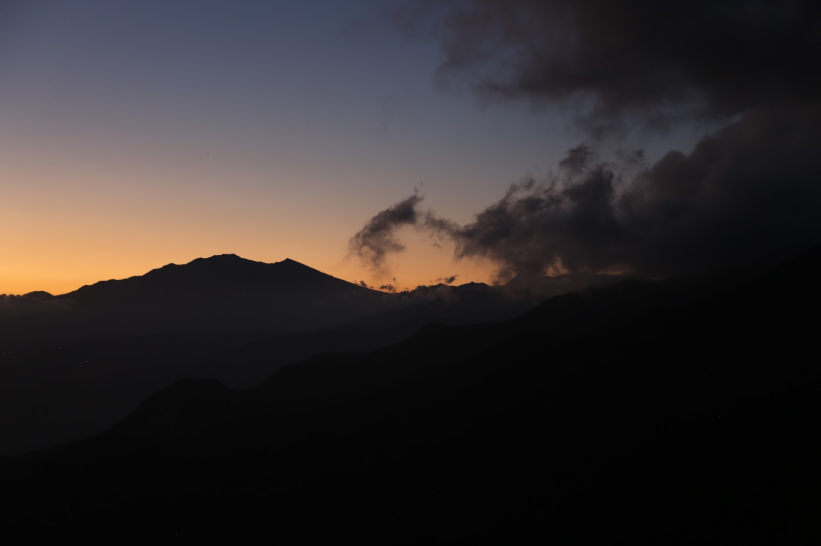
Panama: The Ultimate Geographic Crossroads of Earth, Oceans, Volcanoes, Rainforests, and Human Engineering, A Deep Dive Into One of the Most Important Strips of Land on the Planet

Panama is one of those rare places where geography does not just describe the land, it explains the entire identity of the country. It is a narrow isthmus, a land bridge between two continents and two oceans, and a biological, climatic, and geological intersection point that has shaped global history in ways most people never fully realize. At its narrowest point, Panama is only around 50 kilometers from the Caribbean Sea to the Pacific Ocean, yet within that short distance you pass through dense rainforest, mountain ranges, river systems, volcanic highlands, and one of the most important engineering projects in human history, the Panama Canal.

Geologically speaking, Panama is young. The isthmus began forming roughly 3 million years ago when tectonic plates slowly pushed up volcanic and seabed material until the ocean gap between North and South America finally closed. This event did not just change local geography, it changed the entire planet. Ocean currents were redirected, global climate patterns shifted, and two previously separate continents suddenly became connected. This allowed the Great American Biotic Interchange, one of the most significant ecological migrations in Earth’s history, where animals, plants, and entire ecosystems began moving north and south across the new land bridge. Species like jaguars, opossums, and armadillos moved northward, while horses, deer, and other northern species moved southward, reshaping biodiversity across an entire hemisphere.

Modern Panama sits in the tropics just above the equator, which means the country does not experience four traditional seasons. Instead, it has a dry season and a rainy season, but even these vary dramatically depending on geography. Rainfall patterns can change completely within just a few kilometers due to elevation and wind direction. The Caribbean side of the country is significantly wetter than the Pacific side because moist trade winds from the Atlantic hit the northern mountain slopes first, rising and releasing heavy rainfall. This creates lush rainforests, cloud forests, and extremely humid ecosystems on one side, while the southern side often experiences drier, more open landscapes.

One of the most fascinating aspects of Panama is how quickly its environment changes. You can travel from Caribbean beaches to Pacific coastlines in a few hours, crossing mountain ranges and valleys in between. The country does not stretch far east to west in a straight line, instead it bends, narrows, and expands in irregular shapes that make ecosystems extremely varied. This is why Panama contains such a high level of biodiversity relative to its size, it is not a uniform tropical country, but a compressed mosaic of different ecological zones stacked on top of each other.

The northern coastline of Panama, facing the Caribbean Sea, is characterized by turquoise water, coral reefs, mangrove forests, and island archipelagos. One of the most famous regions is Bocas del Toro, a network of islands, lagoons, and jungle covered shorelines that feel more like a Caribbean marine ecosystem than a continental coastline. The southern Pacific coast, in contrast, is much larger, more exposed, and shaped by massive tidal changes. Here you find wide estuaries, long beaches, muddy flats, and strong ocean currents that influence fishing, transportation, and coastal ecosystems. These two coasts are part of entirely different ocean systems, yet they exist within the same country and are separated by only a few hours of travel.

Running through the center of the country is a spine of mountains and volcanic highlands known as the Cordillera Central. This mountain chain is responsible for much of Panama’s climatic diversity. Peaks such as Volcán Barú rise over 3,400 meters above sea level, creating dramatic temperature shifts over short distances. At the summit of Volcán Barú, on exceptionally clear days, it is one of the few places on Earth where it is theoretically possible to see both the Atlantic and Pacific Oceans simultaneously. This is not because the oceans are unusually close visually, but because Panama is both narrow and elevated enough to allow such a rare line of sight.

These highlands also create a strong rain shadow effect. Moist air from the Caribbean side rises up the mountains, cools, and drops large amounts of rain on the northern slopes. By the time the air reaches the southern side, it is drier, creating distinct ecological zones within short distances. This is why cloud forests, dry tropical forests, and wet lowland jungles can exist only kilometers apart in Panama, a level of ecological compression that is rare globally.

One of the most important ecological and infrastructural regions in the country surrounds the canal watershed. Areas such as Fortuna Forest Reserve and surrounding protected forests play a critical role in regulating water flow into lakes and rivers that supply the canal system. Without consistent rainfall in these forested zones, the entire water dependent lock system of the canal would be affected. This means that Panama’s rainforests are not just biodiversity reserves, they are also part of global shipping infrastructure.

The presence of the canal itself has fundamentally altered Panama’s geography. The Panama Canal effectively cuts through the natural landscape, connecting artificial lakes, river systems, and engineered locks into a continuous water route. The creation of Gatun Lake, for example, transformed large inland forested areas into a massive artificial reservoir, essentially forming an inland sea that supports both navigation and ecological systems. This blending of natural and artificial geography is one of the most unusual features of any country in the world.

Panama is also one of the most biologically important land bridges on Earth. Because it connects two major continents, it acts as a migration corridor for wildlife. Species from North America and South America overlap here more than almost anywhere else. Jaguars, pumas, and monkeys from South America coexist with deer, coyotes, and northern bird species, depending on region and elevation. This makes Panama one of the most biodiverse countries per square kilometer globally, despite its relatively small land area.

The climate variation is also extreme for such a small country. In a single day of travel, you can experience coastal heat, humid jungle air, cool mountain temperatures, and dry inland plains. This is caused by a combination of ocean proximity, elevation changes, and shifting wind patterns from both the Atlantic and Pacific systems. Few countries compress so many climate zones into such a small geographic footprint.

Panama’s river systems are relatively short compared to large continental rivers, but they are extremely important. The Chagres River is one of the most significant, feeding directly into the canal system and forming part of the engineered water network that allows ships to cross the isthmus. Without rivers like the Chagres, the canal could not function as a freshwater lock system, because it depends on rainfall and reservoir storage rather than seawater.

Urban geography in Panama City adds another layer of complexity. The city sits directly on the Pacific coast but is surrounded by rainforest hills, mangroves, and protected natural zones. Skyscrapers rise next to jungle covered mountains, and financial districts sit minutes away from wetlands and coastal ecosystems. This creates one of the most visually extreme urban contrasts in the world, where global finance and tropical wilderness exist side by side.

The coastline itself is highly irregular, especially on the Pacific side, where large bays like the Gulf of Panama create vast tidal zones. During low tide, kilometers of mudflats and mangroves are exposed, while high tide brings water deep into coastal ecosystems. On the Caribbean side, the coastline is more fragmented, with coral reefs, lagoons, and island chains dominating the landscape. These differences mean that Panama effectively operates with two completely different marine ecosystems within one national boundary.

Panama is also one of the most important bird migration corridors in the Western Hemisphere. Millions of migratory birds pass through the isthmus each year, using it as a land bridge during seasonal movement between North and South America. Forest reserves, wetlands, and coastal zones all act as stopping points for rest and feeding, making Panama a critical link in global avian migration systems.

Even the tectonic structure beneath Panama adds to its uniqueness. The country sits at the intersection of multiple tectonic plates, including the Caribbean Plate, the Cocos Plate, and the Nazca Plate. This complex geological interaction is what created the volcanic mountain ranges and continues to shape the land through slow seismic activity. While Panama is not among the most earthquake prone countries in the region, it is still geologically active on a long time scale.

Ultimately, Panama is not just geographically interesting, it is geographically defining. It is one of the few places on Earth where oceans almost meet, where continents connect, where ecosystems collide, and where human engineering has reshaped natural systems on a global scale. The Panama Canal alone makes it a critical point in world trade, but the land itself, with its mountains, rainforests, rivers, and coastlines, makes it one of the most densely packed geographic regions anywhere on the planet.

And what makes Panama truly remarkable is not just its individual features, but the way they all overlap in such a small space. It is a country where you can move between climates, ecosystems, oceans, and even continents faster than almost anywhere else on Earth, and still feel like you have only scratched the surface of what the land is doing beneath your feet.

Between Spirits, Saints, and Street Wisdom: Superstition in Panama and the Everyday Beliefs That Still Shape Life

In Panama, superstition is not something hidden in the margins of society, it often sits right alongside modern life, business, religion, and daily routine. Even in a country with skyscrapers, global banking, and one of the world’s most important shipping routes through the Panama Canal, many people still carry small, inherited beliefs about luck, protection, energy, and unseen forces that influence everyday events. These beliefs are not always taken literally by everyone, but they are widely understood, culturally shared, and often respected “just in case.”

Panamanian superstition is a mixture of Indigenous traditions, African heritage, Spanish Catholic influence, Caribbean folklore, and modern urban myth. Over centuries, these layers blended into a kind of practical spirituality, where religion, folklore, and intuition overlap. In everyday life, this shows up in small habits, warnings, rituals, and sayings that people may follow without even thinking deeply about why they exist.

Why superstition is so deeply rooted in Panama

One reason superstition remains strong is Panama’s cultural diversity. Indigenous groups such as the Guna, Ngäbe, and Emberá maintained spiritual systems long before colonial influence, systems that often emphasized nature spirits, dreams, and symbolic interpretation of the natural world. Later, Spanish colonization introduced Catholic saints, prayers, and moral symbolism, while African traditions brought through the colonial era added beliefs about energy, protection, spiritual cleansing, and ancestral presence.

Because Panama developed as a crossroads of migration and trade, especially after the construction of the Construction of the Panama Canal, these belief systems did not disappear, they layered on top of each other. In many families, Catholic prayer and folk belief coexist without contradiction. A person might go to church on Sunday, avoid certain actions on specific days, and still believe in signs, dreams, or spiritual warnings.

Another reason superstition persists is the geography itself. Panama’s dense rainforests, sudden weather changes, isolated rural regions, and long history of travel between coasts create an environment where people historically depended on interpretation, intuition, and oral tradition. In places like rural Darién, where modern infrastructure is limited, belief systems often serve as informal guides for understanding uncertainty.

Everyday superstitions you might hear in Panama

Some of the most common beliefs are not dramatic or mystical, but subtle habits that influence daily decisions.

One widely shared idea is the belief in “bad luck energy” carried by envy or jealousy. People may avoid openly boasting about success, money, or relationships too directly, especially in new social settings. This is not universal, but it reflects a cultural awareness that words and attention can attract unwanted energy.

Another common belief is related to the “evil eye,” a concept found across Latin America. Some people believe that excessive admiration or jealousy can unintentionally bring misfortune, especially to children. Because of this, compliments may sometimes be softened or followed by phrases that neutralize envy.

Dreams are also often taken seriously. In many households, dreams are not just random thoughts but possible symbolic messages. A dream about water, animals, or death may be interpreted as a warning, a change coming, or a reflection of emotional imbalance.

Animal signs, omens, and nature-based beliefs

In rural and coastal areas, animals are often linked to symbolic meaning. Certain birds appearing near a home, especially at unusual times, may be interpreted as a sign of change or news. In some traditions, nocturnal animals like owls are associated with warnings or transitions, although interpretations vary widely depending on region and family background.

Rain itself can carry symbolic meaning. Sudden rain during important events, weddings, or travel plans may be interpreted in different ways, sometimes as cleansing, sometimes as delay, sometimes simply as nature responding to human activity.

In jungle regions near places like Fortuna Forest Reserve, nature is often seen as active and communicative rather than passive. People who spend time in rural environments sometimes develop strong intuitive interpretations of weather, animal behavior, and environmental changes that go beyond scientific explanation.

Catholic influence and spiritual blending

Catholicism plays a major role in shaping Panamanian belief systems, but it often blends with older or parallel traditions. Saints are widely respected, and many people pray for protection, health, or guidance. However, the way saints are approached can sometimes resemble older folk traditions, where spiritual figures are seen as active forces in daily life rather than distant religious symbols.

It is also common for people to carry religious objects for protection, such as medals, rosaries, or small images of saints. These are often used alongside non religious beliefs in luck, energy, or intuition, forming a blended spiritual framework rather than a strict doctrinal system.

Urban superstitions in Panama City

Even in modern urban environments like Panama City, superstition still appears in subtle forms. In business settings, people may avoid making certain declarations too early, especially about contracts or financial success, preferring to wait until things are “secure.”

Some individuals also pay attention to timing, such as choosing certain days for travel or important decisions based on personal belief systems rather than strict calendars. While this is not universal, it reflects a broader cultural comfort with combining logic and intuition.

Even in fast developing districts with high rise buildings and international corporations, it is not unusual for people to carry small personal rituals, such as touching wood, making a quick prayer, or mentally “resetting” after a perceived negative interaction.

Folklore, stories, and inherited warnings

Many Panamanian superstitions are passed down as stories rather than formal beliefs. Children often grow up hearing cautionary tales about places, times, or behaviors associated with bad luck or spiritual risk. These stories are not always meant to be taken literally, but they shape behavior through caution and respect for the unknown.

In some rural narratives, rivers, forests, or isolated roads may be described as places where unusual encounters happen, not necessarily in a frightening sense, but as reminders that nature and human life are interconnected in unpredictable ways.

The Darién Gap in particular is often surrounded by storytelling, not because of superstition alone, but because of its remoteness, biodiversity, and historical reputation as one of the most difficult regions to traverse in the Americas. In such places, storytelling naturally becomes a way of organizing experience.

Modern skepticism and changing beliefs

It is important to note that Panama is not uniformly superstitious. Many people, especially in urban and educated environments, view these beliefs as cultural tradition rather than literal truth. Younger generations often blend skepticism with respect, treating superstitions as part of identity rather than strict rules.

At the same time, even skeptical individuals may still follow certain practices “just in case,” especially in emotionally charged situations such as illness, travel, or major life decisions. This coexistence of logic and tradition is one of the defining features of modern Panamanian culture.

Superstition as cultural memory

Superstition in Panama is not simply about fear or irrational belief. It is a living archive of cultural memory, shaped by Indigenous worldviews, colonial history, African diaspora traditions, Catholic symbolism, and everyday experience in a country defined by nature and global movement.

From the dense forests near Fortuna Forest Reserve to the high rise skyline of Panama City, these beliefs continue to exist not as strict systems, but as soft cultural patterns that influence how people interpret the world.

And in a country where ships pass through oceans via gravity and rainforests grow beside global finance hubs, it is not surprising that many people still believe the world is full of invisible connections, signs, and meanings waiting to be noticed.

Ink of the Isthmus, The Complete Literary Map of Panama, Famous Books Written in Panama and the Most Important Books About Panama

Panama is one of those rare countries where geography itself feels like a story already written. A narrow isthmus connecting two oceans, a rainforest corridor linking continents, and a human made canal that permanently altered global trade routes all combine to make it a place that writers have returned to again and again. The literature connected to Panama is not only national, it is global, shaped by engineers, explorers, poets, political thinkers, scientists, and travelers who all tried to interpret what this small but strategically immense country represents. To read about Panama is to move between two literary worlds, the works written in Panama or by Panamanian authors, and the vast archive of books written about Panama, especially those focused on the canal, empire, ecology, and the country’s role as a meeting point of civilizations. Together they form one of the most layered literary identities in Central America, and one of the most overlooked literary landscapes in the world.

Panamanian literature is deeply tied to questions of identity, sovereignty, and cultural hybridity, because Panama has always existed between larger powers and global systems. Its writers often reflect on what it means to belong to a place that is constantly in motion, economically, politically, and geographically. One of the most influential cultural figures associated with Panamanian storytelling is Rubén Blades, whose work transcends music and enters the realm of literary narrative. His lyrics function as short stories about urban life, migration, injustice, memory, and survival, particularly in Panama City’s working class neighborhoods. Albums like Siembra and Maestra Vida are often analyzed as serialized narrative literature, where characters evolve across songs and social realities are explored with journalistic precision and poetic depth. Blades represents a modern Panamanian literary voice in musical form, one that connects the country’s lived reality with broader Latin American identity, and one that has influenced generations of storytellers.

Earlier foundational literature comes from poets such as Ricardo Miró, whose poem “Patria” remains one of the most important texts in Panamanian national identity. Written during a period when Panama was still grappling with its post independence identity and the presence of the Canal Zone, the poem reflects longing, separation, and emotional geography. It is not only poetry, it is a declaration of how distance, displacement, and belonging shape national consciousness, especially in a country physically divided by a foreign controlled corridor of land.

Another major literary figure is Rogelio Sinán, one of Panama’s most important modernist writers, whose works including Plenilunio, La Boina Roja, and numerous short stories introduce surrealism, symbolism, and psychological exploration into Panamanian literature. Sinán’s writing often blurs the boundary between reality and dream, reflecting a Panama that is not only physical but symbolic, where identity is shaped by Caribbean influence, Pacific geography, colonial memory, and emerging modernity. His influence extends beyond Panama into broader Latin American modernism, positioning the country within a continental literary conversation rather than a peripheral one.

Modern Panamanian writers continue to expand these themes, exploring urban transformation, inequality, environmental pressure, migration, and globalization. Contemporary literature often reflects the rapid development of Panama City, the expansion of global trade through the canal, and the tension between tradition and modernization in rural regions such as the Azuero Peninsula, the Caribbean coast, and highland communities. In these works, Panama is often portrayed as a country being rewritten in real time, where old cultural structures coexist with rapidly evolving global influences.

While Panamanian authors shape the internal narrative of the country, some of the most widely read and internationally influential books about Panama were written by foreign engineers, historians, journalists, and travelers, particularly in relation to the Construction of the Panama Canal. One of the most definitive works on this subject is David McCullough’s The Path Between the Seas, which chronicles the entire history of the canal from early French attempts through American completion. The book is widely considered one of the most comprehensive historical accounts ever written about a single engineering project. It details not only technical challenges but also political struggles, medical breakthroughs, and the immense human cost of building through tropical terrain, where disease, weather, and geography all acted as constant opposing forces.

Earlier writings from the canal era include reports, memoirs, and engineering journals produced by American administrators and military officials who documented the transformation of Panama from a disease ridden construction zone into a functioning global artery. These texts often reflect the mindset of early industrial expansion, where Panama was viewed through the lens of efficiency, control, and geopolitical advantage, rather than as a sovereign cultural landscape. Over time, later scholarship began to reframe these narratives, emphasizing Panamanian agency, labor contributions, and the long term social consequences of canal construction.

Panama has also long fascinated travel writers because it feels like a country in motion. It is frequently described as a place where landscapes change faster than in most countries, where urban skylines give way to jungle within minutes, and where tropical rainforests can transition into dry coastal plains or cloud forests in a single journey. Travel literature often emphasizes this sense of compression, where multiple ecosystems and cultural realities exist within short distances. Writers describe flying into Panama City and immediately seeing a skyline of glass towers backed by green mountains, or traveling toward the interior and passing through regions that shift dramatically in climate, altitude, and biodiversity.

The contrast between the modern infrastructure of the capital and remote wilderness areas like the Darién Gap is one of the most recurring themes in travel writing. The Darién in particular is often described as one of the most impenetrable natural regions in the Western Hemisphere, a place where roads end and the jungle resumes full control of the landscape. Writers frequently use it as a metaphor for limits, both of civilization and of exploration, where human infrastructure dissolves into dense rainforest, rivers, and swamp systems that resist permanent passage.

Beyond travel and history, Panama plays a significant role in ecological literature due to its extraordinary biodiversity and its position as a biological bridge between continents. Scientific writing often focuses on how species from North and South America converged in this region after the formation of the isthmus millions of years ago, creating one of the richest biodiversity corridors on Earth. Regions such as Fortuna Forest Reserve are frequently referenced in ecological studies due to their cloud forest systems, high rainfall, and dense biological diversity. These ecosystems contain countless species of birds, amphibians, orchids, insects, and mammals, many of which depend on very specific altitude and climate conditions.

Scientific literature often frames Panama not only as a country but as a biological junction point that reshaped global evolution. When the land bridge formed between North and South America, it triggered massive species migrations that permanently altered ecosystems across two continents. In this sense, Panama appears in scientific writing as both a modern ecological hotspot and a deep time geological event that influenced life far beyond its borders.

A significant portion of books about Panama also focus on political history, especially its relationship with the United States and the historical presence of the Canal Zone. For much of the twentieth century, the canal was not fully controlled by Panama, which created a unique political situation where a foreign administered strip of land existed within national borders. Books on this topic explore sovereignty, resistance, diplomacy, and identity formation, often emphasizing the emotional and political importance of reclaiming full control over the canal.

The transfer of control under the Torrijos–Carter Treaties is widely regarded as one of the most significant geopolitical transitions in Latin America during the late twentieth century. These works examine how Panama transitioned from partial external control of its most important asset to full sovereignty over one of the most strategically important waterways in the world, and how that shift reshaped national identity, economic independence, and international perception.

Although Panama is less frequently used as a primary setting in fiction compared to larger countries, it often appears symbolically in novels and narratives as a place of passage, transition, and hidden movement. The canal in particular becomes a metaphor for control, transformation, and the reshaping of natural boundaries. Writers use Panama as a setting where characters move between worlds, economic systems, continents, identities, and moral choices. It is rarely the destination in fiction, but almost always the corridor, reinforcing its real world role as a global transit point.

The literature of Panama is not a single story but a layered archive of perspectives. It includes the poetic and musical storytelling of Rubén Blades, the foundational national identity expressed by Ricardo Miró, the surreal modernism of Rogelio Sinán, the historical depth of works about the Construction of the Panama Canal, the ecological richness of places like Fortuna Forest Reserve, and the geopolitical narratives surrounding the Darién Gap.

Together these works reveal a country that is not static but constantly being rewritten, geographically, culturally, and historically. Panama is written in layers of rainforest, steel, ocean, migration, and memory. It is a place where empires passed through, ecosystems merged, and human ambition permanently reshaped the land. And in the end, its literature reflects the same truth as its geography, Panama is not just a country you read about, it is a passage through which the world itself moves, and every book written about it becomes part of that ongoing crossing.

The Edge of the City and the Bridge Between Oceans: The Cinta Costera and Amador Causeway in Panama City, and How to Experience Them in Full Detail

Panama City is a place defined by contrasts, where glass skyscrapers rise beside colonial stone streets, where rainforest hills press up against highways, and where the Pacific Ocean curves tightly around one of the most strategically important urban coastlines in the Americas. Within this setting, two of the most iconic public spaces are the Cinta Costera and the Amador Causeway. These are not just roads or promenades, but engineered landscapes that define how the city interacts with the ocean, how people move through public space, and how Panama presents itself to the world visually, socially, and culturally.

Together, they form two very different but deeply connected experiences: one is a sweeping urban coastal arc wrapping around the city’s financial district, and the other is a narrow ribbon of land stretching into the Pacific toward the entrance of the Panama Canal. To understand Panama City properly, you do not just visit these places, you move through them, because they reveal how the city was literally built outward into the sea.

The Cinta Costera: A Man-Made Waterfront That Rewrote the City’s Edge

The Cinta Costera is one of the most ambitious urban redevelopment projects in Central America, a multi-phase coastal beltway that transformed reclaimed land into parks, highways, bike paths, and recreational spaces along Panama Bay. Before its construction, this area was largely congested waterfront infrastructure and disconnected shoreline. The project effectively pushed the city outward into the Pacific through land reclamation, creating a continuous ribbon of public space that now stretches several kilometers along the coastline.

At its core, the Cinta Costera is both infrastructure and social space. It functions as a major traffic artery that relieves congestion in central Panama City while simultaneously acting as one of the city’s most important recreational zones. Elevated expressways run above while beneath them and alongside them are walking paths, cycling lanes, sports courts, fitness areas, and open green spaces that are constantly filled with life. The engineering behind it includes massive seawalls, dredged fill, and reinforced coastal barriers designed to withstand tidal forces and storm surge, essentially creating new land where there was once open water.

Walking along the Cinta Costera feels like moving through a living cross-section of the city. On one side, the skyline of Panama City rises in glass and steel, reflecting sunlight during the day and glowing with dense urban light at night. On the other side, the Pacific Ocean stretches outward, dotted with ships waiting to enter the canal, constantly reminding you that this city is also a global maritime hub. Between these two worlds, the Cinta Costera becomes a space of movement and pause, where joggers, cyclists, street vendors, families, and travelers all share the same linear park that wraps around the bay.

One of the most important aspects of the Cinta Costera is how it changes perception of distance and scale within the city. What used to be fragmented waterfront zones are now connected into a continuous public corridor. The area also includes viewpoints toward historic districts, especially the skyline of the financial district and the older colonial zone further along the coast, creating a visual timeline of Panama’s development from colonial port to modern metropolis.

The Amador Causeway: A Road Built from the Canal’s History

Stretching into the Pacific Ocean like a finger pointing toward the entrance of one of the world’s most important waterways, the Amador Causeway is one of the most scenic and symbolically significant roads in Panama. It was originally constructed using rocks excavated during the building of the Panama Canal, meaning that in a very real sense, this road is made from the material of one of the greatest engineering projects in history.

The causeway connects the mainland to three small islands: Naos, Perico, and Flamenco. These islands once served strategic military and quarantine functions during the canal’s early operational years, but today they have been transformed into recreational, commercial, and tourism spaces. The causeway itself is a wide, open road flanked by pedestrian paths and bike lanes, offering uninterrupted views of the Pacific Ocean on both sides. On one side, you can see the skyline of Panama City rising dramatically from the water, and on the other, you can see ships queued near the entrance of the canal, waiting their turn to cross between oceans.

The Amador Causeway is also one of the best places in the city to understand Panama’s geography visually. From here, you can see the Pacific entrance to the canal system, including the distant movement of vessels and the subtle shift between urban shoreline and open ocean. The causeway is also home to marinas, restaurants, cycling routes, and viewpoints that attract both locals and visitors at all hours of the day.

At night, the causeway transforms completely. The city lights reflect across the water, the breeze becomes cooler, and the skyline appears almost suspended above the ocean. It becomes one of the most atmospheric places in Panama City, blending nature, infrastructure, and urban life into a single continuous experience.

How the Two Connect: Urban Ocean Logic

What makes both the Cinta Costera and the Amador Causeway so important is not just their function individually, but how they redefine Panama City’s relationship with the ocean. The city does not simply sit next to the water; it extends into it, reshapes it, and moves through it.

The Cinta Costera represents controlled expansion along the shoreline, a dense urban interface where city and sea meet in a structured way. The Amador Causeway represents projection outward into the ocean, a linear extension that physically points toward the Panama Canal and the wider Pacific world. Together, they form two expressions of the same idea: Panama as a city built on maritime identity.

They also reflect two different speeds of experience. The Cinta Costera is active, dense, and energetic, filled with traffic, exercise, and constant movement. The Amador Causeway is slower, more open, and more contemplative, encouraging long views and extended time spent watching the water and ships.

What to Do on the Cinta Costera

Experiencing the Cinta Costera properly is about movement. It is best explored on foot, by bicycle, or even by scooter. Early morning is one of the most striking times, when the heat is still low and the city is just beginning to wake. Joggers fill the paths, fishermen line the edges, and the skyline reflects soft light from the bay.

During the day, the energy increases. Sports courts become active, food vendors set up along walkways, and the constant flow of traffic overhead contrasts with the relaxed rhythm below. One of the most interesting aspects is how the space functions as both transit corridor and leisure zone simultaneously, something that is relatively rare in urban design at this scale.

Sunset is when the Cinta Costera becomes most visually dramatic. The light hits the glass towers of Panama City at an angle that creates long reflections across the water, while the ocean begins to darken and ships become silhouettes on the horizon. The entire bay feels like it is slowly shifting into night mode, with the city lights gradually taking over the visual landscape.

What to Do on the Amador Causeway

On the Amador Causeway, the experience is more about distance and perspective. Renting a bike or walking the full length of the causeway is one of the most rewarding ways to experience it, because it allows you to see how the city gradually recedes behind you while the Pacific opens up in front.

Stops along the islands offer different experiences: marinas with sailboats and yachts, restaurants overlooking the water, and viewpoints where you can see the entrance to the Panama Canal system in the distance. This is one of the few places where you can simultaneously see a modern capital city, open ocean, and global shipping traffic all in one field of view.

Even simple moments, like sitting on the seawall watching ships move slowly toward the canal, become surprisingly immersive. The scale of the vessels, combined with the stillness of the surrounding water, creates a sense of watching global systems operate in real time.

Best Time to Visit and Practical Flow

Both locations are accessible year-round, but timing dramatically changes the experience. Early mornings are cooler and quieter, ideal for exercise and photography. Late afternoons and sunset hours are the most visually powerful, especially when light reflects off the water and skyline simultaneously. Nights are best for atmosphere, especially on the Amador Causeway, where the city lights and ocean reflections create a calm but cinematic environment.

Panama City at Its Edge

The Cinta Costera and the Amador Causeway are more than infrastructure projects. They are expressions of how Panama City has chosen to exist at the edge of land and sea, not resisting the ocean but extending into it, reshaping it, and living alongside it.

One is a curved urban shoreline that wraps around the heartbeat of the city. The other is a straight path into the Pacific that points toward one of the most important maritime corridors in the world. Together, they reveal a city that is constantly negotiating between nature and engineering, between movement and stillness, between global significance and everyday life.

And when you walk them in sequence, from the dense energy of the Cinta Costera to the open horizon of the Amador Causeway, you begin to understand Panama City not as a place you simply pass through, but as a place that is always in motion, always expanding, and always connected to the water that defines it.

The Water Spine of the World: The Panama Canal in Extreme Detail, Its History, Mechanics, Ecosystem, and How to Experience It in Person

The Panama Canal is one of those rare places on Earth where geography, engineering, ecology, politics, and global economics all converge into a single narrow strip of land that permanently changed how the world moves. It is not simply a canal, but a fully engineered hydrological system, a gravity-powered staircase for ships, and a living piece of infrastructure that operates continuously, day and night, moving vessels between two oceans that were once separated by months of dangerous sailing around South America. The canal is also one of the clearest examples of how human engineering can reshape planetary-scale systems, because it does not just connect two bodies of water, it regulates freshwater, reshapes ecosystems, and influences global trade routes at the same time.

The idea of building a passage through Panama is centuries old, but the first major attempt began in the late 1800s under French engineer Ferdinand de Lesseps, who had successfully built the Suez Canal. However, Panama proved to be an entirely different challenge. Instead of desert sand, engineers faced dense tropical rainforest, unstable volcanic geology, extreme rainfall, and one of the most difficult disease environments on Earth. Mosquito-borne illnesses like malaria and yellow fever devastated the workforce, and landslides repeatedly destroyed excavation progress. The French effort ultimately collapsed, but it provided crucial early surveys and partial excavation work. The United States took over the project in the early 1900s, and what followed was not just construction but a massive re-engineering of the entire approach. Under leaders such as John Frank Stevens and medical reforms led by William Gorgas, disease was controlled, labor conditions improved, and the engineering design was changed from a sea-level canal to a lock-based system. After a decade of relentless work, the canal officially opened in 1914 under the broader effort known as the Construction of the Panama Canal, instantly transforming global maritime logistics and reducing travel times between oceans by thousands of kilometers.

At the heart of the canal is a deceptively simple but extraordinarily complex system: ships are not pulled or lifted mechanically, but moved entirely by gravity-fed water displacement. The system begins at the Gatun Locks on the Caribbean side, where vessels enter a series of three consecutive chambers. Each chamber is filled with freshwater from Gatun Lake, raising ships step by step until they reach the lake’s elevation, approximately 26 meters above sea level. From there, ships cross Gatun Lake itself, an artificial reservoir that is one of the largest man-made lakes in the world and functions as both a transit route and a water supply system. The lake is fed by heavy rainfall and the Chagres River, making it one of the most important hydrological assets in Panama. Without it, the canal could not operate at all. After crossing this vast inland waterway, ships enter the narrow and historically challenging Culebra Cut, also known as the Gaillard Cut, where engineers carved through the Continental Divide. This section was one of the most difficult parts of construction due to constant landslides, unstable rock formations, and the sheer volume of earth that had to be removed. Even today, it remains a carefully monitored channel. From there, vessels descend through the Pedro Miguel Locks and then the Miraflores Locks before reaching the Pacific Ocean. The entire journey is a controlled vertical transition, where ships rise and fall like elevators powered not by machines, but by water moving through engineered channels.

One of the most astonishing aspects of the canal is the amount of freshwater required for each transit. Every time a ship passes through, tens of millions of gallons of freshwater are released from Gatun Lake into the ocean system. This means the canal is not just an engineering structure, but a massive water management system that depends entirely on rainfall patterns and forest conservation in surrounding watersheds. Regions such as Chagres National Park play a critical role in sustaining this system, because the forests regulate runoff, reduce sedimentation, and maintain the stability of the water supply. In this sense, the canal is directly connected to Panama’s rainforest ecology, creating one of the few places in the world where global shipping depends on tropical conservation.

The expansion of the canal, completed in 2016, added a parallel system of much larger locks designed to accommodate Neo-Panamax vessels, which are significantly wider and taller than traditional ships. These new locks include advanced water-saving basins that recycle a portion of the water used in each transit, reducing environmental impact while increasing capacity. This expansion allowed the canal to remain relevant in the era of mega-container ships, liquefied natural gas carriers, and increasingly globalized trade routes. Today, thousands of ships pass through the canal annually, representing a significant percentage of global maritime traffic and generating billions of dollars in revenue for Panama. This income has become a major part of the country’s economy and national identity.

For visitors, the canal is one of the most accessible yet visually overwhelming engineering experiences in the world. The most famous viewing location is the Miraflores Visitor Center, located just outside Panama City. From its observation decks, visitors can watch massive cargo ships enter lock chambers that appear almost too small to contain them. The scale difference is striking, as vessels that are hundreds of meters long are carefully guided by electric locomotives called “mules” along the lock walls. The process unfolds slowly and precisely: gates close, water rises or falls, and ships transition between levels in a choreographed sequence that feels both industrial and strangely natural. The visitor center also includes an extensive museum detailing the canal’s construction, geopolitical history, environmental importance, and future expansion projects, along with an IMAX-style theater that provides a cinematic overview of the canal’s evolution.

On the Caribbean side, the Agua Clara Locks offer a more modern perspective on the canal system. These locks, part of the expansion project, are designed for the largest ships in the world and feature wider chambers, improved water management systems, and observation platforms that allow visitors to see Neo-Panamax vessels passing at extremely close range. Unlike Miraflores, which is closer to urban Panama City and often crowded with tourists, Agua Clara provides a more open and less congested experience, surrounded by dense tropical forest and the industrial landscape of Colón.

One of the most immersive ways to experience the canal is to actually travel through it on a transit cruise. These journeys allow passengers to move through the same lock system used by commercial shipping, either partially or fully. A partial transit typically includes passing through one set of locks and crossing Gatun Lake, while a full transit takes passengers from one ocean to the other over a period of five to eight hours. During this journey, passengers experience the full vertical motion of the canal, watching as water fills or drains beneath the vessel and massive steel gates open and close with mechanical precision. Prices generally range from about 100 to 250 USD depending on duration, vessel type, and included services, making it one of the most unique transportation experiences available to travelers anywhere in the world.

For those who prefer a land-based perspective, the Panama Canal Railway offers a scenic route parallel to much of the canal’s length. Originally built alongside early canal construction efforts, this railway now serves as both a commuter and tourist line, offering views of Gatun Lake, passing ships, and dense rainforest corridors that have remained largely unchanged for over a century. The experience highlights how the canal is not isolated infrastructure but part of a broader landscape system where engineered and natural environments overlap continuously.

Beyond engineering and commerce, the canal region is also an unexpected ecological corridor. Forests surrounding the canal support monkeys, crocodiles, sloths, toucans, herons, and countless amphibians and insects, many of which thrive in the freshwater ecosystems created by the canal’s lakes and reservoirs. In many ways, the canal has unintentionally created new habitats, blending artificial and natural systems into a unique ecological hybrid. This makes the canal not just a global trade artery, but also a living environmental experiment where human engineering and tropical biodiversity coexist in complex balance.

What makes the canal so compelling is its constant motion and quiet precision. It never stops operating. Ships move through it at all hours, water shifts continuously between chambers, and the system functions with a calm mechanical rhythm that hides its enormous complexity. There are no dramatic moments of pause or reset, only continuous flow, guided by gravity, engineering, and global demand.

Standing at the Miraflores Visitor Center and watching a massive vessel rise slowly from the Pacific level to the freshwater lake above, it becomes clear that the canal is not just infrastructure. It is a place where human ambition altered geography itself, where oceans were effectively reconnected by design, and where the narrow Isthmus of Panama became one of the most important corridors on Earth.

And even after more than a hundred years of operation, it still feels slightly impossible, as if the world should not be able to move this way, and yet it does, every single day, in perfect, gravity-driven silence.

Voices, Champions, and Icons: Famous Panamanian Celebrities Who Shaped Music, Sport, and Culture

Panama may be a small country geographically, but its cultural impact reaches far beyond its borders. From world stages in music to legendary boxing arenas and baseball stadiums, Panamanian talent has consistently made its mark on global history. What makes these figures especially fascinating is how many of them carry Panama’s identity with them wherever they go, blending local rhythm, resilience, and pride into everything they do.

The Voice of a Nation: Rubén Blades

One of the most influential cultural figures in Latin America is the legendary singer, songwriter, and actor Rubén Blades. Known for transforming salsa music into a storytelling medium, Blades is not just an entertainer, but also a poet of urban life and social consciousness.

His songs often explore themes of inequality, politics, migration, and everyday struggle, turning dance music into something deeply reflective. Albums like Siembra helped define an entire era of salsa, while his acting career in Hollywood expanded his global reach. Despite international fame, Blades has remained closely tied to Panama’s identity, even serving in government roles and advocating for cultural preservation.

The Powerhouse Boxer: Roberto Durán

Few athletes embody raw determination like the legendary boxer Roberto Durán, often known as “Manos de Piedra” (Hands of Stone). Coming from humble beginnings in Panama City, Durán rose to become one of the greatest lightweight boxers of all time.

His aggressive fighting style, iron chin, and relentless pressure inside the ring made him a feared opponent across multiple weight divisions. Beyond his titles and victories, Durán represents something deeper in Panamanian culture: the idea that toughness, pride, and perseverance can carry someone from poverty to global legend status.

Even decades after his prime, his legacy still looms large in boxing history.

The Mariano Rivera Era: Baseball’s Perfect Pitcher

In the world of baseball, few names are as respected as Mariano Rivera. Known for his devastating cutter pitch, Rivera became one of the most dominant relief pitchers in Major League Baseball history.

Spending his entire career with the New York Yankees, he helped lead the team to multiple championships and became the first player ever unanimously elected to the Baseball Hall of Fame. What makes Rivera’s story especially powerful is his journey from a small fishing village in Panama to the biggest stages in American sports.

His calm demeanor, humility, and consistency made him not only a sports icon but also a symbol of quiet excellence.

The New Generation of Latin Music: Sech

Modern Panamanian music has found a global voice through artists like Sech. Emerging from Panama City’s urban music scene, Sech helped bring Panamanian reggaeton into the international spotlight.

His style blends smooth vocals with emotional storytelling, often focusing on relationships, vulnerability, and modern youth culture. Unlike many artists in the genre, Sech’s sound is softer and more melodic, giving him a distinct identity within Latin urban music.

Collaborations with major global artists have helped position Panama as a key player in the evolving reggaeton movement.

The Songwriter Behind Global Hits: Erika Ender

Another major figure in Panamanian music is Erika Ender, a prolific songwriter and performer best known for co-writing the global hit Despacito. Her work has helped shape modern Latin pop on a worldwide scale.

Ender is also a performer in her own right, blending pop, Latin, and ballad styles while maintaining a strong connection to her Panamanian roots. Her influence extends beyond performance into songwriting, where she has contributed to numerous international hits.

She represents a different kind of fame, one built behind the scenes but deeply embedded in global culture.

A Nation of Rhythm, Strength, and Identity

What connects these figures—Rubén Blades, Roberto Durán, Mariano Rivera, Sech, and Erika Ender—is not just talent, but representation. Each of them carries a different piece of Panama’s identity into the world: its rhythm, its resilience, its discipline, and its creativity.

They come from different backgrounds and generations, but together they form a cultural timeline of how a small nation can have an outsized global presence.

Panama Beyond Its Borders

Panama’s celebrities are not just famous individuals, they are cultural ambassadors. Whether it is the poetic social commentary of Rubén Blades, the unstoppable force of Roberto Durán, the precision of Mariano Rivera, or the modern sound of Sech and Erika Ender, each one tells a story about where they come from.

And together, they show that Panama is not just a place on the map, but a living influence carried into music, sport, and culture around the world.

Where the Jungle Meets the Pacific: The Ultimate Guide to Playa Venao, Panama

There are places in Panama where time seems to stretch, where the rhythm of the day is dictated not by schedules or traffic but by tides, swell, and sunlight. Playa Venao is one of those places. Tucked along the Azuero Peninsula on the Pacific coast, it has transformed over the years from a quiet fishing bay into one of the most iconic beach destinations in the country, without ever fully losing its raw, untamed edge. It is a place where surfers, backpackers, expats, and locals all converge, drawn by consistent waves, golden sand, and a lifestyle that feels both simple and deeply alive.

The Setting: A Perfect Crescent of Sand

Playa Venao sits along a wide, curved bay that seems almost designed for surf. The beach stretches for several kilometers, framed by rolling green hills and jungle-covered slopes that meet the ocean in a way that feels untouched compared to more developed coastal areas. The sand is darker and coarser than Caribbean beaches, typical of the Pacific side, but it glows warm under the sun, especially during golden hour when the entire bay lights up in shades of amber and copper.

The ocean here is powerful but inviting. Waves roll in with consistency, shaped by offshore winds and the bay’s natural orientation. Even when other parts of the Pacific coast are flat, Venao often still has something to ride, which is one of the reasons it has become such a magnet for surfers from around the world.

Surfing: The Heartbeat of Venao

Surfing is not just an activity in Playa Venao, it is the culture that defines it. The break here is known for being consistent year-round, with conditions that suit a wide range of skill levels.

Beginners can find manageable waves closer to shore, especially during smaller swell periods

Intermediate surfers enjoy long, rideable waves with forgiving sections

Advanced surfers can take advantage of larger swells that create faster, more powerful rides

The main break is a beach break, meaning the sandbars shift over time, constantly reshaping the wave. This keeps things dynamic and interesting, but also means that conditions can vary depending on tides and recent weather.

Surf schools and board rentals are easy to find along the beach, making it accessible even for those who have never stepped on a board before.

The Vibe: A Beach Town Without Pretension

One of the most defining aspects of Playa Venao is its atmosphere. It has grown significantly over the years, but it has managed to retain a laid-back, unpolished charm.

Days are slow and sun-soaked. People wake early for dawn patrol surf sessions, spend afternoons in hammocks or cafés, and gather again in the evening as the heat fades and the sky turns orange. There is a sense of community here that is hard to replicate, a mix of travelers passing through and people who came for a few days and never left.

You’ll find:

Backpackers traveling Central America

Remote workers drawn by the lifestyle

Surfers chasing swell seasons

Locals connected to the land and sea

It is not luxury in the traditional sense, but it offers something many places have lost, a feeling of freedom.

Food and Nightlife: From Smoothie Bowls to Beach Parties

Playa Venao has developed a surprisingly diverse food scene for its size. Along the beachfront and surrounding hills, you’ll find everything from casual cafés to more refined dining spots.

Fresh seafood is a staple

Smoothie bowls and healthy breakfasts are everywhere

International cuisine reflects the global crowd

As the sun sets, the energy shifts. Some nights are quiet, with small gatherings around bonfires or dinners with friends. Other nights, especially on weekends, turn into lively beach parties that can last until morning. Music drifts across the bay, mixing with the sound of waves, creating an atmosphere that feels both festive and grounded in its surroundings.

Nature Beyond the Beach

While the ocean is the main draw, Playa Venao is surrounded by natural beauty that extends far beyond the shoreline.

The hills behind the beach are covered in dry tropical forest, home to wildlife such as:

Monkeys

Iguanas

A wide variety of birds

During certain times of the year, you may spot whales offshore, especially humpbacks migrating through the Pacific. Sea turtles also nest on nearby beaches, adding another layer to the area’s ecological richness.

A short drive brings you to more remote beaches, waterfalls, and small villages that offer a glimpse into a quieter, more traditional side of the Azuero Peninsula.

Getting There: Part of the Journey

Reaching Playa Venao requires a bit of effort, which is part of what has helped preserve its character.

About 5 to 6 hours from Panama City by car

Roads are mostly paved, though some stretches can be rough

Public transport is possible but less direct

The journey takes you through changing landscapes, from urban areas to farmland to increasingly remote coastal terrain, building anticipation as you approach the ocean.

When to Go: Seasons and Swell

Playa Venao is a year-round destination, but conditions vary.

Dry season (December to April): Sunny days, smaller waves, ideal for beginners

Green season (May to November): Larger swells, more consistent surf, occasional heavy rain

Unlike the Caribbean side, the Pacific coast has a more defined dry season, making it easier to plan around weather, though even in the rainy season, mornings are often clear.

Growth and Change

Playa Venao is no longer a hidden secret. Development has increased, with new accommodations, restaurants, and infrastructure appearing each year. While this brings comfort and opportunity, it also raises questions about sustainability and preserving the very qualities that made the place special in the first place.

For now, it sits in a balance, growing, evolving, but still holding onto its identity.

More Than Just a Beach

Playa Venao is not just about surfing, or sunsets, or nightlife, though it offers all of those in abundance. It is about a way of being, a slower pace, a connection to the ocean, and a community that forms around shared experience rather than routine.

You arrive thinking it’s just another beach.

But after a few days, something shifts.

You start waking with the light, watching the tides, measuring time in waves instead of hours. And before you realize it, Playa Venao becomes less of a destination and more of a rhythm, one that’s hard to leave behind.

The Desert That Shouldn’t Exist: Sarigua and Panama’s Driest Extreme

There is a place in Panama that feels like it belongs to another country entirely, a place where the dense, dripping green of the tropics gives way to cracked earth, pale soil, and a kind of stillness that feels almost exposed. This place is Sarigua National Park, often referred to as Panama’s only desert, though technically it is something even more fascinating, a semi-arid landscape shaped as much by human history as by climate. In a country known for some of the heaviest rainfall in Central America, where regions like Fortuna Forest Reserve can receive well over 5,000 millimeters of rain per year, Sarigua stands as the opposite extreme, receiving roughly 1,000 to 1,500 millimeters annually. While that number might not sound especially low on a global scale, the reality on the ground tells a different story. The combination of intense sun, poor soil structure, and high evaporation means that whatever rain does fall rarely lingers. Instead of soaking into rich forest floor, it runs off hardened, compacted earth, leaving behind a landscape that feels far drier than the numbers suggest.

What makes Sarigua even more compelling is that it was not always this way. Historically, this region was covered in tropical dry forest, a unique ecosystem adapted to seasonal rainfall but still rich in biodiversity and vegetation. Over time, however, human activity transformed the land. Extensive deforestation removed the protective canopy, exposing the soil to direct sunlight and erosion. Overgrazing by livestock stripped away remaining vegetation, and unsustainable agricultural practices drained the soil of nutrients. Without roots to hold moisture and stabilize the ground, the land began to degrade. The soil hardened, salinity increased in coastal areas, and the delicate balance that once sustained a forest ecosystem collapsed. What remains today is a stark, open terrain that behaves like a desert, even if it does not meet the strict scientific definition of one.

Walking through Sarigua National Park is a completely different sensory experience from the rest of Panama. There is no thick canopy overhead, no constant drip of water, no dense chorus of insects reverberating through the trees. Instead, the sky feels wide and uninterrupted, the sun more direct, the air drier and heavier in a different way. The ground underfoot is often cracked and uneven, sometimes crusted with salt in areas closer to the coast, giving parts of the park an almost otherworldly appearance. Vegetation exists, but it is sparse, low, and adapted to survive in harsh conditions, a far cry from the towering rainforest just a few hours away. The silence here is not the layered quiet of the jungle, but a more open, exposed stillness, broken occasionally by wind or the movement of small animals adapted to this environment.

Despite its harshness, Sarigua is not lifeless. It supports a range of resilient species, from salt-tolerant plants to insects, reptiles, and birds that thrive in open, dry habitats. These organisms represent a different side of Panama’s biodiversity, one that is often overlooked in favor of its rainforests and cloud forests. In this way, Sarigua is not just an anomaly, but a reminder of how diverse ecosystems can be, even within a small geographic area. Within a relatively short distance, Panama contains extremes that few countries can match, from the saturated, mist-covered slopes of Fortuna Forest Reserve to the deep, humid wilderness of the Darién Gap, and then to the dry, exposed plains of Sarigua.

Perhaps the most important aspect of Sarigua is what it represents. It is not just a dry place, it is a visible example of how landscapes can change when natural systems are pushed beyond their limits. The transformation from forest to semi-desert did not happen overnight, but over years of pressure, small changes accumulating until the ecosystem could no longer sustain itself. In that sense, Sarigua is both fascinating and cautionary, a place where the past is written directly into the soil. And yet, even here, life persists, adapting, surviving, and continuing in a different form. Standing in Sarigua, looking across its pale, open terrain, it is hard to reconcile that this is the same country known for relentless rain and dense jungle. But that contrast is exactly what makes Panama so remarkable, a land of extremes where even a desert can exist in the heart of the tropics.

The Bird That Wears the Rainforest: Umbrellabirds of Panama and the Sound of Living Darkness

There are moments in the jungle when the forest seems to hold its breath. The insects quiet slightly, the light dims beneath thick canopy, and from somewhere deep within the green comes a sound that feels less like a call and more like a presence, a low, resonant boom that seems to travel through the trees rather than the air. It is not loud in the way of a scream or a screech, but it carries, vibrating through trunks and branches like distant thunder.

That sound belongs to one of the most extraordinary birds in the Neotropics, the umbrellabird, specifically the Long-wattled umbrellabird and its close relatives in the genus Cephalopterus. In Panama, sightings are rare, fleeting, and often accidental. But for those who spend enough time in the right forests, especially the misty highlands and remote lowland corridors, the umbrellabird becomes something more than a bird. It becomes a symbol of intact wilderness, of forests that are still deep, still connected, and still alive in ways that are increasingly rare.

A Silhouette Unlike Anything Else

The umbrellabird does not resemble most birds. At first glance, it can appear almost prehistoric, as though it belongs to another era entirely. Its body is large and crow-like, cloaked in deep black feathers that absorb light rather than reflect it. But what defines it are the features that give it its name.

A distinctive umbrella-shaped crest that can fan out over the head

A long, feathered wattle hanging from the throat in males

Broad wings built for short, powerful flights through dense forest

A heavy, deliberate posture when perched

When the crest is raised, it forms a canopy over the bird’s head, altering its silhouette into something almost unreal. The wattle, which can extend dramatically during display, sways with movement, adding to the bird’s otherworldly presence.

Females are smaller and lack the exaggerated features of males, a difference that reflects the species’ unique breeding behavior.

The Sound That Defines the Forest

More than its appearance, it is the umbrellabird’s call that defines it.

Deep, booming, and resonant, the sound is produced during mating displays and can carry over long distances through dense forest. Unlike the sharp calls of many tropical birds, this vocalization feels physical, as though it presses against the air.

Males produce this sound from display perches, often returning to the same location repeatedly. These sites become part of the forest’s acoustic landscape, places where sound itself becomes a territorial and reproductive tool.

For a naturalist, hearing this call for the first time is unforgettable. It is not just a bird call, it is an experience, something that seems to belong to the forest as much as the trees themselves.

Panama: At the Edge of Their Range

Umbrellabirds are more commonly associated with regions further south, but Panama represents the northern edge of their distribution for some species. This makes their presence here both rare and ecologically significant.

They depend on:

Large, continuous tracts of forest

Altitudinal gradients, moving between elevations

Abundant fruiting trees

Because of these requirements, they are highly sensitive to habitat loss. Where forests are fragmented, umbrellabirds disappear.

Where to Find the Umbrellabird in Panama

Though elusive, umbrellabirds are tied to specific types of environments, often linked by elevation and forest continuity.

The Cloud Kingdom: La Amistad International Park

High in the Talamanca range, La Amistad provides one of the best chances of encountering umbrellabirds in Panama.

Dense cloud forests

High humidity and constant mist

Rich diversity of fruiting trees

Here, umbrellabirds move seasonally, following food availability. During certain times of the year, they descend to lower elevations, then return to higher forests, creating a vertical migration that is still not fully understood.

The remoteness of this region means that much of their behavior remains undocumented, adding to their mystique.

The Rain-Heavy Slopes: Fortuna Forest Reserve

Fortuna’s wet, dense forests provide another potential refuge.

Frequent rainfall

Thick canopy cover

Limited human disturbance

While sightings are rare, the habitat is suitable, and the presence of large fruiting trees makes it a viable environment for these birds. In such places, the umbrellabird blends perfectly into the darkness of the forest interior.

The Wild Connection: Darién Gap

In the vast forests of Darién, umbrellabirds may occur in low densities, particularly in areas where forest remains unbroken for great distances.

This region’s importance lies in its connectivity. It allows movement between populations further south, maintaining genetic flow and ecological stability.

Diet: The Forest in Motion

Umbrellabirds are primarily frugivorous, feeding on a wide variety of fruits.

Their diet includes:

Large tropical fruits

Berries

Occasional insects or small vertebrates

But like the tapir, their importance lies not just in what they consume, but in what they disperse. By carrying seeds across distances and depositing them in new locations, they contribute to forest regeneration.

Because they can swallow large fruits whole, they are capable of dispersing seeds that smaller birds cannot, making them essential for certain plant species.

Behavior: Solitary Yet Connected

Outside of breeding displays, umbrellabirds are generally quiet and solitary.

They move through the forest canopy deliberately, often remaining hidden in dense foliage. Their dark coloration makes them difficult to spot, especially in low light conditions.

Yet during breeding season, everything changes.

Males gather at display sites, known as leks, where they perform vocal and visual displays to attract females. These gatherings are among the most fascinating behavioral phenomena in the tropical forest.

The Lek: Theater of the Forest

At a lek, several males occupy nearby perches, each attempting to outcompete the others through sound and display.

Deep booming calls

Crest raised dramatically

Wattle extended and swaying

Females visit these sites, observing the displays before choosing a mate. After mating, the female leaves to build a nest and raise the young alone.

This system creates intense competition among males and leads to the evolution of their exaggerated features.

A Species Under Pressure

Umbrellabirds are among the most vulnerable birds in the Neotropics.

Their decline is driven by:

Habitat Loss

Deforestation removes both feeding and breeding areas.

Fragmentation

Breaking forests into smaller patches disrupts movement and breeding.

Hunting

Though not a primary target, they are sometimes hunted opportunistically.

Climate Change

Shifts in temperature and rainfall affect fruiting patterns and migration.

Because they rely on large, connected forests, they are often among the first species to disappear when ecosystems are disturbed.

Why Umbrellabirds Matter

Umbrellabirds are more than just rare or unusual. They are indicator species.

Their presence suggests:

Healthy forest structure

Abundant food sources

Functional ecological processes

When umbrellabirds vanish, it often signals deeper problems within the ecosystem.

The Rarity of Encounter

Seeing an umbrellabird in Panama is not something you plan, it is something that happens, if you are lucky, patient, and in the right place at the right time.

More often, you will hear it.

A distant, hollow boom echoing through the forest, a sound that feels ancient and deliberate. You may stop, listen, and try to locate it, but the forest will not easily give up its secrets.

Final Reflection: The Sound That Lingers

Walk through the mist of La Amistad International Park, stand quietly in the rain-soaked forests of Fortuna Forest Reserve, or lose yourself in the vast green silence of Darién Gap, and you may never see the umbrellabird.

But if you listen carefully, you might hear it.

A deep, resonant note, echoing through the trees, reminding you that the forest is not empty. It is layered, complex, and alive with creatures that reveal themselves not through sight, but through presence.

The umbrellabird does not demand attention.

It becomes part of the jungle itself.

And once you hear it, the forest never quite sounds the same again.

The Gentle Architects of the Jungle: Tapirs of Panama and the Hidden Force That Grows the Forest

There are animals in the jungle that command attention the moment they appear, predators with eyes that follow you, movements that feel deliberate, powerful, undeniable. And then there are others, quieter in presence but no less important, creatures that pass like shadows through the undergrowth, leaving behind almost no trace except for the changes they create.

In the forests of Panama, that animal is the tapir, most commonly the Baird's tapir. At first glance, it may seem like an unlikely icon of the wild, with its rounded body, short trunk-like snout, and slow, deliberate movements. But beneath that gentle appearance lies one of the most important ecological forces in the Neotropics, a species that quite literally shapes the future of the forest with every step it takes.

A Living Relic: Built from Another Time

The tapir feels ancient because it is. Its lineage stretches back millions of years, making it one of the oldest surviving groups of large land mammals in the Americas. Long before the rise of modern predators and prey systems, tapirs were already moving through forests, wetlands, and floodplains, feeding, dispersing seeds, and adapting to changing climates.

Physically, the tapir is unmistakable.

A prehensile snout, flexible and sensitive, used to grasp leaves and fruit

A barrel-shaped body, supported by surprisingly strong legs

Splayed toes, ideal for walking through mud and soft forest floors

A dense, tough hide that offers protection from insects and vegetation

Despite often being compared to pigs or anteaters, tapirs are more closely related to horses and rhinoceroses, a reminder of their deep evolutionary roots. Everything about them speaks to endurance rather than speed, adaptation rather than aggression.

Panama: A Crucial Stronghold for a Vanishing Giant

In Central America, the tapir’s range has shrunk dramatically, but Panama remains one of its last strongholds. The country’s forests, especially those that remain continuous and protected, offer the space and resources tapirs need to survive.

Like the jaguar, tapirs depend on large, connected habitats. Fragmentation is devastating for them. They require access to:

Fresh water sources

Dense vegetation for feeding

Safe corridors for movement

Without these, populations become isolated and vulnerable.

Landscapes of Survival: Where Tapirs Still Roam

Tapirs are creatures of both forest and water, and their distribution in Panama reflects this dual dependence.

The Deep Wilderness: Darién Gap

In Darién, tapirs still move through vast stretches of uninterrupted rainforest, following ancient paths worn into the earth over generations. These trails, often shared with other animals, connect feeding grounds, water sources, and resting areas.

Here, tapirs are most at home.

They browse quietly through dense vegetation, feeding on leaves, shoots, and fallen fruit. When threatened, they do not run far, instead heading toward water, slipping into rivers or swamps where they can submerge themselves almost completely, leaving only their nostrils above the surface.

In many ways, Darién represents the last place in Panama where tapirs live as they once did everywhere.

The Highland Refuge: La Amistad International Park

In the cooler, mist-covered forests of La Amistad, tapirs take on a slightly different rhythm.

Temperatures are lower

Vegetation is denser and often more specialized

Terrain is steep and uneven

Tapirs here move along ridgelines and valleys, often creating narrow trails that other animals use. These paths become part of the forest’s structure, shaping how species move through the landscape.

The presence of tapirs in these highlands highlights their adaptability, but also their dependence on intact ecosystems.

The Hidden Waters: Fortuna Forest Reserve

Fortuna’s constant rainfall creates an environment where water is everywhere, streams, rivers, and saturated ground. For tapirs, this is ideal habitat.

They are strongly associated with water and often:

Rest in shallow pools

Feed along riverbanks

Use waterways as escape routes

In Fortuna, tapirs leave behind subtle signs, tracks in mud, flattened vegetation, and occasionally dung piles filled with seeds. For a naturalist, these clues tell a story of movement and feeding patterns that are otherwise invisible.

Fragmented Forests and Fragile Futures

In areas like:

Chagres National Park

Cerro Hoya National Park

tapirs persist, but their future is uncertain. Habitat fragmentation, hunting, and human encroachment make survival increasingly difficult.

These populations are often isolated, with limited genetic exchange, making conservation efforts critical.

The Forest’s Gardener: How Tapirs Shape the Jungle

If jaguars are the regulators of the jungle, tapirs are its gardeners.

Their diet consists largely of:

Fruits

Leaves

Aquatic plants

Tender shoots

But it is not just what they eat, it is what they leave behind that matters.

Tapirs are major seed dispersers, consuming fruit and depositing seeds across large distances through their dung. Many of these seeds pass through the digestive system intact and are deposited in nutrient-rich material, giving them an ideal chance to grow.

Some plant species are believed to depend heavily on large animals like tapirs for dispersal. Without them, these plants struggle to reproduce and spread.

Over time, this means that tapirs actively shape the composition of the forest, influencing which plants grow where and how ecosystems evolve.

Behavior: Quiet, Solitary, and Mostly Unseen

Tapirs are largely solitary animals, moving quietly through their territories with little interaction except during mating or between mothers and calves.

They are primarily:

Nocturnal, especially in areas with human activity

Crepuscular, active at dawn and dusk

During the day, they often rest in dense cover or near water, avoiding heat and potential threats.

Despite their size, they are surprisingly agile, capable of navigating steep terrain and dense vegetation with ease.

A Life Tied to Water

Water is central to a tapir’s life.

They use it to:

Cool their bodies

Escape predators

Feed on aquatic plants

When threatened, a tapir will often head straight for water, diving in and remaining submerged for extended periods. This behavior is one of their most effective survival strategies.

Reproduction and Longevity

Tapirs reproduce slowly, which makes population recovery difficult.

Gestation lasts about 13 months

Usually a single calf is born

Calves have distinctive striped and spotted patterns for camouflage

Young stay with their mother for up to a year

This slow reproductive rate means that even small increases in mortality can have significant impacts on populations.

The Threats They Face

Tapirs in Panama are classified as endangered, and their decline is driven by several factors.

Habitat Loss

Deforestation reduces available habitat and fragments populations.

Hunting

Tapirs are sometimes hunted for meat, despite legal protections.

Road Development

Roads cut through forests, increasing mortality and isolating groups.

Human Expansion

As agriculture and settlements expand, tapirs lose both habitat and access to water.

The Importance of Protection

Protecting tapirs is about more than saving a single species. It is about preserving the processes that keep forests alive.

Conservation efforts focus on:

Protecting large forest areas

Maintaining ecological corridors

Reducing hunting pressure

Supporting community-based conservation

In many cases, protecting tapirs also protects countless other species that share their habitat.

A Rare Encounter

Seeing a tapir in the wild is a quiet, almost surreal experience. There is no drama, no sudden burst of speed or aggression. Instead, there is a sense of calm, a large animal moving slowly, deliberately, as if it has all the time in the world.

More often, you will see signs:

Tracks pressed into mud

Trails through vegetation

Seeds scattered in dung

These are the marks of an animal that shapes its environment without ever needing to announce itself.

Final Reflection: The Forest Remembers

Walk through the jungles of Darién Gap, climb into the cloud forests of La Amistad International Park, or wander the rain-soaked paths of Fortuna Forest Reserve, and you may never see a tapir.

But the forest will show you its work.

In the distribution of plants, in the growth of new trees, in the quiet trails that wind through dense vegetation, the presence of the tapir is written everywhere.

It is not a creature of spectacle.

It is a creator, a gardener, a quiet architect of the jungle.

And without it, the forest would slowly begin to forget how to grow.

Where the Jungle Has Eyes: Jaguars of Panama and the Invisible Order of the Wild

There are places in Panama where the forest feels older than memory, where the humidity clings to your skin and every step sinks slightly into the soft, breathing earth. The canopy above filters the sunlight into fractured beams, insects hum in a constant electric chorus, and somewhere beyond sight, something watches. Not with menace, but with awareness. In these forests, you are not alone, even when you feel like you are.

That presence belongs to the jaguar, Panthera onca, a creature that defines wildness in the Americas. It is not simply an animal moving through the jungle, it is a force embedded within it, shaping behavior, influencing populations, and maintaining a balance that has existed long before humans arrived and, if given the chance, will continue long after. To understand the jaguar is to understand the jungle itself, because in many ways, the two are inseparable.

A Predator Engineered for Silence and Force

The jaguar is often described as powerful, but that word barely captures what it truly is. Every part of its anatomy is refined for efficiency in dense, unforgiving environments where hesitation means failure and noise means starvation. Its body is compact yet immensely muscular, built not for endurance but for sudden, explosive bursts of energy that end a hunt in seconds. Its limbs are thick and strong, allowing it to drag prey heavier than itself through mud, undergrowth, or even into water.

Its head tells the real story. Broad, heavy, and anchored by massive jaw muscles, the skull of a jaguar is a biological tool designed for crushing. While most big cats rely on suffocation, clamping down on the throat and waiting for prey to weaken, the jaguar employs a far more direct method. It bites through bone. With precision and force, it can pierce the skull of a mammal or crack the shell of a turtle, delivering a fatal blow almost instantly. This makes it one of the most efficient killers in the animal kingdom, minimizing struggle, conserving energy, and reducing the risk of injury.

Even its coat is part of this system. The rosettes that pattern its golden fur are not random decoration, they are visual disruption. In the shifting light of the forest, they break up the jaguar’s outline so completely that it can vanish even when standing in plain sight. A motionless jaguar a few meters away can be invisible to the untrained eye, an illusion perfected over millennia.

The Deep History of a Survivor

Long before Panama existed as a country, long before the Isthmus itself rose from the ocean, the ancestors of jaguars were already moving across continents. They crossed into the Americas during the Ice Ages, following prey and adapting to changing climates. Fossil evidence suggests that jaguars once roamed as far north as what is now the southern United States, inhabiting landscapes far removed from the humid jungles we associate with them today.

These ancient jaguars were often larger than their modern descendants, living among megafauna like giant ground sloths and prehistoric horses. As those species disappeared and ecosystems shifted, the jaguar adapted. It became more versatile, more opportunistic, and more closely tied to forest environments. What exists in Panama today is not just a predator, but the refined result of countless generations of survival through change, a species that has endured where many others have vanished.

Panama: The Narrow Bridge That Holds Everything Together

Geographically, Panama is a slender piece of land, but ecologically it carries immense weight. It forms the critical connection between North and South America, a biological bridge through which species move, mix, and maintain genetic diversity. For jaguars, this connection is not optional, it is essential.

Through Panama runs a section of the great wildlife corridor that links populations across continents. A jaguar in Mexico is, in a distant genetic sense, connected to one in Brazil, and Panama is the thread that ties them together. If this thread breaks, populations become isolated. Isolation leads to inbreeding, reduced resilience, and eventual decline.

This makes Panama one of the most important countries on Earth for the future of jaguars. Protecting forests here does not just protect local wildlife, it preserves a continental system.

Landscapes of Presence: Where Jaguars Still Roam

To speak of jaguars in Panama is not to point to a single place, but to understand a network of habitats, each with its own conditions, challenges, and rhythms.

The Endless Green: Darién Gap

In the far east of the country lies Darién, a place that resists roads, development, and easy access. It is a vast, humid expanse of rainforest where rivers twist endlessly and the forest stretches unbroken for miles. Here, jaguars live much as they always have, moving through territories defined not by fences or boundaries, but by prey availability and natural features.

In Darién, a jaguar may follow a river for kilometers, using its banks as both hunting ground and travel route. It may rest during the heat of the day in dense cover, then emerge at dusk when prey becomes active. The absence of heavy human presence allows for more natural behavior, and in some remote areas, jaguars may even be active during daylight hours, a rarity elsewhere.

This region is not just important, it is irreplaceable. It is the last stronghold where jaguars exist at something close to their natural ecological density in Panama.

The High, Hidden World: La Amistad International Park

Far from the lowland heat, La Amistad rises into the clouds. The air cools, the forest changes, and the terrain becomes steep and rugged. Here, jaguars inhabit an entirely different world, one of mist, moss, and silence broken only by wind and distant calls of birds.

Life is harder at these elevations. Prey is less abundant, and the energy required to move through steep terrain is greater. Jaguars here must travel farther, hunt more selectively, and adapt to colder conditions. Yet they persist, demonstrating a flexibility that few large predators possess.

For a naturalist, the idea of a jaguar moving silently through cloud forest, surrounded by orchids and epiphytes, is a powerful reminder of how adaptable life can be.

The Rain-Soaked Refuge: Fortuna Forest Reserve

Fortuna is a place of constant moisture. Rain falls often, clouds settle low, and visibility can shift from clear to obscured in moments. The forest here is dense and layered, rich with plant life and teeming with smaller creatures.

In this environment, jaguars exist at low densities, but their influence remains strong. They move along ridgelines, cross rivers swollen by rain, and hunt where opportunity presents itself. Because human access is limited, much of their behavior here remains undocumented, adding an element of mystery that draws researchers and naturalists alike.

Islands of Survival in a Changing Landscape

Elsewhere in Panama, jaguars persist in fragments of what was once continuous forest.

Chagres National Park acts as a vital corridor near the canal zone

Cerro Hoya National Park shelters an isolated and vulnerable population

These areas highlight both the resilience of the species and the pressures it faces. Survival here is more difficult, territories are constrained, and encounters with humans are more likely.

The Art of the Hunt

To understand the jaguar, one must understand how it hunts, not just the mechanics, but the patience and precision involved. A jaguar does not chase. It waits. It watches. It studies movement, timing, and opportunity.

It may remain motionless for long periods, blending so perfectly into its surroundings that even experienced observers would miss it. When the moment comes, the attack is immediate and decisive, a short burst of speed, a leap, and then the bite. There is no prolonged struggle, no drawn-out chase. Efficiency is everything.

Its diet reflects its adaptability. In Panama, it feeds on a wide range of animals, from large mammals like peccaries and deer to smaller creatures like agoutis and reptiles. It is equally comfortable hunting on land or near water, sometimes slipping silently into rivers in pursuit of prey.

A Life Lived Alone

Jaguars are solitary by nature. Each individual moves through its territory largely alone, crossing paths with others only for mating or territorial disputes. This solitude shapes their behavior, making them cautious, aware, and highly attuned to their environment.

Communication happens indirectly, through scent markings, scratches on trees, and vocalizations that carry through the forest. These signals form an invisible map, allowing jaguars to avoid conflict while maintaining their territories.

The Quiet Crisis

Despite their strength, jaguars in Panama face a growing list of challenges. Forests are cleared for agriculture, roads cut through once continuous habitat, and prey species decline due to hunting. When jaguars turn to livestock, conflict with humans often ends in their death.

Fragmentation is perhaps the greatest threat. A jaguar does not recognize boundaries, but when forests are divided into isolated patches, movement becomes dangerous or impossible. Over time, this leads to genetic isolation and population decline.

The Role Only Jaguars Can Play

In the complex web of the jungle, the jaguar sits at the top, but its influence extends downward in ways that are not always obvious. By controlling populations of herbivores and smaller predators, it maintains balance. Without it, prey species can overpopulate, vegetation can be overconsumed, and entire ecosystems can shift.

This cascading effect means that protecting jaguars is not just about saving a single species. It is about preserving the structure and function of the forest itself.

The Unseen Encounter

Most people who travel through jaguar habitat will never see one. And yet, the chances are high that a jaguar has seen them. It may have paused on a trail, watched silently from dense cover, and then slipped away without a sound.

This is part of what makes the jaguar so compelling. It exists alongside us, but just beyond perception, a reminder that true wilderness is not always visible.

Final Reflection: Eyes in the Forest

Walk deep enough into the forests of Darién Gap, climb into the mist of La Amistad International Park, or lose yourself in the rain-soaked trails of Fortuna Forest Reserve, and something changes. The forest no longer feels empty. It feels aware.

Because somewhere, hidden in shadow and pattern, moving without sound, the jaguar is there.

Not as a symbol, not as a myth, but as a living, breathing presence that still holds the jungle together.

Jewels of the Rainforest: The Red Frogs of Isla Bastimentos

On the lush Caribbean island of Isla Bastimentos, one of the most iconic and captivating inhabitants is a tiny amphibian that has become a symbol of the region itself. Known locally and internationally as the red frog, this striking creature draws naturalists, photographers, and curious travelers into the dense rainforest trails where it quietly thrives.

The species most commonly referred to as the red frog here is Oophaga pumilio, often called the strawberry poison dart frog. Despite its small size, usually no more than two centimeters long, it commands attention with its vivid coloration. On Bastimentos, individuals are typically bright red with blue or black legs, though across its range in Central America, the species displays remarkable variation in color and pattern. This variability has made it a subject of ongoing scientific interest, particularly in studies of evolution, sexual selection, and geographic isolation.

Aposematism and Survival Strategy

The bold coloration of the red frog is not simply aesthetic. It is a classic example of aposematism, a biological strategy where bright colors warn potential predators of toxicity. The skin of Oophaga pumilio contains alkaloid toxins that can deter or harm predators. These toxins are not produced directly by the frog but are derived from its diet, primarily ants, mites, and other small arthropods found in the leaf litter.

Interestingly, frogs raised in captivity without access to these specific dietary components lose their toxicity, a detail that highlights the delicate ecological connections within the rainforest. For a naturalist, this is a reminder that the frog’s دفاع is not just biological but ecological, dependent on the health of its environment.

Microhabitat and Distribution

On Isla Bastimentos, red frogs are most commonly found in lowland humid tropical forest, particularly in areas with dense understory and abundant leaf litter. Trails leading from Old Bank toward beaches like Wizard and Red Frog Beach are prime habitat zones.

They tend to occupy very small territories, often just a few square meters, and show strong site fidelity. A careful observer may notice that the same individual can be found in nearly the same location day after day. This makes them ideal for behavioral observation but also vulnerable to habitat disturbance.

Behavior and Territoriality

Unlike many amphibians, Oophaga pumilio is diurnal, meaning it is active during the day. This makes encounters more likely compared to nocturnal frog species.

Males are highly territorial and use a soft but distinctive call to establish and defend their space. These vocalizations are also used to attract females. Territorial disputes between males can involve physical wrestling, an unusual behavior in frogs that adds to their intrigue.

Their movements are deliberate and often ground oriented, hopping through leaf litter rather than climbing high into vegetation, although they are capable of short ascents when needed.

Reproduction and Parental Care

One of the most fascinating aspects of the red frog is its reproductive strategy, which is unusually complex for such a small amphibian. After mating, females lay a small clutch of eggs in moist leaf litter or hidden surfaces. The male guards and hydrates the eggs until they hatch.

Once the tadpoles emerge, the female takes over in a remarkable display of parental care. She transports each tadpole individually on her back to tiny water filled reservoirs, often bromeliad leaf axils or tree holes. These miniature aquatic environments serve as nurseries.

The story becomes even more specialized. The female returns regularly to deposit unfertilized eggs into the water, which serve as food for the developing tadpoles. This form of maternal provisioning is rare and represents a high investment strategy, limiting the number of offspring but increasing their chances of survival.

Ecological Role

As both predator and prey, the red frog plays an important role in the rainforest ecosystem. By feeding on ants and mites, it helps regulate invertebrate populations. At the same time, it serves as prey for specialized predators that have evolved resistance to its toxins.

Its presence is also an indicator of environmental health. Amphibians are highly sensitive to changes in humidity, temperature, and pollution, making them valuable bioindicators. A stable population of Oophaga pumilio suggests a relatively intact ecosystem.

Conservation Considerations

While not currently among the most critically endangered amphibians, populations of Oophaga pumilio face pressures from habitat loss, climate change, and the pet trade. On islands like Bastimentos, localized populations can be particularly vulnerable due to their limited range.

Protected areas such as Isla Bastimentos National Marine Park provide some level of conservation, but enforcement and sustainable tourism practices remain important. Trampling of habitat, collection, and environmental degradation can all have outsized impacts on such a small species.

Observing Red Frogs Responsibly

For naturalists visiting Bastimentos, observing these frogs is a highlight, but it should be done with care. Staying on established trails, avoiding handling the animals, and minimizing disturbance to their habitat are essential practices.

Early morning or after light rain can be particularly good times for observation, when humidity is high and activity increases. Moving slowly and scanning the forest floor and low vegetation often yields sightings.

Photography is popular, but patience is required. The frogs may remain still for long periods, then suddenly move with surprising speed. Respectful distance ensures both better behavior observation and minimal stress to the animal.

A Small Creature With a Big Story

The red frogs of Isla Bastimentos are far more than a colorful attraction. They are a window into evolutionary biology, ecological interdependence, and the intricate balance of tropical rainforest life.

For those willing to slow down and look closely, these tiny amphibians reveal a world of complexity. Their colors warn, their behaviors fascinate, and their survival depends on the fragile systems that surround them. In many ways, they embody the essence of Bastimentos itself, small, vibrant, and deeply connected to the wild.

Isla Bastimentos: The Wild Side of Bocas del Toro Every Traveler Should Know

Tucked just across the water from Isla Colón in Bocas del Toro, Isla Bastimentos feels like stepping into a completely different world. It is only a short boat ride away, but the contrast is immediate. Where Bocas Town is lively and social, Bastimentos is raw, untamed, and deeply connected to nature. This is the island travelers come to when they want jungle, isolation, culture, and a slower rhythm that pulls you in and makes you stay longer than planned.

Unlike many tropical destinations that feel curated for tourism, Bastimentos still feels real. Large parts of the island remain covered in dense rainforest, mangroves, and protected land within Isla Bastimentos National Marine Park, the country’s first marine park. That protection is what keeps the island feeling wild, but it also means travel here comes with a sense of adventure that you do not get everywhere.

A Different Kind of Island Culture

The heart of the island is the small town of Old Bank, a one street Caribbean settlement that feels frozen in time. The culture here is strongly Afro Caribbean, shaped by descendants of West Indian workers who arrived during the banana trade era over a century ago. You will hear a local creole language called Guari Guari, a mix of English, Spanish, and indigenous dialects, and the whole place carries a rhythm that feels more like Jamaica than mainland Panama.

Beyond Old Bank, indigenous Ngäbe communities live in areas like Salt Creek and Bahía Honda. Visiting these places offers a deeper look into local traditions, but it is important to go respectfully and ideally with a guide. This is not staged tourism, it is people’s real lives.

Beaches That Feel Untouched

One of the biggest draws of Bastimentos is its beaches, but these are not easy access, lounge chair kind of beaches. You earn them.

A jungle trail from Old Bank leads to Playa Wizard, also known as Playa Primera, a massive stretch of coastline with powerful waves and very few people. From there, you can continue walking to Red Frog Beach, one of the island’s most famous spots, named after the tiny red poison dart frogs living in the surrounding forest.

Swimming here can be unpredictable. Strong currents and sudden riptides are common, especially on the northern beaches, so it is important to respect the ocean. The tradeoff is worth it. These are some of the most beautiful and least crowded beaches in Central America.

Further out, the nearby Zapatilla Cays offer postcard perfect white sand and crystal clear water, protected within the marine park and ideal for day trips and snorkeling.

Nature and Wildlife Everywhere

Bastimentos is one of the best places in Panama to feel fully immersed in nature. The island is known for its biodiversity, both on land and underwater. You can see sloths hanging in trees, white faced capuchin monkeys moving through the canopy, colorful poison dart frogs, bats, and even caimans in the mangroves.

The surrounding waters are just as alive. Coral reefs, tropical fish, rays, and even sharks can be spotted while snorkeling or diving in the marine park. Some beaches also serve as nesting grounds for sea turtles, depending on the season.

This is not a place where you visit nature. It surrounds you constantly.

Things to Do Beyond the Beaches

While relaxing is easy here, Bastimentos offers plenty for travelers who want more activity. Hiking is one of the main ways to explore the island, with jungle trails connecting beaches and communities. These walks are not just transportation, they are part of the experience.

Snorkeling and diving are major highlights thanks to the protected reefs. Surfing is also popular, especially on more exposed parts of the island where waves roll in from the Caribbean.

For something more unique, guided trips to caves hidden within the mangrove forests offer a completely different kind of adventure. Reaching them often involves boat rides and walking through water, adding to the sense that you are exploring somewhere truly off the map.

Accommodation and Where to Stay

Accommodation on Bastimentos ranges from basic backpacker hostels to eco lodges and more remote overwater stays. The vibe depends heavily on where you choose.

Old Bank is more local, budget friendly, and connected to everyday island life. Red Frog Beach and the surrounding areas tend to have more organized lodging, including eco resorts and beachfront properties. More remote parts of the island offer total seclusion, but also require more effort to reach and navigate.

Electricity, WiFi, and even food options can be inconsistent depending on where you stay. That is part of the charm for some travelers and a challenge for others.

Food and Daily Life

Food on Bastimentos is simple, local, and satisfying. Expect fresh fish, rice, beans, coconut based dishes, and Caribbean flavors. Small family run restaurants are scattered around Old Bank and other parts of the island.

Outside of main areas, options can be limited, so it is smart to keep snacks or basics with you. Life here moves slowly. Restaurants may open late, close early, or not open at all depending on the day. Flexibility is key.

Getting There and Getting Around

Getting to Bastimentos is straightforward but requires a boat. From Bocas Town on Isla Colón, water taxis run frequently and take about 10 to 15 minutes.

Once on the island, there are no cars. Movement happens by foot, boat, or occasionally bicycle. Trails connect some areas, but many places are only accessible by water. This adds to the sense of isolation but also means you need to plan movements more loosely.

Safety and Reality Check

Bastimentos is generally safe, but it is not a place to completely let your guard down. Petty theft has been reported, and remote areas mean limited police presence.

Basic precautions go a long way. Do not bring valuables to the beach, avoid isolated areas after dark, and trust your instincts. Most travelers have no issues, but awareness matters more here than in more developed destinations.

When to Visit

The best weather in Bocas del Toro typically falls between January and April, with drier conditions and more sunshine. However, the Caribbean side of Panama does not follow strict seasons. Rain can happen anytime, often in short bursts rather than all day.

Interestingly, some of the calmest water conditions for snorkeling occur during what would normally be considered rainy season elsewhere. So there is no perfect time, only different experiences.

Why Travelers Fall in Love With Bastimentos

What makes Isla Bastimentos special is not just its beaches or wildlife. It is the feeling of being somewhere that has not been overly shaped for tourists. It requires a bit more effort, a bit more patience, and a willingness to let go of control.

But in return, it gives you something rare. Space, raw beauty, culture that feels authentic, and moments that are not scheduled or packaged.

Many travelers come for a couple of days and end up staying much longer. Not because there is so much to do, but because of how the place makes you feel.

The Art of Traveling Loose in Panama and Central America

Planning a trip through Panama and the rest of Central America might feel like something you should lock in early. Flights, hostels, tours, transfers, everything neatly organized weeks or even months ahead. It sounds responsible, efficient, and safe. But in this part of the world, that kind of rigid planning can quietly rob you of the very experiences that make travel here unforgettable.

Central America does not reward over planning in the same way that Europe or North America might. Infrastructure is looser, schedules shift, and the best experiences are rarely the ones listed at the top of search results. The real magic happens in the in between moments, the conversations in hostel kitchens, the tips from a local bartender, or the random invite to a place you have never heard of. When you prebook everything, you close the door on those opportunities before they even have a chance to appear.

In Panama City you might arrive with a plan to spend two days and move on. But then you meet someone who just came back from a remote jungle waterfall, or an island that is not even on Google Maps, and suddenly your entire route wants to change. If your accommodation and transport are already locked in, you are stuck choosing between losing money or missing out. Most travelers end up choosing to stick with the plan, and that is where the regret begins.

Word of mouth is the real currency of travel in this region. Backpackers passing through places like Bocas del Toro or Boquete are constantly exchanging fresh, real time information. Not polished blog content or outdated reviews, but stories from yesterday or even this morning. Someone tells you about a hidden trail, a local festival, or a hostel that nobody online is talking about yet. These are the moments where plans shift and where trips become unique.

Another overlooked part of flexible travel is the people you meet. Central America has a strong social travel culture. It is incredibly common to meet someone over breakfast and decide to travel together that same afternoon. Maybe you share a shuttle, split costs on a boat, or head to a place neither of you had planned. These spontaneous connections often become the highlight of the entire trip. But if your schedule is packed and prepaid, there is no room for that kind of spontaneity.

There is also a financial angle that surprises many travelers. While it may seem like booking everything in advance saves money, it often does the opposite here. Deals appear on the ground. Hostels offer discounts for walk ins, tours can be negotiated, and transportation options open up when you talk to locals. Flexibility gives you leverage. Being locked into reservations removes it.

Of course, this does not mean you should arrive with no plan at all. Having a rough direction is helpful. Knowing your entry point, your exit point, and a few places you are curious about gives your trip structure. But think of it as a loose framework rather than a fixed itinerary. Leave space between your plans. Give yourself permission to stay longer somewhere that feels right, or to leave early if it does not.

There is also a deeper layer to this approach. Traveling without over planning forces you to be more present. You pay more attention, you ask more questions, and you engage more with the people around you. Instead of moving through a checklist, you start to move with the rhythm of the place. In a region like Central America, that rhythm is where the real experience lives.

Some of the best places you will visit will not be the ones you researched. They will be the ones you almost did not go to. A last minute decision, a recommendation from someone you just met, or even a wrong turn that leads somewhere unexpected. These moments do not fit neatly into an itinerary, and that is exactly why they matter.

So when planning your trip to Panama and beyond, resist the urge to control every detail. Leave gaps. Stay flexible. Talk to people. Change your mind. The less you lock yourself in, the more the journey opens up. In Central America, the best plan is often having just enough of one to let everything else happen.

Panama Unpacked, The Ultimate Backpacker Adventure Guide to a Country That Has It All

Panama is the kind of place that quietly turns into the highlight of your entire trip. At first glance it looks like a simple bridge between Central and South America, but once you arrive, you realize it is something much more complex, more vibrant, and far more adventurous than expected. With two coastlines, dense jungles, modern cities, remote islands, and a culture shaped by centuries of global influence, Panama offers backpackers an experience that feels both easy and wild at the same time.

Most journeys begin in Panama City, a capital that surprises nearly everyone. Instead of a laid back tropical town, you are greeted by a skyline that looks more like Miami, rising above the Pacific. Yet within minutes, that modern world blends into the cobblestone streets of Casco Viejo, where crumbling colonial buildings have been restored into cafés, hostels, rooftop bars, and hidden courtyards. Backpackers come here to meet other travelers, explore the history, and enjoy some of the best nightlife in Central America.

Of course, no visit is complete without seeing the Panama Canal, one of the most important engineering projects in human history. Completed in 1914, it transformed global trade by allowing ships to avoid the long and dangerous journey around South America. Watching enormous cargo ships pass through the locks is strangely captivating, especially when you realize how much of the world’s economy flows through this narrow strip of land.

Beyond the capital, Panama opens up into a country of dramatically different regions. Head west and you reach Boquete, a cool mountain town surrounded by cloud forest. This is where backpackers go to hike, relax, and escape the heat. The area is famous for its coffee, some of the most expensive and sought after in the world, and for Volcán Barú, the highest peak in the country. Hiking it overnight is a rite of passage for many travelers, offering the rare chance to see both the Pacific Ocean and the Caribbean Sea from the same point at sunrise.

Further along the Caribbean coast lies Bocas del Toro, a collection of islands that feel like a completely different country. Life here revolves around the water, with boat taxis replacing buses and days shaped by tides and weather. The vibe is social and carefree, with backpackers drifting between beach bars, snorkeling spots, and jungle trails. It is easy to arrive for a couple of days and end up staying for a week or more.

On the Pacific side, Santa Catalina offers a quieter, more rugged experience. Known for its consistent surf and remote feel, it also serves as the gateway to Coiba National Park, a protected marine reserve often compared to the Galápagos. Divers and snorkelers come here for the chance to see whale sharks, reef sharks, sea turtles, and vast schools of fish in waters that remain largely untouched.

One place that deserves special attention, especially among backpackers, is the legendary Lost and Found Hostel. Hidden in the mountains of Chiriquí, this adventure focused hostel has built a reputation as one of the most unique places to stay in Central America. It is not just a place to sleep, it is an experience. Surrounded by jungle, with trails leading to waterfalls and panoramic viewpoints, it encourages guests to disconnect, explore, and connect with other travelers. Many visitors arrive planning to stay one night and end up extending for days, drawn in by the atmosphere, the community, and the sense of being completely immersed in nature.

Getting around Panama is relatively simple and budget friendly. The country is connected by the Pan American Highway, making bus travel the backbone of most backpacking routes. Buses are cheap, reliable, and frequent between major towns. In more remote regions, you will rely on shared vans, boats, or even the back of a pickup truck. Travel here is not always perfectly smooth, but that unpredictability is often where the best stories come from.

One of the easiest things about traveling in Panama is the currency. The country uses the US dollar alongside its own Balboa coins, which are equal in value. There is no need to exchange money if you are coming from the United States, and even if you are not, the simplicity makes budgeting straightforward. Daily costs can vary widely, with Panama City being the most expensive and rural areas offering excellent value for backpackers.

Food is another highlight that often goes underappreciated. Local eateries known as fondas serve generous plates of rice, beans, meat, and salad for just a few dollars. Seafood is incredibly fresh along both coasts, and tropical fruits like mango, papaya, and pineapple are abundant and inexpensive. While Panama may not have the global reputation of some of its neighbors when it comes to cuisine, it is easy to eat well without spending much.

Panama is also one of the more accessible countries in the region when it comes to safety. Most backpackers find it to be relaxed and welcoming, especially outside of a few neighborhoods in the capital. Using basic awareness, keeping an eye on your belongings, and avoiding risky situations at night will go a long way. For many travelers, Panama feels like a comfortable introduction to Central America.

The natural diversity here is remarkable. In a single trip, you can move from tropical beaches to misty mountains, from coral reefs to dense jungle. Wildlife is everywhere if you take the time to look, monkeys swinging through the trees, sloths resting high in the canopy, toucans gliding overhead. Even the smaller details, like the hum of insects or the sudden arrival of a tropical rainstorm, remind you that this is a place where nature still dominates.

Timing your trip depends on your priorities. The dry season, from December to April, offers the most predictable weather and is the most popular time to visit. The rainy season, from May to November, brings greener landscapes, fewer tourists, and lower prices. Rain often comes in bursts rather than lasting all day, so it rarely stops you from exploring.

There are also practical details that many backpackers appreciate knowing ahead of time. If you are driving, foreign licenses are typically valid for up to three months, after which you are expected to leave and re enter the country. Internet and mobile coverage are generally good, especially compared to other countries in the region. Spanish is the official language, but English is widely spoken in tourist areas and by younger Panamanians.

What truly sets Panama apart is its balance. It offers adventure without being overwhelming, comfort without losing authenticity, and enough variety to keep every type of traveler engaged. You can plan every step of your journey or simply move with the flow, and either way, Panama delivers.

For backpackers, it is more than just a stop on the map. It is a place where plans change, where connections are made, and where the journey itself becomes the destination. Once you experience it, you understand why so many travelers arrive curious and leave completely captivated.

Panama’s geography is one of its greatest advantages for travelers. The country is only about 80 kilometers wide at its narrowest point, which means you can realistically travel from the Caribbean Sea to the Pacific Ocean in a single day. Few places in the world offer that kind of accessibility. This also creates wildly different weather patterns, you might be caught in a rainstorm on one coast while the other side enjoys clear skies.

Another region that deserves attention is the San Blas Islands, a remote Caribbean paradise made up of hundreds of small islands. Controlled by the Indigenous Guna people, this area offers a very different experience from the rest of the country. There are no big resorts, limited electricity, and a strong emphasis on preserving traditional culture. Backpackers who make the journey here often describe it as one of the most authentic and visually stunning places in Panama, with crystal clear water, white sand beaches, and a slower, more intentional way of life.

For those interested in Indigenous culture, Panama is home to several distinct groups, including the Guna, Ngäbe Buglé, Emberá, and Wounaan. Visiting an Emberá village along the rivers near Panama City can offer insight into traditional ways of life, from handcrafted goods to music and storytelling. These experiences, when done respectfully, can add a deeper layer to your understanding of the country beyond beaches and hostels.

Backpackers who love wildlife will find Panama to be one of the most biodiverse countries in the region. It is estimated that more bird species live here than in all of North America combined. Places like Soberanía National Park are world famous among birdwatchers, particularly along the Pipeline Road, where sightings can include toucans, motmots, and even elusive harpy eagles, the national bird of Panama.

Adventure activities are everywhere if you know where to look. Ziplining through cloud forests in Boquete, surfing Pacific swells in Santa Catalina, snorkeling coral reefs in Bocas del Toro, and jungle trekking in national parks are all easily accessible. River rafting, canyoning, and waterfall chasing are also growing in popularity, especially in the highlands of Chiriquí.

If you are traveling long term, you will quickly notice how easy it is to fall into a routine in Panama. Many backpackers end up staying longer than planned, finding a favorite hostel, volunteering, or even picking up remote work. The infrastructure, reliable internet, and relaxed visa policies make it an attractive place to slow down without feeling disconnected from the rest of the world.

Crossing borders is another aspect many travelers think about. To the west, Costa Rica is easily accessible by land, with regular bus routes connecting the two countries. To the east lies Colombia, but there is no road connecting them due to the dense jungle of the Darién Gap. Most travelers make this jump by flying or by taking multi day sailing trips through the San Blas Islands, which have become a legendary backpacker experience in their own right.

Speaking of the Darién Gap, it remains one of the most impenetrable stretches of jungle in the world. While it has become known for its challenges and dangers, it is also an important ecological zone filled with untouched wilderness. It is not a place for casual travel, but its existence adds to the sense of mystery and adventure that surrounds Panama as a whole.

Connectivity in Panama is better than many expect. SIM cards are cheap and easy to obtain, and data coverage is solid in most populated areas. Even in more remote regions, you will often find at least a basic signal. This makes it easy for backpackers to stay connected, navigate routes, and share their experiences in real time.

Another small but important detail is how friendly and helpful Panamanians tend to be. While the culture can initially feel a bit reserved compared to some neighboring countries, people are generally warm, patient, and willing to help if you make an effort. A few basic Spanish phrases go a long way and can open doors to more meaningful interactions.

Festivals and local events can add an entirely different dimension to your trip if your timing lines up. Carnival is one of the biggest celebrations of the year, transforming towns and cities into days of music, dancing, and water soaked street parties. Smaller regional festivals, often tied to religious or cultural traditions, are scattered throughout the year and offer a more local, less touristy experience.

For budget conscious travelers, Panama can be both affordable and surprisingly expensive depending on your style. Dorm beds in hostels are widely available, especially in backpacker hubs, and cooking your own meals can save money. At the same time, imported goods, alcohol, and certain tours can add up quickly. Finding a balance between splurging on experiences and saving on daily costs is part of the backpacking strategy here.

Packing smart can make a big difference in your experience. Lightweight clothing, a good rain jacket, insect repellent, and sturdy shoes are essential. The climate is humid and unpredictable, and being prepared for both sun and rain will keep you comfortable. A dry bag is also useful, especially if you plan on traveling to islands or taking boat trips.

Health wise, Panama is relatively straightforward for travelers. Tap water is safe to drink in most urban areas, including Panama City, but it is always worth checking locally in smaller towns. Pharmacies are easy to find, and healthcare in private clinics is generally of good quality. Travel insurance is still a smart idea, especially if you plan on doing adventure activities.

What many backpackers do not expect is how emotionally engaging Panama can be. It is not just the landscapes or the activities, it is the feeling of constant discovery. One day you are watching ships pass through a canal that changed the world, the next you are hiking through jungle trails with no one else around, and the next you are sharing stories with travelers from every corner of the globe.

Panama does not try too hard to impress, and that is exactly why it does. It reveals itself slowly, through small moments, unexpected encounters, and places that are often just slightly off the main route. For backpackers willing to explore beyond the obvious, it offers a depth and richness that goes far beyond its size.

In the end, Panama is not just a destination, it is a journey layered with contrasts, cultures, and experiences that stay with you long after you leave.

Is Violent Crime a Concern in Panama? A Calm, Honest Guide for Travelers and Backpackers

For many people planning a trip to Panama, one of the first questions that comes to mind is safety. It is completely normal to wonder about crime, especially if you are traveling solo or backpacking. The good news is that for the vast majority of visitors, Panama is considered one of the safer and more stable countries in Central America, and violent crime is not something most travelers encounter.

To understand the situation clearly, it helps to separate perception from reality. Like any country, Panama does have crime, but it is important to recognize where and how it occurs. Most violent crime is concentrated in specific areas that tourists typically do not visit. These are often neighborhoods linked to local issues and not places you would randomly end up while traveling. In popular destinations such as Panama City, Bocas del Toro, and Boquete, travelers generally feel comfortable and safe.

For backpackers, Panama is especially welcoming. The country has a well established travel route, with hostels, transport options, and a steady flow of international visitors. This creates an environment where you are rarely alone, and it is easy to meet other travelers and share experiences. Many people arrive with concerns about safety and quickly find those worries fade within the first few days.

Violent crime involving tourists is rare. Most issues that do occur are related to petty theft rather than anything serious. Things like pickpocketing, unattended bags, or leaving valuables in plain sight can sometimes lead to problems, just as they can in cities anywhere in the world. These are easily avoided with basic awareness and common sense.

One of the reasons Panama feels safe is its infrastructure and stability. It has a strong economy, a visible police presence in key areas, and a government that prioritizes tourism. In Panama City, you will notice police in busy districts, shopping areas, and nightlife zones. This adds to the overall sense of security.

Another factor is the culture. Panamanians are generally friendly, helpful, and used to interacting with visitors. If you ever feel unsure, asking a local for directions or advice is usually met with kindness. This openness contributes to the relaxed atmosphere that many travelers notice.

That said, being informed and aware is always important. Avoid walking alone late at night in unfamiliar or poorly lit areas, especially in large cities. Stick to well known neighborhoods and use trusted transportation like Uber or registered taxis. In places like Bocas del Toro, where nightlife is active, it is best to stay aware of your surroundings and keep an eye on your belongings.

Transportation is generally safe and straightforward. Domestic flights, buses, and ferries are commonly used by both locals and tourists. Ride sharing apps are widely available in urban areas and are often the easiest and safest way to get around.

For those traveling into more remote regions, such as jungle areas or less developed parts of the country, safety considerations are more about nature and logistics than crime. Going with guides, informing others of your plans, and being prepared are the key factors in these situations.

It is also worth noting that Panama does not experience the same level of widespread violence that some other countries in the region have faced. This contributes to its reputation as a stable and accessible destination for international travelers.

Many backpackers who visit Panama end up extending their stay because they feel comfortable and at ease. It is a place where you can explore cities, beaches, mountains, and islands without constantly worrying about your safety. That peace of mind allows you to focus on what really matters, enjoying the experience.

In the end, the key takeaway is this, violent crime is not something that should prevent you from traveling to Panama. With basic awareness and the same precautions you would use anywhere, you are very likely to have a smooth and enjoyable trip.

Panama offers a mix of adventure, culture, and natural beauty, and for most travelers, it delivers that experience without the stress or fear they might have expected.

Salsa in Panama, The Rhythm, The Culture, and Everything You Need to Know

When people think of Panama, they often picture canals, beaches, and jungles, but what many don’t immediately realize is that Panama has a deep and vibrant connection to salsa. This is not just a place where salsa is played, it is a place where it is lived. From city dance floors to neighborhood gatherings, salsa in Panama is woven into everyday life, shaped by history, culture, and a strong Afro Caribbean influence.

Salsa in Panama is rooted in a unique cultural mix. The country has long been a crossroads between continents, and that includes music. Influences from the Caribbean, especially from Cuba and Puerto Rico, blended with local traditions and the rhythms brought by Afro Antillean communities who arrived during the construction of the Panama Canal. Workers from islands like Jamaica and Barbados brought musical styles that would later help shape Panama’s soundscape. Over time, salsa became one of the dominant genres, evolving into something distinctly Panamanian.

Unlike some places where salsa is mainly for performances or special events, in Panama it is part of daily culture. You hear it in taxis, corner stores, restaurants, and homes. It is played at family gatherings, festivals, and casual nights out. Even people who are not trained dancers often have a natural sense of rhythm, picking up the basics simply from growing up around the music.

One of the most important aspects of salsa in Panama is that it is both a listening experience and a social activity. While dancing is a huge part of it, many locals are just as passionate about the music itself, the lyrics, the orchestration, and the emotion behind each song. Classic salsa, often referred to as “salsa dura,” is especially respected, and artists from across Latin America are widely known and appreciated.

Panama City is the heart of the salsa scene. Here, you will find everything from formal dance studios to lively bars where the music plays late into the night. Some venues host live bands, while others rely on DJs who specialize in salsa classics. The atmosphere is usually welcoming, and it is common for locals to invite newcomers to dance. Even if you have no experience, it is not unusual to be pulled onto the dance floor and guided through the steps.

For beginners, Panama is a surprisingly good place to learn salsa. Dance schools and instructors are widely available, especially in Panama City. Lessons range from private sessions to group classes, and many are affordable compared to other countries. What makes learning here special is the environment, you are not just practicing in a studio, you are stepping into a culture where you can immediately apply what you learn in real social settings.

Salsa styles in Panama are influenced by multiple traditions. You will see elements of Cuban style, known for its circular movements and fluid partner work, as well as linear styles like LA or New York style. However, many locals dance in a more relaxed, social style that prioritizes connection and enjoyment over strict technique. This makes the scene feel less intimidating and more inclusive.

Beyond the capital, salsa is present throughout the country. In places like Bocas del Toro, the vibe is more laid back but still very musical. Caribbean influence is strong here, and while reggae and dancehall are also popular, salsa remains part of the mix. You may find smaller venues or spontaneous dance sessions rather than formal salsa clubs, but the spirit is the same.

Festivals and events also play a big role in keeping salsa alive in Panama. Throughout the year, there are concerts, cultural celebrations, and community events where live salsa music takes center stage. These gatherings bring together people of all ages, creating an atmosphere that is both energetic and deeply rooted in tradition.

If you are planning to experience salsa in Panama, timing and mindset matter. Nights typically start late, with dance floors filling up around 10 or 11 pm and continuing well into the early morning. Dressing well is common in many venues, though not always required, and confidence goes a long way. You do not need to be an expert dancer, but being open to learning and participating will greatly enhance your experience.

It is also helpful to understand a few unwritten rules. Respect for your dance partner is important, as is awareness of the space around you on the dance floor. Accepting and declining dances is usually done politely, and there is a strong sense of community among regular dancers. These social dynamics are part of what makes salsa culture in Panama feel authentic rather than transactional.

Music is at the core of everything. Legendary salsa artists are widely recognized, and their songs are played regularly. Lyrics often tell stories of love, struggle, joy, and everyday life, connecting deeply with listeners. For many Panamanians, salsa is not just entertainment, it is a form of expression and identity.

Another interesting aspect is how salsa intersects with other musical genres in Panama. The country is also known for reggae en español, which later evolved into reggaeton. While these genres dominate modern charts, salsa maintains a strong and respected presence, especially among those who value traditional sounds.

For travelers, experiencing salsa in Panama offers more than just a night out. It provides insight into the country’s culture, history, and social life. It is an opportunity to connect with locals in a way that goes beyond sightseeing. Sharing a dance, even a simple one, can create a memorable moment that stays with you long after your trip ends.

There are also practical tips to keep in mind. Bringing comfortable shoes is essential, especially if you plan to dance for several hours. Staying hydrated is important in the tropical climate, and it is wise to pace yourself, as salsa nights can be long and energetic. If you are taking lessons, booking in advance can help secure a spot, particularly during busy travel seasons.

Safety is generally not a major concern in established venues, especially in Panama City, but as with any nightlife scene, it is important to stay aware of your surroundings and take standard precautions. Traveling with friends or meeting people at your hostel or hotel can enhance both safety and enjoyment.

What truly sets salsa in Panama apart is its authenticity. This is not a staged performance for tourists. It is a living, breathing part of everyday life. Whether you are watching experienced dancers glide across the floor or taking your first uncertain steps, you are participating in something real.

In the end, salsa in Panama is more than music or dance. It is a reflection of the country itself, diverse, vibrant, and full of energy. It brings people together, crosses cultural boundaries, and creates moments of connection that are simple yet powerful.

For anyone curious enough to explore it, salsa offers one of the most immersive and rewarding experiences Panama has to offer.

Why You Should Think Twice Before Ordering Lobster in Panama

For many travelers arriving in Panama, the idea of eating fresh lobster by the ocean feels like part of the dream. Tropical setting, salty air, a plate of seafood pulled straight from the water, it sounds perfect. And in many places around the world, it is. But in Panama, there are important reasons why ordering lobster is not always the best choice, especially for travelers who care about sustainability, legality, and responsible tourism.

One of the biggest issues is that lobster fishing in Panama is regulated by seasonal bans. These bans are put in place to protect lobster populations during breeding periods, allowing them to reproduce and maintain healthy numbers. During these closed seasons, it is illegal to catch, sell, or serve lobster. However, in some tourist areas, particularly in places like Bocas del Toro, lobster may still appear on menus even when it should not be available.

This creates a situation where tourists, often unknowingly, contribute to illegal fishing simply by ordering a meal. Restaurants that continue to serve lobster during closed seasons are often sourcing it through informal or unregulated channels, which can harm marine ecosystems and undermine conservation efforts. By choosing not to order lobster, travelers can help reduce demand for these practices.

Another concern is size regulations. Even when lobster is in season, there are rules about the minimum size that can be legally harvested. These rules ensure that younger lobsters have time to grow and reproduce before being caught. Unfortunately, enforcement is not always consistent, and undersized lobsters may still be sold in some areas. This further threatens the long term health of lobster populations.

Beyond legality, there is also the environmental impact to consider. Overfishing is a global issue, and lobster is no exception. In areas where tourism increases demand, local fisheries can come under pressure to supply more than the ecosystem can sustainably provide. This can lead to declining populations, which affects not just lobsters, but the entire marine environment they are part of.

There is also a quality factor that many travelers do not think about. Lobster served in tourist areas is not always as fresh or well handled as expected. If it is being sourced illegally or outside of proper supply chains, there is less oversight on how it is stored and prepared. This can impact both taste and safety.

Fortunately, Panama offers plenty of better alternatives. Fresh fish, shrimp, and other seafood are widely available and often more sustainably sourced. Dishes like ceviche are a staple and give you a true taste of local cuisine without the same environmental concerns. Choosing these options not only supports local fisheries in a more responsible way, but often results in a fresher and more authentic dining experience.

It is also worth noting that awareness is growing. Some restaurants and communities are making efforts to promote sustainable practices and educate visitors. By asking questions, such as whether lobster is in season or where it comes from, travelers can encourage better practices and support businesses that follow the rules.

In places like Bocas del Toro, where the ocean is such a central part of life and tourism, small choices can have a big impact. Deciding not to eat lobster may seem minor, but collectively, these decisions help protect marine life and ensure that future generations can continue to enjoy the same natural beauty.

In the end, skipping lobster in Panama is not about missing out. It is about making a more informed and responsible choice. With so many incredible seafood options available, you are not losing an experience, you are choosing one that better respects the environment and the place you are visiting.

Floating Drifters of the Tropics, The Fascinating World of Jellyfish in Panama

Drifting silently beneath the surface of warm tropical waters, jellyfish are among the most mysterious and misunderstood creatures you can encounter in Panama. Neither fully fish nor truly solid, they move with the currents, glowing, pulsing, and sometimes surprising swimmers who share their space. In Panama, where two oceans meet and marine ecosystems thrive, jellyfish are a natural part of the underwater world, sometimes harmless, sometimes uncomfortable, and always fascinating.

Panama’s unique geography gives it coastlines on both the Caribbean Sea and the Pacific Ocean, and each side offers slightly different jellyfish experiences. On the Caribbean side, especially in places like Bocas del Toro, the water is typically calm, warm, and protected by reefs. These conditions can occasionally lead to higher concentrations of jellyfish, particularly during certain times of the year when currents and temperatures align. On the Pacific side, the waters are more open and influenced by stronger tides, which can spread jellyfish out more widely.

Jellyfish in Panama come in many forms. Some are small and almost invisible, while others are larger, more noticeable, and sometimes more irritating. Most encounters are harmless or only mildly uncomfortable, resulting in a slight sting similar to a minor insect bite. However, there are species with stronger stings, so it is always wise to stay aware when swimming or snorkeling.

What makes jellyfish so interesting is how simple yet effective they are. They have no brain, no heart, and no bones, yet they have survived for hundreds of millions of years. Their bodies are made mostly of water, and they rely on ocean currents to move rather than swimming actively. Tentacles trail behind them, equipped with tiny stinging cells used for capturing food and defending themselves.

In places like Bocas del Toro, locals and experienced travelers often know when jellyfish are more likely to appear. Conditions such as warmer water, low wind, and certain tidal patterns can increase their presence. Some days, the water can be completely clear of them, while on others, you may spot several drifting just below the surface. This unpredictability is part of what makes them both intriguing and occasionally inconvenient.

One of the most unique jellyfish related experiences in Panama can be found in remote areas of the Caribbean, where certain lagoons are known for hosting non stinging jellyfish. While not as famous as similar locations in other parts of the world, these areas highlight just how diverse jellyfish can be. In these environments, jellyfish have evolved with reduced or harmless stings, allowing swimmers to observe them up close without discomfort.

For most visitors, jellyfish encounters are simply part of being in the ocean. If you do get stung, the effects are usually mild. Rinsing the area with seawater, not fresh water, and avoiding rubbing the skin are common recommendations. In more noticeable cases, local remedies and basic first aid can help reduce irritation. Serious reactions are rare, but it is always wise to be cautious, especially if you have sensitive skin.

Despite their reputation, jellyfish are not aggressive creatures. They do not chase swimmers or attack. Any contact is accidental, usually the result of drifting into them or brushing against their tentacles. Understanding this helps remove much of the fear and replaces it with respect and awareness.

Jellyfish also play an important role in the marine ecosystem. They are both predators and prey, feeding on small fish and plankton while also serving as food for larger animals like sea turtles. Their presence can indicate changes in ocean conditions, making them important for scientists studying marine environments.

In Panama, where nature is such a central part of the experience, jellyfish are just one piece of a much larger picture. From coral reefs to mangroves, the country’s waters are full of life, and each creature plays a role in maintaining that balance.

For travelers, the key is not to fear jellyfish, but to understand them. Being aware of conditions, asking locals, and paying attention to the water around you can go a long way in ensuring a comfortable experience. And if you do happen to spot one drifting gracefully beneath the surface, it can be a moment of quiet fascination, a reminder of how strange and beautiful the natural world can be.

In the end, jellyfish in Panama are not something to avoid entirely, but something to appreciate with a bit of caution. They are ancient, elegant, and ever present, floating through Panama’s waters as they have for millions of years, long before anyone ever set foot on its shores.

The Pearl Islands, Panama’s Forgotten Paradise Just Beyond the City

Just beyond the shimmering skyline of Panama City, where glass towers rise above the Pacific and traffic hums through the streets, there exists a completely different world, one that feels almost untouched by time. The Pearl Islands stretch quietly across the ocean, a scattering of more than 200 islands that offer some of the most beautiful and least explored coastal landscapes in all of Panama.

Despite their beauty and proximity, the Pearl Islands remain one of the most overlooked destinations in Panama. While travelers often dream of Caribbean waters or well known mountain towns, these islands sit just offshore, waiting, peaceful, uncrowded, and remarkably authentic. For those who make the effort to visit, they often become one of the most memorable parts of the entire country.

The story of the Pearl Islands begins long before tourism. During the Spanish colonial era, these waters were famous for producing some of the most valuable pearls in the world. Divers harvested oysters in dangerous conditions, and the wealth generated from these pearls helped fuel the colonial economy. In fact, the archipelago takes its name from this very history. While the large scale pearl industry no longer exists, the legacy remains part of the islands’ identity, adding a layer of intrigue beneath the natural beauty.

Today, the Pearl Islands feel like a destination caught between worlds. They are developed enough to be accessible and comfortable, yet untouched enough to still feel like a discovery. The largest and most visited island, Contadora, serves as the main hub. It offers a small selection of hotels, restaurants, and services, but even here, development is modest. There are no massive resorts dominating the coastline, no overwhelming crowds, just quiet beaches, small scale accommodations, and a relaxed pace of life.

The beaches on Contadora are some of the finest in Panama. Soft white sand curves around the island, meeting calm, clear water that is perfect for swimming. Unlike many tropical destinations, the beaches here rarely feel crowded. You can walk for long stretches without seeing more than a handful of people. The water is warm, gentle, and inviting, making it ideal for both relaxation and casual exploration.

What truly sets the Pearl Islands apart, however, is what lies beyond Contadora. The majority of the islands remain undeveloped, covered in dense vegetation and surrounded by pristine waters. These islands are where the real magic happens. Taking a boat out for the day allows you to explore hidden beaches, snorkel in quiet coves, and experience a level of isolation that is increasingly rare in the modern world.

Many of these islands feel completely untouched. You might land on a beach with no footprints, no buildings, and no signs of human presence. The only sounds are the waves, the wind, and the occasional call of seabirds. It is the kind of experience that feels less like tourism and more like exploration.

Marine life is another major highlight of the Pearl Islands. The surrounding waters are rich and vibrant, offering opportunities for snorkeling and diving. Fish move through coral areas, and in deeper waters, larger species can be spotted. One of the most incredible experiences comes during whale season, when humpback whales migrate through the region. Seeing these massive animals breach or glide through the water is something that stays with you long after the trip is over. Dolphins are also frequently seen, often accompanying boats as they move between islands.

Getting to the Pearl Islands is part of the adventure, but also surprisingly easy. From Panama City, travelers can take a ferry or a short flight. The ferry is the most common option, taking around two hours and offering scenic views of the coastline and open ocean. It is an affordable and enjoyable journey that sets the tone for what is to come. Flights are faster, usually under thirty minutes, but come at a higher cost. Both options make the islands accessible for weekend trips or even longer stays.

Accommodation on the islands reflects their overall character, small scale, intimate, and often locally owned. On Contadora, you will find boutique hotels and guesthouses that offer comfort without losing the island feel. Because there are not many options, it is important to book in advance, especially during weekends and holidays when locals from Panama City also come to escape the city.

Food in the Pearl Islands is simple but delicious. Fresh seafood is the highlight, often caught the same day and prepared with minimal fuss. Grilled fish, ceviche, and dishes with coconut flavors are common. Meals are often enjoyed with ocean views, adding to the overall experience. Dining here is less about variety and more about quality and atmosphere.

There are a few practical considerations to keep in mind. Supplies on the islands can be limited, so it is best to bring essentials such as sunscreen, insect repellent, and any specific items you may need. Cash is important, as not all places accept cards. Prices can also be slightly higher than on the mainland due to transportation costs, but many travelers find the experience well worth it.

The climate is typically warm and sunny, but like much of Panama, conditions can change quickly. The sun can be intense, especially during midday hours, so staying hydrated and finding shade is important. Early mornings and late afternoons are often the most comfortable times to explore beaches and move around the islands.

What makes the Pearl Islands truly special is not just their beauty, but their atmosphere. There is a sense of calm here that is hard to find elsewhere. Time slows down. Plans become flexible. Days are shaped by the tide, the weather, and your own curiosity rather than strict schedules.

It is also a place that still feels authentic. Unlike many tropical destinations that have been heavily developed, the Pearl Islands retain a sense of simplicity. They have not been overrun by large scale tourism, and that gives them a unique charm. You are not just visiting a destination, you are experiencing a place that still feels real.

For travelers willing to look beyond the usual highlights, the Pearl Islands offer something rare. They combine accessibility with isolation, beauty with history, and comfort with adventure. Whether you spend your time relaxing on quiet beaches, exploring hidden islands, or watching whales pass through the horizon, the experience is unforgettable.

In a country filled with incredible destinations, the Pearl Islands stand out not because they are loud or famous, but because they are quietly extraordinary. They are a reminder that sometimes, the most rewarding places are the ones that are easiest to miss.