
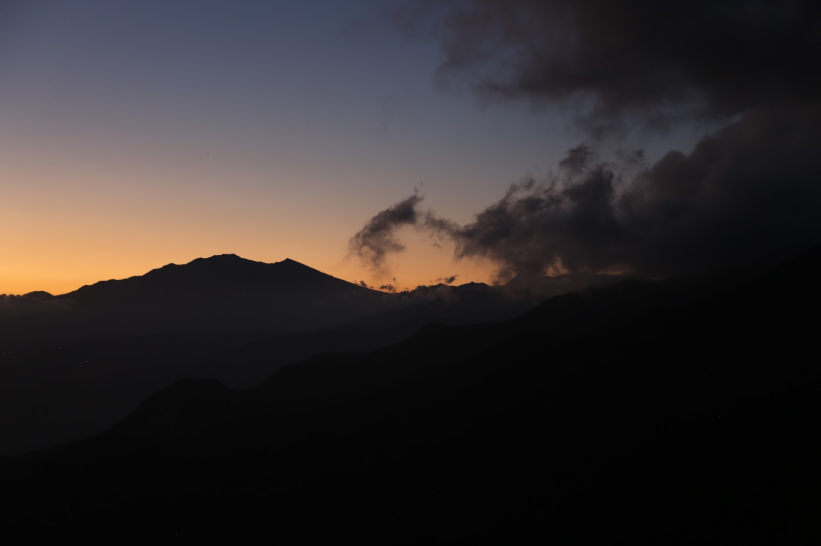
Finca Drácula, Panama’s Enchanted Orchid Sanctuary in the Clouds

High in the cool, misty mountains of Cerro Punta, where the air feels crisp and the clouds drift low through the trees, lies one of the most surreal and captivating places in all of Panama, Finca Drácula. Despite its dramatic name, this is not a dark or eerie place, it is a lush, living sanctuary filled with delicate beauty, rare plants, and an atmosphere that feels almost otherworldly. It is a place where science, nature, and imagination blend together in a setting that feels closer to a fantasy landscape than a traditional botanical garden.

Finca Drácula sits at over 2,000 meters above sea level in the Tierras Altas region of Chiriquí, a location that defines everything about it. The cool temperatures, constant fog, and high humidity create the perfect environment for cloud forest ecosystems, one of the most unique and fragile habitats in the world. This climate is essential for the finca’s specialty, orchids, particularly the rare and fascinating Dracula orchids, which thrive in dark, moist, high altitude environments.

The story of Finca Drácula begins with passion. It was created by orchid enthusiast Andrew Maduro, who spent decades building what is now one of the most impressive orchid collections in Latin America. What started as a personal obsession gradually expanded into a full scale botanical sanctuary, carefully designed to mimic natural habitats. Today, the finca houses more than 2,000 species of orchids, including an extraordinary number of Dracula orchids, a genus known for their unusual, almost face like flowers that often resemble small creatures.

Walking through Finca Drácula feels less like visiting a garden and more like stepping into a living ecosystem. The orchids are not simply displayed, they are integrated into their surroundings, growing on trees, clinging to branches, and blending into the environment as they would in the wild. This approach creates a sense of discovery, every turn reveals something new, a tiny bloom hidden in moss, a burst of color against dark leaves, or a strange, intricate flower that looks almost unreal.

The diversity of plant life extends far beyond orchids. The finca is home to giant ferns, bromeliads, moss covered trees, and a wide variety of cloud forest vegetation that creates a dense, layered landscape. There are themed gardens scattered throughout the property, including shade gardens, fern gardens, and even a Japanese inspired section. A dedicated succulent garden, one of the first of its kind in Panama, adds an unexpected contrast, showcasing plants adapted to entirely different conditions, with bold shapes and striking textures.

Wildlife is everywhere, though often subtle. Hummingbirds dart through the air, drawn to the flowers and feeders placed around the property. Their rapid movement and shimmering colors add constant motion to the gardens. Birdwatchers may also spot highland species that are rarely seen elsewhere, while insects and small creatures move quietly through the foliage. The finca is not just a collection of plants, it is a functioning ecosystem where flora and fauna interact continuously.

One of the most memorable experiences at Finca Drácula is simply walking the trails. The paths wind through dense vegetation, across small bridges, and up into higher viewpoints where the surrounding mountains come into view. A highlight is the so called Quetzal trail, which climbs into the forest canopy and offers the possibility of spotting rare birds in their natural habitat. The combination of elevation, mist, and silence creates an atmosphere that feels almost meditative, broken only by the sound of birds and the occasional rustle of leaves.

The finca is also deeply educational. Guided tours introduce visitors to the world of orchids, explaining how they grow, how they reproduce, and why they are so important to ecosystems. You learn about the incredible diversity within a single plant family, from tiny, nearly invisible blooms to large, dramatic flowers. The guides often highlight conservation efforts, emphasizing how many orchid species are threatened by habitat loss and how places like Finca Drácula play a role in preserving them.

The name “Drácula” itself comes from the orchids that define the collection. These flowers, often dark, intricate, and slightly eerie in appearance, inspired the name due to their resemblance to small faces or creatures emerging from the petals. Some even appear to have eyes or expressions, giving them a strangely lifelike quality. It is this combination of beauty and strangeness that makes them so captivating, and seeing them up close is unlike anything most visitors have experienced.

Beyond the gardens, the finca offers a full sensory experience. There is a café on site where visitors can enjoy meals made with fresh local ingredients, often surrounded by hummingbirds and greenery. Sitting there, with the cool mountain air and the sounds of nature all around, becomes part of the experience itself. Many visitors spend hours wandering, resting, and exploring, far longer than they initially planned.

Getting to Finca Drácula is part of the adventure. The journey takes you through the agricultural landscapes of Cerro Punta, where farms, flower fields, and vegetable plots stretch across the valley. The road climbs steadily into the mountains, offering views that shift from open farmland to dense forest. By the time you arrive, the environment has already begun to change, preparing you for what lies ahead.

What makes Finca Drácula truly special is not just its collection of plants, but the way it feels. It is immersive, atmospheric, and deeply connected to its surroundings. It is a place where time slows down, where details matter, and where nature is allowed to exist in a way that feels both curated and completely wild at the same time.

For travelers in Panama, especially those exploring the highlands of Chiriquí, Finca Drácula stands out as a must visit destination. It offers something different from beaches and cities, a quiet, intricate world hidden in the mountains. For plant lovers, it is paradise. For photographers, it is endless inspiration. And for anyone seeking a deeper connection to nature, it is a place that leaves a lasting impression.

Finca Drácula is not just a garden, it is a living work of art, shaped by decades of passion and sustained by one of the most unique environments in Central America. It reminds visitors that beauty in nature is often found in the smallest details, in the hidden corners, and in the places where few people think to look.

Panama’s Sporting Soul, A Fun Ride Through the Country’s Favorite Games

In Panama, sports are not just something people watch, they are woven into daily life, identity, and community pride. From dusty neighborhood fields to packed stadiums, from coastal waters to mountain trails, Panamanians embrace a wide range of sports with passion and personality. What makes Panama especially interesting is the blend of global influences and local flavor, creating a sporting culture that feels both familiar and uniquely its own.

At the heart of it all is baseball, the undisputed king of sports in Panama. Long before global soccer fever took over much of the world, baseball was deeply rooted here, and it still holds a special place in the national psyche. Local leagues draw strong support, especially in provinces like Los Santos and Chiriquí, where games feel more like festivals than competitions. Panama has also produced Major League Baseball stars, including Mariano Rivera, widely considered the greatest closer in the history of the sport. Watching a baseball game in Panama is not just about the action on the field, it is about the atmosphere, the music, the food, and the sense of community that surrounds it.

That said, soccer, or fútbol, has surged in popularity and now rivals baseball in many parts of the country. The rise of the national team, especially their historic qualification for the 2018 FIFA World Cup, ignited a wave of enthusiasm that continues to grow. Streets fill with fans during major matches, jerseys become everyday wear, and local clubs gain more attention. The energy around soccer is youthful, fast growing, and deeply emotional, giving Panama a strong presence in the global game.

Boxing is another sport that carries serious weight in Panama’s history. The country has produced world champions and continues to develop fighters who compete on the international stage. Names like Roberto Durán are legendary, not just for their achievements but for the pride they brought to the nation. Known as “Manos de Piedra,” Durán is considered one of the greatest boxers of all time, and his legacy still inspires young fighters across the country. Boxing gyms in Panama are often humble, but they are filled with discipline, ambition, and stories of resilience.

Basketball also holds a strong presence, especially in urban areas like Panama City. Courts are everywhere, in schools, parks, and neighborhoods, and pickup games are a common sight. While Panama has not reached the same global heights in basketball as in baseball or boxing, the sport remains popular, particularly among younger generations who follow international leagues and bring that style of play into local games.

Volleyball, both indoor and beach, is widely played across the country, especially in coastal regions. On weekends, it is common to see nets set up along the sand, with games unfolding as part of a relaxed, social atmosphere. The sport combines competition with leisure, making it a favorite for both organized teams and casual players. Beach volleyball, in particular, fits naturally into Panama’s coastal lifestyle.

Given Panama’s geography, it is no surprise that water sports are a major part of the sporting culture. Surfing has grown significantly, with destinations like Santa Catalina becoming well known among surfers for their consistent waves. Whether you are a beginner or experienced, the Pacific coast offers a variety of breaks that attract both locals and international visitors. Surfing in Panama is not just a sport, it is a lifestyle, tied closely to travel, nature, and a laid back rhythm of life.

Fishing is another deeply ingrained activity, both as a sport and a tradition. Panama’s waters are among the richest in the world, offering opportunities to catch species like tuna, marlin, and dorado. Sport fishing tournaments draw international participants, while local fishermen continue practices that have been passed down for generations. It is one of those activities where sport, livelihood, and culture intersect seamlessly.

On land, Panama’s diverse terrain opens the door to adventure sports. Hiking and mountain climbing are popular in areas like Volcán Barú, where early morning treks can reward hikers with views of both the Pacific Ocean and the Caribbean Sea on a clear day. Mountain biking is also growing, with trails winding through forests, hills, and rural landscapes, offering both challenge and scenery.

For something a bit different, Panama also has a tradition of rodeo style events, particularly in rural regions. These events, often tied to festivals, showcase horsemanship, cattle handling, and local traditions. They bring communities together and highlight a side of Panama that is less visible in urban centers but equally important to the country’s identity.

Even smaller, more niche sports have their place. Table tennis, martial arts, and athletics all have dedicated followings, supported by schools and local clubs. Running events, including marathons and fun runs, are increasingly popular, especially in Panama City where the Cinta Costera provides a scenic route along the ocean.

What makes sports in Panama so engaging is not just the variety, but the way they are experienced. Games are social, expressive, and often accompanied by music, food, and conversation. Winning matters, but so does participation, connection, and pride. Whether it is a high level baseball game, a neighborhood soccer match, or a spontaneous volleyball game on the beach, the spirit is the same.

Panama’s sporting culture reflects the country itself, diverse, energetic, and full of character. It draws from history, geography, and global influences, blending them into something that feels both authentic and alive. For visitors, engaging with sports in Panama is one of the best ways to understand the country, not just as a destination, but as a community that celebrates movement, competition, and shared moments of joy.

Café Coca Cola, The Time Capsule Café at the Edge of Panama’s Old City

At the edge of the historic quarter of Panama City, where the carefully restored beauty of Casco Viejo meets the raw, unfiltered rhythm of everyday urban life, stands one of the most fascinating and enduring establishments in the country, Café Coca Cola. It is not just a place to eat, it is a living relic, a cultural landmark, and a kind of accidental museum that continues to function exactly as it always has. The moment you approach it, there is a subtle shift in atmosphere, the polished facades and curated charm of the historic district begin to fade, replaced by something more grounded, more real. This café sits in that in between space, physically and culturally, and that location alone gives it a character that few places in the city can replicate.

To walk into Café Coca Cola is to step into another era in a way that feels completely unforced. The building carries the weight of decades, even centuries, not through design choices but through continuous use. The floors show the marks of countless footsteps, the walls hold layers of paint and memory, and the interior feels like it has simply evolved rather than been redesigned. There is no attempt to modernize in a way that erases the past, instead, everything remains slightly worn, slightly faded, and deeply authentic. Opened in 1875, the café holds the distinction of being the oldest in the city, and unlike many historic places that have been heavily restored or repurposed, this one has simply continued. That continuity gives it a presence that is difficult to manufacture, a sense that every table, every corner, has a story attached to it.

What makes Café Coca Cola even more unusual is its name, which immediately raises questions for those unfamiliar with its history. It is widely recognized as the only café in the world legally allowed to use the Coca Cola name without being owned by the corporation itself, a detail that feels almost improbable until you learn the context. In the early twentieth century, Panama became a key location in the global spread of Coca Cola, largely due to the massive international workforce that arrived during the construction of the Panama Canal. The drink became popular quickly, and the café adopted the name during that era, long before modern branding rules were strictly enforced. Over time, the name became inseparable from the place, not as a marketing tool, but as a historical artifact tied to a moment when Panama was at the center of global movement and change.

The café’s location amplifies its significance in ways that are easy to overlook at first glance. Positioned near Santa Ana, just outside the more polished boundaries of Casco Viejo, it exists at a cultural crossroads. On one side, tourists wander through restored plazas, taking photos of colonial architecture and enjoying curated experiences. On the other, the daily life of the city unfolds without pretense, buses pass, vendors move through the streets, and conversations happen in a rhythm that feels entirely local. Café Coca Cola sits directly between these two worlds, absorbing elements of both without fully belonging to either. This makes it one of the few places in the city where you can observe such a natural intersection of people and perspectives.

Inside, the atmosphere is unmistakably authentic, shaped more by habit than intention. Early in the morning, the café feels almost intimate, with longtime regulars occupying their usual tables, reading newspapers, sipping strong coffee, and engaging in conversations that range from casual to deeply political. As the day progresses, the space fills with a wider mix of people, tourists curious about its reputation, workers on lunch breaks, families sharing meals, and individuals passing through. The noise level rises, plates move quickly, voices overlap, and the café takes on a kind of organized chaos that somehow works. Over the decades, it has served as a meeting place for people from all walks of life, politicians, artists, journalists, and everyday citizens, each adding to the layered identity of the space.

The food at Café Coca Cola reflects the same philosophy as the building itself, it is not about reinvention or presentation, but about consistency and familiarity. The menu focuses on traditional Panamanian dishes that have remained largely unchanged over time. Plates of rice, beans, and meat arrive in generous portions, designed to satisfy rather than impress. Dishes like sancocho, a rich and comforting chicken soup, or ropa vieja, slow cooked shredded beef, carry flavors that are deeply rooted in local culture. Seafood also plays a role, with fresh fish and shrimp prepared in straightforward but satisfying ways. There is no attempt to elevate or reinterpret these dishes, they are served as they have always been, and that is precisely what gives them their appeal.

Breakfast is one of the most revealing times to visit, offering a glimpse into the daily routines of the city. The menu is simple but filling, eggs, meat, bread, and coffee, served quickly and without unnecessary detail. It is during these early hours that the café feels most connected to its roots, less influenced by tourism and more reflective of its role as a neighborhood institution. Watching the morning unfold here provides insight into a side of Panama City that many visitors never fully experience, one that is built on routine, conversation, and continuity.

Of course, Café Coca Cola is not without its imperfections, and those imperfections are an essential part of its identity. Service can be inconsistent, the pace can feel unpredictable, and the building itself shows clear signs of age. But to view these as flaws is to miss the point. This is not a space designed for efficiency or luxury, it is a space that has endured. Its rough edges are part of what make it real, a reminder that not everything needs to be polished to be valuable. In a city that is rapidly modernizing, these imperfections become a kind of authenticity that is increasingly rare.

Historically, the café has witnessed nearly every major transformation in Panama City. It was already established before the construction of the Panama Canal, and it remained active as the city grew, changed, and modernized around it. It has seen political shifts, economic changes, and the dramatic transformation of Casco Viejo from a neglected area into one of the most celebrated historic districts in the region. Through all of this, Café Coca Cola has remained a constant, adapting just enough to survive but never enough to lose its identity.

Stories and legends add another layer to its appeal. There are long standing claims that figures like Che Guevara passed through or spent time nearby, adding a sense of intrigue and connection to broader historical movements. Whether every detail is fully documented is almost beside the point, these stories contribute to the atmosphere, reinforcing the idea that this café has always been part of something larger than itself. It feels like a place where history brushes up against the present in subtle, almost invisible ways.

For travelers, visiting Café Coca Cola is less about the food and more about the experience of stepping into a space that has not been reshaped to meet modern expectations. It offers something that is becoming increasingly difficult to find, continuity. You can sit at a table, observe the flow of people, listen to conversations in Spanish and beyond, and feel the rhythm of the city in a way that is both immediate and deeply rooted in the past. It is not curated, it is not filtered, and that is exactly why it resonates.

For locals, it remains something even more important, a constant presence in a city that is constantly changing. It is a place that has always been there, a reference point that connects different generations. People return not just for the food, but for the familiarity, the sense that some things remain unchanged even as everything else evolves. It is part of the city’s identity in a way that goes beyond tourism or novelty.

Café Coca Cola is not just a café, it is a living narrative. Every plate served, every conversation held, every person who walks through its doors becomes part of that story. In a city defined by growth and transformation, it stands as a reminder that endurance has its own kind of value. It does not need to reinvent itself to remain relevant, it simply continues, quietly, consistently, and authentically, holding onto a version of Panama that might otherwise have disappeared.

A Complete Guide to the Neighborhoods of Panama City, Where to Live, Stay, and Explore

Panama City is a place of contrasts, a skyline of glass towers rising beside colonial streets, dense urban districts blending into quiet residential pockets, and modern convenience existing alongside deep history. Understanding the city means understanding its neighborhoods, each one offering a different lifestyle, atmosphere, and appeal. Whether you are a tourist, an investor, or someone considering a longer stay, knowing how these areas differ will shape your entire experience.

At the heart of the city’s history is Casco Viejo, the old quarter that dates back to the 1600s. This is where Panama’s colonial past is most visible, with narrow streets, restored buildings, churches, and plazas that feel distinctly European in character. Over the past decade, Casco Viejo has transformed into one of the most desirable and atmospheric neighborhoods in the city. Boutique hotels, rooftop bars, fine dining restaurants, and art spaces now fill the restored buildings. It is lively, cultural, and highly walkable, though it can be more expensive and busier at night. For visitors, it is one of the most memorable places to stay, while for residents it offers a unique blend of history and urban energy.

Just along the waterfront sits Avenida Balboa, a long stretch facing the Pacific Ocean and the city skyline. This is one of the most modern and visually striking parts of Panama City. High rise condos dominate the area, many offering ocean views and access to the Cinta Costera, a wide coastal park perfect for walking, biking, and relaxing. The atmosphere here is sleek and urban, popular with professionals and expats who want proximity to both downtown and the historic district. It is not as intimate as Casco Viejo, but it offers convenience and some of the best views in the city.

Moving inland, El Cangrejo stands out as one of the most balanced and livable areas. Known for its walkability, tree lined streets, and mix of residential and commercial spaces, El Cangrejo is a favorite among expats and locals alike. It has a strong neighborhood feel, with cafes, restaurants, small shops, and nightlife all within walking distance. The area is anchored by Via Argentina, a lively street filled with energy, especially in the evenings. Compared to more upscale districts, El Cangrejo offers better value while still providing a central location and a vibrant social scene.

Adjacent to it, Bella Vista is a broader district that includes parts of Avenida Balboa as well as quieter residential streets. Bella Vista is diverse, with a mix of older buildings, new developments, and commercial zones. It offers easy access to many parts of the city and is popular with those who want a central base without committing to a single style of neighborhood. Some areas are more residential and calm, while others are busier and more commercial, making it a flexible option depending on what you are looking for.

For those seeking a more upscale and polished environment, Punta Pacifica represents the high end of city living. This area is defined by modern skyscrapers, luxury apartments, and a sense of exclusivity. It is home to some of the most expensive real estate in the country, as well as private hospitals and shopping centers. The neighborhood is quieter than more central areas, with less street level activity, but it offers comfort, security, and high quality infrastructure. It appeals to professionals, wealthy locals, and international residents who prioritize convenience and modern living.

Nearby, San Francisco offers a more dynamic and evolving environment. Once primarily residential, it has grown into one of the city’s most popular areas for dining and nightlife. Calle 50 and Calle 68 are lined with restaurants, bars, and cafes, making it a hub for social activity. At the same time, San Francisco retains quieter residential pockets, giving it a dual personality. It is a good choice for those who want both energy and livability, with a slightly more local feel than Punta Pacifica.

One of the most modern and rapidly developing areas is Costa del Este. Located a short drive from the city center, this master planned community offers wide roads, modern infrastructure, corporate offices, and high end residential buildings. It feels more like a North American suburb than a traditional Latin American neighborhood. Clean, organized, and efficient, Costa del Este attracts multinational companies, families, and professionals who prefer a structured environment. It is less walkable than central neighborhoods but offers a high standard of living.

Further along the coast, Punta Paitilla combines luxury with central convenience. Known for its oceanfront towers and proximity to shopping centers, it is one of the more established upscale areas. It has a strong residential feel, with many long term residents, and offers easy access to hospitals, malls, and the financial district. Compared to newer developments, it has a slightly more lived in character while still maintaining a high standard of living.

The financial core of the city is centered around Obarrio, an area filled with office buildings, banks, and corporate headquarters. During the day, it is one of the busiest parts of the city, while at night it becomes quieter. It is not primarily residential, but its central location and access to services make it an important part of the urban landscape. Nearby, Marbella offers a mix of residential and commercial spaces, often serving as a bridge between business and living areas.

For a more local and traditional experience, neighborhoods like Betania and Pueblo Nuevo provide insight into everyday life in Panama City. These areas are less influenced by tourism and expat culture, offering more affordable housing and a stronger sense of community. They may lack the polish of more upscale districts, but they provide authenticity and accessibility.

To the north, Albrook stands out for its greenery and unique layout. Originally developed as part of the former Canal Zone, it features spacious homes, abundant trees, and a quieter atmosphere. It is also home to major transportation hubs and one of the city’s largest shopping malls. Albrook feels more suburban and relaxed, making it appealing to families and those looking for space within the city.

For those drawn to waterfront living with a quieter, more exclusive feel, Amador offers a different perspective. Located along a causeway that extends into the Pacific, it provides stunning views of the skyline and the entrance to the Panama Canal. It is less densely populated and more focused on leisure, with restaurants, marinas, and open spaces.

Each neighborhood in Panama City tells a different story. Some reflect the country’s colonial past, others its modern ambitions, and many sit somewhere in between. The choice between them depends on what you value most, walkability or space, nightlife or tranquility, luxury or authenticity.

Panama City is not a one dimensional destination, and its neighborhoods are the key to understanding its complexity. Whether you find yourself wandering the historic streets of Casco Viejo, watching the sunset along Avenida Balboa, or exploring the vibrant streets of El Cangrejo, each area reveals a different side of the city. Together, they form a dynamic and evolving urban landscape that continues to attract people from around the world.

The Silky Anteater, One of the Rainforest’s Most Mysterious Mammals

Hidden high in the treetops of tropical forests across Central and South America, the silky anteater, scientifically known as Cyclopes didactylus, is one of the least seen yet most fascinating mammals in the region. In Panama, it exists quietly above the forest floor, living an almost entirely secret life in the canopy. Most visitors, and even many locals, will never see one in the wild, not because it is exceptionally rare, but because it is extraordinarily well adapted to remain unseen.

The silky anteater is the smallest of all anteater species, a tiny creature that seems almost unreal when first described. Adults are typically no larger than a squirrel, with a total length of around 35 to 45 centimeters, and a weight that rarely exceeds a few hundred grams. Nearly half of its length is made up of its prehensile tail, which functions like an extra limb, wrapping securely around branches to provide balance and stability. Its body is compact, its limbs are short but powerful, and its claws are sharply curved, designed for gripping bark and breaking into insect nests.

What truly sets the silky anteater apart is its fur. Dense, soft, and often shimmering with a golden or silvery hue, it gives the animal an almost ethereal appearance. This fur is not simply decorative, it is a crucial survival adaptation. Its coloration closely resembles the fibers of tropical trees, particularly silk cotton trees, allowing the animal to blend seamlessly into its surroundings. When curled into a resting position, it can look like nothing more than a clump of plant material lodged in a branch, effectively disappearing in plain sight.

In Panama, silky anteaters inhabit lowland tropical forests, including rainforests, mangroves, and coastal woodland areas where canopy cover remains intact. They are strictly arboreal, meaning they live their entire lives in trees. Unlike many other mammals, they rarely, if ever, descend to the ground. This reliance on the canopy shapes every aspect of their biology. Their hind feet are specially adapted to grip branches securely, and their slow, deliberate movements minimize the risk of falling or being detected by predators.

Their lifestyle is almost entirely nocturnal. During the day, silky anteaters sleep curled up in dense foliage, tree cavities, or tucked into clusters of leaves high above the forest floor. As night falls, they begin to move, carefully navigating branches in search of food. Their pace is slow and methodical, conserving energy and reducing noise. In a forest where many predators rely on sight and sound, this quiet approach is a key survival strategy.

Diet is one of the most specialized aspects of the silky anteater’s life. Like other anteaters, it feeds primarily on ants, though it will also consume termites and other small insects when available. Using its long, slender tongue, which is coated in sticky saliva, it extracts insects from nests and crevices with remarkable efficiency. It has no teeth, instead relying on its tongue and digestive system to process its food. In a single night, it can consume hundreds or even thousands of ants, making it an important regulator of insect populations within the forest.

Despite its small size and gentle appearance, the silky anteater is not defenseless. When threatened, it employs a surprisingly bold strategy. Anchoring itself to a branch with its tail, it rears up on its hind legs and raises its front limbs, exposing its sharp claws. In this posture, it resembles a tiny boxer, ready to strike. If necessary, it can deliver quick, slashing blows that are capable of deterring predators much larger than itself. Combined with its camouflage, this defensive behavior makes it more resilient than it might appear.

Reproduction in silky anteaters is relatively slow and not fully understood, largely because of how difficult they are to observe in the wild. Females typically give birth to a single offspring, which is born well developed and covered in fur. The young often resemble miniature versions of adults almost immediately. Mothers may leave their offspring hidden in tree cavities or dense foliage while they forage, returning periodically to nurse. This behavior reduces the risk of attracting predators while still allowing the mother to meet her nutritional needs.

One of the most intriguing aspects of the silky anteater is how little is still known about it. For many years, scientists believed it to be a single species, but recent research suggests that what was once considered one species may actually be several distinct species, each adapted to different regions. This ongoing discovery highlights just how much remains unknown about tropical ecosystems, even in areas that have been studied for decades.

Ecologically, the silky anteater plays a quiet but important role. By feeding on ants and other insects, it helps maintain balance within the ecosystem, preventing any single species from becoming too dominant. Its presence also indicates a healthy forest, as it depends on continuous canopy cover and stable environmental conditions. In fragmented or degraded forests, silky anteaters struggle to survive, as gaps in the canopy can isolate populations and limit their movement.

In Panama, the greatest threat to silky anteaters is habitat loss. Deforestation, urban expansion, and agricultural development reduce the availability of suitable habitat and break apart the continuous canopy they rely on. While the species is not currently considered globally endangered, local populations can decline if their environment is disrupted. Protected areas and conservation efforts play a crucial role in ensuring their continued survival.

For travelers and wildlife enthusiasts, the silky anteater represents one of the most elusive sightings in Panama. Even experienced guides may go years without encountering one in the wild. Night hikes in dense, undisturbed forest offer the best chance, particularly in regions where human activity is limited. More often than not, however, the silky anteater remains hidden, moving silently through the canopy above, completely unaware of the world below.

What makes the silky anteater so compelling is not just its appearance or behavior, but its secrecy. It embodies a layer of the rainforest that remains largely unseen, a reminder that even in well known ecosystems, there are still mysteries waiting to be uncovered. While larger and more visible animals capture most of the attention, creatures like the silky anteater reveal the depth and complexity of life in the treetops.

In many ways, the silky anteater is a symbol of the hidden rainforest. It lives quietly, moves slowly, and leaves almost no trace of its presence. Yet it is perfectly adapted to its environment, thriving in a world that most people never experience. To know that such an animal exists, living its entire life high above the forest floor, adds a sense of wonder and depth to Panama’s natural heritage. It is a reminder that the rainforest is not just what we see, but also what remains just out of sight, waiting in the shadows of the canopy.

Isla Coiba, Panama, A Vast Untamed World of Deep History, Isolation, and Extraordinary Nature

Far out in the Pacific Ocean, separated from the mainland by a stretch of open water that feels far greater than the map suggests, lies Isla Coiba, one of the most extraordinary and least altered places in Panama. Massive in scale, cloaked in dense rainforest, and surrounded by nutrient rich seas, Coiba is not simply an island but an entire living system that has evolved with minimal interruption. Today it forms the heart of Coiba National Park, a protected region that preserves both its wild ecosystems and the powerful human history that unfolded here over the last century.

To understand Coiba is to understand isolation. Geologically, the island separated from the mainland thousands of years ago, and that separation shaped everything that followed. Without constant human settlement or development, the island’s forests matured undisturbed, its rivers carved natural paths through untouched jungle, and its wildlife adapted in subtle but important ways. The result is a place that feels older, deeper, and more intact than almost anywhere else in Central America.

The physical landscape of Coiba is as dramatic as it is varied. Rolling hills rise into forested ridges, valleys collect moisture and life, and rivers cut through thick vegetation before spilling into the sea. Waterfalls appear unexpectedly, especially during the rainy season, cascading into clear pools surrounded by dense foliage. The coastline shifts constantly, from long sandy beaches to rocky points, from calm mangrove inlets to open stretches where waves roll in from the Pacific. Each environment supports a different community of life, creating a patchwork of ecosystems that interact with and depend on one another.

The forests themselves are complex, multi layered, and ancient in structure. Towering canopy trees dominate the skyline, some reaching heights that make them visible from far offshore. Beneath them, a thick understory of palms, shrubs, and vines creates a dense and often impenetrable environment. Epiphytes cling to branches, drawing moisture from the air, while mosses and fungi break down organic material and recycle nutrients back into the soil. The forest floor is alive with movement, insects, small mammals, and microorganisms all contributing to a system that is constantly renewing itself.

For naturalists, Coiba represents one of the richest field sites in the region. The island’s long isolation has led to the emergence of endemic species, animals that exist nowhere else on Earth. The Coiba agouti is one such example, a small rodent that plays a surprisingly important role in maintaining forest health by dispersing seeds. The island’s population of mantled howler monkeys is another highlight, their deep, echoing calls reverberating through the forest at dawn and dusk, creating one of the most distinctive soundscapes in the tropics. White faced capuchin monkeys bring a different energy, moving through the canopy in intelligent, coordinated groups, often observing visitors with curiosity.

Larger mammals, though more elusive, add to the island’s ecological depth. White tailed deer move quietly through less disturbed areas, while wild pigs root through the forest floor. Bats emerge at night in large numbers, feeding on insects and fruit, acting as pollinators and seed dispersers. Their role is critical, linking the forest’s nighttime activity with its long term health and regeneration.

Birdlife on Coiba is both abundant and diverse. Scarlet macaws dominate the skies, their bright red, yellow, and blue plumage impossible to miss as they fly in bonded pairs. Their calls echo across the island, often serving as the first sign of their presence. Parrots and parakeets contribute to the constant chatter of the forest, while birds of prey circle overhead. Along the coastline, pelicans plunge into the water with precision, frigatebirds glide effortlessly on ocean currents, and seabirds nest on cliffs and offshore rocks.

The island’s endemic bird species, including the Coiba spinetail, attract ornithologists from around the world. These birds, often subtle in appearance, represent the unique evolutionary path that Coiba has taken due to its isolation. Seasonal migrations add further variety, with different species passing through at different times of year, ensuring that the island’s birdlife is always changing and dynamic.

Reptiles and amphibians thrive in the humid, tropical conditions. Iguanas bask in the sun along beaches and forest edges, while smaller lizards dart through the undergrowth. Frogs become especially active during the rainy season, their calls filling the night air in a chorus that can be heard from great distances. Some species display vivid colors, a warning to predators and a reminder of the chemical defenses that exist in even the smallest creatures.

Insects form the backbone of the ecosystem, though they are often overlooked. Butterflies drift through sunlit clearings, ants build complex networks that shape the forest floor, and countless other species contribute to pollination, decomposition, and nutrient cycling. Without them, the entire system would collapse.

Beyond the shoreline, the marine environment expands the island’s biodiversity into another dimension. The waters surrounding Coiba are among the most productive in the eastern Pacific, fed by currents that bring nutrients from deep ocean zones. Coral reefs, though different from those in the Caribbean, are dense with life. Fish move in schools of thousands, creating shifting patterns that reflect light in mesmerizing ways.

Sea turtles are common, particularly hawksbill and green turtles, often seen feeding near reefs or resting in sheltered areas. Reef sharks patrol the waters, their presence a sign of a healthy ecosystem. Larger species, including hammerhead sharks, can occasionally be encountered in deeper waters. Rays glide over the seabed, while eels hide among rocks and coral formations.

Perhaps the most dramatic marine encounters come from the larger migratory species. Whale sharks, the largest fish in the ocean, pass through these waters at certain times of year, their immense size contrasting with their gentle nature. Humpback whales migrate through the region between July and October, often breaching the surface or slapping their tails against the water. Their songs travel through the ocean, adding an acoustic dimension to the experience of being here. Dolphins are frequent companions during boat journeys, riding waves and interacting with vessels in playful displays.

Mangroves add yet another layer to Coiba’s ecological richness. These coastal forests serve as nurseries for fish and invertebrates, providing shelter during early life stages. They also protect the coastline from erosion and help maintain water quality by filtering sediment. Exploring these areas reveals a quieter, more intricate world where life unfolds at a smaller scale.

Yet for all its natural beauty, Coiba’s history is equally powerful and deeply intertwined with its present condition. In 1919, the island was transformed into a penal colony, a decision that would shape its future in unexpected ways. For decades, it functioned as one of the most isolated and feared prisons in the region. Its location made escape nearly impossible, the surrounding ocean, dense jungle, and lack of infrastructure created natural barriers that few could overcome.

Life on the island during this period was harsh and often unforgiving. Prisoners were used as laborers, clearing land, constructing buildings, and maintaining the limited infrastructure that existed. Conditions were difficult, and oversight was minimal. Stories from former inmates describe a place where survival depended on both physical endurance and the ability to navigate a complex social environment.

Different camps were established across the island, some more isolated than others. In certain areas, prisoners were left to manage themselves, creating micro societies within the larger prison system. Violence, cooperation, and adaptation all played roles in daily life. The jungle itself became both a threat and a resource, providing food and shelter for those who could learn to use it.

Despite the hardship, or perhaps because of it, large scale development never took place. There were no major roads, no industrial operations, and no widespread deforestation. The prison system, while severe, inadvertently acted as a protective barrier against the kinds of environmental destruction seen elsewhere. This paradox lies at the heart of Coiba’s story, human suffering contributed to ecological preservation.

When the prison was finally closed in 2004, the island entered a new chapter. It was officially designated as a national park and later recognized as a UNESCO World Heritage Site. Conservation efforts intensified, and access was carefully regulated to ensure that the island’s ecosystems would remain intact.

Today, remnants of the prison era can still be found scattered across the island. Crumbling buildings, rusting infrastructure, and overgrown paths tell the story of what once existed. Walking through these areas creates a powerful contrast, nature reclaiming space once dominated by human control. Trees grow through old foundations, vines wrap around abandoned structures, and wildlife moves freely through what were once confined spaces.

Reaching Coiba remains an intentional challenge. Most travelers begin in Santa Catalina, a small coastal town that serves as the primary gateway. From there, boats make the journey across open water, a trip that can take one to two hours depending on conditions. Along the way, dolphins, turtles, and seabirds often appear, offering a preview of the biodiversity that awaits.

Tourism is limited and carefully managed. There are no large hotels or resorts, only basic facilities that encourage minimal impact. Visitors typically arrive on guided tours focused on nature and exploration. Activities include snorkeling, diving, hiking, and wildlife observation. Overnight stays are simple, often involving ranger stations or basic cabins.

On land, the experience is immersive and demanding. Trails cut through dense forest, crossing rivers and navigating uneven terrain. The heat and humidity are constant, insects are ever present, and the environment requires attention and respect. Yet these challenges are part of what makes Coiba so compelling, they reinforce the sense that this is a place where nature still operates on its own terms.

For tourists, Coiba offers something increasingly rare, a genuine encounter with the wild. For historians, it provides a layered narrative of isolation, hardship, and transformation. For naturalists, it is a living laboratory filled with species and systems that continue to evolve.

Isla Coiba stands as a powerful reminder that places shaped by difficulty can become places of preservation. Its forests, its waters, and its history are inseparable, each informing the other in ways that make the island unique. It is not an easy destination, nor is it meant to be. But for those who make the journey, it reveals a world that feels both ancient and immediate, a place where the past lingers quietly and nature speaks with undeniable force.

Scarlet Macaws in Panama, A Complete Guide to One of the Country’s Most Spectacular Birds

In the vibrant ecosystems of Panama, few creatures capture attention as powerfully as the scarlet macaw, scientifically known as Ara macao. This iconic parrot is not just a bird, it is a moving burst of color, intelligence, and ecological importance that defines the tropical forests it inhabits. With its blazing red body, golden yellow wing panels, deep blue flight feathers, and elongated tail, the scarlet macaw is among the largest and most visually striking parrots in the world. Seeing one in the wild in Panama is not simply a birdwatching moment, it is a full sensory experience, marked by sound, motion, and color all at once.

Scarlet macaws can reach lengths of up to 85 centimeters from beak to tail, with a wingspan that allows them to glide gracefully over vast stretches of forest. Despite their size, they are incredibly agile fliers, capable of navigating dense jungle canopy and open coastal zones with ease. Their flight is often described as steady and deliberate, with powerful wing beats followed by gliding intervals. When sunlight hits their feathers, the colors appear almost unreal, shimmering against the green of the forest or the blue of the Pacific coastline.

In Panama, these birds are most commonly associated with lowland tropical forests, especially those that remain relatively undisturbed. They favor areas near rivers, coastal mangroves, and humid jungle interiors where food sources are abundant year round. One of the most reliable and awe inspiring places to encounter them is within Coiba National Park, located on Isla Coiba. This remote island, once isolated due to its history as a penal colony, has become a sanctuary for wildlife. The scarlet macaw population here is particularly strong, and sightings are frequent, especially during early morning hours when pairs leave their roosting sites to forage. The experience of watching macaws soar over Coiba’s untouched jungle and pristine coastline is often described as one of the highlights of any visit to Panama.

Scarlet macaws are deeply social animals with complex behaviors that reflect their high intelligence. They typically form monogamous pairs that last for life, a bond that is constantly reinforced through vocal communication and physical closeness. It is common to see pairs flying side by side, their wings beating in synchrony, or perched together while preening each other’s feathers. These interactions are not just affectionate, they are essential for maintaining their partnership and coordinating daily activities such as feeding and nesting.

Their vocalizations are loud, sharp, and unmistakable, often echoing across long distances. While these calls may sound harsh to human ears, they carry important information. Macaws use them to signal their location, warn of predators, and communicate with other members of their group. In dense forest environments where visibility is limited, sound becomes a critical tool for survival.

Diet is another fascinating aspect of scarlet macaw life. They are primarily frugivores, feeding on a wide range of fruits, nuts, seeds, berries, and occasionally flowers. Their beaks are extraordinarily strong, capable of cracking open hard shells that would be inaccessible to most other animals. This allows them to exploit food sources that are otherwise protected, giving them a unique ecological niche. In addition to their regular diet, scarlet macaws engage in geophagy, consuming clay from exposed riverbanks. This behavior helps neutralize toxins found in certain plant materials and provides essential minerals such as sodium, which can be scarce in rainforest environments.

Reproduction in scarlet macaws is a slow and delicate process, which is one reason their populations are vulnerable to disturbance. They nest in natural cavities found high in large, mature trees, often choosing locations that offer protection from predators and environmental conditions. The female lays a small clutch of eggs, usually two or three, and incubation lasts for about 24 to 28 days. Both parents are heavily invested in raising their young, although the female handles most of the incubation while the male provides food.

Chicks hatch blind and featherless, completely dependent on their parents. As they grow, they develop feathers and begin to explore the nest cavity, but they remain under parental care for several months after fledging. Even after leaving the nest, young macaws continue to learn from their parents, developing skills needed to find food, avoid danger, and eventually establish their own territories. This extended period of parental care highlights the complexity of their social structure and contributes to their relatively low reproductive rate.

Historically, scarlet macaws faced severe threats throughout Panama and much of Central America. Deforestation reduced the availability of nesting sites and feeding grounds, while illegal capture for the pet trade removed individuals from the wild. Their striking appearance made them highly sought after, which intensified pressure on already declining populations. However, Panama has made meaningful progress in protecting these birds through conservation initiatives, habitat preservation, and stricter enforcement of wildlife laws.

Today, scarlet macaws are considered a conservation success in certain parts of Panama, particularly in protected regions. In addition to Coiba National Park, they can also be found in areas such as Darién National Park, where vast stretches of rainforest still provide suitable habitat. Conservation organizations have also worked on reintroduction programs in areas where macaws had disappeared, aiming to restore populations and reconnect fragmented habitats.

Ecologically, scarlet macaws play a crucial role as seed dispersers. By consuming fruits and traveling long distances, they help distribute seeds across the forest, promoting plant diversity and regeneration. This makes them a keystone species in many ecosystems, their presence supports the health and resilience of the entire environment. Without them, certain plant species would struggle to reproduce and spread, leading to long term changes in forest composition.

For visitors to Panama, observing scarlet macaws in the wild requires a bit of planning and patience. Early mornings and late afternoons are the best times to see them, as these are their peak activity periods. Listening for their calls can often lead you to their location before you see them, and scanning the treetops or skyline increases your chances of spotting their distinctive silhouette. Guided tours in places like Coiba or remote jungle regions can significantly improve the likelihood of an encounter, as local guides are familiar with their habits and preferred locations.

Scarlet macaws are more than just beautiful birds, they are a symbol of the wild spirit of Panama. Their survival is closely tied to the preservation of the country’s forests, and their continued presence is a testament to the effectiveness of conservation efforts. Whether you are a casual traveler, a dedicated birdwatcher, or someone simply drawn to the wonders of nature, encountering a scarlet macaw in Panama is an experience that lingers long after the moment has passed.

Love, Trust, and Traps: A Deep Dive Into Scams and Romance Scams in Panama and Colombia

There’s something magnetic about Panama and Colombia. Between the tropical coastlines, vibrant cities, and warm, social cultures, both countries draw travelers, expats, and digital nomads who are looking for connection as much as adventure. Most of the time, that is exactly what they find, genuine people, unforgettable experiences, and a sense of openness that can be hard to match elsewhere. But like anywhere in the world where tourism and opportunity intersect, there is another layer beneath the surface. It is not constant, and it is not everywhere, but it is real enough that anyone spending time in these countries should understand it, scams, and in particular, the increasingly sophisticated world of romance scams.

Panama and Colombia do not share identical risk profiles. Panama tends to lean toward more traditional, opportunistic scams, the kind that target tourists in the moment and rely on distraction or confusion. Colombia, on the other hand, has developed a reputation in recent years for more structured, psychologically driven scams, especially those that revolve around relationships and emotional manipulation. That does not mean Colombia is unsafe or that Panama is risk free. It simply means the tactics differ, and understanding those differences can make all the difference between a smooth experience and a costly mistake.

Romance scams are where things become far more complicated. Unlike a quick street hustle, these are not over in a moment. They unfold slowly, sometimes over weeks or even months, and they rely less on trickery and more on trust. It often begins in a way that feels completely normal. You match with someone on a dating app, or they reach out through social media. They are engaging, attentive, and unusually consistent in their communication. Conversations flow easily, there is humor, curiosity, and a sense that the connection is building naturally. Before long, you are no longer talking on the original platform, instead, the conversation moves to WhatsApp or Telegram, where it becomes more private and continuous.

This early shift might seem harmless, but it is often one of the first subtle warning signs. From there, the relationship deepens quickly. They begin to share personal stories, talk about their struggles, ask thoughtful questions about your life, and build a sense of emotional closeness that feels genuine. This stage is where many people begin to trust fully, because nothing about it resembles a scam. In fact, it can feel more real than many everyday interactions. That is exactly why it works so well. The goal is not to deceive immediately, it is to create emotional investment first, so that when something eventually changes, you are already connected enough to hesitate before questioning it.

At some point, the tone begins to shift. It does not happen all at once, and it is rarely obvious in the beginning. Instead, a problem appears in the story. It could be a family emergency, a medical issue, or a sudden financial setback. In other cases, it is framed as an opportunity rather than a crisis, a potential investment, a business idea, or a shared plan for the future. Sometimes they express a strong desire to visit you but cannot quite afford the trip. The specific details vary, but the structure remains consistent, a situation that introduces urgency and creates an opening for you to help. Because of the connection that has already been built, the request does not feel unreasonable, it feels like supporting someone you care about.

Once money becomes part of the interaction, everything changes. Payments are often requested through methods that are difficult or impossible to reverse, such as cryptocurrency, wire transfers, or digital gift cards. If the first transfer is successful, the requests may continue, each one tied to a new complication or an evolving story. In some cases, the person disappears entirely after receiving money. In others, the relationship continues just long enough to encourage additional payments. By the time the pattern becomes clear, the financial and emotional damage is often already done.

What makes these scams particularly effective is that they do not rely on a lack of intelligence. Many of the people who fall for them are experienced, capable, and cautious in other areas of life. The manipulation works because it targets emotion rather than logic. When someone feels understood, valued, and emotionally connected, they are far more likely to overlook inconsistencies or explain away small doubts. Because the interaction develops gradually, there is rarely a single moment that clearly signals something is wrong. It feels more like a slow shift than a sudden realization.

In Colombia, there is an additional layer that travelers should be aware of, in person dating situations that can become unsafe if handled carelessly. While not common, there have been consistent reports of individuals meeting someone online, agreeing to meet in real life, and finding themselves in a situation that becomes uncomfortable or even dangerous. In some cases, people have been drugged and robbed after meeting someone who initially appeared trustworthy. These scenarios often involve subtle setup, suggesting a specific bar or location, introducing unexpected friends, or encouraging excessive drinking. The risk is not something most people will encounter, but it is serious enough to approach with awareness and caution.

Panama, by contrast, presents a more familiar landscape of scams. Taxi drivers may claim that their meter is not working and quote inflated prices. Individuals posing as officials might attempt to pressure tourists into paying immediate fines. Currency exchanges can involve misleading rates or counterfeit bills, and distraction based theft, where one person creates a situation while another takes advantage, remains a common tactic. These scams are usually quick, opportunistic, and easier to avoid with basic awareness. They do not typically involve the same level of long term emotional manipulation seen in romance scams.

A newer and increasingly common pattern combines emotional manipulation with financial schemes. In these cases, the interaction begins like a normal relationship, but gradually shifts toward money making opportunities. The person may present themselves as knowledgeable in cryptocurrency or trading and may share convincing, but ultimately fabricated, evidence of success. Small initial gains might be simulated to build confidence, encouraging larger investments over time. By the time doubts arise, the financial loss can be significant and difficult to recover.

Protecting yourself does not require becoming suspicious of everyone, it simply requires recognizing patterns and setting clear boundaries. One of the most effective rules is also one of the simplest, never send money to someone you have not met in person. No matter how convincing the story or how strong the connection feels, financial requests should always be approached with caution. Real relationships do not depend on early financial support, and genuine opportunities do not rely on pressure or urgency.

Meeting people in real life, in public and controlled environments, is another important safeguard. It brings the interaction into reality and makes it far more difficult for someone to maintain a false identity. Choosing the location yourself, rather than allowing the other person to control the setting, adds another layer of security. Small choices like these can significantly reduce risk while still allowing you to enjoy the experience of meeting new people.

It is also important to pay attention to timing and intensity. When a relationship develops unusually quickly, when someone expresses strong emotions very early or seems almost too perfect, it is worth slowing down and observing more carefully. Authentic connections take time, and they do not come with constant intensity or pressure. Taking steps to verify identity, such as video calls, checking social media history, or even doing simple reverse image searches, can provide additional reassurance without being intrusive.

Ultimately, the most important boundary is keeping emotion and money separate. The moment those two begin to overlap, it is time to pause and reassess. That does not mean every situation is a scam, but it does mean the situation deserves careful attention. Giving yourself time to think, stepping back from urgency, and even discussing the situation with someone you trust can prevent decisions that are difficult to undo.

Both Panama and Colombia offer incredible opportunities for connection, adventure, and meaningful experiences. The vast majority of interactions you will have will be genuine and positive. However, the small percentage that are not tend to follow recognizable patterns, and once you understand those patterns, they become much easier to identify.

Scams rarely feel like scams when you are experiencing them. They feel like opportunity, like urgency, like connection, and sometimes even like luck. That is what makes them effective, and that is why awareness matters. The goal is not to become guarded or closed off, it is to stay grounded, take your time, and ensure that trust is built on something real before you offer it freely.

Climbing Above the Jungle: The Best Rock Climbing Spots in Panama

Panama is not the first place that comes to mind when people think of rock climbing. That’s exactly what makes it so special.

Because here, the routes are not crowded. The rock feels raw and untouched. And instead of climbing in dry deserts or alpine valleys, you’re scaling volcanic walls surrounded by jungle, rivers, and clouds.

From basalt cliffs in the highlands to hidden crags near the coast, Panama offers a small but incredibly unique climbing scene, one that feels more like discovery than destination.

Boquete: The Heart of Climbing in Panama

If there is one place that defines climbing in Panama, it is Boquete.

This mountain town, sitting in the shadow of Volcán Barú, is considered the country’s climbing hub. The reason lies beneath your hands, volcanic history. Lava flows from past eruptions created dramatic basalt formations, forming walls, columns, and overhangs that are now perfect for climbing.

Los Ladrillos (Gunko & Mana Walls)

The most iconic climbing area in Panama is Los Ladrillos, just outside Boquete.

Gunko Wall, Panama’s first developed climbing site

Mana Wall, more technical and advanced

Around 20 to 30 routes across the area

Grades ranging from beginner friendly to advanced (5.6 up to 5.13)

The rock here is striking, layered basalt columns that look almost man made. The routes are short but technical, requiring balance and precision.

One of the best parts, you can literally finish a climb and walk across the road to swim in the Río Caldera.

Boquete is not just about sport climbing either. You’ll find rappelling routes, waterfall descents, and even water solo bouldering in the region.

Acid Rock: The Hidden Gem Near Panama City

About 1.5 hours from Panama City lies one of the country’s lesser known but highly respected crags, Acid Rock.

Located in Panamá Oeste, this area offers:

Over 20 fully bolted sport routes

Grades ranging up to 5.12+

Basalt rock similar to Boquete, but with a more local, low key vibe

This is where climbers based in the capital go when they want a quick escape into nature. It feels less developed, more underground, and often quieter than Boquete.

There are also rivers nearby, making it a perfect combination of climbing and cooling off in the tropical heat.

Los Cangilones de Gualaca: Climbing Meets Water

Stay at Lost and Found Hostel to visit this special place!

Near the town of Gualaca in Chiriquí Province, Los Cangilones offers a different kind of climbing experience.

Here, the river has carved smooth canyon walls through volcanic rock, creating natural formations ideal for:

Deep water soloing

Bouldering above water

Short sport routes

It is not a traditional climbing destination with established guidebooks and bolted lines everywhere. It is more experimental, more playful.

Climbers come here for the freedom, jumping into the river after a climb, exploring new lines, and mixing climbing with swimming in one of the most scenic river systems in Panama.

The Chiriquí Highlands: Adventure Climbing Territory

Beyond Boquete, the wider Chiriquí Province is full of undeveloped potential.

Rock formations are scattered throughout the highlands, often hidden in jungle or farmland. Some are accessible, others require exploration.

What makes this region special:

Volcanic geology, creating unique rock structures

Cooler temperatures compared to the lowlands

A growing but still small climbing community

Many routes are still being discovered and developed, which gives the entire area a frontier feel.

This is not a place where everything is mapped and graded. It is a place where you can still find your own lines.

Urban Climbing: A Different Kind of Vertical

If you want something completely different, Panama even offers an urban climbing experience.

At POIN in Panama City, climbers can scale an open air structure overlooking the skyline, combining climbing with panoramic city views.

It is not traditional rock climbing, but it adds another layer to the country’s vertical possibilities.

Why Panama Feels Different for Climbers

Climbing in Panama is not about ticking off famous routes or following well worn guidebooks.

It is about: Climbing in jungle environments instead of dry landscapes

Combining routes with rivers, waterfalls, and wildlife

Having entire crags to yourself

Being part of a small, welcoming climbing community

The routes may not be as numerous as in more established countries, but what Panama offers is something rarer.

Space.

Freedom.

And the feeling that you are discovering something, not just visiting it.

The Future of Climbing in Panama

The climbing scene in Panama is still developing.

New routes are being bolted. Local climbers are building a stronger community. Information is slowly becoming more available.

But it still feels early.

And that is exactly why now is such a good time to climb here.

Because a few years from now, these places might be more well known.

Right now, they still feel like secrets.

In many countries, climbing is about the rock.

In Panama, it is about everything around it.

The jungle pressing in on the walls.

The sound of rivers below your feet.

The humidity, the heat, the sudden rain.

You are not just climbing a route.

You are climbing in the middle of a living, breathing ecosystem.

And that changes the experience entirely.

Dominoes, Dice, and Loud Laughter: The Games That Bring Panama Homes to Life

Step into a Panamanian home on a weekend evening, or wander past a corner store where a group has gathered around a plastic table, and you’ll quickly notice something, games here are not quiet.

They are loud, competitive, full of jokes, arguments, storytelling, and laughter that spills into the street. In Panama, household games are not just a way to pass time, they are social rituals, woven into daily life across generations.

From classic table games to improvised challenges, these are the kinds of games that turn ordinary nights into memorable ones.

Dominoes: The Undisputed King

If there is one game that defines Panama, it is dominoes.

You will find it everywhere, family homes, beaches, small shops, even on sidewalks. The sound of tiles slamming onto the table is unmistakable, sharp, rhythmic, and often followed by laughter or playful trash talk.

Dominoes in Panama is not played quietly or casually.

It is strategic, competitive, and deeply social. Players talk constantly, teasing each other, celebrating wins, and reacting dramatically to every move. Partnerships form, rivalries develop, and games can stretch on for hours.

For many, it is less about winning and more about the atmosphere it creates.

Baraja: Cards With Personality

A simple deck of cards, known locally as “baraja,” can turn into dozens of different games depending on the group.

Popular variations include:

Rummy style games

Fast paced shedding games similar to Uno

Trick taking games passed down through families

What makes card games in Panama special is not the rules, but the way they are played.

There is always commentary. Always humor. Always someone bending the rules slightly or accusing someone else of doing so. It becomes less about the game itself and more about the interaction around it.

Parqués: A Colorful Battle of Strategy and Luck

Parqués, similar to Ludo, is a favorite in many households.

Brightly colored boards, small tokens, and dice make it visually simple, but the gameplay quickly becomes intense. Players race to move their pieces around the board while blocking, capturing, and occasionally sabotaging each other.

It is a game of patience and sudden reversals.

One moment you are winning, the next you are sent back to the start. And when that happens, reactions are rarely quiet.

Parqués is especially popular with families, bridging generations easily, children, parents, and grandparents all playing together.

Dados: Dice Games With a Twist

Dice games, often referred to as “dados,” are another staple.

Sometimes structured, sometimes improvised, these games can range from simple scoring challenges to more complex setups involving bets, dares, or house rules that change from group to group.

The beauty of dice games is their flexibility.

All you need is a pair of dice and a group of people willing to play. The rest develops naturally, shaped by the personalities at the table.

Charades and Improvised Games

Not all games in Panama involve boards or cards.

In many homes, especially during gatherings or holidays, improvised games take over. Charades, guessing games, and storytelling challenges are common, often turning into hilarious performances.

Someone acts out a movie or a situation, others shout guesses, and within minutes the entire room is involved.

These games thrive on creativity and humor, and they tend to break down any remaining barriers between people.

Children’s Classics That Never Fade

Younger generations grow up with their own set of favorites, many of which carry into adulthood.

Games like:

Hide and seek, played both indoors and out

Tag variations in yards or streets

Simple clapping and rhythm games

Even as people get older, these games are remembered and sometimes revived during family gatherings, adding a nostalgic layer to the experience.

The Real Game: Interaction

What stands out most about household games in Panama is not the games themselves, but how they are played.

They are: Loud instead of quiet

Social instead of solitary

Flexible instead of rigid

Rules can change. Teams can shift. New players can join mid game. The structure exists, but it is never more important than the experience.

Winning matters, but not as much as the jokes, the conversations, and the shared time.

More Than Just Entertainment

In a world where entertainment is increasingly individual, screens, headphones, private spaces, these games represent something different.

They bring people together in the same room, around the same table, focused on the same moment.

They create stories that get retold.

They build connections across generations.

They turn ordinary evenings into something memorable.

And in doing so, they preserve a simple but powerful idea.

That sometimes, the best entertainment is not what you watch, but who you play with.

Silent Hunters of the Jungle: The Anteaters of Panama

In the dense forests of Panama, where life crawls, climbs, and hums in every direction, there exists a group of animals so specialized, so quietly bizarre, that they feel almost like creatures from another time.

They have no teeth.

They rely on scent more than sight.

They feed almost exclusively on ants and termites.

And yet, despite their strange design, they thrive.

These are the anteaters of Panama, a trio of species that range from small, tree-dwelling acrobats to one of the most unusual large mammals in the Americas. Each one occupies a different niche in the forest, rarely seen, often misunderstood, and endlessly fascinating.

A Family Built for One Purpose

Anteaters belong to an ancient lineage of mammals known as xenarthrans, a group that also includes sloths and armadillos. Their defining trait is specialization.

Everything about an anteater is built for feeding on social insects: Long, tubular snouts designed to reach deep into nests

Sticky tongues that can flick in and out dozens of times per second

Powerful claws for tearing open termite mounds

A near total absence of teeth

In a rainforest filled with competition, anteaters chose a very specific path, and perfected it.

Panama is one of the few places where you can find three distinct types of anteaters, each adapted to a different lifestyle.

The Northern Tamandua: The Climber of the Canopy

The most commonly encountered anteater in Panama is the northern tamandua (Tamandua mexicana), a medium sized species that splits its time between trees and the ground.

With its creamy yellow body and dark vest like marking across its back, the tamandua is instantly recognizable. Its semi prehensile tail allows it to grip branches, while its curved claws help it climb with surprising agility.

Unlike its larger relative, the tamandua is just as comfortable in the canopy as it is on the forest floor.

It moves slowly, deliberately, using its powerful sense of smell to locate insect nests hidden in bark, branches, and logs. Once it finds one, it tears it open and inserts its long tongue, consuming hundreds of insects in minutes.

Despite its size, it is rarely seen. It moves quietly, often at night, and spends much of its time hidden among leaves and branches.

In places like Chiriquí Province, observant travelers occasionally spot them in trees along jungle trails, sometimes even near lodges where forest meets open space.

The Giant Anteater: A Rare Ghost of the Lowlands

The giant anteater (Myrmecophaga tridactyla) is the largest of all anteater species, and one of the most striking mammals in the Americas.

Reaching over two meters in length including its bushy tail, it has a long, narrow snout, powerful limbs, and a distinctive black and white stripe running across its body.

It looks prehistoric, almost unreal.

In Panama, however, it is extremely rare.

Historically found in lowland forests and savannas, particularly in remote areas like Darién Province, the giant anteater has declined due to habitat loss and human pressure. Sightings are uncommon, and encountering one in the wild is considered extraordinary.

Unlike the tamandua, the giant anteater is almost entirely terrestrial. It walks slowly across the landscape, using its massive claws to break open termite mounds and ant colonies.

Despite its size, it is not aggressive, but it is capable of defending itself. Those same claws can be used with surprising aggression if threatened.

It is a symbol of a wilder Panama, one that still exists in the most remote corners of the country.

The Silky Anteater: A Living Piece of the Canopy

If the giant anteater is powerful and imposing, the silky anteater (Cyclopes didactylus) is the opposite, tiny, delicate, and almost impossible to spot.

Roughly the size of a squirrel, with soft golden fur and a small, rounded face, the silky anteater lives almost entirely in the canopy. It is strictly nocturnal and spends its life high in the trees, rarely descending to the ground.

Its movements are slow and careful, blending seamlessly into the branches it inhabits.

Unlike its larger relatives, it does not tear open large nests. Instead, it feeds on smaller insect colonies, using its tongue to extract ants from narrow spaces.

Seeing one in the wild is incredibly rare. Even experienced guides may go years without a sighting.

Yet they are there, hidden in the forests of Panama, particularly in lowland tropical regions, quietly living their lives above the reach of most observers.

Three Species, One Forest

What makes Panama unique is not just the presence of these species, but how they coexist.

Each occupies a different layer of the ecosystem: The giant anteater on the ground, roaming wide areas

The tamandua moving between trees and forest floor

The silky anteater living high in the canopy

They rarely compete directly, each specializing in its own niche.

This vertical separation, ground, mid level, and canopy, is a perfect example of how rainforest ecosystems allow similar animals to share the same space without conflict.

Defensive Creatures, Not Defenseless

Despite their gentle appearance, anteaters are not defenseless.

When threatened, especially the tamandua and giant anteater, they can rear up on their hind legs, using their strong tails for balance, and defend themselves with powerful forelimbs.

This posture, almost like a standing embrace, is both striking and effective.

It is a reminder that even the most unusual animals have evolved ways to survive in a competitive environment.

Where to Find Them in Panama

Spotting an anteater requires patience, luck, and the right environment.

The forests around Soberanía National Park are known for wildlife, including occasional tamandua sightings. In the highlands of Chiriquí Province, particularly in forested areas, tamanduas are sometimes seen along trails or near lodges.

For the giant anteater, the remote wilderness of Darién Province offers the best chance, though sightings remain rare.

The silky anteater, elusive and nocturnal, is the most difficult of all to find, often requiring expert guides and a bit of luck.

A Different Kind of Wildlife Encounter

Anteaters do not roar, they do not leap through the canopy, they do not demand attention.

They exist quietly, methodically, following scent trails, breaking into insect nests, and moving through the forest with a kind of slow determination.

And yet, encountering one feels special.

Not because of drama, but because of how different they are.

In a country rich with biodiversity, the anteaters of Panama stand out as reminders that evolution does not always follow the expected path.

Sometimes, it creates something completely unique.

Something toothless, slow moving, and perfectly adapted.

Something that thrives not through speed, but through specialization, patience, and a long, sticky tongue.

Sky Dancers of the Tropics: The Swallow-Tailed Kites of Panama

There is a moment, usually late morning when the air begins to warm and rise, when you might look up in Panama and see something that doesn’t quite make sense at first.

A bird, black and white, impossibly sleek, gliding without effort. Then another. Then several more, all circling high above the jungle canopy, tilting and turning as if carried by invisible threads.

These are swallow-tailed kites, among the most graceful birds in the Americas, and Panama is one of the best places in the world to witness them.

They do not flap much.

They do not rush.

They seem to exist in a different relationship with the sky.

A Bird Designed for Flight

The swallow-tailed kite (Elanoides forficatus) looks almost unreal in motion.

Its long, deeply forked tail acts like a rudder, allowing it to steer with incredible precision. Its wings are narrow and angled, built for gliding rather than constant flapping. The contrast of bright white body against jet black wings makes it stand out sharply against the blue sky.

Everything about this bird is designed for efficiency.

It rides thermals, those rising columns of warm air, gaining altitude without effort. From there, it drifts, dips, and banks in smooth, fluid movements that feel more like choreography than survival.

Watching one is impressive. Watching a group is mesmerizing.

Masters of the Air, Hunters on the Wing

Unlike many birds of prey that hunt from perches or dramatic dives, swallow-tailed kites are aerial specialists.

They hunt while flying.

Their diet is varied, insects, lizards, small snakes, even frogs. What makes them remarkable is how they capture and eat prey without landing. A kite may swoop low over the canopy, snatch something with its talons, and bring it to its beak mid-flight, all in one continuous motion.

There is no pause. No landing. No wasted movement.

In Panama’s forests, especially in regions like Darién Province and the canal watershed, they play an important ecological role, helping control populations of insects and small reptiles.

A Life Spent Almost Entirely in the Sky

Swallow-tailed kites are among the most aerial of all birds.

They: Eat in flight

Drink by skimming water surfaces

Collect nesting materials while gliding

Even perform courtship displays in the air

It is a life defined by movement and altitude.

They do land, of course, mainly for nesting, but compared to most birds, they spend an extraordinary amount of time aloft. In the tropical skies of Panama, they are as much a part of the landscape as the rivers and forests below.

Migration: A Journey Across Continents

Not all swallow-tailed kites in Panama stay year round.

Some are migratory, traveling incredible distances between North and South America. Birds that breed in the southeastern United States pass through Central America, including Panama, on their way south.

During migration periods, especially in areas like Soberanía National Park, you may see larger groups circling together, riding thermals as they prepare to continue their journey.

These gatherings can feel almost surreal, dozens of birds spiraling upward in silence, moving as if coordinated.

Panama, sitting at the narrow bridge between continents, becomes a natural corridor for these movements, a place where skies fill briefly with travelers passing through.

Nesting in the Hidden Canopy

Despite how visible they are in the sky, swallow-tailed kites are surprisingly secretive when it comes to nesting.

They build small, delicate nests high in tall trees, often near forest edges or rivers. Both parents are involved in raising the young, bringing food back to the nest while maintaining their almost constant aerial lifestyle.

The nests are difficult to spot, tucked high in the canopy, which adds to the mystery of the species. You may watch them for hours in the sky without ever seeing where they live.

Where to See Them in Panama

Swallow-tailed kites can be seen across much of Panama, but certain areas offer particularly good chances.

The forests around the Panama Canal, especially near Soberanía National Park, are well known for bird activity. Open areas near jungle edges, rivers, and clearings are ideal, since the birds rely on rising warm air.

In more remote regions like Darién Province, sightings can feel even more dramatic, with fewer people and vast stretches of untouched forest.

Even in the highlands of Chiriquí Province, on clear days, you might spot them gliding far above the valleys, small, elegant shapes moving against the sky.

A Symbol of Effortless Freedom

There is something about swallow-tailed kites that captures attention in a deeper way than most birds.

Maybe it is the silence.

Maybe it is the lack of visible effort.

Maybe it is the way they seem completely at ease in a space that feels inaccessible to us.

They do not fight the wind. They use it.

They do not rush. They flow.

In a country as rich in wildlife as Panama, where monkeys call from the trees and insects fill the air with sound, the swallow-tailed kite stands out not because it is loud or dramatic, but because it is so refined.

The Moment You Notice Them

Many travelers miss them at first.

They are high, quiet, easy to overlook if you are focused on the trail ahead or the details of the forest.

But once you notice them, you start to look up more often.

And then you see them again, and again.

Circling. Gliding. Tilting slightly as they catch a thermal.

A reminder that above the dense, complex world of the jungle, there is another layer entirely, open, fluid, and constantly in motion.

And in that space, the swallow-tailed kites rule the sky, not with speed or force, but with something far rarer.

Effortless mastery.

The Price of Paradise: Why Panama Feels Like a Secret Deal Compared to Costa Rica

For years, Costa Rica has been the crown jewel of Central American travel, a place of rainforests, surf towns, and eco-lodges that built a global reputation early. But just next door, Panama quietly developed many of the same experiences, often with fewer crowds, less hype, and noticeably lower prices.

For travelers moving through both countries, the difference becomes obvious almost immediately. Panama does not just feel cheaper in a vague sense. It is cheaper in very specific, everyday ways that shape how you travel, how long you stay, and what you can afford to experience.

What follows is not just a list of price differences, but a deeper look at where those savings come from, and how they change the entire travel experience.

Accommodation: More Value, Less Pressure

One of the first things travelers notice is the cost of accommodation.

In Costa Rica, prices have steadily climbed over the years, especially in popular areas like Tamarindo, Santa Teresa, and La Fortuna. Even basic hostels can feel expensive, and private rooms often stretch budgets quickly.

In Panama, there is simply more range.

You can still find social hostels, jungle lodges, and beachfront stays, but at prices that feel more accessible. Dorm beds are often cheaper, and private rooms tend to offer better value for what you pay. In places like Bocas del Toro or the highlands of Chiriquí Province, you can stretch your budget further without sacrificing the experience.

The result is subtle but important. Travelers in Panama are less rushed. They stay longer, move slower, and feel less financial pressure day to day.

Food: Local Eating Is Actually Affordable

Costa Rica has a reputation for great food, but not necessarily cheap food.

Even local sodas, the traditional small eateries, have become more expensive in recent years. Imported goods, tourism demand, and a strong economy all push prices upward.

Panama, on the other hand, still offers genuinely affordable local meals.

Street food, small fondas, and local restaurants provide filling plates at prices that feel almost surprising if you have just come from Costa Rica. Rice, beans, meat, and fresh juices are widely available without the inflated tourist markup.

Seafood, especially along the Caribbean coast and island regions, can also be significantly cheaper. Fresh fish meals in places like Bocas del Toro often cost far less than similar dishes in Costa Rica’s beach towns.

This makes a difference not just financially, but culturally. It becomes easier to eat local, to try more dishes, and to engage with everyday life rather than sticking to tourist menus.

Transportation: Moving Around Without Breaking the Budget

Transportation is one of the biggest cost differences between the two countries.

Costa Rica relies heavily on shuttle services and private transport, which can quickly add up. Even short distances can cost a surprising amount, especially if you are traveling between major tourist destinations.

In Panama, public transportation remains widely used and extremely affordable.

Long distance buses connect major regions for just a few dollars. Local buses, minibuses, and shared rides make it easy to get around without spending much at all. Even boat transport, essential in places like Bocas del Toro, is relatively inexpensive.

The infrastructure encourages independent travel rather than reliance on organized transfers, and that independence keeps costs low.

Activities and Tours: More Freedom, Less Packaging

Costa Rica is famous for its eco-tourism, zip lining, guided hikes, wildlife tours, but many of these experiences come at a premium.

Guided tours are often the norm, and prices reflect both the quality and the demand. It is not unusual to pay significant amounts for a single activity.

In Panama, many similar experiences exist, but with a different approach.

There are still guided tours if you want them, but there is also more freedom to explore independently. Trails, beaches, rivers, and viewpoints are often accessible without paying for a structured experience.

In regions like Chiriquí Province, travelers can hike, swim, and explore directly from where they are staying. In Bocas del Toro, island hopping and snorkeling can often be arranged informally at lower cost.

This flexibility reduces spending and creates a more spontaneous style of travel.

Alcohol and Nightlife: Noticeably Cheaper Nights Out

For many young travelers, nightlife is part of the experience, and here the price difference becomes very clear.

Costa Rica’s popular beach towns are known for vibrant nightlife, but drinks and nights out can be expensive, especially in high traffic tourist areas.

Panama offers a different equation.

Beer, cocktails, and local spirits are generally cheaper, particularly outside of high end venues. In places like Bocas del Toro or even parts of Panama City, it is easy to have a full night out without feeling the financial hit the next day.

This affordability often leads to a more relaxed social atmosphere, less exclusivity, more mixing, more spontaneity.

Everyday Costs: The Small Things Add Up

Beyond the obvious categories, it is the small daily expenses that really highlight the difference.

In Panama: Groceries tend to be cheaper

Local SIM cards and data plans are affordable

Taxis and short rides cost less

Entrance fees, when they exist, are often minimal

Costa Rica, by contrast, tends to have higher baseline costs across the board. None of these differences alone are dramatic, but together they create a noticeable gap over time.

Why the Difference Exists

The price gap is not random.

Costa Rica has positioned itself as a premium eco-tourism destination for decades. It attracts large numbers of international visitors, has strong environmental protections, and operates with a higher overall cost of living.

Panama has developed differently.

It has a more diversified economy, uses the US dollar, and has not branded itself as exclusively high end tourism. As a result, it retains more local pricing structures alongside its tourism offerings.

That balance is what travelers feel.

What It Means for Travelers

Choosing between Costa Rica and Panama is not just about cost. Both countries offer incredible nature, wildlife, and experiences.

But the price difference changes how you experience them.

In Costa Rica, you may plan more carefully, budget more tightly, and move more deliberately between destinations.

In Panama, you are more likely to: Stay longer than planned

Say yes to more experiences

Travel more spontaneously

Feel less pressure day to day

And that shift, subtle as it seems, often leads to a richer, more relaxed journey.

The Quiet Advantage

Panama does not advertise itself as the cheaper alternative.

It does not need to.

Travelers discover it on their own, often after visiting Costa Rica, and realize that many of the same elements, jungle, wildlife, beaches, culture, are available at a fraction of the cost.

And once they do, it feels like they have found something slightly under the radar.

A place where the experience is just as rich, but the pressure is lower.

A place where your money goes further, and your time feels less rushed.

A place that, quietly, offers one of the best value travel experiences in Central America.

Blood in the Moonlight: The Secret Lives of Vampire Bats in Panama

In the thick, breathing darkness of a Panamanian night, when the last howler monkey calls fade and the jungle settles into its nocturnal rhythm, another world quietly awakens. The air feels heavier, richer, alive with movement you can’t quite see. In the shadows of towering ceiba trees and inside hollow trunks, something stirs, small, deliberate, and perfectly adapted to the night.

This is the domain of the vampire bat.

Not the exaggerated creature of horror films, not the cape-draped figure of European folklore, but something far more fascinating: a real animal, living a life shaped by precision, survival, and an eerie kind of intelligence. In Panama, these bats are not rare curiosities. They are part of the living fabric of the rainforest, existing just out of sight, yet playing a role far more complex than most people ever imagine.

Panama: A Stronghold of the World’s Only Blood-Feeding Mammals

Panama is one of the few places on Earth where all three species of vampire bats coexist. The most well-known, Desmodus rotundus, often called the common vampire bat, is the species most frequently encountered near farms and forest edges. Alongside it are Diaemus youngi and Diphylla ecaudata, more elusive species that tend to feed on birds rather than mammals.

This diversity is no accident. Panama’s geography, bridging North and South America, packed with dense rainforest, wetlands, and abundant wildlife, creates the perfect environment for these highly specialized animals.

They thrive where others couldn’t. Because their diet allows them to occupy a niche that almost no other mammal can survive in.

A Diet That Defies Biology

To live on blood alone is, biologically speaking, a near-impossible task.

Blood is mostly water. It’s low in fat, low in carbohydrates, and requires constant intake to sustain energy. For most animals, it would be a death sentence. But vampire bats have evolved to turn this limitation into a strategy.

Their bodies process blood with incredible efficiency:

Specialized kidneys rapidly expel excess water

Their metabolism prioritizes protein digestion

Their stomachs act more like storage tanks than digestive chambers

But even with these adaptations, survival is fragile. A vampire bat can die after just two nights without feeding.

Which means every single night matters.

The Precision of the Hunt

The hunting behavior of vampire bats is less like a predator’s attack and more like a surgeon’s procedure.

They do not swoop wildly or latch onto prey mid-flight. Instead, they land nearby, often on the ground, and approach their host carefully, sometimes even walking or hopping toward it. This alone sets them apart from most bats.

Using specialized heat sensors in their noses, they detect areas where blood flows closest to the skin. Their teeth, razor-sharp and constantly maintained, create a tiny incision so clean it’s often undetectable.

Then comes the most misunderstood part: they don’t suck blood. They lap it, gently, with a grooved tongue.

Their saliva contains a powerful anticoagulant, so effective that the blood continues to flow without clotting while they feed.

The host animal, whether a cow, a wild mammal, or a bird, often never wakes up.

It is quiet. Efficient. Almost invisible.

Ground Movement: The Bat That Walks

One of the most surreal things about vampire bats is something few people ever see, they can run.

Unlike most bats, which are clumsy on land, vampire bats are agile and surprisingly fast. They use their strong forelimbs and thumbs to propel themselves in a bounding motion, almost like a miniature quadruped.

This ability allows them to:

Approach prey silently from the ground

Adjust position if the animal moves

Escape quickly if detected

It’s an evolutionary advantage that feels almost uncanny, like a creature designed for stealth operations rather than flight.

Life-or-Death Cooperation: The Social Intelligence of Vampire Bats

If their feeding habits are fascinating, their social behavior is even more astonishing.

In the roosts of Panama, hidden caves, hollow trees, abandoned buildings, vampire bats live in tightly bonded colonies. And within these colonies, survival depends not just on individual success, but on relationships.

When a bat fails to feed, it faces death within days. But often, it doesn’t die.

Because another bat may save it.

Through a behavior known as reciprocal feeding, a successful bat regurgitates blood to feed an unsuccessful one. This is not random. It’s based on memory, trust, and long-term social bonds.

They remember:

Who has fed them before

Who they have groomed

Who they trust

Over time, these relationships form a kind of social network, one built on survival rather than emotion, yet strikingly similar to cooperation in much larger mammals.

It’s one of the clearest examples in the animal kingdom of what could be described as “friendship.”

A Society Built on Grooming and Trust

Inside their roosts, vampire bats are rarely still.

They groom each other constantly, strengthening bonds and maintaining hygiene. These interactions are not trivial, they are the glue that holds their society together.

Some bats form especially close partnerships, grooming and feeding each other more frequently than others. Mothers care for their young intensely, but even unrelated bats may help raise or feed juveniles.

When one bat becomes sick, it may withdraw from the group but close companions may still continue to feed it.

In a world where missing two meals can mean death, these relationships are everything.

Conflict with Humans: Fear in the Countryside

In rural Panama, especially in cattle-raising regions, vampire bats are not viewed with fascination.

They are seen as a problem.

They often feed on livestock, leaving small wounds that can occasionally become infected. More seriously, they can transmit rabies, which has led to long-standing efforts to control their populations.

This conflict is real but often misunderstood.

Only a small percentage of bats carry rabies at any given time

Their feeding rarely causes serious harm on its own

Humans are rarely targeted unless food is scarce

Still, the fear persists. And like many misunderstood animals, vampire bats exist in a space between ecological importance and human concern.

The Unexpected Benefit: Medicine from the Night

Ironically, the very trait that makes vampire bats so unsettling, their ability to keep blood flowing, has inspired medical breakthroughs.

The anticoagulant in their saliva has been studied for its potential to treat strokes and blood clots. Compounds derived from it have shown promise in breaking down clots more effectively than some traditional treatments.

In this way, a creature associated with darkness and fear may ultimately help save human lives.

Where They Live in Panama

Vampire bats are not creatures of tourist trails, but they are widespread.

They inhabit:

Rainforests across the country, including remote regions like Darién

Agricultural zones where livestock is abundant

Mangrove forests and lowland jungles

Hidden roosts in caves, trees, and abandoned structures

In places where jungle meets farmland, where wild and human worlds overlap, they are most active.

And although you may never see one, if you spend enough nights deep in Panama, they are almost certainly there.

The Myth vs. The Reality

It’s easy to understand why vampire bats inspire fear.

They move in darkness.

They feed on blood.

They are silent, almost invisible.

But the truth is far more complex and far more interesting.

They are not aggressive monsters.

They are not hunting humans.

They are not symbols of evil.

They are specialists, surviving on one of the most extreme diets in the animal kingdom. They are social animals, forming bonds that determine life or death. They are evolutionary masterpieces, perfectly tuned to a niche that few creatures could ever occupy.

The Jungle After Dark

Long after the last boat engine fades and the final light goes out in a jungle lodge, Panama transforms.

The rainforest hums. The ocean breathes. The air feels alive with unseen movement.

And somewhere above, or just beyond the edge of vision, a small bat glides silently through the night, guided by heat, instinct, and memory.

It lands. It waits. It feeds. It survives.

And then, before the first light touches the canopy, it disappears again, back into the shadows, into the colony, into a hidden world built on trust, hunger, and the quiet rhythm of survival.

A real vampire.

Not of legend but of Panama.

Lost and Found Hostel: Where the Experience Is Built Into Every Day

High in the mountains of Chiriquí Province, far from the predictable rhythm of beach towns and city hostels, Lost and Found Hostel has quietly built something that most places only talk about, a hostel where the experience is not something you book, but something that unfolds naturally through the way everything is designed.

It starts with the journey in, continues through shared meals and jungle nights, and deepens through a series of activities that are not add ons or upsells, but part of the core identity of the place.

What makes Lost and Found stand out is not just that there are things to do. It is how those activities are structured, free, accessible, and designed to bring people together in a way that feels effortless.

A Place Where Activities Are Not an Extra, They Are the Point

In many hostels, activities feel optional, something you might join if you are bored. At Lost and Found, they shape the entire experience.

There is always something happening, but nothing feels forced. The activities are woven into the daily rhythm, giving people a natural way to connect without the awkwardness that sometimes comes with trying to meet strangers.

And importantly, they are free.

That one detail changes everything. It removes hesitation, removes planning, removes the small barriers that often stop people from joining in. You do not have to decide if something is “worth it.” You just go.

The Treasure Hunt: A Social Adventure Disguised as a Game

One of the most talked about experiences at the hostel is the treasure hunt.

On the surface, it sounds simple. In reality, it becomes one of the most memorable parts of a stay.

Groups form quickly, often made up of people who met that same day. Clues lead through jungle trails, viewpoints, hidden corners of the property. It is part exploration, part puzzle, part competition.

But the real value is not in solving it.

It is in what happens along the way.

People collaborate, get lost, laugh, take wrong turns, and figure things out together. By the end, the group dynamic has completely shifted. What started as strangers loosely grouped together becomes a team with shared memories.

It is a simple concept, but executed in a way that perfectly fits the environment.

The Lifesize Labyrinth: Getting Lost on Purpose

Somewhere within the jungle, another unexpected feature appears, a lifesize labyrinth.

It is not something you would expect to find in a remote mountain hostel, which is exactly why it works so well.

The labyrinth invites people to slow down, to wander, to get a little lost without consequence. Some treat it as a challenge, trying to solve it quickly. Others take their time, turning it into a social experience, walking through it together, talking, laughing, doubling back when they hit dead ends.

It becomes less about finding the exit and more about enjoying the process.

In a place where everything already feels slightly removed from reality, the labyrinth adds another layer to that feeling, a reminder that not everything needs a direct path.

Waterfall Excursions: Jungle Exploration Without the Price Tag

The surrounding cloud forest is filled with trails, and some of the best lead to waterfalls hidden deep within the jungle.

At Lost and Found, these excursions are not packaged tours. They are simply part of being there.

Groups head out together, often spontaneously, following trails that wind through dense vegetation, across streams, and into quieter parts of the forest. The reward is a waterfall that feels completely removed from the outside world, cool water, natural surroundings, and the kind of setting that makes people stay longer than planned.

Because these experiences are free and easily accessible, they happen often. There is always someone heading out, always an open invitation to join.

And like everything else here, the journey matters just as much as the destination.

Free Activities, No Barriers, More Connection

There is something subtle but powerful about removing cost from activities.

It changes the mindset completely.

People join without overthinking. Groups form naturally. No one is left out because they decided not to spend money that day. The entire hostel moves together, rather than splitting into those who participate and those who do not.

This creates a shared experience across the whole community.

You are not just meeting a few people. You are part of a larger group that is all engaging with the same environment, the same activities, the same moments.

The Fifth Night Free: A Philosophy, Not Just a Deal

One of the most interesting aspects of Lost and Found is the fifth night free offer for dorm stays.

On the surface, it looks like a simple promotion. In reality, it reflects a deeper philosophy.

Most travel today is fast. People move quickly, checking off destinations, rarely staying long enough to fully experience a place. Lost and Found pushes gently in the opposite direction.

Stay longer. Slow down. Let the experience build.

By the third or fourth day, something shifts. You know more people. You recognize faces. The routines feel familiar. The place starts to feel less like a stop and more like a temporary home.

The fifth night free encourages people to reach that point.

And once they do, they often understand why staying longer matters.

It is not about saving money. It is about giving the experience time to develop.

How It All Comes Together

Individually, these elements, the treasure hunt, the labyrinth, the waterfall hikes, the shared meals, the jungle bar, are all interesting.

Together, they create something much more powerful.

They form a system.

A structure where: People meet during activities

Connect during meals

Deepen those connections at night

Then repeat the cycle the next day

Each piece reinforces the others.

By the time someone leaves, they have not just “done” a hostel. They have been part of something that feels cohesive, intentional, and complete.

Why It Leaves Such a Strong Impression

When people look back on their time in Panama, they often remember specific places, the skyline of Panama City, the beaches of Bocas del Toro.

But Lost and Found is remembered differently.

Not as a location, but as a sequence of experiences.

The group you did the treasure hunt with

The afternoon spent at a waterfall

The night in the jungle bar playing games

The moment you realized you had extended your stay

It becomes a story, not just a stop.

A Different Kind of Travel

Lost and Found does not try to compete with everything else Panama offers.

It offers something else entirely.

A place where activities are not transactions, but shared experiences.

Where staying longer is encouraged, not rushed.

Where getting lost, in a labyrinth, on a trail, or in conversation, is part of the point.

And that is why it continues to stand out.

Because it is not just about where you are.

It is about what happens while you are there, and who you experience it with.

Panama: The Ultimate Geographic Crossroads of Earth, Oceans, Volcanoes, Rainforests, and Human Engineering, A Deep Dive Into One of the Most Important Strips of Land on the Planet

Panama is one of those rare places where geography does not just describe the land, it explains the entire identity of the country. It is a narrow isthmus, a land bridge between two continents and two oceans, and a biological, climatic, and geological intersection point that has shaped global history in ways most people never fully realize. At its narrowest point, Panama is only around 50 kilometers from the Caribbean Sea to the Pacific Ocean, yet within that short distance you pass through dense rainforest, mountain ranges, river systems, volcanic highlands, and one of the most important engineering projects in human history, the Panama Canal.

Geologically speaking, Panama is young. The isthmus began forming roughly 3 million years ago when tectonic plates slowly pushed up volcanic and seabed material until the ocean gap between North and South America finally closed. This event did not just change local geography, it changed the entire planet. Ocean currents were redirected, global climate patterns shifted, and two previously separate continents suddenly became connected. This allowed the Great American Biotic Interchange, one of the most significant ecological migrations in Earth’s history, where animals, plants, and entire ecosystems began moving north and south across the new land bridge. Species like jaguars, opossums, and armadillos moved northward, while horses, deer, and other northern species moved southward, reshaping biodiversity across an entire hemisphere.

Modern Panama sits in the tropics just above the equator, which means the country does not experience four traditional seasons. Instead, it has a dry season and a rainy season, but even these vary dramatically depending on geography. Rainfall patterns can change completely within just a few kilometers due to elevation and wind direction. The Caribbean side of the country is significantly wetter than the Pacific side because moist trade winds from the Atlantic hit the northern mountain slopes first, rising and releasing heavy rainfall. This creates lush rainforests, cloud forests, and extremely humid ecosystems on one side, while the southern side often experiences drier, more open landscapes.

One of the most fascinating aspects of Panama is how quickly its environment changes. You can travel from Caribbean beaches to Pacific coastlines in a few hours, crossing mountain ranges and valleys in between. The country does not stretch far east to west in a straight line, instead it bends, narrows, and expands in irregular shapes that make ecosystems extremely varied. This is why Panama contains such a high level of biodiversity relative to its size, it is not a uniform tropical country, but a compressed mosaic of different ecological zones stacked on top of each other.

The northern coastline of Panama, facing the Caribbean Sea, is characterized by turquoise water, coral reefs, mangrove forests, and island archipelagos. One of the most famous regions is Bocas del Toro, a network of islands, lagoons, and jungle covered shorelines that feel more like a Caribbean marine ecosystem than a continental coastline. The southern Pacific coast, in contrast, is much larger, more exposed, and shaped by massive tidal changes. Here you find wide estuaries, long beaches, muddy flats, and strong ocean currents that influence fishing, transportation, and coastal ecosystems. These two coasts are part of entirely different ocean systems, yet they exist within the same country and are separated by only a few hours of travel.

Running through the center of the country is a spine of mountains and volcanic highlands known as the Cordillera Central. This mountain chain is responsible for much of Panama’s climatic diversity. Peaks such as Volcán Barú rise over 3,400 meters above sea level, creating dramatic temperature shifts over short distances. At the summit of Volcán Barú, on exceptionally clear days, it is one of the few places on Earth where it is theoretically possible to see both the Atlantic and Pacific Oceans simultaneously. This is not because the oceans are unusually close visually, but because Panama is both narrow and elevated enough to allow such a rare line of sight.

These highlands also create a strong rain shadow effect. Moist air from the Caribbean side rises up the mountains, cools, and drops large amounts of rain on the northern slopes. By the time the air reaches the southern side, it is drier, creating distinct ecological zones within short distances. This is why cloud forests, dry tropical forests, and wet lowland jungles can exist only kilometers apart in Panama, a level of ecological compression that is rare globally.

One of the most important ecological and infrastructural regions in the country surrounds the canal watershed. Areas such as Fortuna Forest Reserve and surrounding protected forests play a critical role in regulating water flow into lakes and rivers that supply the canal system. Without consistent rainfall in these forested zones, the entire water dependent lock system of the canal would be affected. This means that Panama’s rainforests are not just biodiversity reserves, they are also part of global shipping infrastructure.

The presence of the canal itself has fundamentally altered Panama’s geography. The Panama Canal effectively cuts through the natural landscape, connecting artificial lakes, river systems, and engineered locks into a continuous water route. The creation of Gatun Lake, for example, transformed large inland forested areas into a massive artificial reservoir, essentially forming an inland sea that supports both navigation and ecological systems. This blending of natural and artificial geography is one of the most unusual features of any country in the world.

Panama is also one of the most biologically important land bridges on Earth. Because it connects two major continents, it acts as a migration corridor for wildlife. Species from North America and South America overlap here more than almost anywhere else. Jaguars, pumas, and monkeys from South America coexist with deer, coyotes, and northern bird species, depending on region and elevation. This makes Panama one of the most biodiverse countries per square kilometer globally, despite its relatively small land area.

The climate variation is also extreme for such a small country. In a single day of travel, you can experience coastal heat, humid jungle air, cool mountain temperatures, and dry inland plains. This is caused by a combination of ocean proximity, elevation changes, and shifting wind patterns from both the Atlantic and Pacific systems. Few countries compress so many climate zones into such a small geographic footprint.

Panama’s river systems are relatively short compared to large continental rivers, but they are extremely important. The Chagres River is one of the most significant, feeding directly into the canal system and forming part of the engineered water network that allows ships to cross the isthmus. Without rivers like the Chagres, the canal could not function as a freshwater lock system, because it depends on rainfall and reservoir storage rather than seawater.

Urban geography in Panama City adds another layer of complexity. The city sits directly on the Pacific coast but is surrounded by rainforest hills, mangroves, and protected natural zones. Skyscrapers rise next to jungle covered mountains, and financial districts sit minutes away from wetlands and coastal ecosystems. This creates one of the most visually extreme urban contrasts in the world, where global finance and tropical wilderness exist side by side.

The coastline itself is highly irregular, especially on the Pacific side, where large bays like the Gulf of Panama create vast tidal zones. During low tide, kilometers of mudflats and mangroves are exposed, while high tide brings water deep into coastal ecosystems. On the Caribbean side, the coastline is more fragmented, with coral reefs, lagoons, and island chains dominating the landscape. These differences mean that Panama effectively operates with two completely different marine ecosystems within one national boundary.

Panama is also one of the most important bird migration corridors in the Western Hemisphere. Millions of migratory birds pass through the isthmus each year, using it as a land bridge during seasonal movement between North and South America. Forest reserves, wetlands, and coastal zones all act as stopping points for rest and feeding, making Panama a critical link in global avian migration systems.

Even the tectonic structure beneath Panama adds to its uniqueness. The country sits at the intersection of multiple tectonic plates, including the Caribbean Plate, the Cocos Plate, and the Nazca Plate. This complex geological interaction is what created the volcanic mountain ranges and continues to shape the land through slow seismic activity. While Panama is not among the most earthquake prone countries in the region, it is still geologically active on a long time scale.

Ultimately, Panama is not just geographically interesting, it is geographically defining. It is one of the few places on Earth where oceans almost meet, where continents connect, where ecosystems collide, and where human engineering has reshaped natural systems on a global scale. The Panama Canal alone makes it a critical point in world trade, but the land itself, with its mountains, rainforests, rivers, and coastlines, makes it one of the most densely packed geographic regions anywhere on the planet.

And what makes Panama truly remarkable is not just its individual features, but the way they all overlap in such a small space. It is a country where you can move between climates, ecosystems, oceans, and even continents faster than almost anywhere else on Earth, and still feel like you have only scratched the surface of what the land is doing beneath your feet.

Between Spirits, Saints, and Street Wisdom: Superstition in Panama and the Everyday Beliefs That Still Shape Life

In Panama, superstition is not something hidden in the margins of society, it often sits right alongside modern life, business, religion, and daily routine. Even in a country with skyscrapers, global banking, and one of the world’s most important shipping routes through the Panama Canal, many people still carry small, inherited beliefs about luck, protection, energy, and unseen forces that influence everyday events. These beliefs are not always taken literally by everyone, but they are widely understood, culturally shared, and often respected “just in case.”

Panamanian superstition is a mixture of Indigenous traditions, African heritage, Spanish Catholic influence, Caribbean folklore, and modern urban myth. Over centuries, these layers blended into a kind of practical spirituality, where religion, folklore, and intuition overlap. In everyday life, this shows up in small habits, warnings, rituals, and sayings that people may follow without even thinking deeply about why they exist.

Why superstition is so deeply rooted in Panama

One reason superstition remains strong is Panama’s cultural diversity. Indigenous groups such as the Guna, Ngäbe, and Emberá maintained spiritual systems long before colonial influence, systems that often emphasized nature spirits, dreams, and symbolic interpretation of the natural world. Later, Spanish colonization introduced Catholic saints, prayers, and moral symbolism, while African traditions brought through the colonial era added beliefs about energy, protection, spiritual cleansing, and ancestral presence.

Because Panama developed as a crossroads of migration and trade, especially after the construction of the Construction of the Panama Canal, these belief systems did not disappear, they layered on top of each other. In many families, Catholic prayer and folk belief coexist without contradiction. A person might go to church on Sunday, avoid certain actions on specific days, and still believe in signs, dreams, or spiritual warnings.

Another reason superstition persists is the geography itself. Panama’s dense rainforests, sudden weather changes, isolated rural regions, and long history of travel between coasts create an environment where people historically depended on interpretation, intuition, and oral tradition. In places like rural Darién, where modern infrastructure is limited, belief systems often serve as informal guides for understanding uncertainty.

Everyday superstitions you might hear in Panama

Some of the most common beliefs are not dramatic or mystical, but subtle habits that influence daily decisions.

One widely shared idea is the belief in “bad luck energy” carried by envy or jealousy. People may avoid openly boasting about success, money, or relationships too directly, especially in new social settings. This is not universal, but it reflects a cultural awareness that words and attention can attract unwanted energy.

Another common belief is related to the “evil eye,” a concept found across Latin America. Some people believe that excessive admiration or jealousy can unintentionally bring misfortune, especially to children. Because of this, compliments may sometimes be softened or followed by phrases that neutralize envy.

Dreams are also often taken seriously. In many households, dreams are not just random thoughts but possible symbolic messages. A dream about water, animals, or death may be interpreted as a warning, a change coming, or a reflection of emotional imbalance.

Animal signs, omens, and nature-based beliefs

In rural and coastal areas, animals are often linked to symbolic meaning. Certain birds appearing near a home, especially at unusual times, may be interpreted as a sign of change or news. In some traditions, nocturnal animals like owls are associated with warnings or transitions, although interpretations vary widely depending on region and family background.

Rain itself can carry symbolic meaning. Sudden rain during important events, weddings, or travel plans may be interpreted in different ways, sometimes as cleansing, sometimes as delay, sometimes simply as nature responding to human activity.

In jungle regions near places like Fortuna Forest Reserve, nature is often seen as active and communicative rather than passive. People who spend time in rural environments sometimes develop strong intuitive interpretations of weather, animal behavior, and environmental changes that go beyond scientific explanation.

Catholic influence and spiritual blending

Catholicism plays a major role in shaping Panamanian belief systems, but it often blends with older or parallel traditions. Saints are widely respected, and many people pray for protection, health, or guidance. However, the way saints are approached can sometimes resemble older folk traditions, where spiritual figures are seen as active forces in daily life rather than distant religious symbols.

It is also common for people to carry religious objects for protection, such as medals, rosaries, or small images of saints. These are often used alongside non religious beliefs in luck, energy, or intuition, forming a blended spiritual framework rather than a strict doctrinal system.

Urban superstitions in Panama City

Even in modern urban environments like Panama City, superstition still appears in subtle forms. In business settings, people may avoid making certain declarations too early, especially about contracts or financial success, preferring to wait until things are “secure.”

Some individuals also pay attention to timing, such as choosing certain days for travel or important decisions based on personal belief systems rather than strict calendars. While this is not universal, it reflects a broader cultural comfort with combining logic and intuition.

Even in fast developing districts with high rise buildings and international corporations, it is not unusual for people to carry small personal rituals, such as touching wood, making a quick prayer, or mentally “resetting” after a perceived negative interaction.

Folklore, stories, and inherited warnings

Many Panamanian superstitions are passed down as stories rather than formal beliefs. Children often grow up hearing cautionary tales about places, times, or behaviors associated with bad luck or spiritual risk. These stories are not always meant to be taken literally, but they shape behavior through caution and respect for the unknown.

In some rural narratives, rivers, forests, or isolated roads may be described as places where unusual encounters happen, not necessarily in a frightening sense, but as reminders that nature and human life are interconnected in unpredictable ways.

The Darién Gap in particular is often surrounded by storytelling, not because of superstition alone, but because of its remoteness, biodiversity, and historical reputation as one of the most difficult regions to traverse in the Americas. In such places, storytelling naturally becomes a way of organizing experience.

Modern skepticism and changing beliefs

It is important to note that Panama is not uniformly superstitious. Many people, especially in urban and educated environments, view these beliefs as cultural tradition rather than literal truth. Younger generations often blend skepticism with respect, treating superstitions as part of identity rather than strict rules.

At the same time, even skeptical individuals may still follow certain practices “just in case,” especially in emotionally charged situations such as illness, travel, or major life decisions. This coexistence of logic and tradition is one of the defining features of modern Panamanian culture.

Superstition as cultural memory

Superstition in Panama is not simply about fear or irrational belief. It is a living archive of cultural memory, shaped by Indigenous worldviews, colonial history, African diaspora traditions, Catholic symbolism, and everyday experience in a country defined by nature and global movement.

From the dense forests near Fortuna Forest Reserve to the high rise skyline of Panama City, these beliefs continue to exist not as strict systems, but as soft cultural patterns that influence how people interpret the world.

And in a country where ships pass through oceans via gravity and rainforests grow beside global finance hubs, it is not surprising that many people still believe the world is full of invisible connections, signs, and meanings waiting to be noticed.

Ink of the Isthmus, The Complete Literary Map of Panama, Famous Books Written in Panama and the Most Important Books About Panama

Panama is one of those rare countries where geography itself feels like a story already written. A narrow isthmus connecting two oceans, a rainforest corridor linking continents, and a human made canal that permanently altered global trade routes all combine to make it a place that writers have returned to again and again. The literature connected to Panama is not only national, it is global, shaped by engineers, explorers, poets, political thinkers, scientists, and travelers who all tried to interpret what this small but strategically immense country represents. To read about Panama is to move between two literary worlds, the works written in Panama or by Panamanian authors, and the vast archive of books written about Panama, especially those focused on the canal, empire, ecology, and the country’s role as a meeting point of civilizations. Together they form one of the most layered literary identities in Central America, and one of the most overlooked literary landscapes in the world.

Panamanian literature is deeply tied to questions of identity, sovereignty, and cultural hybridity, because Panama has always existed between larger powers and global systems. Its writers often reflect on what it means to belong to a place that is constantly in motion, economically, politically, and geographically. One of the most influential cultural figures associated with Panamanian storytelling is Rubén Blades, whose work transcends music and enters the realm of literary narrative. His lyrics function as short stories about urban life, migration, injustice, memory, and survival, particularly in Panama City’s working class neighborhoods. Albums like Siembra and Maestra Vida are often analyzed as serialized narrative literature, where characters evolve across songs and social realities are explored with journalistic precision and poetic depth. Blades represents a modern Panamanian literary voice in musical form, one that connects the country’s lived reality with broader Latin American identity, and one that has influenced generations of storytellers.

Earlier foundational literature comes from poets such as Ricardo Miró, whose poem “Patria” remains one of the most important texts in Panamanian national identity. Written during a period when Panama was still grappling with its post independence identity and the presence of the Canal Zone, the poem reflects longing, separation, and emotional geography. It is not only poetry, it is a declaration of how distance, displacement, and belonging shape national consciousness, especially in a country physically divided by a foreign controlled corridor of land.

Another major literary figure is Rogelio Sinán, one of Panama’s most important modernist writers, whose works including Plenilunio, La Boina Roja, and numerous short stories introduce surrealism, symbolism, and psychological exploration into Panamanian literature. Sinán’s writing often blurs the boundary between reality and dream, reflecting a Panama that is not only physical but symbolic, where identity is shaped by Caribbean influence, Pacific geography, colonial memory, and emerging modernity. His influence extends beyond Panama into broader Latin American modernism, positioning the country within a continental literary conversation rather than a peripheral one.

Modern Panamanian writers continue to expand these themes, exploring urban transformation, inequality, environmental pressure, migration, and globalization. Contemporary literature often reflects the rapid development of Panama City, the expansion of global trade through the canal, and the tension between tradition and modernization in rural regions such as the Azuero Peninsula, the Caribbean coast, and highland communities. In these works, Panama is often portrayed as a country being rewritten in real time, where old cultural structures coexist with rapidly evolving global influences.

While Panamanian authors shape the internal narrative of the country, some of the most widely read and internationally influential books about Panama were written by foreign engineers, historians, journalists, and travelers, particularly in relation to the Construction of the Panama Canal. One of the most definitive works on this subject is David McCullough’s The Path Between the Seas, which chronicles the entire history of the canal from early French attempts through American completion. The book is widely considered one of the most comprehensive historical accounts ever written about a single engineering project. It details not only technical challenges but also political struggles, medical breakthroughs, and the immense human cost of building through tropical terrain, where disease, weather, and geography all acted as constant opposing forces.

Earlier writings from the canal era include reports, memoirs, and engineering journals produced by American administrators and military officials who documented the transformation of Panama from a disease ridden construction zone into a functioning global artery. These texts often reflect the mindset of early industrial expansion, where Panama was viewed through the lens of efficiency, control, and geopolitical advantage, rather than as a sovereign cultural landscape. Over time, later scholarship began to reframe these narratives, emphasizing Panamanian agency, labor contributions, and the long term social consequences of canal construction.

Panama has also long fascinated travel writers because it feels like a country in motion. It is frequently described as a place where landscapes change faster than in most countries, where urban skylines give way to jungle within minutes, and where tropical rainforests can transition into dry coastal plains or cloud forests in a single journey. Travel literature often emphasizes this sense of compression, where multiple ecosystems and cultural realities exist within short distances. Writers describe flying into Panama City and immediately seeing a skyline of glass towers backed by green mountains, or traveling toward the interior and passing through regions that shift dramatically in climate, altitude, and biodiversity.

The contrast between the modern infrastructure of the capital and remote wilderness areas like the Darién Gap is one of the most recurring themes in travel writing. The Darién in particular is often described as one of the most impenetrable natural regions in the Western Hemisphere, a place where roads end and the jungle resumes full control of the landscape. Writers frequently use it as a metaphor for limits, both of civilization and of exploration, where human infrastructure dissolves into dense rainforest, rivers, and swamp systems that resist permanent passage.

Beyond travel and history, Panama plays a significant role in ecological literature due to its extraordinary biodiversity and its position as a biological bridge between continents. Scientific writing often focuses on how species from North and South America converged in this region after the formation of the isthmus millions of years ago, creating one of the richest biodiversity corridors on Earth. Regions such as Fortuna Forest Reserve are frequently referenced in ecological studies due to their cloud forest systems, high rainfall, and dense biological diversity. These ecosystems contain countless species of birds, amphibians, orchids, insects, and mammals, many of which depend on very specific altitude and climate conditions.

Scientific literature often frames Panama not only as a country but as a biological junction point that reshaped global evolution. When the land bridge formed between North and South America, it triggered massive species migrations that permanently altered ecosystems across two continents. In this sense, Panama appears in scientific writing as both a modern ecological hotspot and a deep time geological event that influenced life far beyond its borders.

A significant portion of books about Panama also focus on political history, especially its relationship with the United States and the historical presence of the Canal Zone. For much of the twentieth century, the canal was not fully controlled by Panama, which created a unique political situation where a foreign administered strip of land existed within national borders. Books on this topic explore sovereignty, resistance, diplomacy, and identity formation, often emphasizing the emotional and political importance of reclaiming full control over the canal.

The transfer of control under the Torrijos–Carter Treaties is widely regarded as one of the most significant geopolitical transitions in Latin America during the late twentieth century. These works examine how Panama transitioned from partial external control of its most important asset to full sovereignty over one of the most strategically important waterways in the world, and how that shift reshaped national identity, economic independence, and international perception.

Although Panama is less frequently used as a primary setting in fiction compared to larger countries, it often appears symbolically in novels and narratives as a place of passage, transition, and hidden movement. The canal in particular becomes a metaphor for control, transformation, and the reshaping of natural boundaries. Writers use Panama as a setting where characters move between worlds, economic systems, continents, identities, and moral choices. It is rarely the destination in fiction, but almost always the corridor, reinforcing its real world role as a global transit point.

The literature of Panama is not a single story but a layered archive of perspectives. It includes the poetic and musical storytelling of Rubén Blades, the foundational national identity expressed by Ricardo Miró, the surreal modernism of Rogelio Sinán, the historical depth of works about the Construction of the Panama Canal, the ecological richness of places like Fortuna Forest Reserve, and the geopolitical narratives surrounding the Darién Gap.

Together these works reveal a country that is not static but constantly being rewritten, geographically, culturally, and historically. Panama is written in layers of rainforest, steel, ocean, migration, and memory. It is a place where empires passed through, ecosystems merged, and human ambition permanently reshaped the land. And in the end, its literature reflects the same truth as its geography, Panama is not just a country you read about, it is a passage through which the world itself moves, and every book written about it becomes part of that ongoing crossing.

The Edge of the City and the Bridge Between Oceans: The Cinta Costera and Amador Causeway in Panama City, and How to Experience Them in Full Detail

Panama City is a place defined by contrasts, where glass skyscrapers rise beside colonial stone streets, where rainforest hills press up against highways, and where the Pacific Ocean curves tightly around one of the most strategically important urban coastlines in the Americas. Within this setting, two of the most iconic public spaces are the Cinta Costera and the Amador Causeway. These are not just roads or promenades, but engineered landscapes that define how the city interacts with the ocean, how people move through public space, and how Panama presents itself to the world visually, socially, and culturally.

Together, they form two very different but deeply connected experiences: one is a sweeping urban coastal arc wrapping around the city’s financial district, and the other is a narrow ribbon of land stretching into the Pacific toward the entrance of the Panama Canal. To understand Panama City properly, you do not just visit these places, you move through them, because they reveal how the city was literally built outward into the sea.

The Cinta Costera: A Man-Made Waterfront That Rewrote the City’s Edge

The Cinta Costera is one of the most ambitious urban redevelopment projects in Central America, a multi-phase coastal beltway that transformed reclaimed land into parks, highways, bike paths, and recreational spaces along Panama Bay. Before its construction, this area was largely congested waterfront infrastructure and disconnected shoreline. The project effectively pushed the city outward into the Pacific through land reclamation, creating a continuous ribbon of public space that now stretches several kilometers along the coastline.

At its core, the Cinta Costera is both infrastructure and social space. It functions as a major traffic artery that relieves congestion in central Panama City while simultaneously acting as one of the city’s most important recreational zones. Elevated expressways run above while beneath them and alongside them are walking paths, cycling lanes, sports courts, fitness areas, and open green spaces that are constantly filled with life. The engineering behind it includes massive seawalls, dredged fill, and reinforced coastal barriers designed to withstand tidal forces and storm surge, essentially creating new land where there was once open water.

Walking along the Cinta Costera feels like moving through a living cross-section of the city. On one side, the skyline of Panama City rises in glass and steel, reflecting sunlight during the day and glowing with dense urban light at night. On the other side, the Pacific Ocean stretches outward, dotted with ships waiting to enter the canal, constantly reminding you that this city is also a global maritime hub. Between these two worlds, the Cinta Costera becomes a space of movement and pause, where joggers, cyclists, street vendors, families, and travelers all share the same linear park that wraps around the bay.

One of the most important aspects of the Cinta Costera is how it changes perception of distance and scale within the city. What used to be fragmented waterfront zones are now connected into a continuous public corridor. The area also includes viewpoints toward historic districts, especially the skyline of the financial district and the older colonial zone further along the coast, creating a visual timeline of Panama’s development from colonial port to modern metropolis.

The Amador Causeway: A Road Built from the Canal’s History

Stretching into the Pacific Ocean like a finger pointing toward the entrance of one of the world’s most important waterways, the Amador Causeway is one of the most scenic and symbolically significant roads in Panama. It was originally constructed using rocks excavated during the building of the Panama Canal, meaning that in a very real sense, this road is made from the material of one of the greatest engineering projects in history.

The causeway connects the mainland to three small islands: Naos, Perico, and Flamenco. These islands once served strategic military and quarantine functions during the canal’s early operational years, but today they have been transformed into recreational, commercial, and tourism spaces. The causeway itself is a wide, open road flanked by pedestrian paths and bike lanes, offering uninterrupted views of the Pacific Ocean on both sides. On one side, you can see the skyline of Panama City rising dramatically from the water, and on the other, you can see ships queued near the entrance of the canal, waiting their turn to cross between oceans.

The Amador Causeway is also one of the best places in the city to understand Panama’s geography visually. From here, you can see the Pacific entrance to the canal system, including the distant movement of vessels and the subtle shift between urban shoreline and open ocean. The causeway is also home to marinas, restaurants, cycling routes, and viewpoints that attract both locals and visitors at all hours of the day.

At night, the causeway transforms completely. The city lights reflect across the water, the breeze becomes cooler, and the skyline appears almost suspended above the ocean. It becomes one of the most atmospheric places in Panama City, blending nature, infrastructure, and urban life into a single continuous experience.

How the Two Connect: Urban Ocean Logic

What makes both the Cinta Costera and the Amador Causeway so important is not just their function individually, but how they redefine Panama City’s relationship with the ocean. The city does not simply sit next to the water; it extends into it, reshapes it, and moves through it.

The Cinta Costera represents controlled expansion along the shoreline, a dense urban interface where city and sea meet in a structured way. The Amador Causeway represents projection outward into the ocean, a linear extension that physically points toward the Panama Canal and the wider Pacific world. Together, they form two expressions of the same idea: Panama as a city built on maritime identity.

They also reflect two different speeds of experience. The Cinta Costera is active, dense, and energetic, filled with traffic, exercise, and constant movement. The Amador Causeway is slower, more open, and more contemplative, encouraging long views and extended time spent watching the water and ships.

What to Do on the Cinta Costera

Experiencing the Cinta Costera properly is about movement. It is best explored on foot, by bicycle, or even by scooter. Early morning is one of the most striking times, when the heat is still low and the city is just beginning to wake. Joggers fill the paths, fishermen line the edges, and the skyline reflects soft light from the bay.

During the day, the energy increases. Sports courts become active, food vendors set up along walkways, and the constant flow of traffic overhead contrasts with the relaxed rhythm below. One of the most interesting aspects is how the space functions as both transit corridor and leisure zone simultaneously, something that is relatively rare in urban design at this scale.

Sunset is when the Cinta Costera becomes most visually dramatic. The light hits the glass towers of Panama City at an angle that creates long reflections across the water, while the ocean begins to darken and ships become silhouettes on the horizon. The entire bay feels like it is slowly shifting into night mode, with the city lights gradually taking over the visual landscape.

What to Do on the Amador Causeway

On the Amador Causeway, the experience is more about distance and perspective. Renting a bike or walking the full length of the causeway is one of the most rewarding ways to experience it, because it allows you to see how the city gradually recedes behind you while the Pacific opens up in front.

Stops along the islands offer different experiences: marinas with sailboats and yachts, restaurants overlooking the water, and viewpoints where you can see the entrance to the Panama Canal system in the distance. This is one of the few places where you can simultaneously see a modern capital city, open ocean, and global shipping traffic all in one field of view.

Even simple moments, like sitting on the seawall watching ships move slowly toward the canal, become surprisingly immersive. The scale of the vessels, combined with the stillness of the surrounding water, creates a sense of watching global systems operate in real time.

Best Time to Visit and Practical Flow

Both locations are accessible year-round, but timing dramatically changes the experience. Early mornings are cooler and quieter, ideal for exercise and photography. Late afternoons and sunset hours are the most visually powerful, especially when light reflects off the water and skyline simultaneously. Nights are best for atmosphere, especially on the Amador Causeway, where the city lights and ocean reflections create a calm but cinematic environment.

Panama City at Its Edge

The Cinta Costera and the Amador Causeway are more than infrastructure projects. They are expressions of how Panama City has chosen to exist at the edge of land and sea, not resisting the ocean but extending into it, reshaping it, and living alongside it.

One is a curved urban shoreline that wraps around the heartbeat of the city. The other is a straight path into the Pacific that points toward one of the most important maritime corridors in the world. Together, they reveal a city that is constantly negotiating between nature and engineering, between movement and stillness, between global significance and everyday life.

And when you walk them in sequence, from the dense energy of the Cinta Costera to the open horizon of the Amador Causeway, you begin to understand Panama City not as a place you simply pass through, but as a place that is always in motion, always expanding, and always connected to the water that defines it.

The Water Spine of the World: The Panama Canal in Extreme Detail, Its History, Mechanics, Ecosystem, and How to Experience It in Person

The Panama Canal is one of those rare places on Earth where geography, engineering, ecology, politics, and global economics all converge into a single narrow strip of land that permanently changed how the world moves. It is not simply a canal, but a fully engineered hydrological system, a gravity-powered staircase for ships, and a living piece of infrastructure that operates continuously, day and night, moving vessels between two oceans that were once separated by months of dangerous sailing around South America. The canal is also one of the clearest examples of how human engineering can reshape planetary-scale systems, because it does not just connect two bodies of water, it regulates freshwater, reshapes ecosystems, and influences global trade routes at the same time.

The idea of building a passage through Panama is centuries old, but the first major attempt began in the late 1800s under French engineer Ferdinand de Lesseps, who had successfully built the Suez Canal. However, Panama proved to be an entirely different challenge. Instead of desert sand, engineers faced dense tropical rainforest, unstable volcanic geology, extreme rainfall, and one of the most difficult disease environments on Earth. Mosquito-borne illnesses like malaria and yellow fever devastated the workforce, and landslides repeatedly destroyed excavation progress. The French effort ultimately collapsed, but it provided crucial early surveys and partial excavation work. The United States took over the project in the early 1900s, and what followed was not just construction but a massive re-engineering of the entire approach. Under leaders such as John Frank Stevens and medical reforms led by William Gorgas, disease was controlled, labor conditions improved, and the engineering design was changed from a sea-level canal to a lock-based system. After a decade of relentless work, the canal officially opened in 1914 under the broader effort known as the Construction of the Panama Canal, instantly transforming global maritime logistics and reducing travel times between oceans by thousands of kilometers.

At the heart of the canal is a deceptively simple but extraordinarily complex system: ships are not pulled or lifted mechanically, but moved entirely by gravity-fed water displacement. The system begins at the Gatun Locks on the Caribbean side, where vessels enter a series of three consecutive chambers. Each chamber is filled with freshwater from Gatun Lake, raising ships step by step until they reach the lake’s elevation, approximately 26 meters above sea level. From there, ships cross Gatun Lake itself, an artificial reservoir that is one of the largest man-made lakes in the world and functions as both a transit route and a water supply system. The lake is fed by heavy rainfall and the Chagres River, making it one of the most important hydrological assets in Panama. Without it, the canal could not operate at all. After crossing this vast inland waterway, ships enter the narrow and historically challenging Culebra Cut, also known as the Gaillard Cut, where engineers carved through the Continental Divide. This section was one of the most difficult parts of construction due to constant landslides, unstable rock formations, and the sheer volume of earth that had to be removed. Even today, it remains a carefully monitored channel. From there, vessels descend through the Pedro Miguel Locks and then the Miraflores Locks before reaching the Pacific Ocean. The entire journey is a controlled vertical transition, where ships rise and fall like elevators powered not by machines, but by water moving through engineered channels.

One of the most astonishing aspects of the canal is the amount of freshwater required for each transit. Every time a ship passes through, tens of millions of gallons of freshwater are released from Gatun Lake into the ocean system. This means the canal is not just an engineering structure, but a massive water management system that depends entirely on rainfall patterns and forest conservation in surrounding watersheds. Regions such as Chagres National Park play a critical role in sustaining this system, because the forests regulate runoff, reduce sedimentation, and maintain the stability of the water supply. In this sense, the canal is directly connected to Panama’s rainforest ecology, creating one of the few places in the world where global shipping depends on tropical conservation.

The expansion of the canal, completed in 2016, added a parallel system of much larger locks designed to accommodate Neo-Panamax vessels, which are significantly wider and taller than traditional ships. These new locks include advanced water-saving basins that recycle a portion of the water used in each transit, reducing environmental impact while increasing capacity. This expansion allowed the canal to remain relevant in the era of mega-container ships, liquefied natural gas carriers, and increasingly globalized trade routes. Today, thousands of ships pass through the canal annually, representing a significant percentage of global maritime traffic and generating billions of dollars in revenue for Panama. This income has become a major part of the country’s economy and national identity.

For visitors, the canal is one of the most accessible yet visually overwhelming engineering experiences in the world. The most famous viewing location is the Miraflores Visitor Center, located just outside Panama City. From its observation decks, visitors can watch massive cargo ships enter lock chambers that appear almost too small to contain them. The scale difference is striking, as vessels that are hundreds of meters long are carefully guided by electric locomotives called “mules” along the lock walls. The process unfolds slowly and precisely: gates close, water rises or falls, and ships transition between levels in a choreographed sequence that feels both industrial and strangely natural. The visitor center also includes an extensive museum detailing the canal’s construction, geopolitical history, environmental importance, and future expansion projects, along with an IMAX-style theater that provides a cinematic overview of the canal’s evolution.

On the Caribbean side, the Agua Clara Locks offer a more modern perspective on the canal system. These locks, part of the expansion project, are designed for the largest ships in the world and feature wider chambers, improved water management systems, and observation platforms that allow visitors to see Neo-Panamax vessels passing at extremely close range. Unlike Miraflores, which is closer to urban Panama City and often crowded with tourists, Agua Clara provides a more open and less congested experience, surrounded by dense tropical forest and the industrial landscape of Colón.

One of the most immersive ways to experience the canal is to actually travel through it on a transit cruise. These journeys allow passengers to move through the same lock system used by commercial shipping, either partially or fully. A partial transit typically includes passing through one set of locks and crossing Gatun Lake, while a full transit takes passengers from one ocean to the other over a period of five to eight hours. During this journey, passengers experience the full vertical motion of the canal, watching as water fills or drains beneath the vessel and massive steel gates open and close with mechanical precision. Prices generally range from about 100 to 250 USD depending on duration, vessel type, and included services, making it one of the most unique transportation experiences available to travelers anywhere in the world.

For those who prefer a land-based perspective, the Panama Canal Railway offers a scenic route parallel to much of the canal’s length. Originally built alongside early canal construction efforts, this railway now serves as both a commuter and tourist line, offering views of Gatun Lake, passing ships, and dense rainforest corridors that have remained largely unchanged for over a century. The experience highlights how the canal is not isolated infrastructure but part of a broader landscape system where engineered and natural environments overlap continuously.

Beyond engineering and commerce, the canal region is also an unexpected ecological corridor. Forests surrounding the canal support monkeys, crocodiles, sloths, toucans, herons, and countless amphibians and insects, many of which thrive in the freshwater ecosystems created by the canal’s lakes and reservoirs. In many ways, the canal has unintentionally created new habitats, blending artificial and natural systems into a unique ecological hybrid. This makes the canal not just a global trade artery, but also a living environmental experiment where human engineering and tropical biodiversity coexist in complex balance.

What makes the canal so compelling is its constant motion and quiet precision. It never stops operating. Ships move through it at all hours, water shifts continuously between chambers, and the system functions with a calm mechanical rhythm that hides its enormous complexity. There are no dramatic moments of pause or reset, only continuous flow, guided by gravity, engineering, and global demand.

Standing at the Miraflores Visitor Center and watching a massive vessel rise slowly from the Pacific level to the freshwater lake above, it becomes clear that the canal is not just infrastructure. It is a place where human ambition altered geography itself, where oceans were effectively reconnected by design, and where the narrow Isthmus of Panama became one of the most important corridors on Earth.

And even after more than a hundred years of operation, it still feels slightly impossible, as if the world should not be able to move this way, and yet it does, every single day, in perfect, gravity-driven silence.