The Perfect 3-Day Panama Itinerary

If you only have three days in Panama, I wouldn't try to cram in Bocas del Toro, Boquete or San Blas. You'll spend too much of your trip traveling.

Instead, I'd build the trip around Panama City + the Canal + Portobelo + El Valle de Antón. That gives you an incredible mix of city, history, Caribbean culture, jungle, mountains and adventure without spending your entire vacation on buses.

🇵🇦 DAY 1 — Panama City: Canal, Casco & the Skyline

Morning — Panama Canal

Start early at the Miraflores Locks.

Give yourself around 1½ to 2 hours to watch ships move through the locks and visit the exhibits. The canal is one of those attractions where photographs really don't convey the scale until you're standing there watching a gigantic container ship being lifted several meters by water.

Afterward, head back toward the center of Panama City.

Late Morning — Casco Antiguo

Spend the late morning wandering around Casco Antiguo.

Don't rush it. Walk through the plazas, explore the old churches, look at the colonial buildings and wander along the waterfront. The historic district was established in 1673 after the original Panama City was destroyed, and its ruins and architecture tell an enormous part of Panama's story.

Have lunch somewhere around Casco.

Afternoon — Cinta Costera & Amador

After lunch, walk or take a taxi toward the waterfront and spend some time along the Cinta Costera.

Then head out toward the Amador Causeway. This is a great place to see Panama City from the opposite perspective, with the Pacific in front of you and the skyscrapers behind you.

If you're interested in museums, this is also where you can visit the Biomuseo.

Evening — Casco Antiguo

Come back to Casco for sunset.

This is when I'd slow down. Find a rooftop, have a drink or dinner and watch Panama City's skyline light up.

Sleep: Panama City, preferably around Casco or somewhere with easy access to the old town.

🏴‍☠️ DAY 2 — Portobelo: Pirates, Forts & the Caribbean

This is the day that turns the trip from a standard city vacation into a Panama adventure.

7:00–8:00 AM — Leave Panama City

Head toward the Caribbean side of the isthmus.

Portobelo is fascinating because it isn't simply a pretty Caribbean town. It was once one of the Spanish Empire's most important ports, where enormous quantities of treasure passed through on their way to Europe.

That history also made it a target for pirates.

Morning — Explore Portobelo

Spend a few hours walking around the historic town and exploring the old fortifications.

Visit Fort San Jerónimo, the remains of the other colonial defenses and San Felipe Church, famous for the Black Christ. The official tourism authority highlights the forts, church, old customs house and Afro-Panamanian history as some of Portobelo's major attractions.

This is also where you can really get into the pirate history of Panama.

Portobelo isn't polished like a major resort. That's part of its charm.

Lunch — Caribbean Food

Have lunch in Portobelo or nearby.

Look for seafood and Afro-Caribbean dishes. Coconut, seafood and local spices are a big part of the culinary character of the Caribbean coast.

Afternoon — Add a Beach or Boat Trip

If you have a car or arrange a boat, spend the afternoon exploring the coastline.

The Portobelo district contains numerous beaches and islands, and boats can take visitors toward places such as Playa Blanca, Playa Puerto Francés and Isla Grande.

If you only have one day, I would not try to see everything.

I'd choose:

Portobelo forts + town and Caribbean lunch and one beach/boat excursion and return to Panama City.

Evening

Return to Panama City.

Have dinner somewhere around Casco or El Cangrejo and get some sleep.

Sleep: Panama City.

🌋 DAY 3 — El Valle de Antón

This is the day I'd leave the skyscrapers completely behind.

El Valle de Antón sits inside the crater of an extinct volcano and is roughly 2½ hours from Panama City, making it possible as a long day trip.

6:30–7:00 AM — Leave Panama City

The earlier you leave, the better.

You want as much time as possible in the mountains.

Morning — La India Dormida

Start with a hike.

La India Dormida is probably the iconic choice for a first visit. The trails climb into the mountains surrounding the valley and provide fantastic views over the crater.

If you're a serious hiker, there are other routes around the caldera, including La Silla, Cara Iguana and El Gaital. The official tourism authority describes the Caldera Route as a network of trails ranging from easier walks to challenging climbs.

Lunch — El Valle Market

Come back into town and have lunch around the central market.

This gives you a chance to see another side of Panama: fresh fruit, local food, handicrafts and the slower pace of a mountain town.

The craft market is also a good place to pick up something genuinely Panamanian rather than another generic souvenir.

Afternoon — Waterfall or Hot Springs

Now choose your adventure.

Option A: Chorro Las Mozas

Easy walks lead to waterfalls and natural swimming pools surrounded by vegetation.

Option B: Chorro Macho

Go for the waterfall and, if you're feeling adventurous, the canopy/zipline experience through the forest.

Option C: Hot springs

If you're exhausted from the hike, head for El Valle's thermal pools instead. The town's hot springs are a classic local activity.

Late Afternoon — Head Back to Panama City

Leave El Valle with enough time to get back before the evening gets too late.

Have your final dinner in Panama City.

🗺️ Your 3-Day Route at a Glance

Day Morning Afternoon Evening

Day 1 Panama Canal Casco + Amador Casco nightlife

Day 2 Portobelo forts Caribbean beach/boat trip Panama City

Day 3 El Valle hike Waterfall/hot springs Return to Panama City

🚐 How I'd Do It

For this particular itinerary, a rental car or private driver makes a huge difference.

The biggest advantage isn't luxury. It's time.

With only three days, you don't want to spend hours waiting for connections. Portobelo and El Valle are both very doable, but the schedule becomes much easier when you can leave when you want and stop along the way.

El Valle can also be done independently by bus from Albrook, but a day trip is considerably easier if you have your own transportation.

If you're a backpacker on a budget

I'd simplify it slightly:

Day 1: Canal + Casco + Cinta Costera

Day 2: Portobelo by bus/shared transport

Day 3: El Valle by bus

And I'd skip trying to add San Blas. It's spectacular, but squeezing it into this itinerary would make the trip feel like a transportation marathon.

⭐ Why I Like This Itinerary

In just three days, you experience four completely different Panamas:

Panama City and modern skyscrapers, nightlife and the Canal.

Casco Antiguo and Spanish colonial history and pirate-era Panama.

Portobelo and Caribbean culture, forts, jungle and the country's extraordinary Afro-Caribbean heritage.

El Valle and volcanic mountains, waterfalls, rainforest and cool highland air.

That's a much better introduction to Panama than spending all three days inside the capital.

And if you have one extra night, I'd make El Valle an overnight rather than a day trip. That turns Day 3 from a rushed excursion into a much more relaxed mountain experience.

🌴 Top 10 Things to Do in Bocas del Toro

Bocas del Toro is the kind of place where you can wake up in a colorful Caribbean town, jump into a water taxi, spend the afternoon on a nearly deserted beach, snorkel over coral reefs, walk through rainforest looking for sloths and tiny frogs, and then finish the night dancing beside the water.

The archipelago combines Caribbean culture, jungle, wildlife, surfing, diving and some seriously beautiful beaches. Here are the ten experiences I would put at the top of the list.

1. 🐸 Explore Red Frog Beach and Bastimentos

Red Frog Beach on Isla Bastimentos is one of the classic Bocas experiences. You arrive by boat and then walk through tropical forest toward a long Caribbean beach, with the possibility of seeing the tiny red frogs that give the beach its name.

But don't make the mistake of simply going to the beach and leaving. Bastimentos is one of the best islands for wildlife and jungle exploration, with sloths, monkeys, birds, frogs, reptiles and dense tropical vegetation. Trails can also take you toward places such as Old Bank and other quieter beaches.

Best for: jungle, wildlife, beaches and adventure.

---

2. ⭐ Visit Starfish Beach

Playa Estrella, better known as Starfish Beach, is one of Bocas' most recognizable sights.

The water is exceptionally clear and shallow, and starfish can often be seen resting on the sandy bottom. It makes for an incredibly easy Caribbean swimming and snorkeling experience.

One important rule: look, but don't touch the starfish or take them out of the water. The official tourism authority specifically warns visitors to leave them undisturbed.

Best for: swimming, photography and a classic Bocas postcard.

---

3. 🏄‍♂️ Go Surfing

Bocas isn't just about calm Caribbean water. It has some excellent surf.

Playa Bluff, Wizard Beach and other breaks around the islands can produce serious waves, while there are also places where beginners can learn. The combination of tropical scenery and a laid-back surf culture makes Bocas particularly attractive to backpackers who want to spend a few days in the water.

If you're an experienced surfer, ask local surfers about conditions rather than assuming every beach is suitable for beginners. Some breaks have powerful waves and coral or rocky bottoms.

Best for: surfers, adventurous travelers and beach bums.

---

4. 🐬 Search for Dolphins

Take a boat into the calmer waters around Dolphin Bay and keep your eyes on the surface.

Bottlenose dolphins are known to inhabit the area, and seeing them appear alongside a boat is one of those quintessential Bocas experiences. Some boat excursions combine dolphin watching with snorkeling stops elsewhere in the archipelago.

There is no guarantee that wildlife will cooperate, of course, which is exactly what makes seeing them in the wild special.

Best for: wildlife lovers and families.

---

5. 🤿 Go Snorkeling or Diving

Underneath Bocas' turquoise water is an entirely different world.

The archipelago contains coral reefs, mangroves and marine habitats supporting tropical fish and other marine life. Bastimentos National Marine Park is particularly important for marine biodiversity and offers opportunities for snorkeling, diving and wildlife observation.

You don't necessarily need to book an elaborate expedition either. A simple boat trip with a couple of snorkeling stops can turn into an entire day on the Caribbean.

Best for: underwater wildlife, beginners and divers.

---

6. 🏝️ Take a Boat to the Zapatilla Cays

For the ultimate tiny tropical island experience, head toward the Zapatilla Cays.

These small islands are surrounded by beautiful Caribbean water and are frequently included on full-day island-hopping excursions. The journey itself is part of the experience: you're bouncing between islands, reefs, mangroves and beaches rather than simply sitting in one place.

It's the kind of day where you should bring little more than a swimsuit, sunscreen, water and a camera.

Best for: deserted-island vibes, swimming and snorkeling.

---

7. 🌿 Hike Through Bastimentos' Rainforest

Bocas is much more than beaches.

Walk into the forest on Bastimentos and suddenly the atmosphere changes. You hear birds and insects rather than boat engines, and if you're patient you may encounter sloths, monkeys, frogs, snakes, bats and tropical birds.

The official tourism itinerary even recommends hiking between Red Frog Beach and Old Bank, where the forest becomes part of the cultural experience as well as the wildlife experience.

This is one of those places where walking slowly is much better than walking quickly.

Best for: wildlife and travelers who want to escape the tourist trail.

---

8. 🚲 Explore Isla Colón by Bicycle

Rent a bicycle and get away from Bocas Town for a few hours.

You can ride through the tropical landscape of Isla Colón, heading toward beaches and quieter parts of the island. Playa Bluff is one of the best-known destinations, while the road toward Boca del Drago provides another way to see the island away from the center of town.

Bocas is particularly enjoyable when you stop worrying about seeing everything and simply start exploring.

Best for: independent travelers, couples and backpackers.

---

9. 🌊 Spend a Day Island Hopping

This might actually be the best overall Bocas activity.

Instead of choosing one beach, hire or join a boat and make several stops. You can combine snorkeling, dolphin watching, a beach, a restaurant, a jungle walk and another swim into one day.

The archipelago's geography makes this possible because the islands and smaller cays are scattered relatively close together. Current travel guides also emphasize water taxis and island hopping as central to experiencing Bocas.

And don't be afraid to ask your boat captain to take you somewhere a little less obvious.

Best for: first-time visitors.

---

10. 🍹 Experience Bocas Town at Night

After all the beaches and jungle, come back to Bocas Town and experience the other side of the archipelago.

The town is colorful, compact and heavily influenced by its Afro-Caribbean heritage. Wooden buildings, restaurants, bars, music and nightlife give Bocas a completely different personality from a quiet resort destination.

For backpackers, this is where Bocas really comes alive. You can spend the afternoon on a beach, return by water taxi, shower, grab dinner and then walk from bar to bar without needing a car.

Best for: backpackers, nightlife and meeting other travelers.

---

🌴 The Bocas Bucket List

If you only have a few days, I'd prioritize:

1. Red Frog & Bastimentos 🐸

2. Starfish Beach ⭐

3. Island-hopping boat trip 🚤

4. Snorkeling/diving 🤿

5. Surfing 🏄‍♂️

6. Dolphin watching 🐬

7. Zapatilla Cays 🏝️

8. Bastimentos jungle hike 🌿

9. Bicycle around Isla Colón 🚲

10. Bocas Town nightlife 🍹

The real beauty of Bocas del Toro is that you don't have to choose between a Caribbean beach holiday and a jungle adventure. Within the same day you can be swimming in crystal-clear water, walking through rainforest, watching a sloth in a tree and eating Caribbean food back in town that evening.

And for the adventurous backpacker, that's exactly why Bocas is so difficult to leave.

Top 10 Things to Do in Panama City

Panama City is one of the most unusual capitals in the Americas. Within a relatively small area you can walk through a 350-year-old colonial neighborhood, watch enormous ships pass through a canal, hike through tropical rainforest, eat fresh ceviche, cycle along the Pacific and finish the evening on a rooftop overlooking a forest of skyscrapers.

Here are 10 things I would put at the top of the list for anyone visiting Panama City.

1. 🚢 Watch a Ship Go Through the Panama Canal

This is the obvious one, but for good reason. Head to the Miraflores Visitor Center and watch enormous ships squeeze through the locks while learning how the canal changed world trade.

It is much more impressive in person than it sounds on paper. A ship that looks impossibly large slowly enters the lock, the water level changes, and suddenly the vessel has been lifted or lowered to another level. The canal remains one of the defining features of Panama City.

Don't just take a photo and leave. Spend some time watching several vessels if you can.

---

2. 🏛️ Get Lost in Casco Antiguo

If the Canal represents modern Panama, Casco Antiguo represents its past.

Walk the cobblestone streets, explore the plazas, look inside old churches and wander along the old defensive walls. Plaza de Francia, Plaza Bolívar, Plaza de la Independencia and the Paseo Esteban Huertas are some of the highlights.

The neighborhood was established in 1673 after the original Panama City was destroyed, and today its colonial architecture sits beside restaurants, cafés, boutique hotels, galleries, bars and some fantastic views of the modern skyline. It is also a UNESCO World Heritage Site.

Best time: late afternoon, staying into sunset and evening.

---

3. 🌿 Hike Up Cerro Ancón

One of the coolest things about Panama City is that you can be looking at skyscrapers one minute and walking through tropical forest the next.

Cerro Ancón rises 199 meters above the city and provides spectacular views over Panama City, the Canal and the Pacific entrance. The forest around the hill can also produce encounters with birds, sloths and other wildlife.

It's a particularly good activity for travelers who don't want to spend their entire Panama City visit surrounded by concrete.

Best time: early morning before the heat becomes intense.

---

4. 🚲 Bike the Amador Causeway

Rent a bicycle and ride along the Amador Causeway, a long waterfront road connecting several small islands at the entrance to the Panama Canal.

On one side you have the Pacific and the ships waiting to enter the canal. On the other, you get enormous views of Panama City's skyline.

You can combine the ride with a visit to the Biomuseo, stop for food or drinks, and simply enjoy the breeze coming off the water. The tourism authority specifically highlights cycling, walking and sailing around Amador as major city activities.

Best time: late afternoon toward sunset.

---

5. 🦋 Visit the Biomuseo

Even if you aren't normally a museum person, the Biomuseo is worth considering because it explains one of the most important things about Panama: why this tiny piece of land has such an enormous impact on the natural world.

Designed by architect Frank Gehry, the museum explores Panama's biodiversity and its role as a biological bridge between North and South America.

It's particularly good when combined with the Amador Causeway, since they're right next to each other.

---

6. 🐒 Go Into the Jungle at Metropolitan Natural Park

This might be the biggest surprise for first-time visitors.

Metropolitan Natural Park is a 230-hectare tropical forest essentially inside the capital. It contains hundreds of bird species along with monkeys, mammals, reptiles and amphibians. Its trails lead to viewpoints overlooking the city and Canal.

You don't need to travel hours outside the city to experience genuine Panamanian rainforest.

For backpackers and nature lovers, I'd actually put this higher than several traditional city attractions.

---

7. 🏺 Explore the Ruins of Panamá Viejo

Before Casco Antiguo, there was Panamá Viejo.

Founded in 1519, it was the original European settlement on the Pacific coast of the Americas. Its ruins tell the story of a city that became enormously wealthy from the movement of treasure across the isthmus before being destroyed by the pirate Henry Morgan in 1671.

Today you can walk among the ruins and climb the old cathedral tower for a completely different perspective of modern Panama City.

This is especially good for anyone fascinated by pirates and Panama's history.

---

8. 🐟 Eat at the Mercado de Mariscos

For a taste of the city that feels considerably more local than sitting in a fancy restaurant, head toward the Seafood Market.

Try ceviche, fresh fish or other seafood dishes and watch the activity around the market.

The market also fits naturally into a walking or cycling day because the Cinta Costera connects the waterfront with the historic center and other parts of the city. Panama's tourism authority specifically recommends stopping at the seafood market during a city cycling itinerary.

And if you're a food-loving backpacker, this is one of the places where you can experience a very different side of Panama City from the skyscraper-and-rooftop-bar image.

---

9. 🌅 Walk the Cinta Costera at Sunset

The Cinta Costera is one of the simplest attractions in the city, but don't underestimate it.

Walk, run, cycle or simply sit beside the water while Panama City's skyline rises behind you. The contrast between the Pacific, tropical vegetation and skyscrapers makes it one of the best places to appreciate just how strange Panama City's geography really is.

Go around sunset and stay until the city lights come on.

It's free, easy and requires no tour.

---

10. 🍹 Experience Panama City's Nightlife

Don't go to bed early.

Panama City has a surprisingly energetic nightlife scene, particularly around Casco Antiguo, where you can move from a casual bar to a rooftop overlooking the skyline and then find live music, salsa, dancing or a late-night restaurant.

Rooftop bars are particularly fun because the city looks completely different after dark. Panama's tourism authority also highlights the city's rooftop bars, Latin music and nightlife as major parts of the Panama City experience.

For a backpacker, Casco at night is probably the easiest place to meet other travelers.

---

🇵🇦 If You Only Have 2 Days...

I'd do it like this:

Day 1:

Panama Canal → Casco Antiguo → seafood lunch → Cinta Costera → Casco rooftop at sunset → nightlife.

Day 2:

Metropolitan Natural Park or Cerro Ancón early morning → Panamá Viejo → Amador Causeway → Biomuseo → sunset by the water.

And if you have a third day, I'd seriously consider getting out of the city for a jungle or Gatún Lake experience. Panama City's greatest trick is that you don't have to travel very far before the skyscrapers disappear and the rainforest takes over.

For a backpacker, Panama City is best experienced as more than a stopover. It's a place where history, jungle, canal, Caribbean and modern Latin American city life all collide within a surprisingly small area.

The Top 10 Things to Do and See in Panama

Panama is one of those countries where the best experiences aren't necessarily found in the biggest cities. In a relatively small country, you can go from a modern skyline to a jungle-covered mountain, from Caribbean islands to Pacific surf beaches, and from Indigenous communities to one of the greatest engineering projects ever built. Here are 10 experiences that should be on almost every Panama itinerary.

1. 🚢 Watch Ships Pass Through the Panama Canal

You can't really visit Panama without seeing the Panama Canal. Watching a massive container ship slowly rise or descend through the locks is one of those experiences that makes the country's history suddenly make sense.

The Miraflores Visitor Center is the easiest place to see the operation near Panama City, while Agua Clara on the Caribbean side offers another perspective. The canal stretches about 80 kilometers across the country and connects the Atlantic and Pacific oceans.

Best for: history, engineering, first-time visitors and photography.

---

2. 🏝️ Get Lost in the San Blas Islands

If you've ever imagined finding yourself on a tiny tropical island with nothing but white sand, turquoise water and palm trees, San Blas is probably the closest Panama gets to that fantasy.

The archipelago of Guna Yala contains hundreds of islands, many of them tiny enough to walk around in minutes. The experience is about more than beaches, too. It is an opportunity to experience the culture and traditions of the Guna people while exploring one of Panama's most spectacular coastal environments.

Best for: deserted-island scenery, snorkeling, sailing and cultural experiences.

---

3. 🌴 Explore Bocas del Toro

Bocas del Toro feels like Panama turned the Caribbean dial all the way up.

Take a boat between islands, swim in warm turquoise water, explore the rainforest of Bastimentos, look for sloths and poison dart frogs, snorkel, surf or simply spend an afternoon jumping between beaches. Bastimentos National Marine Park combines rainforest, beaches, mangroves and marine ecosystems in one destination.

And Bocas isn't just about nature. Its Afro-Caribbean culture, colorful wooden buildings, restaurants and nightlife give the islands a personality completely different from mainland Panama.

Best for: backpackers, beaches, nightlife, wildlife and island hopping.

---

4. 🥾 Hike in the Mountains Around Boquete

Leave the heat behind and head into the mountains of Chiriquí.

Boquete sits in a cool, green valley surrounded by mountains, waterfalls, coffee plantations and cloud forest. There are hiking trails, rivers, hot springs, rock climbing and some of the world's most sought-after coffee.

For adventurous travelers, the surrounding highlands offer some of the best hiking in Panama. And if you're lucky enough to see a quetzal in the cloud forest, the trip becomes something you'll remember for years.

Best for: hiking, coffee, cool weather, wildlife and mountain scenery.

---

5. 🌋 Watch the Sunrise From Volcán Barú

For the seriously adventurous, climb Volcán Barú, Panama's highest mountain.

The summit rises to roughly 3,475 meters, and on exceptionally clear mornings you can see both the Pacific and Caribbean sides of Panama from the summit. The climb is demanding, particularly when starting during the night to arrive for sunrise, but the reward is extraordinary.

You don't have to be an elite mountaineer to experience the mountain, either. There are different ways to explore the surrounding highlands without making the full summit trek.

Best for: adventure, sunrise, hiking and spectacular views.

---

6. 🤿 Dive Into Coiba National Park

If Panama has a secret weapon, it may be Coiba.

Located off Panama's Pacific coast, Coiba National Park is an enormous marine and terrestrial ecosystem famous for its extraordinary biodiversity. Underwater, divers can encounter sharks, rays, turtles, schools of fish and other marine life.

The islands' isolation helped preserve an unusually rich ecosystem, while Coiba Island itself has a fascinating history as a former prison colony.

Even if you aren't a diver, boat trips, snorkeling and wildlife watching can make the journey worthwhile.

Best for: diving, marine wildlife, snorkeling and serious nature lovers.

---

7. 🏄‍♂️ Surf the Pacific Coast

Panama's Pacific coastline is packed with surf destinations, but Santa Catalina and Playa Venao deserve special attention.

Santa Catalina became famous among surfers for its powerful waves and laid-back atmosphere, while Playa Venao has developed into one of the country's best-known surf and backpacker destinations.

The fun isn't limited to surfing. You can spend the morning in the water, eat lunch overlooking the ocean and watch the sun disappear into the Pacific in the evening.

Best for: surfers, backpackers, sunsets and beach towns.

---

8. 🌿 Go Deep Into the Jungle

Panama has an incredible amount of rainforest considering its size.

Around places such as Gamboa, Soberanía National Park, Chiriquí and Bocas del Toro, travelers can hike through dense jungle looking for monkeys, sloths, toucans, frogs, snakes, butterflies and hundreds of species of birds.

And the best part is that the jungle doesn't always require an expensive expedition. Some of Panama's most memorable wildlife encounters happen simply by walking a forest trail slowly and paying attention.

For a backpacker, this is where Panama really separates itself from a conventional beach holiday.

Best for: wildlife, hiking, photography and adventure.

---

9. 🏛️ Wander Through Casco Viejo

After all that jungle and island exploration, head into Casco Viejo in Panama City.

The historic district is a maze of plazas, old churches, balconies, colonial buildings, restaurants, bars and narrow streets overlooking the modern skyline. It is one of the most atmospheric places in the country because Panama City's past and present sit almost directly beside each other.

You can spend an afternoon exploring the historic streets, stop for food, walk toward the waterfront and watch the skyscrapers light up as night falls. Casco Viejo is also recognized as a UNESCO World Heritage Site.

Best for: history, architecture, food, nightlife and photography.

---

10. 🌊 Chase Waterfalls, Rivers and Hidden Places

Perhaps the most underrated thing to do in Panama is simply explore without having every minute planned.

Swim in jungle rivers. Search for waterfalls. Take a boat to an island you've never heard of. Hike a trail that disappears into the forest. Visit a tiny mountain village. Find a hidden swimming hole. Spend an afternoon drinking coffee in the highlands.

Panama's geography makes spontaneous adventure unusually easy. The official tourism authority itself emphasizes the country's combination of rainforest, mountains, beaches and relatively short travel distances.

And this is where places such as Lost and Found Hostel become part of the experience rather than simply somewhere to sleep: the journey itself becomes the attraction.

---

🇵🇦 The Ultimate Panama Bucket List

If I were putting together a first-time backpacker's Panama checklist, I'd rank the experiences roughly like this:

1. Panama Canal — You can't miss it.

2. San Blas — The postcard Caribbean experience.

3. Bocas del Toro — Islands, wildlife and backpacker culture.

4. Boquete — Mountains, coffee and hiking.

5. Coiba — Panama's underwater wilderness.

6. Volcán Barú — The ultimate mountain adventure.

7. Santa Catalina — Surf and Pacific coast vibes.

8. Casco Viejo — History, architecture and nightlife.

9. Jungle wildlife adventure — Monkeys, sloths, birds and reptiles.

10. Find your own hidden Panama — Because some of the best memories happen when you get off the obvious tourist trail.

The real magic of Panama is that you don't have to choose between jungle, mountains, beaches, islands, wildlife, culture and adventure. You can experience all of them in one trip.

The Pirates of Panama: Treasure, Blood, Shipwrecks and the Wild Coast Where Legends Were Made

Few places in the Americas are as naturally suited to pirate stories as Panama. Long before backpackers arrived searching for jungle waterfalls, hidden beaches and forgotten trails, Panama was a place where empires collided, treasure crossed continents and heavily armed ships disappeared into tropical waters. Spanish galleons loaded with silver from Peru passed through its ports. Mule trains carried precious metals across the isthmus. Fortresses guarded narrow passages. And somewhere beyond the walls of the colonial cities, pirates and privateers waited for the perfect moment to strike.

Panama was not merely somewhere pirates occasionally visited. For centuries, it was one of the most strategically important pieces of territory in the entire Spanish Empire.

The reason was simple: Panama was the shortcut.

The Pacific Ocean and Caribbean Sea are separated by a narrow strip of land. Long before the Panama Canal existed, European powers understood that whoever controlled this strip of land could potentially control one of the world's greatest trade routes. Spanish treasure arriving from South America could be unloaded on the Pacific coast, carried overland across Panama and loaded onto ships waiting in the Caribbean. It was an extraordinarily efficient way to move wealth between oceans, and it created exactly the kind of opportunity that pirates dreamed about.

Imagine standing in the jungle today, surrounded by enormous trees, vines, insects and tropical birds. It can be difficult to imagine that the same landscape once concealed armed men watching a road used by Spanish treasure caravans. Somewhere beneath the vegetation could be the remains of an old trail, a forgotten foundation or a piece of metal left behind by people who lived in a completely different Panama.

And this is where the stories become truly fascinating.

The Treasure Road Across Panama

During the colonial period, one of the most important routes ran from Panama City on the Pacific side toward the Caribbean port of Portobelo. The treasure arriving from South America would eventually make its way toward the Caribbean, where Spanish fleets could transport it across the Atlantic to Europe.

But getting that treasure across Panama was incredibly difficult.

There were no highways. No trains. No trucks. No Panama Canal.

Instead, there were muddy trails, rivers, dense rainforest and steep terrain. Pack animals struggled through the wilderness while heavily armed guards protected cargo worth enormous sums of money.

The famous Camino Real and Camino de Cruces became crucial parts of this system. The routes crossed some of the wildest terrain imaginable, connecting the Pacific with the Caribbean. During the rainy season, paths could become rivers of mud. Rivers had to be crossed. Animals could become exhausted or injured. Tropical diseases were a constant threat.

Yet the treasure kept coming.

For pirates, this created an irresistible target.

The Spanish did not have to carry their wealth across the Atlantic immediately. They first had to move it across Panama. That meant a pirate did not necessarily need to capture a massive Spanish galleon in the open ocean. If he could get close enough to the transportation routes, ports or coastal settlements, he could potentially intercept the wealth on land.

And some pirates became extremely good at doing exactly that.

Henry Morgan and the Raid That Shocked the Spanish Empire

When people think about pirates in Panama, one name towers above almost all others: Henry Morgan.

Morgan was not simply a stereotypical pirate with an eye patch and a parrot. He was a Welsh privateer who became one of the most successful raiders operating against the Spanish in the Caribbean.

In 1671, he launched one of the most audacious attacks in Panama's history.

His target was Panama City.

The city was one of the great Spanish settlements of the Pacific and an important center for the movement of wealth. Morgan assembled a large force of buccaneers and sailed toward the Caribbean side of Panama. But instead of attacking directly from the sea, his men crossed the isthmus.

That journey was brutal.

Morgan and his men moved through dense jungle and difficult terrain, fighting hunger, exhaustion and the possibility of disease. They eventually emerged near Panama City.

The Spanish defenders were prepared for them.

The battle was chaotic. Spanish forces attempted to stop the attackers, including an unusual attempt involving cattle that were driven toward the advancing pirates. The maneuver failed, and Morgan's forces eventually overwhelmed the defenders.

Then came the part that turned the raid into legend.

Panama City was captured and burned.

The exact circumstances surrounding the destruction have been debated by historians, but the image has survived for centuries: a great colonial city surrounded by tropical wilderness, engulfed in smoke and flames while pirates searched for treasure.

Today, the ruins of Panamá Viejo remain one of the most atmospheric places in the country to imagine this era. Crumbling stone walls and enormous tropical skies replace the colonial city that once stood there.

It is hard not to look at the ruins and imagine what the final hours must have been like.

The Pirate Who Crossed Panama on Foot

What makes Morgan's story particularly remarkable is that his greatest weapon was not his ship.

It was the jungle.

Crossing Panama was an enormous gamble. The pirates were leaving the relative safety of their vessels and entering territory where the Spanish knew the terrain far better than they did.

Yet the pirates adapted.

They used local knowledge, moved through difficult terrain and relied on surprise. The jungle that appears so peaceful to a modern traveler could be transformed into a terrifying military environment.

A rainforest is excellent at hiding people.

A small group can disappear behind vegetation only a few meters away. Sounds travel strangely. Rivers provide obstacles but also routes. Hills become lookout points. Trails become ambush locations.

For someone carrying treasure through the isthmus, every bend in the trail could potentially conceal an enemy.

For a pirate, that same environment could become an advantage.

Portobelo: The Treasure Port

On Panama's Caribbean coast sits Portobelo, a place whose history feels almost too dramatic to be real.

The Spanish established Portobelo because of its natural harbor and strategic position. It became one of the most important ports in the Spanish Caribbean and a major destination for treasure fleets.

Silver, gold and other valuable goods passed through the area.

And whenever enormous quantities of treasure accumulate in one place, someone eventually comes looking for it.

Portobelo became a magnet for pirates and privateers.

The surrounding landscape is spectacular today. Green mountains descend toward the Caribbean, and the humid air carries the smell of vegetation and saltwater. But centuries ago, this beautiful coastline was a strategic battlefield.

Spanish cannons guarded the harbor.

Fortresses overlooked the water.

Ships arrived carrying wealth.

And offshore, hostile vessels could be waiting.

The ruins of the fortifications remain today, providing one of the clearest physical connections between modern Panama and its pirate era.

Standing beside old cannon batteries, it is easy to understand why the Spanish chose this location. The harbor is naturally protected, and the surrounding hills provide commanding views.

But even the strongest fortress can eventually become vulnerable.

Sir Francis Drake and the Caribbean Coast

Another legendary figure associated with Panama is Francis Drake.

Drake's career was a mixture of exploration, naval warfare, privateering and outright piracy depending on whose side of the conflict you were standing on.

To the English crown, he was a hero.

To the Spanish, he was a nightmare.

Drake operated extensively in the Caribbean and attacked Spanish shipping and settlements. His name became associated with some of the most dangerous waters of the age.

His connection to Panama is particularly interesting because of the country's position between oceans.

The same geographical feature that made Panama enormously valuable to Spain also made it extraordinarily attractive to England and other European powers.

Control Panama, or even disrupt its trade routes, and you could hurt the Spanish Empire without having to conquer Spain itself.

The Caribbean side of Panama therefore became part of a much larger international struggle.

Spanish soldiers, English privateers, French buccaneers, Indigenous communities, African people, escaped slaves and merchants all became part of the complicated world surrounding the treasure routes.

The Buccaneers Were Not All the Same

The word "pirate" tends to make everyone look the same in our imagination.

They are all supposed to have black flags, swords, rum and treasure maps.

Reality was much messier.

There were pirates, privateers, buccaneers, smugglers and adventurers, and the distinctions could be important.

A privateer might have government authorization to attack ships belonging to an enemy nation during wartime. To his own government, he could be a legitimate naval asset.

To the sailors whose ship he attacked, he was a pirate.

The line between patriot and criminal could therefore depend heavily on which flag you were standing under.

The Caribbean was full of men who could move between these worlds.

A sailor might begin as a legitimate merchant, become a privateer during a war, join a buccaneer crew and eventually become a pirate.

This was a dangerous world where loyalty was often temporary and survival mattered more than ideology.

The Jungle Was as Dangerous as the Pirates

The greatest mistake a modern person can make when imagining Panama's pirate era is to think only about human enemies.

The environment itself was dangerous.

The tropical forests were thick, wet and difficult to navigate. Rivers could rise quickly. Trails disappeared under vegetation. Mosquitoes were everywhere. Tropical diseases could devastate groups of travelers.

Food was another problem.

A large group of men moving through the jungle required enormous amounts of food and water. If supplies ran low, hunting and foraging became essential.

This meant that a pirate expedition across Panama was not some glamorous adventure.

It was exhausting.

Men would have been soaked by rain, covered in mud and bitten by insects. Feet would become injured. Clothing would rot. Weapons had to be kept functional in a humid environment.

And somewhere ahead was an enemy who knew they were coming.

The romantic image of pirates sailing into the sunset hides the reality that many pirate expeditions were long periods of misery punctuated by moments of extraordinary violence.

Pirate Women Were Rarer Than the Movies Suggest

The classic image of pirates often includes women dressed as pirates, but historically female pirates were relatively uncommon compared with men.

That does not mean women were completely absent from the maritime world.

Women could appear as passengers, merchants, prisoners, settlers, Indigenous guides, camp followers and occasionally pirates themselves. Famous figures such as Anne Bonny and Mary Read became legendary during the Golden Age of Piracy in the Caribbean.

But their rarity is precisely what made their stories so remarkable.

The pirate world was overwhelmingly male, and life aboard a pirate ship was brutally difficult. Crews were crowded together in uncomfortable conditions, with strict expectations surrounding work and discipline.

The reality was far less glamorous than modern pirate fiction.

There were no comfortable cabins for most sailors.

No endless barrels of treasure.

No romantic island paradise waiting after every voyage.

There was hard labor, violence, disease, hunger and the constant possibility of death.

The Caribbean Coast Still Feels Like Pirate Country

Some parts of Panama seem almost designed for pirate legends.

The Caribbean coastline is full of islands, bays, mangroves, reefs and hidden coves. Visibility can change rapidly with weather. A vessel can disappear behind a headland and seem to vanish.

For centuries, this geography made the coast difficult to control completely.

Even today, traveling through some of Panama's Caribbean regions can give you a strange feeling that you have entered another world.

The islands of Bocas del Toro, the jungle-covered coastline around Colón and the remote Caribbean territories farther east all have landscapes that seem perfectly suited to stories of hidden treasure.

Dense jungle grows almost directly to the water.

Small islands sit offshore.

Old fortifications overlook tropical bays.

And beyond the modern towns, enormous stretches of coastline remain remarkably wild.

It is easy to understand why legends survived here.

Treasure Wasn't Always Gold

One of the most interesting misconceptions about pirate treasure is that every pirate was searching for chests overflowing with gold coins.

Real treasure was often much less dramatic.

Silver was enormously important.

Spices, precious stones, textiles, weapons, food, tobacco and other valuable commodities could also be worth stealing.

And sometimes the most valuable thing on a ship was the ship itself.

A well-built vessel represented an enormous investment.

A pirate crew could capture a ship, remove its cargo, take useful equipment and even incorporate the vessel into their own fleet.

The concept of "treasure" was therefore much broader than gold.

For a sailor who had spent months at sea, even good food, clothing, medicine or fresh water could become extremely valuable.

The Lost Treasure Stories

Panama has no shortage of stories about lost treasure.

Some are based on real historical events. Others have grown through generations of storytelling.

That distinction is important.

A story can begin with a real shipwreck or a documented raid and gradually acquire supernatural details. A lost shipment becomes a hidden chest. A forgotten trail becomes a secret passage. A historical pirate becomes the guardian of an imaginary treasure.

Eventually, nobody remembers exactly where the truth ends and the legend begins.

That is one of the reasons pirate stories remain so compelling.

You are not simply listening to history.

You are listening to history mixed with mystery.

And Panama is an almost perfect environment for that mixture.

Shipwrecks Beneath the Waves

The sea around Panama has swallowed countless ships over the centuries.

Storms, reefs, navigation mistakes, battles and simple accidents could send vessels to the bottom.

A shipwreck might preserve a remarkable snapshot of the past.

Wood disappears.

Iron rusts.

But ceramics, cannon, coins and other objects can sometimes survive for centuries.

The Caribbean is therefore filled with underwater archaeology that can reveal pieces of Panama's maritime history.

For divers, the idea is irresistible.

Imagine descending through warm tropical water and seeing an object that has not been touched for hundreds of years.

Perhaps a cannon.

Perhaps an anchor.

Perhaps the remains of a vessel that once carried people across an ocean.

The mystery is not necessarily about finding gold.

Sometimes the real treasure is discovering evidence that connects the modern world to people who lived hundreds of years ago.

Pirates and the Indigenous Peoples of Panama

The pirate story becomes even more fascinating when you look beyond the Europeans.

Panama was already home to Indigenous peoples long before Spanish ships appeared.

The arrival of Europeans radically transformed the region.

Some Indigenous communities resisted Spanish expansion. Others traded with Europeans or became involved in the changing political landscape.

Pirates and privateers could also develop relationships with local communities, sometimes cooperating against the Spanish.

This made the colonial Caribbean extraordinarily complicated.

It wasn't simply Spanish versus pirates.

There were shifting alliances involving Indigenous groups, escaped Africans, European powers, local settlers, merchants and sailors.

Panama's forests and mountains could provide refuge for people trying to escape colonial control, and its remote coastline offered opportunities for communities to remain beyond the reach of European authorities.

The jungle was not an empty wilderness.

It was someone's home.

The Pirate Era Eventually Faded

The great age of Caribbean piracy did not last forever.

Governments became better at controlling shipping routes. Naval forces expanded. Fortifications improved. International politics changed. Trade systems became more organized.

Piracy became increasingly difficult to sustain.

But Panama's strategic importance did not disappear.

Instead, the great treasure routes eventually evolved into something even more transformative.

The Panama Canal.

The same geographical fact that attracted conquistadors, merchants and pirates for centuries eventually led engineers to attempt something extraordinary: connecting the Atlantic and Pacific oceans through the isthmus.

In a strange way, the Panama Canal is the final chapter of the same story that began with Spanish treasure routes.

Everyone wanted the same thing.

A shortcut between two oceans.

The Spanish wanted it for their treasure.

Pirates wanted to intercept the treasure.

Later, nations wanted control of the trade route.

Eventually, engineers physically cut through the mountains to create the shortcut themselves.

Where the Legends Still Feel Alive

Today, Panama's pirate history is scattered across the country.

You can walk among the ruins of Panamá Viejo and imagine the city before its destruction.

You can visit Portobelo and stand beside fortifications that once guarded some of the most valuable shipping routes on Earth.

You can hike along old routes that once carried treasure across the isthmus.

You can explore Caribbean islands where jungle still crowds the shoreline.

And you can travel into places where the landscape seems almost unchanged from the world that existed centuries ago.

That is perhaps the most fascinating thing about Panama's pirate history.

The landscape hasn't completely forgotten.

The mountains are still there.

The rivers are still there.

The jungle is still there.

The Caribbean is still there.

And somewhere beneath the roots of enormous trees, beneath layers of mud and vegetation, or beneath the warm Caribbean water, pieces of that extraordinary era may still be waiting.

The pirates are gone.

The treasure fleets are gone.

The cannons have fallen silent.

But Panama remains one of those rare places where you can stand in a modern world and still feel the presence of an older one.

A world of wooden ships appearing on the horizon.

Of Spanish soldiers guarding wagon trains.

Of sailors disappearing into tropical forests.

Of secret coves and dangerous reefs.

Of smoke rising above colonial cities.

And of men walking into the Panamanian jungle carrying dreams of riches, only to discover that the jungle itself might be the greatest enemy they ever faced.

Panama wasn't simply a place where pirates came looking for treasure. It was the place where the geography of the Americas created the perfect stage for the greatest treasure story in the Caribbean.

Lucky in Panama: The Strange, Charming and Sometimes Hilarious Superstitions of Good Fortune

Panama is a country where modern life and old beliefs can exist remarkably comfortably alongside each other. Someone can spend the morning working on a laptop, pay for lunch with a phone and drive home through Panama City traffic, while still believing that certain objects, numbers, foods or little rituals can influence what happens next. Superstitions are not necessarily treated as serious religious beliefs. Often they are simply traditions passed down by grandparents, parents, neighbors and friends, repeated so many times that they become part of everyday culture. Panamanian media have long documented the country's fascination with rituals, lucky charms and beliefs surrounding prosperity, health and fortune.

One of the most entertaining things about Panamanian superstition is that luck is often something you can actively pursue. You don't necessarily have to sit around and hope that good fortune finds you. There are foods you can eat, numbers you can play, things you can carry, rituals you can perform and even little behaviors you can avoid. Some traditions are especially visible around New Year's Eve, when people become particularly interested in prosperity, travel, love and what the coming year might bring.

Twelve Grapes for Twelve Months of Luck

One of the most recognizable New Year's traditions in Panama is eating 12 grapes at midnight. Each grape represents one month of the coming year, and eating all twelve as the clock strikes midnight is supposed to bring good fortune throughout the year. The tradition is widespread across the Spanish-speaking world, but it has found a comfortable home in Panama as well.

But Panamanians have sometimes taken the tradition a step further. According to Panamá América, some people save the grape seeds after eating the grapes and even use them when choosing a number to play in the lottery. In other words, the grapes don't necessarily finish their lucky career at midnight. Their seeds can become part of the next gamble.

Imagine throwing away the seeds and realizing later that you might have just thrown away your winning lottery number.

That's the sort of logic that makes superstition so entertaining.

Yellow Underwear and the Search for Prosperity

If you happen to be in Panama around New Year's Eve, you may encounter another famous tradition: yellow underwear.

Yellow is associated in many Latin American traditions with prosperity, money, happiness and good fortune, so wearing yellow underwear when the New Year arrives is believed by some people to help attract positive things during the coming year. Panama's own media have documented the tradition as part of the collection of New Year's rituals practiced by Panamanians.

There are different interpretations of exactly what the color attracts. For some people it is money. For others it is general good luck, happiness or prosperity.

Either way, it gives a whole new meaning to the phrase "dress for success."

Walking Into the New Year With Your Right Foot

Another little ritual associated with starting the year positively is stepping forward with the right foot.

The idea is simple: if you're going to begin something new, begin it correctly. The right side has long been associated with positive beginnings in various traditions, and Panamanian New Year's customs include people deliberately starting the year with the right foot.

It sounds ridiculous until midnight arrives, everyone is shouting "¡Feliz Año Nuevo!", and suddenly nobody wants to be the person who accidentally steps forward with the wrong foot.

Taking a Suitcase Around the Block

This is one of the most fun traditions for travelers.

Some Panamanians participate in a New Year's ritual involving walking around with a suitcase, sometimes going outside or around the block with luggage at midnight.

The symbolism is wonderfully straightforward: if you want to travel during the coming year, show the universe that you're ready to go.

For a country as connected to international travel as Panama, it is a particularly appropriate superstition. Instead of making a resolution to travel more, you grab your suitcase and take it for a walk.

Maybe the universe gets the hint.

Lentils for Money

Food plays a surprisingly important role in luck traditions. Lentils are another food associated with prosperity, particularly around New Year's celebrations.

Their small, round shape has historically been compared with coins, making them a symbolic representation of money and abundance. Panamanian accounts of New Year's rituals include lentils among the foods associated with attracting prosperity.

It is one of those traditions that makes perfect sense emotionally even if it makes absolutely no sense scientifically.

If eating lentils could make you rich, Panama would have an extraordinary number of millionaires.

Keeping Lucky Numbers

Numbers can become surprisingly important in Panamanian superstition.

The strongest connection is probably between lucky rituals and the lottery, which has a significant place in everyday life and popular culture. The tradition of saving grape seeds and using them when choosing lottery numbers is one example of how ordinary objects can become associated with potential luck.

A number may become lucky because of a birthday, a memorable event, a dream, a coincidence or simply because someone believes it has worked before.

And once a number has "worked," it can acquire a life of its own.

If someone plays the same number and wins, even a small amount, suddenly everyone remembers that number.

Don't Sweep Someone's Feet

Now we move from attracting good luck to avoiding accidentally destroying it.

One of the more memorable Panamanian superstitions involves sweeping.

If someone sweeps across your feet with a broom, there is a traditional belief that it can bring bad luck in romance or interfere with marriage prospects. The belief has been documented as a particularly familiar superstition in Panama, especially among older generations.

For a traveler, this can produce a wonderfully confusing moment.

Someone accidentally sweeps near your feet.

You look down.

They suddenly apologize.

You wonder what you did wrong.

And then you discover that, according to the superstition, your romantic future may have just been attacked by a broom.

It is exactly the sort of belief that can survive for generations because it is easy to demonstrate, easy to remember and extremely entertaining to talk about.

Don't Walk Under a Ladder

Panama also shares one of the world's most famous superstitions: walking underneath a ladder is considered unlucky.

This isn't uniquely Panamanian, but it has become part of the broader collection of superstitions familiar in Panama. A survey published by Panamá América found that people who claimed not to believe in superstition would still sometimes avoid things such as walking under ladders.

And there is actually a perfectly practical reason to avoid ladders.

Something might fall on you.

So perhaps this is one superstition where science and folklore accidentally agree.

The Mysterious Power of Dreams

Dreams can also become connected with luck, particularly when people interpret them as signs.

In many Latin American cultures, dreams have traditionally been associated with numbers, warnings or possible future events. In Panama, this can intersect with lottery culture, where a particularly strange or memorable dream may inspire someone to choose a particular number.

A person might wake up thinking about a particular animal, person or object and decide that it must mean something.

Maybe it doesn't.

But if that number wins the lottery later, the dream suddenly becomes very important.

That's the fascinating thing about superstition: one coincidence can keep a belief alive for decades.

The Lottery and the Psychology of Luck

Panama's relationship with lucky numbers becomes especially interesting when you consider the lottery.

The lottery creates an environment where people naturally search for patterns. A dream, a birthday, a number on a license plate, the date of an important event or even something that happened earlier that day can suddenly feel meaningful.

Panamanian media have described this broader fascination with rituals and lucky numbers as part of the country's superstition culture.

Of course, there is no reliable way to make a random lottery number more likely to win.

But superstition isn't necessarily about mathematics.

It's about hope.

And hope is often much more interesting than mathematics.

The Evil Eye and Protection

Another important part of Latin American and Caribbean folk belief is the idea of the evil eye, often associated with jealousy, excessive admiration or negative spiritual attention.

Beliefs surrounding protection from the evil eye appear in different forms across the region, and Panama's mixture of Spanish, Indigenous, African and Caribbean cultural influences has produced a particularly rich environment for folk traditions.

Objects, prayers, gestures and charms may be used by some people as protective measures.

These practices vary enormously from family to family and community to community, so there isn't one single "Panamanian evil-eye ritual." That's important because Panama's folklore isn't one uniform system. What someone believes in a rural community may be completely unfamiliar to someone who grew up in Panama City.

Why Superstitions Survive

Perhaps the most fascinating part of Panamanian superstition isn't whether any of these rituals actually work.

It's why people continue to tell the stories.

Superstitions provide simple explanations for things that are difficult to control. Money, relationships, health, travel and the future are all uncertain. A small ritual creates the comforting feeling that perhaps you can influence what happens.

And because these beliefs are often passed down within families, they become associated with childhood memories.

A grandmother tells you not to sweep someone's feet.

A parent tells you to eat your grapes at midnight.

A friend tells you to carry your suitcase around the block if you want to travel.

Eventually you may grow up and stop believing the explanation, but you still remember the ritual.

And sometimes you still do it.

The Best Part: You Don't Have to Believe

You don't have to genuinely believe that twelve grapes can control your next twelve months to enjoy eating them.

You don't have to believe your suitcase magically summons plane tickets.

You don't have to think a broom possesses supernatural powers.

That's what makes these traditions so enjoyable for travelers.

They are windows into the imagination of a culture.

Panama's superstitions reveal a country where Indigenous traditions, Spanish influences, Afro-Caribbean culture, Catholic traditions, rural folklore and modern life have all mixed together. Some beliefs are funny. Some are spooky. Some are practical. Some are completely mysterious.

And some are simply traditions people follow just in case.

Because when midnight arrives on December 31, there are twelve grapes waiting, somebody has already put on something yellow, someone else is walking around with a suitcase, and another person is carefully watching where the broom is going.

And if Panama happens to become a little richer, luckier and more adventurous the following year?

Well...

Nobody is going to complain.

Surf Competitions in Panama: Where the Waves Turn Into a Stadium

Panama has always had the ingredients to become a major surfing country. It has two coastlines, warm water, long stretches of relatively undeveloped beach, powerful Pacific swells, Caribbean waves, tropical weather and an increasingly international surfing community. What is changing is the competitive side of the sport. Panama is no longer simply a place where surfers come to escape winter and spend a few weeks chasing waves. The country is increasingly hosting national, regional and international competitions, bringing some of the best young surfers in the Americas into the water and turning places such as Playa Venao and Santa Catalina into genuine stages for competitive surfing.

The scale of the change became particularly obvious in 2026, when Panama hosted the XIX Pan American Surf Games at Playa Venao from April 24 to May 3. More than 280 athletes from 19 countries participated, competing across shortboard, longboard, SUP surf, technical SUP racing and prone bodyboarding. The event produced a remarkable tourism impact as well, with authorities reporting 100% hotel occupancy in Playa Venao and surrounding communities during the competition.

Playa Venao: Panama's Competitive Surfing Capital

If there is one place that increasingly represents competitive surfing in Panama, it is Playa Venao.

Located on the Pacific coast of Los Santos Province, Venao has developed from a relatively quiet surf beach into one of Panama's most recognizable international surf destinations. The beach has a long sandy shoreline, consistent waves and a growing collection of surf schools, accommodations, restaurants and businesses built around the surfing lifestyle.

But what makes Venao particularly interesting for competitions is that it can accommodate different levels of surfing. Beginners can find manageable waves, while experienced competitors can take advantage of stronger conditions when the swell arrives. That flexibility makes it a useful location for large events where competitors may be coming from countries with very different surfing conditions.

The 2026 Pan American Surf Games demonstrated exactly what Venao can handle. National teams from across the Americas arrived to compete at a genuinely international level, putting Panamanian waves in front of surfers, coaches, officials and fans from throughout the continent.

And this wasn't simply a sporting event. It was a massive tourism event for the region. Hotels and accommodations around Venao filled completely, while restaurants, transportation providers, surf schools and other local businesses benefited from the influx of athletes and spectators.

That is exactly the kind of relationship Panama wants to develop between surfing and tourism.

The Pan American Surf Games Put Panama on the Map

The 2026 Pan American Surf Games were particularly significant because of the number of countries involved and the variety of disciplines. The competition included men's and women's shortboard and longboard, SUP surfing, technical SUP racing and prone bodyboarding. Each country could field a team of up to 22 athletes.

That means spectators weren't watching only one type of surfing.

Shortboard provided the explosive turns, aerial maneuvers and fast heats most people associate with modern competitive surfing. Longboard brought a completely different style, emphasizing footwork, positioning and traditional surfing technique. SUP added another dimension, while prone bodyboarding brought powerful wave riding close to the water.

For Panama, hosting such an event was important because it demonstrated that the country can organize large-scale international surf competitions rather than merely local contests.

It also created an opportunity for Panamanian surfers to compete at home against athletes from some of the strongest surfing nations in the Americas.

Santa Catalina: Where Things Get Serious

If Playa Venao is Panama's international surf lifestyle capital, Santa Catalina has a different reputation.

Located in Veraguas Province, Santa Catalina is famous for powerful waves and its proximity to Coiba National Park. It has long attracted experienced surfers, particularly those looking for heavier and more challenging Pacific conditions.

That makes Santa Catalina particularly interesting for competitive surfing.

The Panamanian Surf Association's 2026 national circuit included Santa Catalina as one of its major stops. The association scheduled a national competition there for June 6 and 7, while other published schedules listed Santa Catalina as a key stop in the national circuit.

Santa Catalina is not simply another beautiful beach.

It is a place where the ocean can demand considerably more from a surfer.

The famous reef break and powerful Pacific swell can produce serious waves, meaning competitors need much more than basic surfing ability. Reading the ocean, choosing waves, positioning in the lineup and managing powerful conditions become just as important as performing spectacular maneuvers.

For spectators, that can make Santa Catalina competitions particularly exciting.

Panama's National Surfing Circuit

Behind the international competitions is something even more important for the future of Panamanian surfing: a domestic competitive structure.

The Asociación Panameña de Surf, or APS, organizes Panama's national surfing circuit and uses competitions around the country to develop athletes and determine who represents Panama internationally.

The 2026 circuit was scheduled to include four principal stops: Playa Morrillo on March 28 and 29, Santa Catalina on May 23 and 24, Bocas del Toro on July 25 and 26, and Playa Venao on October 31 and November 1.

That calendar is fascinating because it turns the entire country into a surfing arena.

Instead of having every competition in one location, surfers travel from coast to coast, experiencing completely different waves and environments.

Morrillo provides a remote Pacific setting.

Santa Catalina provides powerful and internationally recognized waves.

Bocas del Toro brings the Caribbean into the national competition.

And Venao provides a fitting finale at one of Panama's most established surf destinations.

It is almost like a traveling championship that showcases the country's two oceans.

Bocas del Toro Brings Caribbean Surfing Into the Competition

When people think about surfing in Panama, they often immediately think of the Pacific.

But Panama has something many surfing countries would love to have: another coastline.

Bocas del Toro sits on the Caribbean side and has a completely different surf environment. Reef breaks, tropical islands and Caribbean swells create conditions that can be dramatically different from those on the Pacific.

That is why the inclusion of Bocas del Toro in the 2026 national circuit is so significant. It gives Panamanian competitors experience in an entirely different type of wave environment.

It also makes surfing competitions a tourism tool.

Imagine arriving in Bocas during a competition weekend. Suddenly the surf town isn't just filled with backpackers, surfers and island travelers. There are competitors, coaches, families, judges and supporters arriving from different parts of Panama.

The competition becomes another reason for people to visit.

Playa Morrillo: The Wild Card

Another fascinating national circuit location is Playa Morrillo, on the Pacific coast of Veraguas.

Morrillo doesn't have the same international profile as Venao or Santa Catalina, and that is precisely what makes it interesting.

It represents the enormous amount of surf potential that exists outside Panama's famous destinations.

The 2026 national circuit began there on March 28 and 29, before moving onward to the other national stops.

For competitors, traveling to different beaches isn't simply a vacation. Every break has different currents, tides, wave shapes, wind patterns and hazards. A surfer who dominates at one beach might suddenly find themselves challenged at another.

That's what makes a national circuit valuable for developing serious athletes.

Panama's Young Surfers Are Becoming Part of the Story

One of the most exciting aspects of competitive surfing in Panama is the emphasis on developing younger athletes.

Panama isn't simply trying to import international competitions. It wants to develop surfers capable of competing internationally themselves.

The country's national team had a particularly successful 2025, with the APS highlighting six gold medals, four silver medals and three bronze medals as part of its international results. The association has also maintained a full-time coaching structure to help develop athletes technically and tactically and evaluate their performance in regional professional competitions.

This matters because surfing success rarely appears overnight.

A world-class surfer needs years of experience reading waves, competing under pressure, traveling, understanding heats and learning how to adapt to unfamiliar breaks.

A national competition system provides exactly that training ground.

What Actually Happens During a Surf Competition?

If you've never watched competitive surfing, it can be surprisingly different from simply watching people surf.

Competitors are divided into heats, with several surfers entering the water at the same time. They compete for a limited period while judges evaluate their waves based on factors such as the quality of maneuvers, difficulty, speed, power, flow and the overall performance on the wave.

The best waves are extremely valuable.

A surfer can't simply catch every wave they see. They have to choose.

Do you take the smaller wave now, or wait for the larger set?

Do you risk paddling deeper for a better score?

Do you try a difficult maneuver or play it safe?

Do you protect your position from another competitor?

And as the clock counts down, the strategy becomes increasingly important.

This makes competitive surfing almost as much a chess match as an athletic competition.

Why Panama Is Such a Good Country for Surf Competitions

Panama's biggest advantage is geography.

It has two oceans separated by a relatively narrow strip of land.

That gives the country access to radically different wave environments. The Pacific coast can receive powerful swells, while the Caribbean offers its own seasonal surf opportunities.

Then there is the climate.

Panama doesn't have a conventional winter that shuts down outdoor sporting events for months. Surfing can take place throughout the year, with different coastlines becoming more favorable at different times.

And because Panama is located between North and South America, it is relatively accessible for international athletes.

That combination makes the country unusually well positioned to become a regional surfing hub.

Surf Competitions Are Also Great Tourism

This may be the most important part of the story for Panama.

A surf competition doesn't only bring surfers.

It brings coaches.

Parents.

Friends.

Judges.

Photographers.

Sponsors.

Media.

Tourists.

And, importantly, people who need somewhere to sleep and somewhere to eat.

The 2026 Pan American Surf Games provided an excellent demonstration. Panama's tourism authority reported that accommodations in Playa Venao and surrounding communities reached 100% occupancy during the event, while local restaurants, transportation providers, tourism operators and other businesses benefited from the influx.

That means a surf competition can be a powerful economic event for a small coastal community.

A normal weekend might bring surfers.

A major international competition can bring an entire temporary economy.

The Future Could Be Very Interesting

Panama is still relatively early in its development as a major competitive surfing destination.

It doesn't yet have the enormous professional surfing infrastructure associated with places such as Hawaii, California, Australia, Brazil or Portugal.

But that may actually be an advantage.

There is room to grow.

There are countless beaches that haven't become major competition venues. There are young Panamanian surfers coming through the national system. There are international competitions increasingly choosing Panama. And there is a growing tourism industry surrounding surf towns.

The 2026 Pan American Surf Games in Playa Venao, combined with the national circuit's stops in Morrillo, Santa Catalina, Bocas del Toro and Venao, shows how quickly the country's competitive surfing map is developing.

And perhaps the most exciting part is that the competitions are taking place in places where you can still feel the adventure.

You can watch elite surfers competing in the morning and be sitting at a little beach restaurant later that afternoon.

You can see a national team training and then walk down the beach to watch the sunset.

You can arrive in Santa Catalina for a competition and end up exploring Coiba.

You can visit Bocas for a surf event and spend the rest of the week exploring Caribbean islands.

That combination is difficult to manufacture.

Panama already has the waves. Now it is building the competitive surfing culture around them.

And if the country's national circuits, international competitions and young athletes continue developing at their current pace, the next few years could see Panama become not merely a place where surfers come to ride waves, but a place where the best surfers in the Americas come to compete.

Mosquito Bites in Panama: Which Diseases Can You Actually Catch?

Mosquitoes are one of the most annoying parts of living or traveling in Panama, particularly if you spend time around jungle, rivers, wetlands, farms and rural communities. But there is an important distinction between getting bitten by mosquitoes and getting a mosquito-borne disease. Panama has several diseases that can be transmitted by mosquitoes, but the likelihood is very different from one disease to another and from one part of the country to another.

For most travelers, dengue is the mosquito-borne illness that deserves the most practical attention. Malaria is also important, particularly if you're traveling to certain rural and jungle areas, but the risk is geographically concentrated. Zika and chikungunya can occur, while yellow fever is a much more specialized geographic concern. The CDC currently lists dengue, malaria, chikungunya and Zika among the mosquito-borne diseases of concern for travelers to Panama.

1. Dengue: The One You Should Take Most Seriously

If you're living in Panama or spending significant time traveling around the country, dengue is probably the mosquito illness you are most likely to encounter.

Dengue is caused by a virus transmitted primarily by Aedes mosquitoes. These mosquitoes can live around towns and houses rather than requiring deep jungle. They can breed in surprisingly small amounts of standing water, which means buckets, flowerpots, discarded containers, gutters and other objects around homes can become breeding sites.

Dengue can produce high fever, severe headache, pain behind the eyes, muscle and joint pain, nausea, vomiting and a rash. Most people recover, but dengue can occasionally progress to severe dengue, which can cause bleeding, shock and organ complications and requires urgent medical treatment.

This is why dengue is different from the typical mosquito bite that leaves you itchy for a couple of days. You can have dozens of mosquito bites in Panama and never become sick, but one infected mosquito is theoretically enough to transmit dengue.

The broader regional situation also shows why it shouldn't be dismissed. PAHO reported more than 4.45 million suspected dengue cases in the Americas during 2025, although that represented a substantial decline from the record 2024 season.

2. Malaria: Less Universal, but More Serious

Malaria is probably the disease travelers worry about most when they hear "tropical mosquito," and it absolutely exists in Panama. However, the risk is much more geographically specific than dengue.

The CDC currently identifies malaria transmission in parts of Bocas del Toro, Chiriquí, Colón, Darién, Panamá, Panamá Oeste and Veraguas, as well as the Indigenous territories of Emberá, Guna Yala and Ngäbe-Buglé. It specifically states that there is no malaria transmission in Panama City or the Canal Zone.

That distinction is extremely important.

Someone spending a few days in Panama City has a very different malaria exposure than someone spending weeks camping, hiking or working in remote parts of Darién.

Panama's malaria is predominantly Plasmodium vivax, with a smaller proportion caused by the more dangerous P. falciparum.

Unlike dengue, malaria is caused by a parasite rather than a virus. It can cause fever, chills, sweating, headache and profound weakness, and it can become a medical emergency.

If you develop a fever during or after traveling in a malaria-risk area, don't simply assume you've caught a tropical flu. Tell the doctor that you've been in Panama and specifically where you traveled. The CDC emphasizes that malaria can become life-threatening and that medical attention should be sought promptly.

3. Zika: Real, But Usually Not the First Thing to Worry About

Zika is another virus that can be transmitted by Aedes mosquitoes in Panama.

For most infected people, Zika is relatively mild or causes no symptoms at all. When symptoms occur, they can include fever, rash, joint pain and red eyes.

But Zika has an important complication: pregnancy. Infection during pregnancy can cause serious birth defects, which is why pregnant travelers and people planning pregnancy should discuss Zika risk with a healthcare professional before traveling.

The CDC currently lists Zika as a mosquito-borne disease present as a travel concern in Panama and recommends mosquito-bite prevention.

For the average backpacker, however, Zika is generally not the disease I'd put at the top of the daily worry list. Dengue is the more practical concern.

4. Chikungunya: Worth Knowing About

Chikungunya is another mosquito-borne virus that occurs in the Americas and can be transmitted by Aedes mosquitoes.

Its name is associated with the severe joint pain that can accompany infection. Fever, headache, muscle pain, joint pain and rash are common symptoms.

Chikungunya isn't something you should panic about every time you see a mosquito in Panama. But it is another reason why preventing mosquito bites is worthwhile. The CDC specifically recommends that travelers to Panama take steps to prevent mosquito bites to reduce chikungunya risk.

Interestingly, as of August 2026, the CDC's current enhanced travel-health notices include a chikungunya outbreak in Guanacaste, Costa Rica, but Panama itself is not listed among the current enhanced-warning locations.

That doesn't mean transmission in Panama is impossible. It means there isn't currently the same type of outbreak warning for Panama.

5. Yellow Fever: Important, But Geographically Specific

Yellow fever is another mosquito-borne viral disease, but the situation in Panama is quite different from dengue.

The CDC recommends yellow fever vaccination for travelers going to mainland areas east of the Canal Zone, including Darién and the Indigenous territories of Emberá and Guna Yala, as well as certain areas east of the Canal Zone in Colón and Panamá provinces. The vaccine is not recommended for travel limited to Panama City, the Canal Zone, areas west of the Canal Zone, Balboa District/Pearl Islands, or the San Blas Islands under the CDC's current guidance.

So someone spending their vacation in Panama City, Boquete and Bocas del Toro shouldn't automatically assume they need a yellow fever vaccine simply because they're visiting a tropical country.

But if your itinerary takes you into Darién or certain eastern jungle regions, the situation changes considerably.

And there is an additional complication for international travelers: Panama has entry requirements related to yellow fever vaccination for people arriving from countries where yellow fever transmission occurs.

Which One Is Actually Most Realistic?

If I were ranking the mosquito-borne illnesses according to what a typical traveler in Panama should realistically have on their radar, I'd put them roughly like this:

1. Dengue — the biggest everyday concern

2. Malaria — important in specific rural/jungle regions

3. Chikungunya — possible, but generally less of a day-to-day concern

4. Zika — possible and particularly important in pregnancy

5. Yellow fever — important in specific eastern areas and for certain itineraries

The exact risk changes considerably depending on where you are, how long you're there, the season, your activities and current transmission levels. The CDC therefore recommends checking destination-specific guidance rather than treating all of Panama as having identical mosquito risk.

The Biggest Myth: You Don't Need to Be Deep in the Jungle

This is particularly important in Panama.

People sometimes imagine that mosquito-borne diseases are something you encounter only while sleeping in a hammock in the middle of the rainforest.

That's not true.

Some of the mosquitoes capable of transmitting dengue, Zika and chikungunya are urban and suburban mosquitoes. You can encounter them around houses, hostels, restaurants, gardens and towns.

Malaria is much more associated with particular rural and forested areas, but dengue is not exclusively a jungle disease.

This means that a traveler staying in a perfectly normal apartment in a Panamanian town can still benefit from mosquito precautions.

When Are Mosquitoes Worst?

This can vary tremendously depending on the mosquito species and location. Some mosquitoes are most active around dawn and dusk, while Aedes aegypti, an important dengue vector, can bite during the daytime.

That's why the classic advice of "only worry about mosquitoes at night" isn't adequate for Panama.

You can be sitting outside having breakfast and get bitten.

You can be hiking at midday and get bitten.

You can be drinking a beer in the afternoon and get bitten.

And you can obviously get bitten after dark as well.

So if you're trying to prevent dengue specifically, daytime protection matters just as much as nighttime protection.

What Should You Actually Do?

You don't need to cover yourself from head to toe every time you leave your hostel.

But if you're spending a lot of time outdoors, particularly in areas with significant mosquito activity, a few simple habits make sense.

Use insect repellent on exposed skin. The CDC recommends repellents containing ingredients such as DEET, picaridin, oil of lemon eucalyptus/PMD or IR3535. For mosquito protection, products with higher concentrations of active ingredient generally provide longer protection.

Wear lightweight long sleeves and trousers when you're in particularly mosquito-heavy environments. For longer jungle trips, permethrin-treated clothing and gear can provide another layer of protection, although permethrin should never be applied directly to skin.

At night, screened rooms, air conditioning and mosquito nets can make a huge difference.

And don't forget that eliminating standing water around where you're staying can reduce mosquito breeding.

What About the Mosquitoes That Chase You Through the Jungle?

There is another reason mosquitoes in Panama can seem terrifying: not every mosquito bite means disease.

Panama has many mosquito species, and most mosquitoes you encounter aren't infected with dengue, malaria, Zika or anything else capable of making you seriously ill.

Some simply want your blood.

And they can be unbelievably persistent.

You can walk through a forest and emerge with twenty itchy bites without having contracted anything. The sheer number of bites can therefore make the perceived disease risk seem much higher than it actually is.

The sensible approach is neither "mosquitoes are harmless" nor "every mosquito carries malaria."

The reality is somewhere in between.

The Symptom You Should Never Ignore

The most important thing to remember after traveling around Panama is fever.

If you develop a significant fever after spending time in a mosquito-risk area, especially if it is accompanied by severe headache, body aches, rash, chills or unusual bleeding, get medical advice rather than simply assuming you have a normal viral infection.

And if you have been in a malaria-risk area, mention that specifically. Malaria needs to be considered even if you return home after your trip because symptoms can appear later. The CDC advises travelers who develop fever during or after time in a malaria-risk area to seek medical attention and disclose their travel history.

So Should You Be Worried About Mosquitoes in Panama?

Concerned? Yes. Terrified? Absolutely not.

For most people, mosquitoes in Panama are primarily an annoyance rather than a serious health threat. But dengue is genuinely present, malaria exists in specific regions, and several other mosquito-borne diseases occur or are possible.

The smartest attitude is simply to make mosquito protection part of normal tropical life.

Keep some repellent in your backpack.

Use it when mosquitoes are active.

Use a fan or screened windows where appropriate.

Wear long clothing when you're heading into particularly buggy areas.

And if you're going deep into the rainforest or traveling to a malaria-risk region, check the current recommendations before you go, because malaria prevention can involve prescription medication depending on the destination.

Panama's mosquitoes are certainly worth respecting. But you don't need to let them ruin the experience.

A little prevention goes a surprisingly long way, and the vast majority of mosquitoes you'll encounter are simply looking for dinner, not looking to ruin your vacation.

Which Provinces Get the Most Tourists in Panama?

Panama is a fascinating country for tourism because the visitors are not distributed evenly at all. Millions of international travelers arrive every year, but the majority concentrate in a handful of provinces and destinations. In 2025, Panama received 3,004,266 international visitors, an increase of 8.2% over 2024, and tourism generated approximately B/.6.583 billion in foreign-exchange earnings, excluding international transportation. But if you look beyond the impressive national numbers, an even more interesting story appears: Panama City dominates tourism, while a relatively small group of provinces captures most of the country's leisure travelers. Recent tourism data for January through August 2025 showed that 54% of tourists stayed in the province of Panama, followed by Chiriquí with 16.6%, Colón with 8.6%, Panamá Oeste with 7.9%, Coclé with 4.8%, and Bocas del Toro with 3.9%. The remaining provinces together accounted for about 4%.

1. Panama Province: The Undisputed Tourism Giant

If you want to know where most tourists in Panama actually spend their time, the answer is overwhelmingly Panama Province, largely because of Panama City. In the January to August 2025 figures, approximately 54% of tourists stayed in the province of Panama, putting it dramatically ahead of every other province.

The reason is obvious once you arrive. Panama City is the country's economic, transportation and tourism hub all at once. International travelers arrive through Tocumen International Airport, and in 2025 the airport received more than 2.24 million international visitors, representing about a 10% increase over the previous year.

But Panama City isn't simply an airport stop. It contains an extraordinary collection of attractions within a relatively small area. Travelers can visit the Panama Canal, walk through historic Casco Antiguo, explore the modern skyline, visit museums, eat at an increasingly sophisticated collection of restaurants, explore the rainforest at Metropolitan Natural Park and take trips into the surrounding islands and nature reserves. The city also has the country's largest concentration of hotels, restaurants, tour operators and international transportation.

There is another huge advantage: connectivity. Panama City is effectively the gateway through which much of the country's international tourism passes. The country's geographic position and Tocumen's extensive regional connections make it relatively easy for someone from South America, North America, Europe or the Caribbean to reach Panama. That means Panama Province benefits from both travelers who stay in the capital and travelers who use it as their starting point before continuing elsewhere.

In other words, Panama City doesn't necessarily win because it has Panama's best beaches or best jungle. It wins because it has everything.

2. Chiriquí: The Interior's Tourism Powerhouse

After Panama Province, Chiriquí stands out as one of the country's most important tourism provinces. The 2025 accommodation data put Chiriquí at approximately 16.6% of tourist stays, an enormous share considering the province is thousands of kilometers from the capital in terms of travel experience and has a completely different tourism identity.

Chiriquí's greatest advantage is variety.

You can visit the cool mountain town of Boquete, explore coffee plantations, hike through cloud forest, climb or explore the slopes of Volcán Barú, visit highland farms, explore rivers and waterfalls, or travel toward the Pacific coast and the islands of the Gulf of Chiriquí.

And Chiriquí has something particularly valuable for international backpackers: it feels like an adventure destination rather than simply a resort destination.

The province also benefits enormously from its position as a gateway to western Panama. Travelers heading toward Bocas del Toro often pass through Chiriquí, while people entering Panama overland from Costa Rica frequently arrive through the western part of the country.

Boquete is probably the province's most internationally recognizable tourism destination. Its cool climate, mountains, coffee, hiking trails, restaurants and established tourism infrastructure make it especially attractive to travelers who want something completely different from the tropical heat of Panama City.

Chiriquí was also highlighted by Lonely Planet among its recommended regions for 2025, emphasizing its biodiversity, trails, marine parks and coffee plantations.

And this is where the tourism story becomes particularly interesting. Chiriquí has enormous potential beyond Boquete. Places such as the Gulf of Chiriquí, Volcán, Cerro Punta, the highlands and the Pacific coastline offer very different experiences. The province is effectively several tourism destinations contained inside one province.

3. Colón: History, Caribbean Culture and the Canal

Colón Province ranked third in the 2025 provincial accommodation figures, with approximately 8.6% of tourist stays.

Colón has a completely different tourism personality from Chiriquí.

Its biggest attraction is history.

This is the Caribbean side of the Panama Canal region, and the province is deeply connected to the construction and operation of the Canal. Travelers can explore the canal's Atlantic entrance, historic fortifications, Caribbean communities and the remarkable cultural mixture created by centuries of international trade and migration.

Portobelo is particularly important. The historic town and its fortifications tell the story of Spain's enormous colonial trading system, when treasure and goods from South America passed through the region before being shipped across the Atlantic.

Colón also provides access to Caribbean beaches, islands and marine environments. The province's combination of colonial history, Caribbean culture and Canal infrastructure makes it one of the most interesting places in Panama for travelers who want something beyond the standard beach experience.

And geographically, it is extremely convenient. Colón is close enough to Panama City to be visited as a day trip, while still feeling like a different world.

4. Panamá Oeste: Beaches on the Capital's Doorstep

Panamá Oeste accounted for approximately 7.9% of tourist stays in the January-August 2025 data.

Its biggest advantage is simple: proximity.

Panamá Oeste is immediately west of the capital and contains coastal destinations that are relatively easy to reach from Panama City. For visitors who want a beach without committing to a flight or a long journey across the country, the province is extremely convenient.

The province includes popular destinations such as Coronado and the Pacific beach corridor, where resorts, vacation homes, restaurants and weekend tourism have developed rapidly.

This creates a very different tourism market from Bocas del Toro or Chiriquí. Panamá Oeste benefits heavily from both international visitors and Panamanians leaving the capital for weekends and holidays.

The province is essentially Panama City's escape valve.

When people living in the capital want ocean, golf, restaurants, resorts and a slower pace without traveling too far, Panamá Oeste is one of the first places they consider.

5. Coclé: Resorts, Beaches and El Valle

Coclé accounted for approximately 4.8% of tourist stays in the same January-August 2025 figures.

Coclé is particularly interesting because it combines several completely different tourism products.

Along the Pacific coast, the province has developed major beach resorts and residential tourism. But move inland toward El Valle de Antón, and the landscape changes dramatically.

El Valle sits inside the crater of an ancient volcano and is surrounded by mountains, waterfalls, forests and hiking opportunities. Its cooler climate and proximity to Panama City make it one of the country's most popular weekend destinations.

That combination gives Coclé a powerful advantage: it can sell both beach tourism and mountain tourism.

A traveler can spend the morning on the Pacific coast and later be surrounded by green mountains.

6. Bocas del Toro: The Backpacker and Island Favorite

Here's where the statistics become particularly interesting.

Bocas del Toro accounted for about 3.9% of tourist stays in the January-August 2025 provincial accommodation figures.

At first glance, that might seem surprisingly low.

Ask international backpackers where they want to go in Panama, however, and Bocas del Toro is almost always near the top of the conversation.

The explanation is that provincial accommodation statistics measure something different from a simple ranking of "best-known destinations." Bocas is a major international leisure destination, but Panama Province receives enormous numbers of business travelers, stopover travelers and visitors staying in the capital, while Chiriquí, Colón and Panamá Oeste benefit from broader tourism and transportation patterns.

Bocas has an incredibly distinctive product.

It has Caribbean islands, turquoise water, surfing, snorkeling, diving, jungle, wildlife, nightlife, hostels, restaurants and a famously relaxed backpacker atmosphere. It is also one of the easiest places in Panama to meet other international travelers.

Bocas is therefore disproportionately important to the backpacking scene, even though its total share of national hotel stays is much smaller than Panama City's.

The destination has also been attracting increasing investment and development. International travel media have noted the growth of boutique hotels, eco-resorts and higher-end tourism alongside the traditional backpacker scene.

7. Veraguas: The Province With Enormous Untapped Potential

Veraguas doesn't appear near the top of the accommodation statistics, but from an adventurous travel perspective it deserves much more attention.

The province has Santa Catalina, one of Panama's most famous surfing destinations, as well as access to Coiba National Park, one of the country's greatest marine and wildlife treasures.

The combination of surfing, diving, fishing, islands, rainforest and relatively remote beaches gives Veraguas a tourism product that could become substantially larger.

The challenge is accessibility.

Travelers have to make more effort to get there compared with Panama City, Bocas or the main resort corridor.

But that can also be its greatest advantage.

For travelers who don't want everything to be developed, Veraguas can feel like the Panama they imagined before arriving.

8. Los Santos and Herrera: The Cultural Heartland

The provinces of Los Santos and Herrera don't compete with Panama City or Bocas del Toro in raw international tourist numbers, but they offer something those destinations cannot easily reproduce: traditional Panamanian culture.

The Azuero Peninsula is famous for folklore, traditional music, festivals, polleras, horses, cattle, crafts and regional food. Events such as the Festival de la Mejorana and the many local celebrations attract visitors interested in experiencing Panama's cultural traditions.

Pedasí and Playa Venao, particularly, have also developed international reputations. Playa Venao has become one of Panama's best-known surfing destinations and attracts a younger international crowd.

This is one of the country's most interesting tourism transformations: traditional rural Panama and international surf culture have ended up occupying the same region.

9. Darién: Huge Wilderness, Tiny Tourism Numbers

Then there is Darién, which is almost the opposite of Panama City.

It contains enormous areas of rainforest, Indigenous communities and some of the country's wildest landscapes, yet it receives only a tiny fraction of the international tourism that flows through Panama City.

And that's not necessarily a bad thing.

Darién is not designed for mass tourism. Its remoteness, difficult transportation and environmental sensitivity make it much more suitable for specialized travelers, researchers, wildlife enthusiasts and experienced adventurers.

The province is a reminder that the number of tourists does not necessarily indicate how extraordinary a place is.

In fact, some of Panama's most spectacular landscapes receive relatively few visitors precisely because they are difficult to reach.

So Which Provinces Get the Most Tourists?

Based on the January-August 2025 accommodation distribution, the rough ranking is:

1. Panama Province — 54%

2. Chiriquí — 16.6%

3. Colón — 8.6%

4. Panamá Oeste — 7.9%

5. Coclé — 4.8%

6. Bocas del Toro — 3.9%

7. All remaining provinces combined — about 4%.

These numbers are useful, but they should not be interpreted as a simple ranking of Panama's "best" destinations. They primarily reflect where tourists stay and the enormous concentration of accommodation demand around the capital and several major tourism corridors.

Why Panama City Dominates

The answer ultimately comes down to connectivity.

Panama City has the country's biggest airport, largest concentration of hotels, greatest number of restaurants, strongest business sector, biggest collection of attractions and easiest connections to the rest of the country.

The city also benefits from Panama's increasingly important stopover tourism market. Travelers flying between North and South America can add a few days in Panama rather than simply passing through the airport. The country's tourism authority reported that Tocumen handled more than 2.24 million international visitors in 2025.

That means Panama City is benefiting from several types of tourists simultaneously: vacationers, business travelers, cruise passengers, stopover travelers, Canal visitors, conference attendees and people using the capital as a gateway to the rest of the country.

No other province can compete with that combination.

But the Real Tourism Story Is Outside the Capital

The most exciting part of Panama's tourism future may actually be the provinces.

The country's tourism authorities have acknowledged the importance of spreading tourism beyond the capital, and recent tourism discussions have emphasized improving connectivity to the provinces, increasing average visitor stays outside Panama City and encouraging greater participation by local businesses.

That could be enormously important.

Because Panama has an extraordinary tourism problem to have: there is simply too much to see outside the capital for the current distribution of visitors to make sense.

There are Caribbean islands in Bocas del Toro.

Cloud forests and coffee plantations in Chiriquí.

Colonial forts in Colón.

Volcanic mountains in Coclé.

Surfing in Los Santos and Veraguas.

Marine ecosystems around Coiba.

Indigenous communities throughout several regions.

Rainforest in Darién.

And countless small towns, waterfalls, rivers, beaches and hiking trails that barely register on the international tourism map.

For a backpacker, this is actually great news.

It means that while millions of people are visiting Panama, large parts of the country remain remarkably uncrowded.

And that may ultimately become Panama's biggest tourism advantage: you can arrive in one of the most internationally connected countries in Central America, visit the famous Canal and skyscrapers, and then travel only a few hours before finding yourself somewhere that feels almost completely disconnected from the rest of the world.

The Indigenous Festivals of Panama: Where Ancient Traditions Are Still Alive

When people imagine a festival in Panama, they often picture Carnival, enormous parades, colorful costumes, loud music and thousands of people filling the streets. But some of the country's most fascinating celebrations happen far away from the big cities, sometimes in places that are difficult to reach by road, and they belong to Indigenous peoples whose cultures existed in Panama long before the Spanish arrived. These are not simply performances created for tourists. Many are community celebrations, ceremonies, traditional competitions and gatherings connected to identity, spirituality, family, agriculture and ancestral memory. For a traveler willing to go beyond the standard tourist route, experiencing one of these celebrations can provide an entirely different understanding of Panama.

Panama is home to several Indigenous peoples, including the Guna, Ngäbe, Buglé, Emberá, Wounaan, Naso and Bribri, with Indigenous communities maintaining their own languages, traditions and cultural practices. Panama's Indigenous territories are known as comarcas, and some of the most culturally distinctive areas of the country are found within them. The country's Indigenous communities are not one single culture, either. A celebration among the Guna of Guna Yala can be radically different from a Ngäbe gathering in the mountains of western Panama, just as an Emberá cultural event in the rainforest can have little resemblance to a festival in the Azuero Peninsula. This diversity is one of the most remarkable things about Panama.

The Ngäbe Balsería: A Festival Built Around an Ancient Sport

One of the most fascinating Indigenous traditions in Panama is balsería, known in Ngäbere as krün Gita. It is associated particularly with the Ngäbe people of the Ngäbe Buglé region and traditionally takes place during the dry season at the beginning of the year. Panama's Ministry of Culture describes it as an ancestral traditional game that remains an important expression of Ngäbe identity.

The name comes from the wooden balsa poles used by participants. But calling balsería simply a "sport" doesn't really capture what is happening. Traditionally, the event is surrounded by a larger social gathering involving preparation, invitations, food, drink, conversation and ceremony. Communities organize the event collectively, and the preparations themselves are part of the tradition. Participants historically gathered, prepared their equipment and consumed traditional fermented corn drink known as chicha.

The actual competition is striking. Participants use long wooden poles in a traditional contest that requires physical skill, balance and courage. The event can become a major social gathering, bringing together people from different communities. It is a reminder that Indigenous sporting traditions can be much more than entertainment. They can function as a way of maintaining relationships, identity and community memory.

For a traveler, seeing balsería would be vastly different from attending a modern sporting event. There are no stadium lights, corporate advertisements or enormous commercial sponsorships. Instead, the event is connected to the community and its traditions. It is precisely this intimacy that makes it fascinating.

The Guna and Their Extraordinary Cultural Celebrations

The Guna people, particularly those living in Guna Yala along Panama's Caribbean coast, have perhaps the most recognizable Indigenous cultural identity to many visitors. Their colorful molas, traditional clothing, distinctive architecture, language and island communities have become symbols of Panama around the world.

But the real cultural experience goes much deeper than buying a mola in a souvenir shop.

Guna communities maintain traditional gatherings and ceremonies that can involve singing, storytelling, spirituality and communal participation. Some ceremonies are connected to important stages of life, particularly childhood and adolescence. Traditional gatherings may take place inside community meeting houses known as onmaked, which have historically served as important centers of community life.

One particularly fascinating aspect of Guna culture is the importance of oral tradition. Knowledge has traditionally been passed from generation to generation through stories, songs and teachings. This means that cultural celebrations are not simply events that happen once a year. They can be part of a much larger system through which history, values and identity are transmitted.

The Guna also have an extraordinary history of defending their cultural autonomy. The 1925 Guna Revolution, when Guna communities rebelled against attempts by the Panamanian government to suppress their culture and impose outside control, remains an important part of their collective memory. Contemporary Guna communities have even used public performances and reenactments to preserve this history for younger generations.

That makes a Guna cultural celebration more than a colorful spectacle. Behind the clothing, music and ceremonies is a long history of resistance and self-determination.

Emberá Festivals in the Rainforest

Deep in Panama's rainforest, the Emberá and Wounaan maintain another completely different cultural tradition. Many Emberá communities are located along rivers, and the canoe remains an important part of everyday life and cultural identity.

Visitors who travel to Emberá communities may encounter traditional music, dancing, handicrafts, food, storytelling and demonstrations of traditional ways of life. Some communities have developed cultural tourism programs in which visitors can spend several hours or even overnight in the village.

The important distinction is that Indigenous tourism can take several forms. Some experiences are specifically designed for visitors, while others are genuine community celebrations that outsiders may only attend with permission. Travelers should understand the difference and behave accordingly. A traditional ceremony is not a theme-park performance, and photographing everything without asking can be deeply disrespectful.

The best experiences are often those where the community itself controls what visitors see and how the experience takes place.

The Festival de la Mejorana: Panama's Rural Cultural Giant

Strictly speaking, the Festival Nacional de la Mejorana is not an Indigenous festival. It is a major celebration of Panamanian rural and folkloric culture in Guararé, Los Santos. But it deserves to be included when discussing Panama's traditional festivals because it demonstrates how Indigenous, rural, Spanish and Afro-Panamanian influences have blended into the country's broader cultural identity.

The festival has been held since 1949 and takes place in September during celebrations honoring the Virgen de las Mercedes. It includes traditional music, dancing, crafts, carts, competitions, folk costumes, parades and other expressions of Panamanian heritage. Panama's cultural heritage registry describes it as a major platform for strengthening regional identity and preserving traditional expressions.

The event includes competitions involving instruments such as the accordion and tambor, traditional singing, craftsmanship and the mejorana, a small Panamanian guitar-like instrument that gives the festival its name. There are also traditional costumes, hats, carts, food and folkloric performances.

This festival is fascinating for travelers because it demonstrates that "traditional Panama" is not one single thing. The country's culture is a mixture of Indigenous heritage, Spanish colonial influence, African traditions, Caribbean migration and centuries of local evolution.

The Difference Between Watching and Participating

One of the biggest mistakes a traveler can make when seeking Indigenous culture in Panama is assuming that every festival is an attraction created for tourists.

Many are not.

A community celebration may have spiritual significance, family significance or historical significance that outsiders don't immediately understand. Some ceremonies may be private. Others may welcome visitors but expect certain rules to be followed. Photography may be restricted in particular circumstances, and some ceremonies should never be treated as entertainment.

The best approach is simple: ask first.

If you are invited to observe, observe respectfully. If photography is allowed, ask before photographing individuals, especially children and people participating in ceremonies. Don't touch traditional objects without permission, and don't assume that colorful clothing, dances or ceremonies exist for tourists to photograph.

The most respectful traveler is usually the one who arrives with curiosity rather than entitlement.

Why These Festivals Matter

Indigenous festivals and traditional gatherings are important because cultures can disappear surprisingly quickly when younger generations stop practicing them. Languages can be lost. Traditional songs can stop being sung. Crafts can become commercialized without their original meaning. Ancient knowledge about plants, rivers, farming and forests can disappear when it is no longer transmitted.

Festivals provide a reason for people to come together.

A child watches an elder perform a traditional song. A teenager learns how to make something that their grandparents made. Families travel from different communities to meet one another. Stories are repeated. Traditional foods are prepared. Clothing is worn. Music is played.

The celebration therefore becomes a living classroom.

This is particularly important in Panama because many Indigenous communities face enormous economic and environmental pressures. Guna communities, for example, are dealing with the effects of rising sea levels and environmental changes affecting their islands, while tourism itself presents both economic opportunities and cultural challenges.

The Festivals You Won't Find on a Typical Backpacker Itinerary

This is what makes Indigenous festivals so exciting for adventurous travelers.

You can visit Panama City and see the skyscrapers.

You can visit the Canal and watch enormous ships pass through.

You can spend a week on the Caribbean islands.

You can climb a volcano in Chiriquí.

But if you attend a traditional Indigenous gathering, you may encounter an entirely different Panama.

You might find yourself sitting beside a river listening to a language you've never heard before. You might watch people prepare traditional food, see an ancient sporting tradition, hear songs that have been passed through generations or discover that a seemingly simple ceremony has a meaning connected to ancestors, spirituality or community identity.

Those are the experiences that tend to stay with travelers.

Panama's Indigenous Culture Is Not a Museum

Perhaps the most important thing to understand is that Indigenous culture in Panama is alive.

These aren't cultures that simply existed in the past and are now displayed for tourists. Indigenous communities continue to speak their languages, practice traditions, govern their territories, make art, raise families, farm, fish and adapt to a rapidly changing world.

That makes traveling through Indigenous Panama incredibly rewarding, but it also requires humility.

The goal shouldn't be to "see a tribe."

The goal should be to meet people and learn about a living culture.

And that difference matters.

Panama's Indigenous festivals offer some of the country's most remarkable cultural experiences precisely because they reveal a side of Panama that cannot be found in a guidebook photograph. From the Ngäbe balsería in the mountains to Guna traditions in the Caribbean and Emberá communities in the rainforest, these celebrations demonstrate that Panama's history did not begin with the Spanish, the Canal or the modern skyline of Panama City.

It stretches back thousands of years.

And in villages, mountains, islands and forests across the country, that history is still being sung, danced, played, taught and celebrated today.

Panama’s International Festivals: Where the World Comes to Party, Perform and Celebrate

Panama may be a relatively small country, but its position between North and South America and its history as a crossroads of oceans, cultures and people have given it a surprisingly international festival scene. Throughout the year, Panama hosts events involving musicians, filmmakers, writers, dancers, artists, chefs, agricultural producers and performers from across Latin America and beyond. Some festivals take place in sophisticated theaters and concert halls in Panama City, while others transform small towns and rural communities into temporary international meeting places. For a traveler, this is one of the most interesting sides of Panama because these events can provide something that ordinary sightseeing often cannot: a chance to experience Panama while it is actively presenting itself to the rest of the world.

Panama Jazz Festival

One of the country's most internationally recognized cultural events is the Panama Jazz Festival, which has become a major fixture on the international jazz calendar. Founded by Panamanian pianist and composer Danilo Pérez, the festival brings internationally recognized musicians together with Panamanian artists, students and young musicians. The 2026 edition was the festival's 23rd and took place in January, with a special tribute to Panamanian saxophonist Gladstone "Bat" Gordon, an important figure in Panama's Afro-Antillean musical heritage.

What makes the Panama Jazz Festival particularly interesting is that it isn't simply a collection of concerts. Education has always been a major part of the festival, with workshops, master classes, jam sessions and opportunities for young musicians to interact with international performers. That gives the event a completely different character from a conventional music festival. You might come to Panama expecting a few evenings of jazz and discover that the entire city has become a meeting place for musicians from different countries and generations.

For travelers, the festival is also a fantastic excuse to explore Casco Viejo and Panama City during one of the country's liveliest cultural periods. Panama's Afro-Caribbean musical history, its connection to the United States and the Canal, and its position between continents all come together naturally through jazz.

Festival Internacional de Artes Escénicas de Panamá

If music isn't your thing, Panama also hosts the Festival Internacional de Artes Escénicas de Panamá, better known as FAE. This is one of the country's major international events for contemporary theater and dance. The festival was created in 2004 and brings companies, performers and teachers from around the world, with a particularly strong emphasis on Ibero-American artists. The 15th edition took place from April 16 to 20, 2026.

FAE is particularly fascinating because it introduces travelers to a side of Panama that is easy to miss. Panama City is usually associated with skyscrapers, the Canal, nightlife and shopping, but during FAE the city becomes a stage for contemporary theater, experimental performance and dance. International companies perform alongside local artists, creating a cultural exchange that goes far beyond traditional Panamanian folklore.

For someone traveling through Panama, this is the sort of event where you can walk into a theater without knowing exactly what you're going to see and come out having experienced something completely unexpected.

Feria Internacional de Azuero

Then there is the Feria Internacional de Azuero, which is almost the complete opposite of an urban arts festival. Held in La Villa de Los Santos, the fair is one of the biggest celebrations of agriculture, commerce, craftsmanship, livestock, food and traditional culture in the Azuero Peninsula. In 2026, it celebrated its 62nd edition and ran from April 23 to May 3.

Despite the word "international" in its name, this isn't simply a foreign trade show. It is a fascinating window into the Panama that exists far beyond Panama City. Farmers, producers, artisans, entrepreneurs and businesses come together, while visitors encounter livestock exhibitions, agricultural products, traditional food, music, folkloric performances and crafts. The Panamanian government describes it as an important agroindustrial and cultural showcase for the Azuero region.

For backpackers, this kind of festival can be especially rewarding because it takes you into a part of Panama that many international visitors never see. Instead of skyscrapers and Canal tours, you get rural Panama, traditional dress, horses, cattle, food, music and the incredibly strong cultural identity of the Azuero Peninsula.

Centroamérica Cuenta

One of the newer and more intellectually fascinating international events taking place in Panama is Centroamérica Cuenta, a major literary and journalism festival. Originally created in Nicaragua, the festival eventually moved into international exile following political repression and has increasingly used Panama as an important base for its regional activities. The 2026 edition brought together more than 80 activities and approximately 100 participants from Latin America, Europe and the United States.

This isn't your typical backpacker festival involving loud music and all-night parties. It revolves around books, journalism, literature, politics, identity, environmental issues, storytelling and the future of Central America. The 2026 program also expanded into Colón, bringing discussions and cultural activities into Afro-descendant communities.

One of the particularly fascinating elements was the combination of major literary figures and regional cultural personalities. The festival featured writers and journalists from across the Americas and included a conversation involving Junot Díaz and Rubén Blades, connecting Caribbean, Central American and diasporic identities.

For Panama, events like this reinforce something that is easy to forget when looking at the country simply as a tourist destination: Panama isn't only geographically positioned between continents. It is increasingly functioning as a meeting point for intellectual and cultural life in the Americas.

Panama's Festival Scene Goes Far Beyond Panama City

One of the most appealing things about international festivals in Panama is that they don't all happen in the capital. The country has been making a deliberate effort to bring cultural events into the provinces. In 2026, for example, the Ministry of Culture launched Jazz Experience Panama, including a performance in Pedasí that brought musicians and visitors together in the town's central park. The government described the initiative as part of an effort to decentralize cultural activity and attract visitors to the interior.

This is important for travelers because Panama's interior can feel dramatically different from Panama City. A festival in Pedasí isn't simply a smaller version of an event in the capital. You get the opportunity to combine an international cultural experience with beaches, small towns, traditional food, rural landscapes and the laid-back atmosphere of the Azuero region.

The same philosophy is increasingly appearing in other cultural events, with music and artistic programming being taken into different provinces rather than concentrating everything in the capital.

International Festivals and Panama's Extraordinary Cultural Mix

Perhaps the most interesting thing about Panama's international festivals is the way they reflect the country's unusual history. Panama has Spanish Caribbean traditions, Afro-Caribbean culture, Indigenous societies, North American influence, South American connections and a huge international population created by the Canal and the country's modern economy.

That means an international festival doesn't necessarily feel like a foreign event dropped into Panama.

Instead, the international performers often become part of a much larger cultural conversation.

Jazz in Panama inevitably connects to Afro-Caribbean history. Literature connects Panama to the rest of Central America and the Caribbean. Theater and dance connect the country to Latin America and Europe. Agricultural fairs connect international commerce with deeply traditional rural culture.

The result is a festival scene that feels distinctly Panamanian even when many of the performers are from somewhere else.

And Then There Are Panama's Famous Traditional Festivals

Of course, you shouldn't interpret "international festivals" as meaning Panama has abandoned its traditional celebrations. Quite the opposite. Some of Panama's most spectacular events are deeply local but attract international visitors every year.

Carnival is the obvious example. Panama's Carnival celebrations are enormous, particularly in places such as Las Tablas, where elaborate costumes, music, parades, competing groups and enormous crowds turn the town into one of the country's biggest annual celebrations.

Then there are events such as the Festival de la Mejorana, the Festival del Manito Ocueño, the Desfile de las Mil Polleras, Corpus Christi celebrations and the many regional festivals dedicated to traditional music, dance, food and dress.

These aren't necessarily "international festivals" in the conventional sense, but they are arguably even more valuable to a foreign traveler because they reveal the culture that international events are ultimately coming to Panama to experience.

Why Festivals Are Such a Great Way to Travel Through Panama

Panama is a country where it is surprisingly easy to stay inside the tourist bubble. You can fly into Panama City, visit the Canal, walk around Casco Viejo, go to Bocas del Toro, visit Boquete and leave without ever seeing a traditional cattle fair, an Indigenous celebration, a rural parade or a local music festival.

Festivals change that.

They give you a reason to travel somewhere at a particular time rather than simply passing through. A town that might normally seem quiet can suddenly be filled with musicians, food stalls, dancing, horses, artists and visitors from other countries. Hotels fill up. Restaurants stay open later. Streets become gathering places. And suddenly you aren't simply observing Panama. You're participating in it.

For backpackers especially, festivals can create some of the most memorable experiences of a trip because they remove the artificial separation between "tourist" and "local." You can arrive knowing almost nothing about the event and still find yourself standing beside Panamanians watching a parade, listening to music, eating something you've never tried or trying to figure out what exactly is happening around you.

Panama's Festival Calendar Is Bigger Than It First Appears

The country's international festival calendar continues to evolve. Jazz, theater, literature, music, agriculture and the arts are all developing international connections, while government cultural initiatives are increasingly taking major events outside the capital. The 2026 calendar alone demonstrates how diverse this scene has become, from the long-running Panama Jazz Festival and FAE to the International Fair of Azuero and the newer Jazz Experience events in the interior.

And that's really the secret to experiencing Panama through festivals: don't just look for the biggest event. Look for the event that takes you somewhere interesting.

A jazz festival can introduce you to Panama City's international side. A theater festival can introduce you to its artistic community. A literary festival can connect you to the wider Central American world. An agricultural fair can take you deep into rural Panama. And a traditional festival can show you the Panama that existed long before the Canal made the country famous.

For a traveler willing to plan a trip around one of these events, Panama becomes much more than beaches, jungle and the Canal.

It becomes a country constantly putting its many identities on display, sometimes all at once.

Sunrise and Sunset in Panama: Why the Sun Disappears So Quickly and How to Stay Safe

One of the first things many travelers notice when they arrive in Panama is that the sun does not behave the way it does in Canada, the United States or Europe. There are no extremely long summer evenings and no winter afternoons where darkness arrives at 4 p.m. Instead, Panama sits close enough to the equator that daylight remains remarkably consistent throughout the entire year. The sun generally rises somewhere around 6 a.m. and sets somewhere around 6 p.m., with the exact times shifting gradually depending on the date and your location. In Panama City, for example, sunrise and sunset can be around 6:00 to 6:20 in the morning and roughly 6:00 to 6:45 in the evening depending on the time of year. The variation is much smaller than what travelers from northern countries are accustomed to.

That consistency is fantastic for travelers, but it also creates a trap: Panama can go from "plenty of daylight" to "it's basically nighttime" surprisingly quickly. If you're hiking, exploring a waterfall, driving a remote mountain road, taking a boat, walking through jungle or simply exploring somewhere unfamiliar, you need to think about sunset differently than you might at home. In Panama, you cannot count on an extra two or three hours of usable daylight after the sun disappears behind the horizon. Once the sun has set, the tropical darkness arrives quickly, particularly under thick forest canopy or in mountainous areas.

Panama Doesn't Have Four Dramatically Different Daylight Seasons

Panama is located roughly between 7° and 10° north of the equator, which means the difference between the longest and shortest days of the year is relatively small. Instead of the enormous seasonal daylight swings experienced farther north, Panama stays close to approximately 12 hours of daylight and 12 hours of darkness throughout the year. In Panama City, the calculated daylight totals for 2026 show only modest monthly variation.

This is one of the reasons Panama can initially feel strange to travelers from countries with strong seasonal changes. Someone arriving from Canada in June might be accustomed to having daylight until 9 or 10 p.m. In Panama, 6:30 p.m. can already be close to sunset. Conversely, someone arriving from northern Europe in December may be accustomed to darkness beginning in mid-afternoon. In Panama, December still gives you approximately twelve hours of daylight. The country essentially lives on a tropical clock.

Sunrise: Your Day Starts Early in Panama

Sunrise generally occurs around 6 a.m., give or take several minutes depending on the date and location. That makes early mornings particularly valuable for travelers. If you're hiking, birdwatching, photographing wildlife or trying to beat the heat, getting out shortly after sunrise can be one of the best decisions you make.

The morning is often cooler than the afternoon, and wildlife can be considerably more active. Birds are especially noticeable around dawn, while monkeys and other animals may be moving through the forest before temperatures become uncomfortable. For hikers, an early start also provides a significant safety advantage because you have almost the entire daylight period available to complete the route.

There is another interesting feature of Panama's location: the Sun can appear extremely high in the sky. Because Panama lies within the tropics, the Sun passes almost directly overhead at certain times of the year. This means shadows can become remarkably short around midday, and the intensity of the tropical sun can be deceptive. A morning that feels pleasantly cool can turn into a brutally hot afternoon surprisingly quickly.

Sunset Is the Part Travelers Need to Respect

If there is one piece of advice worth remembering, it is this:

Do not plan your Panamanian adventure around sunset. Plan to be finished before sunset.

If your hiking trail takes two hours, don't start a two-hour hike one hour before sunset simply because you think you have enough time. Jungle trails are different from city streets. Once the sun disappears, roots, rocks, mud, streams and steep sections become much harder to see. A trail that seemed incredibly easy at 4 p.m. can feel completely different at 6:30 p.m.

The same applies to waterfalls. Many spectacular waterfalls in Panama are reached by trails that cross streams, climb steep terrain or pass through dense vegetation. If you stay too long swimming and then begin walking back as the light is disappearing, you can quickly find yourself navigating difficult terrain in darkness.

And Panama's jungle becomes a completely different world after dark.

Darkness in the Jungle Is Not the Same as Darkness in the City

In Panama City, sunset doesn't necessarily mean your day is over. Streetlights, buildings, traffic and businesses keep everything illuminated. In a small mountain town, however, the difference can be dramatic. In the countryside, you can sometimes walk a few minutes away from a settlement and encounter almost complete darkness.

In the rainforest, the effect is even stronger. Dense vegetation blocks much of the remaining twilight, so a jungle trail can become dark before the official sunset time. Mountains can also block the low western sun, meaning a valley may lose direct sunlight significantly earlier than an open area at the same latitude.

This is particularly important around places such as Boquete, El Valle, Santa Fe, Bocas del Toro and the mountains of Chiriquí, where terrain and vegetation can make the perceived sunset considerably earlier than the official astronomical sunset.

The Seasons Still Change the Sunrise and Sunset Times

Although Panama doesn't experience dramatic changes in daylight, the sunrise and sunset times still move throughout the year. Around the equinoxes, daylight and nighttime are close to equal. The March and September equinoxes are particularly interesting because the Sun is crossing the equator. In 2026, the March equinox occurs on March 20 and the September equinox on September 22.

The important thing for travelers is not necessarily memorizing the exact astronomical dates. Instead, understand the general pattern: sunrise and sunset gradually move over the course of the year rather than remaining fixed at exactly 6 a.m. and 6 p.m.

Even a change of 20 or 30 minutes can matter when you're trying to catch a bus, finish a hike or reach a remote destination before darkness.

Panama Doesn't Have Daylight Saving Time

Another important detail is that Panama does not change its clocks for daylight saving time. The country remains on UTC−5 throughout the year. This can be confusing for travelers from countries that change their clocks twice a year.

For example, Panama's clock doesn't suddenly move forward in March or backward in November. Instead, the difference between Panama and countries such as Canada and the United States changes when those countries switch their clocks.

For travelers, this matters particularly when booking flights, buses, shuttles and tours. Always check the local Panamanian time rather than assuming the time difference will remain identical throughout the year.

Sunrise and Sunset Aren't Identical Across Panama

Panama is small compared with countries such as Canada or Brazil, but it is still large enough for sunrise and sunset times to vary geographically. The difference can be noticeable between western Panama, eastern Panama and the Caribbean and Pacific coasts.

For example, current astronomical listings show slightly different sunrise and sunset times for Boquete, David, Santiago, Colón and Panama City.

This is particularly important in the mountains. A location might technically have sunset at a certain time, but if you're standing in a valley surrounded by mountains, the direct sunlight can disappear much earlier. Similarly, a dense rainforest can become dark considerably faster than an exposed beach.

So if someone tells you, "Sunset is at 6:40," that doesn't necessarily mean you will still have good hiking light at 6:30.

The Golden Hour Can Be Incredible

The good news is that Panama's relatively consistent daylight makes sunrise and sunset photography incredibly rewarding. The tropical atmosphere, clouds, mountains, ocean and rainforest can produce spectacular colors.

Sunset along the Pacific coast can be especially impressive, while sunrise can be magical along the Caribbean side. In mountainous regions, the sun can illuminate clouds and ridges in ways that make the landscape look completely different from the middle of the day.

But don't confuse golden hour with safe hiking time. Golden hour is beautiful precisely because the Sun is low, which means visibility is already beginning to deteriorate.

If you're hiking, use sunset as a hard deadline rather than an invitation to begin the final part of your journey.

The Biggest Safety Mistake: Starting Too Late

One of the most common mistakes travelers make in tropical countries is underestimating how much time they need.

Someone might think, "It's only a three-hour hike and sunset is at 6:30, so I'll leave at 3:30."

That's a bad calculation.

You need to account for getting lost, stopping for photographs, swimming, taking breaks, crossing streams, climbing steep sections, dealing with mud, encountering wildlife and simply walking slower than expected. If the trail takes three hours under ideal conditions, it might take four hours when conditions change.

A much safer rule is to finish the difficult portion of your hike while there is still plenty of daylight.

Always Carry a Headlamp

If you're going anywhere outside a developed urban area, a small headlamp is one of the most useful things you can carry in Panama.

Not your phone flashlight.

A real headlamp.

It leaves both hands free for climbing, balancing and navigating. It is lightweight, inexpensive and can turn a potentially dangerous situation into a manageable one.

This is particularly important if you're hiking in the mountains or rainforest. Even if you are absolutely certain you'll return before dark, carry a light anyway. A wrong turn, injury, heavy rain or unexpected delay can turn a short afternoon hike into a nighttime adventure.

And if you are traveling through Panama by bus, it is also worth carrying a flashlight because rural bus stops and roads can become extremely dark after sunset.

Rain Makes the Transition to Darkness Even More Dramatic

Panama's rainy season adds another complication. Heavy tropical rain can make an afternoon suddenly feel like evening even before the sun has technically set. Dark clouds, dense forest and heavy rainfall can dramatically reduce visibility.

If you're hiking when a storm approaches, don't assume you can simply continue because there is technically still daylight. Rain can make rocks slippery, rivers rise and trails become difficult to navigate.

In the mountains, conditions can change especially quickly.

A trail that was perfectly manageable at noon can become slippery, muddy and difficult to follow by late afternoon.

Boats Have Their Own Sunset Rules

Travelers exploring Panama's islands should also take sunset seriously.

If you're taking a small boat, kayaking or exploring remote islands, you don't want to discover that your return trip is happening after dark. Navigation becomes more complicated, visibility decreases and weather conditions can change.

This is particularly important when visiting remote beaches or islands without significant infrastructure.

If you're taking an independent boat trip, always know what time you need to leave the destination, not simply what time you want to arrive back.

Wildlife Becomes More Active After Dark

Another reason to respect sunset in Panama is that nighttime brings out an entirely different ecosystem.

The jungle doesn't shut down when the Sun disappears. It wakes up.

Frogs begin calling. Bats emerge. Nocturnal insects become active. Owls and night birds begin moving. Various mammals become more active, and many creatures that are almost impossible to see during the day become easier to encounter at night.

This is one reason guided night walks can be spectacular.

But it is also why wandering alone through unfamiliar jungle trails at night is not a good idea. You don't necessarily need to be terrified of wildlife, but you should understand that the forest changes after dark.

The Best Strategy for Travelers

The simplest strategy is to build your entire day around the sun.

Wake up early.

Do your major hiking and outdoor activities during the morning.

Take advantage of the cooler afternoon when possible.

Know your sunset time before starting an excursion.

Begin returning from remote locations well before sunset.

Carry a headlamp.

Carry enough water.

Don't assume your phone flashlight will be enough.

And if you're unfamiliar with a trail, don't attempt to "squeeze in one last viewpoint" when you're already approaching sunset.

Panama rewards early risers.

The mornings can be cooler, quieter and filled with wildlife, while the evening gives you spectacular sunsets without requiring you to gamble with darkness.

The Golden Rule of Panama

Perhaps the best rule for backpackers is simple:

In Panama, don't ask, "What time does the sun set?" Ask, "What time do I need to be back?"

Those are two completely different questions.

If sunset is at 6:30 p.m., your safe return time might be 5:30. If you're in dense jungle or mountainous terrain, it might be even earlier. The official sunset tells you when the upper edge of the Sun disappears below the horizon. It does not tell you how long you have comfortable visibility on a muddy jungle trail.

Panama's relatively constant daylight is one of the great advantages of traveling here. You never have to deal with the extreme seasonal darkness found in northern countries, and you can generally count on roughly twelve hours of daylight year-round. But that consistency can also make travelers complacent. The Sun comes up around six, the Sun goes down around six, and once it goes down, the tropics can become dark very quickly.

For anyone exploring Panama beyond the city, the best habit is therefore to respect the clock, respect the jungle and give yourself more daylight than you think you need. The sunset may be beautiful, but being safely back at your hostel, hotel, campsite or town before darkness arrives is even better.

Panama Facts: Things You Should Know About This Fascinating Country

Panama is one of those countries that looks relatively small on a map but becomes surprisingly complicated once you start digging into it. It is a country where Caribbean culture, Central American traditions, Indigenous societies, international finance, tropical rainforest, huge agricultural regions and one of the world's most important shipping routes all exist within a remarkably compact space. For travelers, Panama can sometimes feel like several different countries stitched together: the skyscrapers and financial district of Panama City are a world away from the Indigenous islands of Guna Yala, the mountains of Chiriquí, the cattle country of Los Santos or the dense forests of Darién. Here are more than 40 fascinating facts that help explain how Panama works, who lives here, how the country is governed and why its economy and geography are so unusual.

1. Panama's official name is the Republic of Panama. The country occupies the narrowest part of the Central American land bridge connecting North and South America. It borders Costa Rica to the west and Colombia to the southeast, with the Caribbean Sea on its northern side and the Pacific Ocean on its southern side. That unusual geography is the foundation of almost everything important about Panama, from its climate and biodiversity to its shipping industry and history. Panama has approximately 75,417 square kilometers of territory, or about 29,119 square miles.

2. Panama's currency is the balboa, but you will probably spend U.S. dollars. The Panamanian balboa is officially the country's currency and is fixed at a one to one value with the U.S. dollar. The fascinating part is that Panama does not issue its own paper banknotes for ordinary circulation. Instead, U.S. dollar bills are used alongside Panamanian coins. Panama does produce balboa coins, including coins equivalent to American cents, quarters and dollars. So if you withdraw $20 from an ATM in Panama, you will normally receive U.S. dollars rather than a stack of balboa notes. In practical everyday life, people commonly refer to prices as dollars, even though the official currency is the balboa.

3. Panama is one of the few countries in the world where the U.S. dollar effectively functions as the everyday national currency without officially being the sole currency. This makes traveling particularly easy for Americans and Canadians because there is no normal currency exchange problem when arriving in the country. It also makes Panama unusual compared with most of Latin America, where visitors must constantly convert their money into local currencies.

4. Panama's current president is José Raúl Mulino. Mulino became president on July 1, 2024, and remains president in 2026. His government operates under Panama's presidential system, with the president serving as both head of state and head of government. The official presidency describes him as the seventh president elected during Panama's democratic era.

5. Panama is a presidential republic. The government has three principal branches: the executive branch headed by the president, the legislative branch represented by the National Assembly, and the judicial branch headed by the Supreme Court. Panama has experienced periods of political instability and military rule in its history, but the country has operated as a democratic republic since the restoration of civilian government in 1990. Elections are held for the presidency and National Assembly, as well as local positions.

6. Panama has 10 provinces. They are Bocas del Toro, Coclé, Colón, Chiriquí, Darién, Herrera, Los Santos, Panamá, Panamá Oeste and Veraguas. But the political map becomes more interesting because Panama also contains Indigenous comarcas with varying degrees of administrative autonomy.

7. Panama has five major Indigenous administrative territories, commonly described as Indigenous comarcas. These include Guna Yala, Emberá Wounaan, Ngäbe Buglé, Guna Madungandí and Guna Wargandí. Some are administered at a provincial level while others have a lower administrative status. These territories are particularly important because Indigenous communities maintain their own cultural traditions, languages, political structures and relationships with their ancestral lands.

8. Panama has eight officially recognized Indigenous peoples in its statistical classifications. They are Guna, Ngäbe, Buglé, Emberá, Wounaan, Naso/Teribe, Bribri and Bokota. Older sources sometimes use different spellings, such as Kuna instead of Guna, but the modern terminology increasingly uses Guna. Panama's 2010 census analysis identified these eight groups, and the country's 2023 census continues to collect detailed information about Indigenous identity.

9. Spanish is Panama's official language, but Panama is considerably more multilingual than many visitors realize. Spanish dominates government, education, business and everyday communication throughout most of the country. However, Indigenous languages remain alive, particularly in Indigenous territories. Languages include Ngäbere, Buglere, Guna, Emberá, Wounaan, Naso/Teribe and Bribri. English is also widely encountered, particularly in Panama City, tourism, international business and Caribbean communities.

10. Panama's Caribbean influence means you can hear English and English-based creole varieties as well. Panama has a long history of immigration from the English-speaking Caribbean, especially Jamaica and Barbados, connected partly to the construction of the Panama Canal and earlier railroad projects. This helped create a cultural world in which Spanish, English and Caribbean traditions have mixed for generations.

11. Panama's population is now roughly 4.4 million people. A 2025 estimate from UNHCR puts the population at approximately 4.379 million. The exact number depends on whether you use a census, projection or annual estimate, but Panama remains a relatively lightly populated country compared with its geographic importance.

12. The population is heavily concentrated around the Panama Canal corridor. Panama is not evenly populated. Panama City and the surrounding metropolitan region contain an enormous share of the country's population and economic activity. The eastern third of the country, particularly Darién, is dramatically more sparsely populated, while large portions of the mountains and rainforest also have relatively few inhabitants. The concentration becomes obvious when you travel outside the capital: you can drive for long periods through forest, farmland or mountains without encountering anything resembling the density of Panama City.

13. Panama City alone has nearly 2 million people in its wider urban area. Estimates put the population of the capital's major urban area at approximately 1.98 million in 2023. That means an enormous proportion of the country's population lives in or around the capital.

14. Roughly seven out of every ten Panamanians live in urban areas. The World Factbook estimates that about 69.5% of Panama's population was urban in 2023. This creates an interesting contrast because Panama is visually dominated by enormous areas of rainforest, mountains, plantations and countryside, yet most Panamanians live in cities or urbanized areas.

15. The difference between the city and the countryside is enormous. In Panama City you find skyscrapers, multinational companies, shopping malls, modern hospitals, international schools, financial institutions and one of the busiest airports in Latin America. Travel several hours into the interior and the landscape can change completely to farms, small towns, rivers, cattle ranches, jungle and mountain villages. This urban-rural divide is one of the most important characteristics of modern Panama.

16. Panama's economy is much larger than its population would suggest. The World Bank's trade data reports Panama's GDP at approximately US$83.3 billion at current prices for the latest data shown there. The country's economic importance comes partly from its position as a global transportation and logistics center rather than from its population size.

17. GDP and GNP are not the same thing. GDP measures the value of goods and services produced inside Panama, regardless of who owns the businesses producing them. GNP, now more commonly called GNI, or Gross National Income, looks at income associated with the country's residents and adds net income received from abroad. The World Bank explains that GNI includes income such as compensation and property income flowing across borders.

18. Panama's GDP per person is unusually high for Central America. The country's economy is heavily influenced by financial services, logistics, shipping, construction, tourism, commerce and the Canal. But GDP per capita can be misleading because Panama has significant inequality. Someone walking around the financial district of Panama City can see enormous wealth, while rural communities and some Indigenous territories have dramatically lower incomes and access to infrastructure.

19. Panama does not have one single national minimum wage. This is an important fact for anyone working or employing people in Panama. The minimum wage depends on factors including region, economic activity, occupation and sometimes company size. The new minimum-wage system established by Executive Decree No. 13 of December 31, 2025, took effect on January 16, 2026, and contains 59 different rates covering 74 economic activities.

20. Panama essentially divides minimum-wage rates into two broad regions. Region 1 covers Panama City and many of the country's larger and more economically developed urban centers, while Region 2 covers the remaining districts. Region 2 generally has lower minimum rates. It is therefore inaccurate to say that "the minimum wage in Panama is $X." You have to know what job the person does and which region they work in. For example, the 2026 decree provides a fixed domestic-worker minimum of B/.350 per month in Region 1 and B/.320 in Region 2, while other sectors are calculated using hourly rates.

21. Some of Panama's minimum wages are surprisingly low compared with the country's GDP per capita. This is one reason GDP statistics do not necessarily describe the everyday financial reality of ordinary workers. The official labor ministry emphasizes that minimum wages are designed to vary according to region and economic activity, and the latest decree replaced the previous 2024 system.

22. Panama uses North American-style electricity. The standard household supply is approximately 110 to 120 volts at 60 Hz, using Type A and Type B plugs, essentially the same plug system used in the United States and Canada. For travelers from Europe, Australia and many other countries, this means a plug adapter is normally necessary, and some appliances may also require a voltage converter.

23. Panama is in the same time zone as the U.S. Eastern time zone but does not observe daylight saving time. Panama operates on UTC−5 all year. This means the time difference with places such as New York or Toronto changes during the year because those places move their clocks forward and backward while Panama does not.

24. Panama's highest point is Volcán Barú. Located in Chiriquí, the volcano rises to approximately 3,475 meters above sea level. On exceptionally clear mornings, the summit area can provide views toward both the Pacific and Caribbean sides of the country.

25. Panama has coastlines on two oceans. The country has the Caribbean Sea to the north and the Pacific Ocean to the south. This is more than just a geographical curiosity: the two coasts have dramatically different climates, cultures, beaches, marine ecosystems and tourism industries.

26. Panama has thousands of islands. The best-known island regions include the San Blas or Guna Yala archipelago, the Bocas del Toro islands and the Pearl Islands. Some islands are heavily visited by tourists while others remain extremely isolated.

27. Panama's coastline is enormous compared with its size. The country has roughly 2,490 kilometers of coastline when its Caribbean and Pacific coasts are considered. This helps explain why fishing, beaches, islands, marine ecosystems and coastal communities are so important to Panamanian life.

28. Panama is one of the most biodiverse countries on Earth for its size. Its position between North and South America created a biological bridge through which animals and plants moved between continents. The country's mountains, cloud forests, lowland rainforest, mangroves, coral reefs and two coastlines create an extraordinary number of habitats.

29. Panama has an enormous amount of forest. More than half of the country's territory remains forested according to commonly used international estimates. One estimate puts forest cover at about 62.3% of the country. That is one reason a traveler can leave a major city and relatively quickly find themselves surrounded by genuine wilderness.

30. The Darién is one of the wildest parts of Central America. The Darién region contains vast areas of rainforest and difficult terrain. The Darién Gap between Panama and Colombia is the only place where the Pan-American Highway is interrupted. There is no continuous road connecting the two countries through the rainforest.

31. Panama has a tropical climate, but the country is not uniformly hot. Coastal and lowland areas are generally hot and humid, while the mountains of Chiriquí and other highland regions can be dramatically cooler. This is why places such as Boquete, Volcán and Santa Fe can feel completely different from Panama City or the Caribbean coast.

32. Panama has a pronounced dry season and rainy season. In much of the country the dry season generally falls around January through April, while the rainy season dominates much of the remainder of the year. The exact timing and intensity vary considerably by region. The Caribbean side can receive substantial rainfall even when parts of the Pacific side are experiencing relatively dry conditions.

33. Panama is home to eight Indigenous peoples but five major Indigenous comarca territories. This distinction is important. "Eight Indigenous peoples" refers to cultural and ethnic groups, while "five comarcas" refers to legally recognized Indigenous territories. Not every member of an Indigenous group lives inside a comarca, and some Indigenous communities are scattered elsewhere in the country.

34. Panama is religiously diverse, and the religious breakdown is changing. Historically, Roman Catholicism has been the dominant tradition, but Panama has experienced substantial growth in Protestant and Evangelical Christianity. A 2023 survey reported approximately 52.1% Evangelical, 33.4% Catholic, 10.1% with no religion, with smaller percentages belonging to other denominations or declining to answer. These figures should be treated as survey results rather than census figures, because religion is not captured in the same way as population totals.

35. Panama also has Jewish, Muslim, Buddhist, Hindu and other religious communities. Panama City in particular is religiously and culturally diverse because of its long history as an international commercial center. There are also Indigenous spiritual traditions that do not fit neatly into conventional Christian categories, although many Indigenous Panamanians today combine traditional beliefs with Christianity.

36. The Panama Canal is arguably the country's most famous geographical feature, but it is also an economic machine. The canal connects the Atlantic and Pacific oceans and eliminates the need for ships to travel around the southern tip of South America. It transformed global shipping and made Panama one of the world's most strategically important small countries.

37. The Panama Canal officially opened in 1914. Construction was one of the most difficult engineering projects in history. Thousands of workers died during the broader construction era, particularly from diseases such as malaria and yellow fever, before major advances in mosquito control transformed the situation.

38. Panama did not always control the Canal. The United States controlled the Canal Zone for much of the twentieth century. Under the Torrijos-Carter Treaties, control was gradually transferred to Panama, with Panama assuming full control of the Canal on December 31, 1999. Today the Panama Canal is administered by the Panama Canal Authority, making it one of the country's most important national institutions.

39. Panama's road system is highly centralized. The Pan-American Highway forms the backbone of overland transportation through much of the country, connecting many major population centers. But once you travel into remote mountain, jungle or Indigenous areas, transportation can become much more complicated, involving small buses, boats, four-wheel-drive vehicles, dirt roads and hiking trails.

40. Panama has an enormous variety of landscapes for a country of only 75,000 square kilometers. Within a single trip you can experience skyscrapers, tropical islands, Caribbean beaches, Pacific surf beaches, coral reefs, dry tropical forests, cloud forests, coffee plantations, volcanic mountains, cattle ranches, mangrove wetlands and dense rainforest.

41. Panama is an important international banking and financial center. Its economy developed a strong international-services component because of its strategic location, dollarized financial system, shipping industry and history of international commerce. The skyline of Panama City is therefore much more impressive than the country's population might lead you to expect.

42. Panama has one of the world's most strategically located airports. Tocumen International Airport has become a major connecting hub between North America, South America, the Caribbean and Europe. For travelers, this makes Panama unusually easy to reach from many parts of the Americas.

43. Panama has a huge Chinese-Panamanian community. Chinese migration to Panama dates back to the nineteenth century, particularly during the construction of the Panama Railway and later the Canal. Chinese-Panamanian communities have become an important part of Panama's commercial, culinary and cultural landscape.

44. Panama's Caribbean communities have profoundly influenced the country's identity. Afro-Caribbean migration contributed food, music, language, religion and traditions that remain particularly visible in places such as Colón, Bocas del Toro and parts of Panama City. Panamanian culture therefore cannot really be understood simply as "Spanish Central American."

45. Baseball is one of Panama's most popular sports. Panama has produced internationally famous baseball players, including Mariano Rivera, who became one of the greatest relief pitchers in Major League Baseball history. Soccer has also grown enormously in popularity and is now a major part of the country's sporting culture.

46. Panama has one of the world's most famous natural biological corridors. Its location means that animals from North America and South America have historically been able to move through the region. That helps explain why Panama has such an extraordinary mixture of wildlife, including monkeys, sloths, anteaters, big cats, toucans, hummingbirds, poison dart frogs, crocodilians and hundreds of other species.

47. Panama's Indigenous population represents a significant part of the country's population. The 2010 census analysis estimated Indigenous people at approximately 12.3% of the national population, although newer 2023 census data provide updated information and classifications. The Indigenous population is not a single culture: Guna traditions are different from Ngäbe traditions, which are different from Emberá, Wounaan, Naso, Bribri and the other peoples.

48. Panama's population is considerably younger than many developed countries, but it is also aging. Life expectancy is approximately 79 years, with women generally living longer than men. The country is simultaneously dealing with the needs of a growing working-age population and an increasing number of older residents.

49. Panama drives on the right-hand side of the road. Vehicles are generally left-hand drive, making Panama relatively straightforward for visitors from Canada, the United States and much of Latin America. The country uses the international dialing code +507, and unlike many countries, telephone numbers are commonly written as eight digits after the country code.

50. Perhaps the most interesting fact of all is that Panama is much more than the Canal. The Canal is what put the country on the world map, but modern Panama is a complicated combination of international finance, shipping, tourism, agriculture, Indigenous cultures, Caribbean heritage, mountains, islands, rainforest and rapidly expanding cities. You can stand in the middle of Panama City surrounded by glass skyscrapers and international banks and, within a few hours, find yourself in a village where people live beside a river, speak an Indigenous language and farm the surrounding land. That extraordinary contrast is really the defining fact about Panama:

a tiny country geographically, but an enormous mixture of cultures, landscapes, economies and ways of life packed into one narrow strip of Central America.

🐟 Tuna in Panama: The Powerful Ocean Giants Beneath the Pacific

There is something almost mysterious about tuna. To most people, they are simply fish that appear in cans, sushi restaurants or seafood markets. But beneath the surface of Panama's Pacific Ocean, tuna are anything but ordinary. They are some of the most powerful, streamlined and highly evolved predators in the sea, capable of crossing enormous distances through open water while pursuing schools of smaller fish. And Panama, with its long Pacific coastline, offshore islands, deep waters and exceptionally productive marine ecosystems, has become an important place for both commercial tuna fishing and sport anglers chasing these remarkable fish.

Panama's relationship with tuna is particularly fascinating because the country sits in one of the most biologically interesting parts of the tropical eastern Pacific. The Pacific coast contains enormous areas of open ocean, underwater structures, islands and seasonal changes in currents and productivity. Offshore regions around the Gulf of Chiriquí, Coiba and the Azuero Peninsula can become feeding grounds for large pelagic predators. Tuna are perfectly adapted to exploit these environments. They can travel great distances, follow concentrations of baitfish and respond rapidly to changing ocean conditions.

🌊 The Tuna of Panama

When people talk about tuna in Panama, they are not necessarily talking about one single species. Several tuna species can occur in the country's Pacific waters, but yellowfin tuna is particularly important to both commercial and recreational fishing.

Yellowfin are beautifully built animals. Their bodies are streamlined like torpedoes, their fins are designed for efficient movement and their powerful tails allow them to accelerate rapidly through the water. The yellow coloring of their dorsal and anal fins becomes particularly noticeable on larger fish, giving them the appearance that inspired their common name.

Other tuna species can also occur in the eastern Pacific, including skipjack tuna and bigeye tuna. Their importance varies depending on the fishery and location, but together they demonstrate how diverse Panama's offshore pelagic environment can be.

⚡ A Fish Built for Speed

The most astonishing thing about tuna is how different they are from the image many people have of an ordinary fish.

Tuna are built for continuous movement.

They have highly streamlined bodies that reduce drag as they travel through the water, and their powerful tail muscles allow them to maintain impressive speeds. Some tuna are also capable of maintaining elevated body temperatures compared with the surrounding water, a remarkable physiological adaptation that allows them to remain active predators across a wide range of ocean conditions.

They are essentially the athletes of the open ocean.

While many fish can accelerate quickly for short bursts, tuna are particularly impressive because they combine speed with endurance. They can travel huge distances while constantly searching for prey.

That is one reason they can be so difficult to predict for fishermen.

A tuna does not necessarily stay in one place.

It follows the food.

🐟 The Hunt Beneath the Surface

Tuna are predators, and their lives are closely connected to the enormous food chains of the Pacific.

They feed on smaller fish, squid and crustaceans, depending on the species and size of the tuna. When baitfish become concentrated in an area, larger predators can quickly appear.

This creates one of the most exciting spectacles an angler can witness.

A school of small fish suddenly erupts from the water.

Birds begin diving.

The surface starts boiling.

Then tuna appear.

Sometimes the predators attack from below, forcing the baitfish toward the surface. Other predators may join the feeding frenzy. Dolphins, seabirds, larger fish and tuna can all become part of the same chaotic scene.

For a fisherman watching from a boat, it can seem as if the entire ocean suddenly comes alive.

🐦 Follow the Birds

One of the fascinating relationships between tuna and other marine animals involves seabirds.

Birds can act as clues for fishermen because they are capable of spotting schools of baitfish from above. When small fish are pushed toward the surface by predators, seabirds may dive into the feeding activity.

Experienced anglers therefore pay attention to what is happening in the sky as much as what is happening on the water.

A group of diving birds can be a sign that something is happening beneath them.

And beneath those birds could be tuna.

This is one of the great skills involved in offshore fishing.

You are not simply looking for fish.

You are learning to read the entire ocean.

🎣 Why Anglers Love Panama's Tuna

For sport fishermen, tuna are particularly attractive because of their strength.

A large yellowfin tuna can put enormous pressure on fishing equipment and the person holding the rod. Unlike some fish that make spectacular jumps, tuna often rely on raw power.

They can dive.

They can run.

They can change direction.

And they can continue fighting long after an angler expects the battle to be over.

This makes catching a large tuna a physical challenge.

The fish is essentially designed to keep swimming.

And the angler is trying to convince it to stop.

🏝️ Coiba and the Gulf of Chiriquí

Some of the most famous fishing waters in Panama are found around the islands and offshore environments of the Pacific.

Coiba National Park is particularly important because of its extraordinary marine biodiversity. The protected area encompasses Coiba Island and surrounding marine environments, creating an enormous protected ecosystem.

For anglers and marine enthusiasts, the region is fascinating because of the concentration of life both around the islands and offshore.

The surrounding waters contain reefs, channels, deeper areas and productive feeding environments.

Tuna are only one part of the story.

Marlin, sailfish, dorado, wahoo, roosterfish and numerous other species also contribute to the region's reputation as an exceptional sport fishing destination.

That variety is one of Panama's greatest advantages.

You can go looking for tuna and encounter an entirely different predator.

🌊 The Pacific Is Constantly Moving

The ocean around Panama is not static.

Currents are constantly moving water and nutrients.

Temperature changes influence where different organisms gather.

Seasonal rainfall affects rivers and coastal waters.

Upwelling and other oceanographic processes can bring nutrients into areas where microscopic organisms thrive, supporting increasingly complex food chains.

Tiny organisms support small fish.

Small fish support larger fish.

Larger fish support apex predators.

And eventually, you arrive at tuna.

This is why the health of the entire marine ecosystem matters to tuna populations.

The tuna are only the visible part of a much larger biological machine.

🐟 Tuna Can Travel Enormous Distances

One of the most extraordinary things about tuna is their ability to travel across huge portions of the ocean.

They are not coastal fish in the traditional sense.

They are pelagic animals, meaning they spend much of their lives in the open ocean.

A tuna can encounter feeding opportunities in one region and continue moving as conditions change.

This makes international cooperation extremely important for managing tuna fisheries.

A fish does not recognize national borders.

A tuna can move through waters under the jurisdiction of one country and later enter another country's waters or international waters.

Managing the population therefore requires understanding what happens across the entire ocean.

🚢 Panama's Commercial Tuna Connection

Panama also plays an important role in the commercial side of tuna.

The country's geographic position, ports and maritime infrastructure make it an important location for fishing vessels and seafood logistics.

The Pacific coast is connected to the broader tuna fisheries of the eastern Pacific, where large commercial fleets pursue species such as yellowfin and skipjack.

Panama's ports can provide services associated with fishing vessels, while seafood can enter processing, transportation and export networks.

This is another example of how Panama's geographic position influences its economy.

The country is not simply sitting beside the Pacific.

It is connected to one of the world's most important marine transportation and fishing regions.

🥫 From Ocean to Can

There is something almost absurd about seeing a small can of tuna in a supermarket and realizing how complicated the journey behind it can be.

A tuna may have traveled thousands of kilometers through the Pacific.

A fishing vessel locates and catches it.

The fish enters a processing chain.

It may be frozen, transported, processed and packaged.

Eventually it arrives in a supermarket far from the ocean where it began.

By the time someone opens the can, the connection between the product and the enormous animal that once swam through the Pacific is almost impossible to imagine.

But behind that simple meal is one of the largest and most sophisticated food supply chains on Earth.

🌎 The Environmental Challenge

The popularity of tuna creates an obvious problem.

There are enormous global markets for tuna, and that means there is enormous pressure on tuna populations.

Sustainable management is therefore critical.

Tuna populations need to remain healthy enough to reproduce and maintain their role in marine ecosystems. Fishing pressure, accidental catches of other species and changes in ocean conditions can all affect fisheries.

Responsible fishing practices and international management are essential because tuna are highly mobile animals.

Panama's marine protected areas also play an important role in conserving broader ecosystems.

Protecting the ocean is not simply about protecting one fish.

It is about protecting the food web that supports everything from tiny plankton to enormous predators.

🐬 Tuna and the Larger Pacific Ecosystem

One of the most beautiful things about Panama's Pacific waters is that tuna exist alongside an extraordinary variety of marine life.

Dolphins can travel through offshore waters.

Whales migrate through the region.

Sea turtles move between feeding and nesting areas.

Seabirds search the surface for prey.

Sharks patrol deeper water.

Billfish hunt around underwater structures.

And beneath all of them are millions of smaller organisms supporting the food chain.

A tuna is therefore not an isolated species.

It is one component of an enormous tropical ocean ecosystem.

🎣 The Moment an Angler Finds Them

For a sport fisherman, however, all of that biology suddenly becomes personal when the line goes tight.

The rod bends.

The reel begins giving line.

The fish accelerates.

The angler tries to maintain pressure.

The boat moves.

The tuna dives.

For several minutes, everything else disappears.

There is only the fish, the line and the ocean.

That is what makes tuna fishing so addictive.

The fish is not simply something you caught.

It is something you had to convince.

And sometimes the tuna wins.

🌅 The Best Part May Be the Search

Perhaps the most fascinating part of tuna fishing in Panama is that you never really know what the ocean is going to give you.

You can leave the dock expecting yellowfin.

Instead, you might encounter a school of dolphins.

You might find feeding seabirds.

You might see a sailfish.

You might encounter a massive school of baitfish.

You might spend hours searching and never get the strike you wanted.

Or you might suddenly find yourself surrounded by feeding tuna.

That uncertainty is the heart of offshore fishing.

The ocean does not make appointments.

🇵🇦 Panama's Tuna Story Is Bigger Than Fishing

Tuna represent something much larger in Panama.

They demonstrate the extraordinary productivity of the country's Pacific waters.

They connect Panama to international seafood markets.

They attract sport fishermen from around the world.

They contribute to the country's maritime economy.

And they provide a glimpse into one of the most complex ecosystems on Earth.

Yet they also remind us how fragile the ocean can be.

A fish capable of crossing an entire ocean cannot be managed by looking at a single coastline.

Its future depends on what happens across the Pacific.

🐟 The Giants Beneath the Blue

Stand on a Panamanian Pacific beach and the ocean can look deceptively empty.

Blue water stretches toward the horizon.

The surface rolls gently.

A few seabirds pass overhead.

There may be no obvious sign that anything is happening beneath you.

But below that apparently empty surface is another world.

Schools of baitfish move through the darkness.

Dolphins hunt.

Sharks patrol.

Billfish cruise through the blue.

And somewhere beneath the boat, a tuna may be moving at extraordinary speed through the open Pacific.

That is the magic of tuna in Panama.

The ocean may look calm from above, but beneath the surface is a constantly moving world of predators, migrations and survival.

And when a powerful yellowfin finally takes the bait, the quiet Pacific suddenly becomes anything but quiet.

🎣 Panama Is Becoming a Deep Sea Fishing Mecca: Where Anglers Chase Giants

There are fishing destinations, and then there are places that seem almost designed by nature for people who want to chase something enormous. Panama increasingly belongs in the second category. Stretching between the Pacific Ocean and the Caribbean Sea, with deep offshore waters, enormous seasonal migrations and an extraordinary variety of game fish, Panama has quietly developed into one of the most exciting destinations in the world for serious anglers. The country has always had an incredible relationship with the ocean, but international anglers are increasingly discovering that Panama offers something particularly special: the opportunity to leave the coast behind, head into deep water and spend the day looking for some of the largest and most powerful fish in the sea.

What makes Panama so fascinating is that you do not necessarily have to travel enormous distances to reach productive offshore waters. The Pacific drops away dramatically in places, creating deep ocean environments relatively close to shore. Around areas such as the Gulf of Chiriquí, Coiba and the waters around the Azuero Peninsula, anglers can encounter an extraordinary collection of species. Marlin, sailfish, tuna, dorado and roosterfish are among the famous targets, while wahoo and other powerful pelagic species can also enter the picture. The result is a destination where a single day on the water can feel completely different from the last.

🌊 The Pacific Is Where the Big Game Story Really Begins

Panama's Pacific coast is particularly famous among offshore anglers because of its combination of deep water, islands, underwater structure and nutrient rich marine environments. The waters surrounding Coiba and the Gulf of Chiriquí are especially renowned. Coiba National Park protects a huge marine area around the island and its surrounding archipelago, creating an extraordinary combination of terrestrial and marine biodiversity.

This matters enormously to anglers because fish do not simply appear randomly in the open ocean. Predators follow food, and food gathers around particular oceanographic conditions. Underwater mountains, reefs, islands, drop offs, currents and areas of nutrient rich water can create incredibly productive feeding zones. Panama's Pacific coastline has many of these features, which helps explain why the region has developed such a strong reputation among offshore fishermen.

🐟 The Marlin That Keeps Anglers Coming Back

For many serious big game fishermen, marlin are the ultimate prize.

Panama has developed a particularly strong reputation for black marlin and blue marlin, with offshore waters around the country's Pacific islands providing opportunities to pursue these powerful predators. Marlin can reach extraordinary sizes and possess the combination of speed, strength and endurance that makes them such a sought after sport fish.

The experience is not simply about catching a fish. It is about spending hours watching the ocean, waiting for something to happen, and suddenly seeing a massive predator appear behind a lure. The calm surface of the Pacific can change instantly when a large fish decides to investigate.

That unpredictability is part of the attraction.

You can spend an entire morning staring at apparently empty water and then, within seconds, have the kind of encounter that becomes a story you tell for the rest of your life.

⚡ Sailfish: The Speed Demon

If marlin represent raw power, sailfish represent speed and spectacular movement.

Sailfish are among the fastest fish in the ocean, and Panama's Pacific waters can provide excellent opportunities to encounter them. Their enormous dorsal fins, streamlined bodies and explosive runs make them one of the most visually impressive fish an angler can encounter.

They are also a major reason Panama appeals to sport fishermen who are interested in more than simply landing the largest possible fish.

A sailfish encounter can be incredibly dynamic.

The fish can appear suddenly, accelerate rapidly and create a spectacular battle before eventually being released.

For many anglers, that combination of speed and visual drama is exactly what they travel thousands of kilometers to experience.

🐠 Tuna: Built Like Underwater Athletes

Then there are tuna.

Yellowfin tuna are among the most exciting fish available to offshore anglers because they combine speed with extraordinary strength. They are essentially torpedoes with fins, built to spend their lives moving through the open ocean.

Panama's Pacific waters can produce impressive yellowfin, particularly around offshore structures and areas where baitfish gather.

A tuna may not have the enormous bill of a marlin or the spectacular dorsal fin of a sailfish, but experienced anglers know exactly why these fish are respected.

They are incredibly powerful.

Once hooked, a large tuna can put enormous pressure on tackle and angler alike.

And when you see one moving through clear Pacific water, the muscular shape of the fish makes it immediately obvious that you are looking at an animal designed for speed.

🟡 Dorado: The Colorful Prize

Not every famous offshore fish needs to weigh hundreds of pounds.

Dorado, also known as mahi mahi, are among the most beautiful fish an angler can encounter in tropical waters. Their bright colors can be spectacular, particularly when the fish is active.

They are also aggressive predators that often associate with floating objects and areas where smaller fish gather.

For visiting anglers, dorado can be especially exciting because they provide a completely different experience from pursuing marlin or tuna.

They are fast.

They are acrobatic.

They are colorful.

And when one suddenly appears beside a boat, the experience can be unforgettable.

🐓 The Roosterfish Connection

Panama's fishing reputation is not limited to offshore deep sea species.

Along the Pacific coast, roosterfish have become another legendary target.

The roosterfish gets its name from the distinctive elongated dorsal fin rays that give it an unmistakable appearance. They are powerful coastal predators and can be targeted around rocky shorelines, islands and other coastal structures.

For anglers, roosterfish offer a fascinating bridge between inshore and offshore fishing.

You can spend one day pursuing massive pelagic species in deep water and another exploring coastal environments looking for roosterfish.

That variety is one of Panama's biggest advantages.

🏝️ Coiba: The Crown Jewel of the Pacific

If there is one name that repeatedly appears in conversations about Panama's sport fishing, it is Coiba.

Coiba National Park is one of Panama's great natural treasures. The island was isolated for much of its history, helping produce remarkable biodiversity on land, while the surrounding marine environment contains reefs, islands, channels and deep Pacific waters.

For anglers, the region's isolation is part of the attraction.

You are not simply fishing beside a crowded coastline.

You are entering a vast marine environment where the nearest horizon can look almost completely untouched.

The scenery alone can be spectacular.

Steep green islands rise from the Pacific.

The water changes color with depth.

Birds circle overhead.

Dolphins can sometimes appear.

And beneath the boat is an ecosystem extending far beyond what you can see from the surface.

🌊 Why Panama's Geography Creates Such Good Fishing

The secret behind Panama's fishing reputation is not one magical fishing spot.

It is geography.

The country has two oceans, hundreds of islands and an enormous variety of marine environments. The Pacific coastline in particular has deep offshore waters, extensive island systems and underwater structures that create habitat for an extraordinary variety of marine life.

The Gulf of Chiriquí is especially interesting because of its collection of islands and marine ecosystems.

Coiba sits farther offshore and adds another layer of isolation.

Further east, the Azuero Peninsula extends into the Pacific and provides additional productive fishing grounds.

Instead of having one single famous fishing location, Panama has an entire chain of different environments.

That gives anglers options.

🎣 The Adventure Starts Before the Fish Appears

One reason deep sea fishing in Panama appeals to adventurous travelers is that the experience begins long before the first strike.

You wake up before sunrise.

The boat leaves the dock.

The coastline slowly disappears behind you.

The sun rises over the Pacific.

The water becomes darker as the depth increases.

Flying fish can sometimes burst from the surface.

Seabirds begin appearing around areas where baitfish are concentrated.

Then the rods go into position.

The engines settle into a steady rhythm.

And everyone starts watching the ocean.

This is the part of fishing that non fishermen sometimes misunderstand.

The attraction is not simply the fish.

It is the anticipation.

🌅 Waiting for the Ocean to Explode

There can be long periods when absolutely nothing happens.

The boat moves through apparently empty water.

The lures trail behind.

Everyone watches.

Then something changes.

A bird suddenly dives.

A school of baitfish erupts from the surface.

A lure disappears.

A reel begins screaming.

Suddenly everybody is moving.

That transition from silence to chaos is one of the great attractions of offshore fishing.

It is completely unpredictable.

And that unpredictability is precisely what makes it exciting.

🧭 Panama's Fishing Season Changes Throughout the Year

One of the reasons anglers return to Panama is that fishing conditions change throughout the year.

Different species become more prominent depending on water conditions, seasonal migrations and bait availability.

The Pacific also experiences strong seasonal patterns associated with rainfall, currents and ocean temperatures.

This means experienced guides pay close attention to seasonal conditions rather than treating Panama as a destination where exactly the same fishing happens every month.

For travelers, that is important.

If your dream is a particular species, researching the best season and location before booking can make a significant difference.

The best fishing destination for marlin is not necessarily the best destination for tuna, and the conditions that produce spectacular offshore action can differ from those favored by coastal species.

🌎 Why International Anglers Are Discovering Panama

Panama's increasing popularity among international anglers is partly about accessibility.

The country has international airports, established tourism infrastructure and a long history of serving visitors who want to explore its oceans.

But accessibility alone does not create a world class fishing destination.

The fish have to be there.

And Panama has the marine environment to make the trip worthwhile.

The combination of tropical waters, offshore structure, deep ocean environments and remarkable biodiversity creates a destination where anglers can realistically dream about encountering several different species during the same trip.

That variety is extremely valuable.

You may travel to Panama hoping for one fish and end up remembering an entirely different encounter.

♻️ The Future of Sport Fishing Is Conservation

There is another reason Panama's fishing industry is becoming increasingly interesting.

The future of serious sport fishing depends on healthy oceans.

A destination cannot continue attracting anglers if its largest fish disappear.

That makes conservation an essential part of Panama's fishing story.

Catch and release practices, responsible handling of fish, appropriate tackle and respect for protected marine areas can help ensure that the fish remain there for future generations.

This is particularly important around places such as Coiba National Park, where conservation is fundamental to protecting the ecosystems that make the region so extraordinary.

For many modern anglers, the greatest trophy is no longer necessarily a dead fish mounted on a wall.

It is the photograph.

The memory.

The story.

And the knowledge that the fish swam away.

🐟 More Than a Fishing Trip

Deep sea fishing in Panama has evolved into something larger than simply taking a boat offshore and trying to catch a fish.

It combines adventure, marine biology, travel and the thrill of entering an environment that remains largely beyond human control.

You are entering the world of apex predators.

Marlin cruise through the blue water.

Sailfish accelerate like underwater rockets.

Tuna patrol the open ocean.

Dorado hunt around floating structure.

Roosterfish patrol the coastline.

And beneath everything is an enormous ecosystem that most people will never see.

That is the real magic of Panama's fishing.

🇵🇦 Panama's Next Great Adventure?

Panama has spent decades becoming famous for its Canal, its islands, its rainforests and its beaches.

Now another part of the country is increasingly appearing on the bucket lists of adventurous travelers.

Its fishing.

And perhaps that is exactly how it should be.

Because Panama's greatest attraction has always been its ability to put people between worlds.

Between the Caribbean and Pacific.

Between North and South America.

Between rainforest and ocean.

And for anglers, between the ordinary world and one of the most exciting ecosystems on the planet.

You can leave the dock in darkness, watch Panama disappear behind you and head toward nothing but open Pacific.

For hours, there may be nothing but blue water.

Then a dorsal fin appears.

A lure disappears.

A reel screams.

And suddenly you understand why anglers keep coming back.

Panama is not simply becoming a destination for fishing. It is becoming a destination for people who want to experience the ocean at its wildest.

🌳 Panama's Teak Plantations: The Tropical Trees That Can Take Decades to Pay Off

When most people imagine Panama, they picture rainforest, turquoise Caribbean water, coffee covered mountains, bananas, tropical fruit and the enormous ships passing through the Panama Canal. But scattered across the countryside is another landscape that can be surprisingly easy to overlook.

Rows of trees.

Thousands upon thousands of them.

Tall, straight and evenly spaced, with enormous leaves and trunks that seem almost too perfect to have grown naturally.

These are teak plantations, and they represent one of Panama's more unusual agricultural industries. Teak, scientifically known as Tectona grandis, is a tropical hardwood famous throughout the world for its durability, attractive grain and remarkable resistance to moisture. In Panama, the species has found a climate in which it can grow exceptionally well, turning parts of the country's countryside into carefully managed forests that may not be harvested for decades.

And that is what makes teak so fascinating.

Growing a crop of corn takes months.

Growing a banana plantation takes considerably longer.

Growing teak is a completely different game.

A teak farmer is essentially planting a forest for the future.

🌱 A Tree From Asia That Found a Home in Panama

Teak is native to parts of South and Southeast Asia, particularly countries such as India, Myanmar, Thailand and Laos. It has been cultivated and planted far beyond its original range because of the extraordinary properties of its wood.

Panama's tropical conditions provide many of the things teak loves. Warm temperatures, seasonal rainfall and plenty of sunlight allow the trees to grow rapidly when compared with many temperate hardwoods.

This is one reason teak plantations can be found in different parts of Panama, particularly in areas where land, climate and rainfall are suitable for commercial forestry.

The landscape can look almost strange when you first encounter it.

You may be driving through countryside expecting pasture or rainforest and suddenly find yourself surrounded by perfectly aligned trees.

It looks like nature has been given a ruler.

But these forests are deliberately planted.

🌳 Why Teak?

Teak has developed a legendary reputation in the timber industry for good reason.

Its wood is strong, stable and naturally resistant to moisture. It contains oils that help protect the timber from water, fungi and insects, which is one reason teak has traditionally been prized for outdoor construction and particularly for boats and marine applications.

Historically, teak became famous in shipbuilding because its durability made it extremely valuable for vessels exposed to harsh conditions.

Even today, teak is associated with high quality outdoor furniture, decking, flooring, decorative woodwork and marine applications.

The remarkable thing is that the tree does much of this work naturally.

A piece of teak does not need to be artificially transformed into something incredibly durable.

The tree has already developed those properties as part of its natural biology.

🚢 The Tree That Became Famous on Ships

There is something poetic about teak's connection to the sea.

Panama is one of the world's great maritime nations, and teak has one of the great maritime histories among tropical hardwoods.

For centuries, teak was prized by shipbuilders in Asia. Its strength and resistance to decay made it particularly valuable for vessels that spent years exposed to water, salt and tropical weather.

This gives the tree an interesting connection with Panama.

A country famous for connecting oceans through the Panama Canal is also capable of growing one of the world's most famous woods for maritime use.

The relationship between Panama and teak therefore feels almost perfectly matched.

Tropical forest meets global shipping.

☀️ Panama Gives Teak What It Wants

Teak is a tropical tree, and Panama provides many of the environmental conditions that allow it to thrive.

The combination of warmth, sunlight and seasonal rainfall can produce impressive growth.

But there is an important difference between natural tropical forest and a teak plantation.

A rainforest is chaotic.

A teak plantation is organized.

In the rainforest, dozens or hundreds of plant species may occupy the same space. Trees compete for sunlight, vines climb toward the canopy and seedlings appear wherever conditions allow.

In a teak plantation, humans decide where every tree goes.

The trees are planted in rows.

Their spacing is calculated.

Their growth is monitored.

Competition is managed.

Some trees are eventually removed through thinning.

The forest may look natural from a distance, but it is actually an agricultural system.

🌱 Planting a Forest for the Future

This is where teak becomes particularly fascinating.

It is not a crop for an impatient farmer.

A teak plantation requires a long term outlook.

A grower plants a small tree and then waits.

And waits.

And waits some more.

Depending on the management system, site conditions and intended timber product, teak can be harvested at different ages, but high quality timber production generally involves a long growing period.

That means the person planting the tree may not be the person who ultimately benefits from its full value.

A plantation established today can become an asset for the next generation.

There is something almost philosophical about that.

You are planting something whose most valuable years may lie decades in the future.

🌳 The Trees Begin Small

It is easy to forget this when looking at a mature plantation.

A teak forest can eventually contain towering trees with thick trunks and enormous leaves, but it begins with tiny seedlings.

The early years are particularly important.

Young trees need enough sunlight, water and nutrients to establish themselves.

Competition from weeds and other vegetation can affect their growth.

Plantation managers therefore have to carefully manage the young forest.

The objective is not simply to keep the trees alive.

It is to encourage straight, healthy trunks that will eventually produce valuable timber.

✂️ Why Some Trees Are Removed

One of the strangest things about commercial forestry is that a plantation can become more valuable by cutting down some of its trees before the final harvest.

This is called thinning.

Imagine planting thousands of young trees close enough together to encourage straight growth. As they mature, however, they begin competing for sunlight, water and nutrients.

If every tree remains, the forest can become overcrowded.

So some trees are removed.

The remaining trees have more room to grow.

This can encourage larger diameters and better development.

The trees that are removed may themselves have commercial uses, depending on their size and quality.

It sounds strange.

A forest is planted.

Trees are deliberately cut down.

And the result is intended to produce a healthier and more valuable remaining forest.

That is forestry.

🪵 The Value Is Inside the Trunk

Teak is particularly valuable because of the quality of its heartwood.

As the tree matures, the inner portion of the trunk develops the characteristics that make teak so desirable.

The wood is attractive, durable and naturally resistant to moisture.

Its grain and color have made it a favorite for high end furniture and architectural applications.

This is why teak plantations are not simply about producing wood.

They are about producing a particular quality of wood.

A farmer therefore has to think about the future product from the moment the tree is planted.

Straightness matters.

Diameter matters.

Branching matters.

Growth rate matters.

The condition of the trunk matters.

Every decision made during the tree's life can eventually affect the value of the timber.

🐜 Teak Has a Natural Advantage

One of teak's most remarkable properties is its natural resistance to many forms of deterioration.

The wood contains compounds and oils that help make it resistant to moisture and certain biological threats.

This does not make living teak trees invulnerable to pests and disease.

Nor does it mean teak wood can never deteriorate.

But compared with many other woods, properly seasoned teak is exceptionally durable.

That is one reason old teak furniture and boats can survive for decades.

It is a tree that essentially produces its own natural protection.

🐒 But a Teak Plantation Is Not a Rainforest

This distinction is extremely important.

A teak plantation may look like a forest, but ecologically it is not equivalent to a natural Panamanian rainforest.

A natural forest can contain enormous plant diversity.

There may be hundreds of tree species, layers of vegetation, fungi, insects, birds, mammals and countless microorganisms interacting within a complicated ecosystem.

A teak plantation is generally dominated by one species.

That means it can provide habitat and ecological functions, but its biodiversity is typically different from that of native forest.

This is why the question of where plantations are established matters enormously.

Planting trees on degraded agricultural land is a very different ecological proposition from replacing native rainforest with a monoculture plantation.

🌎 The Importance of Where You Plant

For Panama, this distinction is especially important because the country contains extraordinary biodiversity.

Its forests are home to monkeys, sloths, jaguars, tapirs, birds, frogs, reptiles, insects and thousands of plant species.

A natural forest is an ecosystem.

A plantation is an agricultural or forestry production system.

Both can contain trees.

Both can store carbon.

Both can provide shade and habitat.

But they are not interchangeable.

The best forestry practices therefore consider the broader landscape, including watersheds, wildlife corridors, native vegetation and existing forests.

💰 Teak and the Global Timber Market

Teak has become a globally traded commodity.

Because the world's supply of naturally occurring teak is limited and demand for high quality tropical hardwood remains strong, plantation grown teak has become increasingly important.

Countries throughout tropical Asia, Africa and Latin America have established plantations.

Panama's location gives its forestry industry another potential advantage.

It sits beside major maritime routes.

The country possesses sophisticated ports.

It has access to international shipping networks.

And it is located close to major markets in North and South America.

That means a Panamanian timber producer is not operating in isolation.

The plantation is connected to a global marketplace.

🚢 From a Panamanian Field to a Luxury Deck

Imagine a teak tree growing somewhere in the Panamanian countryside.

For years, it stands there.

Rain falls on its leaves.

Birds perch in its branches.

The trunk slowly becomes thicker.

Eventually, after years of growth and careful management, the tree is harvested.

The timber is processed.

It may become flooring, furniture, decking or another high value product.

Eventually, someone somewhere may be standing on that timber without ever knowing that the tree grew beneath the tropical skies of Panama.

That is the strange journey of timber.

Unlike a banana or pineapple, which might reach a consumer within weeks, teak can spend decades growing before becoming a finished product.

🌧️ Panama's Rainy Season

A teak plantation during Panama's rainy season can be spectacular.

The leaves become intensely green.

The soil becomes dark and damp.

Rain falls through the canopy.

The trunks rise vertically from the plantation floor.

Mist can linger over the landscape in the early morning.

Then the clouds break and sunlight floods between the trees.

For travelers accustomed to seeing Panama's wild jungle, a teak plantation can initially feel strangely orderly.

But spend enough time there and you begin noticing the details.

The insects.

The birds.

The lizards.

The fungi.

The decomposing leaves.

The enormous leaves themselves.

The subtle differences between young and mature trees.

It becomes another way of experiencing Panama's tropical environment.

🌿 Teak Leaves Are Huge

One of the first things you notice about teak is its leaves.

They can become remarkably large, sometimes approaching the size of a dinner plate or even larger depending on the tree and growing conditions.

Young trees can therefore look dramatically different from many other plantation species.

The leaves create a broad canopy that provides substantial shade beneath the trees.

When they fall, they form thick layers of leaf litter that slowly decompose and return nutrients to the soil.

Even in a highly managed plantation, natural processes continue.

Leaves fall.

Fungi break them down.

Insects feed on organic matter.

Nutrients return to the soil.

New leaves grow.

The cycle continues.

🌳 A Plantation Can Be Surprisingly Beautiful

There is a tendency to imagine commercial plantations as boring.

Rows of identical trees.

Nothing particularly exciting.

But in Panama, teak plantations can be visually spectacular.

The combination of enormous leaves, straight trunks and tropical light creates a distinctive landscape.

Early morning can be particularly beautiful.

Mist sits between the trees.

The sun begins to rise.

Birds move through the canopy.

The plantation gradually becomes illuminated.

It can look almost like an ancient forest.

The difference is that the geometry gives away its human origins.

Every row tells you that someone planned this landscape.

🇵🇦 Teak and Panama's Changing Countryside

Teak plantations are part of a broader story about how Panama's rural landscape is changing.

The country has extensive agricultural land, cattle ranches, plantations and forest.

Some land that was once used for pasture or agriculture can be converted into forestry.

Trees can offer landowners a long term investment while also creating a landscape that differs dramatically from conventional agriculture.

For farmers and investors, however, the long growth cycle means teak requires patience and careful financial planning.

It is not a crop where you plant in January and sell in December.

It is closer to an investment in a biological time machine.

⏳ The Farmer Who Plants for Someone Else

Perhaps the most fascinating thing about teak is the relationship between time and agriculture.

A farmer growing vegetables thinks in months.

A fruit grower thinks in years.

A teak grower thinks in decades.

That changes the psychology of farming.

Planting teak is essentially making a decision about what the landscape should look like far into the future.

The person planting the tree today may eventually sell the timber years later.

Or their children may inherit the plantation.

Or the plantation may be sold to another owner.

The tree simply keeps growing.

That is one reason forestry can feel so different from almost every other form of agriculture.

🌎 Teak and the Question of Sustainability

Teak plantations also raise important environmental questions.

When plantations are established responsibly on appropriate land and managed properly, they can produce valuable timber without requiring the same amount of pressure on natural forests.

But plantations are not automatically sustainable simply because they contain trees.

The species used, the land history, water management, soil protection, biodiversity, harvesting methods and relationship with surrounding ecosystems all matter.

A plantation established on previously degraded land can have a very different environmental story from one that replaces natural forest.

That is why responsible forestry is about much more than planting trees.

It is about where the trees are planted and how the entire landscape is managed.

🌴 The Unexpected Side of Panama

For travelers, teak plantations offer another reminder that Panama is far more complicated than its tourist postcard.

There is the Panama of Caribbean islands.

There is the Panama of Pacific beaches.

There is the Panama of cloud forests.

There is the Panama of coffee farms.

There is the Panama of banana plantations.

And there is the Panama of enormous teak forests quietly growing in the countryside.

These landscapes may not receive the same attention as the Canal or the beaches, but they are part of the country's economic and environmental story.

🌳 A Forest Measured in Decades

Perhaps that is what makes Panama's teak plantations so fascinating.

They force you to think about time differently.

A tree planted today does not care about next year's economy.

It does not care about elections.

It does not care about market fluctuations.

It simply grows.

Rain comes.

Sun shines.

Leaves fall.

Branches develop.

The trunk slowly thickens.

Year after year, the plantation changes almost imperceptibly.

Then one day, decades after the original planting, that tiny seedling has become a valuable tropical hardwood tree.

And someone finally comes to harvest it.

That is the strange beauty of teak.

It is an agricultural crop that thinks in decades rather than seasons.

In a country famous for moving ships between oceans in a matter of hours, teak plantations offer a wonderfully different perspective on Panama.

The Canal represents speed.

The plantation represents patience.

One moves enormous vessels across the country.

The other spends decades quietly turning sunlight and rain into timber.

And somewhere in Panama's countryside, thousands of teak trees are still growing, completely indifferent to the passage of time, waiting for a future that may be decades away.

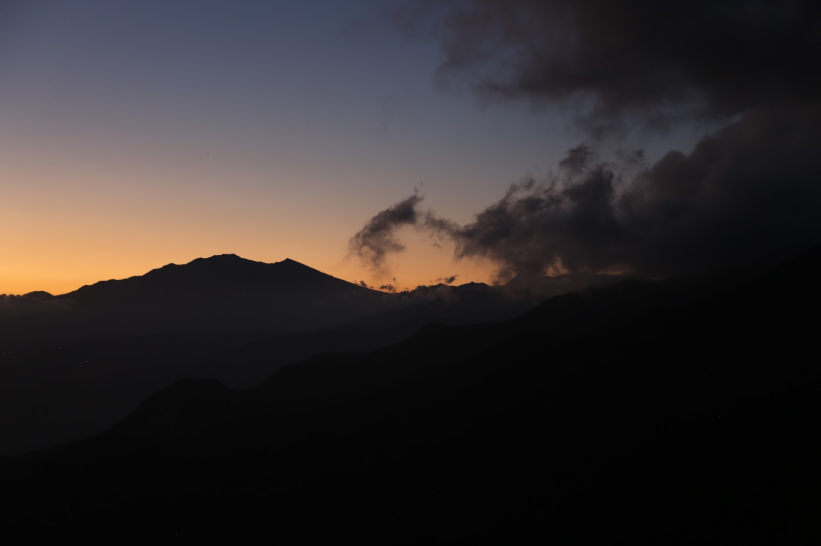
Panama's Leading Exports: The Surprising Products That Connect a Small Country to the World

When people think about Panama's economy, they usually think about one thing first: the Panama Canal. And for good reason. The Canal is one of the most important pieces of infrastructure on Earth, connecting the Atlantic and Pacific Oceans and allowing enormous quantities of international trade to pass through the country.

But there is a fascinating detail that often gets overlooked. Panama does not simply make money by allowing other countries to move their goods through its territory. Panama also produces and exports an impressive range of products of its own.

From bananas and copper to seafood, coffee, gold and tropical fruits, Panama's exports reveal a completely different side of the country. They tell the story of its farms, forests, oceans, mines, factories and ports, and they show how a relatively small country can participate in global trade in some surprisingly big ways.

The Panama Canal Is Not Technically an Export

Before looking at Panama's leading exports, there is an important distinction to make. The Panama Canal is central to Panama's international trade economy, but the goods traveling through the Canal are generally not Panamanian exports.

A ship carrying containers from Asia to the United States is not exporting those containers from Panama simply because it passes through the Canal. Panama is providing a transportation service.

That distinction is extremely important.

Panama's economy is unusual because the country earns enormous amounts of money from logistics, shipping, ports and services while simultaneously exporting physical products produced within the country.

In other words, Panama is both a highway for global commerce and a producer in its own right.

🍌 Bananas: One of Panama's Great Agricultural Exports

Bananas have been one of Panama's most important agricultural exports for generations. The country's tropical climate provides excellent conditions for growing bananas, particularly in the western provinces.

The Bocas del Toro region has historically been especially important for banana production. Vast plantations can stretch across the countryside, creating an agricultural landscape that looks completely different from the dense rainforest surrounding it.

Bananas are an excellent example of how Panama's tropical geography can be transformed into an international export industry. The fruit grows beneath the warm tropical sun, is harvested while still green and then enters a carefully coordinated supply chain.

From the plantation, bananas can move toward packing facilities and ports before eventually reaching supermarkets far outside Panama.

The banana sitting on a breakfast table in another country may therefore have started its journey in a Panamanian plantation surrounded by jungle.

☕ Panama's Coffee: Small Quantities, Huge Reputation

Panama may not be one of the world's largest coffee exporters by volume, but it has something arguably more valuable in the specialty coffee world.

Reputation.

The mountains around Boquete, Volcán and other parts of Chiriquí produce some extraordinarily high quality coffee. The combination of elevation, volcanic soils, rainfall, cool temperatures and careful cultivation creates ideal conditions for specialty coffee.

Panama's most famous coffee is undoubtedly Geisha, a variety that has become almost legendary among coffee enthusiasts.

Panamanian Geisha has achieved extraordinary prices at international auctions, with exceptional lots selling for enormous sums. This has transformed Panama from simply being a coffee producing country into one of the world's most closely watched origins for luxury specialty coffee.

The fascinating thing is that Panama does not need to compete with enormous coffee producing nations on volume.

Instead, some producers compete at the very top of the market.

It is the difference between selling millions of ordinary products and selling a much smaller quantity of something considered exceptional.

🦐 Seafood From Two Oceans

Panama has another enormous advantage when it comes to exports.

Two coastlines.

The country has the Pacific Ocean on one side and the Caribbean Sea on the other, giving it access to an extraordinary variety of marine resources.

Fish and seafood are therefore important components of Panama's export economy.

Shrimp is particularly significant, with aquaculture and fishing operations contributing to the country's seafood trade. Panama also exports various types of fish and other marine products.

The seafood industry is closely connected to Panama's geography. The country's extensive coastline, tropical waters and network of ports make it possible to harvest, process and transport marine products to international markets.

There is something fascinating about the journey of Panamanian seafood. A shrimp raised or harvested in tropical waters can be processed, packed and eventually appear on a restaurant menu on another continent.

🥭 Tropical Fruit

Panama's tropical climate makes it possible to produce an impressive range of fruits, some of which enter international markets.

Pineapples are among the country's important fruit exports, while bananas remain a major agricultural product. Panama also produces citrus, melons, watermelons, papayas and other tropical fruits.

The pineapple industry is particularly interesting because Panama has developed commercial production aimed at both domestic consumption and foreign markets.

The fruit that looks completely ordinary sitting on a supermarket shelf is actually the final product of an enormous agricultural system involving planting, irrigation, fertilization, pest management, harvesting, packing and transportation.

And because fresh fruit is highly perishable, getting it from a tropical field to an international consumer requires remarkably efficient logistics.

🐟 Panama's Fisheries

Fishing has been part of Panamanian life for centuries, long before modern international trade existed.

Today, commercial fisheries contribute to exports of fish and seafood, while Panama's geographic position gives it access to both Pacific and Caribbean fisheries.

The Pacific side is particularly important for commercial fishing.

Species such as tuna and other pelagic fish can become part of international supply chains, while smaller scale fisheries support communities throughout the country.

There is an interesting contrast here.

Panama is simultaneously one of the world's great maritime transportation hubs and a country whose coastal communities still depend heavily on the sea for food and income.

🪙 Copper: The Export That Changed the Numbers

One of the most dramatic developments in Panama's recent export history was the rise of copper.

The Cobre Panamá mine, operated by First Quantum Minerals, became one of the country's most important sources of export revenue after production began.

At its peak, copper dramatically changed Panama's export statistics.

The mine produced copper concentrate that was exported through Panama's ports, making minerals a much larger part of the country's international trade than they had been previously.

But copper also became one of the most controversial economic subjects in modern Panama.

The mine was shut down following widespread protests and a 2023 Supreme Court ruling declaring the mining concession unconstitutional. The future of the mine and its potential reopening has remained a major political and economic issue.

The story illustrates something fascinating about exports.

A commodity can bring enormous economic benefits while simultaneously generating major debates about environmental protection, natural resources, government policy and national sovereignty.

🪙 Gold and Other Minerals

Panama also has a history of gold production and has long been associated with precious metals.

The country's connection with gold goes back centuries. Long before modern mining operations existed, Spanish explorers were fascinated by the region's indigenous goldworking traditions and the wealth they encountered.

Modern Panama has also produced gold commercially, although the scale has varied considerably over time.

Gold is particularly interesting because it has an enormous value relative to its physical size.

A ship full of agricultural products may require huge quantities of cargo.

A relatively small shipment of gold can represent extraordinary monetary value.

🏭 Manufactured Goods

Panama is not primarily known as a manufacturing powerhouse, but the country does export manufactured and processed products.

These include processed food, beverages, chemicals, pharmaceutical products, packaging and other industrial goods.

Some of these exports are connected to Panama's role as a regional logistics and distribution center.

The country's ports, free trade zones and transportation infrastructure allow businesses to import raw materials or intermediate products, process or package them and then distribute finished goods throughout the region.

This is one of the less obvious sides of Panama's economy.

The country does not need to manufacture everything from scratch to participate in manufacturing.

Its location allows it to act as a bridge between producers and consumers throughout the Americas.

🏗️ The Colón Free Trade Zone

One of Panama's most unusual economic institutions is the Colón Free Trade Zone.

It is not an export in itself, but it plays an enormous role in Panama's international commerce.

Goods arrive from manufacturers around the world, particularly from Asia, and are stored, traded, redistributed and reexported throughout Latin America and the Caribbean.

This creates a fascinating distinction between exports and reexports.

A television manufactured in China and shipped through Colón may eventually be sold to a buyer in another Latin American country. Panama may never have manufactured the television, but its logistics infrastructure helped make the transaction possible.

This is Panama's geographic advantage turned into an economic machine.

🥥 Coconut and Other Agricultural Products

Panama's agricultural exports extend well beyond the famous products.

Coconut products, palm oil, cacao, vegetables, roots and tubers and various processed agricultural goods contribute to international trade.

Some are produced by large commercial operations, while others come from smaller farms.

This creates a fascinating mixture of traditional and modern agriculture.

A farmer cultivating crops using generations of local knowledge can be part of the same export economy as a highly mechanized commercial plantation.

🪵 Timber and Forest Products

Panama also has a forestry industry, although this is a particularly sensitive area because of the country's extraordinary biodiversity.

The country contains enormous areas of tropical forest, including some of the most biologically diverse ecosystems in Central America.

That means forestry and forest conservation are naturally intertwined.

Sustainable forestry can provide economic opportunities, but poorly managed extraction can threaten ecosystems that provide enormous ecological value.

For Panama, the question is therefore not simply how much timber can be exported.

It is how natural resources can be used without destroying the ecosystems that make the country globally important in the first place.

🌎 Panama's Most Valuable Export Might Actually Be Its Location

Here is where Panama becomes truly unusual.

If you look only at physical products, you miss a huge part of the country's economic story.

Panama's location itself is an economic resource.

The Panama Canal turns geography into revenue.

The country's ports turn geography into logistics.

The Colón Free Trade Zone turns geography into commerce.

Its airports turn geography into international connectivity.

And its proximity to both North and South America makes Panama a natural meeting point between continents.

In this sense, Panama's most important export is not necessarily something you can put into a shipping container.

It is connectivity.

🚢 The Country That Exports Through the World

Panama's physical exports may include bananas, coffee, seafood, tropical fruit, minerals and manufactured products, but almost everything about the country's economy is connected to transportation.

A banana plantation needs roads.

A coffee producer needs transportation.

A seafood company needs cold storage and ports.

A mining operation needs enormous logistical infrastructure.

An exporter needs customs services.

And an international company needs access to shipping routes.

Panama has built an entire economy around solving those problems.

That is why the country's ports and logistics industry are so important.

🇵🇦 A Small Country With a Surprisingly Large Trade Footprint

Panama is geographically small compared with many of the countries it trades with.

Yet its position gives it an influence far beyond its physical size.

A container can arrive from Asia, pass through the Canal and continue toward the United States.

A shipment of Panamanian bananas can travel toward Europe.

A specialty coffee from the mountains of Chiriquí can end up in a luxury coffee shop on the other side of the world.

Seafood can leave the Pacific coast and enter international markets.

Tropical fruit can travel across the Caribbean.

And, historically, enormous quantities of copper have passed through Panama's export infrastructure.

All of these journeys are connected by one extraordinary geographic fact.

Panama sits between two oceans and two continents.

🌴 From Jungle to Global Marketplace

Perhaps the most fascinating way to understand Panama's exports is to look at the country as a collection of completely different landscapes.

In Chiriquí, farmers cultivate coffee among the mountains.

In Bocas del Toro, plantations produce bananas.

Along the coasts, fishermen and aquaculture operations produce seafood.

In Coclé, citrus and tropical fruit grow beneath the sun.

In Panama's ports, containers arrive from every corner of the planet.

And running through the middle of everything is the Panama Canal.

The result is an economy that is difficult to categorize.

Panama is an agricultural country.

It is a maritime country.

It is a logistics country.

It is a tourism country.

It has been a mining country.

And increasingly, it is a service and financial center.

That mixture is what makes Panama so economically fascinating.

🍊 The Real Story Behind "Made in Panama"

When you see something labeled as a Panamanian export, it represents far more than the product itself.

A bag of coffee represents mountain farmers and decades of agricultural knowledge.

A banana represents plantations, workers, packing facilities and refrigerated transportation.

A box of seafood represents the country's relationship with two oceans.

An orange represents tropical agriculture and an increasingly sophisticated citrus industry.

Copper represented one of the largest industrial operations in the country's history.

And every one of these products ultimately connects to Panama's extraordinary transportation network.

The country's exports therefore tell a much bigger story than a list of commodities.

They tell the story of a small country that has learned how to turn land, ocean and location into global economic power.

And that may be the most remarkable export of all.

🍊 The Orange Orchards of Panama: Where Tropical Sunlight Becomes Liquid Gold

There is something almost cinematic about an orange orchard in Panama. Imagine driving through the countryside during the dry season, with the mountains rising in the distance, the sky intensely blue and the tropical heat hanging over the fields. Then suddenly the landscape changes. Row after row of citrus trees stretches across the countryside, their branches heavy with brilliant orange fruit. Against the dry grasses and golden landscape, the dark green trees and bright oranges almost look unreal. It is a completely different side of Panama from the jungles, beaches and skyscrapers that most travelers associate with the country. But Panama's orange orchards are much more than beautiful scenery. They are part of a growing agricultural industry involving traditional farming, large scale plantations, international markets, scientific research, plant diseases and some remarkably productive countryside.

🍊 Coclé: Panama's Orange Country

When it comes to commercial citrus production, Coclé is one of the most important places in Panama. Areas around Penonomé, La Pintada, Olá and the northern part of the province are closely associated with citrus cultivation. According to Panama's Ministry of Agricultural Development, Coclé had more than 7,000 hectares planted with citrus in 2024, with a large proportion of production concentrated in the northern part of the province. That is an enormous agricultural landscape, and it becomes even more impressive when you realize that thousands of individual trees can occupy a single commercial plantation.

Some commercial operations are considerably larger than the small family orchards many travelers might imagine. MIDA reported that two major citrus producers in Coclé, Cítricos Gabriela and Low Country, together maintained more than 1,500 hectares in production, with Low Country alone covering hundreds of hectares. During harvest periods, these plantations also provide hundreds of jobs. Suddenly, the humble orange becomes part of a much larger economic story involving farmers, agricultural workers, nurseries, transportation, packing, inspection, supermarkets and consumers.

🍊 The Valencia Orange

One of the stars of Panama's citrus industry is the Valencia orange, a variety particularly valued for its sweetness and abundant juice. Panama's agricultural authorities have highlighted the Valencia Roja variety for its high Brix level, which indicates its concentration of soluble sugars, as well as its high juice content. These characteristics make it particularly useful for juice production and commercial markets.

When you see a mature Valencia orchard, it can be difficult to comprehend just how much fruit a large plantation can produce. A single mature tree can carry an extraordinary number of oranges, and when thousands of trees are planted together, the result becomes a huge wall of green foliage dotted with orange. During harvest, the landscape can become a hive of activity as workers move through the rows collecting fruit that has been growing beneath the Panamanian sun for months.

🌴 Why Panama Is So Good for Growing Citrus

It is not difficult to understand why citrus can thrive in parts of Panama. The country provides warmth, abundant sunlight and substantial rainfall, while irrigation can supplement water availability where necessary. MIDA's technical information for orange production identifies an optimal temperature range of approximately 23 to 32 degrees Celsius and indicates that oranges can be grown from sea level to elevations of around 1,200 meters, depending on the conditions.

But commercial citrus farming is considerably more complicated than simply planting trees and waiting for oranges to appear. Farmers have to consider soil conditions, drainage, rainfall, pests, diseases, nutrition, tree spacing, pruning, harvesting and market conditions. An orchard may look peaceful from the road, but behind those perfectly organized rows is a constant process of monitoring and management. Every tree represents an investment that may take years before it reaches full productivity.

🌱 The Orchard Is a Living Ecosystem

Walk between rows of orange trees and the first thing you might notice is how organized everything looks. The trees stand in neat lines, the branches stretch toward the sunlight and oranges hang among the leaves. But look more carefully and the orchard becomes much more complicated. Bees and other pollinators move between flowers, insects feed on leaves, spiders hunt among branches, birds search the foliage for food and countless organisms live within the soil beneath your feet. An orange plantation may be designed by humans, but it is still a living ecosystem.

This creates one of the biggest challenges for farmers. They have to maintain an environment that supports healthy trees while preventing pests and diseases from destroying the crop. A successful orchard therefore depends on understanding the biology of the entire system. The farmer is not simply growing oranges. They are managing soil, water, insects, microorganisms, weather and trees simultaneously.

🦠 The Tiny Enemy That Can Threaten an Entire Orchard

One of the greatest challenges facing citrus growers in Panama is something that is almost impossible to see with the naked eye. Plant disease can threaten an entire orchard, and one of the most serious citrus diseases in the world is Huanglongbing, commonly known as HLB or citrus greening disease. Panama detected HLB in the country in 2021, including an early detection in the El Valle de Antón area. MIDA describes HLB as the most serious citrus disease worldwide and emphasizes that there is currently no cure, making prevention, monitoring and management extremely important.

The disease demonstrates just how vulnerable a large plantation can be. Thousands of healthy trees can produce an enormous harvest, but a serious disease can change the equation completely. That is why Panama's agricultural authorities have emphasized the use of healthy planting material, monitoring plantations, managing the insect vector associated with HLB and removing infected plants when necessary. Modern citrus farming therefore involves as much plant science as it does traditional agriculture.

🌱 The Secret Life of a Citrus Nursery

Before you ever see a mature orange tree, there may have been a tiny plant growing inside a carefully controlled nursery. This is one of the less visible parts of Panama's citrus industry, but it may be among the most important. MIDA has developed regulations and certification systems for citrus propagation because moving unhealthy planting material between locations can help spread serious pests and diseases. Healthy trees begin with healthy propagation material.

In 2025, MIDA reported on a citrus nursery at Rancho Gatún that was working toward certification and had more than 25,000 grafted citrus plants growing, including Valencia orange, mandarin, grapefruit and Persian lime. In 2026, MIDA also highlighted a certified citrus nursery in Toabré, Penonomé, using micrografting techniques to propagate citrus plants.

The idea is fascinating because an enormous mature orange tree can ultimately begin with an incredibly small piece of plant material. Through careful propagation, grafting and cultivation, that tiny beginning eventually becomes a tree capable of producing fruit year after year. What looks like a simple orange tree in a field can therefore represent years of agricultural planning and scientific knowledge.

🍊 From Coclé to the Caribbean

Panama's oranges are not only consumed domestically. There is also an international story behind the country's citrus industry. In 2020, Panama shipped a reported first container of Valencia Roja oranges to Guadeloupe in the Caribbean. The shipment contained 22,200 kilograms of oranges from the Toabré area of Penonomé.

That story has continued. In March 2026, MIDA reported that 900 boxes of Valencia oranges had been certified for export to Guadeloupe as part of a shipment that also included pineapples. Phytosanitary inspections were carried out to ensure that the fruit met the requirements of the destination market, including requirements related to quarantine pests.

Think about the journey of one of those oranges. It begins as part of a tree growing in the Panamanian countryside, surrounded by tropical heat and rain. It is harvested, collected, sorted and transported, eventually making its way into an export shipment. Then it crosses the Caribbean to another island. Something that began beneath the Panamanian sun can eventually become breakfast thousands of kilometers away.

☀️ The Dry Season Brings the Orchards to Life

There is something particularly beautiful about agricultural Panama during the dry season. The skies can become brilliantly blue, the grasses turn golden and the landscape takes on a completely different appearance from the lush green world of the rainy season. Against this dry backdrop, an orange orchard can look almost impossibly green. The trees retain their foliage while bright oranges hang among the leaves, creating an incredible contrast between the fruit, vegetation and surrounding countryside.

This is one of the reasons orange orchards can be such fascinating places to photograph and explore. They represent a completely different side of tropical Panama. Instead of towering rainforest trees competing for sunlight, you see carefully arranged rows of citrus trees. Instead of an ecosystem that developed naturally over thousands of years, you see a landscape deliberately designed by farmers. Yet both environments are responding to the same tropical climate, the same rainfall patterns and the same powerful Panamanian sun.

🌳 The Orange and the Rainforest

Perhaps the most fascinating contrast is what happens when you travel from one of Panama's agricultural areas into the surrounding forests. In an orchard, humans have carefully planted thousands of trees in organized rows. In the rainforest, nature has created an extraordinarily complicated ecosystem without any human planning whatsoever. Yet the two worlds can exist remarkably close together. A plantation can border a forest, a river can run between farmland and jungle, and birds and insects can move between the two environments.

This makes Panama's agricultural story impossible to separate completely from its ecological story. Farmers depend on the climate and natural resources surrounding their plantations, while the surrounding ecosystems can be affected by how agricultural land is managed. The relationship between farmland and wilderness is therefore one of the most important stories playing out across Panama's countryside.

🍊 The Orange Has a Global Story

The orange itself has an extraordinary history long before it ever reached Panama. The sweet orange, Citrus sinensis, originated in Asia and eventually spread throughout the world through trade, cultivation and human migration. Panama's agricultural information identifies Southeast Asia as its origin.

Eventually, citrus reached the Americas during the era of European exploration and colonization. Centuries later, orange trees had become part of agricultural landscapes throughout tropical and subtropical regions of the Americas, including Panama. That means every Panamanian orange tree is part of a much larger story about global agriculture, exploration, trade and the movement of plants between continents.

It is an extraordinary thought when you stand beneath a tree covered in oranges. The tree looks completely at home in Panama, but its evolutionary and agricultural history stretches far beyond the isthmus.

🔬 The Future of Panama's Orange Orchards

Panama's citrus industry faces serious challenges. Plant disease is one of the most important, while climate variability, production costs, labor requirements and changing markets also influence the future of commercial orchards. But there are also reasons for optimism. Panama is investing in certified nurseries, improving disease monitoring, developing propagation techniques and working with producers to protect the country's citrus industry.

MIDA reported that during the 2024 to 2025 agricultural cycle, 1,010 citrus producers participated nationally, with oranges accounting for 85 percent of citrus production and lemons making up the remaining 15 percent. The same report indicated that 1,408.8 hectares were planted and 1,231.2 hectares harvested, with an estimated economic contribution of 5.3 million balboas.

Those numbers reveal something most travelers would never guess while drinking fresh orange juice in Panama. There is a serious agricultural industry behind that glass. There are farmers, researchers, agricultural inspectors, nursery workers, harvesters, drivers and exporters all contributing to the journey.

🍊 Where Tropical Sunlight Becomes Liquid Gold

There is something wonderfully simple about an orange. You peel it, smell the citrus and taste the sweetness. You squeeze it and suddenly you have a glass of juice. But behind that simplicity is an extraordinary chain of events. A small piece of plant material becomes a young tree. The tree develops roots, captures sunlight through its leaves and eventually produces flowers and fruit. Farmers protect it from pests and disease, workers harvest the oranges and the fruit enters a complex network of transportation and commerce.

The next time you are traveling through Coclé and see what appears to be an endless sea of citrus trees, stop for a moment and look closely. Those trees are more than scenery. They represent decades of agricultural knowledge, thousands of hours of labor, modern plant science, international trade and a landscape remarkably well suited to growing one of the world's most beloved fruits.

And perhaps the most satisfying part is knowing that somewhere beyond the rainforests, beaches and mountains that make Panama famous, the country's orange trees are quietly transforming tropical sunlight, rain and soil into something remarkably simple.

An orange.

It may look ordinary when you hold it in your hand, but its journey from a tiny grafted plant in a Panamanian nursery to a tree heavy with fruit, and potentially all the way across the Caribbean, is anything but ordinary.

In Panama, the orange is more than a fruit. It is a little piece of the country's countryside, agriculture, science and tropical sunshine wrapped inside a brilliant orange skin.

🦂 Panama's Scorpions and the Strange World of Whip Scorpions

Walk through a Panamanian rainforest at night and the jungle can suddenly seem to change personalities. During the day, the forest is filled with birdsong, monkeys, butterflies and bright tropical colors. After sunset, a completely different community takes over.

Among the leaves, beneath bark, around rocks and inside dark crevices, some of Panama's most unusual arachnids begin moving.

Scorpions emerge.

And then there are the creatures that look like scorpions but are not scorpions at all.

These are the whip spiders, often confusingly called tailless whip scorpions. They can have enormous flattened bodies and extraordinarily long, delicate legs that make them look like something from science fiction.

Panama is home to a surprisingly diverse collection of these animals. Recent scientific work has documented at least sixteen scorpion species in Panama, belonging to three families, while research continues to refine exactly which species occur where.

Understanding the differences between them makes nighttime exploration considerably more interesting.

First Things First: They Are All Arachnids

The easiest way to understand Panama's scorpions and their strange relatives is to start with their family tree.

Scorpions are arachnids, meaning they belong to the same broad group as spiders, ticks, mites and harvestmen.

But being an arachnid does not mean being a scorpion.

A true scorpion belongs to the order Scorpiones.

A tailless whip scorpion, or whip spider, belongs to the completely different order Amblypygi.

A vinegaroon, sometimes called a whip scorpion, belongs to another order called Uropygi.

They are relatives, but they are not the same animal.

This distinction becomes extremely important when you are walking through Panama's jungle and encounter something that looks like a bizarre combination of spider and scorpion.

The Real Scorpions of Panama

Panama's genuine scorpions include members of several families, but the Buthidae are particularly important because some species have medically significant venom.

Scientific research has identified species from the genera Centruroides and Tityus as especially important in Panama. Research on Panamanian scorpion venom has examined eight buthid species from these two genera.

Among the Centruroides species recorded from Panama are Centruroides granosus, Centruroides panamensis, Centruroides limbatus, Centruroides bicolor and Centruroides margaritatus. Taxonomy is an evolving science, and a recent review has clarified some earlier identification and distribution questions.

That last point is worth emphasizing.

When people say "all the scorpions in Panama," scientists cannot always simply produce a permanent list and walk away. Species are sometimes reclassified, populations turn out to have been misidentified and new information changes our understanding of where particular species occur.

Panama's scorpion fauna is still being studied.

Centruroides: The Famous Bark Scorpions

If you encounter a relatively slender scorpion around buildings, vegetation or forested areas, there is a reasonable possibility that it belongs to the genus Centruroides, although identification should never be based solely on appearance.

These scorpions are often relatively slender compared with some of the chunkier scorpions people imagine.

Their pincers can appear comparatively narrow, while the tail is relatively prominent.

One Panamanian species, Centruroides granosus, is particularly interesting. Research describes it as the most common and densely populated Centruroides species in urban areas of Panama and the species associated with the greatest number of reported scorpion accidents in the country.

Another fascinating species is Centruroides panamensis, which is endemic to Panama. In other words, it is not naturally found anywhere else in the world.

That makes encountering one a tiny wildlife moment with enormous geographical significance.

You could be looking at an animal whose entire natural distribution is confined to Panama.

Centruroides bicolor

Centruroides bicolor is another Panamanian species that attracts scientific attention.

It is widely distributed in Panama, and research has associated it with medically important envenomation.

But an important point gets lost whenever people talk about venomous animals.

Venomous does not automatically mean deadly.

Scorpion stings can produce a range of effects, and the seriousness depends on factors including the species, the amount of venom delivered and the person affected. Recent taxonomic research notes that envenomations by Panamanian Centruroides are frequent but generally produce mild symptoms.

That is very different from saying that every scorpion encounter is a medical emergency.

Still, any unidentified scorpion should be treated with caution rather than handled.

Tityus: Another Major Group

The genus Tityus is another important component of Panama's scorpion fauna.

Several Tityus species have been studied for their venom, including species associated with Panama such as Tityus festae and Tityus cerroazul. Scientific research has found considerable diversity in the venom components of these animals.

The name Tityus is particularly familiar to scientists studying medically important scorpions throughout tropical South America and Central America.

Their presence in Panama demonstrates that the country's scorpion fauna is connected to the much larger Neotropical ecosystem.

The forests of Panama are not isolated.

Animals, plants and evolutionary lineages have moved through Central and South America for millions of years.

The Scorpions That Aren't Considered Major Medical Concerns

Not every Panamanian scorpion is equally important from a medical perspective.

Research has identified species such as Opistacanthus elatus, belonging to the family Hormuridae, and Chactas exsul, belonging to Chactidae, as species whose stings do not appear to have major medical importance according to cited Panamanian health assessments. Ananteris platnicki, a buthid species, has also been described in this context.

This is a great example of why judging an animal simply by appearance can be misleading.

A huge, intimidating looking arachnid may pose little danger to humans, while a much smaller animal can have medically significant venom.

Evolution does not design animals according to our sense of aesthetics.

The Secret Life of a Scorpion

Scorpions are remarkably well adapted to life in the darkness.

During the day, many species remain hidden beneath objects, inside crevices or in sheltered areas.

After dark, they become active.

They use their sensory systems to navigate a world where vision is often less important than detecting vibrations and environmental cues.

They are predators, and their diet consists primarily of other small animals, particularly insects and other arthropods.

For a scorpion, the rainforest floor is essentially a gigantic buffet.

Every fallen leaf can conceal something.

Every piece of bark can provide shelter.

Every crevice can contain prey.

And every night brings another opportunity to hunt.

The Incredible Fluorescent Scorpion Trick

One of the most fascinating things about scorpions is their ability to fluoresce under ultraviolet light.

Certain compounds in the hardened outer layers of their exoskeleton can cause them to glow under UV illumination.

This creates one of the strangest sights imaginable.

You can be looking at what appears to be an ordinary dark forest floor.

Then ultraviolet light reveals a scorpion glowing against the darkness.

Scientists have studied this phenomenon for decades, and its exact biological significance remains an interesting subject of research.

For anyone interested in natural history, it is one of the most extraordinary characteristics of scorpions.

And Then You Meet the Whip Spider

Now we enter a completely different world.

Imagine walking through a dark tropical forest and seeing something with an enormous flattened body, eight legs and two unbelievably long front appendages stretching out in front of it.

At first glance, you might think:

Scorpion.

Then you realize something is wrong.

There is no tail.

There is no obvious stinger.

And those front legs look ridiculously long.

Congratulations.

You may have just found an amblypygid, commonly called a whip spider or tailless whip scorpion.

The Name Is Confusing

The common name is responsible for much of the confusion.

"Tailless whip scorpion" sounds like it should be a scorpion that lost its tail.

It isn't.

Amblypygids belong to their own arachnid order, Amblypygi.

They are evolutionary relatives of scorpions, but they have a completely different body design and lifestyle.

They do not have the characteristic scorpion tail.

They do not have a venomous stinger.

And they are not the same thing as the true whip scorpions of the order Uropygi.

In Panama, scientific work has documented whip spiders belonging to the genus Phrynus, including recent research documenting cannibalism in Panamanian Phrynus.

Why Do Whip Spiders Have Those Crazy Long Legs?

Those incredibly long front appendages are not ordinary walking legs.

They are specialized sensory structures called antenniform legs.

Instead of simply using them to walk, the animal uses them to explore its environment.

Imagine being in complete darkness and having two enormous sensory feelers extending far beyond your body.

You could detect obstacles.

You could investigate surfaces.

You could sense movement.

You could explore the environment without needing to see everything directly.

That is essentially the world of an amblypygid.

Their long sensory legs help them navigate through darkness with remarkable precision.

They Look Terrifying

This is perhaps the funniest thing about whip spiders.

They look absolutely terrifying.

Their bodies can be broad and flattened.

Their legs can stretch surprisingly far.

Their specialized pedipalps give them an almost alien appearance.

And when one suddenly moves across a wall, it can look like something from a horror movie.

Yet their frightening appearance is mostly a matter of aesthetics.

They are not equipped with a scorpion's venomous tail.

They are predators of small animals, not giant monsters hunting humans.

For a rainforest ecosystem, they are fascinating nocturnal hunters.

Whip Spiders Are Masters of Darkness

Many amblypygids are strongly associated with dark, humid environments.

That makes Panama an excellent place to encounter them.

They can be found around forest habitats and other sheltered environments where humidity remains high.

At night, they become active.

Their sensory legs sweep through the darkness.

Their bodies remain close to surfaces.

And they use their specialized appendages to detect and capture small prey.

The effect is extraordinary.

A whip spider can appear almost weightless as it moves across a wall or tree trunk.

Then it suddenly stops.

It may remain completely motionless.

Then one sensory leg moves.

Then another.

The animal is effectively scanning the environment.

Scorpions and Whip Spiders Are Built Completely Differently

This is the easiest way to remember the difference.

A true scorpion has a recognizable tail ending in a stinger.

An amblypygid has no tail and has enormously elongated sensory legs.

A scorpion's tail is a weapon used to deliver venom.

An amblypygid's elongated front legs are primarily sensory tools.

A scorpion's pincers are relatively recognizable as claws.

An amblypygid has specialized pedipalps used to seize prey.

They may look related because they are both arachnids, but evolution has taken them in very different directions.

And What About the Real Whip Scorpion?

Here is where the naming becomes even more confusing.

There is another group called the whip scorpions, belonging to the order Uropygi.

They are not the same as amblypygids.

True whip scorpions have a whip like tail structure and are sometimes called vinegaroons because certain species can release an acetic acid based defensive secretion.

They are therefore quite different from both ordinary scorpions and tailless whip spiders.

So Panama's nighttime arachnid world can contain:

Scorpions.

Whip spiders.

Whip scorpions.

And all three are different groups.

That is enough to make any jungle night walk feel like an advanced zoology lesson.

The Tiny Pseudoscorpions

There is another group that deserves a mention.

Pseudoscorpions are tiny arachnids that look somewhat like miniature scorpions but lack a tail.

They can be found in leaf litter, soil, vegetation and other environments.

Their tiny size means most people walk past them without ever noticing.

They are completely different from the large scorpions that people usually picture.

Again, the rainforest demonstrates an important lesson.

"Scorpion" is not a single visual design.

Evolution has produced an entire collection of bizarre arachnid forms.

Why Panama Is Such a Great Place for Arachnids

Panama's extraordinary biodiversity helps explain why its arachnid fauna is so interesting.

The country sits between North and South America and contains Caribbean coastline, Pacific coastline, lowland rainforest, cloud forests, mountains, dry forests, wetlands and agricultural landscapes.

Each habitat creates different opportunities for arthropods.

A scorpion living around dry lowland vegetation faces a completely different environment from an amblypygid living in a humid mountain forest.

Different habitats encourage different adaptations.

That is why walking through Panama's forests can feel like walking through several different biological worlds.

The Night Changes Everything

During daylight, most travelers notice the obvious animals.

Birds.

Butterflies.

Monkeys.

Sloths.

Lizards.

But once the sun disappears, the hierarchy changes.

Insects become active.

Frogs begin calling.

Bats emerge.

Nocturnal mammals begin moving.

And arachnids that spent the day hidden begin exploring their surroundings.

This is why a nighttime walk through Panama can reveal an entirely different ecosystem from the one you experienced during the afternoon.

The forest has not changed.

Your ability to see it has.

The Great Arachnid Misidentification Game

One of the most entertaining things about exploring Panama is discovering how often people misidentify what they see.

A large spider becomes a tarantula.

A harvestman becomes a spider.

A whip spider becomes a scorpion.

A scorpion becomes a "huge spider."

And sometimes the animal is something completely different.

Learning a few basic differences makes wildlife encounters much more interesting.

If it has a tail with a stinger, you are looking at a true scorpion.

If it has enormous sensory front legs and no tail, you may be looking at an amblypygid.

If it has a whip like tail structure, you may be looking at a true whip scorpion.

If it is tiny and resembles a miniature scorpion without a tail, it could be a pseudoscorpion.

The more you learn, the more complicated the forest becomes.

And that is exactly what makes it fun.

Panama's Scorpions Are More Than Something to Fear

Scorpions have an unfortunate reputation.

People often see one and immediately think danger.

But ecologically, scorpions are fascinating predators that play an important role in controlling populations of other arthropods.

They are part of the food web.

They are predators.

They are prey.

They have evolved sophisticated sensory systems.

Their venom is a remarkable biological technology.

And their fluorescent exoskeletons make them one of the strangest sights in the nighttime forest.

Some species are medically important, which is why unidentified scorpions should not be handled. But that does not make every scorpion a deadly creature.

In Panama, the majority of encounters are likely to involve animals that would much rather avoid humans than interact with them.

A Final Look Into the Darkness

The next time you walk through a Panamanian forest after sunset, look beyond the obvious.

Look at the tree trunks.

Look beneath leaves.

Look carefully around sheltered areas.

The jungle is full of animals that most people never notice.

A small scorpion may be hunting beneath a fallen branch.

A Centruroides may be moving through vegetation.

A Tityus may be exploring the forest floor.

And somewhere in the darkness, an amblypygid may be standing motionless against a tree, its impossibly long sensory legs reaching into the darkness.

At first glance, they all seem to belong to the same nightmare family.

But look closer and they reveal an extraordinary story of evolution.

The scorpion has its tail and stinger. The whip spider has its sensory legs. The whip scorpion has its own bizarre defensive adaptations. The pseudoscorpion has shrunk the entire concept down to miniature scale.

They are all arachnids, but they have taken completely different evolutionary paths.

And that is perhaps the most fascinating thing about Panama's nighttime forests.

The animals that look the strangest are often the ones with the most interesting stories.

You just have to wait until the sun goes down.

The Giant Anoles of Panama's Cloud Forests: The Dragons Hiding in the Mist

High in Panama's mountains, where clouds drift through the trees and the forest floor stays damp with mist, there is a creature that can make an ordinary walk through the jungle suddenly feel like an expedition into another world.

It is an anole.

But not the tiny lizard you might expect.

In Panama's cloud forests, some anoles can be surprisingly large, beautifully patterned and impressively prehistoric looking. They sit motionless on tree trunks, branches and vegetation, waiting for insects to wander within range. Then, in a flash, they disappear into the forest.

For backpackers hiking through the mountains around places such as Chiriquí, these lizards can be one of those encounters that you remember long after you have forgotten what trail you were walking on.

A Lizard With a Big Personality

Anoles belong to a large group of lizards found throughout the tropical Americas. Panama is home to numerous species, and their appearances can vary dramatically.

Some are tiny.

Some are brightly colored.

Some spend most of their lives close to the ground.

Others are highly adapted to living in trees.

And then there are the larger species that give the impression that someone accidentally left a miniature dinosaur wandering around the cloud forest.

Their long bodies, powerful legs, long tails and alert eyes make them look considerably more imposing than the small garden lizards many travelers are accustomed to seeing.

The first time you encounter a large anole sitting perfectly still on a tree trunk, it can take a second to realize exactly what you are looking at.

Then it moves.

And suddenly the illusion of a miniature dinosaur becomes even stronger.

The Cloud Forest Is an Incredible Place to Find Them

Panama's cloud forests create a very different environment from the hot lowland rainforest.

At elevation, temperatures are cooler, clouds can hang directly among the trees and humidity remains extremely high. Moss covers branches, epiphytes grow everywhere and the forest can feel almost permanently damp.

These conditions support an extraordinary diversity of life.

Ferns grow beneath enormous trees.

Orchids cling to branches.

Bromeliads collect water high above the ground.

Hummingbirds flash between flowers.

Frogs hide among leaves.

And somewhere on a moss covered trunk, an anole may be sitting perfectly still.

The incredible thing about these lizards is how easily they disappear into this complicated environment.

Their bodies can blend into bark, leaves and shadows remarkably well.

They Are Masters of the Tree Trunk

Anoles are famous for their ability to climb.

Their feet are specially adapted for gripping surfaces, allowing many species to move confidently across tree trunks and branches.

Instead of simply walking around the forest floor, an arboreal anole can navigate an entirely different world above your head.

This gives it access to insects and other small prey that ground dwelling animals might never encounter.

It also gives the lizard a different perspective on danger.

A bird can attack from above.

A snake can approach through branches.

A mammal can climb toward it.

The forest canopy is not necessarily safer.

It is simply a different battlefield.

Then Comes the Famous Dewlap

One of the most spectacular things about anoles is something that many visitors do not notice until they see it happen.

The male suddenly extends a colorful flap of skin beneath his throat.

This is called a dewlap.

Depending on the species, it can be yellow, orange, red, blue, white or another striking combination.

One moment the lizard appears completely ordinary.

The next moment it looks like it has opened a tiny tropical flag beneath its chin.

The dewlap is primarily used for communication.

Anoles can use visual displays to communicate with other members of their species, particularly during territorial and reproductive interactions.

The display can be remarkably dramatic.

The lizard extends its dewlap.

It moves its head.

It may perform push up movements.

Its body posture changes.

Another anole may respond.

Suddenly two seemingly motionless lizards are having an elaborate conversation without making a sound that a human would normally notice.

The Cloud Forest Is Full of Invisible Conversations

Once you start noticing anoles, you begin realizing how much communication is happening around you.

A lizard changes position.

A bird calls from somewhere in the canopy.

A frog answers from the vegetation.

An insect buzzes through the mist.

Leaves move.

Something rustles in the undergrowth.

The forest is constantly communicating.

Humans simply aren't very good at understanding most of it.

Anoles are particularly fascinating because their communication is heavily visual.

Their world is full of signals.

Movement.

Color.

Posture.

Head bobbing.

Dewlap displays.

To a person walking past, it may look like the lizard is simply stretching.

To another anole, it could be an extremely important message.

They Are Ambush Hunters

Large anoles are predators, although they are nowhere near the top of the food chain.

Their diet can include insects and other small animals.

Rather than chasing everything they see, many anoles rely heavily on the element of surprise.

They can remain motionless for long periods.

Then they suddenly move.

A beetle passes.

The lizard's head turns.

It waits.

The prey gets closer.

Then the anole launches forward.

The movement can be so quick that someone watching may barely understand what happened.

This sit and wait strategy is particularly effective in a complex forest where insects are constantly moving through vegetation.

They Are Part of the Cloud Forest Food Web

Anoles may be predators, but they are also prey.

Birds can hunt them.

Snakes can hunt them.

Larger reptiles can potentially prey on them.

Mammals may also pose a threat.

This makes the anole an important part of the food web.

Remove a predator and prey relationships change.

Remove prey and predators have less food.

Every seemingly insignificant lizard is part of a much larger ecological system.

That is one of the great lessons of Panama's cloud forests.

The animals that attract the most attention are not necessarily the most important.

A tiny lizard can be just as connected to the ecosystem as a monkey or a sloth.

Why Do They Look So Ancient?

There is something about a large anole sitting on a tree that triggers the imagination.

Perhaps it is the long tail.

Perhaps it is the angular head.

Perhaps it is the way the animal freezes before suddenly sprinting away.

Or perhaps it is simply the fact that reptiles seem to belong to a much older chapter of Earth's history.

When the clouds are drifting between enormous trees and an anole is perched on a moss covered branch, the modern world can feel very far away.

You are surrounded by organisms that have adapted to tropical forests over immense periods of evolutionary time.

The anole is not actually a dinosaur, of course.

But it certainly looks like it belongs in the scenery of a prehistoric adventure movie.

Panama's Mountain Forests Are Full of Surprises

One of the best things about exploring Panama's mountain regions is that the biggest wildlife encounters are not always the most memorable.

You might spend hours hoping to see a sloth.

You might hear monkeys but never see them.

You might search the canopy for a colorful bird.

And then, while walking along the trail, you suddenly notice a huge lizard staring directly at you from a tree.

That is the magic of cloud forest wildlife.

You never really know what is going to appear.

A trail that looks completely ordinary can suddenly become fascinating because of one small movement in the vegetation.

Look Closely

If you are hiking through Panama's cloud forests, slow down.

That is one of the best pieces of wildlife watching advice anyone can give.

Do not simply look straight ahead.

Look at the tree trunks.

Look along branches.

Look underneath leaves.

Look at fallen logs.

Look for movement.

And especially look for animals that are trying not to move.

Anoles can be remarkably difficult to spot because remaining motionless is part of their survival strategy.

Once you learn what you are looking for, however, the forest begins to reveal more of itself.

A branch that seemed empty suddenly has eyes.

A patch of bark suddenly moves.

A flash of color appears beneath a throat.

And you realize you have been walking past these animals the entire time.

The Perfect Little Cloud Forest Predator

There is something wonderfully appropriate about the anole.

It is not enormous.

It is not dangerous to humans.

It does not have the celebrity status of a jaguar, harpy eagle or sloth.

Yet it is perfectly adapted to its world.

It climbs.

It hunts.

It communicates.

It disappears.

It waits.

It watches.

And it survives in one of the most complex ecosystems on Earth.

That is what makes the giant anoles of Panama's cloud forests so fascinating.

They are reminders that you do not need to find a massive animal to experience something extraordinary.

Sometimes the best wildlife encounter is a reptile sitting quietly on a moss covered tree while clouds drift through the forest around you.

And then, just when you lean closer to get a better look, it suddenly launches itself into the vegetation and vanishes.

The forest goes quiet again.

You keep walking.

And somewhere above the trail, another giant anole is watching you.