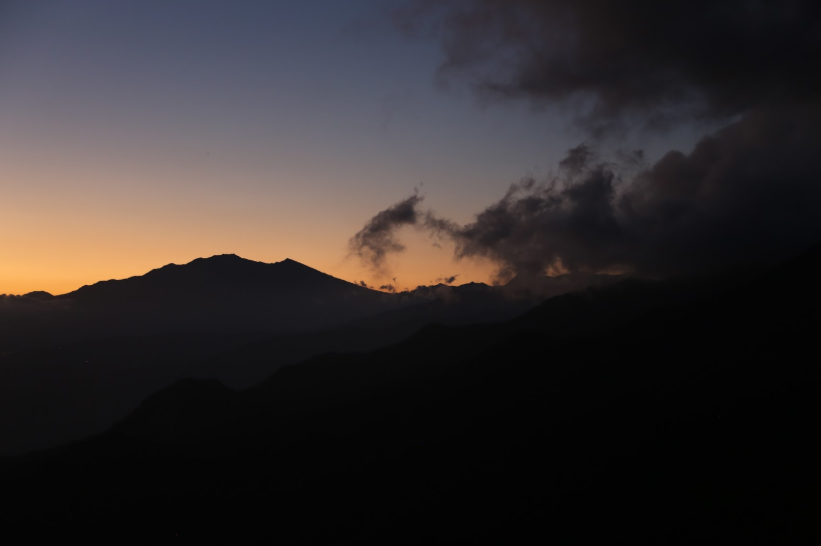
When the Clouds Come Down: The Strange, Beautiful World of Mist in Panama’s Cloud Forests

There is a moment in the mountains of Panama when the forest seems to stop being a forest and turn into something completely different. You can be walking along a trail beneath enormous trees, looking at hummingbirds, orchids and vines, with distant mountains visible through gaps in the vegetation, and then the air begins to change. The temperature drops slightly. The distant view disappears. A faint white haze starts slipping between the trees. A few minutes later, the forest is surrounded by mist. The mountains are gone. The sky is gone. Even the trees twenty metres away seem to fade into the whiteness. Water begins collecting on leaves, moss becomes even greener, spider webs suddenly sparkle, and everything takes on the appearance of a scene from a fantasy movie. It can feel as though the clouds have fallen out of the sky and landed directly on the forest floor.

In a very real sense, that is exactly what has happened.

A cloud forest is not simply a wet forest that happens to be located on a mountain. It is an ecosystem that spends a significant amount of its time interacting directly with clouds. Panama is particularly good at producing these conditions because of its geography. The country is a narrow tropical bridge between two enormous bodies of water, the Caribbean Sea and the Pacific Ocean, and it contains a remarkable series of mountains running through its western regions. Warm tropical air loaded with moisture moves toward the mountains, rises as it encounters higher terrain, cools as it climbs and eventually reaches a point where the atmosphere can no longer keep all that water invisible. The water vapor begins turning into microscopic droplets. Instead of a cloud floating above the forest, the cloud becomes part of the forest.

And this is where things get wonderfully weird.

Imagine taking a tropical rainforest and putting it inside a cloud. That is the basic idea, although nature has spent millions of years making the result much more complicated. The trees become covered in moss. Ferns grow from trunks. Orchids establish themselves on branches. Bromeliads sit in the canopy collecting water. Lichens spread across bark. Vines climb toward whatever sunlight they can find. Tiny insects live in the damp vegetation. Frogs hide among leaves. Hummingbirds patrol flowering plants. Toucans and toucanets move through the canopy. And somewhere above all of it, if you are extraordinarily lucky, a resplendent quetzal may be watching the entire performance from a branch.

The mist is not just scenery.

It is part of the plumbing system.

Rainfall is obviously important in a tropical forest, but cloud forests have another trick. When clouds and mist move through vegetation, their microscopic droplets collide with leaves, branches, mosses, vines and other surfaces. The droplets collect, grow larger and eventually fall toward the ground. This process is sometimes called cloud water interception, and it means the forest can collect water directly from the clouds.

Think about that for a second.

The trees are not merely standing underneath the rain waiting to get wet. They are reaching into the clouds and taking water out of the air.

A large tree covered in moss and epiphytes becomes an enormous biological net. Every branch provides another surface for moisture to collect. Every patch of moss can hold water. Every bromeliad can capture droplets. Every leaf can become a tiny water collector. The forest effectively turns itself into a gigantic sponge suspended on the side of a mountain.

This helps explain why the vegetation in Panama's cloud forests can look almost ridiculously green. There are places where green seems to be the only colour nature has bothered to use. Light green moss covers dark green moss. Ferns emerge from green tree trunks. Leaves overlap leaves. Vines disappear into foliage and then reappear somewhere completely unexpected. Bromeliads grow out of branches several metres above the ground. Orchids appear in tiny pockets where you would swear there could not possibly be enough soil, water or space for anything to live.

But there is water.

There is always water.

And where there is water in the tropics, life tends to get creative.

One of the most fascinating things about walking through a Panamanian cloud forest is realizing how much of the forest is not actually growing in the ground. Look up into the branches and you discover an entire second garden living above your head. Epiphytes use trees as apartments rather than dinner. They attach themselves to branches and trunks, collecting moisture and organic material without needing to take nutrients directly from their host. Some trees become so heavily decorated with mosses, orchids, bromeliads and ferns that they barely look like trees anymore.

It is easy to look at this and think the forest is simply overgrown.

It isn't.

It is highly organized chaos.

Every plant is trying to find its own little opportunity. Some want the sunlight at the top of the canopy. Some prefer the filtered light beneath it. Some thrive on the forest floor. Some live halfway up a tree. Some collect water in their leaves. Others depend on roots reaching into damp bark. Some wait for flowers. Others wait for fruit. Some specialize in attracting hummingbirds. Others rely on insects.

The mist helps make all of this possible.

It also changes the personality of the forest.

A sunny tropical forest can feel energetic and explosive. Birds are calling, insects are buzzing, leaves are shining and sunlight is pouring through the canopy. A cloud forest can feel almost secretive. Sounds travel differently through the damp vegetation. Distant mountains vanish. Colours become deeper. The air becomes cooler. The forest seems to close in around you.

Then something moves.

You look up.

Nothing.

You hear a bird.

Nothing.

Another sound comes from behind you.

You turn around.

Still nothing.

This is one of the great jokes of birdwatching in cloud forests. You can hear twenty birds before you see one. The forest is full of movement, but it has an incredible ability to hide that movement from humans.

And then suddenly, a hummingbird appears three feet from your face.

It hovers for a moment.

You see its wings moving so quickly they almost disappear.

Then it turns, catches the light, flashes an impossible colour and vanishes.

You stand there wondering whether you actually saw it.

This is particularly true around the highlands of Chiriquí. Panama's western mountains are famous among birdwatchers because the combination of elevation, forests, moisture and geographic isolation has produced an extraordinary variety of birdlife. The region around Boquete, Cerro Punta, the forests of La Amistad and other mountain areas offers habitat for an impressive collection of species.

And cloud forest mist is one of the reasons the habitat works.

Flowers benefit from the humid conditions. Insects benefit from the vegetation. Fruit bearing trees provide food. The dense vegetation creates shelter and nesting opportunities. Streams and springs remain alive. The entire food chain gets built on top of this damp foundation.

The birds are simply the most visible part.

One of the most famous inhabitants of Panama's mountain forests is the resplendent quetzal, a bird that looks as though somebody designed it after becoming slightly too enthusiastic with the colour palette.

The male has brilliant green plumage, a red breast and extraordinarily long tail feathers. It is the kind of bird that causes people to stop talking when they see it. Even people who have never cared about birds suddenly become very interested in birds when a quetzal appears.

But there is an important reality about cloud forest birdwatching.

The quetzal does not care about your itinerary.

It does not know that you paid for a tour.

It does not know that you woke up at 5:00 AM.

It certainly does not know that you have a bus to catch.

You can walk for hours and see nothing.

Then somebody quietly points upward and whispers, "There."

And suddenly everyone is staring at a branch.

This is one of the reasons cloud forest birdwatching becomes addictive. You never completely know what the next ten seconds are going to bring.

Perhaps it will be a quetzal.

Perhaps it will be a hummingbird.

Perhaps it will be a toucanet.

Perhaps it will be a squirrel.

Perhaps it will be a leaf falling out of a tree and fooling everybody.

And occasionally it will be something so strange that you have to ask someone what on earth you just saw.

The three wattled bellbird is another famous inhabitant of the region, and it has one of the great voices of the tropical forest. You can hear it before you have any idea where it is. Its call can seem to come from deep inside the forest, making you feel as though some enormous invisible creature has just announced your arrival.

Cloud forests are full of these moments.

You hear something before you see it.

You smell wet vegetation before you realize the mist is arriving.

You feel the temperature change before you see the clouds.

You notice a single water droplet hanging from a leaf, then realize hundreds of thousands of them are hanging everywhere.

The forest communicates through tiny clues.

And the mist makes those clues more obvious.

Take a spider web.

Normally, you might walk straight past it.

After mist arrives, every strand becomes decorated with tiny droplets. Suddenly the web is a miniature piece of jewellery hanging between two branches. A whole forest that was invisible ten minutes earlier becomes covered in sparkling networks.

Moss behaves the same way.

Dry moss can look ordinary.

Wet moss looks alive.

It becomes intensely green and soft, almost glowing beneath the grey light.

The same thing happens with leaves. Water gathers along their edges and forms little beads that eventually become drops. One falls. Then another. Then another. Sometimes the sound of falling water continues long after the rain has stopped because the entire canopy is slowly releasing the water it collected.

This is one of the most beautiful things about cloud forests: the forest can continue raining after the sky has stopped.

A storm moves through.

The rain ends.

The clouds begin lifting.

But the trees are still dripping.

Branches release water.

Leaves shake droplets onto the vegetation below.

Moss releases its stored moisture.

The forest slowly empties its enormous reservoir.

This is also why a cloud forest can be surprisingly comfortable in light rain. The problem is not usually getting wet. You are in Panama. Getting wet is part of the deal.

The real challenge is accepting that you cannot control the weather.

You may set out under blue skies and return through a cloud.

You may start a hike expecting spectacular mountain views and discover that you can see approximately six metres.

You may complain about the mist for ten minutes and then realize that the mist is exactly what makes the forest beautiful.

And that is one of the great lessons of travelling through Panama's mountains.

Sometimes the weather you think is ruining your experience is actually the experience.

A mountain disappearing into cloud can be more memorable than a perfect sunny panorama.

A trail covered in mist can feel more adventurous than a dry trail.

A wet forest can reveal things you would never notice in bright sunlight.

The cloud itself becomes part of the landscape.

There is another reason the mist matters enormously to Panama: water.

Mountain forests are important sources of water for ecosystems and communities downstream. The moisture captured by forests eventually becomes part of streams, rivers and groundwater systems. The forest is not simply consuming water. It is helping regulate how water moves through the landscape.

The mountains catch moisture.

The vegetation slows it down.

The soil absorbs some of it.

Streams carry some away.

Plants use some and return some to the atmosphere.

The cycle continues.

Destroy the forest and you change that system.

This is one reason protecting cloud forests matters far beyond the boundaries of the forest itself. A mountain forest may look remote, but the water moving through it can eventually become somebody's drinking water, irrigation water or river habitat far below.

And there is another hidden character in this story: temperature.

Cloud forests exist within relatively narrow climatic conditions. As the world warms, mountain ecosystems can be particularly vulnerable because species adapted to cool, humid conditions may have limited places to move. A species living near the top of a mountain cannot simply keep climbing forever.

This makes cloud forests fascinating but also fragile.

The same conditions that create their incredible biodiversity can make them sensitive to changes in climate, deforestation and water availability.

Which makes it even more remarkable that some of these forests still feel so wild.

In parts of western Panama, you can stand beneath enormous trees and hear almost nothing human. There may be a road somewhere nearby, a village farther down the mountain and a phone in your pocket, but for a few minutes none of that seems relevant.

You are surrounded by moss.

Mist moves between the trees.

Something calls from the canopy.

A hummingbird appears.

A drop of water falls on your head.

And suddenly your phone seems like the least interesting object in the forest.

This is one of the reasons cloud forests have such a powerful effect on travellers. They encourage you to pay attention.

You cannot really rush through them.

Well, you can physically rush through them, but you will miss half the point.

Cloud forests reward people who stop.

Stop beside a flowering plant.

Stop beside a huge tree.

Stop when you hear a strange bird.

Stop when the mist rolls in.

Stop and look at the underside of leaves.

Stop and watch the branches.

Stop and listen.

After a while, the forest begins to reveal itself.

And then you start noticing things that you would have completely ignored before.

A tiny frog.

A strange mushroom.

A caterpillar.

An orchid no larger than your thumbnail.

A line of ants carrying something much larger than themselves.

A hummingbird defending a flower.

A snail slowly crossing a wet branch.

A spider web decorated with hundreds of droplets.

Suddenly, birdwatching turns into wildlife watching.

Wildlife watching turns into plant watching.

Plant watching turns into staring at moss for five minutes.

And eventually you realize that you have been standing in exactly the same place for half an hour and you are perfectly happy about it.

That is the strange power of the cloud forest.

It slows you down without asking permission.

There is also something wonderfully unpredictable about the mist. It can arrive slowly or suddenly. Sometimes you see it approaching across a valley like a giant white blanket. Sometimes the forest is clear one minute and completely obscured the next. Sometimes clouds drift through the trees so lightly that you barely notice them. Other times the entire landscape disappears.

At higher elevations, you can sometimes watch clouds forming below you.

This is one of those experiences that makes geography suddenly understandable.

You realize that the mountain is literally sticking into the atmosphere.

Moist air rises.

The temperature falls.

Clouds form.

And you are standing inside them.

From above, it looks like a sea of clouds.

From inside, it feels like walking through smoke.

From the perspective of the forest, it is breakfast.

Because the plants are waiting for it.

The moss is waiting.

The bromeliads are waiting.

The orchids are waiting.

The trees are waiting.

And once the droplets begin collecting, the forest gets to work.

This is why nature loves mist in Panama's cloud forests.

Mist brings water to places where ordinary rainfall is not the entire story. It keeps plants hydrated. It creates ideal conditions for mosses, ferns, orchids and epiphytes. It supports insects and amphibians. It helps maintain streams. It moderates the environment. It creates habitat for an extraordinary collection of birds and other wildlife.

And perhaps most importantly, it creates an ecosystem where thousands of different species can specialize in tiny pieces of the same environment.

The cloud forest is not simply a rainforest with bad visibility.

It is a completely different world.

The next time you are travelling through Panama and somebody tells you that the mountains are covered in clouds, do not automatically think you are missing the view.

You might actually be arriving at the best part.

Because when the mist comes down, the forest comes alive in a different way.

The mountains disappear, but the details become clearer.

The distant view vanishes, but the moss suddenly glows.

The sky disappears, but water begins falling from the leaves.

Birds become harder to see, but easier to hear.

The forest becomes quieter, wetter, stranger and somehow more intimate.

And if you are lucky, somewhere beyond the curtain of mist, a brilliant green quetzal is sitting silently in a tree, completely unimpressed by the fact that you have spent the last three hours looking for it.

That is the cloud forest.

You don't really visit it.

For a while, you enter it.

And when the clouds finally lift, the forest lets you leave.

Driving a Rental Car in Panama: What You Should Know Before You Hit the Road

Renting a car in Panama can completely change the way you experience the country. Instead of organizing your entire trip around bus schedules and shuttle departures, you can stop wherever you want, take a road that looks interesting, find a waterfall that is not in your guidebook and stay for sunset without worrying about when the last bus leaves.

For travelers who want freedom and adventure, having your own wheels can be fantastic. Panama has beaches, mountains, cloud forests, little villages, coffee country, jungle roads and enormous stretches of countryside that are much easier to explore with a car.

But driving here can also be an experience.

It is not necessarily difficult, but you need to be alert. Traffic can be unpredictable, road markings are not always obvious, motorcycles can appear beside you seemingly out of nowhere, pedestrians may cross wherever they please and some secondary roads are considerably rougher than they look on a map.

Once you understand what to expect, however, driving around Panama becomes much less intimidating and a lot more fun.

Do You Actually Need a Rental Car?

Before renting anything, think about your itinerary.

If you are spending most of your time in Panama City, a rental car may be more of a headache than a benefit. Traffic can be heavy, parking can be annoying and there are plenty of other ways to get around.

The same applies to places where transportation is already part of the experience. In Bocas del Toro, for example, you can walk around many areas, use water taxis and rely on local transportation.

But once you start exploring the rest of the country, having a car becomes much more attractive.

A rental car can be particularly useful if you want to combine Panama City, El Valle, Santa Fe, Santa Catalina, Boquete and other destinations without constantly checking bus schedules. It also gives you access to smaller beaches, waterfalls, viewpoints, villages and rural areas that are much harder to reach by public transportation.

And some of the best experiences in Panama happen completely by accident.

You see a sign for a waterfall.

You notice a little restaurant beside the road.

You see a spectacular view and pull over.

You hear about a beach from somebody you meet.

With your own car, you can simply go.

Driving in Panama Requires Attention

The biggest adjustment for many visitors is realizing that you need to be an active driver.

Don't assume everyone around you will behave exactly as you expect.

Vehicles may change lanes quickly. Motorcycles can pass through surprisingly small gaps. Cars can pull onto the road with little warning. Buses may stop unexpectedly. Pedestrians sometimes cross busy roads in places where you would never expect them.

The best approach is defensive driving.

Leave yourself space.

Watch your mirrors.

Look well ahead.

Don't drive faster than the conditions allow.

And if somebody behind you seems determined to become the next Formula 1 champion, let them go.

There is no prize for arriving ten minutes earlier.

The Main Roads Can Be Quite Good

Panama has many perfectly respectable highways, particularly between major cities and tourist destinations.

The problem usually begins when you leave the main routes.

Secondary roads can be narrow, steep, potholed, rough or unpaved. Some are perfectly manageable in a normal car, while others are better suited to a vehicle with more ground clearance.

This is one reason you should research your actual itinerary before deciding what kind of rental car to book.

A road can look completely harmless on a map.

Then you arrive and discover that the final few kilometres are essentially an obstacle course.

Do You Need a 4x4?

Not necessarily.

If you are staying mostly on paved highways and visiting the country's major destinations, a regular car can be perfectly adequate.

If you plan to explore remote beaches, mountain communities, rural properties, jungle roads or poorly maintained secondary routes, however, a higher clearance vehicle can be very useful.

Don't pay extra for a large four wheel drive vehicle simply because it sounds adventurous.

But don't rent the smallest car available if you already know you are going to spend several days bouncing along mountain roads.

The best vehicle is the one that matches your itinerary.

Smaller Cars Have Their Advantages

A huge SUV may look impressive at the rental counter, but bigger isn't always better.

A smaller vehicle is easier to maneuver through crowded streets, easier to park and easier to squeeze through narrow roads.

On the other hand, you need enough room for your passengers and luggage, particularly if you are traveling for several weeks.

For many travelers, a small or midsize vehicle with reasonable ground clearance is an excellent compromise.

Automatic or Manual?

If you normally drive an automatic, book an automatic.

Driving somewhere unfamiliar is already enough of a challenge without adding a manual transmission to the equation.

Make sure you check what transmission the actual rental vehicle has rather than assuming the picture or advertisement represents the car you will receive.

Inspect the Car Before You Leave

This is one of the most important things you can do.

Before driving away from the rental office, walk around the entire vehicle.

Look for:

Scratches.

Dents.

Broken lights.

Windshield chips.

Damaged mirrors.

Scraped wheels.

Interior damage.

Worn or damaged tires.

Take photographs of everything.

Take pictures of the front, back, sides, wheels, windshield and interior. If you find damage, make sure it has been recorded by the rental company.

It may feel slightly obsessive at the time.

You will be very happy you did it if there is a disagreement later.

Also photograph the fuel gauge and odometer.

Then do the same thing when you return the car.

Understand the Insurance

This is where the cheap rental advertised online can suddenly become considerably more expensive.

Don't simply look at the daily rental price.

Find out exactly what insurance is included and what your financial responsibility would be if something happened.

Ask:

What is the deductible?

What happens if the car is damaged?

What happens if it is stolen?

What happens if you damage another vehicle?

Does roadside assistance come with the rental?

Are there restrictions on certain roads?

Are unpaved roads covered?

Are there circumstances where your insurance becomes invalid?

These questions matter because a rental agreement can contain restrictions that are not obvious from the attractive price displayed during the initial booking.

If your credit card or travel insurance offers rental car coverage, check the actual terms before relying on it.

Don't assume you are covered just because you have a premium credit card.

Watch the Security Deposit

Rental companies may place a substantial authorization on your credit card.

Find out how much it is before collecting the car.

Also ask when the authorization is normally released after returning the vehicle.

Make sure you have enough available credit for both the rental and the deposit.

It is an unpleasant surprise to discover that a large amount of your available credit has suddenly been tied up for the duration of your trip.

Photograph Everything

Your phone is your best friend when collecting and returning a rental car.

Photograph the vehicle before leaving.

Photograph the fuel gauge.

Photograph the mileage.

Photograph any damage.

Photograph the vehicle again when you return it.

If possible, keep your rental agreement and inspection documentation until the final charge has been processed.

It takes only a few minutes and provides a very useful record.

Download Offline Maps

Don't rely completely on your phone having a signal.

Download your maps before leaving areas with good internet coverage.

Once you get into the mountains or more remote parts of Panama, mobile service can become unreliable.

Having an offline map can turn a potentially stressful situation into a minor inconvenience.

It is also wise to look at your route before leaving rather than simply following whatever route your navigation app produces.

Because navigation apps have an interesting sense of humour in rural areas.

A "shortcut" can sometimes mean a very long dirt road that you never intended to discover.

Be Careful With Shortcuts

This is particularly important in the mountains.

A map may show two destinations connected by a road, but that doesn't necessarily mean it is a road you want to drive.

It could be rough, steep, flooded or suitable mainly for local vehicles.

If you are unsure, ask somebody local before taking the route.

Hotel staff, hostel employees, restaurant owners and gas station workers often know the roads much better than your navigation app does.

If a local person says, "You can go that way, but..."

Listen carefully to everything that comes after the "but."

Driving at Night

Driving during the day is generally much easier when you are unfamiliar with Panama.

At night, potholes, pedestrians, bicycles, motorcycles and animals are harder to see. Some roads have little or no lighting.

In rural areas, livestock and other animals can wander onto the road.

If you don't know the road, there is usually little benefit to arriving at your destination slightly earlier if the alternative is driving through unfamiliar countryside in darkness.

Enjoy Panama during daylight whenever possible.

Watch for Motorcycles

Motorcycles are common and can move through traffic very differently from what you might be accustomed to.

Always check your mirrors before changing lanes.

Don't assume a vehicle that wasn't there a few seconds ago won't suddenly be beside you.

Give motorcycles plenty of space and be particularly careful when turning or moving between lanes.

Give Buses Plenty of Room

Buses are an important part of transportation throughout Panama.

They may stop frequently, pull away from the side of the road or pick up passengers in places you don't expect.

If a bus has stopped, be particularly careful about passing it.

A passenger getting off the bus may need to cross the road and could appear directly in front of you.

Fuel Up When You Can

Fuel stations are easy to find along major routes, but things become different once you get into remote areas.

If you're heading into the countryside and your fuel gauge is getting low, fill up when you have the opportunity.

Don't assume there will definitely be another gas station a few kilometres down the road.

Sometimes that next gas station turns out to be considerably farther away than expected.

Parking and Your Belongings

Parking can sometimes be more difficult than the actual driving.

Whenever possible, use secure parking.

Never leave valuable belongings visible inside the vehicle.

Don't leave passports, cameras, laptops, phones, wallets or bags sitting on the seats.

Even if you're only going inside somewhere for ten minutes.

If you're traveling with lots of luggage, try to avoid leaving a fully loaded rental car unattended while you explore.

A vehicle that looks empty is considerably less interesting than one advertising that a traveler has their entire backpacking life sitting inside.

Rain Changes Everything

Panama is tropical, and rain can arrive with impressive enthusiasm.

A road that was completely comfortable a few minutes earlier can suddenly become wet, slippery and difficult to see along.

Heavy rain can dramatically reduce visibility and create standing water.

Slow down.

Increase your following distance.

Use your lights when appropriate.

And don't race through large puddles when you don't know how deep they are.

That innocent looking puddle may be six centimetres deep.

Or it may be considerably more ambitious.

Mountain Roads

Driving through Panama's mountains can be one of the highlights of your trip.

It can also require concentration.

Expect curves, steep sections, changing weather and occasional slow moving vehicles.

Take corners carefully and don't drive faster than your visibility allows.

When descending long mountain roads, avoid constantly riding the brakes. Use appropriate gearing and give yourself plenty of room.

And remember that the vehicle coming around the next corner may not be positioned exactly where you would prefer it to be.

Watch for Animals

Once you're outside the cities, you're sharing the road with more than just people.

Dogs, horses, cattle, chickens and other animals can appear along rural roads.

In forested areas you may also encounter wildlife.

Slow down when you see animals near the road and be especially careful after dark.

Panama has an extraordinary amount of wildlife.

Unfortunately, some of it has absolutely no understanding of traffic laws.

Don't Drink and Drive

This should go without saying, but Panama is a country where travelers often combine driving with beaches, nightlife, rum and cold beer.

Don't.

If you're going to drink, leave the rental car parked and find another way home.

The money you spent on the rental car is not worth risking your safety or somebody else's.

What About Crossing Into Costa Rica?

If you're planning to drive from Panama into Costa Rica, talk to the rental company before booking.

International border crossings with rental vehicles can involve additional paperwork, insurance requirements, restrictions and fees.

Some rental vehicles may not be permitted to cross the border at all.

Don't discover this at the border.

Returning the Vehicle

Before returning the car, check the rental agreement.

Confirm the fuel requirement.

Confirm the return location.

Check the opening hours.

Understand what happens if you return the vehicle outside business hours.

Clean out your belongings.

Take photographs of the vehicle, fuel level and mileage.

If possible, be present while the vehicle is inspected.

Keep your paperwork until the rental has been completely settled.

Don't Choose Solely on Price

The cheapest advertised rental isn't necessarily the cheapest rental.

When comparing companies, look at the total cost rather than the headline daily price.

Consider the rental rate, insurance, deductible, deposit, taxes, additional driver fees, fuel policy, mileage restrictions and roadside assistance.

A slightly more expensive rental with clear terms can be much better value than an incredibly cheap rental that becomes expensive once all the extras appear.

When a Rental Car Is Absolutely Worth It

A rental car is particularly useful for groups of two, three or four people because you can divide the cost among everyone.

It is also fantastic for travelers who don't want every day of their trip dictated by a timetable.

You can wake up in the morning and decide where you're going.

Maybe you hear about a waterfall.

Maybe someone tells you about a hidden beach.

Maybe you want to stay another night in the mountains.

Maybe you simply don't feel like leaving yet.

That's the beauty of having your own transportation.

When You Probably Don't Need One

If you're mainly visiting Panama City, Bocas del Toro and a handful of major destinations, you can probably manage perfectly well without a rental.

Buses, shuttles, taxis, ride sharing and water taxis can take you surprisingly far.

And if you are traveling alone on a tight budget, public transportation can be dramatically cheaper.

There is no reason to rent a car simply because you are visiting Panama.

Rent one because it actually makes your particular trip better.

The Real Reason to Rent a Car

The biggest advantage of driving around Panama isn't getting from one destination to another.

It's what happens between them.

You can stop for fresh fruit at a roadside stand.

Pull over to photograph the mountains.

Find a tiny local restaurant.

Take an unplanned detour.

Discover a viewpoint.

Stop beside a river.

Spend an extra hour at a waterfall.

Watch the sunset.

Meet somebody interesting in a tiny town you had never heard of.

Those moments are often what people remember long after the trip is over.

Panama is a relatively compact country, but it contains an enormous variety of landscapes and experiences. A rental car gives you the freedom to connect them on your own terms.

Just choose your vehicle carefully, understand the insurance, document the car before driving away, keep your valuables out of sight, take your time on unfamiliar roads and don't blindly trust every "shortcut" your navigation app throws at you.

Rent the car for the freedom, not for the speed.

In Panama, the best part of the road trip is often the thing you never planned to see.

The Biomuseo and the Amador Causeway: A Perfect Day Between the City, the Jungle and the Pacific

One of the nicest surprises about Panama City is how quickly you can escape the skyscrapers without actually leaving the city.

Head toward the Pacific entrance of the Panama Canal and you eventually arrive at the Amador Causeway, a long road and pedestrian route stretching out into the Pacific Ocean. On one side you have the spectacular skyline of Panama City. On the other, you have tropical islands, ocean, boats and the entrance to one of the world's most important shipping routes.

And sitting right at the beginning of it all is one of Panama City's most unusual buildings: the Biomuseo.

But the Biomuseo is only the beginning. The Causeway is the sort of place where you can spend an entire afternoon without really having a plan. Visit a museum, rent a bicycle, walk beside the ocean, watch enormous ships heading toward the Panama Canal, look for wildlife, stop for lunch, explore an island, have a drink and stay for sunset.

It is one of those rare places where Panama City's history, nature, engineering and modern lifestyle all collide in one relatively small area.

First Stop: The Biomuseo

The Biomuseo, or Museum of Biodiversity, is impossible to miss.

Designed by renowned architect Frank Gehry, the building looks almost like a colourful collection of enormous sheets of metal that have been thrown into the air and somehow landed perfectly on top of each other.

It is bold, strange and completely different from most of the architecture around Panama City.

And the building is actually a pretty good introduction to what is inside.

The museum tells the story of how Panama became one of the most biologically important places on Earth.

Panama may look like a relatively small country on a map, but its geographical position has had an enormous impact on the planet.

Millions of years ago, North and South America were separated by water. Eventually, geological forces pushed the land upward and Panama formed the connection between the two continents.

That tiny strip of land became a biological highway.

Animals began moving between North and South America. Plants spread. New ecosystems developed. Species that had previously been separated began interacting with one another.

And then humans arrived and eventually turned Panama into one of the world's most important transportation corridors.

The Biomuseo explains this extraordinary story in a way that makes you look at the rest of Panama differently.

Suddenly, the monkeys in the trees, the birds flying overhead and the strange animals you encounter on a jungle hike aren't just random tropical wildlife.

They are part of a much bigger story.

Panama Changed Two Oceans

One of the fascinating things the museum explains is what happened when Panama rose out of the sea.

The formation of the isthmus separated the Pacific Ocean from the Caribbean Sea and dramatically changed marine ecosystems on both sides.

The Pacific and Caribbean sides of Panama look quite different today, and the differences aren't simply because one side gets more rain or has different beaches.

The geological history of Panama helped create those differences.

The museum's exhibitions make this complicated geological story surprisingly easy to understand.

There are immersive displays, huge visual installations, fossils, animals, geological information and exhibits explaining how the formation of Panama affected life throughout the Americas.

One of the highlights is Panamarama, an immersive experience that surrounds visitors with images and sounds illustrating Panama's incredible natural environment.

It is especially worthwhile before travelling around the country because it gives you some context for everything you're about to see.

Don't Rush Through the Biomuseo

This isn't necessarily a museum you want to race through in thirty minutes just so you can say you've been there.

Give yourself some time.

The exhibitions cover geology, wildlife, oceans, climate, human history and the enormous ecological importance of the Panamanian isthmus.

There are also outdoor areas where you can continue learning about Panama's biodiversity.

For travellers who aren't normally big museum people, the Biomuseo is still worth considering because it doesn't feel like you're walking through room after room of dusty historical objects.

It is visual, colourful and interactive.

And after spending time inside, you're ready to go outside and see the real thing.

Then Head Out Onto the Amador Causeway

The Amador Causeway extends several kilometres into the Pacific and connects the mainland with a series of islands.

The Causeway itself was constructed using material excavated during the construction of the Panama Canal, which gives the place another fascinating connection to Panama's history.

Today, however, it feels much less like an engineering project and much more like one of Panama City's outdoor playgrounds.

People come here to walk, run, cycle, skate, fish, eat, exercise, meet friends and enjoy the ocean.

It is particularly popular in the late afternoon when the worst of the tropical heat starts to disappear.

And this is where the Causeway becomes especially enjoyable for travellers.

You don't need an itinerary.

Just start walking.

Rent a Bicycle

Cycling is probably one of the best ways to experience the Causeway.

The route is long enough that walking the entire thing can take some time, while a bicycle allows you to explore much more of it without turning the day into an endurance competition.

You can stop whenever you want.

Take a photograph.

Watch a ship.

Grab something to eat.

Explore one of the islands.

Continue cycling.

Stop again.

There are excellent views in both directions, with the Panama City skyline becoming increasingly impressive as you travel farther away from the mainland.

Looking back toward the city gives you an entirely different perspective from the one you get walking through downtown.

The skyscrapers seem to rise directly out of the tropical landscape.

And when you look the other way, you're staring toward the Pacific.

Watch Ships Enter the Panama Canal

One of the most entertaining free activities on the Causeway is simply watching ships.

The Pacific entrance to the Panama Canal is nearby, and enormous cargo ships and other vessels regularly pass through the area.

You don't have to be a maritime enthusiast to find this fascinating.

These aren't little fishing boats.

Some of the ships are enormous.

Watching one of them slowly make its way toward the Canal gives you a much better appreciation for what the Panama Canal actually means than looking at a photograph ever will.

You can stand there with a cold drink and watch a ship that has travelled thousands of kilometres approaching the entrance to the Canal while the Panama City skyline rises behind you.

It is one of those very Panamanian experiences.

Keep an Eye Out for Wildlife

It is easy to forget that you're still in a tropical environment.

The Causeway may have restaurants, roads, bicycles and modern buildings, but there is plenty of nature around the islands.

Birds are particularly easy to spot, and the surrounding vegetation provides habitat for a surprising amount of wildlife.

You may see iguanas, tropical birds, butterflies and other creatures if you slow down and actually look.

The area around the Causeway is also connected to Panama's marine environment, so you may notice plenty of activity around the water.

This is not a substitute for going deep into the rainforest, of course.

But that's part of what makes it interesting.

You can be standing beside a modern city skyline and still have tropical wildlife wandering around nearby.

Visit Punta Culebra

If you are particularly interested in nature, make time for Punta Culebra Nature Center.

The centre is associated with the Smithsonian Tropical Research Institute and provides an opportunity to learn about Panama's tropical ecosystems, marine environments and wildlife.

There are trails and educational exhibits, and it is a good place to get a closer look at some of the natural environments found around the Canal Zone.

For travellers who don't have time to travel deep into the country, Punta Culebra offers a little taste of Panama's biodiversity without requiring an expedition.

And there is something amusingly Panamanian about the setting.

You can be looking at tropical forest one minute and watching a giant ship carrying containers across the Canal area the next.

Nature and international commerce are basically neighbours here.

Continue Toward Flamenco Island

Keep going along the Causeway and eventually you reach Flamenco Island.

The atmosphere changes as you get farther out.

There are marinas, restaurants, boats, ocean views and plenty of places to sit down and enjoy the surroundings.

This is also where you get some of the best views back toward Panama City's skyline.

Bring your camera.

The combination of tropical water, boats and skyscrapers makes for some excellent photographs.

And yes, you'll probably encounter the giant Panama sign.

Take the photograph.

Everyone does.

There are certain tourist photographs that you don't need to pretend you're too sophisticated for.

The Panama sign is one of them.

Have Lunch Beside the Water

The Causeway is also a good place to stop for lunch.

There are restaurants ranging from casual Panamanian food and seafood to international cuisine.

This is a particularly good place to enjoy seafood because you're literally sitting beside the Pacific.

You don't necessarily need to make the meal a formal restaurant experience either.

The whole point of the Causeway is to slow down.

Have lunch.

Watch the boats.

Talk to the people you're travelling with.

Enjoy the breeze.

Then go for another walk.

The Causeway Has a Surprisingly Interesting Military History

One of the less obvious aspects of Amador is its military history.

The islands and Causeway were once part of the defensive system protecting the Panama Canal.

During the American period of Canal Zone administration, military installations and coastal defences were established around the area.

Some of that history remains visible today.

There are also historical displays along the Causeway explaining how the area has changed over time.

This gives the place another layer that you might completely miss if you simply come here for a bicycle ride.

The Causeway has been a military zone, part of the Panama Canal story, a strategic transportation area and now one of Panama City's favourite recreational spaces.

That's quite a transformation.

Go to the Causeway for Sunset

If you have a choice about when to visit, late afternoon is an excellent option.

The heat becomes more manageable, the light becomes softer and the city skyline starts to look dramatically different.

As the sun drops, the buildings of Panama City begin to glow.

The Pacific becomes darker.

The boats turn into silhouettes.

And the Causeway starts to feel much more relaxed.

This is when you understand why locals like coming here.

It's not necessarily about seeing one particular attraction.

It's about being outside.

You can sit beside the water, have a drink, watch the skyline and let the city carry on somewhere behind you.

You Can Make It as Active or Lazy as You Want

That's perhaps the best thing about Amador.

You can make it a serious sightseeing day.

Biomuseo.

Punta Culebra.

Cycling.

Walking.

Historical sites.

Wildlife.

Restaurants.

Marinas.

You can also make it almost ridiculously lazy.

Rent a bicycle.

Cycle for twenty minutes.

Find a shady spot.

Have lunch.

Watch ships.

Have another drink.

Wait for sunset.

Both approaches work.

How Long Should You Spend?

If you're short on time, you can see the highlights in a few hours.

But if you're travelling around Panama and have a free afternoon, I'd give yourself half a day or more.

Start with the Biomuseo in the earlier part of the afternoon.

Then explore the Causeway by bicycle or on foot.

Continue toward Punta Culebra and Flamenco Island.

Stop for food.

Watch the ships.

And finish with sunset overlooking Panama City.

You don't have to rush between attractions.

In fact, rushing somewhat defeats the purpose.

The Perfect Combination of Panama City and Panama's Wild Side

The Biomuseo and Amador Causeway are particularly good for first time visitors because they demonstrate something that makes Panama so interesting.

Panama is not just a tropical beach destination.

It isn't just rainforest.

It isn't just the Panama Canal.

And it certainly isn't just Panama City.

It is all of these things squeezed together in a remarkably small country.

At the Biomuseo, you learn how geological forces created a biological bridge between continents.

On the Causeway, you see the Pacific and the modern Panama City skyline.

Nearby, enormous ships are using the Canal to connect two oceans.

In the trees, tropical birds and wildlife are carrying on with their lives.

And out beyond the islands is the enormous Pacific Ocean.

That is Panama in a nutshell.

Geology, wildlife, rainforest, ocean, engineering, history and modern city life all sitting practically on top of one another.

So if you're staying in Panama City and wondering what to do after you've seen Casco Viejo and the Panama Canal, don't overlook the road that heads out into the ocean.

Go see the Biomuseo.

Rent a bike.

Explore the islands.

Watch a ship.

Eat something beside the water.

Look back at the skyline.

And stay until sunset.

The Amador Causeway isn't the most famous attraction in Panama City, but it might be one of the easiest places to spend an afternoon and think, "Yep, this is definitely Panama."

Birdwatching in Panama's Cloud Forest: Where the Trees Hide a Thousand Secrets

There are forests where you walk in and immediately notice the trees. Then there are the cloud forests of Panama, where you walk in and slowly realize that the trees are only the beginning. Everything is alive. Moss hangs from branches like old green beards, bromeliads grow out of trunks, orchids appear in places that seem impossible, tiny insects move beneath leaves, butterflies flash through shafts of light and somewhere above your head a bird makes a call so strange that you stop walking and wonder what on earth just made that noise. You look up and see nothing. The call comes again. Still nothing. Then a branch moves, a flash of colour appears and for half a second you glimpse a bird before it vanishes into the vegetation. This is cloud forest birdwatching in Panama. It is not always about walking down a trail and ticking birds off a list. It is about entering a living puzzle where the clues are feathers, sounds, movement, shadows and the occasional spectacular bird that decides to reveal itself.

Panama is an extraordinary place for birdwatching because of its geography. The country sits between North and South America, and its mountains, lowlands, Caribbean coastline, Pacific coastline, wetlands and forests create an enormous variety of habitats in a surprisingly compact area. The western highlands of Chiriquí are particularly fascinating because climbing a mountain can feel like traveling between entirely different worlds. The warm tropical forests of the lowlands gradually give way to cooler mountain environments, and eventually you find yourself surrounded by misty forests where trees are covered in moss and epiphytes. These cloud forests are home to an incredible assortment of birds, including hummingbirds, toucans, toucanets, tanagers, trogons, flycatchers, finches, wrens and some of the most spectacular birds in Central America. The famous quetzal is here too, although it has absolutely no interest in making your birdwatching experience easy.

The Cloud Forest Is a Birdwatcher's Treasure Chest

The first thing you learn in a cloud forest is that the birds are not sitting around waiting for tourists. They have things to do. They are feeding, nesting, defending territories, looking for mates and moving through a forest that is enormously complicated. Some stay near the ground. Others spend most of their lives in the middle levels of the forest. Some live almost entirely in the canopy. Others move between flowers and trees so quickly that your eyes struggle to follow them. This means that birdwatching here is three dimensional. You are not simply looking down a trail. You are constantly looking up, down, sideways and into the vegetation. A bird can be sitting five metres away and remain completely invisible because it happens to be behind one leaf. Then you take two steps and suddenly there it is. That is one of the addictive things about Panama's cloud forests. You can walk past hundreds of birds without realizing it, and then one movement catches your attention and suddenly you are looking directly at something you would never have noticed five minutes earlier.

The forest itself is also part of the experience. Cloud forests are places where moisture constantly interacts with the vegetation, creating an environment that feels almost prehistoric. Trees are coated in moss and lichens. Ferns fill gaps in the vegetation. Bromeliads collect water in their leaves. Orchids grow on branches instead of in the ground. Mist moves between the trees and sometimes makes the entire forest appear to dissolve into white. You can be walking along a perfectly ordinary trail and suddenly realize that the mountains around you have disappeared. You are surrounded by fog, dripping vegetation and strange bird calls. It can feel like you've wandered into another world. Then a hummingbird flashes past your face at ridiculous speed and reminds you that this is very much a living ecosystem and not the set of a fantasy movie.

The Quetzal Is the Celebrity, But It Isn't the Whole Show

If there is one bird that gets people excited about Panama's cloud forests, it is the resplendent quetzal. The name alone sounds like something invented for a fantasy novel, and the bird looks even more ridiculous. The male has brilliant green plumage, a red breast and those extraordinary elongated tail feathers that make it seem almost too elaborate to be a real animal. When the light hits it correctly, the feathers can appear almost metallic, changing between shades of green and blue depending on the angle. It is one of those birds that makes even people who have never cared about birdwatching suddenly become extremely interested in birdwatching.

The quetzal is associated with high elevation cloud forests and is one of the great attractions of the Chiriquí highlands. The famous Los Quetzales trail between Boquete and Cerro Punta is particularly well known for quetzal sightings. But here's the funny thing about the quetzal: it doesn't care that you have traveled halfway around the world to see it. You can walk for hours with binoculars, cameras and enormous enthusiasm and see absolutely nothing. A local guide may stop, listen for a moment and point into what looks to you like a solid wall of leaves. You stare into the same place for several minutes and see absolutely nothing. Then the guide whispers that it has moved. You look again. Still nothing. Then suddenly a green shape moves through the branches and you realize that you've been staring directly at one of the most spectacular birds in the Americas without noticing it. This is why experienced birdwatchers often say that finding a quetzal is as much about patience and knowing the forest as it is about luck.

Hummingbirds Are the Little Rockets of the Forest

If the quetzal is the celebrity, hummingbirds are the chaotic little celebrities who refuse to behave. They are everywhere in the right habitat, and watching them can become completely addictive. Hummingbirds are astonishing machines. They can hover, fly backwards, accelerate almost instantly and change direction so quickly that your eyes struggle to keep up. Their wings beat so rapidly that they can appear to be floating rather than flying. Then there are the colours. Depending on the species and the angle of the light, a hummingbird that looks dark and almost ordinary can suddenly explode into brilliant purple, blue, green or turquoise.

One particularly spectacular bird in Panama's western highlands is the Violet Sabrewing. This is not the tiny hummingbird people often imagine. It is a substantial, powerful bird with a dramatic appearance. In poor light it can look almost black, but when sunlight hits the feathers, the bird suddenly becomes an intense violet and blue. The colour seems almost artificial. It is the sort of bird that makes you check your binoculars because you assume the optics are somehow doing something strange. They aren't. The bird really does look like that. Watching a Violet Sabrewing defend a flowering plant against another hummingbird is one of those little dramas that can occupy you for twenty minutes without you even realizing how much time has passed.

The Forest Has a Soundtrack

One of the biggest secrets to good birdwatching is learning to listen before you look. Beginners tend to stare at trees hoping something colourful will appear. Experienced birdwatchers often do almost the opposite. They hear something first, stop moving and try to figure out where it came from. In a cloud forest, sound can travel through the vegetation in strange ways. A bird may sound like it is directly above you when it is actually much farther away. Another call can bounce between the mountains and make it difficult to determine its direction. Sometimes you hear a bird repeatedly and never see it. That's okay. Eventually, you start recognizing individual sounds, and the forest becomes a completely different place.

The three wattled bellbird is a perfect example. Its call can be astonishingly powerful and distinctive, and hearing one somewhere in the forest can be far easier than finding one. You may stand beneath the canopy listening to the sound echo through the trees while trying to locate the source. Every branch looks suspicious. Every distant movement suddenly becomes interesting. Then, if you're lucky, you finally spot the bird. That moment is incredibly satisfying because you haven't simply seen an animal. You have connected the sound to the creature that produced it.

Sometimes the Small Birds Are the Most Interesting

Large birds get attention because they're easy to notice, but cloud forest birdwatching can become even more fascinating when you start paying attention to the tiny ones. Small tanagers, warblers, flycatchers and other species can move through the vegetation almost invisibly. A branch shakes. Something hops between leaves. A tiny flash of colour appears and disappears. You raise the binoculars just a fraction too late and it's gone. This can be frustrating, but it is also what makes birdwatching such a satisfying pursuit. You begin developing a different kind of eyesight. Instead of simply looking for a bird, you start looking for things that don't quite belong. A movement that doesn't match the wind. A shape that doesn't match the branch. A flash of colour where there shouldn't be one. Eventually your brain starts doing some of the work for you.

Toucans and Toucanets Add Some Serious Personality

Then there are the birds that look as though nature was having a particularly creative day. Toucans are impossible to ignore. Their enormous bills, bright colours and slightly ridiculous proportions make them one of the easiest groups of tropical birds to recognize. In the mountain forests, toucanets can be particularly beautiful, with green plumage that allows them to disappear surprisingly well among the leaves until they move. You might hear something above you, glance upward and see nothing but green. Then suddenly a toucanet hops onto a branch and the entire tree seems to come alive.

The trick with these birds is not necessarily to search for the whole animal. Look for movement. Look for a branch moving differently from the others. Look for a beak shape against the sky. Listen for calls. Sometimes you spot a bird because its silhouette gives it away long before you can see its colours.

Mixed Flocks Are Like a Moving Bird Parade

One of the most exciting things that can happen on a cloud forest trail is encountering a mixed feeding flock. Suddenly several different species are moving through the forest together. Tanagers, flycatchers, warblers and other small birds may travel through the same section of vegetation looking for insects and other food. This is when you need to stop rather than immediately continuing down the trail. Watch one tree. Then another. Then another. You may identify one species and suddenly realize there are several others nearby.

This can turn five minutes of walking into half an hour of frantic birdwatching. One bird appears on the left. Another moves overhead. Something tiny lands on a branch. A bird calls behind you. You turn around and miss it. Then somebody else points at something completely different. It can be chaotic, but in the best possible way.

You Don't Have to Be a Serious Birder

Perhaps the best thing about Panama's cloud forests is that you don't need to be a hardcore birdwatcher to enjoy them. You don't need a giant camera with a lens the size of a telescope. You don't need a notebook filled with Latin names. You don't need a life list containing hundreds of species. You can simply walk into the forest and pay attention.

Bring binoculars if you have them. Download a bird identification app if you like. Take photographs. Ask guides what you're seeing. But most importantly, slow down. If you walk quickly through the forest looking only at the trail ahead, you will miss an enormous amount. Stop every few minutes. Look up. Listen. Watch the flowers. Check the trees. Look for movement.

You may discover that you actually enjoy birdwatching far more than you expected.

The Best Time Is Often Early Morning

Cloud forest mornings can be magical. The temperature is cooler, the air is damp and mist may still be hanging among the trees. Then the forest begins waking up. Calls start appearing from different directions. Birds begin moving through the vegetation. Hummingbirds become active around flowers. The whole forest seems to switch itself on.

Early morning is also wonderful simply because the experience feels completely different from walking through the same forest later in the day. There are fewer people, the air is fresher and the light filtering through the trees can be spectacular. You may start the morning surrounded by mist and end it under brilliant sunshine with views stretching across the mountains.

Rain Doesn't Necessarily Ruin Birdwatching

Cloud forests are wet. That's not a bug. That's the entire point. Rain and mist are part of the ecosystem, and you should expect them. But don't automatically assume a rainy day is a wasted birdwatching day. After rain, the forest can become incredibly active. Everything looks freshly washed, water droplets cover the vegetation and the air feels intensely alive. Sometimes the best moments happen when the rain stops and the birds start moving again.

A decent rain jacket and footwear that can handle mud are far more useful than worrying about keeping absolutely dry. You are visiting a cloud forest. At some point, the cloud forest is going to remind you that it contains clouds.

Gardens and Coffee Farms Can Be Surprisingly Good

You don't always need to disappear into deep jungle to see excellent birds. Gardens, coffee farms, forest edges and properties with flowering plants can be incredibly productive. Hummingbirds in particular can be attracted to flowering vegetation, and areas where forest meets open land can produce a surprising variety of species.

This is another reason Panama is so enjoyable for casual birdwatchers. You can sometimes sit down with a coffee and discover that you're essentially sitting inside a birdwatching station. A hummingbird flies past. A tanager lands nearby. Something calls from the trees. Suddenly breakfast has become a wildlife experience.

The Forest Around Boquete and Beyond

The highlands around Boquete provide an excellent base for exploring this world, with access to different elevations and habitats. As you travel higher, the landscape changes, and so does the birdlife. The Los Quetzales area is one of the classic places to experience this transition, with trails passing through spectacular high elevation forest between Boquete and Cerro Punta.

But don't make the mistake of thinking that the famous trail is the only place worth exploring. The wider mountain landscape contains forests, farms, gardens and protected areas, and each environment can offer something different. The best birding experience may not necessarily come from the most famous trail. Sometimes it comes from a quiet road, a forest edge or a place where someone tells you, "There are hummingbirds over there."

And Then There Is the Bigger Wilderness

The cloud forests of western Panama are part of a much larger protected landscape, including La Amistad International Park. This enormous mountain ecosystem extends across the Panama and Costa Rica border and protects some of the most important high elevation habitats in the region. For birds, continuous forest matters enormously. It provides feeding areas, nesting habitat and routes through which wildlife can move between different parts of the mountains.

When you're standing on a trail looking at one small section of forest, it can be easy to forget how enormous the ecosystem around you actually is. The bird you are watching may depend on a forest stretching far beyond the trail you are standing on.

The Real Challenge Is Learning to See

After spending some time birdwatching in the cloud forest, something strange happens. You start noticing things you didn't notice before. A flicker of movement in the canopy catches your attention. You recognize a call. You begin understanding why a particular flower attracts hummingbirds. You notice that certain trees are full of fruit. You begin looking at the forest as a collection of habitats rather than one enormous wall of green.

That is when birdwatching becomes really interesting.

You stop simply asking, "What bird is that?"

You start asking, "Why is that bird here?"

What is it eating?

Why is it at this elevation?

Why is it calling?

Why is it alone?

Why are five different species suddenly moving through the same tree?

And once you start asking those questions, the forest becomes much more fascinating.

The Bird You Never Expected Is Often the One You Remember

You can enter the cloud forest determined to see a quetzal. You can spend the entire morning thinking about the quetzal. You can carefully follow a guide who knows exactly where they sometimes appear. And then you can leave without seeing one.

But maybe on the way back you see a hummingbird hovering three feet away from your face.

Maybe you hear a bellbird calling through the fog.

Maybe a toucan lands directly above the trail.

Maybe a tiny tanager you've never heard of appears for five seconds in perfect sunlight.

That becomes your favourite bird of the day.

This is one of the great pleasures of birdwatching. You can have a target species, but you never know what the forest is actually going to give you.

It Changes the Way You Experience Panama

Birdwatching also changes the way you travel through the country. Suddenly a mountain road is no longer just a way to reach the next town. It is a habitat. A coffee farm isn't simply somewhere to drink coffee. It is an ecosystem. A flowering garden isn't merely decoration. It is a hummingbird restaurant. A forest trail isn't just a hike. It is a series of invisible territories, feeding areas, nesting sites and movement corridors.

And the more you learn, the more you realize how much you were missing before.

The Magic Happens When You Stop Looking for the Perfect Photograph

There is a temptation to photograph everything. Panama makes that temptation particularly strong because the birds can be spectacular. But sometimes the best thing you can do is put the camera down.

Watch the hummingbird without worrying about whether the photograph is sharp.

Listen to the bellbird.

Watch a toucan move through the canopy.

Stand quietly in the mist.

Let the forest exist without trying to turn every moment into content.

You can take the photograph afterward.

If the bird is still there.

Which, of course, it probably won't be.

That's birdwatching.

A Morning You Will Probably Remember

Imagine leaving early while the mountains are still wrapped in mist. The road climbs higher and the air becomes cooler. You enter the forest and immediately notice that everything is wet. Moss covers the branches. Ferns fill the understory. Somewhere far away, a bird calls. You stop. Another answers.

A hummingbird suddenly appears beside the trail.

Gone.

Then it comes back.

You watch it feeding for a few seconds before it shoots away.

A little farther along, you hear something much louder. You search the canopy and finally spot a bird sitting high above you. You keep walking. The forest gets quieter. Then somebody points upward.

A brilliant green shape is sitting among the branches.

For a moment, nobody says anything.

Maybe it's the quetzal.

Maybe it isn't.

But it doesn't really matter.

Because you're standing in a cloud forest in Panama, surrounded by mist, mountains, moss, orchids and birds that have evolved to live in one of the most extraordinary ecosystems on Earth.

And tomorrow morning, there will be more.

Panama's Cloud Forest Is Not Just a Place to See Birds

That is ultimately what makes birdwatching here so special.

You don't simply come to see a collection of colourful animals.

You come to experience an ecosystem.

You come to hear a forest waking up.

You come to watch clouds move through mountains.

You come to see hummingbirds behaving like tiny helicopters, toucans looking slightly ridiculous, bellbirds shouting across valleys and quetzals disappearing into the green like mythical creatures that have suddenly decided they have somewhere else to be.

You come to discover that a forest that initially looks like nothing but endless green is actually packed with movement.

Every branch might hold something.

Every strange sound might be a bird.

Every flash of colour might be gone before you can identify it.

And that uncertainty is exactly what makes it addictive.

You never really know what is hiding in the cloud forest.

You can walk in looking for one bird and walk out having discovered twenty.

You can spend hours searching for something spectacular and end up fascinated by something tiny.

And sometimes you can stand completely still, surrounded by mist, while the forest carries on around you, and realize that the birds were never hiding from you at all.

You simply had to learn how to see them.Birdwatching in Panama's Cloud Forest: Where the Trees Hide a Thousand Secrets

There are forests where you walk in and immediately notice the trees. Then there are the cloud forests of Panama, where you walk in and slowly realize that the trees are only the beginning. Everything is alive. Moss hangs from branches like old green beards, bromeliads grow out of trunks, orchids appear in places that seem impossible, tiny insects move beneath leaves, butterflies flash through shafts of light and somewhere above your head a bird makes a call so strange that you stop walking and wonder what on earth just made that noise. You look up and see nothing. The call comes again. Still nothing. Then a branch moves, a flash of colour appears and for half a second you glimpse a bird before it vanishes into the vegetation. This is cloud forest birdwatching in Panama. It is not always about walking down a trail and ticking birds off a list. It is about entering a living puzzle where the clues are feathers, sounds, movement, shadows and the occasional spectacular bird that decides to reveal itself.

Panama is an extraordinary place for birdwatching because of its geography. The country sits between North and South America, and its mountains, lowlands, Caribbean coastline, Pacific coastline, wetlands and forests create an enormous variety of habitats in a surprisingly compact area. The western highlands of Chiriquí are particularly fascinating because climbing a mountain can feel like traveling between entirely different worlds. The warm tropical forests of the lowlands gradually give way to cooler mountain environments, and eventually you find yourself surrounded by misty forests where trees are covered in moss and epiphytes. These cloud forests are home to an incredible assortment of birds, including hummingbirds, toucans, toucanets, tanagers, trogons, flycatchers, finches, wrens and some of the most spectacular birds in Central America. The famous quetzal is here too, although it has absolutely no interest in making your birdwatching experience easy.

The Cloud Forest Is a Birdwatcher's Treasure Chest

The first thing you learn in a cloud forest is that the birds are not sitting around waiting for tourists. They have things to do. They are feeding, nesting, defending territories, looking for mates and moving through a forest that is enormously complicated. Some stay near the ground. Others spend most of their lives in the middle levels of the forest. Some live almost entirely in the canopy. Others move between flowers and trees so quickly that your eyes struggle to follow them. This means that birdwatching here is three dimensional. You are not simply looking down a trail. You are constantly looking up, down, sideways and into the vegetation. A bird can be sitting five metres away and remain completely invisible because it happens to be behind one leaf. Then you take two steps and suddenly there it is. That is one of the addictive things about Panama's cloud forests. You can walk past hundreds of birds without realizing it, and then one movement catches your attention and suddenly you are looking directly at something you would never have noticed five minutes earlier.

The forest itself is also part of the experience. Cloud forests are places where moisture constantly interacts with the vegetation, creating an environment that feels almost prehistoric. Trees are coated in moss and lichens. Ferns fill gaps in the vegetation. Bromeliads collect water in their leaves. Orchids grow on branches instead of in the ground. Mist moves between the trees and sometimes makes the entire forest appear to dissolve into white. You can be walking along a perfectly ordinary trail and suddenly realize that the mountains around you have disappeared. You are surrounded by fog, dripping vegetation and strange bird calls. It can feel like you've wandered into another world. Then a hummingbird flashes past your face at ridiculous speed and reminds you that this is very much a living ecosystem and not the set of a fantasy movie.

The Quetzal Is the Celebrity, But It Isn't the Whole Show

If there is one bird that gets people excited about Panama's cloud forests, it is the resplendent quetzal. The name alone sounds like something invented for a fantasy novel, and the bird looks even more ridiculous. The male has brilliant green plumage, a red breast and those extraordinary elongated tail feathers that make it seem almost too elaborate to be a real animal. When the light hits it correctly, the feathers can appear almost metallic, changing between shades of green and blue depending on the angle. It is one of those birds that makes even people who have never cared about birdwatching suddenly become extremely interested in birdwatching.

The quetzal is associated with high elevation cloud forests and is one of the great attractions of the Chiriquí highlands. The famous Los Quetzales trail between Boquete and Cerro Punta is particularly well known for quetzal sightings. But here's the funny thing about the quetzal: it doesn't care that you have traveled halfway around the world to see it. You can walk for hours with binoculars, cameras and enormous enthusiasm and see absolutely nothing. A local guide may stop, listen for a moment and point into what looks to you like a solid wall of leaves. You stare into the same place for several minutes and see absolutely nothing. Then the guide whispers that it has moved. You look again. Still nothing. Then suddenly a green shape moves through the branches and you realize that you've been staring directly at one of the most spectacular birds in the Americas without noticing it. This is why experienced birdwatchers often say that finding a quetzal is as much about patience and knowing the forest as it is about luck.

Hummingbirds Are the Little Rockets of the Forest

If the quetzal is the celebrity, hummingbirds are the chaotic little celebrities who refuse to behave. They are everywhere in the right habitat, and watching them can become completely addictive. Hummingbirds are astonishing machines. They can hover, fly backwards, accelerate almost instantly and change direction so quickly that your eyes struggle to keep up. Their wings beat so rapidly that they can appear to be floating rather than flying. Then there are the colours. Depending on the species and the angle of the light, a hummingbird that looks dark and almost ordinary can suddenly explode into brilliant purple, blue, green or turquoise.

One particularly spectacular bird in Panama's western highlands is the Violet Sabrewing. This is not the tiny hummingbird people often imagine. It is a substantial, powerful bird with a dramatic appearance. In poor light it can look almost black, but when sunlight hits the feathers, the bird suddenly becomes an intense violet and blue. The colour seems almost artificial. It is the sort of bird that makes you check your binoculars because you assume the optics are somehow doing something strange. They aren't. The bird really does look like that. Watching a Violet Sabrewing defend a flowering plant against another hummingbird is one of those little dramas that can occupy you for twenty minutes without you even realizing how much time has passed.

The Forest Has a Soundtrack

One of the biggest secrets to good birdwatching is learning to listen before you look. Beginners tend to stare at trees hoping something colourful will appear. Experienced birdwatchers often do almost the opposite. They hear something first, stop moving and try to figure out where it came from. In a cloud forest, sound can travel through the vegetation in strange ways. A bird may sound like it is directly above you when it is actually much farther away. Another call can bounce between the mountains and make it difficult to determine its direction. Sometimes you hear a bird repeatedly and never see it. That's okay. Eventually, you start recognizing individual sounds, and the forest becomes a completely different place.

The three wattled bellbird is a perfect example. Its call can be astonishingly powerful and distinctive, and hearing one somewhere in the forest can be far easier than finding one. You may stand beneath the canopy listening to the sound echo through the trees while trying to locate the source. Every branch looks suspicious. Every distant movement suddenly becomes interesting. Then, if you're lucky, you finally spot the bird. That moment is incredibly satisfying because you haven't simply seen an animal. You have connected the sound to the creature that produced it.

Sometimes the Small Birds Are the Most Interesting

Large birds get attention because they're easy to notice, but cloud forest birdwatching can become even more fascinating when you start paying attention to the tiny ones. Small tanagers, warblers, flycatchers and other species can move through the vegetation almost invisibly. A branch shakes. Something hops between leaves. A tiny flash of colour appears and disappears. You raise the binoculars just a fraction too late and it's gone. This can be frustrating, but it is also what makes birdwatching such a satisfying pursuit. You begin developing a different kind of eyesight. Instead of simply looking for a bird, you start looking for things that don't quite belong. A movement that doesn't match the wind. A shape that doesn't match the branch. A flash of colour where there shouldn't be one. Eventually your brain starts doing some of the work for you.

Toucans and Toucanets Add Some Serious Personality

Then there are the birds that look as though nature was having a particularly creative day. Toucans are impossible to ignore. Their enormous bills, bright colours and slightly ridiculous proportions make them one of the easiest groups of tropical birds to recognize. In the mountain forests, toucanets can be particularly beautiful, with green plumage that allows them to disappear surprisingly well among the leaves until they move. You might hear something above you, glance upward and see nothing but green. Then suddenly a toucanet hops onto a branch and the entire tree seems to come alive.

The trick with these birds is not necessarily to search for the whole animal. Look for movement. Look for a branch moving differently from the others. Look for a beak shape against the sky. Listen for calls. Sometimes you spot a bird because its silhouette gives it away long before you can see its colours.

Mixed Flocks Are Like a Moving Bird Parade

One of the most exciting things that can happen on a cloud forest trail is encountering a mixed feeding flock. Suddenly several different species are moving through the forest together. Tanagers, flycatchers, warblers and other small birds may travel through the same section of vegetation looking for insects and other food. This is when you need to stop rather than immediately continuing down the trail. Watch one tree. Then another. Then another. You may identify one species and suddenly realize there are several others nearby.

This can turn five minutes of walking into half an hour of frantic birdwatching. One bird appears on the left. Another moves overhead. Something tiny lands on a branch. A bird calls behind you. You turn around and miss it. Then somebody else points at something completely different. It can be chaotic, but in the best possible way.

You Don't Have to Be a Serious Birder

Perhaps the best thing about Panama's cloud forests is that you don't need to be a hardcore birdwatcher to enjoy them. You don't need a giant camera with a lens the size of a telescope. You don't need a notebook filled with Latin names. You don't need a life list containing hundreds of species. You can simply walk into the forest and pay attention.

Bring binoculars if you have them. Download a bird identification app if you like. Take photographs. Ask guides what you're seeing. But most importantly, slow down. If you walk quickly through the forest looking only at the trail ahead, you will miss an enormous amount. Stop every few minutes. Look up. Listen. Watch the flowers. Check the trees. Look for movement.

You may discover that you actually enjoy birdwatching far more than you expected.

The Best Time Is Often Early Morning

Cloud forest mornings can be magical. The temperature is cooler, the air is damp and mist may still be hanging among the trees. Then the forest begins waking up. Calls start appearing from different directions. Birds begin moving through the vegetation. Hummingbirds become active around flowers. The whole forest seems to switch itself on.

Early morning is also wonderful simply because the experience feels completely different from walking through the same forest later in the day. There are fewer people, the air is fresher and the light filtering through the trees can be spectacular. You may start the morning surrounded by mist and end it under brilliant sunshine with views stretching across the mountains.

Rain Doesn't Necessarily Ruin Birdwatching

Cloud forests are wet. That's not a bug. That's the entire point. Rain and mist are part of the ecosystem, and you should expect them. But don't automatically assume a rainy day is a wasted birdwatching day. After rain, the forest can become incredibly active. Everything looks freshly washed, water droplets cover the vegetation and the air feels intensely alive. Sometimes the best moments happen when the rain stops and the birds start moving again.

A decent rain jacket and footwear that can handle mud are far more useful than worrying about keeping absolutely dry. You are visiting a cloud forest. At some point, the cloud forest is going to remind you that it contains clouds.

Gardens and Coffee Farms Can Be Surprisingly Good

You don't always need to disappear into deep jungle to see excellent birds. Gardens, coffee farms, forest edges and properties with flowering plants can be incredibly productive. Hummingbirds in particular can be attracted to flowering vegetation, and areas where forest meets open land can produce a surprising variety of species.

This is another reason Panama is so enjoyable for casual birdwatchers. You can sometimes sit down with a coffee and discover that you're essentially sitting inside a birdwatching station. A hummingbird flies past. A tanager lands nearby. Something calls from the trees. Suddenly breakfast has become a wildlife experience.

The Forest Around Boquete and Beyond

The highlands around Boquete provide an excellent base for exploring this world, with access to different elevations and habitats. As you travel higher, the landscape changes, and so does the birdlife. The Los Quetzales area is one of the classic places to experience this transition, with trails passing through spectacular high elevation forest between Boquete and Cerro Punta.

But don't make the mistake of thinking that the famous trail is the only place worth exploring. The wider mountain landscape contains forests, farms, gardens and protected areas, and each environment can offer something different. The best birding experience may not necessarily come from the most famous trail. Sometimes it comes from a quiet road, a forest edge or a place where someone tells you, "There are hummingbirds over there."

And Then There Is the Bigger Wilderness

The cloud forests of western Panama are part of a much larger protected landscape, including La Amistad International Park. This enormous mountain ecosystem extends across the Panama and Costa Rica border and protects some of the most important high elevation habitats in the region. For birds, continuous forest matters enormously. It provides feeding areas, nesting habitat and routes through which wildlife can move between different parts of the mountains.

When you're standing on a trail looking at one small section of forest, it can be easy to forget how enormous the ecosystem around you actually is. The bird you are watching may depend on a forest stretching far beyond the trail you are standing on.

The Real Challenge Is Learning to See

After spending some time birdwatching in the cloud forest, something strange happens. You start noticing things you didn't notice before. A flicker of movement in the canopy catches your attention. You recognize a call. You begin understanding why a particular flower attracts hummingbirds. You notice that certain trees are full of fruit. You begin looking at the forest as a collection of habitats rather than one enormous wall of green.

That is when birdwatching becomes really interesting.

You stop simply asking, "What bird is that?"

You start asking, "Why is that bird here?"

What is it eating?

Why is it at this elevation?

Why is it calling?

Why is it alone?

Why are five different species suddenly moving through the same tree?

And once you start asking those questions, the forest becomes much more fascinating.

The Bird You Never Expected Is Often the One You Remember

You can enter the cloud forest determined to see a quetzal. You can spend the entire morning thinking about the quetzal. You can carefully follow a guide who knows exactly where they sometimes appear. And then you can leave without seeing one.

But maybe on the way back you see a hummingbird hovering three feet away from your face.

Maybe you hear a bellbird calling through the fog.

Maybe a toucan lands directly above the trail.

Maybe a tiny tanager you've never heard of appears for five seconds in perfect sunlight.

That becomes your favourite bird of the day.

This is one of the great pleasures of birdwatching. You can have a target species, but you never know what the forest is actually going to give you.

It Changes the Way You Experience Panama

Birdwatching also changes the way you travel through the country. Suddenly a mountain road is no longer just a way to reach the next town. It is a habitat. A coffee farm isn't simply somewhere to drink coffee. It is an ecosystem. A flowering garden isn't merely decoration. It is a hummingbird restaurant. A forest trail isn't just a hike. It is a series of invisible territories, feeding areas, nesting sites and movement corridors.

And the more you learn, the more you realize how much you were missing before.

The Magic Happens When You Stop Looking for the Perfect Photograph

There is a temptation to photograph everything. Panama makes that temptation particularly strong because the birds can be spectacular. But sometimes the best thing you can do is put the camera down.

Watch the hummingbird without worrying about whether the photograph is sharp.

Listen to the bellbird.

Watch a toucan move through the canopy.

Stand quietly in the mist.

Let the forest exist without trying to turn every moment into content.

You can take the photograph afterward.

If the bird is still there.

Which, of course, it probably won't be.

That's birdwatching.

A Morning You Will Probably Remember

Imagine leaving early while the mountains are still wrapped in mist. The road climbs higher and the air becomes cooler. You enter the forest and immediately notice that everything is wet. Moss covers the branches. Ferns fill the understory. Somewhere far away, a bird calls. You stop. Another answers.

A hummingbird suddenly appears beside the trail.

Gone.

Then it comes back.

You watch it feeding for a few seconds before it shoots away.

A little farther along, you hear something much louder. You search the canopy and finally spot a bird sitting high above you. You keep walking. The forest gets quieter. Then somebody points upward.

A brilliant green shape is sitting among the branches.

For a moment, nobody says anything.

Maybe it's the quetzal.

Maybe it isn't.

But it doesn't really matter.

Because you're standing in a cloud forest in Panama, surrounded by mist, mountains, moss, orchids and birds that have evolved to live in one of the most extraordinary ecosystems on Earth.

And tomorrow morning, there will be more.

Birdwatching in Panama's Cloud Forest: Where the Trees Hide a Thousand Secrets

There are forests where you walk in and immediately notice the trees. Then there are the cloud forests of Panama, where you walk in and slowly realize that the trees are only the beginning. Everything is alive. Moss hangs from branches like old green beards, bromeliads grow out of trunks, orchids appear in places that seem impossible, tiny insects move beneath leaves, butterflies flash through shafts of light and somewhere above your head a bird makes a call so strange that you stop walking and wonder what on earth just made that noise. You look up and see nothing. The call comes again. Still nothing. Then a branch moves, a flash of colour appears and for half a second you glimpse a bird before it vanishes into the vegetation. This is cloud forest birdwatching in Panama. It is not always about walking down a trail and ticking birds off a list. It is about entering a living puzzle where the clues are feathers, sounds, movement, shadows and the occasional spectacular bird that decides to reveal itself.

Panama is an extraordinary place for birdwatching because of its geography. The country sits between North and South America, and its mountains, lowlands, Caribbean coastline, Pacific coastline, wetlands and forests create an enormous variety of habitats in a surprisingly compact area. The western highlands of Chiriquí are particularly fascinating because climbing a mountain can feel like traveling between entirely different worlds. The warm tropical forests of the lowlands gradually give way to cooler mountain environments, and eventually you find yourself surrounded by misty forests where trees are covered in moss and epiphytes. These cloud forests are home to an incredible assortment of birds, including hummingbirds, toucans, toucanets, tanagers, trogons, flycatchers, finches, wrens and some of the most spectacular birds in Central America. The famous quetzal is here too, although it has absolutely no interest in making your birdwatching experience easy.

The Cloud Forest Is a Birdwatcher's Treasure Chest

The first thing you learn in a cloud forest is that the birds are not sitting around waiting for tourists. They have things to do. They are feeding, nesting, defending territories, looking for mates and moving through a forest that is enormously complicated. Some stay near the ground. Others spend most of their lives in the middle levels of the forest. Some live almost entirely in the canopy. Others move between flowers and trees so quickly that your eyes struggle to follow them. This means that birdwatching here is three dimensional. You are not simply looking down a trail. You are constantly looking up, down, sideways and into the vegetation. A bird can be sitting five metres away and remain completely invisible because it happens to be behind one leaf. Then you take two steps and suddenly there it is. That is one of the addictive things about Panama's cloud forests. You can walk past hundreds of birds without realizing it, and then one movement catches your attention and suddenly you are looking directly at something you would never have noticed five minutes earlier.

The forest itself is also part of the experience. Cloud forests are places where moisture constantly interacts with the vegetation, creating an environment that feels almost prehistoric. Trees are coated in moss and lichens. Ferns fill gaps in the vegetation. Bromeliads collect water in their leaves. Orchids grow on branches instead of in the ground. Mist moves between the trees and sometimes makes the entire forest appear to dissolve into white. You can be walking along a perfectly ordinary trail and suddenly realize that the mountains around you have disappeared. You are surrounded by fog, dripping vegetation and strange bird calls. It can feel like you've wandered into another world. Then a hummingbird flashes past your face at ridiculous speed and reminds you that this is very much a living ecosystem and not the set of a fantasy movie.

The Quetzal Is the Celebrity, But It Isn't the Whole Show

If there is one bird that gets people excited about Panama's cloud forests, it is the resplendent quetzal. The name alone sounds like something invented for a fantasy novel, and the bird looks even more ridiculous. The male has brilliant green plumage, a red breast and those extraordinary elongated tail feathers that make it seem almost too elaborate to be a real animal. When the light hits it correctly, the feathers can appear almost metallic, changing between shades of green and blue depending on the angle. It is one of those birds that makes even people who have never cared about birdwatching suddenly become extremely interested in birdwatching.

The quetzal is associated with high elevation cloud forests and is one of the great attractions of the Chiriquí highlands. The famous Los Quetzales trail between Boquete and Cerro Punta is particularly well known for quetzal sightings. But here's the funny thing about the quetzal: it doesn't care that you have traveled halfway around the world to see it. You can walk for hours with binoculars, cameras and enormous enthusiasm and see absolutely nothing. A local guide may stop, listen for a moment and point into what looks to you like a solid wall of leaves. You stare into the same place for several minutes and see absolutely nothing. Then the guide whispers that it has moved. You look again. Still nothing. Then suddenly a green shape moves through the branches and you realize that you've been staring directly at one of the most spectacular birds in the Americas without noticing it. This is why experienced birdwatchers often say that finding a quetzal is as much about patience and knowing the forest as it is about luck.

Hummingbirds Are the Little Rockets of the Forest

If the quetzal is the celebrity, hummingbirds are the chaotic little celebrities who refuse to behave. They are everywhere in the right habitat, and watching them can become completely addictive. Hummingbirds are astonishing machines. They can hover, fly backwards, accelerate almost instantly and change direction so quickly that your eyes struggle to keep up. Their wings beat so rapidly that they can appear to be floating rather than flying. Then there are the colours. Depending on the species and the angle of the light, a hummingbird that looks dark and almost ordinary can suddenly explode into brilliant purple, blue, green or turquoise.

One particularly spectacular bird in Panama's western highlands is the Violet Sabrewing. This is not the tiny hummingbird people often imagine. It is a substantial, powerful bird with a dramatic appearance. In poor light it can look almost black, but when sunlight hits the feathers, the bird suddenly becomes an intense violet and blue. The colour seems almost artificial. It is the sort of bird that makes you check your binoculars because you assume the optics are somehow doing something strange. They aren't. The bird really does look like that. Watching a Violet Sabrewing defend a flowering plant against another hummingbird is one of those little dramas that can occupy you for twenty minutes without you even realizing how much time has passed.

The Forest Has a Soundtrack

One of the biggest secrets to good birdwatching is learning to listen before you look. Beginners tend to stare at trees hoping something colourful will appear. Experienced birdwatchers often do almost the opposite. They hear something first, stop moving and try to figure out where it came from. In a cloud forest, sound can travel through the vegetation in strange ways. A bird may sound like it is directly above you when it is actually much farther away. Another call can bounce between the mountains and make it difficult to determine its direction. Sometimes you hear a bird repeatedly and never see it. That's okay. Eventually, you start recognizing individual sounds, and the forest becomes a completely different place.

The three wattled bellbird is a perfect example. Its call can be astonishingly powerful and distinctive, and hearing one somewhere in the forest can be far easier than finding one. You may stand beneath the canopy listening to the sound echo through the trees while trying to locate the source. Every branch looks suspicious. Every distant movement suddenly becomes interesting. Then, if you're lucky, you finally spot the bird. That moment is incredibly satisfying because you haven't simply seen an animal. You have connected the sound to the creature that produced it.

Sometimes the Small Birds Are the Most Interesting

Large birds get attention because they're easy to notice, but cloud forest birdwatching can become even more fascinating when you start paying attention to the tiny ones. Small tanagers, warblers, flycatchers and other species can move through the vegetation almost invisibly. A branch shakes. Something hops between leaves. A tiny flash of colour appears and disappears. You raise the binoculars just a fraction too late and it's gone. This can be frustrating, but it is also what makes birdwatching such a satisfying pursuit. You begin developing a different kind of eyesight. Instead of simply looking for a bird, you start looking for things that don't quite belong. A movement that doesn't match the wind. A shape that doesn't match the branch. A flash of colour where there shouldn't be one. Eventually your brain starts doing some of the work for you.

Toucans and Toucanets Add Some Serious Personality

Then there are the birds that look as though nature was having a particularly creative day. Toucans are impossible to ignore. Their enormous bills, bright colours and slightly ridiculous proportions make them one of the easiest groups of tropical birds to recognize. In the mountain forests, toucanets can be particularly beautiful, with green plumage that allows them to disappear surprisingly well among the leaves until they move. You might hear something above you, glance upward and see nothing but green. Then suddenly a toucanet hops onto a branch and the entire tree seems to come alive.

The trick with these birds is not necessarily to search for the whole animal. Look for movement. Look for a branch moving differently from the others. Look for a beak shape against the sky. Listen for calls. Sometimes you spot a bird because its silhouette gives it away long before you can see its colours.

Mixed Flocks Are Like a Moving Bird Parade

One of the most exciting things that can happen on a cloud forest trail is encountering a mixed feeding flock. Suddenly several different species are moving through the forest together. Tanagers, flycatchers, warblers and other small birds may travel through the same section of vegetation looking for insects and other food. This is when you need to stop rather than immediately continuing down the trail. Watch one tree. Then another. Then another. You may identify one species and suddenly realize there are several others nearby.

This can turn five minutes of walking into half an hour of frantic birdwatching. One bird appears on the left. Another moves overhead. Something tiny lands on a branch. A bird calls behind you. You turn around and miss it. Then somebody else points at something completely different. It can be chaotic, but in the best possible way.

You Don't Have to Be a Serious Birder

Perhaps the best thing about Panama's cloud forests is that you don't need to be a hardcore birdwatcher to enjoy them. You don't need a giant camera with a lens the size of a telescope. You don't need a notebook filled with Latin names. You don't need a life list containing hundreds of species. You can simply walk into the forest and pay attention.

Bring binoculars if you have them. Download a bird identification app if you like. Take photographs. Ask guides what you're seeing. But most importantly, slow down. If you walk quickly through the forest looking only at the trail ahead, you will miss an enormous amount. Stop every few minutes. Look up. Listen. Watch the flowers. Check the trees. Look for movement.

You may discover that you actually enjoy birdwatching far more than you expected.

The Best Time Is Often Early Morning

Cloud forest mornings can be magical. The temperature is cooler, the air is damp and mist may still be hanging among the trees. Then the forest begins waking up. Calls start appearing from different directions. Birds begin moving through the vegetation. Hummingbirds become active around flowers. The whole forest seems to switch itself on.

Early morning is also wonderful simply because the experience feels completely different from walking through the same forest later in the day. There are fewer people, the air is fresher and the light filtering through the trees can be spectacular. You may start the morning surrounded by mist and end it under brilliant sunshine with views stretching across the mountains.

Rain Doesn't Necessarily Ruin Birdwatching

Cloud forests are wet. That's not a bug. That's the entire point. Rain and mist are part of the ecosystem, and you should expect them. But don't automatically assume a rainy day is a wasted birdwatching day. After rain, the forest can become incredibly active. Everything looks freshly washed, water droplets cover the vegetation and the air feels intensely alive. Sometimes the best moments happen when the rain stops and the birds start moving again.

A decent rain jacket and footwear that can handle mud are far more useful than worrying about keeping absolutely dry. You are visiting a cloud forest. At some point, the cloud forest is going to remind you that it contains clouds.

Gardens and Coffee Farms Can Be Surprisingly Good

You don't always need to disappear into deep jungle to see excellent birds. Gardens, coffee farms, forest edges and properties with flowering plants can be incredibly productive. Hummingbirds in particular can be attracted to flowering vegetation, and areas where forest meets open land can produce a surprising variety of species.

This is another reason Panama is so enjoyable for casual birdwatchers. You can sometimes sit down with a coffee and discover that you're essentially sitting inside a birdwatching station. A hummingbird flies past. A tanager lands nearby. Something calls from the trees. Suddenly breakfast has become a wildlife experience.

The Forest Around Boquete and Beyond

The highlands around Boquete provide an excellent base for exploring this world, with access to different elevations and habitats. As you travel higher, the landscape changes, and so does the birdlife. The Los Quetzales area is one of the classic places to experience this transition, with trails passing through spectacular high elevation forest between Boquete and Cerro Punta.

But don't make the mistake of thinking that the famous trail is the only place worth exploring. The wider mountain landscape contains forests, farms, gardens and protected areas, and each environment can offer something different. The best birding experience may not necessarily come from the most famous trail. Sometimes it comes from a quiet road, a forest edge or a place where someone tells you, "There are hummingbirds over there."

And Then There Is the Bigger Wilderness

The cloud forests of western Panama are part of a much larger protected landscape, including La Amistad International Park. This enormous mountain ecosystem extends across the Panama and Costa Rica border and protects some of the most important high elevation habitats in the region. For birds, continuous forest matters enormously. It provides feeding areas, nesting habitat and routes through which wildlife can move between different parts of the mountains.

When you're standing on a trail looking at one small section of forest, it can be easy to forget how enormous the ecosystem around you actually is. The bird you are watching may depend on a forest stretching far beyond the trail you are standing on.

The Real Challenge Is Learning to See

After spending some time birdwatching in the cloud forest, something strange happens. You start noticing things you didn't notice before. A flicker of movement in the canopy catches your attention. You recognize a call. You begin understanding why a particular flower attracts hummingbirds. You notice that certain trees are full of fruit. You begin looking at the forest as a collection of habitats rather than one enormous wall of green.

That is when birdwatching becomes really interesting.

You stop simply asking, "What bird is that?"

You start asking, "Why is that bird here?"

What is it eating?

Why is it at this elevation?

Why is it calling?

Why is it alone?

Why are five different species suddenly moving through the same tree?

And once you start asking those questions, the forest becomes much more fascinating.

The Bird You Never Expected Is Often the One You Remember

You can enter the cloud forest determined to see a quetzal. You can spend the entire morning thinking about the quetzal. You can carefully follow a guide who knows exactly where they sometimes appear. And then you can leave without seeing one.

But maybe on the way back you see a hummingbird hovering three feet away from your face.

Maybe you hear a bellbird calling through the fog.

Maybe a toucan lands directly above the trail.

Maybe a tiny tanager you've never heard of appears for five seconds in perfect sunlight.

That becomes your favourite bird of the day.

This is one of the great pleasures of birdwatching. You can have a target species, but you never know what the forest is actually going to give you.

It Changes the Way You Experience Panama

Birdwatching also changes the way you travel through the country. Suddenly a mountain road is no longer just a way to reach the next town. It is a habitat. A coffee farm isn't simply somewhere to drink coffee. It is an ecosystem. A flowering garden isn't merely decoration. It is a hummingbird restaurant. A forest trail isn't just a hike. It is a series of invisible territories, feeding areas, nesting sites and movement corridors.

And the more you learn, the more you realize how much you were missing before.

The Magic Happens When You Stop Looking for the Perfect Photograph

There is a temptation to photograph everything. Panama makes that temptation particularly strong because the birds can be spectacular. But sometimes the best thing you can do is put the camera down.

Watch the hummingbird without worrying about whether the photograph is sharp.

Listen to the bellbird.

Watch a toucan move through the canopy.

Stand quietly in the mist.

Let the forest exist without trying to turn every moment into content.

You can take the photograph afterward.

If the bird is still there.

Which, of course, it probably won't be.

That's birdwatching.

A Morning You Will Probably Remember

Imagine leaving early while the mountains are still wrapped in mist. The road climbs higher and the air becomes cooler. You enter the forest and immediately notice that everything is wet. Moss covers the branches. Ferns fill the understory. Somewhere far away, a bird calls. You stop. Another answers.

A hummingbird suddenly appears beside the trail.

Gone.

Then it comes back.

You watch it feeding for a few seconds before it shoots away.

A little farther along, you hear something much louder. You search the canopy and finally spot a bird sitting high above you. You keep walking. The forest gets quieter. Then somebody points upward.

A brilliant green shape is sitting among the branches.

For a moment, nobody says anything.

Maybe it's the quetzal.

Maybe it isn't.

But it doesn't really matter.

Because you're standing in a cloud forest in Panama, surrounded by mist, mountains, moss, orchids and birds that have evolved to live in one of the most extraordinary ecosystems on Earth.

And tomorrow morning, there will be more.

Panama's Cloud Forest Is Not Just a Place to See Birds

That is ultimately what makes birdwatching here so special.

You don't simply come to see a collection of colourful animals.

You come to experience an ecosystem.

You come to hear a forest waking up.

You come to watch clouds move through mountains.

You come to see hummingbirds behaving like tiny helicopters, toucans looking slightly ridiculous, bellbirds shouting across valleys and quetzals disappearing into the green like mythical creatures that have suddenly decided they have somewhere else to be.

You come to discover that a forest that initially looks like nothing but endless green is actually packed with movement.

Every branch might hold something.

Every strange sound might be a bird.

Every flash of colour might be gone before you can identify it.

And that uncertainty is exactly what makes it addictive.

You never really know what is hiding in the cloud forest.

You can walk in looking for one bird and walk out having discovered twenty.

You can spend hours searching for something spectacular and end up fascinated by something tiny.

And sometimes you can stand completely still, surrounded by mist, while the forest carries on around you, and realize that the birds were never hiding from you at all.

You simply had to learn how to see them.

Sunsets in Panama: The Daily Show You Never Have to Buy a Ticket For

There are sunsets, and then there are Panamanian sunsets.

You can spend weeks traveling around Panama and eventually realize that one of the most memorable parts of your trip has been something that happens every single day. Around the same time each evening, the heat begins to soften, the light changes, clouds start glowing from underneath and the sky slowly turns into something that looks completely unreasonable.

And then, about twenty minutes later, it is gone.

The funny thing about sunsets in Panama is that they are rarely exactly the same. One evening might be a blazing orange explosion over the Pacific. The next might be a deep purple sky behind enormous tropical clouds. Another might produce a thin golden line between the mountains before disappearing into the mist.

You never really know what you're going to get.

That's part of the fun.

Panama Is Almost Perfectly Positioned for Sunsets

Panama's location near the equator means the length of the day doesn't change dramatically throughout the year. You don't get those enormous summer evenings where sunset seems to happen at 10 PM, nor those winter afternoons where darkness arrives before you've finished lunch.

Instead, sunset tends to arrive at roughly the same general time throughout the year.

For travelers, this is wonderful.

You can plan your day around it without having to completely reorganize your itinerary every few months.

And because Panama has two coastlines, enormous mountain ranges, islands, jungle and open countryside, you have an incredible variety of places from which to watch the sun disappear.

Pacific Sunsets Are Something Special

If you're looking for the classic giant orange ball dropping into the ocean, the Pacific coast is where you want to be.

The beaches around destinations such as Santa Catalina, Playa Venao and other Pacific coastal areas can produce spectacular sunsets, particularly when there are clouds on the horizon.

The Pacific has another advantage.

There is often a huge open view toward the horizon.

You can sit on the sand with nothing between you and the distant ocean while the entire sky changes colour.

The sun starts dropping.

The water becomes gold.

The clouds turn pink.

Then orange.

Then red.

And suddenly the whole horizon looks like somebody has set it on fire.

But Don't Ignore the Mountains

One of the biggest mistakes visitors make is assuming that the best sunsets have to happen at the beach.

They don't.

Panama's mountains can produce extraordinary sunsets.

In the highlands around Boquete and other mountainous areas, you can watch the final sunlight hit distant peaks while clouds collect in the valleys below.

Sometimes the clouds become almost as spectacular as the sunset itself.

The last sunlight catches the tops of the clouds and turns them brilliant orange while the valleys underneath are already dark.

It can look almost three dimensional.

And then, as the sun disappears, the colours move upward through the sky until everything becomes pink, purple and deep blue.

Cloud Forest Sunsets Are Different

There is something particularly strange and beautiful about watching sunset from the cloud forest.

You might not even see the sun itself.

Instead, you see the forest slowly change.

The afternoon light becomes golden.

Birds become more active.

The shadows become longer.

The mist begins moving through the trees.

And somewhere beyond the forest, the sun is disappearing.

In places surrounded by mountains and jungle, the sunset can feel less like watching a ball of fire and more like watching the entire landscape switch itself off.

Panama City's Skyline Adds Another Dimension

Sunsets in Panama City are completely different again.

Here you have skyscrapers, ocean, ships, bridges and the modern skyline all competing for attention.

The buildings catch the final sunlight and become illuminated against a darker sky.

From the right viewpoint, you can watch the sun disappear while the city gradually begins turning its lights on.

For a country famous for jungle and beaches, Panama City can produce some remarkably cinematic sunsets.

The Canal Can Be Beautiful at Sunset

The Panama Canal isn't necessarily the first place people think about when they hear the word sunset, but the combination of water, ships, jungle and enormous skies can be spectacular.

Watching a ship slowly move through the landscape while the sky changes colour is one of those moments that reminds you how unusual Panama actually is.

You can be standing beside one of the world's most important pieces of infrastructure while tropical forest surrounds you.

Then the sun starts going down.

Suddenly nobody seems particularly interested in the engineering anymore.

Everyone is looking at the sky.

Bocas del Toro Has a Different Kind of Sunset

The Caribbean side has its own personality.

Around Bocas del Toro, sunsets can involve islands, mangroves, palm trees, boats and calm tropical water.

Instead of watching the sun disappear behind an uninterrupted ocean horizon, you may see it sink behind islands or distant clouds.

Boats become silhouettes.

The water turns reflective.

The sky stretches across the Caribbean in enormous layers of colour.

And because so much of life around the islands revolves around the water, sunset often becomes a social event.

People gather on docks.

Boats head out.

Music starts playing.

Someone orders another drink.

And nobody seems particularly interested in going anywhere.

The Clouds Are Half the Show

One of the reasons Panama produces such interesting sunsets is its tropical atmosphere.

You don't necessarily need a perfectly clear sky.

In fact, completely clear evenings can sometimes produce less dramatic sunsets than evenings with clouds.

When sunlight hits clouds from below, they can become enormous glowing structures.

The clouds may turn yellow, orange, pink, red or purple while the sky around them becomes progressively darker.

Sometimes the entire horizon looks like an enormous volcanic eruption made of colour.

And sometimes the clouds completely block the sun and you get almost nothing.

That's Panama.

You don't get to order your sunset.

Rainy Season Can Produce Incredible Skies

People sometimes assume that the rainy season is terrible for sunsets because of the clouds.

That's not necessarily true.

Some of the most dramatic sunsets happen when the afternoon has produced thunderstorms or heavy clouds.

The sun can break through a gap just before disappearing, sending enormous rays across the landscape.

The contrast between dark storm clouds and brilliant golden sunlight can be spectacular.

You may have spent the afternoon hiding from a tropical downpour and then suddenly find yourself standing outside under one of the most beautiful skies you've ever seen.

Panama occasionally likes to apologize for the rain.

This is one of the ways it does it.

Don't Leave Too Early

This is an important sunset rule.

Don't assume that the show is finished the moment the sun disappears.

Often the most intense colours arrive after the sun has gone below the horizon.

The clouds can continue glowing while the lower sky becomes dark.

Orange fades into pink.

Pink becomes purple.

Purple becomes deep blue.

And then, quite suddenly, night arrives.

Give yourself another fifteen or twenty minutes.

You may be glad you did.

Sunset Is Also When Panama Comes Alive

Something else happens around sunset that has nothing to do with colour.

The temperature starts dropping.

People emerge from air conditioned rooms.

Restaurants become busier.

Backpackers gather outside.

Locals sit around talking.

Birds become active.

And nocturnal creatures begin preparing for their shift.

In the jungle, sunset is not simply the end of the day.

It is a transition.

The daytime forest gradually quiets while a completely different world begins waking up.

This is particularly noticeable in areas of Panama where you are surrounded by forest.

You may hear birds calling as the light fades.

Then insects become louder.

Frogs begin.

Something moves through the vegetation.

The forest that looked familiar in daylight suddenly feels completely different.

Sunset and Wildlife

If you're staying somewhere surrounded by nature, sunset can be a surprisingly good time to pay attention to what is happening around you.

Diurnal animals are settling down while nocturnal animals begin becoming active.

Insects become more noticeable.

Bats start flying.

Birds head toward roosting areas.

And in some forests, animals that are rarely seen during daylight begin moving around.

It is one of the reasons sunset in Panama can be more than simply a beautiful photograph.

It can be the beginning of another part of the day's adventure.

The Best Sunset May Be the One You Didn't Plan

You don't necessarily need an expensive beach resort or famous viewpoint.

Some of the best sunsets happen while you're doing absolutely nothing special.

You're sitting outside your hostel.

You're walking down a road.

You're eating dinner.

You're sitting on a mountain terrace.

You're beside a river.

You're on a bus and suddenly see the sky through the window.

Then somebody says:

"Look at that."

Everyone stops.

Phones come out.

Conversation stops for a minute.

And for a few moments, everyone is watching the same thing.

That is one of the wonderful things about sunsets.

They are completely free, impossible to reserve and different every night.

Bring a Camera, But Don't Spend the Whole Sunset Using It

Of course you'll want photographs.

Take them.

But don't spend the entire sunset staring at your phone.

Some sunsets photograph beautifully.

Others somehow look much better with your own eyes.

Put the camera down occasionally.

Look around.

Notice the temperature dropping.

Listen to the sounds changing.

Watch the clouds.

Watch the people around you.

Then take another photograph.

Sunset Is One of Panama's Great Free Attractions

Panama has plenty of attractions that cost money.

Tours.

National parks.

Boats.

Museums.

Waterfalls.

Adventures.

But sunset remains stubbornly free.

You don't need a ticket.

You don't need a reservation.

You don't need a guide.

You don't need to book six months ahead.

You just need to be somewhere with a decent view.

And preferably somewhere where you can stop for a cold drink afterward.

That makes sunset one of the easiest experiences to build into a Panama trip.

And Then Comes the Night

Perhaps the best thing about a Panamanian sunset is what comes immediately afterward.

The sky gets dark.

The stars begin appearing.

The jungle starts making different noises.

The temperature becomes more comfortable.

The nightlife begins.

On the coast, people head toward bars and restaurants.

In the mountains, fires and lights begin appearing in the distance.

In the jungle, the nocturnal world takes over.

The sunset isn't really the end of the day.

It's the handoff between two completely different versions of Panama.

And that may be why sunsets here are so memorable.

You arrive expecting beaches, jungles, mountains, wildlife and adventure.

You don't necessarily expect to become obsessed with standing around every evening waiting for the sky to change colour.

But after a few days in Panama, you may find yourself checking the horizon around sunset, wondering what the sky is going to do tonight.

And that's the thing about Panama.

You can spend a fortune planning an adventure.

Or you can simply find a good viewpoint, sit down and watch the sun go home.Sunsets in Panama: The Daily Show You Never Have to Buy a Ticket For

There are sunsets, and then there are Panamanian sunsets.

You can spend weeks traveling around Panama and eventually realize that one of the most memorable parts of your trip has been something that happens every single day. Around the same time each evening, the heat begins to soften, the light changes, clouds start glowing from underneath and the sky slowly turns into something that looks completely unreasonable.

And then, about twenty minutes later, it is gone.

The funny thing about sunsets in Panama is that they are rarely exactly the same. One evening might be a blazing orange explosion over the Pacific. The next might be a deep purple sky behind enormous tropical clouds. Another might produce a thin golden line between the mountains before disappearing into the mist.

You never really know what you're going to get.

That's part of the fun.

Panama Is Almost Perfectly Positioned for Sunsets

Panama's location near the equator means the length of the day doesn't change dramatically throughout the year. You don't get those enormous summer evenings where sunset seems to happen at 10 PM, nor those winter afternoons where darkness arrives before you've finished lunch.

Instead, sunset tends to arrive at roughly the same general time throughout the year.

For travelers, this is wonderful.

You can plan your day around it without having to completely reorganize your itinerary every few months.

And because Panama has two coastlines, enormous mountain ranges, islands, jungle and open countryside, you have an incredible variety of places from which to watch the sun disappear.

Pacific Sunsets Are Something Special

If you're looking for the classic giant orange ball dropping into the ocean, the Pacific coast is where you want to be.

The beaches around destinations such as Santa Catalina, Playa Venao and other Pacific coastal areas can produce spectacular sunsets, particularly when there are clouds on the horizon.

The Pacific has another advantage.

There is often a huge open view toward the horizon.

You can sit on the sand with nothing between you and the distant ocean while the entire sky changes colour.

The sun starts dropping.

The water becomes gold.

The clouds turn pink.

Then orange.

Then red.

And suddenly the whole horizon looks like somebody has set it on fire.

But Don't Ignore the Mountains

One of the biggest mistakes visitors make is assuming that the best sunsets have to happen at the beach.

They don't.

Panama's mountains can produce extraordinary sunsets.

In the highlands around Boquete and other mountainous areas, you can watch the final sunlight hit distant peaks while clouds collect in the valleys below.

Sometimes the clouds become almost as spectacular as the sunset itself.

The last sunlight catches the tops of the clouds and turns them brilliant orange while the valleys underneath are already dark.

It can look almost three dimensional.

And then, as the sun disappears, the colours move upward through the sky until everything becomes pink, purple and deep blue.

Cloud Forest Sunsets Are Different

There is something particularly strange and beautiful about watching sunset from the cloud forest.

You might not even see the sun itself.

Instead, you see the forest slowly change.

The afternoon light becomes golden.

Birds become more active.

The shadows become longer.

The mist begins moving through the trees.

And somewhere beyond the forest, the sun is disappearing.

In places surrounded by mountains and jungle, the sunset can feel less like watching a ball of fire and more like watching the entire landscape switch itself off.

Panama City's Skyline Adds Another Dimension

Sunsets in Panama City are completely different again.

Here you have skyscrapers, ocean, ships, bridges and the modern skyline all competing for attention.

The buildings catch the final sunlight and become illuminated against a darker sky.

From the right viewpoint, you can watch the sun disappear while the city gradually begins turning its lights on.

For a country famous for jungle and beaches, Panama City can produce some remarkably cinematic sunsets.

The Canal Can Be Beautiful at Sunset

The Panama Canal isn't necessarily the first place people think about when they hear the word sunset, but the combination of water, ships, jungle and enormous skies can be spectacular.

Watching a ship slowly move through the landscape while the sky changes colour is one of those moments that reminds you how unusual Panama actually is.

You can be standing beside one of the world's most important pieces of infrastructure while tropical forest surrounds you.

Then the sun starts going down.

Suddenly nobody seems particularly interested in the engineering anymore.

Everyone is looking at the sky.

Bocas del Toro Has a Different Kind of Sunset

The Caribbean side has its own personality.

Around Bocas del Toro, sunsets can involve islands, mangroves, palm trees, boats and calm tropical water.

Instead of watching the sun disappear behind an uninterrupted ocean horizon, you may see it sink behind islands or distant clouds.

Boats become silhouettes.

The water turns reflective.

The sky stretches across the Caribbean in enormous layers of colour.

And because so much of life around the islands revolves around the water, sunset often becomes a social event.

People gather on docks.

Boats head out.

Music starts playing.

Someone orders another drink.

And nobody seems particularly interested in going anywhere.

The Clouds Are Half the Show

One of the reasons Panama produces such interesting sunsets is its tropical atmosphere.

You don't necessarily need a perfectly clear sky.

In fact, completely clear evenings can sometimes produce less dramatic sunsets than evenings with clouds.

When sunlight hits clouds from below, they can become enormous glowing structures.

The clouds may turn yellow, orange, pink, red or purple while the sky around them becomes progressively darker.

Sometimes the entire horizon looks like an enormous volcanic eruption made of colour.

And sometimes the clouds completely block the sun and you get almost nothing.

That's Panama.

You don't get to order your sunset.

Rainy Season Can Produce Incredible Skies

People sometimes assume that the rainy season is terrible for sunsets because of the clouds.

That's not necessarily true.

Some of the most dramatic sunsets happen when the afternoon has produced thunderstorms or heavy clouds.

The sun can break through a gap just before disappearing, sending enormous rays across the landscape.

The contrast between dark storm clouds and brilliant golden sunlight can be spectacular.

You may have spent the afternoon hiding from a tropical downpour and then suddenly find yourself standing outside under one of the most beautiful skies you've ever seen.

Panama occasionally likes to apologize for the rain.

This is one of the ways it does it.

Don't Leave Too Early

This is an important sunset rule.

Don't assume that the show is finished the moment the sun disappears.

Often the most intense colours arrive after the sun has gone below the horizon.

The clouds can continue glowing while the lower sky becomes dark.

Orange fades into pink.

Pink becomes purple.

Purple becomes deep blue.

And then, quite suddenly, night arrives.

Give yourself another fifteen or twenty minutes.

You may be glad you did.

Sunset Is Also When Panama Comes Alive

Something else happens around sunset that has nothing to do with colour.

The temperature starts dropping.

People emerge from air conditioned rooms.

Restaurants become busier.

Backpackers gather outside.

Locals sit around talking.

Birds become active.

And nocturnal creatures begin preparing for their shift.

In the jungle, sunset is not simply the end of the day.

It is a transition.

The daytime forest gradually quiets while a completely different world begins waking up.

This is particularly noticeable in areas of Panama where you are surrounded by forest.

You may hear birds calling as the light fades.

Then insects become louder.

Frogs begin.

Something moves through the vegetation.

The forest that looked familiar in daylight suddenly feels completely different.

Sunset and Wildlife

If you're staying somewhere surrounded by nature, sunset can be a surprisingly good time to pay attention to what is happening around you.

Diurnal animals are settling down while nocturnal animals begin becoming active.

Insects become more noticeable.

Bats start flying.

Birds head toward roosting areas.

And in some forests, animals that are rarely seen during daylight begin moving around.

It is one of the reasons sunset in Panama can be more than simply a beautiful photograph.

It can be the beginning of another part of the day's adventure.

The Best Sunset May Be the One You Didn't Plan

You don't necessarily need an expensive beach resort or famous viewpoint.

Some of the best sunsets happen while you're doing absolutely nothing special.

You're sitting outside your hostel.

You're walking down a road.

You're eating dinner.

You're sitting on a mountain terrace.

You're beside a river.

You're on a bus and suddenly see the sky through the window.

Then somebody says:

"Look at that."

Everyone stops.

Phones come out.

Conversation stops for a minute.

And for a few moments, everyone is watching the same thing.

That is one of the wonderful things about sunsets.

They are completely free, impossible to reserve and different every night.

Bring a Camera, But Don't Spend the Whole Sunset Using It

Of course you'll want photographs.

Take them.

But don't spend the entire sunset staring at your phone.

Some sunsets photograph beautifully.

Others somehow look much better with your own eyes.

Put the camera down occasionally.

Look around.

Notice the temperature dropping.

Listen to the sounds changing.

Watch the clouds.

Watch the people around you.

Then take another photograph.

Sunset Is One of Panama's Great Free Attractions

Panama has plenty of attractions that cost money.

Tours.

National parks.

Boats.

Museums.

Waterfalls.

Adventures.

But sunset remains stubbornly free.

You don't need a ticket.

You don't need a reservation.

You don't need a guide.

You don't need to book six months ahead.

You just need to be somewhere with a decent view.

And preferably somewhere where you can stop for a cold drink afterward.

That makes sunset one of the easiest experiences to build into a Panama trip.

And Then Comes the Night

Perhaps the best thing about a Panamanian sunset is what comes immediately afterward.

The sky gets dark.

The stars begin appearing.

The jungle starts making different noises.

The temperature becomes more comfortable.

The nightlife begins.

On the coast, people head toward bars and restaurants.

In the mountains, fires and lights begin appearing in the distance.

In the jungle, the nocturnal world takes over.

The sunset isn't really the end of the day.

It's the handoff between two completely different versions of Panama.

And that may be why sunsets here are so memorable.

You arrive expecting beaches, jungles, mountains, wildlife and adventure.

You don't necessarily expect to become obsessed with standing around every evening waiting for the sky to change colour.

But after a few days in Panama, you may find yourself checking the horizon around sunset, wondering what the sky is going to do tonight.

And that's the thing about Panama.

You can spend a fortune planning an adventure.

Or you can simply find a good viewpoint, sit down and watch the sun go home.

Bocas del Toro to Boquete: Local Buses or Shuttle? The Real Backpacker’s Guide

Traveling between Bocas del Toro and Boquete is one of those journeys where the map makes it look much easier than it actually is. The two destinations are relatively close, but they sit in completely different worlds. Bocas is Caribbean islands, water taxis, beaches and backpackers. Boquete is cool mountain air, coffee, rivers and cloud forest. Between the two is a spectacular stretch of Panama that climbs through the mountains and eventually drops toward the Caribbean coast.

After looking at how travelers actually make this trip, there are really two sensible approaches. You can piece the journey together yourself using the local buses and water taxis, which is the cheapest and most independent option, or you can use one of the shared tourist shuttles, which costs more but takes a lot of the headache out of the journey. There is also a third option that I think backpackers should seriously consider: don't do the journey in one shot at all. Stop halfway at Lost and Found Hostel in the Fortuna Forest Reserve.

That last option is particularly interesting because Lost and Found isn't some huge detour you have to make just to visit a tourist attraction. The hostel sits directly along Highway 10 between the David area and the Caribbean side of Panama, making it a natural stopping point between Boquete and Bocas.

Doing it the local way

The local transportation option is the classic backpacker adventure. It involves more than one vehicle, but it is inexpensive and gives you a much better feel for how people actually move around western Panama.

If you're starting in Bocas, the first step is getting off Isla Colón. You take a water taxi from Bocas Town to Almirante on the mainland. The boat crossing is relatively short, and once you arrive in Almirante you are suddenly back in the world of buses and highways.

From Almirante, you catch a bus heading toward David. This is where it gets interesting because the bus travels through the mountains and along the same general route that connects the Caribbean side with the Chiriquí highlands. You can continue all the way to David and then take a local bus from David up to Boquete.

It's not glamorous.

It's not particularly complicated either.

And for a lot of backpackers, that's exactly the point.

You are not being picked up in a shiny tourist van, driven from hotel door to hotel door and insulated from everything happening outside the windows. You're sitting on a local bus with people who actually live in the region, watching the landscape change as you cross Panama.

The downside is that you have to pay attention. You need to know where you're going, keep an eye on your luggage and allow some extra time for connections. Panama's buses are generally straightforward once you understand the system, but you shouldn't expect Swiss railway precision.

Why the local bus can actually be fun

There is something satisfying about figuring this route out yourself.

You arrive at a bus terminal, find the right bus, throw your backpack underneath or beside you and climb aboard. You don't necessarily know exactly what the next three hours are going to look like. Then the road starts climbing and the scenery gets increasingly dramatic.

The route between the Caribbean and the Chiriquí highlands is one of those journeys where you can watch the geography change in front of you. Tropical lowlands become mountains, the vegetation changes and the temperature gradually starts feeling different.

And then there are the little moments that don't happen on organized tours. Getting off to buy something to eat. Talking to another passenger. Asking the driver where to get off. Watching local life pass outside the window.

For someone who enjoys independent travel, those experiences are part of the fun.

But the local option takes more energy

There is a catch.

After spending several days in Bocas, possibly swimming, snorkeling, partying and carrying your backpack around in tropical humidity, the idea of multiple transportation connections can suddenly sound less romantic.

You have to get to the water taxi.

Then get across to Almirante.

Then find the bus.

Then travel toward David.

Then connect toward Boquete.

Then get yourself to your accommodation.

None of those individual steps is particularly difficult. It's the accumulation of them that can become tiring.

And if you're carrying a huge backpack, a daypack and a bunch of wet clothes, you may eventually find yourself thinking that saving a few dollars wasn't quite as important as you thought it was.

This is where the shuttle starts making sense

Shared shuttles are basically designed for exactly this journey.

Instead of figuring out each individual piece, you book a transfer and let the company coordinate the road portion and the connection to Bocas.

It's more expensive than using public transportation, but it is considerably easier.

You don't have to stand around wondering which bus you're supposed to catch next. You don't have to keep asking where the next terminal is. You don't have to constantly watch the clock to make sure one connection doesn't throw off the rest of your day.

You basically get into the van and let somebody else deal with it.

Current shuttle services operating between Boquete and Bocas advertise shared transfers that combine the road journey with the Bocas water taxi connection.

For backpackers who are moving through Panama relatively quickly, that convenience can be worth paying for.

The shuttle isn't necessarily just for lazy travelers

There is sometimes a strange backpacker mentality that says taking a shuttle means you're not "really" backpacking.

That's nonsense.

Backpacking isn't a competition to see who can spend the longest time sitting at bus terminals.

If you have been traveling for a month, have a big backpack, are tired, and want to spend your day looking out the window instead of figuring out which bus you need next, there is nothing wrong with paying for convenience.

The question is simply what you value more.

If your priority is spending as little as possible, take the local transport.

If your priority is saving time and hassle, take the shuttle.

And then there is the Lost and Found option

This is the option I think a lot of travelers overlook.

Instead of treating the journey between Boquete and Bocas as one long transportation day, you can break it into two smaller journeys and spend a night or two in the middle at Lost and Found Hostel.

The route becomes:

Boquete to Lost and Found to Bocas del Toro

instead of:

Boquete to Bocas del Toro

Or you can do it in the opposite direction:

Bocas to Lost and Found to Boquete

Lost and Found is located in the Fortuna Forest Reserve on Highway 10, right along the route between the Chiriquí highlands and the Caribbean side. The hostel's current directions specifically describe it as being on the route between Bocas, Boquete, David and other destinations in western Panama.

This means you don't have to make some giant detour to visit it.

You are already going that way.

Why stopping there changes the journey

The interesting thing about Lost and Found is how dramatically different it feels from both ends of the trip.

Boquete is mountain town Panama. It's coffee, cooler temperatures, restaurants, rivers and highland scenery.

Bocas is Caribbean Panama. It's boats, beaches, snorkeling, tropical humidity and nightlife.

Lost and Found is something completely different again.

You leave the highway and walk up through the forest to the hostel. The traffic disappears behind you, and suddenly you're surrounded by cloud forest and jungle. The hostel's location is deliberately off the beaten track, even though it sits surprisingly close to one of the main routes through the region.

Instead of spending an entire day sitting in buses, you can turn the middle of the journey into an actual destination.

You can stay for a night.

Or two.

Or, as happens rather frequently with backpackers, you can stay longer than you intended.

You can do the Lost and Found stop with public transport

This isn't just an option for people taking shuttles.

If you're traveling from Bocas using local transportation, you can take the water taxi to Almirante and then take the David bound bus. Tell the driver that you're getting off at Lost and Found. The hostel says drivers on this route know the stop and will drop you near the trail leading up to the property.

Coming from David, you can take the bus heading toward Changuinola or the Bocas area and ask to get off at Lost and Found.

The hostel currently lists the local bus from David at around $3.00 to $3.50 and the journey at roughly an hour and a half, while its directions from Bocas via Almirante put the journey to the hostel at around three and a half hours and approximately $8.50. Prices and schedules can change, so these are best treated as current guide figures rather than guarantees.

There is one important detail: you have to get off at the right place.

Don't just assume the driver will magically know what you're doing. Tell them clearly that you're going to Lost and Found Hostel. The hostel also advises travelers to arrive in daylight because the final approach involves an uphill walk from the highway.

You can also make the stop with a shuttle

This is probably the easiest version.

Several shuttle services traveling between Bocas and Boquete can arrange a stop at Lost and Found. The hostel specifically recommends confirming the stop when booking rather than assuming the driver will automatically stop there.

This gives you a really nice compromise.

You don't have to deal with several local buses, but you also don't have to spend your entire day sitting in a van going directly from one tourist destination to another.

You can simply say, "I'm getting off at Lost and Found."

Your backpack comes out.

You walk up into the forest.

And your transportation day is over.

The three options in real life

If you're a hardcore budget backpacker, the local bus route is the obvious choice.

It's cheap, independent and gives you a more authentic experience. You need to be comfortable with a little uncertainty, but that's usually part of the fun.

If you're traveling with a lot of luggage, have limited time or simply don't want to spend half your day managing connections, the shuttle is the better option.

And if you have a few extra days available, I would seriously consider breaking the journey at Lost and Found.

That third option gives you something neither of the other choices provides: another adventure in the middle of the journey.

What about doing Lost and Found for just one night?

Absolutely.

You don't necessarily need three or four days.

Even one night breaks up the trip nicely.

You can arrive during the afternoon, settle in, explore the property and surrounding trails, have dinner, meet other travelers and wake up in the cloud forest.

Then after breakfast, you continue toward Bocas or Boquete.

Instead of remembering the day as "the day I spent traveling," you remember it as "the day I went from the Caribbean into the cloud forest."

That's a much better travel story.

Two nights is even better

If you have the time, two nights gives you enough breathing room to actually experience the place.

You can hike, look for wildlife, explore the forest, relax in the hammocks and meet other backpackers.

Then you continue your journey without feeling like you've simply stopped at a roadside hotel.

And because the hostel is positioned along the route, you don't have to backtrack toward Boquete or Bocas just to continue traveling.

Which direction is better?

Honestly, both are great.

Bocas to Lost and Found to Boquete is a fantastic way to transition from Caribbean heat into the mountains. You start with beaches and boats, move through tropical jungle and cloud forest, and eventually reach the cooler highlands around Boquete.

Boquete to Lost and Found to Bocas works equally well in reverse. You begin with cool mountain air and coffee country, spend a couple of nights deep in the cloud forest, and then descend toward the Caribbean before finishing the journey with a water taxi into Bocas.

The contrast is what makes it so good.

My recommendation for different types of travelers

If you're broke and have lots of time, take the local buses.

If you're traveling quickly and want the easiest possible journey, take the shuttle.

If you're traveling solo and want to meet people, either option works, but a social hostel stop at Lost and Found can turn the journey into another memorable part of your trip.

If you're carrying a huge backpack, take the shuttle or arrange a shuttle with a Lost and Found stop.

If you want to experience Panama rather than simply move through it, take the local transportation at least once.

And if you have two or three spare days, stop at Lost and Found.

The biggest mistake is rushing

The biggest mistake isn't choosing the wrong bus.

It isn't paying too much for a shuttle.

It's thinking that the journey is just something you have to get through.

Western Panama is incredibly diverse. In a relatively short distance you can go from Caribbean islands to tropical lowlands, through cloud forest and into the mountains around Boquete.

That's an amazing journey.

Why sit in a van staring at the clock when you can turn the middle of it into another destination?

For a backpacker, I'd look at it this way: Bocas and Boquete are the two big destinations, but Lost and Found is the wild card in between.

And sometimes the wild card ends up being the place you remember most.

Backpacking in Bocas del Toro: What It Is Really Like and What You Should Expect

Bocas del Toro is one of those places where a backpacking itinerary can disappear remarkably quickly. You arrive thinking you will stay for three nights, explore a beach or two, have a couple of drinks and continue traveling through Panama. Then you meet someone at your hostel who tells you about a beach you have never heard of. Somebody else is organizing a snorkeling trip tomorrow. Another person wants to go surfing. Someone suggests heading to another island for the afternoon. Before you know it, three nights has become six, your bus ticket has been forgotten and you are sitting on a dock at sunset wondering how you managed to become an island resident.

That is part of the magic of backpacking in Bocas del Toro. It is not really a destination that rewards a rigid schedule. Bocas is a collection of tropical islands on Panama's Caribbean coast, and the experience is a combination of beaches, jungle, boats, wildlife, hostels, nightlife, Caribbean culture and an enormous number of opportunities to simply wander around and see what happens. It can be adventurous, relaxing, social, chaotic and occasionally ridiculous, sometimes all on the same day.

The first thing to understand is that Bocas is an island experience. Isla Colón and Bocas Town are the main hubs for many backpackers, but Bocas del Toro is much bigger than the town itself. There are numerous islands, beaches, jungle areas, small communities and places that can feel completely different from the busy backpacker center. Once you start exploring, boats become your taxis, buses and sometimes your tour vehicles. Water taxis constantly zip around the islands, and before long you will probably find yourself standing beside the water with a backpack wondering which boat is yours and whether you remembered the name of the place you are going.

Eventually, you get used to it. You ask where a boat is going, how much it costs and where you need to get off. You climb aboard, usually trying to keep your backpack and electronics reasonably dry, and head across the Caribbean. Sometimes the water is completely calm and beautiful. Sometimes the boat bounces across the waves and you discover that your supposedly waterproof backpack is not quite as waterproof as you thought. A small dry bag is one of the most useful things you can bring to Bocas because rain and water taxi spray are simply part of the experience.

The weather is another thing you should expect. Bocas is tropical, humid and wet. Rain can appear suddenly, sometimes arriving as a dramatic tropical downpour before disappearing again. You can wake up to sunshine, walk toward the beach under blue skies and find yourself standing under a torrential rainstorm twenty minutes later. Then the sun comes back out and everyone continues with their day as if nothing happened. A lightweight rain jacket or poncho is extremely useful, as are quick drying clothes. You will probably get wet at some point, and there is little point getting angry about it. In Bocas, rain is simply another part of the landscape.

You should also prepare yourself for humidity. You will sweat. Your clothes will sweat. Your backpack may seem to sweat. You can take a shower and then immediately start sweating again while getting dressed. This is normal tropical life. Quick drying clothing is much more practical than packing a huge collection of cotton T shirts that remain damp for two days. Wet bathing suits, damp towels and sandy clothes are all perfectly normal backpacker problems in Bocas.

Bocas Town itself is compact, colorful and extremely social. Walk around and you will hear Spanish mixed with English and languages from all over the world. Bocas attracts backpackers from across Europe, North America, South America, Australia and beyond. You will encounter solo travelers, couples, surfers, digital nomads, long term backpackers, people traveling around Central America and people who apparently arrived six months ago and are still trying to decide where they are going next.

This international mix is one of the best things about Bocas. It is particularly good for solo travelers because meeting people is relatively easy. You can sit at a communal table in a hostel, walk into a bar, join a group on a boat or simply start talking to somebody while waiting for food. The classic backpacker conversation starts with "Where are you from?" and quickly becomes "Where are you going next?" Before long, somebody is suggesting that everyone should go somewhere together tomorrow.

That social atmosphere makes your choice of accommodation surprisingly important. Some hostels are mainly places to sleep, while others are social hubs where people spend much of their time hanging around together. If you are traveling alone and want to make friends, a hostel with communal areas, hammocks, games, a bar, shared meals or organized activities can completely change your experience. A cheap bed in a completely empty hostel may save you a few dollars but leave you wondering why you came all the way to the Caribbean to sit alone on your phone.

Bocas also has a reputation for nightlife, and you should expect that certain parts of the backpacker scene can get lively. There are bars, music, dancing and plenty of people who have come to Bocas specifically because they want to combine tropical beaches with a good social scene. One drink can easily turn into several, and one bar can easily turn into a night of wandering from place to place with people you met only a few hours earlier.

Of course, you do not have to party. Bocas can be completely different if you want it to be. You can spend your days swimming, snorkeling, surfing, hiking, exploring jungle, taking boat trips, looking for wildlife or simply lying in a hammock. Choosing quieter accommodation or staying on one of the less developed islands can give you a much more peaceful experience. The beauty of Bocas is that the party atmosphere and the tropical wilderness exist surprisingly close together.

The beaches are obviously one of the biggest reasons backpackers come here, but you should not think of Bocas as a destination where you simply choose one beach and sit there for a week. Part of the fun is exploring different beaches and islands. Some are easier to reach than others. Some involve walking or cycling, while others require a water taxi or organized boat trip. The journey itself can be an attraction. Sitting in a small boat with tropical islands passing around you, jungle rising from the shoreline and Caribbean water stretching in every direction is part of what makes Bocas feel different from mainland Panama.

Because boats are such an important part of getting around, you should expect transportation costs to become part of your budget. Individual trips may not seem particularly expensive, but several boat rides in a single day can add up. Always ask the price before getting into a boat, particularly if you are unsure whether you are arranging a shared ride or a private trip. If you are traveling with several people, sharing transportation can sometimes make exploring much more affordable.

Island life also means that certain things can cost more than you might expect. Bocas is a major tourist destination, and imported products, transportation and some services can be more expensive than they are in smaller mainland towns. It is still possible to backpack around Bocas on a reasonable budget, particularly if you stay in hostels, eat locally, cook occasionally and choose your activities carefully. The real danger to your budget is often not one enormous purchase but the accumulation of little ones. A boat ride here, a drink there, lunch somewhere nice, another boat trip, a night out and suddenly your supposedly cheap backpacking week has become considerably more expensive.

Food is another enjoyable part of the experience. Bocas has restaurants serving everything from local Caribbean food and seafood to pizza, burgers, vegetarian dishes, vegan food and international cuisine. Fresh seafood is an obvious choice, and you should also take the opportunity to try Caribbean influenced dishes and local food rather than eating exactly what you would eat at home. Backpacking does not mean you have to eat cheaply every single meal, either. Sometimes sitting beside the water with a good meal and a cold drink is worth spending a little extra.

Surfing is another major part of Bocas culture. The area attracts surfers because of its combination of tropical scenery and different surf locations. Conditions vary considerably, so beginners should take local advice and ideally get a lesson rather than assuming that every beautiful wave is suitable for learning. Reefs, currents and changing ocean conditions deserve respect. Even if you do not surf, spending some time around the surf scene can be entertaining, especially when you are watching people who clearly know what they are doing.

The underwater world is equally important. Snorkeling trips can take you around reefs, mangroves and different coastal environments. Water clarity can vary depending on weather, rainfall, tides and location, so do not assume every photograph you have seen online represents exactly what you will find every day. Sometimes the water will be spectacularly clear and turquoise. Other times conditions will be less impressive. That is simply how tropical marine environments work.

Wildlife is another major attraction. Bocas is surrounded by tropical ecosystems, so you have opportunities to see birds, sloths, dolphins, colorful frogs, tropical fish, reptiles and an enormous variety of insects and other creatures. The best attitude is to treat wildlife as wildlife rather than as an attraction designed specifically for tourists. Give animals space, do not chase them for photographs and do not feed them. Seeing an animal behaving naturally is much more memorable than getting a photograph of yourself standing unnecessarily close to it.

The jungle is also something you should not underestimate. Bocas may be famous for beaches, but there is a tremendous amount of tropical forest, mangrove and wetland habitat around the islands. That means mosquitoes and insects are part of the deal. Bring repellent and use it when necessary. Sunscreen is equally important because the combination of tropical sunshine, beaches and boats can result in a very impressive sunburn before you realize what happened.

One of the most common mistakes backpackers make is thinking Bocas Town is the entire destination. It is not. Isla Colón is only one part of a much larger archipelago. Isla Bastimentos, Carenero and other islands offer different experiences, and moving between them can make your trip much more interesting. Bocas Town is convenient and social, while some of the other islands can feel more remote, natural and jungle oriented.

Isla Bastimentos is particularly interesting if you want to experience a more rustic side of Bocas. The landscape is dominated by jungle and beaches, and the atmosphere can feel quite different from Bocas Town. You can spend time exploring, swimming and enjoying nature while still having access to the backpacker network that makes the region so social.

Carenero is another interesting option because it is extremely close to Bocas Town while feeling more removed from the main town. It can provide a useful compromise for travelers who want access to restaurants, nightlife and transportation but prefer something a little quieter when they return to their accommodation.

Another thing you should expect is that your towel may never completely dry. Your shoes may become permanently associated with sand. Your bathing suit will probably spend a considerable amount of time hanging from somewhere. Your backpack may acquire a strange tropical smell. These are not necessarily signs that your trip is going badly. They are simply signs that you are backpacking around a tropical Caribbean archipelago.

A waterproof dry bag is therefore a very good investment for Bocas. Keep your passport, wallet, phone and electronics protected when you are taking water taxis or heading out on boat trips. Even if the sea looks perfectly calm when you leave, conditions can change. Having your important belongings safely protected is much easier than spending an afternoon trying to dry a passport.

It is also worth keeping some cash available. Many tourist businesses accept cards, but cash remains useful for smaller businesses, transportation and unexpected expenses. You do not want to discover that you have almost no cash left immediately before heading somewhere that is less convenient for getting more.

Internet and electricity can also vary depending on where you stay. Some accommodation will have perfectly usable WiFi, while other places may have weaker or less reliable connections. If you are working remotely, check your accommodation carefully before assuming that "WiFi" means you can comfortably spend eight hours on video calls. Download important information, maps, reservations and travel documents before heading into areas where connectivity may be limited.

One of the great things about Bocas is that it can make your phone less important. You have boats to catch, beaches to explore, people to talk to, wildlife to watch and sunsets to photograph. You may still take hundreds of photographs, obviously, but there is a good chance you will spend less time scrolling because there is simply too much happening around you.

Bocas also fits beautifully into a larger Panama backpacking adventure. Many travelers approach the region after exploring other parts of the country, and the contrast can be spectacular. You can travel from Panama City into the Pacific side of Panama, explore destinations such as Santa Catalina and Playa Venao, head into the mountains around Boquete, spend time in the cloud forest around Lost and Found Hostel and then continue toward Bocas and the Caribbean. Suddenly you have experienced skyscrapers, Pacific beaches, mountains, cloud forest and Caribbean islands within the same country.

That variety is one of Panama's greatest advantages for backpackers. You do not have to travel enormous distances to experience completely different landscapes and cultures.

If you are planning a Bocas trip, resist the temptation to book every single day before you arrive. Have your first accommodation arranged and know roughly what you want to see, but leave some space in your schedule. Backpacking is at its best when there is room for unexpected opportunities. The people you meet may be planning a boat trip. The weather may make one island more attractive than another. You might fall in love with a particular beach. You might decide you want to spend an extra night on Bastimentos. You might simply realize that you do not want to leave yet.

At the same time, being spontaneous does not mean being careless. Keep your passport secure, protect your valuables, ask about transportation prices before agreeing to trips, keep your phone charged and let someone know where you are going if you are heading somewhere remote. Bocas is an adventure destination, but there is no prize for making your trip unnecessarily difficult.

You should also expect the occasional tourist trap. That is inevitable in a destination that attracts large numbers of international travelers. It does not mean everyone is trying to rip you off. It simply means you should use the same common sense you would use anywhere else. Ask what is included in a tour, confirm transportation arrangements and make sure you understand exactly what you are paying for.

Perhaps the most important thing to understand about Bocas is that the people can become just as memorable as the scenery. You will remember the beach, but you may remember even more strongly the stranger who became your roommate, the people you met over breakfast, the group you joined for a boat trip or the person who convinced you to go somewhere you had never planned to visit.

That is classic backpacking.

You arrive alone and somehow end up traveling with a group.

You intend to stay three nights and stay seven.

You plan to have one drink and end up watching the sunrise.

You plan to visit one island and somehow visit four.

You think you are going to take a quiet beach day and end up on a boat with eight people you met yesterday.

Bocas has a way of creating those stories.

And that is probably the best way to approach it. Come prepared for heat, humidity, rain, boats, mosquitoes, sand, occasional chaos and slightly higher island prices. Bring a dry bag, sunscreen, insect repellent, quick drying clothes and an open mind. Have enough plans to know what you are doing, but not so many plans that you cannot change them.

Most importantly, give yourself time.

Bocas del Toro is not a destination that needs to be conquered. You do not need to see every beach, visit every island or complete every possible tour. Some of the best days may involve doing almost nothing at all. Wake up, have breakfast, walk down to the water, find a boat, go somewhere beautiful, swim for a while, meet some people, eat something good and see where the afternoon takes you.

Because ultimately, backpacking in Bocas del Toro is less about following an itinerary and more about becoming part of the island's temporary population of travelers who are all supposed to be leaving tomorrow.

And tomorrow, somehow, keeps getting postponed.

YogaTrade in Panama and Central America: How to Find Opportunities, Travel Longer and Stand Out

If you love yoga, wellness, travel and the idea of waking up somewhere tropical instead of staring at the same four walls every morning, YogaTrade is an interesting platform to know about. It connects people in the yoga and wellness world with opportunities around the globe, including teaching, assisting, retreats, hospitality, wellness projects and other work exchanges.

For travellers heading through Panama and Central America, it can be particularly appealing because the region has become a natural playground for yoga retreats, surf camps, eco lodges, boutique hotels, hostels and wellness communities.

And unlike simply booking a yoga retreat and spending a week doing downward dog beside a swimming pool, a work exchange can allow you to stay somewhere for much longer while actually becoming part of the community.

What is YogaTrade?

YogaTrade is essentially a meeting place for people involved in yoga, wellness and conscious travel.

Hosts and businesses can advertise opportunities, while yoga teachers and other travellers can look for ways to exchange their skills for accommodation, meals, experiences or paid work, depending on the particular opportunity.

The important thing is to read each listing carefully because not every opportunity works the same way.

One host might be looking for a certified yoga teacher to lead daily classes.

Another might need someone to help with retreat coordination.

Another could be looking for social media help, photography, massage, fitness instruction or general assistance.

So don't assume that you need to be a full time yoga teacher to find something interesting.

Why Panama and Central America?

This part of the world is almost tailor made for the yoga and wellness lifestyle.

You've got tropical beaches, mountains, jungle, surfing, islands, waterfalls, warm weather and an enormous international traveller community.

Places throughout Panama, Costa Rica, Nicaragua, Guatemala and Belize attract people interested in yoga, meditation, surfing, nature, fitness and wellness.

That creates demand for people who can bring those skills into tourism businesses and retreat environments.

You could potentially spend a few weeks helping at a yoga retreat in a tropical setting, then travel onward and find another opportunity near a surf beach or in the mountains.

Suddenly your backpacking trip starts looking less like a vacation and more like an international lifestyle.

You don't necessarily have to be a yoga teacher

This is one of the biggest misconceptions.

Obviously, having a yoga teaching qualification can be a major advantage if you're applying for teaching positions.

But wellness businesses need plenty of other skills.

You may be useful if you have experience with:

Social media

Photography

Videography

Marketing

Reception

Hospitality

Cooking

Massage

Fitness

Surfing

Retreat organization

Event coordination

Website management

Graphic design

Gardening

General maintenance

If you can combine one of these skills with an interest in yoga and wellness, you may have considerably more opportunities.

Your profile needs to tell a story

YogaTrade isn't the place for a boring résumé that simply says:

"Yoga teacher. Available June to August."

Tell people who you are.

What style of yoga do you teach?

How long have you practiced?

Have you taught beginners?

Have you worked with retreats?

Are you comfortable teaching groups?

Can you teach in English?

Do you speak Spanish?

Do you have experience working with tourists?

Can you help create social media content?

Can you organize events?

The more clearly you communicate what you bring to the table, the easier it is for a host to imagine you working with them.

Your photos matter

This is a visual industry.

You don't need to turn your profile into an Instagram influencer audition, but good photographs definitely help.

Include photographs that show you teaching or practicing yoga, but also show some personality.

If you have photographs from retreats, workshops, outdoor classes or previous hospitality work, include them.

A host wants to see the person behind the application.

And perhaps most importantly, don't make every photograph look like it was taken by a professional fashion photographer on a beach in Bali.

A few natural photographs can tell a much better story.

Certifications can make a difference

If you're applying for actual yoga teaching work, qualifications matter.

Clearly state your certifications, teaching experience and areas of specialization.

For example, you might have experience with:

Hatha

Vinyasa

Ashtanga

Yin

Restorative yoga

Prenatal yoga

Kids yoga

Meditation

Breathwork

Don't claim expertise you don't have.

If you're newly certified and have limited teaching experience, say so.

A beginner who is honest and enthusiastic can be more appealing than someone who exaggerates their qualifications.

Offer something beyond the yoga class

This can be your secret weapon.

Imagine two applicants.

The first says:

"I'm a yoga instructor and can teach one class per day."

The second says:

"I'm a yoga instructor, I can teach Vinyasa and Yin, I photograph properties, create short videos, manage Instagram and have experience working with international guests."

The second person suddenly becomes much more interesting to a small retreat.

Think about what else you can contribute.

Maybe you can help photograph the retreat.

Maybe you can create promotional videos.

Maybe you can help organize excursions.

Maybe you can teach fitness.

Maybe you can help with reception.

Maybe you can cook healthy meals.

Maybe you can help guests with transportation.

Maybe you can organize sunset yoga on the beach.

The more useful you are, the more valuable your exchange becomes.

Central America is full of retreat possibilities

Costa Rica is probably the country that immediately comes to mind when people think about yoga and wellness in Central America, but don't stop there.

Nicaragua has surf towns and beach communities.

Guatemala has spectacular mountain and lake environments.

Panama has Caribbean islands, Pacific beaches, cloud forests and growing wellness and retreat communities.

Belize offers Caribbean surroundings and a strong tourism industry.

Honduras has islands, beaches and diving destinations.

Each country offers a different atmosphere.

And that's one of the advantages of travelling through the region: you can try several completely different environments without leaving Central America.

Spanish can help you stand out

Just like with Workaway and HelpX, Spanish can be a serious advantage.

Even if the retreat itself operates primarily in English, you'll be dealing with local transportation, restaurants, suppliers, maintenance workers and communities.

You don't need perfect Spanish.

But showing that you're actively learning can be a positive.

And there's no better classroom than Central America itself.

You might start your trip knowing how to order breakfast.

A few months later you're negotiating with a taxi driver over the price of a ride while discussing tomorrow's yoga class.

Progress.

Don't forget that wellness is a business

This is particularly important when approaching retreats and commercial properties.

A beautiful yoga studio surrounded by jungle still needs customers.

Someone has to answer emails.

Someone has to take photographs.

Someone has to promote retreats.

Someone has to greet guests.

Someone has to organize schedules.

Someone has to clean the yoga space.

Someone has to keep the website functioning.

Someone has to make sure the guests actually know where to go.

Understanding this can make you a much stronger applicant.

You're not simply offering to teach yoga.

You're offering to help a business deliver an experience.

Contact hosts personally

Generic messages are rarely memorable.

Instead of:

"Hi, I'm looking for a yoga exchange in Panama. Please let me know if you have anything available."

Write something that demonstrates you've researched the opportunity.

Mention the retreat.

Mention what attracted you.

Mention your relevant skills.

Explain when you're available.

Explain how long you can stay.

And tell them what you can contribute beyond simply showing up with a yoga mat.

That makes you look organized before you've even arrived.

Don't forget to ask about the exchange

Before agreeing to anything, clarify the details.

How many classes are expected?

How many hours of other work?

How many days off?

Is accommodation included?

Are meals included?

Is transportation included?

Is there payment?

Are there additional costs?

What type of accommodation will you receive?

Is the opportunity seasonal?

Are you expected to participate in other retreat activities?

These questions aren't being difficult.

They're being sensible.

A "yoga exchange" can mean very different things depending on the host.

Beware of the Instagram fantasy

This is probably worth saying.

The photographs can look incredible.

Yoga deck.

Palm trees.

Ocean.

Sunset.

Fruit bowl.

Everyone smiling.

Reality can also include sweeping floors, washing dishes, early mornings, mosquitoes and carrying equipment up a hill.

That's not necessarily bad.

It's simply real life.

If you're looking for a genuine exchange rather than a free tropical vacation, you'll probably have a much better experience.

The best opportunities may be outside the famous destinations

Don't automatically chase the most famous yoga towns.

Sometimes a smaller retreat in a less touristy part of Panama or Central America can offer a much more interesting experience.

You may get more responsibility.

You may work directly with the owner.

You may have more contact with local people.

You may be the only yoga teacher rather than one of twenty.

And you may discover somewhere you'd never have found through a normal backpacking itinerary.

That's one of the great advantages of platforms like YogaTrade.

They can get you off the standard tourist trail.

Make your personality part of your application

Yoga and wellness businesses are ultimately about people.

If you're warm, approachable, positive and comfortable talking with strangers, communicate that.

If you love organizing group activities, say so.

If you're good at making nervous beginners feel comfortable, mention it.

If you enjoy creating community, that's valuable.

A yoga retreat isn't just about flexibility.

Some people can put their foot behind their head but couldn't make conversation with a guest if their life depended on it.

Being able to connect with people is a skill too.

The real benefit is the lifestyle

The biggest attraction of a YogaTrade opportunity isn't necessarily the money you save.

It's the possibility of building a completely different kind of travel experience.

You might wake up, teach yoga, have breakfast with travellers from five different countries, spend the afternoon surfing, help organize a retreat and watch the sunset from the beach.

Then you do it again tomorrow.

For someone interested in yoga, wellness and travel, that can be considerably more rewarding than racing around Central America checking destinations off a list.

YogaTrade, Workaway and HelpX can complement each other

You don't necessarily have to choose one platform and stick with it.

Workaway and HelpX can give you access to a broad range of volunteer exchanges, while YogaTrade is particularly interesting if your skills are connected to yoga, wellness and retreats.

A traveller could potentially use all three during a long Central American trip.

Maybe you start with a hostel exchange.

Then spend several weeks helping on an eco project.

Then move to a yoga retreat.

The result is a trip where you're constantly learning new skills and meeting completely different groups of people.

How to really stand out

The formula is actually pretty simple.

Have a useful skill.

Show evidence that you can do it.

Be reliable.

Communicate clearly.

Personalize your applications.

Be honest about your experience.

Learn some Spanish.

Offer more than the minimum.

And don't approach the opportunity as:

"What can I get for free?"

Approach it as:

"What can I bring that will make this place better?"

That mindset changes everything.

Because the best YogaTrade opportunities aren't really about getting free accommodation in paradise.

They're about finding a place where your skills, personality and interests fit the needs of a host.

Get that combination right, and Central America can become much more than a destination you visit.

It can become a place where you live, work, learn, teach, make friends and wake up every morning wondering how you managed to turn travelling into your lifestyle.

HelpX in Panama and Central America: How to Find Opportunities and Stand Out

If you are travelling through Panama and Central America and want to stretch your travel budget without spending your entire trip working in exchange for a bed, HelpX is worth knowing about. HelpX, short for Help Exchange, connects travellers with hosts who need a hand with everything from hostels and farms to guesthouses, gardening, construction, cooking, maintenance and family projects. In return, travellers generally receive accommodation and often meals or other benefits.

It is based on a wonderfully simple idea: you have time and energy, someone else has a project that needs help, and both of you get something out of the arrangement.

For backpackers, it can be a fantastic way to see a side of Panama and Central America that you would probably never experience from a normal tourist itinerary.

Instead of arriving somewhere, taking a few photographs and leaving three days later, you might spend several weeks living and working alongside locals and other travellers. You become part of the place rather than simply passing through it.

HelpX and Panama can be a great combination

Panama has an enormous variety of environments for travellers interested in volunteer exchanges.

There are tropical islands, Caribbean communities, mountain farms, coffee areas, jungle properties, hostels, eco lodges, small hotels and rural homes. You can find yourself helping with gardening in the mountains one month and assisting at a backpacker hostel near the coast the next.

And Panama has another advantage.

It is relatively compact.

You don't necessarily need to travel for days to completely change your environment. You can go from Panama City to the mountains, then toward the Caribbean or Pacific coast and experience dramatically different landscapes and cultures.

For travellers who want to slow down, HelpX can turn a backpacking trip into something much more immersive.

What kind of HelpX opportunities can you find?

Don't assume HelpX means farming.

Agriculture is certainly a big part of the platform, but there are plenty of other possibilities.

You might find hosts looking for help with:

Hostel reception

Housekeeping

Gardening

Farming

Permaculture

Construction

Painting

General maintenance

Cooking

Animal care

Eco projects

Guesthouses

Tourism

Teaching languages

Website work

Photography

Social media

Childcare

Property maintenance

And sometimes something so unusual that you wonder how anyone ever ended up needing a volunteer to do it.

That's part of the fun.

HelpX can be particularly good for longer stays

One of the biggest advantages of an exchange program is that you don't have to keep moving.

Imagine spending three weeks at a small property in the mountains rather than three nights in a hostel.

You have time to learn where the local shop is. You learn the bus schedule. You make friends with the neighbours. You figure out which restaurant gives you the biggest portion of food for the least money.

Eventually someone stops calling you "the tourist."

That's when the experience starts becoming interesting.

Don't only search for the most obvious locations

Everyone wants to volunteer in a beautiful beach town.

Understandably.

But competition can be greater in famous backpacker destinations.

Consider looking at smaller towns and rural areas as well. Panama's interior can offer some fascinating possibilities, particularly if you're interested in agriculture, nature, conservation or simply getting away from the standard tourist route.

The same principle applies throughout Central America.

Costa Rica, Nicaragua, Honduras, Guatemala and Belize all have completely different landscapes and cultures, and moving between HelpX opportunities can create an entirely different kind of backpacking trip.

Instead of:

hotel → bus → hotel → bus → hotel

you can end up with:

mountains → farm → jungle → Caribbean coast → hostel → volcano country.

Much more interesting.

Your profile is your first impression

Don't treat your HelpX profile as something you fill out quickly just so you can start contacting hosts.

The profile is your introduction.

A host is essentially asking:

Who is this person, and can I trust them around my property?

Tell them what you can actually do.

If you've worked in hospitality, mention it.

If you've renovated houses, say so.

If you're comfortable with gardening, cooking, animals or construction, explain your experience.

If you have online skills, mention those too.

And don't exaggerate.

If you have painted one bedroom in your life, don't describe yourself as an experienced professional painter.

Hosts usually figure that out pretty quickly.

Being useful is more important than being impressive

You don't have to be a professional tradesperson.

Sometimes the most valuable volunteer is simply someone who is:

Reliable

Hard working

Flexible

Friendly

Independent

Willing to learn

That's a surprisingly powerful combination.

A host may be perfectly happy teaching you how to weed a garden or paint a wall if you're enthusiastic and dependable.

Someone who arrives claiming to be an expert but spends half the day on their phone is considerably less useful.

Make your first message personal

This is one of the easiest ways to stand out.

Don't send the same generic message to twenty hosts.

If the host has spent time writing about their project, demonstrate that you've actually read it.

Instead of:

"Hello, I'm travelling through Central America and would love to help you."

Try:

"Hi, I saw that you're looking for someone to help with the garden and guesthouse. I've done general property maintenance before and I'm comfortable working outdoors. I'm planning to be in Panama in November and could stay for three weeks. I also have experience working with guests, so I'd be happy to help with the social side of the guesthouse as well."

That immediately sounds more serious.

The host doesn't have to guess why you're contacting them.

Offer something specific

This can make a huge difference.

Think about what you can offer that a host might actually need.

Maybe you're good with photography.

Maybe you can create videos.

Maybe you're good at Instagram.

Maybe you understand websites.

Maybe you're handy with tools.

Maybe you're an excellent cook.

Maybe you speak English and Spanish.

Maybe you're good with children.

Maybe you're comfortable working with animals.

Maybe you have construction experience.

Maybe you're simply very good at getting things done.

Don't assume the host will figure out your skills from your profile.

Tell them.

Hospitality experience can be extremely valuable

If you're interested in staying at hostels, guesthouses or small hotels, hospitality experience can give you an advantage.

Hosts may need someone who can help check guests in, answer questions, keep common areas organized, prepare breakfast, help with activities or simply make visitors feel welcome.

For social hostels especially, personality can matter almost as much as practical skills.

If you're comfortable meeting strangers, organizing group activities and creating a friendly atmosphere, say that.

A hostel isn't just a building with beds.

The people working there often become part of the experience.

Spanish gives you another advantage

You don't need perfect Spanish.

But even basic Spanish can make you more useful, particularly outside major tourist areas.

Being able to communicate with local workers, neighbours, suppliers and guests can make everyday life much easier.

And there's an additional benefit: HelpX can be a fantastic Spanish immersion experience.

Instead of sitting in a classroom learning vocabulary, you might spend the morning talking to a farmer, the afternoon buying supplies and the evening chatting with your host's family.

You may arrive knowing how to say twenty useful sentences.

You may leave knowing several hundred.

Read the host's information carefully

Before agreeing to anything, understand what you're signing up for.

Pay attention to:

Working hours

Days off

Accommodation

Meals

Length of stay

Type of work

Location

Transportation

Additional expenses

Never assume that "food provided" means three restaurant quality meals every day.

Never assume "private accommodation" means a private apartment.

Never assume "near the beach" means you can see the ocean from your bed.

Ask.

It's much easier to clarify expectations before arriving than after you've travelled halfway across Panama.

Reviews are your best friend

If previous helpers have left reviews, read them.

Look for patterns.

One person having a bad experience doesn't necessarily mean the host is terrible. Personalities don't always match.

But if multiple people complain about excessive working hours, poor accommodation, unexpected responsibilities or misleading descriptions, pay attention.

Likewise, repeated positive comments about a friendly host, fair working conditions and a beautiful location are encouraging.

You're not just choosing a place to sleep.

You're choosing people to live and work with.

Don't make money your only consideration

Obviously, saving money is one of the attractions.

A few weeks of accommodation and food covered can significantly reduce the cost of a long backpacking trip.

But don't overlook the other value.

You can learn skills.

Improve your Spanish.

Make international friends.

Meet local people.

Learn about agriculture.

Learn how tourism businesses operate.

Get recommendations that don't appear in guidebooks.

And discover places that you would never have visited as an ordinary tourist.

Sometimes the experience is worth far more than the money saved.

Be realistic about rural Panama

Some opportunities will be far from supermarkets, nightlife and Wi Fi that works perfectly every second of the day.

That's not necessarily a disadvantage.

In fact, it may be exactly what you're looking for.

But understand what you're getting into.

If the host is on an isolated farm several kilometres from the nearest town, don't arrive expecting Uber Eats and a nightclub around the corner.

You might instead get monkeys in the trees, spectacular sunsets, incredible stars and a rooster that believes sunrise should begin at 4:37 AM.

It's a different lifestyle.

For the right traveller, it's fantastic.

Don't arrive expecting a vacation

This is important.

HelpX isn't a loophole for getting free accommodation while doing nothing.

You're exchanging your time and labour for an experience.

If the agreement says you work five hours a day, work five hours a day.

If you've finished your assigned work early, ask whether there's anything else that needs doing.

If you don't understand something, ask.

If you make a mistake, admit it.

Hosts generally don't expect perfection.

They do expect honesty and effort.

The best volunteers become part of the team

The ideal situation is when, after a few days, you stop feeling like a volunteer.

You know where things are.

You understand how the place works.

You know what needs doing.

You help without being asked.

You become someone the host can rely on.

That's when the exchange becomes really rewarding.

You aren't just trading a few hours of work for a bed anymore.

You're becoming part of a little community.

And that's one of the best things about this style of travel.

HelpX can open doors beyond your original trip

Don't be surprised if an exchange leads to another opportunity.

You might meet someone who needs help at another property.

A host might recommend another project.

You might make friends with another traveller and continue travelling together.

You might discover a town you eventually want to return to.

Or you might discover that you actually enjoy a skill you never considered before.

Travelling through Central America this way can become wonderfully unpredictable.

And unpredictable is often where the best stories come from.

Workaway or HelpX?

Both platforms serve a similar basic purpose, but they have different communities, listings and styles of opportunities.

The smartest approach isn't necessarily to choose one and ignore the other.

Check both.

A host you can't find on one platform may be listed on the other.

Compare the opportunities, read the descriptions carefully and look for hosts whose expectations match what you actually want to do.

The goal isn't to find the platform with the cheapest possible accommodation.

The goal is to find the right exchange.

The secret to getting chosen

Ultimately, the best way to stand out on HelpX is surprisingly simple.

Don't present yourself as someone looking for a free place to stay.

Present yourself as someone who can contribute something worthwhile while having a great experience.

Tell the host who you are.

Tell them what you can do.

Tell them when you're available.

Tell them how long you can stay.

Show that you've actually read their listing.

Be honest about your experience.

And most importantly, be someone they can trust.

Because in the world of HelpX, the most valuable sentence you can communicate isn't:

"I really want to travel around Central America."

It's:

"I think I can make your life a little easier while I'm here."

That is the kind of traveller hosts remember.

And sometimes, those hosts become the people you remember long after you've left Panama.

Workaway in Panama and Central America: How to Find the Best Opportunities and Actually Get Chosen

If you are travelling through Panama or Central America and your backpack is starting to feel suspiciously lighter every time you open your wallet, Workaway can be one of the best ways to extend your trip while doing something more interesting than simply counting your remaining dollars. Instead of paying for accommodation every night, Workaway connects travellers with hosts looking for help in exchange for accommodation and, depending on the arrangement, meals or other benefits. The opportunities can range from hostels and eco lodges to farms, language exchanges, animal projects, construction, gardening, social media, cooking and all sorts of wonderfully random projects that you probably never imagined doing before you left home.

Panama is particularly interesting for Workaway because you can experience completely different environments without travelling enormous distances. You might help at a hostel in the mountains, work on an organic farm in the countryside, assist with an eco project in the jungle, teach English, help with tourism, or spend time somewhere along the Caribbean coast. Then you can continue into Costa Rica, Nicaragua, Honduras, Guatemala or Belize and find completely different opportunities. Central America is basically one long playground for travellers who like the idea of staying somewhere for a few weeks rather than moving every two days.

What exactly is Workaway?

Workaway is essentially a platform where hosts advertise opportunities and travellers create profiles explaining who they are, what they can do and where they want to travel. A host might need someone for a few hours a day helping with gardening, cleaning, reception, construction, cooking, social media or general maintenance. Another host might want someone who can help entertain guests at a hostel or teach English to local children.

The important thing to understand is that Workaway is not simply free accommodation. You are normally expected to contribute something useful in return. The exact arrangement varies between hosts, so read the description carefully and understand the expected hours, days off, accommodation, meals and responsibilities before agreeing to anything.

And this is where many travellers get it wrong.

They think, "I'm travelling around Central America, I'm friendly, and I want somewhere free to stay."

Thousands of other people have exactly the same idea.

The trick is to make the host think, "This person could actually make our life easier."

Panama can be an excellent place to start

Panama has a fantastic mixture of opportunities for travellers. You have mountains, cloud forests, beaches, islands, farms, small communities, hostels, tourism businesses and jungle projects. The country is also relatively easy to travel around compared with some parts of Central America.

If you're looking for hostel work, places such as Panama City, Boquete, Bocas del Toro, Santa Catalina and other backpacker destinations can be interesting. If you're more interested in agriculture or environmental projects, look toward the rural interior. If you have experience in hospitality, tourism or online marketing, there are opportunities that can be considerably more interesting than simply making beds.

One of the biggest advantages of volunteering through Workaway is that you can actually slow down. Instead of spending two nights somewhere, taking 14 photos, eating three meals and leaving without knowing anyone's name, you might spend two or three weeks in one place. Suddenly you know the local restaurant, the bus driver, the bartender, the neighbours and the guy who fixes everything with a piece of wire and a screwdriver.

That's when travelling becomes much more memorable.

Don't just search for "hostel"

Hostels are probably one of the first things that come to mind, but don't limit yourself.

Search for opportunities involving:

Tourism

Eco projects

Farms

Permaculture

Animal care

Gardening

Construction

Photography

Social media

Website work

Cooking

Reception

Bartending

Housekeeping

Language exchange

Teaching

Maintenance

Yoga and fitness

Environmental projects

The more skills you have, the more possibilities you have.

Someone who can take decent photographs, make short videos, speak several languages, repair basic plumbing, cook, work reception and use social media is potentially much more attractive to a host than someone whose entire skill set is "I am very adventurous."

Being adventurous is great.

Being adventurous and useful is better.

Your Workaway profile matters more than you think

Your profile is basically your résumé, dating profile and travel introduction rolled into one slightly strange document.

Don't write three paragraphs about how much you love travelling and expect hosts to fight over you.

Tell them what you can actually do.

Instead of:

"Hi! I'm a friendly traveller who loves meeting new people and experiencing different cultures."

Try something like:

"I have experience working with guests, I'm comfortable using reception systems, I can help with cleaning and maintenance, I enjoy cooking and I'm comfortable creating basic social media content. I'm reliable, independent and happy to work outdoors."

Now the host has something to work with.

Photos matter

Put up several good photos, but don't turn your profile into a holiday brochure.

A photograph of you standing on a beach holding a coconut tells a host absolutely nothing about whether you can be trusted with their property.

Include some personality, but also include photographs that show you doing things.

Cooking.

Building something.

Working with animals.

Hiking.

Gardening.

Working with people.

Taking photographs.

Fixing something.

If you have hospitality experience, show that side of yourself. If you have construction experience, show it. If you're a photographer, show your work.

Your photos should quietly communicate:

"I am a normal, capable human being who won't disappear with the cash register."

That is surprisingly valuable.

Don't send the same message to every host

This is probably the biggest mistake Workaway applicants make.

Copy and paste:

"Hello, my name is John. I saw your profile and think your project looks amazing. I would love to help."

Delete.

Try something specific.

"Hi Maria, I saw that you're looking for help with your hostel garden and social media. I've worked in hospitality before and I regularly make short videos for Instagram. I'm travelling through Panama in October and could stay for three weeks. I also noticed you're looking for someone comfortable speaking English and Spanish, which could be useful with international guests."

That message immediately feels different.

You've demonstrated that you actually read the listing.

Apply before you arrive

Don't wait until you are standing at a bus station in Panama with 14 dollars and 3% battery.

Popular hosts can receive plenty of applications, particularly in attractive locations.

Start looking several weeks before you want to arrive. Contact several hosts rather than putting all your hopes into one opportunity.

And don't be discouraged if you don't receive replies.

Hosts are often busy people running farms, hostels, businesses or projects. Some listings may also be old. A lack of response doesn't necessarily mean they didn't like you.

Send a polite follow up if appropriate and keep searching.

Your biggest advantage may be your personality

This is especially true for hostels.

If you're applying to a social hostel, being friendly, outgoing and comfortable around strangers can be extremely valuable. A volunteer isn't just someone who cleans bathrooms. At some hostels, volunteers interact with guests, organize activities, help create atmosphere and become part of the social experience.

If that's you, say so.

But don't write:

"I am super fun and everyone loves me."

Everyone thinks they're fun.

Instead explain what that means.

"I enjoy talking with guests, organizing group activities, playing games, joining communal dinners and making people feel welcome."

That's useful information.

Spanish can dramatically increase your chances

You don't need to be fluent in Spanish to travel through Central America, but even basic Spanish can make you considerably more useful.

Being able to communicate with local staff, suppliers, neighbours, taxi drivers and guests can make a huge difference.

If your Spanish is basic, don't pretend otherwise.

Say:

"My Spanish is conversational but I'm actively improving it and would love to use it every day."

That's much better than claiming you're fluent because you can order a cerveza and ask where the bathroom is.

Offer a specific skill

One of the best ways to stand out is to offer something beyond general labour.

For example:

"I can photograph your property."

"I can make five short social media videos."

"I can help rewrite your English website."

"I can create a simple Google Maps photo package."

"I can help with gardening and basic maintenance."

"I can teach conversational English."

"I can help organize activities for guests."

"I can cook vegetarian meals."

A host may suddenly see a reason to choose you.

This is particularly powerful for small businesses. A few good photographs, videos or social media posts can be worth considerably more to a small tourism business than another pair of hands sweeping a floor.

Don't be afraid of unusual opportunities

Some of the best Workaway experiences aren't necessarily the ones that look impressive on paper.

You could end up helping at a tiny farm in the mountains, living beside a river, assisting an eco project in the jungle or spending two weeks helping a family renovate an old building.

You might not have heard of the place before.

That's part of the magic.

Central America is full of places that don't appear on the standard backpacker itinerary. Workaway can provide an excuse to go somewhere you'd otherwise never have a reason to visit.

Read the reviews carefully

Before accepting an opportunity, read previous traveller reviews.

Look for patterns.

If several people mention that the host is welcoming, organized and fair, that's encouraging.

If several people independently complain about excessive working hours, poor accommodation, unexpected duties or a host who changes the agreement after arrival, pay attention.

One bad review doesn't necessarily mean an opportunity is terrible. People have different expectations and personalities. But repeated complaints about the same issue are a warning sign.

Also look carefully at the accommodation arrangement. "Accommodation provided" can mean a private room, a dorm bed, a tent, a hammock or something that technically qualifies as a roof.

Know what you're getting.

Agree on everything before you arrive

This is important.

Clarify:

How many hours will you work?

How many days off will you have?

Is food included?

What type of accommodation will you receive?

Are there additional responsibilities?

How long is the expected stay?

Is transportation from the bus station provided?

Are there any costs you will need to pay?

Don't be embarrassed to ask.

It is much better to have an awkward conversation before travelling than an extremely awkward conversation after arriving.

Workaway isn't just about saving money

Yes, saving money is a major advantage.

But the bigger benefit can be access.

You get access to people, places and experiences that ordinary tourists often don't see.

You may learn how a small hostel actually operates. You may help harvest coffee. You may learn about permaculture. You may improve your Spanish. You may meet local families. You may make friends with travellers from five different countries.

And sometimes a two week volunteer stay becomes a two month adventure.

That's when the economics of travelling start to change.

Instead of constantly asking, "How much money will I spend today?" you start asking, "What interesting thing can I do today?"

The golden rule: be the volunteer you'd want to receive

Show up when you say you'll show up.

Do the work properly.

Don't spend your entire shift on your phone.

Clean up after yourself.

Ask questions when you don't understand something.

Don't expect the host to entertain you every minute.

Be flexible.

And if you see something that needs doing, sometimes just do it.

The best Workaway volunteers don't constantly ask, "What should I do?"

They notice something and say:

"I saw the garden needs watering. Want me to take care of it?"

Those people tend to get invited back.

And finally, don't forget why you're doing it

Workaway shouldn't feel like taking a regular job without getting paid.

The whole point is the exchange.

You're offering your time, energy and skills.

The host is offering accommodation, experience, knowledge, food or access to a different way of life.

Find the right match and it can be one of the best ways to travel through Panama and Central America. You save money, stay longer, meet people, develop skills and occasionally find yourself in some completely ridiculous situation that becomes one of your favourite travel stories.

And that's probably the real secret to Workaway.

Don't look for the opportunity that gives you the most for doing the least. Look for the opportunity where what you can offer and what the host needs fit together perfectly.

That's when a cheap way to travel can turn into a genuinely unforgettable Central American adventure.

Perché Lost and Found è diventato famoso come l’ostello più sociale di Panama

Ci sono ostelli dove vai soprattutto per dormire. Ci sono ostelli dove conosci qualche persona, bevi una birra insieme e la mattina dopo riparti per la tua prossima destinazione. E poi c’è Lost and Found Hostel, dove puoi arrivare senza conoscere assolutamente nessuno e, poche ore dopo, ritrovarti seduto a cena con persone che quella mattina non avevi mai visto. Si parla del viaggio, si fanno programmi per il giorno dopo, qualcuno propone una cascata, qualcun altro una passeggiata, qualcuno organizza una partita e, a un certo punto, ti ritrovi a chiederti perché avevi deciso di fermarti solamente due notti. Nel corso degli anni Lost and Found si è guadagnato la reputazione di uno degli ostelli più sociali di Panama, e per molti viaggiatori il più sociale in assoluto. E non è successo grazie a una strategia di marketing o perché ogni sera viene organizzata una grande festa. L’atmosfera sociale è semplicemente diventata parte dell’identità del posto.

Una delle ragioni principali è la posizione. Lost and Found si trova tra le montagne di Chiriquí, circondato da foresta nebulosa, giungla, sentieri, cascate e montagne. Non sei arrivato qui semplicemente perché cercavi il letto più economico disponibile in città. Hai fatto un viaggio per raggiungere questo posto. Sei salito sull’autobus, hai preso lo zaino e sei arrivato in mezzo alla natura. Quando guardi intorno, capisci immediatamente che questa sarà un’esperienza diversa. Non ci sono strade affollate dove tutti escono dall’ostello e vanno in direzioni diverse. Qui sei circondato da altri viaggiatori che hanno fatto lo stesso piccolo viaggio verso un luogo particolare. E questo fa sì che le conversazioni inizino molto più facilmente.

Magari qualcuno è seduto su un’amaca con un caffè. Un’altra persona è appena tornata da una passeggiata. Qualcuno racconta entusiasta di una cascata. Un altro viaggiatore sta cercando di capire come arrivare a Bocas del Toro il giorno dopo. Un gruppo sta organizzando un’avventura. Ti siedi da qualche parte e, quasi inevitabilmente, arriva la domanda che probabilmente ha dato inizio a milioni di amicizie tra backpacker in tutto il mondo: “Da dove vieni?”

Ed è spesso tutto quello che serve.

Un ostello veramente sociale non si può creare semplicemente mettendo insieme dei letti, una sala comune e un bar. Si può creare l’ambiente giusto, ma poi devono essere le persone a fare il resto. Lost and Found è diventato particolarmente bravo a creare quelle condizioni in cui conoscere qualcuno è naturale e non sembra mai un obbligo.

Gli spazi comuni hanno un ruolo enorme. Ci sono amache, aree dove sedersi, giochi, la zona lounge nella giungla, il bar e tanti piccoli angoli dove le persone finiscono naturalmente per incontrarsi. Qualcuno gioca a carte. Qualcuno sfida un altro viaggiatore a una partita. Un gruppo sta bevendo qualcosa. Due persone parlano del viaggio. Un terzo sente la conversazione e si unisce. Da due persone diventano cinque, poi magari dieci, e improvvisamente è nata una piccola compagnia senza che nessuno abbia organizzato nulla.

È così che nascono molte delle migliori amicizie negli ostelli. Non con una presentazione ufficiale, ma con domande semplicissime. Da dove vieni? Quanto tempo rimani a Panama? Dove vai dopo? Hai già visto la cascata? Hai fatto il sentiero? Quanto tempo sei in viaggio? Sono domande semplici, ma nel mondo dei backpacker possono trasformarsi rapidamente in conversazioni di ore.

Poi c’è la cena insieme.

Il pasto comune è uno dei momenti che meglio rappresentano lo spirito di Lost and Found. Persone arrivate separatamente durante la giornata si ritrovano improvvisamente allo stesso tavolo. Accanto a te potrebbe esserci qualcuno dalla Germania, di fronte qualcuno dal Canada, vicino a te qualcuno dalla Francia e dall’altra parte del tavolo qualcuno dall’Australia. Una persona racconta di un viaggio in autobus completamente folle. Un’altra spiega perché devi assolutamente visitare una determinata destinazione. Qualcuno racconta il posto più bello che ha visto finora a Panama. Un altro racconta la storia più assurda successa durante il viaggio.

E lentamente succede qualcosa di curioso.

La parola “io” comincia a trasformarsi in “noi”.

“Io domani vado a fare un’escursione” diventa “Domani andiamo a fare un’escursione.”

“Io voglio andare a Bocas” diventa “Andiamo a Bocas.”

“Io voglio vedere quella cascata” diventa “Andiamo tutti a vedere la cascata.”

Questa è la vera magia di un grande ostello.

Lost and Found offre alle persone la possibilità di fare cose insieme senza far sembrare tutto un programma organizzato per turisti. Nessuno deve partecipare. Nessuno deve essere sociale per forza. Se vuoi stare tranquillo e leggere un libro, puoi farlo. Se vuoi passare un’ora da solo su un’amaca, nessuno ti disturberà. Ma se vuoi conoscere persone, non devi fare altro che uscire dalla tua stanza e sederti da qualche parte.

E le avventure rendono tutto ancora più semplice.

Puoi esplorare i sentieri, andare alla ricerca di cascate, passeggiare nella foresta, osservare gli animali, partecipare alla passeggiata notturna, giocare, rilassarti su un’amaca o semplicemente vedere dove porta la giornata.

La cosa bella è che l’avventura crea automaticamente argomenti di conversazione.

È molto più facile diventare amici quando hai appena percorso un sentiero insieme, hai cercato una cascata insieme oppure sei rimasto nel mezzo della foresta a cercare di capire quale animale abbia prodotto quel rumore stranissimo.

Non hai bisogno di un gioco per rompere il ghiaccio quando hai una giungla intorno.

Anche la fauna selvatica contribuisce alla vita sociale dell’ostello. Puoi essere seduto tranquillamente a parlare con qualcuno e, all’improvviso, tutti guardano nella stessa direzione perché è comparsa una scimmia, qualcuno ha avvistato un bradipo oppure qualcosa si sta muovendo tra gli alberi. La foresta offre continuamente nuovi motivi per parlare. Persino le persone che all’arrivo dicono di non essere particolarmente interessate agli animali possono trasformarsi rapidamente in appassionati osservatori della natura quando qualcosa appare proprio davanti a loro.

E quando cala il sole, l’atmosfera cambia ancora.

La foresta diventa più scura. I rumori della notte aumentano. Le persone che sono state fuori durante il giorno tornano all’ostello. Qualcuno prende una birra. Qualcuno inizia una partita. Un gruppo si mette a parlare. Qualcun altro si unisce. Qualcuno racconta una storia di viaggio. Un’altra persona ne racconta una ancora più assurda. E senza che nessuno abbia veramente programmato la serata, nasce una serata.

È questo tipo di atmosfera sociale che non si può semplicemente comprare.

Perché c’è una grande differenza tra un ostello pieno di gente e un ostello veramente sociale. Puoi avere cento persone nello stesso edificio e creare comunque un’atmosfera solitaria. Tutti possono stare con il telefono in mano, le cuffie nelle orecchie e vivere la propria vita. Puoi dormire in una stanza con altre dieci persone e non parlare praticamente con nessuno.

A Lost and Found la cultura è diversa.

Le persone parlano.

Mangiano insieme.

Giocano insieme.

Partono insieme per le avventure.

Si scambiano consigli.

Fanno programmi spontanei.

Ridono.

E sì, naturalmente bevono anche.

Ma bere non è il punto principale.

Questa distinzione è importante. Lost and Found non è semplicemente un ostello dove le persone arrivano per fare festa fino alle tre del mattino e poi dormire fino a mezzogiorno. La socialità è collegata all’intera esperienza. La natura fa parte dell’esperienza. Le montagne fanno parte dell’esperienza. Le escursioni fanno parte dell’esperienza. Gli animali fanno parte dell’esperienza. Il cibo fa parte dell’esperienza. E naturalmente le persone fanno parte dell’esperienza.

Puoi bere una birra la sera e la mattina dopo camminare nella foresta nebulosa. Puoi giocare a beer pong nel pomeriggio e il giorno successivo partire con un gruppo alla ricerca di una cascata. Puoi restare a parlare fino a tardi e la mattina dopo svegliarti con i rumori della foresta.

Questa combinazione attira un certo tipo di viaggiatore.

Lost and Found tende ad attirare persone che vogliono davvero viaggiare. Persone che vogliono vedere posti nuovi. Persone curiose. Persone che vogliono conoscere altri viaggiatori. Persone disposte a salire su un autobus senza sapere esattamente come finirà la giornata. Persone che non hanno bisogno di programmare ogni minuto della vacanza.

Esiste una tipica mentalità da backpacker che potrebbe essere riassunta con una frase: “Vediamo cosa succede.”

Lost and Found è il posto perfetto per questo tipo di mentalità.

Per chi viaggia da solo, questa caratteristica può fare una differenza enorme. Viaggiare da soli può essere fantastico. Hai libertà completa, puoi cambiare programma quando vuoi e puoi decidere all’ultimo momento dove andare. Ma a volte può anche essere strano vivere qualcosa di incredibile senza avere nessuno con cui condividerlo.

Un ostello veramente sociale può cambiare tutto questo in poche ore.

Arrivi da solo.

Qualcuno comincia a parlare.

Ti siedi a cena.

Qualcuno ti chiede cosa fai domani.

Dici che vuoi vedere una cascata.

Qualcun altro dice che voleva andarci anche lui.

E improvvisamente non stai più viaggiando da solo.

Questo è uno dei motivi per cui Lost and Found rimane nella memoria delle persone molto tempo dopo che hanno lasciato Panama. Non ricordano necessariamente ogni dettaglio del letto. Ricordano le persone.

Ricordano quella persona conosciuta durante la cena. Ricordano la partita diventata molto più competitiva del previsto. Ricordano le ore passate a parlare su un’amaca. Ricordano il gruppo con cui sono andati a fare un’escursione. Ricordano qualcuno che li ha convinti a rimanere un’altra notte. Ricordano lo sconosciuto che è diventato un amico.

E a volte ricordano le persone con cui hanno continuato a viaggiare per settimane.

A quel punto un ostello diventa qualcosa di più di una semplice sistemazione.

Diventa parte del viaggio.

C’è poi un fenomeno molto comune a Lost and Found: il famoso piano di rimanere solamente due notti.

Due notti sembrano ragionevoli.

Hai un itinerario.

Sai dove vuoi andare dopo.

Forse hai già comprato il biglietto dell’autobus.

E poi succede qualcosa.

Scopri un altro sentiero. Conosci un gruppo simpatico. Vuoi vedere quella cascata. C’è un’altra cena. Hai semplicemente passato una giornata così bella che non hai nessuna voglia di partire.

Due notti diventano tre.

Tre diventano quattro.

E a un certo punto guardi il tuo itinerario originale e ti chiedi perché avevi pensato che una vacanza zaino in spalla dovesse essere organizzata come una missione militare.

È il classico problema degli ostelli.

E Lost and Found sembra essere particolarmente bravo a provocarlo.

Un altro motivo per cui l’atmosfera funziona così bene è che Lost and Found ha una propria personalità. Panama ha molti ottimi ostelli. Alcuni sono moderni. Alcuni sono eleganti. Alcuni hanno piscine. Altri sono vicino alla spiaggia. Alcuni sono perfetti per una notte di passaggio.

Ma un ostello che diventa un classico ha bisogno di qualcosa di diverso.

Ha bisogno di carattere.

Ha bisogno di storie.

Ha bisogno di una personalità riconoscibile.

Lost and Found non ha costruito questa personalità in una stagione. È nata lentamente attraverso gli anni e attraverso migliaia di viaggiatori che hanno mangiato insieme, riso insieme, camminato insieme, giocato, bevuto, fatto amicizia e poi sono ripartiti.

Ogni gruppo lascia qualcosa.

Poi arriva un nuovo gruppo.

Ascolta le storie di chi è stato lì prima.

Crea le proprie storie.

Conosce nuove persone.

Riparte.

E poi arriva il gruppo successivo.

È così che nasce la vera cultura di un ostello.

È quasi come una conversazione internazionale che non finisce mai. Un viaggiatore da una parte del mondo parte e poco dopo arriva qualcuno dall’altra parte del mondo. La giungla è la stessa. Le amache sono le stesse. I sentieri sono gli stessi. Ma le persone cambiano continuamente.

E a volte qualcuno ritorna anni dopo.

Questo è forse uno dei complimenti più grandi che un ostello possa ricevere.

Le persone non tornano dopo anni perché il materasso era incredibilmente comodo.

Tornano perché ricordano come si sono sentite.

Ricordano le persone.

Ricordano le risate.

Ricordano le avventure.

Ricordano quella sensazione di essere riusciti, almeno per qualche giorno, a uscire completamente dalla loro vita normale.

Ed è proprio qui che si trova la vera magia sociale di Lost and Found.

Non si tratta di obbligare tutti a essere socievoli. Si tratta di rendere incredibilmente facile conoscere altre persone.

Vuoi stare tranquillo? Puoi farlo.

Vuoi un’avventura? Ce n’è una.

Vuoi la natura? Sei completamente immerso nella natura.

Vuoi una birra fredda? Puoi averla.

Vuoi giocare? Probabilmente qualcuno sta già giocando.

Vuoi conoscere persone? Allora sei nel posto giusto.

Ecco perché la reputazione continua a crescere.

Puoi definirti il più sociale ostello di Panama, ma i backpacker capiscono molto rapidamente se è vero. Sentono la differenza tra un ostello che ha semplicemente un bar e un ostello che ha una vera cultura. Sentono la differenza tra un luogo dove le persone dormono casualmente nello stesso edificio e un luogo dove le persone realmente si incontrano.

Lost and Found è diventato quel tipo di luogo.

La reputazione è stata costruita attraverso migliaia di piccoli momenti. Una conversazione durante la colazione. Un’escursione con qualcuno appena conosciuto. Una birra dopo una cascata. Una partita diventata molto più seria del previsto. Una cena insieme. Una conversazione fino a tarda notte. Un piano di viaggio improvvisato. Un’avventura che nessuno aveva veramente programmato. Un’amicizia che dura molto più della prenotazione originale.

Nessuno di questi momenti è straordinario da solo.

Ma migliaia di questi momenti, accumulati negli anni, creano qualcosa di speciale.

Creano una reputazione.

E forse il modo più semplice per spiegare perché Lost and Found è diventato famoso come il più sociale ostello di Panama è dimenticare completamente la parola “sociale”.

Pensa invece a cosa succede quando qualcuno entra dalla porta da solo.

Uno zaino sulle spalle.

Non conosce nessuno.

Non sa esattamente cosa farà domani.

Poi si siede da qualche parte. Magari su un’amaca. Magari a cena. Magari al bar. Magari vicino a una partita.

Qualcuno comincia a parlare.

Poi qualcun altro.

Nasce un programma.

E improvvisamente quella persona non è più veramente sola.

È arrivata.

Forse questa è la definizione migliore di un grande ostello.

Non offrire soltanto un letto, ma creare un luogo dove gli sconosciuti diventano amici, dove due notti possono facilmente diventare quattro, dove una passeggiata può trasformarsi in un’avventura di gruppo e dove un incontro casuale può diventare un’amicizia che dura per anni.

Lost and Found ti offre un posto dove dormire. Ma spesso sono le persone che incontri lì il motivo per cui, molti anni dopo, ti ricordi ancora esattamente dove hai dormito quella notte.

Waarom Lost and Found bekend is geworden als het meest sociale hostel van Panama

Er zijn hostels waar je vooral komt om te slapen. Er zijn hostels waar je een paar mensen ontmoet, een biertje drinkt en de volgende ochtend weer verder reist. En dan is er Lost and Found Hostel, waar je als complete vreemdeling aankomt en een paar uur later aan tafel zit met mensen die je die ochtend nog nooit hebt gezien. Je praat over je reis, ontdekt waar iedereen morgen naartoe wil, maakt plannen voor een waterval of wandeling en vraagt je uiteindelijk af waarom je eigenlijk van plan was om maar twee nachten te blijven. Lost and Found heeft in de loop der jaren een reputatie opgebouwd als een van de meest sociale, en volgens veel reizigers misschien wel het meest sociale, hostel van Panama. Dat komt niet door een marketingtruc of omdat er iedere avond een groot feest wordt georganiseerd. Het sociale karakter zit simpelweg in de hele ervaring.

Een groot deel van de magie begint met de locatie. Lost and Found ligt hoog in de bergen van Chiriquí, midden in een omgeving van nevelwoud, jungle, wandelpaden, watervallen en bergen. Je bent hier niet zomaar omdat je een goedkoop bed nodig had nadat je door een stad hebt gelopen. Je hebt bewust de reis naar deze bijzondere plek gemaakt. Je komt met je rugzak aan, kijkt om je heen en realiseert je meteen dat dit een totaal andere hostelervaring gaat worden. Er zijn geen drukke stadsstraten waar iedereen na het inchecken zijn eigen richting op gaat. Je bent hier samen met andere reizigers op dezelfde bijzondere plek terechtgekomen. En daardoor begint het praten vaak vanzelf.

Misschien zit iemand in een hangmat met een koffie. Iemand anders komt net terug van een wandeling. Een andere reiziger vertelt enthousiast over een waterval. Iemand probeert uit te zoeken hoe hij de volgende dag naar Bocas del Toro kan reizen. Een groep is plannen aan het maken voor een avontuur. Je gaat ergens zitten en binnen een paar minuten begint iemand met de klassieke backpacker vraag: “Waar kom je vandaan?”

En dat is vaak alles wat nodig is.

Een echt sociaal hostel kun je namelijk niet zomaar maken. Je kunt een bar neerzetten, een paar spelletjes kopen en een bord ophangen waarop staat dat er om acht uur iets gebeurt. Maar als de mensen niet met elkaar willen praten, blijft het gewoon een gebouw vol bedden. De echte sociale sfeer ontstaat wanneer de omgeving en de reizigers elkaar versterken. Lost and Found is daar een goed voorbeeld van.

De gemeenschappelijke ruimtes spelen daarin een enorme rol. Er zijn hangmatten, plekken om te zitten, spelletjes, de jungle lounge, de bar en allerlei kleine hoekjes waar mensen vanzelf samenkomen. Iemand speelt kaarten. Iemand anders daagt iemand uit voor een spel. Een paar mensen zitten met een drankje te praten. Een derde persoon hoort het gesprek en schuift aan. Een groep begint plannen te maken voor de volgende dag. En voor je het weet zit je met mensen te praten die je een uur eerder nog helemaal niet kende.

Dat is hoe veel geweldige hostelvriendschappen beginnen. Niet met een officiële introductie, maar met eenvoudige vragen. Waar kom je vandaan? Hoe lang ben je al in Panama? Waar ga je hierna naartoe? Heb je de waterval al gezien? Hoe lang blijf je hier? Die vragen zijn misschien wel de universele taal van backpackers. In Lost and Found worden ze voortdurend gesteld.

En dan is er het gezamenlijke eten.

De gezamenlijke maaltijd is een van de momenten waarop het sociale karakter van Lost and Found misschien wel het duidelijkst wordt. Mensen die afzonderlijk zijn aangekomen, zitten opeens aan dezelfde tafel. Naast je zit misschien iemand uit Duitsland, tegenover je iemand uit Canada, daarnaast iemand uit Frankrijk en aan het andere uiteinde van de tafel iemand uit Australië. Iemand vertelt over een bizarre busrit. Een ander vertelt over de beste plek waar hij tot nu toe in Panama is geweest. Iemand probeert uit te leggen waarom je absoluut naar een bepaalde bestemming moet gaan. Een ander vertelt over een reis die volledig anders liep dan gepland.

En langzaam gebeurt er iets grappigs.

Het woord “ik” verandert in “wij”.

“Ik ga morgen wandelen” wordt “Wij gaan morgen wandelen.”

“Ik wil naar Bocas” wordt “Wij gaan naar Bocas.”

“Ik wil die waterval zien” wordt “Zullen we allemaal gaan?”

Dat is precies de magie van een goed hostel.

Lost and Found geeft mensen de mogelijkheid om samen dingen te doen zonder dat alles aanvoelt als een strak georganiseerd groepsprogramma. Niemand hoeft mee te doen. Niemand wordt gedwongen om sociaal te zijn. Als je rustig wilt lezen of gewoon even alleen wilt zijn, kan dat. Maar als je mensen wilt ontmoeten, hoef je meestal alleen maar ergens te gaan zitten.

En de avonturen maken het nog gemakkelijker.

Je kunt samen door het bos wandelen, de zelfgeleide paden ontdekken, op zoek gaan naar watervallen, dieren proberen te spotten, deelnemen aan de nachtelijke wandeling, spelletjes spelen of gewoon urenlang in een hangmat zitten en kijken wat er gebeurt.

Het mooie is dat avontuur automatisch voor gesprekken zorgt.

Het is veel gemakkelijker om vrienden te worden wanneer je samen een heuvel hebt beklommen, samen een waterval hebt gezocht of midden in het bos staat en probeert te begrijpen welk dier dat vreemde geluid heeft gemaakt.

Je hebt geen ijsbreker nodig als je een jungle hebt.

Ook de wilde dieren spelen een onverwachte rol in het sociale leven van het hostel. Je kunt rustig met iemand zitten praten en opeens kijkt iedereen dezelfde kant op omdat er ergens een aap verschijnt, een luiaard wordt gespot of er iets door de bomen beweegt. De natuur levert voortdurend nieuwe gespreksonderwerpen. Zelfs mensen die bij aankomst zeggen dat ze eigenlijk helemaal niets met dieren hebben, veranderen soms binnen een dag in enthousiaste amateur biologen.

En wanneer de zon ondergaat, verandert de sfeer opnieuw.

Het bos wordt donkerder. De geluiden van de nacht nemen toe. De mensen die overdag op pad waren, komen terug. Iemand haalt een drankje. Iemand begint een spel. Een paar mensen gaan zitten praten. Er komt een nieuw gesprek bij. Iemand vertelt een grappig reisverhaal. Een ander heeft een nog vreemder verhaal. En zonder dat iemand het gepland heeft, ontstaat er een avond.

Dat is het soort sociale sfeer dat moeilijk te organiseren is.

Er is namelijk een groot verschil tussen een hostel dat vol zit en een hostel dat echt sociaal is. Een hostel kan honderd gasten hebben en toch eenzaam aanvoelen. Iedereen kan op zijn telefoon zitten, met oordopjes in, en zijn eigen leven leiden. Je kunt met tien andere mensen op een slaapzaal liggen en nauwelijks met iemand praten.

Lost and Found heeft een andere cultuur ontwikkeld.

Mensen praten.

Mensen eten samen.

Mensen spelen spelletjes.

Mensen gaan samen op avontuur.

Mensen wisselen reistips uit.

Mensen maken spontane plannen.

Mensen lachen.

En ja, mensen drinken ook.

Maar drinken is niet het hele doel.

Dat is een belangrijk verschil. Lost and Found is niet simpelweg een hostel waar mensen komen om de hele nacht te feesten en vervolgens tot de middag in bed te liggen. Het sociale karakter is onderdeel van de complete ervaring. De jungle hoort erbij. De bergen horen erbij. De wandelingen horen erbij. De dieren horen erbij. Het eten hoort erbij. En natuurlijk horen de mensen erbij.

Je kunt 's avonds een biertje drinken en de volgende ochtend door het nevelwoud wandelen. Je kunt 's middags beer pong spelen en de volgende dag met een groep op zoek gaan naar een verborgen waterval. Je kunt tot laat in de avond verhalen vertellen en de volgende ochtend wakker worden met het geluid van het bos.

Die combinatie trekt een bepaald soort reiziger aan.

Lost and Found trekt mensen aan die echt willen reizen. Mensen die dingen willen zien. Mensen die nieuwsgierig zijn. Mensen die andere reizigers willen leren kennen. Mensen die bereid zijn om een bus te nemen zonder precies te weten hoe de dag uiteindelijk zal verlopen. Mensen die hun hele vakantie niet tot op de minuut hoeven te plannen.

Er bestaat een typische backpacker mentaliteit die ongeveer zegt: “We zien wel wat er gebeurt.”

Lost and Found past daar perfect bij.

Voor soloreizigers kan dat een enorm verschil maken. Alleen reizen kan fantastisch zijn. Je bent vrij, je bepaalt zelf waar je naartoe gaat en je kunt je plannen voortdurend veranderen. Maar soms kan het ook vreemd zijn om iets bijzonders te beleven en niemand naast je te hebben om het mee te delen.

Een sociaal hostel kan dat in een paar uur veranderen.

Je komt alleen aan.

Iemand begint een gesprek.

Je gaat bij het avondeten zitten.

Iemand vraagt wat je morgen gaat doen.

Je zegt dat je een waterval wilt zien.

Iemand anders zegt dat hij daar ook naartoe wilde.

En ineens ben je niet meer alleen aan het reizen.

Dit is een van de redenen waarom mensen zich Lost and Found vaak lang herinneren nadat ze Panama alweer hebben verlaten. Ze herinneren zich niet ieder detail van hun bed. Ze herinneren zich de mensen.

Ze herinneren zich die ene persoon die ze tijdens het eten ontmoetten. Ze herinneren zich het spel dat compleet uit de hand liep. Ze herinneren zich urenlang praten in een hangmat. Ze herinneren zich de groep waarmee ze gingen wandelen. Ze herinneren zich iemand die hen ervan overtuigde om nog een nacht te blijven. Ze herinneren zich de vreemdeling die uiteindelijk een vriend werd.

En soms herinneren ze zich de mensen met wie ze daarna nog wekenlang verder reisden.

Dan wordt een hostel meer dan een plek om te slapen.

Het wordt onderdeel van je reis.

Er is ook een klassiek Lost and Found verschijnsel: het plan om maar twee nachten te blijven.

Twee nachten klinkt logisch.

Je hebt een reisplan.

Je weet waar je daarna heen wilt.

Misschien heb je zelfs al een busticket.

En dan gebeurt er iets.

Je ontdekt nog een wandelpad. Je ontmoet een leuke groep. Je wilt nog die waterval zien. Er is nog een gezamenlijke maaltijd. Je hebt gewoon een geweldige dag gehad en helemaal geen zin om alweer te vertrekken.

Twee nachten worden drie.

Drie worden vier.

En uiteindelijk kijk je naar je oorspronkelijke reisplanning en vraag je je af waarom je dacht dat een backpackreis überhaupt een strak schema nodig had.

Dat is het klassieke hostelprobleem.

En Lost and Found lijkt daar bijzonder goed in te zijn.

Een andere reden waarom de sociale sfeer zo sterk is, is dat Lost and Found een eigen persoonlijkheid heeft. Panama heeft inmiddels veel goede hostels. Sommige zijn modern. Sommige zijn stijlvol. Sommige hebben zwembaden. Andere liggen vlak bij het strand. Sommige zijn ontzettend handig voor een korte stop.

Maar een klassiek hostel heeft iets anders nodig.

Het heeft karakter nodig.

Het heeft verhalen nodig.

Het moet een eigen sfeer hebben.

Lost and Found heeft dat niet in één seizoen opgebouwd. Het is door de jaren heen ontstaan door duizenden reizigers die hier hebben gegeten, gelachen, gewandeld, gespeeld, gedronken, nieuwe mensen hebben ontmoet en uiteindelijk weer zijn vertrokken.

Elke groep laat iets achter.

Dan komt een nieuwe groep.

Die hoort verhalen over mensen die eerder zijn geweest.

Ze maken hun eigen verhalen.

Ze ontmoeten nieuwe vrienden.

Ze vertrekken.

En dan komt de volgende groep.

Zo ontstaat echte hostelcultuur.

Het is bijna alsof er voortdurend een internationaal gesprek plaatsvindt. Een reiziger uit de ene kant van de wereld vertrekt en kort daarna komt iemand uit de andere kant van de wereld aan. De jungle is hetzelfde. De hangmatten zijn hetzelfde. De wandelpaden zijn hetzelfde. Maar de mensen veranderen voortdurend.

En soms komen mensen jaren later terug.

Dat is misschien wel een van de grootste complimenten die een hostel kan krijgen.

Mensen komen niet jaren later terug omdat het bed zo comfortabel was.

Ze komen terug omdat ze zich herinneren hoe ze zich daar voelden.

Ze herinneren zich het lachen.

Ze herinneren zich de mensen.

Ze herinneren zich de avonturen.

Ze herinneren zich dat ze even uit hun normale leven waren ontsnapt.

En precies daar zit de echte magie van Lost and Found.

Het gaat er niet om iedereen te dwingen sociaal te zijn. Het gaat erom dat het ongelooflijk gemakkelijk wordt om sociaal te zijn.

Wil je rust? Die kun je vinden.

Wil je avontuur? Dat is er.

Wil je natuur? Je bent er middenin.

Wil je een koud biertje? Dat kan.

Wil je een spel spelen? Waarschijnlijk is er al iemand bezig.

Wil je mensen ontmoeten? Dan ben je op de juiste plek.

Daarom blijft de reputatie bestaan.

Je kunt jezelf natuurlijk het meest sociale hostel van Panama noemen. Maar backpackers merken heel snel of dat werkelijk waar is. Ze voelen het verschil tussen een hostel met een bar en een hostel met een echte cultuur. Ze voelen het verschil tussen een plek waar mensen toevallig in dezelfde kamers slapen en een plek waar mensen daadwerkelijk samenkomen.

Lost and Found is zo'n plek geworden.

De reputatie is opgebouwd uit duizenden kleine momenten. Een gesprek tijdens het ontbijt. Een wandeling met iemand die je net hebt ontmoet. Een biertje na een waterval. Een spel dat veel fanatieker wordt dan iemand had verwacht. Een gezamenlijke maaltijd. Een gesprek tot diep in de nacht. Een spontaan reisplan. Een avontuur dat eigenlijk helemaal niet gepland was. Een vriendschap die veel langer duurt dan de oorspronkelijke reservering.

Geen van die momenten is op zichzelf wereldschokkend.

Maar duizenden van zulke momenten, verspreid over jaren, creëren iets bijzonders.

Ze creëren een reputatie.

En misschien is de eenvoudigste manier om uit te leggen waarom Lost and Found bekend is geworden als het meest sociale hostel van Panama, door het woord “sociaal” helemaal te vergeten.

Denk liever aan wat er gebeurt wanneer iemand alleen door de deur binnenkomt.

Een rugzak op de schouders.

Niemand kennen.

Niet precies weten hoe morgen eruitziet.

Dan gaat die persoon ergens zitten. Misschien in een hangmat. Misschien bij het avondeten. Misschien aan de bar. Misschien bij een spel.

Iemand begint te praten.

Dan nog iemand.

Er ontstaat een plan.

En ineens is die persoon niet meer echt alleen.

Hij of zij is aangekomen.

Misschien is dat uiteindelijk wel de beste definitie van een geweldig hostel.

Niet alleen een bed aanbieden, maar een plek creëren waar vreemden vrienden worden, waar twee nachten gemakkelijk vier nachten worden, waar een wandeling een groepsavontuur wordt en waar een toevallige ontmoeting het begin kan zijn van een vriendschap die nog jaren meegaat.

Lost and Found geeft je een plek om te slapen. Maar de mensen die je er ontmoet, zijn vaak de reden waarom je je de plek nog jaren later herinnert.

Warum das Lost and Found als das geselligste Hostel Panamas bekannt geworden ist

Es gibt Hostels, in denen man einfach schläft. Es gibt Hostels, in denen man ein paar Leute kennenlernt. Und dann gibt es das Lost and Found Hostel, wo man als völlig Fremder ankommt und wenige Stunden später mit Menschen am Tisch sitzt, die man am selben Morgen noch überhaupt nicht kannte. Man plant gemeinsam das nächste Abenteuer, spielt irgendein völlig absurdes Spiel, trinkt ein Bier zusammen und fragt sich irgendwann, warum man eigentlich ursprünglich nur zwei Nächte bleiben wollte. Genau deshalb hat sich das Lost and Found den Ruf als eines der geselligsten und vielleicht sogar das geselligste Hostel Panamas erarbeitet. Die soziale Atmosphäre wurde hier nicht nachträglich mit ein paar organisierten Aktivitäten und einem Schild mit der Aufschrift „Beer Pong um 20 Uhr“ erfunden. Sie ist ein Teil dessen, was das Lost and Found überhaupt ausmacht.

Einer der wichtigsten Gründe dafür ist die Lage. Das Lost and Found liegt nicht mitten in einer Stadt, wo jeder nach dem Einchecken durch die Tür verschwindet und sein eigenes Programm macht. Hier oben in den Bergen von Chiriquí ist man von Nebelwald, Dschungel, Wanderwegen, Wasserfällen und Bergen umgeben. Man ist bewusst irgendwohin gereist. Man hat den Bus genommen, seinen Rucksack geschultert und sich auf den Weg gemacht. Man ist nicht einfach in einem Hostel gelandet, weil es gerade das günstigste Bett in der Stadt war. Man ist an einem besonderen Ort angekommen. Und genau das verändert die Stimmung. Sobald man seinen Rucksack abstellt und sich umsieht, möchte man wissen, was die anderen Leute hier eigentlich machen.

Vielleicht sitzt jemand in einer Hängematte und trinkt einen Kaffee. Jemand anderes kommt gerade von einem Wasserfall zurück. Ein anderer Reisender erzählt von seiner Wanderung. Jemand versucht herauszufinden, wie man am nächsten Tag nach Bocas del Toro kommt. Wieder jemand anderes hat gerade eine Gruppe für ein Abenteuer gefunden. Und plötzlich beginnt ein Gespräch. Nicht weil irgendjemand dazu verpflichtet wurde, sondern weil es hier einfach ganz natürlich passiert.

Das ist eines der großen Geheimnisse eines wirklich sozialen Hostels. Man kann Menschen nicht dazu zwingen, Freunde zu werden. Aber man kann eine Umgebung schaffen, in der Freundschaften ganz einfach entstehen. Genau das funktioniert im Lost and Found besonders gut.

Die vielen gemeinschaftlichen Bereiche spielen dabei eine große Rolle. Es gibt Hängematten, Sitzbereiche, Spiele, den Dschungelbereich, die Bar und zahlreiche Plätze, an denen man einfach herumhängen und miteinander reden kann. Einer spielt Karten. Jemand fordert einen anderen zu einem Spiel heraus. Jemand sitzt mit einem Bier da. Zwei Leute unterhalten sich über ihre Reise. Ein Dritter hört das Gespräch und mischt sich ein. Aus zwei Menschen werden fünf und aus fünf wird irgendwann eine ganze Gruppe.

So beginnen die meisten Hostel Freundschaften. Nicht mit einer großen Vorstellung, sondern mit den ganz einfachen Fragen: „Woher kommst du?“ „Wie lange bist du schon in Panama?“ „Wo geht es als Nächstes hin?“ „Warst du schon beim Wasserfall?“ Diese Fragen haben wahrscheinlich schon Millionen von Backpacker Freundschaften auf der ganzen Welt gestartet. Im Lost and Found werden sie ständig gestellt.

Und dann gibt es das gemeinsame Abendessen.

Das gemeinsame Essen ist vielleicht einer der besten Momente, um zu verstehen, warum das Lost and Found so sozial geworden ist. Menschen, die völlig unabhängig voneinander angekommen sind, sitzen plötzlich am selben Tisch. Neben dir sitzt vielleicht jemand aus Deutschland, gegenüber jemand aus Kanada, daneben jemand aus Frankreich und am anderen Ende des Tisches jemand aus Australien. Jemand erzählt von einer verrückten Busfahrt. Jemand anderes diskutiert über den besten Strand in Panama. Einer erzählt, wo man unbedingt noch hinmuss. Und plötzlich wird aus einer Gruppe fremder Menschen eine kleine Reisegemeinschaft.

Das Erstaunliche ist, wie schnell sich das Wort „ich“ in „wir“ verwandeln kann.

„Ich gehe morgen wandern“ wird zu „Wir gehen morgen wandern.“

„Ich möchte nach Bocas“ wird zu „Wir fahren nach Bocas.“

„Ich will den Wasserfall sehen“ wird zu „Lass uns alle hingehen.“

Genau darin liegt die Magie.

Das Hostel bietet Möglichkeiten, gemeinsam etwas zu unternehmen, ohne dass sich alles wie ein organisiertes Ferienlager anfühlt. Niemand muss mitmachen. Niemand muss an einer Aktivität teilnehmen. Wer seine Ruhe haben möchte, kann sich zurückziehen. Aber wer Menschen kennenlernen möchte, findet fast überall eine offene Tür.

Und die Abenteuer selbst machen das Kennenlernen noch einfacher. Man kann gemeinsam durch den Wald laufen, die selbst geführten Wege erkunden, Wasserfälle suchen, Tiere beobachten, in den Hängematten entspannen oder an der geführten Nachtwanderung teilnehmen. Man kann Spiele spielen oder einfach irgendwo sitzen und beobachten, was um einen herum passiert.

Das Schöne daran ist, dass Abenteuer automatisch Gesprächsstoff erzeugt.

Es ist viel einfacher, mit jemandem Freundschaft zu schließen, wenn man gerade gemeinsam einen Berg hochgelaufen ist, zusammen einen Wasserfall gesucht hat oder im Dschungel steht und versucht herauszufinden, welches Tier gerade dieses merkwürdige Geräusch gemacht hat.

Man braucht keinen Eisbrecher, wenn man einen Dschungel hat.

Auch die Tiere tragen zur Atmosphäre bei. Im Lost and Found kann es passieren, dass man gemütlich zusammensitzt und plötzlich alle in dieselbe Richtung schauen, weil irgendwo ein Affe aufgetaucht ist, ein Faultier entdeckt wurde oder sich etwas durch die Bäume bewegt. Der Wald liefert ständig neue Gesprächsthemen. Selbst Menschen, die vorher behauptet haben, sich überhaupt nicht für Tiere zu interessieren, werden plötzlich zu Hobby Naturforschern, sobald irgendwo etwas Seltsames auftaucht.

Nach Sonnenuntergang verändert sich die Atmosphäre noch einmal. Der Wald wird dunkler und ruhiger, während die Geräusche der Nacht immer lauter werden. Die Menschen, die tagsüber unterwegs waren, kommen zurück. Jemand holt sich ein Getränk. Jemand beginnt ein Spiel. Jemand erzählt eine Geschichte. Andere setzen sich dazu. Und plötzlich entsteht ein Abend, den niemand wirklich geplant hat.

Genau hier zeigt sich die soziale Seite des Lost and Found besonders deutlich.

Denn es gibt einen großen Unterschied zwischen einem Hostel, das voll ist, und einem Hostel, das wirklich sozial ist. Ein Hostel kann hundert Gäste haben und sich trotzdem einsam anfühlen. Jeder kann auf seinem Handy sitzen, Kopfhörer tragen und sein eigenes Ding machen. Man kann mit zehn anderen Menschen in einem Schlafsaal liegen und trotzdem kaum mit jemandem sprechen.

Im Lost and Found ist die Kultur anders. Hier wird miteinander gesprochen. Menschen spielen Spiele. Menschen essen zusammen. Menschen gehen gemeinsam los. Menschen tauschen Reisetipps aus. Menschen machen Pläne. Menschen lachen. Und natürlich wird auch getrunken. Aber das Trinken ist nicht der eigentliche Sinn des Ganzen.

Das ist ein wichtiger Unterschied.

Das Lost and Found ist nicht einfach ein Hostel, in dem man bis drei Uhr morgens Party macht und anschließend bis Mittag schläft. Die soziale Atmosphäre ist mit dem gesamten Erlebnis verbunden. Die Natur gehört dazu. Die Abenteuer gehören dazu. Das Essen gehört dazu. Die Berge gehören dazu. Und natürlich gehören die Menschen dazu.

Man kann am Abend ein Bier trinken und am nächsten Morgen durch den Nebelwald wandern. Man kann am Nachmittag Beer Pong spielen und am nächsten Tag gemeinsam auf der Suche nach einem Wasserfall sein. Man kann bis spät in die Nacht Geschichten erzählen und am nächsten Morgen vom Geräusch des Waldes aufwachen.

Diese Mischung zieht eine ganz bestimmte Art von Reisenden an.

Das Lost and Found zieht Menschen an, die wirklich reisen wollen. Menschen, die etwas erleben möchten. Menschen, die andere kennenlernen möchten. Menschen, die neugierig sind. Menschen, die bereit sind, in einen Bus zu steigen, obwohl sie nicht hundertprozentig wissen, was am anderen Ende passieren wird. Menschen, die nicht jede Minute ihres Urlaubs durchplanen müssen.

Es gibt diese typische Backpacker Einstellung: „Wir schauen einfach mal, was passiert.“

Das Lost and Found ist ein ziemlich guter Ort für diese Einstellung.

Besonders für Alleinreisende kann das einen riesigen Unterschied machen. Allein zu reisen kann fantastisch sein. Manchmal kann es aber auch seltsam sein. Man kann den ganzen Tag unglaubliche Dinge erleben und trotzdem jemanden vermissen, mit dem man sie teilen kann. Ein wirklich soziales Hostel kann dieses Problem sehr schnell lösen.

Du kommst alleine an.

Dann spricht dich jemand an.

Du setzt dich zum Abendessen.

Jemand fragt, was du morgen machst.

Du erzählst, dass du einen Wasserfall sehen möchtest.

Jemand sagt, dass er ebenfalls dorthin wollte.

Und plötzlich bist du zwar alleine nach Panama gereist, aber nicht mehr alleine unterwegs.

Das ist einer der Gründe, warum sich Menschen noch lange nach ihrer Abreise an das Lost and Found erinnern. Sie erinnern sich nicht unbedingt an jedes Detail ihres Bettes. Sie erinnern sich an die Menschen.

Sie erinnern sich an die Person, die sie beim Abendessen kennengelernt haben. Sie erinnern sich an das verrückte Spiel. Sie erinnern sich an die drei Stunden in der Hängematte, in denen sie mit einem völlig fremden Menschen über das Leben gesprochen haben. Sie erinnern sich an die Gruppe, mit der sie wandern waren. Sie erinnern sich an jemanden, der sie davon überzeugt hat, noch eine Nacht zu bleiben. Sie erinnern sich an den Fremden, der plötzlich ein Freund wurde.

Und manchmal erinnern sie sich an die Menschen, mit denen sie anschließend noch wochenlang weitergereist sind.

Dann wird ein Hostel zu mehr als einer Unterkunft.

Es wird Teil der Reise.

Es gibt außerdem ein besonderes Phänomen, das im Lost and Found immer wieder passiert: der berühmte Plan, nur zwei Nächte zu bleiben.

Zwei Nächte klingt vernünftig.

Man hat einen Reiseplan.

Man weiß, wo man als Nächstes hinwill.

Vielleicht hat man sogar schon ein Busticket.

Und dann passiert etwas.

Man entdeckt einen weiteren Wanderweg. Man lernt eine tolle Gruppe kennen. Man möchte noch den Wasserfall sehen. Es gibt noch ein gemeinsames Abendessen. Man sitzt einfach nur in der Hängematte und stellt fest, dass man sich gerade ziemlich gut fühlt.

Aus zwei Nächten werden drei.

Aus drei werden vier.

Und irgendwann schaut man auf seinen ursprünglichen Reiseplan und fragt sich, warum man eigentlich geglaubt hat, eine Backpacking Reise müsse komplett durchgeplant sein.

Das ist ein klassisches Hostelproblem.

Und Lost and Found scheint besonders gut darin zu sein, dieses Problem zu verursachen.

Ein weiterer Grund für die soziale Atmosphäre ist, dass das Lost and Found Persönlichkeit besitzt. Es gibt viele gute Hostels in Panama. Manche sind modern. Manche sind stylisch. Manche haben Pools. Manche liegen direkt am Strand. Manche sind unglaublich praktisch.

Aber ein echtes klassisches Hostel braucht etwas anderes.

Es braucht Charakter.

Es braucht Geschichten.

Es braucht eine Atmosphäre, die man nicht einfach kopieren kann.

Das Lost and Found hat diese Persönlichkeit über viele Jahre entwickelt. Nicht durch eine Marketingkampagne, sondern durch die Menschen, die hier geblieben sind, die Geschichten erzählt haben, die Spiele gespielt haben, die Wanderungen gemacht haben und irgendwann wieder abgereist sind.

Jede Gruppe hinterlässt ein kleines Stück ihrer Geschichte.

Dann kommt die nächste Gruppe.

Sie hört vielleicht Geschichten von den Leuten, die vorher da waren.

Sie erlebt ihre eigenen Abenteuer.

Sie macht neue Freunde.

Sie reist weiter.

Und die nächste Gruppe kommt.

So entsteht Hostel Kultur.

Es ist fast wie ein internationales Gespräch, das niemals endet.

Ein Reisender aus der einen Ecke der Welt reist ab und wenige Stunden später kommt jemand aus einer völlig anderen Ecke der Welt an. Die Hängematte ist dieselbe. Der Dschungel ist derselbe. Der Wasserfall ist derselbe. Aber die Menschen sind jedes Mal andere.

Und manchmal kommen Menschen Jahre später zurück.

Dann weißt du, dass ein Hostel etwas Besonderes geschaffen hat.

Menschen kommen nicht Jahre später zurück, weil die Matratze besonders bequem war.

Sie kommen zurück, weil sie sich an das Gefühl erinnern.

Sie erinnern sich an die Menschen.

Sie erinnern sich an das Lachen.

Sie erinnern sich an die Abenteuer.

Sie erinnern sich daran, dass sie für eine Weile aus ihrem normalen Leben ausbrechen konnten.

Und genau das ist die eigentliche soziale Magie des Lost and Found.

Es geht nicht darum, jeden Gast dazu zu bringen, ständig mit anderen Menschen zu reden. Es geht darum, es unglaublich einfach zu machen, Menschen kennenzulernen.

Wenn du Ruhe möchtest, findest du sie.

Wenn du Abenteuer möchtest, findest du es.

Wenn du Natur möchtest, findest du sie.

Wenn du ein kaltes Bier möchtest, findest du auch das.

Wenn du ein Spiel möchtest, spielt wahrscheinlich gerade jemand eines.

Und wenn du Menschen kennenlernen möchtest, sind normalerweise ziemlich viele da.

Deshalb bleibt dieser Ruf bestehen.

Man kann sich selbst als „soziales Hostel“ bezeichnen. Aber Reisende merken sehr schnell, ob das wirklich stimmt. Sie wissen den Unterschied zwischen einem Hostel mit einer Bar und einem Hostel mit einer echten Kultur. Sie wissen den Unterschied zwischen einem Ort, an dem Menschen zufällig zusammen schlafen, und einem Ort, an dem Menschen tatsächlich miteinander leben, lachen, essen, wandern und Geschichten austauschen.

Das Lost and Found ist zu einem solchen Ort geworden.

Der soziale Charakter wurde durch Tausende kleiner Momente aufgebaut. Ein Gespräch beim Frühstück. Eine gemeinsame Wanderung. Ein Bier nach einem Wasserfall. Ein verrücktes Spiel. Ein gemeinsames Abendessen. Ein Gespräch spät in der Nacht. Ein spontaner Plan. Ein Abenteuer, das eigentlich gar nicht geplant war. Eine Freundschaft, die länger hält als die ursprüngliche Buchung.

Keiner dieser Momente ist für sich genommen außergewöhnlich.

Aber wenn man Tausende davon über viele Jahre zusammenbringt, entsteht etwas Besonderes.

Es entsteht ein Ruf.

Und vielleicht lässt sich am einfachsten erklären, warum das Lost and Found als das geselligste Hostel Panamas bekannt geworden ist, wenn man das Wort „gesellig“ einfach vergisst.

Stell dir stattdessen vor, was passiert, wenn jemand alleine durch die Eingangstür kommt.

Ein Rucksack auf dem Rücken.

Keine Ahnung, wer hier ist.

Keine Ahnung, wie der nächste Tag aussehen wird.

Dann setzt sich diese Person irgendwo hin. Vielleicht in eine Hängematte. Vielleicht zum Abendessen. Vielleicht an die Bar. Vielleicht zu einem Spiel.

Jemand beginnt ein Gespräch.

Dann noch jemand.

Dann entsteht ein Plan.

Und plötzlich ist diese Person nicht mehr wirklich allein unterwegs.

Sie ist angekommen.

Und vielleicht ist genau das die beste Definition eines großartigen Hostels.

Nicht nur einen Platz zum Schlafen zu bieten, sondern einen Ort, an dem Fremde zu Freunden werden, aus einem kurzen Aufenthalt ein Abenteuer wird und aus einer Reise Erinnerungen entstehen, die noch Jahre später erzählt werden.

Das Lost and Found gibt dir ein Bett für die Nacht. Aber die Menschen, die du dort triffst, sind oft der Grund, warum du dich noch lange an die Nacht erinnerst.

Why Lost and Found Has Earned Its Reputation as the Most Social Hostel in Panama

There are hostels where you sleep. There are hostels where you meet a few people. And then there are hostels where you arrive as a complete stranger and somehow, within a few hours, find yourself sitting at dinner with people you had never heard of that morning, planning tomorrow’s adventure with them, playing a ridiculous game with someone from the other side of the planet and wondering why you ever thought you were going to stay for only two nights. Lost and Found Hostel has earned a reputation as the most social hostel in Panama because the social experience is not something added onto the accommodation. It is part of what the place actually is. The jungle, the communal spaces, the activities, the family dinners, the bar, the hammocks, the trails and, most importantly, the type of traveler who comes here all combine to create something that is surprisingly difficult to manufacture. People simply start talking to each other.

One of the reasons the social atmosphere works so well is the location. Lost and Found is not sitting on a busy city street where everyone disappears through the front door and heads off in a different direction. It is up in the mountains of Chiriquí, surrounded by cloud forest and jungle, with trails, waterfalls, wildlife and huge views across the mountains. You have deliberately traveled somewhere. You have made the journey. You are not just passing through a neighborhood looking for a bed after a night out. You are arriving at a destination. That changes people's behavior. When you get off the bus with your backpack and realize you are surrounded by forest, you naturally start looking around to see what everybody else is doing. And that is where the social part begins.

You might sit down with a coffee and somebody starts talking about the trail they just walked. Someone else tells you about a waterfall. Another traveler has just come back from Boquete and has a recommendation for your next stop. Somebody is trying to work out how to get to Bocas del Toro. Someone else is planning to go looking for wildlife after dark. Before you know it, a completely ordinary afternoon has turned into a conversation between people who five minutes earlier were complete strangers.

That is one of the great secrets of a genuinely social hostel. You cannot force people to become friends. You can create the conditions where friendship happens naturally. Lost and Found does that exceptionally well.

The communal areas are a huge part of the story. There are hammocks where people can sit around for hours, places to play games, spaces to eat together, the jungle lounge, the bar and plenty of little corners where conversations seem to appear almost by accident. Someone is playing cards. Someone is challenging somebody else to a game. Someone is sitting with a beer. Someone is talking about their trip. Someone else overhears the conversation and joins in. Suddenly there are five people talking instead of two.

This is how hostel friendships usually begin. Not with some grand introduction, but with something completely insignificant. “Where are you from?” “How long have you been in Panama?” “Where are you going next?” “Have you done the waterfall yet?” Those four questions have probably started millions of backpacker friendships around the world. At Lost and Found, they happen constantly.

And then there is dinner.

The communal dinner has become one of those experiences that perfectly represents the personality of the hostel. People who arrived separately throughout the day suddenly end up sitting around the same table. You may have a traveler from Germany beside someone from Canada, someone from France talking to somebody from Australia and somebody from Colombia explaining where they absolutely have to go next. People compare travel stories, discuss Panama, argue about the best beaches, talk about the craziest bus ride they have had and try to work out which waterfall they should visit tomorrow.

It is amazing how quickly the word “I” becomes “we.”

“I am going hiking tomorrow” becomes “we are going hiking tomorrow.”

“I might go to Bocas” becomes “we are going to Bocas.”

“I want to see a waterfall” becomes “let's all go.”

That is the magic.

The hostel creates opportunities for people to do things together without making the experience feel like an organized school trip. Nobody has to participate. Nobody has to join a scheduled activity. You can sit quietly with a book if that is what you want. But if you want to meet people, there are always doors open.

And the adventures themselves are social.

You can go exploring through the forest. You can follow the self guided trails. You can go looking for waterfalls. You can sit around the property watching hummingbirds. You can join the night walk and see what comes alive after dark. You can play games. You can explore the surrounding mountains. You can simply sit in a hammock and wait for something interesting to happen.

The best part is that adventure gives people something to talk about.

It is much easier to make friends when you have just climbed a trail together, gotten slightly lost together, discovered a waterfall together or stood around staring into the darkness trying to figure out what made that strange noise in the forest.

You don't need an icebreaker when there is a jungle.

The wildlife helps too.

There is something wonderfully ridiculous about sitting around a hostel talking to someone and suddenly realizing that everyone is looking in the same direction because a monkey has appeared, a sloth has been spotted or something mysterious has moved through the trees. The forest constantly provides conversation starters. Even people who have absolutely no interest in wildlife can suddenly become amateur naturalists when something moves in the darkness.

And after dark, the atmosphere changes again.

The forest becomes quieter. The temperature drops. The insects start making their incredible nighttime soundtrack. The people who spent the afternoon hiking start gathering around the social areas. Somebody has a drink. Somebody starts a game. Somebody begins telling a story. The night develops its own personality.

This is where the social side of Lost and Found really comes alive.

There is a difference between a hostel that is busy and a hostel that is social. A hostel can have a hundred people in it and still feel strangely lonely. Everyone can be sitting on their phones, wearing headphones and doing their own thing. You can sleep in a room with ten other people and barely speak to any of them.

Lost and Found has developed a very different culture.

The emphasis is on interaction.

People play games.

People eat together.

People go exploring together.

People sit around talking.

People share travel information.

People make plans.

People laugh.

And yes, people drink.

But the drinking is not the whole point.

That distinction matters.

Lost and Found is not simply a place where people come to party until three in the morning and then sleep until lunchtime. The social atmosphere is connected to the entire experience. Nature is part of it. Adventure is part of it. Food is part of it. The mountains are part of it. The people are part of it.

You can have a beer at the bar and then spend the next morning hiking through the forest.

You can spend an afternoon playing beer pong and then spend the following day chasing waterfalls.

You can stay up late telling stories and then wake up to the sound of the forest.

That combination creates a particular type of traveler.

And the travelers themselves are probably the biggest reason the reputation exists.

Lost and Found tends to attract people who actually want to travel. People who want to see things. People who want to meet people. People who are curious. People who are willing to get on a bus without being completely certain what will happen when they get off. People who don't need every part of their trip planned down to the minute.

There is a certain backpacker mentality that says, “Let's see what happens.”

Lost and Found is very good at attracting those people.

It is also particularly good for solo travelers.

Solo travel can be incredible, but there are moments when it can feel strange. You can spend an entire day seeing amazing places and still wish you had someone to share the experience with. A genuinely social hostel solves that problem almost immediately.

You arrive alone.

But you don't necessarily stay alone.

You sit down.

Someone starts talking.

You join dinner.

Someone asks what you are doing tomorrow.

You mention that you want to see a waterfall.

They say they were thinking about going too.

And suddenly your solo trip has become a group adventure.

This is one of the reasons people remember Lost and Found long after they have left Panama. They don't necessarily remember every detail of the dormitory. They remember the people.

They remember the person they met at dinner.

They remember the ridiculous game.

They remember sitting in the hammock talking for three hours.

They remember the group that went hiking.

They remember the person who convinced everyone to stay another night.

They remember the evening when everybody ended up sitting around together.

They remember the stranger who became a friend.

And sometimes they remember the people they eventually traveled with for weeks afterward.

That is when a hostel becomes more than accommodation.

It becomes part of the journey.

There is also a very particular phenomenon that happens at Lost and Found: the two night plan.

People arrive saying they are staying for two nights.

Two nights sounds reasonable.

They have somewhere else to go.

They have an itinerary.

They have a bus ticket.

They have plans.

Then something happens.

Maybe they discover another trail.

Maybe they meet a great group of people.

Maybe they decide they want to see the waterfalls.

Maybe there is another dinner.

Maybe they simply realize that they are enjoying themselves far more than they expected.

Two nights becomes three.

Three becomes four.

And suddenly somebody is staring at their travel itinerary wondering why they ever made such a strict schedule in the first place.

This is not unusual at social hostels, but Lost and Found has become particularly good at producing the phenomenon.

The location helps because leaving is not always as simple as stepping onto a subway.

You are in the mountains.

You have made the journey to get there.

And once you arrive, there is an entire environment waiting to be explored.

The place encourages you to slow down without feeling like you are doing nothing.

You can spend an hour in a hammock and still feel like you are having an adventure.

That is a pretty good combination.

Another important part of the social atmosphere is that Lost and Found has personality.

There are plenty of perfectly good hostels in Panama. Some are modern. Some are beautiful. Some are stylish. Some have swimming pools. Some are in fantastic locations. Some are incredibly convenient.

But a classic hostel needs something else.

It needs character.

It needs a story.

It needs an atmosphere that people can recognize.

Lost and Found has developed that over years rather than trying to manufacture it overnight.

The result is a place that feels lived in. A place where travelers leave their mark. A place where stories accumulate. A place where returning guests can recognize the personality of the hostel even though the people have changed completely.

That is another reason the social atmosphere keeps regenerating.

Every group leaves something behind.

Then a new group arrives.

The new travelers hear stories about people who stayed before them.

They create their own stories.

Then they leave.

Another group arrives.

And the process continues.

That is how hostel culture develops.

It is almost like an ongoing international conversation.

A traveler from one side of the world leaves and another traveler from the other side of the world arrives a few hours later and takes their place.

The same hammock.

The same jungle.

The same waterfall.

Different people.

New stories.

And every once in a while, someone returns years later.

That is when you know a hostel has become something special.

People don't usually return to a place simply because the mattress was comfortable.

They return because of how the place made them feel.

They return because they remember the people.

They return because they remember laughing.

They return because they remember the adventure.

They return because they remember being twenty something, thirty something, forty something or fifty something and temporarily feeling like they had escaped ordinary life.

That is the real social magic of Lost and Found.

It is not about forcing everyone to be social.

It is about making it incredibly easy to be social.

If you want quiet time, you can find it.

If you want adventure, you can find it.

If you want wildlife, you can find it.

If you want a cold beer, you can find it.

If you want a game, somebody is probably already playing one.

And if you want people, there are usually plenty of them.

That is why the reputation has stuck.

You can advertise yourself as a social hostel, but travelers are very good at figuring out whether that claim is real. They know the difference between a hostel with a bar and a hostel with a culture. They know the difference between a place where people happen to sleep and a place where people actually interact.

Lost and Found has become known for the latter.

The social atmosphere has been created by thousands of individual moments. A conversation over breakfast. A shared hike. A beer after a waterfall. A ridiculous game. A communal dinner. A late night conversation. A new travel plan. A spontaneous adventure. A friendship that lasts longer than the reservation.

None of those moments sounds particularly extraordinary by itself.

Put thousands of them together over the years and you get something extraordinary.

You get a reputation.

And perhaps the best way to explain why Lost and Found has become known as the most social hostel in Panama is to forget the word “social” altogether.

Think instead about what happens when someone walks through the doors alone.

They arrive carrying a backpack.

They may know nobody.

They may have no idea what tomorrow looks like.

And then, somewhere between checking in, finding a hammock, sitting down for dinner and asking someone what they are doing the next day, something changes.

They are no longer traveling alone.

They have found their people.

And that is what a great hostel is supposed to do.

Give you somewhere to sleep, give you somewhere to explore, and most importantly, give you a reason to remember the people you met there long after you have left Panama.

De beste hostels in Panama: waar backpacken een echt avontuur wordt

Panama is een klein land, maar voor backpackers heeft het ongelooflijk veel te bieden.

In een paar dagen kun je van de wolkenkrabbers van Panama-Stad naar de koele bergen van Boquete reizen, daarna midden in het nevelwoud slapen en vervolgens met een boot naar de Caribische eilanden gaan. En als je nog verder wilt, wacht aan de andere kant van het land de wilde Pacifische kust.

Precies daarom is de hostelcultuur van Panama zo interessant.

Het beste hostel is niet per se het goedkoopste of het meest luxe. Het is het hostel dat past bij het avontuur dat jij zoekt.

1. Lost and Found Hostel: voor wie echt avontuur wil

Sommige hostels zijn praktisch.

Sommige zijn mooi.

Sommige zijn vooral sociaal.

En dan heb je Lost and Found Hostel, waar het avontuur eigenlijk al begint voordat je je bed hebt bereikt.

Verborgen in het nevelwoud van Chiriquí, tussen Boquete en Bocas del Toro, ligt Lost and Found midden in de natuur. Rondom het hostel vind je bergen, jungle, wandelpaden, watervallen en een enorme hoeveelheid wildlife.

Maar de natuur is slechts een deel van het verhaal.

De sfeer maakt Lost and Found bijzonder.

Het voelt een beetje als backpacken uit een andere tijd. Er zijn hangmatten, gezamenlijke diners, spelletjes, een bar, wandelroutes en vooral veel mogelijkheden om andere reizigers te ontmoeten.

Je kunt 's middags de jungle in verdwijnen, terugkomen met modder aan je schoenen, een biertje pakken en ontdekken dat de mensen die je gisteren hebt ontmoet alweer plannen maken voor het volgende avontuur.

Voor solo reizigers is het geweldig.

Je komt alleen aan en een paar uur later heb je misschien al een groep waarmee je de volgende dag op pad gaat.

Dit is geen luxe resort en ook geen kantoor voor digitale nomaden.

Het is een hostel in de jungle.

En precies daarom blijft het bij veel reizigers hangen.

2. Bambuda Castle: slapen in een kasteel

Boquete is al bijzonder genoeg met zijn bergen, koffieplantages en uitzicht op de Volcán Barú.

En dan staat daar ook nog een kasteel.

Bambuda Castle combineert een bijzondere accommodatie met een sociale backpackerssfeer en spectaculaire berglandschappen.

Het is zo'n plek waar je na thuiskomst kunt zeggen:

"Waar heb je in Panama geslapen?"

"In een kasteel."

Niet slecht.

3. ONDA Boquete: voor de moderne backpacker

ONDA biedt een modernere versie van het hostelconcept.

Je vindt er comfortabele gemeenschappelijke ruimtes en een sociale sfeer, terwijl je overdag gemakkelijk de bergen, koffieplantages en wandelroutes van Boquete kunt ontdekken.

Boquete heeft bovendien een gevaarlijke eigenschap voor reizigers met een strak schema.

Twee nachten worden vier.

Vier worden zeven.

En opeens ben je meer geïnteresseerd in koffieplantages en bergwandelingen dan in je volgende bus.

4. Bambuda Bocas Town: welkom in de Caraïben

Bocas del Toro is de Caribische kant van Panama.

Bambuda Bocas Town ligt aan het water en is ideaal voor reizigers die stranden, boten, zonsondergangen en een sociale sfeer willen combineren.

Je kunt 's ochtends gaan duiken, 's middags een boottocht maken en 's avonds met andere reizigers de zon in zee zien verdwijnen.

En in Bocas verdwijnen plannen nogal gemakkelijk.

Iemand stelt een drankje voor.

Iemand anders kent een verborgen strand.

En ineens is het morgen.

5. Bambuda Lodge: nog dieper de tropen in

Voor wie Bocas Town nog te druk vindt, ligt Bambuda Lodge op Isla Solarte.

Je bereikt het per watertaxi en zodra je aankomt, voelt het alsof je een andere wereld binnenstapt.

Jungle, water, tropische natuur en een veel rustiger tempo.

Een geweldige keuze voor reizigers die het gevoel willen hebben dat ze echt even weg zijn.

6. Viajero Casco Viejo: backpacken in het hart van Panama-Stad

Panama-Stad is uiteindelijk voor veel reizigers het begin of einde van hun reis.

Viajero ligt in Casco Viejo, midden tussen historische gebouwen, restaurants, bars en pleinen.

Het is een goede uitvalsbasis om de stad te ontdekken en tegelijkertijd andere backpackers te ontmoeten.

Overdag Panama-Stad verkennen, 's avonds terugkomen en kijken welke nieuwe groep reizigers je deze keer tegenkomt.

7. El Machico Hostel: sociaal maar ontspannen

El Machico is een goede optie voor reizigers die mensen willen ontmoeten zonder iedere nacht tot zonsopgang te feesten.

Met een zwembad en gemeenschappelijke ruimtes is het gemakkelijk om andere reizigers te leren kennen, terwijl je ook gewoon kunt ontspannen.

Soms is dat precies wat je nodig hebt.

8. Skully's House: Caraïbische sfeer met een strandbargevoel

Skully's House op Isla Colón is voor reizigers die vinden dat een hostel eigenlijk een bar aan het water hoort te hebben.

Zon, zee, eten, drankjes en een ontspannen sfeer.

Het ligt buiten het centrum van Bocas Town, waardoor je wat dichter bij de stranden en het water zit.

Een beetje chaotisch.

Een beetje luidruchtig.

Heel Caribisch.

Kortom: Bocas.

9. Palmar Lodge: de Pacifische kant van Panama

Als Bocas de Caraïbische persoonlijkheid van Panama laat zien, dan is Palmar Lodge een mooie kennismaking met de Pacifische kust.

Hier ligt het tempo lager.

Je wordt wakker, kijkt naar het weer, gaat misschien surfen, zoekt iets te eten, ontmoet andere reizigers en kijkt naar de zonsondergang.

En opeens besef je dat je al uren niet meer naar de klok hebt gekeken.

Palmar Lodge is interessant voor backpackers die iets anders willen dan de bekende toeristische routes en een rustigere kant van Panama willen ontdekken.

10. Bodhi Hostel & Lounge: voor wie het iets rustiger wil

Bodhi is geschikt voor reizigers die de sociale kant van hostels leuk vinden, maar niet iedere avond tot diep in de nacht feest willen vieren.

Een plek om mensen te ontmoeten, verhalen uit te wisselen, excursies te plannen en gewoon even bij te komen.

En na een paar weken backpacken kan dat laatste verrassend belangrijk worden.

Welk hostel is het beste?

Dat hangt helemaal af van wat je zoekt.

Voor jungle en avontuur: Lost and Found Hostel

Voor iets totaal bijzonders: Bambuda Castle

Voor een modern hostel: ONDA Boquete

Voor het Caribische eilandgevoel: Bambuda Bocas Town

Voor een afgelegen tropische ervaring: Bambuda Lodge

Voor Panama-Stad: Viajero Casco Viejo

Voor een sociale sfeer in de stad: El Machico

Voor strand en Caribische energie: Skully's House

Voor de Pacifische kust: Palmar Lodge

Voor een rustigere sfeer: Bodhi

Maar het mooiste aan backpacken door Panama is dat je eigenlijk niet hoeft te kiezen.

Je kunt beginnen in Panama-Stad, door Casco Viejo wandelen, naar de bergen van Boquete reizen, verdwijnen in het nevelwoud van Lost and Found, doorgaan naar Bocas del Toro en daarna richting de Pacifische kust reizen.

In één reis krijg je wolkenkrabbers, bergen, koffieplantages, jungle, Caribische eilanden en Pacifische stranden.

Het beste hostel is uiteindelijk niet het hostel met het mooiste bed.

Het is het hostel waar je de volgende ochtend wakker wordt en denkt:

"Wat is er gisteravond eigenlijk gebeurd, en wie gaat er vandaag met mij mee op avontuur?"

En voor reizigers die van natuur, avontuur en echte backpacker-sfeer houden, verdient Lost and Found Hostel absoluut een plek bovenaan de lijst.

Les meilleurs hostels du Panama : quand dormir devient une véritable aventure

Le Panama est un petit pays, mais pour les voyageurs en sac à dos, il offre une variété presque incroyable.

En quelques jours, vous pouvez passer des gratte ciel de Panama City aux montagnes fraîches de Boquete, puis vous retrouver au milieu d'une forêt tropicale, avant de prendre un bateau pour les îles des Caraïbes ou de continuer vers les plages sauvages du Pacifique.

Et c'est justement ce qui rend le réseau d'hostels du Panama si intéressant.

Le meilleur hostel n'est pas forcément celui qui possède le plus bel immeuble ou le lit le moins cher. C'est celui dont l'ambiance correspond à votre façon de voyager.

Certains sont parfaits pour faire la fête. D'autres sont conçus pour rencontrer des voyageurs du monde entier. Certains sont entourés de jungle, d'autres sont directement au bord de l'eau. Et quelques uns sont tellement particuliers qu'ils deviennent une partie du souvenir du voyage.

Voici une sélection des hostels qui méritent particulièrement votre attention.

1. Lost and Found Hostel : celui où l'aventure commence avant même l'arrivée

Certains hostels sont pratiques.

Certains sont élégants.

Certains sont très sociaux.

Et puis il y a Lost and Found Hostel, où même le trajet jusqu'à votre lit ressemble déjà au début d'une aventure.

Caché dans la forêt nuageuse de Chiriquí, entre Boquete et Bocas del Toro, Lost and Found est complètement différent d'un hostel classique situé au milieu d'une ville touristique.

Ici, vous êtes dans la forêt.

Autour de vous, il y a des montagnes, des sentiers, des cascades, des oiseaux, des singes, des papillons et une végétation tropicale impressionnante. La vue s'étend vers les montagnes et le Volcán Barú.

Mais la nature n'est qu'une partie de l'histoire.

L'atmosphère est ce qui rend Lost and Found vraiment spécial.

Le hostel possède cette sensation de voyage à l'ancienne, lorsque les voyageurs partaient avec un sac à dos, une carte et aucune idée précise de ce qui allait se passer le lendemain.

Il y a des hamacs, des repas en commun, des jeux, un bar, des sentiers dans la jungle et énormément d'occasions de rencontrer d'autres voyageurs.

Vous pouvez partir explorer la forêt l'après midi, revenir avec les chaussures couvertes de boue, prendre une bière et découvrir que les personnes rencontrées la veille sont déjà en train de préparer l'aventure du lendemain avec vous.

C'est particulièrement intéressant pour les voyageurs solitaires.

Vous arrivez seul.

Quelques heures plus tard, vous connaissez peut être déjà cinq personnes.

Et le lendemain, vous êtes six à partir découvrir une cascade.

Lost and Found n'essaie pas d'être un complexe de luxe.

Ce n'est pas non plus un espace de coworking pour personnes qui veulent passer leur journée devant un ordinateur.

C'est un hostel dans la jungle.

Et pour le bon voyageur, c'est exactement ce qui en fait l'un des endroits les plus mémorables du Panama.

2. Bambuda Castle : oui, vous pouvez vraiment dormir dans un château

Boquete est déjà un endroit assez particulier.

Les montagnes sont vertes, le climat est plus frais, les plantations de café couvrent les collines et le Volcán Barú domine la région.

Puis vous découvrez qu'il existe également un château.

Bambuda Castle est installé dans les hauteurs de Boquete et offre une expérience très différente d'un hostel traditionnel.

Le bâtiment est évidemment spectaculaire, mais ce sont surtout les paysages et l'ambiance sociale qui attirent les voyageurs.

C'est l'endroit idéal si vous voulez quelque chose d'original sans renoncer au confort.

Et il faut reconnaître qu'une phrase comme celle ci fait toujours son effet :

« Où as tu dormi au Panama ? »

« Dans un château. »

Pas mal comme souvenir de voyage.

3. ONDA Boquete : pour le backpacker moderne

ONDA représente une version plus moderne de l'expérience hostel.

Situé à Boquete, il combine espaces communs, ambiance sociale et confort, tout en permettant de profiter facilement des nombreuses activités de la région.

Boquete est un endroit particulièrement dangereux pour les itinéraires trop bien planifiés.

Vous arrivez en pensant rester deux nuits.

Puis quelqu'un vous parle d'une randonnée.

Ensuite quelqu'un vous recommande une plantation de café.

Puis une autre personne vous dit que vous devez absolument voir le lever du soleil sur les montagnes.

Et soudain, quatre jours supplémentaires ont disparu.

C'est aussi ça, le backpacking au Panama.

4. Bambuda Bocas Town : bienvenue dans les Caraïbes

Bocas del Toro est probablement l'une des régions les plus faciles à associer à l'image classique du paradis tropical.

Eau turquoise, bateaux, plages, palmiers, musique et couchers de soleil.

Bambuda Bocas Town profite pleinement de cette atmosphère avec son emplacement au bord de l'eau et ses espaces sociaux.

La journée peut commencer par une sortie en bateau ou une séance de plongée et finir avec tout le monde réuni pour regarder le coucher du soleil.

Et à Bocas, les programmes sont souvent très flexibles.

Vous pouvez prévoir une journée tranquille.

Puis quelqu'un propose une excursion.

Puis une autre personne propose un verre.

Puis quelqu'un connaît une plage secrète.

Et avant même de vous en rendre compte, il est minuit.

5. Bambuda Lodge : encore plus loin dans la jungle tropicale

Si Bocas Town vous semble encore trop proche de la civilisation, Bambuda Lodge pousse l'expérience un peu plus loin.

Installé sur Isla Solarte, le lodge est accessible en bateau taxi.

Et rien que cela change l'ambiance.

Vous laissez les routes derrière vous et entrez dans un environnement tropical beaucoup plus isolé.

C'est parfait pour ceux qui veulent combiner nature, mer et vie sociale.

Le genre d'endroit où votre téléphone peut rester dans votre sac pendant plusieurs heures sans que cela vous dérange le moins du monde.

6. Viajero Casco Viejo : backpacking au cœur de Panama City

À un moment ou un autre, presque tous les voyageurs passent par Panama City.

Et pour découvrir la capitale, Casco Viejo est difficile à battre.

Viajero offre une base sociale au cœur du quartier historique, entourée de bâtiments coloniaux, de restaurants, de bars, de petites places et de promenades avec vue sur la mer.

C'est un excellent point de départ pour explorer la ville.

Vous pouvez visiter Casco Viejo le matin, découvrir le canal de Panama l'après midi et retrouver d'autres voyageurs le soir.

C'est une expérience complètement différente de Lost and Found, mais c'est justement ce contraste qui rend un voyage au Panama intéressant.

7. El Machico Hostel : social sans être complètement fou

El Machico est une autre option intéressante à Panama City.

Le hostel possède une ambiance conviviale et des espaces permettant aux voyageurs de se retrouver, notamment autour de la piscine et des espaces communs.

C'est particulièrement pratique pour les voyageurs seuls qui veulent rencontrer du monde.

Et parfois, un peu de modération est appréciable.

Vous voulez faire la fête.

Mais vous voulez aussi dormir.

Une philosophie parfaitement raisonnable après plusieurs semaines de voyage.

8. Skully's House : la Caraïbe avec une personnalité de bar de plage

Skully's House correspond parfaitement au type d'endroit que l'on imagine lorsqu'on pense à Bocas del Toro.

Une atmosphère décontractée, la mer, de la nourriture, des boissons et des voyageurs qui semblent avoir oublié qu'ils avaient prévu de repartir mardi.

Situé sur Isla Colón, près des zones de Playa Paunch et Big Creek, c'est une option intéressante pour ceux qui veulent être proches de l'eau tout en restant dans une ambiance très sociale.

C'est tropical.

C'est décontracté.

C'est parfois un peu chaotique.

Bref, c'est Bocas.

9. Palmar Lodge : l'autre visage du Panama

Si Bocas représente le côté caribéen du pays, Palmar Lodge permet de découvrir une autre personnalité du Panama : la côte Pacifique.

Ici, le rythme est différent.

La plage devient le centre de la journée.

On se réveille.

On regarde les conditions.

On va peut être surfer.

On mange quelque chose.

On rencontre d'autres voyageurs.

On regarde le soleil disparaître sur l'océan.

Et soudain, on réalise qu'on n'a pas regardé l'heure depuis plusieurs heures.

Palmar Lodge est particulièrement intéressant pour les voyageurs qui souhaitent sortir des itinéraires les plus classiques et découvrir une partie plus tranquille de la côte panaméenne.

Le Pacifique offre une expérience différente des Caraïbes, et l'ajouter à votre itinéraire permet de voir à quel point le Panama est varié.

10. Bodhi Hostel & Lounge : pour ceux qui veulent respirer un peu

Bodhi est une bonne option pour les voyageurs qui apprécient l'ambiance sociale d'un hostel mais qui n'ont pas forcément envie de faire la fête jusqu'au lever du soleil chaque soir.

C'est le genre d'endroit où vous pouvez rencontrer d'autres voyageurs, échanger des histoires, organiser une excursion et simplement vous détendre.

Et après plusieurs semaines de backpacking, cette dernière activité devient parfois extrêmement importante.

Alors, quel est le meilleur hostel du Panama ?

Cela dépend entièrement de ce que vous recherchez.

Pour la jungle et l'aventure : Lost and Found Hostel

Pour dormir dans un endroit complètement inhabituel : Bambuda Castle

Pour un hostel moderne : ONDA Boquete

Pour l'ambiance des Caraïbes : Bambuda Bocas Town

Pour une expérience tropicale plus isolée : Bambuda Lodge

Pour découvrir Panama City : Viajero Casco Viejo

Pour une ambiance sociale en ville : El Machico

Pour la plage et l'ambiance caribéenne : Skully's House

Pour découvrir la côte Pacifique : Palmar Lodge

Pour une atmosphère plus tranquille : Bodhi

Mais voici le vrai secret du backpacking au Panama :

Vous n'avez pas besoin d'en choisir un seul.

C'est même probablement la meilleure façon de découvrir le pays.

Commencez à Panama City.

Explorez Casco Viejo.

Partez vers les montagnes de Boquete.

Passez quelques jours dans la forêt nuageuse au Lost and Found.

Continuez vers Bocas del Toro.

Puis descendez vers la côte Pacifique.

En quelques semaines, vous aurez découvert des gratte ciel, des montagnes, des plantations de café, une forêt tropicale, des îles des Caraïbes et des plages du Pacifique.

Et chaque hostel aura raconté une histoire différente.

C'est ce qui rend le réseau d'hostels du Panama si intéressant.

Le meilleur hostel n'est pas forcément celui qui possède le meilleur lit.

C'est celui où vous vous réveillez le lendemain matin en vous demandant :

« Qu'est ce qui s'est passé hier soir, et qui vient faire la randonnée avec moi aujourd'hui ? »

Et si vous cherchez un endroit où un simple arrêt pour la nuit peut facilement devenir l'un des souvenirs les plus mémorables de votre voyage, Lost and Found Hostel mérite clairement une place tout en haut de votre liste.

Die besten Hostels in Panama: Wo Backpacking zu einem echten Abenteuer wird

Panama ist ein erstaunliches Land für Backpacker.

Du kannst in einem historischen Gebäude in Casco Viejo schlafen, in einem Schloss in den Bergen von Boquete aufwachen, mitten im Nebelwald leben, auf karibischen Inseln den Sonnenuntergang genießen oder an den Stränden der Pazifikküste einschlafen.

Genau das macht das Reisen durch Panama so spannend. Das beste Hostel ist nicht unbedingt das billigste oder luxuriöseste. Es ist das Hostel, das perfekt zu dem Abenteuer passt, das du suchst.

Panama besitzt eine überraschend abwechslungsreiche Backpacker-Route, die Panama-Stadt, die Berge von Chiriquí, Bocas del Toro und die Pazifikküste miteinander verbindet. Jede Station fühlt sich wie ein anderes Land an.

Hier sind einige der besten Hostels Panamas.

1. Lost and Found Hostel: Das Hostel, das sich wie ein echtes Abenteuer anfühlt

Manche Hostels sind praktisch.

Manche sind schön.

Manche sind besonders sozial.

Und dann gibt es das Lost and Found Hostel, wo schon der Weg zum Bett Teil des Erlebnisses ist.

Versteckt im Nebelwald von Chiriquí, zwischen Boquete und Bocas del Toro, liegt dieses Hostel mitten in der Natur. Statt Straßenlärm hörst du Vögel, Insekten und den Wind in den Bäumen. Direkt vor der Tür beginnen Wanderwege, Wasserfälle und Dschungelpfade.

Doch es ist nicht nur die Natur, die diesen Ort besonders macht.

Es ist die Atmosphäre.

Lost and Found fühlt sich an wie Backpacking aus einer anderen Zeit. Es gibt Hängematten, Gemeinschaftsessen, Spiele, eine Bar, Wanderungen und unzählige Möglichkeiten, neue Leute kennenzulernen.

Am Nachmittag erkundest du den Wald, beobachtest Kolibris und Affen, kommst mit schlammigen Schuhen zurück und sitzt am Abend mit Menschen aus aller Welt zusammen, um das nächste Abenteuer zu planen.

Das Hostel ist perfekt für Reisende, die Natur lieben, aber trotzdem eine soziale Atmosphäre suchen.

Es versucht nicht, ein Luxusresort zu sein.

Es versucht nicht, ein Coworking Space für digitale Nomaden zu sein.

Es ist ein Dschungelhostel.

Und genau deshalb bleibt es vielen Reisenden noch lange in Erinnerung.

2. Bambuda Castle: Weil man in Panama tatsächlich in einem Schloss schlafen kann

Boquete fühlt sich ohnehin schon wie eine andere Welt an.

Und dann steht dort plötzlich ein Schloss.

Bambuda Castle liegt in den grünen Hügeln oberhalb von Boquete, umgeben von Kaffeeplantagen und mit Blick auf den Volcán Barú.

Natürlich ist das Schloss selbst die Hauptattraktion.

Aber eigentlich geht es um etwas anderes: die Kombination aus spektakulärer Landschaft und geselligem Hostel-Leben.

Und seien wir ehrlich:

Wie oft kann man nach Hause kommen und sagen:

„Ich habe in Panama in einem Schloss übernachtet.“

3. ONDA Boquete: Für moderne Backpacker

Wenn Lost and Found die wilde Seite des Backpackings zeigt und Bambuda Castle die außergewöhnliche Seite, dann steht ONDA für die moderne Variante.

Das Hostel liegt in Boquete und verbindet stilvolle Gemeinschaftsbereiche mit einer entspannten Atmosphäre.

Es ist ideal für Reisende, die tagsüber die Berge, Kaffeeplantagen und Wanderwege erkunden möchten und abends in einem komfortablen und sozialen Hostel entspannen wollen.

Boquete hat eine seltsame Wirkung auf Reisende.

Aus zwei Tagen werden vier.

Aus vier Tagen wird eine Woche.

Und plötzlich beschäftigst du dich mit Kaffee, Vulkanen und Wanderungen, statt an die Weiterreise zu denken.

4. Bambuda Bocas Town: Karibik-Feeling direkt am Wasser

Bocas del Toro ist die karibische Seite Panamas.

Bambuda Bocas Town liegt direkt am Wasser und verbindet Inselatmosphäre mit einer geselligen Hostel-Kultur.

Tagsüber geht es zum Schnorcheln, Tauchen oder auf Bootstouren.

Am Abend treffen sich alle auf dem Steg, schauen den Sonnenuntergang an und planen die Nacht.

Bocas hat diese besondere Eigenschaft:

Man verliert völlig das Zeitgefühl.

Und genau deshalb lieben viele Reisende diesen Ort.

5. Bambuda Lodge: Noch weiter hinaus auf die Inseln

Wenn Bocas Town dir noch zu geschäftig erscheint, dann gibt es Bambuda Lodge auf Isla Solarte.

Schon die Anreise mit dem Wassertaxi macht klar:

Hier beginnt ein anderes Tempo.

Du bist umgeben von tropischer Natur, Wasser und Dschungel.

Es ist die Art von Ort, an der man plötzlich merkt, dass Boote wichtiger sind als Autos und Sonnenuntergänge wichtiger als Uhrzeiten.

6. Viajero Casco Viejo: Das Herz von Panama-Stadt

Irgendwann kommt jeder Backpacker nach Panama-Stadt.

Und wenn man dort übernachten möchte, ist Casco Viejo kaum zu schlagen.

Viajero bietet eine soziale Basis mitten im historischen Zentrum, umgeben von kolonialer Architektur, Cafés, Bars und Plätzen.

Es ist ein perfekter Ort, um andere Reisende kennenzulernen und gleichzeitig die faszinierende Mischung aus Geschichte und moderner Skyline zu erleben.

7. El Machico Hostel: Sozial, aber entspannt

El Machico ist eine beliebte Wahl in Panama-Stadt für Reisende, die Menschen kennenlernen möchten, ohne direkt in einer Partyzone zu schlafen.

Mit Pool und Innenhof bietet das Hostel eine entspannte Atmosphäre.

Man kann neue Freunde finden, Ausflüge planen und trotzdem nachts ruhig schlafen.

Ein oft unterschätzter Luxus.

8. Skully's House: Karibik mit Strandbar

Skully's House ist für Menschen, die finden, dass jedes Hostel am besten mit einer Strandbar funktioniert.

Es liegt auf Isla Colón in Bocas del Toro und verbindet Meer, Essen, Musik und eine lockere Atmosphäre.

Es ist etwas chaotisch.

Etwas laut.

Sehr karibisch.

Und genau deshalb mögen viele Backpacker diesen Ort.

9. Palmar Lodge: Die entspannte Pazifikküste

Wenn Bocas die Karibik repräsentiert, dann steht Palmar Lodge für die Pazifikseite Panamas.

Hier geht alles etwas langsamer.

Man wacht auf.

Geht an den Strand.

Vielleicht surft man.

Trifft andere Reisende.

Schaut den Sonnenuntergang an.

Und merkt irgendwann, dass man seit Stunden nicht mehr auf die Uhr geschaut hat.

Palmar bringt eine ganz andere Stimmung in eine Panama-Reise.

Es zeigt, dass Panama nicht nur aus Bergen und Inseln besteht, sondern auch aus langen Stränden und entspannten Küstenorten.

10. Bodhi Hostel & Lounge: Die ruhige Alternative

Bodhi ist eine gute Wahl für Reisende, die eine soziale Atmosphäre mögen, aber keinen Dauerparty-Ort suchen.

Es ist entspannt, freundlich und ideal für Alleinreisende.

Man lernt Menschen kennen, tauscht Geschichten aus und sammelt Energie für das nächste Abenteuer.

Welches Hostel ist nun das Beste?

Das hängt ganz davon ab, was du suchst.

Für Dschungel und Abenteuer: Lost and Found Hostel

Für etwas völlig Außergewöhnliches: Bambuda Castle

Für modernes Hostel-Leben: ONDA Boquete

Für Karibik-Atmosphäre: Bambuda Bocas Town

Für eine abgelegene Inselerfahrung: Bambuda Lodge

Für Panama-Stadt: Viajero Casco Viejo

Für eine entspannte Stadtatmosphäre: El Machico

Für Strand und Karibik-Feeling: Skully's House

Für die Pazifikküste: Palmar Lodge

Für Ruhe und Entspannung: Bodhi

Doch das Geheimnis Panamas ist:

Du musst dich nicht für nur eines entscheiden.

Du kannst in Panama-Stadt beginnen, durch Casco Viejo schlendern, in die Berge von Boquete reisen, im Nebelwald des Lost and Found verschwinden, weiter nach Bocas del Toro ziehen und schließlich an den Stränden der Pazifikküste enden.

Jeder Ort zeigt dir eine andere Seite des Landes.

Und genau deshalb gehört Panama zu den spannendsten Backpacking-Zielen Mittelamerikas.

Und wenn du ein Hostel suchst, das nicht nur ein Schlafplatz ist, sondern eine Geschichte, die du später weitererzählst, dann verdient Lost and Found Hostel ganz sicher einen Platz ganz oben auf der Liste.

The Best Hostels in Panama: Where Your Backpacking Adventure Really Comes Alive

Panama is a funny little country when it comes to hostels.

You can sleep in a historic building in Casco Viejo, wake up beside the Caribbean Sea in Bocas del Toro, stay in a castle in the mountains of Boquete, disappear into the cloud forest, or fall asleep to the sound of waves on the Pacific coast.

And that is what makes backpacking Panama so much fun. The best hostel isn't necessarily the one with the fanciest building or the cheapest bed. It is the one that matches the adventure you are looking for.

Panama has developed an impressive hostel circuit, connecting Panama City with the mountains, Caribbean islands and Pacific coast. For a backpacker, it is possible to build an entire trip around these places, moving from one completely different environment to another.

Here are some of the hostels that stand out.

1. Lost and Found Hostel: The One That Actually Feels Like an Adventure

Some hostels are convenient.

Some are beautiful.

Some are social.

And then there is Lost and Found Hostel, where simply getting to your bed is part of the experience.

Hidden in the cloud forest of Chiriquí, between the Boquete region and Bocas del Toro, Lost and Found is dramatically different from the typical hostel sitting on a busy street in a tourist town. You head up into the forest and suddenly you are surrounded by mountains, jungle, wildlife, trails and enormous views.

It is currently rated extremely highly by travelers on Hostelworld, with particularly strong reviews for its atmosphere, staff, location and overall experience.

But ratings don't really explain why people remember the place.

The reason is the atmosphere.

Lost and Found feels like an old school backpacker adventure that somehow survived into the modern world. There are hammocks, jungle trails, hummingbirds, monkeys, waterfalls, communal dinners, games, a bar and plenty of opportunities for strangers to become friends.

You can spend the afternoon disappearing into the forest, come back covered in mud, grab a beer and discover that the people you met yesterday are now planning tomorrow's adventure with you.

And unlike a hostel in a city, the jungle is literally outside your door.

The hostel is particularly good for travelers who want nature without sacrificing the social side of backpacking.

It isn't trying to be a luxury resort.

It isn't trying to be a digital nomad coworking compound.

It is a jungle hostel.

And for the right traveler, that makes it one of the most memorable places you can stay in Panama.

2. Bambuda Castle: Because Apparently You Can Sleep in a Castle in Boquete

Boquete already feels like another world compared with tropical Panama.

Then somebody decided it needed a castle.

Bambuda Castle sits in the hills outside Boquete, surrounded by green mountains and coffee country, with views toward Volcán Barú. The property has become one of those places backpackers remember long after they've forgotten the name of the hotel they stayed at in Panama City.

The castle setting is the obvious attraction, but the real appeal is the combination of scenery and social hostel atmosphere.

It is a particularly good choice for travelers who want something unusual without giving up the comforts of a more developed hostel.

And let's be honest, there is something satisfying about telling people back home:

"Where did you stay in Panama?"

"Actually, a castle."

3. ONDA Boquete: For the Modern Backpacker

If Lost and Found represents the wild side of backpacking and Bambuda Castle represents the eccentric side, ONDA represents the modern version of hostel life.

Located close to central Boquete, ONDA combines hostel accommodation with attractive shared spaces, social areas, a bar and facilities aimed at travelers who may want to mix backpacking with working remotely.

It is particularly appealing if you want to explore Boquete during the day but still have somewhere comfortable and social to return to.

Boquete is one of those places where backpackers can easily stay longer than planned.

A couple of days becomes four.

Four becomes a week.

And suddenly you are researching coffee farms and mountain hikes instead of your next bus.

4. Bambuda Bocas Town: Caribbean Backpacking With a Dock

Bocas del Toro is where Panama's backpacking adventure starts feeling distinctly Caribbean.

Bambuda Bocas Town takes advantage of that spectacular setting with accommodation right on the water, a large deck and dock area, and easy access to the restaurants, bars and nightlife of Bocas Town.

The sunset is one of the major attractions.

And this is exactly the sort of hostel where your daily schedule can disappear.

You might wake up intending to go diving.

Then somebody suggests breakfast.

Then swimming.

Then a boat trip.

Then another beer.

Then sunset.

Then somebody says there is a party somewhere else on the island.

And suddenly it is tomorrow.

That's Bocas.

5. Bambuda Lodge: Go Even Further Into the Islands

If staying in Bocas Town still feels too much like civilization, Bambuda Lodge takes things a step further.

Located on Isla Solarte, this waterfront jungle property requires a water taxi to reach it.

That alone changes the feeling.

You aren't simply checking into a hostel. You are leaving the normal road network behind and heading out onto the Caribbean.

It is a great option for travelers who want tropical scenery, water activities and a more remote island experience while still having the social advantages of hostel accommodation.

There is something wonderfully liberating about being somewhere where your transportation options involve a boat rather than a taxi.

6. Viajero Casco Viejo: Panama City With Backpackers at Your Door

Eventually every backpacker has to deal with Panama City.

And if you are going to stay in the city, Casco Viejo is hard to beat.

Viajero gives travelers a social base in the middle of the historic district, surrounded by colonial architecture, restaurants, bars, plazas and the famous waterfront.

This is the kind of hostel where organized activities can make meeting people particularly easy, which is useful if you have just arrived in Panama alone.

You can spend the morning exploring Casco Viejo, walk along the waterfront, visit the Panama Canal and then come back to the hostel and find a completely different group of travelers getting ready for the evening.

It is city backpacking rather than jungle backpacking, but that contrast is part of the fun.

7. El Machico Hostel: A Social Base Without Going Completely Crazy

El Machico is another popular Panama City option, particularly for travelers who want a social hostel but don't necessarily want to sleep inside a nightclub.

It has a courtyard and pool atmosphere and is positioned conveniently for exploring the city.

One of its strengths is balance.

You can meet people, organize activities and enjoy the social side of backpacking, while still having somewhere to escape when you have reached the point where you no longer want to hear somebody explaining their six month cryptocurrency strategy at 2 AM.

8. Skully's House: Bocas With a Beach Bar Personality

Skully's House is for the traveler who thinks a hostel should probably have a beach bar attached to it.

Located around the Playa Paunch and Big Creek area of Isla Colón, it combines accommodation with a lively waterfront atmosphere, food and drinks.

It is outside the center of Bocas Town, which can actually be an advantage if you want to be closer to the water and away from some of the town's intensity.

This is a good choice for travelers who want Caribbean, social and slightly chaotic.

Basically, Bocas doing Bocas things.

9. Palmar Lodge: The Pacific Coast Escape

If Bocas del Toro represents Panama's Caribbean personality, Palmar Lodge represents another side of the country entirely.

Here the atmosphere is Pacific coast rather than Caribbean island.

Palmar is the kind of place that appeals to travelers who want to slow down, get closer to the beach and experience the more relaxed side of Panama's Pacific coast.

There is something wonderfully uncomplicated about a Pacific beach stop.

You wake up.

Check the weather.

Go to the beach.

Maybe surf.

Find some food.

Meet other travelers.

Watch the sunset.

And eventually realize you haven't looked at the time for several hours.

For backpackers travelling around Panama, Palmar Lodge makes a great addition to the route because it gives you a different experience from the major hostel hubs of Panama City, Boquete and Bocas del Toro.

And that's really the beauty of Panama. The country is small enough to travel through relatively easily, but the environments can change dramatically.

You can go from skyscrapers to cloud forest to Caribbean islands to Pacific beaches without ever leaving the country.

10. Bodhi Hostel & Lounge: The Relaxed Option

Bodhi has become another recognizable name on Panama's backpacker circuit, particularly for travelers who like their hostel social but not necessarily insane.

It has the sort of atmosphere that works well for solo travelers who want to meet people while still being able to sleep, relax and recover from whatever happened the night before.

And in Panama, recovery can be an important part of the itinerary.

So Which Hostel Is Actually Best?

That depends entirely on what you want.

For jungle and adventure: Lost and Found Hostel

For something completely unusual: Bambuda Castle

For modern hostel life: ONDA Boquete

For Caribbean island life: Bambuda Bocas Town

For a remote tropical experience: Bambuda Lodge

For Panama City and historic surroundings: Viajero Casco Viejo

For a social city hostel: El Machico

For beach and Caribbean party energy: Skully's House

For the Pacific coast: Palmar Lodge

For a more relaxed hostel experience: Bodhi

But there is an important thing to understand about backpacking in Panama.

You don't necessarily have to choose one.

The magic is in putting them together.

You can begin in Panama City, wander through Casco Viejo, head into the mountains around Boquete, disappear into the cloud forest at Lost and Found, continue toward Bocas del Toro and then head south toward the Pacific coast.

Every stop gives you a different version of Panama.

And that is why the country's hostel scene is so interesting.

The best hostel isn't necessarily the one with the nicest bed.

It is the one where you wake up the next morning and think, "What the hell happened last night, and who's coming hiking with me today?"

And if you're looking for the hostel most likely to turn a normal backpacking stop into an actual story, Lost and Found deserves a very serious place near the top of the list.

Cómo tomar el autobús en David (y bajarse en Lost & Found Hostel) o continuar hasta Bocas del Toro y viceversa: la guía definitiva

Si estás viajando por el oeste de Panamá, es muy probable que pases por la Terminal de Autobuses de David. Este concurrido centro de transporte es la puerta de entrada entre las montañas de Boquete, las islas caribeñas de Bocas del Toro y las tierras altas selváticas de la Reserva Forestal de Fortuna. Para los mochileros que se dirigen hacia el bosque nuboso, también es la forma más sencilla de llegar a Lost and Found Hostel.

El sistema puede parecer caótico al principio, pero una vez que sabes cómo funciona, en realidad es una de las formas más sencillas y económicas de viajar por Panamá.

Tomar el autobús de David a Bocas del Toro

Cada mañana, aproximadamente la mitad de los viajeros que están en la terminal de David se dirigen hacia el Caribe. Para llegar a Bocas en transporte público, el primer paso es tomar el autobús David–Almirante.

Entra en la Terminal de Autobuses de David y busca las ventanillas de boletos o los autobuses que indiquen David – (Changuinola) Almirante. Almirante es la ciudad portuaria en tierra firme desde donde salen los barcos hacia Bocas del Toro, por lo que todos los viajeros que se dirigen a las islas pasan por allí.

Estos autobuses circulan con frecuencia durante todo el día.

  • Primer autobús: alrededor de las 4:00 a. m.

  • Último autobús: alrededor de las 7:00 p. m.

  • Frecuencia: aproximadamente cada 30 minutos

Normalmente compras el boleto directamente al conductor o al ayudante. El trayecto por las montañas dura unas 3,5 a 4 horas, subiendo por colinas cubiertas de selva y bosque nuboso a lo largo de la Cordillera Central antes de descender hacia la costa del Caribe.

Si permaneces en el autobús durante todo el trayecto, llegarás a Almirante, donde podrás tomar un taxi acuático hacia las islas.

Pero muchos viajeros hacen una parada inolvidable en el camino.

Bajarse del autobús en Lost and Found Hostel

Aproximadamente a mitad de camino entre David y Almirante se encuentra Lost and Found Hostel, escondido en el bosque nuboso.

Si quieres bajarte aquí, avísale al conductor antes de que el autobús salga de David. Simplemente di:

“Por favor, me puede dejar en Lost and Found.”

O incluso más sencillo: di “Lost and Found Hostel”. Todos conocen esta parada popular.

Los conductores conocen el lugar. El autobús se detiene en la carretera, cerca del sendero que sube hasta el hostel.

El precio también es una agradable sorpresa.

Un boleto desde David hasta la zona del hostel cuesta solo unos $4, lo que lo convierte en una de las formas más económicas de llegar a un alojamiento en un bosque nuboso en toda Centroamérica.

Después de bajarte del autobús, hay un corto sendero que sube por el bosque hasta el hostel. En pocos minutos estarás rodeado de selva, senderos y vistas de las montañas.

Tomar el autobús desde David solo hasta Lost & Found

Si tu único destino es Lost and Found Hostel, el proceso es aún más sencillo.

  1. Ve a la Terminal de Autobuses de David.

  2. Busca el autobús David–Almirante.

  3. Dile al conductor que quieres bajarte en Lost and Found.

  4. Paga aproximadamente $4.

  5. Viaja alrededor de 1,5 horas hacia las montañas.

El paso más importante es simplemente recordar avisarle al conductor. De lo contrario, el autobús continuará directamente hacia el Caribe.

Como los autobuses circulan aproximadamente cada 30 minutos desde las 4:00 a. m. hasta las 7:00 p. m., rara vez tendrás que preocuparte por los horarios exactos de salida. Simplemente llega a la terminal y toma el siguiente.

Regresar en autobús desde Lost & Found a David

Salir del hostel es igual de sencillo.

Camina de regreso por el mismo sendero hasta la carretera donde pasan los autobuses. Cualquier autobús de (Changuinola/Bocas) a David te llevará de vuelta a la ciudad.

Párate al lado de la carretera y hazle una señal al autobús cuando se acerque. Dile al conductor que vas a David y sube. Los autobuses paran en cualquier punto de la carretera.

Como circulan aproximadamente cada 30 minutos, normalmente no tendrás que esperar mucho. El viaje de regreso a David dura alrededor de 1,5 horas, descendiendo desde el fresco bosque nuboso hacia las cálidas tierras bajas de Chiriquí.

Desde Bocas: de Almirante a David (con una parada en Lost & Found)

Si viajas en la dirección contraria —desde Bocas del Toro de regreso hacia tierra firme— primero tendrás que tomar un barco hasta Almirante.

Justo afuera de los muelles encontrarás autobuses que se dirigen directamente a la Terminal de Autobuses de David. Son los mismos autobuses que pasan por Lost & Found de camino hacia la costa.

El horario es sencillo:

  • Primer autobús: alrededor de las 5:00 a. m.

  • Último autobús: alrededor de las 7:00 p. m.

  • Frecuencia: aproximadamente cada 30 minutos

La carretera es la misma que conecta Changuinola/Almirante con David, así que si quieres parar en Lost and Found Hostel, simplemente avísale al conductor cuando subas.

El autobús te dejará en el mismo sendero al borde de la carretera que conduce al hostel.

Una de las mejores paradas entre el Caribe y el Pacífico

La ruta entre Bocas del Toro y David atraviesa las montañas del oeste de Panamá, y hacer una parada a mitad de camino en Lost and Found Hostel convierte un largo día de viaje en parte de la aventura.

En lugar de ir directamente de la costa a la ciudad, puedes bajarte del autobús por solo $4, adentrarte en el bosque nuboso, recorrer senderos de la selva y luego volver a subir al autobús en la misma carretera cuando estés listo para continuar.

Para los mochileros que exploran Panamá, es uno de los desvíos más fáciles —y memorables— que puedes hacer.

Com'è viaggiare a Panama con 50 $ al giorno

Panama ha la reputazione di essere uno dei Paesi più sviluppati e moderni dell'America Centrale. Con uno skyline pieno di grattacieli, il famoso Canale di Panama che porta navi da tutto il mondo e il turismo in crescita in destinazioni come Bocas del Toro e Boquete, molti viaggiatori pensano che il Paese sia costoso. Sebbene sia certamente possibile spendere molto soggiornando in resort e hotel di lusso, i backpacker e i viaggiatori con un budget limitato scoprono rapidamente che Panama può ancora essere esplorato con un budget giornaliero sorprendentemente ragionevole. Con un'attenta pianificazione e un po' di flessibilità, viaggiare con circa 50 $ al giorno è assolutamente possibile.

Naturalmente, viaggiare con 50 $ al giorno non significa lusso. Significa scegliere gli ostelli invece degli hotel, mangiare cibo locale invece di andare nei ristoranti turistici e utilizzare i mezzi pubblici invece delle navette private. Il vantaggio di viaggiare in questo modo non è solo risparmiare denaro: permette anche di vivere Panama in maniera molto più autentica, conoscere la gente del posto ed esplorare luoghi che molti turisti non vedono mai.

Alloggio: 12–20 $

Per i viaggiatori con un budget limitato, l'alloggio sarà probabilmente la spesa maggiore di ogni giornata. Fortunatamente, Panama dispone di una rete in crescita di ostelli per backpacker, soprattutto nelle zone turistiche più popolari. I letti nei dormitori condivisi costano generalmente tra 12 e 20 $ a notte, a seconda della destinazione e della stagione. Località come Santa Fe, Pedasí e Boquete offrono spesso alcune delle migliori opzioni per i viaggiatori con un budget limitato.

Molti ostelli includono cucine comuni, spazi condivisi e attività che rendono il viaggio più sociale ed economico. In alcuni luoghi, soprattutto in montagna o nelle zone rurali, l'alloggio può persino offrire viste spettacolari sulla foresta pluviale o sulle cascate vicine. Alcuni ostelli più remoti offrono anche pacchetti che includono i pasti, aiutando i viaggiatori a rimanere comodamente all'interno del budget giornaliero.

Per i viaggiatori flessibili e disposti a soggiornare in dormitori condivisi, mantenere il costo dell'alloggio sotto i 20 $ a notte è assolutamente realistico nella maggior parte di Panama.

Cibo: 10–15 $

Mangiare come la gente del posto è il segreto per mantenere basso il budget giornaliero di viaggio a Panama. I ristoranti turistici possono facilmente chiedere 15–20 $ per un pasto, mentre i locali conosciuti come fondas servono piatti tradizionali panamensi a una frazione di quel prezzo.

Un pasto tipico può includere riso, fagioli, pollo o pesce, insalata e, a volte, platani fritti. Questi pasti abbondanti costano generalmente tra 4 e 6 $. Il cibo di strada può essere ancora più economico, con snack come empanadas o manioca fritta che costano solo pochi dollari.

La colazione è spesso il pasto più economico della giornata, soprattutto se prendi qualcosa di semplice come frutta fresca, pane o un caffè in una piccola panetteria. Molti backpacker acquistano anche occasionalmente la spesa e cucinano nelle cucine degli ostelli per risparmiare.

Alternando ristoranti locali e qualche visita al supermercato, è assolutamente possibile mantenere le spese alimentari intorno ai 10–15 $ al giorno.

Trasporti: 5–10 $

Uno dei maggiori vantaggi di viaggiare a Panama è quanto possa essere semplice ed economico il sistema degli autobus. Gli autobus a lunga percorrenza collegano la maggior parte delle città e dei paesi del Paese, spesso per pochi dollari.

Per esempio, viaggiare da Panama City verso luoghi come Santiago o David può costare meno di 15 $, mentre le tratte più brevi sono ancora più economiche. Se si distribuiscono questi costi di viaggio su più giorni, i trasporti possono aggiungere solo pochi dollari al budget giornaliero.

All'interno delle città, gli autobus locali e i sistemi metropolitani sono estremamente economici. Le corse della metropolitana di Panama City costano meno di un dollaro, rendendola uno dei modi più economici per spostarsi nella capitale.

Per i viaggiatori con un budget limitato disposti a utilizzare i mezzi pubblici invece di taxi o navette private, le spese giornaliere per i trasporti rimangono spesso sotto i 10 $.

Attività: 5–10 $

La bellezza naturale di Panama significa che molte delle attività migliori sono gratuite o molto economiche. Sentieri escursionistici, spiagge, cascate e passeggiate nella giungla spesso costano poco più del biglietto d'ingresso a un parco nazionale.

Per esempio, fare escursioni nel Parco Nazionale di Santa Fe o esplorare i sentieri nella giungla vicino alle città di montagna può costare solo pochi dollari. Le spiagge di tutto il Paese sono generalmente gratuite, rendendole perfette per i viaggiatori con un budget limitato che vogliono rilassarsi senza spendere troppo.

Di tanto in tanto potresti voler spendere qualcosa in più per un'esperienza speciale, come un'escursione di snorkeling, un tour in barca tra le isole o un'esperienza guidata di osservazione della fauna selvatica. Queste attività possono costare 20–40 $, ma dato che probabilmente non le farai tutti i giorni, possono comunque rientrare in un budget medio di viaggio di 50 $ al giorno.

Una giornata tipo da backpacker con 50 $ a Panama

Per capire cosa significhi viaggiare con questo budget, immagina una giornata tipica alla scoperta del Paese.

Ti svegli in un dormitorio di un ostello, circondato dai suoni della foresta pluviale. Dopo una semplice colazione a base di frutta e caffè acquistati in un negozio vicino, esci per esplorare i sentieri della giungla o visitare una cascata. Nel pomeriggio pranzi in un piccolo ristorante locale, dove il proprietario serve riso, pollo e insalata per pochi dollari.

Più tardi puoi rilassarti su una spiaggia, osservare la fauna nella foresta o passeggiare per una piccola città panamense. Per cena potresti scegliere un altro pasto economico in un ristorante locale oppure preparare qualcosa insieme agli amici nella cucina dell'ostello.

Alla fine della giornata, le tue spese potrebbero essere più o meno queste:

  • Letto in ostello: 16 $

  • Cibo: 12 $

  • Trasporti: 6 $

  • Attività o ingresso al parco: 6 $

  • Totale: 40 $

Questo lascia un po' di spazio nel budget per una bevanda, uno snack o qualche piccolo sfizio occasionale.

La realtà del viaggio economico a Panama

Viaggiare attraverso Panama con 50 $ al giorno non significa lusso: significa semplicità e avventura. Significa rallentare, utilizzare i trasporti locali, mangiare cibo tradizionale e trascorrere del tempo nella natura invece di spendere soldi in attrazioni costose.

La buona notizia è che Panama premia questo stile di viaggio. Alcune delle esperienze più memorabili del Paese non costano praticamente nulla: osservare le scimmie sugli alberi, camminare lungo i sentieri della foresta pluviale, nuotare sotto le cascate o godersi un tranquillo tramonto su una spiaggia tropicale.

Per i backpacker disposti a viaggiare in modo semplice, Panama può ancora essere una destinazione conveniente e ricca di esperienze incredibili, dimostrando che non serve un budget enorme per esplorare uno dei Paesi più diversi e belli dell'America Centrale. 🌴