
The Cost of Groceries in Panama: What Will Your Supermarket Bill Actually Look Like?

One of the first surprises for many people travelling through Panama is that groceries are not necessarily as cheap as they expected. Panama is affordable in many ways, but the supermarket can be a different story. If you shop intelligently, eat local food and avoid filling your cart with imported products, you can eat very well without spending a fortune. Start buying European cheese, imported cereal, fancy sauces, wine and foreign snacks, however, and the bill can climb surprisingly quickly.

As of 2026, the official and semi official numbers give a pretty good idea of where things stand. Panama's consumer protection agency Acodeco tracks a basket of 59 basic food products. In the first half of August 2026, that basket cost about $304.85 for a family of four for a month when purchased at supermarkets, compared with about $358 through minisúpers and small grocery stores. That's an important distinction: where you shop can make a substantial difference.

And those figures are for a defined basket of basic foods. They aren't necessarily what an expat couple eating imported salmon, European chocolate and expensive wine will spend!

What does a typical grocery item cost?

Prices vary considerably by supermarket, brand and location, but current price databases give a useful indication. Around Panama, you can expect roughly $1.80 to $2 for a litre of milk, $2.40 to $2.90 for a kilogram of rice, around $2.50 to $3 for a dozen eggs, about $6 to $8 for a kilogram of chicken fillets and roughly $9 to $10 for a kilogram of beef. Bananas are among the bargains, often around $1.40 to $1.50 per kilogram.

Vegetables can be quite reasonable, particularly when you buy what is being produced locally. Potatoes, tomatoes, onions and lettuce are commonly available for a few dollars per kilogram or per unit, although prices can vary enormously depending on the supermarket and whether you are buying ordinary local produce or something more specialized.

Fruit is where Panama can feel particularly good value if you stick to tropical produce. Bananas, plantains, papaya, pineapple and other locally available fruits generally make much more sense for the budget than importing your usual supermarket diet from North America or Europe.

Panama is cheap if you eat like Panama

This is probably the biggest grocery-shopping secret.

Rice, beans, lentils, plantains, eggs, chicken, local vegetables and seasonal fruit can form the basis of an inexpensive diet.

The moment you decide you need exactly the same groceries you would buy back home, the economics change.

Want Canadian style breakfast cereal? Imported.

Want a particular European cheese? Imported.

Want an expensive bottle of olive oil? Imported.

Want specialty crackers, sauces, protein products or a particular brand of peanut butter? Possibly imported.

Want berries in the middle of the wrong season? You may be paying for their entire journey to Panama.

Panama is a tropical agricultural country, but it is also a small market that imports a significant amount of food. That means local food and imported food can have dramatically different economics.

Supermarket versus the little shop

One of the easiest ways to accidentally spend more money is to do all your shopping at the little store around the corner.

The convenience is fantastic. You're hiking through a village, run out of milk and there is a little mini súper 50 metres away. Perfect.

But convenience usually comes with a price.

Acodeco's August 2026 comparison illustrates the difference particularly well. Its 59 item basket cost approximately $305 in supermarkets versus $358 through minisúpers and abarroterías. That's about $53 more for the same broad basket.

The little shop is therefore excellent for the emergency onion, beer, milk or packet of cookies.

It isn't necessarily where you want to do your entire month's shopping.

Which supermarkets are cheapest?

There isn't one supermarket that wins on every product. Promotions change, individual products vary and prices can differ substantially between locations.

Panamanians themselves frequently compare Super 99, Super Carnes, El Fuerte, Xtra and other supermarkets when trying to keep grocery costs down. Recent local discussions also show people buying different categories from different stores rather than expecting one supermarket to be cheapest for everything.

That's actually one of the best strategies in Panama.

You might buy meat somewhere that specializes in it, vegetables at a market, bulk items at PriceSmart and your ordinary weekly groceries at a supermarket near your house.

If you're staying for only two weeks, don't waste half your holiday travelling around Panama City to save 50 cents on a bag of rice.

If you're living in Panama for years, however, learning where things are cheapest can add up to real money.

The farmers' market can change the equation

One of the great things about shopping in Panama is that you don't necessarily have to buy everything from a supermarket.

Local markets can be excellent places to buy fruit, vegetables, plantains, herbs and other locally produced food.

This is particularly useful outside Panama City, where you're more likely to encounter agricultural communities and local produce.

And there is another advantage: you're eating according to what Panama actually grows.

Instead of looking for expensive imported apples, why not buy pineapple?

Instead of imported berries, try papaya.

Instead of expensive packaged snacks, buy bananas or plantains.

Instead of imported vegetables that travelled halfway around the world, look for what farmers in the region are producing.

That is when grocery shopping in Panama starts becoming genuinely interesting.

Panama City versus the countryside

Where you live matters.

Panama City has enormous supermarkets with huge selections of imported food. That's fantastic if you want it, but it also means there are endless opportunities to spend money.

In smaller towns, your selection may be narrower, but you can sometimes find very good prices on basic local foods.

The downside is that remote areas can actually become more expensive, especially when transportation and limited competition enter the equation.

This is something backpackers discover quickly. The tiny shop beside a remote bus stop isn't necessarily going to offer Panama City's supermarket prices.

You're paying for the fact that somebody had to get that product there.

How much should a backpacker budget?

A backpacker who cooks basic meals and shops carefully can eat considerably more cheaply than someone eating every meal in restaurants.

For a very budget conscious traveller, something like $8 to $12 per day for groceries can be possible if you cook simple meals, buy local products and avoid expensive imported foods.

A more comfortable grocery budget might be $12 to $20 per person per day, particularly if you're buying meat, snacks, coffee and better quality ingredients.

And of course, the moment you start buying alcohol, imported products, restaurant food or specialty health foods, the budget changes.

These aren't official government budget figures; they're practical planning ranges based on current grocery prices and the huge variation in what people actually buy.

The $200 grocery budget question

You will occasionally hear people say they can feed themselves in Panama for $200 a month.

Yes, it can be possible.

But there's a huge difference between $200 of basic food and $200 of everything you might consider groceries.

A person eating rice, beans, eggs, chicken, vegetables, fruit and drinking water can do very different things with $200 than someone buying imported cheese, wine, breakfast cereal, protein powder, chocolate, coffee and snacks.

Recent discussions among people living in Panama show exactly this variation. Some households report grocery spending of only a few hundred dollars, while others spend $500, $600 or considerably more depending on household size and what they eat.

So don't believe anyone who gives you a single magic number for "the cost of groceries in Panama."

Your diet matters more than the country.

One of the best ways to save money

The simplest rule is:

Buy local when you can and imported when you really want it.

Panama has rice, beans, chicken, fish, eggs, plantains, bananas, pineapples, papayas, vegetables, coffee and an enormous variety of other locally available foods.

Build your diet around those products and Panama can be quite manageable.

Try to recreate the exact supermarket you had back home and you may wonder why Panama suddenly doesn't feel cheap anymore.

And always compare prices. Acodeco specifically recommends comparing stores because the same products can have meaningful price differences between supermarkets, minisúpers and different locations.

The real cost of eating in Panama

The interesting thing about grocery shopping in Panama is that there isn't really one answer to whether food is cheap or expensive.

Basic local food can be remarkably affordable.

Imported food can be surprisingly expensive.

Fresh tropical fruit can be a bargain.

Some dairy products can make you wonder what happened to your wallet.

A supermarket can save you money compared with the little shop.

A local market can beat the supermarket for certain produce.

And a backpacker who cooks can spend dramatically less than one who eats every meal out.

In other words, Panama rewards people who shop like locals.

You don't need to live on rice and beans to travel cheaply here. But if you're willing to discover what Panamanians actually eat, shop where they shop and take advantage of local produce, your grocery budget can go a surprisingly long way.

And perhaps that's one of the nicest things about travelling in Panama: sometimes the cheapest food is also the food that makes the trip more interesting.

Té Durán: The Panama Tea You Will Find Everywhere

When people think about Durán in Panama, they usually think first of coffee. Café Durán has been part of Panamanian life since the beginning of the 20th century and has grown into one of the country's most recognizable beverage brands. But there is another side to the company that is easy for visitors to overlook: Té Durán.

Walk through a Panamanian supermarket and you will see Durán products sitting alongside the country's coffee, soft drinks and other everyday staples. Tea is not necessarily the first drink foreigners associate with Panama, but Té Durán is an interesting example of how an essentially international beverage has become part of the country's local food culture. Café Durán officially describes its business today as covering three broad categories: roasted and ground coffee, instant coffee, and tea and infusions.

A tea brand with a much older story behind it

The fascinating thing about Té Durán is that its story is really part of the much bigger Café Durán story.

The company traces its origins to 1907, when Esteban Durán Amat began operating in Gorgona, in the area that was being transformed by the construction of the Panama Canal. The original business was a small general store, and Durán began roasting coffee on a small scale. The coffee business eventually became the company's defining product.

From those humble beginnings, the company developed into a major Panamanian food and beverage operation. More than a century later, tea and infusions form part of the same portfolio.

That makes a box of Té Durán an interesting little piece of modern Panamanian history. It isn't some exotic product recently imported into the country for tourists. It comes from a company that has been selling beverages to Panamanians for generations.

What kind of tea is Té Durán?

Té Durán isn't simply one particular tea. The company offers a range of teas and infusions, including traditional tea products and flavored options. Its current website, for example, promotes flavored varieties including manzanarac, while its broader tea and infusion category sits alongside its coffee products.

That is worth understanding because when someone in Panama says té, they aren't necessarily talking about a steaming cup of traditional black tea in the British sense. The world of supermarket tea includes herbal infusions, flavored teas and other preparations that can be enjoyed hot or cold.

And Panama's climate makes the cold version particularly appealing.

Tea in a tropical country

There is something slightly funny about the idea of drinking hot tea in Panama when it is 30°C outside and the humidity feels like somebody has wrapped the country in a wet towel.

But Panamanians do drink hot beverages.

And tea can also become a completely different experience when it is chilled. A fruit or herbal infusion over ice can make much more sense after walking around Casco Viejo, hiking in El Valle, exploring Panama City's neighborhoods or spending an afternoon on the Caribbean coast.

For travellers, this is one of those small cultural discoveries that is easy to miss. Panama isn't traditionally marketed internationally as a tea destination, yet tea is sitting quietly on supermarket shelves alongside products that are much more obviously associated with the country.

The Durán name means more than tea

One reason Té Durán is interesting is that the brand is connected to an unusually long-lived Panamanian company.

Café Durán says it has been operating since 1907 and currently works with coffee producers from different parts of Panama. Its main coffee processing facilities include Río Colorado in Chiriquí, which receives Arabica coffee, and Garicín in Coclé, which receives Robusta.

The company has also invested heavily in modern production. Its newer plant in Garicín, Penonomé, was built with an investment exceeding US$20 million and incorporates solar energy and rainwater collection.

So when you pick up Té Durán, you are buying a relatively small part of a much larger Panamanian food industry.

Why travellers should try it

If you are backpacking around Panama, there is a good reason to try ordinary supermarket products rather than spending your entire trip eating and drinking things specifically designed for tourists.

Look for Té Durán in a supermarket, buy a box, and make yourself a cup at your hostel.

It is cheap, easy and genuinely connected to everyday life in Panama.

You can also experiment with drinking the tea cold, especially with fruitier varieties. Put it over ice, add a little sugar if you like it sweet, and suddenly you have something that feels much more appropriate for a tropical afternoon.

And if you are staying somewhere surrounded by jungle, you can take the experiment even further: make a big jug in the morning, refrigerate it and have cold tea waiting after a hike.

A little piece of Panamanian supermarket culture

Perhaps the most interesting thing about Té Durán isn't that it is an extraordinary luxury tea. It is that it is ordinary.

That is exactly what makes it worth noticing.

Travel isn't always about finding the rarest restaurant, the most expensive coffee or the most famous attraction. Sometimes it is about walking into a supermarket in a country you have never visited, looking at the shelves and realizing that an apparently simple packet of tea belongs to a much bigger story.

In the case of Durán, that story reaches back to a tiny business in Gorgona in the early years of the Panamanian Republic, through the enormous transformation caused by the Canal, and eventually into a modern company producing coffee, tea and infusions for consumers across Panama.

So next time you are wandering around Panama and see Té Durán, don't just think of it as another box of tea.

Think of it as a little taste of the country's everyday history.

And yes, it works perfectly well after a sweaty jungle hike.

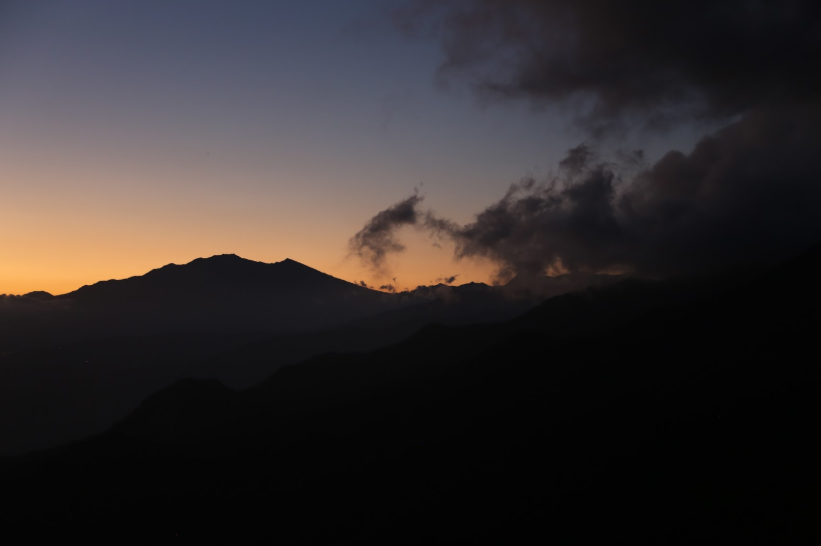
Watching Panama’s Best Sunsets From the Balcony at Lost and Found Hostel

There are sunsets you stop for, and then there are sunsets that make you completely forget what you were doing.

At Lost and Found Hostel, high in the mountains of Chiriquí, the balcony is one of those places where you can accidentally lose an hour simply because the sky has decided to put on a show. You might have been playing cards, drinking a beer, talking to someone you met that afternoon or trying to decide whether you have enough energy left for another walk. Then somebody looks toward the horizon and says, “Look at that.”

And suddenly everyone is outside.

Lost and Found sits high in the mountains of the Fortuna Forest Reserve, on the continental divide between Chiriquí and Bocas del Toro. From the property, the landscape stretches away toward the mountains, valleys and distant slopes around Boquete and Volcán Barú. It is a very different view from the classic Panama postcard of palm trees and tropical beaches.

This is mountain Panama, and sunset here has its own personality.

The balcony is the perfect place to do absolutely nothing

One of the best things about watching sunset from the balcony isn't really the sunset.

It's the fact that there is nowhere you need to go.

You don't have to hike to a viewpoint. You don't have to find a beach. You don't have to book a tour or climb a mountain. You can simply sit down with a drink and watch the landscape change.

The mountains that looked green and ordinary during the afternoon begin to take on deeper shades as the sun drops. Clouds catch the remaining light. Valleys become silhouettes. The sky can move from blue to yellow, orange, pink and purple in the space of a few minutes.

And because you are high in the mountains, clouds often become part of the performance.

Sometimes the sunset is a clean, dramatic explosion of colour.

Sometimes it is completely different.

The sun disappears behind clouds and the entire sky glows from underneath them, turning ordinary-looking clouds into enormous illuminated shapes.

You never quite know what you're going to get

That is part of the fun.

Tropical sunsets aren't necessarily predictable. Weather moves quickly through the mountains, and a cloudy afternoon can suddenly produce an incredible evening.

There are days when the sky seems determined to remain grey right until the last possible moment.

Then, just before sunset, a gap appears.

The sun slips underneath the cloud layer.

For ten minutes, everything changes.

The mountains catch the light. The clouds turn gold. The horizon becomes orange and pink, and everybody who was previously sitting inside somehow ends up standing on the balcony.

Then it's gone.

That's one of the reasons you don't really want to arrive at the balcony five minutes after sunset.

Sunset becomes a social event

At many hostels, sunset means taking a photograph and going back inside.

At Lost and Found, it can become part of the evening.

Someone has a guitar. Someone else has found a beer. A couple of backpackers are comparing where they've travelled from. Somebody is trying to photograph the same cloud with a phone that has seen better days.

People who didn't know each other an hour earlier are suddenly standing together watching the same sky.

That's one of the great things about a social hostel. The view gives everyone something to talk about.

You don't need an introduction.

You can simply point at the horizon and say, “That's pretty amazing.”

Conversation tends to take care of itself after that.

Bring a beer

There are few complicated instructions for enjoying a Lost and Found sunset.

Find a comfortable place.

Bring something cold to drink.

Don't stare at your phone.

Watch the sky.

Lost and Found has a jungle lounge atmosphere, so the sunset naturally becomes part of the evening rather than a separate tourist activity. There is no rush to get back to a tour bus or restaurant reservation.

You can sit there and let the day wind down.

And perhaps that is one of the most underrated luxuries of backpacking.

Not doing anything.

The mountains make it different

Beach sunsets get most of the attention in travel advertising.

There is a reason for that. A huge orange sun dropping into the Pacific Ocean is difficult to beat.

But mountain sunsets have another kind of drama.

At Lost and Found, you're watching light move across an enormous landscape. The mountains create layers, and clouds constantly rearrange the view.

You can watch sunlight disappear from one ridge while another remains illuminated.

You can see distant mountains become progressively darker.

You can watch mist and clouds settle into valleys as daylight fades.

And then, suddenly, the landscape that looked enormous during the afternoon becomes a series of dark silhouettes against the last colour in the sky.

It feels less like watching the sun go down and more like watching an entire landscape shut down for the night.

And then comes the best part

Don't leave immediately when the sun disappears.

The few minutes after sunset can sometimes be just as beautiful.

The sky doesn't instantly go dark. There can be a lingering band of colour along the horizon while the mountains become silhouettes.

This is often when people finally put their cameras down.

The conversation gets quieter.

The first stars begin appearing.

And somewhere in the jungle below, the evening shift is getting started.

At Lost and Found, night is when some of the forest's more unusual residents become active. Kinkajous, olingos, armadillos and other nocturnal wildlife can appear after dark, while the forest begins filling with completely different sounds.

The sunset is therefore not really the end of the day.

It's the transition between two completely different versions of the jungle.

A sunset worth staying for

A lot of backpacking is about movement.

Next bus. Next town. Next beach. Next waterfall. Next country.

Lost and Found is one of those places where it is worth slowing down.

Sit on the balcony.

Watch the mountains.

Have a beer.

Meet somebody new.

Wait for the first stars.

You might have arrived at Lost and Found thinking about getting to Boquete or Bocas del Toro the following day. You might have planned to stay one night and move on.

Then the sun starts going down.

Someone says, “Wow.”

You sit back down.

And suddenly tomorrow doesn't seem quite so important.

Because sometimes the best part of backpacking through Panama isn't finding another attraction.

It's finding a balcony where you can watch the entire day disappear.

Vaping in Panama: A Complete Guide for Travellers

If you are travelling around Panama and use a vape, there is one very important thing to understand before you arrive: Panama's rules surrounding electronic cigarettes have changed, and the legal situation is considerably more complicated than simply assuming that because you see people vaping, vaping must be legal.

Panama has taken a restrictive approach to electronic cigarettes, including devices that contain nicotine and those that do not. The country also regulates where these products can be used. For travellers, that means the sensible approach is to understand the rules before putting a vape in your luggage or using one in public.

Is vaping legal in Panama?

This is where things get complicated.

Panama passed Law 315 on June 30, 2022, which prohibited the use, importation and commercialization of electronic cigarettes, vaporizers and similar electronic nicotine or non nicotine devices. The original law also addressed internet purchases and promotion.

However, Panama's Ministry of Health subsequently acknowledged that the Supreme Court struck down that law on constitutional grounds. MINSA itself stated in 2024 that the original prohibition had been discarded following the Court's ruling.

That does not mean vaping became completely unrestricted.

Panama subsequently introduced Resolution 146 of January 31, 2025, which established restrictions concerning electronic cigarettes and similar products. The resolution came into force on July 31, 2025. Among other things, it prohibits their sale and use by minors and restricts advertising, promotion and sponsorship.

And the regulations continue to develop. In 2026, MINSA issued another resolution establishing new health-warning pictograms for packaging of nicotine and non nicotine administration systems.

So the practical takeaway for travellers is simple: don't assume that seeing vape shops or people vaping means every aspect of vaping is unrestricted under Panamanian law.

Can you bring a vape into Panama?

This is one of the trickiest questions because Panama's legislation and subsequent court decisions have changed the legal landscape.

The original Law 315 expressly prohibited importation, including internet purchases, while making an exception for goods entering free trade zones for subsequent export to another country.

Because the Supreme Court later struck down that law, the situation cannot accurately be described today simply as "all vapes are banned from entering Panama." MINSA itself acknowledges that the original prohibition was invalidated.

For a traveller, however, bringing a personal vape and importing vaping products commercially are two very different situations. Commercial importation, distribution and sale are subject to Panama's regulatory framework, and enforcement is a separate issue from what an individual tourist may physically carry.

If you are flying into Panama with a vape, check the current airline dangerous-goods rules as well. Lithium battery devices generally have to be carried according to airline and aviation safety requirements rather than simply being placed anywhere in checked luggage.

Can you buy vapes in Panama?

You may encounter vaping products despite the country's restrictive regulatory environment.

That is an important distinction: what is available for sale in Panama is not necessarily evidence that the product is fully authorized under the law.

MINSA continues to conduct inspections and enforcement activities concerning tobacco and electronic cigarettes. In June 2026, for example, health authorities reported commercial inspections and specifically distributed signs stating that electronic cigarette use was prohibited in certain environments.

In other words, don't assume that a product being displayed in a store means it has passed every applicable regulatory requirement.

Where can you vape?

This is probably more relevant to the average traveller than the technical details of importing products.

Panama has increasingly emphasized smoke and vape free public environments.

The regulations described by MINSA prohibit consumption of these products in a range of locations, including public and private offices, public transportation and transportation terminals, enclosed public places where people gather, sporting environments, common areas of buildings, enclosed workplaces and educational and health institutions.

That means airports, buses, terminals, restaurants, indoor public spaces and similar places are not somewhere you should simply assume you can vape.

The safest rule for travellers is:

If smoking isn't permitted, don't vape.

And even where vaping isn't specifically prohibited, asking the establishment first is a much better approach than creating a confrontation.

What about hotels and hostels?

This depends on the individual property's rules.

A hostel may have outdoor smoking areas while prohibiting vaping inside dormitories, bedrooms, common rooms or restaurants. Another property may prohibit both smoking and vaping throughout the property.

This is especially important in dormitories. Even if you personally don't mind the smell of vapor, your roommates may have allergies, sensitivities or simply not want to breathe someone else's aerosol while sleeping.

At a hostel, go outside and use the designated smoking area if there is one.

What exactly is in vape aerosol?

Despite the common expression "vape smoke," vaping doesn't actually produce ordinary cigarette smoke. It produces an aerosol created by heating a liquid.

Depending on the product, that aerosol can contain nicotine, propylene glycol, vegetable glycerin, flavoring compounds and other chemicals. MINSA has also warned that electronic cigarette aerosols can contain compounds including aldehydes, volatile organic compounds, metals and other substances.

"Vapor" therefore doesn't mean "just water."

That is particularly relevant when vaping indoors. Other people can be exposed to the aerosol even though it disappears much faster than cigarette smoke.

Is vaping safer than smoking?

This needs some nuance.

Vaping is not harmless, particularly when nicotine is involved. Nicotine is addictive, and vaping exposes the lungs to substances that would not otherwise be inhaled.

At the same time, saying that vaping is simply identical to smoking cigarettes is also an oversimplification. Traditional cigarettes burn tobacco and create smoke containing thousands of chemicals, many of which are toxic. Vaping heats a liquid rather than burning tobacco.

The health question is therefore more complicated than "safe versus dangerous."

For somebody who doesn't smoke, starting to vape introduces an unnecessary source of nicotine and other chemical exposure.

For an existing smoker, switching completely away from combustible cigarettes may change the nature and level of exposure to harmful substances, but that does not make vaping risk free.

And using both cigarettes and vapes doesn't necessarily provide the same potential benefit as completely replacing smoking.

Nicotine is the part that can sneak up on you

One of the biggest differences between modern disposable vapes and traditional cigarettes is how easy it can be to consume nicotine repeatedly.

You can take a few puffs while walking, another few while sitting at a bar, another few while waiting for a bus and another few minutes later without ever experiencing the clear beginning and end of a cigarette.

That can make nicotine consumption surprisingly difficult to keep track of.

Some modern devices also contain relatively high concentrations of nicotine, particularly products using nicotine salts. They can deliver nicotine smoothly without the harsh sensation that older cigarette style products produced.

That convenience is part of their appeal, but it can also make dependence easier to maintain.

What about nicotine free vapes?

A nicotine free vape eliminates the nicotine component, but it doesn't turn vaping into breathing clean air.

The aerosol still contains substances produced from the heated liquid and flavoring ingredients. Some devices may also produce particles and other compounds during heating.

And in Panama, the legal framework doesn't simply apply to nicotine containing devices. MINSA's regulations cover electronic administration systems with or without nicotine.

So "zero nicotine" isn't a blanket exemption from vaping regulations.

Vaping around beaches, jungles and outdoor areas

This is where visitors sometimes get confused.

Panama has huge amounts of outdoor space, and you will see people smoking or vaping in places where you might not expect it to be an issue.

But outdoors does not automatically mean permitted.

The regulations include restrictions involving certain open and closed environments, including areas associated with sporting activities.

National parks and protected areas can also have their own environmental and visitor regulations.

And regardless of the law, there is a good environmental argument for not vaping wherever you feel like it. Disposable vape batteries, cartridges and plastic components are particularly inappropriate as jungle or beach litter.

Never throw a disposable vape, cartridge or battery onto a trail.

What about vaping in Panama City?

You will encounter considerably more people, businesses and enforcement activity in Panama City than in some remote parts of the country.

The sensible approach is to treat vaping like smoking: use designated areas and don't vape inside public buildings, transportation, restaurants or other enclosed public spaces.

Don't assume that because somebody else is doing it, it is permitted.

What about buses?

Don't vape on buses.

Panama's regulations specifically include public transportation and transportation terminals among the places where consumption is prohibited.

That includes the kinds of buses backpackers commonly use to move around the country.

If you need nicotine during a long journey, plan around the stops rather than pulling out a vape inside the bus.

What about airports?

Airports are another place where you should be particularly careful.

Don't assume that because you are outside the terminal building you can automatically vape wherever you want. Follow the airport's designated smoking/vaping areas and posted rules.

Inside terminals, treat vaping as prohibited unless there is an explicitly designated area.

Panama's attitude toward vaping

Panama has generally taken a public-health-oriented approach to tobacco and nicotine products.

MINSA reported in August 2026 that only about 5% of people aged over 15 were using tobacco products overall, while electronic cigarette use among young people was an increasing concern. The ministry reported 1.5% electronic-cigarette use among the broader youth measure cited from its 2025 survey, while separate data for 13 to 15 year olds showed electronic-cigarette use at 8.5% in 2023.

The government continues to emphasize prevention, particularly among young people. In July 2026, MINSA again highlighted vaping as a public-health concern and promoted smoke-free environments.

So even if you see vaping in Panama, don't interpret that as the government taking a relaxed approach to it.

The backpacker's rulebook

If you're travelling around Panama with a vape, the easiest way to avoid problems is to keep the following rules in mind:

Don't vape on buses or public transportation.

Don't vape inside airports, terminals or public buildings.

Don't vape inside restaurants, bars or hostels unless the establishment specifically permits it in an appropriate area.

Don't vape in dormitories.

Don't assume outdoors automatically means legal.

Don't buy products simply because you see them openly displayed.

Don't leave disposable vapes or cartridges in the jungle, on beaches or anywhere else as litter.

Keep lithium battery devices packed according to your airline's current rules.

And perhaps most importantly, remember that Panama's vaping regulations have changed over time, so older travel blogs saying simply "vaping is completely banned" or "vaping is completely legal" may be describing an earlier version of the law.

The bottom line

Panama isn't a country where you should arrive assuming that vaping is treated exactly like smoking or that the presence of vape shops means there are no restrictions.

The country's original sweeping vape prohibition was struck down by the Supreme Court, but Panama subsequently introduced regulations covering electronic cigarettes and similar products, including restrictions on minors, advertising and where the products can be used.

For travellers, the golden rule is wonderfully simple: keep the vape out of public transportation and enclosed public spaces, use only permitted areas, respect individual hotel and hostel rules, and check the current regulations before travelling with vaping products.

Panama is a remarkably easy country to travel through without getting into trouble with a vape. You just need to remember that "I see other people doing it" isn't the same thing as "it's permitted here."

But yes, you will see lots of vaping and vape products for sale ;)

White Faced Monkeys in Panama: Curious, Clever and Usually Nothing to Fear

If you are travelling through Panama, especially around the forests, islands and national parks, there is a good chance you will eventually encounter one of the country’s most entertaining residents: the white faced capuchin monkey. With their expressive faces, dark bodies, pale cheeks and almost human looking hands, they can seem remarkably familiar. A troop moving through the trees can stop a hiking trail completely, with visitors standing underneath watching the monkeys swing, climb, investigate branches and occasionally stare right back at the humans.

White faced capuchins are among the most commonly encountered monkeys in Panama. They are highly intelligent, adaptable animals that live in groups and spend much of their lives moving through the forest canopy. They eat an enormous variety of foods, including fruit, seeds, insects, flowers, eggs and other small food items. Their intelligence is one of the reasons they are so fascinating to watch, but it is also one of the reasons people should be particularly careful about interacting with them.

Are white faced monkeys dangerous?

Generally, no. A healthy wild white faced capuchin that is behaving normally is not looking for a fight with tourists. In fact, most wild monkeys would much rather keep their distance from people. They may watch you closely, make vocalizations, move through the trees above you or occasionally come closer out of curiosity, but this is very different from being aggressive.

The important distinction is that a monkey is still a wild animal. It is not a dog, a pet or an attraction that exists for human entertainment. Even a relatively small capuchin has sharp teeth and strong hands, and any wild animal can react defensively if it feels threatened, trapped or provoked.

The safest way to enjoy them is surprisingly simple: look, photograph and keep your distance.

The biggest mistake is feeding them

Feeding wild monkeys might seem harmless. Someone has a banana, a piece of bread or a snack, a monkey approaches and everyone gets an amusing photograph. Unfortunately, that five second interaction can create much bigger problems.

Monkeys are extremely good at learning. If a capuchin discovers that approaching humans results in food, it can quickly begin associating people with meals. Eventually, it may stop behaving like a completely wild animal and start actively seeking out tourists.

That can lead to monkeys approaching backpacks, grabbing food, climbing onto people or becoming aggressive when food is not provided. What looks like a cute encounter can therefore contribute to a dangerous habit.

There is another problem: human food is not necessarily appropriate food for monkeys. Their natural diet is complicated and varies throughout the year. Processed snacks, sweets and other foods brought by tourists can alter their diet and behaviour.

And once a wild monkey becomes accustomed to being fed, it is the monkey that ultimately pays the price. Animals that become too comfortable around humans can become a nuisance, get injured, be removed from an area or develop increasingly confrontational behaviour.

Don't tease them either

There is a second rule that is easy to forget when you are standing underneath a troop of monkeys: don't try to get a reaction.

Don't wave food around. Don't make threatening gestures. Don't chase them for photographs. Don't attempt to touch them. Don't corner a monkey that has come down near a trail. And definitely don't try to grab a baby.

Capuchin troops have their own social structure, communication systems and boundaries. What seems funny to a tourist can be interpreted very differently by an animal that doesn't understand human intentions.

The best monkey encounter is one where the monkey remains a monkey and you remain a tourist.

Why they sometimes come surprisingly close

Seeing a white faced capuchin close to a trail does not necessarily mean that it wants to interact with you. Panama's forests contain plenty of places where wildlife and people cross paths, particularly around popular hiking trails, parks and areas where food has historically been available.

Capuchins are also naturally curious and intelligent. They investigate their surroundings constantly, so a human standing quietly on a trail can occasionally become something worth examining.

You might find a monkey sitting on a branch only a few metres away, staring at you as intensely as you are staring at it. That does not mean it is about to attack. It may simply be deciding whether you are interesting, harmless or potentially carrying something edible.

Keep your food packed away and let the monkey make the decision to move on.

Watch the whole troop

One of the great things about seeing white faced capuchins in Panama is that you rarely see just one. They are social animals and live in groups, so while you are watching one monkey in a tree, there may be several others hidden above you.

Listen for movement in the canopy. Branches shaking can reveal monkeys travelling overhead, while vocalizations can tell you that the troop is communicating. Sometimes the first indication that monkeys are nearby is simply a shower of leaves falling from above.

Young capuchins are particularly entertaining because they spend much of their time playing and developing the skills they will eventually need as adults. But again, resist the temptation to get closer. A baby monkey may look irresistibly cute, but its mother and the rest of the troop are never far away.

The best monkey encounter is a natural one

Panama is one of those countries where wildlife encounters can happen without a zoo, cage or organized attraction. You can be walking through the forest and suddenly realize that a troop of white faced capuchins is moving through the canopy above you.

That is part of what makes the experience special.

You haven't bought a ticket to make them perform. You haven't given them food to bring them closer. You have simply happened to enter their world for a few minutes.

Stand quietly. Keep your snacks in your bag. Give them space. Take your photographs without trying to make them pose. Then let them continue through the forest.

White faced monkeys are not Panama's little forest criminals waiting to attack tourists. They are intelligent, social wild animals that normally have very little interest in harming people. The safest and most respectful relationship is also the easiest one: watch them, enjoy them and leave them wild.

Panama’s Amazing Spider Monkeys: Masters of the Rainforest Canopy

If you are lucky enough to see a spider monkey in Panama, you may only get a few seconds to appreciate it. A long arm reaches for a branch, a powerful tail curls around a limb, the monkey swings across a gap in the canopy and suddenly it has disappeared into a wall of leaves. Spider monkeys are among the most spectacular animals in Panama’s forests, and almost everything about their bodies and behaviour is designed for a life high above the ground.

Panama is home to several forms of spider monkey belonging to the genus Ateles. One of the best known is Geoffroy’s spider monkey, Ateles geoffroyi, which occurs across parts of Panama and much of Central America. In eastern Panama, particularly toward the Darién, another remarkable form, the black headed spider monkey, Ateles fusciceps, is found. The taxonomy of these monkeys is complicated, with scientists continuing to examine how different populations and subspecies are related.

The first thing you notice about a spider monkey is its extraordinary prehensile tail. This is not simply a long tail for balance. It is effectively an additional gripping limb. The tip has a specialized, relatively hairless gripping surface that allows the monkey to hold onto branches. A spider monkey can suspend part of its body weight from its tail while reaching for food with its hands or moving its feet to another branch. Watching one hang upside down from a tree by its tail makes it immediately obvious that humans evolved with a rather different idea of useful equipment.

Their arms and legs are exceptionally long, giving them the proportions of an animal built for swinging. Their hands are also adapted for life in the canopy. Spider monkeys have very reduced thumbs, which allows their long fingers to form an effective hook around branches. Rather than gripping objects the way humans do, they are wonderfully adapted to wrapping their fingers around branches and moving rapidly through the trees.

Spider monkeys spend most of their lives in the canopy. They are strongly arboreal and generally prefer mature forest where trees form a connected network of crowns. Research in Panama has shown just how closely their movements can be tied to forest structure. Studies on Barro Colorado Island found that spider monkeys travel through the forest relatively quickly and can cover several kilometres in a day, using the connected canopy as their transportation system.

This makes forest fragmentation particularly important. Imagine walking through a city where every second road suddenly ends at a giant wall. That is somewhat like what a heavily fragmented forest can become for an arboreal monkey. A clearing that looks insignificant from the ground can represent a major obstacle when your entire world consists of tree branches. Maintaining connected forest is therefore extremely important for spider monkeys.

Their diet also makes them important to the rainforest. Fruit is a major part of what they eat, although they will also consume young leaves, flowers and seeds depending on what is available. When a fruiting tree is producing heavily, spider monkeys may concentrate around it and then travel considerable distances afterward.

Those journeys turn the monkeys into major seed dispersers. They swallow fruit, move through the forest and later deposit the seeds somewhere else. Some seeds can therefore be transported considerable distances from the parent tree. In a mature rainforest, this seemingly simple process can influence where new trees grow and how plant species spread.

Spider monkeys are also fascinating socially. Instead of remaining together as one rigid group all day, they often live in a large community that splits into smaller temporary groups while feeding and travelling. This is known as a fission fusion social system. The composition of these smaller groups can change over time. One morning you might see several animals travelling together, while later the same community may be divided into different combinations searching for food.

This social flexibility makes sense when you consider their diet. Fruit is scattered throughout the forest rather than sitting in one enormous supermarket. If dozens of monkeys tried to remain together while searching for small patches of ripe fruit, they would quickly compete with one another. Splitting into smaller groups allows them to exploit different parts of the forest.

They also have a surprisingly sophisticated system of communication. Spider monkeys use a variety of vocalizations to communicate across the forest, and their calls can travel through the canopy. This means that sometimes the first indication you have that spider monkeys are nearby is not visual at all. You hear movement, calls or branches breaking somewhere above you, look up and discover that an entire monkey highway is operating overhead.

They are also capable of moving extraordinarily quickly through the trees. A spider monkey does not necessarily climb every branch one at a time. It can swing, leap, hang, reach and pull itself forward in a fluid sequence of movements. Their long limbs and prehensile tails allow them to bridge gaps between branches that would look impossible to a human.

Barro Colorado Island provides one of the most interesting spider monkey stories in Panama. The population there disappeared after heavy hunting pressure. Between 1959 and 1966, researchers reintroduced at least 18 spider monkeys to the island. Only a portion survived the initial reintroduction, but those animals helped establish a new population. The island subsequently became an important location for studying spider monkey behaviour, ecology and forest use.

The story is significant because spider monkeys are particularly vulnerable to the loss of large, connected forests. They need extensive areas in which to search for food, and they depend heavily on mature trees. Hunting can also have a major effect because these monkeys reproduce relatively slowly compared with many smaller animals. Losing adult animals can therefore take a long time to compensate for.

Eastern Panama is especially important for wildlife because the forests of the Darién connect Central America with the enormous ecosystems of northern South America. This region contains some of the country's most extensive remaining wilderness and supports an extraordinary range of wildlife. Spider monkeys are part of this larger biological connection, moving through forests that ultimately form part of a much larger continental ecosystem.

There is also something fascinating about spider monkeys from an evolutionary perspective. Their body is essentially a collection of solutions to one problem: how do you live efficiently in a three dimensional forest? Long limbs allow them to reach distant branches. A gripping tail provides another point of contact. Reduced thumbs leave the fingers free to hook around branches. Their vision helps them judge distances between branches. Their social behaviour allows them to exploit widely scattered food resources.

For visitors, however, the challenge is much simpler: how do you actually find one?

Look up.

Seriously.

Most people walking through a rainforest naturally watch the trail. That makes sense when you are looking for snakes, frogs, insects or tracks. But spider monkeys are usually operating several metres above you. Look for shaking branches, movement in the canopy, leaves suddenly falling or silhouettes moving between trees. Listen as well. A good pair of binoculars can turn what appears to be a tiny dark shape in the canopy into a spectacular wildlife encounter.

And don't expect them to sit around for photographs. Spider monkeys are constantly moving. One moment you may have a perfect view of a face, and the next you are staring at an empty branch while the monkey has travelled twenty metres away.

That is part of what makes seeing them so exciting.

A troop moving through the Panamanian canopy can look almost unreal. One monkey hangs by its tail, another reaches across a gap, another grabs a fruit and disappears behind the leaves, while somewhere farther away you hear another animal calling. For a few moments, the forest above you becomes a living highway.

Then everything goes quiet.

The monkeys have moved on.

And you are left standing on the ground wondering how several large animals managed to disappear so completely.

Spider monkeys are more than entertaining jungle acrobats. They are important seed dispersers, highly social animals, indicators of mature forest and specialists of one of the most complex habitats on Earth. When you see one in Panama, you are not simply watching a monkey swinging through the trees. You are watching an animal that has evolved to live in an environment where the ground is almost irrelevant and the real world begins in the branches above your head.

Die unglaublichen Kletterkünstler Panamas: Das Leben der Spinnenaffen im Regenwald

Wer in Panama einen Spinnenaffen entdeckt, bekommt normalerweise nur wenige Sekunden Zeit, ihn zu bewundern. Ein langer Arm greift nach einem Ast, ein Schwanz wickelt sich um einen Zweig, ein Körper schwingt durch die Baumkronen und plötzlich ist das Tier verschwunden. Spinnenaffen gehören zu den spektakulärsten Bewohnern des panamaischen Regenwaldes und sind perfekt an ein Leben angepasst, das sich viele Meter über dem Boden abspielt.

In Panama kommen mehrere Formen aus der Gattung Ateles vor. Besonders bekannt ist der Geoffroy Spinnenaffe, Ateles geoffroyi, zu dessen panamaischen Formen unter anderem der sogenannte Panama Spinnenaffe gezählt wird. Im Osten Panamas kommt außerdem der Schwarzkopf Spinnenaffe, Ateles fusciceps, vor. Die genaue Einteilung dieser Tiere ist unter Wissenschaftlern allerdings nicht ganz unkompliziert. Einige Taxonomen behandeln A. fusciceps als eigenständige Art, während andere ihn enger mit dem Geoffroy Spinnenaffen verbinden.

Das auffälligste Merkmal eines Spinnenaffen ist natürlich sein außergewöhnlich langer Greifschwanz. Der Schwanz ist nicht einfach ein Anhängsel, das beim Klettern hinterherbaumelt. Er ist ein echtes Werkzeug. Die Unterseite der Schwanzspitze besitzt eine besonders griffige Haut, mit der sich das Tier an Ästen festhalten kann. Während die Hände nach Früchten greifen oder die Beine einen anderen Ast erreichen, kann der Schwanz einen Teil des Körpergewichts übernehmen. Dadurch entsteht der Eindruck, als hätte der Affe tatsächlich einen zusätzlichen Arm.

Sein ganzer Körper ist für diese Lebensweise gebaut. Spinnenaffen haben relativ lange Arme und Beine, einen beweglichen Körper und Hände, die sich hervorragend zum Greifen eignen. Anders als viele andere Affen besitzen sie keinen kräftigen Daumen, der ihre Hände wie unsere Hände arbeiten lässt. Stattdessen sind die langen Finger ideal, um Äste zu umfassen. Zusammen mit dem Schwanz ergibt sich ein Körper, der geradezu für das Leben im Kronendach konstruiert wurde.

Und dort verbringen sie einen großen Teil ihres Lebens. Spinnenaffen sind ausgesprochene Baumbewohner. Untersuchungen in Panama haben gezeigt, dass sie besonders hohe und ausgewachsene Bäume bevorzugen, weil dort die Baumkronen besser miteinander verbunden sind. Auf Barro Colorado Island wurden ihre Bewegungen mit der Struktur des Waldes verglichen. Spinnenaffen bewegten sich schnell durch den Wald und legten im Durchschnitt etwa 2,5 Kilometer pro Tag zurück. Ihre Bewegungsrouten waren dabei stark mit dem vorhandenen Kronendach verbunden.

Das erklärt auch, warum die Abholzung eines Waldes für Spinnenaffen ein viel größeres Problem sein kann, als es auf den ersten Blick aussieht. Für einen Menschen kann eine Lichtung von einigen hundert Metern einfach wie ein Stück freies Land aussehen. Für einen Affen, der sich normalerweise von Baumkrone zu Baumkrone bewegt, kann dieselbe Lichtung jedoch eine riesige Lücke darstellen. Wird der Wald zu stark zerschnitten, verschwinden die natürlichen „Baumautobahnen“, auf denen sich die Tiere fortbewegen.

Früchte stehen ganz oben auf dem Speiseplan. Spinnenaffen sind wichtige Fruchtfresser und suchen gezielt nach Bäumen, die gerade reife Früchte tragen. Je nachdem, was der Wald zu bieten hat, fressen sie außerdem Blätter, Blüten, Samen und andere pflanzliche Nahrung. Ihre Vorliebe für Früchte hat eine wichtige Nebenwirkung: Sie verteilen die Samen vieler Pflanzen im gesamten Wald.

Ein Spinnenaffe ist deshalb gleichzeitig Fruchtesser, Reisender und Gärtner des Regenwaldes. Er frisst eine Frucht hoch oben in einem Baum, bewegt sich anschließend vielleicht mehrere hundert Meter weiter und scheidet die Samen an einem anderen Ort wieder aus. Dadurch können Pflanzen neue Bereiche besiedeln. Bei großen Waldtieren ist diese Art der Samenverbreitung besonders wichtig, weil sie Samen über größere Entfernungen transportieren können.

Spinnenaffen sind außerdem ungewöhnlich sozial organisiert. Sie leben nicht einfach ständig als eine große Gruppe zusammen. Ihre Gemeinschaft kann sich in kleinere Gruppen aufteilen, die sich später wieder verändern oder zusammenfinden. Dieses sogenannte Fission Fusion System bedeutet, dass die Zusammensetzung einer Gruppe nicht immer gleich bleibt. An einem Tag können mehrere Tiere gemeinsam unterwegs sein, während sich am nächsten Tag andere Kombinationen bilden.

Auch die Größe ihrer Gemeinschaft kann beeindruckend sein. Eine größere Spinnenaffengemeinschaft kann aus zahlreichen Individuen bestehen, obwohl man im Wald oft nur einige wenige gleichzeitig sieht. Das liegt daran, dass die Tiere bei der Nahrungssuche auseinandergehen können. Wenn genügend Früchte an verschiedenen Stellen des Waldes vorhanden sind, gibt es wenig Grund für alle Tiere, ständig auf demselben Baum zu sitzen.

Ihre Kommunikation ist ebenfalls faszinierend. Im dichten Regenwald kann man sich nicht darauf verlassen, dass man andere Gruppenmitglieder ständig sehen kann. Geräusche werden deshalb zu einem wichtigen Bestandteil des sozialen Lebens. Spinnenaffen können verschiedene Rufe erzeugen und dadurch über Entfernungen hinweg miteinander kommunizieren. Manchmal hört man sie durch die Baumkronen, bevor man überhaupt einen Affen entdeckt.

Wer in Panama Affen beobachtet, sollte deshalb nicht nur auf seine Augen vertrauen. Die Ohren sind mindestens genauso wichtig. Ein plötzliches Rascheln, ein schwerer Körper, der durch Blätter kracht, oder Rufe aus den Baumkronen können verraten, dass sich irgendwo über dem Wanderweg gerade eine ganze Affengruppe bewegt.

Panama hat sogar eine interessante Geschichte mit Spinnenaffen auf Barro Colorado Island. Die dortige Population war durch Jagd verschwunden. Zwischen 1959 und 1966 wurden anschließend mindestens 18 Spinnenaffen wieder auf der Insel angesiedelt. Nur ein kleiner Teil überlebte die Wiedereinführung, aber diese Tiere bildeten den Ausgangspunkt für eine neue Population. Das Beispiel zeigt, wie empfindlich diese Tiere gegenüber menschlicher Verfolgung sein können, aber auch, dass geeignete Wälder unter den richtigen Bedingungen wieder Populationen tragen können.

Heute ist die Situation der Spinnenaffen in Panama allerdings nicht überall rosig. Lebensraumverlust und Jagd gehören zu den wichtigsten Problemen. Besonders problematisch ist die Zerstörung großer zusammenhängender Waldflächen. Spinnenaffen brauchen große Gebiete mit ausreichend Nahrung und einem gut verbundenen Kronendach. Sie gehören deshalb zu den Tieren, die besonders stark davon profitieren, wenn große Waldgebiete erhalten bleiben.

Im Osten Panamas liegen einige der wichtigsten verbliebenen Lebensräume. Der Darién ist dabei besonders bedeutend. Dort treffen die Wälder Mittelamerikas auf die riesigen tropischen Waldgebiete Südamerikas. Der Übergang ist biologisch außergewöhnlich interessant, und auch verschiedene Formen von Spinnenaffen kommen in dieser Region vor.

Interessant ist auch, dass Panama bei Spinnenaffen eine Art biologische Schnittstelle darstellt. Die westlichen und zentralen Waldgebiete des Landes gehören zur mittelamerikanischen Welt, während im Osten die Verbindung nach Kolumbien und damit nach Südamerika beginnt. Bei Ateles überschneiden sich deshalb unterschiedliche Formen und taxonomische Diskussionen. Wissenschaftler untersuchen weiterhin, wie diese Populationen miteinander verwandt sind und wie sie am besten klassifiziert werden sollten. Genetische Untersuchungen haben gezeigt, dass die Geschichte dieser Tiere komplizierter ist, als ihre äußere Erscheinung vermuten lässt.

Für Wanderer ist die vielleicht wichtigste Erkenntnis jedoch viel einfacher: Schauen Sie nach oben. Viele Menschen laufen durch den Regenwald und suchen Tiere am Boden. Bei Spinnenaffen befindet sich die eigentliche Bühne oft 15, 20 oder noch mehr Meter über ihnen. Ein Fernglas kann deshalb einen gewaltigen Unterschied machen.

Manchmal entdeckt man zuerst eine Bewegung zwischen den Blättern. Dann einen langen Arm. Danach einen Schwanz, der sich um einen Ast wickelt. Plötzlich springt ein zweites Tier über eine Lücke und ein drittes hängt kopfüber an einem Ast. Innerhalb weniger Sekunden kann sich der gesamte Wald über Ihnen in Bewegung setzen.

Und dann sind sie wieder weg.

Vielleicht ist genau das der besondere Reiz der Spinnenaffen. Sie sind keine Tiere, die geduldig neben einem Wanderweg auf Touristen warten. Sie gehören zu einer Welt über unseren Köpfen, die die meisten Menschen nur dann bemerken, wenn sie für einen kurzen Augenblick sichtbar wird.

Panamas Regenwald ist voller Tiere, die man sehen kann. Die Spinnenaffen gehören zu den Tieren, die man zuerst hören, dann suchen und schließlich viel zu schnell wieder verlieren kann. Und wenn ein langer Schwanz hoch oben zwischen den Ästen verschwindet, erinnert er einen daran, dass der Dschungel nicht nur auf dem Boden stattfindet. Ein großer Teil davon befindet sich direkt über unseren Köpfen.

The Different Kinds of Forests in Panama

Panama may look like a small country on a map, but its forests are remarkably diverse. Stretching between Costa Rica and Colombia, with the Caribbean Sea on one side and the Pacific on the other, Panama sits at a biological crossroads. Mountains rise quickly from both coasts, clouds collect around the higher elevations, enormous rivers cut through lowland forests, and dry forests survive in areas where the rainy season is followed by months of intense sunshine. The result is not one giant “Panamanian jungle,” but a collection of very different forests, each with its own climate, plants, animals and personality.

The lowland tropical rainforest is probably what most people imagine when they hear the word Panama. These are the hot, humid forests found at lower elevations, particularly in places such as Darién, the Caribbean lowlands and parts of the Canal Zone. They can receive enormous amounts of rainfall and support an extraordinary variety of trees, vines, palms, orchids, insects, birds and mammals. The canopy can form a huge green roof dozens of metres above the ground, while the forest floor remains comparatively dark. This is where you can encounter monkeys, sloths, agoutis, peccaries, armadillos, colourful frogs, toucans and countless insects. It is also the kind of forest where you can walk for an hour and see only a fraction of what is actually living around you.

One of the most fascinating things about a tropical rainforest is that it is not simply a collection of trees. Vines climb toward the canopy, epiphytes grow on branches without taking nutrients directly from the soil, fungi break down fallen vegetation and insects pollinate flowers and recycle organic material. A dead tree can become an entire miniature ecosystem. The forest is constantly growing, dying, competing and regenerating, often all at the same time.

Cloud forests are a completely different experience. As you climb into Panama's mountains, temperatures drop and clouds and mist become increasingly important. In places such as the highlands around Boquete, Volcán and the Cordillera de Talamanca, forests can remain wet for long periods because moisture from the clouds settles directly onto vegetation. Trees become covered with mosses, lichens, bromeliads and orchids, and the entire forest can appear almost prehistoric when the mist rolls through.

Cloud forests are particularly important for birds. Panama's mountain forests provide habitat for species such as the resplendent quetzal, mountain tanagers, hummingbirds and bellbirds. The vegetation is often dense and covered in epiphytes, giving the forest a completely different appearance from the hot lowland jungle. A trail can sometimes feel cool and damp enough that you forget you are in tropical Panama at all.

The montane forests become even more interesting at higher elevations. These forests are found on Panama's mountain slopes and peaks, particularly around the country's highest areas. Trees tend to become shorter and more twisted as conditions become colder, windier and more exposed. The vegetation may not look as spectacularly gigantic as lowland rainforest, but it is often exceptionally rich in specialised species. On high mountain trails, temperature, wind, cloud cover and soil conditions can change dramatically over surprisingly short distances.

Then there is a forest type that many visitors do not expect to find in Panama: tropical dry forest. Much of the country is extremely wet, but parts of the Pacific side experience a pronounced dry season. During the driest months, some trees lose their leaves, the landscape becomes much browner and sunlight reaches the ground much more easily. Areas around the Azuero Peninsula and parts of central and western Panama contain important examples of this ecosystem.

Dry forest has its own character. Instead of the permanently green appearance of rainforest, it can change dramatically between seasons. Trees may look almost bare during the dry period and then respond explosively when the rains arrive. Wildlife adapted to these conditions has to cope with large changes in water availability and food. It is a reminder that Panama is not uniformly wet and that the country's famous tropical greenery has more than one version.

Mangrove forests form another completely different world. Instead of growing on ordinary soil, mangroves live where land and sea meet. Their roots must cope with saltwater, changing tides, soft mud and low oxygen levels. Some mangroves develop spectacular tangled root systems that look almost like they belong in another planet's landscape. These forests are extremely important nurseries for fish, crabs and other marine life and also provide habitat for birds and numerous other animals.

Panama has extensive mangrove ecosystems on both its Pacific and Caribbean coasts, although the Pacific coast contains particularly large areas. From a kayak or small boat, a mangrove forest can look deceptively quiet. Under the water and among the roots, however, there can be an enormous amount of activity. Juvenile fish, crustaceans and other organisms use the protected environment before moving into larger coastal ecosystems.

Swamp forests and seasonally flooded forests add another layer to Panama's ecological diversity. In low lying areas, rivers and rainfall can periodically or permanently flood the forest floor. Plants and animals living there have to deal with waterlogged conditions that would be unsuitable for many ordinary terrestrial species. Some forests can even look completely different depending on the season, with areas that appear to be ordinary woodland becoming flooded during periods of heavy rainfall.

The Darién region contains some of Panama's most extensive and least disturbed forests and is one of the country's great biological treasures. Located in eastern Panama next to Colombia, Darién forms part of the larger ecological connection between Central and South America. The forests there contain an extraordinary mixture of Central and South American wildlife. Jaguars, harpy eagles, tapirs, monkeys, peccaries and countless other species occur in the region. It is also one of the places where the sheer scale and wildness of Panama's forests become particularly obvious.

There are also gallery forests, which grow along rivers and streams. These strips of forest can remain greener than surrounding areas during dry periods because they have access to water. They create important corridors through the landscape, allowing animals to move between different habitats. A river surrounded by forest is therefore much more than a pretty tropical scene. It can function as a biological highway.

Panama's forests are also heavily influenced by elevation. A relatively short drive can take you from hot lowland rainforest into cooler mountain forest and eventually into cloud covered highlands. This dramatic change in altitude is one reason Panama can contain such an incredible variety of habitats within a relatively small geographical area.

For travellers, this means that “going into the jungle” can mean very different things depending on where you are. A hike around the Canal Zone may take you through humid lowland rainforest filled with monkeys and birds. A mountain trail near Boquete can lead through moss covered cloud forest where hummingbirds and quetzals are more likely to steal the show. A trip toward the Azuero Peninsula can reveal dry forest that looks completely different from the classic jungle. Along the coast, mangroves create an amphibious forest where the boundary between land and ocean almost disappears.

And this is one of the reasons Panama is so fascinating for nature lovers. The country is small enough that you can experience several completely different forest ecosystems without travelling enormous distances. You can begin the day sweating in a lowland jungle, drive into the mountains and finish the afternoon surrounded by mist and moss. A few hours later, you could theoretically be beside a mangrove swamp or standing in a much drier Pacific landscape.

For anyone travelling through the country, forests should not simply be viewed as scenery between destinations. They are the reason Panama has such extraordinary biodiversity in the first place. The monkeys in the canopy, the sloths hiding in trees, the frogs calling after rain, the hummingbirds around flowering plants, the orchids growing on branches and even the insects crawling through the leaf litter are all parts of different forest systems.

And sometimes the most interesting forest is the one that looks completely ordinary at first. Walk slowly, stop talking for a minute and let your eyes adjust. The jungle starts revealing itself. A movement in the leaves becomes a monkey. A strange call comes from somewhere above. Something enormous flies between two trees. A tiny frog appears beside the trail. What looked like an empty wall of green suddenly turns into thousands of individual stories happening simultaneously.

That is the real magic of Panama's forests. They are not just places full of trees. They are entire worlds stacked on top of each other.

Qu’est ce qui peut vous piquer ou vous mordre pendant une randonnée au Panama ?

Le Panama est un pays extraordinaire pour la randonnée, notamment parce que ses forêts tropicales regorgent de vie. Pendant que des singes se déplacent dans les arbres, que les toucans passent au dessus de votre tête et que les grenouilles se cachent dans la végétation, tout un autre monde s’active au niveau du sol. Et ce monde peut parfois vous réserver quelques surprises. Moustiques, tiques, taons, fourmis, guêpes, mille pattes, scorpions et serpents font tous partie de la nature panaméenne. La grande majorité ne représente pas un danger sérieux pour les randonneurs, mais il est utile de savoir lesquels méritent un peu plus d’attention.

Les moustiques sont probablement les insectes les plus courants pendant une randonnée au Panama. Certaines espèces peuvent transmettre des maladies comme la dengue, le Zika ou le chikungunya, et certaines régions présentent également un risque de paludisme. Il ne faut pas non plus penser que les moustiques ne sortent qu’au coucher du soleil. Certaines espèces sont particulièrement actives pendant la journée, tandis que d’autres préfèrent le matin, le soir ou la nuit. Un bon répulsif contenant du DEET, de la picaridine ou un autre principe actif efficace peut être très utile. Des vêtements légers qui couvrent les bras et les jambes sont également une bonne idée dans les zones très boisées.

Les tiques sont beaucoup moins visibles, mais elles méritent tout autant votre attention. Elles peuvent s’accrocher aux vêtements ou à la peau sans que vous vous en rendiez compte. Elles sont particulièrement faciles à rencontrer dans les herbes hautes, les broussailles, les feuilles mortes et les zones de transition entre forêt et espaces ouverts. Après une randonnée, vérifiez les jambes, les chevilles, derrière les genoux, autour de la taille, sous les bras, derrière les oreilles et dans les cheveux. Il est également judicieux d’examiner les vêtements et le sac à dos. Une tique ne signifie évidemment pas automatiquement qu’une maladie a été transmise, mais mieux vaut la retirer rapidement.

Les taons sont une autre histoire. Les femelles se nourrissent de sang et leur morsure peut être nettement plus douloureuse que celle d’un moustique. Ils sont particulièrement présents dans les endroits ensoleillés, près de l’eau, des animaux ou aux lisières de forêt. Ils peuvent aussi être étonnamment persistants. Une personne qui essaie simplement de profiter tranquillement d’un sentier peut soudain avoir l’impression d’être devenue la principale attraction touristique du taon. Les vêtements longs et légers offrent une bonne protection.

Il existe également de minuscules insectes piqueurs, souvent appelés no see ums, ou moucherons piqueurs. Ils sont tellement petits qu’on ne les remarque parfois qu’après l’apparition des démangeaisons. Ils apprécient les environnements humides et certaines zones proches de l’eau. Les phlébotomes, souvent appelés petites mouches des sables, sont également présents au Panama et certaines espèces peuvent transmettre la leishmaniose. Là encore, répulsif et vêtements couvrants sont vos meilleurs alliés.

Les fourmis peuvent également devenir très désagréables si vous marchez au mauvais endroit. Le Panama possède une incroyable diversité de fourmis et la plupart sont parfaitement inoffensives. Certaines espèces peuvent cependant mordre ou piquer douloureusement. Le véritable problème survient généralement lorsque quelqu’un pose le pied directement sur une colonie. Si vous voyez une longue procession de fourmis ou une activité inhabituelle autour d’un trou dans le sol, mieux vaut simplement continuer votre chemin. Le meilleur endroit pour faire une pause n’est probablement pas celui où plusieurs milliers de fourmis semblent avoir organisé une réunion.

Les guêpes et les abeilles doivent également être respectées. Une guêpe qui passe près de vous n’a généralement aucune raison de vous attaquer. Le risque augmente surtout lorsque vous vous approchez d’un nid. Dans la forêt tropicale, les nids peuvent être dissimulés dans les arbres, les buissons, les cavités ou sous des structures. Si vous remarquez beaucoup d’insectes qui entrent et sortent constamment du même endroit, éloignez vous simplement. Il n’est jamais nécessaire de vérifier avec un bâton ce qui se trouve à l’intérieur.

Les scolopendres sont parmi les créatures les plus impressionnantes que vous pouvez rencontrer sur les sentiers panaméens. Certaines espèces du genre Scolopendra peuvent atteindre une taille respectable et possèdent des appendices venimeux près de la tête. Elles utilisent leur venin pour immobiliser leurs proies, notamment des insectes et d’autres petits animaux. Une grosse scolopendre peut infliger une morsure très douloureuse. Elle ne cherche cependant pas à attaquer les humains. Si vous en voyez une sur le chemin, laissez lui simplement de l’espace. Et si elle se trouve sous un morceau de bois ou une pierre, mieux vaut ne pas essayer de la déloger avec les mains.

Les scorpions sont surtout intéressants à rencontrer lors des promenades nocturnes. Ils sont généralement discrets pendant la journée et deviennent plus actifs après la tombée de la nuit. Une lampe est donc particulièrement utile lors des randonnées nocturnes. Regardez où vous posez les pieds et évitez surtout de mettre les mains dans un trou, sous une pierre ou dans une végétation dense sans avoir vérifié auparavant.

Les mille pattes, quant à eux, sont souvent confondus avec les scolopendres. Ils sont généralement beaucoup plus lents et se nourrissent principalement de matière végétale en décomposition. Certaines espèces peuvent libérer des substances chimiques irritantes lorsqu’elles sont dérangées. Ce n’est donc pas une bonne idée de les manipuler, surtout avant de se toucher les yeux.

Et puis il y a évidemment les serpents. Le Panama abrite de nombreuses espèces de serpents, dont certaines sont venimeuses. La majorité préfère éviter les humains et chercher à s’éloigner. Le problème est souvent que vous ne les voyez pas avant d’être très proche. Une bonne paire de chaussures, un peu d’attention sur le sentier et une lampe la nuit constituent des précautions simples et efficaces. Si vous apercevez un serpent, gardez vos distances et ne tentez jamais de le capturer ou de le déplacer.

Enfin, il existe un danger beaucoup moins exotique mais probablement plus important pour de nombreux randonneurs : la chaleur tropicale. L’humidité peut être élevée et une randonnée relativement courte peut devenir épuisante sous le soleil. Emportez suffisamment d’eau, protégez vous du soleil et faites des pauses régulièrement. Dans la forêt tropicale, la distance indiquée sur une carte ne raconte pas toujours toute l’histoire.

La meilleure façon de profiter des sentiers panaméens n’est donc pas d’avoir peur de chaque créature qui possède six ou huit pattes. Quelques habitudes simples suffisent : utiliser un répulsif, porter des vêtements légers couvrants lorsque c’est nécessaire, mettre des chaussures fermées, vérifier sa peau après une randonnée, inspecter ses vêtements et ses chaussures, utiliser une lampe la nuit et ne jamais mettre la main dans un endroit que l’on ne peut pas voir.

Et surtout, laissez les animaux tranquilles. La plupart ne s’intéressent absolument pas à vous. Le moustique cherche du sang, le taon cherche également du sang, la scolopendre cherche probablement quelque chose à manger et le serpent préférerait généralement être ailleurs.

C’est justement ce qui rend les randonnées au Panama aussi intéressantes. La forêt n’est pas un décor autour du sentier. Elle vit partout, au dessus de votre tête, sous vos pieds et dans les buissons à quelques centimètres de vous. La plupart des animaux resteront invisibles. Certains vous laisseront simplement passer. Et de temps en temps, une toute petite créature décidera que vous êtes soudainement la chose la plus intéressante de toute la forêt.

Was kann Sie beim Wandern in Panama beißen oder stechen?

Panama ist ein fantastisches Land zum Wandern, denn der Dschungel steckt voller Leben. Während über einem Affen durch die Baumkronen springen, Tukane vorbeifliegen und Frösche aus dem Laub rufen, bewegt sich unter den Füßen eine ganz andere Welt. Und diese Welt kann manchmal etwas lästig werden. Mücken, Zecken, Bremsen, Ameisen, Wespen, Hundertfüßer, Skorpione und andere kleine Tiere gehören genauso zum tropischen Ökosystem wie Faultiere und Kolibris. Die meisten sind eher unangenehm als gefährlich, aber wer weiß, worauf man achten sollte, kann viele Probleme vermeiden.

Mücken sind wahrscheinlich die häufigsten Plagegeister beim Wandern in Panama. Es gibt zahlreiche Mückenarten, und einige können Krankheiten wie Dengue, Zika und Chikungunya übertragen. In bestimmten Regionen Panamas besteht außerdem ein Malariarisiko. Dabei sollte man nicht den Fehler machen zu glauben, dass Mücken nur bei Sonnenuntergang aktiv sind. Verschiedene Arten haben unterschiedliche Aktivitätszeiten. Manche sind tagsüber unterwegs, andere eher in der Dämmerung oder nachts. Ein gutes Insektenschutzmittel mit DEET, Picaridin oder einem anderen geeigneten Wirkstoff kann beim Wandern einen großen Unterschied machen. Lange, leichte Kleidung ist besonders in dicht bewachsenen Gebieten ebenfalls sehr praktisch.

Zecken sind weniger auffällig, können aber ebenfalls zum Problem werden. Man spürt eine Zecke oft überhaupt nicht, wenn sie sich an der Kleidung oder Haut festsetzt. Besonders dort, wo man durch hohes Gras, dichtes Gebüsch, Laub oder an Waldrändern läuft, lohnt sich nach der Wanderung eine Kontrolle. Schauen Sie besonders an den Knöcheln, Beinen, hinter den Knien, an der Taille, unter den Armen, hinter den Ohren und in den Haaren nach. Auch Kleidung und Rucksack sollte man überprüfen. Eine gefundene Zecke bedeutet nicht automatisch, dass man sich mit einer Krankheit angesteckt hat, aber sie sollte möglichst schnell entfernt werden.

Bremsen können dagegen kaum übersehen werden. Die Weibchen benötigen Blut und besitzen Mundwerkzeuge, mit denen sie die Haut aufschneiden und Blut aufnehmen. Deshalb kann der Stich beziehungsweise Biss deutlich schmerzhafter sein als der einer Mücke. Bremsen sind besonders lästig in der Nähe von Wasser, auf offenen Flächen, in der Umgebung von Vieh und an sonnigen Waldrändern. Sie können ausgesprochen hartnäckig sein und einen Wanderer eine ganze Weile verfolgen. Lange Hosen und ein leichtes Oberteil können helfen, wobei eine besonders entschlossene Bremse manchmal trotzdem eine freie Hautstelle findet.

Winzige Stechmücken und Gnitzen, die sogenannten No-see-ums, können ebenfalls nerven. Sie sind so klein, dass man sie manchmal erst bemerkt, wenn die Haut bereits juckt. Sie können vor allem in feuchten Gebieten, in dichter Vegetation und in der Nähe von ruhigem Wasser auftreten. Auch Sandmücken kommen in Panama vor, und bestimmte Arten können Leishmaniose übertragen. Für Wanderer gelten im Grunde dieselben Vorsichtsmaßnahmen wie gegen Mücken: Insektenschutzmittel verwenden, bei Bedarf Haut bedecken und nicht unnötig lange an besonders stark betroffenen Stellen sitzen bleiben.

Bei Ameisen sollte man vor allem darauf achten, wo man seine Füße abstellt. Panama besitzt eine unglaubliche Vielfalt an Ameisen, und die meisten sind völlig harmlos und sogar faszinierend zu beobachten. Einige Arten können allerdings schmerzhaft beißen oder stechen. Feuerameisen sind ein gutes Beispiel. Das Problem ist normalerweise nicht die einzelne Ameise, die über den Weg läuft. Das Problem ist, wenn man versehentlich mitten auf eine Kolonie tritt. Wer an einem Weg eine Pause macht, sollte deshalb nicht einfach irgendwo auf den Boden treten oder seinen Rucksack abstellen. Wenn plötzlich Tausende Ameisen aus einer Stelle kommen oder in einer dichten Spur unterwegs sind, ist das wahrscheinlich ein guter Ort, an dem man besser nicht seine Picknickpause macht.

Wespen und Bienen sollte man ebenfalls respektieren. Eine einzelne Wespe, die an einem vorbeifliegt, interessiert sich normalerweise nicht für den Wanderer. Gefährlich wird es vor allem, wenn man ein Nest stört. Im tropischen Wald können Nester in Bäumen, Büschen, Hohlräumen oder unter Gebäudedächern versteckt sein. Wenn Sie bemerken, dass zahlreiche Wespen ständig an einer bestimmten Stelle ein und aus fliegen, gehen Sie einfach weiter. Es gibt keinen guten Grund, herauszufinden, was sich dort befindet, indem man mit einem Stock hineinstochert.

Hundertfüßer gehören zu den beeindruckendsten Krabbeltieren Panamas. Besonders große Arten der Gattung Scolopendra können ziemlich stattlich werden. Sie sind keine Insekten, sondern gehören zu den Tausendfüßern im weiteren zoologischen Sinn und besitzen vorne am Körper speziell umgebildete Giftklauen. Damit überwältigen sie Insekten, Spinnen und andere kleine Tiere. Ein großer Hundertfüßer kann einen sehr schmerzhaften Biss verursachen. Er ist jedoch nicht auf Menschen aus. Wenn Sie einen auf dem Weg entdecken, lassen Sie ihn einfach vorbeilaufen. Und wenn er unter einem Stück Holz oder einem Stein sitzt, sollten Sie ihn keinesfalls mit der Hand hervorholen.

Skorpione sind eine weitere Begegnung, die besonders bei Nacht möglich ist. Sie verstecken sich tagsüber und werden häufig nach Einbruch der Dunkelheit aktiv. Wer bei einer Nachtwanderung einen Skorpion entdeckt, muss nicht sofort in Panik geraten. Er ist Teil des normalen tropischen Ökosystems. Eine Taschenlampe ist bei Nachtwanderungen deshalb besonders wichtig. Schauen Sie, wohin Sie treten, und greifen Sie niemals blind unter Steine, Holzstücke oder in Löcher und dichtes Pflanzenmaterial.

Tausendfüßer sehen wesentlich gefährlicher aus, als sie normalerweise sind. Sie werden häufig mit Hundertfüßern verwechselt, bewegen sich aber viel langsamer und ernähren sich überwiegend von abgestorbenem Pflanzenmaterial. Viele rollen sich bei Gefahr zu einer Spirale zusammen. Sie besitzen nicht die Giftklauen der Hundertfüßer, können aber je nach Art chemische Abwehrstoffe absondern, die Haut und besonders die Augen reizen können. Deshalb sollte man auch einen Tausendfüßer nicht unnötig anfassen und danach keinesfalls die Augen reiben.

Und dann gibt es natürlich noch ein Tier, das kein „Schädling“ ist, aber beim Wandern in Panama immer respektiert werden sollte: die Schlange. Panama besitzt zahlreiche Schlangenarten, darunter auch giftige Arten. Die meisten Schlangen wollen Menschen aus dem Weg gehen und versuchen zu fliehen. Das größte Problem besteht häufig darin, dass man sie überhaupt nicht bemerkt. Eine Schlange, die regungslos neben dem Weg liegt oder sich in der Vegetation versteckt, kann erstaunlich schwer zu erkennen sein. Gute Wanderschuhe, Aufmerksamkeit auf dem Weg und eine Taschenlampe nach Einbruch der Dunkelheit sind einfache Vorsichtsmaßnahmen. Wenn Sie eine Schlange sehen, geben Sie ihr ausreichend Abstand und versuchen Sie niemals, sie zu fangen oder anzufassen.

Eine weitere Gefahr, die zwischen all den exotischen Tieren leicht vergessen wird, ist die tropische Hitze. Panama kann heiß und extrem feucht sein, und selbst ein relativ kurzer Weg kann anstrengend werden. Genügend Wasser, Sonnenschutz und regelmäßige Pausen sind wichtig. Ein Wanderweg, der auf der Karte harmlos aussieht, kann bei tropischer Hitze plötzlich wesentlich anspruchsvoller werden.

Die beste Strategie gegen die kleinen Plagegeister Panamas besteht nicht darin, Angst vor jedem Tier mit sechs oder acht Beinen zu haben. Ein paar einfache Gewohnheiten reichen meistens aus: Insektenschutzmittel benutzen, bei Bedarf lange leichte Kleidung tragen, geschlossene Schuhe anziehen, nach Wanderungen nach Zecken suchen, Schuhe und Kleidung ausschütteln, die draußen gelegen haben, nachts eine Taschenlampe verwenden und niemals blind unter Steine, Holz oder dichtes Pflanzenmaterial greifen.

Und vielleicht am wichtigsten: Lassen Sie die Tiere in Ruhe. Die meisten interessieren sich überhaupt nicht für Sie. Die Mücke möchte Blut, die Bremse ebenfalls, der Hundertfüßer möchte wahrscheinlich eine Kakerlake und die Schlange möchte meistens einfach verschwinden.

Das gehört zum Wandern in Panama dazu. Der Dschungel ist kein Zoo, sondern ein lebendiges Ökosystem, das rund um die Uhr funktioniert. Die meisten Tiere werden Sie nur kurz sehen. Manche werden Sie überhaupt nicht bemerken. Und gelegentlich entscheidet ein winziges Tier, dass Sie gerade interessanter aussehen als das restliche Dschungelangebot.

What Can Bite or Sting You While Hiking in Panama?

Hiking in Panama is an incredible experience because the forest is absolutely packed with life. You can walk beneath towering trees while monkeys move through the canopy, hear frogs calling from hidden streams, watch butterflies disappear into the vegetation and suddenly notice a giant centipede crossing the trail. But a tropical forest also comes with a few creatures that are much more interested in you than you are in them. Mosquitoes, ticks, horse flies, ants, wasps, centipedes, scorpions and other biting or stinging creatures are all part of the experience. Most are more annoying than dangerous, but knowing what to watch for makes hiking much more comfortable.

Mosquitoes are probably the most obvious pest. Panama has many mosquito species, and some can transmit diseases including dengue, Zika and chikungunya. Malaria is also present in some parts of Panama, although the risk varies considerably by region. Different mosquitoes are active at different times, so don't assume that mosquitoes are only a problem at sunset. Some species are active during the daytime, while others are more active around dusk and during the night. A good insect repellent containing DEET, picaridin or another recognized active ingredient is one of the easiest ways to make a jungle hike more enjoyable. Long, lightweight clothing is also useful, particularly when hiking through dense vegetation.

Ticks are another one to take seriously, partly because they are so easy to miss. Unlike mosquitoes, you may never notice a tick attaching itself to you. They are particularly associated with vegetation, tall grass, forest edges and leaf litter. A tick can climb onto your shoes or clothing and eventually find a warm area of exposed skin. After hiking, especially if you've been walking through dense vegetation, it is worth checking your ankles, legs, waist, behind your knees, armpits, around your ears and through your hair. Check your clothing and backpack as well. Finding a tick doesn't automatically mean you've caught a disease, but removing it promptly is sensible.

Horse flies are another tropical hiking nuisance that people sometimes underestimate. These are much larger and more noticeable than mosquitoes, and their bites can be surprisingly painful. Unlike mosquitoes, which use a relatively delicate feeding structure, female horse flies have mouthparts adapted for cutting the skin and feeding on blood. You often know immediately when one has landed on you because it can feel like someone has pinched you. Horse flies are especially annoying around open areas, rivers, wetlands, livestock and sunny forest clearings. They can be persistent, and swatting at them sometimes seems to encourage them rather than discourage them. Long pants and shirts can help, although a determined horse fly can occasionally find exposed skin anyway.

No-see-ums and biting midges are another reason tropical evenings can become itchy. These tiny insects can be almost impossible to spot, and you may feel their bites long before you figure out what caused them. They can be particularly noticeable around damp areas, vegetation and still water. Panama also has sand flies, some of which can transmit leishmaniasis. For travelers, the practical solution is much the same as with mosquitoes: use repellent, cover exposed skin when appropriate and don't spend unnecessary amounts of time sitting motionless in areas where biting insects are particularly active.

Then there are the ants, and Panama has an extraordinary variety. Most ants you encounter are completely harmless and fascinating to watch, but some can deliver painful bites or stings. Fire ants are particularly worth avoiding. The biggest mistake isn't usually noticing one ant walking across the trail; it's accidentally standing on an entire colony. Be careful where you put your feet when stopping for a rest, especially around disturbed soil, grassy areas and the bases of trees. And if you see thousands of ants suddenly pouring out of a hole or moving across the ground, that's probably a good indication that you shouldn't put your backpack down there.

Wasps and bees deserve similar respect. A wasp flying past you isn't necessarily interested in you at all. Problems usually arise when a person accidentally gets close to a nest or disturbs it. Tropical wasp nests can be hidden in vegetation, underneath structures, inside cavities or attached to branches. If you notice numerous wasps repeatedly entering and leaving one particular location, simply give that area a wide berth. There is no reason to investigate a mysterious buzzing sound in the jungle with your face six inches from the source.

Centipedes are some of Panama's more impressive nighttime predators. Large centipedes, particularly species in the genus Scolopendra, can become surprisingly large. They aren't insects; they're members of the group Chilopoda, and their first pair of legs has evolved into venom delivering structures called forcipules. They use them to subdue insects, spiders and other small animals. A large centipede can deliver a very painful bite, but it isn't interested in hunting humans. If you see one crossing a trail, simply let it continue on its way. The same applies if you discover one underneath a log or rock. Don't pick it up.

Scorpions are another creature you might encounter, particularly during nighttime walks. They are generally secretive and spend much of the day hiding before becoming active after dark. Finding one doesn't mean the trail you're on is dangerous. It means you're walking through a tropical ecosystem with predators that have evolved to operate at night. Use a flashlight, watch where you put your hands and don't reach blindly underneath rocks, pieces of wood or vegetation. As with centipedes, the easiest strategy is to admire them without touching them.

Millipedes look much more threatening than they generally are. They are often confused with centipedes, but most millipedes are peaceful decomposers that eat dead leaves and other organic material. They move slowly and many curl themselves into a spiral when disturbed. They don't have the venomous forcipules of centipedes, but some species can release irritating defensive chemicals. This means you shouldn't pick one up and then rub your eyes or face. In the jungle, it is usually better to leave unfamiliar creatures exactly where you found them.

And then there is the animal that isn't a pest but should always be on your mental checklist when hiking in Panama: the snake. Panama has numerous snake species, including venomous ones. Fortunately, most snakes want absolutely nothing to do with people and will try to escape rather than confront a hiker. The main danger is accidentally stepping on one or reaching into vegetation, a hole or a rock crevice without looking first. Wearing proper footwear, watching the trail and using a flashlight after dark are simple precautions. If you encounter a snake, give it plenty of room and never attempt to catch or handle it.

There is also a much less exotic danger that is easy to forget when you're busy looking for wildlife: the tropical heat. Panama can be extremely hot and humid, and even a relatively modest hike can become strenuous. Drink regularly, protect yourself from the sun and don't underestimate how much energy you are using. A trail that looks easy on a map can feel very different when you're walking uphill in hot, humid weather.

The best strategy for dealing with Panama's jungle pests isn't to become terrified of every six legged creature you see. It is simply to develop a few good habits. Use insect repellent, wear appropriate clothing, wear closed shoes, check yourself for ticks after hiking, shake out shoes and clothing that have been sitting outside, use a flashlight after dark and don't put your hands somewhere you haven't looked first. Those habits eliminate a huge amount of unnecessary trouble.

And remember that the overwhelming majority of the creatures you encounter aren't actually interested in you. The mosquito wants a blood meal, the horse fly wants a blood meal, the centipede wants a cockroach, the spider wants an insect and the snake generally wants to disappear before you even notice it. You're simply passing through their home.

That's part of what makes hiking in Panama so fascinating. The forest isn't a theme park where the animals appear on schedule. It is a living ecosystem operating around you, above you, beneath your feet and sometimes in the vegetation beside the trail. Most of the time you are simply an observer. Occasionally, however, something small will decide that you are lunch.

Centipedes in Panama: The Fast, Fierce Hunters Hiding in the Jungle

Panama is famous for animals that are beautiful, colorful and easy to photograph. But once the sun goes down, another side of the country's wildlife begins to appear. Under logs, inside cracks, beneath rocks, along jungle trails and occasionally in buildings, centipedes begin their night shift.

And Panama has plenty of them.

A 2024 review by the University of Panama documented 11 species of scolopendromorph centipedes in Panama, belonging to three families and six genera, with Scolopendra representing the most diverse genus in the group.

These aren't insects, despite the way people sometimes describe them. Centipedes belong to the group Chilopoda, a completely different branch of the animal kingdom. They are ancient, highly specialized predators, and some of the largest species in Panama can look genuinely intimidating.

The centipedes of the tropical night

Centipedes are essentially the predators of the forest floor.

While millipedes spend much of their time eating dead vegetation, centipedes actively hunt. They search through leaf litter, soil, rotten wood and other hiding places looking for insects, spiders and other small animals. Some of the larger species are capable of tackling surprisingly substantial prey. Centipedes have even been documented preying on animals such as amphibians, reptiles and bats.

They are particularly well suited to Panama's environment. Warm temperatures, abundant moisture and enormous numbers of insects provide exactly the conditions a tropical centipede needs.

And unlike many rainforest animals, they don't need to wait for daylight.

In fact, night is when many centipedes really come alive.

The famous Scolopendra

When people imagine a giant tropical centipede, they are usually imagining something from the genus Scolopendra.

These are the heavyweights.

They have relatively thick bodies, powerful legs and a pair of modified appendages at the front called forcipules. Those aren't ordinary legs. They have evolved into fang-like structures that allow the centipede to inject venom into prey.

Panama is home to several Scolopendra species. The country's 2024 review identifies Scolopendra as its most diverse scolopendromorph genus.

And Panama has an especially interesting giant.

Panama has a giant centipede

In 2013 researchers reported the first confirmed record of Scolopendra gigantea from Panama, based on material from Chagres National Park. The discovery was significant because it represented the species' northwesternmost naturally occurring record outside coastal Venezuela.

The name Scolopendra gigantea gives you a pretty good hint about what you're dealing with.

It is one of the spectacularly large members of the genus, and giant Scolopendra can reach extraordinary lengths. The largest tropical centipedes can exceed 30 centimetres, although you should never assume that every large centipede you see in Panama is Scolopendra gigantea. Identification of these animals to species level can be surprisingly complicated.

That is one of the things that makes Panama so interesting for anyone fascinated by creepy crawlies. A seemingly ordinary walk through the forest can put you in the middle of a surprisingly diverse centipede community.

They don't actually have 100 legs

The name centipede literally suggests 100 legs, but that's not how it works.

Centipedes have one pair of legs per body segment, and the exact number of legs varies between species. The number can be quite different from 100.

This is one of the easiest ways to distinguish them from millipedes.

Centipedes are generally flatter and more streamlined, with one pair of legs coming from each body segment. Millipedes tend to have more cylindrical bodies and, on most segments, two pairs of legs.

And then there is another giveaway:

Centipedes run.

Really run.

The incredible speed of a centipede

A large centipede can go from completely unnoticed to astonishingly fast in a fraction of a second.

This is not an animal that sits around waiting for prey to wander directly into its mouth. It is an active hunter, using its legs, antennae and other sensory structures to navigate through darkness and locate prey.

That speed is also why people sometimes get startled when they encounter one. You may lift a piece of bark expecting to find nothing, only to have a many-legged predator disappear underneath another piece of bark before your brain has even processed what you saw.

The centipede isn't chasing you.

It is trying to get away and find somewhere dark.

Research on centipede envenomation notes that these animals generally attempt to escape rather than attack people, with many bites occurring when a person accidentally traps or disturbs one.

Those "fangs" are actually modified legs

Perhaps the strangest thing about a centipede is that its venom delivery system isn't technically a pair of jaws.

The structures are called forcipules, and they evolved from the first pair of legs.

Think about that for a moment.

During the evolutionary history of these animals, one pair of legs at the front of the body became so specialized that it effectively turned into a pair of venom injecting weapons.

The venom contains a complex mixture of compounds, including neuroactive and other biologically active substances. Scientists are still discovering just how chemically complicated centipede venom really is.

Should you be afraid of Panama's centipedes?

Respect them, yes.

Panic, no.

A bite from a large Scolopendra can be extremely painful, and swelling, redness and inflammation are common. More serious reactions are possible but uncommon.

The sensible rule is simply:

Don't pick up a large centipede.

This applies particularly to travelers who encounter one while moving firewood, rocks, bags or pieces of jungle debris.

Centipedes aren't hunting humans. They are hunting smaller animals. If you leave one alone, it generally has no reason to interact with you.

Why they sometimes end up inside buildings

Panama's centipedes don't necessarily understand the concept of keeping wildlife outside.

A dark, damp building can look rather attractive to a nocturnal predator. Buildings can also contain exactly what a centipede wants: cockroaches, spiders, crickets and other arthropods.

This means a centipede inside a jungle lodge isn't necessarily a sign that something has gone wrong.

Quite the opposite.

It may simply have discovered an excellent hunting ground.

For travelers staying in the rainforest, finding a centipede indoors can therefore be part of the experience. You just probably don't want to discover a large one inside your shoe.

The shoe rule in Panama

This is one of those simple tropical habits worth developing.

Shake out your shoes before putting them on.

The same goes for clothing that has been left on the floor overnight.

You're not doing this because Panama is crawling with dangerous creatures waiting to attack tourists. You're doing it because tropical forests contain an enormous variety of animals that like dark, sheltered spaces.

A shoe is dark.

A shoe is sheltered.

A shoe can stay pleasantly warm.

From the perspective of a small nocturnal arthropod, it can look like excellent real estate.

Centipedes are actually useful

Despite their frightening appearance, centipedes are an important part of the ecosystem.

They are predators that help regulate populations of other invertebrates. In a rainforest containing staggering numbers of insects, spiders and other arthropods, having efficient predators roaming through the leaf litter is essential.

So when you see one sprinting across a jungle trail, you're looking at a small predator performing an important ecological job.

It just happens to have an absurd number of legs.

The Panama centipede experience

There is something particularly fitting about centipedes in Panama.

During the day, you might be watching toucans flying overhead, monkeys moving through the trees and brilliant butterflies crossing the trail.

Then night arrives.

The birds disappear.

The monkeys settle down.

The frogs begin calling.

And somewhere underneath the leaves, a centipede emerges.

Its antennae begin probing the darkness. Its many legs carry it silently across the forest floor. It isn't interested in the scenery, and it certainly isn't interested in tourists.

It's hunting.

And that's one of the fascinating things about Panama's wildlife. The jungle isn't simply a place filled with spectacular animals that humans come to see.

It is an enormous living ecosystem operating 24 hours a day.

The centipede is one of the creatures that takes over when the sun goes down. And if you happen to encounter one, especially one of the impressive Scolopendra species, the best response is probably the simplest one:

Stand back, grab your camera, and let the jungle predator get on with its night.

Centipedes and Millipedes in Panama: How to Tell Them Apart and Which Ones to Watch Out For

Panama is a paradise for people who like wildlife, although some of that wildlife is considerably more enthusiastic about surprising you than posing for photographs. Walk through a tropical forest after dark, lift a damp piece of wood, move a rock beside a trail or spend enough time around a jungle hostel and eventually you are likely to encounter one of the country's many centipedes or millipedes.

They are easy to confuse because both have long, segmented bodies and an absurd number of legs. But they are actually very different animals. One is a fast moving predator equipped with venomous legs, while the other is mostly a peaceful decomposer carrying a chemical defense system.

The easiest rule is wonderfully simple: centipedes have one pair of legs per body segment; millipedes generally have two pairs per segment. Centipedes also tend to look flatter and move much faster, while millipedes are more cylindrical, slower and often curl into a coil when disturbed.

The centipede: the one to respect

If you see something long, flat, fast and apparently determined to disappear underneath your bed before you can identify it, there is a good chance it is a centipede.

Centipedes are predators. Rather than eating leaves and decomposing vegetation like millipedes, they hunt other animals, including insects, spiders and other small creatures. Their first pair of legs has been modified into venom delivering structures called forcipules. In other words, those aren't ordinary legs. They are specialized weapons.

Panama has several kinds of centipedes, including members of the large Scolopendra group. These are the centipedes that deserve the most respect. Tropical Scolopendra can become surprisingly large, and members of the genus are capable of delivering painful venomous bites.

They are particularly interesting at night because they are active predators. A flashlight suddenly revealing a large centipede sprinting across a jungle floor is one of those moments when you immediately remember that you are not actually alone in the forest.

Giant centipedes are impressive predators

The large Scolopendra species are among the most formidable arthropods you can encounter in Panama. They are muscular, fast and extremely well adapted to hunting in dark, humid environments.

Their venom is primarily designed to subdue prey rather than kill humans. Nevertheless, a bite from a large centipede can be very painful, with localized swelling, redness and inflammation. In most cases symptoms resolve relatively quickly, although reactions can vary.

The important thing is not to panic if you see one.

A centipede isn't looking at you thinking, "Excellent, a tourist."

It is much more interested in cockroaches, beetles, spiders and other small animals.

Millipedes are a completely different story

Millipedes look frightening because they have so many legs, but they are generally much less dangerous to people.

Most millipedes are detritivores, meaning they spend their lives feeding on dead and decomposing plant material. They are part of the machinery that turns fallen leaves, wood and other organic matter back into nutrients for the forest.

And Panama is basically millipede heaven.

Warm temperatures, enormous quantities of vegetation and high humidity create exactly the sort of environment in which millipedes thrive. During particularly wet periods you may see them wandering across trails, appearing underneath logs or even turning up around buildings.

They may look like something from an alien movie, but ecologically they are little recycling machines.

The best way to tell them apart

If you only remember one thing, remember this:

Centipede = one pair of legs per body segment.

Millipede = two pairs of legs per body segment on most body segments.

There are also some much easier visual clues.

A centipede usually has a relatively flat body, long legs sticking out to the sides and an unmistakably quick, predatory movement. It tends to run rather than slowly crawl.

A millipede usually has a more rounded or cylindrical body, much shorter legs and a slow, deliberate movement. When frightened, many species curl themselves into a spiral or tight coil, protecting their vulnerable underside with their hard body segments.

So if it looks like a tiny armoured train and moves at the speed of a lazy caterpillar, you're probably looking at a millipede.

If it looks like an evil feather duster with legs and suddenly disappears under the nearest piece of furniture at 40 kilometres an hour, it's probably a centipede.

But millipedes have their own chemical weapon

This is where things get interesting.

Millipedes don't have venomous jaws and they don't bite people as a defense. Instead, many species have specialized defensive glands that release irritating chemicals when they are threatened.

Depending on the species, these secretions can contain compounds such as benzoquinones, phenols, alkaloids and, in some groups, cyanogenic compounds.

That sounds terrifying, but there is an important distinction.

A millipede is not normally trying to poison you. It is trying to convince a predator that eating it is a terrible idea.

The classic response is to curl up and release a chemical defense.

And that is why you shouldn't pick up an unfamiliar millipede with your bare hands, particularly in a tropical environment.

The "millipede burn"

The chemicals released by some millipedes can irritate human skin and can produce discoloration, redness, burning or blistering. Contact with the eyes can be considerably more serious.

This is sometimes referred to as millipede burn.

The safest approach is simple: don't rub your eyes after handling one, wash your hands if you have touched one, and keep millipedes away from your face.

If defensive chemicals get into the eye, the eye should be irrigated immediately with plenty of clean water and medical attention should be sought if irritation persists or the exposure is significant.

So the millipede isn't dangerous in the same way as a centipede.

The centipede can bite you. The millipede can chemically irritate you.

Which ones should travelers actually worry about?

For most visitors, the large Scolopendra type centipedes deserve the most respect.

If you encounter a big centipede in Panama, don't attempt to pick it up, trap it in your hand or encourage it to crawl across your arm for the perfect Instagram photograph.

Give it space.

Large centipedes can deliver painful bites, although serious complications are uncommon.

With millipedes, the concern is different. Don't handle them unnecessarily, especially brightly colored or unfamiliar ones. Their chemical defenses vary considerably between species, and you don't need to discover which chemicals a particular millipede produces by rubbing it into your eye.

Why you see so many after rain

If you visit Panama during the rainy season, you may suddenly notice enormous numbers of little creatures appearing on trails and around buildings.

Humidity changes the whole underground world.

Millipedes become more active, and other arthropods emerge from damp soil, leaf litter and rotting wood. Centipedes, meanwhile, have more opportunities to hunt because their prey is also becoming active.

This is one reason a rainy night in Panama can feel like someone has switched on an enormous hidden ecosystem.

The jungle floor that looked almost empty during the afternoon suddenly becomes busy.

Don't confuse a centipede with a harmless millipede

For travelers, the easiest practical identification system is:

Flat + fast + one pair of legs per segment = centipede.

Round + slow + two pairs of legs per segment = millipede.

Centipede = predator with venomous forcipules.

Millipede = decomposer with chemical defenses.

And if you're unsure, the best strategy is the same for both:

Don't touch it.

You don't need to know the exact species to safely admire it.

Panama's little jungle army

Centipedes and millipedes are easy to overlook compared with Panama's monkeys, sloths and spectacular birds, but they are an important part of the country's tropical ecosystems.

The centipedes are predators, helping control populations of other small creatures. The millipedes are recyclers, breaking down dead vegetation and returning nutrients to the forest floor.

Together they represent two completely different solutions to surviving in the same jungle.

One became a fast, venomous hunter.

The other became a slow-moving armoured recycler with a chemical stink bomb.

And that is one of the great things about walking around Panama. You never quite know what you are going to find underneath the next log, beside the next trail or crossing the floor after dark. In a country this biologically rich, even the creatures with far too many legs have a fascinating story to tell.

Vampire Bats in Panama: The Real Story Behind the Jungle’s Most Misunderstood Mammal

Panama has plenty of animals that sound as though they were invented for a horror movie, but few have a name quite as dramatic as the vampire bat. Deep in the forests, farms and cattle country of Panama, a small mammal takes to the night looking for a very particular kind of dinner: blood.

And this isn't folklore. Vampire bats are genuinely native to Panama. The species found here is the common vampire bat, Desmodus rotundus, a species distributed across much of tropical and subtropical Central and South America. Panama is well within its natural range.

What makes the Panamanian vampire bat fascinating, however, isn't simply that it drinks blood. It is an extraordinarily specialized animal with remarkable senses, unusual feeding behavior and surprisingly complicated social relationships. Researchers at the Smithsonian Tropical Research Institute in Panama have spent years studying these bats, discovering that behind the sinister reputation is an animal capable of cooperation, friendship, learning and even adoption.

The only mammals that actually drink blood

There are thousands of bat species in the world, but only three living species are true vampire bats, and all three are native to the Americas. The common vampire bat is the one found in Panama.

Unlike fruit bats, insect eating bats and nectar feeding bats, Desmodus rotundus has evolved to survive almost entirely on blood. Its anatomy is specially adapted for this lifestyle, including sharp incisors designed to make a small cut in its prey.

And the bat doesn't swoop down and attack its victim like something from a horror film.

It actually lands on the ground.

That may be one of the strangest things about vampire bats. They are unusually capable walkers compared with most bats. Once they reach an animal, they can move around on their limbs until they find a suitable place to feed.

It doesn't suck blood

The classic vampire image is slightly wrong.

The bat doesn't sink its teeth into an animal and suck out a mouthful of blood. Instead, it makes a small incision in the skin and laps up the blood that flows from the wound.

Its saliva contains substances that help keep the blood flowing while it feeds. This is particularly important because blood begins clotting quickly. The vampire bat has essentially evolved its entire lifestyle around getting a liquid meal that is plentiful but nutritionally unusual.

And it has to eat regularly.

According to the Smithsonian Tropical Research Institute, vampire bats can die if they go several days without obtaining a blood meal.

That creates an extraordinary evolutionary problem: what happens when a vampire bat goes hunting and comes home hungry?

The answer is one of the most fascinating discoveries about these animals.

Vampire bats share food

A vampire bat that has successfully fed may return to its roost with a stomach full of blood.

Another bat may have been unsuccessful.

Instead of simply ignoring its hungry neighbor, a vampire bat can regurgitate some of its meal and share it.

Researchers working with vampire bats in Panama have documented these food sharing relationships and found that they are particularly important among relatives and socially bonded individuals.

This means a vampire bat colony isn't simply a collection of animals hanging upside down together.

It is a social network.

Bats groom one another, maintain relationships and remember previous interactions. If one bat has helped another survive a night without food, that relationship can matter later.

In other words, the animal with perhaps the worst public relations department in the entire mammal world turns out to have a surprisingly sophisticated social life.

Scientists have studied them right here in Panama

Panama has become an important location for vampire bat research.

Researchers associated with the Smithsonian Tropical Research Institute have studied common vampire bats at several locations in Panama, including animals captured around Tolé and cattle pasture near Las Pavas. Experiments and behavioral studies have also been conducted at the Smithsonian facilities in Gamboa.

There is even a long history of vampire bat research in Panama. A 1985 report documented research into the ecology of the common vampire bat in Chilibre, including its relationship with livestock and rabies.

So when you hear about scientists discovering surprisingly intelligent or social vampire bats, some of that knowledge comes directly from research conducted in Panama's forests and agricultural landscapes.

They aren't particularly interested in humans

This is probably the most important fact for travelers.

Vampire bats do not normally go around looking for people to bite.

Their traditional prey includes livestock and wild mammals. Cattle are particularly important in areas where forests have been converted into pasture.

Humans can be bitten, but this is not their preferred feeding strategy.

So the chances of walking through a Panamanian jungle at night and having a vampire bat swoop down onto your neck are dramatically lower than a horror movie would have you believe.

Your bigger problem is probably going to be mosquitoes.

But there is one serious reason to respect them

There is an important reason that vampire bats receive attention from public health authorities: rabies.

Vampire bats can carry rabies, and their bites can transmit the virus. The principal concern historically has been livestock rather than humans. The Smithsonian notes that vampire bat populations have been associated with significant livestock rabies problems in parts of Latin America.

That doesn't mean every vampire bat has rabies. Far from it.

It means that a bat bite should never be treated casually.

If someone is bitten or scratched by a bat, or wakes up and discovers a bat in circumstances where a bite cannot be ruled out, they should seek medical advice promptly about rabies exposure rather than waiting to see what happens.

The baby vampire bat story is almost unbelievable

One of the strangest vampire bat discoveries in Panama involved something that sounds more like a story about primates than bats.

Researchers studying vampire bats observed a young pup whose mother died. Another female in the colony subsequently adopted the baby, grooming it, feeding it and even nursing it.

The researchers already knew that vampire bats form strong social relationships, but the observation provided another extraordinary example of how complicated those relationships can become.

The female who adopted the baby had previously been closely associated with its mother.

The result was essentially a tiny bat version of an extended social family.

Vampire bats can learn from one another

Another fascinating aspect of vampire bat behavior is that young bats don't simply emerge from the roost knowing everything they need to know.

Researchers in Panama have studied how young vampire bats explore their environment and acquire feeding skills. Experiments have also examined how young bats learn to feed on animals.

This matters because feeding on blood is not as simple as it sounds.

The bat has to locate a suitable host, approach it without being detected, identify an appropriate feeding location and obtain blood efficiently.

For a tiny flying mammal operating in complete darkness, that's a remarkable set of skills.

So where might you find one?

Vampire bats are particularly associated with landscapes where their food is available. Cattle ranches, pasture and forest edges can provide excellent habitat, which is one reason they can occur surprisingly close to human activity.

They are not necessarily animals you will encounter while hiking a tourist trail.

During daylight hours, they may be tucked away in caves, hollow trees or other sheltered roosting places. At night they emerge to forage.

That means a nighttime walk through Panama can feel completely different from the same trail during the afternoon. The jungle isn't becoming quieter after dark.

It is becoming occupied by a completely different cast of characters.

Panama's real night shift

When the sun disappears over Panama, insects begin filling the air, frogs start calling, kinkajous and other nocturnal mammals become active, and bats begin pouring out of their roosts.

Some are looking for fruit.

Some are hunting insects.

Some are looking for nectar.

And somewhere in that darkness, a vampire bat may be quietly walking across the ground toward an unsuspecting cow.

It doesn't howl.

It doesn't transform into a human.

It doesn't need a coffin.

It simply finds its meal, makes a tiny cut, drinks enough blood to survive another night and eventually returns to its roost.

And perhaps the strangest part of the entire story is what happens when it gets home.

A vampire bat that ate may share its dinner with one that didn't.

For an animal with such a terrifying name, that may be the most unexpected thing about it.Vampire Bats in Panama: The Real Story Behind the Jungle’s Most Misunderstood Mammal

Panama has plenty of animals that sound as though they were invented for a horror movie, but few have a name quite as dramatic as the vampire bat. Deep in the forests, farms and cattle country of Panama, a small mammal takes to the night looking for a very particular kind of dinner: blood.

And this isn't folklore. Vampire bats are genuinely native to Panama. The species found here is the common vampire bat, Desmodus rotundus, a species distributed across much of tropical and subtropical Central and South America. Panama is well within its natural range.

What makes the Panamanian vampire bat fascinating, however, isn't simply that it drinks blood. It is an extraordinarily specialized animal with remarkable senses, unusual feeding behavior and surprisingly complicated social relationships. Researchers at the Smithsonian Tropical Research Institute in Panama have spent years studying these bats, discovering that behind the sinister reputation is an animal capable of cooperation, friendship, learning and even adoption.

The only mammals that actually drink blood

There are thousands of bat species in the world, but only three living species are true vampire bats, and all three are native to the Americas. The common vampire bat is the one found in Panama.

Unlike fruit bats, insect eating bats and nectar feeding bats, Desmodus rotundus has evolved to survive almost entirely on blood. Its anatomy is specially adapted for this lifestyle, including sharp incisors designed to make a small cut in its prey.

And the bat doesn't swoop down and attack its victim like something from a horror film.

It actually lands on the ground.

That may be one of the strangest things about vampire bats. They are unusually capable walkers compared with most bats. Once they reach an animal, they can move around on their limbs until they find a suitable place to feed.

It doesn't suck blood

The classic vampire image is slightly wrong.

The bat doesn't sink its teeth into an animal and suck out a mouthful of blood. Instead, it makes a small incision in the skin and laps up the blood that flows from the wound.

Its saliva contains substances that help keep the blood flowing while it feeds. This is particularly important because blood begins clotting quickly. The vampire bat has essentially evolved its entire lifestyle around getting a liquid meal that is plentiful but nutritionally unusual.

And it has to eat regularly.

According to the Smithsonian Tropical Research Institute, vampire bats can die if they go several days without obtaining a blood meal.

That creates an extraordinary evolutionary problem: what happens when a vampire bat goes hunting and comes home hungry?

The answer is one of the most fascinating discoveries about these animals.

Vampire bats share food

A vampire bat that has successfully fed may return to its roost with a stomach full of blood.

Another bat may have been unsuccessful.

Instead of simply ignoring its hungry neighbor, a vampire bat can regurgitate some of its meal and share it.

Researchers working with vampire bats in Panama have documented these food sharing relationships and found that they are particularly important among relatives and socially bonded individuals.

This means a vampire bat colony isn't simply a collection of animals hanging upside down together.

It is a social network.

Bats groom one another, maintain relationships and remember previous interactions. If one bat has helped another survive a night without food, that relationship can matter later.

In other words, the animal with perhaps the worst public relations department in the entire mammal world turns out to have a surprisingly sophisticated social life.

Scientists have studied them right here in Panama

Panama has become an important location for vampire bat research.

Researchers associated with the Smithsonian Tropical Research Institute have studied common vampire bats at several locations in Panama, including animals captured around Tolé and cattle pasture near Las Pavas. Experiments and behavioral studies have also been conducted at the Smithsonian facilities in Gamboa.

There is even a long history of vampire bat research in Panama. A 1985 report documented research into the ecology of the common vampire bat in Chilibre, including its relationship with livestock and rabies.

So when you hear about scientists discovering surprisingly intelligent or social vampire bats, some of that knowledge comes directly from research conducted in Panama's forests and agricultural landscapes.

They aren't particularly interested in humans

This is probably the most important fact for travelers.

Vampire bats do not normally go around looking for people to bite.

Their traditional prey includes livestock and wild mammals. Cattle are particularly important in areas where forests have been converted into pasture.

Humans can be bitten, but this is not their preferred feeding strategy.

So the chances of walking through a Panamanian jungle at night and having a vampire bat swoop down onto your neck are dramatically lower than a horror movie would have you believe.

Your bigger problem is probably going to be mosquitoes.

But there is one serious reason to respect them

There is an important reason that vampire bats receive attention from public health authorities: rabies.

Vampire bats can carry rabies, and their bites can transmit the virus. The principal concern historically has been livestock rather than humans. The Smithsonian notes that vampire bat populations have been associated with significant livestock rabies problems in parts of Latin America.

That doesn't mean every vampire bat has rabies. Far from it.

It means that a bat bite should never be treated casually.

If someone is bitten or scratched by a bat, or wakes up and discovers a bat in circumstances where a bite cannot be ruled out, they should seek medical advice promptly about rabies exposure rather than waiting to see what happens.

The baby vampire bat story is almost unbelievable

One of the strangest vampire bat discoveries in Panama involved something that sounds more like a story about primates than bats.

Researchers studying vampire bats observed a young pup whose mother died. Another female in the colony subsequently adopted the baby, grooming it, feeding it and even nursing it.

The researchers already knew that vampire bats form strong social relationships, but the observation provided another extraordinary example of how complicated those relationships can become.

The female who adopted the baby had previously been closely associated with its mother.

The result was essentially a tiny bat version of an extended social family.

Vampire bats can learn from one another

Another fascinating aspect of vampire bat behavior is that young bats don't simply emerge from the roost knowing everything they need to know.

Researchers in Panama have studied how young vampire bats explore their environment and acquire feeding skills. Experiments have also examined how young bats learn to feed on animals.

This matters because feeding on blood is not as simple as it sounds.

The bat has to locate a suitable host, approach it without being detected, identify an appropriate feeding location and obtain blood efficiently.

For a tiny flying mammal operating in complete darkness, that's a remarkable set of skills.

So where might you find one?

Vampire bats are particularly associated with landscapes where their food is available. Cattle ranches, pasture and forest edges can provide excellent habitat, which is one reason they can occur surprisingly close to human activity.

They are not necessarily animals you will encounter while hiking a tourist trail.

During daylight hours, they may be tucked away in caves, hollow trees or other sheltered roosting places. At night they emerge to forage.

That means a nighttime walk through Panama can feel completely different from the same trail during the afternoon. The jungle isn't becoming quieter after dark.

It is becoming occupied by a completely different cast of characters.

Panama's real night shift

When the sun disappears over Panama, insects begin filling the air, frogs start calling, kinkajous and other nocturnal mammals become active, and bats begin pouring out of their roosts.

Some are looking for fruit.

Some are hunting insects.

Some are looking for nectar.

And somewhere in that darkness, a vampire bat may be quietly walking across the ground toward an unsuspecting cow.

It doesn't howl.

It doesn't transform into a human.

It doesn't need a coffin.

It simply finds its meal, makes a tiny cut, drinks enough blood to survive another night and eventually returns to its roost.

And perhaps the strangest part of the entire story is what happens when it gets home.

A vampire bat that ate may share its dinner with one that didn't.

For an animal with such a terrifying name, that may be the most unexpected thing about it.

Do Canadians, Americans, British and EU Citizens Need a Visa for Panama?

For travelers from Canada, the United States, Great Britain and most of Europe, visiting Panama is remarkably straightforward. You generally do not need to apply for a tourist visa before your trip. You can arrive with your passport, go through immigration, receive your entry stamp and get on with the important business of finding a good beach, a jungle trail or a cold beer.

There is, however, an important distinction between being visa free and the amount of time immigration actually allows you to stay. Panama's rules are not identical for every nationality, and the information published by different governments can sometimes describe the permitted stay differently.

Canadians

Canadian citizens traveling on a regular Canadian passport do not need a tourist visa for Panama for stays of up to 180 days. The Government of Canada currently lists the tourist visa as not required for stays of up to 180 days.

Panama's own embassy also specifically states that a 2021 resolution allows citizens of Canada and the United States to stay up to 180 days as tourists.

That makes Panama particularly easy for Canadians who want to spend several months traveling around Central America. Six months is a very long time when you're traveling slowly, and it is quite possible to spend weeks moving between Panama City, the Pacific coast, Boquete, the mountains around Chiriquí, Bocas del Toro and the Caribbean side without needing to worry about a tourist visa application.

Americans

U.S. citizens also do not need a tourist visa for stays of less than 180 days. The U.S. State Department currently lists Panama as visa free for tourist stays under 180 days. It also says travelers should have a return or onward ticket.

Panama's embassy likewise lists U.S. citizens among those who can stay for up to 180 days as tourists.

So for an American backpacker, Panama can be an extremely easy destination: book the flight, make sure the passport is valid, have your onward travel arranged and arrive.

British citizens

British citizens traveling on a full British citizen passport do not normally need a visa for a tourist visit to Panama. The British government's current information says British visitors can stay for up to three months without a visa when arriving by air or land.

This is one area where travelers may encounter apparently conflicting information online. Panama's own embassy has the United Kingdom on its visa exempt list and states that the standard maximum for the countries on that list is three months.

So the practical figure for an ordinary British tourist is up to 3 months, rather than assuming the 180 day allowance that applies specifically to Canadians and Americans.

Citizens of the European Union

For most EU citizens, Panama is also visa free for tourism. Panama's official embassy list includes countries such as Germany, France, Spain, Italy, the Netherlands, Belgium, Austria, Portugal, Ireland, Sweden, Denmark, Finland, Greece, Poland and the other EU member states among the nationalities that do not require a tourist visa.

The embassy currently describes the maximum stay for the visa exempt countries on this list as three months.

That means a German backpacker, for example, normally doesn't have to obtain a Panamanian tourist visa before arriving. The same basic arrangement applies to travelers from France, Spain, Italy, the Netherlands and most of the rest of the European Union.

So how long can you actually stay?

For a simple backpacker guide, the easiest way to remember it is:

🇨🇦 Canada: No tourist visa, generally up to 180 days

🇺🇸 United States: No tourist visa, generally up to 180 days

🇬🇧 United Kingdom: No tourist visa, generally up to 3 months

🇪🇺 European Union: Generally no tourist visa, generally up to 3 months

The exact period granted is ultimately determined by Panamanian immigration officials when you enter. Your passport should receive an entry stamp, and travelers should check the date they have actually been admitted until rather than simply assuming they have the maximum possible period.

What should you have when you arrive?

Being visa free doesn't mean you can arrive completely unprepared.

Panamanian immigration can ask for an onward or return ticket, and you may be asked to demonstrate that you have sufficient money to support yourself during the trip. The Canadian government currently says travelers may be required to show the equivalent of US$500 or a credit card, while the UK government currently advises travelers to be prepared to demonstrate US$1,000 or a credit card.

The U.S. State Department also says an onward or return ticket is required and describes this as strictly enforced.

You should therefore think of your passport, onward ticket and proof of funds as part of your basic Panama travel kit, even if you don't need a visa.

And there is an interesting bonus for other nationalities

Panama also has a useful visa exemption for some people who would normally need a Panamanian visa. Under Panama's rules, a traveler may qualify for an exemption if they hold a valid visa issued by Canada, the United States, the United Kingdom, Australia, South Korea, Japan, Singapore or a European Union country. The current rules were modified in 2024, so travelers relying on this exemption should check the exact requirements before traveling.

This is particularly useful for international backpackers who may have a passport from a country that normally requires a Panamanian visa but already have a valid qualifying visa from Canada, the United States, Britain or the EU.

The bottom line for the average backpacker

If you're Canadian, American, British or from most of the European Union, Panama is one of the easier countries in Central America to visit.

Canadians and Americans generally get up to 180 days as tourists without obtaining a visa in advance. British and EU travelers generally get up to three months without a tourist visa.

For somebody planning a classic Panama backpacking trip, that means there is normally no complicated embassy appointment, no advance tourist visa and no pile of paperwork. You can arrive in Panama City and start your journey through the country almost immediately.

Just remember that visa free doesn't mean entry guaranteed, and the immigration officer at the border has the final say. Check your passport's validity, have your onward ticket available, have evidence of sufficient funds if requested, and check the latest rules before departure because immigration regulations can change.

The Different Kinds of Moss in Panama

Panama is famous for its enormous trees, colourful birds, monkeys, orchids and waterfalls, but look closely at the forest floor and tree trunks and you will discover another fascinating world. Moss grows across rocks, fallen branches, exposed roots and tree trunks, creating miniature green landscapes throughout the country. In Panama’s wettest forests, moss can be almost everywhere, especially where shade, humidity and frequent rain create ideal conditions.

Mosses are small nonvascular plants that do not have true roots, flowers or seeds. Instead, they absorb moisture from their surroundings and reproduce through spores. Panama has a remarkable variety of mosses, along with closely related liverworts and hornworts. For visitors, it is often easier to recognize different mosses by their growth forms rather than trying to identify individual species.

Cloud Forest Moss

The cloud forests of western Panama are some of the best places to see moss. Around the mountains of Chiriquí, Boquete and other highland areas, mist and rain keep the forest humid for long periods. Moss covers tree trunks, branches, rocks and fallen logs, sometimes making the entire forest appear green and velvety.

Cloud forest mosses often grow alongside orchids, bromeliads, ferns and liverworts. An old tree can become a miniature garden, with several different plants competing for space on its bark and branches.

Cushion Mosses

Cushion mosses form dense, rounded clumps that resemble tiny green pillows or miniature hills. They commonly grow on damp rocks, soil banks and tree bases.

Their tightly packed structure helps them retain moisture. Look closely and what appears to be one green cushion can actually contain hundreds of individual shoots, each with tiny leaves.

Carpet and Mat Mosses

Some mosses spread horizontally, forming broad carpets over soil, tree roots, logs and rocks. These are particularly common in shaded, humid areas.

Moss carpets help retain moisture and trap small particles of organic material. They also provide shelter for tiny insects, mites, springtails and other miniature forest creatures.

A moss covered fallen log is especially interesting because it becomes part of the forest recycling system. As the wood decays, fungi, insects and mosses colonize it, gradually turning dead timber into habitat and eventually returning its nutrients to the forest.

Feather Mosses

Feather mosses have delicate branching stems that can look surprisingly like miniature ferns or feathers. They grow on bark, rocks, soil and fallen wood.

Their fine branching structure creates a soft texture and gives tiny organisms plenty of places to hide. After rain, droplets can collect between the leaves, making these mosses particularly beautiful to photograph.

Mosses Growing on Trees

One of the most fascinating things about tropical mosses is how much of them grows above ground. Mosses can cover tree trunks and branches several metres above the forest floor.

These epiphytic mosses use the tree for support rather than food, unlike parasitic plants. They simply take advantage of the bark as a place to grow while absorbing moisture from rain, mist and humid air.

In Panama, moss may share the same tree with orchids, bromeliads, ferns, liverworts and lichens. Together they create a vertical ecosystem stretching from the roots all the way into the canopy.

Moss Around Rivers and Waterfalls

Streams and waterfalls provide perfect moss habitat. Constant moisture and spray keep rocks and vegetation damp, particularly in shaded ravines.

The moss growing beside a waterfall may be completely different from moss growing only a few metres away on a tree trunk. Different species have different requirements for moisture, light and the type of surface they grow on.

Be careful around mossy rocks, however. They can be extremely slippery, especially around waterfalls and fast flowing streams.

Lowland Rainforest Moss

Moss is not restricted to Panama’s mountains. It also grows in the warm lowland rainforests of areas such as Bocas del Toro, Darién and the wetter parts of Chiriquí.

The amount of visible moss depends heavily on rainfall and humidity. Some lowland species can tolerate periods of drying, while others require almost constant moisture.

Lowland moss also competes for space with lichens, algae, liverworts and fungi, producing an incredible mixture of textures on tree bark and forest surfaces.

Moss or Something Else?

Not everything that looks like moss is actually moss. Panama’s forests contain huge numbers of liverworts, lichens and algae that can appear very similar.

Liverworts often grow in green mats and can look almost identical to moss from a distance. Lichens can be green, grey, yellow or orange and may form crusts or leafy structures on trees and rocks.

Even experienced observers sometimes need a microscope to identify a particular moss species accurately. That is one reason Panama’s mosses remain a fascinating field for botanists.

Why Moss Matters

Moss may be tiny, but it plays an important ecological role. It absorbs and retains water, provides habitat for miniature organisms and contributes organic material to the forest floor.

A single patch of moss can shelter springtails, mites, insect larvae and tiny spiders. In particularly damp environments, moss can even provide habitat for microscopic animals such as tardigrades.

Mosses also help demonstrate just how interconnected a rainforest is. A tree trunk is not simply a tree trunk. It can be home to mosses, fungi, lichens, orchids, insects and countless microscopic organisms.

Look Down When You Walk Through the Jungle

One of the best things about moss is that it encourages you to slow down. When walking through Panama’s forests, most people naturally look for monkeys in the canopy, colourful birds, frogs and butterflies. Moss gives you another reason to look at the ground, rocks and tree trunks.

Around the Fortuna Forest Reserve, for example, a rainy walk can reveal moss covered logs, emerald rocks, tiny liverworts and droplets of water sitting on delicate leaves. The forest can look completely different after a few hours of rain.

Moss is a reminder that Panama’s biodiversity is not only found in spectacular animals and giant trees. Some of the most fascinating life in the jungle is almost invisible unless you stop and look closely.

The next time you see a patch of green moss on a tree or rock, take a closer look. What appears to be a simple green carpet may actually be a miniature ecosystem of plants, fungi and tiny animals living together in one of the most biodiverse environments on Earth.

Walking Through Casco Viejo: Panama City's Best History Lesson Is on Foot

If you want to understand Panama City, one of the best things you can do is simply walk through Casco Viejo.

You don't necessarily need an expensive tour, a complicated itinerary or even a particularly good sense of direction. Put on comfortable shoes, start wandering through the old streets and let the neighbourhood unfold around you. Within a few hours, you can move through more than 300 years of history, from Spanish colonial Panama and pirate attacks to independence, French engineering dreams and the modern city of skyscrapers.

Casco Viejo, also called Casco Antiguo, is Panama City's historic district and one of the country's most fascinating places for visitors. It was established in 1673, after the original city of Panamá Viejo was destroyed in the attack associated with Henry Morgan. The new city was constructed on a more defensible peninsula, and many of the streets, plazas, churches and defensive structures that followed are still visible today.

The best way to experience it?

Walk.

Start at Plaza de Francia

A good place to begin is Plaza de Francia, at the end of the peninsula.

This is one of Casco Viejo's most impressive public spaces and a perfect introduction to the strange mixture of history that makes the neighbourhood so interesting.

The large monument commemorates the French involvement in the attempt to build a canal across Panama during the nineteenth century. The French project eventually failed, but their work helped establish the idea that an interoceanic canal through Panama was possible.

Look out toward the water and you'll also see Las Bóvedas, the old defensive wall and vaults running along the waterfront.

It is a great place to start because you immediately have several layers of Panama's history in front of you.

Spanish colonial architecture.

Military defenses.

French Canal history.

The Pacific Ocean.

And, in the distance, modern Panama City.

You can almost see the country's entire history in one panorama.

Walk along Las Bóvedas

From Plaza de Francia, follow the waterfront promenade along Las Bóvedas.

The name means "the vaults," referring to the structures incorporated into the old defensive walls.

Today, it is a pleasant place to stroll and photograph the ocean and skyline.

But try to imagine the same location centuries ago.

The walls weren't built for tourists taking selfies.

They were part of the city's defenses.

Casco Viejo's location on a peninsula was deliberately chosen because it was easier to defend than Panamá Viejo. The ocean around it wasn't simply scenery. It was part of the city's strategic protection.

As you walk, you'll also get some of the best views toward the modern skyline.

This is one of the great visual contrasts of Panama City: old stone walls in the foreground and enormous glass skyscrapers behind them.

Head toward Plaza Bolívar

Eventually, turn inland and wander toward Plaza Bolívar.

This is one of the most beautiful plazas in Casco Viejo.

Large trees provide shade, while historic buildings surround the square. At the centre is a monument to Simón Bolívar, one of the most important figures in Latin American independence.

The plaza also contains several important buildings, including the Palacio Bolívar and the historic church of San Francisco de Asís.

This is a good place to stop for coffee or lunch.

And this is where you should resist the temptation to rush.

Casco Viejo is not really about ticking off monuments.

It is about sitting in a plaza and watching the neighbourhood.

People walking dogs.

Tourists taking photographs.

Residents going about their day.

Street vendors.

Musicians.

Children playing.

Old buildings being restored beside buildings that have seen better days.

That mixture is part of the character of Casco.

Visit Iglesia de San José

Continue walking and look for the Iglesia de San José, famous for its remarkable golden altar.

The church is particularly interesting because of the story surrounding the altar.

According to the traditional account, the golden altar was painted black to protect it from Henry Morgan during the attack on Panamá Viejo.

Whether every detail of the popular story is historically certain or not, the legend has become part of the church's identity.

Inside, the atmosphere changes immediately.

The busy streets disappear behind the heavy doors, and you suddenly find yourself in a quiet historic church.

It is one of those places where it is worth spending five minutes rather than taking one photograph and leaving.

Wander toward Plaza de la Independencia

From San José, continue toward Plaza de la Independencia, the great central square of Casco Viejo.

This is sometimes called Plaza Catedral because the Metropolitan Cathedral dominates one side.

The cathedral itself is enormous compared with many of the surrounding buildings and has become one of the defining landmarks of the old city.

The square is also historically important because Panama's independence from Spain was proclaimed in 1821.

That means you aren't simply standing in another pretty colonial plaza.

You're standing in a place connected to one of the country's defining political moments.

Look for the small details

This is where a walking tour becomes much more interesting than simply following Google Maps from one attraction to another.

Look up.

Casco Viejo has balconies, wooden shutters, carved doors, decorative ironwork, old signs and architectural details that are easy to miss when you're staring straight ahead.

Look down.

Some streets still reveal the uneven character of the historic city.

Look around corners.

You will find tiny plazas, colourful buildings and streets where the architecture changes dramatically from one block to the next.

And don't be surprised if you see buildings in various states of restoration.

That is part of Casco Viejo's story.

For decades, parts of the neighbourhood were neglected. More recently, large sections have been restored, while other buildings remain rough around the edges.

The result is a neighbourhood that can sometimes feel beautifully imperfect.

Find the Teatro Nacional

Continue toward the National Theatre of Panama, one of the district's great cultural landmarks.

The building dates from the early twentieth century and is particularly known for its elegant interior and ceiling fresco by Panamanian artist Roberto Lewis.

If it is open for visitors, it is worth seeing inside.

The theatre adds another layer to the walking tour because it reminds you that Casco Viejo isn't simply a collection of old Spanish buildings.

The neighbourhood continued evolving long after the colonial period.

The ruins are part of the charm

One of the most interesting aspects of walking around Casco Viejo is discovering that not everything has been perfectly restored.

You can find beautifully renovated buildings right beside crumbling walls.

Rather than making the neighbourhood less interesting, this gives it character.

Panama's history wasn't preserved in a glass box.

It was lived in.

Buildings were modified, abandoned, repaired, damaged and reused.

Some structures have survived remarkably well.

Others survive only as fragments.

And occasionally you can see several centuries of architectural history within a single block.

Stop for a drink

Eventually, you'll probably want to stop.

Casco Viejo has become one of Panama City's major areas for restaurants, cafés, bars and rooftop terraces.

This is particularly enjoyable toward late afternoon.

The heat begins to ease.

The streets become livelier.

The light changes across the old buildings.

And the skyline begins to glow.

If you find a rooftop with a view, you can watch the modern city rise behind the historic district while the old streets begin to come alive below.

It is one of the best ways to appreciate how dramatically Panama City has changed.

Go back out toward the waterfront

After exploring the interior streets, return toward the waterfront.

This gives you a completely different perspective of the district.

From the shoreline, you can see the old defensive peninsula jutting into the Pacific, while the modern towers of Panama City rise behind it.

It's almost absurd how quickly the scenery changes.

Old colonial church.

Modern skyscraper.

Historic stone wall.

Luxury apartment tower.

Fishing boat.

Container ship.

Restaurant.

Ruined building.

All within walking distance.

That contrast is perhaps the defining characteristic of Panama City.

How long should a walking tour take?

You can technically walk around the major sights of Casco Viejo in a couple of hours.

But that misses the point.

If you want to actually enjoy it, allow three to five hours, especially if you want to stop for coffee, visit churches, take photographs, sit in plazas and have something to eat.

A guided walking tour can also be worthwhile because there are dozens of stories you won't necessarily discover on your own.

A good guide can explain why the city was moved, how the defenses worked, what happened during the pirate attack, how independence unfolded and how the French Canal project influenced Panama's later history.

But there is also something satisfying about doing a self-guided walk.

Get a map.

Pick a starting point.

And wander.

Casco Viejo rewards curiosity.

Go slowly

Perhaps the biggest mistake visitors make is trying to see Casco Viejo too quickly.

Don't treat it like a checklist.

You don't need to photograph every church and immediately move on.

Sit in Plaza Bolívar.

Watch the street.

Walk down a street simply because it looks interesting.

Look through an open doorway.

Read the plaques.

Stop at a café.

Walk along the walls.

Watch the sunset.

Then wander again.

The neighbourhood is small enough that getting slightly lost isn't really a problem.

In fact, getting a little lost is arguably part of the experience.

Casco Viejo after dark

Casco Viejo changes again when the sun goes down.

The historic buildings are illuminated, restaurants fill up and the plazas become more atmospheric.

The temperature is also considerably more comfortable than during the middle of the afternoon.

For visitors, an afternoon walking tour that gradually becomes an evening stroll is therefore an excellent way to experience the district.

Just use normal urban precautions, particularly later at night and on quieter streets.

The great secret of the walking tour

The best thing about walking through Casco Viejo isn't any single monument.

It is the juxtaposition.

You can stand beside a wall that dates back hundreds of years and see a modern cruise ship or skyscraper in the distance.

You can sit in a plaza where independence was proclaimed and then walk into a modern cocktail bar.

You can photograph a ruined colonial building and, five minutes later, find yourself in front of an immaculate restored mansion.

You can follow the old defensive walls and realize that the same piece of land that once needed protection from pirates is now one of Panama City's most popular tourist neighbourhoods.

That's Casco Viejo.

It isn't simply Panama City's old town.

It is Panama's history compressed into a walkable neighbourhood.

And perhaps that's why walking is the best way to see it. You move slowly enough to notice the details, but freely enough to discover something that wasn't on your itinerary.

So put on comfortable shoes, start at Plaza de Francia, follow the old walls, explore the churches and plazas, wander the narrow streets, stop for a coffee, watch the sun fall over the Pacific and eventually find a rooftop where you can look back at everything you've just walked through.

Behind you will be centuries of history.

In front of you will be the skyscrapers of modern Panama City.

And somewhere between the two is the real magic of Casco Viejo.

Panama's Most Famous Monuments: The Stories Behind the Country's Great Landmarks

Panama is often introduced to travellers through the Panama Canal, tropical beaches, skyscrapers and rainforests. But scattered around the country are monuments and historic structures that tell a much deeper story. Some commemorate independence, some celebrate the Canal, some remember explorers and national heroes, and others are the remains of entire cities that disappeared centuries ago.

What makes Panama particularly fascinating is that its monuments reflect the country's unusual position in world history. Indigenous cultures, Spanish colonization, pirates, independence movements, the construction of the Panama Canal and the country's modern international importance have all left physical marks on the landscape.

Here are some of the monuments and monumental places that are particularly worth knowing about.

Panamá Viejo: The Ruins of the First Panama City

Perhaps no monument in Panama tells a more dramatic story than Panamá Viejo.

This was the site where Panama City was founded in 1519, making it the first European settlement on the Pacific coast of the Americas. It became an enormously important commercial centre because goods travelling between the Atlantic and Pacific worlds passed through the isthmus.

Then came the pirates.

In 1671, the city was attacked by Henry Morgan and left in ruins. Rather than rebuild on the same site, the city was moved to what is now Casco Antiguo two years later. The abandoned ruins remained largely untouched for centuries, which is one reason so much of the old city's architecture and archaeological material survives today.

The most famous structure is the tower of the old cathedral.

Standing above the surrounding ruins, the tower has become one of Panama's great national symbols. It is particularly striking because modern Panama City rises behind it in the distance, creating an extraordinary photograph: sixteenth and seventeenth century ruins in the foreground and a forest of modern skyscrapers behind them.

Panamá Viejo is part of the UNESCO World Heritage listing for the archaeological site and historic district of Panama City.

It is difficult to find a better illustration of Panama's history in a single photograph.

The Monument to Vasco Núñez de Balboa

Along the waterfront of Panama City stands one of the country's most recognizable statues: the Monument to Vasco Núñez de Balboa.

Balboa is remembered for reaching the Pacific Ocean from the Atlantic side of the isthmus in 1513, which Europeans at the time called the "Mar del Sur," or South Sea.

The monument itself is much younger. It was created by Spanish sculptors Mariano Benlliure and Miguel Blay and was inaugurated in Panama City in 1924.

The bronze Balboa stands above a globe, holding a sword and a Spanish flag. The monument's symbolism reflects the way Balboa was commemorated in Panama during the early twentieth century.

Today, however, the figure is also part of a more complicated historical conversation. Balboa was a Spanish conquistador operating during the violent period of European conquest, and his legacy cannot be separated from the broader history of colonization and its devastating consequences for Indigenous peoples.

That complexity actually makes the monument more interesting for visitors. It isn't merely a statue of an explorer. It represents one chapter in a much larger and often difficult history.

The Monument to the Martyrs of January 9

One of the most emotionally significant monuments in Panama is the Monument to the Martyrs of January 9, commemorating the events of January 9, 1964.

The date is deeply embedded in Panamanian national history. Demonstrations and clashes surrounding the flying of the Panamanian flag in the Canal Zone resulted in deaths and injuries and became an important turning point in Panama's relationship with the United States.

The monument serves as a reminder that the Canal was not simply an engineering project. It was also at the centre of questions about sovereignty, territory and national identity.

For visitors who know Panama mainly as the country with the famous canal, monuments connected to January 9 provide another perspective: the Canal was also a political and emotional issue for generations of Panamanians.

The Goethals Monument

Few people involved in the construction of the Panama Canal are as closely associated with the engineering project as George Washington Goethals.

Goethals served as chief engineer during the construction of the Canal and became one of the best-known figures associated with the project.

His monument in Panama City is located near the Panama Canal Administration Building and is particularly interesting because it doesn't simply commemorate a person. Its imagery is connected to the enormous engineering achievement surrounding it. The monument has become one of the historic landmarks associated with the Canal's construction.

Standing there today, surrounded by modern Panama City, it can be difficult to imagine the enormous undertaking that the Canal represented more than a century ago.

The Bridge of the Americas

Technically, the Bridge of the Americas is a bridge rather than a traditional monument.

But in Panama, it has become something much bigger than a piece of transportation infrastructure.

Opened in 1962, the bridge crosses the Pacific entrance to the Panama Canal and connects the two sides of the country. It became an important physical link between North and South America and a major landmark of Panama City.

Its location is particularly dramatic.

From the Amador area, you can look toward the bridge while ships move through the Canal below. The combination of enormous vessels, tropical water, the city skyline and the bridge itself makes this one of the great visual scenes in Panama City.

It is also a reminder that Panama's geography is not merely beautiful.

It is strategically important.

For centuries, people have looked at this narrow strip of land between two oceans and realized that controlling or crossing it could change world trade.

Las Bóvedas

Down in Casco Antiguo, Las Bóvedas forms part of the old defensive structures along the waterfront.

The name means "the vaults," referring to the vaulted structures incorporated into the old defensive system.

Today, the area is one of the most atmospheric places to walk in Casco Antiguo. The old walls overlook the sea, while restaurants, plazas and historic buildings surround them.

But the location makes more sense when you remember that the old city was designed with defense in mind. After the destruction of Panamá Viejo, the new city was established on a more defensible peninsula.

Today people stroll along the walls taking photographs.

Centuries ago, the purpose was considerably less relaxing.

Plaza de Francia and the French Connection

At the southwestern end of Casco Antiguo is Plaza de Francia, one of Panama City's most recognizable monumental spaces.

The plaza commemorates the French involvement in the history of the Panama Canal, particularly the nineteenth century French attempt to construct an interoceanic canal.

The centrepiece is the large monument dedicated to French figures associated with the Canal project, surrounded by statues and inscriptions.

The French attempt ultimately failed, but it laid important groundwork for the later American project.

Walking around Plaza de Francia therefore gives visitors an opportunity to remember something that is sometimes forgotten: the Panama Canal was not created overnight by the United States.

The French had already attempted the enormous project decades earlier.

The Monument to the Goethals and Canal Engineers

Panama's monuments also commemorate the enormous multinational workforce behind the Canal.

The Canal wasn't built by one famous engineer working alone. Thousands upon thousands of workers participated in the project under extraordinarily difficult conditions.

Disease, tropical heat, enormous excavations and engineering problems made the construction a staggering undertaking.

This is one reason Canal related monuments are worth seeking out. They help move the story away from the familiar image of locks and ships and toward the people who actually built the infrastructure.

The Einstein Head

Not every famous monument in Panama commemorates a politician, explorer or engineer.

In Panama City's Via Argentina area you'll find the unusual Einstein Head, a large sculpture depicting the head of Albert Einstein.

The monument was donated by Panama's Jewish community and has become one of the neighbourhood's more unusual landmarks.

It is a perfect example of the eclectic character of Panama City.

You can go from colonial architecture to skyscrapers to a massive Einstein head without travelling particularly far.

The Monument to Simón Bolívar

Simón Bolívar is another major historical figure represented in Panama City.

His connection to Panama is particularly interesting because the city hosted the Congress of Panama in 1826, an ambitious attempt to bring together the newly independent nations of Latin America.

The monument in Plaza Bolívar in Casco Antiguo commemorates Bolívar as a political thinker and independence leader.

The plaza itself is one of the most atmospheric spaces in the historic district, surrounded by beautiful colonial and republican architecture.

It is a place where you can sit beneath the trees, look at the monument and realize that Panama was once being imagined as a potential meeting place for an entirely new political order in the Americas.

The Monumental Buildings of Casco Antiguo

Sometimes the most important monuments aren't statues at all.

Casco Antiguo contains churches, plazas, convents, defensive walls and historic buildings that together form one enormous monumental district.

The Municipality of Panama describes the historic district as containing four principal plazas and seven churches considered historic monuments.

Among the most famous buildings are the Metropolitan Cathedral, the Church of San José, the Church of La Merced and the remains of the old convent complexes.

The remarkable thing is the variety.

You can walk around one corner and see an elegant colonial church. Turn another corner and discover a ruined wall. Walk farther and suddenly find yourself looking at modern restaurants and boutique hotels.

Casco Antiguo isn't a museum frozen in time.

It is a living neighbourhood built around layers of history.

The Panama Canal Itself

And then there is the obvious one.

The Panama Canal isn't technically a monument in the traditional sense, but it is arguably Panama's greatest monumental achievement.

The locks, channels, control structures and enormous artificial landscape created for the Canal are among the most impressive pieces of engineering ever constructed.

At the Miraflores Locks, visitors can watch ships being raised and lowered while learning how the system operates.

But there is an even more fascinating way to think about the Canal.

Before the Canal existed, ships travelling between the Atlantic and Pacific oceans had to travel around Cape Horn at the southern tip of South America.

Panama effectively turned the geography of the world into a shortcut.

That is why the Canal transformed global shipping and made Panama one of the most strategically important places on Earth.

Panama's Monuments Tell a Bigger Story

The best thing about visiting Panama's monuments is that they aren't isolated pieces of history.

They connect.

Start at Panamá Viejo and you are looking at the beginnings of Spanish Panama.

Go to Casco Antiguo and you see the city rebuilt after the pirate attack.

Visit Plaza de Francia and you encounter the French Canal attempt.

See the Balboa monument and you are reminded of European exploration and conquest.

Visit the Canal and you see the transformation of Panama into one of the world's most important transportation corridors.

Then look across the skyline at the modern towers of Panama City.

Suddenly you can see the whole story.

Panama has gone from Indigenous cultures and Spanish colonial trade, through pirates and independence, to one of the most globally connected countries in the Americas.

That is what makes its monuments so interesting.

They aren't simply things to photograph.

They are clues.

And if you follow enough of those clues, you begin to understand why this remarkably narrow piece of land between two oceans has played such an enormous role in world history.