
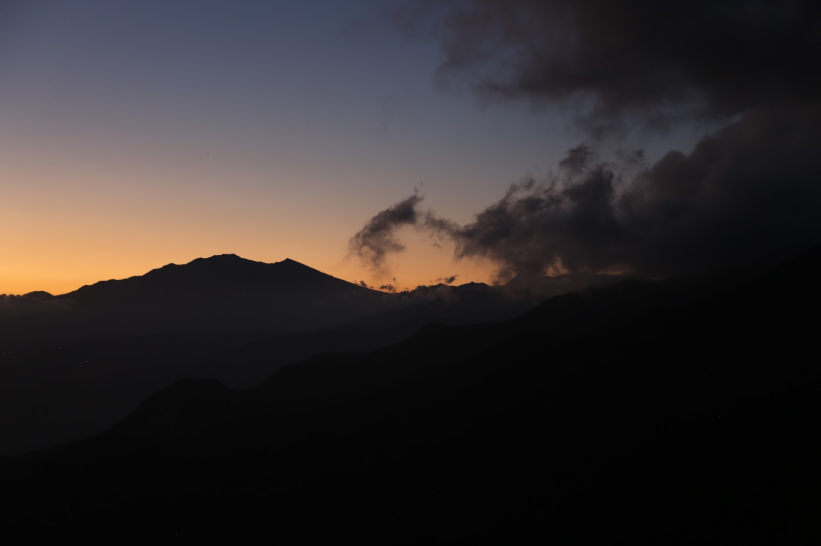
Central American cloud forests are among the most mesmerizing ecosystems on Earth, suspended between sky and soil in a narrow elevation band where moisture gathers, lingers, and shapes every living thing. In places like the highlands of Panama, these forests feel less like scenery and more like atmosphere itself, a realm where drifting mist softens sound, diffuses light, and blurs the line between forest and cloud. For travelers searching for authentic rainforest hiking in Panama, the experience delivers immersive jungle landscapes that exist beyond typical tropical expectations. The environment is constantly in motion yet deeply tranquil, as if the landscape breathes slowly through layers of vapor, creating one of the most distinctive hiking environments in Central America.
A cloud forest forms where warm, moisture-rich air rises from tropical lowlands and condenses against cooler mountain slopes, creating persistent fog that nourishes a unique biological community. Unlike lowland rainforest jungle ecosystems that depend primarily on rainfall, cloud forests receive much of their moisture directly from airborne water droplets that cling to leaves and branches. This constant condensation creates an environment where water arrives silently and continuously, sustaining lush vegetation even in periods without rain. For hikers exploring Panama’s mountainous interior, this means trails remain vibrantly green year-round, offering a reliable setting for nature trekking and jungle exploration.
The visual structure of cloud forests differs profoundly from the dense vertical walls of tropical jungle below. Trees appear sculpted by moisture, their trunks thick with moss and their branches layered with epiphytic plants that transform each limb into a miniature ecosystem. Vines drape softly rather than aggressively, and filtered light gives the forest a muted palette of greens that shift with the movement of fog. Hiking through such terrain evokes a sense of intimacy rather than vastness, making cloud forest trails some of the most atmospheric rainforest hiking routes in Panama.
Temperatures in cloud forests remain cooler than surrounding lowlands, creating a microclimate that supports species unable to tolerate intense tropical heat. This cooler environment slows biological processes in ways that increase ecological complexity, allowing organisms to specialize within narrow environmental conditions. For travelers staying near high-elevation rainforest lodges like Lost and Found Hostel, this climate creates ideal conditions for extended hiking adventures without the exhausting heat common in lowland jungle trekking. The climate becomes part of the experience, gently shaping mood, movement, and comfort on the trail.
Epiphytes are among the most defining elements of cloud forest ecosystems, representing plant species that grow upon other plants without drawing nutrients from them. Orchids, bromeliads, lichens, and mosses absorb moisture directly from the air, transforming branches into layered living tapestries. These plants create vertical ecosystems where insects, amphibians, and microorganisms find habitat far above the forest floor. For nature lovers hiking Panama’s cloud forest rainforest, epiphytes provide a constant visual reminder that life thrives not only in soil but suspended within the jungle canopy.
Biodiversity in cloud forests operates not only across space but across height, with ecological zones stacked upon one another from ground level to canopy. A single tree may host dozens of species occupying distinct niches defined by moisture exposure, sunlight filtering, and microclimate variation. This vertical stratification multiplies biodiversity without expanding geographic area, making cloud forest rainforest ecosystems among the richest environments for wildlife observation in Panama. Hiking trails become corridors through layered biological worlds rather than simple paths through vegetation.
Central America’s geography uniquely favors cloud forest formation because mountain ranges rise abruptly from humid coastal plains, forcing moisture upward where it condenses into persistent fog. The narrow landmass between two oceans amplifies this process, allowing atmospheric systems from both coasts to contribute to cloud formation. These geographic conditions produce a chain of cloud forest habitats across multiple countries, each shaped by elevation and regional climate patterns. Panama’s highlands stand out for accessibility, allowing travelers to experience true cloud forest jungle hiking without multi-day expeditions.
Protected areas like Volcán Barú’s surrounding highlands preserve extensive cloud forest zones where elevation gradients support dramatic ecological variation within short distances. As hikers ascend along rainforest trails, vegetation transitions from tropical jungle species to moss-draped montane communities in a matter of hours. This rapid ecological shift makes hiking in Panama’s cloud forest particularly rewarding, offering dramatic environmental contrast within a single journey. The experience reinforces how intimately life responds to altitude and moisture.
Wildlife within cloud forests often reveals itself subtly rather than dramatically, emphasizing presence over spectacle. Many species rely on camouflage, quiet movement, and limited territorial display, making observation an exercise in patience. For travelers staying at jungle hostels embedded in nature, wildlife encounters often begin before stepping onto the trail. The surrounding rainforest environment becomes an extension of the hiking experience itself.
Bird diversity reaches remarkable levels in cloud forest environments due to stable humidity and layered vegetation that provide specialized feeding niches. Species adapted to these habitats often display brilliant coloration that contrasts against muted green surroundings. For birdwatchers hiking Panama’s rainforest trails, cloud forests provide some of the best opportunities in Central America to observe highland species within compact areas. The combination of color, sound, and movement creates an ever-changing avian landscape.
Amphibians flourish in cloud forests because consistent moisture supports permeable skin and breeding cycles tied to humid microhabitats. Many species depend on tiny pools formed within plant structures rather than rivers or ponds. For hikers exploring misty jungle trails, spotting frogs or salamanders often signals ecological health. Their presence reveals the environmental stability that defines Panama’s cloud forest rainforest.
Cloud forests function as natural water regulators by capturing atmospheric moisture and releasing it gradually into watersheds. Vegetation intercepts fog droplets that coalesce and drip downward, feeding streams even in dry periods. This hydrological function supports downstream communities and ecosystems across Panama. For travelers trekking through these environments, the constant presence of moisture becomes both visual and functional evidence of the forest’s role in sustaining life.
Soil composition in cloud forests reflects constant decomposition driven by humidity and moderate temperatures. Organic matter accumulates rapidly but remains shallow due to slow breakdown rates in cool conditions. Nutrient cycling occurs near the surface, supporting dense rainforest vegetation despite limited soil depth. Hiking trails often feel soft and springy underfoot, shaped by layers of organic material built over decades.
Climate change presents one of the greatest threats to cloud forests because rising temperatures can shift the altitude at which clouds form. As cloud layers move higher, existing forest zones may lose their primary moisture source. This shift affects biodiversity and water cycles across Central America. Conservation awareness has become an important component of sustainable hiking tourism in Panama’s rainforest regions.
Conservation strategies increasingly focus on protecting elevation corridors that allow species to shift habitats gradually as conditions change. Maintaining connected landscapes across altitude gradients enhances ecological resilience. Sustainable travel practices support these efforts by encouraging responsible rainforest tourism. Visitors who hike thoughtfully contribute to preservation through awareness and respect for fragile ecosystems.
Insect diversity within cloud forests reaches extraordinary levels, with countless species occupying specialized ecological roles. Many remain undocumented, highlighting how little is fully understood about these ecosystems. For hikers, this hidden biodiversity reveals itself through subtle motion and sound within the jungle environment. Even the smallest life forms contribute to rainforest balance.
Cloud forest environments engage all human senses simultaneously, combining cool air, filtered light, soft ground, and layered soundscapes into immersive experience. The absence of harsh sunlight creates visual softness that enhances perception of texture and color. Hiking through Panama’s cloud forest rainforest becomes less about destination and more about sensory immersion.
The presence of moss is perhaps the most visible sign of constant humidity, coating surfaces in thick green layers that soften edges and absorb sound. Moss transforms hard surfaces into living ones, redefining boundaries between plant and environment. Trails often appear woven into vegetation rather than carved from it, enhancing the feeling of moving through a living system.
Tree ferns dominate many cloud forest landscapes, their prehistoric form evoking deep evolutionary history. These plants thrive in humid conditions that replicate ancient global climates once widespread across Earth. For rainforest hikers, encountering tree ferns creates a sense of stepping into primordial jungle environments.
Plant specialization in cloud forests demonstrates extraordinary adaptation to microclimate conditions. Some species absorb water directly from air, while others rely on minimal soil nutrients. This specialization creates ecological diversity rooted in environmental nuance rather than abundance. Hiking reveals how life adapts to atmospheric conditions rather than terrain alone.
Microclimates within cloud forests vary dramatically across small distances, shaped by slope orientation, wind exposure, and canopy density. These variations create habitat mosaics that support high biodiversity within compact areas. Each segment of trail may reveal new ecological characteristics despite minimal geographic movement.
Fog interception by vegetation plays a measurable role in regional water cycles, effectively capturing atmospheric moisture that would otherwise pass overhead. This process highlights how rainforest ecosystems actively shape climate rather than passively responding to it. Hiking through fog becomes an encounter with ecological function.
Cloud forests often feel quieter than lowland jungles because damp air and dense vegetation absorb sound. This acoustic softness enhances perception of subtle environmental cues such as dripping water or wingbeats. Silence becomes part of the rainforest experience.
Despite apparent calm, ecological interactions within cloud forests are intense, with competition for light, moisture, and space shaping growth patterns. Survival depends on specialization rather than dominance. Complexity replaces scale as the defining feature of these rainforest ecosystems.
Researchers study cloud forests to understand climate resilience, biodiversity concentration, and ecosystem interdependence. These environments function as natural laboratories for observing ecological response to atmospheric change. Scientific insight emerges from environmental delicacy found within Panama’s highland rainforest.
For travelers, cloud forests offer immersion rather than spectacle, encouraging observation over movement. Experience becomes contemplative rather than adrenaline-driven. Hiking becomes a mindful interaction with environment rather than a physical challenge alone.
The interplay of moisture, elevation, and biodiversity creates landscapes that change moment by moment as fog shifts and light filters through canopy. No two rainforest hikes replicate the same visual conditions. Variability defines identity.
Cloud forests represent a balance of fragility and abundance where environmental stability supports extraordinary diversity. Their persistence depends on precise climatic conditions that remain vulnerable to change. Protection requires awareness and responsible travel practices.
Across Central America, these ecosystems form a living bridge between climate systems, biological evolution, and human experience. They embody ecological interdependence expressed through atmosphere itself. Panama’s cloud forests stand among the most accessible for immersive rainforest hiking.
In highland regions where remote jungle hostels operate within protected forest environments, the cloud forest experience becomes deeply personal. Guests wake to mist drifting through canopy and begin hiking directly into rainforest terrain. The boundary between accommodation and wilderness dissolves.
Rainforest trails near high-elevation lodges offer continuous wildlife observation opportunities, often beginning before formal hikes start. The surrounding jungle environment provides constant engagement with nature. Hiking becomes a seamless extension of daily experience.
Panama’s cloud forest rainforest demonstrates how biodiversity thrives where moisture and elevation converge. These ecosystems represent one of the most distinctive hiking environments in Central America. Their uniqueness lies in atmospheric presence rather than dramatic scale.
Ultimately, Central American cloud forests stand as one of Earth’s most extraordinary ecological expressions, where water, air, and life converge in continuous interaction. Within Panama’s highlands, rainforest hiking reveals an environment shaped not by weather events but by atmosphere itself. For travelers seeking authentic jungle immersion, few experiences rival exploring cloud forest landscapes where mist, biodiversity, and elevation create a world suspended between earth and sky.