
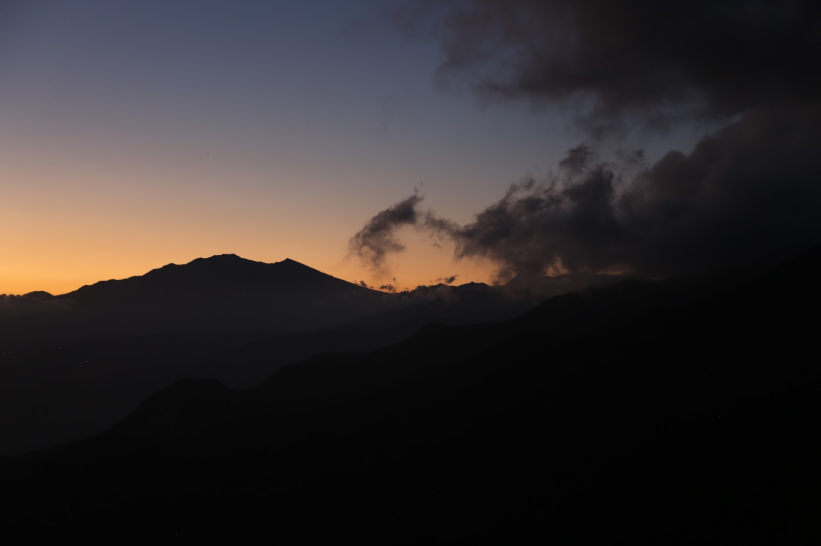
Between Light and Darkness: The Island Routes of Bocas del Toro

When the sun begins to fall over the Caribbean edge of Panama, the archipelago of Bocas del Toro begins to shift in a way that is almost imperceptible at first. The colors do not suddenly change, but slowly deepen, as if the sea is inhaling the light. The turquoise water that defined the day begins to darken into layered blues and greens, reflecting the sky with a softer, more reflective mood. The wooden docks that felt casual and lively just an hour earlier start to creak with a different kind of presence. Even the wind changes tone, becoming less playful and more deliberate. The islands do not stop moving. They simply begin to move in a different rhythm.

This is a place where travel is defined entirely by water. There are no bridges connecting the islands in any meaningful way, no highways stretching across the sea, no structured ferry system operating on fixed timetables. Instead, everything depends on small boats known locally as lanchas, driven by captains who understand the channels, tides, and shifting moods of the Caribbean through experience rather than instruments. The sea is not just something to cross here. It is the entire framework that determines how people move, connect, and arrive.

During the daytime, the system feels almost effortless. You walk to a dock in Isla Colón or Bastimentos and boats appear constantly, moving in and out like breath. You call out your destination and if the boat is going that way, you step in without ceremony. There is no ticket booth in the traditional sense, no rigid schedule, no sense that you are booking transport. Instead, it feels like joining a current that is already in motion.

Prices during the day are usually predictable within a local range rather than fixed numbers. Short crossings such as Isla Colón to Carenero typically cost around two to three dollars per person. Trips between Isla Colón and Bastimentos generally fall between three and five dollars. Longer routes or less frequent connections may rise to five to ten dollars depending on distance, fuel costs, and how many passengers are sharing the ride. These prices are not enforced by a central authority but shaped by local agreement, demand, and habit. They exist in a kind of living balance that adjusts subtly depending on conditions.

As the sun disappears and night settles across the archipelago, everything changes in structure rather than purpose. Boats still run, but fewer of them. The sea becomes harder to read visually, and the islands begin to lose their clear outlines. What was once a network of visible routes becomes a system guided more by memory, sound, and trust. Captains rely on experience, reading currents and familiar landmarks that are no longer fully visible, navigating instead by instinct and repetition.

Night travel in Bocas del Toro also changes in cost, though not through formal pricing systems. Instead, fares shift naturally based on availability and difficulty. Short crossings like Isla Colón to Carenero often rise slightly to around three to five dollars per person. Longer routes to Bastimentos or other islands may cost five to eight dollars per person. Private night pickups, especially for off route travel or late hours, typically range from fifteen to twenty five dollars per boat depending on distance and timing. These variations are not arbitrary. They reflect the reality of fewer boats operating, lower passenger volume, and the added effort of navigating in darkness.

The most important shift after sunset, however, is not financial or logistical. It is perceptual.

🚤 How pickup actually works in practice

Island travel in Bocas del Toro does not operate through formal terminals or digital systems. It runs through coordination and familiarity. There are three main ways travelers are picked up, and each one reflects a different layer of how the system functions.

The first and most common method is through accommodation. Hotels, hostels, and guesthouses act as informal transport coordinators. You tell them where you need to go and when, and they contact a trusted water taxi captain directly. The boat arrives at your dock within a flexible window, usually ten to thirty minutes depending on distance and conditions. At night, this becomes the most reliable method because captains respond more consistently to known contacts than to random dock requests.

The second method is direct pickup from main docks in Isla Colón. During evening hours, there is still movement, though less frequent than during the day. Travelers gather at docks and wait for passing boats heading in the right direction. You ask a captain if they are going to your destination and if so, you join. If not, you wait for the next one. Timing is less predictable, but movement is still continuous.

The third method is private water taxi arrangement. This becomes more common at night or during off route travel. Boats are hired directly, often through local contacts or accommodations. Short island crossings typically cost ten to fifteen dollars total for the boat. Medium distances may reach fifteen to twenty five dollars. Remote or late night trips can cost more depending on weather, urgency, and distance. These private rides offer flexibility when scheduled movement slows or when conditions make shared travel less practical.

🌙 What changes after dark is the entire experience of the sea

Once night takes over, Bocas del Toro stops being a place you observe and becomes a place you interpret. The sea loses its transparency and becomes reflective, absorbing the last traces of light from the sky. Islands turn into silhouettes, sometimes barely distinguishable from clouds or darkness. Navigation becomes less about seeing and more about feeling movement through sound and rhythm.

The engine of the boat becomes the dominant reference point. Its steady vibration replaces visual certainty. Waves are no longer patterns you watch but sensations you absorb. Between islands, darkness is rarely complete. There are faint points of light from distant docks, occasional reflections from water, and sometimes the soft glow of houses tucked into shorelines. These fragments of light feel scattered and temporary, as if the archipelago is slowly dissolving into night and reassembling itself with each passing boat.

Arrival after dark is always different from arrival in daylight. Docks are quieter, often lit by a single bulb or sometimes only by ambient light from nearby buildings. The sound of footsteps on wooden planks becomes more noticeable. The jungle feels closer, not visually but acoustically, as insects and night creatures take over the soundscape. Every landing feels slightly more personal, as if you are arriving into a space that is already asleep but still aware of your presence.

⚓ The hidden structure beneath the movement

What makes transportation in Bocas del Toro so unique is that it does not rely on formal systems but on continuous human understanding. The network is built from repetition, trust, and familiarity rather than schedules or infrastructure.

It depends on: local knowledge of routes captain experience with tides and channels informal coordination through hotels and docks weather conditions that shape daily decisions and a shared understanding of timing that is never written down but always felt

During the day, this feels like freedom. Movement is flexible, immediate, and open. At night, it feels like trust. You rely on people who know the water not because they are following instructions, but because they have lived inside this system long enough to read it instinctively.

In both cases, the sea is not background. It is the structure itself. Everything moves through it, responds to it, and depends on it.

And when you finally step onto land after a crossing, whether under bright sunlight or scattered starlight, there is always a brief moment where the world feels still. The boat fades back into the darkness, continuing on to another island, carrying its quiet rhythm across the water. The archipelago does not pause. It simply keeps moving in its own way, just beyond the edge of what can be fully seen.

The Art of Taste in the Tropics: Fine Dining in Panama

Fine dining in Panama is not simply about eating well. It is about watching a young, energetic culinary scene quietly step onto the global stage while still rooted in the tropics, the ocean, and the cultural crossroads that define the country. In Panama, luxury dining does not feel overproduced or distant from its environment. Instead, it feels like it has grown directly out of the humidity, the coastline, and the layered history of a place where continents, oceans, and cultures meet.

In the heart of the capital, where glass towers reflect the Pacific light and the skyline rises behind colonial stone streets, Panama City has become the center of this evolution. Areas like Casco Viejo are especially important, because here the contrast between old and new creates a natural stage for culinary creativity. You can walk past centuries old churches, turn a corner into a narrow stone street, and suddenly find yourself in a softly lit dining room where chefs are reinterpreting Panamanian ingredients with techniques borrowed from Tokyo, Lima, Barcelona, and Paris.

What makes fine dining in Panama distinct is not just technique, but ingredient identity. The country’s geography does most of the storytelling before a chef even begins. Pacific tuna, Caribbean lobster, tropical fruits that shift from sweet to floral to acidic within a single bite, cacao that carries deep earthy bitterness, and coffee grown in volcanic highlands all enter the kitchen with a clarity that feels almost unfiltered. There is no need to force personality into the food because the land and sea already provide it in abundance.

A tasting menu in Panama often feels like a journey through ecosystems rather than courses. One moment you are tasting something bright and citrus driven that feels like the Caribbean coast. The next, you are moving into richer, deeper flavors that echo the highlands, the rainforest, or the volcanic soil of Chiriquí. This movement is not accidental. It mirrors the geography of the country itself, compressed into a small but ecologically diverse space where environments shift within hours of travel.

In modern restaurants across Panama City, especially in contemporary fine dining spaces, there is a strong emphasis on presentation that feels architectural rather than decorative. Plates are arranged with restraint, allowing negative space to become part of the experience. A dish might arrive looking almost minimal at first glance, but as you engage with it, layers reveal themselves through temperature, texture, and aroma. This is cuisine designed not only to be tasted, but to be discovered slowly.

The service style in high end Panamanian restaurants also reflects this balance between formality and warmth. There is polish, but not stiffness. Staff often move with a relaxed precision that mirrors the rhythm of the city itself, a place that is global in outlook but still deeply rooted in Latin American hospitality. Conversations between courses are as much a part of the experience as the food, and the pacing rarely feels rushed. Meals are allowed to stretch into the evening, especially in rooftop venues where the Pacific horizon slowly turns gold and then deep blue as night settles over the skyline.

One of the most interesting aspects of Panama’s fine dining scene is how international it is without losing coherence. Chefs from Europe, Asia, and Latin America have all made Panama City part of their culinary story, bringing techniques that are then reinterpreted through local ingredients. The result is not fusion in the superficial sense, but adaptation. A Japanese influenced dish might be built around Panamanian seafood rather than imported fish. A European style reduction might be paired with tropical fruit acidity rather than wine alone. The identity of the cuisine is not borrowed. It is translated.

At the same time, there is a growing movement of chefs focused specifically on Panamanian heritage, looking into indigenous ingredients and traditional cooking methods and placing them within modern frameworks. This creates a dialogue between past and present, between ancestral food knowledge and contemporary culinary design. It is not unusual to find a dish that references rainforest plants or coastal fishing traditions, presented in a way that feels refined but still grounded in origin.

The experience of fine dining in Panama is also deeply tied to setting. Rooftop restaurants overlooking the bay offer a sense of elevation not just physically but emotionally, as the city stretches outward beneath you in layers of light and movement. Coastal restaurants outside the city offer a different kind of elegance, where the sound of waves becomes part of the rhythm of the meal. Even within urban spaces, many dining rooms are designed to incorporate natural elements, whether through open air layouts, tropical vegetation, or visual connections to the surrounding environment.

What ultimately defines Panama’s fine dining scene is its sense of emergence. It is still growing, still defining itself, still experimenting with how it wants to be seen by the world. That gives it a certain freshness that older culinary capitals sometimes lose. There is ambition here, but it is not yet hardened into tradition. Chefs are still willing to take risks, still willing to reinterpret identity, still willing to ask what Panamanian cuisine can become rather than only what it has been.

For a traveler or backpacker who has moved through Panama’s jungles, islands, and mountain regions, stepping into this dining world can feel like a shift in pace rather than a departure from the country. The same ingredients that appear in rustic coastal meals or roadside cooking are now refined, concentrated, and reimagined. The connection to land and sea remains intact, only the language changes.

In the end, fine dining in Panama is not about detachment from nature or culture. It is about refinement without separation. It is the same country, the same climate, the same ocean and soil, simply expressed through a more deliberate and artistic lens. And like the country itself, it continues to evolve in real time, shaped by every chef, every ingredient, and every plate that leaves the kitchen into the warm night air.

Where Jungle Meets Ocean: A Backpacker’s Journey Through Panama’s Wild Heart

There are few places in the world where wilderness still feels unapologetically alive, where it has not been trimmed, packaged, or softened for convenience. Panama is one of those rare places. It is not just a country you travel through, it is a country you move inside of, like stepping into a living system that constantly shifts between jungle, ocean, mountain, and cloud. For backpackers and nature enthusiasts, it is not a single experience but a chain of them, each one dissolving into the next without ever feeling repetitive.

In the western highlands, where the air begins to cool and the land folds upward into green ridges, places like the region around Boquete feel like a gentle introduction to Panama’s wild side. Coffee farms sit on volcanic soil, and mist drifts through the valleys like a slow-moving river in the sky. Trails climb into cloud forests where everything feels softened by moisture and time. Moss covers tree trunks in thick layers, and orchids appear suddenly in places you were not looking. Hiking here is not about conquering elevation, it is about being absorbed into humidity and silence, where even your footsteps feel temporarily borrowed from the earth.

As you move eastward, the world changes without warning. Roads become fewer, rivers become more dominant, and the jungle begins to reclaim attention. In regions approaching the vast and almost mythic wilderness of Darién National Park, the sense of human scale starts to dissolve completely. This is not a landscape that presents itself for comfort. It is dense, layered, and uninterested in visibility. Trees do not stand apart from each other but interlock in a continuous canopy that filters light into fragments. Rivers are not scenic additions but primary pathways, carving through the forest with a logic older than roads.

Backpacking here is not casual. It becomes an exercise in awareness. Every sound carries potential meaning. Every pause in the jungle feels like a decision the environment is making rather than you. The humidity clings to everything, not as discomfort but as constant contact. And yet, within this intensity, there is a strange clarity. When the world is this full, your mind stops searching for distractions. It simply responds.

Then there is the coast, where Panama transforms again into something almost unreal. On the Caribbean side, the archipelago of San Blas Islands feels like a different dimension entirely. Small islands of white sand and palm trees drift across water so clear it looks edited by imagination. The ocean here is not distant or threatening. It is intimate, shallow in some places, endlessly deep in others, always changing color depending on the angle of light.

Life on these islands moves at a rhythm that seems detached from urgency. Canoes glide between islands. Waves arrive softly, as if they are trying not to disturb anything. Nights bring skies so clear and dense with stars that it becomes difficult to separate water from space. For backpackers, this is where the idea of “journey” begins to blur into “staying still for too long without realizing it.”

What makes Panama remarkable is not just the variety of its ecosystems but the speed at which they transition. In a single journey, you can go from cloud forest to tropical jungle to coral reef without ever feeling like you have left the same living system. It is as if the country has compressed multiple worlds into a narrow strip of land and allowed them to overlap without conflict.

Even the Pacific coastline carries its own character. In places like the Azuero Peninsula, dry forest meets ocean in a landscape that feels more open, more exposed, more honest. The sun is stronger here, the wind more constant. Trees twist rather than rise, shaped by seasons of dryness and rain. It is a reminder that wilderness does not always mean lush green density. Sometimes it means space, light, and the sound of heat moving through the air.

For those traveling on foot or with a simple backpack, Panama reveals itself not as a checklist of destinations but as a continuous negotiation with environment. You learn when to walk and when to stop not by planning, but by listening. A sudden rainstorm becomes an instruction. A clearing in the forest becomes an invitation. A quiet shoreline becomes a place where hours dissolve without resistance.

And always, beneath all of it, there is the sense that nature here is not performing. It is not trying to be impressive. It is simply uninterrupted. That is what gives it its power. You are not witnessing wilderness as something separate from yourself. You are briefly participating in something that existed long before you arrived and will continue long after you leave.

When the journey ends, and the backpack is finally set down in a place with concrete and noise and structured time, what lingers is not a series of images but a change in tempo. The world feels slightly more constructed than it did before. And somewhere in the background of thought, there remains the memory of places where everything was still moving, but nothing was rushing.

The Island That Breathes in Silence: A Long Journey into Isla Iguana

Isla Iguana exists like a secret the ocean has decided to keep only lightly hidden. Not buried, not guarded, just gently placed far enough from the noise of the mainland that only those willing to drift outward across the water ever arrive. When you first approach it, there is a sense that the sea itself is slowing you down, as if it wants you to understand that you are not entering a destination but crossing into a different rhythm of existence. The island does not rise dramatically from the ocean. It appears instead as something calm and certain, a low green presence surrounded by water so clear and bright it feels almost like light made liquid. Even from a distance, there is a quiet dignity in the way it sits there, untouched by urgency, untouched by anything that demands attention.

As the boat moves closer and the sound of the engine fades into the wider space around you, the air begins to change in a way that is difficult to name but impossible to miss. The wind carries salt and sun and something older, something that feels like it has never been translated into language. The shoreline slowly becomes defined, not by structures or signs or human markings, but by the pure meeting of sand and sea. The sand itself is pale and clean and uninterrupted, stretching in a way that feels generous rather than designed. It does not feel like it was prepared for visitors. It feels like it simply exists in its own right, with or without anyone to witness it.

Stepping onto the island feels like crossing a threshold that is not marked by anything visible. There is no gate, no announcement, no moment of arrival that tells you to pay attention. Instead, there is only the subtle sensation that the world behind you has become slightly less important. The ground is warm but not harsh, and it gives gently beneath your steps without ever feeling unstable. The air is open in every direction, carrying light through it as if the atmosphere itself has been washed clean. Everything feels immediate and unprocessed. There is no interpretation required here, only presence.

The deeper you move into Isla Iguana, the more the idea of time begins to loosen. It does not disappear, but it stops behaving like something strict or measurable. The island invites you into a slower recognition of things. A shifting shadow across sand becomes interesting enough to hold your attention. The movement of birds overhead becomes a kind of language you do not need to translate. Even the wind through the low vegetation feels intentional, as if it is passing through the island rather than over it. The experience is not dramatic in any conventional sense. It is instead quietly absorbing, as if the island is gently pulling all unnecessary noise out of your awareness without asking permission.

The wildlife does not perform. It simply continues its existence in full view, indifferent to observation. Frigate birds move across the sky with a kind of effortless authority, their wings stretched wide as though they are not flying so much as participating in the shape of the air. Pelicans stand along the shorelines in still clusters, watching the water with a patience that feels almost ancient. Small movements in the brush reveal iguanas and birds and insects all sharing the same space without urgency or competition. There is no spectacle here, only continuity. Life is not arranged for human appreciation. It is simply unfolding as it always has.

And then there is the water, which feels like it belongs to another version of clarity altogether. Near the shore it is bright and transparent, shifting between pale turquoise and soft green, as if the ocean is constantly deciding how much of itself it wants to reveal. Farther out it deepens into richer blues that feel almost infinite, not because they are dark, but because they seem to extend beyond definition. When you enter it, there is no dramatic shock, no abrupt transition. Instead, it feels like being accepted into something that was already moving around you long before you arrived. Beneath the surface, coral structures spread quietly like underwater gardens that have never been arranged. Fish move through them in scattered patterns of color and light, not performing for attention but simply existing in their own fluid logic.

What is most striking about Isla Iguana is not any single visual detail but the way everything feels uncompressed. Space is not crowded. Sound is not layered. Attention is not constantly pulled in competing directions. Even your own thoughts begin to settle into a different formation, less urgent, less fragmented. You start to notice that silence here is not the absence of sound but the absence of interference. It is a silence that has weight and texture, something that wraps around experience rather than erasing it.

As the day moves forward, the island shifts gently with the sun without ever changing its essential character. Light intensifies the brightness of the sand until it feels almost luminous, and then softens again as shadows begin to stretch across the ground. The sea responds in kind, reflecting different versions of the sky without ever losing its calm rhythm. There is a moment in the middle of the day when everything feels suspended in balance, as if the island has reached a perfect agreement with itself and has no need to move beyond it.

In the later hours, when the sun begins its descent, Isla Iguana takes on a quieter kind of beauty. The edges of the island soften, the air grows warmer in tone, and the movement of birds becomes more noticeable again as they trace their final paths across the sky. The water deepens in color and seems to gather the light rather than release it. Sitting near the shoreline at this time feels like sitting inside a slow unfolding. Nothing demands your attention, yet everything is available to it. The world feels both distant and intimate at the same time, as if you have been allowed to stand inside a memory that is still forming.

Leaving the island carries a subtle resistance, not because anything dramatic is ending, but because nothing here feels unfinished. Isla Iguana does not leave gaps behind it. It does not ask to be remembered in urgency or longing. Instead, it simply remains complete in itself, unchanged by your presence and unchanged by your departure. As the boat moves away and the island begins to shrink into the horizon, what fades is not its beauty but its proximity. It returns to its quiet state of simply existing, as it always has, suspended between sea and sky, holding its silence without effort, waiting without expectation, and breathing in a rhythm that does not depend on anyone to hear it.

Cerro Tute: The Full Adventure From Trailhead to Summit and Back Again

Cerro Tute is one of those hikes in Panama that feels unassuming right up until the moment it starts shaping your entire experience. It does not rely on hype or dramatic signage or a highly curated visitor entrance. Instead, it begins in a quiet, grounded way in the landscape outside of Santa Fé in the province of Veraguas, where rural roads, scattered homes, and open green slopes slowly give way to rising terrain that looks innocent enough at first glance. The transition from “just being in the area” to “being on the mountain” is almost seamless, which is part of the trick. There is no theatrical starting line. You are simply there, and then you are already ascending.

From the very beginning of the trail, Cerro Tute feels like it is testing how closely you are paying attention. The early sections are not difficult in a dramatic sense, but they are honest. The ground begins to tilt upward in a way that is steady rather than steep, and the environment around you still feels familiar enough that your brain does not fully register the shift into effort. You might still hear distant rural life behind you, and the vegetation feels open and accessible, which creates a sense of comfort that slowly fades without announcement. This is where Cerro Tute begins its real work. It does not surprise you with intensity. It introduces persistence.

As you continue climbing from the lower slopes near Santa Fé, the trail gradually separates you from the everyday landscape. Houses become less frequent, roads disappear from awareness, and the natural terrain begins to take over completely. The incline becomes more consistent, not necessarily steeper in sudden bursts, but more continuous in a way that quietly changes how your body engages with it. This is where the hike stops feeling like a casual walk and becomes a sustained conversation between effort and rhythm. Each step starts to matter slightly more, not because the terrain is extreme, but because it refuses to flatten out for long. You begin to understand that Cerro Tute is built around accumulation rather than shock.

Further up the mountain, the environment starts to open and simplify at the same time. The vegetation shifts, becoming less dense in places, and the landscape begins to feel broader in scale. Depending on weather and timing, you may get early glimpses of surrounding valleys and distant ridgelines, but they often appear in fragments rather than full panoramic reveals. This is one of the most engaging parts of the climb because it constantly teases a larger view without fully delivering it. You are aware that something expansive is forming around you, but the mountain seems to delay the full reward just enough to keep you moving forward.

As the ascent continues, the emotional rhythm of the hike begins to change. The idea of “distance to the top” becomes less useful than the idea of “staying in motion.” Cerro Tute does not reward speed. It rewards consistency. There are stretches where you feel steady and in control, followed by sections where the incline becomes more demanding and forces a deeper focus on breath and pacing. None of it is extreme in a technical sense, but the repetition of effort creates a mental shift. You stop thinking about the mountain as something you are approaching and start experiencing it as something you are moving through.

Eventually, you reach the upper sections of Cerro Tute, where the landscape begins to behave differently. This is still part of the same climb from Santa Fé, but the atmosphere changes in subtle ways. The terrain feels more open, the wind becomes more noticeable, and the sense of enclosure that defined the lower sections begins to dissolve. You are no longer surrounded by a contained environment. Instead, you start to feel like you are entering a space where the land itself becomes more visible and expressive. The mountain begins to give you space to see outward, not just upward.

Then comes the summit, which does not arrive as a single dramatic moment but as a gradual expansion of perspective. One step you are still climbing through final terrain, and a few steps later the world simply opens. From the top of Cerro Tute, the surrounding region of Veraguas unfolds in wide, layered distances. Valleys connect visually in ways that were not obvious on the way up. Roads appear as thin lines threading through terrain that now looks structured and intentional. The climb you just completed stops feeling like effort and starts feeling like shape, something you can now understand from above rather than inside.

What makes the reward at Cerro Tute so effective is not just the view itself, but the contrast between how narrow your perspective felt during the climb and how wide it becomes at the top. The summit does not overwhelm you with spectacle. Instead, it recalibrates your sense of scale. You realize how many small sections of terrain you passed through without fully noticing how they fit together. From above, everything suddenly makes sense as a continuous movement rather than a series of isolated steps.

At the summit, time naturally slows down. There is no pressure to move or decide or navigate. The environment encourages stillness without forcing it. Sound feels more distant. The wind becomes more present. Even your thoughts tend to settle into a slower rhythm because there is nothing immediate demanding attention. This is where the reward of Cerro Tute becomes more than visual. It becomes mental space, a pause that feels earned rather than given.

The descent begins with a different kind of awareness. You are now retracing a path that you understand in a new way. Sections that felt ordinary on the way up now carry meaning because you know what they contribute to the overall climb. Slopes that seemed like small transitions now feel like important steps in a larger sequence. The mountain does not change, but your interpretation of it does. That is one of the most lasting effects of the experience. It reshapes how familiar terrain feels underfoot.

As you move back down toward Santa Fé, the environment gradually returns to its earlier familiarity. The air feels heavier again, the vegetation becomes more enclosed, and signs of rural life slowly reappear. But something subtle has shifted. The landscape no longer feels flat in the same way it did at the beginning. You have seen it from above, which adds a second layer to everything below.

By the time you reach the starting point again, Cerro Tute has already completed its quiet transformation of your attention. It did not rely on extreme difficulty or dramatic scenery. Instead, it built a continuous experience out of steady effort, gradual exposure, and expanding perspective. What began as a simple hike outside Santa Fé becomes, in hindsight, a complete journey from grounded rural foothills to wide elevated views and back again.

And that is what makes Cerro Tute memorable. Not because it demands the most from you, but because it slowly changes how you understand what you are seeing while you are still inside it.

Architects and Skyscrapers in Panama: The Vertical Reinvention of a Coastal Capital

Panama’s skyline is one of the most unexpected architectural transformations in Latin America. In just a few decades, a relatively small country developed a dense cluster of modern high-rises that now define the visual identity of its capital. What makes this even more striking is not just the height of the buildings, but the diversity of architects—local firms, regional studios, and international collaborators—who have shaped a vertical city on a narrow strip of land between two oceans.

This is not a skyline that evolved slowly over centuries. It is a rapid architectural leap driven by finance, geography, global trade, and the unique constraints of building in a coastal, seismic, and logistically strategic environment.

The Skyline as a Financial and Architectural Experiment

In Panama City, skyscrapers are not just aesthetic statements. They are deeply tied to the city’s role as a financial hub and international service center. The result is a skyline filled with glass, concrete, and mixed-use towers that prioritize efficiency, density, and investment value as much as design expression.

Many of the most prominent towers are clustered along the coastal corridor and financial districts, where land value and visibility intersect. This has encouraged vertical construction at a scale that rivals much larger global cities.

One example is the Arts Tower, a 78-storey mixed-use skyscraper completed in 2013, designed by Bettis Tarazi Arquitectos. Rising over Avenida Balboa, it represents the shift toward dense, modern residential-commercial integration in the capital’s coastal edge .

The Architects Behind the Vertical Boom

Panama’s skyscraper identity is not the work of a single architectural movement. Instead, it is a layered mix of firms that have contributed different design languages.

Bettis Tarazi Arquitectos: Coastal Modernism and Mixed-Use Density

One of the most influential local firms, Bettis Tarazi Arquitectos, has been central in shaping residential towers like Yoo Panama and Arts Tower. Their work often emphasizes glass façades, ocean-facing views, and integration with luxury residential programming.

Projects such as Yoo Panama, developed in collaboration with Philippe Starck, highlight how Panamanian architecture often blends local execution with international design branding, creating buildings that are as much lifestyle products as structures.

Pinzón Lozano & Asociados: The Language of Iconic Towers

Another key contributor to the skyline is Pinzón Lozano & Asociados Arquitectos, responsible for several notable high-rise buildings including the F&F Tower and Mystic Point complex.

The F&F Tower—often recognized for its twisting form—is one of the most visually distinctive office skyscrapers in the city. Its sculptural design demonstrates how Panama’s financial architecture also embraces experimentation, not just repetition of glass-box forms.

Mystic Point, with its twin residential towers, reflects a different approach: dense vertical living combined with ocean proximity and infrastructural connectivity.

Mallol & Mallol Arquitectos: Ambition at the Edge of Scale

Mallol & Mallol Arquitectos have contributed to Panama’s more ambitious structural proposals and high-rise developments, including large-scale conceptual and residential towers such as the proposed Torre Planetarium. Even when unbuilt, these projects reflect the scale of architectural ambition that Panama attracts, with designs reaching beyond 300 meters in conceptual form.

These proposals highlight a recurring theme in Panama’s architecture: rapid economic growth encouraging equally rapid design escalation.

The Skyscraper Typology of Panama City

The vertical landscape of Panama is not uniform. Instead, it can be broadly understood in three overlapping typologies:

1. Financial Office Towers

These are concentrated in central business districts, often featuring glass curtain walls, concrete structural cores, and high-density office layouts. Buildings like the Credicorp Bank Tower, completed in the late 1990s, represent the early phase of Panama’s modern financial skyline, incorporating advanced materials and early “smart building” concepts for their time.

2. Residential Coastal Towers

Along Avenida Balboa and Punta Pacifica, residential skyscrapers dominate. These buildings prioritize ocean views, amenities, and luxury living. Many of them are designed as vertical communities, with pools, gyms, and mixed-use floors integrated into the tower structure.

3. Hybrid Mixed-Use Towers

A growing category includes buildings that combine hotels, offices, and residences in a single vertical structure. Evolution Tower is a strong example, with stacked programming that separates hotel, office, and residential functions within one tower envelope .

This hybrid model reflects Panama’s role as both a business hub and a lifestyle destination.

Materials, Climate, and Structural Reality

Panama’s architecture is also shaped by its environment. High humidity, coastal exposure, and intense rainfall influence material choices. As a result, reinforced concrete and treated glass dominate construction, with façades designed to withstand both heat and moisture over long periods.

Unlike colder-climate skyscraper cities that emphasize steel expression, Panama’s towers often prioritize thermal performance and durability, which leads to a more uniform visual language of reflective glass and concrete cores.

The Cultural Logic Behind the Skyline

What makes Panama’s skyscraper boom unique is not just the architecture itself, but the cultural conditions behind it. The city sits at a crossroads of global finance, logistics, and migration. That produces a real estate environment where international developers, architectural firms, and local engineers collaborate in fast cycles.

This speed of development has created a skyline that feels less like a planned monument and more like an ongoing construction of global ambition.

Panama’s skyscrapers are not just buildings. They are expressions of a country that builds vertically because it is geographically constrained horizontally, and builds quickly because it is economically connected globally.

The architects shaping this skyline are working in a rare environment: a place where design is influenced equally by ocean proximity, financial systems, and international demand.

The result is a city that does not simply grow upward.

It stacks entire versions of itself into the sky.

Why Panama Is Becoming One of the World’s Most Important “Future Bottleneck” Countries

There are places in the world that become important because they are large, powerful, or resource rich. And then there are places that become important for a very different reason: everything has to pass through them. Panama belongs firmly in the second category, and what makes it especially interesting right now is that global systems are becoming more dependent on “bottlenecks” than ever before. Trade, shipping, climate logistics, migration flows, and digital coordination are all concentrating through narrower and more strategic points. Panama sits at one of the most important of these points on Earth.

What looks like a small country on a map is actually a pressure point in global movement. And pressure points tend to become more important, not less, as systems grow more complex.

The Canal Is Not Just a Shortcut, It Is a Global Dependency

In Panama City, the presence of the Panama Canal is often treated like a historical feature, but in reality it functions more like a permanent organ inside the global economy. It is not just a route between oceans. It is a stabilizer for international trade timing.

Shipping routes around the world are built around the assumption that this passage exists and remains functional. When it slows down, the effects ripple outward across continents. That is what makes Panama different from many other strategic locations. It is not only useful. It is structurally embedded into global expectations.

This creates a rare situation where a single narrow corridor has influence far beyond its physical size.

The Bottleneck Effect: Why Narrow Places Become Powerful

In systems theory, bottlenecks are not weaknesses. They are control points. When movement must pass through a narrow space, that space becomes disproportionately influential over the entire system.

Panama is a physical bottleneck between two oceans, but also a functional bottleneck between global supply chains. Even as shipping technology improves and trade routes diversify, the efficiency of Panama’s canal keeps it relevant.

The result is not just traffic. It is dependency.

The Port Network That Extends the Bottleneck Outward

The canal is only one part of a much larger system. Ports on both the Pacific and Caribbean sides extend Panama’s influence outward into global maritime networks. Container terminals, logistics hubs, and redistribution zones create a layered system where goods are not only passing through but being reorganized.

One of the most important nodes in this system is the Colón Free Zone, which functions as a massive trade redistribution hub for Latin America and beyond.

This means Panama is not just a passage. It is a filtering and sorting mechanism for global goods.

Panama City as a Coordination Hub for Global Flow

In Panama City, the bottleneck effect becomes more complex. The city is not just coastal infrastructure. It is also a financial and administrative coordination center where trade, logistics, banking, and corporate services intersect.

Global companies use Panama not only to move goods, but to structure movement itself. Contracts, shipping schedules, financing systems, and logistics planning often converge here.

This adds a second layer to the bottleneck effect: not just physical movement, but organizational movement.

Climate Pressure Is Increasing the Value of Stable Routes

As global climate patterns become more unpredictable, stable infrastructure corridors become more valuable. Shipping routes that are reliable, predictable, and well managed gain importance in a system where disruptions are increasingly common.

Panama’s canal system depends on controlled water resources, which makes it both sensitive and highly managed. But it also remains one of the most consistent maritime passage systems available.

In this sense, Panama is not just geographically strategic. It is operationally valuable in a world that is becoming less predictable.

The Inland Layer That Supports the System

While most attention focuses on the canal and ports, the inland regions are what sustain the system. Watershed areas, rainfall zones, and forest ecosystems provide the water that keeps the canal functioning.

In regions near Soberanía National Park, ecological stability directly supports global logistics. Forests are not separate from infrastructure. They are part of it.

This creates a rare situation where environmental systems are directly tied to global trade performance.

The Human Bottleneck: Migration and Transit Flow

Panama is also becoming more visible in human movement patterns. Migration, tourism, retirement relocation, and business travel all pass through the country in increasing numbers.

Because of its connectivity between North and South America, Panama functions as a transit hub for people as well as goods. Airports, residency systems, and international services all contribute to this role.

This adds another layer to its bottleneck identity: it is not just goods and ships that pass through Panama, but people and decisions.

Why Bottlenecks Become More Valuable Over Time

In a simple system, bottlenecks are problems. In a complex system, they are control points. As global trade, climate systems, and migration flows become more interconnected, places like Panama gain influence not because they expand outward, but because everything else must pass through them.

This is why Panama’s importance is not likely to fade. It is likely to intensify.

Final Thought

Panama is often described as a canal country or a bridge between oceans.

But those descriptions miss the deeper structure.

It is a bottleneck country.

A place where global systems narrow, concentrate, and pass through a single corridor of geography, infrastructure, and coordination.

And in a world that is becoming more complex and more interconnected, bottlenecks are not edges of the system.

They are the system itself.

Why Panama Is Quietly Becoming One of the Most Interesting “Lifestyle Shift” Countries in the World

There is a specific kind of search trend that has been growing steadily over the last few years. It is not about tourism alone, and it is not purely about retirement either. It is about something broader: people looking for a different way to structure their daily life. A place where work, climate, cost, safety, connectivity, and mobility all intersect in a way that feels more flexible than where they currently live.

Panama shows up again and again in this category of search, often without people realizing it at first. They start with one question, then slowly discover that Panama is not just a destination, but a system of lifestyle possibilities compressed into a single country.

The Geography That Makes Lifestyle Choice Feel Unlimited

In Panama City, the first impression is often modernity. A skyline of glass towers, coastal highways, international businesses, and a growing population of remote workers, entrepreneurs, and long term residents from around the world.

But what makes Panama unusual is that this urban environment is only one option among many that are extremely close together. Within a relatively short distance, the environment changes completely. Coastal living, rainforest access, mountain towns, and quieter rural zones are all reachable without crossing vast distances.

This creates a rare situation where lifestyle is not tied to leaving the country, but simply moving within it.

The “Multiple Lives in One Country” Effect

One of the most searched ideas related to Panama is whether it is possible to live different lifestyles there without constantly relocating internationally. The answer is what keeps the country trending: yes, and often more easily than expected.

You can live in a dense urban environment with global infrastructure. You can move to a coastal town where life is slower and more ocean oriented. You can shift into highland regions like Boquete where the climate is cooler, the pace is slower, and daily life is shaped by nature and agriculture.

Each of these environments feels like a different lifestyle rather than just a different location.

The Remote Work Magnet Effect

A major reason Panama continues to appear in search trends is the global rise of remote work. People are no longer just searching for vacation spots. They are searching for places where they can realistically live, work, and stay connected long term.

Panama fits into this conversation because it combines infrastructure stability with geographic diversity. Internet access, urban services, transportation systems, and financial connectivity allow remote work to function, while the surrounding environment offers alternatives that feel dramatically different from typical urban life elsewhere.

This combination is what keeps Panama repeatedly appearing in “where should I move” searches rather than just “where should I visit.”

The Climate Search That Never Ends

Unlike countries with clearly defined seasonal extremes, Panama’s climate is more variable and localized. This leads to constant search activity around weather, seasons, and regional differences.

In some areas, conditions are hot and coastal. In others, elevation creates cooler temperatures and misty environments. In places near Soberanía National Park, rainforest conditions dominate with frequent rainfall and dense vegetation cycles.

This variation means that “what is the weather like in Panama” never has a single answer. It depends entirely on where you choose to be.

The Cost of Living Conversation That Keeps Expanding

Another major search driver is cost of living. But what makes Panama interesting in this category is that costs are not uniform. They vary significantly depending on lifestyle choices.

Urban living in Panama City can resemble other global cities in pricing, especially in certain districts. Meanwhile, smaller towns, rural regions, and mountain communities can offer entirely different cost structures.

This creates a situation where Panama does not answer the question “is it expensive” in a simple way. It forces a more detailed question: “expensive compared to what lifestyle?”

The Mobility Advantage: Easy Shifts Without Leaving the System

One of Panama’s most underrated lifestyle features is internal mobility. Because the country is relatively compact, it is possible to change environments without changing national systems.

You can move from city to mountain, or from coast to inland, while staying within the same legal, financial, and logistical framework. That means residency, banking, infrastructure access, and connectivity remain stable even as lifestyle changes dramatically.

This is one of the reasons Panama appears so frequently in relocation research. It allows experimentation without full disruption.

The Infrastructure Layer That Makes Lifestyle Fluidity Possible

Behind all of this is a highly connected infrastructure system that supports movement and stability. Roads, airports, ports, digital systems, and financial networks all interact to make transitions within the country relatively smooth.

This infrastructure does not just support business or trade. It indirectly supports lifestyle flexibility. It allows people to shift environments without losing access to services or connectivity.

The Psychological Appeal: Control Over Environment Choice

What ultimately drives search interest in Panama is not just economics or geography. It is the feeling of control over environment.

In many places, where you live determines your climate, your pace of life, and your daily experience. In Panama, those variables can be adjusted more easily within a single country.

That creates a powerful psychological appeal. Instead of choosing one fixed lifestyle, you are choosing between several that are all accessible.

Final Thought

Panama is increasingly showing up in global search behavior not because it is trying to attract attention, but because it fits into multiple modern needs at once.

Remote work flexibility

Climate variety

Internal mobility

Infrastructure stability

Lifestyle experimentation

And when people realize all of those exist in one place, the search does not end.

It expands.

Because Panama is not just a destination people look up once.

It is a place people keep returning to in their searches as they rethink what kind of life they actually want to live.

Why Panama Is Quietly Becoming One of the Most “Searchable” Countries in the World

There are countries people search for once, and then forget. And there are countries people keep searching again and again because every answer opens up a new question. Panama increasingly belongs to the second category. It sits at a strange intersection of geography, money, travel, climate, migration, and global infrastructure that makes it endlessly “searchable.” Not because it is confusing, but because it is layered enough that no single explanation ever feels complete.

If you look at modern search behavior, Panama shows up in surprisingly different contexts. People search it for travel. Then for safety. Then for cost of living. Then for canals and logistics. Then for retirement. Then for rainforests, beaches, and hidden places. Each search reveals a different version of the country, and none of them fully overlap.

That is the real reason Panama stands out online. It is not one topic. It is many.

The Geography That Forces People to Keep Relearning It

In Panama City, the first surprise for most visitors is that Panama does not behave like a small country. It behaves like a compressed continent. Within a short distance, you can move from modern skyscrapers to dense rainforest, from coastal highways to inland rivers, from tropical heat to cooler elevated zones.

This constant variation means that every description of Panama is incomplete unless it includes context. A single sentence about “tropical beaches” or “modern city life” quickly falls apart once you realize both can exist within an hour of each other.

That is why people keep searching. They are not wrong. They are just only seeing one layer at a time.

The Canal Effect: Why Panama Never Leaves Global Search Trends

The Panama Canal is one of the few infrastructure systems on Earth that is constantly relevant to global trade conversations. It is not a historical landmark that faded into the background. It is a living system that still shapes shipping routes, supply chains, and international logistics decisions every single day.

This keeps Panama permanently attached to global curiosity. People search it during trade disruptions, climate events, shipping delays, and economic shifts. It becomes relevant not occasionally, but cyclically.

In a world dependent on faster logistics, Panama is not just a place. It is a bottleneck and a shortcut at the same time.

The “Is It Safe?” Search That Never Stops Evolving

One of the most common reasons people search Panama is uncertainty about safety. But what makes this topic persistent is that the answer is not uniform. Safety varies significantly depending on location, behavior, and context.

In some areas, especially well developed urban districts in Panama City, daily life feels structured and modern. In more remote or unfamiliar areas, conditions change as they do in many countries with mixed geography and development patterns.

Because of this variation, people keep searching. They are trying to understand not just the country, but how it changes from place to place.

The Retirement and Relocation Search Wave

Another major reason Panama dominates search engines is long term relocation. Retirees and remote workers frequently search it because it appears in discussions about cost of living, residency programs, and international lifestyle flexibility.

But what makes Panama unique in this category is not just affordability or incentives. It is accessibility. You can live in a highly developed urban environment, a coastal town, or a mountain region like Boquete and still remain connected to international infrastructure.

This variety of lifestyle options within a single country keeps relocation research active and ongoing.

The Travel Curiosity Loop: Every Answer Creates Five New Destinations

Travel content about Panama behaves differently from many other countries. Instead of narrowing choices, it expands them. Someone searching for “best places in Panama” often ends up discovering entirely different categories of experience: rainforest parks, islands, mountain towns, historic districts, and urban waterfronts.

Even nature experiences vary dramatically depending on direction and elevation. A short shift in geography leads to a completely different environment, especially near ecosystems like Soberanía National Park where dense rainforest exists close to major infrastructure.

This creates a loop where each travel search generates new travel searches.

The Hidden Economy Behind Search Interest

Panama is also frequently searched because of its financial and logistical role. Banking systems, corporate structures, and trade networks give it a presence in international business conversations far beyond its population size.

It appears in discussions about offshore operations, trade routes, currency stability, and regional headquarters. Even people who have never visited the country encounter it through economic contexts.

This gives Panama a second identity online: not just a travel destination, but a system node in global finance and logistics.

The Climate Factor That Keeps Rewriting Expectations

Another reason Panama remains heavily searched is climate variability. It is tropical, but not uniform. Rain patterns, elevation changes, and coastal differences create multiple microclimates within a small area.

This leads to constant curiosity about “best time to visit,” “rainy season,” and “weather by region.” Unlike countries with predictable seasonal patterns, Panama requires more specific understanding, which leads to more repeated searches.

The Real Reason Panama Keeps Trending

When you combine all of this, a pattern becomes clear. Panama is not a single-topic country in the way many others are. It does not belong to one category of search intent.

It belongs to all of them at once:

Travel searches

Finance searches

Migration searches

Climate searches

Logistics searches

Safety searches

And each category reveals only part of the picture.

Most countries are easy to summarize in a single search. One answer usually covers most of what people need to know.

Panama does not behave that way.

It keeps generating new questions because it keeps revealing new layers depending on how you approach it.

And that is why it quietly dominates search behavior over time.

Not because it is the most famous country.

But because it is one of the hardest to fully finish searching.

Panama 2030: Why This Small Country Is Quietly Becoming One of the Most Important Places on Earth to Watch

If you search for Panama today, you will mostly find familiar themes: the canal, tropical travel, retirement advice, banking information, and a few “must visit” destinations. But if you zoom out and look at where Panama is heading rather than where it already is, a very different story starts to emerge. It is a story about convergence. Trade, climate, migration, logistics, technology, and geography are all pulling this small country into a position that is increasingly difficult to ignore on a global scale.

Panama is not becoming important because it is changing into something new. It is becoming important because systems around it are becoming more dependent on what it already is.

The Strategic Geography That Cannot Be Replaced

At the center of everything is still the same fact that has defined Panama for over a century: it sits between two oceans in a way that cannot be replicated. The Panama Canal is not just a shortcut for ships, it is a permanent structural advantage in global trade that no amount of technology can fully replace. Even as shipping routes evolve and alternative logistics strategies emerge, the physical reality remains unchanged. Moving goods between the Atlantic and Pacific through Panama is still faster, more efficient, and more predictable than almost any alternative route.

In Panama City, this strategic geography is not abstract. It is visible in ports, highways, logistics hubs, and financial districts that exist specifically because global movement passes through this narrow strip of land. The city functions less like a traditional capital and more like a coordination point for international flow.

This is why Panama’s importance is not tied to size or population. It is tied to position.

The Next Phase of Global Trade Is Increasing Panama’s Role, Not Reducing It

There is a common assumption that technological advancement reduces the importance of physical geography. In reality, the opposite is happening in logistics. As global supply chains become more complex and more sensitive to disruption, the value of reliable transit points increases.

Panama benefits directly from this shift. The canal is not just a historical infrastructure project. It is part of an ongoing global system that continues to evolve in response to trade volume, climate variability, and geopolitical uncertainty.

Ports, storage facilities, and logistics corridors around the canal are expanding in complexity. The Colón Free Zone remains one of the most significant redistribution hubs in the Western Hemisphere, and its role is increasingly tied to regional supply chain flexibility rather than just transit.

In a world where delays are expensive and uncertainty is costly, Panama’s predictability becomes a form of power.

Climate Pressure Is Turning Geography Into Strategy

Another reason Panama is becoming more important is climate. As global temperatures shift and weather patterns become less predictable, countries with stable water access, adaptable infrastructure, and resilient ecosystems gain strategic value.

Panama is uniquely positioned in this regard because its entire identity is tied to water systems, rainfall cycles, and ecological balance. The canal itself depends on controlled watershed management, meaning that environmental stability is not separate from economic stability. It is part of the same system.

In regions like Boquete, climate diversity is already visible in the form of microclimates that support agriculture, especially coffee production and highland farming systems. This diversity is becoming increasingly relevant as global agricultural zones shift.

Countries that can maintain environmental variability within a small geographic area will become more important in future food and water systems.

Panama as a Magnet for Global Movement and Relocation

Beyond trade and infrastructure, Panama is also becoming more relevant in human migration patterns. People are not just passing through Panama. They are increasingly choosing to live there, invest there, or use it as a base for regional mobility.

This is driven by a combination of infrastructure stability, international connectivity, financial systems, and lifestyle factors. The ability to move easily between North and South America, combined with established services for international residents, makes Panama function as a kind of mobility hub for individuals as well as goods.

In Panama City, this is visible in the growth of international residential areas, coworking ecosystems, and globally connected business districts. The city is not just hosting migration. It is structuring it.

Infrastructure Expansion Is Quietly Rewriting the Country

One of the less discussed trends is how infrastructure is evolving beneath the surface. Roads, ports, airports, energy systems, and digital networks are all expanding in ways that reinforce Panama’s role as a connector.

Unlike countries that build infrastructure primarily for internal integration, Panama builds infrastructure that serves external connection first. Highways link coasts. Ports link oceans. Airports link continents. Digital systems link financial and logistical networks.

This creates a country that is not centered inward, but outward-facing by design.

The Risk Layer: Why Panama Is Also Becoming More Sensitive

With increasing importance comes increased sensitivity. Panama’s reliance on water systems for the canal means that climate variability is not just an environmental concern but a structural one. Global trade dependence also means that disruptions elsewhere in the world can have direct effects on Panama’s logistics systems.

This creates a paradox. The same systems that make Panama powerful also make it sensitive to external changes. It is deeply connected, but that connection brings exposure.

The Hidden Strength: Compact Complexity

What makes Panama different from many other strategically important regions is its scale. Everything is compressed. Trade systems, ecosystems, cities, mountains, coastlines, and financial networks exist within a relatively small area.

This compression creates efficiency, but also creates intensity. Changes happen quickly. Systems overlap. Feedback loops are short. Adjustments are fast.

In global terms, Panama behaves less like a large country and more like a high-density system node.

Final Thought: Why Panama’s Future Is Not About Becoming Bigger, But Becoming More Central

Panama does not need to become larger to become more important. Its value comes from its position in global systems that are becoming more interconnected, more time-sensitive, and more dependent on reliable nodes of movement.

Trade will continue to pass through it.

Migration will continue to flow toward it.

Climate systems will continue to influence it.

Infrastructure will continue to build around it.

And its role will continue to expand not because it is changing identity, but because the world around it is increasingly structured in ways that depend on exactly what Panama already is.

A narrow land bridge.

Between oceans.

Between systems.

Between futures.

The Panama You Only Notice When You Stop Moving: A Country Built Around Pause, Waiting, and In Between Moments

Most descriptions of Panama focus on motion. Ships moving through the canal, people moving through airports, traffic moving through the city, rain moving across landscapes, trade moving between oceans. Everything seems to emphasize flow and connection. But there is another side of Panama that only becomes visible when movement stops, even briefly. It is a country built not just on motion, but on pauses, interruptions, waiting, and the small in between moments that hold everything together.

If you spend time in Panama, you eventually realize that a large part of life here is not defined by arrival or departure, but by what happens in between.

The City That Runs on Waiting and Timing

In Panama City, movement is constant, but it is not always smooth or continuous. Instead, it is broken into cycles of waiting and release. Traffic lights, congestion points, weather interruptions, service timing, and urban density all create natural pauses in the flow of the city.

These pauses are not random. They are part of the system. People wait in traffic, wait for rain to pass, wait for services, wait for connections, wait for transitions between different parts of the city. And in those moments, the city reveals a different identity.

It is not just a place of speed and development. It is a place where time is constantly being negotiated.

The Roadside Pause: When the Journey Becomes the Experience

Between destinations, especially on routes leaving urban centers or moving between regions, travel in Panama often includes unexpected pauses. These can be brief stops at small towns, roadside stands, fuel stations, or natural delays caused by weather or terrain.

These moments are often overlooked, but they are where a large part of the country is actually experienced. The journey stops being about distance and becomes about interruption. A short delay in one place can reveal a completely different environment that would otherwise be missed.

The in between spaces are not empty. They are active pauses where the rhythm of the country becomes visible.

The Rain Pause: When the Country Slows Without Stopping

Rain plays a major role in shaping these moments of pause. In many parts of Panama, rainfall is intense but temporary. When it arrives, movement slows. Streets empty. Visibility changes. Sound softens under the rhythm of water.

But life does not stop completely. It adjusts. People wait under cover. Traffic slows but continues. Nature becomes more dominant in the soundscape.

In this way, rain does not just affect weather. It creates structured interruptions in daily life that shape how time is experienced.

The Coastal Pause: Where the Ocean Interrupts Everything Else

Along both the Pacific and Caribbean sides, the ocean introduces another form of pause. Tide cycles, wind shifts, and changing light conditions create moments where activity naturally slows.

In some coastal areas, especially outside major urban zones, daily life is structured around these environmental rhythms. Fishing, transport, and local activity often depend on timing that is not purely human but shaped by natural cycles.

This creates a different relationship with time, where waiting is not inefficient but necessary.

The Mountain Pause: Distance, Silence, and Reflection

In highland regions such as Boquete, pause takes on a different character. It is less about interruption and more about stillness.

Here, distance between places is felt more clearly. Movement slows naturally due to terrain, elevation, and road structure. But this slowing is not frustrating in the same way as urban delay. Instead, it creates space for reflection.

The environment itself encourages slower pacing. Mist, cloud cover, and cooler temperatures all contribute to a sense that time is unfolding more gently.

The Natural Pause: Wildlife and Environmental Stillness

Even in natural environments, pause is a defining feature. In places like Soberanía National Park, moments of stillness are part of the ecosystem itself.

Wildlife does not move continuously. It appears, disappears, and reappears in cycles. Sound rises and falls depending on time of day and environmental conditions. Light shifts slowly through the forest canopy, creating natural rhythms of activity and rest.

These environmental pauses are not interruptions. They are part of how the ecosystem functions.

The Social Pause: Everyday Life Between Activity

Human interaction in Panama also includes a strong sense of pause. Conversations take time. Services may not always operate with strict precision. Social interactions often include informal waiting, flexible timing, and adjustment based on context.

This creates a culture where time is not always treated as rigid. Instead, it is often flexible, adaptive, and shaped by circumstance.

For newcomers, this can feel like delay. But over time, it becomes recognizable as a different relationship with time itself.

The Infrastructure Pause: Systems That Breathe

Even large systems in Panama operate with built in pauses. Maritime scheduling, logistics coordination, urban infrastructure, and transportation networks all include timing gaps, holding periods, and controlled flows.

The canal system itself is an example of this. Ships do not pass instantly. They wait, are sequenced, and move through controlled intervals. The system depends on pause as much as movement.

In this sense, pause is not inefficiency. It is structure.

The Hidden Pattern: Panama Is a Country of Rhythmic Stops

When all of these layers are considered together, a pattern emerges. Panama is not defined only by movement. It is defined by rhythm. And rhythm requires both motion and pause.

Cities move and then wait.

Rain arrives and then stops.

Rivers flow and then slow.

Ships pass and then queue.

People act and then pause.

The country functions through cycles rather than continuous motion.

Final Thought

Panama is often described as a place of connection, speed, and global movement.

But that is only half of the picture.

It is also a place built around interruption, waiting, and transition.

And once you start noticing those pauses, you realize that they are not gaps in the system.

They are part of the system itself.

Because in Panama, nothing really moves without also stopping somewhere along the way.

The Sound Map of Panama: How a Country Can Be Understood Through What It Sounds Like

If you tried to understand Panama only through maps, photos, or statistics, you would get a partial picture at best. But there is another way to understand the country that almost nobody talks about: sound. Not music or nightlife specifically, but the everyday acoustic identity of different regions. Panama is small enough that its environments sit close together, yet diverse enough that each one produces its own distinct soundscape. Moving through the country is almost like moving through different audio zones.

In fact, if you were blindfolded and transported around Panama, you could probably tell where you are just by listening.

The Coastal City Sound: Traffic, Wind, and Ocean Layers

In Panama City, sound is layered rather than singular. At street level, there is the constant presence of traffic, engines, construction activity, and urban movement. But because the city sits directly on the coast, there is always another layer underneath it. The ocean never fully disappears from the sound environment.

Along the waterfront, wind interacts with open space, bridges, and tall buildings, creating shifting echoes that change depending on time of day and weather. In some areas, especially near the shoreline, the sound of water becomes part of the urban rhythm rather than something separate from it.

This creates a unique acoustic identity where city noise and natural coastal sound exist at the same time.

The Jungle Sound Layer: Dense, Continuous, and Directionless

Just outside the urban boundary, especially in places like Soberanía National Park, the soundscape changes completely. Instead of layered human activity, sound becomes dense and organic.

In the rainforest, sound is not structured in the way cities are. It does not come from clear directions or predictable sources. It surrounds you. Birds call from multiple levels of the canopy. Insects create continuous background frequencies. Distant movement in vegetation adds occasional interruptions to the constant base layer.

What makes jungle sound in Panama so distinctive is its continuity. It does not have the same sharp breaks that urban environments have. It feels continuous, like a living system that never pauses.

The Mountain Sound: Space, Distance, and Silence Between Notes

In highland regions such as Boquete, sound behaves differently again. Instead of density or constant layering, there is space between sounds.

Wind moves through valleys in slower patterns. Water from rivers and streams becomes more noticeable because there is less competing noise. Human activity exists but is more spaced out, allowing individual sounds to stand out clearly.

At night, this effect becomes even stronger. The absence of urban noise creates a sense of expanded silence where even small sounds feel amplified.

The Coastal Village Sound: Rhythm of Water and Daily Life

Along smaller coastal communities, especially on both the Pacific and Caribbean sides, sound tends to follow a different rhythm. It is less about volume and more about repetition.

Fishing activity, small boats, distant engines, conversations, and waves create a layered but calmer acoustic environment. The ocean plays a constant role, but it is not overwhelming. Instead, it blends into daily life as a background presence.

These environments often feel acoustically balanced, with no single dominant layer.

The Night Sound Shift: When Panama Rewrites Its Audio Identity

One of the most interesting aspects of Panama is how sound changes after dark. In cities, traffic noise decreases but does not disappear entirely. New sounds emerge from nightlife zones, restaurants, and social spaces.

In rural and natural areas, the shift is more dramatic. Jungle sounds intensify as temperature and humidity change. Insects become more prominent. Water and wind become clearer.

Night essentially resets the country’s sound map, reducing human noise in some areas while amplifying natural systems in others.

The Hidden Pattern: Sound Follows Geography More Than Culture

What becomes clear when listening to Panama is that sound is shaped more by geography than by human design alone. Elevation, proximity to water, density of vegetation, and urban development all play direct roles in shaping what you hear.

Cities produce layered mechanical soundscapes.

Forests produce continuous organic soundscapes.

Mountains produce spaced and reflective soundscapes.

Coasts produce rhythmic mixed soundscapes.

These patterns repeat consistently across the country.

The Psychological Effect of Panama’s Sound Diversity

Because Panama’s environments are so close together, the transition between soundscapes can happen quickly. Within a single day, a person can move from urban noise to rainforest density to mountain silence to coastal rhythm.

This constant shift affects perception of time and space. Sound becomes a marker of location and movement rather than just background noise. It also contributes to the feeling that Panama is larger and more complex than its physical size suggests.

Most countries are remembered visually. Panama is also understood acoustically, even if people do not realize it.

It is a place where sound changes as often as scenery.

Where cities speak in traffic and glass.

Where forests speak in layered life.

Where mountains speak in space.

And where the ocean speaks in rhythm.

And once you notice it, you start to realize that Panama is not just something you see as you move through it.

It is something you hear changing around you the entire time.

Panama After Dark: The Nighttime Geography of a Country That Changes Character When the Sun Goes Down

Most travel writing about Panama focuses on what you see during the day. Rainforests, beaches, skyscrapers, islands, mountains, wildlife, and the canal dominate the conversation. But there is another version of the country that begins to emerge when the sun disappears. It is not just a matter of lighting or nightlife. The entire atmosphere of Panama changes after dark in ways that are subtle, layered, and deeply tied to geography, culture, and climate.

At night, Panama stops feeling like a single continuous place and starts feeling like a series of overlapping environments that each develop their own rhythm once daylight fades.

The City That Turns Into Light and Movement

In Panama City, the transformation begins as the sun drops behind the Pacific horizon. The skyline does not disappear. Instead, it becomes more dominant. Glass towers reflect artificial light. Coastal highways fill with moving streams of headlights. The ocean edge becomes a dark boundary lined with glowing architecture.

What is interesting about Panama City at night is not just activity, but contrast. Certain districts become extremely energetic, filled with restaurants, rooftop spaces, music, and social gatherings. Other areas become quiet, almost empty, as if the city has selectively turned itself on in specific zones.

This creates a fragmented nightlife geography rather than a single unified scene. Different parts of the city operate on different rhythms simultaneously.

The Edge of the City Where Darkness Becomes Natural Again

Just beyond the urban core, the atmosphere changes quickly. Streetlights thin out. Buildings become less frequent. Roads begin to disappear into darker landscapes.

In places like Soberanía National Park, night is not a backdrop but a full environmental shift. Artificial light becomes rare, and the natural world takes over completely. The sounds change first. Insects intensify. Distant movement in the forest becomes more noticeable. Wind through trees replaces the hum of traffic.

Night here feels older, more continuous, as if it existed long before human infrastructure and continues unchanged beside it.

Coastal Nights and the Sound of the Pacific

Along the Pacific coast, night introduces a different kind of atmosphere. The ocean becomes invisible but present through sound and movement. Waves become the dominant rhythm, replacing visual stimuli with auditory space.

In many coastal towns, nightlife is less about density and more about openness. Outdoor spaces, quiet roads near the water, and small gatherings define the experience. The scale feels larger, as if the coastline itself expands in the absence of sunlight.

Unlike dense urban nightlife, coastal Panama at night feels more spatial than social.

Mountain Nights That Feel Physically Closer to the Sky

In highland regions such as Boquete, night behaves differently again. Temperature drops, air becomes sharper, and sound carries further through valleys. The absence of urban noise makes even small sounds more noticeable.

The sky becomes a dominant feature. Without city light pollution, stars feel closer and more defined. The landscape becomes less visible but more implied, as shapes and silhouettes replace detail.

Night in the mountains is not energetic. It is quiet in a way that feels expansive rather than empty.

Caribbean Nights: Slower, Softer, and More Fragmented

On the Caribbean side of Panama, night takes on yet another identity. Island communities and coastal settlements often become quieter rather than busier. Movement slows. Lighting is softer. Water remains a constant presence in the background.

Instead of concentrated nightlife zones, activity is often distributed across smaller pockets. The result is a night environment that feels less structured and more organic, shaped by local rhythms rather than urban planning.

Wildlife That Becomes More Present After Dark

One of the most important aspects of Panama at night is that the natural world does not shut down. In many regions, it becomes more active.

Insects create layered soundscapes that vary by region and elevation. Night birds move differently through forest canopies. Amphibians become more audible near water systems. Even distant movement in vegetation becomes part of the sensory environment.

Unlike in heavily urbanized countries where night often feels like a separation from nature, in Panama night feels like a transition into a different version of it.

Human Rhythm After Dark

Human behavior also shifts noticeably. In cities, people gather later, dine later, and remain active well into the evening in many districts. In smaller towns and rural areas, night tends to arrive more quietly, with earlier wind down periods and reduced movement.

This creates a national rhythm that is not uniform. Instead, it reflects geography again. Urban density produces extended activity. Rural and natural environments produce earlier silence.

The Psychological Shift of Night in a Tropical Country

Night in Panama is not just visual or cultural. It is psychological. The combination of humidity, temperature, sound, and darkness creates a sensory environment that feels different from temperate countries.

The absence of cold seasons means night does not feel like a retreat from harsh weather. Instead, it feels like a continuation of the same environment under different conditions.

This subtle difference changes how people use time. Outdoor life continues later. Movement remains fluid. The boundary between day and night feels less rigid than in many other parts of the world.

The Hidden Unity Beneath the Differences

Even though Panama at night feels fragmented into multiple environments, there is an underlying unity to it. The same geography that shapes the country during the day continues shaping it after dark.

Cities glow along the coast. Forests remain active inland. Mountains cool and quiet. Oceans continue moving in darkness.

Nothing stops. It only changes form.

Final Thought

Panama after dark is not a simpler version of the daytime country. It is a different interpretation of the same geography.

A city becomes light and movement.

A forest becomes sound and presence.

A mountain becomes silence and sky.

A coast becomes rhythm and distance.

And together, they form a version of Panama that most travelers experience but rarely describe clearly.

Because in Panama, night does not end the landscape.

It reveals a different one.

Why Panama Is Becoming a Global Shortcut: Trade, Travel, and Time in the World’s Most Strategic Corridor

When people think about global shortcuts, they usually imagine technology, aviation routes, or digital systems that speed up communication. But one of the most important shortcuts on Earth is not digital at all. It is geographical. It is Panama.

Most search queries about Panama focus on tourism, retirement, or the canal as a historical landmark. But fewer people step back and ask a bigger question: why does Panama matter so much in the first place, beyond being a travel destination?

The answer is that Panama is not just a country. It is a connector of systems. It shortens physical distance between oceans, reshapes global shipping routes, compresses travel time between continents, and influences how goods move across the planet. In many ways, Panama functions like a natural and engineered shortcut embedded into global geography.

The Canal as a Time Machine for Global Trade

The most obvious example of Panama’s strategic importance is the Panama Canal, which physically connects the Atlantic and Pacific Oceans. Before its existence, ships traveling between the east and west coasts of the Americas or between Europe and Asia often had to take extremely long routes around South America’s southern tip.

Today, that distance is dramatically reduced.

What looks like a simple passage through water is actually a global time saving mechanism. Every ship that passes through the canal is effectively saving days or even weeks of travel time. That reduction in time translates into lower fuel costs, faster supply chains, and more efficient global trade.

But the canal is only the visible part of a much larger system.

The Logistics Network That Extends Beyond the Canal

Panama’s role as a global shortcut does not stop at the waterway. It extends into ports, storage zones, and distribution systems that manage how goods move after they arrive.

One of the key components of this system is the Colón Free Zone, a massive trade and logistics hub where goods are imported, stored, modified, and re exported across Latin America and the Caribbean.

This creates a second layer of efficiency. Not only does Panama shorten ocean routes, it also shortens distribution time once goods arrive. Products do not simply pass through the country. They are processed, redirected, and redistributed with remarkable speed.

In this sense, Panama is not just a corridor between oceans. It is a processing center for global commerce.

Panama City as a Financial Shortcut

Another less visible form of shortcut exists in finance.

Panama City has developed into a major financial and corporate hub in Latin America. International businesses use Panama for banking, regional headquarters, logistics coordination, and investment structures.

The use of the U.S. dollar provides stability and reduces currency complexity for international operations. Combined with geographic positioning, this creates a financial environment where companies can manage regional activity more efficiently than in many neighboring countries.

In this way, Panama becomes a shortcut not just for ships, but for money, contracts, and corporate systems.

Geography That Compresses Entire Regions Into One Country

One of the most unusual aspects of Panama is how much geographic variety exists in such a small space. In many countries, traveling between ecosystems requires long journeys. In Panama, those transitions happen quickly.

Within a few hours, you can move from modern coastal cities to dense rainforest, then to mountain highlands, and then to tropical beaches on either ocean.

In places like Boquete, the environment shifts again into cooler mountain ecosystems where coffee farms, cloud forests, and elevated terrain create a completely different atmosphere.

This compression of environments creates a kind of geographical shortcut as well. Instead of traveling across multiple countries to experience different climates and ecosystems, visitors can experience them within a single national boundary.

Panama as a Travel Shortcut Between Oceans

From a travel perspective, Panama also functions as a connector between continents.

Its international airport network and geographic position make it a natural transit point for flights moving between North America, South America, and beyond. Many travelers pass through Panama without fully realizing how strategically important their route actually is.

This positioning turns the country into a kind of aerial crossroads, where global movement is constantly passing through in multiple directions.

The Human Shortcut: Migration and Movement

Panama is also a shortcut in a human sense. Over the years, it has become a destination for migration, retirement, and international relocation. People from North America, Europe, South America, and other regions move to Panama for different reasons, including climate, cost of living, business opportunities, and lifestyle change.

Because the country already has established infrastructure for international residents, it often feels easier to transition into than many other destinations in the region. This creates a feedback loop where more people arrive, services expand, and integration becomes smoother over time.

The Hidden Reality: Panama Is Built on Efficiency

When all of these systems are viewed together, a pattern emerges. Panama is not defined by one function. It is defined by efficiency across multiple layers.

It shortens shipping routes.

It accelerates logistics.

It simplifies financial operations.

It compresses geographic diversity.

It connects air travel networks.

It supports migration and relocation.

Each layer reinforces the idea that Panama exists to reduce distance, whether physical, economic, or operational.

Why Panama’s Role Will Keep Growing

As global systems become more interconnected, places that reduce friction become more valuable. Shipping efficiency matters more in a globalized economy. Supply chain optimization matters more in unpredictable markets. Financial stability matters more in uncertain environments. Geographic diversity matters more in tourism and relocation decisions.

Panama sits at the intersection of all of these trends.

That is why its importance is not static. It is increasing.

Final Thought

Panama is often described as a small country with a big canal.

But that description misses the deeper reality.

It is not just a canal country.

It is a shortcut country.

A place where geography, infrastructure, and global systems converge to reduce distance in almost every sense of the word.

And in a world that is constantly trying to move faster, that may be one of the most valuable positions a country can have.

Panama’s Secret Geography: Why This Small Country Feels Like Five Countries in One

When people first look at Panama on a map, it appears simple. A thin land bridge, a canal cutting through the middle, two coastlines on either side. It looks compact, almost easy to understand. But what makes Panama fascinating is that the map hides the reality. Once you are actually inside the country, it does not feel like one place at all. It feels like several different worlds stitched together.

This is why so many travelers, expats, and researchers end up searching variations of the same idea: why does Panama feel so different depending on where you are?

The answer lies in geography, elevation, climate, biodiversity, and human development patterns that shift dramatically over short distances. Panama is small in size, but extreme in variation.

Panama City: The Urban Coastline World

The most familiar version of the country is Panama City. This is where modern Panama is most visible. Skyscrapers line the coastline, highways trace the edge of the Pacific, and business districts operate with the rhythm of a global financial hub. At street level, you can find international restaurants, shopping malls, corporate offices, and luxury residential towers that look similar to those in major global cities.

Yet even here, geography plays a role in shaping identity. The ocean is never far away. The city stretches along the water, meaning coastal views and marine air are part of everyday urban life. This blending of high density development with immediate access to the sea already gives Panama City a unique character compared to inland capitals elsewhere in the world.

But this is only one layer of the country.

The Jungle Borderline World Just Outside the City

Within a surprisingly short distance from the capital, the environment changes completely. Roads leave the urban sprawl and quickly transition into dense tropical forest. One of the most striking examples is Soberanía National Park, where the shift from city to wilderness can happen in under an hour.

Here, the soundscape changes instantly. Traffic disappears. Buildings vanish. Instead, the environment becomes dominated by birds, insects, distant calls of monkeys, and the constant presence of vegetation. The humidity feels different. The light filtering through the canopy behaves differently. Even time feels slower.

What makes this transition so unusual is how abrupt it is. In many countries, true rainforest requires long travel distances. In Panama, it begins at the edge of a highway.

The Highland World: A Completely Different Climate

Travel west and the geography rises. Elevation becomes the dominant factor shaping the environment, and with it comes a completely different version of Panama.

In places like Boquete, the country transforms again. The heat of the lowlands fades and is replaced by cool mountain air. Mist moves through valleys. Rivers cut through green slopes. Coffee farms stretch across hillsides. The entire rhythm of life slows down and becomes more connected to the natural environment.

This is one of the most surprising aspects of Panama for many visitors. They arrive expecting a tropical climate everywhere, only to discover that within a few hours of travel they can experience what feels like a different season entirely.

The highlands are not just a change in temperature. They represent a different lifestyle, where agriculture, nature, and quiet communities shape daily experience more than urban infrastructure.

The Caribbean and Pacific: Two Oceans, Two Personalities

Another major geographic distinction in Panama is its coastlines. Unlike most countries that face a single ocean identity, Panama sits between two completely different marine environments.

On the Caribbean side, the atmosphere is often more relaxed, island oriented, and visually tropical. Water clarity, coral environments, and island geography dominate the experience. Life feels more scattered across smaller coastal and island communities.

On the Pacific side, the geography is broader and more expansive. Beaches stretch longer. Tides are more dramatic. Fishing, surfing, and coastal development define much of the shoreline experience. The Pacific side often feels more connected to large scale continental geography.

This dual ocean identity gives Panama a rare type of coastal diversity that is difficult to find elsewhere in such a small country.

The Central Spine: Mountains, Valleys, and Hidden Ecosystems

Between the coasts lies a complex system of mountains, valleys, and ecological corridors. These regions are less visible to casual travelers but play a crucial role in shaping Panama’s identity.

Elevation changes create microclimates that support different ecosystems within short distances. One valley may be dry and warm while another nearby is humid and forested. These variations support incredible biodiversity and allow species from different ecological zones to overlap.

This is one of the reasons Panama is considered one of the most biologically rich countries relative to its size. It is not just the amount of nature, but the variety compressed into a small geographic space.

Human Geography: How People Adapt to the Landscape

Human settlement patterns in Panama follow the geography closely. Urban life concentrates along the coast and major transport routes. Agricultural communities develop in fertile highland regions. Fishing and coastal communities form along both oceans. Indigenous territories remain in more remote and forested areas.

This creates a patchwork of lifestyles rather than a single national pattern. A person living in Panama may have a daily life that is completely different depending on which region they are in, even if those regions are only a few hours apart.

It also means that national identity is shaped less by uniformity and more by coexistence of different ways of life.

The Hidden Truth: Panama Is Defined by Transition

What makes Panama truly unique is not any single landscape, but how quickly everything changes.

Urban to jungle.

Coast to mountain.

Caribbean to Pacific.

Modern infrastructure to rural isolation.

These transitions are not gradual over vast distances. They are compressed into a small geographic space that allows multiple worlds to exist almost side by side.

This is why people often leave Panama with a sense that they experienced more than one country in a single trip. It is not an exaggeration. It is a direct result of geography shaping every layer of life.

Final Thought

Panama is often described as a bridge between continents, but that description only captures part of its identity. It is also a bridge between climates, ecosystems, cultures, and ways of living.

It is a country where geography does not just define borders.

It defines experience.

And once you start moving through it, you realize that Panama is not a single landscape at all.

It is a collection of them, all existing within one of the smallest countries in the region, yet one of the most diverse in the world.

The Real Panama Travel Experience: What No One Tells You Before You Arrive

When people search for information about traveling to Panama, they usually want simple answers. What are the best places to visit, what is the weather like, is it expensive, is it safe, and how many days do you need. But the real travel experience in Panama is harder to summarize because it is not one type of trip. It is many different trips depending on where you go, how you travel, and what you expect.

Panama has a reputation as a country that is mainly about the canal, but that impression changes quickly the moment you start moving beyond the capital. The country unfolds in layers, and each layer feels slightly different from the last. What begins as a modern city experience can quickly turn into rainforest exploration, coastal travel, mountain escapes, or island hopping. The transitions between these environments are surprisingly fast, which is one of the most unique aspects of traveling here.

Most travelers begin their journey in Panama City, which is often the most surprising part of the trip. Many people arrive expecting a small, quiet, or purely functional capital built around the canal. Instead, they find a modern skyline, coastal highways, luxury hotels, international restaurants, and busy urban districts filled with business activity. The city feels connected to global commerce in a way that is not always expected. Yet just beyond the modern skyline, nature is never far away.

One of the most striking features of Panama as a travel destination is how quickly you can move from urban environments into natural ones. Within a short drive from the city, you can find yourself in dense rainforest where the sounds of traffic disappear completely and are replaced by birds, insects, and wind moving through the trees. Areas like Soberanía National Park demonstrate this contrast clearly. It is possible to spend part of the day in a modern city and then walk through a forest where wildlife feels completely uninterrupted by human presence.

This proximity between city and nature shapes the entire travel experience. It means that Panama does not require long, complicated transfers between destinations. Instead, different environments sit surprisingly close to each other. You can explore rainforests, beaches, mountains, and islands without needing to cross vast distances. This compact diversity is one of the reasons many travelers end up staying longer than originally planned.

As you move west, the landscape begins to shift into mountainous terrain. The temperature drops slightly, the vegetation changes, and the atmosphere becomes calmer and more rural. In places like Boquete, travel takes on a completely different character. Instead of coastal humidity and urban density, you encounter coffee plantations, cloud forests, hiking trails, and cooler mountain air. The pace of life slows noticeably, and outdoor activities become the main focus of the experience.

What makes Boquete especially interesting for travelers is the balance it offers. It is developed enough to provide comfort, accommodation, and services, yet still surrounded by natural landscapes that feel immersive and untouched. Many visitors arrive expecting a short stay and end up extending their time because the environment encourages a slower form of travel that is difficult to replicate in more fast paced destinations.

Panama’s coastline adds another dimension to the experience. Unlike many countries where the ocean is either Atlantic or Pacific, Panama offers both within a relatively small geographic area. Each side has a different character. The Caribbean side tends to feel more tropical and island oriented, with turquoise water, relaxed atmospheres, and a stronger sense of isolation in some areas. The Pacific side is broader and more dramatic, with long coastlines, strong tides, fishing communities, and wide open beaches that change significantly with the movement of the sea.

This coastal diversity means that travelers often experience multiple versions of beach life within a single trip. Some days feel like remote island exploration, while others feel like comfortable coastal relaxation near developed towns. The variety is part of what makes Panama feel larger than it actually is when traveling through it.

Another important aspect of the travel experience is the cultural layer. Panama is not a single cultural identity but a blend of influences shaped by geography and history. Indigenous communities, colonial heritage, Afro Caribbean culture, and modern international influences all exist within the same country. This creates a travel environment where cultural experiences are not confined to specific regions but appear throughout different parts of the journey.

Food reflects this diversity as well. Travelers encounter everything from simple roadside meals to refined dining in urban centers. Fresh tropical fruits are widely available, seafood is common along both coasts, and traditional dishes vary depending on region. In many places, eating becomes part of the exploration rather than just a necessity.

One of the most underrated parts of traveling in Panama is how wildlife fits into the experience. In many destinations, seeing wildlife requires dedicated tours or long excursions into remote areas. In Panama, wildlife often appears unexpectedly and relatively close to human activity. Monkeys, tropical birds, reptiles, and countless insect species are part of the natural environment rather than distant attractions. This creates moments during travel that feel spontaneous rather than planned.

Transportation is another element that shapes how the country is experienced. While Panama has modern infrastructure in certain regions, travel between destinations still requires planning. Distances may not look large on a map, but terrain, weather, and road conditions can influence travel times. This means that Panama rewards travelers who move at a flexible pace rather than trying to fit too many locations into a short period.

What ultimately defines the Panama travel experience is contrast. Few countries allow you to experience such rapid shifts between environments. One moment you are in a modern city with skyscrapers and traffic. The next you are in rainforest silence. After that, you might be in a mountain town with cool air and coffee farms. Then you may end up on an island surrounded by open ocean.

These contrasts are not separated by long journeys. They are part of the same country, often only hours apart.

And that is what makes Panama difficult to categorize as a travel destination.

It is not just a city break.

It is not just a nature trip.

It is not just a beach holiday.

It is all of those experiences combined into one place that constantly changes as you move through it.

For travelers who arrive expecting simplicity, Panama can feel unexpectedly complex. For those who arrive open to variety, it becomes one of the most rewarding and surprising destinations in the Americas.

Life in Panama Beyond the Brochures: What Daily Reality Is Really Like for Locals, Expats, and Newcomers

When people search about Panama, they usually want answers to big, simplified questions: Is it safe? Is it cheap? Is it beautiful? Is it worth moving to? Is it modern or rural? But those questions often miss something more important and more interesting, which is what daily life actually feels like once you are here for more than a short visit. Because Panama is not just a destination or a retirement idea or a tropical postcard. It is a functioning country with routines, frustrations, comforts, contradictions, and rhythms that slowly reveal themselves the longer you stay.

At first glance, life in Panama can feel surprisingly familiar, especially in urban areas like Panama City. Modern skyscrapers dominate parts of the skyline, highways curve along the coastline, and shopping malls look similar to those found in major cities across North America. Supermarkets are stocked with international products, banks operate with efficiency in central districts, and neighborhoods such as Costa del Este feel polished, structured, and designed for a global middle and upper class lifestyle. For many newcomers, especially those arriving from abroad, the initial impression is often that Panama feels more modern than expected.

But that first impression only tells part of the story.

As you move away from the most developed districts, the pace, structure, and texture of daily life begin to shift. Traffic becomes more unpredictable. Street life becomes more visible. Small local businesses replace international chains. Infrastructure varies more noticeably from one neighborhood to another. This contrast is not a flaw in Panama’s identity. It is part of its reality. The country is layered, and those layers coexist in close proximity.

One of the most defining features of everyday life in Panama is movement. People are constantly navigating between different environments that feel distinct even within short distances. A person might live in a modern apartment, shop in a large supermarket, and commute through areas that feel far more traditional or locally rooted. This blending of worlds creates a lifestyle that can feel dynamic but also requires adaptation. Time expectations are different. Services may not always operate with the precision some foreigners are used to. Yet over time, many people begin to adjust and even appreciate the flexibility that comes with it.

Outside the capital, life takes on an entirely different rhythm. In places like Boquete, daily life is shaped more by nature than by urban structure. Mornings are often cooler and quieter. People wake up to mountain air, birdsong, and mist moving through valleys. Instead of high rise buildings and traffic noise, the environment is defined by coffee farms, rivers, gardens, and winding roads. Social life tends to be more community oriented, and routines are often slower and more predictable. For many retirees and long term residents, this contrast is exactly what they are seeking when they choose Panama.

Food is another part of daily life that reflects the country’s diversity. Eating in Panama is not a single experience but a spectrum. On one end, there are simple local meals centered around rice, beans, plantains, chicken, fish, and fresh tropical produce. These meals are widely available and form the backbone of everyday eating for much of the population. On the other end, there is a growing international culinary scene in urban centers, where restaurants serve global cuisine influenced by Europe, Asia, and the Americas. This means that daily food life can shift depending on where you are and what you choose, from casual street style meals to high end dining experiences.

Transportation is another defining aspect of daily reality. In Panama City, modern infrastructure such as the metro system helps connect key parts of the city, but many people still rely on cars, taxis, or rideshare services. Outside the capital, transportation can become more variable, with longer distances between services and fewer structured public transit options. This affects how people plan their day, how they shop, and how they move between work, home, and social activities. Travel time becomes a more important factor in daily planning than many newcomers initially expect.

Climate also plays a major role in shaping everyday life. Panama is tropical, but not uniformly so. Coastal and lowland areas tend to be hot and humid for most of the year, while mountain regions offer cooler and more comfortable temperatures. The rainy season is a significant part of the annual rhythm, influencing everything from traffic patterns to outdoor plans. Heavy rains can arrive quickly and reshape the flow of a day. Locals adapt to this pattern naturally, but newcomers often need time to adjust their expectations around weather and scheduling.

Social life in Panama is generally warm and community oriented, but it varies depending on location and lifestyle. In urban areas, social networks often revolve around work, neighborhoods, restaurants, and international communities. In smaller towns and rural areas, relationships tend to be more tightly knit and locally grounded. For newcomers, building connections can take time, especially outside of established expat areas, but it is often described as rewarding once those connections form.

One of the most interesting aspects of life in Panama is how close nature always feels. Even in and around major cities, it is possible to encounter wildlife and natural environments without traveling far. Forests, rivers, beaches, and mountains are never too distant. This proximity means that weekend routines often involve outdoor activities such as hiking, beach trips, fishing, or exploring national parks. In places like Soberanía National Park, it is possible to step from urban environments into dense rainforest in a very short time, creating a lifestyle where nature is not an occasional escape but a regular presence.

Daily life in Panama also reflects a balance between structure and flexibility. Some systems are highly developed, especially in banking, real estate, and international services. Other aspects operate with more variation depending on region and context. This creates an environment where planning is important, but adaptability is equally valuable. People who thrive in Panama tend to be those who are comfortable navigating both modern systems and more informal realities.

Over time, many newcomers begin to notice something subtle but important. Life in Panama is not defined by a single dominant rhythm. Instead, it is shaped by multiple overlapping rhythms: urban and rural, modern and traditional, fast and slow, structured and flexible. These rhythms coexist rather than replace one another.

And that is what makes daily life in Panama difficult to summarize but interesting to experience.

Because living here is not just about location.

It is about learning how to move between different versions of reality within the same country, sometimes within the same day.

And for many people, that variety is exactly what makes Panama not just a place to visit, but a place to live.

The Future of Panama: How a Small Country Is Quietly Becoming One of the Most Important Places on Earth

When people look at a map of the world, Panama often appears as a thin line connecting two continents and separating two oceans. It is easy to underestimate it. It looks small, almost insignificant compared to larger countries in North and South America. Yet this narrow strip of land has a level of global importance that far exceeds its size. It connects oceans, channels trade, hosts international finance, supports biodiversity, and sits at the crossroads of global movement in a way very few places on Earth can claim. And what makes Panama especially interesting right now is that it is not standing still. It is evolving quickly, and the direction it is heading suggests that its role in the world may grow even more significant in the coming decades.

The foundation of Panama’s global relevance has always been geography. The creation of the land bridge between North and South America millions of years ago fundamentally changed global ecosystems and ocean currents. In modern times, that same land bridge became the site of one of humanity’s most ambitious engineering projects. The Panama Canal transformed the country from a geographical curiosity into a critical artery of global commerce. But the canal is only the beginning of the story. What is happening now goes far beyond shipping lanes and locks. Panama is slowly developing into a multi layered hub where trade, finance, logistics, tourism, technology, and infrastructure all intersect in increasingly complex ways.

One of the most important forces shaping Panama’s future is its continued development as a global logistics center. The country is not only a passage point between oceans but also a redistribution hub for goods moving across continents. Cargo passes through ports, free zones, and storage facilities that connect Asia, Europe, and the Americas. The Colón Free Zone continues to play a central role in this system, functioning as one of the largest commercial distribution zones in the Western Hemisphere. As global trade becomes more interconnected and supply chains become more complex, Panama’s position as a logistics crossroads becomes even more valuable.

At the same time, Panama City continues to evolve into a major financial and business center. The skyline of Panama City is not just a symbol of urban development but a reflection of a deeper economic transformation. International banks, corporate headquarters, investment firms, and service industries are increasingly concentrated in the capital. The use of the U.S. dollar provides stability and predictability, which attracts foreign investment and simplifies international transactions. Over time, this has helped position Panama as a quiet but important financial node in Latin America, often overlooked but deeply integrated into global capital flows.

Beyond finance and logistics, infrastructure development is reshaping the physical identity of the country. New roads, bridges, ports, metro expansions, and residential developments are continuously changing how people move and live. The expansion of districts like Costa del Este shows how quickly land can transform from coastal space into dense urban environments filled with high rise buildings and modern commercial centers. This type of development is not random. It reflects growing demand from both local populations and international residents who see Panama as a stable and strategically located place to live and work.

But perhaps the most interesting aspect of Panama’s future is not purely economic or infrastructural. It is environmental and geographical. Panama is one of the most biodiverse countries on Earth, and its ecosystems are still largely intact compared to many other regions. Rainforests, cloud forests, coral reefs, mangroves, and mountain ecosystems coexist within a relatively small area. In places such as Boquete, natural landscapes are not distant attractions but part of everyday life. This creates a unique situation where modern development and natural preservation exist side by side, sometimes in tension, sometimes in balance.

As global awareness of climate change and environmental preservation increases, countries with significant natural resources and biodiversity are likely to become more important on the world stage. Panama’s forests, watersheds, and marine environments are not just national assets. They are global ones. They influence climate patterns, support migratory species, and store carbon. This gives Panama a type of environmental significance that is increasingly relevant in international discussions about sustainability and conservation.

Tourism is another sector that is likely to play a growing role in Panama’s future, but not in the same way as mass tourism destinations. Instead, Panama’s appeal lies in its diversity. It offers urban experiences, island travel, mountain retreats, wildlife exploration, historical exploration, and cultural immersion all within relatively short distances. The historic district of Casco Viejo represents the cultural and architectural layer of this experience, blending colonial history with modern urban life in a way that continues to attract visitors who are looking for depth rather than just scenery.

Technology and remote work are also beginning to reshape Panama’s identity. While not yet considered a global technology hub, the country is increasingly attractive to digital workers who value stability, infrastructure, and geographic position. High speed internet in urban areas, modern housing options, and international connectivity make it possible for professionals to operate globally while living in Panama. This trend is still developing, but it aligns with broader global shifts toward decentralized work and location independent careers.

Education, healthcare, and lifestyle infrastructure are also improving steadily. Private hospitals in Panama City are expanding services, international schools are growing, and lifestyle amenities continue to diversify. These changes are important because they support long term residency, not just short term tourism or business activity. As more people consider living abroad for extended periods, these systems become critical in determining which countries attract sustained international populations.

Of course, Panama’s future is not without challenges. Rapid development brings questions about sustainability, inequality, and environmental pressure. Urban expansion must be balanced with the protection of natural ecosystems. Infrastructure must keep pace with population growth and economic activity. And as the country becomes more globally integrated, it must manage the complexity that comes with increased international attention.

Yet despite these challenges, Panama’s trajectory remains compelling. It is a country that is not trying to reinvent itself completely, but rather expand and strengthen the roles it already plays. It is building on its geography, its infrastructure, its financial system, its biodiversity, and its strategic position between continents.

What makes Panama unique is not just what it is today, but what it is becoming.

A global logistics hub.

A financial center.

A biodiversity stronghold.

A tourism destination of remarkable variety.

A place where modern cities and ancient forests exist within the same short journey.

A country small in size but disproportionately large in global importance.

And as the world becomes more interconnected, the value of places like Panama does not decrease. It increases.

Because in the end, Panama is not just a country between two oceans.

It is a country that connects them.

And that connection may turn out to be far more important in the future than most people realize.

Panama’s Hidden Economy: The Unseen Forces That Actually Run the Country

When people think about Panama’s economy, one word usually dominates the conversation: the Canal. And yes, the Panama Canal is one of the most important economic engines on Earth. It shapes global shipping routes, generates billions in revenue, and places the country at the center of international trade.

But here’s the interesting truth that most search results barely touch:

The canal is only one piece of Panama’s economic system. Not even the biggest in everyday life for most people.

Behind the skyline of Panama City, behind the ships passing through the locks, and behind the tourism brochures lies a much more complex and fascinating structure. Panama’s real economy is a layered system built from banking, logistics, ports, free trade zones, agriculture, construction, services, tourism, and an entire international financial identity that most visitors never fully notice.

To understand Panama properly, you have to look beyond the obvious.

The Banking Powerhouse Nobody Talks About

One of the most important pillars of Panama’s economy is its financial sector.

Banco General and other major banks operate within a financial system that has made Panama one of the key banking hubs in Latin America.

Panama’s financial sector is heavily international. It supports regional trade, corporate banking, investment flows, and multinational operations. Many companies use Panama as a financial base due to its dollarized economy, stable banking infrastructure, and strategic location.

This creates an economy that is not just local, it is deeply connected to global capital movement.

What surprises many outsiders is that this banking system is not hidden or small. It is a major driver of employment, real estate development, and urban expansion in Panama City.

Logistics: The Real Engine Behind Panama’s Wealth

If the canal is the headline, logistics is the story underneath it.

Panama is one of the most important logistics hubs in the Western Hemisphere. Cargo does not just pass through the canal, it is stored, redistributed, repackaged, and shipped across the region.

Free trade zones and distribution centers play a massive role in this system.

One of the most important examples is the Colón Free Zone, one of the largest free trade zones in the world.

Here, goods from Asia, Europe, and the Americas are imported, stored, modified, and re exported across Latin America and the Caribbean. Electronics, clothing, machinery, pharmaceuticals, and countless other goods flow through this system.

In many ways, Panama is not just a country that connects oceans, it is a country that redistributes global commerce.

Construction: The Constantly Expanding Skyline

Anyone who visits Panama City more than once over a few years notices something immediately.

The skyline changes.

New towers appear.

Old districts are renovated.

Coastal zones expand outward.

This is not accidental. Construction is one of the strongest sectors in the country.

Real estate development is fueled by both domestic demand and international investment. Luxury apartments, office towers, mixed use developments, and infrastructure projects continue reshaping the capital.

Entire districts such as Costa del Este have been transformed from relatively undeveloped coastal land into modern urban centers filled with high rise buildings, corporate offices, and residential complexes.

Construction is not just a supporting industry in Panama, it is a visible symbol of economic momentum.

Tourism: The Quiet Giant of the Economy

Tourism is often underestimated in Panama’s economic identity.

While it may not dominate headlines like the canal, it is a major contributor to employment and regional development.

Tourism in Panama is unusual because it is not concentrated in a single type of attraction. Instead, it is spread across multiple ecosystems:

Rainforests. Beaches. Islands. Mountains. Historic districts. Indigenous regions. Urban culture.

Visitors explore places like Casco Viejo, where colonial architecture meets modern restaurants, nightlife, and cultural spaces.

They also travel to mountain regions like Boquete or island destinations along both coasts.

What makes tourism in Panama interesting economically is its diversity. It is not dependent on one attraction or one season. It is a year round, multi regional industry.

Agriculture: The Quiet Foundation Beneath Everything

While skyscrapers dominate the skyline, agriculture remains deeply important in Panama’s economy.

Outside the capital, large portions of the country are still shaped by farming, cattle ranching, and rural production.

Regions produce bananas, coffee, rice, sugar cane, tropical fruits, vegetables, and livestock.

Coffee from the highlands of Chiriquí, especially around Boquete, has developed an international reputation among specialty buyers.

Agriculture may not be as visible as banking or construction, but it supports food security, rural livelihoods, and export revenue.

It also connects Panama to global commodity markets in a very direct way.

Shipping Ports: The Canal’s Shadow Economy

While the canal is the most famous maritime feature, Panama’s ports are equally important.

Modern container terminals on both the Atlantic and Pacific sides handle enormous volumes of cargo.

These ports work alongside the canal to form a larger maritime ecosystem.

The country essentially functions as a global transfer point where goods change direction, storage location, and destination.

This makes Panama one of the most strategically important shipping nations in the world.

The Dollar Economy Advantage

One of the less discussed economic features of Panama is its currency system.

Panama uses the U.S. dollar as legal tender alongside its own coinage.

This creates stability in inflation, simplifies international trade, and reduces currency risk for businesses.

For investors and multinational companies, this is a major advantage.

It is one of the reasons Panama continues attracting foreign investment in banking, real estate, logistics, and corporate services.

The Digital Economy Is Quietly Growing

Beyond traditional sectors, Panama is also slowly developing a digital economy.

Remote workers, online entrepreneurs, freelancers, and international startups are increasingly choosing Panama as a base due to its location, infrastructure, and lifestyle advantages.

Modern internet infrastructure in cities like Panama City and expanding connectivity in tourist regions have made it more feasible than ever to work remotely from the country.

While not yet a global tech hub, Panama is steadily integrating into the digital workforce economy.

The Hidden Reality: Panama’s Economy Is Not One Thing

The biggest misunderstanding about Panama’s economy is the idea that it is defined by a single industry.

It is not.

It is a layered system:

The canal connects global shipping

Banks connect financial flows

Logistics redistributes goods

Construction reshapes cities

Tourism brings in international visitors

Agriculture supports the countryside

Ports anchor maritime trade

Services support everything in between

Each layer depends on the others.

Remove one, and the system weakens.

Together, they create one of the most strategically connected economies in the Western Hemisphere.

So What Does This Mean for the Future of Panama?

The future of Panama is not about becoming something entirely new.

It is about expanding what already exists.

More logistics.

More infrastructure.

More tourism diversification.

More urban development.

More integration with global trade and digital systems.

But also more pressure to balance growth with environmental protection and regional equity.

Because for all its skyscrapers and global importance, Panama is still a country where rainforest edges meet city limits, where rivers still carve landscapes, and where traditional communities continue to shape rural life.

Final Thought

When most people think of Panama’s economy, they see ships passing through a canal.

But the real story is far larger.

It is a country where global trade, financial systems, natural resources, tourism, agriculture, and urban development all overlap in a narrow strip of land connecting two oceans.

And that is what makes Panama not just economically important but economically unique.

Is Panama Really Worth Visiting? The Ultimate Truth About One of the Most Overlooked Countries in the Americas

Every year, millions of people plan international trips. They search for destinations that offer adventure, culture, nature, great food, interesting history, beautiful scenery, and good value for money. Yet despite possessing all of those qualities, Panama often finds itself overshadowed by larger tourism giants. Travelers dream of Costa Rica, Mexico, Colombia, Spain, Thailand, Italy, or Japan while barely considering the narrow strip of land that connects North and South America.

And that raises one of the most interesting travel questions on the internet:

Is Panama actually worth visiting?

The short answer is yes.

The long answer is far more fascinating.

The truth is that Panama may be one of the most misunderstood countries in the Western Hemisphere. Many people know almost nothing about it beyond the Panama Canal. Some imagine it as a place ships pass through rather than a destination worth exploring. Others assume it is simply another tropical country with beaches and jungles.

In reality, Panama is one of the most geographically diverse, historically significant, and surprisingly modern countries in the Americas. It is a place where skyscrapers stand beside rainforests, where monkeys live within sight of one of the world's most important shipping routes, where cloud forests rise above coffee plantations, and where travelers can experience two oceans without ever leaving the country.

The question is not whether Panama has enough attractions to justify a visit.

The question is why more people are not already talking about it.

The First Surprise: Panama Is Far More Modern Than Most Visitors Expect

One of the biggest shocks for first time visitors occurs within minutes of arriving.

Many travelers arrive expecting a developing tropical nation with limited infrastructure.

Instead, they discover a skyline that rivals major cities across the Americas.

The waterfront of Panama City is often the moment when expectations completely change. Glass towers rise above the Pacific Ocean. Modern highways curve along the coast. Luxury hotels, international restaurants, shopping malls, banks, and business centers create an atmosphere that feels far more cosmopolitan than many outsiders anticipate.

In fact, Panama City often surprises visitors more than any other capital in Central America.

It is not because the city is perfect.

It is because it rarely matches preconceived notions.

Many people arrive expecting one thing and discover something entirely different.

The Canal Is More Impressive Than You Think

Nearly everyone has heard of the Panama Canal.

Far fewer people truly understand its scale.

Before visiting, some travelers imagine a large ditch connecting two oceans. They assume it will be interesting for an hour or two and then move on.

What they discover instead is one of humanity's most remarkable engineering achievements.

Watching a massive vessel rise or descend through the locks provides a new appreciation for the complexity of global trade. Every container ship, cruise ship, tanker, and cargo vessel passing through the canal represents a small piece of a gigantic international system connecting continents.

The canal is not simply a tourist attraction.

It is one of the reasons Panama occupies such an important place on the world stage.

Many visitors arrive with modest expectations and leave fascinated by the scale of the operation.

The Wildlife Is Extraordinary

One of Panama's greatest strengths is that incredible wildlife exists surprisingly close to civilization.

In many countries, seeing monkeys, sloths, toucans, crocodiles, or tropical birds requires long journeys into remote wilderness.

In Panama, these experiences often occur within relatively short distances of major cities.

The forests surrounding Soberanía National Park demonstrate this perfectly.

Less than an hour from downtown Panama City, visitors can find themselves surrounded by rainforest filled with birds, monkeys, butterflies, and countless other species.

This accessibility is remarkable.

You can spend the morning in a modern urban environment and the afternoon listening to howler monkeys in the jungle.

Very few countries offer that combination.

Panama Contains Two Different Oceans

This fact sounds simple until you experience it.

Most countries are associated with a single coastline.

Panama offers access to both the Caribbean Sea and the Pacific Ocean.

These are not interchangeable environments.

They feel different.

They look different.

They support different lifestyles.

The Caribbean side often evokes images of turquoise water, coral reefs, tropical islands, and laid back coastal culture.

The Pacific side offers dramatic tides, rugged shorelines, surfing destinations, fishing opportunities, and spectacular sunsets.

Visitors can experience both within a single trip.

That geographical advantage gives Panama an unusual amount of variety for a relatively compact nation.

The Mountains May Be the Country's Best Kept Secret

Many first time visitors assume Panama is entirely tropical and hot.

Then they visit the highlands.

Suddenly the country feels completely different.

Communities such as Boquete reveal a side of Panama that many travelers never expect.

Cooler temperatures.

Coffee farms.

Mountain valleys.

Rivers.

Cloud forests.

Hiking trails.

Flower gardens.

Mist covered slopes.

The contrast with the coast can be astonishing.

A traveler who spends several days in the mountains often feels as though they have entered another country entirely.

This diversity is one of Panama's greatest assets.

The Biodiversity Is World Class

Panama sits at one of the most important biological crossroads on Earth.

Millions of years ago, the formation of the Isthmus of Panama connected North and South America, allowing animals and plants to move between continents.

The result is extraordinary biodiversity.

The country contains thousands of plant species, hundreds of bird species, numerous mammals, reptiles, amphibians, and insects.

Birdwatchers regularly rank Panama among the best destinations in the world.

Scientists continue discovering new information about its ecosystems.

Nature enthusiasts often arrive expecting a pleasant tropical destination and leave realizing they have visited one of the most biologically rich places on the planet.

The Food Is Better Than Many People Expect

Panamanian cuisine rarely receives the international attention enjoyed by countries such as Mexico, Peru, or Italy.

That does not mean it lacks quality.

The country's food reflects centuries of cultural influences.

Indigenous traditions mix with Spanish heritage, Afro Caribbean flavors, and modern international influences.

Fresh seafood appears throughout the country.

Tropical fruits are abundant.

Rice, plantains, vegetables, soups, stews, and grilled meats form important parts of the culinary landscape.

In Panama City, the dining scene has evolved dramatically over the past two decades.

Visitors can find everything from simple local meals to sophisticated fine dining experiences.

It Is Easier to Explore Than Many People Realize

Some destinations require enormous amounts of travel time between attractions.

Panama's compact size creates advantages.

Within a relatively short period, visitors can experience:

A modern international city.

Rainforests.

Cloud forests.

Beaches.

Islands.

Mountains.

Indigenous cultures.

Wildlife reserves.

Historic districts.

Coffee regions.

The variety packed into a single country is impressive.

Instead of spending entire days moving between destinations, travelers often spend more time actually enjoying them.

The Biggest Misunderstanding About Panama

Perhaps the greatest misconception is that Panama lacks a defining identity beyond the canal.

Nothing could be further from the truth.

Panama is simultaneously a crossroads, a rainforest nation, a maritime nation, a mountain nation, a financial center, a biodiversity hotspot, and a cultural bridge between continents.

Its identity comes from being many things at once.

That complexity makes it far more interesting than stereotypes suggest.

So Is Panama Worth Visiting?

If your ideal vacation involves giant theme parks, endless nightlife, or famous landmarks recognized by every person on Earth, Panama may not always dominate your shortlist.

But if you value variety, nature, culture, history, wildlife, adventure, and the opportunity to discover a destination before it becomes overwhelmed by mass tourism, Panama deserves serious consideration.

It offers tropical islands without requiring long flights between them.

It offers rainforests filled with wildlife close to major cities.

It offers mountains cool enough to surprise people who assumed the entire country was hot.

It offers history stretching from indigenous civilizations to Spanish colonial routes, pirate attacks, gold transport networks, and one of the greatest engineering projects ever undertaken.

It offers modern infrastructure while still preserving vast areas of wilderness.

Most importantly, it offers something increasingly rare in international travel: the feeling of discovery.

Many of the world's most famous destinations arrive burdened by expectations. Travelers already know exactly what they will see before they arrive.

Panama is different.

People arrive with limited knowledge.

They expect little.

And then they discover skyscrapers beside jungles, monkeys beside shipping lanes, cloud forests above tropical coastlines, and landscapes so varied that they seem to belong to several different countries at once.

That is why so many visitors leave Panama saying the same thing.

They came expecting a canal.

They left wondering why nobody told them how incredible the rest of the country was.