
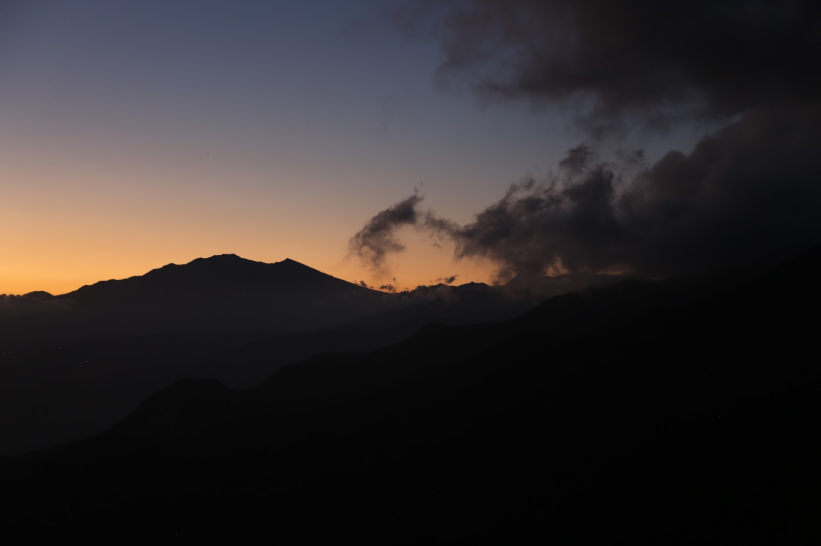
The Three Wattled Bellbird: The Living Bell of Panama’s Cloud Forests

Among all the birds that inhabit Panama, few inspire the same sense of wonder as the remarkable Three Wattled Bellbird, scientifically known as Procnias tricarunculatus. In a country famous for its dazzling biodiversity, where more than 1,000 bird species can be found, this extraordinary creature still manages to stand apart. It is a bird that seems almost imaginary, as if it were invented by an artist with an unlimited imagination. With its snow white head, rich chestnut body, and three strange black wattles hanging from its face like living ribbons, the bellbird looks unlike any other bird in Central America. Yet its appearance is only part of the story. What truly makes the Three Wattled Bellbird legendary is its voice. Hidden high in the misty forests of Panama's mountains, a male bellbird can unleash a metallic call so powerful that it echoes through valleys and across ridges. Many birdwatchers hear the bird long before they ever see it. The sound is so distinctive that first time listeners often stop in their tracks, convinced that someone has struck a giant metal bell somewhere deep in the forest. The species is widely regarded as possessing one of the loudest bird calls on Earth, with songs capable of carrying for enormous distances through dense cloud forest.

The Three Wattled Bellbird is primarily a bird of the highlands, inhabiting mountain forests and cloud forests from Honduras south into western Panama. In Panama, some of the best habitat lies in the high elevations of Chiriquí Province, particularly within the Talamanca Mountains and surrounding cloud forest ecosystems. These cool, mist drenched forests provide exactly the conditions the species requires. Moss hangs from ancient branches, orchids bloom from tree trunks, and towering canopy trees create a multi layered world above the forest floor. The bellbird spends much of its life high in this canopy, often remaining frustratingly hidden despite its spectacular size and appearance. Unlike many colorful tropical birds that actively forage along trails, bellbirds prefer lofty perches where they can survey vast stretches of forest. This habit contributes to their almost mythical reputation among birdwatchers. Even experienced guides sometimes hear numerous bellbirds while only catching brief glimpses of one.

One of the most fascinating aspects of the species is its appearance. The adult male looks as though it belongs in a fantasy novel. Its head, throat, and upper breast are brilliant white, creating a dramatic contrast against the rest of the body, which glows with a rich chestnut brown color. Hanging from the base of the bill are three slender black wattles that can reach impressive lengths. These strange appendages sway and bounce as the bird moves and are especially noticeable during courtship displays. Scientists still do not fully understand why the wattles evolved, though they clearly play a role in attracting females. The female, by contrast, is completely different. She wears a camouflage pattern of olive green and yellow streaks that helps her disappear among the leaves. If the male is designed to be noticed, the female is designed to remain unseen. This dramatic difference between the sexes is one of the most striking examples of sexual dimorphism among Central American birds.

The bellbird's voice is what has truly made it famous. During the breeding season, males perch on exposed branches near the tops of trees and repeatedly announce their presence with explosive calls. These sounds have been described as metallic, mechanical, and bell like. Some observers compare them to a giant hammer striking steel, while others hear a resonant BONK echoing through the forest. Regardless of the description, everyone agrees that the sound is unforgettable. Research has shown that these calls can reach astonishing volumes, approaching the noise level of heavy machinery. Imagine standing in a silent cloud forest surrounded by drifting fog when suddenly a metallic clang erupts from the canopy above. The experience is startling, thrilling, and impossible to forget. For many birders, hearing their first bellbird call ranks among the greatest wildlife experiences in Central America.

Another remarkable feature of the Three Wattled Bellbird is its seasonal movement. Unlike many birds that remain in one area year round, bellbirds undertake migrations linked to elevation and fruit availability. During parts of the year they occupy higher mountain forests, while at other times they descend to lower elevations in search of food. Their movements are closely tied to fruiting trees, especially members of the laurel family, which includes wild relatives of avocados. These birds are almost entirely fruit eaters. They swallow fruits whole and later regurgitate seeds, helping disperse important tree species throughout the forest. In this way, the bellbird acts as a forest gardener, transporting seeds across large distances and contributing to the regeneration of tropical ecosystems. Many of the forests that birdwatchers admire today owe part of their diversity to seed dispersers such as the bellbird.

For visitors staying at Lost and Found Hostel, the possibility of encountering a Three Wattled Bellbird is one of the many reasons the surrounding forests are so exciting. The hostel sits near exceptional birding habitat along the Caribbean slope of the Talamanca Mountains, an area renowned among birdwatchers for its diversity. Depending on the season and local fruiting conditions, bellbirds are sometimes seen or heard in the broader region surrounding the hostel. Early mornings can be particularly magical. As clouds drift through the mountains and the forest awakens with birdsong, there is always the possibility that the unmistakable metallic call of a bellbird will ring out from a distant ridge. For many guests, hearing that sound for the first time becomes one of the defining memories of their stay. The experience captures everything that makes Panama's mountain forests special: mystery, wilderness, and the thrill of encountering a species found nowhere else on Earth outside a narrow slice of Central America.

The species is also a symbol of conservation. Unfortunately, the Three Wattled Bellbird is considered vulnerable due to habitat loss across its range. Cloud forests are among the most threatened ecosystems in Central America. Agriculture, development, and forest fragmentation have reduced suitable habitat in many areas. Because bellbirds rely on extensive networks of forests at different elevations throughout the year, protecting isolated patches is often not enough. Conservationists increasingly recognize the importance of maintaining entire corridors that connect breeding and feeding habitats. Every intact forest helps support the long term survival of these remarkable birds. Their presence is often considered a sign of a healthy ecosystem because they depend on mature forests rich in fruiting trees.

What makes the Three Wattled Bellbird so captivating is that it embodies everything people dream about when they imagine tropical wilderness. It is beautiful without being conventionally beautiful. It is loud yet elusive. It is famous among birdwatchers yet remains unknown to much of the world. It lives in mist covered mountains where ancient forests still cloak the ridges, and its voice echoes through valleys that seem unchanged for centuries. Seeing one perched high above a cloud forest clearing feels less like observing a bird and more like encountering a living symbol of the wild. The combination of bizarre appearance, extraordinary voice, ecological importance, and rarity creates a species that leaves a lasting impression on anyone fortunate enough to encounter it.

For bird lovers exploring Panama's highlands, the Three Wattled Bellbird is more than just another species on a checklist. It is an experience. It is the sudden metallic note drifting through the fog. It is the flash of white and chestnut high in the canopy. It is the reminder that Panama remains one of the richest and most fascinating wildlife destinations on the planet. Whether spotted from a mountain trail, heard from a distant ridge, or encountered during a stay near the forests around Lost and Found Hostel, the Three Wattled Bellbird remains one of the true treasures of Panama's cloud forests, a living jewel whose strange beauty and unforgettable voice continue to enchant everyone lucky enough to cross its path.

Palo Seco Protected Forest: One of Panama's Last Great Wildernesses

When travelers think about nature in Panama, they often picture the famous cloud forests around Boquete, the wildlife-rich rainforests near the Panama Canal, or the pristine beaches of Bocas del Toro. Yet hidden between some of the country's most celebrated destinations lies a protected area that remains surprisingly unknown even to many seasoned visitors. It is a place where vast mountains disappear into clouds, rivers flow through untouched valleys, and enormous tracts of forest stretch toward the horizon with little sign of human development. It is a place where adventure still feels genuine and where the natural world remains firmly in control. This is the remarkable Palo Seco Protected Forest, one of the largest and least visited protected areas in Panama.

For those who seek destinations that feel truly wild, Palo Seco may be one of the most rewarding places in the entire country. Unlike many famous ecotourism destinations that have become increasingly developed over the years, Palo Seco remains largely untouched by mass tourism. There are no crowds of tour buses. There are no long lines of visitors waiting for photographs. There are no large resort complexes built into the landscape. In many areas, the forest looks much as it has for centuries. Visitors often discover that they can spend entire days exploring roads, rivers, and trails without encountering more than a handful of other people. In a world where many natural attractions have become heavily visited, that sense of solitude is becoming increasingly rare.

One of the reasons Palo Seco feels so wild is its immense size. Covering more than 160,000 hectares of protected land, it forms part of one of the most important conservation corridors in Central America. The forest serves as a crucial buffer zone connecting multiple protected areas, including the internationally renowned La Amistad International Park. Together, these protected lands create an enormous wilderness system stretching across mountains, valleys, rivers, and forests. Wildlife can move freely through large portions of this landscape, helping maintain healthy populations of species that require extensive habitat. Few places in Central America still offer conservation areas on this scale.

Driving through the region surrounding Palo Seco quickly reveals what makes it so special. The mountains seem endless. Forested ridges rise one after another into the distance. Clouds drift through valleys and cling to high slopes. Rivers descend from the mountains in countless streams and waterfalls. Looking across the landscape, it becomes clear that this is not a small isolated reserve. It is a genuine wilderness. The sense of scale is one of the first things visitors notice, and it remains one of the most memorable aspects of the experience.

Perhaps the most remarkable feature of Palo Seco is its incredible variety of habitats. Because the protected area covers such a large range of elevations, it supports an extraordinary diversity of ecosystems. Lowland tropical rainforests occupy the lower elevations, while cloud forests dominate higher slopes. Rivers carve through deep valleys. Wetlands occur in certain areas. Steep mountain ridges create unique microclimates. This diversity allows an astonishing variety of plants and animals to thrive within the protected forest.

For birdwatchers, Palo Seco is nothing short of extraordinary. The protected forest supports hundreds of bird species, many of which are difficult to find elsewhere. Toucans call from the canopy. Motmots perch quietly along forest edges. Hummingbirds flash among flowering plants. Mixed feeding flocks move through the trees. Depending on elevation and habitat, visitors may encounter species associated with both lowland rainforests and highland cloud forests. The proximity to La Amistad and other protected areas means that many rare and sought-after birds occur within the broader landscape. Birding in Palo Seco often feels less like visiting a popular destination and more like genuine exploration.

The mammal diversity is equally impressive. Jaguars still inhabit remote portions of the forest. Although sightings are extremely rare, the knowledge that these apex predators continue to roam the landscape speaks volumes about the health of the ecosystem. Pumas, ocelots, jaguarundis, and margays also occur within the region. Tapirs move through remote valleys. Several monkey species inhabit the canopy. Sloths, coatis, agoutis, and countless smaller mammals contribute to the rich biodiversity of the area. Most remain hidden from casual observation, yet their presence is constantly revealed through tracks, calls, feeding signs, and camera trap studies conducted by researchers.

One of the greatest treasures of Palo Seco is its rivers. The mountains capture enormous amounts of rainfall, feeding watersheds that support countless streams and rivers throughout western Panama. Crystal-clear water tumbles over rocks, forms pools, and eventually flows toward lower elevations. These rivers are not only beautiful but also ecologically vital. They provide habitat for aquatic species, support downstream communities, and help maintain the health of surrounding ecosystems. Standing beside one of these rivers, surrounded by forest and mountains, offers a powerful reminder of how intact the natural systems remain in this part of the country.

The plant diversity within Palo Seco is staggering. Massive rainforest trees dominate certain areas, while cloud forest habitats support entirely different communities of vegetation. Orchids cling to branches. Bromeliads collect water high in the canopy. Mosses and ferns thrive in humid environments. Epiphytes cover tree trunks. In many places, every available surface seems alive with plant growth. The result is a landscape that feels lush beyond description. Botanists could spend years studying the flora of the region and still continue making discoveries.

One of the most fascinating aspects of Palo Seco is how little tourism infrastructure exists compared to other natural attractions in Panama. While this may make the area less accessible for some travelers, it is precisely what preserves its character. Visitors often feel as though they are seeing a side of Panama that many tourists never experience. The roads remain scenic rather than commercialized. The forests remain largely undisturbed. The sense of discovery remains intact. For travelers seeking authentic wilderness rather than heavily developed attractions, this is a tremendous advantage.

The weather itself contributes to the area's unique atmosphere. Moisture arriving from the Caribbean side of the country interacts with mountainous terrain, producing dramatic cloud formations and frequent mist. Conditions can change rapidly. One moment the mountains may be completely visible, and the next they may disappear behind swirling clouds. This constantly changing environment adds an almost mystical quality to the landscape. Photographers often find themselves stopping repeatedly simply to admire how the scenery transforms throughout the day.

For hikers and nature enthusiasts, the protected forest offers endless possibilities. Every road, trail, river crossing, and viewpoint has the potential to reveal something new. Wildlife may appear unexpectedly. A flowering tree may attract dozens of hummingbirds. A mixed flock of birds may suddenly move through the forest. A waterfall may emerge around the next bend. The experience often feels less like following a tourist itinerary and more like participating in a genuine wilderness adventure.

One of the best ways to experience Palo Seco is while staying at Lost and Found Hostel within the nearby Fortuna Forest Reserve. Located roughly thirty minutes away by road, the hostel provides an excellent base for exploring the region's protected forests. Visitors can enjoy the cloud forests and birdlife surrounding Lost and Found while also taking day trips into the vast wilderness of Palo Seco. The combination is particularly rewarding because it allows travelers to experience two of western Panama's most spectacular natural areas during the same trip. Few accommodations place visitors so close to such an extraordinary range of habitats.

What ultimately makes Palo Seco unique is not any single attraction. There is no famous landmark that dominates every postcard. There is no single waterfall, mountain, or wildlife species that defines the experience. Instead, Palo Seco's greatness comes from the landscape as a whole. It is one of the few places where visitors can still experience nature on a grand scale. Forests stretch across entire mountain ranges. Rivers flow through largely intact watersheds. Wildlife inhabits extensive habitat corridors. Clouds drift through valleys untouched by large-scale development. The wilderness feels connected, continuous, and alive.

In an age when many natural destinations have become crowded, commercialized, and heavily photographed, Palo Seco remains refreshingly different. It rewards curiosity rather than convenience. It offers solitude rather than crowds. It provides immersion rather than spectacle. For travelers who dream of discovering a side of Panama that still feels genuinely wild, few places are more compelling.

Palo Seco is not simply a protected forest. It is one of the last great wilderness landscapes in Panama, a place where nature still dominates the horizon, where forests remain vast and connected, and where visitors can experience the rare sensation of standing in a landscape that feels much as it did long before tourism maps, guidebooks, and social media ever existed. For those willing to venture beyond the country's better-known destinations, Palo Seco offers something increasingly difficult to find in the modern world: true wilderness.

Why Panama Is an Entomologist's Dream: Exploring One of the Greatest Insect Frontiers on Earth

When most people imagine the natural wonders of Panama, they think of rainforests filled with monkeys, brilliant tropical birds perched in the canopy, hidden waterfalls cascading through the jungle, or pristine beaches bordering two oceans. Nature photographers often arrive hoping to capture images of quetzals, sloths, toucans, whales, and colorful poison dart frogs. Birdwatchers come with life lists and binoculars, eager to add new species to their records. Yet beneath every tree, behind every leaf, within every flower, underneath every fallen log, and across every square meter of forest floor exists an entirely different world that is far larger, far older, and far more diverse than most visitors ever realize. Panama is not merely a paradise for birds or mammals. It is one of the most extraordinary insect kingdoms on Earth. For entomologists, naturalists, macro photographers, biologists, and anyone fascinated by biodiversity, Panama represents something close to perfection. The sheer abundance of insect life is almost impossible to comprehend until you experience it firsthand. A single rainforest trail can contain thousands of species interacting simultaneously. Every tree functions as a skyscraper supporting entire insect communities. Every flowering plant becomes a miniature ecosystem. Every stream, puddle, patch of moss, and section of bark contains species adapted to occupy a specific ecological niche. The deeper one looks, the more astonishing the complexity becomes. In many ways, Panama is not simply a country rich in insects. It is one of the greatest living laboratories of insect diversity anywhere on the planet.

The reason Panama supports such extraordinary biodiversity begins with geography and geological history. Few places on Earth occupy a more strategically important position for wildlife. Millions of years ago, the formation of the Isthmus of Panama connected North and South America, creating a biological bridge that transformed global ecosystems. Species that had evolved separately for millions of years suddenly gained the ability to move between continents. This event, known as the Great American Biotic Interchange, fundamentally reshaped life in the Western Hemisphere. While mammals often receive most of the attention when discussing this event, insects participated in the exchange as well. Over millions of years, Panama became a meeting point for lineages from both continents. Combined with the country's remarkable range of habitats, elevations, rainfall patterns, and microclimates, this created ideal conditions for diversification. Today, Panama contains lowland rainforests, cloud forests, mangrove swamps, dry forests, mountain ecosystems, wetlands, coastal habitats, islands, rivers, lakes, and alpine-like volcanic environments. Each habitat supports its own unique insect communities. Scientists estimate that tens of thousands of insect species occur within the country, and many experts believe the true number may be far higher. New species continue to be discovered regularly, and entire groups remain poorly studied. An entomologist could spend a lifetime working in Panama and still encounter species that have never been formally described by science.

Perhaps nowhere is Panama's insect diversity more apparent than in its tropical rainforests. These forests operate as enormous biological engines powered largely by insects. To the casual visitor, the forest may appear peaceful and still, but in reality it is a place of nonstop activity. Every moment, insects are pollinating flowers, decomposing organic matter, dispersing seeds, consuming vegetation, hunting prey, recycling nutrients, and serving as food for countless other organisms. The scale of this activity is staggering. Researchers studying tropical forests have found that a single mature tree may support hundreds or even thousands of insect species. Some insects spend their entire lives in the canopy, never touching the ground. Others specialize on particular plants, flowers, fungi, or microhabitats. Certain species emerge only at night, while others are active only during brief periods of the day. Some live within bromeliads high above the forest floor. Others inhabit rotting wood, leaf litter, streams, or underground chambers. Walking through a Panamanian rainforest without noticing insects is like visiting a city and ignoring the people. They are everywhere, influencing nearly every ecological process that keeps the forest functioning.

One of the most fascinating aspects of Panama's insect world is the incredible dominance of ants. Ants are among the most successful organisms on Earth, and nowhere is that success more obvious than in tropical forests. A visitor paying attention to the ground will quickly notice endless streams of ants moving in organized columns. Yet these visible highways represent only a fraction of the activity occurring beneath the surface. Panama hosts hundreds of ant species, ranging from tiny workers only millimeters long to formidable predators capable of delivering painful bites and stings. Leafcutter ants are among the most famous. Their vast colonies can contain millions of individuals and occupy complex underground networks extending deep beneath the forest floor. The sight of thousands of workers carrying pieces of leaves overhead remains one of the most iconic scenes in tropical ecology. What makes these ants particularly fascinating is that they do not eat the leaves they harvest. Instead, they use the plant material to cultivate specialized fungus gardens that serve as their primary food source. This form of agriculture evolved millions of years before humans began farming. Nearby, army ants patrol the forest in massive swarms that can contain hundreds of thousands of individuals. These nomadic predators move relentlessly through the undergrowth, flushing insects, spiders, lizards, frogs, and other creatures from hiding. Entire bird species have evolved specifically to follow army ant swarms, feeding on prey attempting to escape the advancing columns. Observing an army ant raid in Panama is like witnessing a natural phenomenon on the scale of a wildfire, except it is composed entirely of insects.

Butterflies represent another reason Panama has become legendary among entomologists and nature photographers. The country supports an astonishing variety of species, ranging from tiny skippers to giant tropical forms with wingspans approaching those of small birds. The famous Blue Morpho is perhaps the most recognizable. As it flies through sunlit rainforest clearings, its iridescent wings flash brilliant electric blue, creating one of the most memorable sights in tropical America. Yet the Blue Morpho is only one species among hundreds. Glasswing butterflies possess transparent wings that seem almost invisible against the forest backdrop. Owl butterflies display enormous eye spots that mimic the eyes of predators, helping deter attacks. Heliconian butterflies showcase some of the most striking warning coloration found in nature, advertising their toxicity to potential predators. Swallowtails drift elegantly through forest edges and gardens. Some species participate in complex mimicry systems, evolving to resemble toxic butterflies despite being harmless themselves. Others undertake seasonal movements in response to environmental conditions. The diversity of forms, colors, behaviors, and ecological relationships found among Panama's butterflies alone could occupy an entire career of study.

Beetles, however, may represent the ultimate expression of insect diversity in Panama. Scientists estimate that beetles comprise roughly a quarter of all known animal species on Earth, and tropical regions contain some of the richest beetle faunas ever documented. Panama is no exception. Jewel beetles shimmer with metallic colors that rival precious gemstones. Longhorn beetles possess antennae extending far beyond the length of their bodies. Rhinoceros beetles carry elaborate horns used in battles between males. Scarab beetles perform important ecological functions by recycling organic material. Tiger beetles race across open ground at remarkable speeds while hunting prey. Bark beetles, click beetles, ground beetles, fireflies, and countless others occupy specialized ecological niches. During nighttime surveys, researchers frequently encounter species they cannot immediately identify because the diversity is simply so immense. The abundance of beetles in Panama illustrates a broader truth about tropical ecosystems: there are often far more species present than most people realize. What appears to be a simple patch of forest may contain thousands of different beetles, each playing a unique role within the ecosystem.

The cloud forests of western Panama add another layer of complexity to the country's insect diversity. Regions such as the Fortuna Forest Reserve support cooler temperatures, frequent mist, high humidity, and ecosystems that differ dramatically from the lowland rainforests. These conditions create opportunities for specialized species adapted to cloud forest environments. Mosses, orchids, bromeliads, and epiphytes cover branches and trunks, creating intricate habitats for insects. Many species found in these forests occur nowhere else. Some have evolved to survive within narrow elevation ranges and may be restricted to only a few mountain systems. The result is a landscape filled with biological treasures waiting to be discovered. Hidden within this remarkable reserve, Lost and Found Hostel provides an excellent base for observing cloud forest biodiversity, allowing visitors to experience both daytime and nighttime insect activity without needing to travel far from the surrounding habitat. After dark, trails often reveal giant katydids, unusual moths, predatory beetles, and numerous species rarely encountered during daylight hours.

Nighttime in Panama deserves special attention because many entomologists consider it the most exciting period of the day. As darkness falls, an entirely different ecosystem emerges. Species active during daylight retreat, while countless nocturnal insects become active. Forests that seemed relatively quiet suddenly explode with movement and sound. Katydids begin calling from the vegetation. Giant moths emerge from hiding places. Predatory insects patrol tree trunks and leaves. Fireflies flash through the darkness. Spiders begin hunting. A simple white sheet illuminated by a light can attract dozens or even hundreds of species within a single evening. Moths arrive first, followed by beetles, caddisflies, lacewings, true bugs, and countless other insects. Each arrival brings the possibility of encountering something unusual or unexpected. For entomologists, these nighttime gatherings often provide some of the most productive opportunities for observation and research. A single evening can reveal more diversity than several days of casual daytime exploration.

Moths deserve particular recognition because they are often overshadowed by butterflies despite being equally fascinating and vastly more diverse. Panama supports an extraordinary array of moth species, including giant silk moths, sphinx moths, tiger moths, geometer moths, and countless smaller forms. Some possess wingspans exceeding fifteen centimeters. Others display camouflage so effective that they become nearly impossible to distinguish from bark, leaves, lichen, or moss. Certain species mimic snakes, wasps, or bird droppings. Many exist only for a brief adult lifespan focused entirely on reproduction. The sheer variety of shapes, colors, and survival strategies found among Panama's moths reflects millions of years of evolutionary experimentation. For macro photographers, these insects offer endless opportunities to capture some of the most intricate patterns found in nature.

Even Panama's rivers, wetlands, and freshwater ecosystems contribute significantly to its insect diversity. Dragonflies and damselflies patrol streams, ponds, and marshes with remarkable agility. These ancient predators have existed for hundreds of millions of years and remain among the most efficient hunters in the animal kingdom. Their aquatic larvae play crucial roles within freshwater food webs, while adults help control mosquito populations and other insects. Some species display brilliant metallic coloration that shines in sunlight. Others patrol specific territories with almost military precision. Their presence often indicates healthy aquatic ecosystems, making them valuable indicators for conservation efforts.

Perhaps the most remarkable fact about Panama's insects is that scientists are still uncovering their secrets. New species continue to be discovered. Unknown ecological relationships are regularly documented. Entire communities remain poorly understood. Many remote forests have never been surveyed comprehensively. Every year, researchers make findings that expand our understanding of tropical biodiversity. This sense of discovery is one of the reasons Panama continues attracting entomologists from around the world. Unlike regions where most species are already well documented, Panama still offers genuine opportunities for exploration and scientific breakthroughs.

Ultimately, Panama's greatest attraction for entomologists is not any single butterfly, beetle, ant, or moth. It is the overwhelming realization that life exists here on a scale that challenges human comprehension. Every square meter of forest contains stories unfolding simultaneously. Every trail reveals new interactions. Every night brings surprises. Every ecosystem contains layers of complexity that reward patience and curiosity. For those willing to look closely, Panama transforms from a beautiful tropical destination into one of the most extraordinary showcases of insect diversity on Earth. It is a place where the smallest creatures create the largest wonders, and where every leaf, flower, branch, and patch of forest holds the potential for discovery. In a world where biodiversity is increasingly under pressure, Panama remains one of the planet's greatest strongholds of insect life, a living reminder of just how rich, intricate, and astonishing nature can be.

The Birds That Haunt Birdwatchers: Panama's Rarest and Most Elusive Avian Treasures

Every birdwatcher has a list.

Sometimes it exists on paper. Sometimes it lives only in the imagination. It is the collection of birds that keep people returning to forests before dawn, hiking through rain, climbing mountains, and staring into dense vegetation for hours at a time. These are not merely birds. They are obsessions. They are the species that appear in guidebooks and eBird checklists, the birds that show up in photographs taken by someone else, the birds whose calls echo from deep within the forest but never seem to reveal their source.

Panama is one of the world's great birdwatching destinations, with more than a thousand recorded species packed into a country smaller than South Carolina. For many birders, it is a paradise where toucans, trogons, hummingbirds, parrots, tanagers, and motmots seem almost easy to find. Yet even in this bird-rich nation there exists another level of challenge. These are the birds that humble experts. The birds that can elude experienced guides for weeks. The birds that generate excitement whenever their names appear on local WhatsApp groups. The birds that inspire international birders to travel thousands of miles for a chance at a few seconds of observation.

These are Panama's avian ghosts.

The Harpy Eagle: The Bird Everyone Dreams About

Perhaps no bird captures the imagination quite like the Harpy Eagle.

As Panama's national bird and one of the most powerful eagles on Earth, the Harpy Eagle is legendary. With talons larger than a grizzly bear's claws and the ability to hunt monkeys and sloths, it dominates the rainforest canopy. Yet despite its enormous size, it remains remarkably difficult to find.

The challenge is not that Harpy Eagles are secretive. The challenge is that they inhabit vast areas of rainforest at very low densities. A pair may control a territory covering dozens of square kilometers. You can spend weeks in suitable habitat and never see one.

Your best chances are in the remote forests of Darién National Park, where some of the largest remaining populations survive. Occasionally active nests are monitored, creating rare opportunities for visiting birders. Even then, success is never guaranteed.

Many birdwatchers visit Panama specifically for this species. Some leave successful. Others leave with only stories of distant calls and secondhand sightings.

The Bare-necked Umbrellabird: Panama's Most Bizarre Bird

If evolution occasionally enjoys a sense of humor, the Bare-necked Umbrellabird may be proof.

Large, black, and crowned with an umbrella-like crest, the species appears almost prehistoric. Males possess an inflatable red throat wattle that hangs dramatically from the chest during display.

The bird is so unusual that first-time observers often struggle to believe it is real.

Unfortunately, finding one can be extraordinarily difficult.

Populations have declined significantly across much of their range, and they often move seasonally between elevations. A location that hosted umbrellabirds last month may seem completely empty today.

The cloud forests of the Fortuna Forest Reserve provide some of the best opportunities in Panama. The forests around the Continental Divide occasionally produce sightings, particularly when fruiting trees attract feeding birds.

Many experienced birders rank the umbrellabird among their most difficult Central American targets.

The Three-wattled Bellbird: Heard More Than Seen

The first encounter with a Three-wattled Bellbird often happens through sound.

A metallic explosion echoes across a mountain valley.

The noise sounds impossible.

Some compare it to a hammer striking steel. Others describe it as a giant bell ringing in the forest.

Then begins the challenge.

Finding the source.

The bird may be perched hundreds of feet away in the canopy, remaining surprisingly difficult to locate despite producing one of the loudest calls in the bird world.

Bellbirds migrate seasonally through western Panama's cloud forests, making timing critical. Birders visiting at the wrong season may miss them entirely.

The Fortuna region remains one of the most reliable places to search, particularly around higher-elevation forests near the Continental Divide.

The Black-crowned Antpitta: The Master of Disappearing

Among birdwatchers, antpittas occupy legendary status.

These secretive forest-floor birds seem determined to remain unseen.

The Black-crowned Antpitta is among Panama's most frustrating examples.

Birders frequently hear it.

The haunting whistles emerge from dense vegetation.

The bird sounds close.

You move toward the call.

The call moves.

You follow.

The bird disappears.

Hours can be spent attempting to glimpse what often amounts to a brown shape crossing a trail for two seconds.

High-elevation cloud forests around Fortuna and the Chiriquí Highlands offer some of the best chances.

Yet even experienced birders sometimes wait years before achieving a satisfying view.

The Beautiful Treerunner: A Tiny Bird With a Huge Reputation

The name alone creates expectations.

The Beautiful Treerunner is genuinely beautiful, with intricate plumage and energetic behavior.

The problem is that it rarely stops moving.

Treerunners dart through moss-covered branches, often as part of mixed feeding flocks. By the time binoculars focus, the bird has already moved.

Cloud forests in Fortuna and around Volcán Barú National Park provide some of the best opportunities.

Success often depends on luck, patience, and being present when a feeding flock suddenly materializes.

The Rufous-vented Ground-Cuckoo: The Holy Grail

Ask veteran birdwatchers about the most difficult bird in Panama and many will mention the Rufous-vented Ground-Cuckoo.

This bird has achieved almost mythical status.

Large, striking, and incredibly elusive, it spends much of its life following army ant swarms through dense rainforest. Unlike many birds that forage independently, ground-cuckoos often depend on these moving insect armies to flush prey.

The problem is that ant swarms are unpredictable.

The bird is unpredictable.

And the rainforest is enormous.

Even guides who spend years in the field may only encounter a handful.

The forests of Darién and remote Caribbean-slope rainforests offer the best possibilities, but this remains one of Panama's ultimate birding prizes.

The Sapayoa: A Living Mystery

The Sapayoa fascinates scientists as much as birdwatchers.

For decades, researchers struggled to understand where it belonged evolutionarily. It turned out to be more closely related to birds from Australia and New Guinea than to most American species.

Finding one is no simple matter.

Sapayoas inhabit humid lowland rainforest and often remain high in the canopy.

Darién remains one of the strongest locations for those hoping to add this remarkable species to their life list.

Many birders see dozens of species during a day in the rainforest but return without finding a Sapayoa.

The Resplendent Quetzal: Surprisingly Difficult Despite Its Fame

People often assume that the Resplendent Quetzal is easy to find because it is so famous.

Not necessarily.

While more visible than many rare birds, quetzals still require suitable habitat, seasonal food sources, and a bit of luck.

Cloud forests surrounding Fortuna, Volcán Barú, and the Chiriquí Highlands offer some of the best opportunities.

The challenge is that quetzals often move in response to fruiting trees. A location that was productive yesterday may seem empty today.

For many birdwatchers, seeing a male quetzal illuminated by morning sunlight ranks among the greatest wildlife experiences in the Americas.

Why Fortuna Has Become So Important

If there is one location that repeatedly appears in conversations about Panama's rare birds, it is the vast cloud forest ecosystem of the Fortuna region.

The Fortuna Forest Reserve sits near the Continental Divide and protects an enormous expanse of cloud forest habitat. The combination of elevation, moisture, and relatively intact wilderness supports species that are difficult to find elsewhere.

Many visiting birders base themselves in the reserve because it allows access to habitats favored by quetzals, bellbirds, umbrellabirds, chlorophonias, silky-flycatchers, antpittas, and dozens of specialized cloud forest species.

Hidden within the reserve, Lost and Found Hostel has become particularly attractive to birdwatchers because the birding starts immediately. Rather than driving to a trailhead every morning, guests wake up inside the habitat itself. Hummingbirds visit feeders throughout the day, mixed feeding flocks regularly move through surrounding forests, and some of Panama's most sought-after species can be encountered on nearby trails.

For serious birders, that proximity matters. Every minute spent in the forest increases the chances of finding one of those elusive dream birds.

The Reality of Rare Birding

One of the great lessons Panama teaches birdwatchers is that rarity creates value.

Anyone can appreciate a toucan.

Anyone can admire a hummingbird.

But the birds that stay with people for decades are often the ones that required effort.

The antpitta that finally stepped onto a trail after three hours of waiting.

The umbrellabird that appeared briefly through a gap in the fog.

The bellbird that revealed itself after an hour of searching.

The Harpy Eagle perched silently above the rainforest.

The ground-cuckoo that emerged from an army ant swarm for thirty unforgettable seconds.

These moments become stories. They become memories that are told and retold long after the trip ends.

And that is why birdwatchers continue returning to Panama. Not because the common birds are easy to find, but because somewhere in its forests, mountains, and remote wilderness areas, there is always another elusive species waiting to test their patience, skill, and determination. In a country with more than a thousand recorded bird species, the next great sighting may be around the next bend in the trail, hidden in the mist of a cloud forest, or perched silently in a rainforest giant that nobody has looked at quite closely enough yet.

Nature in Panama: Where to Find the Wild Heart of One of the Most Biodiverse Countries on Earth

There are countries that have beautiful beaches. There are countries that have impressive mountains. There are countries known for wildlife, waterfalls, jungles, or coral reefs. What makes Panama so extraordinary is that it has all of these things packed into a relatively small area, creating one of the most diverse and nature-rich destinations in the Americas. For travelers who love the outdoors, Panama often feels like several countries combined into one. Within a single week, you can stand on a mist-covered mountain ridge watching clouds roll through ancient forests, explore rainforest trails filled with monkeys and tropical birds, snorkel over coral reefs, discover hidden waterfalls, watch whales breach offshore, and relax on beaches that remain largely untouched by mass tourism. Nature is not simply something that exists in isolated parks here. It is woven into the very fabric of the country. Forests cover mountains, rivers flow through protected landscapes, wildlife thrives in surprisingly accessible places, and countless opportunities for adventure exist in nearly every province.

The reason Panama's natural world is so remarkable begins with geography. This narrow strip of land serves as the bridge connecting North and South America, and that position has shaped one of the most important biological crossroads on the planet. Millions of years ago, the formation of the Isthmus of Panama allowed animals and plants from two continents to mix and spread into new territories. Species that evolved separately for millions of years suddenly found themselves sharing the same landscapes. The result is a staggering concentration of biodiversity. More than a thousand bird species have been recorded in Panama. Hundreds of mammals roam its forests. Thousands of plant species flourish across its mountains, rainforests, wetlands, and coastlines. Scientists continue discovering new species in areas that remain relatively unexplored. For nature lovers, Panama feels less like a country and more like a living showcase of tropical biodiversity.

One of the most surprising aspects of Panama is how quickly nature appears once you leave urban areas. Even Panama City, with its modern skyline and bustling streets, sits beside remarkable rainforest habitat. Few capitals in the world can claim immediate access to tropical wilderness, yet Panama City does exactly that. Within a short drive, visitors can find themselves exploring the forests of Soberanía National Park, one of the most famous birdwatching destinations in Central America. Here, towering trees form a dense canopy overhead while vines drape between branches and sunlight filters through layers of vegetation. Howler monkeys announce their presence with deep roars that echo through the forest. White-faced capuchins leap through the treetops. Sloths remain nearly invisible until suddenly you realize one has been hanging above you the entire time. Toucans glide between fruiting trees while colorful tanagers move through the canopy. The park's legendary Pipeline Road has achieved near-mythical status among birdwatchers and wildlife photographers because of its astonishing diversity. Spending a morning here often feels like stepping into a nature documentary.

For those seeking true wilderness, however, the legendary forests of eastern Panama provide an entirely different experience. Darién National Park remains one of the largest and wildest protected areas in Central America. Vast rainforests stretch toward the Colombian border, covering mountains, rivers, swamps, and remote valleys. This immense wilderness has become famous among conservationists and adventurers because it preserves ecosystems that remain largely intact. Jaguars still roam through the forest. Tapirs move along hidden trails. Harpy Eagles patrol the canopy. Countless species of amphibians, reptiles, insects, and birds thrive within habitats that have changed little over centuries. Traveling in the Darién is not simply a sightseeing experience. It feels like entering one of the last great frontiers of tropical America. The forests seem endless, the rivers untamed, and the wildlife abundant enough to remind visitors what much of the continent may have looked like before modern development.

Yet Panama's natural wonders are not limited to lowland rainforests. Some of the country's most magical landscapes are found in the highlands of western Panama, where mountains rise into cool, misty elevations and cloud forests cloak the slopes. These ecosystems possess a completely different character from the humid jungles of the lowlands. Moss covers tree trunks. Orchids bloom from branches. Ferns blanket the forest floor. Clouds drift silently between trees. The air feels cooler, fresher, and often carries the scent of damp earth and vegetation. Walking through a cloud forest can feel like entering another world entirely, one where every branch seems alive with plants and every clearing reveals another stunning mountain view.

Among the most important protected areas in these highlands is the vast Fortuna Forest Reserve. Covering thousands of hectares of pristine mountain wilderness, Fortuna is one of the most biodiverse regions in Panama and one of the country's greatest treasures for birdwatchers, hikers, photographers, and nature enthusiasts. Hidden within the reserve itself, Lost and Found Hostel offers one of the most immersive cloud forest nature experiences in Panama, placing visitors in the heart of a biodiverse mountain wilderness where birdwatching, hiking, and wildlife encounters begin right outside the door. The reserve protects an extraordinary range of habitats, from dense cloud forests to rivers, waterfalls, valleys, and ridgelines that stretch toward the Continental Divide. Every morning, clouds drift through the mountains while birds emerge from the forest canopy and wildlife activity begins across the landscape. The reserve supports species that attract birdwatchers from around the globe, including the Resplendent Quetzal, Three-wattled Bellbird, Bare-necked Umbrellabird, Black Guan, Yellow-eared Toucanet, Azure-hooded Jay, Golden-browed Chlorophonia, and an astonishing variety of hummingbirds. Even visitors with little interest in birdwatching often find themselves captivated by the sheer beauty of the scenery.

The proximity of Fortuna to the Continental Divide plays a major role in its biodiversity. Moisture from the Caribbean rises into the mountains, creating the conditions necessary for cloud forest ecosystems to thrive. The result is a landscape that seems perpetually alive. Water drips from moss-covered branches. Orchids bloom in hidden corners of the forest. Ferns spread across every available surface. Hummingbirds move between flowers while mixed flocks of tanagers, warblers, flycatchers, and woodcreepers travel through the canopy. Every trail offers opportunities for discovery, and every viewpoint reveals another layer of the immense wilderness stretching across western Panama.

Nearby, the highland region surrounding Boquete has become one of the country's most popular destinations for nature lovers. Coffee plantations blanket volcanic slopes while rivers rush through steep valleys and waterfalls emerge from hidden forests. Hiking trails lead into cloud forests filled with birds and wildlife. The cooler mountain climate provides a welcome contrast to the tropical heat found elsewhere in the country. Visitors can spend their days exploring forests, climbing mountains, visiting waterfalls, or simply enjoying the spectacular scenery that surrounds the region. The nearby Volcán Barú National Park offers some of the most dramatic views in Central America, including the rare opportunity to see both the Pacific Ocean and Caribbean Sea from the summit on exceptionally clear mornings.

Moving away from the mountains reveals yet another side of Panama's natural diversity. The Caribbean archipelago of Bocas del Toro combines rainforest, beaches, mangroves, coral reefs, and island ecosystems into one unforgettable destination. Here, nature unfolds both above and below the waterline. Dolphins frequently patrol the channels between islands. Sloths can often be found near beaches and forest edges. Tropical fish fill coral reefs with color. Mangrove forests provide shelter for countless marine species. Red frogs hide among the vegetation while seabirds patrol the coastline. The combination of marine and terrestrial habitats creates endless opportunities for exploration, making Bocas one of the country's most fascinating regions for wildlife enthusiasts.

The Pacific side of Panama is equally impressive. Offshore, Coiba National Park protects one of the most important marine ecosystems in the eastern Pacific. Often compared to the Galápagos Islands because of its biodiversity, Coiba offers extraordinary opportunities for diving, snorkeling, and wildlife observation. Whale sharks, manta rays, sea turtles, dolphins, reef sharks, and vast schools of fish inhabit the surrounding waters. During migration season, humpback whales arrive to breed and give birth. Beneath the surface, coral reefs teem with life. Above the water, tropical forests cover much of the island, creating a protected environment that supports both marine and terrestrial ecosystems.

One of the greatest joys of exploring nature in Panama is the constant sense of discovery. The country's compact size means that ecosystems change rapidly as you travel. A few hours of driving can take you from mangrove-lined coastlines to rainforest-covered hills, from tropical beaches to cool mountain forests, from dry Pacific habitats to lush Caribbean landscapes. Every region feels different. Every province has its own character. Every journey reveals something new.

For birdwatchers, Panama is often considered one of the finest destinations in the world. More than a thousand recorded bird species inhabit the country, a remarkable number considering its size. Scarlet Macaws fly above forests and coastlines. Keel-billed Toucans perch in fruiting trees. Motmots sit quietly along forest trails. Harpy Eagles soar above remote wilderness. Hummingbirds flash through cloud forests like living jewels. Mixed feeding flocks fill the canopy with movement and color. Whether you are a serious birder carrying professional equipment or a casual traveler simply enjoying nature, Panama offers birdwatching opportunities that rival anywhere on Earth.

The country's mammal diversity is equally impressive. Howler monkeys, spider monkeys, capuchins, sloths, coatis, agoutis, anteaters, peccaries, tapirs, ocelots, pumas, and jaguars all inhabit different regions of Panama. Many remain elusive, hidden within dense forests, but their presence adds excitement to every hike and wildlife excursion. Every rustle in the undergrowth carries the possibility of an unforgettable encounter.

What truly makes Panama special, however, is not a single park, reserve, beach, mountain, or island. It is the feeling that nature remains deeply connected across the country. Forests still cover vast landscapes. Rivers continue flowing through protected watersheds. Wildlife populations survive within extensive habitats. The natural world remains a visible and important part of everyday life. In an era when many countries have seen their wilderness fragmented or diminished, Panama still feels remarkably wild.

For travelers searching for nature, the possibilities are almost endless. Explore the rainforests of Soberanía. Venture into the legendary wilderness of Darién. Discover the cloud forests of Fortuna. Stay among the mountains near Boquete. Climb Volcán Barú. Snorkel coral reefs in Bocas del Toro. Dive with marine life in Coiba. Watch whales offshore. Search for quetzals in mist-covered forests. Stand beneath giant rainforest trees and listen to the sounds of the jungle.

Panama may be famous for connecting oceans, but its greatest achievement may be something else entirely. It connects ecosystems, landscapes, climates, and wildlife in a way that few countries can match. For nature lovers, it is not simply a destination. It is one of the last places where the wild world still feels vast, vibrant, and wonderfully alive.

Panama's Obsession With Tiny Stores: The World of the Corner Mini Super

One of the first things many visitors notice in Panama is that there seems to be a small convenience store almost everywhere. You can be walking through a busy city neighborhood, a sleepy mountain town, a beach community, or even a remote rural village, and sooner or later you will encounter a little shop tucked into the corner of a building, attached to a family home, or squeezed between larger businesses.

These stores are known by many names, but for countless Panamanians they are simply part of everyday life. They are where people stop for a cold drink on a hot afternoon, grab a snack, buy cooking ingredients, pick up household necessities, or catch up on local gossip.

To visitors from countries dominated by giant supermarkets and massive retail chains, the sheer number of these small stores can be surprising. Panama certainly has modern shopping centers and huge grocery stores, but the corner shop remains king in many communities. The reason is simple. Convenience often beats size.

Imagine living in a neighborhood where the nearest major supermarket requires a drive across town. Now imagine a tiny store located only a minute or two away on foot. Need a loaf of bread? Walk to the corner. Forgot cooking oil? Walk to the corner. Want a cold soda, an ice cream, batteries, coffee, toothpaste, or a bag of chips? Walk to the corner.

Over time, these stores become much more than places to buy things.

They become community gathering spots.

Store owners often know their customers personally. They know who lives nearby, who just moved into the neighborhood, and whose family has been there for generations. In smaller towns, the shopkeeper may know nearly everyone who walks through the door. Conversations flow naturally. Local news spreads quickly. Recommendations are exchanged. Community life unfolds in front of the cash register.

The variety packed into these tiny spaces can be remarkable. Shelves stretch from floor to ceiling. Refrigerators hum in the background. Every available inch seems occupied by products. Drinks, canned goods, cleaning supplies, snacks, school supplies, bread, medicine, pet food, and household items somehow coexist in spaces that often look far too small to contain so much inventory.

Visitors are frequently amazed by how resourceful these stores can be. Looking for an obscure item? There is a surprisingly good chance the owner has it hidden somewhere behind the counter or tucked onto a shelf that you somehow missed. Years of experience have taught many shopkeepers exactly what their customers need and exactly how to maximize limited space.

One particularly memorable feature is the cold drink refrigerator. Panama's tropical climate makes chilled beverages practically essential. On a hot afternoon, opening the glass door of a refrigerator stocked with cold sodas, juices, water, and local drinks can feel like discovering treasure. The refreshing blast of cool air alone is enough to attract customers.

During storms, these stores often become even more important. Heavy tropical rain can suddenly make long trips inconvenient. Instead of driving across town, people head to their nearest mini super to grab whatever they need. The stores become reliable anchors within neighborhoods, serving customers regardless of weather conditions.

Travelers exploring Panama's interior quickly learn to appreciate them as well. Driving through small towns, a corner store often becomes the perfect place to stop. Need directions? Ask the owner. Want recommendations for nearby attractions? Ask the locals gathered outside. Looking for a quick snack before continuing your journey? The answer is usually waiting on a shelf somewhere inside.

What makes these stores truly fascinating is how they reflect the character of their communities. No two are exactly alike. One may specialize in fresh bread. Another might be known for cold drinks. A third could stock an unusually wide range of hardware supplies. Each evolves according to the needs of the neighborhood around it.

As Panama continues to modernize, giant malls and supermarkets continue expanding. Yet despite all the changes, the humble corner store remains deeply woven into daily life. New apartment towers rise. Roads improve. Technology advances. Still, people continue walking down the street to the same familiar shop for everyday essentials.

Perhaps that is because these stores offer something larger retailers cannot always provide.

They offer familiarity.

They offer convenience.

They offer human connection.

And they remind visitors that some of the most important places in a community are not necessarily the biggest or most impressive. Sometimes they are the tiny stores on the corner where neighbors meet, conversations begin, and everyday life quietly unfolds.

In Panama, those little stores are everywhere.

And once you start noticing them, you realize they are one of the country's most fascinating hidden institutions.

The Panama Lottery Phenomenon: Why an Entire Country Stops to Check the Numbers

There are few things in Panama that bring together people from every background quite like the lottery. It does not matter whether you are in the heart of Panama City surrounded by towering skyscrapers, in a small mountain village in Chiriquí, along the Caribbean coast, or deep in the countryside of Los Santos. On lottery days, a curious sense of anticipation spreads across the country.

To an outsider, it may seem surprising. After all, lotteries exist everywhere. Yet in Panama, the lottery is not simply a game. It is part of the national culture. It is woven into daily conversations, family traditions, and local routines in a way that visitors often find fascinating.

Walk through almost any town and you will notice lottery vendors. Some work from dedicated booths while others move through streets carrying tickets and sheets of numbers. Many become well known figures in their communities. Locals know them by name. Regular customers return week after week hoping that this will finally be the draw that changes everything.

The rituals surrounding the lottery can be just as interesting as the lottery itself. Certain numbers become legendary. Birthdays are popular choices. House numbers, license plates, anniversaries, dreams, and even strange events can inspire number selections. If someone dreams about fish, snakes, or a particular animal, there is often a lively discussion about which lottery number that dream might represent. Entire conversations can revolve around interpreting seemingly random events as signs pointing toward a lucky combination.

In cafés, restaurants, and small neighborhood stores, lottery talk is common. People compare numbers. They debate lucky sequences. They share stories about near misses and surprising wins. Everyone seems to know someone who once came incredibly close to a major prize.

One of the most entertaining aspects of the lottery culture is how hope spreads through a community. A person who buys a ticket is not merely purchasing a chance to win money. They are purchasing a temporary dream. Suddenly possibilities begin to appear. Maybe the house can finally be renovated. Maybe a vehicle can be replaced. Maybe a long desired trip can become reality. Even though the odds remain challenging, the imagination has already started working.

Lottery day itself creates a unique atmosphere. Radios, televisions, phones, and conversations all seem focused on the same thing. Numbers become the center of attention. The draw approaches. Anticipation builds. People stop what they are doing to check results. Some react with excitement. Others laugh at how close they came. Many immediately begin thinking about the next draw.

Yet perhaps the most interesting thing is that winning is not really the whole story.

The lottery has become a shared national experience. It provides conversation topics between strangers. It creates traditions passed down through generations. It adds moments of suspense and excitement to ordinary weeks. Even people who rarely play often know the results and hear the discussions surrounding them.

For travelers spending time in Panama, observing this phenomenon offers a fascinating glimpse into local life. Sitting in a small restaurant and listening to a discussion about lucky numbers may reveal more about the culture than many tourist attractions ever could. It demonstrates the optimism that exists throughout the country. It highlights the importance of community connections. It shows how even simple traditions can become part of a nation's identity.

The next time you find yourself in Panama and notice people gathered around a television, checking their phones, or discussing a string of numbers with surprising enthusiasm, you may be witnessing one of the country's most enduring traditions.

Because in Panama, the lottery is not just about winning.

It is about possibility.

It is about stories.

It is about hope.

And for a few moments every week, it gives an entire country something to dream about together.

The Soundtrack of Panama: A Country You Hear Before You See

Most people think of Panama as a place of incredible sights. They picture giant ships crossing the canal, skyscrapers rising above Panama Bay, tropical islands surrounded by turquoise water, and cloud forests disappearing into the mist. Yet one of the most fascinating ways to experience Panama has nothing to do with what you see.

It has everything to do with what you hear.

Panama is a country with a soundtrack unlike almost anywhere else on Earth. From the moment you arrive, your ears begin collecting memories long before your camera does. Every region has its own collection of sounds, and together they create a living symphony that follows travelers from coast to coast.

The day often begins with roosters. Not one rooster. Hundreds of them. In rural Panama, roosters seem to engage in a national competition to determine who can wake up first. Before dawn has even started to brighten the horizon, the crowing begins. One rooster calls from a nearby farm. Another answers from a distant hillside. Soon an entire valley is participating. Visitors may find it amusing during their first morning and slightly less amusing after several consecutive days, but eventually the sound becomes part of the experience. It is the soundtrack of a country that rises early.

As daylight spreads across the landscape, other sounds emerge. In mountain regions such as Chiriquí, the forests come alive with birds. The calls echo through valleys and drift across ridges. Some whistles are clear and musical. Others sound mechanical, almost unreal. Hummingbirds buzz around flowers and feeders like tiny helicopters. Parrots screech overhead. Hidden birds deep in the forest create mysterious sounds that seem to come from nowhere and everywhere at the same time. For birdwatchers, Panama can feel like an endless outdoor concert hall where every performer is wild and every performance is unique.

The roads of Panama have their own soundtrack as well. In cities, buses rumble through traffic while vendors call out to potential customers. Taxi drivers chat through open windows. Construction projects add a constant background rhythm to rapidly growing urban areas. Yet outside the cities, the sounds change dramatically. The highways crossing the interior pass through rolling farmland where cattle occasionally announce their presence from distant pastures. Rivers can often be heard before they are seen. Wind moves through tall grass and forest canopies. During the rainy season, sudden downpours drum against rooftops with astonishing intensity.

Rain itself deserves special mention because Panama may possess some of the most dramatic rainstorms in the world. One moment the sky can appear calm and peaceful. Minutes later, rain is falling so heavily that conversations become difficult. Metal roofs transform into giant percussion instruments. Gutters overflow. Roads shimmer. Streams become torrents. Then, just as quickly as it began, the storm may disappear, leaving behind nothing but dripping leaves and fresh, cool air.

Along both coasts, the ocean contributes its own voice. On the Pacific side, waves crash against rocky shores and volcanic islands. Fishing boats leave harbors before sunrise, their engines fading into the distance. Pelicans dive into the water with surprisingly loud splashes. On the Caribbean side, the rhythm feels different. The sea often appears calmer and more relaxed. Palm trees rustle in the breeze while waves gently wash onto white sand beaches. In places like Bocas del Toro, music frequently drifts from waterfront restaurants and beach bars, blending with the sounds of the sea.

Perhaps nowhere is Panama's soundtrack more fascinating than in its markets. Step into a busy local market and you immediately enter a world of voices. Vendors advertise fresh fruit, vegetables, seafood, and baked goods. Customers negotiate prices. Friends stop to greet one another. Laughter rises above the crowd. The sound is energetic, chaotic, and entirely authentic. It is impossible to spend time in a Panamanian market without feeling connected to daily life.

Then there are the buses. Panama's famous buses have personalities all their own. Doors open and close. Engines growl. Music often plays at surprisingly enthusiastic volume levels. Passengers chat while towns and landscapes roll past the windows. Every journey becomes its own moving soundtrack, shaped by the route, the passengers, and the mood of the day.

At night, the country changes again. In cities, nightlife creates a lively atmosphere of conversation, music, and celebration. In smaller towns, things become quieter. Crickets begin their evening performance. Frogs join in from nearby streams and ponds. In the rainforest, countless insects create a constant wall of sound. The darkness may appear peaceful, but the forest is actually alive with activity. Every chirp, buzz, croak, and call belongs to an animal going about its nightly routine.

One of the most unforgettable sounds in Panama often occurs when everything else becomes silent. It might happen on a remote mountain trail, a deserted beach, or a forest reserve far from the nearest road. For a brief moment, there are no engines, no conversations, no traffic, and no technology. There is only wind, distant birds, and the natural world. In a modern age filled with constant noise, such moments feel surprisingly rare and valuable.

Years after visiting Panama, travelers may forget specific dates or hotel names. They may struggle to remember exactly where a photograph was taken. Yet the sounds remain. The rooster announcing dawn. Rain hammering a metal roof. Tropical birds calling from the forest. Waves breaking on a distant shore. A bus climbing through the mountains. The laughter of people gathered in a small town plaza.

These sounds become part of the memory of Panama.

And perhaps that is one of the country's greatest gifts.

Before you truly see Panama, you hear it.

Before you understand Panama, you listen.

And once you do, you discover that this narrow bridge between two continents has one of the richest and most unforgettable soundtracks in the world.

Birdwatching at Lost and Found Hostel: Waking Up in the Heart of One of Panama's Greatest Birding Landscapes

There are birdwatching destinations, and then there are places that seem almost purpose-built by nature for birdwatchers. Lost and Found Hostel belongs firmly in the second category. While many birding trips involve setting an alarm long before sunrise, stumbling into a vehicle in the dark, and driving considerable distances to reach productive habitat before the morning activity begins, Lost and Found offers something entirely different. Here, the habitat is already around you. The birdwatching begins the instant you wake up. You can open your eyes, step outside with a cup of coffee in your hand, and immediately find yourself surrounded by cloud forest, mountain views, hummingbirds, and some of the richest birdlife in all of Panama. There are very few places where the transition from sleeping to serious birding takes less than a minute, but Lost and Found is one of them. The hostel occupies an extraordinary position within the Fortuna Forest Reserve, a vast protected wilderness in western Panama that has become one of the country's premier destinations for birdwatchers, wildlife enthusiasts, photographers, and naturalists from around the world.

What makes the location so remarkable is not simply that it is surrounded by forest. Panama has many forests. What makes Lost and Found special is that it sits within a cloud forest ecosystem close to the Continental Divide, one of the most biologically productive and ecologically important regions in Central America. This unique geographical position places visitors at the meeting point of different weather systems, elevations, habitats, and wildlife communities. Moisture arriving from the Caribbean side of the country rises into the mountains and cools, creating the misty, moisture-rich conditions that cloud forests depend upon. These forests are among the most biodiverse ecosystems on Earth. Moss drapes over tree trunks. Orchids cling to branches. Ferns cover the forest floor. Epiphytes grow in every available space. The entire landscape feels alive. For birds, it is paradise. For birdwatchers, it can feel like stepping into a dream.

One of the most memorable experiences at Lost and Found begins not on a trail but in the hostel's main social area. Here, a collection of hummingbird feeders has become famous among guests, photographers, and birdwatchers. Many visitors arrive expecting to spend their days hiking through the forest searching for birds, only to discover that some of the most spectacular wildlife viewing occurs while sitting comfortably near the feeders. Throughout the day, hummingbirds arrive in a near-constant stream. Tiny flashes of iridescent green, purple, blue, bronze, and emerald dart through the air with astonishing speed. They hover, chase one another, defend feeding territories, and perform aerial maneuvers that seem to defy physics. It is easy to lose track of time while watching them. Guests often plan to spend ten minutes at the feeders before heading out on a hike and instead find themselves still sitting there an hour later, completely captivated by the spectacle unfolding in front of them.

The hummingbird diversity alone can be extraordinary. Depending on the season and conditions, birders may encounter species such as the Violet Sabrewing, Green Hermit, Stripe-tailed Hummingbird, White-bellied Mountain-gem, Scintillant Hummingbird, Snowy-bellied Hummingbird, Crowned Woodnymph, and other dazzling members of this remarkable family. Each species has its own personality and behavior. Some aggressively dominate the feeders and chase rivals away. Others sneak in for quick visits when the larger birds are distracted. Some perch nearby and patiently wait their turn. Others seem incapable of remaining still for more than a second. Even people who have never considered themselves birdwatchers often become fascinated after spending time observing these tiny flying jewels.

The true magic of Lost and Found, however, extends far beyond the feeders. The hostel serves as a gateway into the immense wilderness of the Fortuna Forest Reserve. Covering tens of thousands of hectares, this reserve protects one of the largest remaining cloud forest systems in Panama. Looking out across the surrounding landscape, you quickly gain an appreciation for its scale. Forested mountains stretch toward the horizon. Deep valleys disappear beneath layers of mist. Ridges emerge and vanish as clouds drift through the terrain. Rivers carve through untouched wilderness. Human development is remarkably limited. Instead of seeing roads, buildings, and infrastructure, you see forest after forest after forest. It is exactly the kind of landscape that allows wildlife to thrive.

For birdwatchers, this translates into an astonishing level of biodiversity. More than simply supporting large numbers of birds, the reserve supports an impressive variety of species representing many different ecological niches. Fruiting trees attract colorful tanagers and toucanets. Flowering plants support hummingbirds. Dead trees provide habitat for woodpeckers. Dense understory vegetation shelters secretive ground-dwelling birds. The canopy hosts mixed feeding flocks that can transform a quiet morning into a frenzy of activity within minutes. Every layer of the forest contains life, and every section of trail offers opportunities for discovery.

The list of species recorded within the Fortuna region reads like a wish list for birdwatchers visiting Central America. Perhaps the most famous of all is the Resplendent Quetzal, a bird so beautiful that many consider it one of the most spectacular species on Earth. Seeing a quetzal in the wild is an unforgettable experience. Its brilliant emerald-green plumage glows against the dark forest backdrop, while males display long flowing tail feathers that seem almost unreal. Birders travel from across the globe hoping for a glimpse of this legendary species, and the cloud forests surrounding Lost and Found provide suitable habitat for these magnificent birds.

Equally sought after is the Three-wattled Bellbird, a species famous for producing one of the loudest and strangest calls in the avian world. Hearing its metallic, bell-like notes echoing across a mountain valley is one of the iconic experiences of birding in western Panama. Then there is the elusive Bare-necked Umbrellabird, a bizarre and fascinating species that seems as though it belongs in a prehistoric world. Black Guans move through the forest canopy. Emerald Toucanets and Yellow-eared Toucanets add flashes of color. Lattice-tailed Trogons perch quietly along forest edges. Golden-browed Chlorophonias bring brilliant shades of green and yellow to fruiting trees. Azure-hooded Jays move through the canopy in noisy groups, often alerting birdwatchers to the presence of mixed feeding flocks.

The diversity does not stop there. The reserve is home to Spangle-cheeked Tanagers, Silver-throated Tanagers, Bay-headed Tanagers, Flame-colored Tanagers, Common Chlorospingus, Ruddy Treerunners, Lineated Foliage-gleaners, Buff-fronted Foliage-gleaners, Black-faced Solitaires, Slate-throated Redstarts, Collared Redstarts, Black-and-yellow Silky-flycatchers, Mountain Elaenias, Yellow-winged Vireos, Golden-crowned Warblers, Wilson's Warblers during migration, and numerous flycatchers, wrens, and woodcreepers. Every morning presents the possibility of encountering a different combination of species, which is one reason birders often return repeatedly to the area.

Another remarkable aspect of birdwatching around Lost and Found is the opportunity to observe mixed-species feeding flocks. These moving assemblages of birds can suddenly appear and transform a seemingly quiet forest into a whirlwind of activity. Tanagers, warblers, woodcreepers, flycatchers, chlorophonias, and other species travel together through the canopy, each exploiting different food resources while benefiting from the increased vigilance provided by the group. Experienced birdwatchers know that finding one of these flocks can be the highlight of an entire day. At Lost and Found, they are a regular feature of the cloud forest experience.

The proximity to the Continental Divide contributes enormously to this biodiversity. The divide creates environmental gradients that support species adapted to different conditions. Small changes in elevation can produce noticeable shifts in vegetation and bird communities. This means that exploring different trails around the hostel can reveal surprisingly different species compositions. A morning spent near the hostel may produce one set of birds, while a hike toward a different ridge or valley may reveal entirely new possibilities. The landscape encourages exploration, and every trail feels filled with potential.

Perhaps the greatest luxury offered by Lost and Found is time. Because the birding begins immediately outside your accommodation, you spend more time observing birds and less time traveling. Those first magical hours after sunrise, when many species are most active, are spent in the forest rather than in a vehicle. You hear the dawn chorus from your room. You watch clouds drift through the trees while drinking your morning coffee. You can check the hummingbird feeders before breakfast, explore trails during the morning, return for lunch, and head back into the forest during the afternoon without ever feeling rushed. The entire experience revolves around immersion rather than logistics.

As evening approaches, the atmosphere changes once again. The sunlight softens. Clouds drift through the valleys. Bird activity shifts. Calls echo across the mountains. The forest begins preparing for night. Standing on one of the viewpoints near the hostel, looking out across the vast wilderness of the Fortuna Forest Reserve, it becomes easy to understand why so many visitors fall in love with this place. The mountains seem endless. The forest appears untouched. The opportunities for discovery feel limitless.

Lost and Found Hostel is much more than a hostel. For birdwatchers, it is a rare opportunity to live temporarily within one of Panama's most important birding ecosystems. The combination of cloud forest habitat, hummingbird feeders, access to extensive trail networks, proximity to the Continental Divide, and location within the extraordinary Fortuna Forest Reserve creates an experience that is difficult to match anywhere else in the country. This is not simply somewhere you stay while looking for birds. It is somewhere you stay among the birds. Every morning begins with birdsong. Every meal can be accompanied by hummingbird activity. Every walk has the potential to reveal something remarkable. Every day feels connected to the living forest that surrounds you. For anyone passionate about birdwatching, wildlife, or simply experiencing one of the most beautiful natural environments in Panama, Lost and Found stands as one of the country's most rewarding destinations, a place where you wake up, step outside, and instantly become part of one of Central America's greatest birding adventures.

Flying Wingo from Panama to Colombia: The Budget Traveler's Guide

For many travelers in Panama, Wingo has become one of the most attractive ways to reach Colombia without spending a fortune. Whether you are heading to the vibrant streets of Bogotá, the eternal spring climate of Medellín, the Caribbean charm of Cartagena, or simply using Colombia as a gateway to the rest of South America, Wingo often appears with fares that seem almost too good to be true.

The reality is that Wingo is a genuine low-cost airline owned by the same corporate group behind Copa Airlines, but it operates under a very different philosophy. Instead of including everything in the ticket price, Wingo strips away most extras and charges separately for them. That allows the airline to advertise remarkably low fares that often undercut traditional carriers flying between Panama and Colombia.

Why So Many People Choose Wingo

The biggest attraction is simple: price.

It is not uncommon to find promotional fares between Panama City and Colombian cities for significantly less than traditional airlines. Travelers frequently report paying a fraction of what they would have spent on competing carriers, especially when booking well in advance or during one of Wingo's frequent sales. Community discussions from Panama and Costa Rica often mention savings large enough to justify giving up some comfort and amenities.

For a short flight of roughly one to two hours, many travelers view the experience as perfectly acceptable. The seats are basic, there is no luxury involved, but you get from Panama to Colombia safely and often very cheaply.

The Most Important Thing to Understand

Wingo is not a smaller version of a full-service airline.

It is more accurate to think of it as the airline equivalent of a budget bus company. The ticket gets you transportation from one city to another. Almost everything else costs extra.

Many of the negative reviews online come from passengers who expected a traditional airline experience. Those who understand the low-cost model before arriving at the airport generally report much better experiences.

What You Need to Watch Out For

Baggage Rules Are Taken Seriously

If there is one recurring theme in complaints about Wingo, it is baggage.

Passengers repeatedly report that bag dimensions and weight limits are enforced more strictly than on many traditional airlines. Travelers who arrive with oversized bags often end up paying expensive airport fees. Multiple online reviews and travel discussions warn people to measure and weigh their bags before leaving home.

A common mistake is seeing a cheap fare online and then adding checked baggage later. Sometimes the baggage fees can dramatically increase the final cost of the trip.

Before booking, calculate the complete price including:

Carry-on luggage

Checked luggage

Seat selection

Priority boarding if desired

Any additional services

Many travelers discover that the real cost is higher than the initial advertised fare.

Check In Before You Arrive

Another frequent recommendation from experienced travelers is to complete check-in online or through the mobile app whenever possible.

Several travelers have reported airport fees or complications when trying to handle everything at the counter. The low-cost model rewards passengers who do as much as possible themselves before reaching the airport.

Proof of Onward Travel Can Be Important

One issue that occasionally catches travelers by surprise is proof of onward travel when flying internationally.

Some passengers traveling from Colombia to Panama have reported being questioned about their plans to leave Panama, and a few complaints involve disputes regarding documentation requirements. Because immigration rules can vary based on nationality and travel circumstances, it is wise to carry proof of your onward journey if you are entering Panama or another country served by Wingo.

Don't Expect Luxury

When you board a Wingo flight, you should expect a straightforward experience.

The aircraft are primarily Boeing 737s. Seats are functional rather than luxurious. There are generally no seatback entertainment screens, Wi-Fi may not be available, and the cabin experience is intentionally simple. On a short Panama-to-Colombia flight, however, many passengers find this perfectly acceptable given the savings.

Think of it this way: if your priority is arriving comfortably with a free meal, included baggage, and premium customer service, another airline may suit you better. If your priority is keeping money in your pocket for hotels, restaurants, and activities in Colombia, Wingo can be an excellent option.

Common Complaints

Reading reviews across multiple platforms reveals several recurring criticisms.

The biggest complaints include:

Strict baggage enforcement

Additional fees that surprise first-time users

Slow customer service responses

Difficulty changing or cancelling tickets

Occasional flight schedule changes

Limited flexibility compared with full-service airlines

A smaller number of travelers report flight cancellations or document-related boarding disputes, although these complaints are mixed with many positive experiences from passengers who had completely smooth trips.

Common Praise

Interestingly, many positive reviews sound remarkably similar.

Passengers frequently say:

The ticket was incredibly cheap.

The flight was on time.

The plane was clean.

They would fly Wingo again for short trips.

The airline delivered exactly what they paid for.

That may be the best summary of Wingo's reputation. People who understand what they are buying often leave satisfied. People expecting a premium airline experience are usually disappointed.

Is Wingo Worth It?

For most travelers flying between Panama and Colombia, the answer is yes, provided you prepare properly.

Measure your bags before leaving home. Read every baggage rule carefully. Complete your check-in online. Arrive at the airport early. Keep your travel documents organized. Budget for any extras you know you will need.

Do those things, and Wingo can be one of the cheapest and most practical ways to hop between Panama and Colombia. Ignore the baggage rules or assume everything is included, and your bargain fare can quickly become much more expensive.

In many ways, Wingo perfectly reflects modern budget travel in Latin America: basic, efficient, sometimes frustrating, but often unbeatable when it comes to price.

Old Wives’ Tales in Panama A Massive Journey Through Myths Superstitions Spirits and Everyday Folklore

Panama is a country where modern life and ancient belief systems sit side by side in a way that feels completely natural to the people who live there. Glass towers rise in Panama City, international banking flows through skyscrapers, and modern highways cut across the landscape, yet at the same time, deep cultural beliefs about spirits, omens, energy, and invisible forces continue to shape everyday behavior in subtle but powerful ways. These beliefs are often described as old wives’ tales, but in Panama they are far more than simple stories. They are part of cultural memory, passed through generations, woven into family advice, rural tradition, and even casual warnings spoken in daily life. To understand Panama fully, you have to understand not just what people see, but what many still believe might be happening just beyond what can be seen.

One of the most widespread categories of old beliefs in Panama revolves around spirits and restless energies that are thought to exist alongside the physical world. In many rural communities and older neighborhoods, people still talk about encounters with la llorona, the weeping woman said to wander near rivers, beaches, or lonely roads at night searching for something lost. The story exists in many Latin American countries, but in Panama it carries its own local variations. Children are sometimes warned not to go near water at night because of her presence. Fishermen and rural travelers occasionally speak of hearing cries carried by wind or water that feel unsettlingly human. Whether believed literally or understood as metaphor, the story functions as a cultural boundary between safety and danger, especially in environments where natural hazards like rivers and tides are real risks.

Another deeply rooted belief is the idea that certain times of night carry heavier spiritual presence than others. In many households, especially older generations, there is an unspoken understanding that midnight to early dawn is a “thin” time where strange things are more likely to be felt or experienced. People may avoid whistling at night because it is said to attract wandering spirits or unwanted attention from unseen forces. In some regions, whistling indoors at night is believed to invite financial loss or bad luck into the home. These ideas are not always spoken as strict rules, but as cautionary advice that carries emotional weight because it was passed down by parents and grandparents who themselves grew up hearing the same warnings.

Dreams also play an important role in Panamanian folklore. Many people believe that dreams are not random but can carry messages, warnings, or reflections of spiritual reality. Dreaming of water, for example, is often interpreted as emotional or spiritual movement, while dreaming of animals can symbolize specific types of energy or upcoming events. Some older traditions suggest that dreams of deceased relatives may indicate that the spirit is visiting or offering guidance. Even in modern urban environments, it is not uncommon for people to casually mention dreams in conversation as if they might contain real information about life decisions, relationships, or future events.

Animals themselves are often central to old wives’ tales in Panama. Certain birds, for example, are believed to carry omens depending on their behavior or timing. A bird calling at unusual hours might be interpreted as a warning or message. In rural areas, the sudden appearance of specific insects inside the home can sometimes be associated with changes in fortune or news arriving from distant places. Fireflies, owls, and black cats often appear in local folklore with layered meanings that mix fear, respect, and curiosity. These interpretations are not uniform across the country, but they reflect a broader pattern where nature is seen as communicative rather than random.

One of the most persistent categories of belief involves the “evil eye” or mal de ojo, a concept found throughout Latin America but strongly present in Panama as well. It is believed that excessive admiration or envy, especially directed toward children or vulnerable individuals, can unintentionally cause illness, weakness, or misfortune. To protect against this, many families use simple rituals such as wearing bracelets, applying symbolic gestures, or using traditional remedies passed down through generations. Even people who do not fully believe in the concept may still participate in these practices as a form of cultural comfort or respect for family tradition.

Another fascinating aspect of Panamanian folklore involves plants, herbs, and natural remedies that are believed to carry protective or cleansing properties beyond their physical medicinal value. Certain baths made from herbs, flowers, or tree leaves are thought to cleanse negative energy or restore balance to the body and spirit. Smoke from specific plants may be used in rituals meant to clear emotional heaviness or remove bad influences from a space. These practices often blend indigenous knowledge, Afro Caribbean traditions, and Spanish colonial influences into a unique cultural system where healing is understood as both physical and spiritual.

Water, particularly the ocean, rivers, and rain, holds a special place in many of these beliefs. Sudden rain after an emotional event might be interpreted as nature responding to human feeling. Strong currents or unexpected waves can sometimes be seen as signs of imbalance or warnings to be cautious. In coastal communities, the sea is often treated with a kind of respect that goes beyond practical safety. It is seen as alive in a symbolic sense, capable of giving and taking, calming and warning, depending on how it is approached.

Even everyday objects can carry superstition in Panama. Mirrors, for example, are sometimes associated with energy reflection or spiritual sensitivity. Breaking a mirror is often still linked in casual conversation to bad luck, even among people who do not actively practice superstition. Shoes placed upside down, doors left open at certain times, or objects placed in unusual positions can all be interpreted through a lens of subtle meaning depending on family tradition. These beliefs are rarely rigid rules but rather inherited instincts that influence behavior without always being consciously examined.

What makes Panamanian old wives’ tales especially interesting is how seamlessly they coexist with modern life. A person might work in banking, use advanced technology, and live in a high rise apartment in Panama City while still avoiding certain nighttime behaviors or repeating small protective rituals learned in childhood. In rural areas, these beliefs may feel even more integrated into daily life, not as superstition in the skeptical sense, but as part of a broader worldview where the physical and spiritual are not fully separated.

It is also important to understand that these stories are not static. They evolve. Younger generations may reinterpret them as cultural symbolism rather than literal truth. Tourists may hear them as fascinating folklore. Older generations may still hold them as lived reality. This layering of interpretation is what keeps the tradition alive. It adapts without disappearing.

At the heart of all these old wives’ tales is something deeply human. They are ways of explaining uncertainty, protecting children, making sense of danger, and giving meaning to experiences that might otherwise feel random or uncontrollable. In a country as geographically diverse and culturally rich as Panama, where rainforest, ocean, mountains, and cities all exist in close proximity, it is not surprising that people developed stories that help interpret a world full of both beauty and unpredictability.

In the end, Panama’s old wives’ tales are not just stories about ghosts, luck, or omens. They are cultural threads that connect generations. They reflect how people relate to nature, how they process fear and hope, and how they pass wisdom from one household to another. Whether believed literally or appreciated as folklore, they remain an essential part of the country’s identity, quietly shaping behavior, language, and imagination in ways that are still very much alive today.

Inside the Coaster Buses of Panama A Wild Ride Through Hills Curves and Everyday Chaos

Riding a coaster bus in Panama is not just transportation. It is a full sensory experience that sits somewhere between local necessity, adrenaline ride, and cultural immersion. These small to mid sized buses, often called “coasters” or “busitos,” are one of the most common ways people move between neighborhoods, suburbs, and even between towns and rural areas. Unlike the modern Metrobus system in Panama City, which is structured and predictable, coaster buses feel alive. They move with personality, with rhythm, and sometimes with a level of unpredictability that makes every journey feel slightly different from the last. And nowhere is this more noticeable than when the road begins to climb into hills or twist into long winding curves.

At first glance, a coaster bus looks simple. A white or lightly colored van style bus, sometimes slightly modified, with rows of seats packed closely together and a driver who seems to know every inch of the route by memory rather than signage. People board quickly. Conversations are short. Cash is passed forward through hands without much ceremony. The door closes and immediately the bus becomes part of the traffic flow, merging into Panama’s roads where cars, motorcycles, taxis, and larger buses all compete for space. But the real character of the ride begins once the city streets give way to elevation changes, sharper turns, and roads that seem to have been carved directly into the landscape rather than laid over it.

As the coaster bus starts climbing into hilly areas, everything inside shifts. The engine sound deepens, working harder against gravity. Passengers subtly adjust their posture without even thinking about it. The driver leans slightly forward, reading the road in a way that feels instinctive rather than calculated. In Panama, many routes pass through terrain that rises and falls quickly, especially on the edges of Panama City, toward places like Cerro Azul, Panama Pacifico outskirts, or roads heading into the interior provinces where mountains and forest dominate the view. These are not gentle inclines. They are real tropical hills with sudden drops, tight corners, and visibility that can change within seconds due to weather or vegetation.

When the bus hits its first real curve, you immediately understand the difference between flat urban transport and hillside travel. The coaster leans into the turn, and everything inside shifts with it. Passengers instinctively grip seats, windows, or overhead rails. There is no panic, just a shared awareness that this is how the road is here. Outside the window, the landscape swings into view and then away again, revealing dense green slopes, distant rooftops, patches of sky, and sometimes sheer drops that make you realize how elevated the road really is. The sensation is not fear exactly. It is more like heightened awareness, a reminder that geography is an active part of daily life in Panama, not something hidden behind infrastructure.

The curves themselves define the rhythm of the ride. Some are wide and smooth, allowing the bus to glide through them with a steady momentum. Others are tight and sharp, forcing a noticeable slowdown and careful steering. On steeper routes, you can feel the bus shift weight from side to side as it navigates switchbacks. Passengers on the uphill side may lean slightly while those on the downhill side feel the slope more intensely. It becomes a shared physical experience, something everyone inside feels together whether they are regular commuters or first time riders.

What makes coaster bus travel in Panama especially unique is the combination of road conditions and driving style. Drivers on these routes are often extremely experienced with their specific roads. They know exactly where to accelerate, where to brake, and where the tightest curves require patience. It is a kind of local knowledge that cannot be easily replaced by GPS or automated systems. On mountain roads especially, this experience matters. You can sense when a driver is anticipating a curve before it appears, adjusting speed just enough to make the turn smooth without unnecessary stopping. It is not reckless. It is practiced familiarity with terrain that demands respect.

Inside the bus, life continues during all of this. People talk, listen to music through headphones, check phones, or simply look out the window. The contrast between everyday routine and dramatic landscape is part of what makes the experience so memorable. One moment you might be sitting shoulder to shoulder with commuters discussing work or school, and the next you are suspended above a valley as the bus rounds a curve revealing distant mountains or dense jungle stretching into the horizon. It is a reminder that in Panama, natural beauty is never far away from daily life. It is woven into it.

As the bus descends or continues through winding sections, gravity becomes more noticeable. You feel slight forward pressure when the bus slows at curves and then a gentle release as it straightens out again. The suspension of the vehicle absorbs much of the movement, but not all of it. There is a rawness to the experience that modern transport systems often remove. It feels direct, unfiltered, and connected to the road itself. Even small details like the sound of tires gripping asphalt or gravel, or the occasional horn used to signal another vehicle on a blind curve, add to the atmosphere.

Weather also plays a role in shaping the experience. In Panama’s tropical climate, sudden rain can transform hill routes dramatically. Roads become slick, mist can roll in through the trees, and visibility can drop quickly. Inside the bus, this creates a cocoon like feeling where the outside world is partially hidden but still very present through movement and sound. The driver’s focus becomes even more apparent, and passengers often fall into quieter observation, watching raindrops race down windows as the bus carefully navigates the curves.

For people who use coaster buses daily, this experience becomes part of normal life. It is not treated as an adventure. It is simply how you get from one place to another. But for visitors or newcomers, it often leaves a strong impression. There is something unforgettable about climbing through green hills in a moving vehicle that feels closely connected to the road and the environment around it. It is transport, but it is also exposure to the geography of the country in a very direct way.

Over time, coaster buses reveal something deeper about Panama itself. The country is not flat or uniform. It is shaped by elevation, coastline, rainforest, and urban development all layered together. These buses move through those layers constantly, connecting people across environments that can change within minutes of travel. One moment you are in dense urban traffic, and shortly after you are winding through hills where the city feels far away. This contrast is part of what makes the system so fascinating.

In the end, riding a coaster bus in Panama is about more than reaching a destination. It is about experiencing movement through a landscape that refuses to be simple or predictable. It is about sharing space with strangers while navigating roads that demand attention and respect. It is about feeling the curves of the land through the curves of the road itself. And once you have taken that ride, especially through the hills, it becomes one of those travel memories that stays with you not because of a single moment, but because of the continuous feeling of being carried through a living, changing environment.

The Staple Foods of Panama A Deep Journey Into the Country’s Everyday Diet and Culinary Soul

The food culture of Panama is shaped by geography, migration, and a deep relationship with both the land and the sea. Sitting between two oceans and acting as a crossroads between North and South America, Panama has developed a diet that is both simple and incredibly rich in variety. The staple foods are not defined by complexity or heavy seasoning but by freshness, accessibility, and the balance between tropical agriculture, coastal fishing, and indigenous traditions. To understand what people in Panama eat every day, you have to imagine a plate built around rice, beans, plantains, root vegetables, and seafood, with small but meaningful influences from Afro Caribbean, Spanish, and indigenous culinary histories woven through nearly every meal.

At the very center of the Panamanian diet is rice, which appears in more meals than almost any other ingredient. Rice is not just a side dish in Panama. It is a foundation. It is served at breakfast, lunch, and dinner in different forms and combinations. One of the most iconic versions is arroz blanco, simple white rice that accompanies stewed meats, beans, and vegetables. Then there is arroz con pollo, a colorful and flavorful dish where rice is cooked with chicken, vegetables, and spices, often turning yellow or orange from seasoning. Another popular variation is arroz con guandú, rice cooked with pigeon peas, a dish strongly associated with festive occasions and coastal regions. Rice in Panama is more than food. It is structure. It is what turns a meal into a complete plate and what connects different ingredients into something satisfying and familiar.

Alongside rice, beans play an equally important role, especially black beans and red beans depending on the region and cultural influence. Beans are usually cooked slowly with garlic, onions, peppers, and sometimes coconut milk in coastal Afro Panamanian cuisine. In many households, beans are prepared in large batches and eaten over several days, often served next to rice or mixed directly into it. This combination of rice and beans forms the backbone of daily nutrition for many Panamanians, providing a balance of carbohydrates and protein that is both affordable and filling. In rural areas and traditional kitchens, beans are often cooked from dried form, soaked overnight, and simmered until they develop a deep, rich flavor that carries through the entire meal.

Plantains are another essential staple that define the Panamanian table in multiple forms. Unlike bananas, plantains are starchy and are usually cooked rather than eaten raw. They appear in breakfast, lunch, and dinner dishes in ways that highlight their versatility. One of the most common preparations is patacones, where green plantains are sliced, fried, smashed, and fried again until crispy. They are often served with salt, garlic sauce, or alongside meat and seafood dishes. When plantains ripen and turn yellow or black, they become sweeter and are often fried as maduros, creating a caramelized, soft texture that contrasts beautifully with savory meals. Plantains in Panama are not a side ingredient. They are a core carbohydrate source, standing alongside rice as a daily essential in most households.

Root vegetables also play a significant role in the traditional Panamanian diet, especially in rural and indigenous communities. Yuca, also known as cassava, is one of the most important. It is boiled, fried, or mashed, and often served with meat or fish. Its texture is dense and slightly fibrous, making it extremely filling. Ñame, or yam, is another staple root vegetable, commonly used in soups and stews where it absorbs flavor while adding body to the dish. Otoe, a type of taro root, is also widely consumed and appears in traditional cooking across the country. These roots are especially important in areas where agriculture is tied closely to the land and where diets remain deeply connected to seasonal harvests and local farming traditions.

Seafood is another defining pillar of the Panamanian diet due to the country’s unique geography between the Pacific Ocean and the Caribbean Sea. Fish such as corvina, red snapper, and sea bass are commonly eaten grilled, fried, or cooked in soups. Ceviche is one of the most popular seafood dishes, typically made with fresh fish or shrimp marinated in lime juice, onions, cilantro, and peppers. It is widely available in coastal areas and urban markets, especially in Panama City where seafood freshness is a point of pride. Coconut based seafood dishes are particularly common in Caribbean influenced regions like Colón and Bocas del Toro, where fish is cooked in rich coconut milk sauces that reflect Afro Caribbean culinary heritage. Seafood in Panama is not a luxury food. It is part of everyday life, especially for communities near the coast.

Meat also plays an important role in the Panamanian diet, with chicken, beef, and pork being widely consumed across the country. Chicken is especially common and appears in many forms, from stews to grilled dishes to rice based meals. One of the most iconic preparations is sancocho, a traditional chicken soup that is often considered the national dish of Panama. It is made with chicken, yuca, cilantro, garlic, onions, and a blend of herbs that create a comforting and deeply flavorful broth. Sancocho is more than just food. It is cultural comfort, often served during family gatherings, celebrations, or even when someone is feeling unwell. Beef and pork are also widely used, often grilled, stewed, or served with rice and plantains in hearty combinations that reflect both Spanish influence and local adaptation.

Fruits also form an important part of the daily diet, thanks to Panama’s tropical climate. Mangoes, papayas, pineapples, pineapples, guavas, and citrus fruits are widely available and often eaten fresh or turned into juices. Fresh fruit juices, known locally as batidos or jugos naturales, are extremely popular and are often made with water or milk blended with fresh fruit and ice. These drinks are a daily habit for many people and are commonly found in homes, street stalls, and restaurants. In addition to common fruits, Panama also has more traditional or lesser known foods like pixbae, guanábana, maracuyá, and tamarind, each contributing unique flavors to the culinary landscape.

Corn is another important staple, especially in indigenous and rural diets. It appears in tortillas, tamales, and various traditional dishes that reflect pre Columbian culinary heritage. Corn is often ground, boiled, or used in dough based preparations that accompany meat or vegetable dishes. In indigenous regions such as Guna Yala and Ngäbe Buglé territories, corn remains a foundational crop that connects food directly to cultural identity and traditional agricultural practices.

What makes the Panamanian diet especially fascinating is not just the ingredients themselves, but how they are combined into everyday meals. A typical plate might include rice, beans, fried plantains, and chicken, creating a balance of textures and flavors that is both simple and deeply satisfying. Meals are rarely overly complicated. Instead, they are built around freshness, repetition, and comfort. Food is not just about variety but about rhythm, with familiar staples appearing again and again in different forms across the week.

In the end, the staple foods of Panama reflect a country that is deeply connected to its environment. The diet is shaped by tropical agriculture, coastal abundance, and centuries of cultural blending. It is a cuisine that does not rely on complexity to feel complete. Instead, it relies on ingredients that are honest, accessible, and deeply rooted in place. To eat in Panama is to experience a balance between land and sea, tradition and adaptation, simplicity and richness. And once you understand the staples, you begin to understand the country itself in a much deeper way.

The Traveller’s Survival Guide to Phone Repairs in Panama: Fast Fixes, Cheap Screens, and Street Side Tech Wizards

Travelling with a phone today is a bit like travelling with a passport, wallet, and map all fused into one device. So when it breaks, everything suddenly feels ten times more complicated than it should. The interesting thing about Panama is that unlike many countries where phone repair is slow, expensive, and tied to official service centers, here you will find a surprisingly fast, informal, and highly practical repair ecosystem. From shopping malls to tiny sidewalk kiosks, phone repair in Panama is often done in hours, sometimes minutes, and usually at a fraction of what travellers expect.

What makes this system especially unique is how layered it is. At the top you have official service centers for brands like Apple and Samsung. In the middle you have mall based repair shops that combine professionalism with speed. And at the street level you have small kiosks and independent technicians who can replace screens, batteries, charging ports, and even perform logic board level repairs using imported parts that are surprisingly easy to source in Panama’s import driven economy.

For travellers, this means one thing. If your phone breaks here, you are rarely stuck for long.

The fastest option: mall repair shops in Panama City

In Panama City, especially inside major malls like Multiplaza, Albrook Mall, and MetroMall, you will find dedicated phone repair kiosks and small stores that specialize in fast turnaround repairs. These are often the quickest and most reliable option for travellers who need their phone fixed immediately.

The most common repair here is cracked screens. If you break your phone glass, many of these shops can replace it within 30 minutes to 2 hours, depending on the model. They usually keep a wide range of imported screens in stock, especially for iPhones, Samsung devices, and popular Android models.

Prices are often much lower than official manufacturer repairs. For example, a screen replacement that might cost several hundred dollars through official channels can sometimes be done for a fraction of that price in a mall repair shop. The difference comes down to the use of third party or refurbished parts rather than official brand components, but for most travellers, the tradeoff is worth it.

Another advantage is convenience. You can sit in the mall, grab food, do errands, and come back to a working phone. It is very common to see people handing over a cracked phone and returning later the same day with a fully functional device.

Street kiosks: the hidden repair network

Outside of malls, one of the most fascinating parts of Panama’s tech ecosystem is the network of small street kiosks and independent repair stalls. These are often located in busy pedestrian areas, near metro stations, markets, and commercial streets.

At first glance, they may look informal, but many of these technicians are highly experienced. They work quickly, often in open air conditions, and specialize in common repairs like:

Screen replacements

Battery swaps

Charging port cleaning or replacement

Button and speaker repairs

The biggest advantage here is speed and price. Because overhead costs are low, repairs are often cheaper than mall shops. Some basic fixes can be done in under an hour, sometimes even while you wait.

These kiosks also tend to keep a rotating stock of imported spare parts. Panama’s position as a logistics hub means parts can enter the country relatively easily, and technicians often source components through distributors or bulk importers in Panama City. That is why even small kiosks can sometimes fix relatively modern phones without needing to send them away.

The experience is very direct. You hand over your phone, describe the issue, and the technician usually diagnoses it on the spot. There is very little bureaucracy. It is a very “fix it now” culture.

Official service centers: slower but safest option

For travellers who want brand certified repairs, official service centers exist for major brands, especially Apple and Samsung. These are usually located in upscale malls or dedicated electronics districts.

The benefit here is quality assurance. Parts are official, repair procedures follow manufacturer standards, and warranties are respected. The downside is time. Repairs can take several days, and sometimes even longer if parts need to be ordered.

For tourists on a short trip, this is often not the most practical option unless the damage is serious or covered under warranty.

Why repairs are often cheaper than expected

One of the biggest surprises for visitors is how affordable phone repairs can be in Panama compared to North America or Europe. There are a few reasons for this.

First, there is a strong import and resale ecosystem for replacement parts. Screens, batteries, and components are brought in through Panama’s logistics networks, which helps keep availability high.

Second, competition is intense. In busy areas, multiple repair kiosks operate within the same block or mall, which keeps pricing competitive.

Third, labor costs are lower, and technicians often operate independently rather than under large corporate service chains.

All of this combines into a system where fixing a phone is often seen as routine rather than a major expense.

Common repairs travellers actually get done

Travellers tend to experience a very predictable set of issues, and Panama repair shops are used to handling them daily.

The most common include:

Cracked screens from drops on tiles, sidewalks, or boats

Battery degradation from heat and heavy GPS use

Charging port issues due to dust, sand, or humidity

Water exposure from beaches or rain

Camera lens cracks or fogging

Most of these can be fixed quickly, often the same day. In many cases, shops will even offer diagnostic checks for free or a small fee before quoting a repair price.

How to actually get your phone fixed (step by step)

The process in Panama is usually very straightforward:

First, find a repair shop in a mall or busy commercial area. If you are in Panama City, just walking into any major mall will give you multiple options within minutes.

Second, show your phone and explain the issue. Even basic Spanish or pointing works because these shops are used to tourists.

Third, they will check the device immediately and give you a price and estimated time. If parts are available, repair often begins right away.

Fourth, you either wait nearby or leave and return later the same day.

Payment is usually simple, cash or card depending on the shop.

What makes Panama’s phone repair ecosystem so interesting is that it fits perfectly into the reality of travel and movement. Phones break while travelling. Screens crack on buses, batteries fail during long navigation days, and charging ports get damaged in humidity and sand.

Instead of making this a major disruption, Panama has built a system that absorbs the problem quickly. Malls offer speed and structure. Street kiosks offer flexibility and price. Official centers offer security. And together they create a network where being without a phone is usually a temporary inconvenience rather than a travel disaster.

For travellers moving through the country, this means something very practical. You are rarely more than a short walk from someone who can fix your phone, and in many cases, it can be done faster than you would expect anywhere else.

So if your screen cracks while exploring Panama, it is not the end of your day. It is often just a quick stop, a short wait, and a repaired phone handed back before you have even finished your coffee.

From Airport Kiosks to Corner Shops: The Complete Guide to Getting a SIM Card and Data in Panama

Arriving in Panama and getting connected is surprisingly easy, but the experience can feel a little chaotic if you do not know how the system works. The good news is that buying a SIM card and getting data is one of the simplest things you will do in the country. Within an hour of landing, you can usually have a local number, mobile data, and access to maps, taxis, and messaging apps without relying on roaming. The entire process is built around flexibility, meaning you can buy SIM cards in the airport, in official stores, or even in small corner shops scattered across the country.

At the center of it all are the main mobile networks, especially Tigo Panama and Más Móvil, which operate most prepaid services for travelers and locals. These companies compete heavily on prepaid data bundles, coverage, and convenience, which is why SIM cards are available almost everywhere you go, from international arrivals halls to tiny neighborhood kiosks that barely look like phone shops at all.

Getting a SIM card at the airport (Tocumen International Airport)

The most immediate option is buying a SIM card at Tocumen International Airport, right after you land in Panama City. In the arrivals area, you will often find kiosks or authorized sellers offering prepaid SIM packages. The biggest advantage here is speed. You can step off the plane, pick up your luggage, and walk out already connected to mobile data within minutes.

These airport SIM packages are usually designed for tourists, meaning they often come preloaded with data and sometimes short validity periods like a few days or a week. The process is simple: you choose a package, show your passport for registration, and the seller activates it for you on the spot. Your phone is usually working before you even leave the airport building.

The tradeoff is price. Airport SIM cards are almost always more expensive than buying the same thing in the city. You are paying for convenience and immediate access. For many travelers, especially those arriving late at night or needing to order transport or contact their accommodation immediately, this is still worth it.

Official stores in the city (best value and full setup)

Once you are in Panama City or any major town, the best place to buy a SIM card is directly from official carrier stores. Shops for Tigo and Más Móvil are found in shopping malls, commercial streets, and major urban areas.

In these stores, the process is more structured. You bring your passport, choose a prepaid SIM, and the staff will usually register and activate everything for you. This is where you get the best pricing and the widest selection of data bundles. You can choose daily, weekly, or monthly packages depending on how long you are staying.

The advantage of going this route is clarity. Staff can explain the differences between plans, help you top up credit, and sometimes even install the data package immediately so you leave fully connected. If you plan to stay in Panama for more than a few days, this is usually the most cost efficient option.

The real local method: mini markets and corner shops

One of the most interesting things about Panama is how informal and widespread SIM card access is outside official stores. In almost every neighborhood, you will find small convenience stores known as mini supers or “chinos” that sell SIM cards and prepaid credit.

This is where the system becomes very flexible. You can walk into a tiny shop, ask for a SIM card, and often leave within minutes with a working number. Many of these shops also handle activation and data setup directly. You simply say you want prepaid internet, and they will either set it up on your phone or guide you through it.

Even if the shop is small, the process is official. Your passport may still be required for registration, and your SIM will be tied to your identity as part of national regulations. The big advantage here is availability. These shops are everywhere, often open late, and sometimes easier to access than malls or official stores.

How data plans and recargas work

Once you have a SIM card, getting data is simple and flexible. You do not usually sign contracts. Instead, you use prepaid credit or buy data bundles directly.

There are two main ways to do it:

1. Buy a data package directly

You choose a bundle that includes internet for a set number of days. These can range from daily plans to monthly packages depending on your needs.

2. Recargas (top ups)

This is one of the most important concepts in Panama mobile service. A recarga is simply adding credit to your SIM. You can do this at almost any mini market, supermarket, pharmacy, or mobile shop.

You just tell the cashier “recarga para Tigo” or “recarga para Más Móvil” and the phone number. They load credit onto your SIM instantly. After that, you can either use the credit directly or convert it into a data plan by dialing a code or selecting a bundle.

If you are unsure what to do, you can simply ask the shop to activate a data plan for you. Most places will do it immediately, which is often the easiest option.

What travelers usually do in practice

Most visitors use a combination of strategies depending on their arrival time and plans. A very common approach looks like this:

First, get a SIM at the airport just to have immediate internet for taxis, maps, and messaging. Then later, switch to a cheaper or larger data plan from a city store or mini market once you are settled.

Others skip the airport entirely and go straight to a local store or shop in the city, especially if they already have WiFi at their accommodation or use temporary roaming.

Both approaches work because the system is designed to be flexible rather than strict.

Final experience: easy, fast, and everywhere

What makes getting a SIM card in Panama so interesting is not just the convenience, but how deeply integrated mobile connectivity is into everyday life. From airport kiosks to roadside shops, from mall stores to tiny corner counters, data access is never far away.

Once your SIM is active, the country opens up quickly. Maps load instantly, transport apps work, and communication becomes seamless whether you are in Panama City, the highlands, or coastal towns.

In the end, getting connected in Panama is less about navigating complexity and more about choosing convenience. Airport for speed, official stores for structure, or corner shops for local simplicity. And once it is done, you are fully plugged into a country where even the smallest shop can keep your phone online within minutes.

The Fists of the Isthmus: A Monstrous History of Boxing in Panama

Boxing in Panama is not just a sport. It is a national language written in bruises, sweat, stadium noise, and moments of sudden silence right before a knockout lands. In a country shaped by canals, crossroads, and global traffic passing through its narrow geography, boxing became something deeply local yet internationally powerful. It is one of the few sports where Panama has not just participated in the world stage, but permanently carved its name into it. And the story of how that happened is long, loud, sometimes brutal, and absolutely fascinating.

At the center of everything stands one name that changed the global perception of the country forever: Roberto Durán, also known as “Manos de Piedra” or Hands of Stone. But the story does not begin with him. It begins decades earlier, in working class neighborhoods, port towns, and Canal Zone communities where boxing was less of a profession and more of an escape route.

Early roots: boxing before the glory

Boxing first gained real structure in Panama during the early 20th century, heavily influenced by foreign workers and American presence around the construction and operation of the Panama Canal. In the Canal Zone era, boxing gyms were often tied to military bases and labor communities, where fights were organized as entertainment but quickly turned into serious competition.

For many young Panamanians, especially in lower income neighborhoods of Panama City and Colón, boxing became one of the few visible ways to move upward socially. You did not need expensive equipment. You did not need connections. You needed discipline, pain tolerance, and a coach willing to invest time in you. Gyms were often small, hot, and basic, but they produced fighters with unusually high toughness because training conditions were never comfortable.

Even in these early stages, something was already forming in the national identity. Boxing was becoming a proving ground. Not for style, but for survival.

The rise of a fighting nation

By the 1960s and 1970s, Panama began producing fighters who were no longer just competing regionally, but stepping onto international stages. This was the era when boxing started becoming part of national pride rather than just local opportunity.

And then came the explosion.

Roberto Durán emerged from the streets of Panama City’s El Chorrillo neighborhood and changed everything. His style was aggressive, forward moving, and psychologically overwhelming. He did not fight cautiously or defensively. He pressured opponents until they broke, both physically and mentally. His famous victory over Sugar Ray Leonard in 1980, and the legendary “No Más” rematch, became one of the most discussed rivalries in boxing history.

Durán was not just a champion. He became a symbol. For Panama, he represented the idea that someone from a small country, from a difficult background, could dominate the biggest stages in the world without changing who they were.

His impact was so strong that he effectively defined what Panamanian boxing meant for generations.

The golden era of champions

After Durán opened the global door, Panama entered a golden era of boxing success. The country produced multiple world champions across different weight classes, especially in the lighter divisions where speed, technical skill, and volume punching often dominate.

Some of the most important names from this era include:

Eusebio Pedroza, a dominant featherweight champion known for long title reigns and technical control

Hilario Zapata, a skilled and elusive fighter who became a multiple division world champion

Ismael Laguna, a lightweight champion known for elegance, timing, and ring intelligence

These fighters helped establish Panama as a legitimate boxing powerhouse rather than a one man story. International promoters began paying attention. World title fights involving Panamanian boxers became more common. The country was no longer just producing participants. It was producing champions.

Boxing culture inside Panama itself

While international success was growing, something equally important was happening at home. Boxing became deeply embedded in everyday culture.

In neighborhoods across Panama City, Colón, and the interior provinces, small gyms began operating as community hubs. They were often simple spaces with worn equipment, limited ventilation, and basic rings, but they became places where discipline was taught alongside technique. Coaches were often former fighters who understood the sport not just technically, but emotionally.

Training culture in Panama has always been intense. Fighters run in heat and humidity that makes conditioning feel like punishment and preparation at the same time. Sparring sessions are not casual. They are serious tests of endurance and mentality. Even young fighters are often treated with expectations similar to professionals.

And yet, boxing is also deeply social. Local fights bring entire communities together. Small venues fill with noise, music, shouting, and emotional investment that feels closer to a festival than a sporting event.

Modern boxing in Panama

Today, boxing in Panama exists in a different landscape but still carries the weight of its history.

While the country is no longer producing world champions at the same frequency as the golden era, the sport remains extremely important culturally. Gyms are still active. Young fighters are still training daily. And the dream of becoming the next great Panamanian champion is still very much alive.

Modern Panamanian boxing also competes with other combat sports now, especially MMA, which has begun to attract younger athletes. However, boxing still holds a unique status. It is the traditional path, the proven path, the one that connects directly to national legends.

Training facilities in Panama City have improved significantly compared to earlier decades. More structured programs exist. Better coaching systems are available. And fighters now have access to international exposure through tournaments and promotional networks that did not exist in earlier eras.

But the core identity remains unchanged. It is still about toughness, repetition, discipline, and the ability to absorb pressure.

Why boxing became so powerful in Panama

Boxing fits Panama in a way few other sports do. The country’s geography has always made it a crossroads of movement, trade, and cultural mixing. Boxing mirrors that intensity in human form. It is direct. It is confrontational. It requires adaptation in real time.

For many fighters, it also represents something practical. A way out. A way forward. A way to turn physical talent into opportunity. This is why boxing has remained resilient even as other sports and entertainment industries have grown.

There is also a psychological aspect. Panamanian fighters have historically been known for aggression, durability, and pressure fighting styles. This is not accidental. It comes from training environments that emphasize grit over comfort, repetition over theory, and experience over style.

The living legacy

Boxing in Panama is not a closed chapter of history. It is still unfolding.

The legends of the past created a foundation that continues to shape expectations today. Every young fighter stepping into a gym is aware of Durán, Pedroza, Zapata, and Laguna. Their names are not distant history. They are reference points.

And while the global boxing landscape continues to evolve, Panama still carries something rare: a boxing culture where the sport is not just entertainment or career ambition, but part of national identity itself.

When a Panamanian fighter steps into the ring, they are not only representing themselves. They are stepping into a long line of fighters who turned a small country into a permanent presence in boxing history.

And that story is still being written, one round at a time.

Típico Music in Panama: The Accordion-Driven Heartbeat of a Country

Típico music in Panama is not just a genre. It is a social force, a countryside memory, a party starter, and in many ways one of the clearest expressions of national identity outside the capital’s modern skyline. Known locally as música típica panameña, it is the sound that fills town squares, village festivals, roadside celebrations, and late night gatherings where speakers are pushed far beyond reasonable volume and nobody is asking for silence.

At its core, típico is driven by the unmistakable voice of the diatonic accordion, backed by percussion instruments like the guiro and drum, and often layered with bass and keyboards in modern versions. The result is music that feels direct, energetic, and built for movement. It is not designed for background listening. It is designed for dancing, singing along, and pulling entire crowds into shared motion. Even people who claim not to like it usually end up recognizing the songs within seconds once they hear the accordion begin.

The roots of típico are deeply tied to rural life in the interior regions of Panama, especially the Azuero Peninsula, often described as one of the cultural hearts of the country. Over time, local folk rhythms such as cumbia santeña and punto merged with accordion based ensembles, forming a style that gradually spread from small town dances into national popularity. What began as local celebration music became something much larger, eventually dominating festivals and radio stations across the country.

Unlike many genres that remain static or confined to tradition, típico evolved by absorbing outside influences while keeping its emotional core intact. Electric instruments were added. Stage performances became more elaborate. Sound systems grew larger. But the structure remained recognizable: accordion melodies leading the way, rhythmic percussion driving the energy, and vocals that often mix humor, romance, and everyday storytelling.

One of the most distinctive features of típico music is the saloma, a high pitched vocal shout or call that cuts through the instrumentation. It is not just decoration. It is a signature element that gives típico its unmistakable identity. The saloma often appears in moments of excitement within a song or live performance, acting almost like a burst of emotion that connects performers and audience in real time.

The experience of típico in real life

To understand típico properly, it is not enough to listen to recordings. It is something you experience in crowded halls, open air festivals, and roadside parties where the music becomes louder than conversation. In these settings, people dance in groups, couples, or alone without hesitation. There is no need for formal instruction. The rhythm is simple enough to follow instinctively, and the accordion carries the energy forward without pause.

In rural celebrations, típico often becomes the center of entire events. Weddings, town festivals, and religious celebrations frequently extend into all night gatherings where bands perform continuously. The atmosphere is informal but intense, with music acting as the glue that holds the social space together. In these moments, típico is not entertainment. It is the environment itself.

Legendary and older típico artists

The history of típico is shaped by musicians who helped transform it from local folk expression into national identity.

One of the most important figures is Dorindo Cárdenas, often remembered as one of the foundational masters of modern típico. His accordion style helped define the genre’s structure and emotional tone, and his influence is still felt in how bands arrange their music today.

Another towering figure is Victorio Vergara, whose legacy remains deeply embedded in the genre. He is often associated with the golden era of típico, when the music expanded from rural roots into national prominence with a more polished and widely recognized sound.

Also essential in the historical development of típico is Osvaldo Ayala, known for his technical mastery and for helping modernize the accordion style while preserving its traditional core. His work helped bridge older rural styles with newer commercial and stage oriented típico.

These artists form the backbone of the genre’s identity, representing a time when típico was solidifying into something distinctly Panamanian rather than just regional folk music.

Current and modern típico stars

Today, típico continues to evolve and remains extremely popular across Panama, especially outside the capital where it still dominates local entertainment culture.

One of the most recognizable modern acts is Ulpiano Vergara, often called one of the kings of contemporary típico. His long career has helped keep the genre alive across generations, and his songs are widely played at festivals, parties, and on radio stations throughout the country.

Another hugely influential act is Samy y Sandra Sandoval, a brother and sister duo who helped bring típico to younger audiences and more urban listeners. Their performances are known for high energy shows, modern stage production, and songs that blend traditional accordion sound with more accessible pop influenced arrangements.

These modern artists are important because they keep típico from becoming purely nostalgic. Instead, they push it forward, adding contemporary elements while maintaining the recognizable accordion driven foundation that defines the genre.

Why típico still dominates everyday life

What makes típico unique compared to many other Latin American genres is how deeply embedded it is in daily life outside major cities. In Panama’s interior provinces, it is not treated as niche music or heritage preservation. It is simply what people listen to when they gather.

It plays at celebrations, in taxis, at outdoor markets, and during long festival nights where music becomes continuous rather than segmented. Even younger generations who also listen to reggaeton, salsa, or international pop still grow up recognizing típico melodies instantly. The accordion sound is so recognizable that it acts almost like a cultural signal.

There is also an emotional layer to it. Típico songs often deal with love, heartbreak, humor, rural life, and everyday struggles, but always in a way that feels grounded and relatable. It is not abstract music. It is storytelling set to rhythm, meant for communities rather than individual listening experiences.

Típico music survives and thrives because it sits at a rare intersection between tradition and constant reinvention. It carries the history of rural Panama, the energy of live festival culture, and the adaptability of a genre that refuses to stay frozen in time. From the legendary accordion masters of the past to the modern stage performers filling arenas today, típico continues to evolve without losing its identity.

And perhaps that is its most important quality. It does not ask to be studied from a distance. It asks to be felt in a crowded room, under bright lights, with the sound of accordion cutting through laughter, conversation, and movement all at once.

In Panama, that sound is not just music. It is part of the atmosphere of life itself.

Shadows in the Blue Cathedral: Sharks Around Isla Coiba

Out in the far Pacific, where Panama’s coastline begins to thin into long stretches of open water and the human world becomes increasingly distant, lies one of the most important marine sanctuaries in the eastern Pacific. Isla Coiba is not just a protected island. It is the center of a vast underwater ecosystem that still behaves in many ways like an intact ocean system should, with predators at the top of the food chain still playing their natural role without disruption. For snorkelers and divers, this creates something rare in today’s world: a place where sharks are not exceptional sightings but regular, functioning parts of the environment.

What makes Coiba especially fascinating is how quickly the underwater world changes once you descend. The shallow reef zones are bright, detailed, and full of motion, while just a short swim away the reef drops into deep blue walls where visibility expands and sound disappears almost completely. It is along these edges, where structure meets open water, that sharks are most often encountered. And depending on the site, depth, and season, the experience can range from frequent shallow reef sightings to rare offshore encounters that feel almost surreal.

But before describing the experience in layers, it helps to understand the actual shark species you might encounter here, ranked from most commonly seen to least commonly seen but still possible.

Shark species around Isla Coiba (most likely to least likely)

1. White Tip Reef Shark

This is the most frequently encountered shark in Coiba’s shallow reef systems.

White tip reef sharks are often seen resting motionless on sandy bottoms or gliding slowly along coral edges during the day. They prefer reef structures where they can navigate tight spaces and remain close to cover. For snorkelers, they are the most reliable shark sighting and often appear within minutes of entering the water in suitable areas.

They are not aggressive toward divers and tend to ignore human presence entirely unless approached too closely. Their calm, deliberate movement is one of the defining underwater sights of Coiba’s shallow reefs.

2. Black Tip Reef Shark

Black tip reef sharks are slightly less commonly seen than white tips but still relatively frequent in shallow coastal zones and reef flats.

They are more active swimmers and are often observed moving through shallower water closer to surface light. In Coiba, they may appear near reef edges, lagoons, and sandy channels between coral structures. Snorkelers sometimes see them cruising just beneath the surface in open water near reef drop offs.

Their behavior is more energetic than white tips, and they are often associated with hunting activity during early morning or late afternoon.

3. Nurse Shark

Nurse sharks are present in the Coiba region but are more elusive due to their bottom dwelling habits and tendency to rest in sheltered areas.

They are typically found lying on sandy or rocky bottoms under ledges, coral overhangs, or in protected reef cavities. Divers are more likely to encounter them than snorkelers, especially during slow reef exploration dives.

They are generally docile and slow moving, often allowing close observation without reacting strongly to presence.

4. Hammerhead Shark (Scalloped Hammerhead and related sightings)

Hammerhead sharks are among the most iconic but least predictable species in Coiba’s waters.

They are not regular reef visitors and are usually associated with deeper offshore zones, drop offs, and open water currents. Sightings are more likely during specific seasonal conditions when nutrient flows attract pelagic species closer to the archipelago.

When they do appear, they are often seen in small groups or distant formations, sometimes silhouetted against deep blue water beyond reef walls. Encounters are rare enough that they are considered special events even for experienced divers.

5. Galapagos Shark

Galapagos sharks are larger, more powerful predators that inhabit deeper reef edges and offshore waters around Coiba.

They are not commonly seen on shallow snorkel routes but may appear during deeper dives along outer reef slopes or in areas where currents bring pelagic species closer to structure.

Their presence often signals transition zones between reef ecosystems and open ocean environments. They move with steady, confident motion and tend to occupy deeper visual space rather than shallow reef areas.

6. Silky Shark (Occasional offshore encounter)

Silky sharks are rare but possible in deeper waters surrounding Coiba, especially in offshore currents and pelagic dive conditions.

They are fast moving oceanic sharks that generally stay away from reef structures. Divers may encounter them in blue water dives or during longer crossings between dive sites.

Their presence is highly dependent on ocean conditions and is not considered a regular reef observation.

7. Bull Shark (Very rare in Coiba region)

Bull sharks are extremely uncommon in Coiba’s marine park but are occasionally recorded in broader Panamanian waters where freshwater and coastal systems overlap.

Because Coiba is more oceanic and less estuarine, encounters here are rare to almost nonexistent for typical diving activity. However, they remain part of the regional species list for the broader Pacific coastline.

8. Tiger Shark (Rare offshore visitor)

Tiger sharks are one of the least likely but most notable potential species in the wider Pacific region around Panama.

They are highly migratory and prefer deep offshore waters. Sightings near Coiba are extremely rare and usually occur far from standard dive routes. They are considered an open ocean species rather than a reef associated one.

What makes shark encounters in Coiba so unique

What sets Coiba apart is not just species diversity, but ecological integrity. Because the island was historically isolated and later designated as a protected marine park, its reef systems have maintained stronger predator prey balance than many coastal regions in the eastern Pacific.

In practical terms, this means sharks are not “special appearances.” They are part of the structure of the reef. White tips resting under coral ledges. Black tips patrolling shallow flats. Larger species moving along deep reef walls where currents shape feeding behavior.

The experience of snorkeling or diving here is defined by this normality. You are not chasing encounters. You are entering an ecosystem where encounters are already happening whether you observe them or not.

The underwater landscape that supports them

Sharks in Coiba are supported by a layered environment that changes dramatically with depth.

In shallow zones, coral gardens and reef flats create hunting and resting grounds for smaller reef sharks. Visibility is high, sunlight penetrates clearly, and movement is constant but organized.

Further down, reef walls drop into steep vertical structures where currents carry nutrients and attract larger predators. These transition zones are where Galapagos sharks and occasional pelagic species may appear.

Beyond that lies open Pacific water, deep blue and largely featureless to the eye, but ecologically rich in movement that extends beyond typical snorkel range.

What it feels like to actually see them

Most shark encounters in Coiba do not feel cinematic. They feel quiet.

A white tip resting beneath a coral ledge while you float overhead. A black tip passing in the distance just beyond reef structure. A sudden silhouette in deep blue that appears and disappears before your mind fully labels it.

There is no music, no drama, no framing. Just presence.

And then, when you surface and return to the boat, the reef feels both more familiar and more distant at the same time. Because you have seen enough to understand that what is visible is only a small slice of a much larger system continuing beneath you.

In Coiba, sharks are not events.

They are infrastructure of the sea itself.

Coffee in Panama: Small Cups, Big Personality, and a Nation That Runs on Caffeine

Coffee in Panama is not treated like a delicate hobby or a complicated science experiment. It is more like a daily spark that quietly kicks everything into motion. It appears in tiny cups, strong enough to make you blink twice, and it is served everywhere from mountain farms wrapped in mist to busy city corners where taxis never fully stop honking. It is simple, direct, and surprisingly playful in how it shows up across the country.

In the highlands around Boquete, coffee begins its life in cool air and volcanic soil that seems almost designed for it. Farmers pick cherries in landscapes where clouds drift low enough to feel involved in the process. When coffee is served here, it often comes without ceremony. A small cup, strong and hot, handed over with the confidence of people who know exactly how good the beans are without needing to announce it. Even when the coffee is world class, like the famous Geisha varieties, it is still often treated as something you simply drink rather than something you admire from a distance.

In everyday life across Panama, coffee tends to arrive in small, powerful servings. Forget oversized mugs that take half an hour to finish. Here, it is usually a quick pour of dark, concentrated coffee that gets straight to the point. It is the kind of drink that makes conversation start faster, makes mornings feel slightly more awake than you expected, and occasionally surprises visitors who think they ordered something mild and friendly.

Sugar is often part of the experience, not as an optional extra but as a natural companion. In many homes and small local eateries, coffee is brewed strong and then sweetened directly in the cup, creating a balance between bitter and smooth that feels almost automatic. Milk appears too, especially in café con leche, but it is not the star. The coffee is always the main character, even when it is sharing the stage.

In Panama City, especially in places like Casco Viejo, coffee takes on a more creative personality. Cafés here are full of contrast. One table might hold a carefully poured single origin brew with floral notes explained by a barista in detail, while another table has someone downing a tiny espresso before rushing off into traffic. You can find latte art that looks like it belongs in a gallery right next to a quick plastic cup served to someone still half asleep. It is this mix that gives the city its charm. Nothing feels overly serious, even when it is high quality.

Street coffee is where things get especially interesting. Small stands, roadside thermoses, and tiny kiosks serve coffee to workers, drivers, and early commuters who do not have time to sit down. These cups are fast, hot, and strong enough to feel like they have opinions. You grab one, take a sip, and immediately understand that productivity is no longer optional for the next hour or two.

Then there is the specialty coffee scene, which has quietly put Panama on the global map in a big way. The Geisha coffee variety in particular has become almost legendary, fetching high prices at auctions and attracting attention from around the world. But what is fun about Panama is that even this level of prestige does not fully change how coffee is treated locally. You can still find it served in small cafés without any dramatic presentation, sitting next to a simple pastry like it is just another morning option rather than a luxury item.

What makes coffee in Panama especially enjoyable is the contrast between all these settings. In one moment, you are drinking something ultra refined that tastes like tropical flowers and citrus notes carefully explained by a barista. In the next, you are standing by a street corner holding a tiny cup that costs almost nothing but wakes you up faster than anything else on the planet. It moves easily between worlds without changing its core identity.

At its heart, coffee in Panama is not about complexity or performance. It is about impact. Small cup, strong flavor, immediate effect. It fits into conversations, workdays, bus stops, mountain mornings, and city chaos without needing to adjust itself too much. It is flexible, slightly mischievous in its strength, and always ready to show up exactly where it is needed.

And once you spend enough time in the country, you start to notice something subtle. Coffee is not just something people drink here. It is something that quietly keeps everything moving forward, one strong sip at a time.

The Fight Pulse of the Isthmus: The MMA Scene in Panama

Mixed martial arts in Panama is not yet a massive global powerhouse scene like Brazil, Mexico, or the United States, but it has something arguably more interesting: it is still building itself in real time. The energy is raw, the gyms are evolving quickly, and the fighters who emerge from it often carry a very “no shortcuts” kind of toughness shaped by boxing culture, tropical training conditions, and a growing hunger to compete internationally.

At its core, the MMA landscape in Panama is a blend of disciplines that already run deep in the country. Boxing has long been the national combat identity, producing world champions and shaping how Panamanians understand fighting. MMA, by contrast, is younger, more hybrid, and still defining its own style. It pulls from boxing, Brazilian jiu jitsu, Muay Thai, wrestling, and kickboxing, but the way these elements come together in Panama has a distinct flavor: aggressive stand up striking mixed with rapidly improving ground game systems.

In Panama City, the scene is concentrated in a handful of serious gyms that function as both training spaces and unofficial talent pipelines. Places like Kame House Performance Center have become known for structured MMA and grappling development, producing athletes who split their training between striking and ground control. Other gyms like Strong Cage Academy and Apes MMA in the western and central regions of the country also contribute to a growing network of fighters who regularly cross train and compete in local events.

Alongside them, larger multi discipline academies such as MAFA Panama and similar combat fitness centers are helping expand the base. These gyms are important because they introduce beginners to MMA in a structured way, combining boxing, Muay Thai, and Brazilian jiu jitsu into one program rather than treating them as separate sports. This is crucial in a country where traditional boxing gyms are still very influential, and MMA often has to compete for attention.

What makes Panama’s MMA ecosystem especially interesting is the way fighters often come from striking first backgrounds. Many athletes begin in boxing or kickboxing before transitioning into MMA, which creates a noticeable emphasis on stand up exchanges during fights. Over time, however, the grappling level has been steadily rising as more athletes dedicate themselves to Brazilian jiu jitsu and wrestling based systems.

On the professional side, Panama already has representation on the global stage. One of the most recognized names is Joselyne Edwards, who competes in the UFC bantamweight division. Her presence is significant because it shows that Panamanian fighters are not only active locally but are also capable of reaching the highest level of international MMA competition. She represents a newer generation of athletes who train in multiple disciplines and build careers outside the traditional boxing path.

At the local level, MMA events in Panama are growing in production quality and consistency. Promotions like Combat Fusion League and other regional organizations are trying to professionalize the sport, giving fighters structured opportunities to compete and progress. These events are smaller than UFC or Bellator scale shows, but they are important because they create the competitive ladder that fighters need in order to evolve. Crowds are often energetic and close to the action, giving events a raw intensity that feels more intimate than large international arenas.

Training culture in Panama is another defining feature of the scene. Gyms are often tightly knit communities where fighters know each other across disciplines. It is common for athletes to cross train between different locations, mixing boxing gyms with jiu jitsu academies and MMA-focused spaces. This creates a flexible but demanding environment where progress depends heavily on personal discipline rather than rigid systems.

Geography also plays a subtle role. In Panama City, fighters deal with heat and humidity that turn conditioning into a constant challenge. Training sessions feel physically heavy, which ironically builds endurance and mental toughness over time. Outside the capital, in regions like Chiriquí and David, smaller gyms are developing strong regional talent pools that feed into national competition circuits.

Despite its growth, Panama’s MMA scene still faces limitations. Funding is inconsistent, sponsorship opportunities are developing slowly, and many fighters still balance training with other jobs. But this also contributes to the character of the sport here. Many athletes are not just training for entertainment value or lifestyle fitness. They are training because they genuinely want to compete, and that creates a certain seriousness in the gyms that is easy to feel once you spend time around them.

What is most exciting about MMA in Panama right now is that it is still in its expansion phase. There is no fully dominant system, no single style that defines the country, and no rigid hierarchy that limits new talent. Instead, there is movement. Fighters are experimenting. Coaches are evolving their programs. Promotions are building structure. And the country is slowly finding its identity in a sport that itself is still relatively young on the global stage.

In many ways, Panamanian MMA feels like a work in progress that is already producing results. It is not polished, but it is real. And for anyone watching closely, that is exactly what makes it compelling.