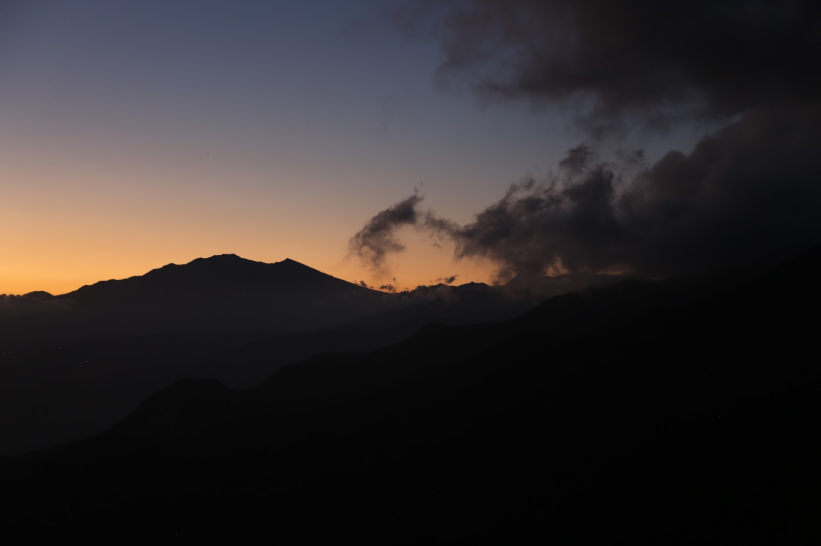
Panama: The Country That Keeps Saying “You Thought You Knew What Was Coming?”

You arrive in Panama thinking you’ve got it figured out. You’ve seen the photos. You’ve read the blogs. You know about the Panama Canal, the beaches, the jungle, the islands and the famous hats that, confusingly, are not actually from Panama.

You think you’re prepared.

You are not.

Panama is one of those countries that has a habit of quietly changing the rules halfway through your backpacking trip. You can spend the morning drinking coffee in a cool mountain town, the afternoon sweating beside the Caribbean Sea, and the next day find yourself standing in the middle of a cloud forest wondering why you packed six T-shirts but absolutely nothing useful for weather.

And somehow, that’s the fun.

You think Panama is tropical. Then Panama gives you a jacket

Most backpackers arrive expecting the classic tropical experience: heat, humidity, beaches and an aggressive relationship with sunscreen.

Then they reach the mountains.

Suddenly you’re in Boquete, El Valle, or somewhere ridiculously green and high up in the clouds, and you’re asking yourself whether someone accidentally drove the bus into another country.

The evenings can actually feel cool. The air is crisp. You might find yourself sitting around a fire wearing a hoodie while telling everyone back home that you’re “basically in the tropics.”

Panama has this wonderfully confusing ability to give you beach weather and mountain weather without requiring you to leave the country.

And then there’s the rain.

Panama doesn’t really rain. Sometimes it feels like the sky has received an emergency message and decided to empty the entire Pacific Ocean immediately.

You’ll be walking along perfectly happily when—BOOM.

Rain.

Not a polite drizzle. Not something you can ignore.

The kind of rain that makes you question whether your backpack is actually waterproof or merely optimistic.

Ten minutes later, the sun comes back out like absolutely nothing happened.

The bus journey is part of the adventure

Backpacking through Panama teaches you an important lesson: transportation is not always about getting somewhere.

Sometimes the transportation is the experience.

You may board a bus expecting a straightforward journey and end up making friends with half the passengers, changing buses in a town you’ve never heard of, eating something from a roadside stand, and discovering that the person sitting next to you has somehow become your unofficial travel advisor.

Google Maps might confidently tell you that the journey should take three hours.

Panama may have other ideas.

A road can look completely reasonable on the map and become a small expedition in real life.

But that’s part of the charm. You stop expecting everything to happen exactly on schedule, and you start paying attention to what’s happening around you.

And eventually you learn the backpacker’s most important Panama skill:

Always ask what time the last bus leaves.

Because discovering that there is no more bus at 5:02 PM while standing beside a highway with a backpack the size of a small refrigerator is an educational experience.

Then there are the animals

You know those wildlife documentaries where someone whispers, “We’ve been waiting three hours for this animal to appear”?

In Panama, sometimes the animal just appears while you’re trying to find your flip-flops.

Monkeys can swing through the trees. Sloths can be hanging around looking like they’ve completely forgotten what day it is. Tropical birds appear in places where you were previously just trying to take a decent selfie.

And then there are the creatures you didn’t know existed.

Walk through the jungle at night and suddenly the forest becomes an entirely different planet. Bats are flying around, insects are making noises that sound like malfunctioning machinery, and every branch seems to have the potential to contain something you definitely did not see during the daytime.

This is when you discover that your confidence as a backpacker is directly proportional to how brightly your flashlight works.

You came for the beaches. You stay for everything else

Panama has beaches that look like they were designed specifically to make your Instagram account unbearable.

Caribbean islands. Pacific beaches. Palm trees. Turquoise water. Tiny fishing villages. Empty stretches of sand.

And then, just when you think you’ve figured out Panama as a beach destination, the country throws mountains, waterfalls, jungle rivers and cloud forests at you.

You can spend one week island-hopping and the next hiking through misty forests.

It’s almost unfair.

Other countries make you choose your backpacking personality.

Panama lets you be a beach bum on Monday, a jungle explorer on Wednesday and someone wearing hiking boots and complaining about mosquitoes on Friday.

And Panama has a talent for making plans disappear

This might be Panama’s greatest backpacking feature.

You make a plan.

Then you meet someone.

They’re going somewhere.

You’ve never heard of it.

They say, “You should come.”

You say, “Sure.”

Three hours later you’re sitting on a bus wondering how you ended up there.

This is how many of the best backpacking stories begin.

Not with a perfectly researched itinerary.

With someone saying:

“Hey, you coming?”

Panama is particularly good at rewarding people who leave a little room in their schedule for something unexpected.

You might arrive intending to stay two nights and leave five days later.

You might plan to spend the afternoon at the beach and end up hiking to a waterfall.

You might swear you’re going to have an early night and somehow find yourself playing hostel games with people whose names you learned approximately seventeen minutes ago.

That’s backpacking.

The biggest surprise? Panama feels much bigger than it looks

On a map, Panama can look deceptively manageable.

Then you start traveling.

Suddenly you realize that the country contains wildly different landscapes, cultures and climates packed into a surprisingly small piece of Central America.

The Caribbean feels different from the Pacific. The mountains feel different from the lowlands. Panama City feels like a completely different universe from a tiny village surrounded by jungle.

And somewhere between the buses, boats, hostels, hiking trails, roadside restaurants, beaches, rainstorms and questionable navigation decisions, something happens.

You stop thinking about Panama as a place you’re visiting.

You start thinking about it as somewhere you’re experiencing.

Panama is basically the backpacker’s plot twist

That’s probably the best way to describe it.

Panama doesn’t always give you what you expected.

It gives you something else.

You expect a beach holiday and discover a jungle.

You expect heat and discover mountains.

You expect a quick bus ride and discover an adventure.

You expect to stay two nights and suddenly you’re looking at your calendar wondering where the last four days went.

And just when you think you’ve finally figured Panama out, someone tells you about another waterfall, another island, another hiking trail, another tiny village or another ridiculous place you absolutely have to see.

So pack light.

Bring decent shoes.

Keep your schedule flexible.

And for the love of all things tropical, find out when the last bus leaves.

Because in Panama, the biggest adventures often begin with the sentence:

“Well… this wasn’t the plan.”

🚌 How to Get from Boquete to Santa Catalina by Bus or Shuttle

Going from Boquete to Santa Catalina is one of those Panama travel days that looks complicated on a map but is actually quite manageable once you understand the route. You are traveling from the cool, green mountains of Chiriquí all the way across the country toward Panama's Pacific coast, so there is no simple direct public bus. You have two main options: take the local buses for the cheapest and most adventurous journey, or take a shuttle for a much easier and faster trip.

🚌 Boquete to Santa Catalina by Bus

The budget-friendly route is Boquete to David to Santiago to Soná to Santa Catalina. It involves several changes, but the connections are straightforward enough and this is a perfectly realistic journey for backpackers who don't mind spending most of the day on public transportation.

Start in Boquete and take a local bus to David. Buses run regularly between Boquete and David, and the journey takes roughly an hour depending on traffic. Once you arrive in David, make your way to the main bus terminal and look for a bus heading west along the Pan-American Highway to Santiago. Santiago is the major transportation hub you'll want to use for the next stage of the journey.

From David to Santiago, the bus takes you across the interior of Panama along the Pan-American Highway. This is a relatively straightforward section, with regular buses making the journey. Once you arrive in Santiago, your next target is Soná. Buses connect Santiago to Soná, and Soná is the key transfer point for the final leg to Santa Catalina.

When you arrive in Soná, pay close attention to the time. The last bus from Soná to Santa Catalina is at approximately 4:30 PM, so this is the connection that can make or break your journey. You don't want to arrive in Soná at 4:35 PM with your backpack and discover that your Santa Catalina bus has already disappeared. Give yourself plenty of time between connections and aim to reach Soná well before the afternoon deadline.

The final journey from Soná to Santa Catalina takes you away from the Pan-American Highway and into quieter rural Panama. The landscape gradually becomes more tropical and coastal as you approach the Pacific. After several hours of buses, transfers and roadside stops, arriving in Santa Catalina feels like a proper reward. Suddenly you're surrounded by surf, palm trees, restaurants and the Pacific Ocean.

Because of the number of connections, starting early in Boquete is essential. This isn't a journey I'd recommend beginning late in the morning. Your goal should be to make it comfortably to Soná before the final Santa Catalina bus rather than spending the entire day watching the clock.

🚌 The bus route in one line:

Boquete to David to Santiago to Soná to Santa Catalina

It's cheap, it's possible, and it's a great option for adventurous backpackers. Just remember that rural bus schedules can change, so confirm the current departure times locally before leaving, especially for the final Soná to Santa Catalina connection.

🚐 Boquete to Santa Catalina by Shuttle

If the idea of changing buses three times with a backpack doesn't sound particularly appealing, the shuttle is the much easier option. Shared transportation is available between popular backpacker destinations in Panama, and a shuttle can remove much of the hassle involved with the public-bus route.

Instead of navigating David to Santiago to Soná, you can arrange transportation that takes you from Boquete to Santa Catalina, usually with fewer or no changes. Depending on the operator and whether it is a shared or private service, the journey can take around 5–7 hours, depending on road conditions, stops and other passengers.

The biggest advantage is convenience. You don't have to haul your backpack through multiple bus terminals, figure out where the next bus leaves from or worry about missing the 4:30 PM Soná connection. You simply get picked up, settle into your seat and enjoy watching Panama's scenery change from the mountains to the coast.

A shuttle will cost considerably more than the local buses, but for many travelers the extra money is worth it. If you're traveling with luggage, arriving in Santa Catalina the same day without worrying about multiple connections can make the journey dramatically more relaxing.

🌴 Which option should you choose?

If you're on a tight backpacker budget, take the bus. The journey is cheap, straightforward enough once you know the route, and gives you a genuine taste of traveling through Panama's interior. Just start early and keep an eye on the clock, particularly once you get to Santiago and Soná.

If you're short on time, carrying lots of luggage or simply don't want to spend an entire day changing buses, take the shuttle. You'll pay more, but you'll save yourself a considerable amount of logistical hassle.

Either way, the reward is the same: Santa Catalina. After leaving the cool mountain climate of Boquete in the morning, you can eventually find yourself beside the warm Pacific Ocean, surrounded by surfers, palm trees and one of Panama's most spectacular coastal landscapes.

The quick version:

🚌 Budget: Boquete to David to Santiago to Soná to Santa Catalina

🚐 Easy option: Shuttle from Boquete to Santa Catalina

⏰ Important: If traveling by bus, plan around the 4:30 PM final bus from Soná.

🌴 Destination: Surf, beaches, Pacific sunsets and the gateway to Coiba National Park.

🚌 How to Get from El Valle de Antón to Santa Catalina by Bus

Getting from El Valle de Antón to Santa Catalina by public bus is one of those classic Panama backpacker adventures. There isn't a simple direct bus connecting the two destinations, so you'll need to make a few changes along the way. The good news is that the route is completely doable, inexpensive, and gives you a chance to see a very different side of Panama as you travel from the cool mountain environment of El Valle toward the Pacific coast.

The easiest route to remember is El Valle de Antón to Las Uvas to Santiago to Soná to Santa Catalina. Think of it as four relatively simple journeys rather than one giant trip. The entire journey can take roughly 9 hours, depending on connections and waiting times, so this is definitely a trip where getting an early start makes life much easier.

Your first objective is to get out of El Valle and down to the Pan-American Highway. From the center of El Valle, take a local bus toward San Carlos and tell the driver you're getting off at Las Uvas, where the road from El Valle meets the Interamericana. You can simply say, "Las Uvas, por favor." This first section takes you down from the mountains and eventually deposits you beside Panama's main highway, where you'll find buses heading west.

Once you're at Las Uvas, your next goal is Santiago. Look for a bus traveling west along the Pan-American Highway and, before boarding, simply ask "¿Este bus va para Santiago?" If you're unsure, ask another passenger or the people waiting at the roadside. Panama's bus system can sometimes seem confusing to first-time visitors, but locals are generally very accustomed to helping travelers figure out which bus they need.

When you reach Santiago, you've completed the longest and easiest-to-understand part of the journey. Santiago is one of Panama's major transportation hubs, so this is a good place to stretch your legs, grab something to eat, use the bathroom and figure out your next connection. From Santiago, you're looking for a bus heading toward Soná, which is the important transfer point for the final stretch to Santa Catalina.

From Soná, look for the bus heading toward Santa Catalina. This is the connection you really need to watch the clock for: the last bus from Soná to Santa Catalina leaves at approximately 4:30 PM. Missing this bus can leave you stuck in Soná for the night, so don't plan on arriving at the last minute. Ideally, you want to reach Soná with plenty of time to spare, especially if you're traveling during the weekend or holiday periods.

This final stretch is where the scenery starts to change dramatically. The major highway gives way to smaller roads and rural Panama, with tropical vegetation, farmland and increasingly remote countryside. Eventually you'll reach the Pacific coast and the little surf town of Santa Catalina. After spending most of the day moving through the interior of Panama, arriving at the ocean feels like a pretty satisfying finale.

The entire trip is inexpensive compared with taking a private transfer, but you'll need to pay separately for each section. Exact fares and departure times can change, particularly on the smaller rural routes, so ask locally in El Valle or at each bus station about the current schedule before setting off. Rural Panama isn't quite the place where you want to rely entirely on a timetable you found online six months ago.

The biggest piece of advice is leave El Valle early in the morning. Because you're making several connections, the 4:30 PM Soná departure should be your deadline. Give yourself plenty of time to make the journey from El Valle to Soná, and don't take unnecessary risks with tight connections. Getting to Soná early and having time to grab a snack or something to drink is far better than watching your Santa Catalina bus disappear down the road.

For backpackers, the route is actually part of the fun. El Valle and Santa Catalina feel like completely different worlds—one is a lush mountain valley surrounded by cool forest and hiking trails, while the other is a laid-back Pacific surf town and gateway to Coiba. Traveling between them by local bus lets you experience the enormous change in landscape rather than simply jumping into a shuttle and missing everything in between.

So save this route: El Valle to Las Uvas to Santiago to Soná to Santa Catalina. Get up early, carry some water and snacks, keep a little extra cash handy, and remember that 4:30 PM is the important deadline in Soná. Ask the locals when you're unsure, don't panic if things don't run exactly to schedule, and enjoy the journey. That's public transportation in Panama and by the time you finally step off the bus in Santa Catalina, you'll have earned that Pacific sunset. 🌴🌊

Backpacking Panama for the First Time: A Slightly Unhinged Guide to Doing It Right

Welcome to Panama, where the coffee is dangerously good, the buses have their own interpretation of the concept of a timetable, the jungle is approximately 14 seconds away from wherever you are, and your carefully planned itinerary will probably be destroyed by someone saying, “There’s a really cool place you should go.”

Panama is one of those countries that looks small on a map and then proceeds to make you wonder where the last three weeks went. You can surf in the morning, hike through cloud forest in the afternoon, eat ridiculously good fruit for dinner and wake up the next day on a Caribbean island. You can see monkeys from a bus window, accidentally spend six hours talking to strangers at a hostel, and discover that the $3 local meal you almost walked past was better than the restaurant you researched for two hours.

The trick is not trying to conquer Panama. Panama wins that battle every time.

First rule: don't try to see everything

The biggest mistake first time backpackers make is treating Panama like a checklist.

“Three nights Panama City. Two nights Bocas. One night Boquete. One night Santa Catalina. Two nights El Valle. One night…”

Congratulations. You have now backpacked Panama entirely from the inside of a bus.

Slow down.

Panama rewards people who linger. If you find a beautiful beach, stay another day. If your hostel has an amazing atmosphere, don't immediately leave because your spreadsheet says Tuesday. If you discover a waterfall, go back. If someone tells you there's a tiny village down a dirt road where the best food you've ever eaten is served from someone's kitchen, investigate.

The country is small enough that you can cover a lot of ground, but interesting enough that you shouldn't.

Panama City: start with the chaos

Start in Panama City.

It's enormous compared with much of the rest of the country, and it's a fascinating introduction to Panama because you get skyscrapers, tropical heat, colonial streets, enormous ships, modern shopping malls and rainforest surprisingly close together.

Spend some time wandering Casco Viejo. Don't just photograph the pretty buildings and leave. Get lost in the streets. Sit somewhere. Eat something. Watch people. Then go see the Panama Canal and contemplate the fact that humanity looked at a giant piece of land and apparently decided, “You know what would improve this? Digging a giant ditch through it.”

The Canal is one of those places where knowing a little history makes the experience much more interesting.

And Panama City is also where you should learn your first important backpacking lesson:

Air conditioning is not a personality trait.

You will leave the airport feeling like you've walked directly into a tropical oven. This is normal.

Then escape the city

Once you've had your fill of skyscrapers, head into the country.

One of Panama's greatest strengths is how quickly the scenery changes. The urban environment can disappear surprisingly fast, and suddenly you're surrounded by mountains, jungle, rivers and villages.

This is where the trip becomes properly interesting.

And this is also where you discover that Panama's buses are part public transportation and part cultural experience.

Don't expect every bus to behave like a Swiss train.

Ask locals. Confirm directions. Confirm again. Then confirm with the person sitting beside you.

If three different people give you three different answers, congratulations: you're officially backpacking in Panama.

Boquete: mountains, coffee and the realization that Panama can be chilly

Boquete is one of the country's classic backpacker stops.

It's famous for its mountains, coffee, hiking and cooler climate. After sweating your way through Panama City, arriving somewhere where you might actually want a jacket feels vaguely miraculous.

Go hiking. Drink coffee. Eat. Walk around town. Explore the surrounding countryside.

And if you're thinking about climbing Volcán Barú, remember that Panama may be tropical, but mountains don't care about your assumptions. Prepare appropriately for the conditions.

The coffee deserves special attention too. Panama produces some extraordinarily prestigious coffee, and the highlands around Boquete are a perfect place to learn why.

You may arrive thinking you don't care about coffee.

You may leave discussing coffee processing methods with alarming confidence.

But don't just follow the obvious backpacker route

Here's where things get interesting.

Panama's best experiences aren't always the places appearing on every Instagram itinerary.

Some of the country's most memorable moments happen when you get slightly off the main tourist circuit.

One particularly unusual stop is Lost and Found Hostel, hidden in the cloud forest of the Fortuna Forest Reserve between the Boquete and Bocas del Toro areas.

It isn't your standard hostel where you walk from the bus directly to reception.

You hike into the forest.

Then you discover that the hostel itself is surrounded by trails, jungle, wildlife, mountain views and a completely different climate from the tropical lowlands.

It's exactly the sort of place that illustrates why backpacking Panama is different from simply touring Panama.

You aren't just visiting attractions.

You're staying inside the landscape.

And yes, there is a very good chance that somebody will convince you to go on a night walk when you were planning to go to bed.

Go anyway.

Future-you will thank you.

Bocas del Toro: go for the Caribbean nonsense

Then there's Bocas del Toro.

Bocas is where your itinerary begins falling apart in a beautiful way.

You arrive intending to stay three nights.

Someone says, “We're going to another island tomorrow.”

You go.

Then someone says, “There's a better beach.”

You go there.

Then somebody knows somebody with a boat.

Suddenly it's four days later and you have absolutely no idea what happened to your original plan.

Perfect.

Explore the islands, swim, snorkel, take boat trips and spend some time simply doing nothing.

Starfish Beach is one of the better-known stops, but don't assume the most famous place is automatically the best place for you. Ask locals and other travelers what they've discovered recently.

And remember that the Caribbean has weather.

The sea does not care about your ferry reservation.

Santa Catalina: when you need to disappear

If Bocas is Caribbean island chaos, Santa Catalina is where you go when you want to feel like you've escaped civilization.

It's famous for surfing and access to Coiba National Park, one of Panama's spectacular marine environments.

The journey itself is part of the charm.

Santa Catalina isn't the easiest place to reach, which is precisely why it still feels different from places that have been completely absorbed by mass tourism.

If you're into surfing, diving, snorkeling or simply sitting somewhere tropical wondering why you don't live beside the ocean permanently, put it on the list.

El Valle de Antón: Panama's giant volcanic bathtub

El Valle de Antón is another great mountain escape.

The town sits inside an enormous volcanic crater, surrounded by green mountains.

There are hiking trails, waterfalls, viewpoints and plenty of opportunities to work out exactly how unfit you are before blaming the altitude.

The hike up La India Dormida is particularly worthwhile.

Bring water.

This advice sounds boring until you're halfway up a mountain thinking, “Why did I believe the person who said this was an easy walk?”

Eat the local food

Do not backpack around Panama eating only pizza, burgers and things served in bowls.

You can do that anywhere.

Try sancocho, ceviche, carimañolas, hojaldres, patacones, arroz con pollo, tamales and fresh tropical fruit.

Visit local fondas.

A small restaurant filled with Panamanians eating lunch is often a better sign than an empty restaurant with an enormous English menu.

And if somebody tells you, “It's very spicy,” remember that their definition of spicy may be completely different from yours.

Proceed with courage.

Learn a little Spanish

You don't need fluent Spanish to backpack Panama.

But learn some.

“Hola.”

“Gracias.”

“Por favor.”

“¿Cuánto cuesta?”

“¿Dónde está…?”

“¿A qué hora sale?”

“¿Este bus va a…?”

These tiny phrases can transform your experience.

And here's an important backpacking principle:

People appreciate the attempt.

You don't need perfect grammar. You need enough Spanish to communicate, laugh at your mistakes and avoid accidentally ordering seventeen portions of something.

Don't obsess over money

Panama uses the U.S. dollar alongside its own coins, which makes budgeting pleasantly straightforward for travelers used to American currency.

But don't assume Panama is uniformly cheap.

You can spend very little on local food and transportation, then immediately destroy your budget with tours, taxis, nightlife and activities.

The backpacker's financial strategy is therefore simple:

Save money on the boring stuff so you can spend it on the unforgettable stuff.

Take the local bus.

Eat where locals eat.

Stay in hostels.

Then spend the money you saved on the snorkeling trip, the waterfall excursion, the surf lesson or the boat trip.

Your backpack is lying to you

You do not need 47 kilograms of equipment.

Panama is hot, humid and occasionally wet.

Bring lightweight clothing, comfortable walking shoes, swimwear, rain protection, sunscreen, insect repellent, a reusable water bottle and a small daypack.

You will discover that half the stuff you packed seemed absolutely essential when you were sitting in your bedroom.

Now it's just taking up space.

Your backpack should not require its own passport.

The jungle is not a theme park

This is important.

Panama has incredible wildlife, but the animals aren't performing for you.

Don't touch wildlife.

Don't feed it.

Don't chase it for a photograph.

Don't put your hand into holes because someone told you there might be something interesting inside.

And don't assume a cute little jungle creature wants to become your new roommate.

Observe.

Photograph from a safe distance.

Keep your snacks to yourself.

The jungle will provide the entertainment.

Rain is not a disaster

At some point, it will rain.

Possibly spectacularly.

You will look outside and think your travel plans have been destroyed.

Then the rain will stop.

The forest will look incredible.

Everything will smell like wet vegetation.

Waterfalls will become more impressive.

And you'll realize that you spent an hour complaining about the rain while standing in one of the most beautiful tropical countries on Earth.

Buy a rain jacket.

Accept your fate.

The most important Panama backpacking rule

Leave room for accidents.

Not bad accidents.

Good accidents.

The wrong bus that takes you somewhere interesting.

The stranger who recommends a waterfall.

The hostel where you intended to stay one night and end up staying four.

The tiny restaurant you almost ignored.

The beach that wasn't on your itinerary.

The hike you didn't know existed.

The conversation that lasts until 2 a.m.

Those are often the moments you'll remember.

Because that's the real secret to backpacking Panama.

You aren't really coming here to tick off Panama City → Boquete → Bocas → beach → airport.

You're coming to experience a country where Caribbean islands, Pacific beaches, volcanic mountains, cloud forests, jungle rivers and modern cities are packed into a remarkably small space.

So arrive with a plan.

Then be prepared to completely ignore it.

That's backpacking Panama. 🇵🇦🇵🇦 Backpacking Panama for the First Time: A Slightly Unhinged Guide to Doing It Right

Welcome to Panama, where the coffee is dangerously good, the buses have their own interpretation of the concept of a timetable, the jungle is approximately 14 seconds away from wherever you are, and your carefully planned itinerary will probably be destroyed by someone saying, “There’s a really cool place you should go.”

Panama is one of those countries that looks small on a map and then proceeds to make you wonder where the last three weeks went. You can surf in the morning, hike through cloud forest in the afternoon, eat ridiculously good fruit for dinner and wake up the next day on a Caribbean island. You can see monkeys from a bus window, accidentally spend six hours talking to strangers at a hostel, and discover that the $3 local meal you almost walked past was better than the restaurant you researched for two hours.

The trick is not trying to conquer Panama. Panama wins that battle every time.

First rule: don't try to see everything

The biggest mistake first time backpackers make is treating Panama like a checklist.

“Three nights Panama City. Two nights Bocas. One night Boquete. One night Santa Catalina. Two nights El Valle. One night…”

Congratulations. You have now backpacked Panama entirely from the inside of a bus.

Slow down.

Panama rewards people who linger. If you find a beautiful beach, stay another day. If your hostel has an amazing atmosphere, don't immediately leave because your spreadsheet says Tuesday. If you discover a waterfall, go back. If someone tells you there's a tiny village down a dirt road where the best food you've ever eaten is served from someone's kitchen, investigate.

The country is small enough that you can cover a lot of ground, but interesting enough that you shouldn't.

Panama City: start with the chaos

Start in Panama City.

It's enormous compared with much of the rest of the country, and it's a fascinating introduction to Panama because you get skyscrapers, tropical heat, colonial streets, enormous ships, modern shopping malls and rainforest surprisingly close together.

Spend some time wandering Casco Viejo. Don't just photograph the pretty buildings and leave. Get lost in the streets. Sit somewhere. Eat something. Watch people. Then go see the Panama Canal and contemplate the fact that humanity looked at a giant piece of land and apparently decided, “You know what would improve this? Digging a giant ditch through it.”

The Canal is one of those places where knowing a little history makes the experience much more interesting.

And Panama City is also where you should learn your first important backpacking lesson:

Air conditioning is not a personality trait.

You will leave the airport feeling like you've walked directly into a tropical oven. This is normal.

Then escape the city

Once you've had your fill of skyscrapers, head into the country.

One of Panama's greatest strengths is how quickly the scenery changes. The urban environment can disappear surprisingly fast, and suddenly you're surrounded by mountains, jungle, rivers and villages.

This is where the trip becomes properly interesting.

And this is also where you discover that Panama's buses are part public transportation and part cultural experience.

Don't expect every bus to behave like a Swiss train.

Ask locals. Confirm directions. Confirm again. Then confirm with the person sitting beside you.

If three different people give you three different answers, congratulations: you're officially backpacking in Panama.

Boquete: mountains, coffee and the realization that Panama can be chilly

Boquete is one of the country's classic backpacker stops.

It's famous for its mountains, coffee, hiking and cooler climate. After sweating your way through Panama City, arriving somewhere where you might actually want a jacket feels vaguely miraculous.

Go hiking. Drink coffee. Eat. Walk around town. Explore the surrounding countryside.

And if you're thinking about climbing Volcán Barú, remember that Panama may be tropical, but mountains don't care about your assumptions. Prepare appropriately for the conditions.

The coffee deserves special attention too. Panama produces some extraordinarily prestigious coffee, and the highlands around Boquete are a perfect place to learn why.

You may arrive thinking you don't care about coffee.

You may leave discussing coffee processing methods with alarming confidence.

But don't just follow the obvious backpacker route

Here's where things get interesting.

Panama's best experiences aren't always the places appearing on every Instagram itinerary.

Some of the country's most memorable moments happen when you get slightly off the main tourist circuit.

One particularly unusual stop is Lost and Found Hostel, hidden in the cloud forest of the Fortuna Forest Reserve between the Boquete and Bocas del Toro areas.

It isn't your standard hostel where you walk from the bus directly to reception.

You hike into the forest.

Then you discover that the hostel itself is surrounded by trails, jungle, wildlife, mountain views and a completely different climate from the tropical lowlands.

It's exactly the sort of place that illustrates why backpacking Panama is different from simply touring Panama.

You aren't just visiting attractions.

You're staying inside the landscape.

And yes, there is a very good chance that somebody will convince you to go on a night walk when you were planning to go to bed.

Go anyway.

Future-you will thank you.

Bocas del Toro: go for the Caribbean nonsense

Then there's Bocas del Toro.

Bocas is where your itinerary begins falling apart in a beautiful way.

You arrive intending to stay three nights.

Someone says, “We're going to another island tomorrow.”

You go.

Then someone says, “There's a better beach.”

You go there.

Then somebody knows somebody with a boat.

Suddenly it's four days later and you have absolutely no idea what happened to your original plan.

Perfect.

Explore the islands, swim, snorkel, take boat trips and spend some time simply doing nothing.

Starfish Beach is one of the better-known stops, but don't assume the most famous place is automatically the best place for you. Ask locals and other travelers what they've discovered recently.

And remember that the Caribbean has weather.

The sea does not care about your ferry reservation.

Santa Catalina: when you need to disappear

If Bocas is Caribbean island chaos, Santa Catalina is where you go when you want to feel like you've escaped civilization.

It's famous for surfing and access to Coiba National Park, one of Panama's spectacular marine environments.

The journey itself is part of the charm.

Santa Catalina isn't the easiest place to reach, which is precisely why it still feels different from places that have been completely absorbed by mass tourism.

If you're into surfing, diving, snorkeling or simply sitting somewhere tropical wondering why you don't live beside the ocean permanently, put it on the list.

El Valle de Antón: Panama's giant volcanic bathtub

El Valle de Antón is another great mountain escape.

The town sits inside an enormous volcanic crater, surrounded by green mountains.

There are hiking trails, waterfalls, viewpoints and plenty of opportunities to work out exactly how unfit you are before blaming the altitude.

The hike up La India Dormida is particularly worthwhile.

Bring water.

This advice sounds boring until you're halfway up a mountain thinking, “Why did I believe the person who said this was an easy walk?”

Eat the local food

Do not backpack around Panama eating only pizza, burgers and things served in bowls.

You can do that anywhere.

Try sancocho, ceviche, carimañolas, hojaldres, patacones, arroz con pollo, tamales and fresh tropical fruit.

Visit local fondas.

A small restaurant filled with Panamanians eating lunch is often a better sign than an empty restaurant with an enormous English menu.

And if somebody tells you, “It's very spicy,” remember that their definition of spicy may be completely different from yours.

Proceed with courage.

Learn a little Spanish

You don't need fluent Spanish to backpack Panama.

But learn some.

“Hola.”

“Gracias.”

“Por favor.”

“¿Cuánto cuesta?”

“¿Dónde está…?”

“¿A qué hora sale?”

“¿Este bus va a…?”

These tiny phrases can transform your experience.

And here's an important backpacking principle:

People appreciate the attempt.

You don't need perfect grammar. You need enough Spanish to communicate, laugh at your mistakes and avoid accidentally ordering seventeen portions of something.

Don't obsess over money

Panama uses the U.S. dollar alongside its own coins, which makes budgeting pleasantly straightforward for travelers used to American currency.

But don't assume Panama is uniformly cheap.

You can spend very little on local food and transportation, then immediately destroy your budget with tours, taxis, nightlife and activities.

The backpacker's financial strategy is therefore simple:

Save money on the boring stuff so you can spend it on the unforgettable stuff.

Take the local bus.

Eat where locals eat.

Stay in hostels.

Then spend the money you saved on the snorkeling trip, the waterfall excursion, the surf lesson or the boat trip.

Your backpack is lying to you

You do not need 47 kilograms of equipment.

Panama is hot, humid and occasionally wet.

Bring lightweight clothing, comfortable walking shoes, swimwear, rain protection, sunscreen, insect repellent, a reusable water bottle and a small daypack.

You will discover that half the stuff you packed seemed absolutely essential when you were sitting in your bedroom.

Now it's just taking up space.

Your backpack should not require its own passport.

The jungle is not a theme park

This is important.

Panama has incredible wildlife, but the animals aren't performing for you.

Don't touch wildlife.

Don't feed it.

Don't chase it for a photograph.

Don't put your hand into holes because someone told you there might be something interesting inside.

And don't assume a cute little jungle creature wants to become your new roommate.

Observe.

Photograph from a safe distance.

Keep your snacks to yourself.

The jungle will provide the entertainment.

Rain is not a disaster

At some point, it will rain.

Possibly spectacularly.

You will look outside and think your travel plans have been destroyed.

Then the rain will stop.

The forest will look incredible.

Everything will smell like wet vegetation.

Waterfalls will become more impressive.

And you'll realize that you spent an hour complaining about the rain while standing in one of the most beautiful tropical countries on Earth.

Buy a rain jacket.

Accept your fate.

The most important Panama backpacking rule

Leave room for accidents.

Not bad accidents.

Good accidents.

The wrong bus that takes you somewhere interesting.

The stranger who recommends a waterfall.

The hostel where you intended to stay one night and end up staying four.

The tiny restaurant you almost ignored.

The beach that wasn't on your itinerary.

The hike you didn't know existed.

The conversation that lasts until 2 a.m.

Those are often the moments you'll remember.

Because that's the real secret to backpacking Panama.

You aren't really coming here to tick off Panama City → Boquete → Bocas → beach → airport.

You're coming to experience a country where Caribbean islands, Pacific beaches, volcanic mountains, cloud forests, jungle rivers and modern cities are packed into a remarkably small space.

So arrive with a plan.

Then be prepared to completely ignore it.

That's backpacking Panama. 🇵🇦

Panama Is Weirdly Good at Making You Forget What Time It Is

There is something strange about time in Panama. Not bad strange. Good strange. The kind of strange where you check your phone expecting it to be 3:00 in the afternoon and discover it is somehow 7:30. You haven't accomplished anything particularly important, but you've had a smoothie, walked down a jungle trail, talked to three strangers, watched a bird you couldn't identify, sat beside a river and somehow had an excellent day. Panama has a talent for making clocks feel slightly irrelevant.

You arrive with a schedule. You have destinations, buses to catch, hostels to check into, beaches to visit and mountains to climb. Then Panama starts happening around you, and suddenly your itinerary becomes more of a loose philosophical suggestion. You wake up early thinking today is going to be productive. You're going hiking, you're going to see a waterfall, you're going to visit the market and maybe you'll even do laundry. Then you sit down for breakfast. Someone starts talking to you. They're from Germany, Argentina, Canada or somewhere you've never been. They've just come from somewhere interesting. You ask where. They tell you. You ask how they got there. Twenty minutes later you're discussing your entire travel itinerary with somebody you met approximately seven minutes ago. The hike can wait.

In some countries, the afternoon is when things get serious. Meetings, work, traffic and schedules. Panama occasionally looks at the afternoon and says, "It's hot. Let's think about that later." The heat changes the rhythm. You slow down. You find shade. You drink something cold. You sit somewhere. You watch people. You listen to music. You realize you're not in a hurry anymore. And that can be one of the nicest things about traveling. You begin to understand that not every hour needs to produce something.

Then someone says, "Let's go to the beach." This sentence has destroyed countless travel itineraries. You were supposed to explore the town. Instead, you're going to the beach. You were supposed to leave at four. Now you're leaving at five. You were going to have an early dinner. Now you're watching the sunset. Someone suggests food. Someone else knows a restaurant. Suddenly it is 10:30 at night. Nobody knows exactly how this happened. Nobody particularly cares. That is Panama time.

Hostels are where clocks really go to die. You meet somebody in the kitchen. You start talking. Another person joins. Someone makes food. Someone puts music on. Someone asks where you're going tomorrow. Another person says you absolutely have to visit somewhere. Someone pulls out a map. Suddenly twelve people are planning twelve completely different adventures. Then somebody says, "We should all go out." This is how a quiet Tuesday becomes a memorable night, and how your 6:00 a.m. alarm becomes a personal insult.

In the jungle, your phone becomes less important. You start paying attention to sounds. Birds calling, water running, leaves moving, insects buzzing and rain hitting the canopy. The forest doesn't care whether it's 11:00 or 2:00. It operates on its own schedule. After enough time walking through it, you start doing the same thing. You stop thinking about the next appointment and start thinking about what is directly in front of you. A trail becomes something to experience rather than something to complete.

Sunset is another trap. You think you'll watch for five minutes. That's it. Just five. Then the sky changes. Orange appears, then pink, then the clouds catch the light. Someone takes a photo. Someone else says, "Look at that." Nobody moves. Five minutes becomes thirty. You realize you're sitting somewhere beautiful watching the day disappear, and suddenly you don't care about whatever you were supposed to be doing. Good. You probably didn't need to do it anyway.

Then comes the tropical rain. You can't control it and you can't negotiate with it. You can either wait or get wet. So you wait. And waiting in Panama can be surprisingly enjoyable. You sit beneath a roof, watch the rain, talk, eat, listen to music and watch the landscape disappear behind a curtain of water. Then, just as suddenly, the rain stops. The sun comes out. The road starts steaming. The jungle shines. And everyone continues as if nothing happened.

This is why backpackers get stuck. Not literally, usually, but emotionally. You tell yourself you're staying two nights. Then you discover the place has a good atmosphere. You meet people. You find a trail. You discover a waterfall. You have a great meal. You sleep well. Someone tells you about another place nearby. Suddenly you extend your stay. Then you extend it again. Eventually you stop saying you're staying an extra night. You're just living there now.

Panama can also make you realize how much time you waste when you're not traveling. Back home, you can spend hours scrolling through your phone, checking messages, watching videos, refreshing social media and looking at the clock. In Panama, you can spend an hour doing absolutely nothing and somehow feel like you've actually experienced something. You sit beside a river. You watch clouds move across a mountain. You drink coffee. You talk to someone. You walk without a destination. Somehow that hour feels longer than an hour spent staring at a screen. Maybe time doesn't actually move differently in Panama. Maybe you're just paying attention to it.

That's what backpacking can give you. Not luxury hotels, expensive restaurants or first class flights. The luxury of having nowhere you absolutely need to be. You can wake up and decide what kind of day you want. Jungle? Beach? Mountain? City? Hammock? You can change your mind. You can stay longer. You can leave earlier. You can follow somebody else's recommendation. You can get slightly lost. And if you're lucky, you can spend an entire afternoon doing something completely unproductive and somehow feel incredibly productive at life.

The Canal is impressive. The mountains are spectacular. The islands are beautiful. The wildlife is incredible. But there is another attraction that doesn't appear in most guidebooks. Time. Or more accurately, the feeling that you have enough of it. Panama can make you slow down without asking permission. You arrive with a schedule and leave with stories. Somewhere between the bus ride, the beach, the jungle trail, the hostel conversation and the sunset, you realize you haven't checked the clock in hours.

You look anyway.

It's later than you thought.

You smile.

Because for once, you weren't watching the time.

You were actually living it.

Panama Has a Serious Fruit Problem

Panama has a fruit problem, and frankly, nobody seems interested in fixing it. The country has so many tropical fruits that eventually you stop asking what something is called and start pointing at it like an explorer who has just discovered a new species. You walk into a market expecting bananas, oranges and maybe a pineapple, and suddenly there are enormous green things, tiny red things, spiky things, fruits that look completely ordinary until you cut them open and fruits that appear to have been designed by someone who was given the instruction, "Make a fruit, but make it weird."

And the best part is that much of it isn't sitting in some expensive imported-food section. It's simply there. Growing in the heat, hanging from trees, piled onto market stalls and appearing in roadside stands. Panama's tropical climate gives it an extraordinary variety of fruits, and once you start paying attention, you realize that fruit here isn't just something you eat after lunch. It's part of the landscape.

Take the mango. In many countries, mango is a special tropical treat. In Panama, mango can feel like a neighborhood nuisance. Trees produce them with such enthusiasm that during the right season you can find mangoes appearing everywhere. On the ground. In markets. Beside roads. In people's gardens. You begin with one and think, "Wow, that's delicious." Then you eat another. Then another. Eventually you're walking past a mango tree thinking, "Please stop." The tree does not care.

Pineapple is another reminder that tropical fruit has absolutely no obligation to be boring. A properly ripe pineapple is sweet, juicy and almost ridiculously refreshing in the heat. It is also one of those foods that makes you wonder why anyone bothered putting it in a can. In Panama, you can find pineapples that actually taste like they came from a tropical country rather than a supermarket warehouse three time zones away.

Then there are bananas and plantains, which are so deeply integrated into the food culture that it's easy to forget how useful they are. Bananas are sweet and simple, while plantains can become an entirely different food depending on how they're prepared. Fried, baked, boiled or mashed, they can appear alongside everything from breakfast to dinner. The same basic fruit can somehow keep showing up without becoming boring.

Papaya is another tropical classic. Cut one open and you get that bright orange interior, a pile of black seeds and a smell that immediately tells your brain that you are no longer in Canada, England or northern Europe. Papaya is soft, sweet and perfect for breakfast, especially when you're trying to convince yourself that eating fruit counts as having your life together.

Then things start getting interesting.

There are fruits that many travelers have never encountered before arriving in Central America. Guanábana, also known as soursop, is one of them. The outside can look intimidating, while the inside is soft, creamy and fragrant. It's the sort of fruit that makes you take a bite, pause for a moment and think, "Why have I never eaten this before?"

Passion fruit is another one. It doesn't look particularly impressive from the outside. Then you cut it open and discover a bizarre little universe of seeds and intensely flavored pulp. It is sweet, sour and ridiculously aromatic. Put it into a smoothie and suddenly the humble backpacker breakfast becomes something approaching luxury.

And then there is pitahaya, or dragon fruit. It looks like somebody designed a fruit for a science-fiction movie. Bright skin, strange shape, dramatic appearance and an interior covered in tiny black seeds. It is the kind of thing you buy partly because you want to eat it and partly because you want to take a photo proving that nature actually made it.

But perhaps the best thing about fruit in Panama isn't any individual fruit. It's the way fruit becomes part of everyday life. You can find fresh juice, smoothies, chopped fruit, fruit stands and market stalls almost everywhere. In the heat, a cold fruit drink can be better than anything that comes out of a fancy restaurant. A simple cup of freshly blended pineapple, passion fruit, papaya or watermelon can feel like the perfect travel souvenir, except you get to drink it.

And this is where Panama quietly destroys the argument that healthy food has to be boring. There is nothing particularly depressing about standing beside a roadside stand with a cold tropical fruit smoothie while looking at mountains covered in jungle. That's not a compromise. That's winning.

The variety becomes even more obvious when you start traveling through different regions. Coastal areas have their own tropical abundance. Mountain regions have different growing conditions and agricultural traditions. Markets in towns and cities bring produce from different parts of the country together. You start seeing fruits you've never noticed before simply because you've never had to look for them.

Backpackers are particularly good at discovering this because they tend to eat whatever is cheap, fresh and interesting. You don't necessarily need a fancy restaurant. Sometimes the best meal of the day is something you bought from a market, followed by a piece of fruit you can't pronounce.

And that's part of the fun.

You point.

The vendor tells you the name.

You nod as if you already knew.

You take it back to the hostel.

You cut it open.

You have absolutely no idea what you're doing.

You eat it anyway.

Congratulations.

You have just had a cultural experience.

Panama's fruit also changes with the seasons, which means the country can surprise you even if you've already visited. Something you saw once may disappear for months and then suddenly return in enormous quantities. That makes local markets feel different throughout the year. You don't always know exactly what you'll find, which is precisely what makes wandering through them so entertaining.

And there is something wonderfully old-fashioned about eating fruit this way. No packaging. No complicated branding. No advertisement telling you that this particular mango has been "curated for the modern consumer." It's simply a mango. It grew on a tree. Somebody picked it. You eat it.

Sometimes travel experiences don't need to be complicated.

You don't need an expedition.

You don't need a four-wheel-drive vehicle.

You don't need a reservation.

You just need a market and an appetite.

The funny thing is that after enough time in Panama, you start becoming spoiled. You get used to fruit tasting like fruit. You get used to fresh juice. You get used to seeing enormous piles of produce. You get used to grabbing something tropical on a hot afternoon.

Then eventually you go home.

You buy a mango.

You take a bite.

You stare at it.

And you realize something has gone terribly wrong.

Because once you've experienced tropical fruit at its source, the supermarket version can feel like a distant relative who vaguely remembers what a mango is supposed to be.

That's the real fruit problem in Panama.

It ruins you.

You arrive thinking fruit is just fruit.

You leave wondering why you ever accepted anything less.

And somewhere back in Panama, a mango tree is quietly producing another hundred mangoes, completely unaware that it has just changed someone's standards forever.

Panama's Roads Are Basically a Personality Test

There are countries where driving is simply a way to get from A to B. Panama looked at that concept and said, "Boring." Here, a road trip can begin as a completely ordinary journey and somehow turn into a lesson in patience, geography, weather, mechanical engineering and your own ability to remain calm when Google Maps confidently tells you that a road exists. Panama is a country where one minute you're cruising along a perfectly respectable highway, admiring the scenery, and the next you're staring at a road that appears to have been designed by a goat. And somehow, it works. Mostly.

Driving in Panama is less about getting somewhere and more about discovering what kind of person you are. Are you patient? Are you optimistic? Do you trust your GPS? Do you trust your GPS after it tells you to turn onto a road that appears to have been abandoned in 1997? Do you believe the sign that says "10 minutes"? You will learn all of these things. Quickly. Panamanian roads can be perfectly smooth one moment and completely ridiculous the next. You might be flying down a modern highway and then suddenly find yourself climbing through the mountains, navigating curves while clouds roll across the road. And that's when you realize Panama has decided the scenery should come with a little suspense.

Panama's mountain roads are beautiful. They are also extremely committed to never going directly anywhere. You don't simply drive up a mountain. You curve left, then right, then left again, then around a corner, then up another hill, then around another corner. Eventually you start wondering whether you've actually gained altitude or simply been driving in a very large circle. But then the clouds open. Suddenly there's an enormous valley below you, mountains disappearing into the distance and forest covering everything in sight. And you realize why you're on the road in the first place. Panama has a habit of making you forgive it.

Then comes the rain. Panama's tropical climate means rain can arrive with impressive enthusiasm. One minute you're driving beneath blue skies. The next, the sky appears to have personally declared war on the road. Visibility drops, water starts running across the pavement, everyone slows down, and somewhere in the distance a Panamanian driver who has clearly experienced this 4,000 times continues driving like nothing unusual has happened. You watch them disappear into the rain and think, "Well, they seem confident." Then you follow. This is how character development happens.

Not all potholes are created equal. There are tiny potholes, annoying potholes, suspicious potholes, potholes you can avoid, potholes that require a slight maneuver, and then there are the potholes that make you reconsider the structural integrity of your vehicle. The important thing is learning to recognize them. Because sometimes what looks like a puddle is actually a small geological feature. And sometimes the road ahead looks perfectly normal until your suspension suddenly becomes involved in the conversation. Panama teaches you to look at the road differently. You stop asking, "Is there a pothole?" You start asking, "What kind of pothole is this?"

Panamanian roads also have a habit of reminding you that you're driving through nature. Dogs, cows, horses, chickens and birds all seem to have their own interpretation of traffic laws. Rural roads can feel less like infrastructure and more like a negotiation between humans and absolutely everything else. You might come around a corner and discover livestock occupying the road with complete confidence. They aren't lost. They aren't confused. They are simply there. And apparently, you are the one who needs to figure out the situation.

One of the great things about driving through Panama is that some of the most memorable journeys happen on roads you weren't expecting to enjoy. A road through the mountains, a coastal road, a winding route through the countryside or a tiny road disappearing into the forest can suddenly become the highlight of the day. The scenery can become more interesting as the pavement becomes less impressive. That's the trade. You give up a little convenience and Panama gives you a landscape. Sometimes that is a very good deal.

Then you have Panama City. Different rules. Different universe. Traffic can turn a short journey into an exercise in existential reflection. You sit there. Cars sit there. Everyone is waiting. Nobody knows exactly why. You look at the clock. You look at the traffic. You question your life choices. Then suddenly everything starts moving again. For approximately 45 seconds. Then it stops. Panama City teaches an important lesson: you are not in control. Once you accept this, driving becomes considerably more peaceful.

This is something travelers sometimes forget. They think the destination is the adventure. In Panama, the journey itself can be the attraction. Driving through the mountains toward Boquete, crossing rural Chiriquí, following the Pacific coastline, heading toward a tiny village, climbing into the highlands and watching the landscape change from tropical lowland to mountain forest gives you a completely different understanding of the country. You see houses, small stores, fruit stands, fields, rivers, mountains, people working, dogs sleeping beside roads and tiny restaurants you would never have found from an airport. That is the real Panama.

Every once in a while, after all the curves, potholes, rain and questionable GPS instructions, you reach a viewpoint. You pull over, turn off the engine and suddenly everything is quiet. Below you is an enormous valley. Clouds are moving across the mountains. The forest stretches toward the horizon. Maybe you can see the ocean. Maybe you can see nothing but green. And for a moment, the road makes sense. You realize the journey was never really about getting there. It was about seeing everything in between.

That's probably the biggest lesson. If you're traveling through Panama, don't just look at the destinations. Look at the roads between them. Take the scenic route when you can. Stop at viewpoints. Explore the small towns. Eat somewhere that doesn't have an Instagram account. Pull over when the landscape looks ridiculous. Give yourself extra time. And when your GPS tells you that you're five minutes away, don't believe it emotionally. Believe it spiritually.

Panama's roads aren't always perfect. They're not always predictable. They're occasionally confusing. They can be frustrating. They can be hilarious. They can be beautiful. And sometimes they are all of those things within the same twenty minutes. But that's exactly why they are memorable.

Because in Panama, the road isn't just something between two places.

The road is part of the story.

Panama: The Country That Keeps Quietly Showing Off

Panama has a serious image problem. Not because it is boring. Quite the opposite. The problem is that Panama is almost suspiciously good at things and somehow still manages to sit there quietly while travelers argue about which Central American country is the "real" adventure.

Guatemala has volcanoes? Panama has volcanoes.

Costa Rica has rainforest? Panama has rainforest.

Belize has Caribbean islands? Panama has Caribbean islands.

Nicaragua has surf? Panama has surf.

Someone wants cloud forest? Panama has that too.

Someone wants tropical islands? Pick an ocean.

Someone wants wildlife? Start looking into the trees.

Someone wants a modern city? Hello, Panama City.

Someone wants to disappear into the jungle for a few days? Panama basically says, "How far off the road do you want to go?"

And somehow Panama still gets treated like the country you pass through on the way to somewhere else.

That might be the funniest thing about it.

Panama Is Basically Showing Off Without Admitting It

Panama is the geographical equivalent of someone who says, "Oh, I don't really do much," and then casually mentions they speak four languages, climbed a volcano last weekend and own a boat.

It has two coastlines.

It has tropical islands.

It has mountains.

It has cloud forests.

It has volcanoes.

It has enormous biodiversity.

It has indigenous cultures.

It has one of the world's most famous engineering projects.

It has some seriously wild jungle.

And it has a capital city full of skyscrapers sitting practically beside rainforest.

Most countries would build their entire tourism campaign around half of that.

Panama just shrugs.

The Two Ocean Problem

One of Panama's greatest tricks is that you can experience both the Caribbean and Pacific sides of the country without needing to cross an entire continent.

That sounds obvious until you actually think about it.

On one side you have Caribbean islands, turquoise water, reefs, tropical beaches and the unmistakable laid-back atmosphere of places like Bocas del Toro.

On the other side you have Pacific beaches, powerful surf, fishing communities, remote islands and a completely different feeling.

And between them?

Mountains.

Rainforest.

Cloud forest.

The Panama Canal.

Basically, Panama decided one coastline wasn't enough.

Then Someone Put a Rainforest Beside a Megacity

Panama City is another example of Panama being slightly ridiculous.

You can be standing among skyscrapers, traffic and shopping malls, and not particularly far away there are forests filled with monkeys, sloths, birds and all kinds of tropical wildlife.

That combination is strange.

You could spend the morning looking at enormous ships passing through the Panama Canal and the afternoon walking through rainforest.

Most cities don't really work like that.

Panama City does.

It is almost as if someone accidentally built a major international city in the middle of a nature documentary.

The Jungle Doesn't Care About Your Itinerary

This is where Panama becomes particularly good for backpackers.

The best experiences often happen when you stop trying to make the trip perfect.

You leave the city.

You take a bus.

You get dropped somewhere green.

You start walking.

You hear something moving in the trees.

You don't know what it is.

Now you're interested.

You keep walking.

Eventually you find a waterfall, a viewpoint, a river, an old trail or some tiny place that wasn't the main attraction in your guidebook.

That is backpacking.

And Panama has plenty of room for it.

Bocas Del Toro Is Almost Cheating

Bocas del Toro looks like someone designed a Caribbean backpacking destination after being given an unlimited tropical-island budget.

Boats everywhere.

Jungle.

Beaches.

Warm water.

Hostels.

Restaurants.

Surfing.

Snorkeling.

Island hopping.

And enough travelers passing through that you can arrive knowing absolutely nobody and probably have a group to hang out with by the evening.

The danger isn't that Bocas is boring.

The danger is that you might forget to leave.

You tell yourself you'll stay three nights.

Then somebody mentions another island.

Then someone else recommends another beach.

Then there is a boat trip.

Then dinner.

Then suddenly you've been there for nine days and you're explaining to people back home that you are "still traveling."

Technically true.

Then Panama Pulls the Mountains Out

Just when you think Panama is all tropical beaches, the country changes personality.

Head into the highlands and suddenly the air is cooler.

The landscape becomes mountainous.

Clouds hang around the ridges.

Coffee plantations appear.

Waterfalls tumble through green valleys.

And places like Boquete and the surrounding highlands offer a completely different experience from the Caribbean coast.

This is one of Panama's greatest strengths.

You don't have to choose between tropical and mountainous.

You can have both.

Sometimes on the same trip.

Sometimes surprisingly quickly.

The Cloud Forest Is Panama's "Wait, This Is Still Panama?" Moment

Cloud forests are among the most magical ecosystems in Central America.

The vegetation is dense and covered in mosses, orchids and epiphytes. Mist moves through the trees. Streams run through the forest. Birds disappear into the canopy. Everything feels damp, green and alive.

And Panama has some spectacular examples.

For backpackers, this is where hiking becomes more than simply walking from one point to another.

You start noticing things.

A strange bird.

A frog beside the trail.

A hummingbird hovering impossibly close.

A huge tree disappearing into the mist.

Something moving through the leaves.

You realize the forest isn't scenery.

It's the main event.

Panama's Wildlife Has No Respect for Your Personal Space

Okay, maybe that's an exaggeration.

But Panama is an incredible wildlife destination.

Sloths hang around in the trees.

Monkeys move through the canopy.

Toucans fly overhead.

Hummingbirds appear like tiny flying machines.

Agoutis wander around the forest floor.

Armadillos, peccaries, porcupines and other mammals inhabit the country's forests.

And then there are the animals you probably won't see.

Jaguars.

Pumas.

Ocelots.

Margays.

They are there, but they are masters of avoiding people.

That is part of what makes wildlife watching exciting.

You aren't walking through a zoo.

You are entering an ecosystem where the animals have absolutely no interest in performing for you.

You might see a sloth immediately.

Or you might spend hours looking and see nothing.

Then suddenly something moves in the canopy.

And the entire group stops.

That's the moment you remember.

Panama's Nighttime Is a Completely Different Country

During the day, tropical forests can feel familiar after you've spent enough time around them.

At night?

Different story.

The forest becomes a giant sound system.

Frogs start calling.

Insects appear.

Bats fly overhead.

Nocturnal mammals become active.

Owls move through the darkness.

Things that spent the entire day hiding suddenly decide that it is time to get to work.

A night walk through Panama's forests can therefore feel like discovering a second ecosystem hiding underneath the first one.

The same trail you walked during the afternoon can feel completely unfamiliar after sunset.

And Then There Is the Canal

The Panama Canal sometimes gets treated like the obligatory tourist attraction.

Go see the Canal.

Take a photo.

Done.

But the more you think about it, the more absurdly impressive it becomes.

A massive artificial waterway crosses one of the narrowest points between two oceans.

Huge ships pass through enormous locks.

Water is moved.

Ships are raised and lowered.

And all around this enormous piece of human engineering is tropical forest.

You can literally watch global commerce moving through the middle of a rainforest.

That's pretty cool.

Panama Has a Weird Talent for Being Unexpected

Maybe this is the country's secret.

You think you know what Panama is.

Then it surprises you.

You think it's a canal country.

Then you find the mountains.

You think it's tropical.

Then you get cold in the highlands.

You think it's beaches.

Then you find cloud forest.

You think it's Panama City.

Then you're suddenly surrounded by jungle.

You think you've finished exploring.

Then somebody tells you about another island.

This is why Panama works so well for backpacking.

It keeps changing.

The Real Problem With Panama

The problem isn't that Panama doesn't have enough things to do.

The problem is that travelers often don't give it enough time.

They arrive in Panama City.

They see the Canal.

They go to Bocas.

Then they head toward Colombia.

And technically, yes, they visited Panama.

But they didn't really travel through Panama.

There is a difference.

Traveling through Panama means seeing how dramatically the landscape changes as you move across the country. It means getting into the mountains. It means spending time in the jungle. It means exploring the coast. It means talking to locals and other travelers. It means occasionally taking the slower route simply because it looks interesting.

That's when Panama starts becoming memorable.

The Backpacker Test

Here's the real test.

If you want a perfectly predictable vacation where everything happens exactly as planned, Panama can certainly accommodate you.

But if you want the kind of trip where someone at breakfast tells you about a place you've never heard of and by lunchtime you've changed your plans?

Panama is excellent.

If you want to hike until you find something interesting?

Panama.

If you want beaches without spending your entire trip on a beach?

Panama.

If you want mountains without giving up the tropics?

Panama.

If you want wildlife but don't want to spend your entire vacation inside a vehicle looking at it from a distance?

Panama.

If you want a country that can take a backpacker from skyscrapers to jungle, from Caribbean islands to Pacific surf and from tropical heat to cool mountain air?

Panama has entered the chat.

Stop Treating Panama Like a Hallway

This is probably the biggest mistake backpackers make.

They treat Panama like a hallway between Costa Rica and Colombia.

A place to pass through.

A place to catch a bus.

A place where the trip technically continues.

But Panama isn't a hallway.

It's a destination.

A big, wildly varied, slightly chaotic, ridiculously green destination.

And perhaps the funniest part is that Panama doesn't need to shout about it.

It doesn't need to convince you that it's adventurous.

You just have to get off the obvious route.

Take the bus.

Find the trail.

Get on the boat.

Look into the trees.

Stay another night.

And sooner or later you'll understand the joke.

Panama wasn't the country you were supposed to rush through.

It was the country you accidentally weren't supposed to leave.

Backpacking Through Central America: Why Panama Should Never Be Overlooked

Central America is one of the great backpacking regions of the world. Stretching between North and South America, this narrow bridge of land packs an astonishing amount of variety into a relatively small area. Within a single journey, a backpacker can move from volcanic highlands to Caribbean islands, from misty cloud forests to tropical beaches, from ancient ruins to chaotic markets, from surf towns to tiny mountain villages where the pace of life seems completely different. It is a region where travel can still feel spontaneous. You can arrive somewhere without a perfectly organized itinerary, meet other travelers over breakfast, hear about a place you have never heard of, change your plans, and suddenly find yourself heading down a dirt road toward a waterfall or boarding a small boat for an island you did not know existed two days earlier.

Countries such as Guatemala, Belize, Honduras, El Salvador, Nicaragua and Costa Rica often receive much of the attention, and they absolutely deserve it. Guatemala has extraordinary volcanoes, Mayan culture and Lake Atitlán. Belize has an unmistakable Caribbean atmosphere and spectacular marine environments. Honduras has the Bay Islands and some of the most famous diving in the region. El Salvador has developed an exciting surf culture and a growing backpacker scene. Nicaragua combines volcanoes, colonial cities, beaches and extraordinary landscapes. Costa Rica is famous worldwide for its wildlife, national parks and adventure tourism. But somewhere along the backpacking route, Panama can sometimes become an afterthought. Travelers fly into Panama City, see the Canal, perhaps visit Bocas del Toro, and then continue south toward Colombia. That is a mistake. Panama is not simply the place where Central America ends. It is one of the most geographically diverse and adventurous countries in the entire region.

Part of what makes Central America so addictive is the scale of the adventure. The distances between destinations are manageable, yet the environments can change dramatically. One day you might be swimming in warm Caribbean water, and a few hours later you can be walking through a cool mountain forest. A night bus, local bus, shuttle, ferry or small boat can transport you into an entirely different world. There is also something wonderfully imperfect about traveling through the region. Roads are not always predictable. Buses can be crowded. Boats leave when they leave. A supposedly short journey can occasionally become an all day adventure. But those inconveniences often become part of the story. Backpacking is not simply about collecting destinations. It is about the strange sequence of events that happens between them.

Central America also has an extraordinary backpacker culture. Hostels become temporary communities where people from completely different countries end up sharing the same table, comparing routes and swapping recommendations. Someone who arrived yesterday might convince you to climb a volcano. Someone else might tell you about a hidden beach. Another traveler might have just come from Panama and tell you about a jungle hostel you have never heard of. The best backpacking destinations are not necessarily the ones with the longest list of attractions. They are the places where something happens. You meet people. You discover something unexpected. You wake up somewhere beautiful. You do something that was not in your original plan. And Panama has an enormous amount of that.

Panama City is often the first impression travelers get of the country, and it can be misleading. The skyline is enormous. Modern towers rise beside tropical forest. Roads and highways cut through a metropolis that sits directly beside one of the world's most famous engineering projects. The Panama Canal is obviously worth seeing, but the city is only the beginning. One of the country's greatest strengths is that wilderness begins surprisingly close to the capital. You do not have to travel for days before reaching rainforest. Around Panama City are enormous protected areas where monkeys, sloths, toucans, crocodilians and countless other species inhabit forests that exist practically alongside one of the busiest metropolitan areas in Central America.

Then the country starts opening up. Travel west and the Caribbean coast becomes increasingly wild. Continue toward the mountains and the climate changes. Go farther toward Chiriquí and you encounter volcanic landscapes, cloud forests and mountain communities. Head toward the Pacific and you find beaches, islands and remote coastal regions. Travel toward Darién and the landscape becomes increasingly isolated and genuinely wild. The remarkable thing is that all of this exists inside one relatively compact country.

Panama has an unusual geographical advantage. It is positioned between two oceans and contains mountains, tropical lowlands, rainforests, cloud forests, volcanic terrain, mangroves, islands and some of the most biologically diverse ecosystems on Earth. For backpackers, that means you do not have to choose between a jungle trip and a beach trip. You can do both. You can wake up in the Caribbean, spend an afternoon traveling through the mountains and end the day somewhere completely different. You can surf on the Pacific, snorkel in the Caribbean, hike through cloud forest, explore a rainforest and spend the evening in a backpacker hostel surrounded by people from around the world. This is one of the reasons Panama works so well as a backpacking destination. It does not force you into one particular type of travel. You can make the trip about beaches, wildlife, hiking, diving, adventure or simply combine everything.

Few destinations in Panama are more naturally suited to backpackers than Bocas del Toro. The islands have the classic ingredients of a Caribbean backpacking adventure: tropical water, beaches, jungle, boats, hostels, restaurants, nightlife and travelers constantly arriving from somewhere else. Bocas Town itself has an unmistakable backpacker energy. People walk around with surfboards, backpacks and beach towels. Boats move constantly between islands. Travelers compare snorkeling trips, beaches and places to stay. Plans change easily because the next adventure may be only a short boat ride away. But the real attraction is what exists outside town. There are quiet beaches, jungle trails, coral reefs, mangroves and tiny communities scattered throughout the archipelago. One of the pleasures of Bocas is simply getting on a boat and seeing where the day takes you. It is easy to spend several days there and then realize you have not seen nearly enough.

Then there is the complete opposite of the Caribbean: the mountains. Boquete sits in the highlands of Chiriquí, surrounded by green mountains, coffee plantations, rivers and cloud forests. The climate is noticeably cooler than the lowlands, which makes it an excellent change of pace for travelers coming from tropical coastal destinations. The mountains around Boquete provide opportunities for hiking, waterfalls, birdwatching, coffee tours and simply escaping the heat. Nearby Volcán and the slopes of Volcán Barú take the mountain experience even further. The region contains some of Panama's most spectacular high elevation environments and offers opportunities to experience landscapes that feel completely different from the beaches and tropical islands. For backpackers, this variety is incredibly valuable. You can spend several days sweating on a Caribbean beach and then suddenly find yourself wearing a jacket in a cool mountain town. That contrast is part of the magic.

One of Panama's most underrated attractions is its cloud forest. Cloud forests are places where moisture constantly moves through the vegetation, producing an almost dreamlike environment. Trees are covered with mosses, lichens, orchids and epiphytes. Mist moves through the forest. Water drips from leaves. Birds appear suddenly and disappear just as quickly. These ecosystems are exceptionally important for biodiversity, and they are fantastic places to hike. For a backpacker, walking through a cloud forest can feel completely different from hiking through the dry tropical landscapes that appear in other parts of Central America. The vegetation is dense, the air is cooler and the atmosphere can feel almost prehistoric. Panama's western highlands are particularly spectacular for this.

This is also where Panama's extraordinary birdlife becomes apparent. The country is famous among birdwatchers, and even casual travelers can encounter species they have never seen before. The famous resplendent quetzal is one of the great prizes of the Central American cloud forests, but it is only one small part of the region's incredible avian diversity. You can walk through the forest listening to birds calling from the canopy without even knowing what you are hearing. For travelers who slow down enough to pay attention, the forest becomes an enormous living ecosystem rather than simply a hiking trail.

Deep in the mountains of Chiriquí, places such as Lost and Found Hostel offer a very different kind of backpacking experience from a conventional beach hostel or city accommodation. Instead of simply being a place to sleep, the environment itself becomes part of the adventure. You are surrounded by jungle and mountain landscapes, with trails, wildlife, viewpoints and waterfalls forming part of the experience. This kind of destination represents something important about backpacking in Panama. You do not always need a famous attraction. Sometimes the attraction is simply being somewhere unusual. A hostel hidden in the forest can become a destination in itself. Travelers arrive expecting to stay one night and sometimes end up staying longer because the experience is completely different from what they expected. That is one of the great traditions of backpacking. You follow a map until the map stops being interesting. Then you follow a recommendation from another traveler. Then you discover somewhere you would never have found through a conventional vacation itinerary.

Panama is also one of those countries where you should constantly look up, down and into the trees. Sloths inhabit the forests. Monkeys move through the canopy. Toucans cross overhead. Hummingbirds hover around flowers. Agoutis move through the undergrowth. Armadillos, porcupines, peccaries, kinkajous and other mammals inhabit different parts of the country. And then there are the animals you are much less likely to see. Wild cats inhabit Panama's forests, including jaguars and pumas, although encounters are rare. Ocelots and margays are elusive nocturnal predators. Bats dominate the night skies. Frogs call from streams and ponds. Insects emerge after dark in astonishing diversity. A night walk can transform a familiar forest into a completely different ecosystem. During the day, you might notice birds and monkeys. At night, the forest becomes a world of sounds, movement and tiny flashes of life. For travelers interested in wildlife, this is one of Panama's strongest arguments.

The Caribbean gets enormous attention, but Panama's Pacific coast deserves far more. Santa Catalina became famous among surfers because of its powerful waves and proximity to Coiba. The area has a remote, adventurous atmosphere that feels worlds away from Panama City. Then there are the islands of the Gulf of Chiriquí, where tropical forests meet clear Pacific waters. Islands such as Boca Brava provide another version of Panama's tropical experience. The beaches, jungle and wildlife create a setting where travelers can slow down and spend a few days disconnected from the usual tourist circuit. The Pacific side is especially appealing to travelers who want something quieter. There are fewer obvious backpacker crowds, more space and a stronger feeling of being away from the established tourist route. Sometimes that is exactly what you want.

Panama's islands are one of its greatest advantages. There are Caribbean islands and Pacific islands. There are tiny islands covered in forest. There are islands with communities. There are islands where the main attraction is simply the water surrounding them. The San Blas Islands are perhaps the country's most famous island destination, with spectacular Caribbean scenery and Guna communities maintaining their own traditions and culture. But Panama's island experiences extend far beyond San Blas. Bocas del Toro alone can occupy an entire section of a backpacking itinerary, while the Gulf of Chiriquí provides an entirely different Pacific island experience. The result is a country where island hopping does not have to mean doing the same thing repeatedly. The Caribbean and Pacific feel completely different.

It is also easy for young backpackers to think of the Panama Canal as something they visit because they are "supposed to." But once you understand what you are looking at, it becomes genuinely fascinating. The canal changed global shipping by creating a shortcut between the Atlantic and Pacific Oceans. Ships that once had to travel around the southern tip of South America could instead pass through Panama. But the canal is not simply an enormous ditch. It is a complex system involving locks, artificial lakes, massive engineering works and an extraordinary history. And perhaps most fascinating of all is the fact that the canal exists within a landscape that remains intensely tropical and biologically rich. That combination of enormous human engineering and rainforest is uniquely Panamanian.

There is also something psychologically exciting about traveling through Panama. You are approaching the end of the road. Central America narrows dramatically before becoming the Darién region and eventually connecting with South America. For backpackers traveling overland, Panama can feel like a final chapter before an entirely different continent. And then comes Colombia. The transition is profound. You move from the Central American backpacking world toward South America, with its enormous distances, different cultures, different landscapes and completely different travel rhythms. That makes Panama more than another stop. It can be a bridge between two worlds.

This might actually be one of Panama's greatest advantages. Some destinations become victims of their own popularity. When a route becomes extremely established, everything begins to cater to the traveler. The same hostels appear in every guide. The same tours are offered everywhere. Travelers follow increasingly similar itineraries. Panama still has plenty of room for discovery. You can follow the established route through Panama City, Bocas del Toro and Boquete, but you can also go beyond it. You can explore the mountains of Chiriquí. You can travel through smaller coastal communities. You can visit islands that receive relatively few international travelers. You can hike through cloud forests. You can explore the Pacific coast. You can discover places through recommendations from other backpackers rather than through an algorithm. That sense of discovery is precious.

One of the biggest mistakes travelers make is treating Panama as a transit country. Three days in Panama City, maybe a couple of nights in Bocas, then Colombia. But Panama deserves more time. The country rewards slow travel. Spend time in the mountains. Spend time on the Caribbean. Spend time on the Pacific. Spend time in the jungle. Spend time in the city. The more you move through the country, the more you realize that Panama is not defined by one attraction. Its appeal is the combination.

If your idea of backpacking involves adventure, Panama should be near the top of the list. Hiking volcanoes, walking through cloud forests, exploring waterfalls, surfing Pacific waves, snorkeling Caribbean reefs, diving, island hopping, wildlife watching, river adventures, night walks, jungle exploration and mountain trekking are all part of the country's enormous adventure potential. Panama is particularly good for travelers who do not want their entire trip organized around scheduled tours. Sometimes the best adventure is simply following the road.

Backpacking is also about food, and Panamanian food is another reason to slow down. Rice, beans, plantains, yuca, corn, seafood, soups, tropical fruits and fresh juices appear throughout the country. Markets are especially interesting for backpackers because they provide an inexpensive way to experience local food. You can walk through a market and see enormous displays of tropical fruit, vegetables and ingredients that might be unfamiliar to visitors. Panama's international travel scene also means you can find everything from Caribbean food to vegetarian and vegan options in many tourist areas. Food becomes another way of experiencing the geography. The Caribbean has its own influences, the interior has another, the city has another and the indigenous regions bring their own traditions.

But backpacking is not ultimately about checking boxes. There is a temptation when traveling through Central America to create a checklist. One volcano. One waterfall. One beach. One jungle. One island. One colonial city. Then move on. But the best trips rarely work that way. You remember the ridiculous bus journey. The stranger who became a friend. The sunrise you were not planning to see. The hostel where everyone stayed up talking until sunrise. The unexpected waterfall. The tiny restaurant you discovered by accident. The road that took twice as long as expected. The night when you looked into the jungle and realized you were somewhere completely different from home.

Panama is particularly good at creating those moments because it has enough infrastructure to make travel relatively accessible while retaining enormous areas of wilderness. It gives backpackers the freedom to explore without requiring every moment to be planned in advance. You can have a rough itinerary without having a rigid one. You can know where you are going while still leaving room for the unexpected.

Guatemala might be the country of volcanoes, Mayan culture and dramatic highland landscapes. Belize is Caribbean, English speaking and famous for its marine environments. Honduras offers extraordinary diving and island adventures. El Salvador has developed a compelling surf and youthful travel culture. Nicaragua is a dream for volcanoes, colonial cities, lakes and beaches. Costa Rica is one of the world's great destinations for accessible wildlife and national parks. Panama's strength is different. Panama is the connector. It combines Caribbean and Pacific cultures, tropical lowlands and cool mountains, modern cities and remote wilderness, islands and mainland, rainforest and highlands. It is difficult to reduce the country to a single identity, and that is exactly why backpackers should visit.

Backpacking is not just about scenery either. Some of the best memories happen at hostels. You meet someone from Germany. Someone else is from Canada. Another person is traveling from Argentina. Someone has just arrived from Mexico. Someone else is heading toward Colombia. Suddenly everyone is comparing routes. "Where are you going next?" "You have to go there." "How long are you staying?" "I was only supposed to stay two nights." "Same." That is the backpacking experience. Panama's position on the Central American route means it naturally attracts travelers moving in both directions. Some are heading north through Costa Rica and Nicaragua. Others are heading south toward Colombia and South America. That creates an interesting mixture of travelers, and Panama becomes a meeting point.

And perhaps that is the strongest argument for putting Panama higher on the Central American backpacking map. It is not trying to be only one thing. It can be a beach destination, a jungle destination, a mountain destination, a wildlife destination, a surfing destination, a diving destination, a cultural destination and an adventure destination all within the same trip. You can spend a few days surrounded by Caribbean islands, travel through the mountains, hike through cloud forest, disappear into the Pacific coast and eventually find yourself standing at the edge of South America.

Panama should not be viewed simply as the final country before Colombia. It should not be viewed merely as the home of the Panama Canal. It should not be reduced to Panama City and Bocas del Toro, and it definitely should not be treated as somewhere you can cross in a couple of days.

Panama is a country of contrasts. Modern skyscrapers rise beside rainforest. Huge ships cross an artificial waterway while monkeys move through the surrounding jungle. Caribbean islands sit on one side of the country while powerful Pacific waves break on the other. Cloud forests occupy the mountains. Volcanoes dominate the western highlands. Remote islands disappear into tropical seas. Backpackers gather in hostels scattered throughout the country. And somewhere between all of those landscapes, you begin to realize what makes Panama special.

It is not necessarily the biggest attraction. It is the density of experiences.

You do not have to travel thousands of kilometers to encounter dramatically different environments. You do not need a huge budget to experience adventure. You do not need to spend your entire trip inside organized tours. You simply need time. Time to take the bus. Time to walk the trail. Time to talk to another traveler. Time to stay another night. Time to follow a recommendation. Time to get a little lost.

And that is ultimately what backpacking is supposed to be.

Central America is one of the world's great backpacking regions, but Panama is one of its most underrated chapters. It offers the beaches people expect, the jungles they dream about, the mountains they do not expect, the wildlife they came to see, the islands they did not know existed and the kind of unexpected encounters that turn a trip into a story.

So if your backpacking map currently has Guatemala, Belize, Honduras, El Salvador, Nicaragua and Costa Rica highlighted while Panama is sitting there as a little line between Costa Rica and Colombia, move the highlighter. Give Panama some space. Give it time. Get off the obvious route. Stay in the mountains. Find the jungle. Follow the coastline. Talk to other travelers. Take the road that looks interesting.

Because the traveler who rushes through Panama may remember the Canal.

The traveler who actually explores it may remember the adventure.

Termites in Panama: The Tiny Architects Running an Underground Empire

Walk through a Panamanian rainforest and you might think the giants of the ecosystem are the monkeys swinging through the canopy, the sloths hanging from branches, the toucans calling from the treetops or the enormous trees towering above everything. But beneath your feet, inside fallen logs, within tree trunks and sometimes hidden behind seemingly ordinary walls of soil, another civilization is operating almost constantly.

It is the world of termites.

Panama's warm temperatures, abundant rainfall and enormous quantity of vegetation create ideal conditions for termites. Tropical forests produce an extraordinary amount of dead plant material, from fallen branches and leaves to entire trees collapsing onto the forest floor. Termites are among the specialists responsible for breaking this material down. What looks like a dead log to us can be an enormous food resource to a termite colony.

And termites are much more sophisticated than their reputation suggests.

A Civilization Hidden in the Forest

A termite colony can function almost like a miniature city. Different individuals have different jobs, and the survival of the colony depends upon cooperation between thousands, sometimes potentially millions, of insects. There are workers responsible for gathering food and maintaining the colony, soldiers specialized for defense and reproductive individuals responsible for producing the next generations.

What makes this particularly fascinating is that an individual termite has very limited capabilities compared with the colony as a whole. There is no single termite directing traffic or issuing orders. Instead, the colony operates through chemical signals, physical contact and remarkably simple behavioral rules. Somehow, from these interactions emerges a complex society capable of constructing nests, finding food, maintaining tunnels, defending territory and regulating the environment inside the colony.

It is one of the great examples of collective intelligence in nature.

A termite colony doesn't need a leader in the human sense. Thousands of tiny decisions made by individual insects can produce something that looks remarkably like organized engineering.

Panama Is Perfect Termite Country

Panama is essentially a paradise for wood decomposers.

The country receives enormous amounts of rainfall, has warm temperatures throughout the year and contains some of the most biologically diverse tropical forests on Earth. Trees grow quickly, leaves fall continuously and branches are constantly being broken by wind, rain and natural decay.

All of that produces food.

A fallen tree may look like an insignificant piece of dead wood, but biologically it is anything but insignificant. Termites can gradually tunnel through it, consuming wood and helping transform the material into smaller particles and eventually nutrients that return to the ecosystem.

Without decomposers such as termites, forests would accumulate enormous quantities of dead plant material.

The termite is therefore not simply an insect that eats wood.

It is part of the recycling system of the rainforest.

The Secret of Their Wood-Eating Ability

One of the strangest things about termites is that the insects themselves aren't simply equipped with a magical ability to digest wood.

Their success depends heavily on microorganisms living inside their digestive systems.

Wood contains cellulose, a tough carbohydrate that is difficult for many animals to break down. Termites have evolved relationships with specialized microbes that help process this material. In some termite groups, the digestive system contains microorganisms that assist in breaking down cellulose and other components of plant material.

The result is an extraordinary partnership.

The termite provides a habitat and food source for the microorganisms, while the microorganisms help the termite extract energy from material that would otherwise be extremely difficult to use.

It is another example of how tropical ecosystems are built from partnerships that are almost invisible to us.

Termite Mounds Are Architectural Marvels

Some of the most obvious evidence of termite civilization is a termite mound.

Depending on the species, termite nests can take dramatically different forms. Some colonies construct structures rising above the ground, while others build underground networks or establish nests inside trees and fallen wood.

A large mound can contain an intricate system of chambers, tunnels and ventilation passages.

The impressive part isn't simply the amount of soil involved.

It is the engineering.

Inside some termite nests, temperature and humidity are regulated through the structure of the nest and the movement of air. The colony is essentially creating its own controlled environment despite being surrounded by a constantly changing tropical climate.

Outside temperatures may fluctuate, rain can pour down and humidity can change, yet the colony works continuously to maintain conditions suitable for its inhabitants.

For something built by insects with tiny brains, the complexity is astonishing.

The Termite Highway

If you look closely at tropical forests, you may sometimes discover narrow covered pathways running along tree trunks or across exposed surfaces.

These can be termite travel routes.

The enclosed passages provide protection from predators, sunlight and drying conditions. Instead of exposing themselves while traveling across open ground, termites can construct sheltered routes that connect different parts of their territory.

The forest floor therefore contains an invisible transportation network.

To a human hiker, it may look like a little ridge of mud.

To the colony, it can be an important road.

And just like human roads, these routes can connect food sources with the central parts of the colony.

Termites and the Trees of Panama

A living tree can contain an enormous variety of organisms, and termites are sometimes among them.

Some termite species establish colonies in dead or damaged portions of trees, while others specialize in particular types of woody material. Fallen trees become especially important resources because their defenses begin breaking down after death.

This creates a fascinating sequence of decomposition.

First, a tree falls.

Then fungi, bacteria, insects and other organisms begin colonizing it.

Termites may move into the wood and create tunnels throughout the structure.

Other insects follow.

Eventually the enormous tree that once stood above the canopy is reduced to fragments and incorporated back into the forest ecosystem.

The termite is one of the workers helping turn a giant tree back into soil.

Termites Are Also Food

In Panama, termites are not merely decomposers. They are also an important source of food for other animals.

Anteaters are among the most obvious termite specialists. Their long snouts and specialized feeding adaptations allow them to exploit colonies that would be inaccessible to many other animals.

But termites are also eaten by numerous other creatures, including birds, reptiles, amphibians, spiders and other insects.

This means a termite colony can represent a concentrated source of energy within the forest.

A single colony may support an entire collection of predators.

The Strange Soldiers

Termite soldiers can look completely different from the workers.

Their bodies are specialized for defense, and depending on the species they may possess enormous jaws or other defensive structures. Some species even use chemical defenses.

They cannot simply live independently and survive like ordinary insects. Their specialized anatomy means they depend on the colony for food and care.

This is another remarkable aspect of termite society.

Evolution has essentially divided one organism's functions among different individuals.

One termite is built for defense.

Another is built for gathering and processing food.

Another is responsible for reproduction.

Together, they function almost like the organs of a much larger organism.

When the Termites Take Flight

One of the most spectacular termite events occurs when reproductive individuals leave the colony.

At certain times, environmental conditions can trigger the emergence of winged termites, often called alates. They leave their original colony, disperse and attempt to establish new colonies.

In tropical countries, these events can sometimes happen suddenly after environmental changes such as rainfall.

You may suddenly notice enormous numbers of tiny winged insects around lights or flying through the air.

For a short period, the forest seems to be filled with termites.

But this isn't chaos.

It is one of the colony's most important moments.

The winged individuals represent the future of the species. Their objective is to leave the old colony, find suitable conditions and begin a new one.

Most will not succeed.

But a tiny fraction may establish colonies that eventually become enormous underground societies.

Panama's Rainy Season Can Bring the Forest Alive

Anyone spending time around a Panamanian jungle hostel may eventually notice how strongly insects respond to weather.

Warm evenings after rainfall can produce incredible bursts of activity. Lights attract flying insects, frogs become active and predators arrive to take advantage of the sudden abundance.

Termites can become part of this spectacle.

A mass emergence of winged termites can attract birds, bats, frogs, lizards and other insect-eating animals. What begins as a reproductive event for one species can therefore become a temporary feeding opportunity for an entire community.

This is one of the fundamental principles of tropical ecology:

One animal's reproductive event can become another animal's dinner.

Termites Versus Humans

Of course, termites also have a less welcome reputation.

Some species can cause significant damage to wooden structures, particularly where warm and humid conditions provide favorable environments. Panama's tropical climate can create ideal conditions for termite activity around buildings.

But the distinction between termites in a building and termites in the forest is important.

In the rainforest, termites are performing an essential ecological function.

Around a building, they can become a problem.

The same biological characteristics that make them incredibly effective decomposers can make them capable of damaging untreated or vulnerable wood.

This is one reason tropical architecture has to take local environmental conditions seriously.

A Forest Full of Hidden Societies

Perhaps the most fascinating thing about termites is how little we see of their world.

A rainforest may appear peaceful.

A tree trunk looks motionless.

The soil seems empty.

A fallen branch looks like nothing more than dead wood.

But beneath the surface, there may be thousands of termites moving through tunnels, carrying food, communicating chemically and maintaining their colony.

The forest floor is not empty.

It is crowded with life.

And termites are among the creatures responsible for keeping the entire system functioning.

The Tiny Architects of Panama

The next time you walk through Panama's rainforest and see a mound of soil, a strange tube climbing a tree or a fallen log covered in tiny holes, stop for a moment and look closer.

You might be looking at the entrance to an enormous civilization.

Termites have no language, no roads designed on paper, no centralized government and no architect drawing blueprints. Yet collectively they build complex structures, regulate their environments, defend territories, cultivate relationships with microorganisms and transform enormous quantities of dead vegetation into nutrients.

They are simultaneously architects, farmers, recyclers, soldiers, decomposers and food for other animals.

And in a country as biologically rich as Panama, they are everywhere.

The rainforest may belong visually to the jaguars, monkeys, sloths and colorful birds, but much of its invisible work is being carried out by creatures only a few millimeters long.

Look down at the forest floor. Listen to the jungle. Look inside the fallen trees. Somewhere beneath your feet, one of Panama's oldest and most extraordinary societies is probably working right now.

Panama and Gold: The Isthmus at the Center of the Greatest Treasure Route in the Americas

Few countries have a relationship with gold as fascinating as Panama. For centuries, the narrow isthmus between the Pacific Ocean and Caribbean Sea was one of the most important crossroads in the history of the Americas. Panama was not simply a place where gold was mined. It became a place where gold was discovered, transported, guarded, traded, fought over and loaded onto ships bound for Europe. The geography that makes Panama so important today made it extraordinarily valuable centuries ago: the country offered the shortest practical connection between the Pacific and Atlantic worlds.

Long before the Spanish arrived, Indigenous societies in Panama already had sophisticated traditions of working gold and other metals. Gold objects were used for personal adornment and ceremonial purposes, and archaeological discoveries demonstrate that goldworking was an important part of pre-Columbian cultures in the isthmus. Gold was not necessarily understood in the same way as the European concept of bullion or monetary wealth. Its cultural and symbolic importance could be just as significant as its material value. When Europeans arrived, however, they encountered societies possessing remarkable gold objects, and European fascination with precious metals quickly became one of the forces driving the conquest of the region.

The Spanish connection with Panama and gold became particularly dramatic during the early 1500s. The founding of Panama City on the Pacific side of the isthmus transformed the region into a launching point for Spanish expeditions toward South America. From Panama, expeditions headed toward the territories of the Inca Empire, and the isthmus subsequently became an essential link between the Pacific coast of South America and Spain's Atlantic trade network.

What made Panama extraordinary was its geography. South America's enormous quantities of precious metals could arrive on the Pacific side, particularly from territories farther south, while Spanish ships waited on the Caribbean side to carry treasure toward Europe. Panama provided a narrow land bridge between these two oceans. Instead of sailing around the entire southern tip of South America, valuable cargo could cross the isthmus by land and river.

This created one of the most extraordinary transportation networks of the colonial world. Treasure arriving on the Pacific coast could be moved across the isthmus along routes such as the Camino Real and later the Camino de Cruces, which incorporated the Chagres River. Eventually, the precious cargo reached Caribbean ports such as Nombre de Dios and, later, Portobelo. The Patronato Panamá Viejo notes that more than half of the gold and silver moving from South America toward Spain is estimated to have passed through Panama during the 16th and 17th centuries.

Imagine what that meant for the tiny strip of land that is Panama today. Deep in the tropical forest, mule trains carrying precious metals crossed muddy trails. Rivers became transportation corridors. Fortifications protected ports. Merchants arrived from across the Spanish Empire. Sailors waited in Caribbean harbors. Soldiers guarded warehouses. Indigenous people, Africans, Europeans and people of mixed backgrounds became part of a rapidly expanding colonial economy. The jungle landscape of Panama was effectively turned into one of the world's great treasure highways.

Portobelo became the legendary Caribbean end of this system. Founded in 1597, it replaced Nombre de Dios as the major Caribbean port for the Spanish treasure system. Gold and silver from South America could be transported across the isthmus and assembled around Portobelo before being loaded onto fleets heading toward Spain. The town became famous for its enormous trade fairs, which could last for weeks and attracted merchants from throughout the Spanish world.

This concentration of wealth inevitably attracted enemies. Portobelo became heavily fortified because enormous quantities of valuable cargo passed through the area. Pirates and privateers understood exactly what was moving through Panama. The famous attacks on Caribbean Panama were therefore not random acts of piracy; they were attempts to capture the wealth concentrated along one of the world's most valuable transportation routes.

The story becomes even more dramatic when you realize that Panama's gold history is also a story about the jungle. The famous Camino de Cruces was not a modern highway cutting through an easy landscape. It crossed tropical terrain where heat, humidity, rivers, mud and dense vegetation made transportation difficult. Today, some of the surviving trails provide a fascinating glimpse into the landscape through which people and precious cargo once moved. The same rainforest that travelers now associate with monkeys, birds and incredible biodiversity was once part of a gigantic imperial transportation network.

And Panama's association with treasure became so strong that its Caribbean ports entered the mythology of pirates, explorers and treasure hunters. Names like Portobelo, Nombre de Dios, Chagres and Panama City became synonymous with Spanish treasure. The region attracted figures such as Sir Francis Drake and Henry Morgan, whose careers became intertwined with the wealth moving through the isthmus. Portobelo itself was attacked repeatedly because of its strategic and economic importance.

One of the most fascinating chapters is the connection between Panama and Henry Morgan's attack on Panama City in 1671. Morgan crossed the isthmus from the Caribbean side and attacked the colonial city on the Pacific. The destruction of Panamá Viejo became one of the defining events in the city's colonial history. The ruins that remain today are therefore not simply old buildings. They are remnants of a city that existed at the center of one of the most important treasure routes in the world.

The gold and silver moving through Panama also helped connect continents. Precious metals extracted in South America could eventually reach Europe, while European manufactured goods moved in the opposite direction. Panama became a gigantic transfer point in an early global economy. The treasure route connected mines, colonial cities, Pacific ports, Caribbean ports and European markets across thousands of kilometers.

But there is another side to this story that is essential to understanding Panama's relationship with gold. The wealth moving through the isthmus came at enormous human cost. European conquest brought warfare, disease, forced labor and profound disruption to Indigenous societies. Africans were also forcibly transported to the Americas and enslaved, becoming part of the colonial economy and the construction and operation of Panama's transportation networks. The glittering treasure story therefore sits alongside a much darker history of exploitation and colonial violence.

Panama's relationship with gold did not end with the colonial treasure fleets. Gold mining has continued in various parts of the country, particularly in regions such as Darién, and Panama has periodically experienced renewed interest in mineral exploration. Modern mining, however, has generated major debates over environmental protection, Indigenous rights, economic development and the appropriate use of Panama's extraordinary natural landscapes.

This modern history demonstrates something fascinating about Panama: gold has repeatedly appeared at the intersection of geography, economics and politics. The country may not be famous today as one of the world's largest gold producers, but its historical importance to gold is much greater than its modern production statistics might suggest.

Perhaps the most extraordinary example of Panama's continuing connection to treasure is the legendary San José galleon. The ship left Portobelo in 1708 carrying an enormous cargo of precious metals and other valuables from South America before it was attacked and sunk by a British squadron near Cartagena. Its story has become one of the most famous shipwreck treasure stories in the world. Recent archaeological research has strengthened the identification of the wreck, while estimates of its potential value have reached extraordinary levels.

The San José story perfectly captures the strange relationship between Panama and gold. The treasure had passed through the Caribbean side of the isthmus, through the enormous colonial trade system centered around Portobelo, before beginning its final voyage. Centuries later, the wreck remains a reminder of the enormous quantities of wealth that once moved through this corner of the world.

Even today, you can walk through places in Panama where this history happened. You can stand among the ruins of Panamá Viejo and imagine a city connected to the Pacific and the great South American expeditions. You can visit the fortifications of Portobelo and look across the same Caribbean bay where treasure fleets once assembled. You can explore sections of historic trails where people, animals and cargo once crossed the jungle. You can walk through the forests around the Chagres and realize that these apparently wild landscapes were once essential pieces of a global economic machine.

That contrast is perhaps what makes Panama's gold story so captivating. Today the jungle is often associated with wildlife, adventure and untouched nature. Five hundred years ago, some of those same forests were corridors of empire. Somewhere beneath the vegetation are remnants of old roads, settlements, fortifications and archaeological evidence of cultures that existed long before the arrival of Europeans.

Gold also explains why Panama became strategically important far earlier than the modern Panama Canal. The canal is often considered the ultimate expression of Panama's geographical importance, but the basic idea is much older. Long before engineers excavated the canal, people understood that Panama was the natural shortcut between two oceans. The Spanish treasure system effectively turned the entire isthmus into a primitive interoceanic transportation corridor.

That is why Panama's association with gold is so much bigger than the idea of finding a gold mine. Panama itself was the treasure route.

Its mountains, rivers, trails and ports formed a bridge between two oceans and two enormous spheres of the Spanish Empire. Gold from the south could cross the country. Silver could follow. European goods could travel in the opposite direction. Merchants and soldiers gathered around the ports. Pirates followed the wealth. Forts were built to protect it. Cities grew because of it. And the jungle absorbed the traces of the entire system.

Today, when travelers hike through the forests around Panama, visit Portobelo, explore Panamá Viejo or walk sections of the old Camino de Cruces, they are moving through landscapes that were once deeply connected to the greatest treasure network in the Americas.

The gold itself may have disappeared centuries ago, carried across oceans and transformed into coins, objects and fortunes far from Panama. But the story of the gold remains embedded in the country — in its ruins, trails, ports, legends and archaeological sites.

Panama was never merely a place where treasure passed through.

For centuries, it was the bridge that made the treasure route possible.

The Lost and Found Hostel Night Walk: When the Cloud Forest Comes Alive After Dark

There is something almost magical about entering the cloud forest after the sun has disappeared. During the day, the forest surrounding Lost and Found Hostel is already an extraordinary place, filled with birds, butterflies, hummingbirds, monkeys, enormous trees, tangled vegetation and distant mountain views. But after dark, the entire ecosystem seems to change character. The familiar trails become mysterious, the temperature drops, moisture begins settling across the vegetation, and sounds suddenly seem to come from every direction. The Lost and Found Hostel night walk offers travelers the chance to experience this completely different side of the Fortuna cloud forest, following the trails after sunset and searching for the creatures that only emerge when darkness takes over.

The first few minutes of the walk can feel surprisingly different from hiking the same trails during daylight. The mountains around Lost and Found have a cool, humid microclimate, and after sunset the air can become noticeably cooler. Moisture hangs in the vegetation, leaves glisten under flashlight beams and mist can drift through the forest. During the day, your eyes naturally scan the entire landscape, but at night your attention becomes concentrated on a small circle of light. A leaf, branch or patch of moss that you would normally walk straight past can suddenly become fascinating when it is illuminated against complete darkness.

Then the forest starts revealing its nighttime residents.

One of the most exciting possibilities is seeing bats flying through the forest. Panama has an extraordinary diversity of bats, and the darkness provides perfect conditions for them to become active. You may see them darting rapidly between trees, crossing the trail or flying overhead as they search for insects or fruit. Their movements can be almost impossible to follow with your eyes, making a brief glimpse particularly exciting. Bats are one of the most important groups of mammals in tropical ecosystems, contributing to insect control, pollination and seed dispersal. Seeing one emerge from the darkness is a reminder that an enormous amount of activity is taking place above your head even when the forest floor appears completely still.

And then there are the owls. Hearing an owl somewhere in the darkness can be one of the most atmospheric moments of the entire walk. Owls are perfectly adapted to the nighttime environment, and their calls can seem to travel enormous distances through the forest. Actually spotting one is considerably more difficult, which makes an encounter especially memorable. A guide may stop the group and listen carefully, trying to determine where a call is coming from before everyone slowly scans the surrounding branches. Sometimes the forest gives you only a sound. Other times, if you are exceptionally fortunate, an owl may appear perched quietly in the darkness.

The canopy is another world entirely at night. While many travelers naturally concentrate on the trail beneath their feet, nocturnal arboreal mammals can be moving through the trees above them. Kinkajous, olingos, opossums and other nocturnal mammals can sometimes be active after dark, moving between branches in search of fruit, insects or other food. Spotting these animals is never guaranteed, but that uncertainty is part of the excitement. A sudden movement in the canopy can turn an ordinary section of trail into a few minutes of intense wildlife watching.

The flashlight may reveal a pair of reflective eyes high above the ground, followed by the outline of an animal moving carefully between branches. Sometimes the creature disappears almost immediately. Other times it may remain visible long enough for everyone to watch it moving through the canopy. These encounters demonstrate how different the forest becomes when the daytime animals retreat and nocturnal species take over.

Down on the forest floor, the possibilities become even more varied. Armadillos are among the animals that can occasionally be encountered during a nighttime exploration. These unusual mammals spend much of their time close to the ground, searching through leaf litter and soil for food. Seeing one wandering along the forest floor would be an incredible encounter, but like most wildlife sightings on the night walk, it depends entirely on luck, timing and the animal's movements.

The same is true of porcupines. Panama's forests are home to porcupines that spend much of their time in trees, where their excellent climbing abilities allow them to move through the canopy in search of food. A porcupine is not an animal most travelers expect to see in a tropical forest, which makes an unexpected encounter particularly memorable. Spotting one quietly moving through the branches is the kind of experience that can become one of the stories travelers remember long after leaving Panama.

And then there are the creatures that are much smaller but sometimes even more spectacular.

The night is when the insect world really takes over. Katydids, crickets, beetles, moths, stick insects and countless other arthropods become active. Some are incredibly well camouflaged, blending almost perfectly into leaves and branches. Others are brightly patterned or have bizarre shapes that make them look as though they belong in a science-fiction movie. A good night walk encourages everyone to slow down and examine the vegetation carefully because some of the most fascinating discoveries may be only a few centimeters from the trail.

Spiders become particularly interesting after dark. Their webs can suddenly appear in the beam of a flashlight, sometimes stretching between branches and covered in tiny droplets of moisture. Other spiders sit motionless on leaves or tree trunks, waiting for prey. There is an enormous diversity of spiders in tropical forests, and their shapes, behaviors and camouflage strategies can be astonishing. For travelers who normally rush past insects and spiders, the night walk can completely change their perspective on these animals.

One of the strangest creatures you might encounter is a whip scorpion, sometimes called a tailless whip scorpion. Despite its intimidating appearance, it is not a true scorpion. Its unusual body and extremely long sensory appendages make it look almost prehistoric. Finding one sitting on vegetation beside the trail is the sort of discovery that immediately attracts everyone's attention. It is one of those animals that many travelers have never even heard of before visiting the tropics.

Frogs are another major part of the nighttime soundtrack. As the sun goes down, different species begin calling from streams, vegetation and the forest floor. Their calls can range from quiet chirps to surprisingly loud and distinctive sounds. Sometimes the frog itself is almost impossible to see, hiding beneath leaves or among moss, while its call seems to come from somewhere completely different. Searching for the source becomes a small detective exercise.

The cloud forest itself becomes part of the experience. Moss, lichens, bromeliads, ferns and other epiphytes cover branches and trunks, creating layers of vegetation throughout the forest. At night, a flashlight picks out individual details that would be lost in the complexity of the daytime landscape. Tiny droplets of water sparkle on spider webs. Moss glows green under the beam. Giant leaves appear almost sculptural. Tree trunks seem enormous as they disappear into darkness overhead.

There is also something psychologically different about walking through a rainforest at night. During daylight, you can see the trail stretching ahead of you and understand the landscape around you. At night, your flashlight only reveals a small portion of the world. Everything beyond that circle of light becomes unknown. A rustle in the vegetation makes everyone stop. A branch moving high overhead attracts immediate attention. Something flying across the trail disappears before anyone can identify it. The forest feels much larger, wilder and more mysterious.

This is where the experience becomes more than simply a wildlife walk. It becomes an adventure.

You never know what the forest is going to reveal. One night might produce an incredible insect encounter. Another might bring a frog, a spider or a whip scorpion. If luck is on your side, you might see a bat, an owl, an armadillo, a porcupine or a nocturnal mammal moving through the trees. There are no guarantees, and that is precisely what makes the experience exciting. The forest is not a zoo where animals appear on schedule. It is a functioning ecosystem, and you are simply entering it at a time when many of its inhabitants are becoming active.

The possibility of encountering larger animals is also what keeps everyone looking. The trails around Lost and Found pass through a remarkably rich mountain environment, and nocturnal species can move quietly through the vegetation without announcing themselves. A glimpse of eyes reflecting from the darkness can be enough to stop the entire group. Sometimes it turns out to be a small animal. Sometimes the creature disappears before anyone gets a good look. Occasionally, however, the encounter lasts long enough for everyone to appreciate exactly what they have found.

The sounds are just as important as the sightings. During the day, the forest is dominated by birds and other daytime wildlife. At night, the soundtrack changes to crickets, katydids, frogs, rustling leaves, distant calls and the occasional wingbeat overhead. An owl may call from somewhere beyond the trail. A bat may suddenly pass overhead. Something may move through the leaf litter several meters away. Sometimes the best moments happen when everyone stops talking and simply listens.

For backpackers staying at Lost and Found, the night walk also offers something that is difficult to experience on a normal tourist excursion. You are not simply visiting a rainforest for an hour before returning to a city or resort. You are staying directly in the mountain environment, surrounded by forest. The night walk allows you to experience the same landscape when its nocturnal ecosystem is fully active.

That connection between the hostel and the surrounding forest is what makes the experience particularly special. The trails are right there, the cloud forest surrounds the property, and the transition from the social atmosphere of the hostel to the quiet darkness of the jungle happens remarkably quickly. One moment you are talking with other travelers, and minutes later you can be standing beneath enormous trees listening to frogs and insects in complete darkness.

For many travelers, the biggest surprise is realizing how much they normally miss. A daytime hike might reveal colorful birds, monkeys, butterflies and spectacular vegetation, but the nighttime forest exposes an entirely different layer of biodiversity. Animals that hide during the day become active. Insects appear everywhere. Spiders construct webs. Frogs begin calling. Bats cross the canopy. Nocturnal mammals move through the trees. Armadillos may wander along the forest floor. Porcupines can potentially be somewhere above you. Owls watch from the darkness.

The cloud forest doesn't shut down when the sun goes down.

It changes shifts.

And walking through it after dark gives you a chance to witness that transition firsthand. The Lost and Found Hostel night walk is ultimately about slowing down, turning off the distractions of the outside world and paying attention to the incredible amount of life surrounding you. You might see something rare, something bizarre, something tiny or something you never knew existed. You might hear an owl without ever finding it, watch a bat disappear into the canopy or discover a strange insect sitting perfectly still on a leaf.

Or, if you're particularly lucky, you might walk around a bend and find yourself looking at an armadillo on the trail, a porcupine moving through the trees or a nocturnal mammal watching you from the darkness.

Those are the moments that turn a simple night hike into one of the great Lost and Found experiences: unpredictable, adventurous, slightly mysterious and completely connected to the wild cloud forest surrounding the hostel.

The First Breath of Panama: What It Feels Like Walking Outside Panama City Airport

There is a very specific moment when you arrive in Panama that many travelers remember long after the details of their flight have disappeared. The plane has landed, you've walked through the terminal, collected your bags, passed through immigration, and eventually you push open the doors leading outside. Suddenly, Panama hits you. The first thing you notice isn't necessarily the exact temperature on a thermometer. It is the sensation of the air against your skin. Warm, heavy, humid air surrounds you almost immediately. After several hours inside an air conditioned airplane and airport terminal, the outside world can feel almost like opening the door to a giant tropical greenhouse. If you're arriving from Canada, northern Europe, or another cooler climate, the contrast can be dramatic. You can feel it within seconds. Your skin suddenly feels warmer, your clothes seem heavier, and you may instinctively want to take off whatever jacket or sweater you were wearing on the plane. Even if the temperature is somewhere around 28 to 31°C during the day, it is often the humidity that creates the biggest first impression. Panama City is tropical, and the moisture in the air changes how your body experiences the heat.

The airport itself does a remarkably good job of hiding the climate outside. Tocumen International Airport is air conditioned, so you can spend a considerable part of your arrival experience in a cool, controlled environment. Your body is comfortable, you're probably still dressed for the climate you departed from, and everything feels familiar. Then you reach the exit. The doors open and the atmosphere changes almost instantly. The warm air seems to wrap around you. If you've arrived during the day, the brightness can be intense, and the combination of direct tropical sunlight and humidity can make the outside temperature feel considerably warmer than the number on the weather forecast suggests. You might not even think, "It's incredibly hot." Instead, you may think, "Wow, the air is thick." That is one of the defining sensations of arriving in Panama. The atmosphere feels moist, alive and heavy compared with the dry, conditioned air of the terminal.

Humidity is one of the biggest reasons Panama's weather can feel so different from the temperature alone. Your body cools itself partly by allowing sweat to evaporate from your skin, but when the surrounding air already contains a great deal of moisture, evaporation becomes less efficient. That means 30°C in humid Panama can feel much more intense than 30°C in a dry climate. You may find yourself feeling warm almost immediately, particularly if you're carrying luggage or wearing a backpack. Your skin can feel slightly damp, your hair may react to the humidity, and your clothes can suddenly seem far too warm. For someone arriving from a cool country, it can be an almost physical reminder that you've crossed into the tropics. You haven't even reached the city yet, but your body already knows you're somewhere completely different.

There is also something fascinating about the contrast between the airplane and the outside world. You've just spent hours in an environment where the temperature, humidity and air circulation are carefully controlled. The cabin is relatively dry and cool, and then you walk into a completely natural tropical atmosphere. Your body needs a few minutes to recalibrate. Your eyes adjust to the brightness, your skin adjusts to the warmth, and your breathing adjusts to the humidity. Even the smell of the air can be different. Outside the airport there can be the scent of warm pavement, wet vegetation, rain, tropical plants and humid earth mixed with traffic and the general smells of a busy tropical city. If it has recently rained, the sensation can be even stronger. The pavement is wet, the vegetation looks intensely green, clouds hang over the horizon and the warm air seems to hold the smell of the rain.

If you arrive during the day, the tropical sun is another part of the experience. Panama is close to the equator, so the sun can be remarkably strong even when the temperature doesn't seem extreme. Direct sunlight can make a temperature in the upper 20s or low 30s feel considerably hotter, while stepping into shade can produce an immediate sense of relief. This is something travelers quickly learn in Panama. Shade becomes valuable. Trees become valuable. Covered walkways become valuable. Air conditioning becomes something you suddenly appreciate enormously. You might walk from the airport toward your transportation feeling perfectly comfortable in the shade and then step into direct sunlight and immediately understand why people in tropical countries organize their days around heat, shade and rain.

For many visitors, the first real experience of Panama's weather happens while walking from the terminal toward their taxi, shuttle or other transportation. You're carrying luggage, you're probably still dressed for the airplane, and you've just spent hours sitting down. Then you're suddenly standing outside in tropical humidity with a suitcase or backpack. It is often the moment when you realize that Panama's climate isn't something you simply observe; you physically feel it. The wheels of your suitcase roll across the pavement, warm air surrounds you, palm trees and tropical vegetation appear around the airport, and you hear the traffic and activity of the city. Even before you've reached downtown Panama City, you've already entered another climate.

Arriving at night can be surprisingly warm as well. Travelers sometimes assume that because the sun has gone down, the temperature will become cool, but Panama City doesn't experience the dramatic nighttime cooling found in many northern climates. Temperatures remain warm after sunset, and the humidity can still be very noticeable. You can leave the airport late in the evening and still immediately feel that you're somewhere tropical. The darkness doesn't erase the climate. You may see lights from the city, feel warm humid air against your skin and realize that nighttime in Panama is still very different from a summer evening in many northern countries. It can be slightly cooler than the afternoon, but it certainly doesn't suddenly become cold.

Rain can completely change your first impression. If you happen to arrive during one of Panama's famous tropical downpours, instead of stepping into brilliant sunshine you might walk outside into warm rain, dark clouds, wet pavement and extremely humid air. Panama's rainy season can produce spectacular showers that arrive suddenly and fall heavily before eventually easing. After the rain, everything can look freshly washed. The roads shine, water runs along the pavement, clouds hang over the city and the tropical vegetation becomes even greener. For someone arriving from a dry or cool climate, it can feel almost cinematic. The rain doesn't necessarily make Panama feel cold. Instead, you can have warm tropical rain falling around you while the air remains humid and comfortable.

Another thing travelers quickly discover is that Panama City's weather can feel different from one location to another. A shaded street can feel considerably more comfortable than an exposed area surrounded by concrete. A park with large trees can provide surprisingly pleasant conditions, while a busy street with little shade can feel much hotter. Along the waterfront, a breeze can make a huge difference. This combination of tropical heat, humidity, shade, wind and urban development means that the same temperature can feel completely different depending on where you are standing. After a few days in Panama City, you naturally start looking for shade, breezes and places where you can escape the strongest afternoon sun.

For someone arriving from Canada or another northern country during winter, the first few minutes outside Tocumen can be almost comical. You may have left behind freezing temperatures wearing long pants, closed shoes, a jacket and several layers. Then you walk outside in Panama and find yourself standing in 30°C tropical weather. Suddenly your jacket makes absolutely no sense. You see people walking around in shorts and T shirts, palm trees moving in the breeze and tropical vegetation surrounding the airport. Your body warms up almost immediately, and the difference between where you came from and where you have arrived becomes impossible to ignore. It is one of those wonderful little moments that makes international travel feel exciting.

Of course, you shouldn't assume that the weather outside Tocumen represents the entire country. Panama is a country of dramatically different climates. Panama City and the lowlands can be hot and humid, while the Caribbean and Pacific coasts have their own weather patterns. Travel west into Chiriquí and begin climbing into the mountains and everything changes. Boquete has a much cooler climate, with comfortable days and noticeably cooler evenings. Volcán and Cerro Punta are higher still, and temperatures can become genuinely chilly at night. At Lost and Found Hostel in the mountains of Chiriquí, the elevation is similar to Boquete, so the weather is much cooler than Panama City and can feel even cooler because of the surrounding forest, clouds and mountain microclimate.

That is one of the most fascinating things about traveling through Panama. You can arrive at Tocumen and step into hot tropical air, spend a few days exploring Panama City in the humidity, travel west through the country and eventually climb into the mountains where you might be reaching for a sweater in the evening. You can go from tropical heat to cloud forest cool without ever leaving Panama. The country has an extraordinary range of elevations and microclimates, and that means the first warm blast of air outside the airport is really only the beginning of the weather story.

Ultimately, the first few minutes outside Panama City airport are memorable because the weather makes your arrival feel real. You can spend months looking at photographs of Panama, watching travel videos and reading about tropical climates, but none of that quite prepares you for the moment when the airport doors open and warm humid air reaches your skin. You feel the heat, notice the moisture, see the tropical vegetation, smell the rain or warm pavement and suddenly realize that you are no longer looking at Panama on a map. You're actually there. For many travelers, that first breath of warm tropical air is the moment the Panama adventure truly begins.

The Cool Side of Panama: Why Boquete and the Mountain Towns Can Feel Surprisingly Cold

When most people imagine Panama, they picture Caribbean beaches, tropical rainforests, warm ocean water and humid afternoons. They imagine sandals, shorts and a T-shirt. And for much of the country, that is exactly right.

Then you climb into the mountains.

Suddenly Panama can feel like an entirely different country.

In Boquete, Volcán, Cerro Punta and the surrounding highlands of Chiriquí, the tropical heat gives way to cool mornings, comfortable afternoons, cloudy mountain weather and evenings when you may genuinely want a sweater. It is one of the great surprises for travelers who arrive expecting Panama to be hot everywhere.

Boquete sits at roughly 3,700 feet (1,130 metres) above sea level, while Volcán is around 4,570 feet (1,390 metres) and Cerro Punta climbs to approximately 6,630 feet (2,020 metres).

That elevation makes an enormous difference.

---

Boquete: Panama's Famous "Eternal Spring"

Boquete's climate is one of the reasons the town became so popular with visitors. Instead of the relentless tropical heat experienced at lower elevations, Boquete has a much more comfortable mountain climate.

Long-term climate data from WeatherSpark puts typical daytime highs in Boquete around 21–24°C (70–75°F) depending on the month, with typical nighttime lows around 13–15°C (56–59°F).

That means a typical Boquete day can feel wonderfully mild.

You might wake up in the morning and find yourself reaching for a light jacket. By late morning, the temperature has become comfortable enough for hiking in a T-shirt. Around midday, particularly when the sun comes out, it can actually feel quite warm. Then clouds roll over the mountains, a breeze develops, rain arrives and the temperature drops again.

And after sunset, the mountains take over.

A temperature in the mid-teens Celsius may not sound particularly cold to someone accustomed to Canadian winters, but after spending weeks in tropical Panama, 15°C can feel surprisingly chilly.

This is especially noticeable when you're sitting outside in the evening.

---

What Does a Boquete Day Actually Feel Like?

Imagine waking up at 7:00 in the morning.

The air is cool and fresh. The mountains are covered in mist, and the surrounding vegetation is dripping with moisture. You might want a sweater while drinking your morning coffee.

By 9:00 or 10:00, things have warmed considerably.

By midday, you could be hiking comfortably in a T-shirt, especially when the sun breaks through the clouds.

Then the weather can change.

Clouds move through the mountains. A light drizzle begins. The temperature drops. The landscape becomes misty and atmospheric.

This is one of the defining characteristics of the highlands. The weather isn't necessarily simply "cold." It constantly moves between cool, warm, cloudy, rainy and breezy.

That's why the mountains can feel so different from Panama's lowlands.

---

Don't Be Fooled by the Word "Tropical"

One of the funniest experiences for first-time visitors to Boquete is realizing that Panama doesn't automatically mean hot.

You can be standing in the same country where Panama City is experiencing temperatures around 30°C and then find yourself in a mountain town where the afternoon is sitting around 22°C.

And then you go even higher.

Cerro Punta is an entirely different experience.

The higher you climb into the mountains, the more pronounced the cool conditions become. WeatherSpark estimates Cerro Punta's typical temperature range at roughly 8–19°C (46–66°F) throughout the year, with temperatures rarely exceeding about 21°C or falling below roughly 6°C.

That is a remarkably cool climate for a country only about nine degrees north of the equator.

---

Volcán: Cooler, Open and Mountainous

The town of Volcán sits higher than Boquete, at around 1,390 metres, and its climate reflects that elevation.

The landscape around Volcán is also more open in many areas, with farmland, mountain slopes and enormous views toward the highlands.

Mornings can be particularly beautiful.

You can have cool air, enormous mountain views and clouds drifting around Volcán Barú. The sun can eventually warm things up, but the general feeling remains much more temperate than the tropical lowlands.

And then comes evening.

This is when the elevation really becomes noticeable.

Once the sun disappears, there is no tropical warmth stored in the atmosphere like you might experience near the coast. The temperature can fall rapidly, and the combination of cool air, wind and humidity can make it feel considerably colder than the thermometer suggests.

Volcán is one of those places where a jacket is genuinely useful in Panama.

---

Cerro Punta: Where Panama Gets Seriously Cool

If Boquete is Panama's comfortable mountain climate, Cerro Punta is where things start feeling genuinely chilly.

At around 2,020 metres, Cerro Punta is high enough to have a very different environment from the tropical lowlands.

The temperatures are extraordinary considering the latitude.

Typical daytime temperatures can hover around 17–19°C, while nights can fall toward 8–10°C, depending on conditions and time of year.

For a visitor coming directly from Panama City's heat, that can feel almost shocking.

You can leave the coast wearing shorts and arrive in Cerro Punta wondering why you didn't bring a proper jacket.

The landscape reflects the climate too. This is one of Panama's great agricultural regions, with cooler conditions supporting crops that would struggle in the hot lowlands.

The highlands can feel almost European in atmosphere at times, except that you're surrounded by tropical mountains.

---

Why Does Panama Get So Cold in the Mountains?

The answer is primarily elevation.

As you climb higher above sea level, air pressure decreases and the atmosphere generally becomes cooler.

A rough rule of thumb used in meteorology is that temperature decreases by approximately 6.5°C for every 1,000 metres of elevation, although the actual temperature gradient varies with weather conditions, humidity and local geography.

That means the difference between sea level and a 1,100-metre mountain town can be several degrees.

Climb another 900 metres toward Cerro Punta and the difference becomes much more dramatic.

This is why Panama can have beaches where you're swimming in warm Caribbean water and, only a relatively short journey away, mountain communities where people are wearing jackets at night.

---

The Strange Experience of Being Cold in Panama

This is one of the great psychological tricks of traveling through Panama.

Your body becomes accustomed to tropical temperatures.

You spend a week or two in places where 28–32°C feels normal.

Then you arrive in Boquete.

The thermometer says 16°C.

Suddenly you're thinking:

"Why is Panama freezing?"

Of course, 16°C isn't actually extremely cold by global standards. But temperature is partly about what your body has become accustomed to.

Someone arriving in Panama from Canada might find Boquete pleasantly cool.

Someone arriving from Bocas del Toro after several weeks of tropical weather might find the same evening surprisingly cold.

That contrast is part of the fun.

---

Daytime Versus Nighttime

The biggest difference visitors notice isn't necessarily the daytime.

It's the evening.

During the day, the mountain sun can be surprisingly powerful. Even when the air temperature is only around 21–23°C, direct sunlight can make it feel considerably warmer.

You might start a hike feeling chilly and end up sweating.

But once the sun goes down, the story changes.

In Boquete, typical nighttime lows are around 13–15°C, while Cerro Punta can drop toward 8–10°C under typical conditions.

That means sitting outside at night in the highlands can require a jacket or sweater.

And if rain or wind arrives, it can feel even cooler.

---

The Mountain Weather Is Part of the Adventure

The cool temperatures aren't the only unusual thing about the highlands.

The weather can change quickly.

A clear morning can become cloudy.

Clouds can roll through the mountains.

Rain can arrive suddenly.

Then the sun can come back out.

The entire landscape changes with the weather.

This is particularly noticeable in the cloud forests. Mist can transform an ordinary trail into something that looks almost mystical, with trees disappearing into clouds and water collecting on leaves.

For hikers, photographers and nature lovers, this constantly changing weather is part of what makes the region so special.

---

And Then There's Lost and Found Hostel

This is also where Lost and Found Hostel has a particularly interesting advantage.

The hostel sits high in the mountains of Chiriquí, at approximately the same general elevation as Boquete, which means it experiences a remarkably similar highland climate.

That means travelers heading to Lost and Found shouldn't expect the hot, humid conditions associated with Panama's lowlands.

Instead, you get the mountain version of Panama.

Cool mornings.

Comfortable afternoons.

Clouds moving through the forest.

Rain showers.

And noticeably cooler evenings.

The exact temperature at any particular moment depends heavily on weather, wind, cloud cover and the immediate microclimate. But because Lost and Found sits at roughly the same elevation as Boquete, the overall temperature range is comparable.

In fact, the hostel's particular location within the forest and mountain landscape can make it feel a little cooler than Boquete itself, particularly when clouds, wind and moisture move through the property.

So if Boquete is famous for its "eternal spring" climate, Lost and Found can feel like a slightly wilder, forested version of the same mountain weather.

---

Why Lost and Found Can Feel Cooler

Altitude isn't the only factor determining temperature.

Local geography matters enormously.

Lost and Found is surrounded by forest and sits within a mountainous environment. The combination of elevation, vegetation, cloud cover, moisture and airflow creates its own microclimate.

Boquete itself is also mountainous, but the town has developed into a larger settlement with roads, buildings and open areas.

At Lost and Found, you're surrounded by forest.

The clouds can move directly through the property.

The vegetation is dense.

The air can feel damp and cool.

And after sunset, there isn't much urban heat around you.

The result is that even when the difference on a thermometer might only be a few degrees, Lost and Found can feel noticeably cooler.

That is part of the character of staying there.

You're not simply sleeping in a hostel in the mountains.

You're sleeping inside a cloud-forest environment.

---

What Should You Pack?

The good news is that you don't need a winter wardrobe.

But you should definitely pack something warm.

For Boquete and Lost and Found, a light jacket, sweater or fleece is extremely useful.

A long-sleeved shirt is also valuable.

If you're traveling higher into the mountains around Volcán and especially Cerro Punta, you'll want to take warmer layers seriously, particularly if you're staying overnight.

Rain protection is equally important.

A waterproof jacket can be much more useful than a heavy coat because mountain weather can combine cool temperatures with rain.

The perfect highland backpacker outfit is therefore not complicated:

T-shirt + light warm layer + rain protection.

You can remove layers when the sun comes out and put them back on when the clouds arrive.

---

Panama's Great Temperature Journey

One of the coolest things about traveling across Panama is that you can experience several completely different climates within a relatively short journey.

You might start your morning in the lowlands around David, where the air is hot and tropical.

Then you climb toward Boquete.

The temperature begins dropping.

The vegetation changes.

Clouds appear.

You reach Boquete and suddenly you're comfortable wearing a sweater.

Continue higher toward Volcán and Cerro Punta and the temperature falls further.

Eventually, you can be standing in an environment where single-digit Celsius temperatures are entirely possible at night.

All while remaining in tropical Panama.

That is one of the country's greatest geographical surprises.

---

A Cool Escape From Panama's Heat

For travelers who have spent time in Panama City, David, Bocas del Toro or the Caribbean coast, the Chiriquí highlands can feel like a completely different vacation.

You can hike without being overwhelmed by heat.

You can sleep without tropical nighttime temperatures.

You can drink coffee in cool mountain air.

You can walk through cloud forests.

You can sit outside in the evening with a jacket.

And you can wake up surrounded by misty mountains.

That's why Boquete and the surrounding highlands are such a refreshing part of a backpacking trip through Panama.

They provide something that is surprisingly rare in a tropical country:

a genuine change of climate without leaving the country.

---

The Perfect Contrast: Tropical Panama and Mountain Panama

Perhaps the most fascinating thing about Panama's highlands isn't simply that they're cool.

It's the contrast.

You can spend one day swimming in warm Caribbean water.

The next day you're walking through a cloud forest.

You can go from shorts and sandals to a fleece jacket within a few hours.

You can leave the humid lowlands and arrive somewhere where the evening air feels crisp.

And then, the following morning, the tropical sun returns.

That variety is what makes Panama such an extraordinary travel destination.

Boquete, Volcán, Cerro Punta and places like Lost and Found demonstrate that Panama isn't just a hot tropical country.

It's a country of microclimates.

The mountains rise high enough to create their own world, and the higher you climb, the more dramatic that transformation becomes.

So when packing for a trip through Panama, don't make the classic mistake of bringing only beach clothes.

Bring a sweater.

You may be very glad you did.

Panama on the Big Screen: Famous English-Language Movies and Reality TV Shows Filmed in Panama

Panama has quietly become one of the most useful filming locations in the Americas. Its extraordinary variety of landscapes means that filmmakers can find modern cities, Caribbean islands, Pacific beaches, dense rainforest, colonial streets, mountains, old industrial buildings and enormous engineering projects without traveling across an entire continent.

That is why Panama has repeatedly appeared in major English-language movies and television programs. Sometimes it plays itself. Sometimes it disguises itself as another country. And sometimes its remote islands and jungle are used because producers want an environment that looks genuinely wild.

For travelers, this creates a fascinating opportunity. Once you've visited Panama, watching these movies and shows becomes almost like a geographical treasure hunt. A building, street, island or landscape that once looked like an anonymous movie location suddenly becomes somewhere you recognize.

And perhaps no television program has put Panama's islands on the international map quite like Survivor.

---

The Tailor of Panama

One of the most famous films actually set in Panama is The Tailor of Panama, the 2001 spy thriller starring Pierce Brosnan, Geoffrey Rush and Jamie Lee Curtis. Based on John le Carré's novel, the story follows a British intelligence officer who becomes involved with a tailor living in Panama.

Unlike productions that merely use Panama to represent somewhere else, this movie makes Panama itself part of the story. The Panama Canal, Panama City's international atmosphere and the country's position between North and South America all contribute to the movie's sense of intrigue.

The production filmed extensively in Panama, including Panama City and areas around the Canal.

For travelers, the movie is particularly interesting because it captures a Panama that was already changing rapidly. The contrast between the historic parts of the city and the modern skyline provides a fascinating picture of Panama City as a crossroads of cultures, money, politics and international commerce.

Watching it after visiting Panama City makes the movie even more entertaining. Places that initially appear to be generic movie scenery suddenly become recognizable pieces of the city.

---

Quantum of Solace

Panama received an enormous Hollywood spotlight when Daniel Craig's James Bond arrived for Quantum of Solace.

The 2008 film used Panama extensively while portraying locations that were actually supposed to be in fictionalized versions of other countries. Panama City and Colón were transformed into parts of the movie's imagined Bolivia and Haiti.

The production filmed around Panama City, Colón and the former Howard Air Force Base, among other locations.

One of the fascinating aspects of the production is how effectively Panama's existing architecture and landscapes could be transformed. Rather than building an entirely fictional world, filmmakers could take real Panamanian locations and make relatively small changes to turn them into something that looked completely different.

For anyone traveling through Panama, Quantum of Solace becomes a particularly entertaining movie to revisit. Instead of simply watching James Bond run through an exotic location, you can start asking yourself:

"Wait... isn't that Panama?"

---

The Suicide Squad

Panama also became the fictional country of Corto Maltese in James Gunn's 2021 superhero movie The Suicide Squad.

The movie's fictional South American setting required somewhere that could combine tropical landscapes, distinctive architecture, military facilities and an atmosphere that felt simultaneously Latin American and slightly fantastical.

Panama provided exactly that.

Production took place in Panama City and Colón, with Colón's architecture being particularly useful in creating the look of the fictional country.

This is another wonderful example of Panama's cinematic versatility. The country doesn't always need to look polished for Hollywood. In fact, some of its older and more weathered urban environments can be exactly what a filmmaker needs.

For travelers, Colón becomes especially interesting after seeing the movie. You can look at scenes from The Suicide Squad and recognize pieces of the real city hiding underneath the fictional world of Corto Maltese.

---

Hands of Stone

If you want to watch an English-language movie that is genuinely about Panama rather than simply filmed there, Hands of Stone is one of the most important choices.

The 2016 sports drama tells the story of legendary Panamanian boxer Roberto Durán. Édgar Ramírez plays Durán, Robert De Niro portrays his trainer Ray Arcel and Usher plays Sugar Ray Leonard.

The movie is particularly significant because Durán isn't simply a fictional character passing through Panama. He is one of the country's most famous sporting figures and an important part of Panamanian cultural history.

The film brings the world of boxing into the story while showing aspects of Panama's society and history. It is therefore a useful movie for travelers who want to understand a little more about Panama beyond beaches, jungles and the Canal.

It also provides another interesting perspective on Panama City. Rather than seeing the city only as a modern financial center, the movie gives you a glimpse into the people and neighborhoods that shaped one of Panama's greatest sporting legends.

---

Survivor: Pearl Islands

Then there is Survivor.

For fans of reality television, Panama isn't merely a location where one season happened to be filmed. The Pearl Islands became one of the most memorable locations in the history of the American series.

Survivor: Pearl Islands, the seventh season of the American show, was filmed on Isla del Rey in the Pearl Islands. It aired in 2003 and famously adopted a pirate theme, perfectly matching the atmosphere of remote Caribbean and Pacific islands, hidden beaches and old maritime legends.

The Pearl Islands were an almost perfect setting.

From the perspective of television producers, they offered beaches, jungle, small islands and isolation. From the perspective of viewers, they looked like an adventure fantasy.

The season became particularly famous among Survivor fans, and the location itself became part of the show's identity. Watching contestants build camps, compete in challenges and move between islands gives viewers a very different impression of Panama than a conventional travel documentary.

And there's an amusing contrast for travelers: the Pearl Islands can look completely wild on television, yet some of the islands are accessible to ordinary visitors.

---

Survivor: All-Stars

The Pearl Islands weren't a one-time experiment.

The following year, Survivor: All-Stars returned to Panama, again using the Pearl Islands as its setting. The eighth season brought back contestants from previous seasons and was filmed there in late 2003.

This meant Panama had already become an established Survivor location rather than simply a one-season experiment.

For fans of the show, this is particularly significant because All-Stars included some of the most recognizable contestants from the earlier years of the series. The Pearl Islands therefore became associated not only with the original pirate-themed season but also with a major returning-player season.

The repeated use of the islands demonstrated how valuable Panama was for the production. The landscape could provide the isolation and tropical environment the show needed while offering enough different beaches and islands to create the illusion of entirely different worlds.

---

Survivor: Panama — Exile Island

Panama returned to Survivor again for Survivor: Panama — Exile Island, the show's twelfth season.

Once again, the Pearl Islands provided the setting. The season was filmed there in 2005 and aired in 2006.

The season introduced the particularly memorable Exile Island concept, where contestants could be separated from their tribes and sent away to another island for periods of time.

That twist worked beautifully with Panama's geography.

An island archipelago naturally creates opportunities for separation. A contestant could be isolated on a beach surrounded by ocean while the rest of the players were somewhere else entirely.

For anyone who has traveled around Panama's islands, it is easy to understand why producers liked the location. The islands can feel remarkably isolated even though they aren't necessarily very far from the mainland.

---

Why Survivor Loved the Pearl Islands

The relationship between Survivor and Panama is one of the most interesting pieces of the country's television history.

The American series filmed three seasons in the Pearl Islands: Pearl Islands, All-Stars and Panama — Exile Island.

That's significant because Survivor has filmed in many countries around the world, and Panama became one of the locations that the production repeatedly returned to.

The reason is easy to understand.

The Pearl Islands offer a remarkable combination of tropical beaches, forest, mangroves, offshore islands and relatively remote environments. For a survival competition, that creates almost everything a production needs.

And for the viewer, the setting is spectacular.

The contestants might be arguing about alliances, searching for advantages or competing in challenges, but behind them is one of Panama's most beautiful archipelagos.

---

The Island with Bear Grylls

British reality television has also taken advantage of Panama's remote islands.

The Island with Bear Grylls placed ordinary contestants in a tropical survival environment, and the first series was filmed on Isla Gibraleón in the Pearl Islands. Later series also used islands in the archipelago.

The concept was deliberately stripped back. Contestants were placed in a remote environment and had to cope with the tropical conditions while living with a group of strangers.

Panama was an excellent choice because the Pearl Islands look almost purpose-built for a survival television program.

Dense vegetation, beaches, heat, humidity and isolation provide an environment that looks beautiful on television while presenting very different challenges to the people actually living there.

For anyone traveling around the Pearl Islands, knowing that an international survival series was filmed there adds another layer of fascination to the landscape.

---

Beyond the Edge

Another English-language survival competition that used Panama was Beyond the Edge.

The American reality series placed celebrities into the Panamanian wilderness and challenged them in an environment dramatically different from the comfortable conditions they were accustomed to.

The concept is interesting because Panama itself becomes an important part of the competition. The heat, humidity, rugged terrain and tropical environment aren't merely scenery behind the contestants. They influence what the participants are capable of doing.

This makes these programs surprisingly useful for people interested in Panama's environment.

A traveler might look at a tropical forest and see a beautiful wall of greenery.

A survival program makes you think about what it actually means to spend days inside it.

---

Outlast: The Jungle

More recently, Panama became the setting for Outlast: The Jungle, bringing the survival competition format into a tropical environment.

The move from colder wilderness environments to Panama's rainforest dramatically changes the character of the show.

Instead of focusing on cold-weather survival, the contestants have to contend with the challenges associated with tropical rainforest environments: heat, humidity, rain, dense vegetation and difficult terrain.

For viewers who have never been to Panama, programs like this can provide an introduction to just how intense a tropical environment can be.

And for people who have actually traveled through Panama's jungle, the experience is even more interesting because you recognize the environment immediately.

The rainforest may look beautiful from a camera lens, but spending prolonged periods in it is an entirely different experience.

---

Panama's Islands Have Become Television Stars

There is an interesting pattern here.

Some of Panama's most famous television appearances haven't taken place in Panama City at all.

They've taken place on islands.

The Pearl Islands have repeatedly attracted reality television producers because they offer something increasingly difficult to find: a tropical environment that can still feel genuinely isolated.

That isolation is valuable to television.

For Survivor, it creates a believable world in which contestants can be separated from normal civilization.

For survival programs, it creates a convincing wilderness.

For filmmakers, islands provide natural boundaries and dramatic scenery.

And for travelers, the result is fascinating because the exact places you've seen on television can sometimes be visited in real life.

---

Panama Can Pretend to Be Almost Anywhere

One of the most remarkable things about Panama's movie history is its ability to disguise itself.

In Quantum of Solace, Panama becomes fictionalized versions of other countries.

In The Suicide Squad, it becomes Corto Maltese.

In The Tailor of Panama, it plays itself.

In Hands of Stone, it becomes the real-life setting of a Panamanian sporting legend.

And in Survivor, the Pearl Islands simply become a remote world where contestants are cut off from ordinary civilization.

This versatility is one of Panama's greatest cinematic advantages.

A production doesn't necessarily need to build a giant set. It can find the real thing.

---

Why Panama Is So Attractive to Hollywood

The explanation is surprisingly simple.

Panama has enormous geographic variety packed into a relatively small area.

You have Panama City with its modern skyline.

You have Casco Viejo with historic architecture.

You have Colón and its distinctive Caribbean atmosphere.

You have the Panama Canal.

You have tropical rainforest.

You have the cloud forests of Chiriquí.

You have Caribbean islands.

You have Pacific islands.

You have volcanic mountains.

You have beaches facing two completely different oceans.

And you have remote environments where a television crew can create the impression that civilization is hundreds of kilometres away.

For filmmakers, that is incredibly useful.

A production can potentially film several completely different environments without moving an enormous distance.

---

Watching Panama Differently After You Visit

Perhaps the best thing about watching these movies and shows is what happens after you've traveled around Panama.

Before visiting, Quantum of Solace might simply show you an exotic location.

After visiting, you might recognize Panama City.

Before visiting, Survivor: Pearl Islands might look like a generic tropical island.

After visiting the Pearl Islands, you understand exactly how distinctive that environment is.

Before visiting Colón, The Suicide Squad might simply look like a fictional South American city.

Afterward, you can start recognizing the architecture underneath the Hollywood transformation.

And The Tailor of Panama becomes particularly interesting because the Canal and Panama City aren't just scenery. They're fundamental to the story.

Suddenly watching a movie becomes a little bit like traveling.

---

The Ultimate Panama Screen Marathon

If you're a traveler preparing for a trip to Panama, you could practically create your own Panama movie marathon.

Start with The Tailor of Panama for Panama City, the Canal and international intrigue.

Move on to Quantum of Solace to see Panama transformed into other countries in a huge James Bond production.

Watch Hands of Stone to discover the story of one of Panama's greatest sporting legends.

Then watch The Suicide Squad to see Colón transformed into the fictional country of Corto Maltese.

After that, switch to reality television.

Watch Survivor: Pearl Islands to see the Pearl Islands become one of the most famous locations in reality television history.

Continue with Survivor: All-Stars and Survivor: Panama — Exile Island, which both returned to the Pearl Islands.

Then explore the survival genre with The Island with Bear Grylls, Beyond the Edge and Outlast: The Jungle.

By the end, you will have seen Panama represented as a spy thriller, boxing drama, superhero adventure, survival competition, pirate-themed island world and tropical wilderness.

And that might be the most fascinating thing about Panama's relationship with English-language entertainment.

Panama doesn't have one cinematic identity. It has dozens.

It can be a sophisticated international city in the morning, a fictional South American republic in the afternoon, a pirate island in the evening and an apparently untouched wilderness by night.

For a country famous for connecting two oceans and two continents, it seems fitting that Panama also connects so many different worlds on screen.

The Top 20 Adventures in Panama for Backpackers

Panama is one of the best countries in Central America for travelers who want their trip to feel like an adventure rather than simply a vacation. The country is remarkably compact, yet its landscapes change dramatically from one side to the other. You can move from the Caribbean islands of Guna Yala to the Pacific coast, from tropical rainforest to high-altitude cloud forest, from coral reefs to volcanic mountains, and from jungle trails to one of the world's greatest engineering projects.

What makes Panama particularly exciting for backpackers is the way these experiences connect. You can arrive somewhere expecting to stay two nights and end up staying five because you met a group of travelers, discovered another trail, found a boat trip or simply didn't want to leave. The following 20 adventures capture that combination of nature, exploration, wildlife, physical challenge and social atmosphere that makes backpacking through Panama so memorable.

---

1. Island Hop Through San Blas

Few experiences in Panama feel as immediately adventurous as heading into the San Blas Islands, or Guna Yala. The archipelago is made up of hundreds of islands scattered along Panama's Caribbean coast, many of them tiny enough to walk around in only a few minutes. Instead of arriving at a conventional resort, you enter a world of small islands, turquoise water, palm trees, reefs and Indigenous Guna communities.

For a backpacker, the appeal is that San Blas feels wonderfully different from almost anywhere else on the Panamanian route. Days revolve around boats, swimming, snorkeling, beaches and exploring islands rather than schedules and sightseeing checklists. The experience can also become a fantastic social adventure, particularly when you travel between islands with other backpackers. Multi day island hopping trips are specifically popular with solo travelers because everyone is sharing the same boats, beaches and simple accommodations.

San Blas is also somewhere to remember that you are a guest in Guna territory. The islands aren't simply a tropical playground; they are home to communities with their own culture and traditions. Traveling respectfully makes the experience considerably more meaningful.

---

2. Stay at Lost and Found Hostel in the Cloud Forest

Some backpacker experiences are about doing one enormous activity. Others are about finding a place where the entire stay becomes the adventure. Lost and Found Hostel falls into the second category.

Hidden in the cloud forest of Chiriquí, between Boquete and Bocas del Toro, the hostel is reached by walking into the forest, immediately creating a feeling that you're leaving the normal backpacker route behind. The surrounding landscape provides trails, jungle, mountain scenery and wildlife, while the hostel itself creates the social atmosphere that makes backpacking so addictive.

It is particularly good as a stopping point because you're not simply sleeping there and moving on. You can spend your time exploring the surrounding forest, searching for wildlife, discovering viewpoints and waterfalls, joining activities and then returning to a hostel filled with other travelers doing exactly the same thing.

For backpackers traveling between Boquete and Bocas, it can become one of those unexpected highlights where you originally planned one or two nights and suddenly realize you want to stay longer.

And it makes an excellent base for another adventure on this list: Klosay Waterfall. Ask at Lost and Found about contacting the local guide and arranging the trip. Having someone with local knowledge is particularly valuable for less straightforward jungle adventures.

---

3. Dive and Snorkel Around Coiba

If there is one destination that demonstrates just how wild Panama's Pacific side can be, it is Coiba National Park.

The park protects a huge area of islands, rainforest, mangroves and marine ecosystems and is recognized as a UNESCO World Heritage site. Its isolation helped preserve an extraordinary amount of biodiversity, both above and below the water.

For backpackers, the usual gateway is Santa Catalina, where you can organize boat trips toward the park. The journey across the Pacific is part of the experience. Eventually the mainland disappears and you find yourself surrounded by islands and open ocean.

Then comes the underwater world. Coiba is famous for diving and snorkeling, with opportunities to encounter a huge variety of marine life. The experience feels very different from simply spending a day at a beach because you're entering one of Panama's most important protected wilderness areas.

If you love wildlife, ocean adventures and places that feel genuinely remote, Coiba deserves a very high place on the list.

---

4. Experience Filthy Friday in Bocas del Toro

Bocas del Toro has become one of Central America's classic backpacker destinations, and Filthy Friday is one of the experiences that has helped create that reputation.

The idea is simple: rather than spending the day in one location, travelers move between different venues and islands, creating a giant social adventure that combines boats, beaches, music and an international crowd. The attraction isn't just the event itself. It's the strange and wonderful feeling of beginning the day knowing only a few people and finishing it surrounded by travelers you've just met.

For backpackers, Bocas is one of those places where plans can disappear very quickly. Someone suggests another island, somebody else knows about a beach, a group decides to stay another night and suddenly your carefully planned itinerary has changed completely.

That spontaneity is part of the magic.

Filthy Friday is best approached as a social experience rather than simply another item on a sightseeing list. Meet people, enjoy the islands and remember that the goal of backpacking is to create stories, not simply collect destinations.

---

5. Fly Through the Cloud Forest at Tree Trek

Boquete's cloud forest is beautiful from the ground, but seeing it from above completely changes the experience.

At Tree Trek, the adventure takes you into the canopy, where platforms and zip lines allow you to travel through the forest above the ground. Instead of slowly walking beneath the trees, you suddenly find yourself moving through their upper levels with mountains and jungle surrounding you.

It is a particularly good adventure for backpackers because it doesn't require sacrificing an entire day. You can combine a canopy adventure with hiking, exploring Boquete, visiting a coffee farm or simply wandering around town afterward.

There is also something wonderfully fitting about flying through a Panamanian cloud forest after spending days walking through it. You get to experience the same ecosystem from an entirely different perspective.

---

6. Chase Klosay Waterfall

Klosay Waterfall is exactly the kind of adventure that makes a backpacking journey feel like exploration rather than tourism.

The attraction isn't simply arriving at a famous waterfall and taking a photograph. The journey through the forest and the local knowledge required to reach the area are part of the experience. That makes it especially appealing to travelers who want something more adventurous and less obvious.

If you're staying at Lost and Found Hostel, ask the staff about contacting the local guide for Klosay Waterfall. The hostel makes a particularly convenient base for this adventure, and using someone familiar with the local terrain is a smart approach for a less straightforward jungle excursion.

The waterfall itself is only part of the story. The real memory is likely to be the journey through the forest, the changing terrain, the sense of being away from the normal tourist circuit and eventually emerging at a beautiful natural swimming area.

This is Panama at its best: a little mysterious, a little wild and much more rewarding because you had to go looking for it.

---

7. Climb Volcán Barú

At 3,474 metres above sea level, Volcán Barú is the highest point in Panama and one of the country's ultimate physical challenges.

For backpackers, climbing Barú is about much more than reaching a summit. It is an opportunity to watch Panama's ecosystems change as you gain elevation. Tropical vegetation gradually gives way to the colder high mountain environment, and if the weather cooperates, the summit provides extraordinary views across the country.

It should not be treated as a casual walk, however. The elevation, distance, steep terrain, weather and cold can make the mountain considerably harder than travelers expect. A good level of endurance is important, and anyone uncertain about their fitness should prepare with longer hikes before attempting it.

But for those who are ready, standing at the highest point in Panama while looking across the landscape below is an unforgettable backpacking achievement.

---

8. Surf the Pacific at Santa Catalina

Santa Catalina is one of those places where the Pacific Ocean dominates everything.

The town developed a reputation among surfers because of its powerful waves, but you don't need to be an expert surfer to appreciate the destination. The wider area offers different beaches and conditions, making it possible to enjoy the ocean whether you're an experienced surfer or simply interested in learning with appropriate instruction.

What makes Santa Catalina particularly good for backpackers is the combination of adventure and atmosphere. You can spend the morning in the ocean, explore the town during the afternoon, organize a trip to Coiba and meet travelers from all over the world in the evening.

And Santa Catalina has an important advantage: it doesn't feel like a destination built entirely around tourism. It retains a relaxed, remote Pacific character that makes staying for several days incredibly easy.

---

9. Hike the Mountains Around El Valle de Antón

El Valle de Antón is one of Panama's most unusual landscapes because the town sits inside the enormous crater of an ancient volcano.

The surrounding mountains create an enormous natural amphitheater, with hiking routes leading into the hills and toward viewpoints overlooking the valley. One of the most famous hikes is La India Dormida, named for the distinctive shape of the mountain ridge.

For backpackers, El Valle provides an excellent combination of adventure and accessibility. You can spend the morning climbing through the mountains, return to town for food and then explore the surrounding area without needing an elaborate expedition.

The landscape also feels completely different from the beaches of the Caribbean or the jungle of Chiriquí, making it a worthwhile change of scenery on a longer Panama route.

---

10. Explore the Underwater World of Bocas del Toro

Bocas del Toro's reputation sometimes focuses so heavily on nightlife that its natural side gets overlooked.

Underneath the Caribbean water is an entirely different world of reefs, tropical fish and marine ecosystems. Snorkeling and diving provide an opportunity to escape the crowds on the main island and experience the archipelago from another perspective.

For backpackers, this is one of the great advantages of Bocas: you can combine several different types of adventure without changing destinations.

One day can involve swimming and snorkeling. Another can involve exploring beaches or jungle. Another can be spent simply meeting people and discovering the nightlife.

Bocas doesn't require you to choose between nature and social travel.

It gives you both.

---

11. Chase Waterfalls Around Boquete

The mountains surrounding Boquete are a paradise for backpackers who like hiking.

Cloud forest trails wind through incredibly lush vegetation, crossing streams and leading toward waterfalls hidden within the mountains. The famous Lost Waterfalls trail is one of the best-known examples, but the wider region offers numerous opportunities to explore on foot.

What makes these hikes so atmospheric is the combination of elevation and tropical moisture. Clouds can drift through the forest, moss covers trees and rocks, and streams constantly remind you how much water moves through the highlands.

You can begin a hike expecting nothing more than a pleasant walk and suddenly find yourself standing beside a waterfall deep in the cloud forest.

That's a very good day in Panama.

---

12. Go Deeper Into the Chiriquí Highlands

One of the best things a backpacker can do in Panama is simply keep exploring after reaching the obvious destination.

Boquete is famous, but the Chiriquí highlands extend far beyond it. The mountains contain small communities, farms, forests, coffee plantations, viewpoints and quieter trails where the experience can feel much more local.

This is where slow travel becomes particularly rewarding.

Instead of trying to see everything in a single day, give yourself time to wander. Talk with locals. Explore a road that looks interesting. Find a viewpoint. Stop at a small café. Walk through the countryside.

Not every adventure needs to be an organized activity.

Sometimes the best backpacking memories come from taking the wrong bus, getting curious about a place on the map and discovering something that wasn't on your itinerary.

---

13. Enter the Jungle After Dark

The rainforest you see during the day isn't the same rainforest you experience at night.

After sunset, the sounds change. Frogs begin calling from streams, insects become much more noticeable and nocturnal animals emerge from places where they remained hidden during daylight.

A guided night walk can reveal an extraordinary amount of activity that most visitors never see.

For backpackers, this is especially memorable because it changes your understanding of the forest. During the day, you might notice birds, monkeys and colourful plants. At night, your attention shifts toward movement, sound and tiny creatures hiding among leaves and branches.

The darkness makes even a familiar trail feel completely different.

For anyone staying in the cloud forests around Lost and Found, a night walk can be an especially atmospheric way to experience the jungle.

---

14. Kayak Through the Mangroves

Mangrove forests are among Panama's most fascinating ecosystems, but they can be easy to overlook because much of their beauty isn't visible from a normal road or beach.

Get into a kayak, however, and the landscape opens up.

You can move quietly through narrow waterways, surrounded by tangled roots and vegetation while birds move through the canopy above. Because you're traveling under your own power, the experience feels much more intimate than simply taking a motorboat through the area.

It's also a wonderful counterbalance to Panama's more intense adventures.

After climbing mountains, surfing waves and traveling by bus, spending a few peaceful hours paddling through a mangrove forest can feel almost meditative.

---

15. Explore the Islands of the Gulf of Chiriquí

Panama's Pacific islands are one of the country's most underrated adventures.

The Gulf of Chiriquí contains a scattering of islands and islets surrounded by warm Pacific waters, beaches, jungle and marine life. Places such as Isla Boca Brava and Isla Gámez provide a very different experience from the more famous Caribbean islands.

The Pacific side tends to feel quieter and more remote, which is exactly what makes it attractive to adventurous backpackers.

You can travel by boat between beaches, hike through tropical vegetation, swim in secluded areas and spend time simply watching the Pacific stretch toward the horizon.

For travelers who have already experienced Bocas and San Blas, exploring the Gulf of Chiriquí is a fantastic way to discover another side of Panama's island culture.

---

16. Search for Whales in the Pacific

During the appropriate season, Panama's Pacific coast becomes a spectacular place to look for humpback whales.

The Gulf of Chiriquí and surrounding Pacific waters provide important habitat during their seasonal movements, creating opportunities for travelers to encounter these enormous animals from boats.

There is something completely different about wildlife encounters on the ocean. You aren't walking through a forest hoping to spot something in a tree. You're sitting in an enormous expanse of blue water, watching the horizon and waiting.

Then suddenly a massive animal appears.

For backpackers, whale watching is an excellent reminder that Panama's wildlife isn't limited to the rainforest. Some of the country's most impressive creatures are living just offshore.

---

17. Explore the Jungle Around the Panama Canal

The Panama Canal is one of the greatest engineering achievements in modern history, but one of the most fascinating things about it is what surrounds it.

The Canal passes directly through enormous areas of tropical forest. Around Gamboa and Gatun Lake, travelers can enter waterways where huge ships and rainforest exist almost side by side.

A boat trip through this environment can feel surreal. One moment you're looking at a massive container ship making its way through the Canal; the next you're surrounded by forest and watching for monkeys and birds.

It is one of the few places where an enormous piece of human infrastructure and a thriving tropical ecosystem exist so dramatically together.

For a backpacker, that contrast makes the Canal much more interesting than simply standing at a viewing platform.

---

18. Climb Cerro Ancón Above Panama City

Cerro Ancón is one of Panama City's great little adventures because it allows you to escape the city without actually leaving it.

From the streets of Panama City, you can look toward the forested hill and see the huge Panamanian flag at the summit. Once you're walking through the greenery, however, the skyscrapers begin to disappear behind the vegetation.

The summit provides excellent views over the modern city, the Canal area and the surrounding landscape.

It's particularly good for backpackers at the beginning or end of their trip. You don't need to dedicate an entire day to it, but you get a satisfying combination of exercise, nature and spectacular city views.

And perhaps most importantly, it demonstrates something that defines Panama: nature is never very far away.

---

19. Find a Pacific Beach and Watch the Sunset

After all the hiking, boats, buses, waterfalls and mountains, one of the best adventures in Panama might be doing absolutely nothing.

Find a Pacific beach.

Sit down.

Watch the sun disappear.

The Pacific coast provides some spectacular sunset landscapes, and places such as Santa Catalina and the Azuero Peninsula can be particularly memorable when evening arrives.

Backpacking can sometimes become a race to see everything. Every day has another destination, another bus, another activity and another photograph.

Panama is a good country in which to slow down.

Some of your favorite memories may come from sitting on a beach with other travelers, talking about where you've been and where you're going next while the sky turns orange over the Pacific.

---

20. Make the Entire Journey the Adventure

Perhaps the greatest Panama adventure isn't one particular waterfall, island, mountain or party.

It's putting everything together.

Imagine starting in Panama City and heading toward San Blas, spending several days surrounded by Caribbean islands and Guna culture. You return to the mainland and begin heading west, eventually reaching the Pacific and Santa Catalina. From there you venture toward Coiba, exploring one of Panama's greatest marine wilderness areas.

Then you continue into Chiriquí.

You climb mountains around Boquete, explore cloud forest and perhaps make your way to Lost and Found Hostel, where the journey suddenly slows down. You spend a few nights surrounded by jungle, meet other backpackers, explore the trails and arrange the Klosay Waterfall adventure with a local guide.

Eventually you continue toward Bocas del Toro.

And then Panama changes character again.

Now you're surrounded by Caribbean islands, boats, beaches, snorkeling and one of Central America's most famous backpacker scenes. You meet people who are traveling in completely different directions, hear stories about places you've never heard of and suddenly realize that the itinerary you made before arriving in Panama has almost completely disappeared.

That is the real adventure.

Panama allows backpackers to combine enormous variety within a relatively small country. The Caribbean feels completely different from the Pacific. The lowlands feel completely different from the highlands. A jungle hostel feels completely different from a beach party. Coiba feels completely different from San Blas. Volcán Barú feels completely different from Bocas del Toro.

And that's why Panama works so well for adventurous backpacking.

You don't have to choose between wildlife, mountains, beaches, jungle, islands, surfing, hiking, diving, waterfalls and a social backpacker atmosphere.

You can have all of them.

The best Panama itinerary isn't necessarily the one that checks off the greatest number of attractions. It's the one that leaves enough room for the unexpected: the traveler you meet on a bus, the waterfall someone tells you about, the island you hadn't heard of, the extra night you decide to stay, the trail that turns out to be far more beautiful than expected.

Because eventually you realize that the greatest stories from backpacking Panama aren't necessarily the moments when you arrived at the famous destination.

They're the moments in between.

The boat ride.

The jungle trail.

The wrong turn.

The sunset.

The people you met.

The place you almost skipped.

And the unexpected adventure that ended up becoming the highlight of the entire journey.

Hiking in Panama: What You Really Need to Be Careful About

Hiking in Panama can be one of the most rewarding ways to experience the country. You can walk through cloud forests dripping with moss, follow jungle trails beneath enormous trees, climb volcanic mountains, discover waterfalls hidden deep in the forest and find yourself surrounded by wildlife that you would never see from a road. But Panama's wilderness has a character that deserves respect. The same heat, rain, steep terrain and dense vegetation that make the country's landscapes so spectacular can also turn an ordinary hike into a difficult situation surprisingly quickly.

The important thing isn't to be frightened of hiking in Panama. It is to understand the environment. Most hikes are perfectly manageable when you prepare properly. The biggest problems tend to happen when people underestimate the tropical climate, assume a trail will be easier than it looks, start too late in the day, don't carry enough water, or venture somewhere without understanding the terrain.

The Heat and Humidity Can Sneak Up on You

One of the first things travelers notice when hiking in Panama is how different tropical hiking feels compared with walking in a dry or temperate climate.

You can be sweating heavily even when you don't feel as though you're doing anything particularly strenuous. Humidity makes it harder for sweat to evaporate, which is one of the body's main ways of cooling itself. A trail that looks easy on a map can therefore become exhausting after several hours.

Don't wait until you're desperately thirsty before drinking. Carry enough water for the hike and consider bringing more than you think you'll need when you're heading into a remote area. Electrolytes can also be useful on long, hot hikes.

And remember that cloud forest isn't necessarily cool everywhere. Conditions can change considerably with elevation and weather.

Rain Changes Everything

Panama's tropical rain can arrive with remarkable speed.

A trail that was dry when you started can become slippery later in the day. Mud develops quickly, streams can rise, and rocks and roots become much harder to negotiate. In mountainous areas, heavy rainfall can also make river crossings considerably more dangerous.

This is one reason experienced hikers pay attention to the weather rather than treating a forecast as an afterthought.

If heavy rain is moving into the area and your route involves river crossings, steep slopes or exposed terrain, reconsider whether continuing makes sense. A beautiful waterfall or viewpoint isn't worth taking unnecessary risks to reach.

Don't Underestimate Slippery Terrain

Panamanian jungle trails are often full of roots, mud, rocks and uneven ground. Moss and moisture can make seemingly solid surfaces surprisingly slippery.

This is especially important on descents. People often concentrate heavily on climbing and then become less cautious once they're heading downhill. Fatigue makes it easier to misplace a foot.

Good footwear with appropriate grip can make an enormous difference. On muddy or steep trails, slow down rather than trying to maintain the pace you had on easier terrain.

There is no advantage to rushing through a jungle trail.

Rivers and Water Crossings Deserve Respect

Some of Panama's most beautiful hikes involve rivers and streams. They can be wonderfully refreshing, but moving water deserves serious respect.

A crossing that looks manageable can become much more difficult after rainfall upstream. The water doesn't have to be deep to be dangerous if it is moving quickly.

Before crossing, consider whether the water level and current are genuinely safe. If the river has risen significantly or the crossing looks questionable, turn back or wait for conditions to improve rather than gambling on it.

And never assume that because someone else crossed successfully a few minutes earlier, conditions cannot change.

Snakes Exist — But Don't Become Obsessed With Them

Panama has an impressive variety of snakes, including venomous species. This is one of the things that understandably catches the attention of visitors heading into the jungle.

But there is an important distinction between being aware of snakes and being terrified of every leaf.

Most snakes would rather avoid you. They aren't sitting beside trails waiting for hikers. Problems are more likely when a person accidentally gets too close, attempts to handle an animal, or doesn't notice one because they're walking carelessly through vegetation.

Stay on established trails when appropriate, watch where you're placing your hands and feet, and don't touch wildlife.

If you encounter a snake, give it plenty of space and allow it to move away.

The same principle applies to almost every wild animal in Panama: observe, don't interfere.

Don't Reach Into Holes or Under Logs

This sounds obvious until you're actually wandering through a jungle.

Logs, holes, rock crevices and dense vegetation can provide shelter for all sorts of animals. You don't know what's inside simply because you can't see it.

Avoid putting your hands somewhere you cannot see.

It's one of the simplest rules in tropical hiking, and it costs you absolutely nothing to follow.

Insects Are Part of the Experience

Mosquitoes, biting flies, ants, ticks and other insects are part of hiking in Panama.

Some are simply annoying, while others can transmit diseases. The appropriate response isn't to avoid the jungle entirely but to take sensible precautions.

Use insect repellent, especially around dawn and dusk, consider lightweight long clothing in areas with lots of insects, and check yourself after spending time in dense vegetation.

A tiny insect can be far more irritating than the enormous spider you spent five minutes photographing.

Don't Touch the Plants

Panama's forests contain an enormous variety of plants, and some can cause irritation if handled.

The safest rule for visitors is wonderfully simple:

Look at plants. Don't eat them. Don't rub them on your skin. Don't pick them unless you know exactly what they are.

The tropical forest isn't a supermarket.

Some plants have traditional uses, some are harmless, and others can cause unpleasant reactions. You don't need to identify every species to enjoy the forest. Just leave the vegetation where it is.

Start Earlier Than You Think

Time is an important safety consideration in Panama.

If your hike is several hours long, beginning late in the day can leave you racing against darkness. In the tropics, daylight doesn't linger particularly long into the evening, and dense forest can become dark surprisingly quickly.

A hike that takes three hours in perfect conditions may take considerably longer if you stop for photographs, encounter mud, take a wrong turn or slow down because of rain.

Give yourself a generous time buffer.

Getting back before dark is particularly important when you don't know the trail well.

Don't Trust Every Trail You Find Online

Modern hikers have an incredible amount of information available through phones and mapping applications, but digital maps aren't infallible.

A line on a map doesn't necessarily mean there's a well-maintained trail.

You may encounter abandoned paths, confusing junctions, private property, washed-out sections or routes that are significantly more difficult than their digital description suggests.

If you're heading somewhere remote, research the route beforehand and, when possible, ask local people or knowledgeable guides about current conditions.

Panama's landscape changes quickly, particularly after heavy rain.

Getting Lost Is More Serious Than It Sounds

Dense tropical vegetation can make navigation surprisingly difficult.

Two trails can look identical. A small unofficial path can appear more obvious than the actual route. Once you leave an established trail, it can become difficult to determine exactly where you are.

Don't rely exclusively on your phone's signal. Download maps before leaving areas with connectivity, and make sure someone knows where you're going if you're heading somewhere remote.

If you realize you've taken a wrong turn, stop rather than continuing deeper into unfamiliar terrain hoping you'll eventually reconnect with the trail.

Retracing your steps is often much easier than trying to improvise a new route.

Mountains Bring Their Own Problems

Panama isn't just rainforest.

Places such as Volcán Barú introduce altitude, colder temperatures, steep terrain and potentially difficult weather.

At higher elevations, conditions can be completely different from those at the coast. You can leave a warm tropical environment and eventually find yourself in cold, windy and wet conditions.

Don't let Panama's reputation as a tropical country convince you that every hike requires only shorts and a T-shirt.

For high-elevation hikes, prepare for the conditions you might encounter at the top rather than the conditions you experienced when you left your accommodation.

Watch the Weather in the Mountains

Mountain weather deserves special attention.

Clouds can move rapidly through highland areas, visibility can deteriorate and rain can make trails considerably more difficult. If you're hiking somewhere exposed, thunderstorms are another reason to pay attention to changing conditions.

If the weather is deteriorating significantly, reassess your plans.

A summit is optional.

Getting home safely isn't.

Wildlife Should Make You Curious, Not Reckless

One of the magical things about hiking in Panama is that you genuinely can encounter extraordinary wildlife.

You might see monkeys moving through the canopy, sloths resting in trees, toucans flying between branches, agoutis crossing the trail or a spectacular frog sitting beside a stream.

But wildlife encounters should always happen on the animal's terms.

Don't feed animals. Don't chase them for photographs. Don't attempt to touch them. And don't surround an animal because everyone wants the perfect picture.

A respectful hiker can experience incredible wildlife without disturbing it.

Be Especially Careful Around Cliffs and Waterfalls

Panama has some spectacular viewpoints, waterfalls and canyon environments. They also produce some of the most common opportunities for unnecessary accidents.

Wet rock can be extremely slippery. A viewpoint doesn't need a railing to look spectacular, and a waterfall doesn't need to be approached from its edge to be enjoyed.

Stay away from unstable edges and be particularly conservative when rocks are wet.

The photograph isn't worth taking a dangerous position.

Tell Someone Where You're Going

This is one of the easiest precautions and one of the most valuable.

If you're heading into a remote area, tell someone your route and approximately when you expect to return.

If you're staying at a hostel, hotel or lodge, let the staff know where you're going. Local knowledge can be surprisingly useful. People who live around a trail often know things that aren't obvious from online maps, including recent flooding, damaged bridges, difficult sections or changes in access.

The Most Dangerous Thing Might Be Overconfidence

Perhaps the biggest danger on Panamanian trails isn't a snake, spider, jaguar or poisonous plant.

It's thinking:

"It's only Panama. How difficult could it be?"

The country can look incredibly accessible. You can leave a town, walk into the forest and suddenly find yourself in an environment that is vastly more remote than you expected.

Respect the distance. Respect the weather. Respect the terrain. Respect the wildlife.

But don't let that make you afraid to explore.

Panama's wilderness is one of its greatest treasures, and hiking gives you access to parts of the country that most visitors never experience. The trick is to approach it with curiosity and common sense.

The best Panamanian hikers aren't the people who take the biggest risks. They're the people who know when to slow down, when to turn around, when to ask for advice and when to simply say, "We'll come back another day."

That attitude will take you a very long way in Panama's mountains and jungles.

How Fit Do You Need to Be to Climb Volcán Barú? Know Your Limits Before You Go

Climbing Volcán Barú is one of those adventures in Panama that can look deceptively simple on a map. You see a trail leading to the highest point in the country, perhaps imagine yourself walking uphill for a few hours, reaching the summit, taking some photographs and heading back down. But Barú is not an ordinary mountain hike. At 3,474 metres above sea level, it is high enough for altitude to become a genuine factor, and the combination of distance, steep climbing, cold temperatures, darkness for many summit attempts and unpredictable mountain weather can make the experience considerably harder than people expect. You do not need to be an elite athlete to climb it, but you should have a reasonable level of endurance and, importantly, an honest understanding of your own limits.

The biggest mistake is thinking that because you can comfortably hike for several hours at sea level, Barú will automatically be easy. The mountain demands sustained effort over a long period, and the higher you climb, the thinner the air becomes. You may notice that your breathing becomes harder and that your normal walking pace suddenly feels surprisingly demanding. This is especially noticeable for people who are accustomed to Panama's low elevations. Someone who spends most of their time around the coast or in Panama City may find the change particularly dramatic. Fitness helps enormously, but fitness does not completely protect you from altitude. Even very fit people can feel the effects of gaining several thousand metres of elevation.

You Don't Need to Be an Athlete

The good news is that you don't have to be a marathon runner, professional cyclist or hardcore mountaineer to attempt Volcán Barú. A reasonably active person who regularly walks, hikes, runs, cycles or participates in other endurance activities may be perfectly capable of completing the climb with appropriate preparation and pacing.

What matters more than being exceptionally strong is endurance. Barú is primarily a test of your ability to keep moving for a long time. Your legs need to tolerate hours of climbing, while your cardiovascular system needs to keep supplying oxygen as you ascend. You should be comfortable spending a significant portion of a day walking uphill and should not be shocked by the idea of maintaining a steady effort for hours.

A useful way to think about your preparation is this: if you regularly complete long hikes without feeling completely exhausted afterward, you are starting from a much better position than someone whose idea of exercise is an occasional short walk. You don't need to be extraordinarily fit, but you should have some hiking experience and know how your body responds to prolonged exertion.

The Descent Is Part of the Challenge

Another thing people sometimes underestimate is the downhill journey.

Reaching the summit is only half of the adventure. After spending hours climbing, your legs have already done a tremendous amount of work. Descending can be tiring in a completely different way, particularly because your knees, ankles and stabilizing muscles have to absorb repeated impact.

Someone might successfully reach the summit and think, "I've made it, so the hard part is over." In reality, you still need enough energy and coordination to get safely back down the mountain. Fatigue can make people less careful with their footing, which is particularly important on uneven sections of trail.

This is why your fitness should be judged not by whether you think you can reach the top, but whether you can complete the entire outing safely.

Altitude Changes the Equation

Altitude is one of the most important differences between Barú and many of Panama's other hikes.

At 3,474 metres, the summit is significantly higher than most places where travelers spend their time in Panama. The air contains less available oxygen than at sea level, meaning your body has to work harder to accomplish the same physical activity.

You may experience things such as increased breathing, fatigue, headache, dizziness or nausea. These symptoms can have different causes, and altitude sickness can occur even in people who are otherwise very fit.

That is why you should not use your athletic ability as proof that you are immune to altitude problems. Being fit does not make you immune to altitude.

If you begin feeling significantly unwell as you ascend, the sensible response is to stop and assess the situation rather than stubbornly deciding that you have to reach the summit because you have already come so far.

The Cold Can Be a Surprise

Panama is famous for tropical temperatures, so many travelers arrive expecting the entire country to be warm. Volcán Barú is a spectacular exception.

Temperatures near the summit can be dramatically colder than those at lower elevations, particularly before sunrise. Many people begin their summit attempt during the night so that they can reach the top around sunrise. That means you can spend hours hiking in darkness and cold conditions before suddenly arriving above the clouds as daylight appears.

Your physical preparation therefore isn't the only consideration. You also need to be prepared for the environment.

Being tired, cold and wet can make a difficult hike feel substantially harder. Weather in the mountains can also change quickly, so appropriate clothing and preparation matter regardless of how fit you are.

So, How Fit Should You Be?

Rather than assigning a particular fitness level, think about whether you can comfortably handle the following:

You should ideally be capable of walking for several hours continuously, including substantial uphill sections. You should have some experience with longer hikes rather than making Barú your first serious mountain adventure. You should be able to maintain a moderate pace without repeatedly needing long recovery breaks. You should also be comfortable carrying the basic supplies you need while hiking.

If you regularly hike mountains, spend time outdoors and have good general endurance, Barú may be a challenging but realistic objective.

If you rarely exercise, rarely hike and become exhausted after relatively short walks, however, Barú is probably not the place to discover your limits for the first time.

And If You're Not Sure?

Side with caution.

This is perhaps the most important piece of advice for anyone considering Volcán Barú.

If you're sitting there wondering, "I think I'm fit enough, but I'm really not sure," don't interpret uncertainty as a reason to push yourself harder. Mountains aren't going anywhere. You can build your endurance, try some longer hikes at lower elevations and become more familiar with how your body responds to prolonged climbing.

One of the best ways to prepare is simply to start hiking more. Take progressively longer walks. Add hills. Carry a backpack similar to what you would take on Barú. Pay attention to how you feel after several hours rather than just during the first hour. Your goal isn't to prove that you can suffer through a difficult hike. Your goal is to arrive at the mountain with enough reserve that you can respond sensibly if conditions become difficult.

Don't Let Other Hikers Set Your Standard

Mountain culture can sometimes create an unnecessary pressure to keep going.

You may encounter people who say they climbed Barú incredibly quickly. Someone else may tell you they barely trained. Another person may claim the hike was easy. None of these stories tell you what your experience will be like.

People have different levels of fitness, hiking experience, acclimatization, sleep, hydration, nutrition and tolerance for altitude. Weather conditions can also transform the difficulty of the same mountain.

There is no prize for making the climb harder than necessary.

A slower, controlled ascent is far more sensible than racing upward because someone else is moving faster.

Know When to Turn Around

One of the most important skills in mountain hiking isn't knowing how to reach the summit.

It's knowing when not to.

If you become seriously dizzy, confused, unusually weak, very short of breath, develop a significant headache or otherwise feel that something is genuinely wrong, don't treat reaching the summit as more important than your wellbeing. Altitude-related illness can become serious, and descending to a lower elevation is an important response when altitude is suspected.

The mountain will still be there tomorrow.

Turning around isn't failing. In the mountains, sometimes the smartest and strongest decision is to stop.

Barú Rewards Preparation

For those who are adequately prepared, Volcán Barú can be an extraordinary experience. You climb through changing environments, watch the landscape transform as you gain elevation and eventually reach Panama's highest point. On a clear morning, the summit can offer the remarkable possibility of seeing both the Pacific Ocean and Caribbean Sea.

That experience becomes even better when you aren't fighting against your own lack of preparation.

You don't need to arrive as a professional athlete. You don't need to spend months training like you're preparing for an expedition. But you should arrive with a realistic level of endurance, appropriate equipment, an understanding of altitude and enough humility to recognize that mountains don't care how confident you felt at the trailhead.

Volcán Barú is achievable for many reasonably fit hikers, but it should be respected as a serious mountain hike rather than treated as a casual walk. If you know you're fit and experienced, prepare properly and pace yourself. If you're unsure about your fitness, side with caution, train first and consider a shorter mountain hike before committing to Barú. And if your body tells you something is wrong during the climb, listen to it.

The summit is spectacular, but the real achievement is completing the adventure safely and responsibly.

The Vegetables of Panama: A Journey Through the Country's Markets, Mountains and Tropical Gardens

Panama's vegetable world is far more interesting than it might first appear. Walk through a supermarket in Panama City and you will recognize many familiar vegetables from North America and Europe, but visit a local market in the countryside and the selection begins to tell a completely different story. Panama's tropical climate, volcanic highlands, fertile valleys and enormous diversity of agricultural regions allow farmers to grow everything from familiar tomatoes, onions and carrots to yuca, ñame, otoe, chayote, culantro and a remarkable variety of squash and leafy greens. Vegetables in Panama are not simply ingredients sitting on supermarket shelves. They are connected to the country's geography, Indigenous traditions, rural communities, tropical climate and everyday cooking. A backpacker traveling through Panama can eat completely differently depending on whether they are in Panama City, El Valle, Boquete, the Caribbean coast or the lowlands of Chiriquí.

One of the most important things to understand about vegetables in Panama is that the country's tropical environment changes what grows well and where. The lowlands are warm and humid, while the highlands around places such as Boquete, Volcán and Cerro Punta have much cooler conditions. This gives Panama an unusually broad agricultural range for a relatively small country. The highlands of Chiriquí are particularly important for vegetable production, with cool temperatures allowing farmers to grow crops that are more commonly associated with temperate climates. Lettuce, cabbage, carrots, onions, potatoes, broccoli and other vegetables can thrive in these elevated areas, while warmer parts of the country are better suited to crops such as yuca, ñame, otoe, squash and plantains. Traveling across Panama therefore means watching the vegetable selection change along with the altitude and climate.

Yuca: One of Panama's Great Staples

If there is one root vegetable that travelers should become familiar with in Panama, it is yuca, also known as cassava or manioc. Yuca is an important food throughout much of Latin America and is especially useful in tropical countries because it grows well under conditions where some other staple crops may struggle. The thick underground root is starchy and filling, and in Panama it can appear boiled, fried, mashed or incorporated into traditional dishes.

Yuca has a wonderfully satisfying texture when cooked properly, and its mild flavor makes it extremely versatile. It can accompany beans, vegetables and other foods or become the foundation of a meal itself. You may encounter it in restaurants, local fondas and markets, and it is particularly common outside the major urban areas.

For a traveler accustomed to potatoes being the default starchy vegetable, yuca provides an interesting introduction to a different part of tropical food culture.

Ñame: The Mountainous Root

Another important Panamanian root vegetable is ñame, a type of yam. Ñame is particularly interesting because it represents the importance of root crops in tropical agriculture. Like yuca, it can provide substantial amounts of energy and can be prepared in numerous ways.

Ñame is commonly associated with soups and hearty dishes, where its texture helps thicken the broth and provides substance. It can look somewhat rough and unremarkable from the outside, but underneath the skin is a starchy vegetable capable of becoming an important component of a meal.

Root vegetables such as yuca and ñame demonstrate something fascinating about tropical agriculture. They are crops that develop beneath the soil, allowing the plant to store energy underground. For generations, these crops have been valuable because they can provide dependable food in tropical environments.

Otoe: A Traditional Tropical Root

Otoe, often known elsewhere as malanga or taro depending on the particular plant and region, is another vegetable travelers may encounter in Panama. It is particularly associated with traditional cooking and can be used in soups, stews and other hearty preparations.

The leaves and roots of plants in this broader group have long been important foods across tropical regions, although preparation is essential because some varieties contain naturally occurring compounds that need to be neutralized through proper cooking.

For travelers, otoe is one of those ingredients that may be unfamiliar when encountered in a market but becomes much more recognizable after seeing it prepared in a local kitchen.

Chayote: The Green Vegetable That Looks Like a Fruit

Chayote is one of the most interesting vegetables in Central American cooking because it looks almost like a strange green fruit. It is actually a member of the squash family and can be cooked in numerous ways.

Its mild flavor allows it to work well in soups, stews and vegetable dishes. The texture can remain pleasantly firm after cooking, which makes it useful when combined with other vegetables.

Chayote is particularly representative of the way tropical cuisines make use of plants that may not be familiar to visitors from colder climates. In Panama, it is simply another useful ingredient, while to a traveler it can be an interesting discovery at a local market.

Tomatoes

Tomatoes are extremely common throughout Panama and are used in countless dishes. They appear in salads, sauces, soups, stews and everyday cooking.

Panamanian cooking often combines tomatoes with onions, peppers, garlic and herbs to create flavorful bases for meals. Because tomatoes are so familiar internationally, they can be easy to overlook, but they are an important part of the everyday vegetable selection.

Local markets can offer tomatoes in a variety of sizes and forms, and the quality can vary considerably depending on the growing region and season.

Onions

Onions are another essential ingredient in Panamanian kitchens. They are frequently combined with tomatoes and peppers as the foundation of sauces, stews and other savory dishes.

You will encounter onions in markets throughout the country, and they are one of the easiest vegetables for travelers to recognize. Their importance is less about being uniquely Panamanian and more about how deeply integrated they are into everyday cooking.

They help form the aromatic foundation of many meals and appear alongside rice, beans, vegetables, meats and seafood.

Peppers and Ajíes

Panama also has a wide variety of peppers, including sweet peppers and smaller varieties used to add flavor to cooking. Ají is a particularly useful word for travelers to learn because it can refer to different types of peppers depending on the context.

Not every pepper used in Panama is extremely hot. Many are valued more for their aroma and flavor than for intense heat.

Peppers are often combined with onions, tomatoes, garlic and herbs, producing the flavorful mixtures that form the basis of many Panamanian dishes.

Culantro: Panama's Powerful Herb

Technically an herb rather than a vegetable, culantro deserves a place in any discussion of Panama's produce because it is such an important flavor in the country's cooking. It is related to cilantro but has a stronger, more intense aroma.

Culantro is used in soups, stews, sauces and traditional dishes, and its distinctive flavor can immediately make a dish taste more Central American.

For visitors, this is one of the easiest ways to notice a difference between familiar Latin American cooking and the particular flavors of Panama. A soup that might otherwise taste familiar can take on a completely different personality once culantro enters the recipe.

Cabbage

Cabbage is particularly interesting because it demonstrates the enormous range of Panama's agricultural climate. While tropical lowlands may seem like an unlikely place to associate with cabbage, the cooler highlands of Chiriquí provide excellent conditions for many vegetables associated with cooler climates.

Cabbage appears in salads, soups and cooked dishes, and it is commonly available in markets and supermarkets.

Travel through the highlands around Boquete and especially the agricultural areas near Cerro Punta and Volcán and you begin to see just how productive Panama's mountain agriculture can be.

Lettuce and Leafy Greens

The highlands also support lettuce and other leafy vegetables. In the cool mountain environment, farms can produce vegetables that would be much more difficult to grow in the hot lowlands.

This creates an interesting relationship between Panama's tourism and agriculture. A salad served in Panama City may contain vegetables grown hundreds of kilometers away in the highlands of Chiriquí.

For travelers visiting Boquete or Volcán, it can be fascinating to realize that these mountain landscapes are not simply beautiful tourist destinations. They are important agricultural regions feeding markets throughout the country.

Carrots

Carrots are another common vegetable in Panama, particularly in the cooler agricultural regions.

They appear in soups, stews, salads and mixed vegetable dishes. Their presence alongside tropical root crops such as yuca and ñame demonstrates just how varied Panama's food system can be.

A single market stall can contain vegetables representing completely different growing environments.

Potatoes

Potatoes are widely available in Panama, although they are not the country's most distinctive traditional starch. They are particularly associated with higher elevations where cooler conditions are more favorable.

You can find potatoes in supermarkets, restaurants and markets, and they are commonly used in soups and other everyday dishes.

For travelers, potatoes can provide something familiar while exploring a food culture where yuca, ñame and otoe may be more culturally distinctive.

Squash

Panama grows several types of squash, and squash can be found in soups, stews and other cooked dishes.

The tropical environment allows a variety of members of the squash family to flourish, and they can be particularly useful because they are versatile, relatively easy to incorporate into meals and can provide substantial food from a relatively small agricultural footprint.

Some varieties are familiar to visitors while others may look completely different from the pumpkins and zucchini they know from home.

Green Beans

Green beans are another familiar vegetable found in Panama. They can be prepared simply or incorporated into mixed vegetable dishes, rice dishes and other meals.

Again, they demonstrate that Panamanian agriculture isn't exclusively about exotic tropical crops. The country produces and consumes a mixture of familiar international vegetables and crops deeply associated with tropical Latin American cuisine.

Cucumbers

Cucumbers are common in salads and fresh preparations, particularly in warmer areas where refreshing foods are welcome.

Combined with tomato, onion, lime and herbs, cucumber can become part of a simple but extremely refreshing tropical salad.

For travelers moving through Panama's hot lowlands, this kind of fresh vegetable preparation can be particularly appealing.

Corn

Corn occupies an important place in Panamanian food culture, although botanically it is technically a grain rather than a vegetable. It has been cultivated in the Americas for thousands of years and remains an important ingredient in many traditional foods.

Panamanian cuisine uses corn in various forms, including dishes such as tortillas, tamales and other preparations.

The importance of corn demonstrates that Panama's food culture cannot be understood simply by looking at modern supermarket vegetables. Many ingredients have deep histories stretching back to Indigenous agricultural traditions.

Plantains: Not Technically Vegetables, But Essential to the Table

Plantains also deserve mention even though botanically they are fruits. In everyday cooking, they often occupy the role that vegetables or other starches occupy in a meal.

They can be fried, boiled, baked or incorporated into different dishes. Their importance throughout Panama makes them one of the defining ingredients of the country's food landscape.

A typical meal can therefore contain a combination of rice, beans, plantain and vegetables, creating a filling and inexpensive plate that reflects the agricultural traditions of the region.

The Extraordinary Agriculture of Chiriquí

If you want to understand Panama's vegetable production, spend some time looking at the highlands of Chiriquí.

The areas around Boquete, Volcán and Cerro Punta are dramatically different from the tropical lowlands. Temperatures are cooler, elevation is considerably higher and the volcanic soils provide productive agricultural conditions.

Cerro Punta in particular is famous for intensive vegetable production. The landscape can look almost completely different from the Panama that tourists imagine when they picture tropical beaches. Instead of palms and Caribbean water, you see mountain slopes covered with agricultural fields.

Lettuce, cabbage, carrots, onions, potatoes, broccoli and other vegetables are grown in these highland areas.

This creates one of Panama's most fascinating agricultural contrasts: a tropical country capable of producing both classic tropical root crops and vegetables associated with much cooler climates.

Vegetables and the Panamanian Market Experience

One of the best ways for a traveler to understand Panama's vegetables is to visit a local market rather than simply shopping in a supermarket.

Markets bring together the geography of the country in one place.

You may see yuca beside carrots, tomatoes beside ñame, peppers beside cabbage and tropical fruits beside leafy greens.

The colors can be spectacular.

Large piles of produce create a visual representation of Panama's agricultural diversity, and vendors often have a much more intimate connection with the food than you would find in a conventional supermarket.

For backpackers, markets are also an inexpensive way to eat fresh food while traveling.

You can buy vegetables for a hostel kitchen, add them to rice or beans, prepare a simple salad or simply explore ingredients you have never seen before.

Vegetables for a Backpacker in Panama

One of the great advantages of traveling through Panama is that fresh vegetables are widely available. Even travelers staying in hostels or cooking their own meals can find plenty of ingredients.

A backpacker might buy tomatoes, onions, peppers and cucumber for a salad, yuca or ñame for a hearty starch, leafy greens from the highlands and fruit for breakfast.

Traveling through Panama therefore does not have to mean relying entirely on restaurant food.

Local markets and supermarkets provide plenty of opportunities to prepare simple meals.

And for someone who enjoys plant based eating, Panama's abundance of vegetables, roots, beans, rice, fruits and plantains provides a surprisingly broad foundation for meals.

A Vegetable Journey Through Panama

The most fascinating thing about vegetables in Panama is that they tell the story of the landscape.

Yuca represents the tropical lowlands.

Ñame and otoe represent the importance of traditional root crops.

Chayote represents the extraordinary productivity of tropical gardens.

Culantro represents the distinctive flavors of Panamanian cooking.

Lettuce, cabbage and carrots reveal the agricultural power of the highlands.

Tomatoes, onions and peppers connect everyday Panamanian cooking with cuisines throughout Latin America.

And the markets bring everything together.

A journey through Panama's vegetables is therefore much more than a list of ingredients. It is a journey through elevation, climate, agriculture and culture. From the hot Caribbean lowlands to the cool volcanic mountains of Chiriquí, farmers grow an astonishing variety of food in a country small enough to cross in a day.

The next time you walk through a Panamanian market, look beyond the familiar tomatoes and onions. Look for the strange roots, the unfamiliar leaves, the enormous squash, the different varieties of peppers and the vegetables you cannot immediately identify. Ask what they are called. Ask how they are cooked. Try something you've never eaten before.

Because one of the best ways to understand Panama is not always through its famous beaches or spectacular mountains.

Sometimes, it is sitting down to a plate of food and discovering just how much of the country is sitting there in front of you.

The White Lipped Peccary of Panama: The Wild Herds of the Rainforest

Deep in the forests of Panama, there is an animal that can make a seemingly ordinary jungle trail suddenly feel much wilder. You may hear vegetation moving somewhere ahead, followed by a series of low grunts and squeaks. Leaves shake. Branches move. Then another sound answers from somewhere deeper in the forest. The source is not a single mysterious creature, but potentially an entire herd of white lipped peccaries, one of the most fascinating and socially complex mammals of the Central American rainforest. They are powerful, highly social forest animals that travel together through dense vegetation, searching constantly for food and moving through an enormous network of trails. Seeing one is exciting, but encountering an entire herd can be one of the most memorable wildlife experiences a traveler can have in Panama.

White lipped peccaries are not pigs, although their appearance can easily lead someone to make that assumption. They belong to the peccary family, an ancient group of New World mammals that evolved separately from the true pigs and boars of the Old World. Their scientific name is Tayassu pecari, and they are among the larger peccaries found in Central and South America. Their most recognizable feature is the pale or whitish band of fur around the mouth and lower face, contrasting with the dark, coarse coat covering much of the body. Their compact bodies, short legs and distinctive snouts make them look somewhat like wild pigs, but their behavior, social organization and ecological role are uniquely their own.

A Mammal Built for the Forest

The white lipped peccary is remarkably well adapted to life in dense tropical forest. Its compact body allows it to push through vegetation, while its strong snout is useful for investigating the forest floor. Peccaries spend much of their time searching for food, and the rainforest floor is essentially an enormous pantry. Fallen fruits, seeds, roots, tubers, fungi and other plant material can all become part of their diet. Their feeding behavior can involve considerable disturbance of the soil and leaf litter, meaning that their influence on the forest extends well beyond simply consuming food.

They are particularly important because they move seeds through the forest. When peccaries eat fruit, they can transport seeds away from the parent plant, contributing to the movement and regeneration of vegetation. Their constant foraging also disturbs soil and leaf litter, potentially creating small patches of disturbed ground that become part of the constantly changing rainforest environment. In this sense, a herd moving through the forest is doing far more than simply looking for its next meal. It is interacting with the ecosystem at almost every step.

The Incredible Herd

Perhaps the most remarkable thing about white lipped peccaries is their social behavior. They can form large groups, sometimes numbering dozens of individuals and, under favorable circumstances, considerably more. This is one of the major differences between encountering a white lipped peccary and encountering one of the more solitary mammals of the rainforest.

Imagine walking through dense Panamanian forest and suddenly realizing that the sounds around you are not coming from one animal. There are peccaries moving in multiple directions, feeding, communicating and maintaining contact with the rest of the group. A herd can seem almost like a living wave moving through the vegetation.

Their social nature is also one of the reasons they can be so fascinating to observe. Individuals communicate using vocalizations and physical signals, maintaining contact as the group moves through dense forest. The forest may be thick enough that you cannot see most of the herd, yet you can still hear animals nearby. One sound may come from ahead while another answers from behind.

This creates an extraordinary feeling for a wildlife observer because you know that the forest around you is occupied even when your eyes cannot reveal exactly where the animals are.

The White Lips

The feature that gives these peccaries their common name is the pale coloration around their mouths. Against their dark coats, the white or cream colored markings create a distinctive facial pattern that makes them surprisingly recognizable once you know what to look for.

Their coarse, dark fur can also appear somewhat lighter around the neck and shoulders, depending on the animal and the lighting. In the dense rainforest, these subtle differences become useful identification features for people learning to recognize peccaries.

Their heads are relatively large compared with their short legs, and their snouts are extremely important tools. They use them to investigate vegetation, soil and leaf litter while searching for food. Watching a peccary forage gives you a glimpse into how much information a rainforest animal gathers through smell and touch rather than vision alone.

A Forest Animal With a Huge Appetite

White lipped peccaries are important consumers in tropical forests, and their diet is remarkably varied. Fruits can make up a significant part of what they eat, especially when abundant seasonal resources become available. They also consume seeds, roots, tubers and other plant material.

Their movements can therefore be closely connected with seasonal changes in the forest. When particular trees produce large quantities of fruit, peccaries may take advantage of these temporary concentrations of food. At other times, they may spend more time searching through the forest floor for less concentrated resources.

This means that the rainforest is not simply a uniform environment for them. It is a constantly changing landscape of opportunities, with food appearing and disappearing throughout the year.

The Sound of a Herd

One of the most interesting ways to discover peccaries is through sound.

Rainforest wildlife is often detected through hearing before sight. A bird may call from somewhere above you. A monkey may crash through branches. A frog may announce itself from vegetation beside a stream. White lipped peccaries can be similarly conspicuous through their noises and movement.

A herd traveling through dense vegetation can sound surprisingly loud. Branches move, leaves rustle and individuals communicate with one another. Once you realize what you are hearing, the forest suddenly seems much more alive.

For someone hiking in Panama, this is one of the great lessons of rainforest wildlife watching: seeing an animal is only one way of experiencing it.

Sometimes the sound is the first part of the encounter.

Powerful Animals That Deserve Respect

Despite their somewhat harmless appearance, white lipped peccaries are wild animals with considerable strength and should be treated with respect. Their social behavior means that an encounter with an entire herd is very different from seeing a small solitary mammal.

For wildlife watchers, the best approach is always to observe from a safe distance and allow the animals to continue moving naturally. Trying to approach, corner or feed wild peccaries can create unnecessary risks for both people and animals.

This is particularly important in dense forest, where visibility can be limited. You may see one animal while being unaware of others nearby.

The best wildlife encounters are the ones in which the animals barely seem to notice you.

Why They Matter to Panama's Forests

White lipped peccaries are an important component of Panama's tropical ecosystems. Their feeding and movement influence the forest floor, while their consumption and transport of fruits and seeds connects different parts of the ecosystem.

They also form part of the food web themselves. Large predators can prey upon peccaries, meaning that healthy peccary populations are connected to the survival and behavior of other major rainforest species.

This makes the presence of white lipped peccaries an interesting indicator of the complexity of an intact forest ecosystem. A landscape capable of supporting large, mobile herds needs sufficient food, water, habitat and connectivity.

The disappearance of peccaries from an area can therefore represent much more than losing one species. It can indicate that something has changed in the wider ecosystem.

The Challenge of Protecting Them

White lipped peccaries face conservation challenges across their range, particularly from habitat loss, fragmentation and hunting pressure. Because they depend on extensive areas of connected forest, they can be particularly vulnerable when forests become divided into smaller isolated patches.

Their social structure and wide-ranging movements make large, continuous forests especially valuable.

This is one reason Panama's protected areas are so important. The country contains extensive areas of tropical forest, including national parks and other protected landscapes that provide habitat for large mammals.

For travelers, this creates an opportunity to understand conservation in a very tangible way. Protecting rainforest is not simply about preserving beautiful scenery. It means protecting entire communities of animals whose lives are interconnected.

Where the Backpacker Can Encounter Them

White lipped peccaries are not guaranteed sightings anywhere in Panama. They are wild animals, and their presence varies depending on habitat, food availability and local population conditions. That unpredictability is precisely what makes seeing them so exciting.

Travelers exploring Panama's larger forest landscapes may hear about peccary sightings from guides, park rangers or local naturalists. Remote and well protected forest environments are particularly important for species that require extensive habitat.

For someone staying in a jungle environment such as Lost and Found, the broader lesson is to pay attention to the forest rather than focusing exclusively on famous animals. A hike can produce completely different wildlife encounters from one day to another.

One morning might be dominated by birds.

Another might reveal monkeys.

Another might produce frogs and insects.

And on an exceptionally lucky day, you might hear the unmistakable movement of a peccary herd somewhere in the vegetation.

A Different Kind of Wildlife Encounter

There is something particularly exciting about encountering an animal that does not appear on command.

You cannot schedule a herd of white lipped peccaries to walk past at 10:30 in the morning.

You cannot guarantee that a particular trail will produce a sighting.

You cannot simply point a camera toward a predetermined enclosure and wait.

Instead, you walk into the forest and accept the possibility that something extraordinary might happen.

That uncertainty is one of the things that makes wildlife travel so addictive.

The forest always has the final word.

Peccaries and the Backpacking Experience

For backpackers traveling through Panama, animals like the white lipped peccary help explain why the country's forests are so special. Panama is often marketed through beaches, islands and the Panama Canal, but its wilderness is equally important.

A journey through the country can take you from Panama City into cloud forests, from cloud forests into jungle, and from jungle toward Caribbean and Pacific ecosystems. Along the way, the wildlife changes constantly.

White lipped peccaries represent the wilder side of that experience.

They are not animals you necessarily expect to see from a roadside viewpoint. They belong to the deeper forest, where large areas of habitat allow them to move, forage and maintain their remarkable social groups.

And that makes an encounter with them feel like discovering something genuinely wild.

The Magic of Hearing Them Before Seeing Them

Perhaps the most fascinating image is not even seeing a peccary.

It is standing quietly on a jungle trail and hearing something moving in the forest.

At first, you might think it is the wind.

Then the vegetation moves again.

A branch snaps.

You hear a low sound somewhere ahead.

Another answers from farther away.

Suddenly you realize that the forest is full of animals.

You wait.

The vegetation shifts.

For a few seconds, you catch sight of a dark body moving between the trees, followed by another and another.

Then the herd disappears.

The forest becomes quiet again.

That fleeting encounter may last only a minute, but it can become one of the strongest memories of an entire trip through Panama.

The white lipped peccary is therefore much more than a strange looking rainforest mammal. It is a symbol of the wildness that still exists in Panama's great forests. It represents the importance of keeping large ecosystems intact, the extraordinary social lives of tropical mammals and the unpredictable nature of wildlife encounters. For travelers, discovering them is a reminder that some of Panama's greatest attractions are not beaches, buildings or famous viewpoints. Sometimes the greatest attraction is simply walking into the forest and realizing that an entire world is living around you.

And somewhere beyond the next bend, hidden among the trees, a herd of white lipped peccaries may already be moving through the jungle.