Ontdek het andere Panama: waarom je soms van de gebaande paden moet afwijken

Panama is een van die landen waar je gemakkelijk een geweldige vakantie kunt hebben en toch maar een klein deel van het land hebt gezien. De meeste reizigers volgen ongeveer dezelfde route. Ze beginnen in Panama-Stad, gaan misschien naar de San Blas-eilanden, reizen door naar Bocas del Toro, bezoeken Boquete en voegen eventueel Santa Catalina of een paar stranden toe. Daar is natuurlijk helemaal niets mis mee. Deze plaatsen zijn populair omdat ze prachtig zijn. Maar wie tijdens zijn reis alleen de bekende bestemmingen volgt, loopt het risico een groot deel van het meest verrassende Panama te missen.

Het mooie aan Panama is dat je niet altijd ver hoeft te reizen om iets compleet anders te ontdekken. Soms is een klein omweggetje genoeg. Soms hoef je maar een uur met de bus te reizen in een richting waar de meeste toeristen niet naartoe gaan. En soms hoef je helemaal niet van de hoofdroute af. Een van de leukste voorbeelden daarvan is Lost and Found Hostel in de bergen van Chiriquí. Het hostel ligt direct aan een belangrijke weg tussen de regio Boquete en de route richting Bocas del Toro. Je kunt er dus letterlijk langsrijden zonder te beseffen wat zich een klein stukje verderop in het bos bevindt.

Wie bij Lost and Found stopt, ontdekt ineens een compleet andere omgeving. Bergen, regenwoud, wandelpaden, watervallen, hangmatten, vogels, kolibries en uitzichten over het landschap. Je hoeft geen uren door de jungle te rijden om hier te komen. Je moet vooral bereid zijn om even te stoppen en verder te kijken dan de plek waar iedereen naartoe gaat. Dat is misschien wel een van de belangrijkste lessen voor reizen door Panama: sommige verborgen parels zijn helemaal niet verborgen. Je moet ze alleen weten te zien.

Een andere regio die veel meer aandacht verdient, is de Golf van Chiriquí. Dit gebied aan de Pacifische kust bestaat uit een fascinerende combinatie van eilanden, stranden, mangroven, koraalriffen en tropische wateren. Veel reizigers kennen Coiba, maar de Golf van Chiriquí is veel groter dan alleen die beroemde bestemming. Er zijn talloze eilanden en kustgebieden waar je een heel andere kant van Panama kunt ervaren. Afhankelijk van de plaats en het seizoen kun je er dolfijnen, walvissen, zeeschildpadden, roggen en allerlei tropische vissen tegenkomen. Sommige eilanden zijn gemakkelijk bereikbaar, terwijl andere nog steeds het gevoel geven dat je ergens bent aangekomen waar maar weinig buitenlandse reizigers komen.

Ook Santa Fe in de provincie Veraguas is een mooi voorbeeld van een bestemming die vaak wordt overgeslagen. Boquete krijgt internationaal veel meer aandacht, maar Santa Fe heeft zijn eigen charme. Het gebied is groen, bergachtig en bijzonder vruchtbaar, met watervallen, rivieren, bossen en wandelmogelijkheden. Het is een plek waar je minder het gevoel hebt dat je van de ene toeristische attractie naar de andere reist. Je kunt er gewoon rondlopen, zwemmen in een rivier, een waterval zoeken, een dorp bezoeken of genieten van het landschap.

Veel reizigers denken dat je extreem ver van de toeristische route moet gaan om iets bijzonders te vinden. In Panama klopt dat vaak helemaal niet. Sommige van de leukste plekken liggen slechts een uur met de bus verwijderd van de richting waarin iedereen verder reist. Een kleine omweg kan voldoende zijn om een compleet andere ervaring te krijgen. Kijk eens op de kaart en vraag jezelf af wat er achter die berg ligt. Welke plaats komt er na die bocht? Waar gaat die lokale bus naartoe? Is er een rivier, waterval, strand of bos in de buurt?

Het openbaar vervoer kan daarbij juist een voordeel zijn. Een bus is misschien niet altijd de snelste manier om van A naar B te komen, maar je krijgt onderweg wel een veel beter beeld van het land. Je rijdt door kleine dorpen, landbouwgebieden en berglandschappen die je vanuit een vliegtuig nooit zou zien. En soms stap je uit op een plek waarvan je die ochtend nog niet eens had gehoord.

Praat ook met de mensen die je onderweg ontmoet. Reisgidsen, websites en kaarten zijn geweldig, maar lokale mensen kennen vaak plekken die nooit op een toeristische lijst terechtkomen. Misschien is er een waterval waar de inwoners zelf graag zwemmen. Misschien is er een klein restaurant waar de lokale bevolking komt. Misschien weet iemand precies welke bus je moet nemen om bij een prachtig uitzichtpunt te komen. Een eenvoudig gesprek kan soms leiden tot een veel interessantere dag dan een strak geplande excursie.

Een verborgen parel hoeft trouwens niet geheim te zijn. Santa Fe is geen geheim. De Golf van Chiriquí is geen geheim. Lost and Found is geen geheim. Het verschil is vooral dat deze plaatsen minder vanzelfsprekend zijn voor de gemiddelde internationale toerist. En juist dat kan een groot verschil maken in de sfeer en de ervaring.

Panama is hiervoor bijna het perfecte land. Op de kaart lijkt het relatief klein, maar binnen die beperkte oppervlakte zit een enorme hoeveelheid variatie. Je kunt vanuit de warme, tropische omgeving van Panama-Stad naar koele bergbossen reizen. Je kunt van de bergen naar de Pacifische kust rijden en later richting de Caraïben gaan. Onderweg kom je regenwoud, nevelwoud, stranden, eilanden, rivieren, mangroven, landbouwgebieden en bergdorpen tegen.

Ook de natuur verandert voortdurend. In de ene regio kun je apen en luiaards tegenkomen, terwijl je in de bergen ineens omringd wordt door kolibries en andere vogels die je lager niet of nauwelijks ziet. Aan de kust verandert het verhaal opnieuw en krijg je te maken met een compleet andere wereld van zeeleven, eilanden en koraalriffen. Dat alles kan binnen een relatief korte reisafstand van elkaar liggen.

Je hoeft daarom ook helemaal niet alle bekende bestemmingen over te slaan. Integendeel. Ga naar Panama-Stad. Bezoek Bocas del Toro. Ga naar Boquete als je daar zin in hebt. Ontdek de beroemde stranden. Maar laat tijdens je reis ook een beetje ruimte over voor spontaniteit. Als iemand je vertelt over een interessante plaats, zoek hem op. Als je ergens een geweldige sfeer vindt, blijf een nacht langer. Als je onderweg een dorp ziet dat er interessant uitziet, waarom zou je er niet even stoppen?

De beste reisverhalen beginnen vaak met: "Eigenlijk waren we helemaal niet van plan om daarheen te gaan." Misschien mis je een bus. Misschien vertelt iemand je over een waterval. Misschien besluit je spontaan ergens langer te blijven. Misschien zie je een weg die er interessant uitziet. Zulke kleine veranderingen in je planning kunnen uiteindelijk de herinneringen worden waar je jaren later nog over vertelt.

Dat is ook waarom Panama zo geschikt is voor zelfstandige reizigers. Je hoeft geen ervaren avonturier te zijn en je hebt geen enorm budget nodig. Een beetje nieuwsgierigheid is vaak genoeg. Kijk om je heen. Vraag mensen om advies. Neem af en toe een andere bus. Maak een kleine omweg. Laat je planning soms los.

Het bekende Panama is prachtig, maar er bestaat ook een ander Panama. Een Panama van kleine bergdorpen, rustige stranden, tropische bossen, rivieren, watervallen, eilanden en wegen die minder vaak door toeristen worden gebruikt. En soms ligt dat andere Panama letterlijk naast de hoofdweg.

Lost and Found Hostel is daar een perfect voorbeeld van. Je hoeft niet dagenlang de jungle in om iets bijzonders te vinden. Je kunt onderweg zijn tussen twee bekende bestemmingen en opeens een plek ontdekken waar je wordt omringd door bergen, bos, dieren en natuur.

Misschien is dat wel de beste manier om door Panama te reizen. Volg niet alleen de route die iedereen al heeft uitgestippeld. Kijk op de kaart. Praat met locals. Neem de bus. Maak een omweg. Blijf ergens wat langer. En wees niet bang om een bestemming te bezoeken waar je nog nooit van hebt gehoord.

Want Panama mag dan klein zijn op de kaart, het land is enorm als het gaat om de diversiteit die je kunt ervaren.

Als je altijd dezelfde route volgt als iedereen, zie je Panama. Maar als je af en toe een andere kant op gaat, ontdek je misschien jouw eigen Panama.

Sortir des sentiers battus au Panama : les trésors cachés que vous pourriez facilement manquer

Le Panama est un pays qui récompense énormément les voyageurs curieux. Bien sûr, il existe une route touristique assez classique : Panama City, les îles San Blas, Bocas del Toro, Boquete, Santa Catalina, quelques plages et peut-être une visite du canal. Ces endroits sont populaires pour de bonnes raisons et méritent largement leur réputation. Mais si vous passez tout votre voyage à suivre exactement le même itinéraire que tout le monde, vous risquez de découvrir seulement une partie du Panama. Car derrière les destinations connues se cache un pays incroyablement varié, avec des montagnes, des forêts tropicales, des villages isolés, des plages presque désertes, des îles, des rivières, des cascades et des endroits dont vous n'aviez probablement jamais entendu parler avant d'arriver.

Le plus intéressant, c'est que sortir des sentiers battus au Panama ne signifie pas forcément partir pendant trois jours dans une région complètement isolée. Parfois, il suffit de prendre un bus pendant une heure dans une direction différente de celle de la majorité des touristes. Parfois, il suffit de rester une nuit supplémentaire dans une région au lieu de continuer immédiatement vers la prochaine destination célèbre. Et parfois, le joyau que vous cherchez est littéralement juste à côté de la route principale.

Le Lost and Found Hostel, dans les montagnes de Chiriquí, en est un excellent exemple. Beaucoup de voyageurs imaginent qu'un endroit vraiment hors des sentiers battus doit être incroyablement difficile à atteindre. Pourtant, Lost and Found se trouve directement sur une route importante reliant les régions de Boquete et de Bocas del Toro. Vous pouvez donc être tranquillement en route vers votre prochaine destination touristique sans même réaliser qu'un monde complètement différent se trouve juste à côté de vous. Il suffit de s'arrêter, de monter dans la forêt et soudain, vous êtes entouré de jungle, de sentiers, de cascades, de hamacs, d'oiseaux, de colibris et de montagnes. Ce n'est pas forcément plus loin. C'est simplement différent.

C'est une excellente leçon pour voyager au Panama : ne supposez pas que les meilleurs endroits sont toujours au bout d'une route mystérieuse et difficile d'accès. Certains trésors sont cachés en pleine vue. Il faut simplement prendre le temps de les remarquer.

Le golfe de Chiriquí est un autre exemple d'une région qui mérite beaucoup plus d'attention. Cette partie de la côte Pacifique offre un mélange impressionnant d'îles, de plages, de mangroves, de récifs et de forêts tropicales. Beaucoup de voyageurs connaissent Coiba, mais le golfe de Chiriquí ne se résume certainement pas à cette destination célèbre. Il existe toute une collection d'îles et de zones côtières où l'on peut avoir l'impression d'être très loin des itinéraires touristiques habituels. Selon la région et la période de l'année, il est possible d'observer des dauphins, des baleines, des tortues marines, des raies et une grande variété de poissons tropicaux. Certaines îles sont facilement accessibles, tandis que d'autres donnent encore cette impression merveilleuse d'être arrivées dans un endroit que le tourisme de masse n'a pas encore complètement transformé.

Puis il y a Santa Fe, dans la province de Veraguas. Santa Fe ne possède pas la même renommée internationale que Boquete, et c'est justement ce qui la rend intéressante. La région est extrêmement verte, montagneuse et riche en cascades, rivières, forêts et sentiers. C'est un endroit où l'on peut simplement ralentir, profiter de la nature et découvrir une partie plus tranquille du Panama. Il n'est pas nécessaire d'avoir un programme rempli d'activités. Parfois, le simple fait de marcher, de découvrir une rivière ou de discuter avec quelqu'un du village suffit à rendre le voyage mémorable.

L'une des grandes erreurs des voyageurs est de croire que sortir des sentiers battus signifie forcément voyager très loin. Au Panama, ce n'est souvent pas le cas. Certains des endroits les plus intéressants ne sont qu'à une heure de bus de la direction que tout le monde prend. Une petite déviation peut complètement changer l'expérience. Au lieu de continuer directement vers la prochaine destination célèbre, regardez la carte. Qu'y a-t-il derrière cette montagne ? Où mène cette route secondaire ? Quelle ville se trouve après cette vallée ? Y a-t-il une cascade, une rivière, une plage ou une forêt à proximité ?

Le réseau de bus du Panama peut d'ailleurs être un formidable outil pour ce genre d'aventure. Les bus ne sont pas toujours le moyen le plus rapide de voyager, mais ils permettent de voir le pays d'une manière beaucoup plus authentique. On traverse de petites villes, des paysages agricoles, des vallées et des régions rurales que l'on ne verrait jamais depuis un avion. Et parfois, on descend du bus dans un endroit que l'on ne connaissait même pas quelques heures auparavant.

Les habitants peuvent également être vos meilleurs guides. Les cartes et les blogs sont utiles, mais les personnes qui vivent dans une région savent souvent où se trouve la petite cascade préférée des habitants, la rivière idéale pour se baigner, le restaurant familial que les touristes ne connaissent pas ou le chemin qui mène à un magnifique point de vue. Une simple conversation peut parfois modifier complètement votre itinéraire.

Il faut aussi comprendre qu'un « joyau caché » ne signifie pas nécessairement un endroit dont personne n'a jamais entendu parler. Santa Fe n'est pas un secret. Le golfe de Chiriquí n'est pas un secret. Lost and Found n'est pas un secret. Ces endroits sont simplement moins évidents pour le voyageur international moyen que Panama City, Bocas del Toro ou Boquete. C'est souvent tout ce qu'il faut pour avoir une expérience très différente.

Le Panama est particulièrement intéressant pour cette façon de voyager parce que le pays est relativement petit mais possède une diversité étonnante. En quelques heures, vous pouvez passer d'une ville tropicale chaude à une forêt de montagne beaucoup plus fraîche. Vous pouvez quitter les montagnes et rejoindre la côte Pacifique. Vous pouvez ensuite continuer vers les Caraïbes. Vous pouvez passer d'une forêt humide à une plage tropicale, puis à une région agricole ou à une forêt de nuages. Peu de pays offrent autant de changements de paysages sur de si courtes distances.

Et cette diversité ne concerne pas seulement les paysages. La faune change également avec les régions et l'altitude. Un endroit peut être idéal pour observer des singes et des paresseux, tandis qu'une autre région offre des colibris de montagne, des oiseaux tropicaux ou des animaux marins. Même les plantes et les températures peuvent changer radicalement en quelques heures de route.

Il n'est donc pas nécessaire d'abandonner les destinations célèbres pour voyager différemment. Au contraire, combinez les deux. Découvrez Panama City, allez à Bocas del Toro, profitez de Boquete et visitez les endroits célèbres qui vous intéressent. Mais laissez également quelques espaces libres dans votre itinéraire. Ne planifiez pas chaque nuit à l'avance. Si quelqu'un vous recommande un endroit intéressant, renseignez-vous. Si vous aimez une région, restez une nuit supplémentaire. Si vous découvrez une petite ville qui vous plaît, pourquoi ne pas y passer quelques heures de plus ?

Les meilleures histoires de voyage commencent souvent par une phrase très simple : « Nous n'avions pas prévu d'aller là-bas. » Peut-être avez-vous raté un bus. Peut-être quelqu'un vous a recommandé une cascade. Peut-être avez-vous décidé de rester une nuit de plus. Peut-être avez-vous simplement vu une route qui semblait intéressante. Ces petits changements de programme peuvent finalement devenir les souvenirs que vous racontez pendant des années.

C'est également pour cela que le Panama est tellement intéressant pour les voyageurs indépendants. Vous n'avez pas besoin d'être un aventurier expérimenté. Vous n'avez pas besoin d'un énorme budget. Vous avez surtout besoin d'un peu de curiosité. Prenez parfois le temps de regarder autour de vous plutôt que de courir vers la prochaine destination.

Le Panama que tout le monde connaît est magnifique. Mais il existe un autre Panama, plus calme, plus surprenant et parfois beaucoup plus personnel. Il se trouve dans les montagnes de Chiriquí, autour du golfe de Chiriquí, à Santa Fe, dans les petites villes, sur les routes secondaires, au bord des rivières et parfois simplement quelques mètres à côté de la route principale.

Lost and Found Hostel représente parfaitement cette idée. Vous n'avez pas besoin de traverser une région totalement isolée pour trouver une expérience extraordinaire. Vous pouvez être sur la route entre deux destinations connues et découvrir soudainement un endroit entouré de forêt, de montagnes et de nature que vous n'aviez même pas prévu de visiter.

C'est peut-être l'une des meilleures façons de voyager au Panama : ne cherchez pas uniquement ce que les autres vous ont déjà dit de voir. Regardez la carte, prenez un bus, discutez avec les habitants, faites un petit détour et laissez parfois votre itinéraire de côté.

Parce que le Panama est peut-être petit sur une carte, mais sa diversité est immense. Si vous suivez toujours la même route que tout le monde, vous verrez le Panama. Mais si vous acceptez parfois de prendre une autre direction, vous pourriez découvrir votre propre Panama.

Panama abseits der ausgetretenen Pfade: Warum man die versteckten Juwelen des Landes entdecken sollte

Panama ist eines dieser Länder, in denen man erstaunlich viel verpassen kann, wenn man einfach nur der klassischen Reiseroute folgt. Die meisten Reisenden kommen mit einer ziemlich festen Liste im Kopf: Panama-Stadt, San Blas, Bocas del Toro, Boquete, vielleicht Santa Catalina und einige Strände dazwischen. Diese Orte sind aus gutem Grund beliebt und gehören zweifellos zu den Höhepunkten Panamas. Aber Panama hat eine Besonderheit, die viele Reisende erst entdecken, wenn sie anfangen, etwas abseits der üblichen Route zu reisen: Das Land ist relativ klein und lässt sich gut bereisen, bietet aber eine unglaubliche Vielfalt an Landschaften, Kulturen und Erlebnissen. Wer nur von einem bekannten Reiseziel zum nächsten fährt, sieht vielleicht die berühmtesten Seiten Panamas, aber nicht unbedingt die interessantesten Überraschungen.

Manchmal bedeutet „abseits der ausgetretenen Pfade“ in Panama tatsächlich, eine weniger bekannte Region zu besuchen. Manchmal bedeutet es aber auch nur, einen Bus zu nehmen, der eine Stunde in eine andere Richtung fährt als die meisten Touristen. Und manchmal muss man überhaupt nicht weit fahren. Eines der schönsten Beispiele dafür ist das Lost and Found Hostel in den Bergen von Chiriquí. Es liegt tatsächlich direkt an einer wichtigen Straße zwischen der Region Boquete und der Karibikseite Richtung Bocas del Toro. Man könnte also buchstäblich auf dem Weg zu einem bekannten Reiseziel daran vorbeifahren, ohne zu ahnen, was sich oberhalb der Straße im Wald befindet. Wer dort anhält, findet sich plötzlich in einem Bergwald mit Wanderwegen, Wasserfällen, Hängematten, tropischer Natur, Vögeln, Kolibris und fantastischen Ausblicken wieder. Das ist eine gute Erinnerung daran, dass ein verstecktes Juwel nicht unbedingt weit entfernt oder schwer erreichbar sein muss. Manchmal muss man einfach aufmerksam genug sein, um es zu entdecken.

Das ist vielleicht eines der schönsten Dinge am Reisen durch Panama: Nicht alle Geheimtipps sind wirklich versteckt. Manche liegen direkt vor deiner Nase. Man muss nur bereit sein, die gewohnte Route für einen Moment zu verlassen. Ein Reisender kann morgens in Richtung Bocas del Toro aufbrechen und schon wenige Stunden später in einer völlig anderen Landschaft stehen. Die Berge von Chiriquí, die feuchten Wälder, die kühleren Höhenlagen und die tropische Vegetation vermitteln plötzlich das Gefühl, viel weiter gereist zu sein. Und trotzdem ist man noch immer in einem relativ kleinen Land.

Ein weiteres Gebiet, das viele Reisende nicht ausreichend kennenlernen, ist der Golf von Chiriquí. Diese Region an der Pazifikküste ist eine faszinierende Mischung aus Inseln, Stränden, Mangroven, Korallenriffen, tropischem Meer und dichtem Wald. Viele Menschen kennen den berühmten Coiba Nationalpark, aber der Golf von Chiriquí ist weit mehr als nur Coiba. Es gibt zahlreiche Inseln und Küstenabschnitte, an denen man eine ganz andere Seite Panamas erleben kann. Je nach Ort und Jahreszeit kann man Delfine, Wale, Meeresschildkröten, Rochen, Haie und unzählige tropische Fische beobachten. Manche Inseln sind gut erschlossen, andere wirken beinahe menschenleer. Wer sich die Zeit nimmt, die Region wirklich zu erkunden, entdeckt ein Panama, das mit den bekannten Bildern von Panama-Stadt oder Bocas del Toro kaum noch etwas gemeinsam hat.

Auch Santa Fe in der Provinz Veraguas ist ein hervorragendes Beispiel dafür, warum es sich lohnt, einmal einen anderen Weg einzuschlagen. Santa Fe bekommt international längst nicht die gleiche Aufmerksamkeit wie Boquete, und genau das macht den Ort so interessant. Die Gegend ist grün, bergig und unglaublich üppig. Es gibt Wasserfälle, Flüsse, Wälder, Wanderwege, landwirtschaftliche Regionen und kleine Gemeinden. Hier geht es weniger darum, eine lange Liste berühmter Sehenswürdigkeiten abzuarbeiten. Man kann einfach durch die Landschaft fahren, wandern, baden, mit Einheimischen sprechen und das Gefühl bekommen, ein Stück Panama kennenzulernen, das nicht speziell für den internationalen Tourismus geschaffen wurde.

Und genau hier liegt ein großer Vorteil Panamas: Man muss nicht unbedingt drei Tage in einen Dschungel fahren, um abseits der Touristenströme zu sein. Manche der interessantesten Orte sind nur eine Busfahrt entfernt. Vielleicht eine Stunde. Vielleicht zwei. Das klingt nicht nach einem großen Abenteuer, aber genau diese kleinen Abstecher können eine Reise völlig verändern. Wenn alle anderen in eine Richtung fahren, lohnt es sich manchmal einfach zu schauen, was auf der anderen Seite des Berges liegt. Welche Stadt kommt als Nächstes? Wo endet diese Straße? Gibt es dort einen Wasserfall? Einen Fluss? Ein kleines Dorf? Einen Wald? Einen Strand? Oder vielleicht eine Unterkunft, von der du noch nie gehört hast?

Google Maps, Reiseblogs und Reiseführer sind natürlich unglaublich hilfreich. Aber in Panama sollte man auch den Menschen zuhören, denen man unterwegs begegnet. Ein Einheimischer kennt vielleicht einen Wasserfall, von dem kein Reiseführer erzählt. Ein Busfahrer weiß vielleicht, wo man aussteigen muss, um einen bestimmten Ort zu erreichen. Ein anderer Backpacker erzählt dir vielleicht von einem kleinen Dorf, das ursprünglich gar nicht auf deinem Reiseplan stand. Genau solche Gespräche können zu den besten Entdeckungen führen.

Wer neugierig reist, hat in Panama einen großen Vorteil. Man sieht eine Straße, die in die Berge führt, und fragt sich, wohin sie führt. Man hört von einem Wasserfall und möchte ihn sehen. Man bekommt einen Tipp für ein kleines Restaurant und probiert es aus. Man hört von einem Ort, den man noch nie zuvor gesehen hat, und beschließt, eine Nacht dort zu verbringen. Das bedeutet nicht, dass jeder unbekannte Ort automatisch spektakulär ist. Aber wenn man niemals von der bekannten Route abweicht, gibt man sich auch niemals die Chance, etwas wirklich Unerwartetes zu entdecken.

Dabei sollte man „abseits der ausgetretenen Pfade“ nicht mit „völlig unbekannt“ verwechseln. Santa Fe ist kein Geheimnis. Der Golf von Chiriquí ist kein Geheimnis. Das Lost and Found Hostel ist ebenfalls kein Geheimnis. Diese Orte sind einfach weniger offensichtlich für den durchschnittlichen internationalen Reisenden als Panama-Stadt, Bocas del Toro oder Boquete. Genau das macht den Unterschied. Ein verstecktes Juwel muss nicht geheim sein. Es muss nur weniger besucht werden als die Orte, an denen alle anderen stehen.

Panama eignet sich besonders gut für diese Art des Reisens, weil die Entfernungen relativ überschaubar sind. Man kann morgens in einer heißen tropischen Umgebung sein und später am selben Tag in den kühleren Bergen ankommen. Man kann von den Bergen zur Pazifikküste fahren und anschließend weiter in Richtung Karibik reisen. Innerhalb eines einzigen Landes kann man Regenwald, Nebelwald, Berge, Inseln, Strände, Mangroven, Korallenriffe, Flüsse und völlig unterschiedliche kulturelle Regionen erleben. Die geografische Größe Panamas sagt deshalb wenig über seine tatsächliche Vielfalt aus.

Auch das Reisen mit dem Bus kann dabei ein Teil des Abenteuers sein. Ein Bus bringt dich vielleicht nicht immer auf dem schnellsten Weg von A nach B, aber er zeigt dir unterwegs Dinge, die du aus einem Flugzeug niemals sehen würdest. Die Landschaft verändert sich, die Straße steigt in die Berge, die Vegetation wird dichter, kleine Ortschaften tauchen auf und plötzlich öffnet sich vor dir ein fantastischer Blick über ein Tal. Vielleicht ist genau dieser Ort nicht auf deiner ursprünglichen Reiseroute gewesen. Vielleicht wird er später trotzdem zu einer deiner schönsten Erinnerungen.

Natürlich bedeutet das nicht, dass man die bekannten Orte Panamas meiden sollte. Ganz im Gegenteil. Man sollte Panama-Stadt sehen. Man sollte Bocas del Toro erleben. Boquete besuchen. Die berühmten Strände entdecken. San Blas kennenlernen, wenn es zum eigenen Reiseplan passt. Aber man sollte nicht das Gefühl haben, dass eine Reise nach Panama nur aus einer festgelegten Liste bestehen muss. Lass ein wenig Platz für spontane Entscheidungen. Wenn dir jemand einen interessanten Ort empfiehlt, schau ihn dir an. Wenn dir eine Gegend besonders gut gefällt, bleib eine Nacht länger. Wenn du einen Bus siehst, der in eine Richtung fährt, die du noch nie erkundet hast, finde heraus, wohin er fährt.

Viele der besten Reisegeschichten beginnen schließlich mit einem Satz wie: „Eigentlich wollten wir gar nicht dorthin.“ Vielleicht verpasst man einen Bus. Vielleicht steigt man eine Haltestelle zu früh aus. Vielleicht empfiehlt jemand ein kleines Restaurant. Vielleicht entdeckt man ein Schild zu einem Wasserfall. Vielleicht entscheidet man sich spontan, noch eine Nacht zu bleiben. Solche kleinen Abweichungen vom ursprünglichen Plan können Jahre später zu den Geschichten werden, an die man sich am liebsten erinnert.

Panama ist deshalb ein großartiges Land für Reisende, die nicht jede Minute ihrer Reise komplett durchplanen möchten. Man braucht kein riesiges Budget und auch keine Expeditionserfahrung. Man braucht vor allem ein bisschen Zeit, Neugier und die Bereitschaft, gelegentlich einen anderen Weg einzuschlagen. Und genau das macht einen großen Unterschied.

Das berühmte Panama ist wunderschön. Aber es gibt noch ein anderes Panama, das direkt dahinter beginnt. Es liegt in den Bergen von Chiriquí, in den Wäldern, an den Flüssen, an den weniger bekannten Stränden der Pazifikküste, im Golf von Chiriquí, in Santa Fe, in kleinen Dörfern und manchmal buchstäblich direkt neben der Hauptstraße. Das Lost and Found Hostel ist dafür ein perfektes Beispiel. Man muss nicht immer weiter reisen, um etwas Besonderes zu finden. Manchmal muss man einfach langsamer werden und genauer hinsehen.

Vielleicht ist das die wichtigste Lektion beim Reisen durch Panama: Fahre nicht deine gesamte Reise nur dorthin, wo bereits alle anderen waren. Schau auf die Karte. Sprich mit Menschen. Nimm den Bus. Mach einen kleinen Umweg. Bleib spontan. Folge einer Straße, die interessant aussieht. Verbringe eine Nacht an einem Ort, von dem du noch nie gehört hast.

Denn Panama mag auf der Landkarte klein sein, aber was man hier erleben kann, ist unglaublich vielfältig. Wenn du immer der gleichen Route folgst, wirst du Panama sehen. Wenn du manchmal in die andere Richtung gehst, hast du die Chance, Panama wirklich zu entdecken.Panama abseits der ausgetretenen Pfade: Warum man die versteckten Juwelen des Landes entdecken sollte

Panama ist eines dieser Länder, in denen man erstaunlich viel verpassen kann, wenn man einfach nur der klassischen Reiseroute folgt. Die meisten Reisenden kommen mit einer ziemlich festen Liste im Kopf: Panama-Stadt, San Blas, Bocas del Toro, Boquete, vielleicht Santa Catalina und einige Strände dazwischen. Diese Orte sind aus gutem Grund beliebt und gehören zweifellos zu den Höhepunkten Panamas. Aber Panama hat eine Besonderheit, die viele Reisende erst entdecken, wenn sie anfangen, etwas abseits der üblichen Route zu reisen: Das Land ist relativ klein und lässt sich gut bereisen, bietet aber eine unglaubliche Vielfalt an Landschaften, Kulturen und Erlebnissen. Wer nur von einem bekannten Reiseziel zum nächsten fährt, sieht vielleicht die berühmtesten Seiten Panamas, aber nicht unbedingt die interessantesten Überraschungen.

Manchmal bedeutet „abseits der ausgetretenen Pfade“ in Panama tatsächlich, eine weniger bekannte Region zu besuchen. Manchmal bedeutet es aber auch nur, einen Bus zu nehmen, der eine Stunde in eine andere Richtung fährt als die meisten Touristen. Und manchmal muss man überhaupt nicht weit fahren. Eines der schönsten Beispiele dafür ist das Lost and Found Hostel in den Bergen von Chiriquí. Es liegt tatsächlich direkt an einer wichtigen Straße zwischen der Region Boquete und der Karibikseite Richtung Bocas del Toro. Man könnte also buchstäblich auf dem Weg zu einem bekannten Reiseziel daran vorbeifahren, ohne zu ahnen, was sich oberhalb der Straße im Wald befindet. Wer dort anhält, findet sich plötzlich in einem Bergwald mit Wanderwegen, Wasserfällen, Hängematten, tropischer Natur, Vögeln, Kolibris und fantastischen Ausblicken wieder. Das ist eine gute Erinnerung daran, dass ein verstecktes Juwel nicht unbedingt weit entfernt oder schwer erreichbar sein muss. Manchmal muss man einfach aufmerksam genug sein, um es zu entdecken.

Das ist vielleicht eines der schönsten Dinge am Reisen durch Panama: Nicht alle Geheimtipps sind wirklich versteckt. Manche liegen direkt vor deiner Nase. Man muss nur bereit sein, die gewohnte Route für einen Moment zu verlassen. Ein Reisender kann morgens in Richtung Bocas del Toro aufbrechen und schon wenige Stunden später in einer völlig anderen Landschaft stehen. Die Berge von Chiriquí, die feuchten Wälder, die kühleren Höhenlagen und die tropische Vegetation vermitteln plötzlich das Gefühl, viel weiter gereist zu sein. Und trotzdem ist man noch immer in einem relativ kleinen Land.

Ein weiteres Gebiet, das viele Reisende nicht ausreichend kennenlernen, ist der Golf von Chiriquí. Diese Region an der Pazifikküste ist eine faszinierende Mischung aus Inseln, Stränden, Mangroven, Korallenriffen, tropischem Meer und dichtem Wald. Viele Menschen kennen den berühmten Coiba Nationalpark, aber der Golf von Chiriquí ist weit mehr als nur Coiba. Es gibt zahlreiche Inseln und Küstenabschnitte, an denen man eine ganz andere Seite Panamas erleben kann. Je nach Ort und Jahreszeit kann man Delfine, Wale, Meeresschildkröten, Rochen, Haie und unzählige tropische Fische beobachten. Manche Inseln sind gut erschlossen, andere wirken beinahe menschenleer. Wer sich die Zeit nimmt, die Region wirklich zu erkunden, entdeckt ein Panama, das mit den bekannten Bildern von Panama-Stadt oder Bocas del Toro kaum noch etwas gemeinsam hat.

Auch Santa Fe in der Provinz Veraguas ist ein hervorragendes Beispiel dafür, warum es sich lohnt, einmal einen anderen Weg einzuschlagen. Santa Fe bekommt international längst nicht die gleiche Aufmerksamkeit wie Boquete, und genau das macht den Ort so interessant. Die Gegend ist grün, bergig und unglaublich üppig. Es gibt Wasserfälle, Flüsse, Wälder, Wanderwege, landwirtschaftliche Regionen und kleine Gemeinden. Hier geht es weniger darum, eine lange Liste berühmter Sehenswürdigkeiten abzuarbeiten. Man kann einfach durch die Landschaft fahren, wandern, baden, mit Einheimischen sprechen und das Gefühl bekommen, ein Stück Panama kennenzulernen, das nicht speziell für den internationalen Tourismus geschaffen wurde.

Und genau hier liegt ein großer Vorteil Panamas: Man muss nicht unbedingt drei Tage in einen Dschungel fahren, um abseits der Touristenströme zu sein. Manche der interessantesten Orte sind nur eine Busfahrt entfernt. Vielleicht eine Stunde. Vielleicht zwei. Das klingt nicht nach einem großen Abenteuer, aber genau diese kleinen Abstecher können eine Reise völlig verändern. Wenn alle anderen in eine Richtung fahren, lohnt es sich manchmal einfach zu schauen, was auf der anderen Seite des Berges liegt. Welche Stadt kommt als Nächstes? Wo endet diese Straße? Gibt es dort einen Wasserfall? Einen Fluss? Ein kleines Dorf? Einen Wald? Einen Strand? Oder vielleicht eine Unterkunft, von der du noch nie gehört hast?

Google Maps, Reiseblogs und Reiseführer sind natürlich unglaublich hilfreich. Aber in Panama sollte man auch den Menschen zuhören, denen man unterwegs begegnet. Ein Einheimischer kennt vielleicht einen Wasserfall, von dem kein Reiseführer erzählt. Ein Busfahrer weiß vielleicht, wo man aussteigen muss, um einen bestimmten Ort zu erreichen. Ein anderer Backpacker erzählt dir vielleicht von einem kleinen Dorf, das ursprünglich gar nicht auf deinem Reiseplan stand. Genau solche Gespräche können zu den besten Entdeckungen führen.

Wer neugierig reist, hat in Panama einen großen Vorteil. Man sieht eine Straße, die in die Berge führt, und fragt sich, wohin sie führt. Man hört von einem Wasserfall und möchte ihn sehen. Man bekommt einen Tipp für ein kleines Restaurant und probiert es aus. Man hört von einem Ort, den man noch nie zuvor gesehen hat, und beschließt, eine Nacht dort zu verbringen. Das bedeutet nicht, dass jeder unbekannte Ort automatisch spektakulär ist. Aber wenn man niemals von der bekannten Route abweicht, gibt man sich auch niemals die Chance, etwas wirklich Unerwartetes zu entdecken.

Dabei sollte man „abseits der ausgetretenen Pfade“ nicht mit „völlig unbekannt“ verwechseln. Santa Fe ist kein Geheimnis. Der Golf von Chiriquí ist kein Geheimnis. Das Lost and Found Hostel ist ebenfalls kein Geheimnis. Diese Orte sind einfach weniger offensichtlich für den durchschnittlichen internationalen Reisenden als Panama-Stadt, Bocas del Toro oder Boquete. Genau das macht den Unterschied. Ein verstecktes Juwel muss nicht geheim sein. Es muss nur weniger besucht werden als die Orte, an denen alle anderen stehen.

Panama eignet sich besonders gut für diese Art des Reisens, weil die Entfernungen relativ überschaubar sind. Man kann morgens in einer heißen tropischen Umgebung sein und später am selben Tag in den kühleren Bergen ankommen. Man kann von den Bergen zur Pazifikküste fahren und anschließend weiter in Richtung Karibik reisen. Innerhalb eines einzigen Landes kann man Regenwald, Nebelwald, Berge, Inseln, Strände, Mangroven, Korallenriffe, Flüsse und völlig unterschiedliche kulturelle Regionen erleben. Die geografische Größe Panamas sagt deshalb wenig über seine tatsächliche Vielfalt aus.

Auch das Reisen mit dem Bus kann dabei ein Teil des Abenteuers sein. Ein Bus bringt dich vielleicht nicht immer auf dem schnellsten Weg von A nach B, aber er zeigt dir unterwegs Dinge, die du aus einem Flugzeug niemals sehen würdest. Die Landschaft verändert sich, die Straße steigt in die Berge, die Vegetation wird dichter, kleine Ortschaften tauchen auf und plötzlich öffnet sich vor dir ein fantastischer Blick über ein Tal. Vielleicht ist genau dieser Ort nicht auf deiner ursprünglichen Reiseroute gewesen. Vielleicht wird er später trotzdem zu einer deiner schönsten Erinnerungen.

Natürlich bedeutet das nicht, dass man die bekannten Orte Panamas meiden sollte. Ganz im Gegenteil. Man sollte Panama-Stadt sehen. Man sollte Bocas del Toro erleben. Boquete besuchen. Die berühmten Strände entdecken. San Blas kennenlernen, wenn es zum eigenen Reiseplan passt. Aber man sollte nicht das Gefühl haben, dass eine Reise nach Panama nur aus einer festgelegten Liste bestehen muss. Lass ein wenig Platz für spontane Entscheidungen. Wenn dir jemand einen interessanten Ort empfiehlt, schau ihn dir an. Wenn dir eine Gegend besonders gut gefällt, bleib eine Nacht länger. Wenn du einen Bus siehst, der in eine Richtung fährt, die du noch nie erkundet hast, finde heraus, wohin er fährt.

Viele der besten Reisegeschichten beginnen schließlich mit einem Satz wie: „Eigentlich wollten wir gar nicht dorthin.“ Vielleicht verpasst man einen Bus. Vielleicht steigt man eine Haltestelle zu früh aus. Vielleicht empfiehlt jemand ein kleines Restaurant. Vielleicht entdeckt man ein Schild zu einem Wasserfall. Vielleicht entscheidet man sich spontan, noch eine Nacht zu bleiben. Solche kleinen Abweichungen vom ursprünglichen Plan können Jahre später zu den Geschichten werden, an die man sich am liebsten erinnert.

Panama ist deshalb ein großartiges Land für Reisende, die nicht jede Minute ihrer Reise komplett durchplanen möchten. Man braucht kein riesiges Budget und auch keine Expeditionserfahrung. Man braucht vor allem ein bisschen Zeit, Neugier und die Bereitschaft, gelegentlich einen anderen Weg einzuschlagen. Und genau das macht einen großen Unterschied.

Das berühmte Panama ist wunderschön. Aber es gibt noch ein anderes Panama, das direkt dahinter beginnt. Es liegt in den Bergen von Chiriquí, in den Wäldern, an den Flüssen, an den weniger bekannten Stränden der Pazifikküste, im Golf von Chiriquí, in Santa Fe, in kleinen Dörfern und manchmal buchstäblich direkt neben der Hauptstraße. Das Lost and Found Hostel ist dafür ein perfektes Beispiel. Man muss nicht immer weiter reisen, um etwas Besonderes zu finden. Manchmal muss man einfach langsamer werden und genauer hinsehen.

Vielleicht ist das die wichtigste Lektion beim Reisen durch Panama: Fahre nicht deine gesamte Reise nur dorthin, wo bereits alle anderen waren. Schau auf die Karte. Sprich mit Menschen. Nimm den Bus. Mach einen kleinen Umweg. Bleib spontan. Folge einer Straße, die interessant aussieht. Verbringe eine Nacht an einem Ort, von dem du noch nie gehört hast.

Denn Panama mag auf der Landkarte klein sein, aber was man hier erleben kann, ist unglaublich vielfältig. Wenn du immer der gleichen Route folgst, wirst du Panama sehen. Wenn du manchmal in die andere Richtung gehst, hast du die Chance, Panama wirklich zu entdecken.

Get Off the Beaten Track in Panama: The Hidden Gems You Can Easily

Panama is one of those countries where following the exact same route as everyone else can mean missing some of the most interesting places. Most travelers arrive with a fairly predictable list in their heads: Panama City, San Blas, Bocas del Toro, Boquete, maybe Santa Catalina and a few beaches in between. Those places are popular for good reasons, but Panama has something that many travelers don't realize until they start exploring it: the country is small enough to travel across relatively easily, but incredibly diverse once you get away from the standard tourist route.

Some of Panama's best experiences require a little effort. Sometimes that means taking a bus down a road that doesn't seem to be going anywhere particularly exciting. Sometimes it means getting off the main tourist route altogether. And sometimes, surprisingly, it means simply paying attention to what is right in front of you.

Because one of Panama's great secrets is that not every hidden gem is actually hidden.

Panama is small, but it doesn't feel small

Geographically, Panama is a relatively small country. You can cross it in a matter of hours, and compared with many countries in Latin America, distances between major destinations aren't enormous.

But the variety packed into that space is remarkable.

You can go from the skyscrapers and tropical heat of Panama City to cloud forests, Caribbean islands, Pacific beaches, mountain valleys, rainforest, coffee country, coral reefs and remote indigenous communities without having to travel across an enormous continent.

The landscape changes.

The climate changes.

The culture changes.

The wildlife changes.

Even the food can change.

That is one of the reasons Panama is such an interesting country for independent travelers. You don't necessarily have to spend weeks traveling enormous distances to experience completely different environments. Sometimes the difference between an ordinary tourist experience and an extraordinary one is simply choosing a slightly different direction.

The danger of following the Panama checklist

There is nothing wrong with visiting the famous places.

You absolutely should see Panama City.

Bocas del Toro is spectacular.

Boquete is beautiful.

The San Blas Islands are extraordinary.

Santa Catalina is worth the journey.

But there is a danger in treating a country like a checklist.

You fly into Panama City.

You go to the next famous destination.

Then the next.

Then the next.

You take the same shuttle as everybody else, stay in the same neighborhood, visit the same attractions and follow the same route that thousands of other travelers have followed before you.

You can have a fantastic vacation that way.

But you may also leave Panama thinking you saw the country when you really only saw its most popular highlights.

The more interesting question is:

What is just beyond the obvious route?

Sometimes the hidden gem is hiding in plain sight

One of the best examples is Lost and Found Hostel.

You might imagine that a place called a hidden gem would require hours of hiking through the jungle, a four wheel drive vehicle and perhaps a machete.

Not this one.

Lost and Found is actually located directly along one of the important roads connecting western Panama.

You can be traveling between the Boquete area and Bocas del Toro and literally pass the entrance without realizing what is up there.

That is part of what makes it such an unusual destination.

You don't necessarily need to travel farther.

You need to stop somewhere different.

Turn off the main road.

Walk into the forest.

And suddenly you find yourself in a mountain jungle surrounded by wildlife, trails, waterfalls, hammocks and views across the mountains.

The lesson is important for traveling around Panama: don't assume that everything interesting is located at the end of a famous tourist road.

Sometimes the best places are sitting beside the road everyone else is using.

Gulf of Chiriquí: an entire world that many travelers skip

The Gulf of Chiriquí is another example of why getting away from the standard itinerary can be so rewarding.

The gulf contains an extraordinary mixture of islands, beaches, mangroves, reefs and marine environments along Panama's Pacific coast.

It is famous for places such as Coiba and its surrounding waters, but there is much more to the region than the destinations that make it into the average backpacker's itinerary.

The marine life is a huge part of the attraction.

Depending on the season and location, you can encounter dolphins, whales, sea turtles, rays, sharks and an incredible variety of fish.

And then there are the islands.

Some are developed.

Some are barely developed.

Some feel like you have stumbled onto the edge of the world.

The Gulf of Chiriquí is exactly the kind of place where spending an extra day or two exploring can completely change your impression of Panama.

Santa Fe is another example

Then there is Santa Fe, up in the mountains of Veraguas.

Santa Fe doesn't receive the same international attention as Boquete.

That is precisely why it is interesting.

The area is mountainous, green and spectacularly lush, with waterfalls, rivers, hiking opportunities, farms and forests.

It is the sort of place where you can spend time outdoors without feeling as though you are participating in a carefully packaged tourist experience.

And getting there doesn't require crossing half the country.

For many travelers, Santa Fe can be reached with a relatively manageable detour from the main Panama travel routes.

Sometimes that is all it takes.

An extra bus ride.

A little patience.

And the willingness to go somewhere because it sounds interesting rather than because everyone on Instagram told you to go there.

Some hidden gems are only an hour away

This is perhaps the biggest mistake travelers make in Panama.

They think getting off the beaten track means going somewhere incredibly remote.

It doesn't.

Sometimes the place you are looking for is only an hour by bus from the direction everybody else is going.

That is one of the great advantages of traveling through Panama.

You can be following a well established route and make a relatively small change to your journey.

Instead of going directly from one famous destination to another, look at the map.

What's nearby?

What happens if you get off one bus earlier?

What happens if you take the road going the other way?

What town is on the other side of that mountain?

What is at the end of that local bus route?

You might be surprised.

Talk to people instead of only looking at maps

Google Maps is fantastic.

Travel blogs are fantastic.

Travel apps are fantastic.

But locals still know things that don't necessarily appear in an algorithm.

Ask somebody where they go for a waterfall.

Ask where the best swimming hole is.

Ask which road leads into the mountains.

Ask where they would spend a free weekend.

Sometimes the answer will be somewhere you've never heard of.

That's exactly what you're looking for.

A place you've never heard of is not automatically amazing, of course. But it is a good starting point.

Panama rewards curiosity

There is a particular kind of traveler who does very well in Panama.

It is not necessarily the traveler with the biggest budget.

It isn't necessarily the traveler with the most expensive camera.

It is the traveler who is curious.

Curiosity makes you look twice.

You see a road disappearing into the mountains and wonder where it goes.

You hear about a waterfall that isn't in your guidebook and want to see it.

Someone tells you about a small village and suddenly your itinerary changes.

You meet another traveler who says, "You have to go here," and instead of immediately checking whether it has 4.8 stars, you go.

That is how you find things.

Don't confuse "hidden" with "unknown"

There is another important distinction.

A hidden gem doesn't necessarily mean nobody knows about it.

Santa Fe isn't a secret.

The Gulf of Chiriquí isn't a secret.

Lost and Found isn't a secret.

These places are simply less obvious to the average traveler than Panama City's Casco Viejo, Bocas Town or the most heavily promoted attractions.

That's what "off the beaten track" really means.

It doesn't mean completely undiscovered.

It means that fewer people are going there.

And sometimes that's enough to make the experience completely different.

Panama's diversity makes this particularly rewarding

Imagine a traveler who spends two weeks in Panama but only visits the most famous destinations.

They can have an incredible trip.

But now imagine adding just two or three less obvious stops.

Suddenly they might experience a completely different Panama.

Mountain forests.

Tiny rural communities.

Pacific islands.

Caribbean culture.

Coffee farms.

Waterfalls.

Rainforest.

Cloud forest.

Jungle wildlife.

Surf beaches.

Coral reefs.

Mangroves.

Rivers.

And places where the biggest event of the afternoon is watching a hummingbird at a feeder.

That's an enormous amount of diversity for such a relatively small country.

The road itself can be part of the adventure

One of the great things about traveling overland in Panama is that sometimes the journey reveals the destination.

You may be sitting on a bus expecting to simply get from point A to point B.

Then the scenery changes.

The road climbs.

The temperature drops.

The forest gets thicker.

You pass through a tiny town.

A waterfall appears beside the road.

A mountain suddenly opens up in front of you.

And you realize that you are seeing a part of Panama that you never would have experienced from an airplane or an organized tour.

This is why buses can be so useful for adventurous travelers.

They aren't always the fastest way to travel.

But they can be the most interesting.

You don't need to abandon the famous places

Getting off the beaten track doesn't mean avoiding everything popular.

Do both.

Visit Panama City.

Go to Bocas.

See Boquete.

Visit the famous beaches.

Then give yourself some flexibility.

Instead of planning every single night months in advance, leave a little room for discovery.

If someone tells you about a place that sounds interesting, investigate it.

If you love a particular area, stay another night.

If a local bus goes somewhere you've never heard of, find out where it goes.

The best travel stories often begin with a sentence like:

"We weren't actually planning to go there."

Sometimes the best memories are the accidental ones

Maybe you miss the bus.

Maybe you get off at the wrong stop.

Maybe somebody recommends a restaurant.

Maybe you see a sign for a waterfall.

Maybe you decide to stay one extra night.

Maybe you hear about a hostel in the mountains that you've never heard of.

Those little deviations can become the stories you remember years later.

That's one of the reasons backpacking remains so much fun.

There is room for things to go slightly wrong.

And sometimes "wrong" turns out to be exactly where you wanted to be.

Panama is perfect for this kind of travel

Panama has enough infrastructure that you don't need to be an extreme adventurer to explore beyond the tourist trail.

There are buses.

There are local taxis.

There are domestic flights.

There are roads connecting many parts of the country.

There are hostels and small hotels outside the major tourist centers.

You can often travel quite cheaply compared with many other destinations.

And because the country isn't enormous, a detour doesn't necessarily destroy your entire itinerary.

That is a huge advantage.

You can explore.

Then get back onto the main route.

Go looking for the Panama that isn't on your itinerary

The famous Panama is spectacular.

But there is another Panama waiting just beyond it.

It is found in mountain villages.

On quiet Pacific beaches.

In the forests of Chiriquí.

Around the islands of the Gulf of Chiriquí.

In Santa Fe.

On rural roads.

At waterfalls.

In small towns.

And sometimes literally just off the main highway.

Lost and Found Hostel is a perfect example. You don't necessarily have to travel farther to find something special. Sometimes you simply have to notice what is already there.

That may be the biggest lesson for traveling around Panama.

Don't spend your entire trip racing toward the next famous destination.

Slow down.

Look at the map.

Talk to people.

Take the bus.

Make a detour.

Follow the road that looks interesting.

Stay somewhere you've never heard of.

Because Panama may be small on the map, but it is enormous in terms of what you can experience.

And if you spend your entire trip following everybody else, you may see Panama.

But if you occasionally go the other way, you might actually discover it.

The Violet Sabrewing of Panama: The Majestic Hummingbird That Welcomes You to Lost and Found Host

The Violet Sabrewing of Panama: The Majestic Hummingbird That Welcomes You to Lost and Found Hostel

There are hummingbirds in Panama that look like tiny flying jewels. There are green hummingbirds, blue hummingbirds, red throated hummingbirds and birds so small that they can disappear between flowers before you have even realized they were there. And then there is the Violet Sabrewing.

The Violet Sabrewing, Campylopterus hemileucurus, is different. It is big. It is powerful. It is spectacular. And when the light catches a male at exactly the right angle, the bird can appear to have been painted in impossible shades of violet, purple and blue. At roughly 13 to 15 centimetres long, it is one of the largest hummingbirds found in Central America, making it considerably more substantial than the tiny hummingbirds most people imagine when they hear the word hummingbird.

And if you are staying at Lost and Found Hostel, there is an especially good chance that your introduction to the place will involve one of these magnificent birds.

Instead of arriving at a conventional hotel, checking in at a reception desk and immediately being handed a room key, you can arrive in the middle of the mountains, surrounded by rainforest and cloud forest, with hummingbirds buzzing around the feeders. And among them can be the magnificent Violet Sabrewing. For many guests, it is one of those moments when they realize that Lost and Found is not simply a place to sleep. You have arrived somewhere where the wildlife is part of the experience.

The hummingbird that doesn't look like a normal hummingbird

Most people have a mental picture of a hummingbird as something tiny. You imagine a little bird no bigger than your thumb, hovering beside a flower and disappearing almost instantly.

The Violet Sabrewing can completely destroy that mental picture.

When one first appears, the reaction is often something along the lines of, "That's a hummingbird?"

Yes.

It is a hummingbird, just a rather impressive one.

The male has a substantial body, broad wings, a long curved black bill and extraordinary violet plumage. The species is found from southern Mexico through Central America and into western Panama, with the western Panamanian mountains providing some of the habitat where this spectacular bird can be found.

The sheer size of the Violet Sabrewing makes it particularly easy to notice around a feeder. While smaller hummingbirds can appear almost insect-like as they zip around, the Violet Sabrewing has a much more powerful presence. When it comes flying toward you, you know something substantial is approaching.

And then it lands.

Suddenly, the purple bird that looked almost black in the shadows catches the light and becomes an explosion of violet.

The incredible colour of the male

The male Violet Sabrewing is the showstopper.

His body is predominantly deep violet, with greenish areas around the wings, and the feathers have the remarkable iridescence that makes hummingbirds look almost unreal.

The interesting thing about iridescent feathers is that the colour can change dramatically depending on the angle of the light. A bird sitting in the shade may look almost black. Turn your head, the bird turns its head, sunlight catches the feathers and suddenly you are looking at brilliant purple.

It can happen in a fraction of a second.

One moment you are looking at a dark bird.

The next moment it looks like somebody switched on a neon light.

This is one of the reasons photographs sometimes fail to capture what it is actually like to see a Violet Sabrewing in person. A photograph freezes one particular angle. In real life, the bird is constantly moving, and the colours change as the feathers reflect the surrounding light.

In the cloud forest, with sunlight filtering through leaves and mist moving through the trees, the effect can be extraordinary.

The females look completely different

If you are sitting around the Lost and Found feeders and see a spectacular purple male followed by a much greener bird, you might initially assume you are looking at two different species.

You may actually be looking at a male and female Violet Sabrewing.

Females are much less dramatically coloured. They have greenish upperparts and paler underparts, with violet colouring around the throat and distinctive white areas toward the outer portion of the tail.

This is a great reminder that identifying birds isn't always as simple as memorizing one colour.

The male says, "Look at me!"

The female says, "I'd rather not be noticed."

And in the forest, that difference makes sense. The spectacular male's brilliant plumage is useful for attracting attention, while the more subdued female has much better camouflage when she is moving through vegetation.

Why is it called a Sabrewing?

The name sounds appropriately dramatic.

Sabrewing refers to the unusual structure of the bird's wings, particularly the modified outer wing feathers of the males. When you watch one flying, you can understand why somebody decided that a regular name like "purple hummingbird" wasn't quite enough.

These birds have a powerful style of flight.

They hover.

They accelerate.

They turn.

They chase.

They stop.

They can appear almost stationary one second and then be several metres away the next.

And despite their relatively large size, they still possess the extraordinary flying abilities that make hummingbirds so fascinating.

They are little flying machines

Hummingbirds are among the most specialized flying animals on Earth.

They can hover in front of flowers while extracting nectar with their long tongues. They can move rapidly in different directions and make incredibly precise adjustments in flight.

The Violet Sabrewing combines those abilities with the strength of a relatively large hummingbird.

Watching one feed is almost hypnotic.

The bird approaches a flower or feeder.

It hovers.

The wings become a blur.

The bill goes into the food source.

A few seconds later, it pulls away and disappears.

And then you realize that you have been standing there staring at it for five minutes.

This is exactly why hummingbird watching can become addictive.

The sound gives them away

Sometimes you don't see a Violet Sabrewing first.

You hear it.

In a quiet forest, the movement of a large hummingbird can be surprisingly noticeable. There is a deeper, more substantial buzzing associated with the powerful wingbeats of these large birds.

You might be sitting around the Lost and Found hummingbird area talking to another traveler when suddenly you hear something approaching.

Then a large purple hummingbird comes flying into view.

Someone stops talking.

Someone grabs a phone.

Someone else says, "What is that?"

And suddenly five people who had no intention of birdwatching are birdwatching.

That's the magic of the Violet Sabrewing.

The heavyweight at the hummingbird feeder

Hummingbirds may be tiny compared with many other birds, but they can have enormous personalities.

They are territorial.

They chase each other.

They defend food sources.

They establish favourite perches.

And they are not necessarily impressed by the fact that another bird has arrived to share their breakfast.

The Violet Sabrewing has an obvious physical advantage over many of the smaller hummingbirds visiting the same flowers and feeders. Its size alone can make other hummingbirds think twice before challenging it. Observations of the species note that its large size allows it to dominate at feeding areas, with smaller hummingbirds often leaving when one approaches.

So sitting beside a feeder can be surprisingly entertaining.

You aren't simply watching birds eat.

You are watching a miniature aerial society.

There are arrivals.

Departures.

Chases.

Arguments.

Territories.

And occasionally what looks like a tiny airborne bar fight.

Panama is perfect Violet Sabrewing country

The Violet Sabrewing is associated with humid mountain forests, forest edges and mature secondary forest. It also uses gardens and other areas where suitable flowering plants are available.

Western Panama is particularly interesting because of its mountains.

The landscape around Chiriquí changes dramatically with elevation. Warm lowlands transition into cooler mountain environments, and eventually into cloud forest. The higher you go, the more you encounter mist, moss covered trees, dense vegetation and an incredible variety of plants.

For a nectar feeding bird, this can be paradise.

Flowers provide energy.

Trees provide shelter.

Dense vegetation provides protection.

And the forest provides insects and spiders that supplement the bird's diet.

The result is an environment where a bird as spectacular as the Violet Sabrewing can thrive.

They aren't just nectar machines

It is easy to think of hummingbirds as birds that simply drink flower nectar all day.

They actually have a much more complicated diet.

Violet Sabrewings consume nectar, but they also take small insects and other arthropods.

This is particularly important because nectar provides energy but doesn't provide everything a growing bird needs.

So while you might see a Violet Sabrewing delicately drinking from a flower, remember that the same bird may also be hunting tiny insects in the surrounding vegetation.

The beautiful purple bird is also a predator.

A very small predator, admittedly.

But still a predator.

And they are important pollinators

Every time a Violet Sabrewing visits a flower, there is a possibility that it is carrying pollen from one flower to another.

The bird is therefore participating in the reproduction of the plants it visits.

This is one of the great relationships in tropical forests. The flowers provide food for the hummingbirds, while the hummingbirds help move pollen between flowers.

So when you see one feeding around the forest, you aren't simply watching a pretty bird having breakfast.

You are watching one small part of an enormous ecological system.

Imagine arriving at Lost and Found

Now imagine you've just made your way through the mountains toward Lost and Found Hostel.

You have left the city behind.

The road has climbed into the forest.

The air is cooler.

The vegetation is getting thicker.

You arrive at the hostel, put down your backpack and start looking around.

There are mountains.

There is rainforest.

There are trails.

There are hammocks.

And then someone points toward a feeder.

"Look."

You turn around.

And there it is.

A giant purple hummingbird.

At first it may look almost black because of the shade.

Then it moves.

The light catches its feathers.

Suddenly the bird becomes brilliant violet.

It hovers beside the feeder, wings beating so rapidly that they nearly disappear, then lands on a nearby perch.

You stand there thinking that you have been in Panama for approximately ten minutes and already the wildlife is showing off.

That is a pretty good check in.

You don't have to be a birdwatcher

One of the best things about having Violet Sabrewings around the hostel is that you don't have to be a serious birder to appreciate them.

You don't need a huge spotting scope.

You don't need a lifetime of bird identification experience.

You don't even need to know what family hummingbirds belong to.

You just need to look.

They are spectacular enough that almost anybody can appreciate them.

A backpacker who came to Panama for waterfalls may become interested in birds.

Someone who came for hiking may suddenly spend twenty minutes photographing hummingbirds.

A couple who had never owned binoculars may end up sitting around the feeder trying to identify the different species.

And somebody who thought birdwatching sounded boring may discover that watching a Violet Sabrewing chase another hummingbird around a feeder is actually pretty entertaining.

The perfect place to slow down

There is something particularly fitting about seeing these birds at Lost and Found.

The hostel is not a conventional city accommodation where the main attraction is the building itself.

The surrounding forest is part of the experience.

You wake up in the mountains.

You hear birds.

You walk outside and there is wildlife.

You can explore trails.

You can sit in a hammock.

You can watch hummingbirds.

And eventually you realize that you don't actually need to go anywhere for a while.

You can simply sit.

This is one of the great pleasures of being somewhere with abundant wildlife. You stop trying to make every minute productive.

You sit down.

You watch.

And eventually something amazing appears.

The Violet Sabrewing is part of a much bigger hummingbird world

Of course, the Violet Sabrewing isn't the only hummingbird you can encounter in the Chiriquí mountains.

That is part of what makes the area so interesting.

Depending on where you are and the elevation, you can encounter a variety of hummingbird species, each with its own appearance, behavior and personality.

But the Violet Sabrewing is difficult to ignore.

It is one of those birds that even people with no interest in bird identification remember.

You might forget the name of another hummingbird.

You probably won't forget the first time a giant purple hummingbird flew directly in front of you.

The Lost and Found welcome committee

There are hotels where you are greeted by a receptionist.

There are hotels where you are greeted by a welcome drink.

And then there is Lost and Found, where one of your first unofficial greetings can come from a magnificent Violet Sabrewing.

These birds have become one of the memorable wildlife experiences associated with the hostel, and the feeders give guests a remarkably convenient opportunity to observe them without having to embark on a dedicated birding expedition. The hostel's own birding material specifically highlights the frequent Violet Sabrewing visitors at its feeders.

And honestly, there is something pretty special about that.

You have just arrived at a jungle hostel in the mountains between Boquete and Bocas del Toro, and one of the first things you discover is that the forest is already busy.

The hummingbirds don't care that you have arrived.

They aren't waiting for your check in.

They have their own schedule.

They have their own territories.

They have flowers to visit and competitors to chase.

You are simply lucky enough to be watching.

A bird you may remember long after Panama

People often remember trips because of the big things.

The famous beaches.

The waterfalls.

The mountains.

The jungle.

The islands.

But sometimes it is something incredibly small that stays with you.

A hummingbird hovering three feet away.

A flash of purple in the trees.

A bird appearing beside your breakfast.

A strange buzzing sound followed by an explosion of violet.

The Violet Sabrewing is one of those animals.

It is spectacular enough to stop almost anyone in their tracks, but it is also completely at home in the forest. It doesn't perform for tourists. It isn't there because someone put it on an itinerary.

It is simply living its life in the mountains of Panama.

And at Lost and Found Hostel, guests have the extraordinary opportunity to experience that wildlife almost as soon as they arrive.

So when you check in, don't just look at the reception area.

Look toward the feeders.

Listen for the buzzing.

Watch the flowers.

And keep your camera ready.

Because somewhere nearby, there may be a magnificent Violet Sabrewing waiting to give you one of the most memorable welcomes you receive anywhere in Panama.The Violet Sabrewing of Panama: The Majestic Hummingbird That Welcomes You to Lost and Found Hostel

There are hummingbirds in Panama that look like tiny flying jewels. There are green hummingbirds, blue hummingbirds, red throated hummingbirds and birds so small that they can disappear between flowers before you have even realized they were there. And then there is the Violet Sabrewing.

The Violet Sabrewing, Campylopterus hemileucurus, is different. It is big. It is powerful. It is spectacular. And when the light catches a male at exactly the right angle, the bird can appear to have been painted in impossible shades of violet, purple and blue. At roughly 13 to 15 centimetres long, it is one of the largest hummingbirds found in Central America, making it considerably more substantial than the tiny hummingbirds most people imagine when they hear the word hummingbird.

And if you are staying at Lost and Found Hostel, there is an especially good chance that your introduction to the place will involve one of these magnificent birds.

Instead of arriving at a conventional hotel, checking in at a reception desk and immediately being handed a room key, you can arrive in the middle of the mountains, surrounded by rainforest and cloud forest, with hummingbirds buzzing around the feeders. And among them can be the magnificent Violet Sabrewing. For many guests, it is one of those moments when they realize that Lost and Found is not simply a place to sleep. You have arrived somewhere where the wildlife is part of the experience.

The hummingbird that doesn't look like a normal hummingbird

Most people have a mental picture of a hummingbird as something tiny. You imagine a little bird no bigger than your thumb, hovering beside a flower and disappearing almost instantly.

The Violet Sabrewing can completely destroy that mental picture.

When one first appears, the reaction is often something along the lines of, "That's a hummingbird?"

Yes.

It is a hummingbird, just a rather impressive one.

The male has a substantial body, broad wings, a long curved black bill and extraordinary violet plumage. The species is found from southern Mexico through Central America and into western Panama, with the western Panamanian mountains providing some of the habitat where this spectacular bird can be found.

The sheer size of the Violet Sabrewing makes it particularly easy to notice around a feeder. While smaller hummingbirds can appear almost insect-like as they zip around, the Violet Sabrewing has a much more powerful presence. When it comes flying toward you, you know something substantial is approaching.

And then it lands.

Suddenly, the purple bird that looked almost black in the shadows catches the light and becomes an explosion of violet.

The incredible colour of the male

The male Violet Sabrewing is the showstopper.

His body is predominantly deep violet, with greenish areas around the wings, and the feathers have the remarkable iridescence that makes hummingbirds look almost unreal.

The interesting thing about iridescent feathers is that the colour can change dramatically depending on the angle of the light. A bird sitting in the shade may look almost black. Turn your head, the bird turns its head, sunlight catches the feathers and suddenly you are looking at brilliant purple.

It can happen in a fraction of a second.

One moment you are looking at a dark bird.

The next moment it looks like somebody switched on a neon light.

This is one of the reasons photographs sometimes fail to capture what it is actually like to see a Violet Sabrewing in person. A photograph freezes one particular angle. In real life, the bird is constantly moving, and the colours change as the feathers reflect the surrounding light.

In the cloud forest, with sunlight filtering through leaves and mist moving through the trees, the effect can be extraordinary.

The females look completely different

If you are sitting around the Lost and Found feeders and see a spectacular purple male followed by a much greener bird, you might initially assume you are looking at two different species.

You may actually be looking at a male and female Violet Sabrewing.

Females are much less dramatically coloured. They have greenish upperparts and paler underparts, with violet colouring around the throat and distinctive white areas toward the outer portion of the tail.

This is a great reminder that identifying birds isn't always as simple as memorizing one colour.

The male says, "Look at me!"

The female says, "I'd rather not be noticed."

And in the forest, that difference makes sense. The spectacular male's brilliant plumage is useful for attracting attention, while the more subdued female has much better camouflage when she is moving through vegetation.

Why is it called a Sabrewing?

The name sounds appropriately dramatic.

Sabrewing refers to the unusual structure of the bird's wings, particularly the modified outer wing feathers of the males. When you watch one flying, you can understand why somebody decided that a regular name like "purple hummingbird" wasn't quite enough.

These birds have a powerful style of flight.

They hover.

They accelerate.

They turn.

They chase.

They stop.

They can appear almost stationary one second and then be several metres away the next.

And despite their relatively large size, they still possess the extraordinary flying abilities that make hummingbirds so fascinating.

They are little flying machines

Hummingbirds are among the most specialized flying animals on Earth.

They can hover in front of flowers while extracting nectar with their long tongues. They can move rapidly in different directions and make incredibly precise adjustments in flight.

The Violet Sabrewing combines those abilities with the strength of a relatively large hummingbird.

Watching one feed is almost hypnotic.

The bird approaches a flower or feeder.

It hovers.

The wings become a blur.

The bill goes into the food source.

A few seconds later, it pulls away and disappears.

And then you realize that you have been standing there staring at it for five minutes.

This is exactly why hummingbird watching can become addictive.

The sound gives them away

Sometimes you don't see a Violet Sabrewing first.

You hear it.

In a quiet forest, the movement of a large hummingbird can be surprisingly noticeable. There is a deeper, more substantial buzzing associated with the powerful wingbeats of these large birds.

You might be sitting around the Lost and Found hummingbird area talking to another traveler when suddenly you hear something approaching.

Then a large purple hummingbird comes flying into view.

Someone stops talking.

Someone grabs a phone.

Someone else says, "What is that?"

And suddenly five people who had no intention of birdwatching are birdwatching.

That's the magic of the Violet Sabrewing.

The heavyweight at the hummingbird feeder

Hummingbirds may be tiny compared with many other birds, but they can have enormous personalities.

They are territorial.

They chase each other.

They defend food sources.

They establish favourite perches.

And they are not necessarily impressed by the fact that another bird has arrived to share their breakfast.

The Violet Sabrewing has an obvious physical advantage over many of the smaller hummingbirds visiting the same flowers and feeders. Its size alone can make other hummingbirds think twice before challenging it. Observations of the species note that its large size allows it to dominate at feeding areas, with smaller hummingbirds often leaving when one approaches.

So sitting beside a feeder can be surprisingly entertaining.

You aren't simply watching birds eat.

You are watching a miniature aerial society.

There are arrivals.

Departures.

Chases.

Arguments.

Territories.

And occasionally what looks like a tiny airborne bar fight.

Panama is perfect Violet Sabrewing country

The Violet Sabrewing is associated with humid mountain forests, forest edges and mature secondary forest. It also uses gardens and other areas where suitable flowering plants are available.

Western Panama is particularly interesting because of its mountains.

The landscape around Chiriquí changes dramatically with elevation. Warm lowlands transition into cooler mountain environments, and eventually into cloud forest. The higher you go, the more you encounter mist, moss covered trees, dense vegetation and an incredible variety of plants.

For a nectar feeding bird, this can be paradise.

Flowers provide energy.

Trees provide shelter.

Dense vegetation provides protection.

And the forest provides insects and spiders that supplement the bird's diet.

The result is an environment where a bird as spectacular as the Violet Sabrewing can thrive.

They aren't just nectar machines

It is easy to think of hummingbirds as birds that simply drink flower nectar all day.

They actually have a much more complicated diet.

Violet Sabrewings consume nectar, but they also take small insects and other arthropods.

This is particularly important because nectar provides energy but doesn't provide everything a growing bird needs.

So while you might see a Violet Sabrewing delicately drinking from a flower, remember that the same bird may also be hunting tiny insects in the surrounding vegetation.

The beautiful purple bird is also a predator.

A very small predator, admittedly.

But still a predator.

And they are important pollinators

Every time a Violet Sabrewing visits a flower, there is a possibility that it is carrying pollen from one flower to another.

The bird is therefore participating in the reproduction of the plants it visits.

This is one of the great relationships in tropical forests. The flowers provide food for the hummingbirds, while the hummingbirds help move pollen between flowers.

So when you see one feeding around the forest, you aren't simply watching a pretty bird having breakfast.

You are watching one small part of an enormous ecological system.

Imagine arriving at Lost and Found

Now imagine you've just made your way through the mountains toward Lost and Found Hostel.

You have left the city behind.

The road has climbed into the forest.

The air is cooler.

The vegetation is getting thicker.

You arrive at the hostel, put down your backpack and start looking around.

There are mountains.

There is rainforest.

There are trails.

There are hammocks.

And then someone points toward a feeder.

"Look."

You turn around.

And there it is.

A giant purple hummingbird.

At first it may look almost black because of the shade.

Then it moves.

The light catches its feathers.

Suddenly the bird becomes brilliant violet.

It hovers beside the feeder, wings beating so rapidly that they nearly disappear, then lands on a nearby perch.

You stand there thinking that you have been in Panama for approximately ten minutes and already the wildlife is showing off.

That is a pretty good check in.

You don't have to be a birdwatcher

One of the best things about having Violet Sabrewings around the hostel is that you don't have to be a serious birder to appreciate them.

You don't need a huge spotting scope.

You don't need a lifetime of bird identification experience.

You don't even need to know what family hummingbirds belong to.

You just need to look.

They are spectacular enough that almost anybody can appreciate them.

A backpacker who came to Panama for waterfalls may become interested in birds.

Someone who came for hiking may suddenly spend twenty minutes photographing hummingbirds.

A couple who had never owned binoculars may end up sitting around the feeder trying to identify the different species.

And somebody who thought birdwatching sounded boring may discover that watching a Violet Sabrewing chase another hummingbird around a feeder is actually pretty entertaining.

The perfect place to slow down

There is something particularly fitting about seeing these birds at Lost and Found.

The hostel is not a conventional city accommodation where the main attraction is the building itself.

The surrounding forest is part of the experience.

You wake up in the mountains.

You hear birds.

You walk outside and there is wildlife.

You can explore trails.

You can sit in a hammock.

You can watch hummingbirds.

And eventually you realize that you don't actually need to go anywhere for a while.

You can simply sit.

This is one of the great pleasures of being somewhere with abundant wildlife. You stop trying to make every minute productive.

You sit down.

You watch.

And eventually something amazing appears.

The Violet Sabrewing is part of a much bigger hummingbird world

Of course, the Violet Sabrewing isn't the only hummingbird you can encounter in the Chiriquí mountains.

That is part of what makes the area so interesting.

Depending on where you are and the elevation, you can encounter a variety of hummingbird species, each with its own appearance, behavior and personality.

But the Violet Sabrewing is difficult to ignore.

It is one of those birds that even people with no interest in bird identification remember.

You might forget the name of another hummingbird.

You probably won't forget the first time a giant purple hummingbird flew directly in front of you.

The Lost and Found welcome committee

There are hotels where you are greeted by a receptionist.

There are hotels where you are greeted by a welcome drink.

And then there is Lost and Found, where one of your first unofficial greetings can come from a magnificent Violet Sabrewing.

These birds have become one of the memorable wildlife experiences associated with the hostel, and the feeders give guests a remarkably convenient opportunity to observe them without having to embark on a dedicated birding expedition. The hostel's own birding material specifically highlights the frequent Violet Sabrewing visitors at its feeders.

And honestly, there is something pretty special about that.

You have just arrived at a jungle hostel in the mountains between Boquete and Bocas del Toro, and one of the first things you discover is that the forest is already busy.

The hummingbirds don't care that you have arrived.

They aren't waiting for your check in.

They have their own schedule.

They have their own territories.

They have flowers to visit and competitors to chase.

You are simply lucky enough to be watching.

A bird you may remember long after Panama

People often remember trips because of the big things.

The famous beaches.

The waterfalls.

The mountains.

The jungle.

The islands.

But sometimes it is something incredibly small that stays with you.

A hummingbird hovering three feet away.

A flash of purple in the trees.

A bird appearing beside your breakfast.

A strange buzzing sound followed by an explosion of violet.

The Violet Sabrewing is one of those animals.

It is spectacular enough to stop almost anyone in their tracks, but it is also completely at home in the forest. It doesn't perform for tourists. It isn't there because someone put it on an itinerary.

It is simply living its life in the mountains of Panama.

And at Lost and Found Hostel, guests have the extraordinary opportunity to experience that wildlife almost as soon as they arrive.

So when you check in, don't just look at the reception area.

Look toward the feeders.

Listen for the buzzing.

Watch the flowers.

And keep your camera ready.

Because somewhere nearby, there may be a magnificent Violet Sabrewing waiting to give you one of the most memorable welcomes you receive anywhere in Panama.

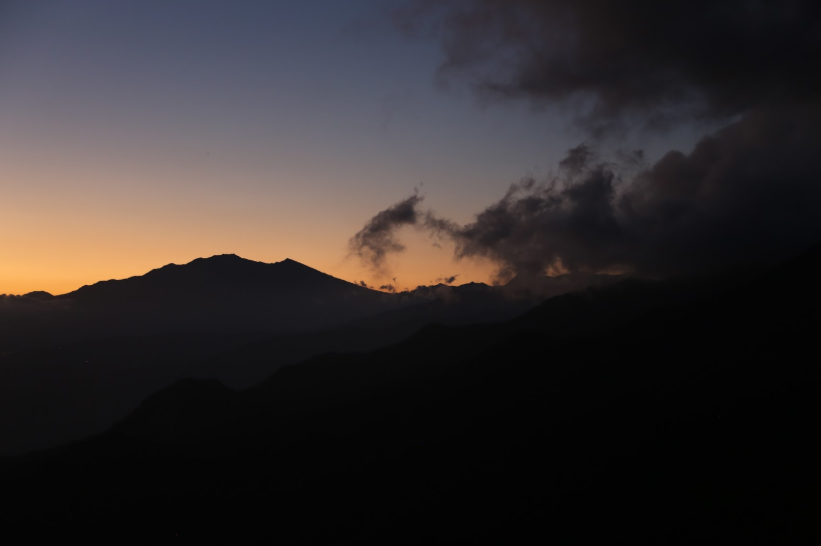
Margay vs. Ocelot in Panama: Two Spotted Cats That Look Almost the Same

Panama is home to six species of wild cats, including two that can be surprisingly difficult to tell apart: the margay (Leopardus wiedii) and the ocelot (Leopardus pardalis). Both are beautifully marked, mostly nocturnal, solitary cats, and both can live in the same forests. At first glance, they can look like slightly different versions of the same animal. But once you know what to look for, there are some very clear differences. Panama's own wildlife authorities recognize both the margay, locally called tigrillo, and the ocelot, commonly called manigordo, as native wild cats.

The biggest difference is size

The easiest way to distinguish an ocelot from a margay is simply to look at the size of the animal. An adult ocelot is substantially larger and heavier. Ocelots are generally around 8.5 to 16 kilograms, whereas margays are much smaller and more lightly built. Scientific comparisons have found that ocelots can be roughly two to three times the size of margays.

An ocelot looks like a small leopard or a very muscular house cat that has somehow been given jungle camouflage. A margay looks more delicate, almost like an unusually large domestic cat with a very long tail.

The ocelot has a relatively robust body, larger paws and a noticeably shorter tail in proportion to its body. The margay is slimmer, with a proportionally much longer tail. That long tail is one of the best clues when you are trying to identify one from a photograph or camera trap.

Their spots are different too

Both cats have beautiful coats covered with dark markings, but the patterns aren't identical.

Ocelots tend to have larger, more elongated markings arranged in chains and rosettes. Their coats can look almost intricately painted, with stripes and blotches running along the body and neck.

Margays generally have more rounded spots and rosettes, often with a somewhat more delicate appearance. Their heads are smaller, their eyes appear proportionally larger and their ears are more rounded.

The problem is that there is considerable individual variation. Lighting, angle, age and the position of the animal can make identification from a single photograph surprisingly difficult. If you see a spotted cat walking down a trail at night, "it's an ocelot" is not necessarily a safe assumption just because it is relatively small.

The tail is a fantastic clue

If you get a good look at the whole animal, pay attention to the tail.

An ocelot's tail is relatively short compared with its body. A margay's tail is much longer and is one of its most obvious physical characteristics.

Historically, naturalists working in Panama also used this difference to distinguish the two cats. The Smithsonian's older descriptions of Panamanian specimens specifically noted that the ocelot was larger and more robust, while the long tailed spotted cat had a considerably longer tail.

So if you're looking at a camera trap photograph, a long, almost disproportionately long tail is a very useful clue pointing toward margay.

The margay is the tree specialist

This is probably the most fascinating difference between the two.

Ocelots are capable climbers and will certainly climb trees, but they are primarily terrestrial hunters. Margays are much more strongly associated with life in trees and are exceptionally agile climbers. Their flexible ankles and body structure allow them to move around branches in ways that most cats cannot. They can even descend tree trunks headfirst.

This doesn't mean that every margay lives its entire life in the canopy. Margays also travel and hunt on the ground. But compared with an ocelot, the margay is much more comfortable making the forest three dimensional.

That difference is particularly important in Panama's dense forests. A margay can spend considerable time above your head where you would never know it was there.

Ocelots are more adaptable

Ocelots are much more flexible in their habitat requirements. They can live in tropical rainforest, dry forest, scrub, grassland, marshes and areas with considerable habitat disturbance.

Margays are more strongly associated with forest and tree cover. They can use forest fragments, but their dependence on forest makes them more vulnerable when forests are broken into isolated patches. The IUCN describes the margay as strongly associated with forest habitat and notes that it is generally less tolerant of human settlement and altered habitat than the ocelot.

This helps explain why ocelots are encountered more frequently in many parts of Panama. An ocelot can make use of a wider range of landscapes, while a margay is more dependent on having suitable forest.

They can live in exactly the same place

This is where things get really interesting.

There is no simple rule saying that you will find margays in one part of Panama and ocelots somewhere else. Their ranges overlap extensively. Both species occur in Panama and throughout much of Central and South America.

They can therefore occupy the same forest.

The trick is that they don't necessarily use that forest in exactly the same way. Margays make much greater use of trees, while ocelots spend considerably more time on the ground. They also differ in their diets, hunting strategies and use of space.

In other words, two cats can live in the same jungle without necessarily competing for exactly the same resources.

There is also an interesting relationship between them

The ocelot is considerably larger than the margay, and researchers have found evidence that the presence and abundance of ocelots can influence smaller cats such as margays. This is sometimes called the "ocelot effect." The idea is that the larger ocelot can dominate resources or create pressure that affects where and when smaller cats move. However, researchers continue to debate how important competition is compared with other factors such as prey availability and habitat structure.

So you shouldn't think of the relationship as simply "ocelots chase margays away." In reality, the two species can coexist, with differences in habitat use, activity and diet helping reduce direct competition.

Both are mostly creatures of the night

If you are hoping to see one while walking through a Panamanian forest at noon, you are probably going to be disappointed.

Both species are predominantly nocturnal or crepuscular, although neither is completely restricted to nighttime. Ocelots in particular can be active during both day and night, but they are generally most active around nighttime and twilight.

Margays are notoriously elusive and are also predominantly nocturnal. Their secretive nature, relatively low population densities and forest lifestyle make them considerably harder to see than many other mammals.

This is why camera traps have become so valuable for studying them.

Where can you find ocelots in Panama?

Ocelots are widespread across Panama, wherever suitable habitat and prey are available. They occur in both lowland and forested environments and can tolerate a wider variety of habitats than margays.

One particularly well studied population lives on Barro Colorado Island in the Panama Canal area. Smithsonian researchers have been monitoring mammals there for decades, including individual ocelots using camera traps. One female, named Glitter, and her kitten Globug were photographed repeatedly, providing researchers with detailed information about individual animals and their lives.

Ocelots can also be found in the forests of western Panama, including Chiriquí, as well as the Caribbean lowlands and other forested parts of the country.

Where can you find margays in Panama?

Margays have a similarly broad geographic range in Panama, but because they are more dependent on forest and are much more elusive, they are considerably harder to detect.

They can occur in lowland tropical forests as well as forested mountain environments. The species has been recorded from sea level to around 1,500 metres across its overall range.

That means the forests of western Panama, including the Chiriquí region, can potentially support margays as well as ocelots. The forests around Fortuna, the mountain slopes and other large connected forest areas are exactly the sort of habitat where a secretive forest cat could be present without ever being seen by most visitors.

And this is an important point: not seeing a margay does not mean there aren't any there. With an animal this secretive, absence of sightings is very different from proof of absence.

Which one is more likely to be seen?

If you're exploring Panama and happen to encounter one of these cats, you're considerably more likely to see an ocelot.

Ocelots are more common in many areas, are larger and use trails and the ground extensively. Margays occur at lower densities and are particularly difficult to detect. The IUCN notes that margays generally occur at low population densities across their range.

A nighttime camera trap can therefore reveal an entirely different world from what a person sees while walking through the same forest.

You might walk the same trail for years and never see a margay, while a camera placed beside the trail could quietly photograph one passing at 2 a.m.

A simple way to remember the difference

Think of the ocelot as the bigger, stockier ground cat and the margay as the smaller, longer tailed tree specialist.

The ocelot has a larger body, shorter proportional tail, more robust build and greater ability to use different habitats. The margay is smaller, slimmer, longer tailed, more strongly associated with forest and far more adapted to climbing.

But both are gorgeous, elusive spotted cats, both occur in Panama, and their ranges overlap considerably.

That overlap is one of the things that makes Panama such an interesting place for wildlife enthusiasts. A single stretch of tropical forest can potentially contain an ocelot stalking along the ground, a margay moving silently through the branches above it, a jaguarundi slipping through the vegetation and, in the right region, even a puma or jaguar passing through. Panama's forests are not just home to individual species; they are miniature ecosystems where several predators divide up the same landscape in remarkably different ways.

And if you ever see a small spotted cat crossing a road in Panama at night, take a good look at that tail before deciding what you've seen. You may have just encountered an ocelot. Or you may have been incredibly lucky and met one of Panama's much more secretive margays.Margay vs. Ocelot in Panama: Two Spotted Cats That Look Almost the Same

Panama is home to six species of wild cats, including two that can be surprisingly difficult to tell apart: the margay (Leopardus wiedii) and the ocelot (Leopardus pardalis). Both are beautifully marked, mostly nocturnal, solitary cats, and both can live in the same forests. At first glance, they can look like slightly different versions of the same animal. But once you know what to look for, there are some very clear differences. Panama's own wildlife authorities recognize both the margay, locally called tigrillo, and the ocelot, commonly called manigordo, as native wild cats.

The biggest difference is size

The easiest way to distinguish an ocelot from a margay is simply to look at the size of the animal. An adult ocelot is substantially larger and heavier. Ocelots are generally around 8.5 to 16 kilograms, whereas margays are much smaller and more lightly built. Scientific comparisons have found that ocelots can be roughly two to three times the size of margays.

An ocelot looks like a small leopard or a very muscular house cat that has somehow been given jungle camouflage. A margay looks more delicate, almost like an unusually large domestic cat with a very long tail.

The ocelot has a relatively robust body, larger paws and a noticeably shorter tail in proportion to its body. The margay is slimmer, with a proportionally much longer tail. That long tail is one of the best clues when you are trying to identify one from a photograph or camera trap.

Their spots are different too

Both cats have beautiful coats covered with dark markings, but the patterns aren't identical.

Ocelots tend to have larger, more elongated markings arranged in chains and rosettes. Their coats can look almost intricately painted, with stripes and blotches running along the body and neck.

Margays generally have more rounded spots and rosettes, often with a somewhat more delicate appearance. Their heads are smaller, their eyes appear proportionally larger and their ears are more rounded.

The problem is that there is considerable individual variation. Lighting, angle, age and the position of the animal can make identification from a single photograph surprisingly difficult. If you see a spotted cat walking down a trail at night, "it's an ocelot" is not necessarily a safe assumption just because it is relatively small.

The tail is a fantastic clue

If you get a good look at the whole animal, pay attention to the tail.

An ocelot's tail is relatively short compared with its body. A margay's tail is much longer and is one of its most obvious physical characteristics.

Historically, naturalists working in Panama also used this difference to distinguish the two cats. The Smithsonian's older descriptions of Panamanian specimens specifically noted that the ocelot was larger and more robust, while the long tailed spotted cat had a considerably longer tail.

So if you're looking at a camera trap photograph, a long, almost disproportionately long tail is a very useful clue pointing toward margay.

The margay is the tree specialist

This is probably the most fascinating difference between the two.

Ocelots are capable climbers and will certainly climb trees, but they are primarily terrestrial hunters. Margays are much more strongly associated with life in trees and are exceptionally agile climbers. Their flexible ankles and body structure allow them to move around branches in ways that most cats cannot. They can even descend tree trunks headfirst.

This doesn't mean that every margay lives its entire life in the canopy. Margays also travel and hunt on the ground. But compared with an ocelot, the margay is much more comfortable making the forest three dimensional.

That difference is particularly important in Panama's dense forests. A margay can spend considerable time above your head where you would never know it was there.

Ocelots are more adaptable

Ocelots are much more flexible in their habitat requirements. They can live in tropical rainforest, dry forest, scrub, grassland, marshes and areas with considerable habitat disturbance.

Margays are more strongly associated with forest and tree cover. They can use forest fragments, but their dependence on forest makes them more vulnerable when forests are broken into isolated patches. The IUCN describes the margay as strongly associated with forest habitat and notes that it is generally less tolerant of human settlement and altered habitat than the ocelot.

This helps explain why ocelots are encountered more frequently in many parts of Panama. An ocelot can make use of a wider range of landscapes, while a margay is more dependent on having suitable forest.

They can live in exactly the same place

This is where things get really interesting.

There is no simple rule saying that you will find margays in one part of Panama and ocelots somewhere else. Their ranges overlap extensively. Both species occur in Panama and throughout much of Central and South America.

They can therefore occupy the same forest.

The trick is that they don't necessarily use that forest in exactly the same way. Margays make much greater use of trees, while ocelots spend considerably more time on the ground. They also differ in their diets, hunting strategies and use of space.

In other words, two cats can live in the same jungle without necessarily competing for exactly the same resources.

There is also an interesting relationship between them

The ocelot is considerably larger than the margay, and researchers have found evidence that the presence and abundance of ocelots can influence smaller cats such as margays. This is sometimes called the "ocelot effect." The idea is that the larger ocelot can dominate resources or create pressure that affects where and when smaller cats move. However, researchers continue to debate how important competition is compared with other factors such as prey availability and habitat structure.

So you shouldn't think of the relationship as simply "ocelots chase margays away." In reality, the two species can coexist, with differences in habitat use, activity and diet helping reduce direct competition.

Both are mostly creatures of the night

If you are hoping to see one while walking through a Panamanian forest at noon, you are probably going to be disappointed.

Both species are predominantly nocturnal or crepuscular, although neither is completely restricted to nighttime. Ocelots in particular can be active during both day and night, but they are generally most active around nighttime and twilight.

Margays are notoriously elusive and are also predominantly nocturnal. Their secretive nature, relatively low population densities and forest lifestyle make them considerably harder to see than many other mammals.

This is why camera traps have become so valuable for studying them.

Where can you find ocelots in Panama?

Ocelots are widespread across Panama, wherever suitable habitat and prey are available. They occur in both lowland and forested environments and can tolerate a wider variety of habitats than margays.

One particularly well studied population lives on Barro Colorado Island in the Panama Canal area. Smithsonian researchers have been monitoring mammals there for decades, including individual ocelots using camera traps. One female, named Glitter, and her kitten Globug were photographed repeatedly, providing researchers with detailed information about individual animals and their lives.

Ocelots can also be found in the forests of western Panama, including Chiriquí, as well as the Caribbean lowlands and other forested parts of the country.

Where can you find margays in Panama?

Margays have a similarly broad geographic range in Panama, but because they are more dependent on forest and are much more elusive, they are considerably harder to detect.

They can occur in lowland tropical forests as well as forested mountain environments. The species has been recorded from sea level to around 1,500 metres across its overall range.

That means the forests of western Panama, including the Chiriquí region, can potentially support margays as well as ocelots. The forests around Fortuna, the mountain slopes and other large connected forest areas are exactly the sort of habitat where a secretive forest cat could be present without ever being seen by most visitors.

And this is an important point: not seeing a margay does not mean there aren't any there. With an animal this secretive, absence of sightings is very different from proof of absence.

Which one is more likely to be seen?

If you're exploring Panama and happen to encounter one of these cats, you're considerably more likely to see an ocelot.

Ocelots are more common in many areas, are larger and use trails and the ground extensively. Margays occur at lower densities and are particularly difficult to detect. The IUCN notes that margays generally occur at low population densities across their range.

A nighttime camera trap can therefore reveal an entirely different world from what a person sees while walking through the same forest.

You might walk the same trail for years and never see a margay, while a camera placed beside the trail could quietly photograph one passing at 2 a.m.

A simple way to remember the difference

Think of the ocelot as the bigger, stockier ground cat and the margay as the smaller, longer tailed tree specialist.

The ocelot has a larger body, shorter proportional tail, more robust build and greater ability to use different habitats. The margay is smaller, slimmer, longer tailed, more strongly associated with forest and far more adapted to climbing.

But both are gorgeous, elusive spotted cats, both occur in Panama, and their ranges overlap considerably.

That overlap is one of the things that makes Panama such an interesting place for wildlife enthusiasts. A single stretch of tropical forest can potentially contain an ocelot stalking along the ground, a margay moving silently through the branches above it, a jaguarundi slipping through the vegetation and, in the right region, even a puma or jaguar passing through. Panama's forests are not just home to individual species; they are miniature ecosystems where several predators divide up the same landscape in remarkably different ways.

And if you ever see a small spotted cat crossing a road in Panama at night, take a good look at that tail before deciding what you've seen. You may have just encountered an ocelot. Or you may have been incredibly lucky and met one of Panama's much more secretive margays.

The Hummingbirds of Chiriquí, Panama: A Tiny World of Incredible BirdsThe Hummingbirds of Chiriquí, Panama: A Tiny World of Incredible Birds

Chiriquí is one of the best places in Panama to see hummingbirds, and what makes the province particularly interesting is the incredible variety packed into a relatively small area. From the warm lowlands around David and the forests of the Fortuna area to the cool highlands around Boquete, Volcán and the slopes of Volcán Barú, the change in elevation creates a series of different habitats, each with its own collection of hummingbirds. Bird lists for the Chiriquí highlands contain well over a dozen hummingbird species, while broader Chiriquí checklists contain considerably more.

One of the most spectacular is the Violet Sabrewing, a large, powerful hummingbird that looks almost oversized compared with many of its relatives. The male has brilliant violet plumage and broad wings, and it is one of those hummingbirds that can make you stop what you are doing when it suddenly appears. It is regularly recorded in the Chiriquí highlands and has been documented around places such as Cerro Punta and the cloud forests around Volcán.

Another highland specialty is the Volcano Hummingbird, a tiny bird associated with the high elevations of the region. Despite its diminutive size, it is remarkably adapted to life in cool mountain environments. Chiriquí is also home to the Scintillant Hummingbird, another very small highland species. These tiny hummingbirds are particularly interesting because they are part of a group adapted to the colder conditions found around the mountains. Both species are included on Chiriquí bird lists.

The Fiery-throated Hummingbird is another spectacular bird of the mountains. As its name suggests, its throat can appear brilliantly colored, and it is associated with the higher elevations of the Chiriquí region. The highlands also produce the White-throated Mountain-gem, Purple-throated Mountain-gem and White-bellied Mountain-gem, giving birdwatchers an opportunity to see several closely related mountain hummingbirds in the same general region.

Then there is the Talamanca Hummingbird, a particularly interesting highland bird. It occurs in the mountain regions of western Panama and is associated with forest edges and clearings around the highlands of Volcán Barú. It is one of the birds that reminds you that Chiriquí's hummingbird diversity isn't simply a collection of widespread tropical species. Some of these birds are strongly associated with the unique mountain environment of western Panama and neighboring Costa Rica.

The Black-bellied Hummingbird is another special bird of the Chiriquí highlands. Its dark underside makes it quite distinctive, and it is considered a Chiriquí highland endemic in birding literature. Seeing one can therefore be considerably more exciting for a serious birdwatcher than simply seeing another common hummingbird at a feeder.

One of the most charming little birds is the Snowcap. The name gives away the feature that makes the males so memorable: a tiny white cap contrasting with the rest of the bird's colorful plumage. Snowcaps are not among the hummingbirds you are guaranteed to see everywhere, but Chiriquí is one of the places where birdwatchers specifically look for them. They are listed from the Chiriquí highlands and are considered a relatively uncommon sight.

The Violet-headed Hummingbird is another beautiful possibility. It is a small bird with a striking violet-colored head, and records exist from the Chiriquí highlands. The Crowned Woodnymph is somewhat more widespread and is another attractive hummingbird that can turn up around forest edges, gardens and feeders. Birding reports from the region describe it as one of the more commonly encountered hummingbirds at some locations.

The Green-crowned Brilliant is larger and more robust than some of the tiny highland species. It has brilliant green plumage and is another species associated with the forests and higher elevations of western Panama. The Green Violetear, meanwhile, is a noisy, energetic hummingbird that can be found in the highlands. If you are sitting somewhere around Boquete and suddenly hear a hummingbird making a surprisingly loud commotion, there is a reasonable chance you are dealing with one of the violetears. Chiriquí checklists include both Green Violetear and Green-crowned Brilliant.

The Stripe-tailed Hummingbird is another attractive species of the Chiriquí mountains. Its name refers to the distinctive pattern in its tail, giving birdwatchers a useful identification clue. It is listed as a common species in some Chiriquí birding areas. The Snowy-bellied Hummingbird and Rufous-tailed Hummingbird are also found in the province, with the Rufous-tailed being one of the more widespread hummingbirds you may encounter around gardens, feeders and forest edges.

There are also some considerably less obvious species hiding in the forests. Chiriquí records include several hermits, including the Green Hermit, Long-billed Hermit and Stripe-throated Hermit, as well as the Green-fronted Lancebill and Purple-crowned Fairy. These birds demonstrate just how different hummingbirds can be from one another. Not every hummingbird is the stereotypical tiny jewel hovering around a feeder. Hermits, for example, often have longer, curved bills and different feeding behaviors, and some spend much of their time in forest vegetation rather than sitting prominently on a feeder.

Another fascinating group found in Chiriquí includes the Bronze-tailed Plumeleteer, White-vented Plumeleteer and Garden Emerald. The Bronze-tailed Plumeleteer is particularly recognizable because of its striking reddish feet, something birdwatchers can use when trying to separate it from other hummingbirds. It has been described as fairly common at some feeders in the region.

There are even some extremely special birds for dedicated birdwatchers. The Violet-capped Hummingbird and Black-bellied Hummingbird are among the species associated with the Chiriquí highlands, while the wider western Panama region also has other localized hummingbirds. The variety changes considerably depending on whether you are in the warmer lowlands, mid elevation forests or the high mountain environment around Volcán Barú.

This is what makes hummingbird watching in Chiriquí so much fun. You don't necessarily have to travel enormous distances to find completely different birds. Drive upward from the warmer valleys toward Boquete and then continue toward the highlands and cloud forests, and the hummingbird community begins to change with the elevation. A garden hummingbird at a lower elevation can be replaced by a mountain gem, a Volcano Hummingbird, a Fiery-throated Hummingbird or another highland specialist farther up the mountain.

And you don't always need expensive binoculars or a professional birding guide to appreciate them. Hummingbirds are among the easiest tropical birds to notice because they are constantly moving, hovering, chasing one another and visiting flowers. Put yourself somewhere with flowering plants, forest edges or a hummingbird feeder, sit quietly for a while and eventually the tiny helicopters usually arrive. Sometimes they are gone in two seconds. Sometimes one will hover directly in front of your face as if it is checking you out.

For visitors staying around Boquete, Volcán, Cerro Punta, Fortuna and the surrounding Chiriquí mountains, hummingbirds can become one of the unexpected highlights of the trip. Chiriquí has a remarkable combination of tropical forest, cloud forest, mountain valleys and high elevation habitats, and each one contributes something different to the hummingbird spectacle. With species ranging from enormous Violet Sabrewings to unbelievably tiny Scintillant and Volcano Hummingbirds, Chiriquí offers a miniature birding adventure where some of the most spectacular animals in the forest weigh only a few grams.

Panama’s Sea Turtles: Five Amazing Species That Nest on Its Beaches

Panama is one of those rare countries where a traveler can walk along a tropical beach at night and witness something that has been happening for millions of years: a sea turtle slowly crawling out of the ocean, searching for the perfect place in the sand, digging a nest with her flippers and laying dozens or even hundreds of eggs before returning to the sea. Panama’s long Pacific and Caribbean coastlines provide important nesting habitat for several species of sea turtles, making the country an incredible destination for anyone fascinated by marine wildlife.

Five species of sea turtles are found in Panama: the olive ridley, green turtle, hawksbill turtle, loggerhead turtle and leatherback turtle. Each has a different appearance, diet, behavior and preferred habitat. Some are relatively small, while one is an absolute giant. Some nest individually throughout the season, while others can arrive by the thousands in one of nature’s most spectacular events: a mass nesting known as an arribada.

The Olive Ridley: Panama’s Great Turtle Spectacle

The olive ridley turtle is probably the species most closely associated with spectacular turtle nesting events in Panama.

Olive ridleys are relatively small compared with some of their relatives, usually weighing somewhere around 35 to 50 kilograms as adults. They have a rounded, olive-colored shell and a surprisingly determined personality when they are on land. Watching one slowly haul itself out of the Pacific Ocean makes you realize just how powerful these animals actually are.

What makes the olive ridley particularly fascinating is its habit of nesting in enormous groups.

These mass nesting events are called arribadas, a Spanish word meaning "arrivals." Thousands of female turtles can come onto the same beach over a relatively short period, with turtles crawling across the sand in every direction.

One of the best-known places for this phenomenon is La Marinera Beach in Los Santos, on Panama's Azuero Peninsula. Another important nesting beach is Isla Cañas, also in Los Santos.

During a major arribada, the beach can look almost unbelievable. At first you may see one turtle emerging from the surf. Then another appears. Then another. Eventually, the sand can be covered with turtles, each searching for a place to dig her nest.

The turtles don't arrive simply to relax on the beach. They have a very specific mission. A female digs a chamber in the sand with her rear flippers and deposits her eggs. She then carefully covers the nest, disguising the entrance before making her way back toward the ocean.

And then she disappears into the darkness.

She may return several more times during the nesting season, usually at intervals of around two weeks, before eventually leaving the area and beginning the long journey back toward her feeding grounds.

The Green Turtle

The green turtle is another important sea turtle found in Panama.

Despite its name, the green turtle isn't actually green on the outside. The name comes largely from the greenish color of its body fat, which is related to its diet.

Green turtles are generally larger than olive ridleys and have a smooth, rounded appearance. They are particularly interesting because their diet changes dramatically as they grow.

Young green turtles are more omnivorous, eating a variety of marine organisms. Adults become primarily herbivorous and feed heavily on seagrasses and algae.

That makes them important members of marine ecosystems. By feeding on seagrass, they help maintain healthy marine habitats.

Green turtles can be found in both the Caribbean and Pacific regions of Panama, and they use sandy beaches for nesting. They may not create the enormous spectacles associated with olive ridley arribadas, but seeing a green turtle emerge from the ocean at night is still an extraordinary experience.

A large female can look surprisingly prehistoric as she moves slowly across the beach.

The Hawksbill Turtle

The hawksbill turtle is arguably one of the most beautiful sea turtles in Panama.

It gets its name from its distinctive narrow, pointed beak, which resembles the bill of a hawk. Its shell is usually beautifully patterned, with overlapping plates that can have shades of amber, brown, gold and reddish colors.

Hawksbills are closely associated with coral reefs and tropical coastal ecosystems. Their narrow beaks allow them to reach into cracks and crevices on reefs to find food that other turtles cannot easily reach.

They are particularly famous for eating sponges, although they also consume other marine organisms.

The hawksbill's relationship with coral reefs makes Panama's Caribbean coast especially interesting for anyone hoping to understand the connection between turtles and tropical marine ecosystems.

Historically, hawksbills were heavily exploited because of their beautiful shells. The material known as tortoiseshell was used for jewelry, combs, decorative objects and other products. This exploitation was devastating for the species.

Today, seeing a hawksbill in the wild is something special.

They are also quite different from the green turtle in the way they look and behave. Where the green turtle has a relatively broad, rounded head, the hawksbill has that distinctive pointed face. Once you know what to look for, they are surprisingly easy to recognize.

The Loggerhead Turtle

The loggerhead turtle is another species recorded in Panama.

It gets its unusual name from its enormous head compared with other sea turtles. That large head is more than just a distinctive feature. It gives the loggerhead powerful jaws capable of crushing hard-shelled prey.

Loggerheads eat animals such as crabs, mollusks and other creatures that would be difficult for a smaller-jawed turtle to handle.

They are widespread throughout the world's oceans and are famous for undertaking long migrations between feeding areas and nesting beaches.

Loggerheads are not the species most people associate with Panama's spectacular mass nesting events, but their presence adds another fascinating piece to the country's sea turtle story.

One of the amazing things about sea turtles is that the same beach can be important to one species while being only occasionally used by another. Different turtles have different preferences for sand, water temperature, geography and food.

The Leatherback: The Giant of the Sea Turtles

Then there is the leatherback turtle, and this one is truly in a category of its own.

The leatherback is the largest living species of sea turtle and one of the most unusual reptiles on Earth.

Unlike the other sea turtles, it does not have a traditional hard shell covered with large plates. Instead, its back is covered by a thick, leathery skin supported by a flexible structure underneath.

A fully grown leatherback can become enormous, with the largest individuals weighing hundreds of kilograms.

Seeing one on a beach must be an unforgettable experience.

They also have an extraordinary lifestyle. Leatherbacks are capable of traveling enormous distances across oceans, following some of the world's major ocean currents and migrating between feeding and nesting areas.

And despite their massive size, they are capable swimmers.

One of their favorite foods is jellyfish, which they can consume in impressive quantities. This is another reason why healthy ocean ecosystems are so important to turtles. A leatherback might travel thousands of kilometers while following areas where its preferred food is abundant.

Leatherbacks also face some of the most serious conservation challenges of any sea turtle species.

Their nesting activity in Panama is particularly fascinating because the Pacific population in this part of the world has declined dramatically.

For travelers interested in wildlife, encountering a leatherback nest or seeing one of these giants nesting is a completely different experience from seeing an olive ridley.

An olive ridley might weigh a fraction of what a leatherback weighs. The leatherback can look almost like a living dinosaur.

Why Do Sea Turtles Keep Coming Back to the Same Beaches?

One of the great mysteries and marvels of sea turtles is their ability to navigate enormous distances through the ocean.

Female turtles can spend years traveling through the sea before returning to nesting areas.

Many turtles show strong connections to the region where they were born. A female may leave the beach as a tiny hatchling, spend years growing in the open ocean and eventually return as an adult to reproduce.

Exactly how they navigate such enormous distances is still fascinating scientists.

Sea turtles appear to use several environmental clues, including the Earth's magnetic field. They essentially have a natural navigation system that allows them to recognize geographical areas across enormous stretches of ocean.

Think about that for a moment.

A turtle that leaves a beach as a tiny animal can spend years wandering through the ocean and eventually return to a beach in the same general region to lay eggs of her own.

It is one of the great natural journeys on Earth.

The Baby Turtles Have an Incredible First Night

Perhaps the most famous part of the turtle story is the moment when the hatchlings finally emerge.

After incubating in the sand for several weeks, hundreds of tiny turtles may suddenly begin moving inside a nest.

Then they start digging.

Sometimes they emerge during the day, but nighttime is often safer because there are fewer predators and the cooler temperatures reduce the risk of overheating.

When the hatchlings finally reach the surface, they face the most dangerous journey of their lives.

They have to cross the sand and reach the ocean.

And they are tiny.

A baby sea turtle can fit comfortably in the palm of your hand, yet it instinctively knows that the ocean is its destination.

The moon and stars, the brightness of the horizon over the sea, the slope of the beach and other environmental cues help guide them.

Once they reach the water, they disappear into the darkness.

Unfortunately, only a small percentage of hatchlings survive to adulthood. Birds, crabs, fish and other predators can all take advantage of the tiny turtles.

That is nature being nature.

The enormous number of eggs laid by sea turtles is part of their survival strategy. A female may lay many eggs during a nesting season, knowing that only a small number of her offspring will eventually become adults.

Temperature Can Determine Whether a Turtle Becomes Male or Female

One of the strangest facts about sea turtles is that the temperature of the nest can influence the sex of the hatchlings.

Unlike humans, where sex is determined genetically, the sex of many sea turtles is strongly influenced by incubation temperature.

Generally, warmer nest temperatures produce more females, while cooler temperatures produce more males.

That means the sand itself plays a role in determining the future population.

It also makes climate and changing beach conditions particularly interesting when scientists study sea turtle populations.

A beach is not simply a place where turtles happen to lay eggs. The temperature, moisture, shade, vegetation and characteristics of the sand can all influence what happens inside the nest.

Panama's Beaches Are Part of a Much Bigger Journey

One of the most fascinating things about Panama's sea turtles is that the beach is only one small part of their lives.

A turtle might spend weeks or months in an area before nesting and then return to the ocean, where it can travel enormous distances.

The Pacific and Caribbean sides of Panama are connected to much larger marine ecosystems extending throughout Central America and far beyond.

A turtle nesting on a Panamanian beach today could spend part of its life feeding hundreds or thousands of kilometers away.

This is why seeing a sea turtle on a Panamanian beach is so much more meaningful than simply seeing an interesting animal.

You are seeing one moment in an enormous journey.

Where Can Travelers See Sea Turtles in Panama?

For travelers hoping to experience sea turtles, the Pacific coast is particularly famous for olive ridley nesting, with places such as La Marinera and Isla Cañas being among the better-known locations for arribadas.

Other beaches around Panama are also used by different species, including green turtles, hawksbills and leatherbacks.

The Caribbean coast offers its own opportunities, particularly for travelers interested in reef ecosystems and species such as hawksbills and green turtles.

The important thing is to remember that turtle nesting is a natural event. There is no guarantee that you will see one simply because you visit a particular beach during nesting season.

Sometimes you can spend hours waiting and see nothing.

And then suddenly a giant turtle appears from the ocean.

That unpredictability is part of what makes it special.

If You Encounter a Nesting Turtle

If you are lucky enough to encounter a turtle nesting on a beach, the best thing you can do is give her plenty of space.

Don't touch her.

Don't sit directly in front of her.

Don't shine bright lights into her face.

Don't use flash photography.

Don't try to ride or grab her.

And don't attempt to dig up a nest or handle hatchlings unless you are participating in a properly organized conservation activity.

A nesting turtle is not putting on a show for tourists. She is carrying out one of the most important tasks of her life.

The same applies to hatchlings. Watching dozens of tiny turtles make their way toward the sea can be incredible, but they should be allowed to make the journey without being picked up, redirected or surrounded by people.

Five Species, Five Very Different Turtles

Panama's sea turtle story is fascinating precisely because the five species are so different.

The olive ridley is the small, determined turtle famous for arriving in enormous numbers.

The green turtle is an important herbivore that helps maintain healthy marine habitats.

The hawksbill is the reef specialist with the spectacular shell and unmistakable pointed beak.

The loggerhead is the powerful-jawed turtle built for crushing hard-shelled prey.

And the leatherback is the giant ocean traveler, with its flexible body and leathery shell, capable of crossing entire oceans.

Together, they make Panama's beaches and coastal waters part of one of the most remarkable wildlife stories in the world.

For a traveler, the best part is that you don't necessarily need to travel to some remote corner of the planet to experience it. Panama has turtle nesting beaches scattered along both its Pacific and Caribbean coasts, and during the right season, the possibility of seeing one of these ancient animals crawling out of the ocean is very real.

You could be standing on an ordinary-looking beach at night, hearing nothing but the waves, when a shadow appears at the edge of the water.

It slowly moves toward you.

You realize it is a sea turtle.

She pauses, continues up the beach, digs a hole in the sand and begins laying the next generation.

Then, after perhaps an hour or more, she covers the nest, turns around and slowly heads back toward the ocean.

She disappears into the waves.

And the beach looks completely ordinary again.

Except now you know that underneath the sand, hundreds of tiny turtles are beginning the next chapter of one of the oldest journeys on Earth.v

El Valle vs. Boquete: Zwei ganz unterschiedliche Seiten der panamaischen Bergwelt

Wenn Reisende an Panama denken, kommen ihnen meistens tropische Hitze, Strände, Inseln und Dschungel in den Sinn. Doch Panama hat auch eine überraschend kühle und grüne Bergwelt. Zwei der bekanntesten Bergziele sind El Valle de Antón und Boquete. Es ist leicht zu verstehen, warum diese beiden Orte miteinander verglichen werden. Beide bieten angenehmere Temperaturen, grüne Berge, Wanderwege, Wasserfälle, Vögel und jede Menge Natur. Trotzdem haben sie jeweils eine ganz eigene Persönlichkeit.

Der größte Unterschied liegt in ihrer Lage und der Landschaft, die sie umgibt. El Valle de Antón liegt in der Provinz Coclé, im Krater eines alten Vulkans, auf ungefähr 600 Metern Höhe. Die Berge rund um den Ort vermitteln ein besonderes Gefühl, fast als wäre El Valle von der Außenwelt abgeschirmt. Boquete liegt viel weiter westlich in der Provinz Chiriquí, in den Hochlagen rund um den Volcán Barú, und befindet sich ungefähr 1.200 Meter über dem Meeresspiegel.

Diese unterschiedliche Höhenlage macht sich deutlich bemerkbar. El Valle wirkt kompakter, kleiner und sehr gemütlich zwischen den Bergen gelegen. Man kann durch den Ort spazieren, den bekannten Sonntagsmarkt besuchen, zur La India Dormida wandern, Wasserfälle entdecken und die Natur genießen, ohne ständig große Entfernungen zurücklegen zu müssen. Außerdem liegt El Valle relativ nahe an Panama-Stadt und eignet sich deshalb hervorragend für einen kurzen Ausflug in die Berge.

Boquete fühlt sich eher wie ein komplettes Bergreiseziel an. Es gibt zahlreiche Restaurants, Cafés, Kaffeeplantagen, Wanderwege und Outdooraktivitäten. Dazu kommt eine große internationale Gemeinschaft. Boquete hat sich zu einem Ort entwickelt, an dem manche Reisende nur einige Tage verbringen, während andere plötzlich feststellen, dass sie problemlos eine ganze Woche oder länger bleiben könnten.

Das Wetter: eine große Gemeinsamkeit mit einem wichtigen Unterschied

Beide Orte sind deutlich kühler als die tiefer gelegenen Regionen Panamas. Wer aus Panama-Stadt oder einer anderen heißen Gegend in die Berge kommt, merkt den Unterschied sofort. Die Tage sind angenehm und die Abende können überraschend frisch werden.

El Valle ist normalerweise wärmer als Boquete. In El Valle liegen die Tagestemperaturen häufig bei etwa 25 bis 28 °C, während die Nächte meistens ungefähr 18 bis 20 °C erreichen. In Boquete liegen die Temperaturen tagsüber oft bei etwa 20 bis 24 °C und nachts können sie auf ungefähr 13 bis 17 °C fallen. In besonders kühlen Perioden kann es sich vor allem früh morgens noch frischer anfühlen.

Wer der tropischen Hitze entkommen möchte, aber nicht unbedingt frieren will, findet in El Valle einen perfekten Mittelweg. Boquete fühlt sich dagegen tatsächlich wie eine Bergregion an, besonders am frühen Morgen und nach Sonnenuntergang.

Beide Orte haben eine ausgeprägte Regenzeit, die ungefähr von Mai bis November reicht, sowie eine trockenere Zeit von etwa Dezember bis April. Natürlich ist das Wetter in Panama nicht nach einem perfekten Kalender organisiert. Manche Jahre sind deutlich feuchter als andere.

Boquete ist außerdem für den Bajareque bekannt, einen feinen Nebel oder leichten Nieselregen, der durch die Berge zieht. Für viele Besucher gehört genau das zum Charme von Boquete. Man sitzt mit einem guten Kaffee in einem Café, während Wolken langsam durch die Berge ziehen. Für andere sind mehrere Tage Nieselregen vielleicht etwas weniger romantisch!

Auch El Valle hat seine eigenen Nebelstimmungen. Da der Ort in einem alten Vulkankrater liegt, können Wolken schnell über die umliegenden Berge ziehen. Eine Minute kann man noch eine klare Aussicht genießen und wenige Minuten später sind die Berge komplett im Nebel verschwunden.

Wandern: Beide sind hervorragend, aber auf unterschiedliche Weise

Auch beim Wandern haben El Valle und Boquete viel gemeinsam. Trotzdem unterscheiden sich die Landschaften und die Art der Wanderungen.

In El Valle dreht sich vieles um die Landschaft des Vulkankraters. La India Dormida ist wahrscheinlich die bekannteste Wanderung. Dazu kommen verschiedene Wasserfälle und kürzere Wanderwege. Da die Region relativ kompakt ist, kann man eine Wanderung problemlos mit einem Mittagessen im Ort oder einem Besuch des Marktes verbinden.

Boquete bietet wesentlich mehr Möglichkeiten für Reisende, die viel Zeit mit Wandern verbringen möchten. Die umliegenden Berge führen in Nebelwälder und höher gelegene Naturgebiete und natürlich in die spektakuläre Region des Volcán Barú. Einige Wanderungen sind außerdem besonders interessant für Vogelbeobachter, darunter für diejenigen, die den berühmten Quetzal sehen möchten.

Wenn du während eines kurzen Aufenthalts einfach ein paar schöne Wanderungen unternehmen möchtest, ist El Valle hervorragend geeignet. Wenn Wandern, Natur und die Erkundung der Hochlandregion ein wichtiger Teil deiner Reise sind, bietet Boquete deutlich mehr Möglichkeiten.

Die Natur ist ähnlich, fühlt sich aber unterschiedlich an

Auch das ist ein guter Grund, beide Orte zu besuchen.

In El Valle stammt ein großer Teil des Reizes aus der besonderen vulkanischen Landschaft. Krater, Wälder, Wasserfälle und Berge liegen relativ dicht beieinander. Dadurch bekommt man in kurzer Zeit ein erstaunlich intensives Naturerlebnis.

Boquete wirkt größer und weitläufiger. Die höhere Lage sorgt für eine andere Vegetation und die Nebelwälder bieten einen besonders interessanten Lebensraum für Vögel. Die Möglichkeit, Hochlandarten und insbesondere den Quetzal zu beobachten, gehört zu den großen Attraktionen der Region.

Die Atmosphäre ist wahrscheinlich der größte Unterschied

Hier beginnen sich die beiden Orte wirklich voneinander zu unterscheiden.

El Valle fühlt sich eher wie ein kleines panamaisches Bergdorf an, das zufällig auch zu einem beliebten Reiseziel geworden ist. Besonders am Wochenende kommen viele Menschen aus Panama-Stadt, um die kühlere Luft und die Natur zu genießen. Trotzdem hat der Ort weiterhin eine relativ kleine und lokale Atmosphäre. Der Sonntagsmarkt, die Straßen und die Lage mitten im Vulkankrater geben El Valle seine ganz eigene Identität.

Boquete ist deutlich internationaler. Es gibt eine große ausländische Gemeinschaft, zahlreiche Restaurants und Cafés sowie eine gut entwickelte Tourismusbranche rund um Kaffee, Natur und Outdooraktivitäten. Man trifft Reisende aus vielen verschiedenen Ländern und Englisch ist wesentlich häufiger zu hören.

Keiner der beiden Orte ist automatisch besser. Es kommt darauf an, was du suchst.

Wenn du etwas Kleineres, Ruhigeres und relativ nah an Panama-Stadt möchtest, könnte El Valle besser zu dir passen.

Wenn du mehr Restaurants, mehr Aktivitäten, umfangreichere Wanderungen, Kaffee und eine große internationale Gemeinschaft suchst, ist Boquete wahrscheinlich die bessere Wahl.

Also, welchen Ort sollte man besuchen?

Die gute Nachricht ist: Man muss sich eigentlich gar nicht entscheiden.

El Valle und Boquete ergänzen sich erstaunlich gut. Beide zeigen eine Seite Panamas, die viele Besucher nicht erwarten. Panama kann heiß und tropisch sein, aber in den Bergen kann man morgens im Nebel aufwachen, tagsüber durch kühle grüne Wälder wandern und abends sogar eine Jacke gebrauchen.

Trotzdem bieten sie zwei völlig unterschiedliche Berg-Erlebnisse.

El Valle ist der kompakte Ausflug in die Berge: ein alter Vulkankrater, Wasserfälle, Wanderungen, Märkte, viel Grün und angenehme Temperaturen, nur wenige Stunden von Panama-Stadt entfernt.

Boquete ist das umfassendere Hochlanderlebnis: kühlere Temperaturen, Kaffee, Nebelwälder, Vögel, Berge, zahlreiche Aktivitäten und eine große internationale Gemeinschaft.

Man könnte den Unterschied fast so zusammenfassen:

El Valle ist der Ort, an den man fährt, um für ein paar Tage in die Berge zu entkommen. Boquete ist der Ort, an den man fährt, um wirklich Zeit in den Bergen zu verbringen.

Und wenn du genug Zeit hast, beide zu besuchen, wirst du wahrscheinlich feststellen, dass der eine den anderen überhaupt nicht ersetzt. Sie zeigen einfach zwei völlig unterschiedliche Persönlichkeiten der panamaischen Bergwelt.

El Valle vs Boquete : deux visages très différents des montagnes du Panama

Quand les voyageurs pensent au Panama, ils imaginent souvent la chaleur tropicale, les plages, les îles et la jungle. Pourtant, le Panama possède aussi une magnifique région montagneuse, beaucoup plus fraîche et verdoyante. Deux des destinations de montagne les plus connues sont El Valle de Antón et Boquete. Il est facile de comprendre pourquoi les voyageurs les comparent. Les deux offrent des températures agréables, des montagnes verdoyantes, des sentiers de randonnée, des cascades, des oiseaux et beaucoup de nature. Mais une fois sur place, on découvre rapidement que chacune possède une personnalité très différente.

La première grande différence est leur emplacement et le paysage qui les entoure. El Valle de Antón se trouve dans la province de Coclé, au cœur du cratère d’un ancien volcan, à environ 600 mètres d’altitude. Les montagnes qui entourent la ville lui donnent une atmosphère particulière, presque isolée du reste du pays. Boquete se trouve beaucoup plus à l’ouest, dans les montagnes de la province de Chiriquí, à environ 1 200 mètres d’altitude, dans la région du Volcán Barú.

Cette différence d’altitude et de géographie change complètement l’expérience. El Valle est plus compact, plus intime et donne vraiment l’impression d’être caché dans les montagnes. On peut se promener dans la ville, visiter le célèbre marché du dimanche, faire une randonnée vers La India Dormida, découvrir des cascades et profiter de la nature sans avoir besoin de parcourir de grandes distances. Et surtout, El Valle est relativement proche de Panama City, ce qui en fait une excellente escapade de montagne pour quelques jours.

Boquete ressemble davantage à une véritable destination de montagne. On y trouve beaucoup de restaurants, de cafés, de plantations de café, de sentiers de randonnée et d'activités de plein air. La ville possède également une importante communauté internationale et s'est développée comme une destination où certains voyageurs viennent seulement quelques jours, tandis que d'autres finissent par y rester beaucoup plus longtemps.

Le climat : une grande similitude avec une différence importante

Les deux destinations sont nettement plus fraîches que les régions basses du Panama. Pour quelqu'un qui vient de Panama City ou d'une autre région tropicale, la différence est immédiatement perceptible. Les journées sont agréables et les soirées peuvent devenir étonnamment fraîches.

El Valle est généralement plus chaud que Boquete. À El Valle, les températures pendant la journée tournent souvent autour de 25 à 28 °C, tandis que les nuits se situent généralement autour de 18 à 20 °C. À Boquete, les températures diurnes sont souvent autour de 20 à 24 °C et les nuits peuvent descendre vers 13 à 17 °C. Pendant certaines périodes plus fraîches, la sensation peut être encore plus fraîche, surtout tôt le matin.

Pour les voyageurs qui veulent échapper à la chaleur tropicale sans vraiment avoir froid, El Valle peut être le compromis parfait. Boquete, en revanche, donne véritablement une sensation de climat montagnard, particulièrement le soir et tôt le matin.

Les deux destinations connaissent une saison des pluies qui s'étend généralement de mai à novembre et une période plus sèche approximativement de décembre à avril. Mais comme partout au Panama, la météo n'est jamais parfaitement prévisible. Certaines années sont plus humides que d'autres.

Boquete est également connu pour le bajareque, cette fine brume ou petite pluie qui traverse régulièrement les montagnes. Pour certains voyageurs, c'est justement ce qui donne à Boquete son charme. Imaginez-vous assis dans un café avec un bon café chaud pendant que les nuages passent lentement entre les montagnes. Pour d'autres, plusieurs jours de bruine peuvent être un peu moins romantiques !

El Valle possède également sa propre atmosphère brumeuse. Comme la ville se trouve dans un ancien cratère volcanique, les nuages peuvent rapidement recouvrir les montagnes environnantes. Une minute, vous pouvez avoir une vue magnifique sur les montagnes et quelques minutes plus tard, tout peut disparaître dans la brume.

La randonnée : deux excellentes options, mais très différentes

Les deux destinations sont parfaites pour les voyageurs qui aiment marcher et découvrir la nature, mais les randonnées n'ont pas exactement le même caractère.

À El Valle, le paysage est fortement marqué par le cratère volcanique. La India Dormida est probablement la randonnée la plus célèbre. Il existe également plusieurs cascades et des sentiers plus courts. Comme la région est relativement compacte, il est facile de combiner une randonnée avec un déjeuner en ville ou une visite du marché.

Boquete offre davantage de possibilités aux voyageurs qui veulent consacrer beaucoup de temps à la randonnée. Les montagnes environnantes donnent accès à des forêts de nuages, des zones de haute altitude et à la région spectaculaire du Volcán Barú. Certaines randonnées sont également particulièrement intéressantes pour observer les oiseaux, notamment le célèbre quetzal.

Si vous voulez simplement faire quelques belles randonnées pendant une courte escapade en montagne, El Valle est excellent. Si la randonnée, les forêts et l'exploration des hautes terres sont des éléments essentiels de votre voyage, Boquete offre beaucoup plus de possibilités.

La nature est similaire, mais l'expérience est différente

C'est aussi une excellente raison de visiter les deux.

À El Valle, une grande partie de l'attrait vient de sa géographie volcanique particulière. Le cratère, les forêts, les cascades et les montagnes sont concentrés dans une zone relativement petite. En peu de temps, vous pouvez avoir l'impression d'avoir découvert énormément de nature.

Boquete semble plus vaste. L'altitude plus élevée crée une végétation différente et les forêts de nuages offrent un environnement particulièrement intéressant pour les amateurs d'oiseaux. La possibilité d'observer des espèces de haute montagne, notamment le quetzal, est l'une des grandes attractions de la région.

L'ambiance est probablement la plus grande différence

C'est ici que les deux destinations commencent vraiment à se distinguer.

El Valle ressemble davantage à un petit village de montagne panaméen qui est devenu une destination touristique. Le week-end, de nombreux habitants de Panama City viennent profiter de la fraîcheur et de la nature, mais le village conserve une atmosphère relativement tranquille et locale. Le marché du dimanche, les petites rues et la situation au cœur du cratère volcanique lui donnent une identité très particulière.

Boquete est beaucoup plus international. On y trouve une importante communauté étrangère, de nombreux restaurants et cafés, une industrie touristique développée autour du café et de la nature, ainsi que beaucoup de voyageurs venus de différents pays. L'anglais y est également beaucoup plus courant.

Aucune des deux destinations n'est nécessairement meilleure. Tout dépend de ce que vous recherchez.

Si vous voulez quelque chose de plus petit, plus tranquille et relativement proche de Panama City, El Valle pourrait être votre meilleur choix.

Si vous recherchez davantage de restaurants, d'activités, de randonnées, de cafés, de plantations de café et une communauté internationale importante, Boquete sera probablement plus adapté.

Alors, laquelle choisir ?

La bonne nouvelle, c'est que vous n'êtes pas obligé de choisir.

El Valle et Boquete se complètent étonnamment bien. Toutes deux montrent une facette du Panama que beaucoup de visiteurs ne s'attendent pas à découvrir. Le Panama peut être chaud et tropical, mais dans les montagnes, vous pouvez vous réveiller dans la brume, marcher dans une forêt fraîche et verdoyante pendant la journée et avoir envie d'une veste le soir.

Mais elles représentent deux expériences complètement différentes de la montagne panaméenne.

El Valle est une escapade montagneuse compacte : un ancien cratère volcanique, des cascades, des randonnées, des marchés, beaucoup de verdure et un climat agréable, à seulement quelques heures de Panama City.

Boquete est une expérience plus complète des hautes terres : températures plus fraîches, café, forêts de nuages, oiseaux, montagnes, nombreuses activités et importante communauté internationale.

On pourrait presque résumer la différence ainsi :

El Valle est l'endroit où vous allez pour vous échapper quelques jours vers les montagnes. Boquete est l'endroit où vous allez pour vraiment passer du temps dans les montagnes.

Et si vous avez suffisamment de temps pour visiter les deux, vous découvrirez probablement que l'un ne remplace absolument pas l'autre. Ils montrent simplement deux personnalités complètement différentes des montagnes du Panama.

El Valle vs. Boquete: twee verschillende kanten van de bergen van Panama

Wanneer reizigers aan Panama denken, denken ze vaak aan tropische hitte, stranden, eilanden en jungle. Maar Panama heeft ook een verrassend koele en groene bergwereld. Twee van de bekendste bergbestemmingen zijn El Valle de Antón en Boquete. Het is gemakkelijk te begrijpen waarom reizigers ze met elkaar vergelijken. Beide plaatsen hebben een aangenaam klimaat, groene bergen, wandelpaden, watervallen, vogels en veel natuur. Toch hebben ze allebei een heel eigen karakter.

Het grootste verschil is hun ligging en het landschap eromheen. El Valle de Antón ligt in de provincie Coclé, in de krater van een oude vulkaan, op ongeveer 600 meter boven zeeniveau. De bergen rondom het dorp geven El Valle een bijzonder besloten gevoel. Boquete ligt veel verder naar het westen, in de hooglanden van Chiriquí, op ongeveer 1.200 meter hoogte en in het gebied rond de veel grotere Volcán Barú.

Die ligging maakt een groot verschil in de sfeer. El Valle voelt compact, kleinschalig en een beetje verborgen tussen de bergen. Je kunt door het dorp wandelen, de beroemde zondagsmarkt bezoeken, naar La India Dormida wandelen, watervallen bekijken en genieten van het landschap zonder dat je enorme afstanden hoeft af te leggen. Bovendien ligt El Valle relatief dicht bij Panama-Stad, waardoor het een populaire bestemming is voor een korte bergvakantie.

Boquete voelt meer als een complete bergbestemming. Er zijn veel restaurants, cafés, koffieplantages, wandelmogelijkheden en activiteiten. Er is ook een grote internationale gemeenschap en Boquete heeft zich sterk ontwikkeld als bestemming voor zowel toeristen als mensen die langere tijd in Panama willen verblijven. Je kunt er gemakkelijk een paar dagen naartoe gaan en vervolgens ontdekken dat je eigenlijk nog een week wilt blijven.

Het weer is een van de grootste overeenkomsten én verschillen

Beide plaatsen zijn veel koeler dan de laaggelegen gebieden van Panama. Wie vanuit Panama-Stad of een andere warme bestemming naar de bergen reist, merkt het verschil vrijwel onmiddellijk. Overdag is het aangenaam warm en 's avonds kan het verrassend fris worden.

El Valle is over het algemeen warmer dan Boquete. In El Valle liggen de temperaturen overdag vaak rond de 25 tot 28 graden Celsius, terwijl de nachten meestal rond de 18 tot 20 graden liggen. In Boquete liggen de temperaturen overdag vaak rond de 20 tot 24 graden en kunnen de nachten dalen tot ongeveer 13 tot 17 graden. Tijdens koelere periodes kan het nog frisser aanvoelen.

Voor reizigers die de tropische hitte willen ontvluchten maar niet echt koud willen worden, kan El Valle de perfecte middenweg zijn. Boquete voelt daarentegen daadwerkelijk als een koel berggebied, vooral 's ochtends vroeg en 's avonds.

Beide plaatsen hebben een duidelijk regenseizoen, dat grofweg van mei tot november loopt, en een drogere periode van ongeveer december tot april. Natuurlijk is het weer in Panama nooit een exacte wetenschap. Het ene jaar kan een periode natter zijn dan het andere.

Boquete staat bovendien bekend om de bajareque, de fijne mist of lichte motregen die door de bergen kan trekken. Voor sommige bezoekers is dit juist een van de charmes van Boquete. Je zit in een café met een kop koffie terwijl de wolken langzaam door de bergen bewegen. Voor anderen is drie dagen motregen iets minder romantisch!

Ook El Valle krijgt regelmatig wolken en mist. Omdat het dorp in een oude vulkaankrater ligt, kunnen de wolken over de omliggende bergen trekken en het landschap voortdurend veranderen. Het ene moment heb je een helder uitzicht en even later zijn de bergen volledig verdwenen in de mist.

Wandelen: beide zijn geweldig, maar op een andere manier

Ook op het gebied van wandelen hebben El Valle en Boquete veel gemeen. Toch is het karakter van de wandelingen anders.

In El Valle draait veel om het landschap van de vulkaankrater. La India Dormida is waarschijnlijk de bekendste wandeling. Daarnaast zijn er verschillende watervallen en kortere wandelroutes. Omdat alles relatief compact is, kun je gemakkelijk wandelen combineren met een bezoek aan het dorp, een lunch en een bezoek aan de markt.

Boquete heeft veel meer mogelijkheden voor mensen die serieus willen wandelen. De omgeving biedt toegang tot nevelwouden, hooggelegen natuurgebieden en de enorme Volcán Barú. Er zijn ook bekende wandelroutes waar je een goede kans hebt om bijzondere vogels te zien, waaronder de beroemde quetzal.

Wil je tijdens een korte vakantie gewoon een paar mooie wandelingen maken, dan is El Valle ideaal. Als wandelen, natuur en het ontdekken van de hooglanden een belangrijk onderdeel van je reis zijn, heeft Boquete duidelijk meer mogelijkheden.

De natuur is vergelijkbaar, maar voelt anders

Ook hier is het interessant om beide plaatsen te bezoeken.

De charme van El Valle komt voor een groot deel voort uit de bijzondere vulkanische omgeving. De kraterrand, bossen, watervallen en groene heuvels liggen allemaal relatief dicht bij elkaar. Daardoor krijg je in korte tijd een enorm gevoel van natuur.

Boquete voelt groter en ruiger. De hogere ligging zorgt voor een ander soort vegetatie en nevelwoud, en de omliggende hooglanden zijn bijzonder interessant voor vogelliefhebbers. Vooral de kans om een quetzal te zien maakt Boquete aantrekkelijk voor natuurliefhebbers.

De sfeer is misschien wel het grootste verschil

Hier worden de verschillen echt duidelijk.

El Valle voelt meer als een klein Panamees bergdorp dat toevallig ook een populaire toeristische bestemming is. Vooral in het weekend komen veel bezoekers uit Panama-Stad, maar het dorp heeft nog steeds een relatief kleinschalige uitstraling. De markt, de lokale sfeer en de ligging in de vulkaankrater geven El Valle een heel eigen identiteit.

Boquete voelt veel internationaler. Er wonen veel buitenlanders, er zijn talloze restaurants en cafés en er is een grote toeristische infrastructuur rond koffie, natuur en outdooractiviteiten. Je komt er gemakkelijk reizigers uit allerlei landen tegen en Engels wordt er veel gesproken.

Geen van beide is beter. Het hangt vooral af van wat je zoekt.

Wil je iets kleinschaligs, rustigs en relatief dicht bij Panama-Stad, dan is El Valle waarschijnlijk meer jouw stijl.

Wil je meer restaurants, meer activiteiten, uitgebreidere wandelmogelijkheden, koffie en een grotere internationale gemeenschap, dan zal Boquete waarschijnlijk beter bij je passen.

Dus welke moet je bezoeken?

Het mooie is dat je eigenlijk helemaal niet hoeft te kiezen.

El Valle en Boquete vullen elkaar verrassend goed aan. Beide laten zien dat Panama veel meer is dan een heet tropisch land. In de bergen kun je wakker worden in de mist, overdag door groene bossen wandelen en 's avonds zelfs een jas aantrekken.

Maar ze bieden twee verschillende versies van het Panamese bergleven.

El Valle is de compacte bergontsnapping: een oude vulkaankrater, watervallen, wandelingen, markten, groen landschap en aangenaam koel weer op relatief korte afstand van Panama-Stad.

Boquete is de uitgebreidere hooglandervaring: koelere temperaturen, koffie, nevelwouden, vogels, grotere berglandschappen, meer activiteiten en een veel grotere internationale gemeenschap.

Misschien kun je het zo samenvatten:

El Valle is waar je naartoe gaat om even naar de bergen te ontsnappen. Boquete is waar je naartoe gaat om echt tijd in de bergen door te brengen.

En als je genoeg tijd hebt om beide te bezoeken, zul je waarschijnlijk merken dat het ene het andere niet overbodig maakt. Ze laten ieder een compleet andere kant van de bergen van Panama zien.

El Valle vs Boquete: Two Very Different Sides of Panama’s Mountains

When travelers think about Panama, they often picture beaches, tropical heat, islands and jungle. But Panama has another side that can be just as interesting: its mountains. Two of the country's best known mountain destinations are El Valle de Antón and Boquete, and it is easy to understand why travelers compare them. Both offer cooler temperatures, lush green scenery, hiking, waterfalls, wildlife and a welcome escape from the heat of the lowlands. Yet once you arrive, you quickly realize that they have very different personalities.

The biggest difference is where they are and what surrounds them. El Valle de Antón sits inside the crater of an extinct volcano in Coclé Province, at roughly 600 metres above sea level. The mountains rise around the town, creating an enclosed landscape that gives El Valle a particularly distinctive feeling. Boquete is much farther west in the Chiriquí highlands and sits at roughly 1,200 metres above sea level in a mountain valley beneath the much larger Volcán Barú region.

That geography changes the experience considerably. El Valle feels compact, intimate and almost hidden inside the mountains. You can walk around the town, visit the famous Sunday market, hike toward places such as La India Dormida, explore waterfalls and spend time enjoying the scenery without needing to plan an enormous mountain expedition. It is also remarkably convenient for travelers coming from Panama City, with the trip taking roughly two hours by road.

Boquete feels much more like a full mountain destination. It has a larger tourism infrastructure, a substantial international and expatriate community, numerous restaurants and cafés, coffee farms, hiking opportunities and access to some of the most spectacular highland landscapes in Panama. It is the sort of place where you can arrive intending to stay three nights and suddenly realize that you could easily spend a week there.

The weather is one of the biggest similarities — and differences

Both places are considerably cooler than Panama's lowlands. If you have spent time in Panama City and then travel into the mountains, you can actually feel the difference when you arrive. Instead of constant tropical heat, you get cooler evenings, clouds, mist and much fresher air.

But Boquete is noticeably cooler than El Valle because it is almost twice as high. El Valle generally has daytime temperatures around the mid to upper 20s Celsius, with nights commonly around 18 to 20°C. Boquete tends to have daytime temperatures around 20 to 24°C, while nights can fall into the low teens or even lower during particularly cool periods.

For someone who wants to escape the heat but does not want to be cold, El Valle can be the perfect compromise. You get mountain weather without quite as much of the chilly highland feeling. Boquete, on the other hand, can genuinely feel cool, especially early in the morning, at night and during periods of persistent cloud and drizzle.

Both destinations have a pronounced rainy season, broadly from around May through November, followed by the drier period from December into April. Naturally, weather varies from year to year, and neither destination should be expected to follow a perfectly predictable schedule.

One interesting feature of Boquete is the bajareque, the fine mist or light drizzle that can move through the mountains. For some visitors it is part of the magic. Sitting in a mountain café while clouds drift through the valley can be one of the great pleasures of being in Boquete. For others, several days of damp weather can become slightly less romantic!

El Valle has its own atmospheric advantage. Because the town sits inside the volcanic crater, clouds and mist can roll over the surrounding mountains and dramatically change the landscape. One minute you can have a clear view across the valley and the next the mountains can disappear into cloud.

Hiking is another area where they overlap

Both places are excellent choices for travelers who want to walk through nature, but the character of the hiking is different.

In El Valle, the landscape is concentrated around the crater. La India Dormida is probably the best-known hike, while waterfalls and other trails provide shorter adventures. The relatively compact nature of the area makes it easy to combine hiking with exploring the town, eating lunch and checking out the local market.

Boquete has a much deeper selection for serious hikers. The surrounding highlands open up access to cloud forest, birdwatching trails and the enormous Volcán Barú area. The region also has famous trails associated with quetzals and other highland wildlife.

So if you want a couple of excellent hikes during a short mountain escape, El Valle makes a lot of sense. If hiking and exploring the highlands are major reasons for your trip, Boquete gives you considerably more territory to work with.

They both have nature, but the nature feels different

This is another reason it is worth visiting both.

El Valle's appeal comes partly from its unusual volcanic geography. The crater walls, waterfalls, forests and surrounding countryside create a very concentrated natural environment. You can spend a couple of days exploring and feel like you have experienced a surprisingly large amount of nature without traveling very far.

Boquete's environment feels more expansive. The higher elevation produces different vegetation and cloud forest habitats, while the surrounding Chiriquí highlands provide excellent opportunities for birdwatching. Boquete is particularly famous for highland birdlife, including the resplendent quetzal.

The atmosphere is probably the biggest difference

This is where the two destinations really separate themselves.

El Valle feels more like a small Panamanian mountain town that happens to be a popular tourist destination. Weekend visitors from Panama City are an important part of its personality, and the town retains a relatively intimate, local feeling. Its famous Sunday market, small-town atmosphere and crater setting all contribute to that character.

Boquete feels much more international. There is a large expatriate community, a developed restaurant and café scene and a tourism industry that has grown considerably around the mountains, coffee and outdoor activities. English is much more commonly encountered, and there is a greater feeling that Boquete is a destination where people come specifically to spend considerable time.

Neither atmosphere is necessarily better. It depends on what you want.

If you want something smaller, quieter, closer to Panama City and distinctly Panamanian, El Valle may be more your style.

If you want more restaurants, more activities, more hiking possibilities, coffee culture and a larger international community, Boquete is probably going to win.

So which one should you visit?

The good news is that you don't necessarily have to choose.

El Valle and Boquete complement each other surprisingly well. They both demonstrate that Panama isn't just a hot tropical country. There are places where you can wear a sweater at night, wake up surrounded by misty mountains and spend the day hiking through cool green forests.

But they offer different versions of that experience.

El Valle is the compact mountain escape: a volcanic crater, waterfalls, hiking, markets, greenery and cooler weather only a couple of hours from Panama City.

Boquete is the deeper highland experience: cooler temperatures, coffee, cloud forests, birdwatching, bigger mountains, more extensive activities and a much more developed international mountain community.

Perhaps the simplest way to put it is this:

El Valle is where you go to escape to the mountains. Boquete is where you go to spend time in the mountains.

And if you are traveling around Panama with enough time to experience both, they are different enough that visiting one does not make the other redundant. They show two completely different personalities of Panama's highlands.

What Makes a Great Hostel in Panama?

A great hostel is not simply a cheap place to sleep. In Panama, where travelers can be moving between mountains, jungle, islands, beaches and cities, the best hostels become part of the journey itself. They can be a destination, a social meeting point, an adventure base, or simply the place where a traveler ends up making friendships they remember long after leaving Panama. There is no single formula for creating a great hostel, and some of the best examples in Panama prove that very different ideas can work brilliantly.

Location is one of the biggest advantages a hostel can have. Lost and Found Hostel is a good example because its appeal starts before you even walk through the door. It is located in the mountains and jungle of Chiriquí, between Boquete and Bocas del Toro, making it an unusual stop on a traveler’s route rather than simply another hostel in a town. The surrounding nature becomes part of the experience. A hostel does not necessarily need to be directly in the center of a destination to be great. Sometimes being somewhere completely different is exactly what makes it memorable. The trick is that the location needs to give travelers a reason to be there.

Then there is style. Bambuda Castle in Boquete shows how much personality a building can give a hostel. Staying in a real castle is simply more memorable than staying in an ordinary building with bunk beds. The architecture becomes part of the story travelers tell when they get home. You remember sleeping in a castle in Panama. You remember the towers, the mountain surroundings and the feeling that the place was different from anywhere else you had stayed. Bambuda Castle deliberately combines that unusual setting with comfortable facilities and a social atmosphere.

And then there is vibe. Bambuda Lodge in Bocas del Toro is a perfect example of a hostel that has created an experience around the property itself. A huge pool, jungle surroundings, waterfront location and the famous waterslide from the bar into the ocean give people things to talk about before they have even met anyone. The hostel describes the slide as 150 feet long, and it has become one of the property's signature attractions.

But here is the part that is sometimes forgotten when people talk about what makes a hostel great: the people matter just as much as the property.

You can have an incredible location, beautiful buildings and fantastic facilities, but if everyone is sitting in their own corner looking at their phones, you don't really have a great hostel. You have a hotel with bunk beds.

The social side is what can turn a hostel into a completely different kind of accommodation. Travelers arrive alone and suddenly find themselves having dinner with people from five different countries. Someone invites them to join a game. Someone else suggests going on a hike the next morning. A group forms around the bar. Two strangers start talking in a hammock and end up traveling together for the next two weeks. These things happen naturally when a hostel is designed around interaction.

That doesn't mean every hostel needs to be a wild party hostel. In fact, some of the best social hostels are not particularly crazy at all. A great social atmosphere simply means that it is easy to meet people. There should be comfortable common areas, places where people naturally gather, activities that give strangers something to do together and staff who help create an atmosphere where nobody feels awkward sitting down beside someone they don't know.

Staff can make or break the entire experience. Friendly staff members are often remembered more than expensive facilities. A receptionist who remembers your name, someone who takes five minutes to explain how to get somewhere, a bartender who starts a conversation, or a staff member who notices that a solo traveler is sitting alone and brings them into a group can completely change someone's stay. Recent traveler reviews of Bambuda Lodge, for example, repeatedly highlight the friendliness and helpfulness of the staff alongside the property's physical attractions.

The best hostel staff also understand that they are not simply checking people in and checking them out. They are helping create the experience. They know when to encourage people to socialize and when to leave someone alone. They can recommend the waterfall nobody else knows about, explain how to catch the bus, organize an activity or simply have a laugh with guests at the bar.

Activities are another important ingredient. Panama is an adventure country, so a hostel that helps travelers experience the destination has a huge advantage. Hiking, swimming, snorkeling, surfing, wildlife watching, waterfalls, jungle walks, games, dinners or simply watching the sunset together can turn an ordinary stay into a memorable one. Bambuda Lodge, for example, combines its pool and waterslide with snorkeling, yoga, jungle surroundings and other activities.

But perhaps the most important ingredient is something that cannot easily be put into a booking website description: a feeling.

The best hostels have personality. You walk through the door and immediately understand that this is not just another place with beds. Maybe it is the location. Maybe it is a castle. Maybe it is a pool and a ridiculous waterslide into the ocean. Maybe it is the jungle, the mountains, the architecture, the music, the food or the people sitting around the table.

And sometimes it is simply the feeling that you have arrived somewhere where you can relax, be yourself and meet other travelers.

That is why there is no perfect formula for a great hostel in Panama. Lost and Found Hostel has its extraordinary mountain and jungle location. Bambuda Castle has its unforgettable castle setting and distinctive style. Bambuda Lodge has its pool, waterfront setting and legendary waterslide. Each has taken a different ingredient and made it part of its identity.

Ultimately, a great hostel is a place people remember. They may forget the exact size of their bunk or what the bathroom looked like, but they remember the people they met, the staff who made them feel welcome, the ridiculous thing they did, the view they woke up to, the adventure they had and the night when a group of complete strangers somehow became friends.

That is what makes a hostel great. The bed gets you there. The experience makes you stay.

Kulturelle Unterschiede in Panama: Dinge, die man vor der Reise wissen sollte

Eine Reise nach Panama bedeutet nicht nur andere Temperaturen, andere Landschaften und eine andere Sprache. Es bedeutet auch, eine etwas andere Art kennenzulernen, wie Menschen miteinander umgehen, essen, arbeiten, planen und ihren Alltag gestalten.

Panama ist kulturell unglaublich vielfältig. Spanische, afrikanische, afrokaribische, indigene und internationale Einflüsse haben das Land geprägt. Heute leben hier sieben anerkannte indigene Völker, und je nachdem, wo man unterwegs ist, kann sich Panama kulturell ziemlich unterschiedlich anfühlen.

Für Besucher sind es oft gar nicht die großen kulturellen Unterschiede, die auffallen. Es sind die kleinen Dinge. Manche sind charmant, manche überraschend und einige können einen Reisenden für ein paar Minuten völlig verwirren.

Hier sind einige Dinge, die man vor der Reise wissen sollte.

Die Uhr ist nicht immer der Chef

Wenn du aus einem Land kommst, in dem 19 Uhr bedeutet, dass alle um 18:57 Uhr bereitstehen, kann Panama eine kleine Umstellung sein.

Nicht alles läuft hier mit derselben Besessenheit von Pünktlichkeit ab. Ein Treffen mit Freunden kann später beginnen, ein Gespräch kann länger dauern und ein Plan kann sich unterwegs verändern.

Das bedeutet natürlich nicht, dass jeder ständig zu spät kommt. Bei einem Flug, einer wichtigen Verabredung oder einer gebuchten Tour solltest du selbstverständlich pünktlich sein.

Aber wenn jemand sagt: „Ich bin gleich da“, würde ich nicht unbedingt nach fünf Minuten anfangen, nervös auf die Uhr zu schauen.

In Panama zeigt die Uhr die Zeit an.

Sie regiert aber nicht unbedingt den Tag.

Sag erst einmal Hallo

Das ist eine Kleinigkeit, die einen erstaunlich großen Unterschied machen kann.

In vielen Situationen ist es ganz normal, zuerst „Buenos días“, „Buenas tardes“ oder einfach „Buenas“ zu sagen, bevor man direkt mit seiner Frage herausplatzt.

Wenn du also in einen kleinen Laden gehst und sofort sagst: „Wie viel kostet das?“, kann das deutlich kühler wirken, als du es vielleicht beabsichtigst.

Ein einfaches Hallo macht die Unterhaltung persönlicher.

Und du musst dafür kein perfektes Spanisch sprechen. Ein paar Wörter und ein Lächeln bringen dich oft weiter als ein perfekt auswendig gelernter spanischer Satz.

Menschen können ziemlich neugierig sein

In Panama kann ein Gespräch relativ schnell persönlich werden.

Jemand kann dich fragen, woher du kommst, wie lange du bleibst, wohin du als Nächstes reist, wo du wohnst oder ob du einen Partner hast.

Wenn du aus einer Kultur kommst, in der jeder seine persönlichen Angelegenheiten möglichst für sich behält, kann das zunächst ein bisschen wie ein spontanes Bewerbungsgespräch wirken.

Keine Sorge.

Du bist wahrscheinlich nicht beim Einwanderungsamt gelandet.

Es ist meistens einfach eine Art, Interesse zu zeigen und miteinander ins Gespräch zu kommen.

Deine persönliche Komfortzone könnte plötzlich kleiner werden

In manchen Ländern stehen Menschen beim Gespräch gerne einen halben Meter voneinander entfernt.

In Panama kann diese unsichtbare Grenze etwas kleiner sein.

Begrüßungen können herzlicher sein, Gespräche können näher stattfinden und körperlicher Kontakt zwischen Freunden und Familienmitgliedern ist oft ganz selbstverständlich.

Wenn also jemand beim Gespräch etwas näher steht, als du es gewohnt bist, bedeutet das normalerweise nicht, dass deine persönliche Sicherheitszone angegriffen wird.

Du bist einfach in einem Land mit einer etwas kleineren sozialen Blase angekommen.

„Vielleicht“ bedeutet nicht immer „Ja“

Das kann für Besucher manchmal etwas verwirrend sein.

Die Kommunikation kann indirekter sein, als man es aus manchen nordeuropäischen Ländern kennt.

Du hörst vielleicht:

„Vielleicht.“

„Wir werden sehen.“

„Mal schauen.“

„Das könnte klappen.“

Für einen optimistischen Touristen klingt das schnell nach einer Zusage.

Manchmal ist es auch eine.

Aber manchmal bedeutet es eher: „Wahrscheinlich nicht, aber ich möchte dir das nicht so direkt sagen.“

Mit der Zeit lernt man, Tonfall und Situation besser einzuschätzen.

Service kann etwas entspannter sein

Wenn du aus einem Land kommst, in dem alles schnell, effizient und nach einem festen System funktionieren soll, kann Panama gelegentlich eine Geduldsprüfung sein.

Ein Restaurant kann etwas länger brauchen. Eine Bestellung kann später kommen. Ein Geschäft hat vielleicht nicht genau das, was du erwartet hast. Eine Behörde kann eine zusätzliche Runde verlangen, von der dir vorher niemand erzählt hat.

Deine erste Reaktion könnte sein:

„Warum dauert das so lange?“

Deine Reaktion nach ein paar Wochen Panama könnte sein:

„Ach, wird schon.“

Und das ist vielleicht gar keine schlechte Einstellung.

Wütend zu werden lässt das Essen normalerweise nicht schneller kommen.

Essen ist oft ein soziales Ereignis

In manchen Ländern bedeutet Essen ungefähr: Nahrung aufnehmen, Rechnung bezahlen und zurück zur Arbeit.

In Panama kann eine Mahlzeit viel sozialer sein.

Familie und Freunde sitzen zusammen, reden, lachen und verbringen Zeit miteinander. Das Essen ist nicht nur das Ziel. Das Zusammensein gehört dazu.

Und dann gibt es natürlich Reis.

Viel Reis.

Sehr viel Reis.

Reis mit Huhn, Reis mit Bohnen, Reis mit Fleisch, Reis mit Fisch.

Wenn du keinen Reis magst, könnte Panama irgendwann versuchen, deine gesamte Weltanschauung zu verändern.

Familie ist wichtig

Familie spielt in Panama eine große Rolle. Großfamilien können eng miteinander verbunden sein und mehrere Generationen bleiben häufig sehr präsent im Alltag.

Das erklärt auch, warum manche Gespräche schneller persönlich werden können.

Deine Familie, dein Beruf, deine Beziehung, deine Kinder oder deine Herkunft können völlig normale Gesprächsthemen sein.

Für manche Besucher fühlt sich das zunächst etwas neugierig an.

Meistens ist es aber einfach Interesse.

Menschen reden tatsächlich miteinander

Eine Sache, die viele Reisende in Panama bemerken, ist die Menge an alltäglichem sozialen Kontakt.

Menschen unterhalten sich in Geschäften, vor Häusern, an Bushaltestellen, in Restaurants und auf der Straße.

Und wenn du in einem Hostel übernachtest, wird das noch deutlicher.

Du setzt dich zum Essen und fünf Minuten später unterhältst du dich mit jemandem, den du vorher noch nie gesehen hast.

Du fragst jemanden, welchen Bus du nehmen musst, und bekommst anschließend noch drei Restauranttipps, zwei Strandempfehlungen und den Hinweis, dass du unbedingt einen bestimmten Ort besuchen musst.

Manchmal ist das beste Erlebnis des Tages nicht das, was du geplant hattest.

Sondern das Gespräch, das überhaupt nicht geplant war.

Aber Freundlichkeit bedeutet nicht automatisch lebenslange Freundschaft

Hier gibt es ebenfalls eine kleine Feinheit.

Jemand kann ausgesprochen freundlich zu dir sein, ohne sofort dein neuer bester Freund fürs Leben werden zu wollen.

Ein Lächeln ist ein Lächeln.

Ein Gespräch ist ein Gespräch.

Und wenn jemand dir hilft, den richtigen Bus zu finden, bedeutet das nicht automatisch, dass du jetzt zu Weihnachten bei seiner Familie eingeladen bist.

Genieße einfach die Freundlichkeit.

Du musst nicht alles analysieren.

Das Wetter hat seinen eigenen Charakter

Das ist technisch gesehen kein kultureller Unterschied, aber jeder Panama Reisende wird irgendwann damit Bekanntschaft machen.

Du kannst morgens bei strahlend blauem Himmel aufwachen und denken, dass du das tropische Wetter endlich verstanden hast.

Ein paar Stunden später wird der Himmel schwarz und es regnet, als hätte jemand beschlossen, einen Swimmingpool über dem Land auszuschütten.

Und kurz danach scheint wieder die Sonne.

Die Einheimischen kennen das.

Touristen müssen es erst lernen.

Eine Regenjacke oder ein kleiner Schirm kann deshalb ein ziemlich guter Reisebegleiter sein.

Dein Reiseplan ist vielleicht weniger wichtig, als du denkst

Das ist wahrscheinlich eine der wichtigsten Lektionen für einen Panama Urlaub.

Du kannst drei Monate im Voraus alles planen.

Dienstag um 9 Uhr Wanderung.

12:30 Uhr Mittagessen.

14:10 Uhr Bus.

17 Uhr Ankunft.

18 Uhr Abendessen.

Und dann kommt Panama.

Der Bus ist später.

Es regnet.

Du lernst andere Reisende kennen.

Jemand erzählt dir von einem Ort, von dem du noch nie gehört hast.

Du änderst deinen Plan.

Und plötzlich existiert dein perfekt organisierter Reiseplan nicht mehr.

Und vielleicht ist genau das gut.

Ein bisschen Spanisch hilft enorm

Du kannst in vielen touristischen Gegenden Panamas mit Englisch zurechtkommen. Trotzdem können ein paar spanische Wörter deinen Alltag deutlich einfacher machen.

Du musst nicht fließend Spanisch sprechen.

Lerne einfach ein paar Grundlagen:

Buenos días

Guten Morgen.

Buenas tardes

Guten Tag.

Buenas noches

Guten Abend.

Por favor

Bitte.

Gracias

Danke.

Cuánto cuesta?

Wie viel kostet das?

Dónde está...?

Wo ist...?

No entiendo

Ich verstehe nicht.

Und natürlich:

Una cerveza, por favor.

Damit kommst du erstaunlich weit.

Respekt ist besonders wichtig

Panama hat viele unterschiedliche kulturelle Traditionen. Besonders wenn du indigene Gemeinschaften besuchst, solltest du daran denken, dass du nicht einfach eine touristische Attraktion besichtigst.

Du besuchst Gemeinschaften mit eigenen Traditionen, Regeln, Glaubensvorstellungen und Formen der Selbstverwaltung. Die offizielle Tourismusorganisation Panamas empfiehlt ausdrücklich, indigene Gebiete mit offenem Geist und Respekt zu besuchen.

Frage also, bevor du Menschen fotografierst, respektiere lokale Regeln und behandle traditionelle Kleidung, Zeremonien und religiöse Praktiken nicht einfach wie eine Kulisse für Instagram.

Gerade das macht kulturelle Begegnungen interessanter. Du bist dort, um etwas kennenzulernen, nicht um alles nach deinen eigenen Vorstellungen zu beurteilen.

Panama kann dir beibringen, etwas weniger zu hetzen

Vielleicht ist das am Ende der größte kulturelle Unterschied.

Viele Reisende kommen mit einem sehr genauen Plan nach Panama. Sie wollen alles sehen, jede Minute nutzen und möglichst viele Orte abhaken.

Aber Panama funktioniert oft besser, wenn man ein bisschen Platz für das Ungeplante lässt.

Ein Bus kann später kommen.

Ein Gespräch kann länger dauern.

Ein Regenschauer kann den Plan verändern.

Du kannst einen Ort entdecken, von dem du noch nie gehört hast.

Du kannst jemanden kennenlernen, der plötzlich Teil deiner Reise wird.

Und vielleicht kommst du später nach Hause und erinnerst dich kaum noch daran, an welchem Dienstag du welche Sehenswürdigkeit besucht hast.

Aber du erinnerst dich an die Menschen.

An die Geschichten.

An die verrückten Zufälle.

Und an den Tag, an dem überhaupt nichts so gelaufen ist wie geplant und es trotzdem einer der besten Tage deiner Reise war.

Wenn du also nach Panama kommst, bring vier Dinge mit: ein bisschen Spanisch, etwas Geduld, einen Sinn für Humor und die Bereitschaft, deinen Plan gelegentlich über Bord zu werfen.

Das macht das Reisen wahrscheinlich wesentlich angenehmer.

Und deine Uhr?

Nimm sie ruhig mit.

Du brauchst sie schließlich noch, um deinen Rückflug zu erwischen.

Culturele verschillen in Panama: een paar dingen die je beter weet voordat je gaat

Een reis naar Panama betekent niet alleen een ander klimaat, ander eten en een andere taal. Je krijgt ook te maken met een andere manier van leven. En soms zijn juist die kleine culturele verschillen het leukste onderdeel van je reis.

Panama is een mix van Spaanse, Afrikaanse, Caribische, inheemse en internationale invloeden. Het land heeft zeven officieel erkende inheemse volkeren en sterke Afro Caribische gemeenschappen, vooral aan de Caribische kust. Daardoor kan het dagelijks leven behoorlijk anders aanvoelen dan wat je thuis gewend bent.

Het goede nieuws is dat je de meeste verschillen binnen een paar dagen begint te begrijpen. Het nog betere nieuws is dat je er waarschijnlijk ook een paar keer om zult lachen.

De klok is soms meer een advies dan een wet

Kom je uit een land waar 19.00 uur betekent dat iedereen om 18.57 uur klaarstaat, dan kan Panama een kleine culturele schok zijn.

Niet alles draait hier om dezelfde obsessie met punctualiteit. Een afspraak met vrienden kan wat later beginnen, een gesprek kan langer duren dan verwacht en plannen kunnen onderweg veranderen.

Dat betekent natuurlijk niet dat iedereen altijd te laat is. Voor een vlucht, een belangrijke afspraak of een georganiseerde excursie kun je beter gewoon op tijd zijn.

Maar als iemand zegt: "Ik ben er zo," zou ik niet meteen de klok starten.

In Panama geeft de klok de tijd aan. Hij is niet noodzakelijk de baas van de dag.

Zeg eerst even hallo

Dit is een klein verschil dat verrassend veel uitmaakt.

In veel situaties is het normaal om eerst "Buenos días", "Buenas tardes" of gewoon "Buenas" te zeggen voordat je meteen je vraag stelt.

Dus als je een kleine winkel binnenloopt, naar de balie gaat en onmiddellijk zegt: "Hoeveel kost dit?", kan dat wat afstandelijk overkomen.

Een simpele begroeting maakt de interactie vriendelijker.

En je hoeft echt geen perfect Spaans te spreken. Een paar woorden met een glimlach zijn vaak genoeg.

Mensen kunnen behoorlijk nieuwsgierig zijn

In Panama kan een gesprek vrij snel persoonlijk worden.

Iemand kan vragen waar je vandaan komt, hoe lang je blijft, waar je naartoe gaat, waar je verblijft en of je een partner hebt.

Als je uit een cultuur komt waar iedereen zorgvuldig zijn eigen zaken voor zichzelf houdt, kan dat even voelen alsof je onverwacht een sollicitatiegesprek hebt.

Meestal is dat helemaal niet de bedoeling.

Het is gewoon een manier om contact te maken.

In Panama is een gesprek vaak niet alleen bedoeld om informatie uit te wisselen. Het is ook een manier om een relatie op te bouwen.

Je persoonlijke ruimte kan ineens kleiner worden

Sommige culturen houden tijdens een gesprek graag een flinke persoonlijke afstand.

In Panama kan de sociale bubbel wat kleiner zijn.

Mensen kunnen dichter bij elkaar staan tijdens een gesprek en begroetingen kunnen wat warmer en lichamelijker zijn. Een handdruk, knuffel of kus op de wang kan heel normaal zijn, afhankelijk van de situatie en de relatie.

Dus als iemand iets dichter bij je staat dan je gewend bent, betekent dat niet automatisch dat je persoonlijke ruimte wordt aangevallen.

Je bent waarschijnlijk gewoon in een land met een iets kleinere denkbeeldige cirkel rond ieder mens.

"Misschien" betekent niet altijd ja

Dit kan voor sommige reizigers behoorlijk verwarrend zijn.

Communicatie kan soms wat indirecter zijn dan je gewend bent. In plaats van een heel direct "nee" kun je bijvoorbeeld horen:

"Misschien."

"We zullen zien."

"Het is mogelijk."

"Laten we kijken."

Voor een optimistische toerist klinkt dat al snel als goed nieuws.

Soms betekent het inderdaad ja.

Maar soms betekent het eigenlijk: waarschijnlijk niet, maar ik wil je niet zo rechtstreeks teleurstellen.

Na een tijdje leer je het verschil vanzelf herkennen.

Service kan soms wat rustiger zijn

Als je gewend bent dat alles snel, efficiënt en volgens een strak systeem verloopt, kan Panama af en toe interessant worden.

Een restaurant kan wat langer doen over je bestelling. Een winkel kan iets niet hebben wat volgens de website wel beschikbaar zou moeten zijn. Een administratieve procedure kan een extra stap hebben waarvan niemand je vooraf had verteld.

Je eerste reactie kan zijn: "Waarom duurt dit zo lang?"

Je tweede reactie, na een paar weken Panama, is waarschijnlijk: "Ach, komt wel goed."

En dat is eigenlijk een nuttige reisles.

Boos worden maakt je bestelling zelden sneller.

Eten is niet altijd alleen maar eten

In sommige landen is een maaltijd vooral een efficiënte manier om voedsel naar binnen te krijgen voordat je weer verder moet.

In Panama kan eten veel socialer zijn.

Familie en vrienden kunnen uitgebreid aan tafel zitten, praten en tijd met elkaar doorbrengen. De maaltijd is niet alleen het eten. Het samenzijn hoort erbij.

En dan is er natuurlijk rijst.

Heel veel rijst.

Rijst met kip. Rijst met bonen. Rijst met vlees. Rijst met vis.

Als je niet van rijst houdt, kan Panama je uiteindelijk dwingen om je levenskeuzes opnieuw te evalueren.

Familie is belangrijk

Familie speelt een grote rol in de Panamese samenleving. Uitgebreide families kunnen sterk met elkaar verbonden blijven en verschillende generaties kunnen veel contact met elkaar hebben.

Dat helpt ook verklaren waarom gesprekken soms snel persoonlijk worden.

Je familie, je werk, je relatie of waar je vandaan komt kunnen allemaal normale gespreksonderwerpen zijn.

Wat voor een bezoeker misschien een beetje nieuwsgierig lijkt, is vaak gewoon interesse.

Het is niet noodzakelijk bedoeld als bemoeienis.

Mensen praten daadwerkelijk met elkaar

Een van de leuke dingen die veel bezoekers in Panama opvalt, is hoeveel sociale interactie er nog gewoon in het dagelijks leven zit.

Mensen maken een praatje in winkels, op straat, bij bushaltes, in restaurants en voor hun huis.

En voor reizigers die in hostels verblijven, wordt dat nog duidelijker.

Je kunt aan tafel gaan zitten met iemand die je vijf minuten geleden nog nooit hebt gezien en een uur later samen plannen maken voor de volgende dag.

Je kunt iemand vragen welke bus je moet nemen en vervolgens drie aanbevelingen krijgen voor restaurants, stranden en plekken waar je absoluut heen moet.

Soms is het beste deel van je dag niet de bezienswaardigheid die je gepland had.

Het is het gesprek dat je helemaal niet gepland had.

Maar vriendelijk betekent niet automatisch beste vrienden voor het leven

Er is ook een kleine nuance.

Iemand kan heel vriendelijk tegen je zijn zonder dat die persoon meteen je nieuwe beste vriend wil worden.

Een glimlach is een glimlach.

Een gesprek is een gesprek.

Iemand die je helpt de juiste bus te vinden, heeft je niet noodzakelijk uitgenodigd voor kerst bij zijn familie.

Geniet gewoon van de vriendelijkheid zonder alles te analyseren.

Het weer doet wat het zelf wil

Dit is technisch gezien geen cultuurverschil, maar je zult het culturele aspect ervan snel begrijpen.

Je kunt 's ochtends wakker worden met een blauwe hemel en perfecte zon.

Een paar uur later kan de hemel volledig dichttrekken en kan er zoveel regen vallen dat je je afvraagt of iemand boven je hotel een zwembad heeft omgekieperd.

En daarna kan het ineens weer zonnig zijn.

Panamezen zijn dit gewend.

Toeristen moeten het meestal nog leren.

Neem dus iets mee tegen de regen en probeer niet je hele dag af te schrijven omdat het een uur regent.

In Panama kan het weer een slechte planning hebben en toch gelijk krijgen.

Je planning is misschien minder belangrijk dan je denkt

Dit is waarschijnlijk een van de grootste lessen die Panama je kan geven.

Je hebt misschien drie maanden van tevoren alles gepland.

Dinsdag om 9.15 uur een wandeling.

Om 12.30 uur lunch.

Om 14.10 uur de bus.

Om 17.00 uur aankomst.

Om 18.00 uur diner.

En dan gebeurt Panama.

De bus is later.

Het regent.

Je raakt aan de praat met andere reizigers.

Iemand vertelt je over een plek waar je nog nooit van gehoord hebt.

Je besluit daarheen te gaan.

En plotseling bestaat je oorspronkelijke planning niet meer.

En misschien is dat juist goed.

Een paar woorden Spaans helpen enorm

Je kunt op veel toeristische plaatsen in Panama met Engels terecht, maar een paar woorden Spaans kunnen je reis aanzienlijk gemakkelijker maken.

Je hoeft absoluut niet vloeiend Spaans te spreken.

Leer gewoon een paar basiszinnen:

Buenos días

Goedemorgen.

Buenas tardes

Goedemiddag.

Buenas noches

Goedenavond.

Por favor

Alsjeblieft.

Gracias

Dank je.

Cuánto cuesta?

Hoeveel kost het?

Dónde está...?

Waar is...?

No entiendo

Ik begrijp het niet.

En natuurlijk:

Una cerveza, por favor.

Daar kom je verrassend ver mee.

Panama kan je leren om iets minder haast te hebben

Misschien is dit uiteindelijk het grootste culturele verschil.

Veel reizigers komen naar Panama met een heel strak schema. Ze willen alles zien, alles doen en elke minuut optimaal gebruiken.

Maar Panama werkt soms beter als je ruimte laat voor het onverwachte.

Een bus kan later komen.

Een gesprek kan langer duren.

Een regenbui kan je plannen veranderen.

Je kunt een plaats ontdekken waar je nog nooit van had gehoord.

Je kunt iemand ontmoeten die je hele reis verandert.

En misschien kom je uiteindelijk thuis en herinner je je niet eens meer precies welke bezienswaardigheid op welke dag stond.

Je herinnert je de mensen.

De verhalen.

De onverwachte avonturen.

En die ene dag waarop het helemaal anders liep dan gepland.

Dus voordat je naar Panama vertrekt, neem vooral vier dingen mee: een beetje Spaans, een flinke dosis geduld, gevoel voor humor en de bereidheid om je planning af en toe compleet los te laten.

Je vakantie wordt er waarschijnlijk een stuk leuker van.

En je horloge?

Neem het gerust mee.

Je hebt het nog steeds nodig voor je vlucht naar huis.

Les différences culturelles que vous pourriez remarquer au Panama : quelques petites choses à savoir avant de partir

Voyager au Panama, c’est aussi découvrir une autre façon de faire les choses. Et c’est justement ce qui rend le voyage intéressant. Le Panama n’est pas simplement votre pays d’origine avec des palmiers, des plages et une température de 30 degrés. Les habitudes, la communication, les repas, la ponctualité et les relations sociales peuvent être assez différents de ce à quoi vous êtes habitué.

La plupart de ces différences sont parfaitement normales une fois que vous les comprenez. Mais certaines peuvent surprendre lors des premiers jours. Voici donc quelques petites choses qu’il vaut mieux savoir avant d’arriver, surtout si c’est votre premier voyage en Amérique latine.

L’heure est parfois une suggestion

Si vous venez d’un pays où 19 h signifie précisément 19 h, le Panama peut vous demander un petit ajustement mental.

Tout ne fonctionne pas nécessairement avec la même obsession de la ponctualité que dans certaines régions d’Europe. Une rencontre entre amis peut commencer plus tard que prévu, une conversation peut durer plus longtemps et un programme peut changer en cours de route.

Cela ne signifie évidemment pas que tout le monde est toujours en retard. Un vol, un rendez vous important ou une excursion organisée reste un rendez vous important.

Mais si quelqu’un vous dit « j’arrive bientôt », ne commencez peut être pas à regarder votre montre après exactement quatre minutes.

Au Panama, l’horloge donne l’heure. Elle ne dirige pas toujours la journée.

Dire bonjour est important

C’est une petite chose qui peut faire une grande différence.

Dans de nombreuses situations, il est beaucoup plus naturel de commencer par un « Buenos días », « Buenas tardes » ou simplement « Buenas » avant de demander quelque chose.

Si vous entrez dans un petit magasin et dites immédiatement « Combien coûte ça ? », vous risquez de donner une impression beaucoup plus froide que vous ne le pensez.

Un simple bonjour change complètement le ton.

Et vous n’avez pas besoin de parler parfaitement espagnol. Quelques mots avec un sourire sont souvent bien plus appréciés qu’un espagnol parfait récité comme si vous passiez un examen.

Les gens peuvent être plus curieux que vous en avez l’habitude

Au Panama, une conversation peut devenir personnelle assez rapidement.

Quelqu’un peut vous demander d’où vous venez, depuis combien de temps vous êtes au Panama, où vous allez ensuite, si vous aimez le pays ou même si vous avez un partenaire.

Si vous venez d’une culture où chacun garde soigneusement ses affaires privées pour lui, vous pourriez vous demander pendant quelques secondes si vous êtes en train de remplir un formulaire administratif.

Probablement pas.

C’est simplement une manière de faire connaissance.

La conversation sert souvent à créer une relation avant d’arriver au sujet pratique. Et cela peut être très agréable lorsque vous vous y habituez.

La distance personnelle peut être différente

Certaines cultures aiment une grande bulle personnelle autour de chaque individu.

Au Panama, cette bulle peut être un peu plus petite.

Les conversations peuvent être plus proches, les salutations peuvent être plus chaleureuses et les contacts physiques entre amis et membres de la famille sont souvent plus naturels.

Si quelqu’un se tient un peu plus près de vous que vous ne l’auriez fait chez vous, cela ne signifie pas forcément qu’il envahit votre espace.

Votre bulle personnelle vient peut être simplement de recevoir un visa touristique pour l’Amérique latine.

« Peut être » ne signifie pas toujours « oui »

Voici une petite différence qui peut créer de la confusion.

La communication peut parfois être plus indirecte que ce à quoi certains voyageurs sont habitués.

Vous pourriez entendre :

« Peut être. »

« On verra. »

« C’est possible. »

« Voyons ce qui se passe. »

Pour un voyageur optimiste, cela ressemble parfois à un oui.

Dans certaines situations, cela signifie plutôt « probablement pas, mais je ne veux pas vous le dire brutalement ».

Il faut donc apprendre à comprendre le contexte et le ton.

Si vous avez besoin d'une réponse absolument certaine, il vaut parfois mieux poser la question une deuxième fois.

Gentiment.

Le service peut prendre un peu plus de temps

Si vous venez d’un pays où vous commandez quelque chose et vous vous attendez à ce qu’il arrive immédiatement, certains restaurants ou commerces au Panama peuvent vous demander un peu de patience.

Les choses peuvent prendre plus de temps. Une personne peut discuter avec un collègue. Une commande peut arriver plus lentement que prévu. Une démarche peut nécessiter une étape supplémentaire.

Cela peut être frustrant si vous êtes pressé.

Mais s’énerver contre la personne devant vous ne fera généralement pas apparaître votre commande plus rapidement.

Respirez.

Profitez du climat.

Regardez passer les gens.

Vous êtes en vacances.

Les repas sont souvent beaucoup plus sociaux

Dans certaines cultures, manger signifie essentiellement mettre de la nourriture dans son corps aussi rapidement que possible avant de retourner travailler.

Au Panama, les repas peuvent être beaucoup plus sociaux.

La famille, les amis et les collègues peuvent prendre leur temps pour discuter autour de la nourriture. Le repas n’est pas toujours simplement une pause entre deux activités. Il fait partie de l’activité.

Et préparez vous à voir beaucoup de riz.

Vraiment beaucoup de riz.

Riz avec du poulet. Riz avec des haricots. Riz avec de la viande. Riz avec du poisson.

À un moment donné, vous pourriez commencer à soupçonner que le Panama essaie secrètement de vous transformer en grain de riz géant.

La famille occupe une place importante

La famille joue un rôle très important dans la société panaméenne.

Les familles élargies peuvent rester très proches et plusieurs générations peuvent avoir des contacts réguliers. Cela peut également expliquer pourquoi certaines conversations deviennent rapidement personnelles.

Votre famille, votre travail, votre couple, vos enfants ou votre pays d’origine peuvent devenir des sujets de conversation parfaitement normaux.

Cela peut sembler indiscret à certains visiteurs.

La plupart du temps, ce n’est simplement pas l’intention.

C’est une manière de montrer de l’intérêt.

Vous verrez probablement davantage de vie sociale

Une chose que beaucoup de voyageurs remarquent au Panama est que les interactions humaines restent très présentes dans la vie quotidienne.

Les gens discutent dans les magasins, devant les maisons, dans les restaurants, dans les transports et dans les espaces publics.

Et pour les voyageurs qui séjournent dans une auberge, cela devient encore plus évident.

Vous pouvez vous asseoir pour manger et finir par discuter avec quelqu’un que vous ne connaissiez pas dix minutes auparavant. Vous pouvez prendre un bus et commencer à parler avec votre voisin. Vous pouvez demander une information et finir par recevoir trois recommandations supplémentaires.

C’est l’un des aspects les plus agréables du voyage au Panama.

Mais être sympathique ne signifie pas forcément devenir votre meilleur ami

Il y a aussi une petite nuance importante.

Une personne peut être extrêmement chaleureuse sans vouloir devenir votre meilleur ami pour la vie.

Un sourire est un sourire.

Une conversation est une conversation.

Quelqu’un qui vous aide à trouver le bon bus n’est pas nécessairement en train de vous proposer de venir vivre chez lui.

Profitez simplement de la gentillesse sans chercher à tout analyser.

La météo a son propre sens de l’humour

Ce n’est pas vraiment une différence culturelle, mais elle mérite sa place dans cet article.

Vous pouvez vous réveiller avec un ciel bleu parfait et penser que vous avez enfin compris le climat tropical.

Puis, quelques heures plus tard, le ciel devient noir et la pluie arrive comme si quelqu’un avait ouvert un robinet au-dessus du pays.

Puis une heure plus tard, il fait à nouveau soleil.

Les Panaméens sont habitués à cela. Les visiteurs, beaucoup moins.

Ne laissez donc pas une averse tropicale détruire votre journée entière.

Et prenez quelque chose contre la pluie.

Votre parapluie pourrait devenir votre meilleur ami.

Ne vous attendez pas toujours à ce que tout se passe exactement comme prévu

C’est probablement l’une des meilleures choses à comprendre avant un voyage au Panama.

Votre bus peut arriver plus tard que prévu.

Il peut pleuvoir.

Un restaurant peut prendre plus de temps.

Un plan peut changer.

Quelqu’un peut vous inviter quelque part.

Vous pouvez découvrir une plage dont vous n’aviez jamais entendu parler.

Et soudain votre itinéraire soigneusement préparé depuis six mois disparaît.

C’est là que le voyage devient intéressant.

Le Panama récompense les voyageurs flexibles. Si vous essayez de contrôler chaque minute, vous risquez de passer une partie de vos vacances à être frustré.

Si vous acceptez que les choses fonctionnent parfois différemment, vous découvrirez beaucoup plus facilement le côté amusant du pays.

Apprendre quelques mots d’espagnol change énormément les choses

Vous pouvez voyager au Panama avec l’anglais dans de nombreux endroits touristiques, mais quelques mots d’espagnol vous faciliteront énormément la vie.

Vous n’avez pas besoin de parler couramment.

Apprenez simplement :

Buenos días : bonjour, le matin.

Buenas tardes : bonjour, l’après midi.

Buenas noches : bonsoir.

Por favor : s’il vous plaît.

Gracias : merci.

Cuánto cuesta? : combien ça coûte ?

Dónde está...? : où est... ?

No entiendo : je ne comprends pas.

Et bien sûr :

Una cerveza, por favor.

Vous pourrez improviser le reste.

Le Panama peut vous apprendre à ralentir

C’est peut être la plus grande différence culturelle de toutes.

Beaucoup de voyageurs arrivent au Panama avec un programme très précis. Ils veulent voir telle cascade mardi matin, prendre tel bus à 14 h 10, manger dans tel restaurant à 18 h et être au prochain endroit avant le coucher du soleil.

Puis le Panama intervient.

Un bus est en retard.

Quelqu’un commence une conversation.

Il pleut.

Vous rencontrez d’autres voyageurs.

Vous découvrez un endroit intéressant.

Et soudain votre journée ne ressemble plus du tout à ce que vous aviez prévu.

Et c’est très bien.

Voyager, ce n’est pas seulement emmener ses habitudes dans un autre pays. C’est aussi accepter que les autres cultures fonctionnent différemment.

Le meilleur conseil avant de partir au Panama est donc simple : apportez de la patience, quelques mots d’espagnol, un bon sens de l’humour et une certaine capacité à improviser.

Vous pourrez laisser la montre à la maison.

Bon, pas complètement.

Vous aurez quand même besoin de savoir quand part votre avion.

Cultural differences in Panama you might notice: a few things to know before you go

One of the easiest ways to have a great trip to Panama is to understand that Panama is not simply a tropical version of whatever country you are coming from. Things are done differently here. Sometimes wonderfully, sometimes confusingly, and occasionally in a way that will make you stand there wondering whether you misunderstood the entire conversation.

Most of these differences are small. Nobody is trying to make your trip difficult. Panama simply has its own way of doing things, and once you understand a few of the unwritten rules, life becomes much easier.

So before you arrive, here are some cultural differences that might catch you by surprise.

Your idea of "on time" may need some adjustment

If you come from a country where 7:00 PM means you should be sitting at the table at 6:58 PM, Panama can occasionally be an interesting cultural experiment.

Not everything operates according to the same strict relationship with the clock that you may be used to. Social occasions can be flexible, conversations can run longer than expected and plans can change. That does not mean that every Panamanian is late to everything, or that appointments are meaningless. Formal business, flights, tours and important appointments are obviously different.

But if a friend says, "I'll be there soon," it is probably not wise to start staring at the clock after exactly five minutes.

Think of it this way: in some cultures, the clock controls the person. In Panama, sometimes the person negotiates with the clock.

People may seem more personal than you are used to

Panamanians can be friendly and conversational, and small talk is an important part of everyday interaction.

Someone may ask where you are from, where you are staying, whether you have a girlfriend or boyfriend, how long you are staying and what you are doing in Panama. If you come from a culture where strangers generally mind their own business, you might briefly wonder whether you have accidentally walked into a family interview.

Usually, you haven't.

It is simply part of being social. People often use conversation to establish a relationship rather than immediately getting to the practical point.

So if someone asks you how you are, "good" and immediately turning back to your phone may not produce quite the same interaction as actually answering and asking how they are doing.

Saying hello matters

One of the easiest cultural mistakes for visitors is walking into a small shop, restaurant or other place and immediately saying what they want without acknowledging the person standing in front of them.

A simple "Buenos días", "Buenas tardes" or "Buenas noches" goes a long way.

It is a tiny thing, but it changes the entire tone of the interaction. You are not just another transaction. You have acknowledged the person.

And if you learn a few Spanish greetings before arriving, use them. You do not need to speak perfect Spanish. A friendly "buenas" can sometimes accomplish more than five minutes of struggling with Google Translate.

Personal space can feel different

If you come from northern Europe or somewhere where people generally maintain a generous amount of personal space, you may notice that conversations in Panama can happen a little closer than you are accustomed to.

You may also see more physical affection between friends and family members. A handshake, hug or cheek kiss can be completely normal depending on the relationship and situation.

Don't panic if someone stands closer to you than you would expect. They are probably not trying to rob you of your personal bubble. They may simply have a smaller bubble.

"No" does not always mean "absolutely never"

This is one that can be confusing for visitors.

Communication in Latin America can sometimes be more indirect than what you may be accustomed to. Instead of giving an extremely blunt "no," someone may use phrases that sound more optimistic or open ended.

"Maybe."

"We'll see."

"Possibly."

"Let's see what happens."

To a visitor, these can sound like promising developments.

Sometimes they are.

Sometimes they are the polite version of "probably not."

Learning to read the context is part of travelling. If you demand a precise yes or no every thirty seconds, Panama may slowly drive you insane.

Customer service may not work exactly like at home

Visitors from countries with highly standardized customer service can sometimes find Panama interesting.

A restaurant may not operate with the same speed you expect. A government office may involve more patience. A shop might not have exactly what its website says it has. Something that you would normally expect to happen automatically may require asking another question, making another phone call or finding the person who actually knows how to make it happen.

This is one of those situations where getting angry usually makes the experience worse.

A little patience and a friendly attitude can take you surprisingly far.

And remember that Panama is not Europe with palm trees. It has its own systems, its own bureaucracy and its own way of getting things done.

Lunch can be more than fuel

Food in Panama is not simply something you consume as efficiently as possible before returning to your schedule.

Meals can be social occasions, particularly with family and friends. Food, conversation and spending time together are closely connected.

You may also discover that Panamanian meals do not necessarily look like the food you imagined before arriving. Rice and beans, plantains, chicken, beef, pork, seafood, soups, corn based foods and fresh tropical ingredients are all important parts of the local food scene.

And yes, there will probably be rice.

Quite a lot of rice.

If you don't like rice, Panama may eventually convince you to reconsider your position.

Breakfast can be a serious business

Panamanians have plenty of simple breakfast options, and you may discover foods that are completely unfamiliar to you.

Eggs, tortillas, hojaldres, carimañolas, fruit and coffee can all appear on the breakfast table.

If you come from a country where breakfast means cereal, toast and quietly staring out the window while wondering what went wrong with your life, a Panamanian breakfast can feel considerably more substantial.

Family is important

Family plays a very important role in Panamanian society. It is common for extended families to remain closely connected, and family gatherings can be much larger and more frequent than some visitors are accustomed to.

This also helps explain why conversations can sometimes become surprisingly personal.

Your family, your relationship status, your children, your parents and where you come from may all become perfectly normal conversation topics.

Don't automatically interpret this as being intrusive. Often it is simply another way of showing interest.

Expect more interaction with people

One of the things many visitors notice in Panama is that everyday life can feel more social.

People talk to one another. Neighbours know each other. Shopkeepers may chat with customers. People sitting together may actually talk rather than staring silently at their phones.

For travellers staying in hostels, this can be particularly noticeable. A shared kitchen, bar, bus stop or dinner table can quickly turn into a conversation with someone you met five minutes earlier.

This is one of the great things about travelling in Panama. Sometimes the best part of the day is not the attraction you planned to visit. It is the completely unplanned conversation you had with somebody along the way.

Don't confuse friendliness with an invitation to become best friends

There is also a funny side to all this.

Someone can be extremely friendly without necessarily wanting to become your lifelong best friend.

A smile is a smile. A conversation is a conversation. A person helping you find the right bus does not necessarily mean they want to add you to the family WhatsApp group.

Enjoy the friendliness without overanalysing it.

The weather can change your concept of planning

This isn't strictly a cultural difference, but it becomes one of the great cultural lessons of travelling in Panama.

You may wake up to blue sky, sunshine and absolutely perfect weather. Then, several hours later, the sky can open up and dump an impressive quantity of tropical rain onto everything.

Panamanians generally know this and work around it.

Visitors sometimes look at the forecast and assume that rain means their entire day is ruined. Not necessarily. Tropical rain can arrive dramatically and disappear just as quickly.

The trick is to stop expecting Panama to behave like a perfectly controlled environment.

Bring something waterproof.

Your expensive European attitude toward weather will not impress the clouds.

People may not rush just because you are rushing

This is perhaps the biggest lesson for travellers.

You may be in a hurry.

The person serving you may not be.

You may have five minutes before your bus.

The person in front of you may be having a conversation.

You may desperately need someone to fix something immediately.

The person helping you may first need to find someone else who knows how to fix it.

This can be frustrating, especially if you come from a culture where efficiency is considered a virtue above almost everything else.

But there is another way of looking at it. Travelling is partly about realizing that your normal way of doing things is not the universal way of doing things.

Sometimes you just have to breathe, smile and wait.

Spanish will make your life much easier

You can travel around Panama with English, particularly in tourist areas, hotels and hostels, but even basic Spanish can make a huge difference.

You don't need to become fluent before your flight.

Learn a few phrases.

Buenos días

Good morning.

Buenas tardes

Good afternoon.

Buenas noches

Good evening.

Por favor

Please.

Gracias

Thank you.

Cuánto cuesta?

How much does it cost?

Dónde está...?

Where is...?

No entiendo

I don't understand.

And perhaps the most useful phrase of all:

Una cerveza, por favor.

You can work out the rest.

The biggest cultural difference is probably the attitude toward life

Perhaps the most important thing to understand before travelling through Panama is that not everything has to happen exactly according to your plan.

Your bus might be later than expected.

It might rain.

The restaurant might take longer than you expected.

You might meet somebody and change your plans.

You might discover a beach you had never heard of.

You might miss the thing you were supposed to see and end up having a much better day doing something completely different.

That is part of travelling.

Panama rewards people who are flexible. If you arrive expecting everything to operate exactly like it does back home, you may spend half your holiday being annoyed.

If you arrive curious, patient and willing to laugh at the occasional chaos, you will probably have a much better time.

The best preparation for Panama isn't learning how to control everything. It's learning how to enjoy things when they don't go exactly according to plan. And honestly, that may be one of the best souvenirs you can take home.

Les faits les plus fascinants sur chaque province du Panama

Le Panama est un petit pays sur la carte, mais essayer de le comprendre uniquement en regardant sa taille est une erreur. En quelques heures, vous pouvez passer d’une ville moderne entourée de gratte ciel à une forêt tropicale, puis à une plage du Pacifique, à une vallée fraîche couverte de plantations de café ou à une île des Caraïbes où les bateaux remplacent pratiquement les voitures. Le pays possède dix provinces, auxquelles s’ajoutent plusieurs territoires autochtones qui ont leur propre identité, leur histoire et leur organisation. Et ce qui est vraiment intéressant, c’est que chaque province semble avoir développé sa propre personnalité.

Si vous voyagez au Panama, connaître un peu les provinces permet aussi de mieux comprendre pourquoi le pays offre autant d’expériences différentes. Bocas del Toro n’a pas grand chose à voir avec Herrera. Chiriquí est complètement différent de Colón. Darién semble appartenir à un autre monde comparé à Panama Oeste. Et Veraguas possède une particularité géographique assez incroyable que beaucoup de voyageurs ignorent. Voici donc quelques faits fascinants sur chacune des dix provinces du Panama.

Bocas del Toro, la province des îles, de la jungle et de la culture caribéenne

Bocas del Toro est probablement l’une des provinces panaméennes les plus connues des voyageurs internationaux. Elle se trouve dans le nord ouest du pays, à la frontière avec le Costa Rica, et comprend à la fois une partie continentale très montagneuse et boisée ainsi qu’un spectaculaire archipel dans la mer des Caraïbes. L’archipel compte neuf îles et des milliers d’îlots, avec une eau qui reste autour de 26 degrés Celsius. Cela explique en partie pourquoi Bocas est devenu un paradis pour le surf, la plongée, le snorkeling et simplement pour les voyageurs qui veulent passer quelques jours à se déplacer en bateau d’une île à l’autre.

Mais Bocas del Toro est beaucoup plus qu’une collection de plages tropicales. La région possède une importante culture afro caribéenne, particulièrement visible dans la musique, la nourriture, l’architecture et la façon de parler. Vous pouvez même entendre le guari guari, une langue locale influencée par l’anglais, le français et l’espagnol. L’archipel est également suffisamment riche en biodiversité marine pour avoir attiré les chercheurs du Smithsonian Tropical Research Institute. Et sur le continent, la forêt reste extrêmement importante, notamment autour du parc international La Amistad et de la zone protégée de Palo Seco.

Bocas est donc une province où vous pouvez commencer votre journée en regardant des poissons tropicaux sous l’eau, déjeuner dans un restaurant caribéen, prendre un bateau vers une autre île l’après midi et finir la journée avec de la musique dans un bar au bord de l’eau. C’est probablement l’une des régions du Panama où il est le plus facile d’oublier complètement quel jour de la semaine on est.

Coclé, là où les plages rencontrent les montagnes

Coclé est l’une des provinces les plus variées du Panama parce qu’elle combine trois environnements très différents. Au sud, vous avez la côte du Pacifique et les plages de la Riviera Pacífica. Au nord, les montagnes deviennent plus importantes et l’on trouve des zones boisées et des sommets couverts de nuages. À l’ouest, l’agriculture domine une grande partie du paysage, avec notamment la canne à sucre, le riz, l’élevage, les crevettes et les agrumes.

Coclé possède également un morceau fascinant de l’histoire précolombienne du Panama. Le parc archéologique d’El Caño contient d’importants sites funéraires associés à une civilisation qui aurait prospéré dans la région entre environ 700 et 1000 après Jésus Christ. Les fouilles ont révélé des sépultures et des objets qui montrent que les sociétés précolombiennes du Panama étaient beaucoup plus complexes que l’image parfois très simplifiée que l’on peut avoir de l’Amérique centrale avant l’arrivée des Espagnols.

Coclé est également célèbre pour le sombrero pintao, le fameux chapeau traditionnel panaméen. Malgré son nom, il n’est pas simplement peint. Ses motifs et ses couleurs sont obtenus grâce aux fibres végétales et aux techniques artisanales transmises de génération en génération. La tradition du sombrero pintao a été reconnue par l’UNESCO comme patrimoine culturel immatériel.

Colón, la province où l’histoire du Panama devient très visible

Colón se trouve sur la côte caraïbe et possède une importance historique énorme pour le pays. La région était au cœur des anciennes routes commerciales espagnoles reliant les richesses de l’Amérique du Sud aux Caraïbes et à l’Europe. Aujourd’hui encore, les anciennes fortifications de Portobelo et San Lorenzo témoignent de cette époque où les navires chargés de trésors traversaient cette partie du monde.

Mais Colón ne se résume absolument pas aux ruines espagnoles. La province possède une identité caribéenne très forte, avec la musique calypso, une cuisine influencée par les Caraïbes et surtout la culture Congo, héritage essentiel des populations afro descendantes de la région. Le Congo panaméen est tellement important culturellement qu’il a été reconnu comme patrimoine culturel immatériel de l’humanité par l’UNESCO.

La province possède aussi des îles et des zones côtières magnifiques, notamment Isla Grande et Isla Mamey, où vous pouvez faire du snorkeling, du kayak ou simplement profiter de la mer des Caraïbes. C’est une région particulièrement intéressante pour les voyageurs qui aiment mélanger histoire, culture, nature et plages dans le même voyage.

Chiriquí, la province des montagnes, du café et de la grande nature

Chiriquí est l’une des provinces les plus importantes pour les voyageurs qui souhaitent découvrir le côté montagneux du Panama. Elle abrite notamment Boquete, les Tierras Altas, Volcán et une partie des régions montagneuses proches de la frontière avec le Costa Rica. C’est également ici que se trouve le volcan Barú, le point culminant du Panama avec environ 3 475 mètres d’altitude.

Chiriquí est célèbre dans le monde entier pour son café, notamment les cafés de spécialité produits dans les hautes terres. Le climat plus frais des montagnes permet de cultiver du café dans des conditions très différentes de celles que l’on imagine lorsqu’on pense à un pays tropical. Et dans certaines plantations, les grains atteignent des prix qui peuvent sembler complètement fous comparés au prix d’un café ordinaire au Panama.

Mais la véritable richesse de Chiriquí est peut être sa biodiversité. La province comprend des forêts, des montagnes, des rivières, des vallées agricoles et des zones protégées qui abritent une quantité impressionnante d’espèces. Le secteur est également connecté à l’immense région montagneuse de La Amistad, qui s’étend jusqu’au Costa Rica. Pour un voyageur qui veut voir le Panama autrement que depuis une plage, Chiriquí est difficile à battre. Le tourisme officiel du Panama met d’ailleurs régulièrement en avant les hautes terres de Chiriquí pour leurs sentiers, leur climat frais et leur café.

Et c’est justement ce qui rend cette province si intéressante. Vous pouvez avoir froid le matin dans les montagnes de Chiriquí et être quelques heures plus tard dans une forêt tropicale beaucoup plus chaude ou au bord de la mer. Au Panama, les changements de climat et de paysage arrivent parfois beaucoup plus vite que prévu.

Darién, l’une des régions les plus sauvages du pays

Darién est probablement la province qui donne le plus fortement l’impression d’être à la frontière d’un autre monde. Située à l’est du Panama, elle s’étend jusqu’à la frontière colombienne et comprend certaines des régions forestières les plus sauvages du pays.

Le parc national du Darién est l’un des grands trésors naturels du Panama et une zone d’une importance internationale exceptionnelle. On y trouve des forêts tropicales, des montagnes, des rivières et une faune extrêmement riche. C’est notamment une région où vivent des espèces emblématiques comme le jaguar et l’aigle harpie.

Darién est également profondément lié aux cultures autochtones, notamment celles des peuples Emberá et Wounaan. Pour les voyageurs, cette province représente quelque chose de très différent du Panama des cartes postales. Il ne s’agit pas simplement d’aller voir une plage et de prendre quelques photos. C’est une région où la géographie, la forêt, les cultures locales et l’isolement ont créé un environnement totalement différent du reste du pays.

Darién rappelle surtout une chose importante à propos du Panama : une grande partie du pays est encore beaucoup plus sauvage que ce que les visiteurs imaginent lorsqu’ils voient les gratte ciel de Panama City.

Herrera, la petite province avec une énorme personnalité

Herrera est la plus petite province du Panama, mais sa taille ne dit absolument rien sur son importance culturelle. Elle se trouve sur la péninsule d’Azuero et possède une forte tradition agricole, artisanale et folklorique. Elle est souvent décrite comme une province où les traditions panaméennes sont particulièrement bien conservées.

L’un des endroits les plus intéressants pour les amoureux de la nature est Playa El Agallito, où les vasières et les mangroves constituent une importante zone d’alimentation pour des milliers d’oiseaux migrateurs. C’est un rappel fascinant que certaines des zones les moins spectaculaires visuellement peuvent être parmi les plus importantes pour la faune.

Herrera est aussi profondément liée à la culture traditionnelle panaméenne. Si vous voulez comprendre le Panama rural, ses fêtes, ses traditions, son artisanat et sa cuisine, cette petite province mérite beaucoup plus d’attention qu’elle n’en reçoit habituellement.

Los Santos, la province du folklore et des grandes fêtes

Los Santos se trouve également sur la péninsule d’Azuero et est considérée comme l’un des grands centres du folklore panaméen. C’est notamment la province associée à Las Tablas, célèbre dans tout le pays pour son carnaval.

La pollera, l’un des symboles culturels les plus reconnaissables du Panama, occupe également une place importante dans cette région. Les costumes traditionnels, la musique, les danses et les fêtes font partie de l’identité locale et permettent de voir un Panama très différent de celui de Panama City ou de Bocas del Toro.

Mais Los Santos possède également une importante façade maritime. Pedasí, Playa Venao et Cambutal sont devenus des destinations très appréciées des voyageurs, notamment pour le surf, les plages et l’ambiance décontractée. C’est l’une des provinces où l’on peut passer rapidement d’un village traditionnel à une plage remplie de surfeurs internationaux.

Panamá, la province où la jungle rencontre les gratte ciel

La province de Panamá est probablement celle qui surprend le plus les visiteurs parce qu’elle contient l’une des villes les plus modernes d’Amérique centrale tout en étant entourée de forêts tropicales.

Panama City possède des gratte ciel, des restaurants internationaux, des centres commerciaux et une vie nocturne importante. Mais à quelques kilomètres seulement, vous pouvez déjà trouver une forêt tropicale où vivent des singes, des paresseux, des toucans et une incroyable diversité d’oiseaux.

La province abrite également le canal de Panama, probablement l’infrastructure la plus célèbre du pays. L’une des choses les plus fascinantes au Panama est justement cette proximité entre nature et infrastructure humaine. Un navire gigantesque peut traverser une voie d’eau artificielle pendant que des singes vivent dans la forêt à quelques kilomètres de là.

Le Panama est officiellement présenté comme un pays où il est possible de passer du Pacifique aux Caraïbes en environ deux heures grâce au corridor du canal. Le pays possède également une biodiversité remarquable et sept communautés autochtones reconnues.

Panamá Oeste, la plus jeune province du pays

Panamá Oeste est la plus jeune province du Panama. Elle a été officiellement créée en 2014, en se séparant de la province de Panamá. Aujourd’hui, elle forme une grande partie de ce que l’on appelle la Riviera Pacífica, avec environ 40 kilomètres de côte et plus de quinze plages réparties dans ses quatre districts.

C’est une province particulièrement intéressante pour les voyageurs qui veulent être près de Panama City sans rester dans la ville. Punta Chame est connue pour ses conditions de vent et ses activités comme le kitesurf et le windsurf. D’autres plages attirent les surfeurs débutants et expérimentés.

Panamá Oeste possède aussi une dimension beaucoup plus sauvage. Le parc national Altos de Campana, premier parc national créé au Panama, compte plusieurs sentiers et plus de 200 espèces d’oiseaux recensées. Entre juillet et septembre, les baleines à bosse fréquentent également les eaux du Pacifique panaméen.

C’est donc une province qui mélange plages, montagnes, forêt et proximité avec la capitale. Pour quelqu’un qui atterrit à Panama City et veut rapidement sortir de la ville, c’est une option très logique.

Veraguas, la province qui touche deux océans

Voici l’un des faits géographiques les plus amusants du Panama : Veraguas est la seule province du pays à posséder des côtes à la fois sur le Pacifique et sur la mer des Caraïbes.

Cela donne à Veraguas une diversité géographique exceptionnelle. La province possède des montagnes, des forêts, des rivières, des plages et des îles. Mais son joyau le plus célèbre est probablement l’archipel de Coiba.

Le parc national de Coiba protège une immense zone terrestre et marine et constitue l’un des endroits les plus spectaculaires du Panama pour observer la vie marine. L’isolement historique de l’île a également joué un rôle dans la conservation de sa biodiversité.

La côte pacifique de Veraguas est particulièrement intéressante pour les voyageurs qui aiment le surf, la plongée, la pêche et les endroits beaucoup moins urbanisés. Le tourisme officiel du Panama présente d’ailleurs la côte pacifique de Veraguas comme une région particulièrement riche en biodiversité.

Et puis il y a les territoires autochtones

Lorsque l’on parle des provinces du Panama, il faut se rappeler que la carte administrative ne raconte pas toute l’histoire. Le pays possède également plusieurs territoires autochtones, notamment Guna Yala, Ngäbe Buglé et Emberá Wounaan. Ces territoires ont leurs propres cultures, traditions, langues et structures communautaires.

C’est une partie essentielle de l’identité panaméenne. Le Panama n’est pas simplement un pays hispanophone avec des influences espagnoles et américaines. Son identité est également profondément marquée par les cultures autochtones et afro caribéennes. Le tourisme officiel du pays met lui même en avant les sept communautés autochtones du Panama comme une partie importante de son patrimoine culturel.

Pourquoi les provinces du Panama sont si différentes

Ce qui rend le Panama particulièrement intéressant pour les voyageurs, c’est sa géographie. Le pays est relativement petit, mais il se trouve sur une sorte de pont biologique entre l’Amérique du Nord et l’Amérique du Sud. Il possède deux côtes, des montagnes, des forêts tropicales, des îles, des mangroves, des plaines agricoles et plusieurs climats différents.

Cela signifie qu’un voyage au Panama peut changer complètement de visage en quelques heures. Vous pouvez commencer dans les gratte ciel de Panama City, marcher dans la forêt tropicale, passer par les montagnes de Coclé, continuer vers les plantations de café de Chiriquí et finir quelques jours plus tard sur une île des Caraïbes à Bocas del Toro.

Et c’est probablement l’une des meilleures choses à comprendre avant de visiter le pays. Le Panama n’est pas une seule destination. C’est une collection de mondes différents qui se trouvent étonnamment proches les uns des autres.

Pour un voyageur, cela signifie qu’il vaut mieux éviter de construire un itinéraire basé uniquement sur les endroits les plus connus. Bocas del Toro est fantastique, Boquete est fantastique, Panama City est fantastique, mais chacun ne représente qu’une petite partie du pays. Les provinces moins connues peuvent parfois être celles qui vous donnent les souvenirs les plus inattendus.

C’est aussi pourquoi le Panama fonctionne si bien pour les voyageurs qui aiment bouger. Vous pouvez avoir une journée de surf, une journée de randonnée, une journée de jungle, une journée de café, une journée de culture et une journée sur une île sans avoir besoin de traverser un continent pour passer d’un environnement à l’autre.

Le Panama est petit sur une carte, mais absolument pas petit en expériences. C’est probablement la meilleure façon de comprendre pourquoi deux personnes peuvent visiter le Panama pendant trois semaines et revenir avec des histoires complètement différentes.

Faszinierende Fakten über alle Provinzen Panamas

Panama wirkt auf der Landkarte wie ein relativ kleines Land, aber wer tatsächlich durch Panama reist, merkt schnell, dass in diesem schmalen Streifen zwischen Pazifik und Karibik erstaunlich viele verschiedene Welten stecken. Panama hat zehn Provinzen, und fast jede davon fühlt sich ein wenig anders an. Es gibt karibische Inseln, tropischen Regenwald, Vulkane, Kaffeeplantagen, koloniale Festungen, Surfstrände, indigene Kulturen, Viehzucht, Fischerdörfer, moderne Großstadt und natürlich den berühmtesten Kanal der Welt. Genau deshalb lohnt es sich, Panama nicht einfach nur als „Panama City, Strand und Bocas del Toro“ zu betrachten. Jede Provinz erzählt einen anderen Teil der Geschichte des Landes.

Bocas del Toro, die karibische Seite Panamas

Bocas del Toro ist wahrscheinlich die Provinz, die am ehesten dem klassischen karibischen Traum entspricht. Türkisfarbenes Wasser, Inseln, Mangroven, Korallenriffe, Regenwald, Surfer, kleine Boote und eine entspannte karibische Atmosphäre gehören hier zum Alltag. Interessant ist allerdings, dass Bocas del Toro nicht nur aus Inseln besteht. Die Provinz hat auch ein riesiges Festlandgebiet mit Regenwald und geschützten Naturgebieten, darunter Bereiche des Internationalen Parks La Amistad und des Schutzwaldes Palo Seco.

Der Archipel von Bocas del Toro besteht aus neun größeren Inseln und Tausenden kleineren Inselchen. Das Wasser liegt ungefähr bei 26 Grad Celsius und eignet sich deshalb hervorragend zum Schwimmen, Schnorcheln und Tauchen. Wegen der außergewöhnlichen Unterwasserwelt ist sogar das Smithsonian Tropical Research Institute auf dem Archipel wissenschaftlich aktiv.

Bocas ist außerdem kulturell besonders interessant. Die afrokaribische Geschichte ist überall spürbar, in der Musik, im Essen und in der Sprache. In Bocas kann man sogar Guari Guari hören, eine lokale Sprachform, die Einflüsse aus Spanisch, Englisch und Französisch miteinander verbindet. Calypso und Reggae gehören genauso zum kulturellen Bild wie frischer Fisch, Kokosnuss und karibische Küche.

Und dann gibt es Bastimentos. Die Insel beherbergt den Parque Nacional Marino Bastimentos und die afrokaribische Gemeinde Old Bank. Gleichzeitig findet man dort wilde Strände, Regenwald und einige der bekanntesten Surfgebiete Panamas. Bocas ist deshalb nicht einfach nur ein Strandziel. Es ist eine Mischung aus Karibik, Regenwald, Inselabenteuer, Nachtleben und verschiedenen Kulturen.

Coclé, wo Berge und Pazifik aufeinandertreffen

Coclé ist eine der Provinzen, die Besucher leicht unterschätzen. Sie liegt relativ nahe an Panama City und kann deshalb bequem erreicht werden, aber innerhalb der Provinz verändert sich die Landschaft dramatisch. Im Süden befinden sich die Pazifikstrände, weiter nördlich beginnen Berge und feuchtere Waldgebiete, während der Westen stark landwirtschaftlich geprägt ist. Dort werden unter anderem Zuckerrohr, Reis, Zitrusfrüchte und andere landwirtschaftliche Produkte angebaut.

Eine der interessantesten historischen Sehenswürdigkeiten ist der archäologische Park El Caño. Dort wurden bedeutende präkolumbianische Gräber gefunden, die zeigen, dass in dieser Region bereits lange vor der Ankunft der Europäer komplexe Gesellschaften existierten. Die archäologischen Funde reichen teilweise bis etwa 700 bis 1000 nach Christus zurück.

Coclé ist auch berühmt für den traditionellen Sombrero Pintao. Der Name ist eigentlich etwas irreführend, denn der Hut wird nicht einfach bunt angemalt. Die charakteristischen Muster entstehen durch die Verarbeitung verschiedener Pflanzenfasern und traditionelle Flechttechniken, die über Generationen weitergegeben wurden. Die Herstellung gehört inzwischen zum immateriellen Kulturerbe der UNESCO.

Und dann gibt es El Valle de Antón, einen Ort in einer riesigen vulkanischen Landschaft, wo man morgens in den Bergen wandern und später an die Pazifikküste fahren kann. Coclé ist damit eine ausgezeichnete Provinz für Besucher, die Berge, Kultur und Strand miteinander verbinden möchten.

Colón, wo Piraten, Festungen und der Kanal aufeinandertreffen

Colón ist eine der geschichtlich interessantesten Provinzen Panamas. Die Lage an der Karibikküste machte die Region schon während der spanischen Kolonialzeit extrem wichtig. Waren, Edelmetalle und andere Güter wurden über die Landenge transportiert, wodurch die karibischen Häfen zu wichtigen Handelszentren wurden.

Portobelo war damals einer der bedeutendsten Häfen des spanischen Imperiums. Der Reichtum zog allerdings nicht nur Händler an. Auch Piraten und Freibeuter hatten großes Interesse an diesem Teil Panamas. Deshalb wurden mächtige Festungen errichtet. Die Befestigungsanlagen von Portobelo und San Lorenzo gehören heute zum UNESCO Weltkulturerbe.

Aber Colón ist nicht einfach ein Freilichtmuseum der spanischen Kolonialzeit. Die Provinz besitzt eine starke afrokaribische Identität mit Musik, Küche, Tanz und einer lebendigen Congo Kultur. Die traditionelle Congo Kultur Panamas wurde von der UNESCO als immaterielles Kulturerbe anerkannt.

Wer nach Colón reist, bekommt deshalb mehrere Jahrhunderte Panama auf einmal. Spanische Festungen, afrikanische Kultur, karibische Strände, Regenwald und der moderne Panamakanal liegen hier erstaunlich dicht beieinander.

Chiriquí, die Provinz der Berge, Vulkane und des Kaffees

Chiriquí ist eine der abwechslungsreichsten Provinzen Panamas. Hier findet man Pazifikküste, tropische Tiefländer, Landwirtschaft, Regenwald und einige der höchsten Berge des Landes.

Der große Star ist der Volcán Barú. Mit rund 3.475 Metern ist er der höchste Berg Panamas. Bei außergewöhnlich klarer Sicht kann man vom Gipfel sowohl den Pazifik als auch die Karibik sehen.

Chiriquí ist außerdem international für Kaffee bekannt. Besonders die Hochlandgebiete rund um Boquete und Tierras Altas besitzen ein Klima, das sich stark von den tropischen Tiefländern unterscheidet. Hier entstehen einige der berühmtesten Spezialitätenkaffees Panamas, darunter der legendäre Geisha Kaffee, der bei internationalen Auktionen außergewöhnlich hohe Preise erzielen kann.

Die Provinz ist auch ein wichtiges landwirtschaftliches Zentrum. In den höheren Gebieten werden Gemüse, Kaffee und zahlreiche andere Produkte angebaut. Gleichzeitig befinden sich dort einige der bedeutendsten Wälder und Lebensräume für Vögel und andere Tiere in Panama.

Und genau hier wird Panama für Naturliebhaber besonders interessant. In Chiriquí kann man Quetzale, Tukane, Kolibris, Affen, Faultiere und zahlreiche andere Tiere finden. Man kann morgens einen Kaffee in den kühlen Bergen trinken und wenige Stunden später wieder in einer völlig tropischen Umgebung sein.

Chiriquí ist außerdem die Heimat von Lost and Found Hostel, mitten in der Natur zwischen den wichtigen Reiserouten Richtung Boquete und Bocas del Toro. Für viele Backpacker ist genau diese Kombination aus Wald, Bergen, Wildtieren und einer sozialen Unterkunft einer der Gründe, warum Chiriquí länger auf dem Reiseplan bleibt als ursprünglich vorgesehen.

Darién, die wilde Grenze

Wenn man wissen möchte, wie wild Panama noch sein kann, muss man nach Darién schauen.

Darién liegt ganz im Osten des Landes und gehört zu den abgelegensten Regionen Mittelamerikas. Große Teile der Provinz bestehen aus Regenwald, Flüssen, Feuchtgebieten, Bergen und kaum erschlossenen Gebieten.

Der Darién Nationalpark gehört zum UNESCO Weltkulturerbe und ist eines der wichtigsten Naturgebiete Mittelamerikas. Hier gibt es Regenwald, Nebelwald, Mangroven, Flüsse, Berge und Küstengebiete. Zu den Tieren der Region gehören unter anderem Jaguare und Harpyienadler.

Darién ist außerdem kulturell faszinierend. Verschiedene indigene Gemeinschaften, darunter Emberá und Wounaan, leben seit Generationen in dieser Region und besitzen ein enormes Wissen über den Wald und die Flüsse.

Für einen normalen Urlaub sollte man Darién nicht wie einen gewöhnlichen Roadtrip behandeln. Die Region ist abgelegen und erfordert Planung und lokale Kenntnisse. Genau diese Abgeschiedenheit macht sie aber so faszinierend.

Darién vermittelt einen Eindruck davon, wie große Teile Mittelamerikas ausgesehen haben müssen, bevor Straßen, Städte und moderne Infrastruktur die Landschaft verändert haben.

Herrera, klein aber kulturell riesig

Herrera ist die kleinste Provinz Panamas, aber ihre kulturelle Bedeutung ist wesentlich größer als ihre Fläche vermuten lässt. Sie liegt auf der Azuero Halbinsel und besitzt eine starke landwirtschaftliche Tradition sowie eine sehr ausgeprägte regionale Kultur.

Herrera ist auch für die Rumproduktion bekannt. In Pesé befindet sich eine wichtige Tradition der Zuckerrohrverarbeitung und Rumherstellung, und Besucher können mehr über diesen Teil der panamaischen Geschichte erfahren.

An der Küste findet man Mangroven und Wattflächen, darunter das Gebiet von Agallito, das für Zugvögel interessant ist.

Was Herrera besonders macht, ist allerdings weniger eine einzelne Sehenswürdigkeit als die Atmosphäre. Hier erlebt man einen Teil Panamas, der stark von Landwirtschaft, traditionellen Festen, Musik, Handwerk und dem Leben im Landesinneren geprägt ist.

Wenn Panama City das moderne Panama zeigt, dann zeigt Herrera einen Teil des Panama, das viele internationale Besucher nie kennenlernen.

Los Santos, die Seele des panamaischen Folklore

Los Santos ist eine der Provinzen, die besonders wichtig sind, wenn man die traditionelle Kultur Panamas verstehen möchte. Die Provinz liegt im Süden der Azuero Halbinsel und gilt als eines der wichtigsten Zentren des panamaischen Folklore.

Las Tablas ist besonders für den Karneval bekannt. Während der Karnevalszeit wird die Stadt zu einem riesigen Festplatz mit Musik, Umzügen und den berühmten Culecos. Die Region ist außerdem bekannt für die Herstellung traditioneller Kleidung wie der Pollera und für verschiedene Handwerkskünste.

Aber Los Santos ist nicht nur Folklore. Die Provinz besitzt eine lange Pazifikküste mit zahlreichen Stränden und ist heute auch ein wichtiges Ziel für Surfer und Menschen, die ein ruhigeres Leben am Meer suchen. Pedasí, Playa Venao und Cambutal sind dafür besonders bekannt.

In bestimmten Monaten kann man an der Pazifikküste außerdem Buckelwale beobachten. Auch Meeresschildkröten kommen an verschiedenen Stränden der Region zur Eiablage.

Los Santos ist deshalb eine interessante Mischung aus traditionellem Panama und moderner Surfkultur.

Panamá, die Provinz mit der berühmten Hauptstadt

Die Provinz Panamá wird natürlich von Panama City dominiert, aber es wäre ein Fehler, sie mit der Stadt gleichzusetzen.

Hier befinden sich der Panamakanal, Casco Viejo, Panama Viejo, der Amador Causeway und große Waldgebiete. Eine der erstaunlichsten Eigenschaften der Hauptstadt ist, dass sich tropischer Regenwald praktisch direkt neben einer modernen Millionenstadt befindet. Panama gehört damit zu den ungewöhnlichsten Hauptstädten der Welt, wenn es um die Nähe zwischen Großstadt und Natur geht.

Panama Viejo erzählt die Geschichte der ursprünglichen Stadt. Nachdem diese im 17. Jahrhundert zerstört wurde, entstand die neue Stadt dort, wo heute Casco Viejo liegt.

Damit kann man innerhalb derselben Provinz die Ruinen einer alten Kolonialstadt, historische Kirchen, restaurierte koloniale Gebäude, moderne Wolkenkratzer und eines der wichtigsten Bauwerke der Menschheitsgeschichte sehen.

Und natürlich gibt es den Panamakanal.

Der Kanal ist nicht einfach eine Touristenattraktion. Er ist einer der Hauptgründe dafür, dass Panama wirtschaftlich und geopolitisch eine so außergewöhnliche Bedeutung besitzt.

Panamá Oeste, die jüngste Provinz

Panamá Oeste ist der jüngste Neuzugang unter den Provinzen Panamas. Die Provinz wurde offiziell im Jahr 2014 gegründet und entstand aufgrund des starken Wachstums der Gebiete westlich von Panama City.

Heute ist Panamá Oeste vor allem für seine Pazifikküste interessant. Entlang der sogenannten Riviera Pacífica befinden sich zahlreiche Strände, darunter Punta Chame, Playa Teta, Malibu und Río Mar. Punta Chame ist besonders bei Kitesurfern und Windsurfern beliebt, während andere Strände gute Bedingungen zum Surfen bieten.

Die Provinz hat außerdem einen überraschenden Naturreichtum. Der Nationalpark Altos de Campana war der erste Nationalpark Panamas und beherbergt mehr als 200 registrierte Vogelarten.

Zwischen Juli und September ziehen Buckelwale an der Pazifikküste vorbei. Dadurch kann man in Panamá Oeste tatsächlich einen Strandtag mit Walbeobachtung verbinden.

Für Menschen aus Panama City ist die Provinz außerdem ein beliebtes Ziel für kurze Ausflüge, weil man relativ schnell von der Hauptstadt an die Strände und in die Berge gelangt.

Veraguas, die einzige Provinz an zwei Ozeanen

Veraguas besitzt einen ziemlich unglaublichen geografischen Rekord: Es ist die einzige Provinz Panamas mit Küsten sowohl am Pazifik als auch am Karibischen Meer.

Allein deshalb ist die Provinz interessant.

Veraguas liegt im Zentrum Panamas und reicht von den Bergen bis zu den Küsten. Die Pazifikküste ist besonders für Santa Catalina bekannt, während weiter draußen im Meer der Coiba Nationalpark liegt.

Coiba ist eine der größten Naturattraktionen Panamas. Die Insel war früher eine Strafkolonie, wodurch sie über lange Zeit relativ wenig entwickelt wurde. Heute ist das Gebiet für seine außergewöhnliche Unterwasserwelt bekannt. Taucher kommen wegen Haien, Rochen, Schildkröten, großen Fischschwärmen und einer enormen Artenvielfalt.

Coiba gehört zum UNESCO Weltkulturerbe und ist eines der wichtigsten Meeresökosysteme Panamas.

Veraguas besitzt außerdem weitere große Naturgebiete wie den Santa Fe Nationalpark und den Cerro Hoya Nationalpark.

Für Reisende, die etwas abseits der klassischen Panama Route suchen, kann Veraguas deshalb eine der interessantesten Provinzen überhaupt sein.

Panama hat mehr als nur zehn Provinzen

Obwohl Panama offiziell zehn Provinzen besitzt, wäre es falsch, das Land nur anhand dieser zehn Gebiete zu verstehen. Panama besitzt außerdem mehrere indigene autonome Gebiete, die sogenannten Comarcas.

Dazu gehören unter anderem Guna Yala, Ngäbe Buglé und Emberá Wounaan. Diese Gebiete haben ihre eigenen kulturellen Traditionen, Sprachen und Formen der Selbstverwaltung.

Ngäbe Buglé erstreckt sich über Teile der heutigen Provinzen Bocas del Toro, Chiriquí und Veraguas. Guna Yala ist für seine Inselwelt und die Guna Kultur bekannt, während Emberá und Wounaan besonders eng mit den Regenwäldern und Flüssen des Landes verbunden sind.

Für Reisende ist das wichtig, weil Panama dadurch kulturell viel vielfältiger ist, als es auf den ersten Blick aussieht. Das Land besteht nicht einfach aus einer einzigen panamaischen Kultur. Es ist eine Mischung aus indigenen Kulturen, spanischer Geschichte, afrokaribischem Erbe, europäischen Einflüssen und modernen internationalen Einflüssen.

Warum Panama Provinz für Provinz so faszinierend wird

Das vielleicht Interessanteste an Panama ist am Ende nicht eine einzelne Sehenswürdigkeit, sondern wie unterschiedlich die einzelnen Teile des Landes sind.

In Bocas del Toro kannst du morgens im karibischen Meer schwimmen. In Chiriquí kannst du später durch Kaffeeplantagen und Bergwald wandern. In Coclé kannst du von den Bergen an den Pazifik fahren. In Colón kannst du jahrhundertealte spanische Festungen besuchen. In Darién beginnt eine der wildesten Regionen Mittelamerikas. In Herrera erlebst du das traditionelle Panama des Landesinneren. In Los Santos findest du Folklore, Karneval und Surfstrände. In Panamá stehen Wolkenkratzer, Kolonialgeschichte, Regenwald und der Panamakanal nebeneinander. In Panamá Oeste liegen Strände und Berge praktisch vor den Toren der Hauptstadt. Und in Veraguas kannst du behaupten, in einer Provinz gewesen zu sein, die an zwei Ozeane grenzt.

Das ist vielleicht das größte Geheimnis einer Panama Reise: Das Land ist klein genug, um relativ einfach herumzureisen, aber vielfältig genug, dass sich jede Provinz wie ein eigenes kleines Abenteuer anfühlen kann.

Wer Panama wirklich kennenlernen möchte, sollte deshalb nicht nur nach den berühmtesten Sehenswürdigkeiten suchen. Man sollte auf die Karte schauen, eine Provinz auswählen und sich fragen: Was gibt es dort, das die meisten Touristen noch gar nicht entdeckt haben?

Sehr oft beginnt genau dort der interessanteste Teil der Reise.

Panama by Province: Fascinating Facts About All 10 Provinces

Panama is often described as a small country, and geographically it is much smaller than many people realize. But when you start looking at it province by province, you discover just how much is packed into this narrow strip of land between two oceans. Panama has 10 provinces, each with a very different personality. There are Caribbean islands, cloud forests, volcanoes, huge areas of jungle, colonial fortresses, cattle country, coffee plantations, surfing beaches, Indigenous cultures, fishing communities and one very famous canal. The official administrative map lists the country's 10 provinces as Bocas del Toro, Coclé, Colón, Chiriquí, Darién, Herrera, Los Santos, Panamá, Panamá Oeste and Veraguas.

One of the fascinating things about traveling in Panama is that crossing from one province to another can feel like entering another country. The Caribbean culture of Colón feels very different from the agricultural traditions of Herrera. Chiriquí's cool volcanic highlands feel completely different from tropical Bocas del Toro. Darién is an entirely different world from Panama City. If you really want to understand Panama, looking at the country province by province is a fantastic way to do it.

Bocas del Toro: The Caribbean Province

Bocas del Toro is probably the province that most closely matches the tropical Caribbean fantasy people have before arriving in Panama. It has islands, turquoise water, coral reefs, mangroves, surfing, jungle and a strong Afro Caribbean cultural influence. But an interesting fact that many visitors miss is that Bocas del Toro is not just a collection of Caribbean islands. The province has a substantial mainland area as well, with enormous forests and protected areas.

The Bocas archipelago contains nine islands and thousands of smaller islets. The water around the islands stays around 26°C, or about 79°F, making it remarkably comfortable for swimming, snorkeling and diving. The marine biodiversity is so important that the Smithsonian Tropical Research Institute established a research presence in the archipelago.

Bocas also has a fascinating linguistic and cultural mixture. You can hear Spanish, English, Caribbean English and Guari Guari, a distinctive local language influenced by English, French and Spanish. Calypso and reggae are part of the cultural landscape, and the food reflects the province's Caribbean heritage.

Another fascinating fact is that Bocas del Toro is home to Indigenous Naso Tjër Di communities, while the wider western part of the province connects with the Ngäbe Buglé territory. The Naso have protected rainforest and river environments for generations. Panama's tourism authority describes the province as a place where Indigenous culture, rainforest and Caribbean marine environments come together.

For travelers, Bocas is Panama's island playground. It is the province where you can spend the morning surfing, the afternoon snorkeling and the evening sitting over the water wondering why you ever thought going back to work was a good idea.

Coclé: Where Beaches Meet Mountains and Agriculture

Coclé is one of those provinces that is easy to underestimate because it sits relatively close to Panama City. In reality, it contains an impressive variety of landscapes. The southern part has Pacific beaches and resorts, while the northern part rises into mountains and cloudier highland environments. The western portion is strongly agricultural, producing sugarcane, rice, cattle, shrimp and citrus fruits.

One of Coclé's most interesting characteristics is how quickly the landscape changes. You can be beside the Pacific Ocean and then head inland toward mountains and waterfalls. The province is also home to El Valle de Antón, a town famous for being located inside the crater of an ancient volcanic structure.

That makes Coclé particularly interesting for tourists who don't want to choose between mountains and beaches. You can do both.

Coclé is also important archaeologically. The region was home to sophisticated pre Columbian cultures, and Coclé style gold and pottery have become internationally recognized examples of ancient Panamanian art. The province therefore has a history that goes back much further than the Spanish colonial period that dominates many visitors' understanding of Panama.

For a traveler, Coclé can be the perfect transition between Panama City and the rest of the country. It is close enough to the capital for an easy trip but diverse enough to feel like you have properly escaped the city.

Colón: Pirates, Fortresses and the Caribbean Side of the Canal

Colón might be one of the most historically fascinating provinces in Panama. Its Caribbean coastline was once one of the most important transportation corridors in the Spanish Empire.

The reason was simple. Panama is narrow.

Goods arriving from Spain could cross the Isthmus and continue toward the Pacific, and the Caribbean ports became enormously important. Portobelo was one of the great commercial ports of the Spanish Empire, hosting famous fairs where enormous quantities of goods were exchanged. The fortifications at Portobelo and San Lorenzo were built to protect this trade route and are now a UNESCO World Heritage Site.

And yes, this is where the pirates come into the story.

Portobelo's wealth attracted pirates and privateers, and the history of the region includes some of the most famous names of the Caribbean. Sir Francis Drake's story is particularly connected to the Caribbean side of Panama.

But Colón is not simply an old Spanish fort with a fascinating history. It also has a powerful Afro Caribbean identity. The province is famous for Congo culture, calypso, Caribbean food and coastal communities. UNESCO recognizes the Congo cultural expressions of Panama as Intangible Cultural Heritage.

Colón also sits directly beside the Panama Canal system, meaning that ancient Spanish treasure routes, Caribbean culture and one of the world's greatest engineering projects all occupy the same province.

Not bad for one corner of Panama.

Chiriquí: The Province of Mountains, Coffee and Volcanoes

Chiriquí is arguably one of the most geographically diverse provinces in Panama. It has Pacific coastline, agricultural valleys, tropical forests, mountains and the highest point in the entire country.

That point is Volcán Barú, rising to about 3,475 meters above sea level. On a clear day from the summit, it is possible to see both the Pacific and Caribbean sides of the country.

That alone makes Chiriquí pretty remarkable.

But Chiriquí has another international claim to fame: coffee.

The highlands around Boquete, Volcán, Cerro Punta and Tierras Altas have become famous for specialty coffee, particularly Geisha coffee. The combination of volcanic soils, altitude and microclimates produces coffee of extraordinary quality. Some Geisha coffees from Panama have sold for astonishing prices at international auctions.

Chiriquí is also one of Panama's agricultural powerhouses. Tierras Altas produces a huge proportion of the country's vegetables, with cool temperatures that are completely different from the tropical heat found at sea level.

And then there is the wildlife.

The forests around the province provide habitat for quetzals, toucans, hummingbirds, monkeys, sloths and countless other species. Chiriquí also connects with the enormous La Amistad International Park ecosystem.

This is the province where Panama starts to feel like several countries stitched together. You can eat world class coffee in a cool mountain town in the morning and be back in tropical lowlands later the same day.

And somewhere between those two places is Lost and Found Hostel, sitting in the forest between the major travel routes toward Boquete and Bocas. It is a pretty good example of how strange and wonderful Chiriquí can be.

Darién: Panama's Wild Frontier

If you want to understand just how wild Panama can still be, look toward Darién.

Darién is Panama's easternmost province and contains some of the most remote territory in Central America. Much of the province remains covered in forest, wetlands, rivers and other natural ecosystems.

Darién National Park is a UNESCO World Heritage Site and is one of the largest protected areas in Central America. The park contains rainforest, cloud forest, mangroves, rivers, mountains and beaches, and more than 160 mammal species have been documented there. Jaguars and harpy eagles are among its inhabitants.

Darién is also one of the most important birdwatching areas in Panama. More than 530 bird species have been recorded in the province, including Panama's national bird, the harpy eagle.

And then there is the human side of Darién. Indigenous Emberá Wounaan communities live within the province, maintaining cultural traditions closely connected to the forests and rivers.

Darién is not the sort of place where you simply rent a car and start wandering around looking for adventure. It is remote, challenging and requires proper planning and local knowledge. But that remoteness is exactly what makes it fascinating.

It is one of the places where you can still get a genuine sense of what much of Central America must have looked like before roads, cities and development transformed the landscape.

Herrera: Small Province, Huge Cultural Importance

Herrera is Panama's smallest province, but it has an influence on Panamanian culture far greater than its size would suggest. Panama's tourism authority even describes it as the province where "no one is a stranger."

Herrera sits on the Azuero Peninsula and has a strong agricultural tradition. It is also closely associated with Panamanian rum production. The town of Pesé is home to the famous Ruta del Ron, where visitors can learn about sugarcane, distillation and the production of rum.

Another fascinating feature is the coastline around Chitré and the Agallito area, where mudflats and mangroves become important feeding grounds for migratory birds.

Herrera is also one of the places where Panama's traditional culture is particularly visible. Music, food, festivals, crafts and rural traditions remain important parts of daily life.

For travelers interested in seeing a Panama that is less about international tourism and more about the country's interior culture, Herrera is well worth exploring.

Los Santos: The Heart of Panamanian Folklore

If you want to understand traditional Panamanian culture, Los Santos deserves serious attention.

The province occupies the southern part of the Azuero Peninsula and is widely considered the cradle of Panamanian folklore. This is where traditional music, dance, clothing, festivals and crafts remain particularly strong.

Las Tablas is famous for Carnival, while the region is also known for Corpus Christi celebrations, traditional dances and the making of the pollera, Panama's iconic national dress.

One particularly interesting fact is that there are multiple forms of pollera, and some elaborate versions can cost thousands of dollars because of the work involved in embroidery, decoration and jewelry.

Los Santos is also strongly associated with the sombrero pinta'o, the traditional woven hat that has been recognized by UNESCO as Intangible Cultural Heritage.

But Los Santos isn't only about culture. The province has spectacular Pacific beaches and is connected to the country's famous Tuna Coast. The area around Pedasí, Venao and Cambutal has become popular with surfers, fishermen, travelers and people looking for a slower coastal lifestyle.

During certain months you can also see humpback whales along the Pacific coast, while sea turtles arrive at beaches in the region to nest.

So Los Santos is an interesting combination of traditional Panama and modern beach culture.

You can watch a traditional folk dance one day and watch surfers at Playa Venao the next.

Panamá: Where the Modern Country Began

Panamá Province is the economic and political powerhouse of the country and contains Panama City, but it is much more than skyscrapers.

The province contains the country's capital, the Panama Canal, Panama Viejo, Casco Antiguo, the Amador Causeway and large areas of rainforest.

One of the strangest facts about Panama City is that it is a modern metropolis with tropical rainforest practically on its doorstep. Panama's tourism authority points out that the capital contains the only tropical rainforest located within the boundaries of a Latin American capital city.

Panama Viejo, the original European settlement of Panama City, dates from the early colonial period. After the original city was destroyed in 1671, the settlement was moved to what is now Casco Antiguo.

So within the same province you can see the ruins of a 16th century city, a beautifully restored colonial district, a modern skyline and the Panama Canal.

That is a ridiculous amount of history in one place.

The province is also an excellent reminder that Panama's importance has always been about geography. Long before the modern canal, people were using the narrow land bridge between the oceans to move people and goods across the continent.

Panamá Oeste: The Youngest Province

Panamá Oeste is the new kid on the provincial block.

It was officially established as a province in 2014, making it Panama's youngest province. It was created as the communities west of Panama City grew and developed their own economic and social identity.

Today, Panamá Oeste is particularly interesting for beach lovers because it contains a long stretch of Pacific coastline known as the Pacific Riviera.

The province has more than 15 beaches, including Punta Chame, Playa Teta, Malibu and Río Mar. Punta Chame is especially known for kitesurfing and windsurfing, while other beaches are popular with surfers.

One of the province's biggest advantages for tourists is location. You can be relatively close to Panama City while still reaching beaches, forests and smaller coastal communities.

It is therefore becoming an increasingly important escape from the capital for people who want ocean and nature without traveling halfway across the country.

Veraguas: The Only Province Touching Both Oceans

Now we get to one of Panama's coolest geographic facts.

Veraguas is the only province in Panama with coastlines on both the Pacific Ocean and the Caribbean Sea.

That makes its geography particularly unusual.

The province stretches across the central part of Panama and includes mainland mountains, Pacific beaches, remote coastal areas and access toward the Caribbean side.

Veraguas is also the gateway to Coiba National Park, one of Panama's greatest natural treasures. Coiba was once a penal colony, which accidentally helped protect the island from the kind of development that occurred elsewhere. Today the area is famous for diving, marine life, sharks, turtles and enormous biodiversity.

Coiba National Park is a UNESCO World Heritage Site.

Veraguas also contains Santa Fe National Park and Cerro Hoya National Park, meaning that the province has an astonishing range of environments. Cerro Hoya rises from sea level to more than 1,500 meters, while Santa Fe reaches into the mountains toward the Caribbean side.

For a traveler who wants to get away from the standard Panama itinerary, Veraguas can be a gold mine.

And Then There Are the Indigenous Comarcas

Technically, the country has 10 provinces, but Panama's geography and culture cannot be properly understood without mentioning the Indigenous comarcas.

These are not provinces, but they are autonomous Indigenous territories with their own cultures, histories and identities.

The Ngäbe Buglé territory is particularly important because it extends across areas that were historically part of Bocas del Toro, Chiriquí and Veraguas. It is Panama's largest Indigenous comarca.

Guna Yala, on the Caribbean coast, is famous for its islands, traditional communities and mola textiles. The Guna territory contains hundreds of islands and is one of the most recognizable cultural landscapes in Panama.

The Emberá Wounaan maintain communities in forested areas including around the Chagres region, where visitors can learn about traditional culture, food, crafts, rivers and rainforest knowledge.

And in Bocas del Toro, the Naso Tjër Di maintain a particularly strong connection with the rivers and rainforest of the western Caribbean region.

For visitors, these cultures are a reminder that Panama is not simply a Spanish speaking country with beaches and a canal. It contains several distinct cultural worlds.

The Amazing Thing About Panama's Provinces

Perhaps the most fascinating fact about Panama is not a fact about any individual province.

It is how different they are from one another.

In Bocas del Toro you can wake up above Caribbean water. In Chiriquí you can drink some of the world's most expensive coffee beneath a volcano. In Colón you can walk through Spanish fortifications built to protect treasure routes. In Darién you can enter one of the wildest rainforest regions in Central America. In Los Santos you can watch traditional folklore that has been passed down through generations. In Panamá you can stand beside the Canal and then be in rainforest minutes later. In Panamá Oeste you can go kitesurfing. In Coclé you can go from Pacific beaches to mountain valleys. In Herrera you can explore the history of rum and traditional interior culture. And in Veraguas, you can stand in the only province in Panama that touches both oceans.

That is why travelers should resist the temptation to think of Panama as simply Panama City plus a beach.

The country is much bigger in character than it looks on a map.

Every province has its own story, its own landscape and its own reason to visit. And once you start traveling through Panama this way, the country becomes less like a single destination and more like ten different trips hiding inside one very conveniently shaped little country.